



Prop Firm Collapse and Account Protection: What Every Funded Trader Must Know
The Risk Most Funded Traders Never Think About #
You passed the evaluation. You got funded. You're trading with real capital and making money. And then one day you open your dashboard and it says "Account Suspended." The website goes dark. Their Twitter account disappears. And the $4,200 in approved profits you were waiting to withdraw is just... gone.
This is not a hypothetical. It happened to traders at The Funded Trader and Skilled Funded Trader in 2024, when both firms collapsed in the same month and locked customer accounts overnight. It happened at Fast Track Trading in late 2025, when the firm quietly ceased operations after promising to refund active accounts — and only a handful of traders actually got their money out before the doors closed for good. It happened across dozens of firms during the 2024-2025 wave of prop firm collapses.
The funded trading industry runs on a structural vulnerability that most traders don't understand until it's too late: your funded account is not actually your account. The money isn't yours in any meaningful legal sense until it hits your bank. You are, at best, an unsecured creditor of a largely unregulated company operating in a regulatory gap that neither the CFTC nor the NFA fully covers.
This article explains the legal mechanics, the warning signs, and the protection strategies that funded traders need to know — not after the firm closes, but before they send their evaluation fee.
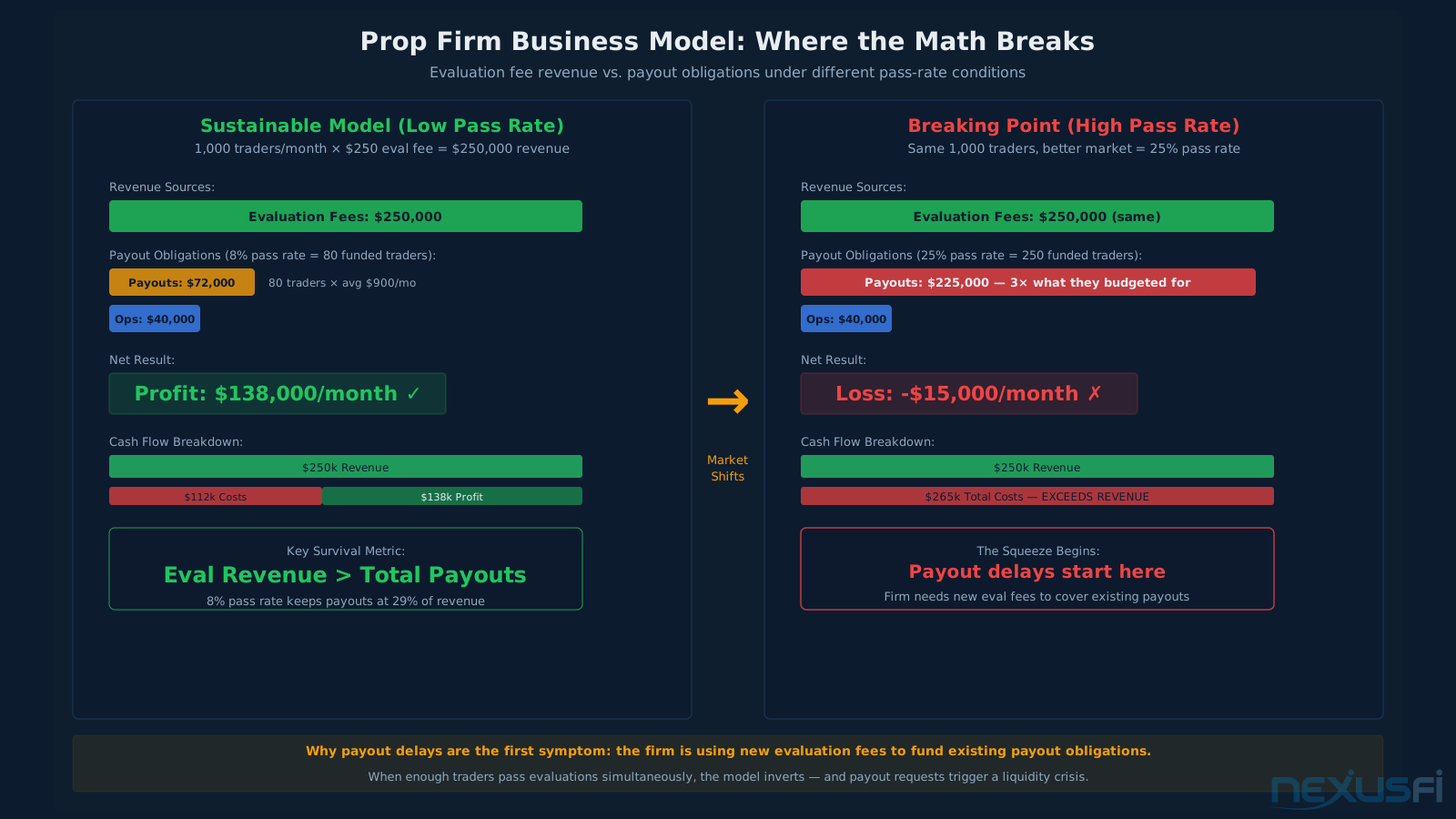
The funded trading industry has seen over 80 firm closures between 2024 and 2025. In most cases, traders with approved-but-unpaid profits lost those funds entirely. The protections that safeguard your money at a regulated broker — segregated accounts, SIPC coverage, NFA oversight — do not apply to most prop firm funded accounts.
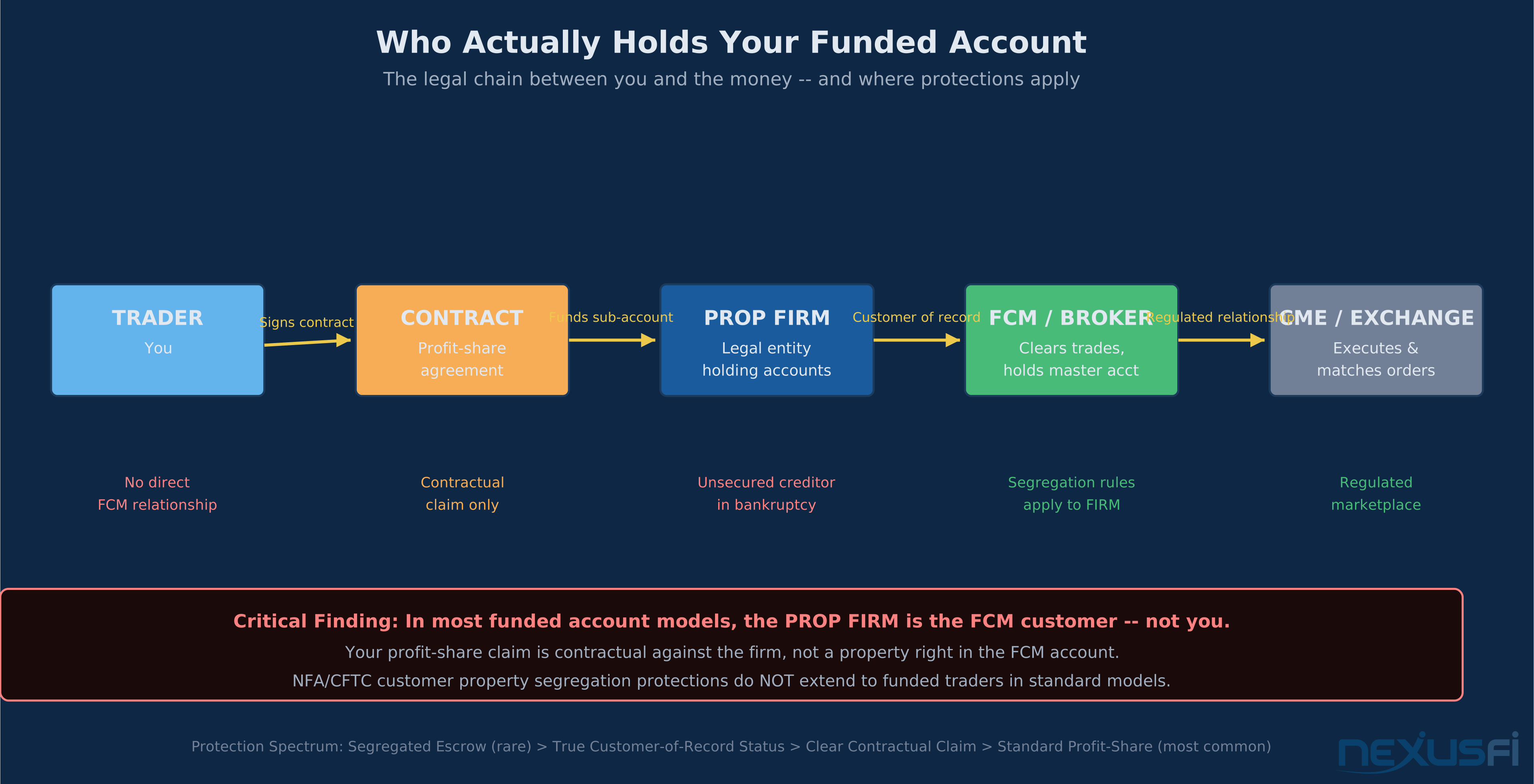
The legal structure of funded trading: most traders are unsecured creditors of the prop firm, not customers of the FCM.
Who Actually Owns Your Funded Account #
Here's the thing that trips everyone up: when you trade a funded account, you are almost never the customer of record at the broker or FCM (futures commission merchant) executing your trades. The prop firm is.
The typical structure works like this: the prop firm holds one or more master trading accounts at an FCM (think CME-registered clearing brokers). When you get funded, the firm allocates you a sub-account or credits you on their internal books. You trade via a platform connection, but the FCM sees the prop firm as the counterparty — not you. Your profit share is a contractual obligation from the prop firm to you, not a direct relationship with the broker holding the money.
Why does this matter? Under CFTC Rule 1.20 (17 CFR § 1.20), futures commission merchants must separately account for and segregate all futures customer funds — but this protection applies to the FCM's direct customers. If the prop firm, not you, is the customer of record at the FCM, those segregation requirements don't extend to your funded account claims.
(Prop firm fraud thread, Sep 2023)
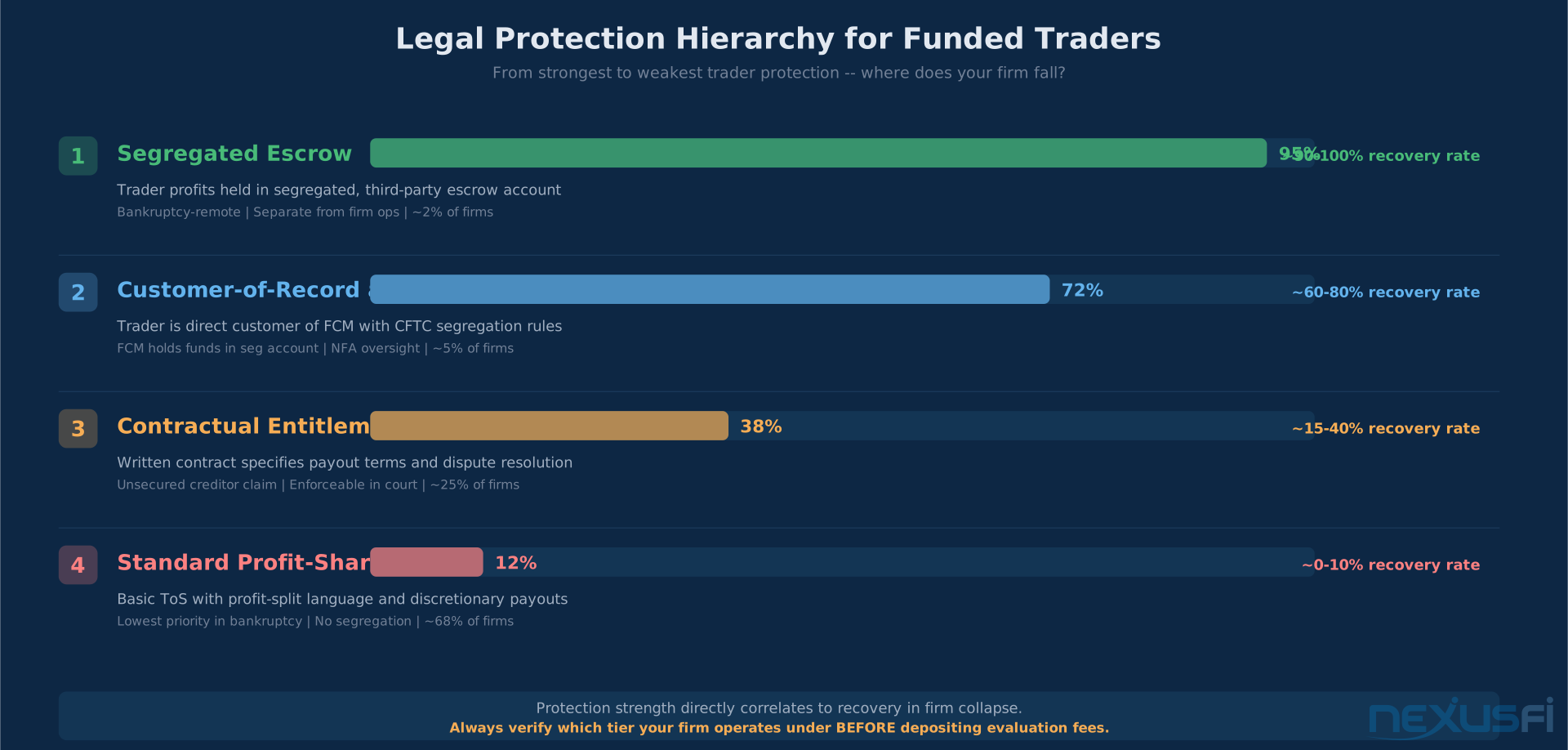
The legal protection hierarchy for funded trading looks like this, from strongest to weakest:
- Segregated escrow/trust for trader payouts -- Rare. The firm holds earned-but-unpaid profits in a separate trust account that's legally distinct from operating capital. If the firm goes bankrupt, these funds have some bankruptcy remoteness.
- True customer-of-record status at an FCM -- Also rare in traditional prop models. If you are actually a customer of the FCM, NFA/CFTC customer protection rules apply to your account balance.
- Clear contractual entitlement with specific vesting terms -- Better than nothing, but you're still an unsecured creditor in bankruptcy. At least your claim has clarity.
- Standard profit-share contract on the firm's master account -- The most common structure. Weakest protection. In bankruptcy, you join the line of general unsecured creditors and compete with everyone else the firm owes money to.
The overwhelming majority of funded trading programs operate under structure #4. Most traders assume they're in something closer to structure #1 or #2. That gap is where the losses happen when firms close.
What Actually Happens When a Prop Firm Collapses #
The sequence is consistent enough across collapses that you can almost predict it in real time.
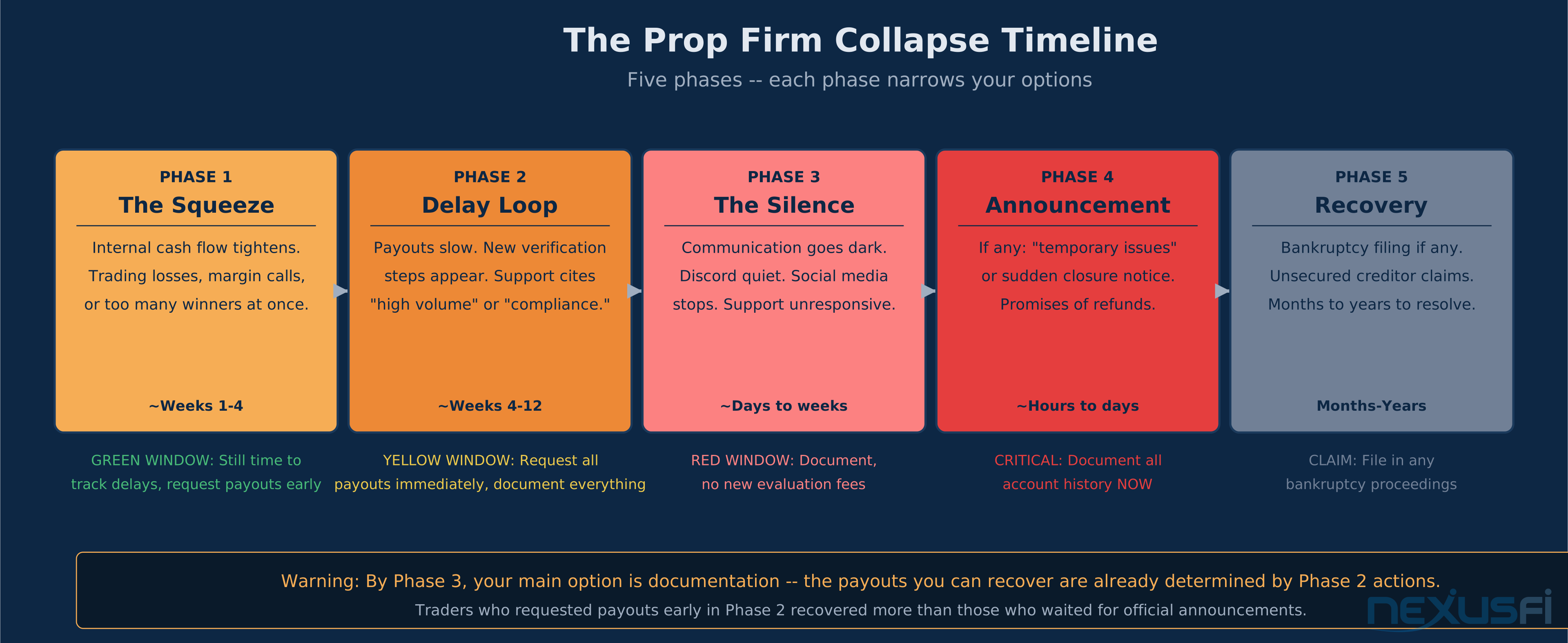
Five phases with decreasing recovery options: identify stress early to preserve access to earned profits.
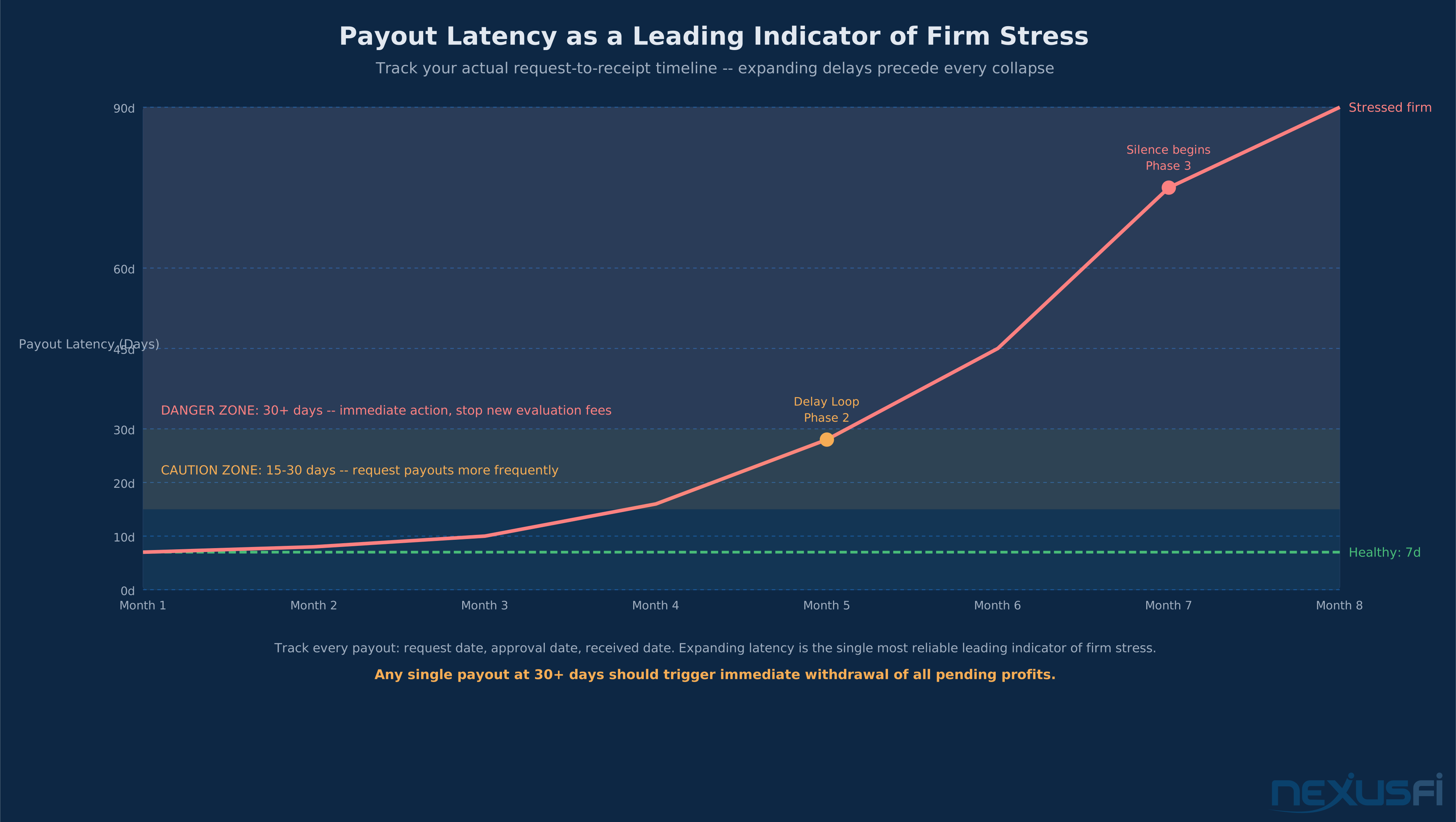
Phase 1: The squeeze. Something goes wrong internally — a bad trading period, over-leveraged operations, broker margin calls on the master account, or cash flow problems from paying too many winning traders at once. The firm starts managing cash more carefully. Payout processing slows down. What used to take 7 days now takes 21. Support tickets about withdrawal timing start accumulating on forums.
Phase 2: The delay loop. Payouts stop arriving but the firm keeps taking new evaluation fee payments. Traders filing withdrawal requests get canned responses about "increased volume" or "compliance review." Rule changes appear in the terms of service — new verification requirements, new minimum holding periods, new conditions that conveniently reset payout timelines. The firm is trying to buy time while hoping its financial situation improves.
Phase 3: The silence. Communication goes dark. Social media accounts stop posting. Discord servers either go quiet or get deleted. Customer support response times go from slow to nonexistent. At this point, traders on forums are starting to piece together what's happening by comparing notes across jurisdictions.
Phase 4: The announcement (if it comes). Sometimes firms issue statements claiming "temporary operational issues" or "platform migration" — language designed to prevent a run on payout requests. Sometimes they just disappear. Fast Track Trading's closure followed this pattern almost exactly: social media gone, promises of refunds to active holders, and then the handful who could actually reach anyone got their money while the rest got nothing.
Phase 5: The recovery attempt. If the firm files for bankruptcy, traders can file claims as unsecured creditors. Recovery is uncertain, often partial, and measured in months to years. Most traders don't have legal standing to do much else. Arbitration clauses in most prop firm contracts limit your options further.
The "illegally operating on subscription fees" comment points to what's now well-documented about the failure mode: many prop firms are running a business model where evaluation fee revenue covers payout obligations. When too many traders pass, or when a bad market period reduces the float, the math stops working.
Reading the Warning Signs Before It's Too Late #
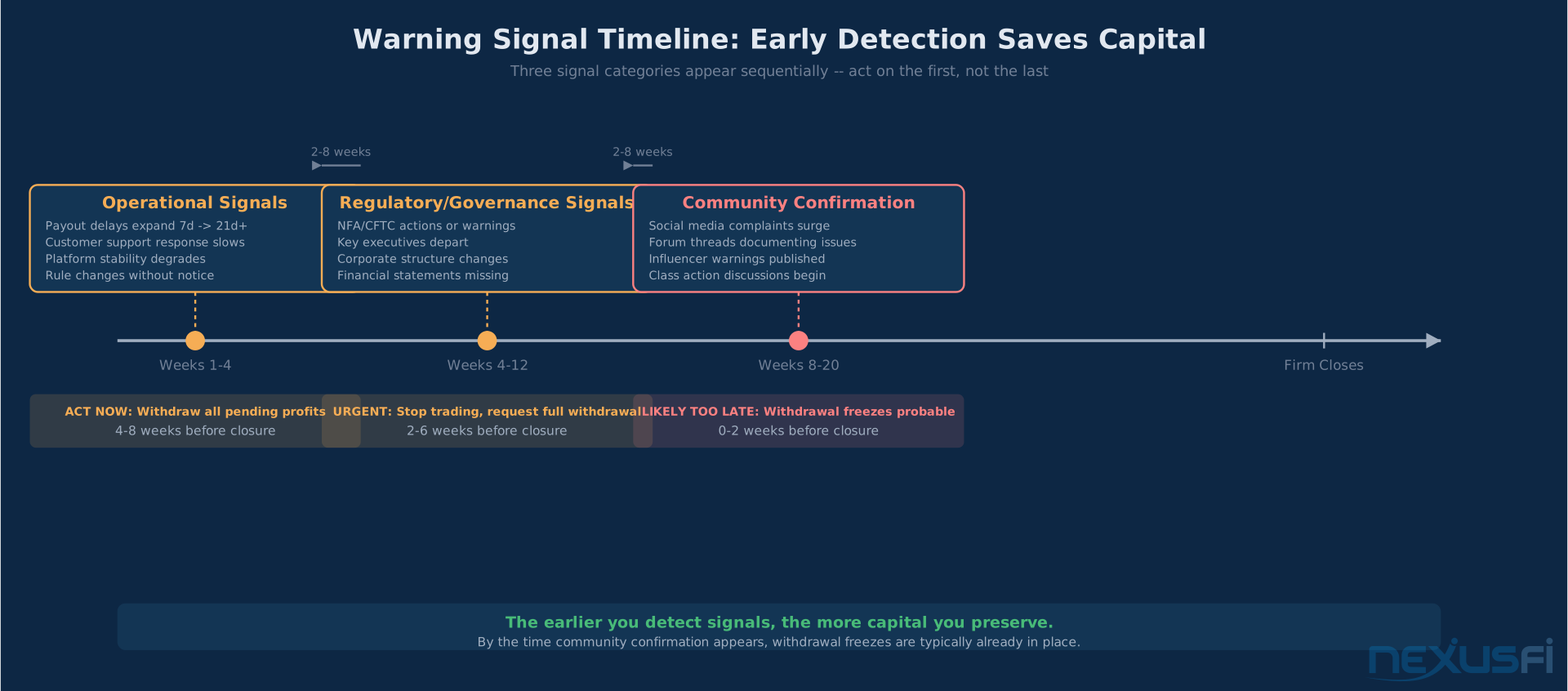
There are three categories of warning signals, and they arrive in a predictable order. By the time the third category shows up, it's usually too late to do much except request your pending payouts immediately.
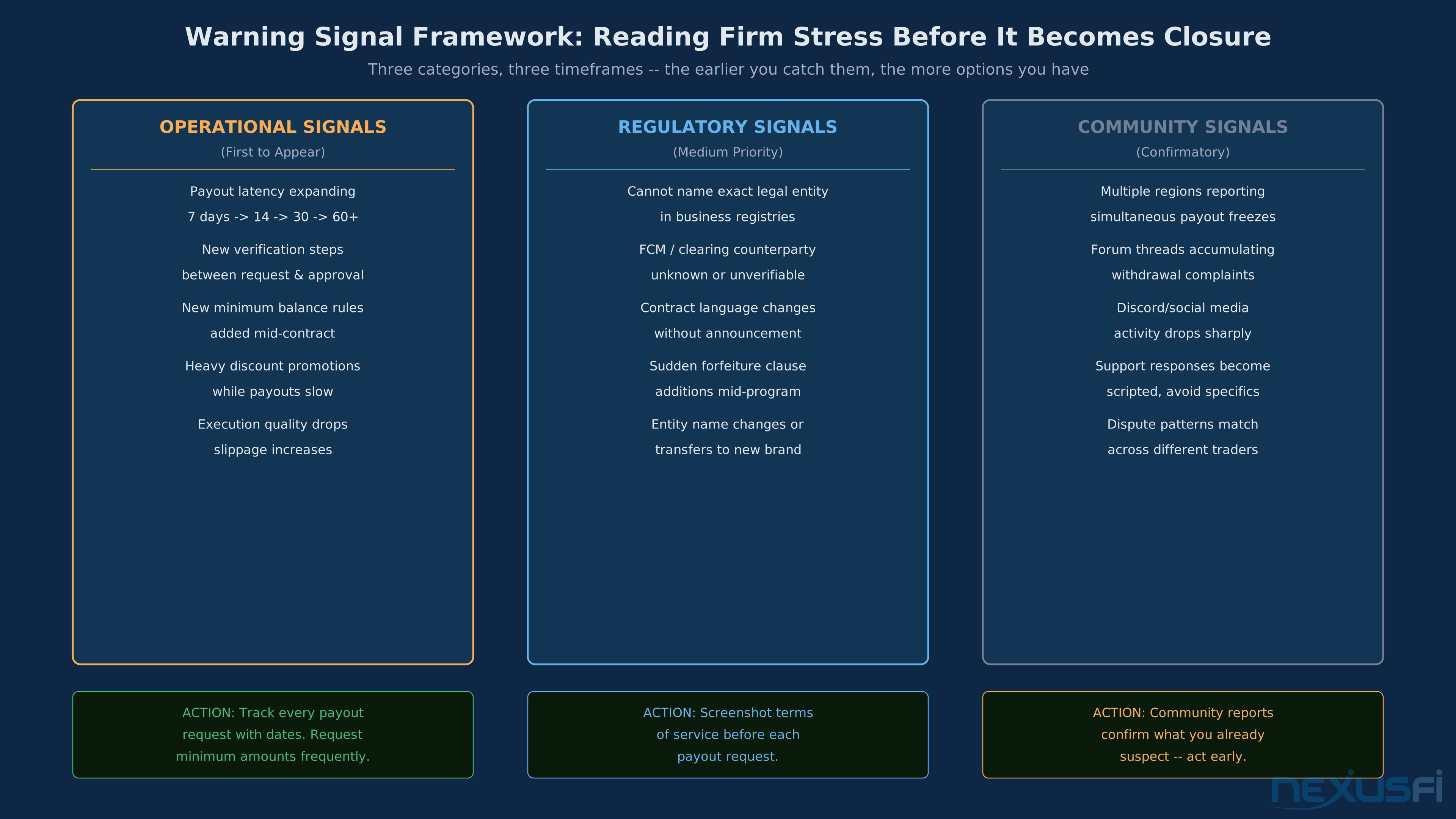
Operational signals appear first, then regulatory/governance signals, then community confirmation -- act on the first category.
Operational Stress Signals (First to Appear)
Payout latency is the most reliable leading indicator of firm stress. Track the actual timeline from when you request a payout to when it hits your account. Normal ranges are 3-10 business days for most firms. If you see your firm's community reporting that timelines are expanding — 7 days becomes 14, 14 becomes 30, 30 becomes "still waiting at 60 days" — that's a stress signal worth taking seriously.
The specific mechanics matter too. Watch for: new verification steps appearing between request and approval, new minimum balance requirements added mid-contract, sudden changes to which payment methods are available, and requests for "additional documentation" that weren't required on previous payouts. Each of these individually might have a legitimate explanation. Multiple in a short window means cash management problems.
Heavy promotional activity paired with payout delays is another combination worth flagging. Firms in financial stress often attempt to sell their way out of the hole by running aggressive discount campaigns on evaluations. If you see a firm running 90%-off evaluation promotions on every holiday while traders on forums report 45-day payout delays, that's a firm trying to collect new money to fund existing obligations.
Regulatory and Governance Signals (Second Category)
Look up the firm's exact legal entity name — not the brand name, the actual incorporated entity that signed your contract. Then search that entity name in NFA BASIC (nfa.futures.org/basicnet), the CFTC enforcement database, and your state or country's business registries.
Most prop firms are not NFA-registered because they structure themselves to avoid triggering commodity pool operator (CPO) or commodity trading advisor (CTA) registration requirements. That's legal. What's a red flag is when they claim regulatory status they don't have, when they use entity names that obscure the relationship between the brand and the legal entity, or when you can't actually identify which legal entity is on the other end of your contract.
Sudden contract changes are also worth tracking systematically. Screenshot your terms of service every time you make a payout request. If the language around payout conditions, forfeiture clauses, or dispute resolution changes without announcement, that's a governance problem regardless of what it means for their financial health.
Community Signals (Confirmatory, Not Leading)
Forum discussions and community reports are lagging indicators — by the time a thread titled "Is [Firm Name] still paying?" gets 50 replies, the situation is already advanced. But community reports are useful for two things: confirming your own observations and getting the timeline right.
Multiple traders in different geographies reporting similar payout failures at the same time is different from individual complaints. One trader having a bad experience with customer support is noise. Fifty traders across the US and Europe all reporting withdrawal requests frozen in the same two-week window is signal. NexusFi's funded trading evaluation forums are one of the best places to track this in real time, because threads accumulate over time and timestamp each report.
The Regulatory Environment: What CFTC and NFA Actually Cover #
The honest answer is: less than most traders assume, and deliberately so.
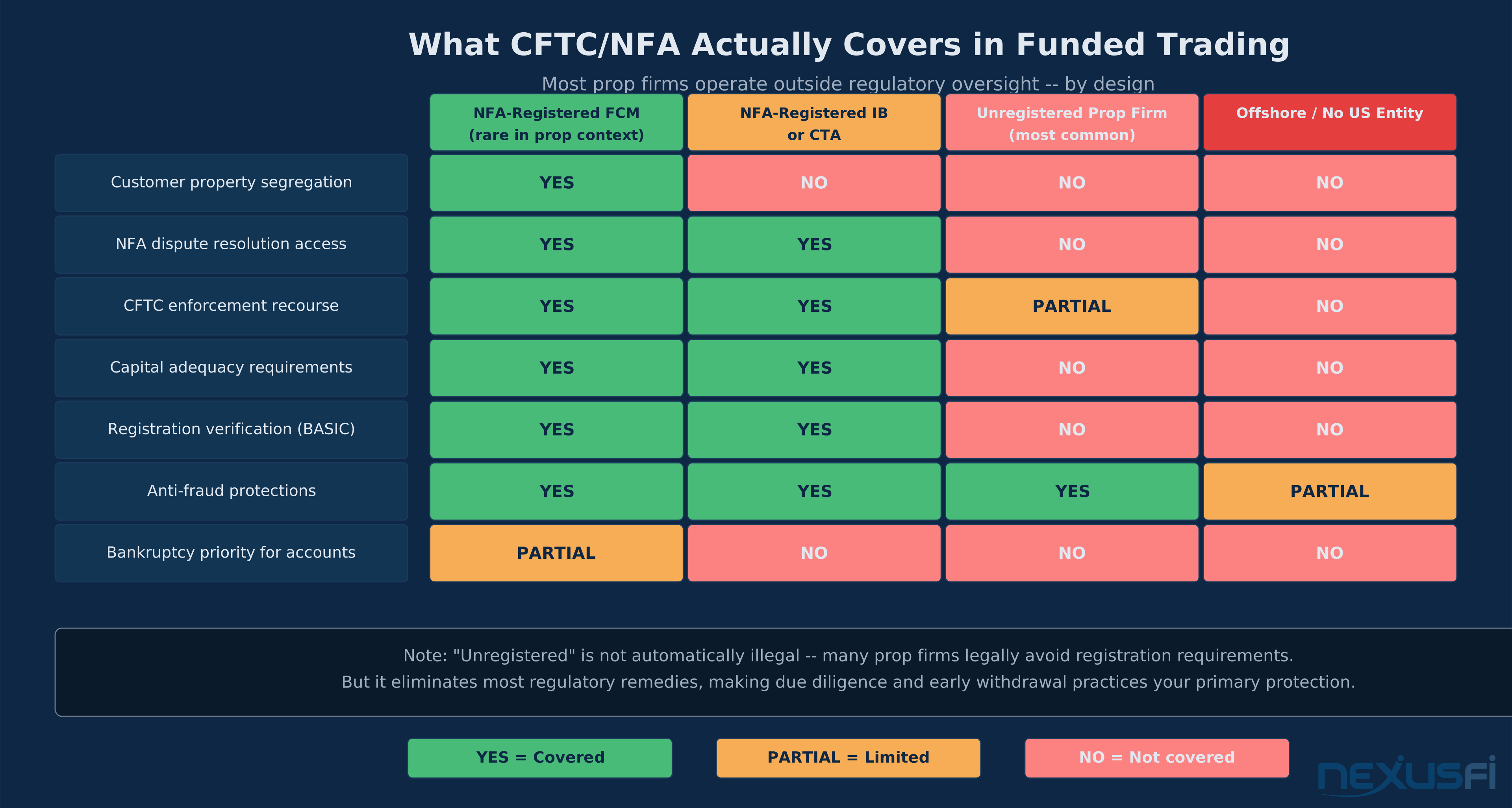
Most prop firms operate outside full regulatory coverage by design -- regulatory status alone does not protect trader capital.
Most funded trading evaluation firms are not regulated by the CFTC or NFA. They've structured their business specifically to avoid triggering the registration requirements that would put them under regulatory oversight. The most common methods are characterizing the business as "educational" or "proprietary trading" rather than as a commodity pool or investment advisor, registering offshore where US regulations don't apply, and carefully limiting what promises they make about returns or account protection.
NFA registration is required for entities functioning as futures commission merchants (FCMs), introducing brokers (IBs), commodity pool operators (CPOs), or commodity trading advisors (CTAs). A firm that runs a proprietary trading operation where they hire or contract traders can potentially sidestep all of these designations. The key word is "potentially" — how the business is actually operated and marketed matters, and the CFTC has shown it's willing to look at substance over structure.
The CFTC's 2023 action against MyForexFunds — one of several documented cases of prop firm fraud and regulatory risk — illustrated how far regulatory reach can extend into this space. The CFTC targeted misrepresentation in how the accounts were marketed and operated — not just the technical structure. Traders who assumed they were trading live funded accounts discovered the accounts were simulated, meaning their "funded" status was a contractual fiction. When the regulatory action froze operations, payout requests froze with them.
What does NFA registration actually give you if a firm has it? It provides: a regulatory enforcement mechanism if the firm commits fraud, a dispute resolution process through NFA arbitration, some record-keeping and capital requirements for the regulated entity, and a paper trail for regulators to follow if the firm fails. It does not give you customer property segregation protection unless the specific account structure creates it. Registration is better than nothing — it's not a guarantee of anything.
The practical implication: for most prop firms, your legal recourse if they fail to pay is civil litigation under your contract, which is slow, expensive, and limited by whatever arbitration clause they included. Regulatory remedies may not be available at all if the firm isn't registered. This is why prevention matters more than any response you can mount after the fact.
Simulated vs. Live Funded Accounts: Which Protects You Better? #
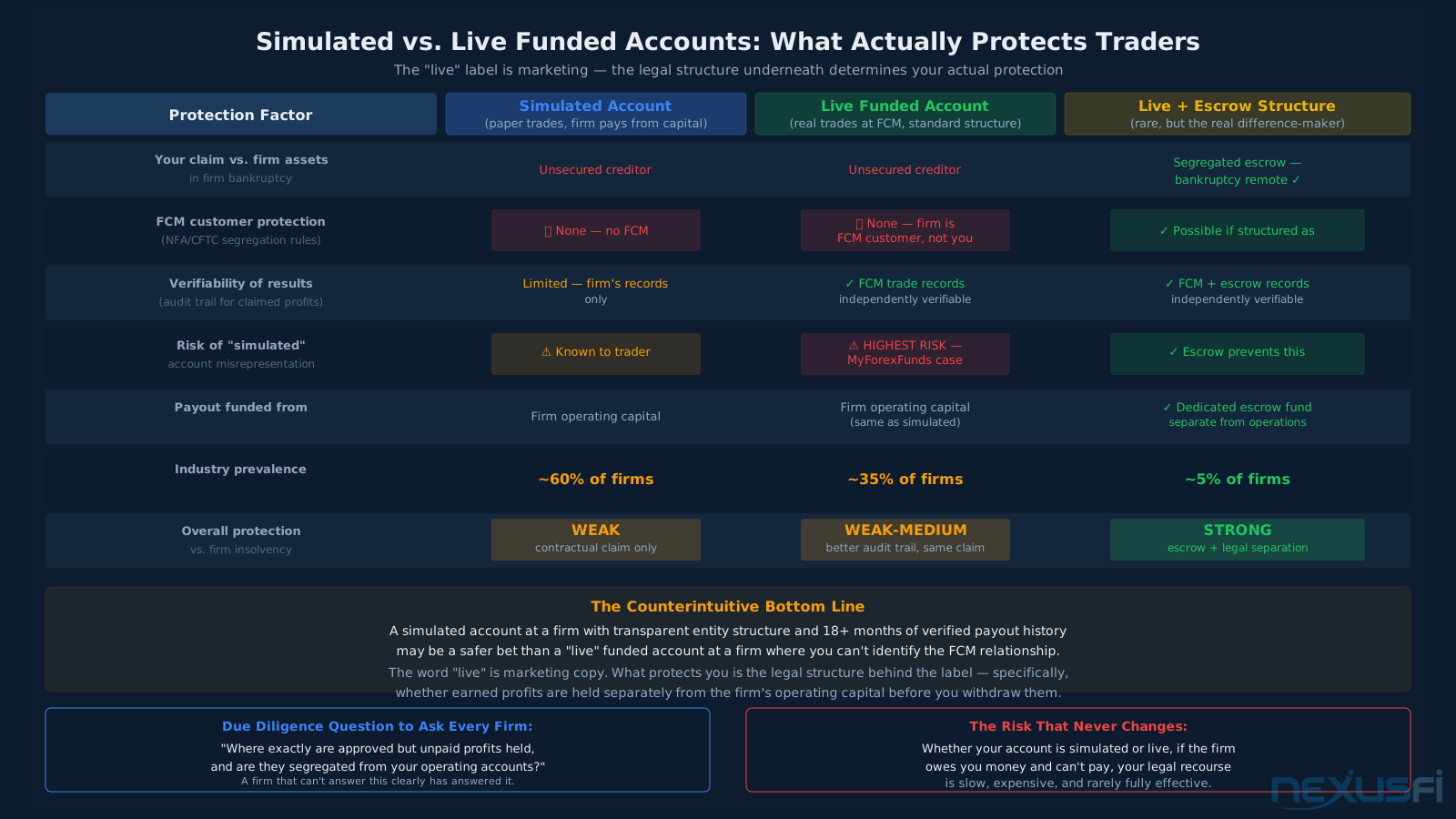
This question comes up constantly in funded trader discussions, and the common assumption — that live accounts are safer because the money is "really there" — is mostly wrong. The protection difference between simulated and live isn't about the label, it's about the legal structure underneath. (For a deeper look at how each model works mechanically, see Simulated vs Live Funded Accounts.)
In a simulated account, your trading is paper transactions. The prop firm uses your results to assess your trading quality, and they pay you from their operating capital when you hit targets. There's no actual position being taken on your behalf at an FCM. If the firm closes, your claim is purely contractual — you have a right to what they owe you under the contract, and nothing else.
In a live funded account, actual trades are executed at a real FCM. This creates an audit trail, provides verifiable proof of your results, and gives you something more concrete to point to when computing what you're owed. However — and this is the critical point — the FCM account is held by the prop firm, not by you. The FCM sees the firm as its customer. Your right to a share of profits is still a contractual claim against the firm, not a property right in the FCM account.
The exception that matters: if a firm uses a legal structure where your share of profits is held in segregated escrow — an account legally distinct from the firm's operating capital — then the distinction between simulated and live stops mattering as much. What matters is the custody structure, not the execution structure.
This underappreciation of counterparty risk is consistent across the community — most traders spend more time thinking about drawdown rules than about firm solvency.
The counterintuitive bottom line: a simulated account at a firm with transparent entity structure, verifiable FCM relationships, and stable payout history may be a safer counterparty bet than a "live" funded account at a firm where you can't identify the exact legal entity or FCM relationship. The word "live" is marketing. The structure behind it is what matters.
The Historical Record: What Industry Collapses Actually Looked Like #
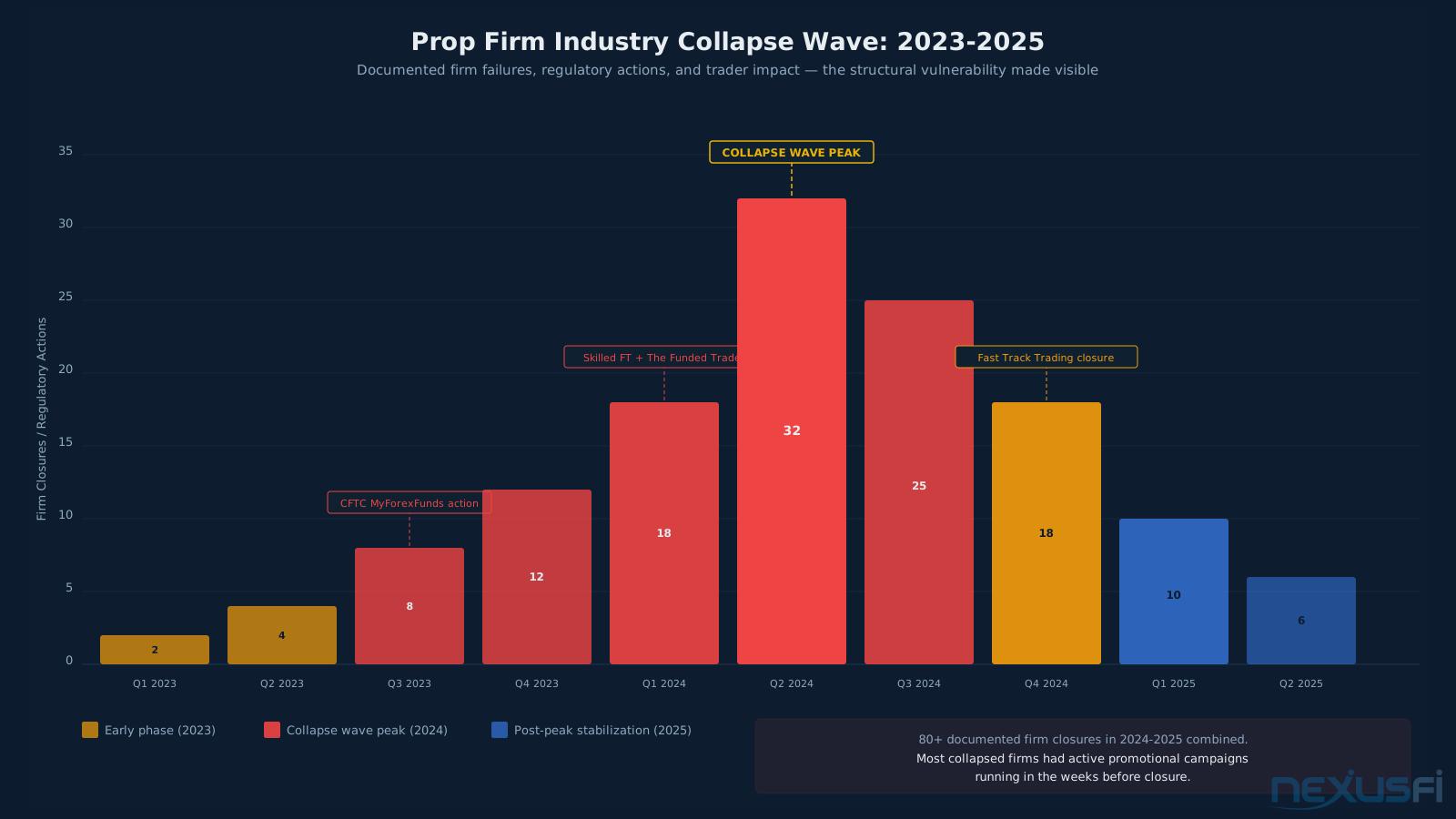
The 2024-2025 period produced more than 80 prop firm closures, according to industry tracking. This isn't a market anomaly — it's a structural consequence of a business model that became unsustainable when market conditions shifted.
The model that breaks in adverse conditions: collect evaluation fees (often $200-500 per attempt), fund profitable traders with a profit split (usually 80/20 in the trader's favor), and make money on the spread between traders who fail (pure revenue) and traders who succeed (pure cost). When a cohort of traders becomes more skilled — or when market conditions produce an unusual number of winning traders simultaneously — the payout obligations can overwhelm the evaluation fee revenue.
The pattern in the 2024-2025 collapses:
- MyForexFunds (CFTC action, 2023) -- Regulatory action targeted misrepresentation about account structure. Traders discovered their "funded" accounts were simulated. CFTC froze operations. Traders with pending payouts became unsecured claimants in proceedings that dragged on for years.
- The Funded Trader / Skilled Funded Trader (2024) -- Simultaneous collapse of two linked operations. Accounts locked overnight with no warning. Both had active promotional campaigns running the week they closed. Traders with pending withdrawals received no payouts.
- Fast Track Trading (late 2025) -- Promised refunds to active account holders. Only a handful actually received money before operations ceased completely. The NexusFi thread tracking the closure documented the social media disappearance, promise-then-silence pattern, and final outcome for traders who tried to contact the firm. (Fast Track Trading closure thread, NexusFi)
The Futex (UK) case from 2016 is worth studying because it shows what happens even when the firm does file for administration properly: administrators reported a £4.7 million shortfall between money held in clearing accounts and money owed to traders. (Futex halts trading, NexusFi) Even in an orderly wind-down, the shortfall meant traders got less than they were owed.
Expanding payout latency from 7 to 30+ days is the single most reliable predictor of firm financial stress before closure.
Due Diligence: Your Protection Framework #
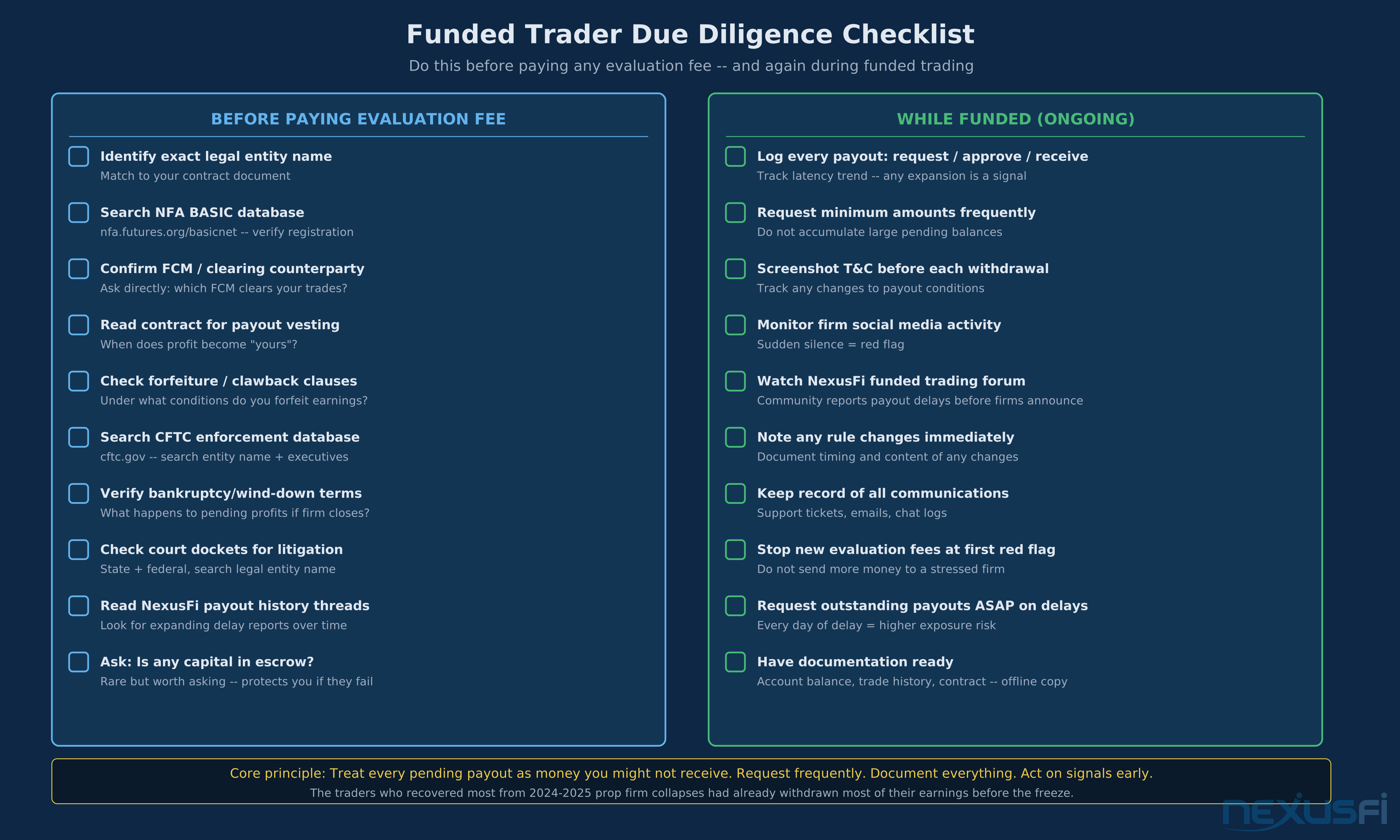
There are two stages of due diligence: what you do before paying your evaluation fee, and what you do while you're funded. The complete prop firm due diligence guide covers the full evaluation framework — this section focuses specifically on signals that predict firm collapse. Most traders only do the first stage poorly and skip the second entirely.
Before You Evaluate
1. Identify the exact legal entity. Not the brand name — the incorporated legal entity that's signing the contract. Check that it matches what's in your terms of service. Search it in business registries for your state or country and the entity's home jurisdiction.
2. Check NFA BASIC. Go to nfa.futures.org/basicnet and search the entity name and key personnel. This tells you whether any part of the operation is NFA-registered and in what capacity. Not being listed isn't automatically disqualifying, but it narrows your recourse options.
3. Identify the FCM relationship. Ask the firm directly: which FCM clears your trades? If they're running a live funded program, they should be able to tell you. If they can't or won't, that's a flag. Verify that the FCM exists and is NFA-registered separately.
4. Read the contract language specifically. See the full guide to prop firm funded account agreements for what to look for. Look for these things: when does a profit become "vested" (fully earned and owed to you)? Under what conditions can payouts be forfeited or clawed back? What happens to your approved-but-unpaid profits if the firm ceases operations? Is there any escrow or segregation language? What dispute resolution mechanism applies?
5. Search CFTC enforcement actions. cftc.gov/LawRegulation/CFTCStaffLetters has enforcement actions by company name. Search the legal entity name and the names of key executives.
6. Check NexusFi and other forums for payout history. Look for threads about the specific firm, sorted by date. Track whether community reports of payout delays are increasing, stable, or improving. A firm with consistently fast payouts over 18+ months has demonstrated the one thing that matters: they actually pay people.
Ten-point pre-evaluation checklist and ten ongoing monitoring practices that protect trader capital throughout the funded relationship.
While You're Funded
Don't stop paying attention once you're in. The warning signs appear during the funded phase, not before it.
Track your payout latency on every request. Keep a simple log: requested date, approved date, received date. If your timeline extends on consecutive requests, that's data worth having.
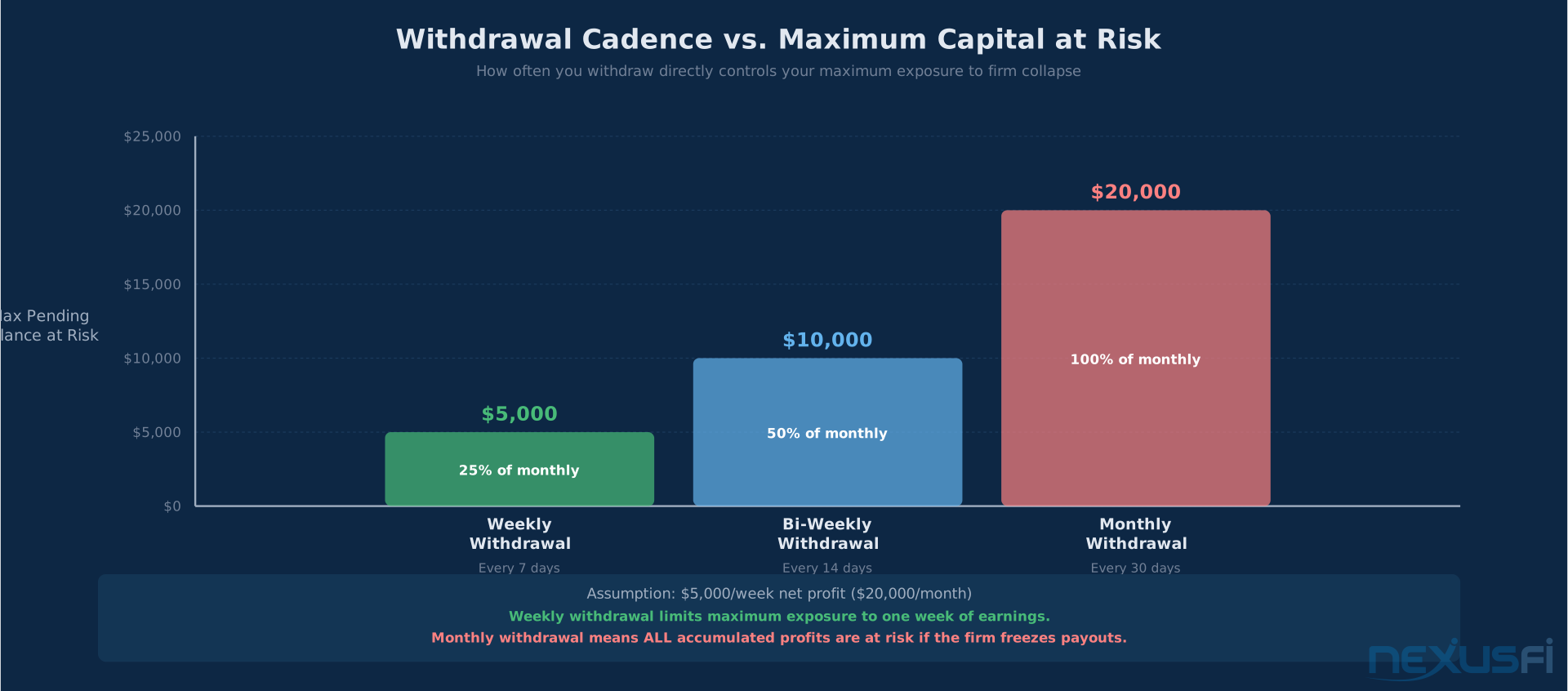
Request payouts frequently rather than accumulating. See Prop Firm Payout Timing and Withdrawal Mechanics for a complete guide to the request-to-receipt process. Don't wait for a large balance to build up. Request the minimum eligible payout amount as often as the firm's rules allow. This limits your exposure at any single point in time. If the firm closes, you lose whatever is pending — so keep pending amounts small.
Note rule changes as they happen. Screenshot your terms of service or payout policy before each withdrawal request. If language changes between requests, document it. This creates a record if you later need to dispute whether a rule was in effect when you earned your profits.
Monitor community health. NexusFi's funded trading evaluation section is one of the best places to track real-time reports from other traders. A thread starting to fill with payout delay reports is a signal to pause new evaluation fee payments and accelerate payout requests for money you're already owed.
When Your Firm Closes: What to Do Immediately #
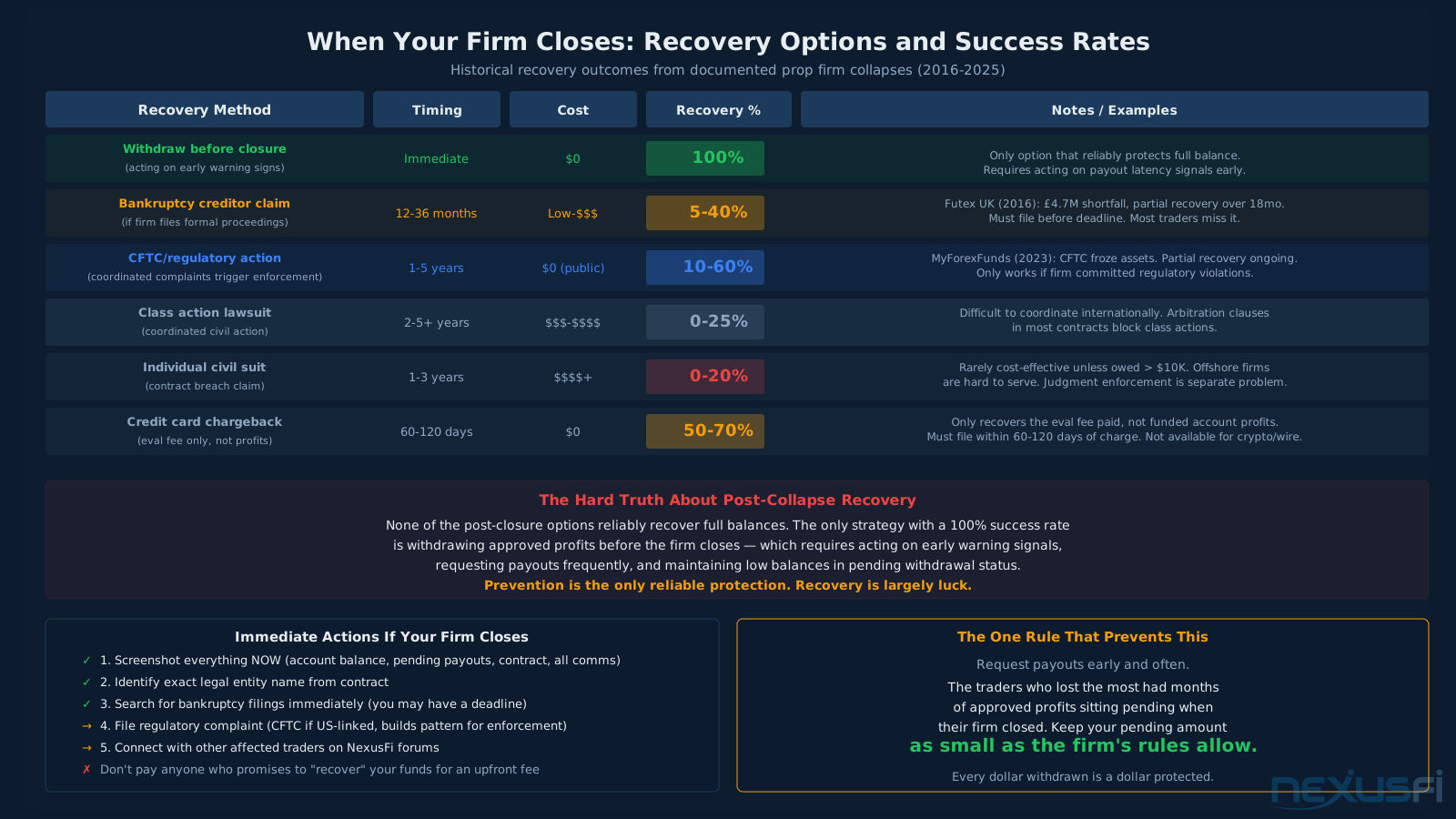
If you find out your firm has ceased operations or frozen payouts, your options narrow quickly. Here's the triage, in order.
First 24-48 hours: Document everything. Screenshot your account balance, your approved-but-unpaid payouts, your trade history, your contract, and every communication you've ever had with the firm. Do this before websites go offline and accounts get deleted.
Confirm the exact legal entity that signed your contract. This is what you'll need for any legal filing. If you can't find it, check domain registration records, business registries, and payment processor records from your evaluation fee payment.
Search for bankruptcy filings in the relevant jurisdiction. If the firm filed for bankruptcy, there will be a formal claims process and a deadline for creditors to file. Missing that deadline may eliminate your legal right to recovery entirely.
File regulatory complaints. Even if the firm isn't registered, filing with the CFTC (cftc.gov/complaint) and the NFA creates a record. If others file simultaneously, regulators are more likely to act. The MyForexFunds action came partly because enough traders complained to create a pattern regulators couldn't ignore.
Connect with other affected traders. NexusFi, Reddit's prop firm communities, and dedicated Discord servers for affected traders often become coordination points. There's information to be shared — timing of events, legal entity details others have found, contact information for administrators or attorneys who are collecting claims. Class actions and coordinated complaints are more effective than individual filings.
The only funded trading risk that can't be mitigated by skill or strategy is counterparty risk — the risk that the firm itself fails. Payout history, legal entity verification, and frequent withdrawal cadence are your only defenses against it.
The Bottom Line on Prop Firm Risk #
Funded trading is a legitimate path to trading larger capital than you'd otherwise have access to. For a full guide to how funded trading evaluations work, see the dedicated Academy article. It works well at firms with solid operational foundations, consistent payout histories, and transparent structures. The industry includes firms that have paid out millions to traders over years without a single closure. The risk isn't that prop trading is naturally fraudulent — it's that the industry operates with minimal regulatory oversight, which means bad operators can exist right alongside good ones, and the tools traders normally use to assess counterparty risk (regulated status, SIPC protection, segregated accounts) don't apply.
The practical framework: treat every dollar of approved-but-unpaid profit as money you might not receive. Request frequently, accumulate slowly. Know your firm's exact legal entity and FCM relationship. Track payout latency as a leading indicator of operational health. Watch forums for community signals. And recognize that no amount of due diligence eliminates the risk — it only reduces your exposure to it.
The traders who got hurt worst in the 2024-2025 collapse wave weren't the ones with bad trading — they were the ones with months of approved profits sitting pending when the doors closed. Keep the number small and the request cadence high.
Knowledge Map
Go Deeper
Build on this knowledgeReferences This Article
Articles that build on this topicCitations
- — Prop firm fraud in Futures? (on the back of My Forex Fund scam/CFTC ruling) (2023) 👍 4“I was set up to trade S&P 500 futures. My accounts money had been transferred to Great Britain. After an initial refusal from the British court and a wait of 18 months they gave me most of it back -- but this is exactly the kind of exposure traders need to understand before they get funded.”
- — Funded Trader platforms (2024) 👍 8“Skilled Funded Trader and The Funded Trader both just collapsed. Customer accounts locked, payouts denied. Looks like both were illegally using the bucket-shop model and not legally trading the actual instrument on their clients' behalf.”
- — Funded Trader platforms (2024) 👍 2“One consideration I don't see often discussed: the possibility of the prop-shop's going out of business, resulting in loss of any unpaid profits owed to the trader.”
- — Funded Trader platforms (2024) 👍 2“The model is not based on sharing profits with funded traders. It's based on making money from subscriptions and resets. The funding companies make all of their profit from the majority of traders who cannot pass evaluations or who blow funded accounts.”
- — Fast Track Trading has ceased operations (2024) 👍 1“Fast Track Trading has ceased operations as of November 7th, 2024. They have since taken down their social media accounts. Even though they had promised to refund all the active account holders, only a handful actually received money.”
- — Futex (UK futures broker) halts trading (2016) 👍 3“The administrators of defunct prop trading firm Futex reported a £4.7 million shortfall between the money held in the firm's clearing account and the cash owed to creditors including former Futex traders.”
- — Any long term success stories from funded traders in these get-funded programs? (2021) 👍 8“The following applies to a 'live sim' or 'we'll pay you your gains even though you're trading on a simulator' type system. If you earn $10K of profits it's not actual profits -- it's 100% an expense from them as it's simulator profits and they have to pay you with their own cash. YOU WIN => THEY LOSE.”
- — Sellers of shovels are getting rich! (2023) 👍 3“If you could look under the fingernails of companies like APEX, they're probably doing exactly the same thing. The defendants, doing business as 'My Forex Funds,' supposedly offered retail customers the opportunity to trade -- but Traders Global was the counterparty to substantially all customer trades.”
- — CFTC Charges My Forex Funds and Its Owner with Fraud (2023)
- — ApexTraderFunding.com experience and review (2024) 👍 3“As popularity increased it became easier for anyone to create their own prop firm with very little money. You had sketchy actors with zero knowledge of trading starting their own CFD prop firm. The CFD prop space collapsed in 2024, taking thousands of traders' balances with it.”
- — 17 CFR § 1.20 - Futures customer funds to be segregated and separately accounted for (2024)