



News Trading Restrictions in Prop Firm Funded Accounts: Rules, Blackout Windows, and How to Stay Compliant
Overview #
Every prop firm has rules about trading around economic releases. Some firms ban it outright. Others let you trade through anything during the evaluation but lock you down once you're funded. A few have "guidelines" so vague you won't know you violated them until your payout request gets denied.
News trading restrictions are the single most misunderstood rule category in funded trading. Traders blow accounts not because they can't handle the volatility — they blow them because they didn't fully understand which rules applied, when, and to which instruments.
This article breaks down how news trading restrictions actually work across major prop firms, which events get restricted and why, how rules shift between evaluation and funded phases, what happens when you violate them, and how to build a systematic compliance workflow that keeps you on the right side of every rule.
Why Prop Firms Restrict News Trading #
Before getting into the specifics, understand the economics. Prop firms don't restrict news trading to be difficult. They restrict it because news events create a risk profile that's at the core different from normal market conditions — one that threatens the firm's capital in ways standard risk models can't contain.
Here's what happens during a major economic release like NFP or an FOMC rate decision. The Federal Reserve publishes FOMC meeting dates a full year in advance, and the Bureau of Labor Statistics publishes the Employment Situation (NFP) release schedule months ahead — giving traders and firms ample time to build compliance protocols around a known calendar:
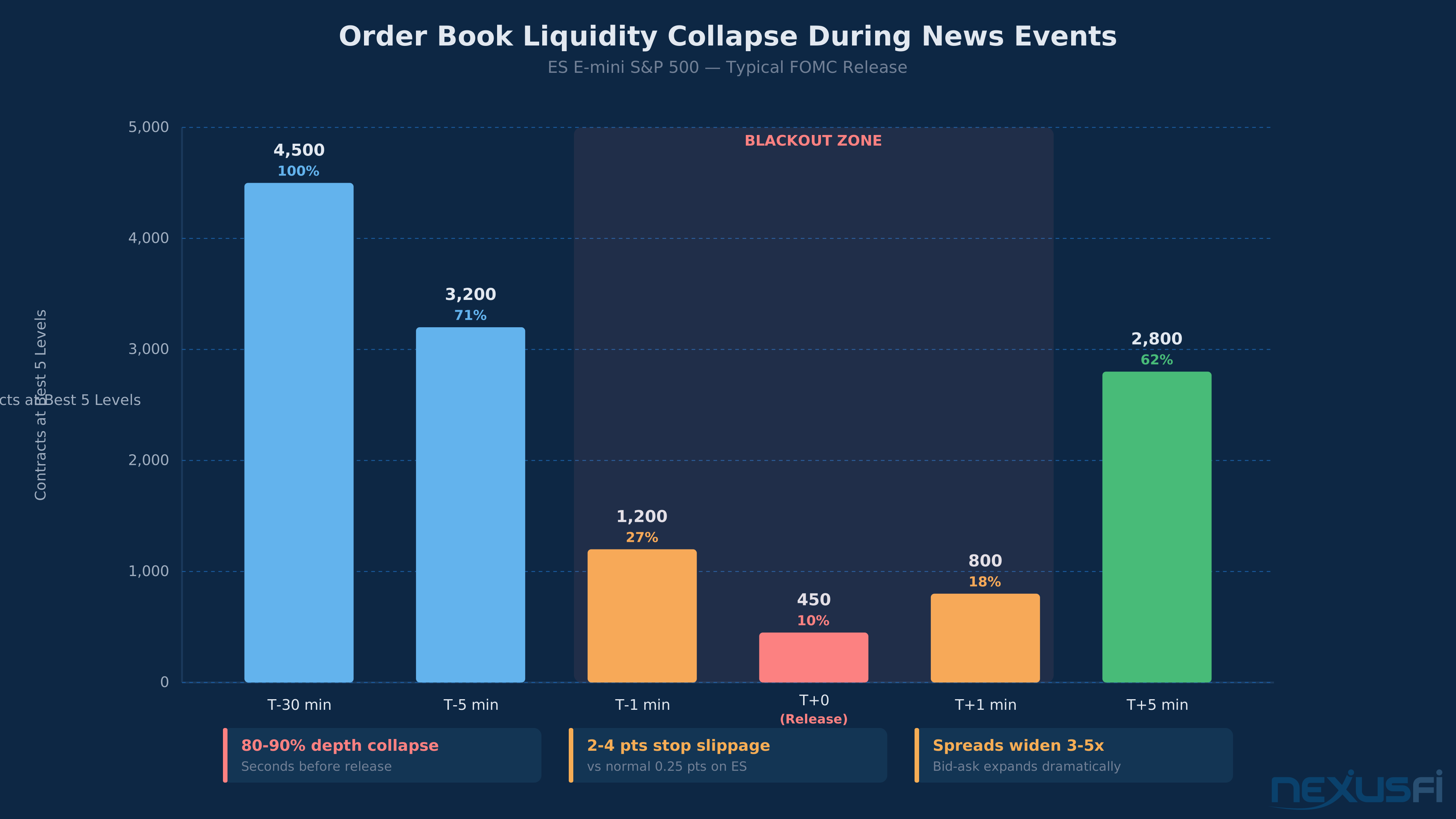
Liquidity evaporates. The order book thins out dramatically in the minutes before a scheduled release. As @Botts explains, "It's not unusual to see the liquidity be all but 'dried up' during a reaction to scheduled (or even unscheduled) news events. Given you were trading a 10 lot it's not surprising that there weren't enough contracts available when your stop got hit." [1] Market depth can collapse by 80-90% in the seconds before a high-impact release. Your stop-loss that would normally fill with 0.25 points of slippage on ES might slip 2-4 points or more.
Asymmetric payoff creates adverse selection. A trader who loads up right before NFP is buying a lottery ticket. If the number comes in hot, they make 10-20 points in seconds. If it goes against them, the firm's capital absorbs the loss. Prop firms recognized early that some traders were passing evaluations almost entirely on one or two well-timed news trades. As @Topstep put it directly, "The thought here is to see if the trader has a strategy that is not only news release driven (ie. one trick pony). We want to see that these traders can do more than just play the releases as that is not permitted on the Funded Account." [2]
Risk models break down. Prop firm risk engines assume roughly normal intraday variance. News events produce fat-tailed moves that blow through daily loss limits, trailing drawdowns, and max position loss thresholds simultaneously. A 50-point ES move in 30 seconds isn't "unlikely" during FOMC — it happens regularly, and no static risk model accounts for it adequately.
Slippage costs are real. Even on simulated accounts, the fills traders get in sim often don't reflect real-market execution during high-volatility events. Spread widening, partial fills, and requotes mean P&L on sim trades around news can be dramatically better than what would happen live.
The bottom line: news restrictions aren't arbitrary. They exist because news events create conditions where normal risk management doesn't apply, and allowing unrestricted news trading exposes the firm to outsized tail risk.
Types of News Trading Restrictions #
Prop firm news rules aren't uniform. They fall into several distinct categories, and the differences matter enormously for how you plan your trading day.
Complete Prohibition #
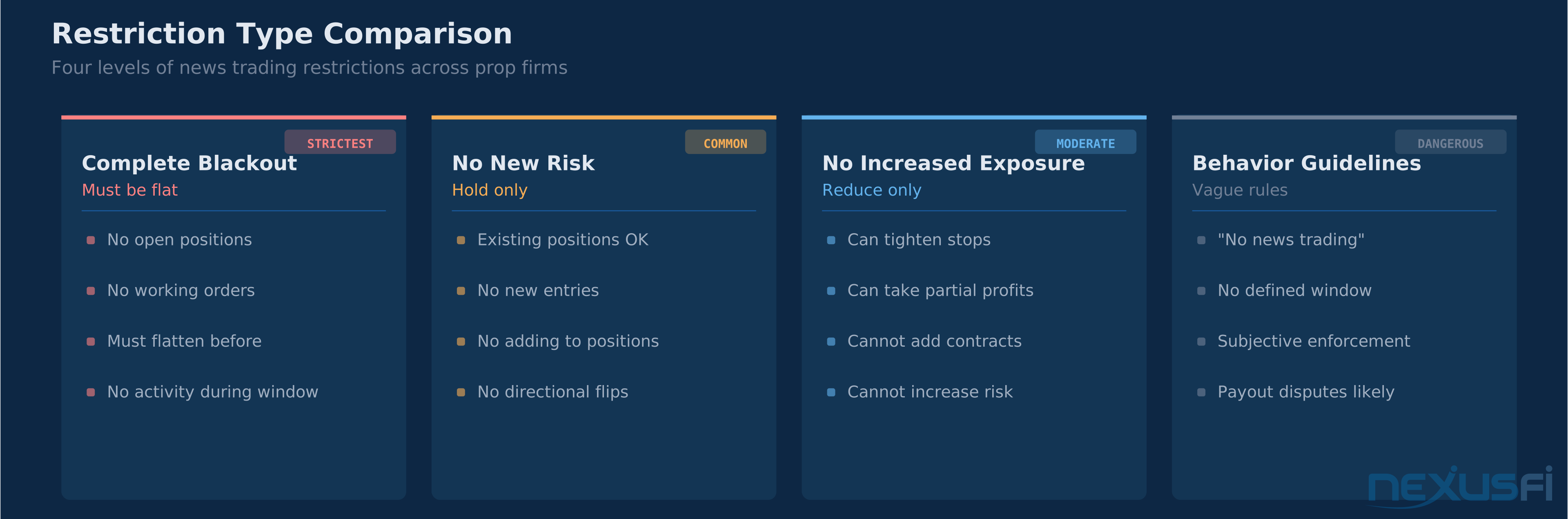
The strictest approach: no new entries, and often no open positions, during a defined window around restricted events. Some firms require you to be completely flat — no positions, no working orders, nothing in the book.
This is the easiest rule to comply with because it's unambiguous. If FOMC is at 2:00 PM ET and the blackout is 1:59-2:01 PM, you close everything by 1:59 and don't touch anything until 2:01. The catch is in the details: does "flat" mean no open positions, or does it also mean no working limit orders sitting in the book?
Partial Restrictions #
More common than outright bans. These rules allow some trading activity but constrain specific behaviors:
- No new entries but existing positions can remain open
- Limit orders only — no market orders during the window
- Reduced position size — half or quarter of normal maximums
- No adding to positions — existing trades can stay but can't be scaled into
Partial restrictions create the most confusion because they require judgment calls. If you're already long 2 ES contracts and CPI drops, can you add a stop-loss? Can you modify your target? The answer varies by firm, and "I didn't know" isn't a defense.
Instrument-Specific Restrictions #
Some firms restrict only the instruments directly affected by a given release. FOMC might restrict ES, NQ, ZN, and ZB trading but leave CL and GC unrestricted. NFP might restrict equity index and currency futures but not energy.
This approach makes more economic sense but adds operational complexity. You need to know not just which events are happening, but which of your instruments are covered. As @Meliora noted about funded account rules, "FOMC Meeting Minutes you can't trade Equity Indexes like ES from 1 Minute before to 1 minute after. But you can trade other instruments during that time." [3]
Vague "Guidelines" #
Some firms use language that's deliberately imprecise.
His conclusion: "My concern is that your rules here are not rules at all, but vague guidelines. Some would say that these vague guidelines give you a loophole to deny payout requests." [4]
This is the most dangerous category. When rules lack specific time windows or clear definitions, enforcement becomes discretionary. That means your profitable news-day trade might be fine — or it might be flagged as a violation weeks later when you request a payout. You simply can't know in advance.
Which Events Get Restricted #
Not all economic releases carry the same weight. Here's how the major scheduled events break down by typical restriction status and the futures instruments most affected:
Tier 1 — Almost Always Restricted #
| Event | Primary Instruments Affected | Typical Volatility Impact |
|---|---|---|
| FOMC Rate Decision + Statement | ES, NQ, YM, RTY, ZN, ZB, GC, 6E | Extreme |
| FOMC Press Conference | Same as above | High |
| Non-Farm Payrolls (NFP) | ES, NQ, ZN, 6E, 6J | Extreme |
| CPI / Core CPI | ES, NQ, ZN, ZB, GC | Very High |
Tier 2 — Frequently Restricted #
| Event | Primary Instruments Affected | Typical Volatility Impact |
|---|---|---|
| PPI | ES, NQ, ZN | High |
| GDP (Advance) | ES, NQ, ZN | High |
| PCE Price Index | ES, NQ, ZN, GC | High |
| Retail Sales | ES, NQ | Moderate-High |
| ISM Manufacturing / Services | ES, NQ | Moderate-High |
Tier 3 — Sometimes Restricted, Depends on the Firm #
| Event | Primary Instruments Affected | Typical Volatility Impact |
|---|---|---|
| EIA Crude Inventories | CL, NG | High for energy futures |
| Treasury Auctions | ZN, ZB, UB | Moderate-High |
| JOLTS / Jobless Claims | ES, NQ | Moderate |
| Fed Chair Testimony | ES, NQ, ZN, GC | Variable — depends on content |
| ECB / BoE Decisions | 6E, 6B | High for relevant instruments |
Critical distinction: Most prop firm restrictions cover scheduled macro releases only. Unscheduled events — geopolitical shocks, emergency Fed statements, natural disasters — typically aren't covered by news trading rules, though some firms reserve the right to review any trade made during "unusual market conditions."
One firm laid out their instrument mapping explicitly: "FOMC Statement — no trading in Equity Indexes, Bonds, Metals, or Currencies from 1 minute before through 1 minute after." That level of specificity is the gold standard. If your firm doesn't provide it, ask.
Evaluation Phase vs. Funded Phase #
One of the most common traps: assuming the news rules that applied during your evaluation will be the same once you're funded. They often aren't.
More Permissive During Evaluation, Stricter When Funded #
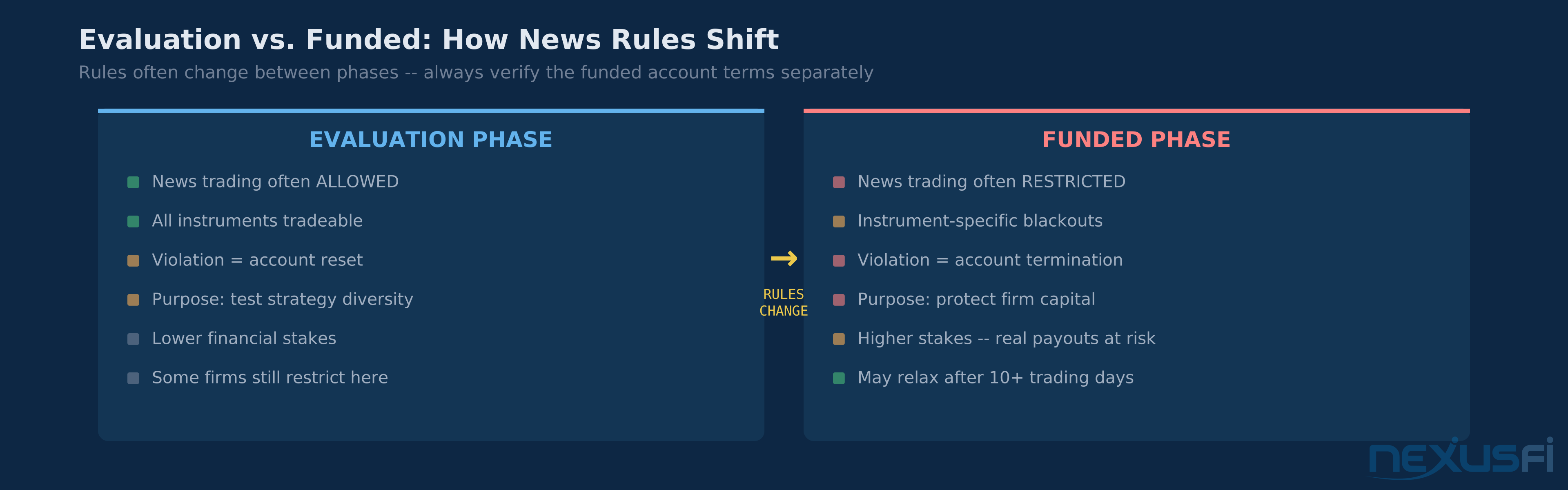
Several firms allow news trading during the evaluation but restrict it on funded accounts. The logic: during evaluation, they want to see how you handle all conditions. Once real payout obligations are on the line, the firm tightens risk controls.
[3] That distinction catches traders off guard. They develop a strategy that works partly because it captures news volatility, pass the evaluation, and then discover they can't use half their playbook on the funded account.
Progressive Relaxation With Track Record #
Some firms progressively relax restrictions as funded traders build track records. Topstep historically allowed funded traders to resume news trading once they'd "traded more than 10 days and built up the balance of the account" [2] — basically proving they had a real edge beyond just news plays.
The Rule That Matters Most: Regardless of which direction the rules move — read the funded account agreement separately from the evaluation rules. They're often different documents. The evaluation marketing page might say nothing about news restrictions because they don't apply during the combine. The funded account terms — buried in a separate PDF or portal page — is where the real constraints live.
Don't assume. Verify. Before starting any evaluation, find the funded account rules and build your strategy around those constraints from day one.
Blackout Window Mechanics #
The operational core of news trading compliance is the blackout window — the specific time period before and after a scheduled release when trading activity is restricted or prohibited.
Pre-News Windows #
Most firms define a pre-event buffer: no new entries for X minutes before the scheduled release. Common windows:
- 1-2 minutes: Tight window. Requires precise clock-watching. One firm's rule of "flat 1 minute before through 1 minute after" sounds simple until you're in a profitable trade at 1:58 PM before FOMC and have to decide whether to close at market or risk being in the window.
- 5-15 minutes: More manageable. Gives you time to plan exits and flatten.
- 30-60 minutes: Conservative. Some firms restrict trading for a full 30 minutes before major events.
Post-News Windows #
The post-event window is where most violations happen. The initial reaction takes 5-30 seconds. But follow-through, retracement, and second-wave moves can last 15-60 minutes. Firms typically require 1-5 minutes of flatness after the release, but some extend this to 15-30 minutes.
The Two-Stage FOMC Problem #
FOMC has multiple phases that create unique compliance challenges:
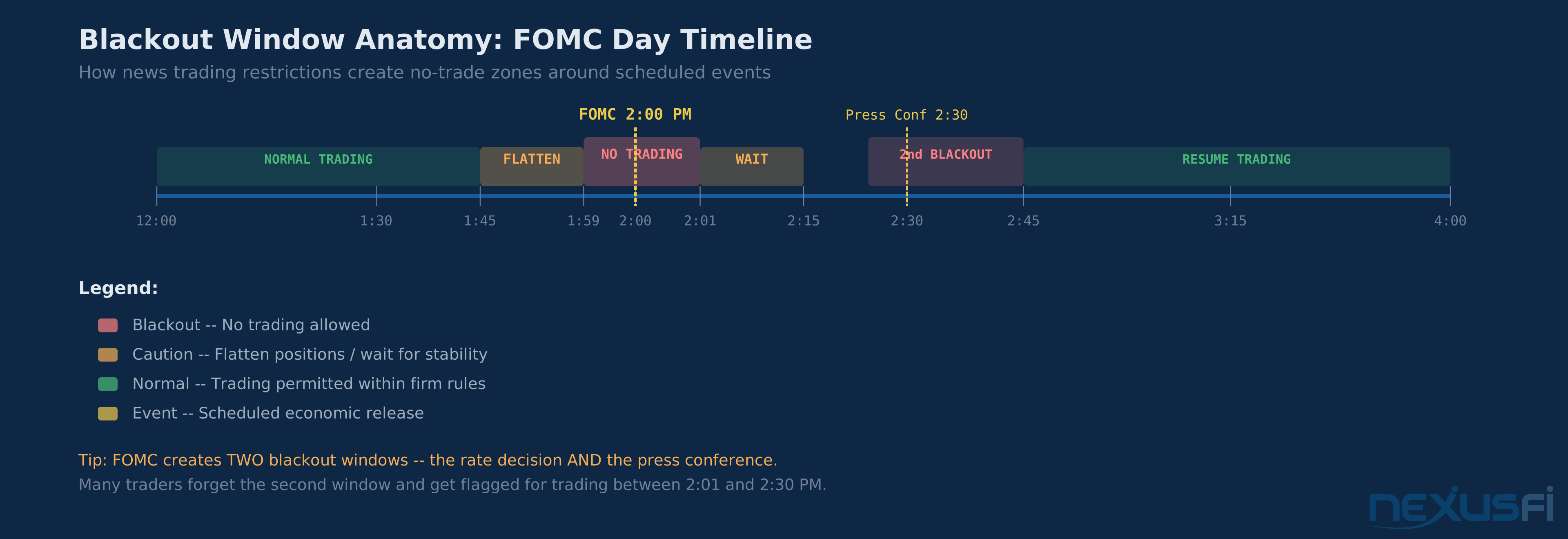
- Rate decision and statement at 2:00 PM ET — the initial market reaction.
- Press conference starting at 2:30 PM ET — often triggers a second, equally violent move.
Some firms treat these as one continuous event with a single blackout window. Others treat them separately, meaning you might be allowed to trade between 2:05 and 2:29, only to face another restriction at 2:30. @sstheo flagged the ambiguity directly: "You have to be flat during FOMC press conferences. But when is the press conference officially over??? This one is tough. I know a trader who lost his funded account because of this very thing." [6]
Timezone Traps #
News releases follow Eastern Time conventions. NFP drops at 8:30 AM ET. FOMC announcements come at 2:00 PM ET. But your trading platform might display exchange time, UTC, or your local timezone. If you're trading from Europe, Asia, or Australia, you need absolute clarity on which timezone the prop firm's blackout window uses.
This isn't theoretical. Traders have lost funded accounts because their platform clock was 30-60 seconds off from the firm's reference time. Set a separate countdown timer for major events. Don't rely solely on your platform clock.
What Happens When You Violate the Rules #
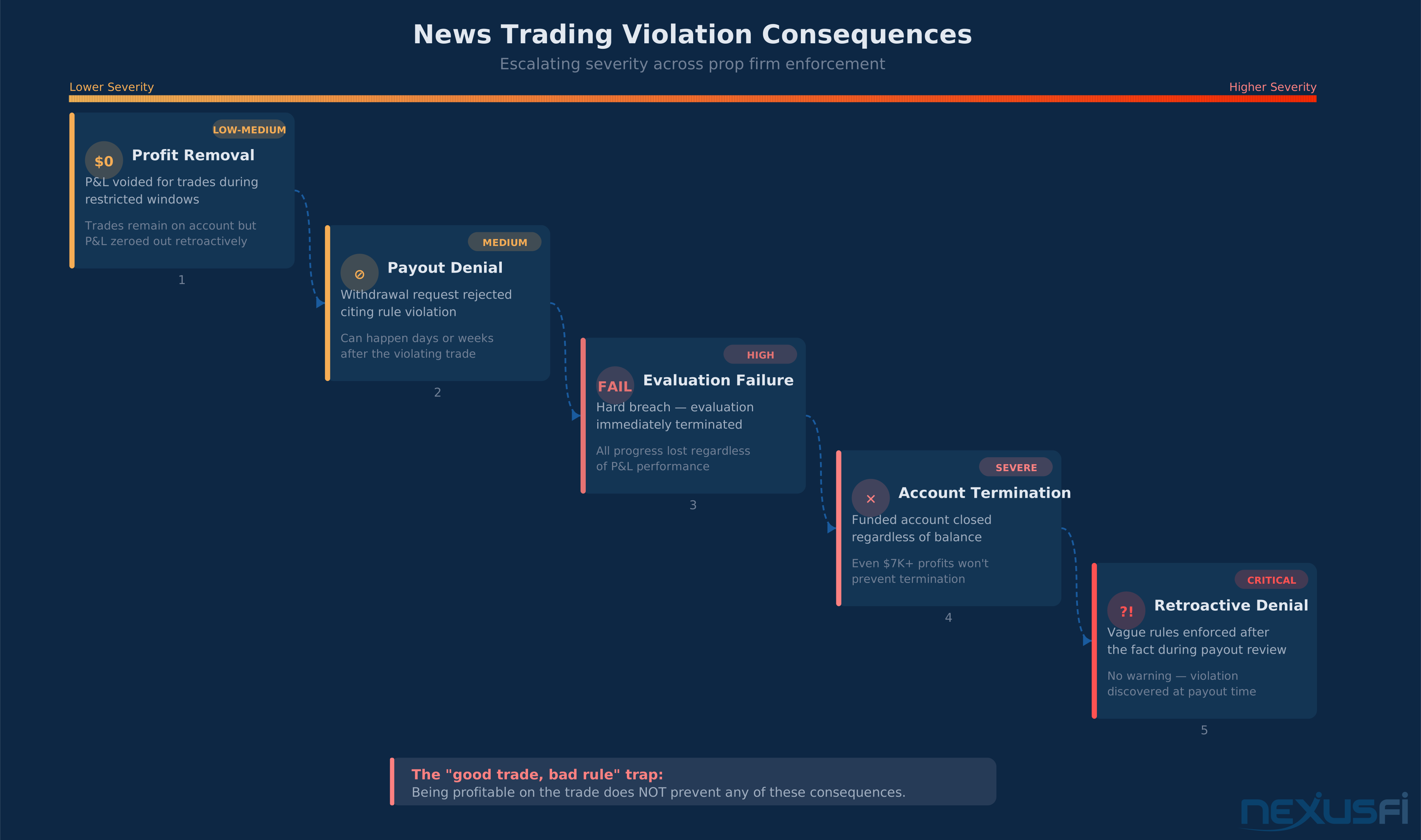
Consequences vary by firm, but they're almost always severe — and almost never worth the trade that triggered them.
- Immediate evaluation failure. Most firms treat a news trading violation during evaluation as a hard breach. You fail. No appeals, no exceptions. Your profit up to that point is irrelevant.
- Funded account termination. On funded accounts, a news rule violation can result in immediate termination regardless of balance. @Howard Roark described losing a funded account despite having "$7K of profits" and never being "in negative territory, nor did I exceed any maximum size parameters or hit any drawdown rules" — the news trading violation alone was enough to end the account.
- Profit removal. Some firms don't terminate the account but void all P&L from trades executed during restricted windows. You can have a great trading day and still show zero if any trades overlapped with a news window.
- Payout denial. The most frustrating consequence: you trade profitably, request a payout, and the firm denies it citing a news rule violation from days or weeks earlier. Under vague rule frameworks, this risk is acute because the firm may interpret "news trading" retroactively based on timestamps.
- The "good trade, bad rule" trap. You enter a trade. News drops. You're on the right side. You make money. And you get terminated. The firm doesn't care that you were profitable — they care that you were in a position during a restricted window. Intent doesn't matter. Outcome doesn't matter. Compliance is binary.
How to Trade Around the Calendar #
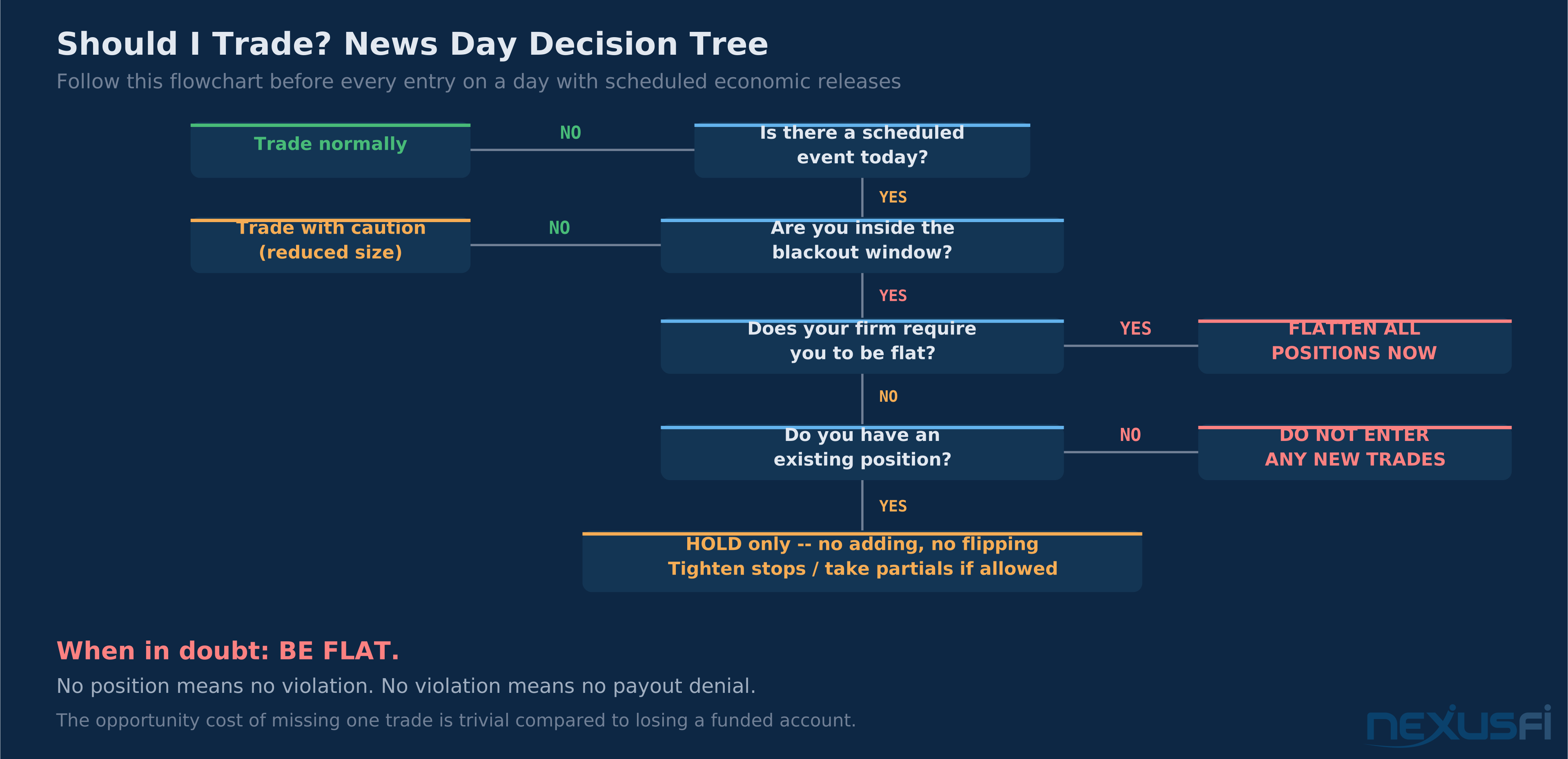
Compliance doesn't mean you stop trading on news days. It means you build a systematic workflow that makes violations structurally impossible.
The Pre-Event Flatten Protocol #
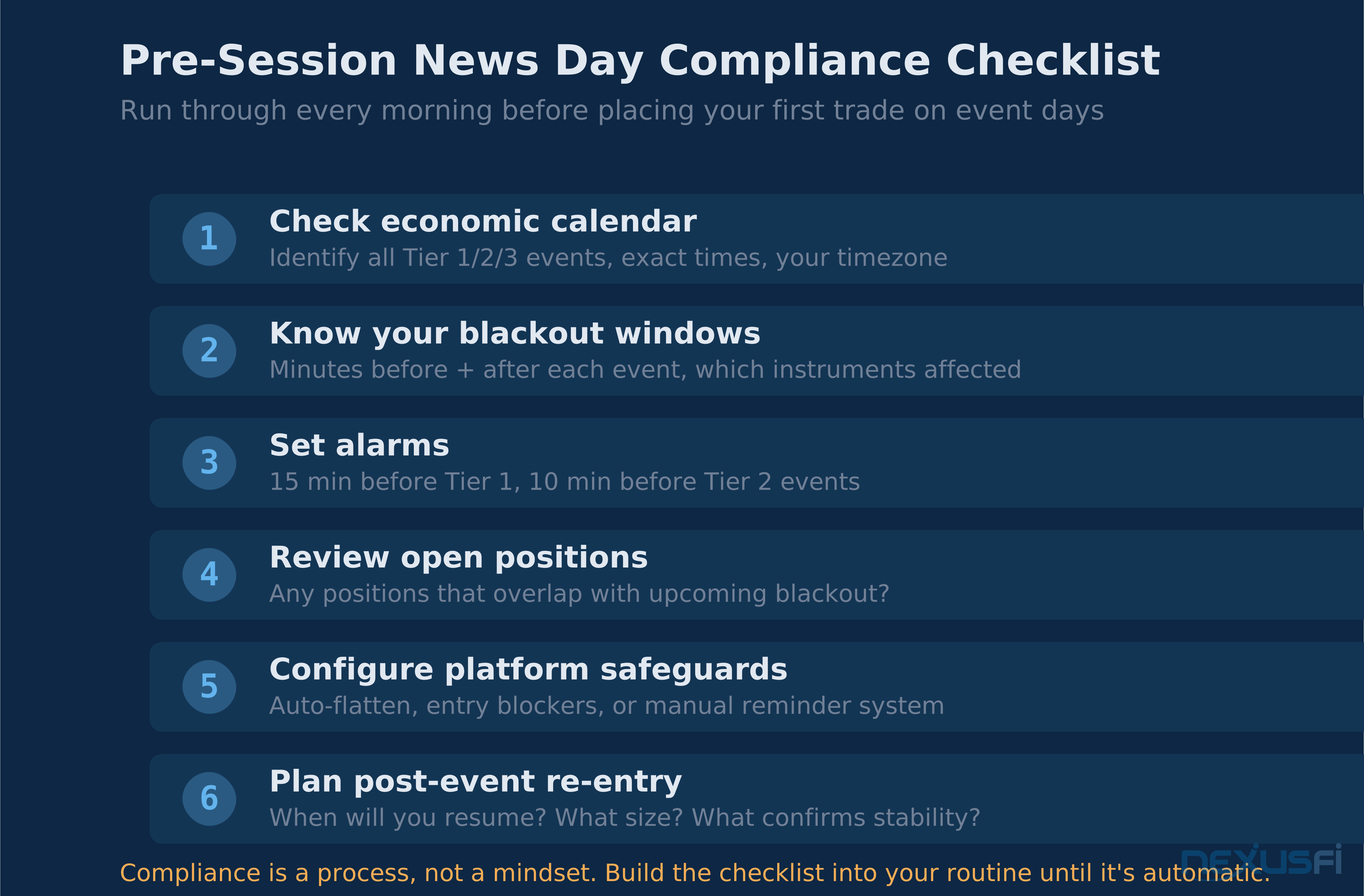
- Check the economic calendar every morning before the session opens. Identify all restricted events, their exact times, and which instruments are affected.
- Set alerts 15 minutes before every restricted event. This gives you time to manage positions without rushing.
- Flatten early, not late. Close out 2-3 minutes before the window opens. The opportunity cost of missing 2 minutes of trading is trivial compared to losing a funded account.
- Cancel all working orders. Some firms consider working orders as "activity" within the blackout. Even if yours doesn't, a limit order filling during the blackout because of a news-driven spike is a violation at most firms.
Post-Event Re-Entry #
When the blackout ends, resist the urge to jump immediately into the post-news flow.
Wait for:
- The initial spike and reversal to complete — usually 2-5 minutes
- Spread normalization — check bid-ask spread before entering
- Volume confirmation — sustained volume, not just the initial burst
- Price acceptance — price holding at a level rather than whipping back and forth
Most of the best post-news trades happen 10-30 minutes after the release, when the dust settles and a clear direction or range emerges. That's well outside any blackout window.
Calendar Clustering #
Some weeks stack multiple high-impact events. An FOMC week with CPI, retail sales, and Fed speakers can mean 3-4 restricted windows in a single week. Plan for these:
- Monday: Review the full week's calendar and mark every restricted window
- High-density days: Consider trading reduced size all day, not just around events
- Cross-event days: When two events are separated by only a few hours, consider flattening for the entire block
Instrument Rotation #
If your firm uses instrument-specific restrictions, trade non-restricted instruments during the blackout. When ES and NQ are locked during FOMC, CL might still be available. When NFP restricts equity futures, energy or metals contracts may be unrestricted.
This only works if you already trade those instruments competently. Don't start trading CL for the first time during an FOMC blackout just because it's available.
Adapting Your Strategy on News Days #
Beyond compliance, your overall approach should change on days with major scheduled releases.
Reduce Position Size #
Even outside blackout windows, news days have higher realized volatility. The range expansion that follows a major release affects the entire session. Cut your normal position size by 30-50% on high-impact news days. This keeps a surprise gap or volatility spike from pushing through daily loss limits.
Widen Your Expectations #
A setup that normally targets 4 points on ES might run 8-10 points on a post-FOMC session. But your stop needs to be wider too. The same setup that works with a 2-point stop in a normal session might need 4-6 points after a major release. If your prop firm's per-trade loss limit doesn't accommodate wider stops, trade smaller or skip the post-event session.
Focus on the Non-Event Part of the Day #
Most major US releases happen at 8:30 AM ET or 2:00 PM ET. That leaves significant portions of the trading day unaffected:
- Pre-market session before 8:30 AM releases — often clean setups in the 7:00-8:15 window
- Mid-day session between a morning release and afternoon event
- Late session after 2:30 PM on FOMC days once the blackout lifts
Build a News Day Playbook #
Document your approach for different event types:
- FOMC days: Flat by 1:45 PM, no new trades until at least 2:45 PM, reduced size for the rest of the session
- NFP days: Flat by 8:15 AM, no new trades until 9:00 AM, resume with half size
- CPI days: Same protocol as NFP
Write it down. Follow it every time. The playbook eliminates decision fatigue on event days and prevents the emotional "just this once" trade that costs funded accounts.
The Rule Interpretation Checklist #
Before starting any evaluation, decode the firm's news trading rules by answering these eight questions. If you can't get clear answers to all of them, that's a due diligence red flag — consider whether the ambiguity is worth the risk of losing a funded account over a rule you couldn't fully understand before you started trading.
- What events are covered? Get the specific list. If the firm says "major economic releases" without listing them, ask for the calendar they use.
- What's the blackout window? Exact minutes before and after each event type.
- Does the rule apply to entries, exits, or both? Some firms let you exit existing positions during the blackout but not enter new ones.
- What about working orders? If a limit order placed before the blackout fills during it, is that a violation?
- Are all instruments restricted, or only specific ones? Get the instrument list for each event type.
- Do the rules differ between evaluation and funded phases? If so, build your strategy around the funded rules from day one.
- What's the consequence of a violation? Immediate failure, profit removal, warning, or account termination?
- Who defines the timestamps? The firm's server clock, the exchange timestamp, or the economic calendar provider?
Knowledge Map
Prerequisites
Understand these firstGo Deeper
Build on this knowledgeReferences This Article
Articles that build on this topicCitations
- — Platform malfunction leads to 125 point loss (2021) 👍 6“It sounds like you put your trade on 1 minute before the CPI report came out? It's not unusual to see the liquidity be all but "dried up" during a reaction to scheduled (or even unscheduled) news events.”
- — Topstep's Nick Dolby - Ask me Anything (AMA) (2015) 👍 5“tradertron- Yes. We have had Funded Traders adjust their strategy in FTP as they were using a news release type strategy while in the Combine.”
- — My attempt at a funded account with OneUpTrader (2019) 👍 2“Hello, This applies only to funded, during the combine you can trade news: 1) You can trade at some news and some news not. For example: FOMC Meeting Minutes you can't trade Equity Indexes like ES from 1 Minute before to 1 minute after.”
- — ApexTraderFunding.com experience and review (2024) 👍 3“ApexTraderFunding I have some questions about the rules for funded/PA accounts shown here: https://support.atf.”
- — My MES Live Account Journal (OneUp) (2019)“All the information you need is on the website. For major economic releases, Funded Traders must be flat before, during, and after a corresponding major economic release below The funding partners refer to this Economic Calendar, for details on each...”
- — My MES Live Account Journal (OneUp) (2019) 👍 1“The last I heard, the 10 day free option (12 contract account) ends on June 10 (this Monday). If you don't finish in 10 days, THAT IS OKAY, you just need to pay the $195 to continue for another 30 days.”
- — Any long term success stories from funded traders in these get-funded programs? (2021) 👍 3“I agree with this, BUT, fundamentally, the business model is all the same and I do not see anything which suggests they actually want to fund and back a trader. It seems like TST have the best reputation and possibly for a good reason.”
- — IT7 Journal (2014) 👍 14“I've been removed from my funded account with TST unfortunately. I had a very poor oversight on my part.”
- — Making a Living with the Micros (2021) 👍 11“Trade of the day - MYM post-FOMC https://nexusfi.com/attachment.php?attachmentid=312164 POST FOMC interest rate release. First of all, I was FLAT going into the news at 2:00 pm ET.”