



Funded Trader Operations Manual: Daily Workflows, Risk Tracking, and the Administrative System That Protects Your Funded Account
Overview #
Getting funded is the goal. Staying funded is the job.
Most traders spend months obsessing over evaluation strategy — the rules to pass the challenge, the setups to hit the profit target, the discipline to avoid the daily drawdown limit. Then they get funded, and they treat the funded account like a slightly more serious paper account. That's the mistake that ends most funded careers.
A funded account isn't a reward for passing a test. It's a business relationship with specific operational requirements, and the prop firm is monitoring you. Every trade, every drawdown approach, every payout request goes through their system. The traders who build consistent payout histories — who actually make funded trading a career — aren't just better traders. They're better operators.
This guide covers the operational layer: the pre-market preparation system, real-time drawdown tracking, daily loss limit management, the payout request workflow, and the record-keeping architecture that protects you in disputes. The administrative infrastructure the evaluation process never teaches you.
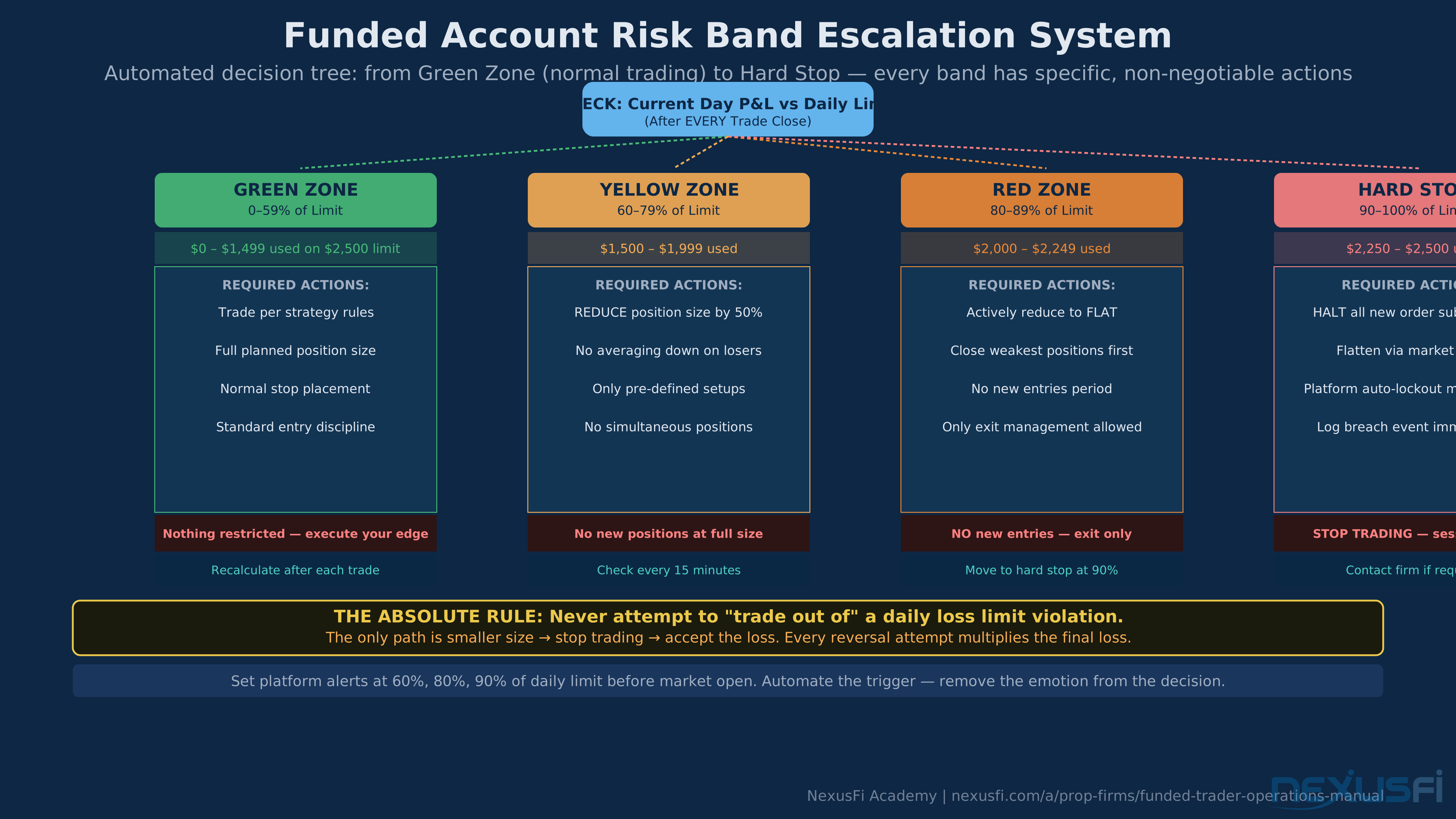
The 4-band risk escalation system: specific, non-negotiable actions at each drawdown level. Automate discipline — don't rely on willpower when you're stressed and down money.
The Pre-Market Checklist: 30 Minutes That Prevent 90% of Errors #
Most blown funded accounts don't fail in the trade. They fail in the preparation. Or the lack of it.
@indextrader7, in a widely-read NexusFi thread, documented exactly how this happens: "I've been removed from my funded account with TST unfortunately. I had a very poor oversight on my part. I totally forgot that I had a WEEKLY loss limit." He wasn't trading poorly. He wasn't overleveraged beyond recognition. He simply didn't verify which limit was about to reset — and it cost him the account. That's a pre-market checklist failure.
Most blown funded accounts fail in preparation, not execution. The checklist below is non-negotiable — do it every day, before the first trade, no exceptions.
The pre-market checklist runs 30 to 45 minutes and happens before any decision about what to trade. (For a complete breakdown of all the drawdown mechanics behind these rules, see Prop Firm Risk Rules and Drawdown Mechanics.) It's in five sections, and none of them are optional.
Section 1: System Health (08:30--08:35)
Confirm the data feed is live (not just that the platform launched — real-time ticks). Check latency if you trade on latency-sensitive setups. Verify your backup internet path. Confirm login credentials for both broker and prop firm portal. Five minutes when nothing is wrong. Five hours to deal with when something goes wrong during a live position.
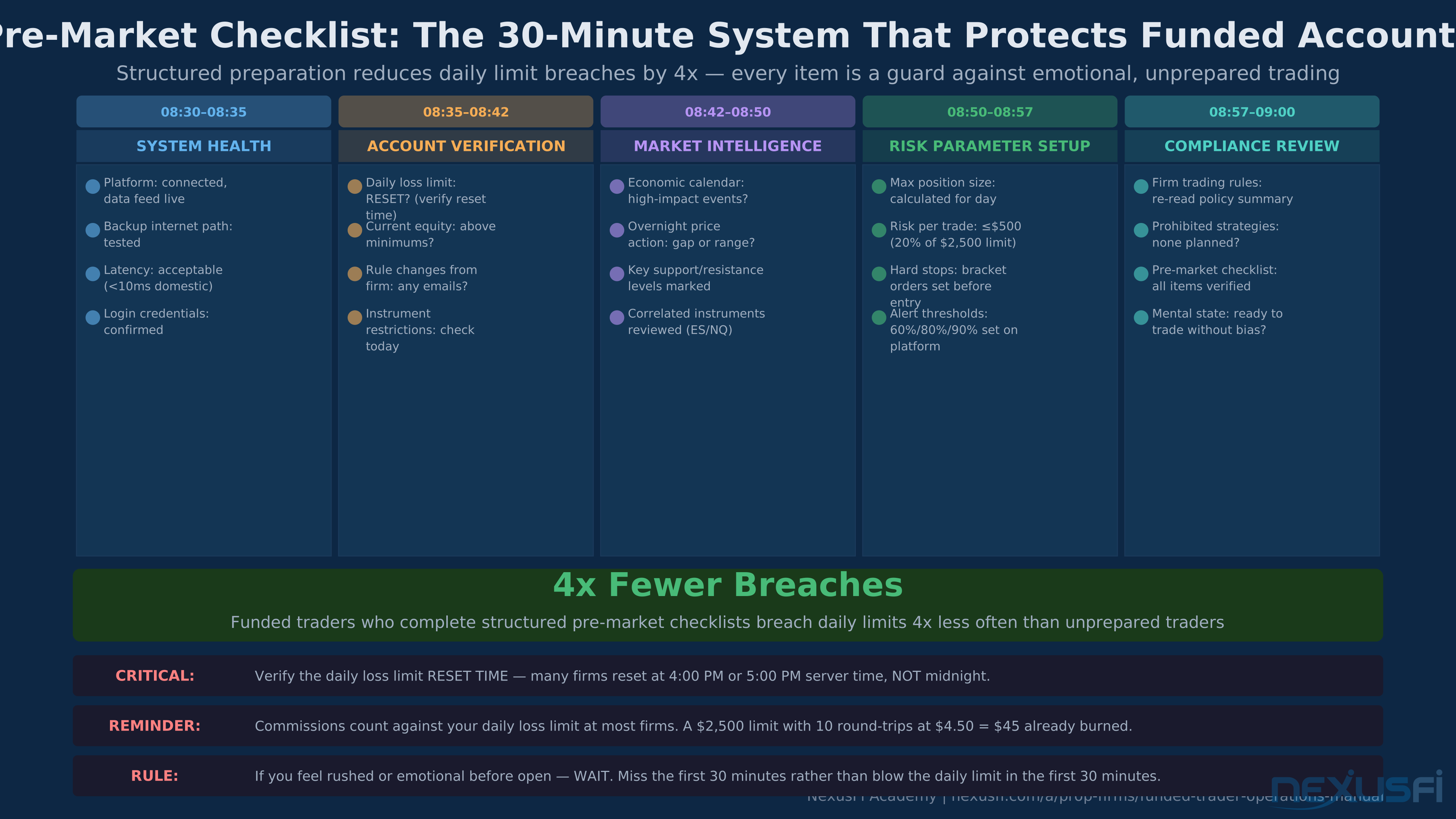
The 30-minute pre-market system, broken into five sections with specific time allocations. Traders who complete structured checklists breach daily limits 4x less often than those who skip preparation.
Section 2: Account State Verification (08:35--08:42)
This is where the terminations happen.
Your daily loss limit doesn't reset at midnight your local time. It resets at the server time configured by your prop firm. Apex resets at 3 PM ET or 5 PM ET depending on account type. Topstep uses end-of-day Eastern. Some platforms use Midnight UTC, which is 7 PM or 8 PM ET. If you think your limit reset at midnight your time and it actually resets at 5 PM ET, you could start the next morning already inside a partially-used daily limit from trades you placed the afternoon before.
@matthew28 documented his TST funded account setup precisely: "Max daily drawdown $1,000. Personal daily loss limit $460. Max weekly drawdown (trailing drawdown)..." The structure is clear — there are multiple limits, some firm-imposed, some self-imposed, all of which have different reset times and calculation methods. Knowing your specific numbers before the open is non-negotiable.
Also check: Is there a weekly loss limit in addition to the daily? Any policy change notices? Instrument restriction changes? These aren't questions for mid-session.
Section 3: Market Intelligence (08:42--08:50)
Economic calendar first. NFP, CPI, FOMC, and major geopolitical events can gap through stops and trigger daily limits in minutes. Know what's scheduled and have a rule for it — most experienced funded traders sit out the first 15--30 minutes after major releases or reduce to micro contracts. Beyond calendar: mark key levels from overnight action (value area, prior day high/low) before the open. These are your session reference points.
Section 4: Risk Parameter Setup (08:50--08:57)
Calculate your maximum position size before the first trade. Never risk more than 20--30% of your daily limit on a single trade — if your daily limit is $2,500, your per-trade risk cap is $500--750. The math happens before the setup appears, not during the entry decision. Write this number down in your checklist.
Place platform alerts at 60%, 80%, and 90% of your daily limit before a single trade executes. Automatic checkpoints remove the emotional guesswork when you're in a losing session.
Section 5: Compliance Review (08:57--09:00)
Pull up the actual rules document and confirm nothing changed. Check instrument restrictions and confirm no planned strategies violate the firm's terms — hedging, news trading during blackout windows, ambiguous patterns. Rules change with minimal notice. Traders who read the update the morning it arrives stay funded; those relying on onboarding memory get surprised.
Real-Time Drawdown Tracking: The Dashboard You Need Before Your First Trade #
The most dangerous assumption a funded trader makes is that the prop firm's dashboard is sufficient. Most firm dashboards update every few minutes. Some update only at end of day. In fast-moving markets, your account can move from 40% of your daily limit to 100% in a single sequence of trades before the dashboard refreshes.
Build your own real-time tracking system in parallel with whatever the firm provides.
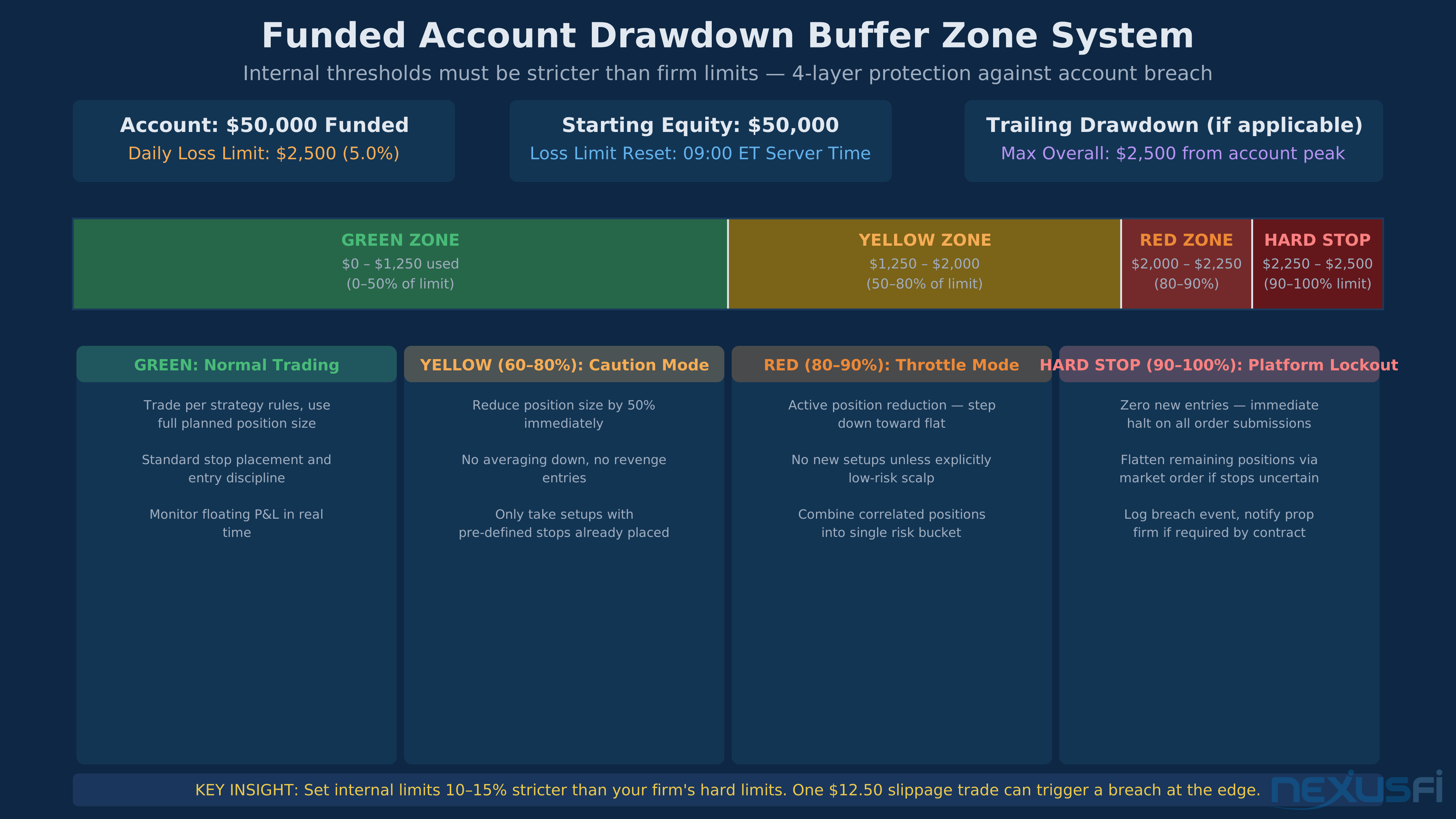
The 4-band buffer system for a $50K funded account with a $2,500 daily limit. Internal limits must be stricter than firm limits — one $12.50 slippage trade can trigger a breach at the edge.
The Five Numbers You Track in Real Time
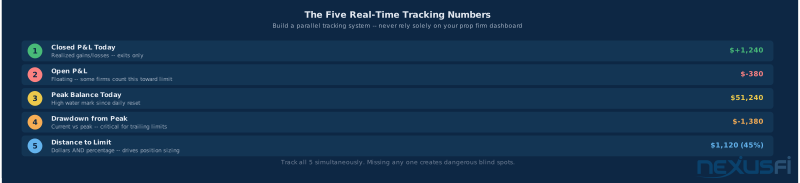
The five parallel tracking numbers every funded trader needs — independent of the prop firm's own dashboard, which often updates every few minutes, not tick-by-tick.
Closed P&L today — realized gains/losses on all closed trades. Necessary but insufficient on its own.
Open P&L — floating gains/losses on current positions. Many firms count floating P&L toward your daily limit. @sstheo flagged this: "you MAY NOT automatically be flattened by the system at the breach point" — you have to build your own enforcement system.
Peak balance today — highest equity since daily reset. Drives trailing drawdown calculations.
Drawdown from peak — difference between peak and current equity. Critical for trailing drawdown firms.
Distance to limit — in dollar and percentage terms. Drives all position sizing decisions.
Static vs Trailing Drawdown: The Calculation That Destroys Accounts
This is the single most misunderstood concept in funded trading, and it terminates more accounts than any strategy mistake.
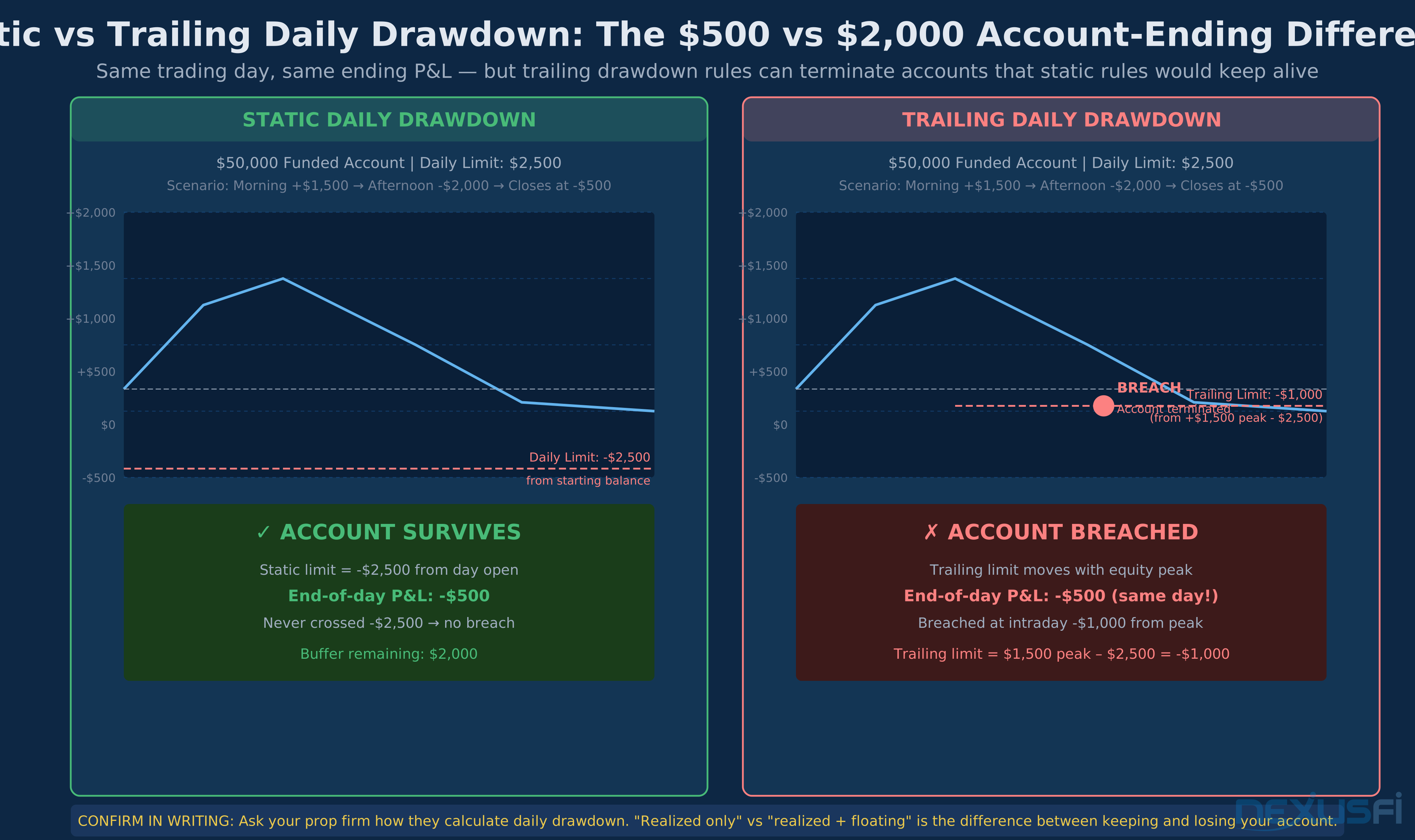
Same trading day, same ending P&L of -$500 — but a trailing drawdown rule terminates the account that a static rule would keep alive. The peak-to-current calculation is the difference between trading tomorrow and explaining to friends why you lost your funded account.
Here's the scenario: You start the day at $50,000. By 10:00 AM, you've run the account up to $52,000 — a nice $2,000 morning. Then the market turns, and you give back $2,500. You end the session at $49,500, down $500 for the day. You're disappointed but not concerned — your daily loss limit is $2,500 and you only lost $500.
If your firm uses static daily drawdown, you're fine. Your limit is $2,500 from the $50,000 starting balance, and you ended well above it.
If your firm uses trailing daily drawdown, you breached your limit and your account is terminated. Your peak intraday balance was $51,500. Your trailing drawdown limit of $2,500 means your floor moves with you — it was $49,500 when you peaked at $52,000. When your account fell to $49,500, you hit the trailing limit — mid-session, not at end of day. The drawdown from peak was $2,500, and that triggered termination.
Trailing drawdown floors move UP with your peak — they never move down. A strong morning session raises your floor permanently for that day. Confirm in writing whether your firm calculates this using equity, account balance, or net liquidation value. The answer changes your entire intraday risk management.
Get the specific calculation method from your firm in writing before your first funded trade. "Closed P&L only" vs "closed plus floating P&L" is the difference between keeping and losing your account on a day where you had a strong morning and gave back gains in the afternoon.
Daily Loss Limit Management: The 4-Band System #
Funded traders who rely on willpower to enforce their risk rules at the edge of their daily limit fail consistently. Willpower degrades under stress, and nothing creates more stress than approaching a daily loss limit that could terminate a career. You need a rules-based system that defines exactly what you do at each drawdown level, so you're executing a pre-written plan instead of making decisions under pressure.
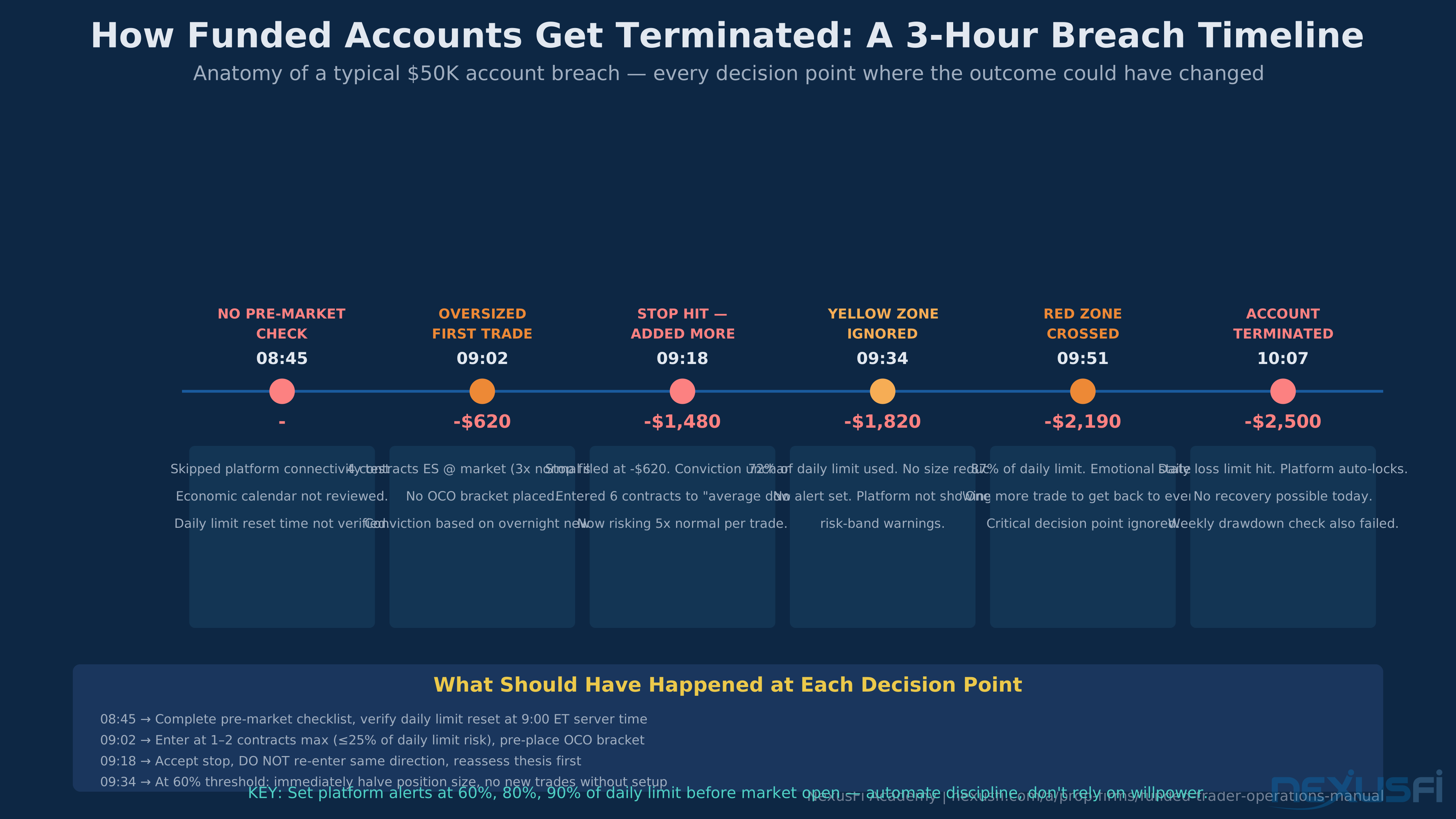
Anatomy of a typical funded account termination: six decision points in 82 minutes where each wrong choice compounded the previous one. The pattern is preventable at every step.
The margin of error at the edge of the daily limit is smaller than most traders realize. At $4.50 per round-trip commission on ES, 10 trades costs $45. If your daily limit is $2,500 and you're tracking P&L before commissions, you can think you have $200 of buffer when you actually have $155 — and one losing scalp erases it.
Green Zone (0--59% of Daily Limit)
Normal trading. Full planned position size. Standard stop placement. Execute your edge without restrictions. For a $2,500 daily limit, this is the first $1,499 of losses — or any P&L level where you haven't used 60% of your limit yet.
Requirement: track P&L in real time — know exactly where you stand after each trade.
Yellow Zone (60--79% of Daily Limit)
Caution mode, immediately upon crossing 60%. No gradual transition. No "just one more full-size trade." The moment you hit 60% of your daily limit, your maximum position size is cut in half from your normal plan. If you normally trade 3 contracts ES, you're now at 1--2 contracts maximum. Non-negotiable.
Also in Yellow Zone: no averaging down on losing positions. This is when the emotion to add to losers is highest — "I'm already down, if it just comes back a little..." That thinking has ended more funded accounts than poor entries. No simultaneous positions in multiple correlated instruments. No setups that don't have pre-placed stops already in the market.
Red Zone (80--89% of Daily Limit)
Active position reduction toward flat. You're in exit mode. No new entries period — not even the best setup you've ever seen. Your job is to get to flat or near-flat before the session ends. Close the weakest positions first. If you have correlated positions (long NQ and long ES), close them as a unit.
Red Zone psychology: every trade has existential stakes. The traders who manage this zone follow pre-written rules rather than improvising under pressure. Rules set before the heat of a drawdown protect you from emotional decision-making precisely when you're most vulnerable to it.
Hard Stop (90--100% of Daily Limit)
Session over. Full stop. Zero new order submissions, period. (For a systematic framework on mandatory stop rules, see Consecutive Loss Protocols and Trading Shutdown Rules.) If you have open positions, flatten them via market order — not a limit order, not "when it gets back to X." Market order, close it now, accept the fill. The alternative is hoping the position recovers, which often turns a 90% drawdown into a 110% drawdown and a terminated account.
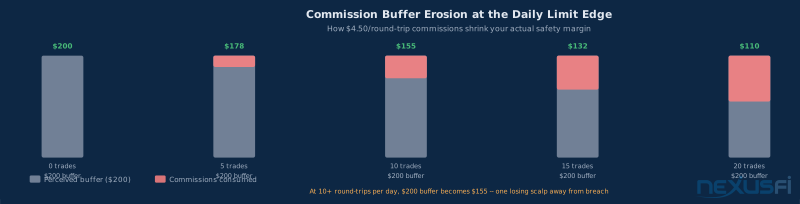
Commission buffer erosion at different trade counts. At 10 round-trips, a $200 buffer becomes $155 — one scalp loss away from a daily limit breach.
The cardinal rule that every experienced funded trader agrees on (for the full psychology framework behind this, see Prop Firm Trading Psychology): never attempt to "trade out of" a daily loss limit violation. The psychology that creates this error — "I'm down $2,200 against a $2,500 limit, one big trade could get me back to even" — is the same psychology that turns a tough day into a terminated account. Accept the loss. Protect the account for tomorrow.
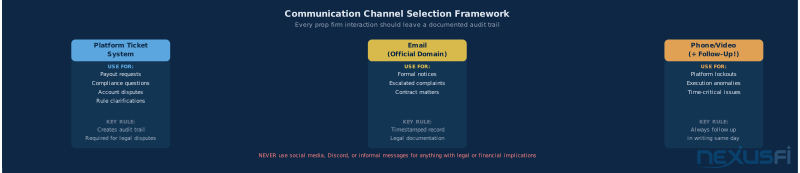
Payout Request Workflow: Getting Paid Without Delays #
The payout process separates prop firms into two camps (for full firm-specific timelines, see Prop Firm Payout Timing and Withdrawal Mechanics): those with clear, systematic processes, and those that create maximum friction between traders and their money. Understanding both types — and knowing what you can do to accelerate the process regardless of firm type — determines whether you wait 3 days or 3 weeks between request and receipt.
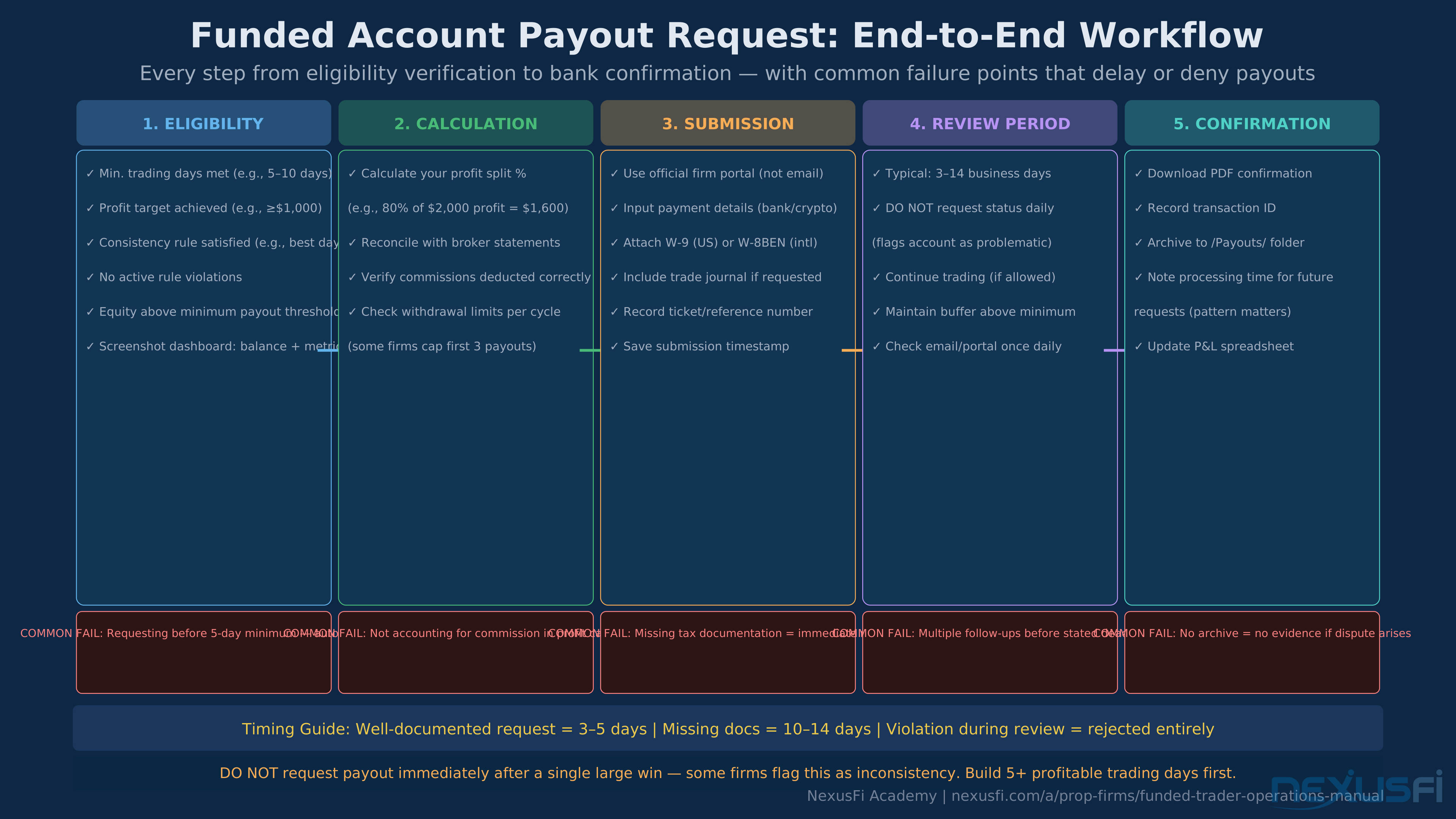
End-to-end payout workflow: 5 phases with common failure points at each step. Well-documented requests clear in 3--5 days. Incomplete submissions drag out to 10--14 days.
Phase 1: Eligibility Verification
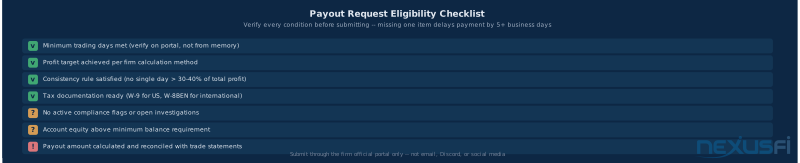
The seven-point payout eligibility checklist — verify every item before submitting. Missing tax documentation is the single most common first-payout rejection cause.
Before you submit anything, verify every eligibility criterion. Don't assume you've satisfied the requirements — confirm them explicitly. Common requirements include minimum trading days (typically 5--10 business days in the funded account), profit targets, consistency rules, and no active rule violations.
@HighCall79 documented a specific Apex consistency requirement that catches traders by surprise: "only 'flipping' contracts in an attempt to meet the minimum required days to request a withdrawal is prohibited and will result in a denial of payout request until consistency is shown." Trading barely enough to technically meet the minimum-days rule is not the same as demonstrating consistency. Firms look at the trading history holistically, and requests that look like minimum-effort compliance get flagged for extended review.
@shokunin shared his Apex experience with multiple pending payouts: "2/3 of my queried payouts have now been sent, and the 3rd is being processed." The experience of having multiple payouts in queue simultaneously is common for productive funded traders, and managing them requires the same systematic approach as managing the trading itself.
Phase 2: Documentation Assembly
Screenshot your account dashboard showing current balance, key metrics, and compliance status before submitting. This is your timestamp that you were in good standing at the moment of request. If there's a dispute later about account state at time of payout request, this screenshot is your evidence.
Calculate your payout amount using the firm's profit-split formula before submitting. Common structures: 80% of profit above a threshold, sliding scale (60/70/80% as you demonstrate consistency), or flat split. Reconcile your calculation against the broker's trade statements. Commissions, data fees, and platform fees can all affect the net figure.
Gather tax documentation proactively. US traders: have your W-9 ready. International: W-8BEN. Missing tax documentation is the #1 reason first payout requests get rejected.
Phase 3: Submission and Confirmation
Submit through the firm's official portal — not email, Discord, or social media. Record the ticket number, screenshot the confirmation, note the timestamp. If no acknowledgment within 24 hours, one polite support inquiry is appropriate. One — not daily follow-ups.
Phase 4: Review Period
Typical review periods: Apex 3--5 days (stated 1--2), Topstep 1--5 business days, smaller firms 24 hours to 2--3 weeks. @TraderAnna documented: "27th Apr — requested withdrawal. 30th Apr — they have confirmed that they started the withdrawal." Know your firm's SLA, give them the full timeline before following up, and understand the review exists to verify the trading record matches the payout request.
During review: continue trading if rules allow, but maintain a buffer above minimum equity. Some firms halt new trading during review; most don't.
Phase 5: Receipt and Documentation
When payment arrives, archive the confirmation PDF immediately, record the transaction ID, and verify the amount matches your calculation. Track processing time per payout — if your firm consistently takes 7 business days, you can time future requests so.
What to Avoid
Don't request payout immediately after one large winning day (inconsistency flag), in multiple small requests below firm minimums, or during active drawdown recovery. Build 5+ consistent profitable days first.
Communication with Prop Firms: The Professional Standard #
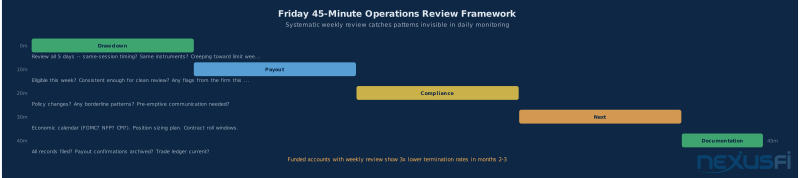
Channel selection framework for prop firm interactions. The ticket system creates the audit trail that protects you in disputes. Phone calls require same-day written follow-up.
Your relationship with your prop firm is a business relationship. Treat every communication so — professional, documented, specific, and solution-oriented.
Channel Selection
Use the firm's official support channels — in-platform messaging, ticketing systems, or email. Keep communication in official systems because they generate audit trails that protect you. For time-sensitive issues (platform lockout during live trading, execution anomaly), a call is appropriate — but always follow up with a written summary through official channels to create the paper trail.
Message Structure
Every message to your prop firm should include: your account ID in the first line, the date and time with timezone (both your local time and the firm's server time if different), a specific factual description of what happened, the market context if trading-related, what you did to mitigate the issue, and a clear request or question.
Factual and specific means: "At 09:43:22 ET on June 4, 2026, I had a 2-contract ES position (entry 5842.50, stop 5838.50) that was stopped out at 5835.25 — 3.25 points below my stop order price — during the 09:43 high-impact news release. Order ID: 4829374." Not: "My stop didn't fill where I expected."
When Communication Is Mandatory
Notify the firm immediately after any platform outage during active trading, execution anomaly (partial fills, stops triggering at unexpected prices), or any trading pattern that might be ambiguous under your contract terms. The principle: prop firms are far more accommodating of proactive communicators than silent hope-for-the-best traders.
Record-Keeping: The Audit Trail That Protects Everything #
Funded account record-keeping is your legal protection and dispute-resolution evidence. Traders with complete records resolve payout disputes in 2 business days. Traders without documentation sometimes don't resolve them at all.
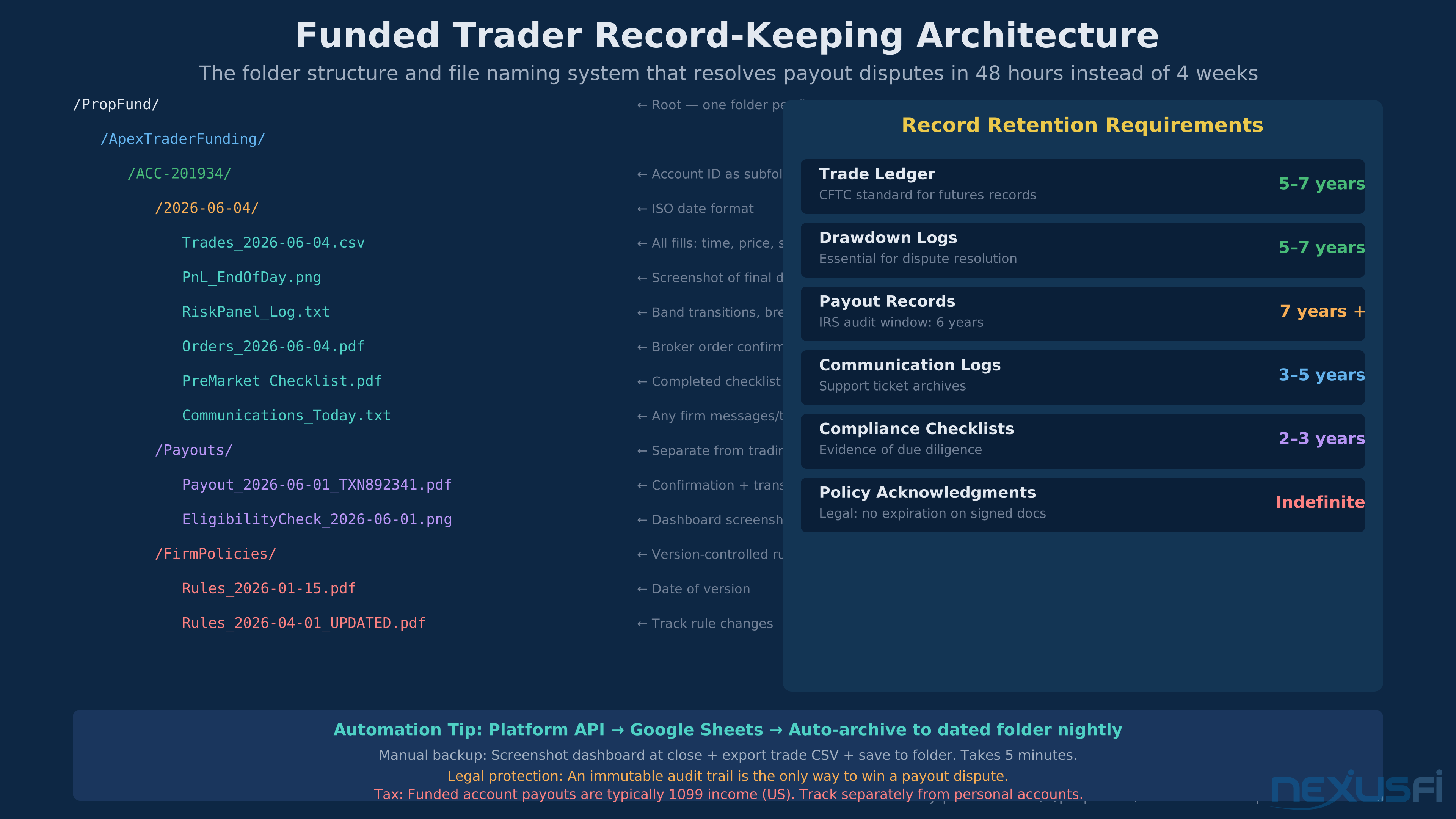
The folder structure and file naming system that resolves payout disputes in 48 hours. Trade ledgers at 5--7 years, payout records to 7 years, policy acknowledgments indefinitely — driven by IRS audit windows and CFTC regulatory requirements.
Daily Capture Requirements
Trade ledger. Every fill: entry and exit times to the second, instrument with contract specification, position size in contracts, gross P&L, commissions and fees, net P&L, strategy classification, execution quality notes, order IDs. This is the primary document. Everything else references it.
Account metrics snapshot. End-of-day: starting balance, ending balance, peak intraday balance, maximum drawdown reached, daily P&L (realized and floating if applicable separately), total commissions paid, number of trades, which risk bands you entered and exited. One screenshot of the dashboard at close, one screenshot of the trade history.
Risk panel log. For each session: document your starting daily limit, when you entered each risk band (with timestamp and dollar amount), what action you took, and when you returned to a lower band. This becomes critical evidence if there's ever a dispute about whether a breach was operationally triggered or a rule violation.
Compliance checklist completion. Timestamped record that you completed your pre-market checklist each day. This demonstrates due diligence — that you were operating under a structured system, not making ad-hoc decisions.
@matthew28 documented his daily journal system: "I take about twenty minutes or so. I tried filling in some of this during the trading session but found it too distracting and now do it afterwards." The post-session documentation cadence — immediately after close while everything is fresh — is the right approach. Doing it the next morning means you've forgotten details. Doing it during the session means you're distracted from trading.
Folder Structure
Use a standardized date-based folder structure: /PropFund/{FirmName}/{AccountID}/{YYYY-MM-DD}/ with ISO-format filenames (YYYY-MM-DD). ISO format means alphabetical sorting equals chronological sorting — critical when searching hundreds of files months later.
Keep payout records in a separate subfolder. Each payout gets its own file with the transaction ID in the filename. Also store your eligibility screenshot and calculation document alongside each payout confirmation.
Firm policies go in their own version-controlled folder. Save the rules document each time you download it, with the download date in the filename. If a rule changes and you're trading under the old understanding, having the dated policy documents is your protection.
Retention Periods
Trade ledgers and drawdown logs: 7 years minimum (CFTC: 5+ years; IRS audits up to 6 years — 7 clears both). Payout records: 7 years, indefinitely preferred. Communication logs: 3--5 years — download ticket threads when they close, portal access expires. Policy acknowledgments: indefinitely. Dated policy documents are your defense if a firm claims you violated a rule that wasn't in effect when you traded.
Tax Considerations
Funded account payouts in the US are typically classified as 1099-NEC income — you're a service provider, not an employee. Track funded account income completely separately from personal trading. For the complete guide to funded trading tax treatment, estimated payments, deductible expenses, and the 1099-NEC filing process, see Prop Firm Trading Taxes and Tax and Legal Considerations for Prop Firm Funded Traders.
The Weekly Operations Review: 45 Minutes That Prevent Account Terminations #
The 45-minute Friday review framework: five sequential blocks targeting the highest-risk patterns that accumulate invisibly over a trading week.
Daily operations protect you from today's risks. Weekly review protects you from patterns you can't see day to day.
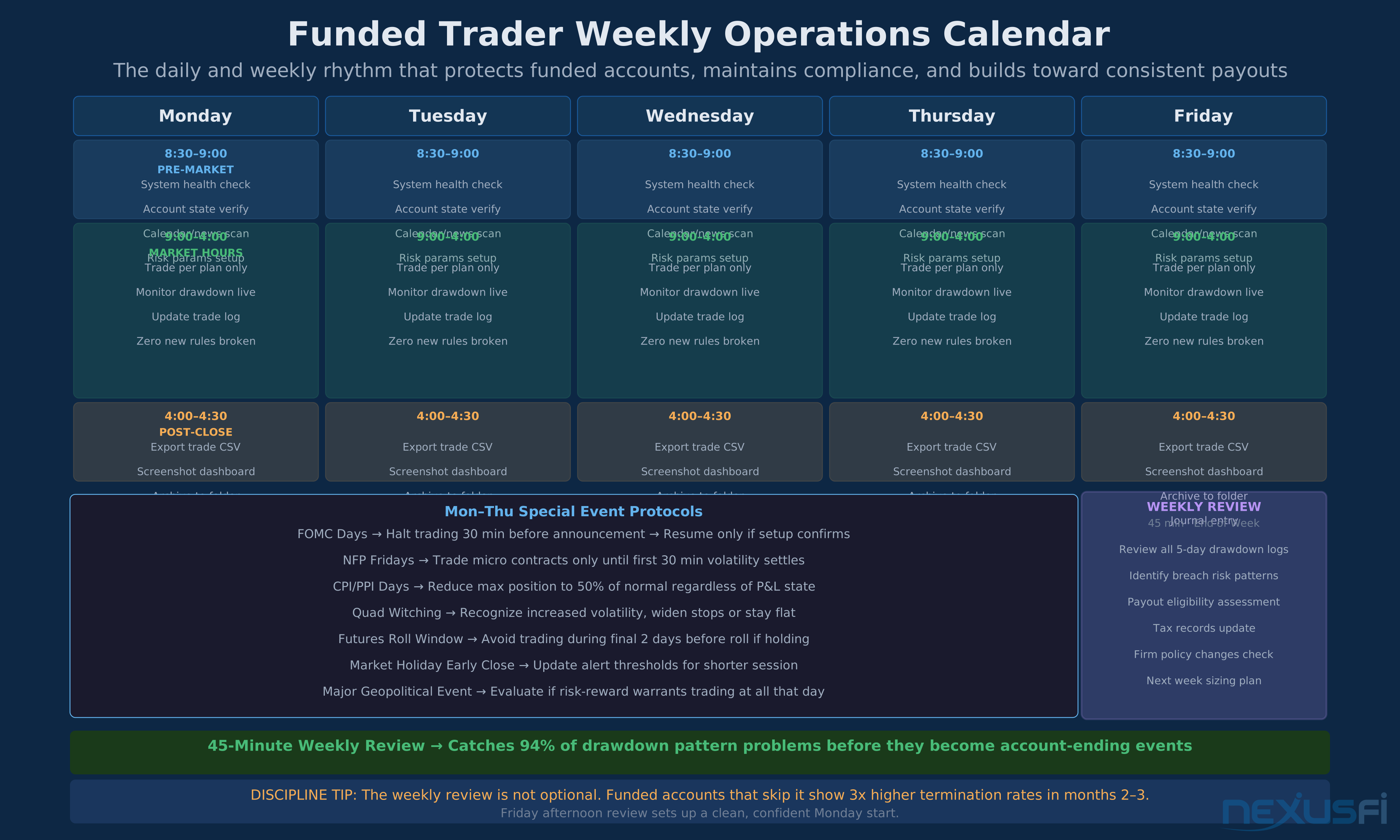
The funded trader's weekly rhythm: daily pre-market, trading, and post-close routines, plus the Friday 45-minute review. Funded accounts that skip the weekly review show 3x higher termination rates in months 2--3.
Drawdown Pattern Analysis
Review your drawdown log for all 5 days together. Are you consistently approaching 60% of your limit on the same days? Are certain instruments or times of day creating disproportionate drawdown? Is your worst day's drawdown creeping upward week over week? These patterns are invisible when you're reviewing one session at a time but obvious when you look at a week together.
Payout Eligibility Assessment
Every Friday, assess where you stand on payout eligibility. (For a complete performance tracking and playbook system, see Prop Firm Trading Journal.) Are you on track for this week's payout request, or will you need another week? Have you maintained the consistency the firm expects to see, or did one big day skew the picture in a way that will trigger extended review?
@SoftSoap, reflecting on the NexusFi Journal Challenge, noted: "I have become more disciplined, focused, self-aware, and I have actually turned a profit!" The accountability system — in that case a public journal, in yours a private weekly review — creates the feedback loop that turns random trading performance into consistent performance.
Compliance and Rule Changes
Check your firm's portal and email for any policy updates issued during the week. Review your trade log to confirm you've operated within all rules for every session. If you find any borderline situations — trades that might have been close to a restricted pattern, positions held through a period when you should have been flat — address them proactively by contacting the firm rather than hoping nobody noticed.
Next Week Preparation
Set your position sizing plan for the following week. Account for economic calendar events — FOMC, NFP, CPI — and have explicit rules for how you'll trade those days. Check for futures contract roll windows if you trade near expiration. Update your internal drawdown limit calculations if your account equity has changed much.
Special Event Protocols #
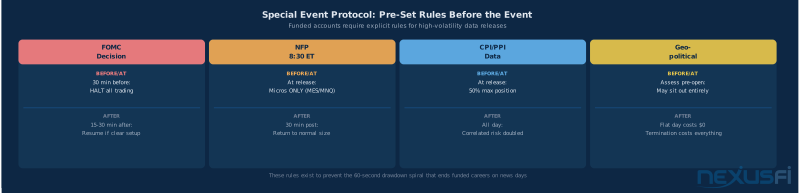
Four high-risk event types with explicit pre-written protocols. Funded traders who trade FOMC and NFP without pre-set rules are 4x more likely to breach their daily limit during the event window.
Certain market events require pre-set protocols — normal trading assumptions break down when they hit. Write the rules before these events, not during them.
FOMC decisions. Halt 30 minutes before. Resume only after volatility settles (15--30 min post-announcement) with a clear directional setup. Trading through the announcement is a high-probability path to a daily limit breach.
NFP (Non-Farm Payrolls). Micro contracts only (MES, MNQ) for the first 30 minutes after the 8:30 ET release. Full-size NFP entries can breach daily limits before you respond.
CPI and PPI data. Max position 50% of normal. Correlated positions can double or triple effective exposure in the first minute post-release.
Geopolitical events. Assess explicitly before the open. Sometimes the right funded account decision is not to trade. A flat day costs nothing; a terminated account costs everything.
Building the System Before You Need It #
Build the pre-market checklist, 4-band risk system, payout workflow, and record-keeping architecture before your first funded trade. Test in evaluation. Refine in month one. By month two, it runs on autopilot.
@MiniP's advice from a long-running NexusFi thread: "I would suggest you make a few different journals and keep them all in the same space." The operational system for funded trading is multiple interlocking components — a structure where disciplined trading happens by default, not by heroic willpower.
The traders who build long funded careers aren't the ones with the highest win rates. They're the ones who understood funded trading is a business and built the infrastructure it requires.
The evaluation proves you can trade. The operations manual proves you can sustain it.
Knowledge Map
Go Deeper
Build on this knowledgeReferences This Article
Articles that build on this topicCitations
- — IT7 Journal (2014) 👍 14“I've been removed from my funded account with TST unfortunately. I had a very poor oversight on my part. I totally forgot that I had a WEEKLY loss limit.”
- — m28 End of Week Journal (2019) 👍 20“Max daily drawdown $1,000. Personal daily loss limit $460. Max weekly drawdown (trailing drawdown)... I take about twenty minutes or so for my daily journal -- I do it after the session.”
- — ApexTraderFunding.com experience and review (2023) 👍 5“Only 'flipping' contracts in an attempt to meet the minimum required days to request a withdrawal is prohibited and will result in a denial of payout request until consistency is shown.”
- — ApexTraderFunding.com experience and review (2024) 👍 7“2/3 of my queried payouts have now been sent, and the 3rd is being processed.”
- — My MES Live Account Journal (OneUp) (2019) 👍 1“After my own initial experience on my old funded accounts and after talking with other traders, you should know that you MAY NOT automatically be flattened by the system at the breach point.”
- — $5,000 Live trading account challenge - CL & ES (2017) 👍 8“I messed up and used my daily loss limit but didn't consider the commissions and therefore, broke the rules and the combine was over.”
- — Topstep didn't pay (2021) 👍 2“27th Apr -- requested withdrawal. 30th Apr -- they have confirmed that they started the withdrawal process.”
- — Trade Journal (2019) 👍 11“Combine, Day 7: 4 trades, -$762.00 after commissions. Bang! Hit my personal loss limit (Sierra Chart is set to flatten my positions and reject entries automatically).”
- — Topstep's Nick Dolby (Social Media and Community Coordinator) - Ask me Anything (AMA) (2022) 👍 1“If a rule is broken in the account and there are no profits greater than the account's starting balance, no payout will be made.”
- — About Form 1099-NEC, Nonemployee Compensation
- — How Long Should I Keep Records? -- IRS