



Prop Firm Regulatory Status: Why Most Funded Trading Programs Operate Outside CFTC Oversight
Overview #
Here's something most traders never think to ask: is the prop firm offering you a "$100,000 funded account" actually regulated? Not as an abstract policy question — as a practical one that determines whether you have any legal recourse if they lock your account, deny your payout, or close overnight.
The answer, for the vast majority of funded evaluation programs — Apex, Topstep, FTMO, My Funded Futures, and dozens of others — is no. They're not regulated by the CFTC. They're not registered as CPOs or CTAs. They don't segregate your funds under NFA oversight. And the "funded account" you worked months to earn is, in most cases, a contractual arrangement rather than a regulated financial relationship.
That's not necessarily fraud. It's not even necessarily bad. But it's something every futures trader signing up for one of these programs needs to understand clearly, because the gap between what the marketing says ("trade with $100K of real capital") and what the legal reality is ("contractual profit-share arrangement on simulated or synthetic trades") is significant. When things go wrong — and with prop firm collapses in 2023 and 2024, they did go wrong, repeatedly — traders who understood the regulatory status found out quickly what protections they had: very few.
This article covers the legal framework in plain terms. What triggers CFTC registration. How prop firms structure around it. What account types mean for your protection. And how to evaluate any firm's regulatory posture before you send them your evaluation fee. For the related question of how to identify fraudulent firms, see Prop Firm Fraud and Regulatory Risk. For evaluating any firm before you fund, see Prop Firm Due Diligence.
The CFTC regulates futures trading — but it regulates the activity, not every business that touches futures. A prop firm offering you a funded account is usually structured as a technology company, education provider, or contractual profit-sharing arrangement. None of those classifications require CFTC registration, regardless of what instruments the simulated trades involve.
Why Most Prop Firms Aren't CFTC-Regulated #
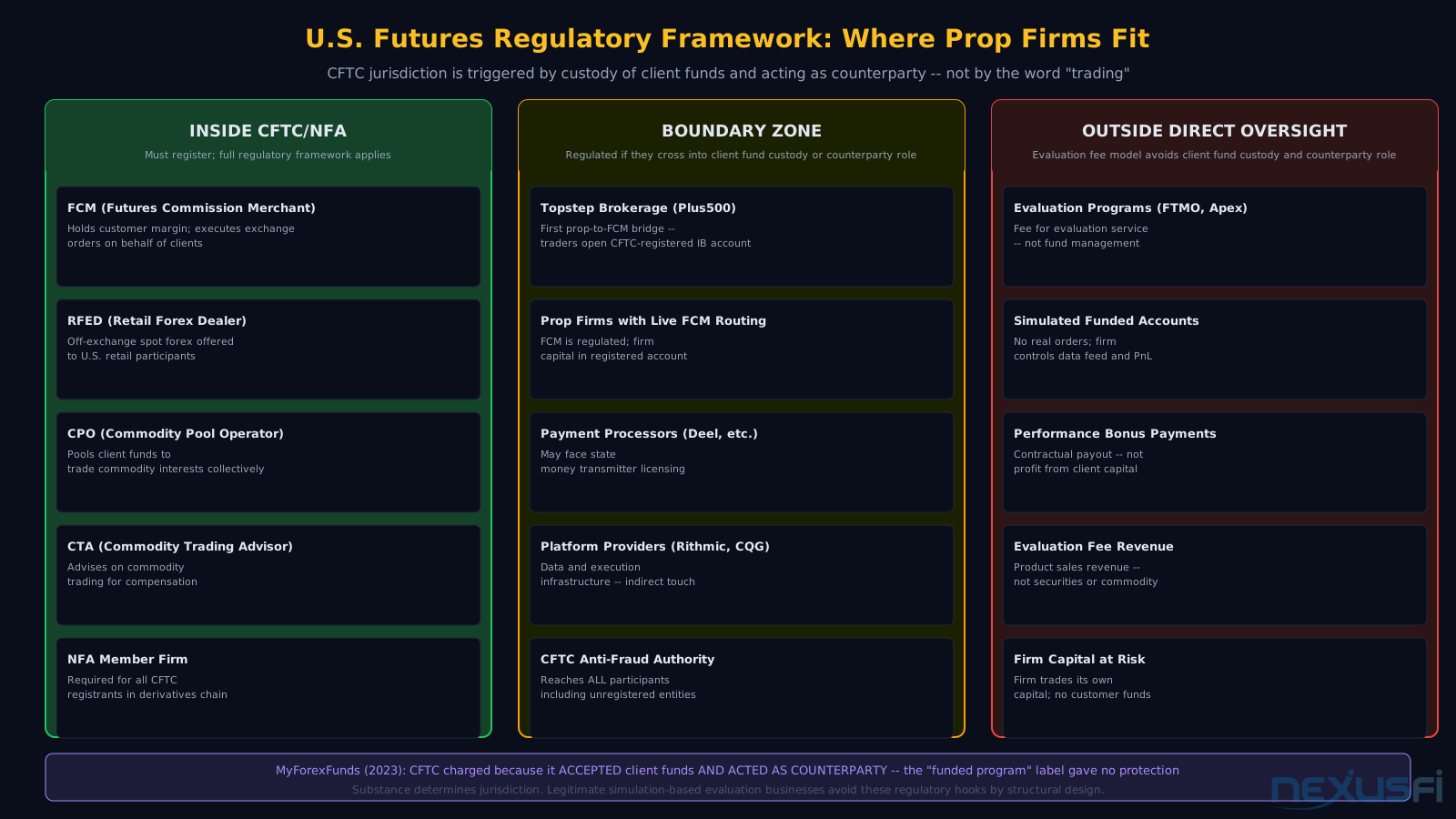
The CFTC has jurisdiction over futures contracts and derivatives trading in the United States. Any company that solicits or manages customer funds to trade futures must be registered — as a CPO (Commodity Pool Operator), CTA (Commodity Trading Advisor), or Futures Commission Merchant (FCM), depending on what they do. Those registrations come with capital requirements, disclosure obligations, NFA membership, and ongoing compliance costs.
Prop firm evaluation programs avoid all of this through a structural workaround that most traders never examine: they're not managing customer funds, providing trading advice, or exercising discretion over client accounts. They're running evaluation programs and entering into contractual profit-share agreements with traders who retain full discretion. That's a at the core different legal relationship, and it falls outside the CFTC's registration requirements.
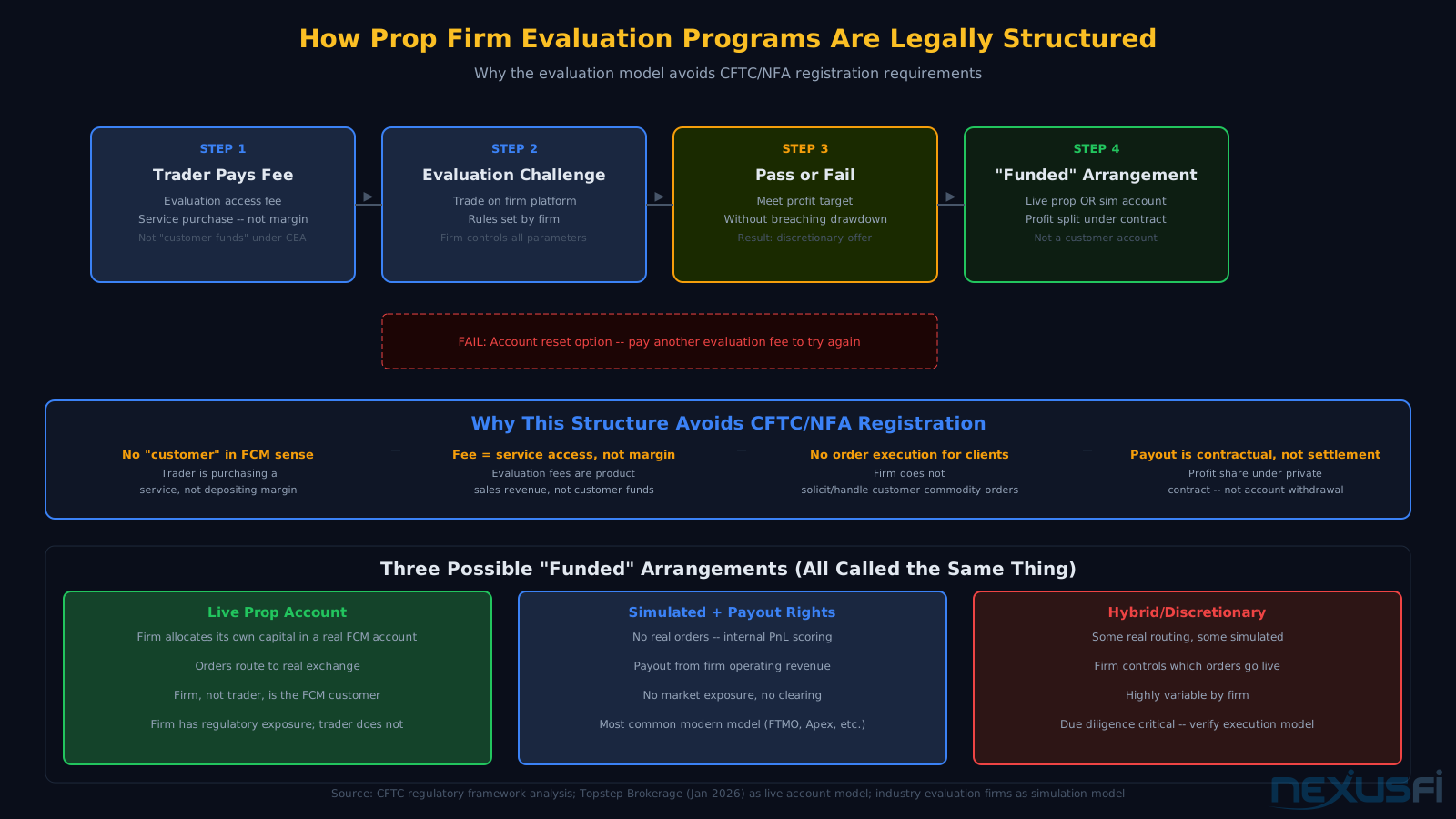
The business model is built specifically around this gap. When you pay a $147 monthly fee for an Apex evaluation account, you're not depositing funds into a commodity pool. You're paying for a skill evaluation service. The firm then decides — contractually, not through regulated financial management — whether to share profits with you based on your performance in that evaluation environment. No customer funds are managed. No trading advice is provided. No discretionary control is exercised over a client's account. All three triggers for CFTC registration are deliberately avoided.
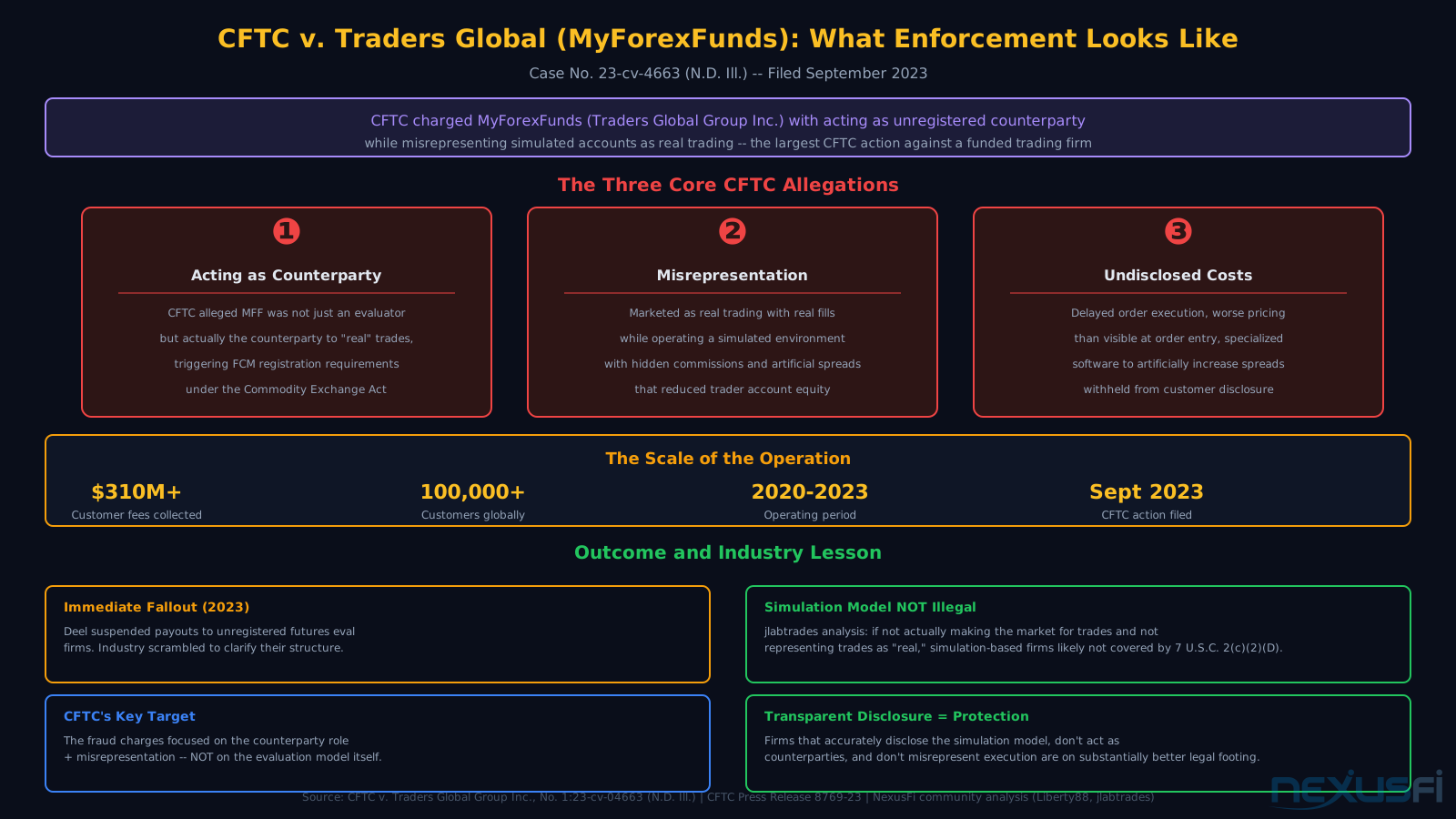
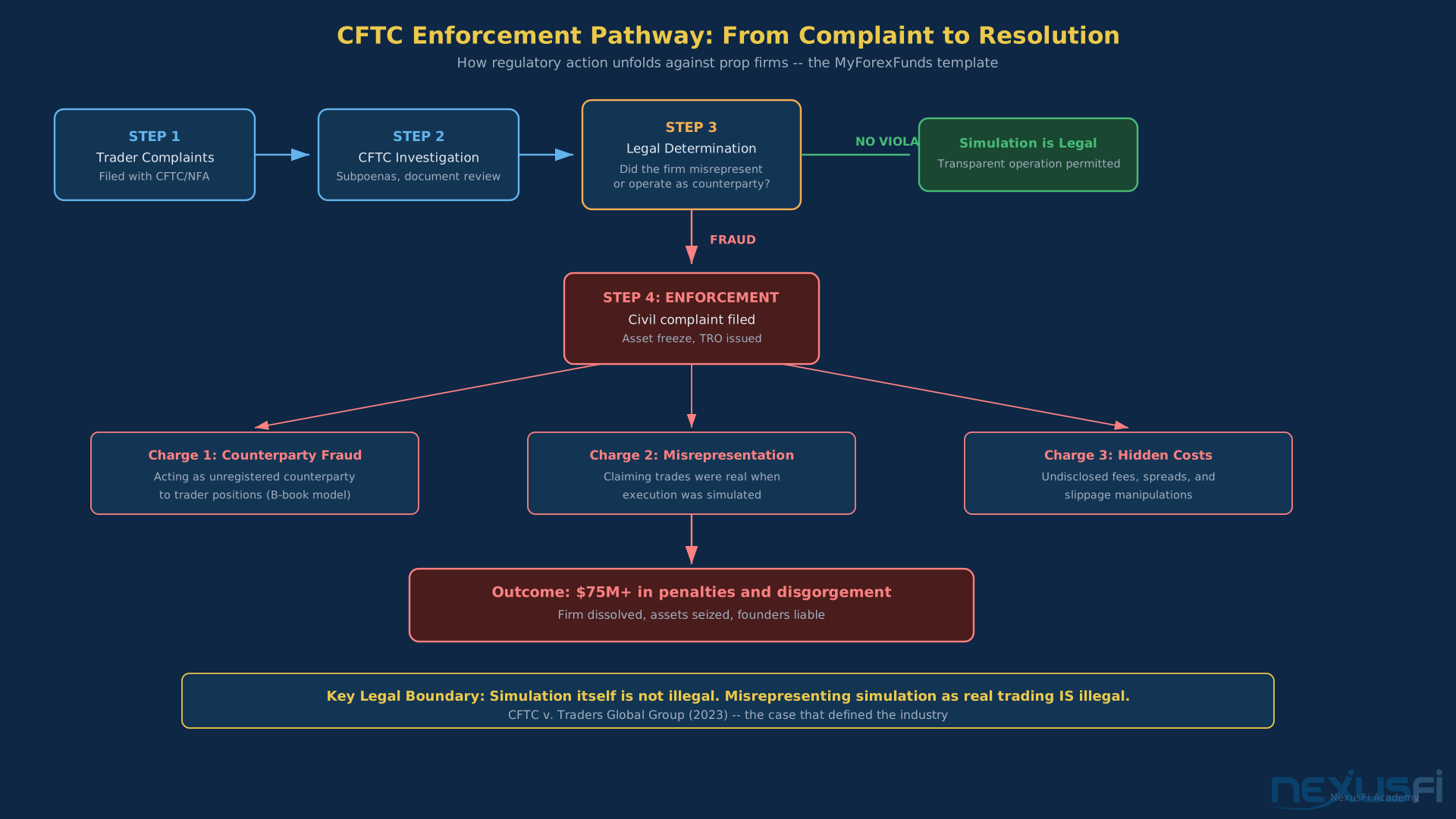
This isn't a loophole that regulators haven't noticed. The CFTC took action against My Forex Fund (Traders Global Group) in 2023 specifically because that firm crossed the line — acting as a counterparty to customer trades in off-exchange forex and commodity instruments, then deceiving customers about the nature of their trading environment. The key finding wasn't that they ran an evaluation program. It was that they were executing real retail commodity transactions without registration and while committing fraud. Simulation-based futures prop firms that don't act as counterparties to real exchange-routed transactions operate in at the core different legal territory.
The legal analysis traces back to 7 U.S.C. § 2(c)(2)(D), which governs retail commodity transactions. For that statute to apply, there must be an actual agreement or contract between parties involving a leveraged commodity position. A simulated evaluation account where no real contracts are executed doesn't meet that definition. The firm isn't offering a leveraged commodity transaction — it's offering a performance evaluation with contractual profit-sharing terms attached.
There's a meaningful difference, however, between "not CFTC regulated" and "subject to no regulation at all." Prop firms still face: FTC unfair and deceptive practices rules, state contract law, anti-fraud statutes, and the terms of their agreements with the FCMs they use for execution in live funded accounts. "Not regulated like a CTA" doesn't mean "anything goes."
:::cite CFTC Customer Protection — Segregated Funds | https://www.cftc.gov/ConsumerProtection/ProtectYourself/Understanding_Seg_Funds/index.htm Customer funds in regulated FCM accounts must be held in segregated accounts separate from firm proprietary capital. Prop firm evaluation fees are not customer funds under this definition. :::
Legal Taxonomy: CPO, CTA, and Unregistered Programs #
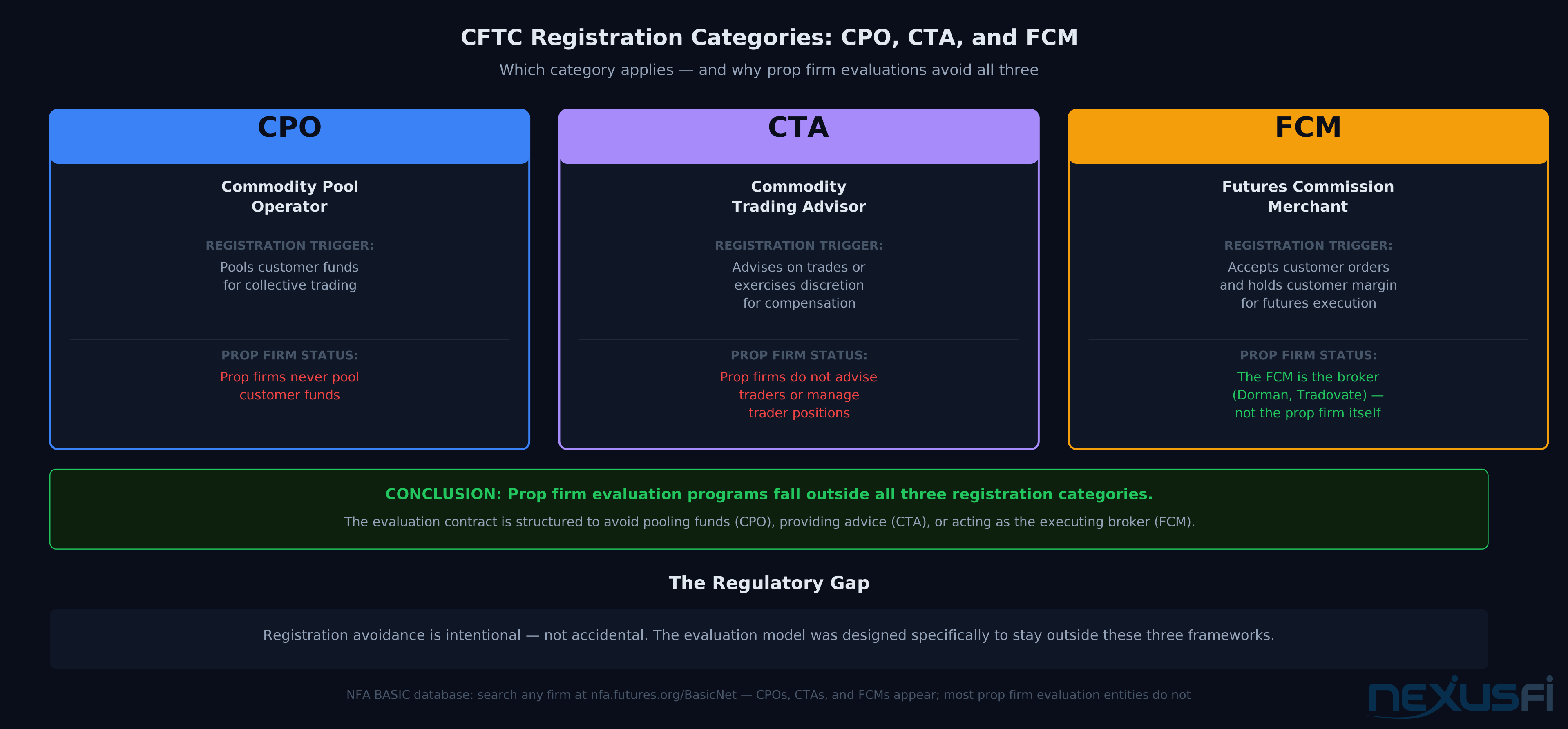
To understand where prop firms sit, you need to know what registration actually requires. There are three main categories that regulate futures-adjacent businesses:
Commodity Pool Operator (CPO) — A CPO operates a "commodity pool" — meaning it pools customer money together and manages it collectively for futures trading. If you've invested in a futures fund where your capital is commingled with other investors' capital, you're in a commodity pool, and the operator is a CPO. CPOs must register with the CFTC, become NFA members, maintain disclosure documents, file reports, and meet financial standards. Key trigger: pooled customer funds.
Commodity Trading Advisor (CTA) — A CTA advises others on commodity trading or exercises trading discretion over customer accounts for compensation. If a firm tells you when to buy ES and charges for that advice, or manages your futures account, it's a CTA. The trigger is trading advice or discretionary management for compensation — not just being involved in futures markets. Key trigger: advice or discretion over someone else's account for pay.
Futures Commission Merchant (FCM) — An FCM accepts customer orders for futures and options and holds customer margin. Every broker you use to trade futures is an FCM. FCMs are heavily regulated — they must segregate customer funds, maintain net capital requirements, and file regular financial reports with the CFTC. Key trigger: accepting customer orders and holding customer funds for futures execution.
Now map prop firm evaluation programs to these categories:
Do they pool customer funds? No — you pay an evaluation fee, not a capital contribution into a managed pool. The fee isn't held as "your" capital; it's the firm's revenue.
Do they advise you on trading or exercise discretion over your account? No — you trade however you choose, within their evaluation rules. They don't tell you what trades to make. The rules (max contracts, no news trading) constrain you but don't constitute trading advice.
Do they accept customer futures orders and hold customer margin? No — in the evaluation phase, trades are simulated. In live funded phases, the FCM (Dorman Trading, Tradovate, others) accepts orders and holds margin, not the prop firm itself.
None of the three registration triggers fire. The firm is an unregistered funded-account program operating a contractual profit-sharing arrangement, and that arrangement sits outside the CFTC's registration framework — legally.
"CFTC-registered" does not mean the prop firm is CFTC-regulated. Apex, for example, routes live funded account trades through Dorman Trading, which IS CFTC-registered as an FCM. But Apex itself is not registered as a CTA, CPO, or FCM. The broker's registration covers execution and clearing — not the prop firm's evaluation or profit-share business model.
This distinction matters constantly. Traders assume that because their live funded trades route through a regulated broker, the whole relationship is regulated. It isn't. The broker's obligation runs to the trader's execution and margin. The prop firm's obligation to pay you — the thing you actually care about — is purely contractual, governed by the terms of service you agreed to, not by NFA rules or CFTC oversight.
One important CFTC carve-out worth knowing: @SMCJB, a well-respected member of the NexusFi community with decades of market structure experience, explained the critical constraint on off-exchange retail commodity trading: "There is no such thing as an unregulated off-exchange future. Those are either Swaps/CFDs or Forwards. CFDs are illegal in the US and you can only trade Swaps & Forwards if you are an ECP and these retail people definitely were not ECPs." This is precisely why My Forex Fund ran into trouble — they were running actual off-exchange commodity transactions for retail customers, which is explicitly prohibited. Simulation-based futures prop firms avoid this entirely by not executing real off-exchange commodity transactions at the evaluation stage.
The Account-Type Spectrum: Simulated, Synthetic, and Live #
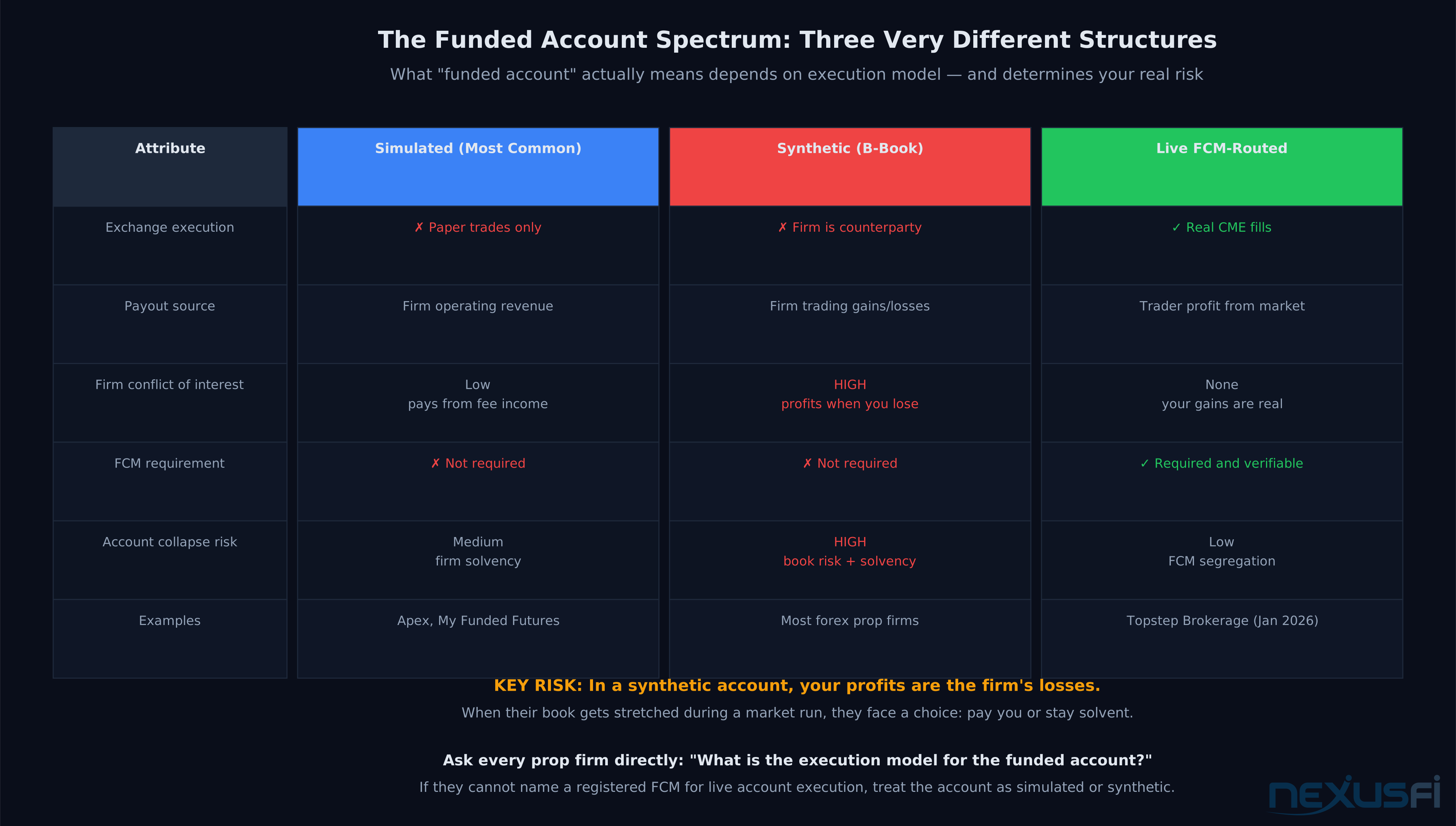
The regulatory implications of your prop firm account depend heavily on what type of account you're actually in. There's a spectrum, and most traders don't realize where on it they sit.
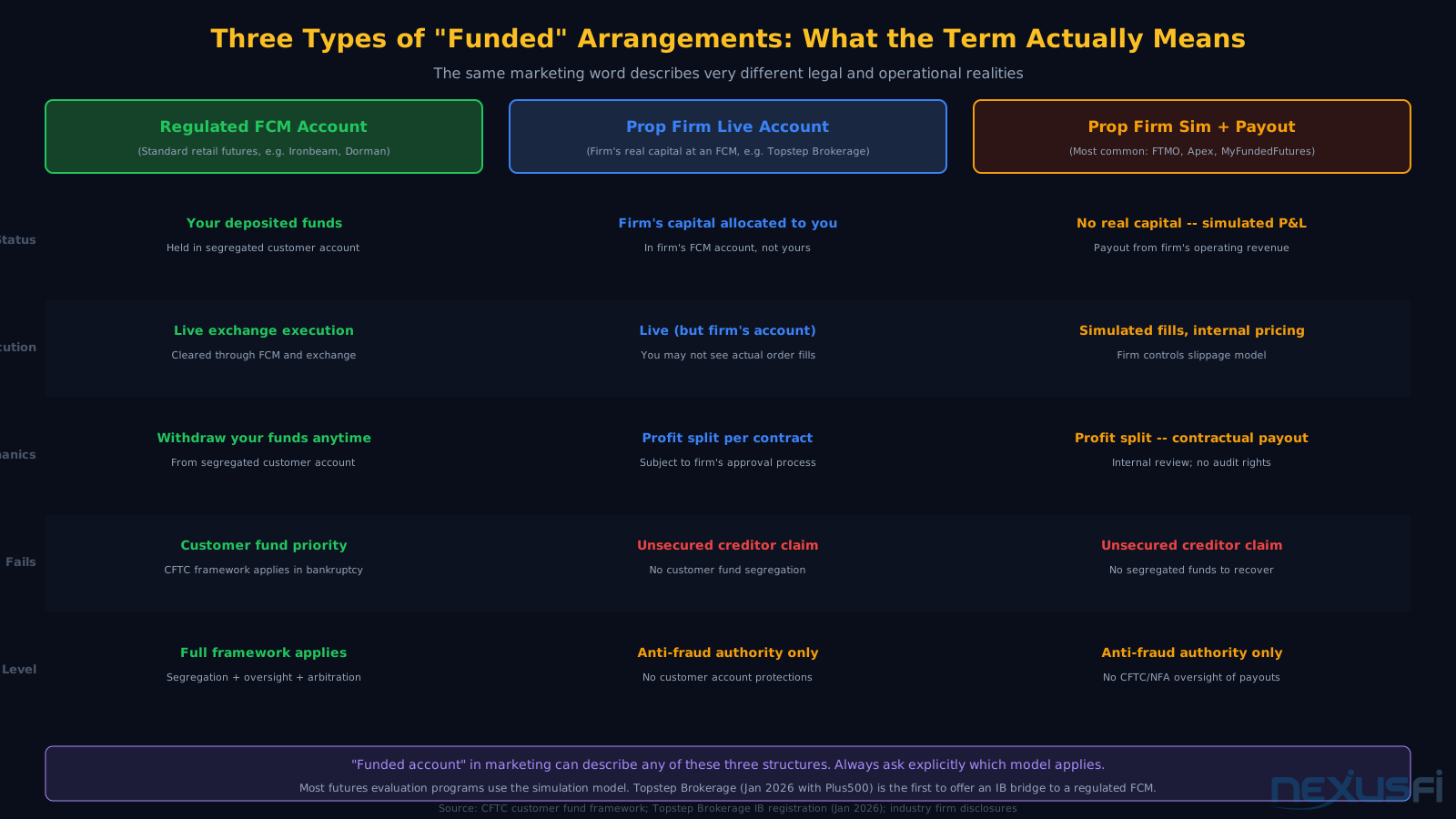
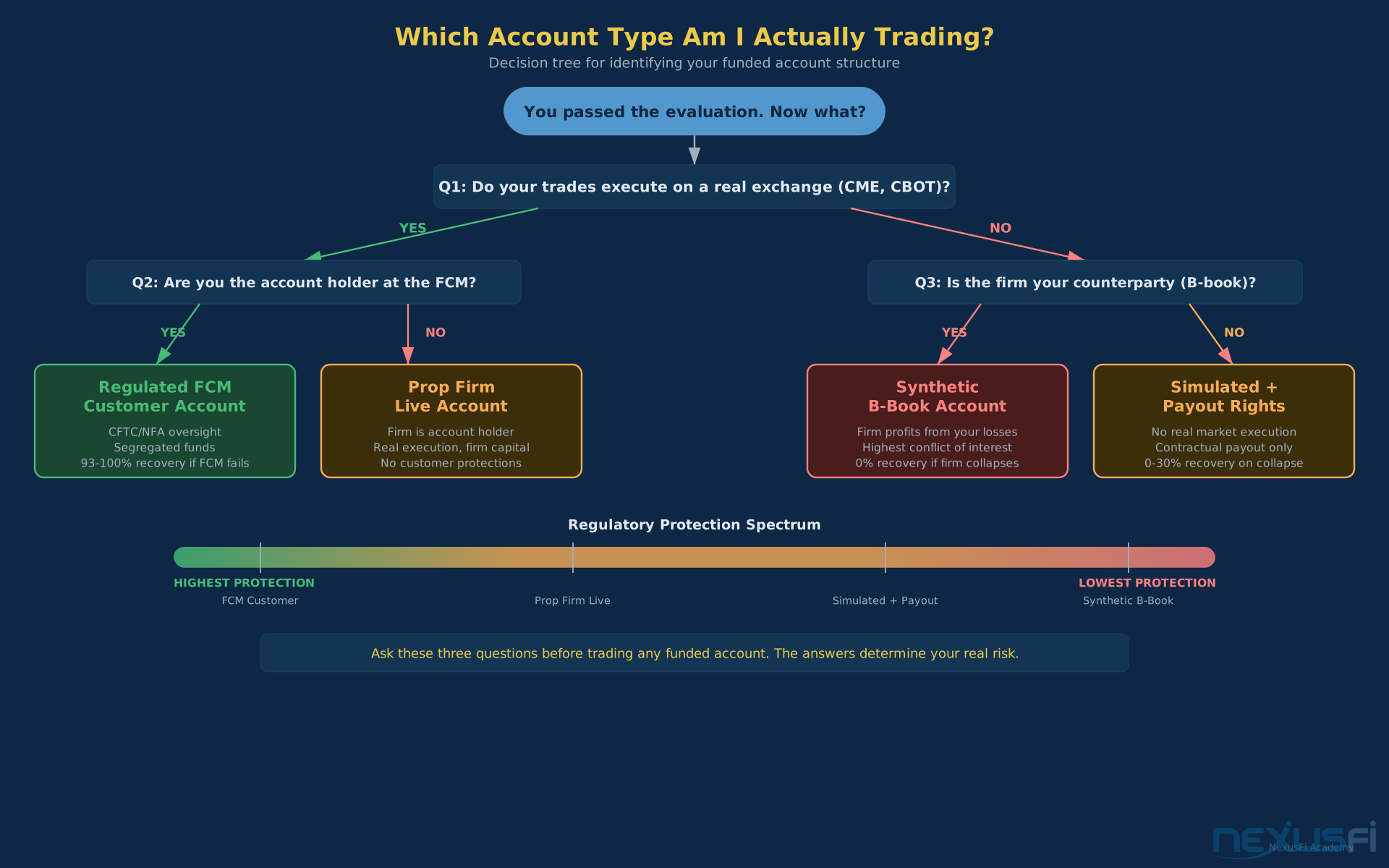
Simulated (Paper) Accounts
In the evaluation phase, you're trading a paper account. Orders are generated in the trading platform, prices are real-time, but no actual contracts are executed on an exchange. Your P&L is paper P&L. The firm isn't exposed to market risk from your trades. No customer funds are at risk. No regulatory framework applies to the actual trading activity.
Legally, this is where most evaluation programs end. You're using a simulation service. If you profit, great — the firm has a contractual obligation to grant you a funded account status. If you blow up, you've lost your evaluation fee and nothing more. The firm's legal exposure is minimal because there's nothing to lose.
Synthetic Funded Accounts
Some firms — especially those offering CFD-style instruments or forex — use a synthetic funded model. The firm takes the opposite side of your trades internally rather than routing to an exchange. Your "funded account" is a book entry, not a real market position. Your profits are the firm's losses and vice versa.
This is the "bucket shop" model, and it's where things get dangerous. When traders have a long winning streak — say, a run in gold or crude during a volatile month — the firm's internal book gets hammered. Skilled Funded Trader and The Funded Trader both collapsed in March 2024 under this model.
For futures-only programs in the US, the bucket-shop model is harder to run because futures contracts can only be legally traded on registered exchanges (the CME, ICE, etc.). A firm claiming to offer simulated ES or NQ trades in the evaluation phase is fine — that's paper trading. A firm claiming to give you a "live" ES account while secretly taking the other side of your trades without exchange routing is likely in violation of the Commodity Exchange Act, in the same way MFF was.
Live Funded Accounts with FCM Routing
Firms like Topstep and Apex route live funded account trades through registered FCMs. When you're in a Topstep Pro account or an Apex live funded account, your orders actually go to the exchange via Tradovate, Dorman Trading, or another registered FCM. The trades are real. The CME is the central counterparty.
This is meaningfully different from the synthetic model — and it's why @josh, one of NexusFi's most respected community members, put it plainly:
Even with live FCM-routed funded accounts, the regulatory analysis is the same: the prop firm itself isn't a CPO, CTA, or FCM. It's still an unregistered funded-account program. But the quality of execution and the integrity of your trades is substantially higher. You can independently verify your orders executed on the exchange. You can't be secretly synthetic.
The downside remains: the firm's obligation to pay you its share of your profits is contractual, not regulatory. If the firm shuts down, your profits outstanding are an unsecured contractual claim, not a segregated account at a regulated custodian.
How Firms Structure to Stay Outside Regulation #
The legal entity that runs the evaluation program, holds your data, and signs your profit-share agreement is rarely what it appears to be. Understanding the corporate structure helps you assess actual risk.
Entity Layering
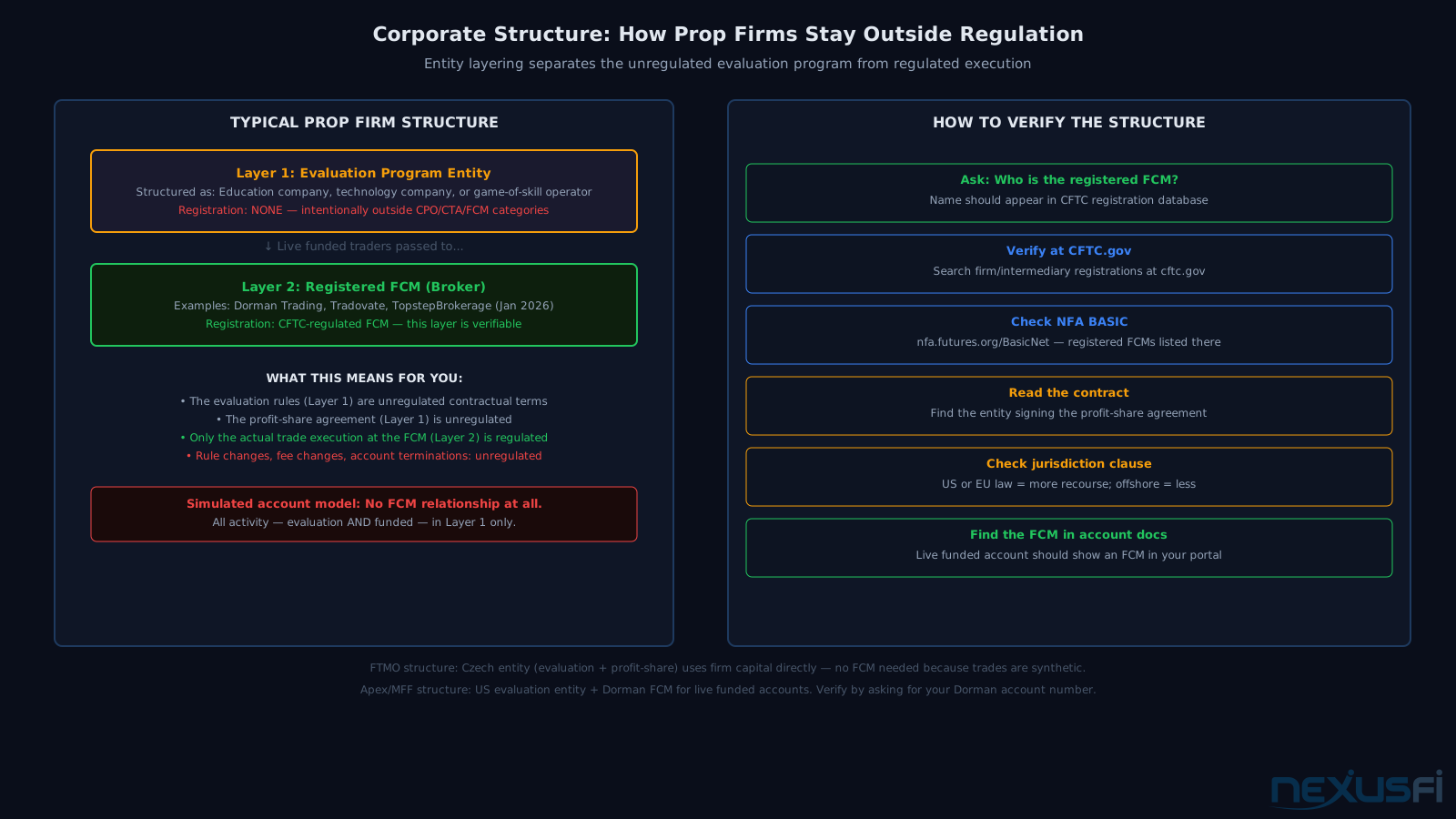
Most funded account programs use at least two legal entities: one that runs the evaluation program and signs trader agreements (often structured as an education or technology company), and another — or a relationship with a registered FCM — that handles live funded account execution. The first entity is specifically designed to not be a CPO, CTA, or FCM. It's the legal wrapper that keeps the evaluation program outside CFTC registration requirements.
FTMO, for example, is a Czech-based company structured as a proprietary trading firm. It uses synthetic accounts — the firm trades its own capital using traders as an identification mechanism — which keeps it outside the pooled-customer-fund definition. The "funded" account is the firm's own capital allocated to a trader through a contract, not customer money held in a segregated account.
Offshore Incorporation
Many prop firms — especially those with global customer bases — are incorporated outside the United States. Bahamas, Cyprus, St. Kitts, Czech Republic, UAE. Offshore incorporation isn't naturally bad, but it does affect your legal recourse. If a firm in the Bahamas locks your account and refuses to pay, your options are: arbitration under their contract terms (which typically designate a foreign jurisdiction), legal action in a foreign court, or credit card chargeback if you paid by card. None of these are easy.
US-based firms that use registered FCMs for live execution give you more leverage — at minimum, the FCM leg of the relationship is regulated, and you can verify it through CFTC registration databases. For the firm's contractual obligations to pay you, you still have only the contract.
The "Education Service" Classification
Many prop firms explicitly structure themselves as education companies in their legal documents. The evaluation fee is a "course fee." The funded account is a "performance-based demonstration opportunity." This language isn't accidental — it's designed to position the firm outside the investment management regulatory framework. Fi summarized it from the NexusFi community after Fast Track Trading's collapse: "Most prop firms structure themselves this way specifically to avoid brokerage regulation. That is not naturally problematic, but it does mean trader protections are minimal if things go wrong."
Introducing Broker Relationships
For firms that offer live funded accounts, the relationship with a registered IB or FCM is where actual regulatory compliance lives. Apex works with Dorman Trading. Topstep uses Tradovate (now Dorman after the Kraken acquisition). That IB/FCM relationship is transparent, verifiable, and CFTC-regulated. The evaluation and profit-share program layered on top of it is not.
Verify the FCM behind any live funded account by looking at CFTC.gov's firm registration database (cftc.gov/industryoversight/intermediaries/index.htm). Search for the FCM name the prop firm discloses. A legitimate FCM will show current registration status, financial data, and any disciplinary history. If the firm can't name a registered FCM for live funded trades, that's a red flag.
Trader Protection Reality: What You Actually Have #
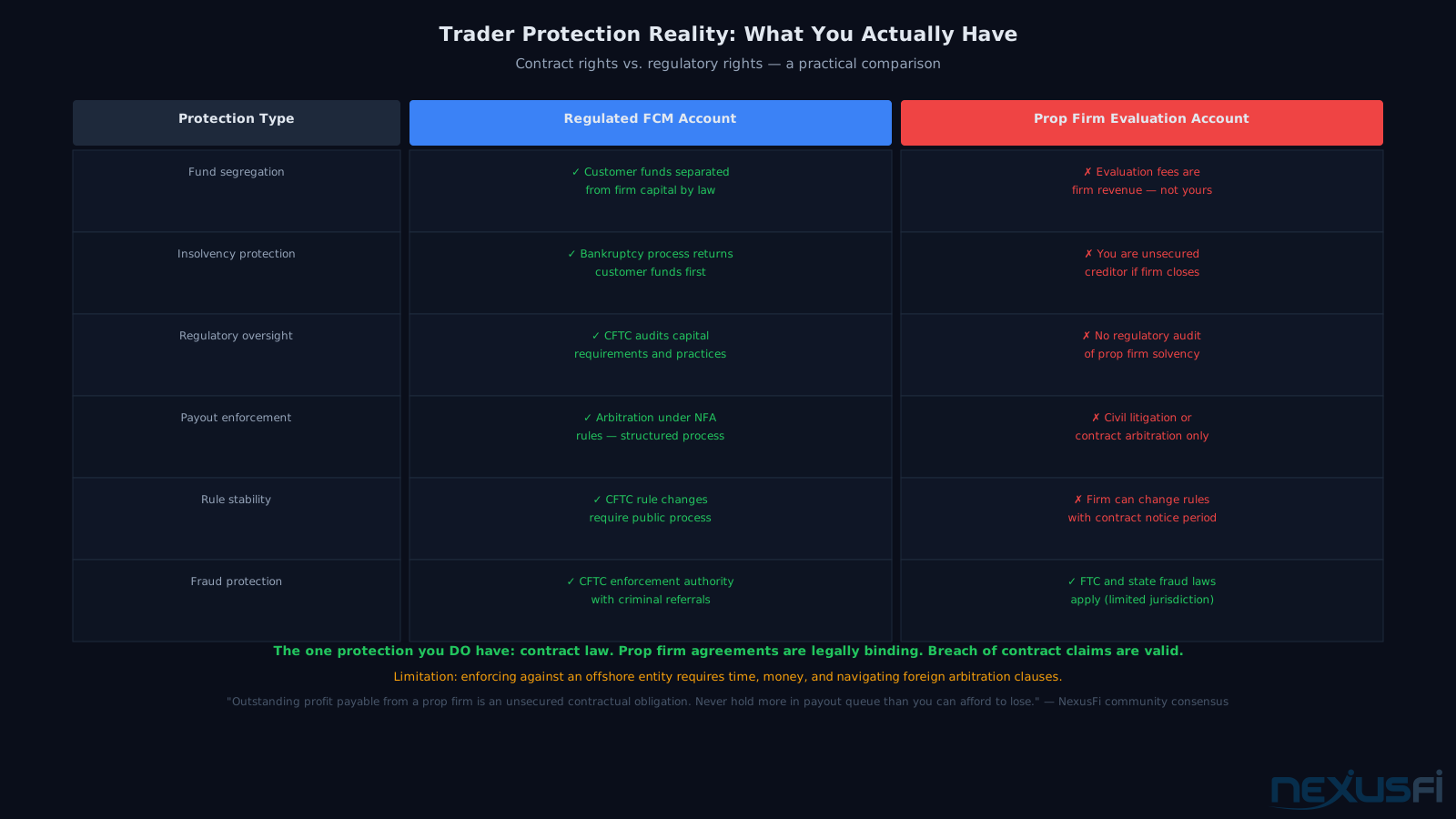
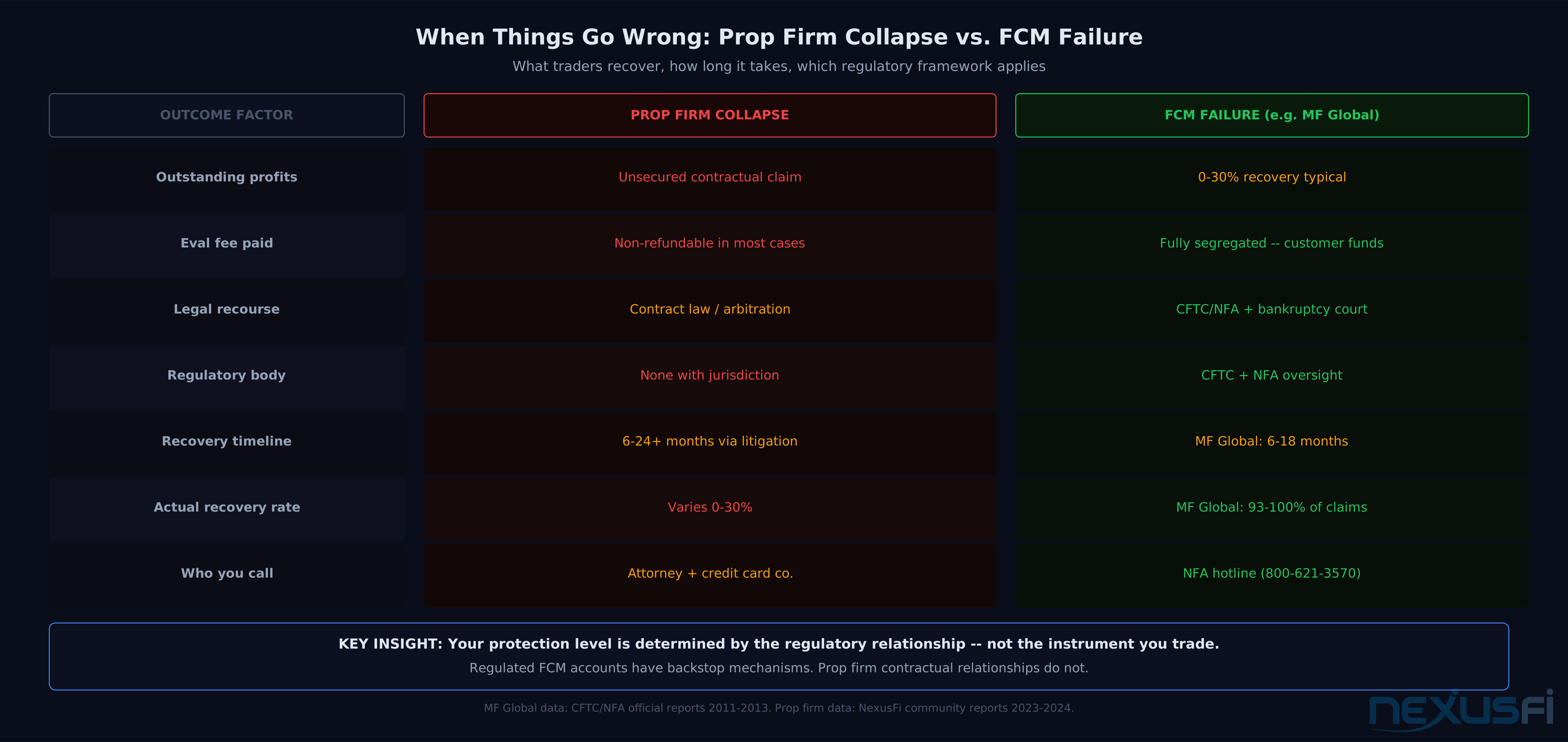
When you sign up with a CFTC-registered FCM to trade your own account, you have specific protections: your margin is held in segregated accounts separate from the FCM's proprietary funds, the CFTC oversees capital requirements, and if an FCM fails, there are regulatory processes for distributing customer funds. These protections are real — they're why the MF Global collapse in 2011, catastrophic as it was, ultimately resulted in most customers receiving their money back through the bankruptcy process.
None of that applies to your prop firm relationship.
Your evaluation fee is not segregated. Your outstanding profit-share payable from the firm is an unsecured contractual obligation. There is no NFA audit of their financial position. No capital requirement forces them to maintain solvency. No insurance program covers your outstanding earnings if they close without warning. As @seattle7 noted in the NexusFi community, the practical risks are clear: front-running of your trades, going out of business resulting in loss of unpaid profits, and the ongoing cost of monthly fees on top of your profit split. For a complete breakdown of the fee structures themselves, see Prop Firm Fees and Costs.
What You Do Have: Contract Law
The contract you sign with a prop firm is legally binding. If they violate its terms — arbitrarily denying a valid payout, retroactively changing rules you traded under, locking your account without the grounds specified in the contract — you have a breach of contract claim. This isn't nothing. Courts enforce contracts.
But contract enforcement against an offshore entity takes time and money. Arbitration clauses (which most prop firm contracts contain) route disputes to arbitration rather than court — which can favor the firm since arbitration is typically more expensive and slower for individual claimants than small claims court. Choice of law clauses may designate a foreign jurisdiction's law as governing, which adds complexity and cost.
What Happens When a Prop Firm Fails
The 2024 collapses of Skilled Funded Trader and The Funded Trader provided a real-world stress test. Both locked accounts and denied payouts without notice. Traders had no regulatory body to call. The NFA had no jurisdiction over these entities' funded-account programs. CFTC action requires evidence of fraud and real customer harm from regulated activities — not a breach of an unregulated profit-share contract. See Prop Firm Collapse and Account Protection for what traders actually recovered and how.
The practical options for traders left holding unpaid profits: credit card chargebacks (if they paid evaluation fees by card and could demonstrate failure of the service), civil litigation, and joining class actions if attorneys saw enough claimants to make it worthwhile. Some traders recovered partial amounts. Most recovered nothing.
Outstanding profit-share payable from a prop firm is an unsecured contractual obligation with no regulatory backstop. It is not a segregated account. It is not insured. If the firm closes, your unpaid earnings are a creditor claim against whatever assets remain — which, for most evaluation-program-based firms, may be very little. Never leave more profits in a pending payout queue than you're willing to lose.
The Tax Complication
Trading through a prop firm evaluation account also costs you the Section 1256 60/40 tax treatment that makes futures attractive to many traders — 60% of gains taxed at long-term capital gains rates, 40% at short-term. Prop firm income is typically treated as ordinary income (contract income, self-employment income, or 1099 income depending on your arrangement), which means your effective tax rate on those gains may be substantially higher than on a personally traded futures account. This isn't a regulatory issue, but it's part of the total cost calculation that most marketing materials don't mention.
Evaluating Any Prop Firm's Regulatory Posture #
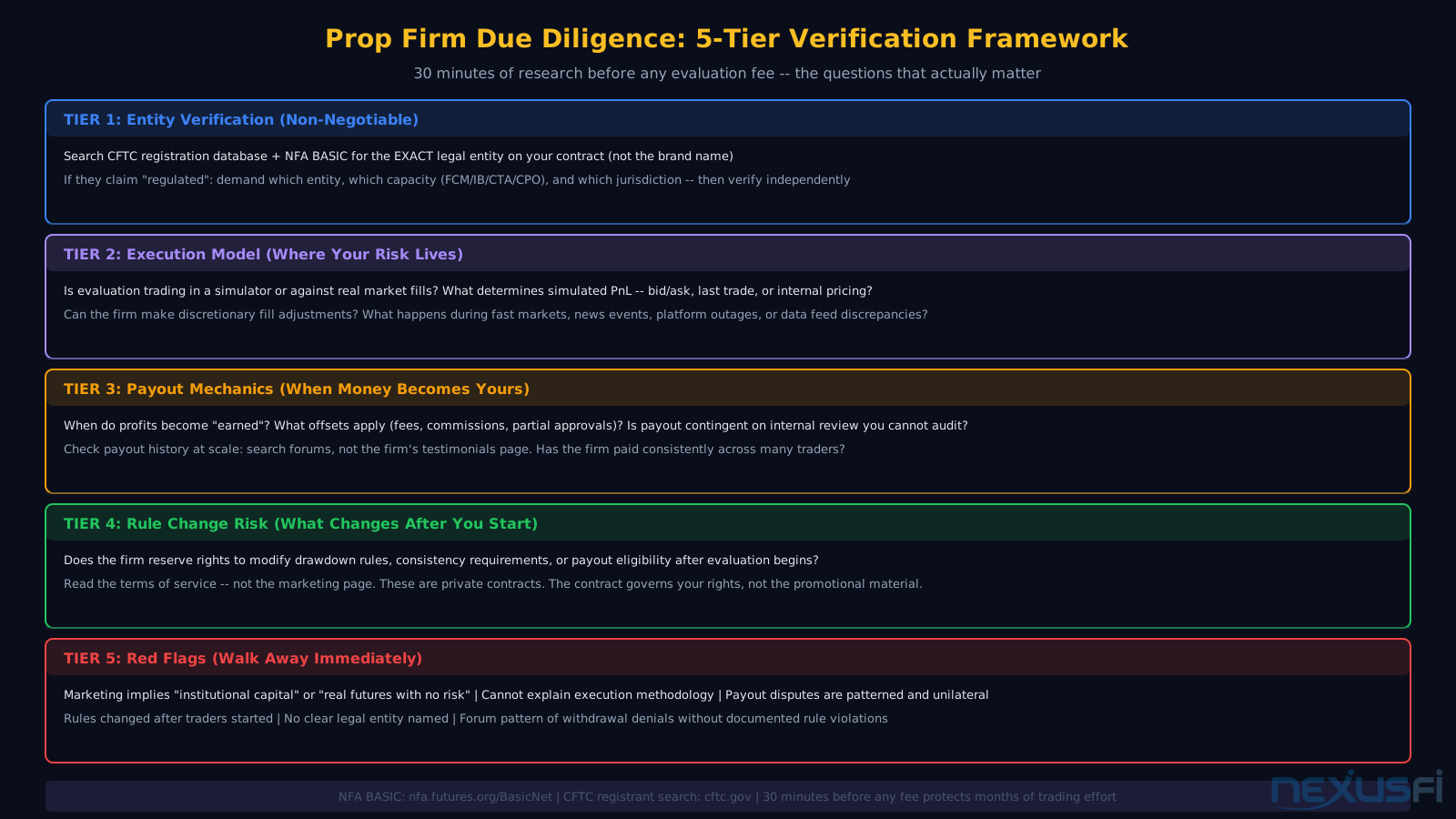
Before signing up with any funded evaluation program, run through these questions. The answers tell you exactly where the firm sits on the regulatory spectrum and what protections you have.
Question 1: Does the firm pool trader-submitted capital?
If traders' evaluation fees or funded account gains are pooled into a single investment vehicle, that's a CPO. Find the CFTC registration. If there's none and they're operating a pool, walk away.
Question 2: Does the firm provide trading advice or exercise discretion over your account?
Evaluation rules (max contracts, no overnight holds) are not trading advice. An email from a "trading coach" with specific trade recommendations for a fee is CTA territory. If the firm directs your trading decisions for compensation, they should be registered as a CTA.
Question 3: Who is the FCM behind any live funded account?
Ask directly. Name a registered FCM. If they can't name one, or name a company that doesn't show up in the CFTC's FCM registration database, the "live" account may not be live at all — it may be synthetic. That's both a regulatory and execution quality risk.
Question 4: Where is the firm incorporated, and what law governs disputes?
Read the contract. Find the jurisdiction clause. A US-incorporated firm with US law gives you more options than a Bahamas-incorporated entity with foreign arbitration. Neither is fully protected, but the gap matters if you need recourse.
Question 5: What is the payout processing track record?
NexusFi forum threads on specific prop firms are among the most reliable sources for this. Search for the firm's name plus "payout" and "withdrawal." Consistent complaints over 6-12 months indicate financial stress that marketing materials won't reveal. Questions 5-6 and the full due diligence framework are covered in detail at Prop Firm Due Diligence.
:::cite NFA BASIC — Background Affiliation Status Information Center | https://www.nfa.futures.org/BasicNet/ Search any commodity firm's NFA registration status, disciplinary history, and financial information. Registered FCMs appear here. Most prop firm evaluation entities do not. Use this to verify the FCM named by any prop firm as their live-account execution partner. :::
Beyond those five questions, here are the structural indicators that distinguish legitimate programs from high-risk ones:
Legitimate structure indicators:
-- Named, verifiable registered FCM for live funded trades (checkable at CFTC.gov)
-- US or EU incorporation with US/EU law governing the profit-share agreement
-- Clear, unambiguous written terms explaining what "funded" means (simulated, synthetic, or live)
-- Consistent payout history verifiable through community forums over 12+ months
-- No performance fees or management fees on what they describe as "your" capital
Red flags:
-- Cannot name a registered FCM for live funded account execution
-- "Live" accounts that don't require you to register as a professional trader (per exchange rules, live futures accounts require pro certification in many contexts)
-- Payout denials, rule changes, or account restrictions documented in forum posts
-- Offshore incorporation in jurisdictions with limited trader recourse (Bahamas, Seychelles)
-- High payout promises (90%+) without a clear explanation of the business model
-- Contracts with arbitration clauses designating foreign jurisdictions
-- No physical address, no registered business in any searchable database
Most prop firm evaluation programs are legal, unregulated contractual arrangements. Your evaluation fee buys a performance evaluation service. Your profit-share is a contract right, not a regulated financial instrument. The firm's solvency is your protection — which is why due diligence on the business model, the FCM relationship, and the payout track record matters far more than checking for CFTC registration (which most won't have).
Myths vs. Reality for Experienced Futures Traders #
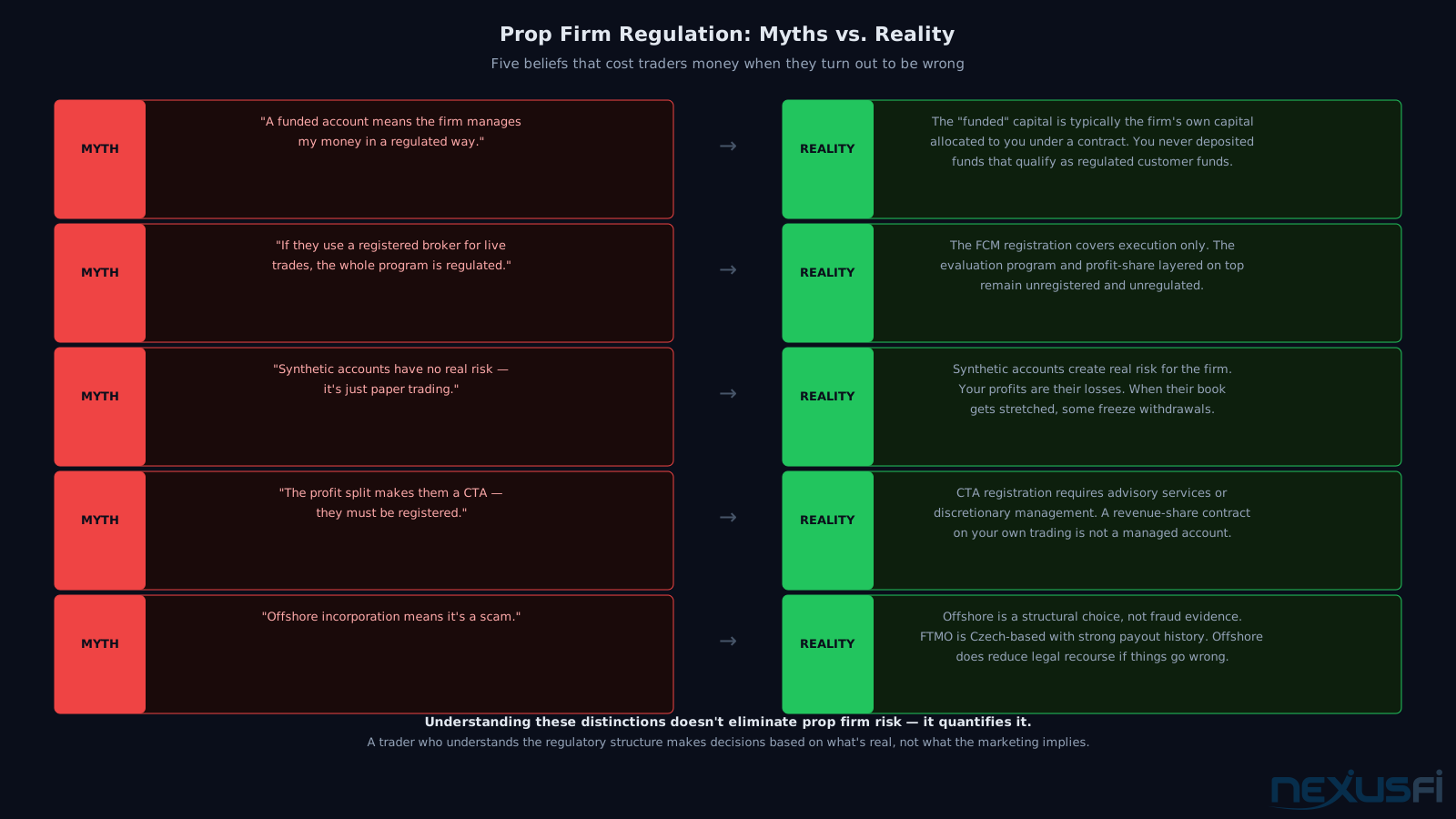
Myth: "A funded account means the firm is managing my money in a regulated way."
Reality: Your evaluation fee is firm revenue, not customer funds under CFTC segregation requirements. The "funded" capital is the firm's own capital allocated contractually.
Myth: "If the firm uses a registered broker for live trades, the whole program is regulated."
Reality: FCM registration covers execution and margin, not the evaluation program or profit-share arrangement layered on top.
Myth: "Synthetic accounts are just paper trading — they have no real risk."
Reality: Synthetic accounts create real risk for the firm. Your profits are their losses. When their book gets stretched, some firms freeze withdrawals. The 2024 collapses happened exactly this way.
Myth: "The profit split clause makes the firm a CTA, so they must be registered."
Reality: CTA registration triggers on advice or discretionary management for pay. Revenue-sharing on your own trading decisions is not advisory — no CTA registration required.
Myth: "If it's offshore, it's a scam."
Reality: Offshore is a structural choice, not fraud evidence. FTMO is Czech-based with strong payout history. But offshore reduces your legal recourse if things go wrong — factor it into risk assessment, not as a binary pass/fail.
The prop firm industry has genuine value for traders who understand the product: a leveraged evaluation service with a contractual profit-share attached. Understanding the regulatory framework isn't optional — it's what distinguishes traders who get paid from those who get surprised.
Knowledge Map
Go Deeper
Build on this knowledgeReferences This Article
Articles that build on this topicCitations
- — Prop firm fraud in Futures? (on the back of My Forex Fund scam/CFTC ruling) (2023) 👍 4“Do simulation-based future prop firms fall under those regulations? It appears the answer is NO, if you do not actually make the market for the trades and if you do not represent the trades as 'real'. So I see no correlation to the simulation-based future prop firms.”
- — Funded Trader platforms (2024) 👍 8“Skilled Funded Trader and The Funded Trader both just collapsed. Customer accounts locked, payouts denied. Looks like both were illegally using the bucket-shop model and not legally trading the actual instrument on their clients' behalf.”
- — Funded Trader platforms (2024) 👍 17“Your counterparty in a live trade is CME. Some people think it's the trader on the other side of your trade, but it's not. CME assumes counterparty risk and guarantees it with margin.”
- — CFTC Customer Protection -- Segregated Funds (2024)
- — NFA BASIC -- Background Affiliation Status Information Center (2024)
- — Prop firm fraud in Futures? (on the back of My Forex Fund scam/CFTC ruling) (2023) 👍 6“To understand the CFTC vs. Traders Global case, you must read the actual court documents. This case is not only about forex -- it specifically includes retail commodity transactions involving COMEX, NYMEX, and CME.”
- — Prop firm fraud in Futures? (on the back of My Forex Fund scam/CFTC ruling) (2023) 👍 9“Some are saying this case involves forex and does not impact the futures/commodity eval space. This is completely false. I urge everyone to read the actual court documents.”
- — Prop firm fraud in Futures? (on the back of My Forex Fund scam/CFTC ruling) (2023) 👍 3“The New Jersey court partially granted My Forex Fund's request -- it ordered the release of most assets belonging to the founder, approximately $100 million, though just over $12 million remained frozen.”
- — Any long term success stories from funded traders in these get-funded programs? (2021) 👍 8“The fundamental advantage of trading futures on an exchange is that the exchange clearing house becomes the counterparty. When you're trading a live sim account, the funding company has every incentive to not pay you, and they do NOT have the capital in the event of a tail event. THEY are the counterparty.”
- — Any long term success stories from funded traders in these get-funded programs? (2021) 👍 5“You are correct that the prop firm IS the counterparty. In theory, a prop firm could identify consistently profitable traders and mirror their trades at scale -- but the effective 4-month delay at some firms exists for that algorithm validation time.”
- — Prop firm fraud in Futures? (on the back of My Forex Fund scam/CFTC ruling) (2023) 👍 4“The issues with MFF lay in it acting as a broker -- acting as counterparty to trades. With futures you can immediately check if you are A-booked or not. Once you get funded, orders go to actual market.”
- — Funded Trader platforms (2024) 👍 8“I've withdrawn profits out of Topstep as they are easier to get to a payout level. The key question for any prop firm is: can you actually get paid, and how long does it take?”