



Prop Firm Due Diligence: How to Evaluate a Funded Trading Firm Before You Pay
Overview #
Overview #
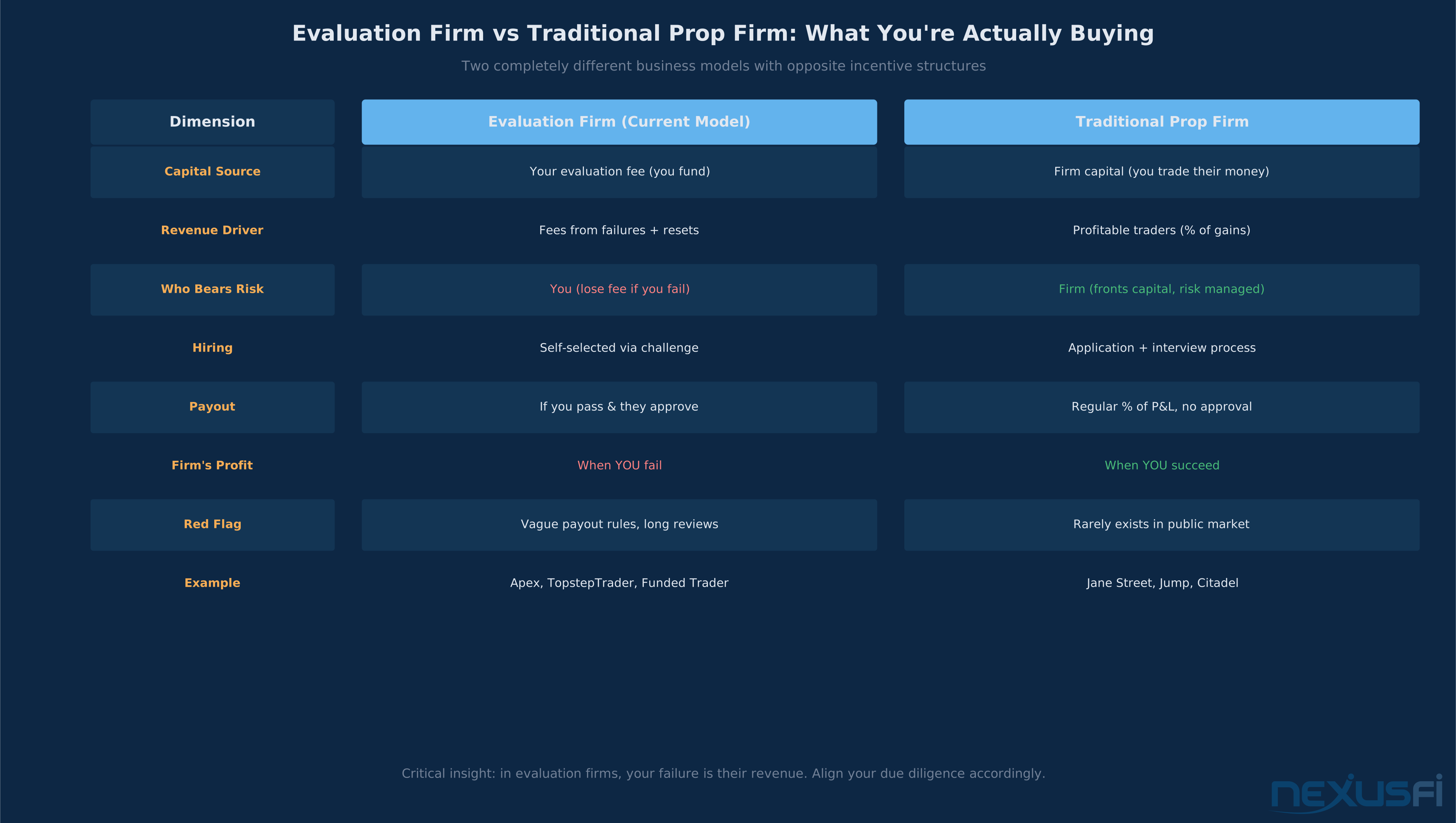
Before you pay a single dollar for an evaluation, you need to understand what you're actually buying. Most "prop firms" in the futures space aren't prop firms at all — they're evaluation service companies that sell you the opportunity to prove you can trade within their rules. That distinction matters because it changes everything about how you should evaluate them.
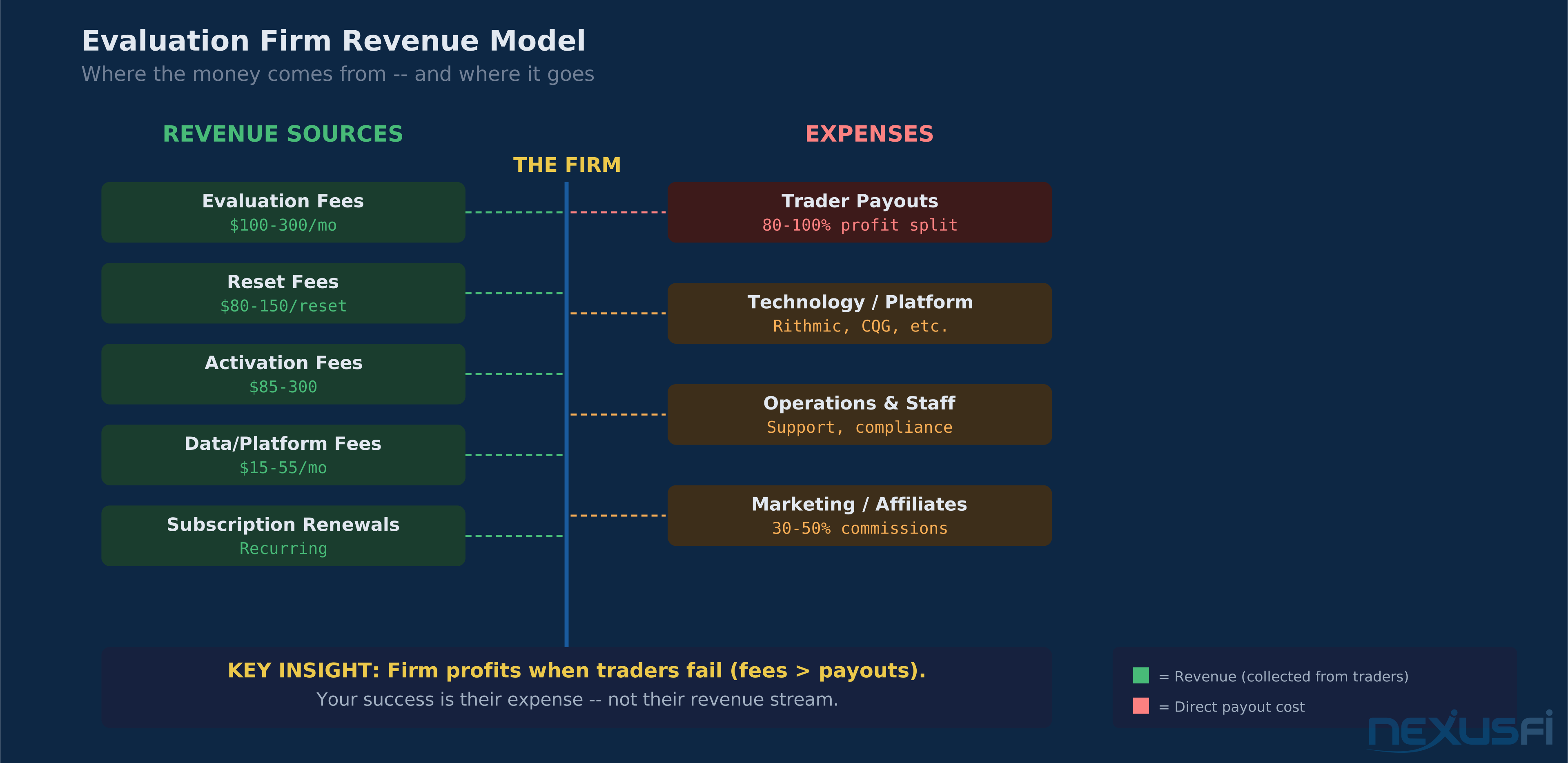
A traditional prop firm hires you, gives you the firm's capital, and takes the majority of your profits in exchange for the infrastructure and risk. The funded evaluation model flips that — you pay upfront, trade on their simulator or controlled environment, and if you hit their targets without violating their rules, you get a funded account with a profit split that favors you. The business model is elegant, but it creates a fundamental tension: the firm makes money when you fail (reset fees, new evaluations, monthly subscriptions), and pays out of pocket when you succeed.
This article is about investigating that tension before you hand over your credit card. Due diligence for prop firms isn't about reading a FAQ page and checking a Trustpilot score. It's forensic work — verifying legal entities, understanding where your orders actually go, reading contract language that determines whether you'll ever see a payout, and recognizing the red flags that experienced traders have documented across years of community discussion.
What You're Actually Buying #
Strip away the marketing and here's what the evaluation model looks like from the firm's perspective: revenue comes primarily from evaluation fees, reset fees, monthly data/platform subscriptions, and activation charges. Payouts to successful traders are an expense, not a revenue stream. As @tigertrader explains, the business model is "to generate revenue through commissions and tuition fees while not allowing their traders to expose the firm to any risk. They can so offer a large split to the aspiring trader, because that is not where their income is derived." [1]
This isn't naturally a scam — it's a legitimate business model that gives undercapitalized traders access to larger position sizes. But it does mean the firm's financial incentives aren't aligned with yours. When you win, they lose. That's the starting point for every due diligence check that follows.
The Numbers Behind the Model
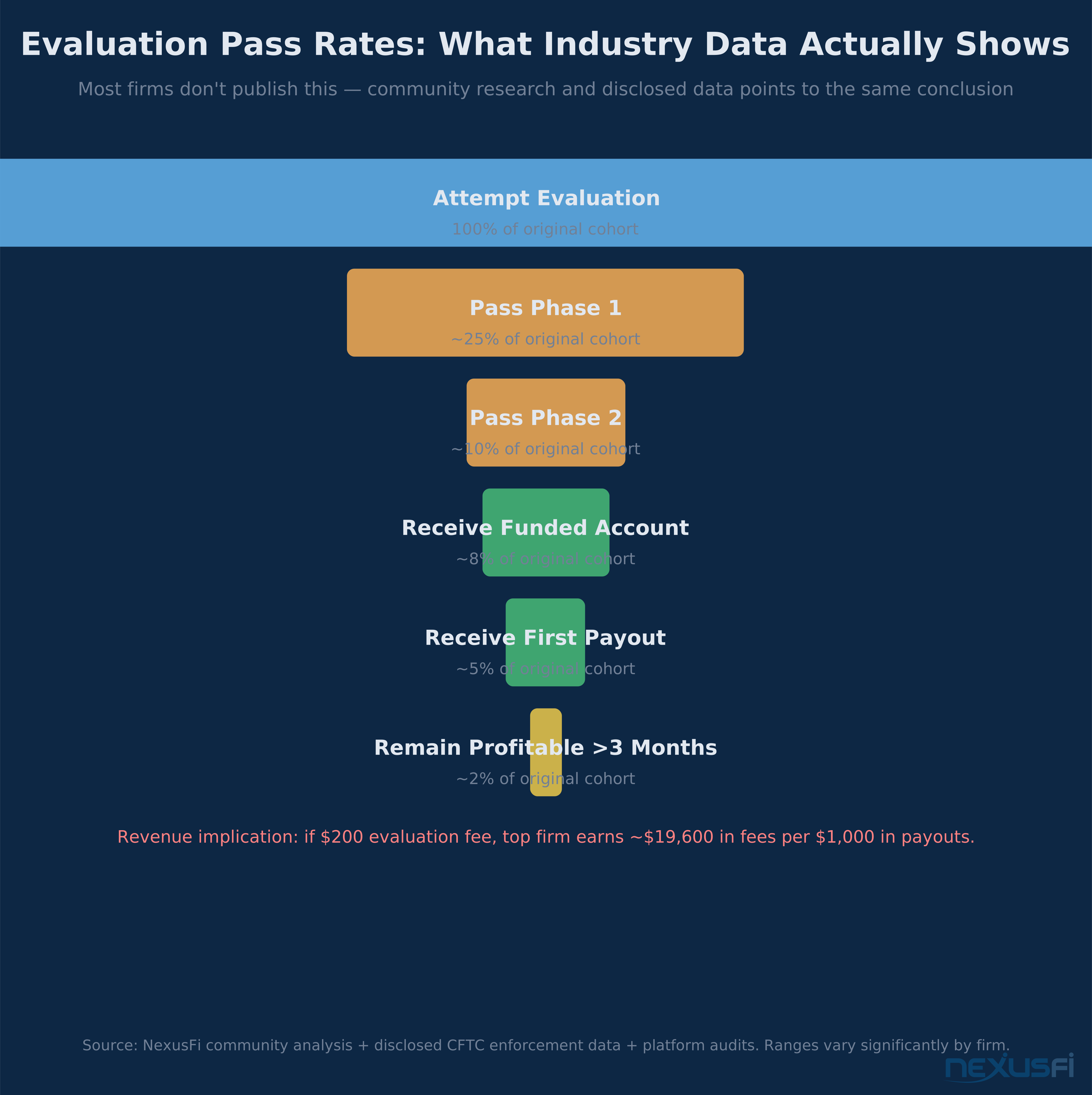
Consider a firm charging $150/month for a $50,000 evaluation account. If 90% of traders fail within 3 months (which is conservative — most estimates put evaluation pass rates between 5-15%), the firm collects an average of $405 per failed trader before they give up (fees plus resets). The 10% who pass might withdraw an average of $2,000-$5,000 each. The math works for the firm as long as enough traders keep paying. Where it gets dangerous is when a firm's payout obligations start exceeding its fee income — that's when rules tighten, payouts slow down, and firms collapse.
Legal Entity and Regulatory Verification #
The first thing you check isn't the profit split or the drawdown rules — it's whether the company is a real, traceable legal entity. This sounds basic, but multiple prop firms have operated through shell companies, offshore registrations, and opaque corporate structures that made it impossible for traders to pursue claims when things went wrong.
What to Verify
Corporate registration. Search the company name in the state/country's business registry (Secretary of State in the US, Companies House in the UK). You want to see: the actual legal entity name (it may differ from the brand), the date of incorporation, registered agent, and physical address. A firm incorporated last month with a virtual office address carries more risk than one that's been operating for five years from a verifiable location.
Jurisdiction matters. US-based firms operating through NFA-registered FCMs provide the most protection for futures traders. Firms incorporated in offshore jurisdictions (Seychelles, St. Vincent, Marshall Islands) aren't automatically illegitimate, but your legal recourse if they don't pay is effectively zero. As @Binkius notes, "the prop firms that are actually trading on the clients' orders should be fine. The easiest way to know if you're with a bucket-shop is to fund. If you aren't required to register as a professional trader, they're probably not transacting your orders." [2]
The education service classification. Most prop evaluation firms structure themselves as education or technology service providers, not as brokerages or commodity trading advisors. This is a deliberate regulatory choice — it means they're not subject to CFTC/NFA oversight for their evaluation programs. That's not naturally problematic, but it does mean standard brokerage protections (segregated funds, SIPC coverage, NFA arbitration) don't apply to your evaluation fees or funded account profits.
The FCM Connection
For futures-specific prop firms, the clearing relationship is the single most important verification you can do. A legitimate firm routes funded account orders through a registered Futures Commission Merchant (FCM). You can verify FCM registration on the NFA BASIC database. If the firm can't tell you which FCM handles their funded accounts, or if the answer changes depending on who you ask, that's a serious red flag.
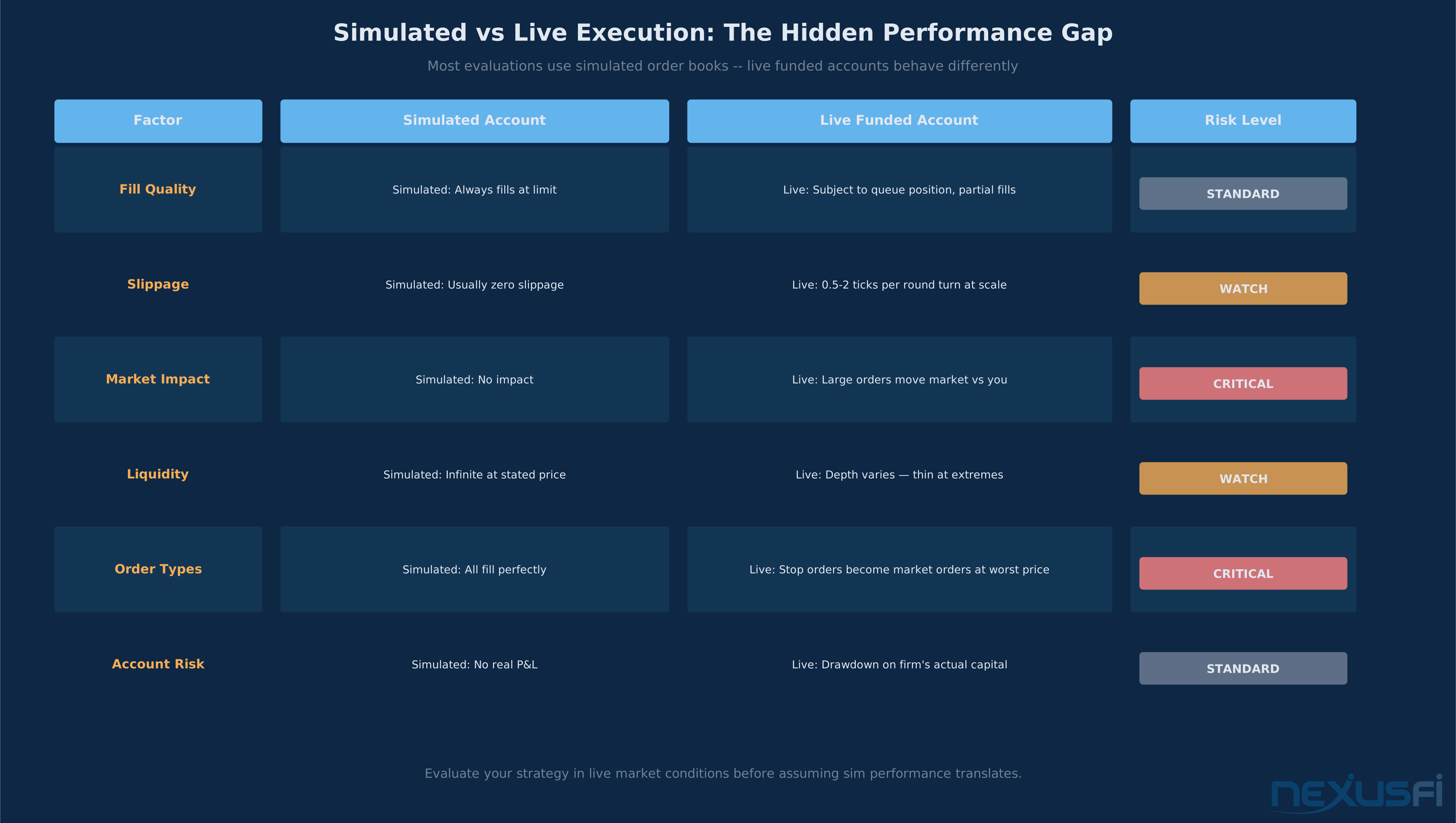
The FCM relationship also tells you whether your funded orders actually hit the exchange. If orders go through a registered FCM to CME/CBOT/NYMEX/ICE, they're real market orders with real execution. If they stay in a simulated environment indefinitely — even after you're "funded" — you're trading against the firm's balance sheet, not the market.
Simulated vs. Live Execution -- The Elephant in the Room #
Here's what most traders don't realize: many funded accounts are not live accounts. Even after you pass the evaluation and "receive funding," your orders may never touch an exchange.
Why does this matter? Because if your "funded" account is still on simulation, every dollar you earn is a direct cost to the firm. There's no profit to split — the firm pays your payout entirely from its own revenue (other traders' fees). This creates the exact conflict of interest that @Howard Roark describes: "If you earn $10K of profits it's not actual profits which the company can pay you and take a cut off. It's 100% an expense from them as it's simulator profits and they have to pay you with their own cash. The implication of this is that YOU WIN => THEY LOSE." [4]
How to Check
Ask the firm directly: "When I'm funded, do my orders execute at the exchange through an FCM, or do they remain in a simulated environment?" If the answer is vague, assume simulation. Some firms (like Earn2Trade and OneUp Trader) are upfront about starting funded traders on simulation. Others market their funded accounts as "live" when they're running a livesim with discretionary replication. The honest firms deserve more credit than they get.
You can also check during trading: if your orders increment the Level 2 DOM (visible on other platforms connected to the same exchange), they're hitting the exchange. If they don't move the book at all, you're on sim.
Reading the Evaluation Contract #
The evaluation agreement is where most traders get caught. The marketing says "pass the evaluation, get funded, keep 80-90% of profits." The contract says something considerably more subtle.
Discretionary Clauses
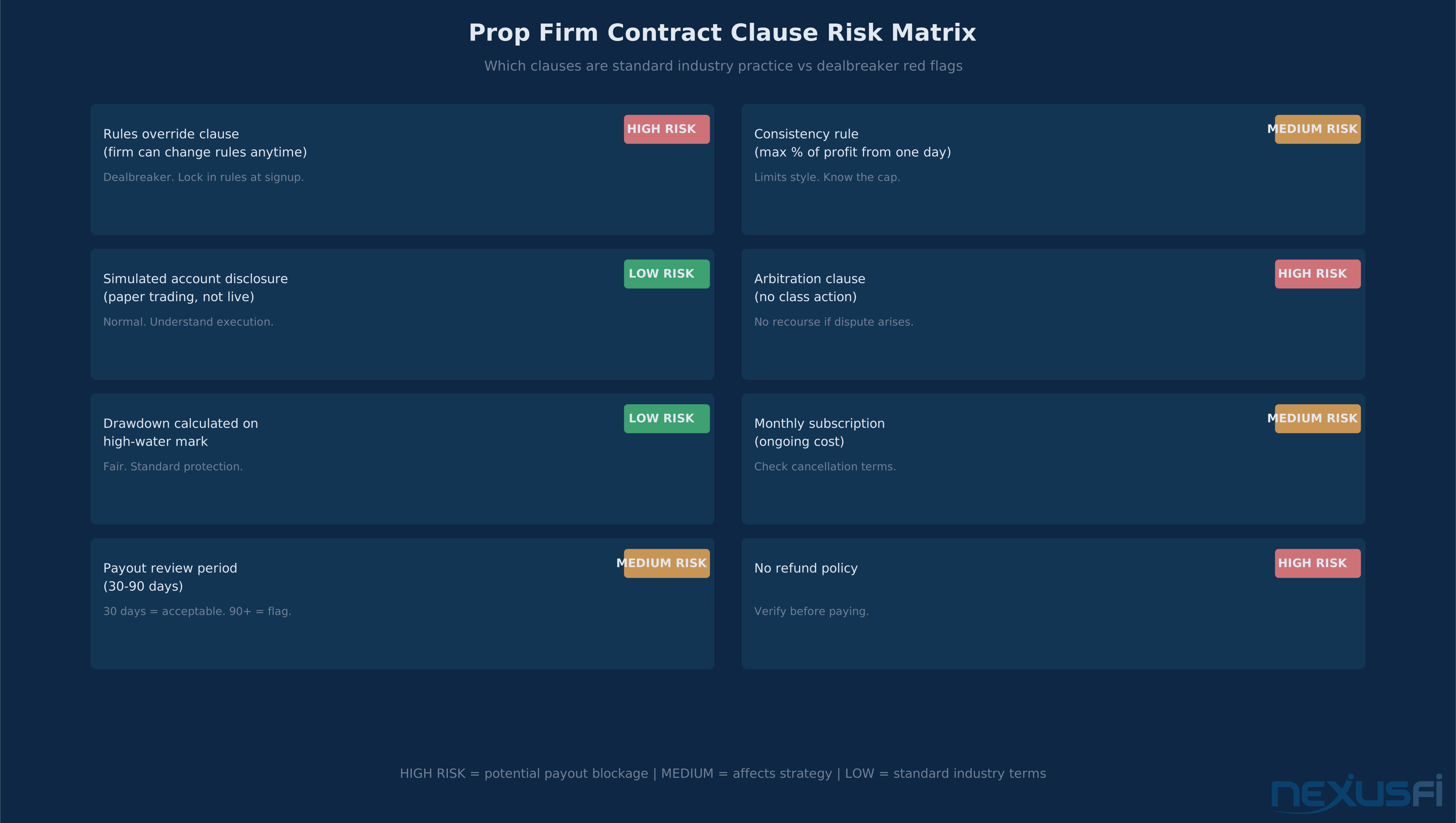
Watch for language that gives the firm subjective authority to deny payouts. Terms like "account integrity violation," "manipulative trading behavior," "outlier trading patterns," or "inconsistent with demonstrated strategy" give the firm discretion to reject payouts even when you've met every objective metric.
The fix isn't avoiding all firms with discretionary clauses — that would eliminate most of the industry. The fix is understanding exactly what behaviors trigger denial and getting clarification in writing before you pay.
Rule Immutability
Can the firm change rules after you've started your evaluation or funded account? Check for clauses like "rules are subject to change at any time" or "the firm reserves the right to modify terms." Some firms have introduced new rules (consistency requirements, DCA prohibitions, flipping definitions) that retroactively affected traders who signed up under different terms.
Key Contract Elements to Scrutinize
Drawdown definitions. Is the max drawdown calculated on a trailing basis (from your equity high) or static (from starting balance)? Trailing drawdowns are much harder to manage and create situations where a profitable trader can still be terminated. The specific calculation method — whether it uses real-time mark-to-market or end-of-day settlement — changes everything about how you need to trade.
Payout schedules and minimums. How many trading days are required before your first withdrawal? What's the minimum withdrawal amount? Are there maximum withdrawal caps per period? Some firms require 10+ profitable trading days with minimum thresholds, which can take weeks or months to achieve.
Profit split changes. Does the split change over time? Some firms start at 100% for the first payout, then drop to 80% or 90%. Others reverse — starting lower and increasing as you demonstrate consistency.
Termination triggers. Beyond hitting max drawdown, what else can terminate your account? Some firms terminate for inactivity, for trading during specific news events, for holding positions overnight, or for "inconsistent behavior." Know every trigger before you start.
Payout History Verification #
A firm's willingness to actually pay traders is the single most important data point in your due diligence — and the hardest to verify independently.
Where to Look
Independent forums. NexusFi's Funded Trading Evaluation Firms subforum has hundreds of posts documenting real payout experiences — both positive and negative. Look for patterns over time, not individual anecdotes. A firm with 50 positive payout reports and 3 complaints is different from one with 50 positive reports and 30 complaints.
Discord and social media with caution. Many firms run their own Discord servers where payout screenshots are shared. These can be useful but remember: the firm controls that space. Negative experiences get buried or deleted. Use firm-controlled channels for positive signal and independent forums for negative signal.
Payout denial patterns. More important than whether a firm pays is how and when they deny payouts. If denials consistently cite vague rule violations rather than objective metrics, that's a pattern. If denials cluster around large payout amounts (firms pay small withdrawals fine but find reasons to reject $10K+ requests), that's a pattern.
Warning Signs in Payout Behavior
Payout delays that increase over time. A firm that paid within 5 business days a year ago but now takes 3-4 weeks may be experiencing cash flow problems. Multiple firms that eventually collapsed showed this pattern before shutdown — including Fast Track Trading, where "multiple traders reported slower withdrawal processing in the weeks prior" to the closure. [7]
New rules appearing before large payouts. If a firm introduces a new restriction (consistency rule, flipping prohibition, DCA limitation) right before a wave of payout requests, the timing is suspicious regardless of how reasonable the rule sounds in isolation.
Shifting payout requirements. Some firms have changed payout minimums, added new verification steps, or introduced "review periods" that didn't exist when traders signed up. Each individual change might be defensible — but the cumulative effect is always to reduce payouts.
Red Flags -- The Patterns That Predict Trouble #
After years of community discussion and several high-profile firm collapses, a clear taxonomy of warning signs has emerged. No single red flag means a firm is a scam, but multiple flags in combination should make you very cautious.
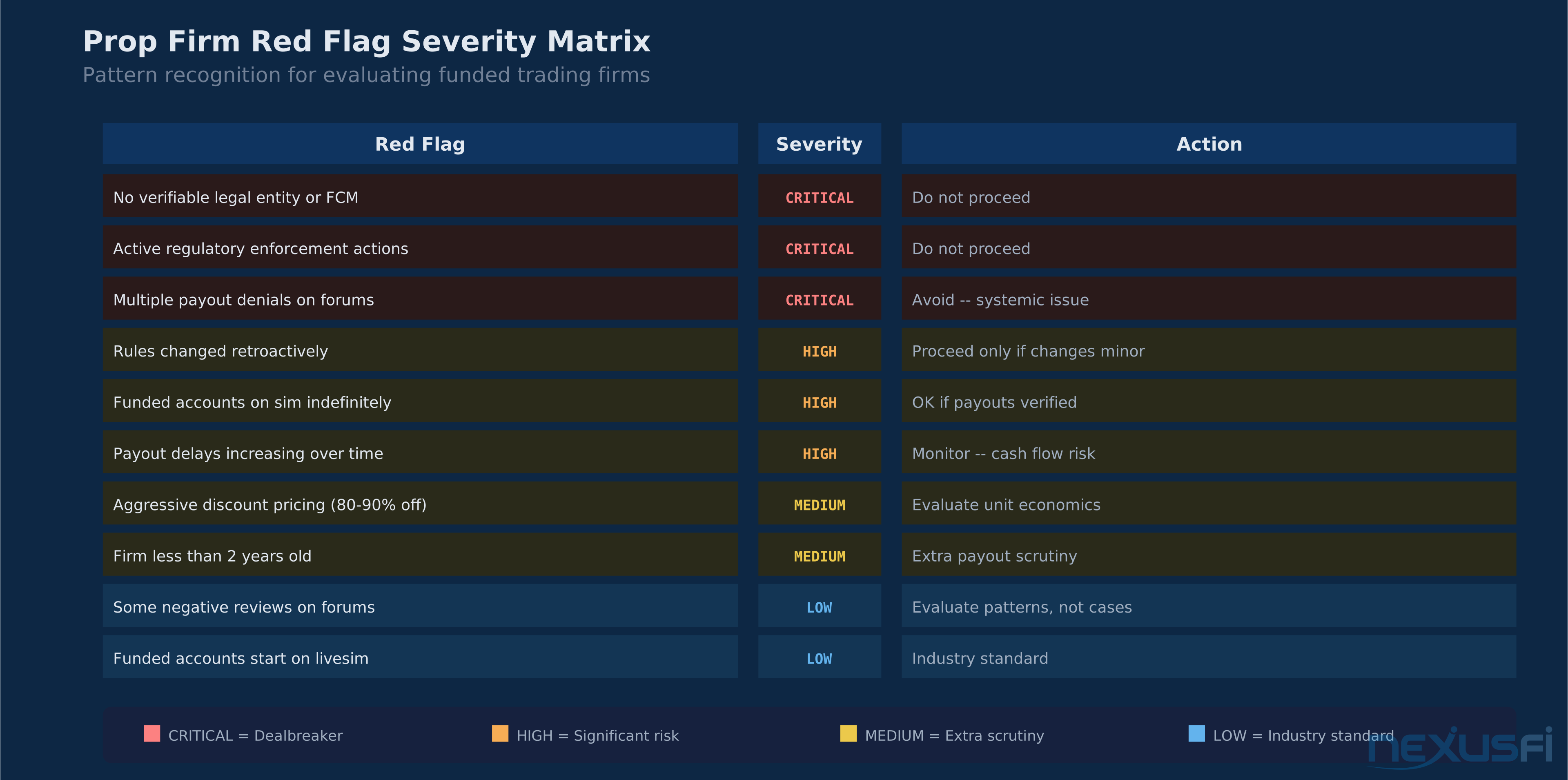
Operational Red Flags
No verifiable physical address. A PO box or virtual office in a strip mall isn't automatically disqualifying, but it means there's nothing anchoring the business to a location. Combined with offshore incorporation, it's a problem.
Recent incorporation with aggressive marketing. A firm that's been operating for 6 months but is already running 80% off sales and affiliate programs is optimizing for fee collection, not for building a sustainable evaluation business.
Communication blackouts. Support tickets going unanswered for days, social media going silent, or community managers disappearing from Discord are pre-collapse patterns that have repeated across multiple firm failures.
Frequent entity changes. If the company has changed its legal name, jurisdiction, or corporate structure multiple times in a short period, investigate why. Sometimes it's legitimate growth. Sometimes it's escaping obligations.
Financial Red Flags
Unsustainable discount patterns. Firms running perpetual 80-90% off sales are pricing evaluations at $15-50. At that price point, the firm needs an enormous volume of failing traders to fund even modest payouts. The math only works if almost nobody succeeds.
No activation fee transparency. Some firms charge significant activation fees ($300+) after you pass the evaluation — a cost that wasn't prominent in the marketing. If the full cost structure isn't clear before you pay for the evaluation, what else isn't clear?
Payout caps that don't match marketing. A firm advertising "$250,000 funded accounts" with a $2,000 maximum first withdrawal and $500/day withdrawal limits isn't offering what the headline implies.
Structural Red Flags
@TraderCornel, drawing on 24 years of trading experience, identified several structural red flags: "They promise high payout (real firms at the very best give you 50%). Quick evaluation (real firms want a track record of at least 6 months to a year). No trade desk to call. No live consumer support. Claim they can't access your trading account." [8] While the evaluation model has evolved since traditional prop trading, these fundamentals still apply — a firm that can't provide basic operational support is one you should avoid.
Rules designed to fail.
[9] When the rules are internally contradictory — claiming to want one type of trading while enforcing rules that make that type impossible — the evaluation is designed to collect fees, not identify talent.
The Due Diligence Checklist #
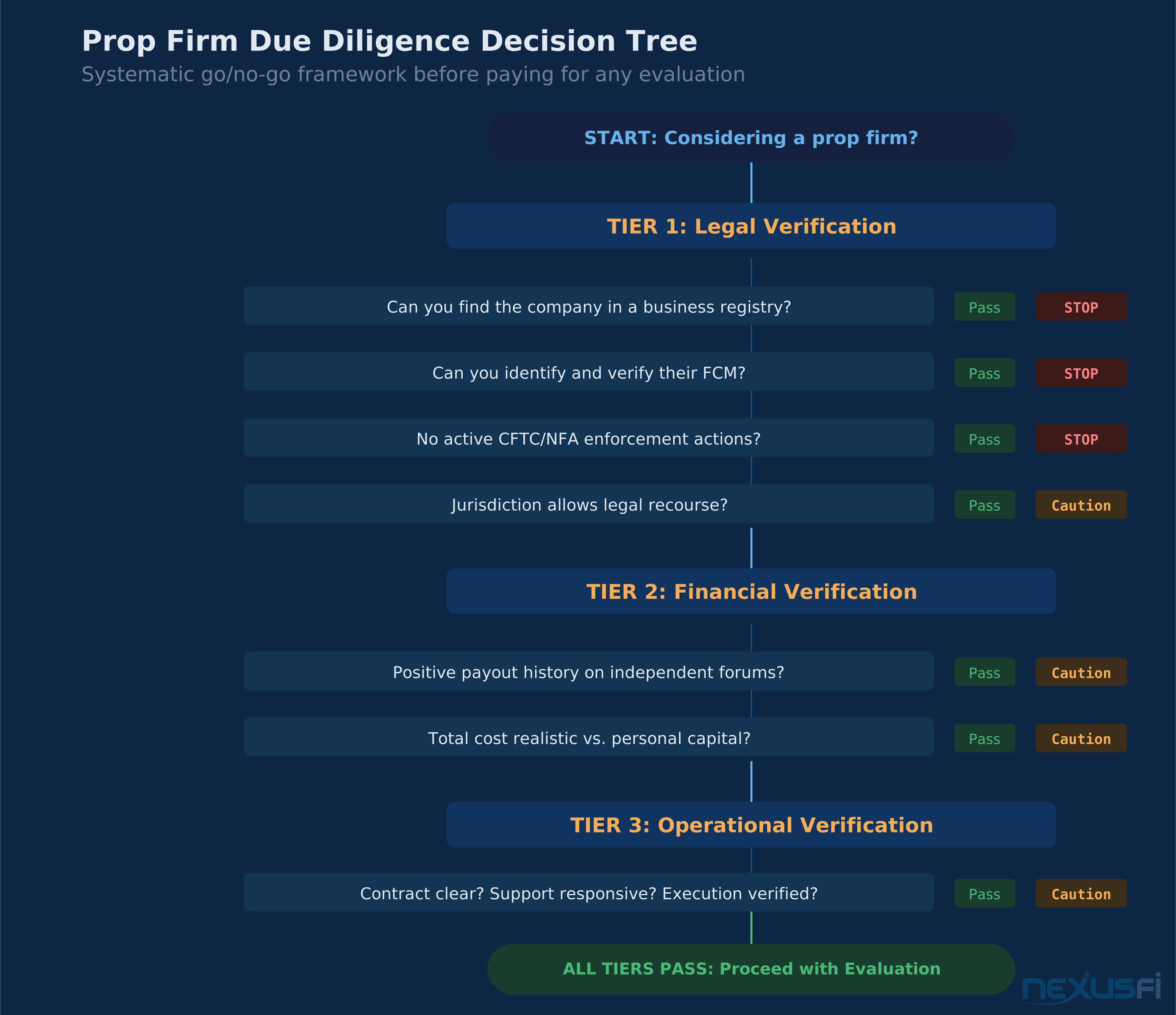
Before paying for any evaluation, work through this verification sequence. Each check takes 15-30 minutes. The total investment of 2-3 hours can save you thousands in fees to firms that will never pay you.
Tier 1: Legal Verification (Do This First)
1. Confirm the legal entity. Search the company name in the relevant business registry. Record the incorporation date, registered agent, and jurisdiction. If you can't find the company registered anywhere, stop here.
2. Verify the FCM relationship. Ask the firm which FCM handles their funded accounts. Search that FCM on the NFA BASIC database. If they can't name an FCM, or the named entity isn't registered, that's a dealbreaker for futures trading.
3. Check for regulatory actions. Search the firm name (and its principals' names) on the CFTC enforcement actions database and NFA's disciplinary information. No results doesn't guarantee legitimacy, but results definitely matter.
Tier 2: Financial Verification
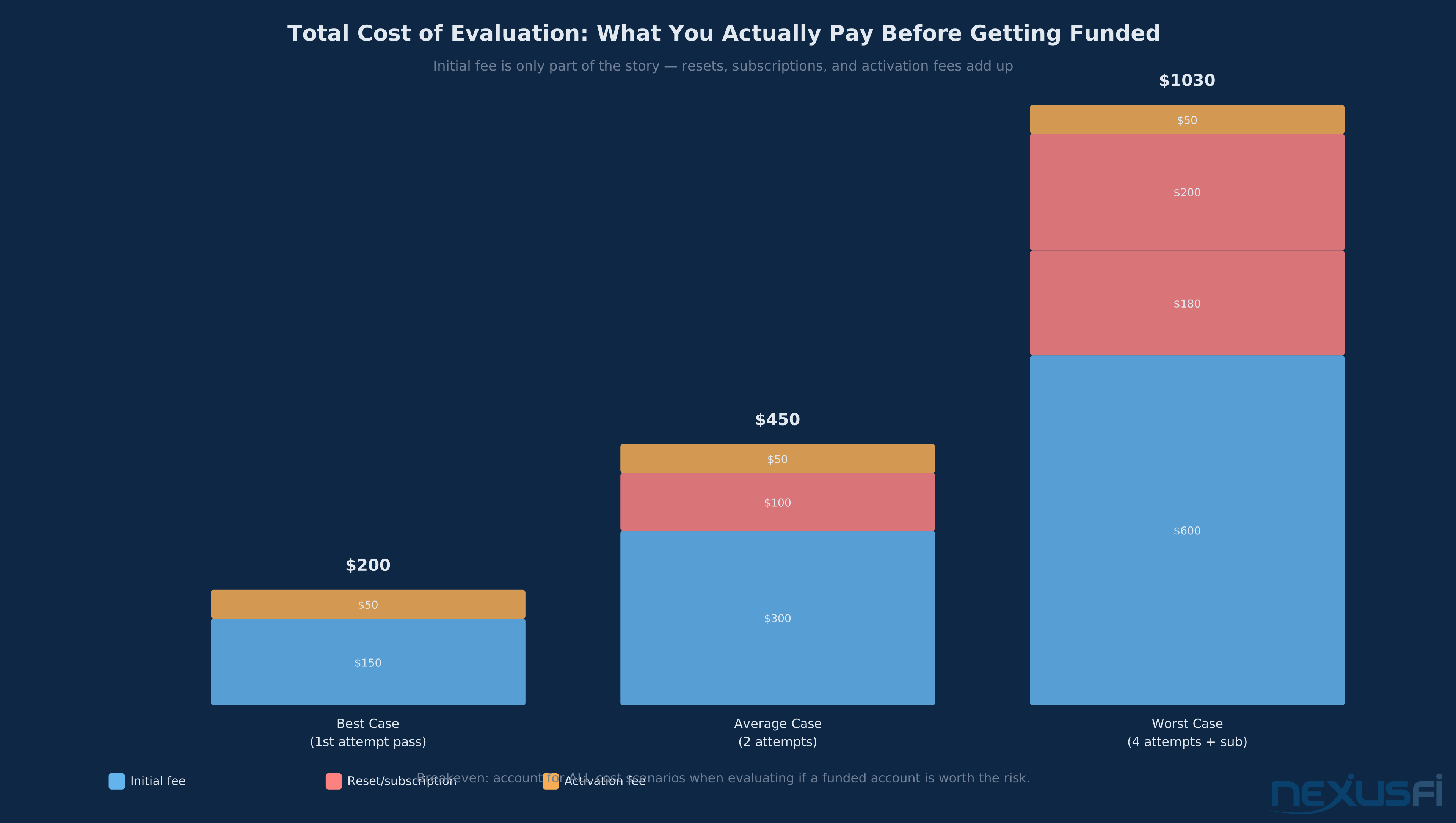
4. Calculate total cost of participation. Add up: evaluation fee + expected resets (assume 2-3) + data fees + platform fees + activation fee + monthly funded account fees. That's your real cost basis. If the total exceeds what you'd spend opening a micro futures account with your own capital, the evaluation model may not make financial sense for you.
5. Verify payout history on independent forums. Search NexusFi, Reddit (r/FuturedTrading, r/Daytrading), and Trustpilot for the firm name. Count positive payout reports vs. complaints. Look specifically for payout denials citing subjective reasons.
6. Test withdrawal speed with small amounts. If you pass an evaluation and get funded, withdraw the minimum amount as early as possible. The speed and ease of that first withdrawal tells you everything about what larger withdrawals will look like.
Tier 3: Operational Verification
7. Read the full evaluation agreement. Not the FAQ — the actual legal agreement you'll sign. Look for: discretionary termination clauses, rule change provisions, non-disparagement language, and arbitration requirements. If the agreement isn't available before payment, ask for it. If they won't provide it, walk away.
8. Test customer support before paying. Email or chat with a specific technical question about their rules (e.g., "How exactly is the trailing drawdown calculated — is it real-time mark-to-market or end-of-day settlement?"). The quality, speed, and specificity of the answer tells you what support will look like when you have a payout dispute.
9. Verify execution environment. Ask directly: "After funding, do my orders execute at the exchange through an FCM, or do they remain in simulation?" Accept only a clear, specific answer.
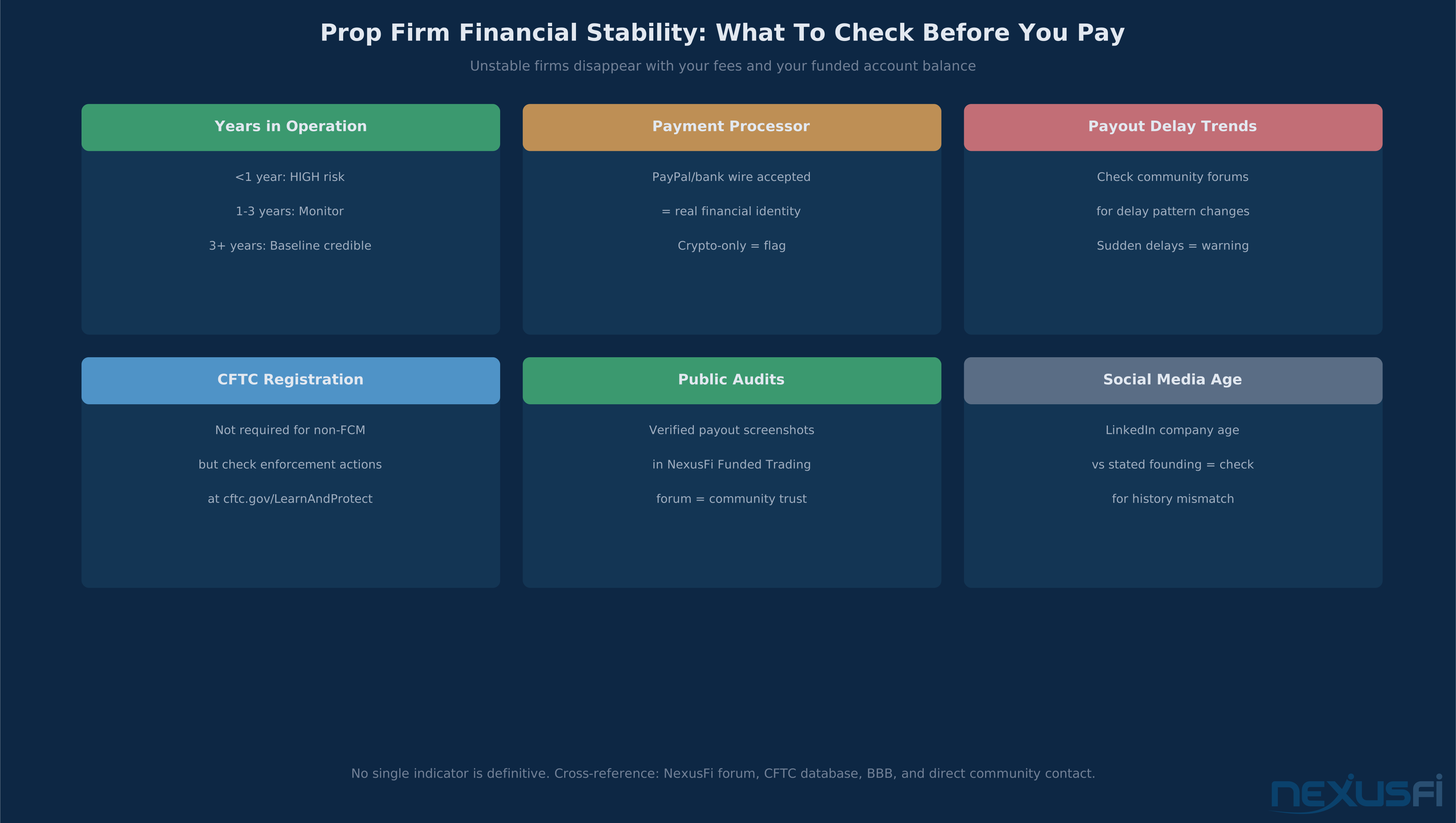
10. Check the firm's age and stability. How long has the firm been operating under its current name and structure? Has it changed ownership, jurisdiction, or corporate entity recently? Firms that have been paying traders consistently for 3+ years carry less risk than firms that launched last quarter.
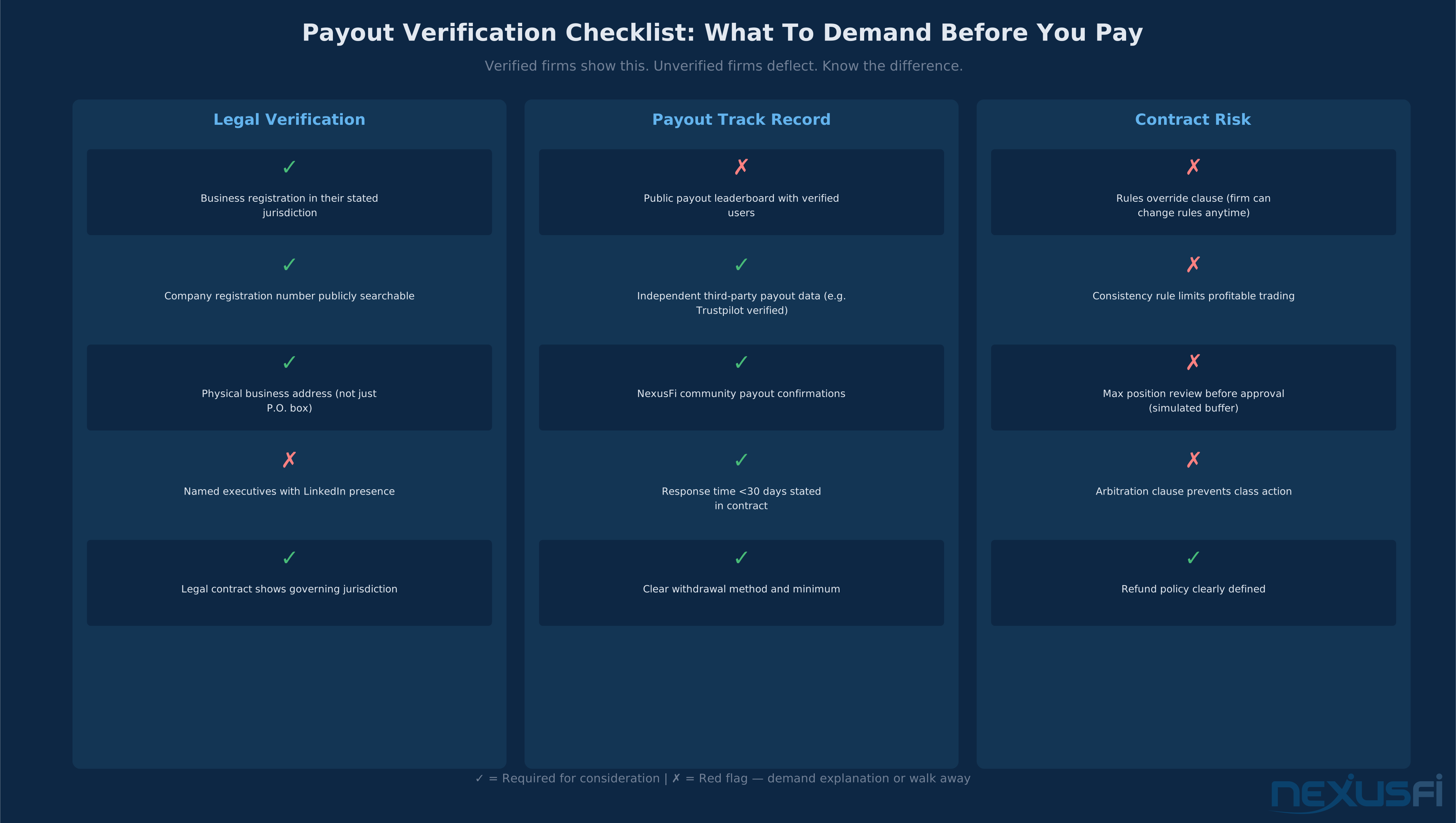
When Due Diligence Says "No" #
The hardest part of due diligence isn't gathering information — it's acting on what you find. After investing hours researching a firm, finding a great discount code, and getting excited about the profit split, walking away because the contract language is vague feels like quitting. It's not. It's risk management applied to your evaluation capital.
The Decision Framework
Use a simple go/no-go matrix:
Automatic no-go (any single factor):
- Cannot verify legal entity registration
- No identifiable FCM relationship for funded accounts
- Active regulatory enforcement actions against the firm or principals
- Multiple independent reports of payouts denied with no clear rule violation
- Contract includes unlimited discretionary termination or payout denial
Proceed with caution (2 or fewer):
- Firm is less than 2 years old
- Funded accounts start on simulation (common, not disqualifying)
- Some negative reviews exist (unavoidable -- even good firms have unhappy traders)
- Rules have been updated since launch (normal if changes were prospective, not retroactive)
Green light (all must be true):
- Verifiable legal entity with 2+ years of operations
- Named FCM relationship, verifiable on NFA BASIC
- Consistent payout history documented on independent forums
- Clear, specific rules with limited discretionary override
- Responsive support that answers technical questions accurately
Treating Evaluation Fees as Risk Capital #
Even after thorough due diligence, evaluation fees should be treated as risk capital — money you can afford to lose entirely. The math is straightforward: if evaluation pass rates are 5-15% and funded trader survival rates are lower still, the expected value of any single evaluation attempt is negative. The expected value only turns positive if you have a genuine edge, appropriate risk management, and are trading with a firm that will actually pay.
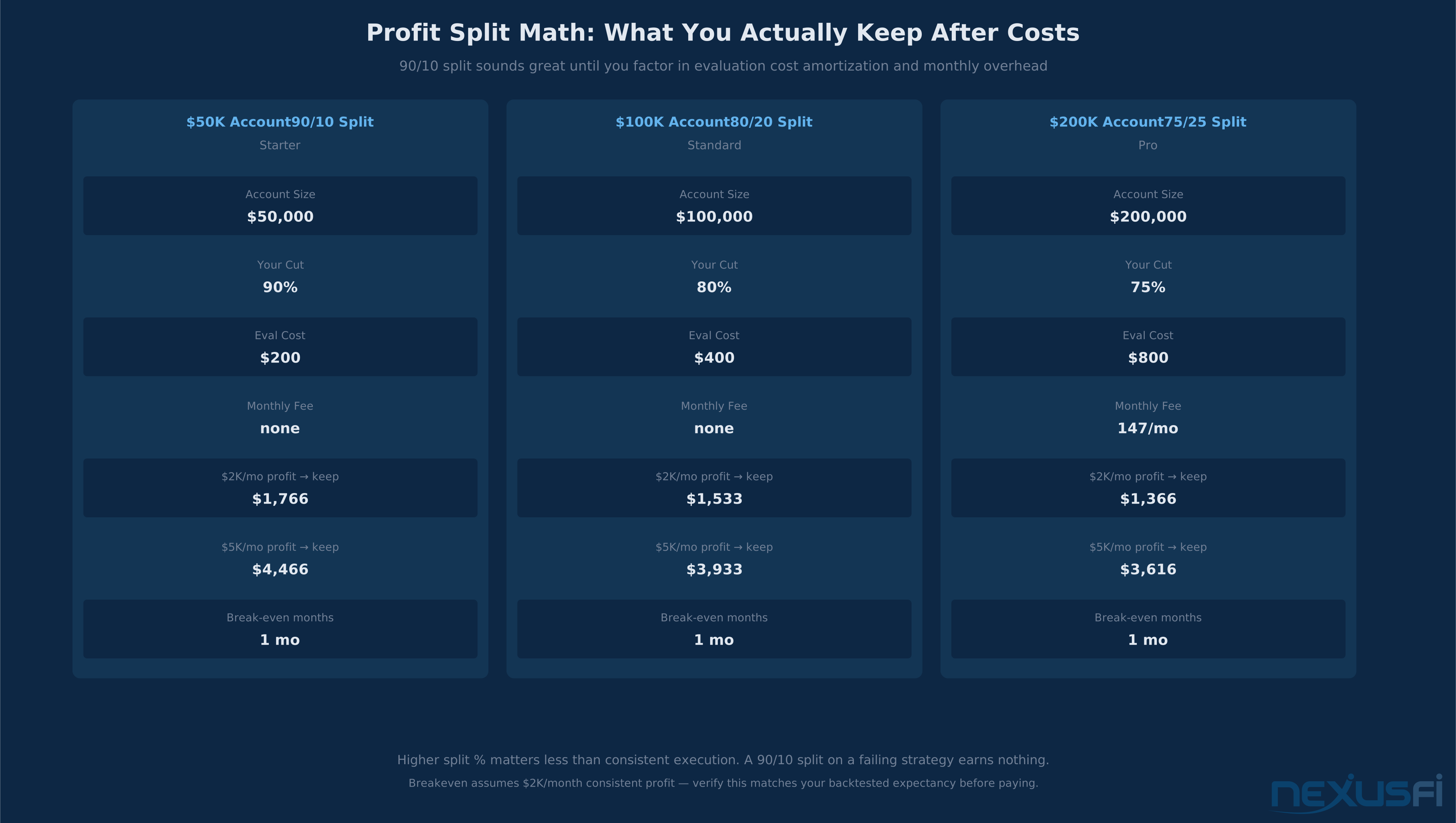
Calculate your break-even: if an evaluation costs $150/month and you expect to need 3 attempts to pass ($450 total), plus a $300 activation fee ($750 total), you need to withdraw at least $750 from your funded account just to break even on costs. That's before considering the time investment. If you can't realistically expect to withdraw $750+ within your first few months funded, the economics don't work regardless of how legitimate the firm is.
The traders who do well with evaluation firms treat them like what they are: a capital access tool with known costs, specific rules, and quantifiable risk. They don't treat them like lottery tickets or shortcuts to profitability. The due diligence process outlined here is the first step in that professional approach.
Knowledge Map
Prerequisites
Understand these firstGo Deeper
Build on this knowledgeReferences This Article
Articles that build on this topicCitations
- — Thoughts from a professional price action daytrader (2015) 👍 13“tst's business model is to generate revenue through commissions and tuition fees while not allowing their traders to expose tst to any risk.”
- — Funded Trader platforms (2024) 👍 8“The prop firms that are actually trading on the clients' orders should be fine. The easiest way to know if you're with a bucket-shop is to fund.”
- — ApexTraderFunding.com experience and review (2022) 👍 3“Two types of funded accounts exist: Livesim -- orders never hit the exchange, they stay in a simulated environment. Live or cash accounts -- orders hit the exchange.”
- — Topstep didn't pay (2021) 👍 11“If you earn $10K of profits it's not actual profits which the company can pay you and take a cut off. It's 100% an expense.”
- — ApexTraderFunding.com experience and review (2024) 👍 3“Their rules seem intentionally ambiguous... it does feel like you're at their whim.”
- — ApexTraderFunding.com experience and review (2024) 👍 7“My recent payout request of $22k was denied due to DCA... The 'one execution' rule has been added recently.”
- — Fast Track Trading has ceased operations (2025)“Multiple Fast Track traders reported slower withdrawal processing in the weeks prior to closure.”
- — Most Funding Firms are a Scam (2022) 👍 2“They promise high payout. Quick evaluation. No trade desk to call. No live consumer support.”
- — Prop firm fraud in Futures? (2023) 👍 5“They employ trailing drawdowns of unrealized profits on traders, while simultaneously saying they want long-term traders.”