



Prop Firm Fraud and Regulatory Risk: How to Identify Fraudulent Funded Trading Schemes and Protect Yourself
Overview #
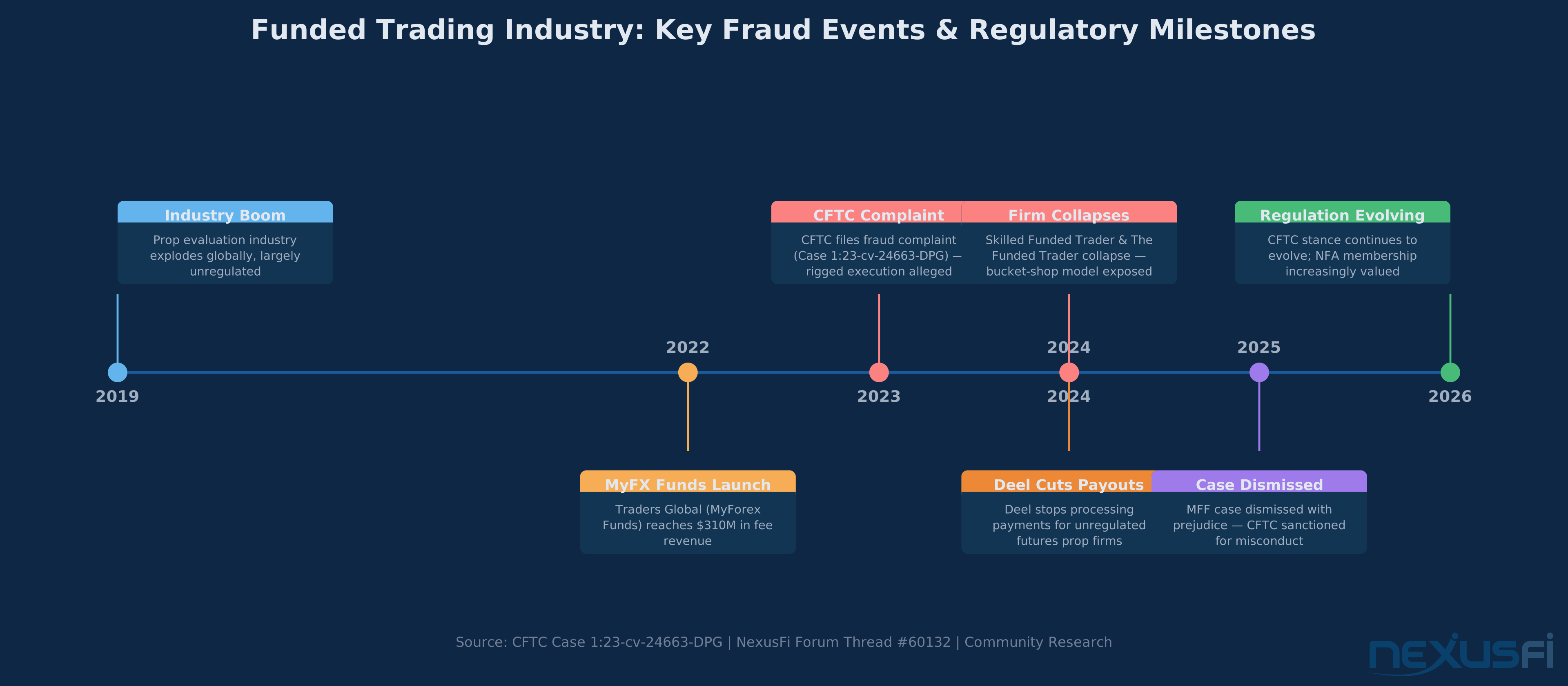
Prop firm fraud is not a distant abstraction. In 2023, the Commodity Futures Trading Commission filed fraud charges against one of the largest funded trading evaluation companies in the world. In 2024, two established prop firms — Skilled Funded Trader and The Funded Trader — collapsed simultaneously, with thousands of traders locked out of accounts they had funded through real evaluation fees. These events exposed structural vulnerabilities in an industry that had grown explosively with little regulatory oversight, and left retail traders asking: Can I trust this firm? Is my funded account real? What happens to my fees if the firm disappears?
This article gives you a systematic framework for identifying the red flags that distinguish high-risk operators from legitimate firms — before you commit capital. The goal is not to condemn prop evaluations; legitimate firms do exist and some traders build sustainable careers through them. The goal is to equip you with the analytical tools that separate informed participation from uninformed exposure.
How the Business Model Creates Fraud Risk #
To understand why prop firm fraud occurs, you need to understand the economics of the evaluation model. A typical funded trading firm charges traders $100 to $500 for an evaluation — a structured challenge with profit targets, maximum drawdown limits, and trading rules. If the trader passes, they receive access to a "funded account" and split profits with the firm, often 80-90% to the trader.
The math looks attractive. The problem emerges when you examine where money actually flows.
Evaluation fee concentration: Most funded trading firms generate 70% to 95% of their revenue from evaluation fees, not profit-sharing. Industry-wide pass rates are typically 5% to 15%, with most traders failing during evaluation or shortly after reaching funded status. This means the economics only work if the steady influx of evaluation fees from failing traders exceeds payouts to the small percentage who succeed.
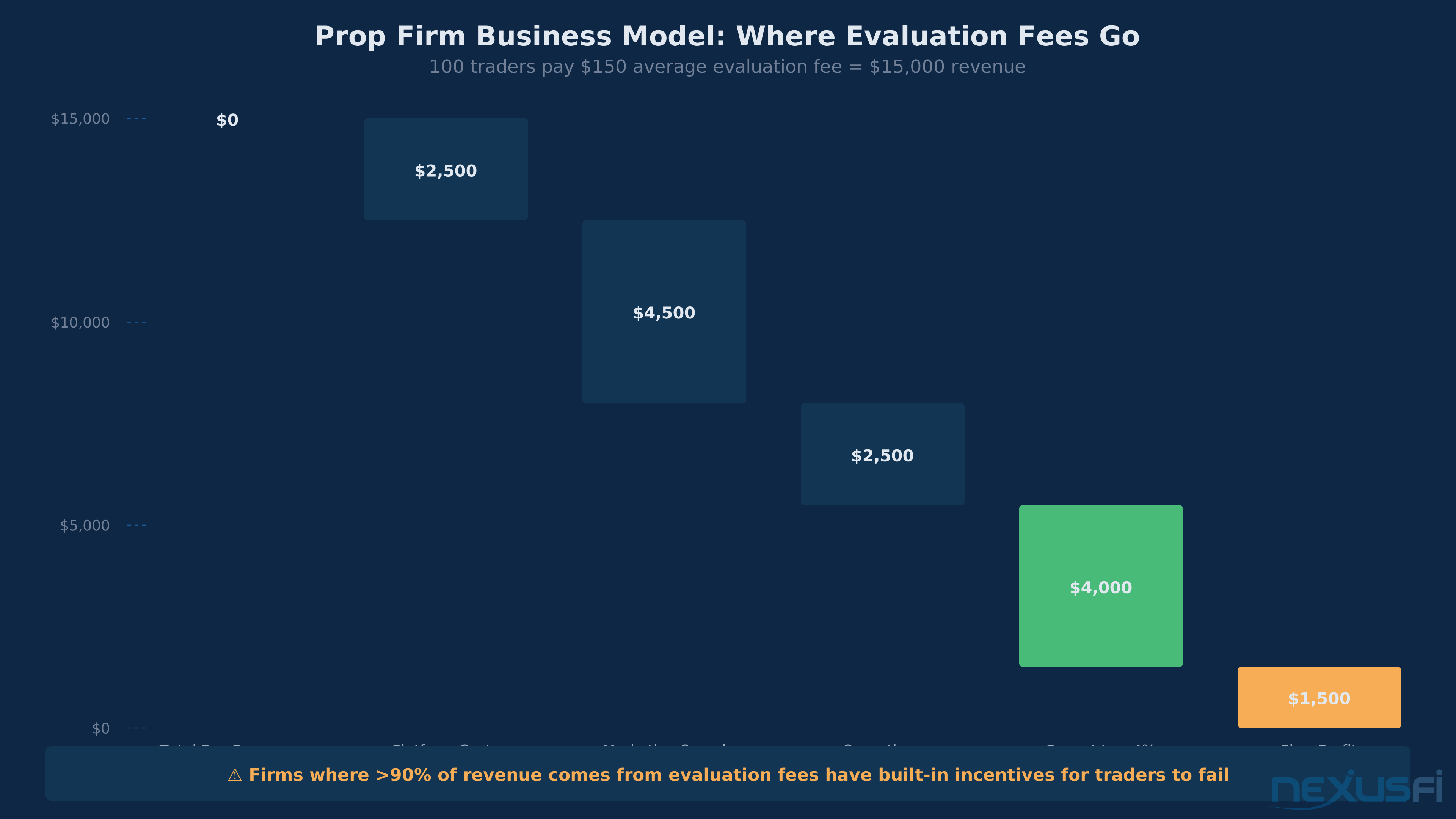
A firm relying almost entirely on evaluation fee revenue has built-in incentives for traders to fail. That does not automatically make a firm fraudulent — the evaluation genuinely tests risk management capability. But it creates a business model where the incentive structure misaligns with the stated partnership narrative. When you read marketing copy describing a firm as "invested in your success," the economics may tell a different story.
The simulated account question: When you pass an evaluation and receive your "funded account," what are you actually trading? In most cases, you are trading a simulated environment, not real capital in live markets. The prop firm is not funding a real account at an exchange. You are trading on a platform that mirrors live market data but does not execute real orders. This is disclosed in legitimate firms' terms — and it explains why many simulation-based prop firms argue they fall outside CFTC jurisdiction. But it matters enormously when a firm collapses: there is no real capital to recover, because there was never real capital.
The funded trading evaluation industry is closer to a software subscription business than a traditional prop firm. Most revenue comes from traders who fail. The stated narrative of "partnership with funded traders" often conflicts with the actual economic model.
The Bucket-Shop Problem: A-Book vs B-Book Execution #
The most important concept for evaluating prop firm legitimacy is the distinction between A-book and B-book execution — a framework borrowed from retail forex that applies directly to funded trading.
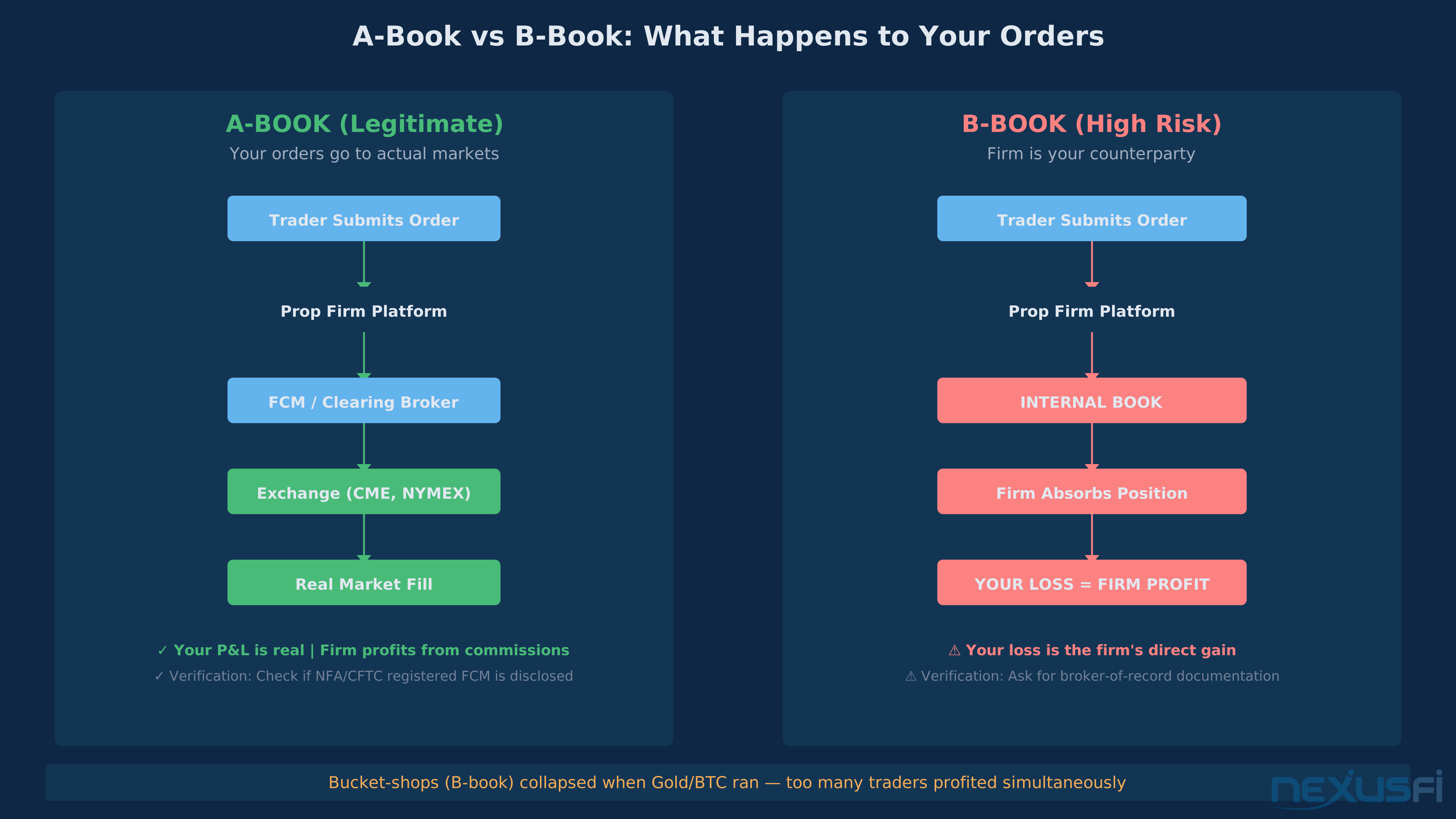
A-book execution means your orders are routed to actual markets through a registered clearing broker. When you buy or sell ES futures in a legitimately structured funded account, those orders flow through a Futures Commission Merchant (FCM) registered with the CFTC and NFA, reach the exchange, and receive real fills at exchange prices. The prop firm profits from its share of your winning trades, not from your losses.
B-book execution means the prop firm is your counterparty. Your orders are absorbed internally without reaching any exchange. Your profit is the firm's direct loss; your loss is the firm's direct gain. In futures, this model is called a bucket shop, and it is illegal in the United States for on-exchange commodity products when operated without registration.
The bucket-shop model becomes catastrophically vulnerable when enough traders win simultaneously. In late 2023 and early 2024, as gold and Bitcoin experienced strong directional moves, multiple B-book prop firms faced too many traders on the right side of the market at once — payouts that would exceed their total evaluation fee reserves. The result was locked accounts and collapsed businesses.
The most actionable verification signal: if you are not required to register as a professional trader when funded, the firm is probably not routing your orders to market. Firms that execute real trades at live exchanges require professional trader classification for regulatory reasons. Simulation-based B-book operations typically skip this step.
The My Forex Fund Case: What the CFTC Enforcement Action Reveals #
In September 2023, the CFTC filed fraud charges against Traders Global Group Inc. (My Forex Funds) in the US District Court for the Southern District of Florida. The case became the defining regulatory event in the prop evaluation industry.
The allegations: The CFTC's complaint alleged that My Forex Funds misrepresented simulated accounts as real trading, acted as counterparty to trader positions, used specialized software to artificially widen spreads and delay execution, and applied hidden commissions without disclosure.
The regulatory grey area: NexusFi member @jlabtrades analyzed the statutory definition of "retail commodity transactions" under 7 U.S.C. § 2(c)(2)(D)(i) and concluded that simulation-based futures prop firms that do not actually make the market for trades and do not represent them as "real" may sit outside the specific regulatory trigger. [5]
The outcome: The case was dismissed with prejudice. Judge Gayles found that the CFTC had engaged in misconduct during the investigation — withholding evidence and misrepresenting $31.5 million in legitimate tax payments as suspicious transfers. The court sanctioned the CFTC and ordered payment of legal fees.
What does the MFF case tell us? Three things simultaneously: the CFTC views the funded trading space as within its regulatory reach for firms that act as counterparties; enforcement is uncertain even when wrongdoing may have occurred; and the pattern of conduct alleged — rigged execution, hidden commissions, counterparty misrepresentation — is exactly what traders should watch for independent of any regulatory outcome.
The 2024 Collapses: When the Model Breaks Down #
Skilled Funded Trader and The Funded Trader shared structural characteristics that, in retrospect, were warning signs: white-label platforms that gave operators control over execution parameters; broad exposure to gold and Bitcoin during the 2024 directional moves; no professional trader registration requirement at funding; and no disclosed clearing FCM, because there were none.
The payment processor disruption preceded the collapses. @Liberty88 noted the sequence: Deel halted services to unregulated futures evaluation prop firms in late 2023. [1] When payment processors cannot confirm regulatory legitimacy, the payout infrastructure breaks down — and without it, the funded trading business model collapses entirely.
White-label platform + no professional registration required + no disclosed clearing FCM = three simultaneous red flags. Any one is worth investigating; all three together indicate a high-probability B-book operation. The 2024 collapses both had all three.
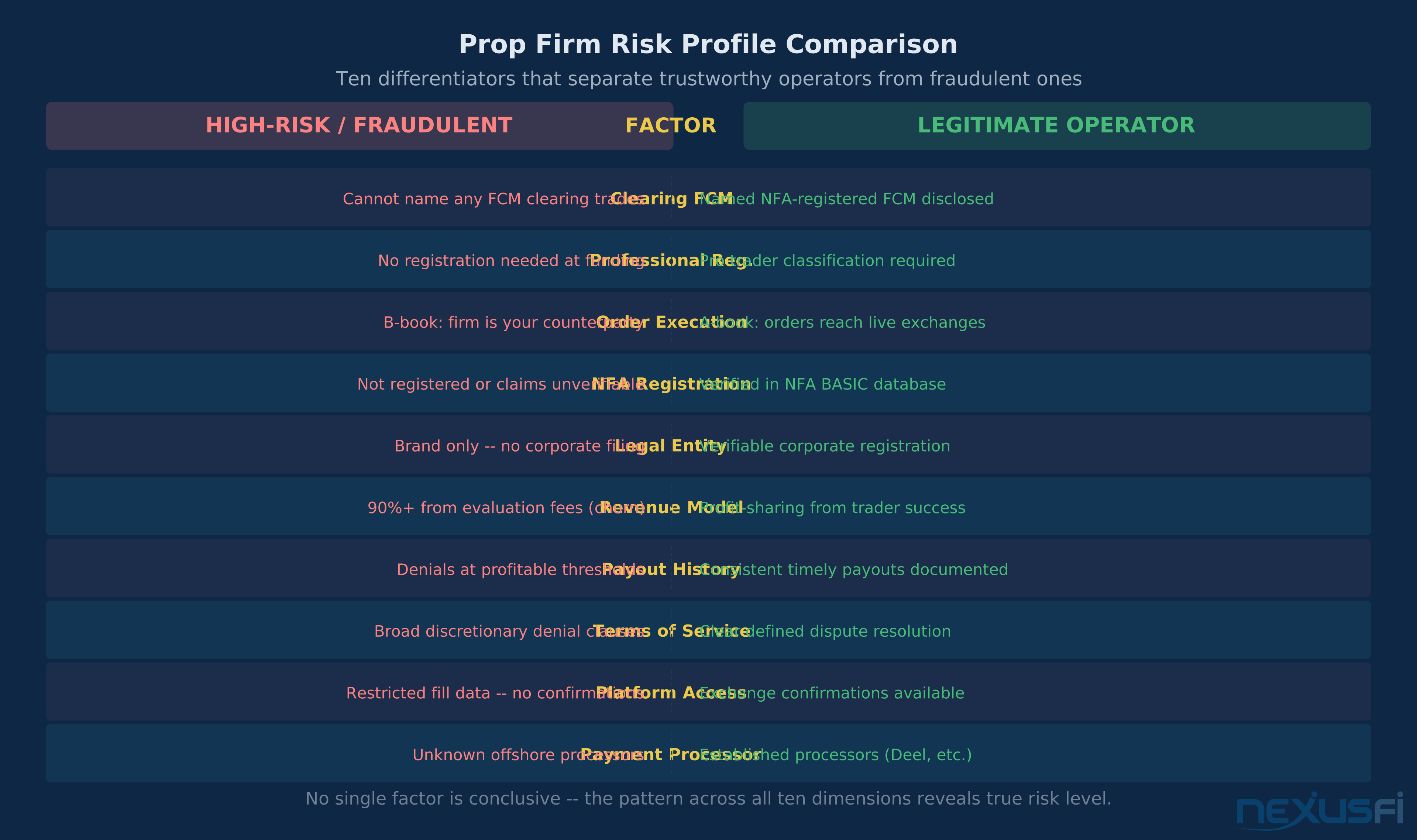
Risk Profile Comparison: High-Risk vs Legitimate Operator #
Red Flags Across Four Categories #
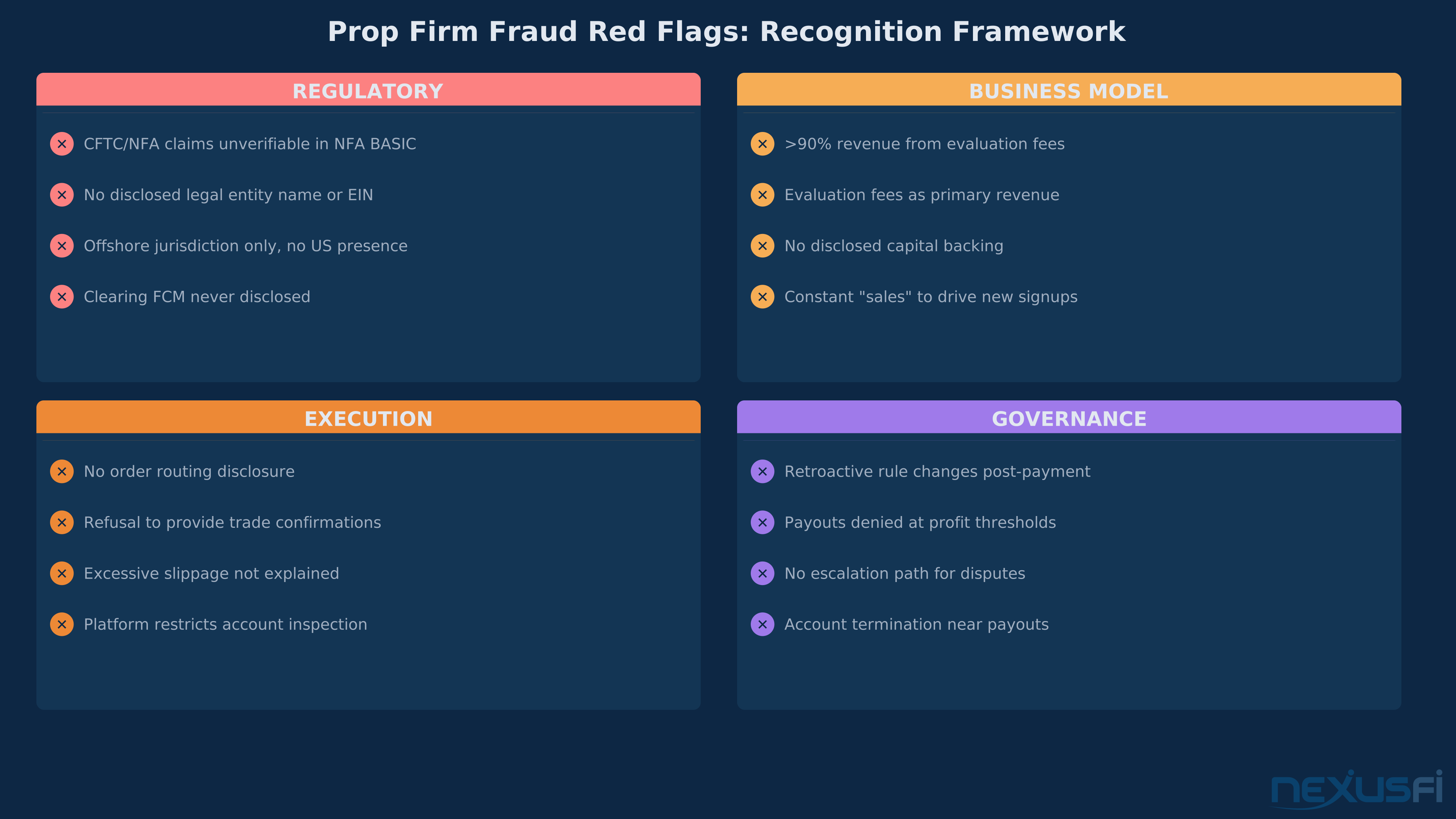
Identifying fraudulent or high-risk prop firms requires evaluating signals across four distinct categories. No single red flag is conclusive; the pattern across categories reveals risk level.
Regulatory Red Flags
Unverifiable registration claims: Any firm claiming CFTC registration or NFA membership must be verifiable in that agency's public database. The NFA's BASIC system at nfa.futures.org/BasicNet allows anyone to search by name or NFA ID. If a firm claims NFA membership but does not appear in BASIC, the claim is false.
No disclosed legal entity: Legitimate financial services businesses have verifiable legal entities — a corporate registration, an EIN, a registered address. Firms that operate with only a brand name and a website create no accountability structure. When they collapse, there is nothing to pursue legally.
Offshore jurisdiction with no US regulatory exposure: A firm serving US traders while maintaining no US regulatory exposure, no disclosed US entity, and no clearing relationships with US-registered FCMs is structured to minimize accountability.
Business Model Red Flags
Perpetual sales and constant promotions: High-frequency promotional discounts — 30% off this weekend, 50% off for the next hour — reflect a volume-dependent churn model, not a legitimate capital deployment operation.
No disclosed capital backing: A firm claiming to fund traders with $50,000 to $200,000 accounts should be able to articulate where that capital comes from. If the answer is "evaluation fees fund payouts," the structure is circular at best. Legitimate prop operations have capital bases or investor backing.
Execution Red Flags
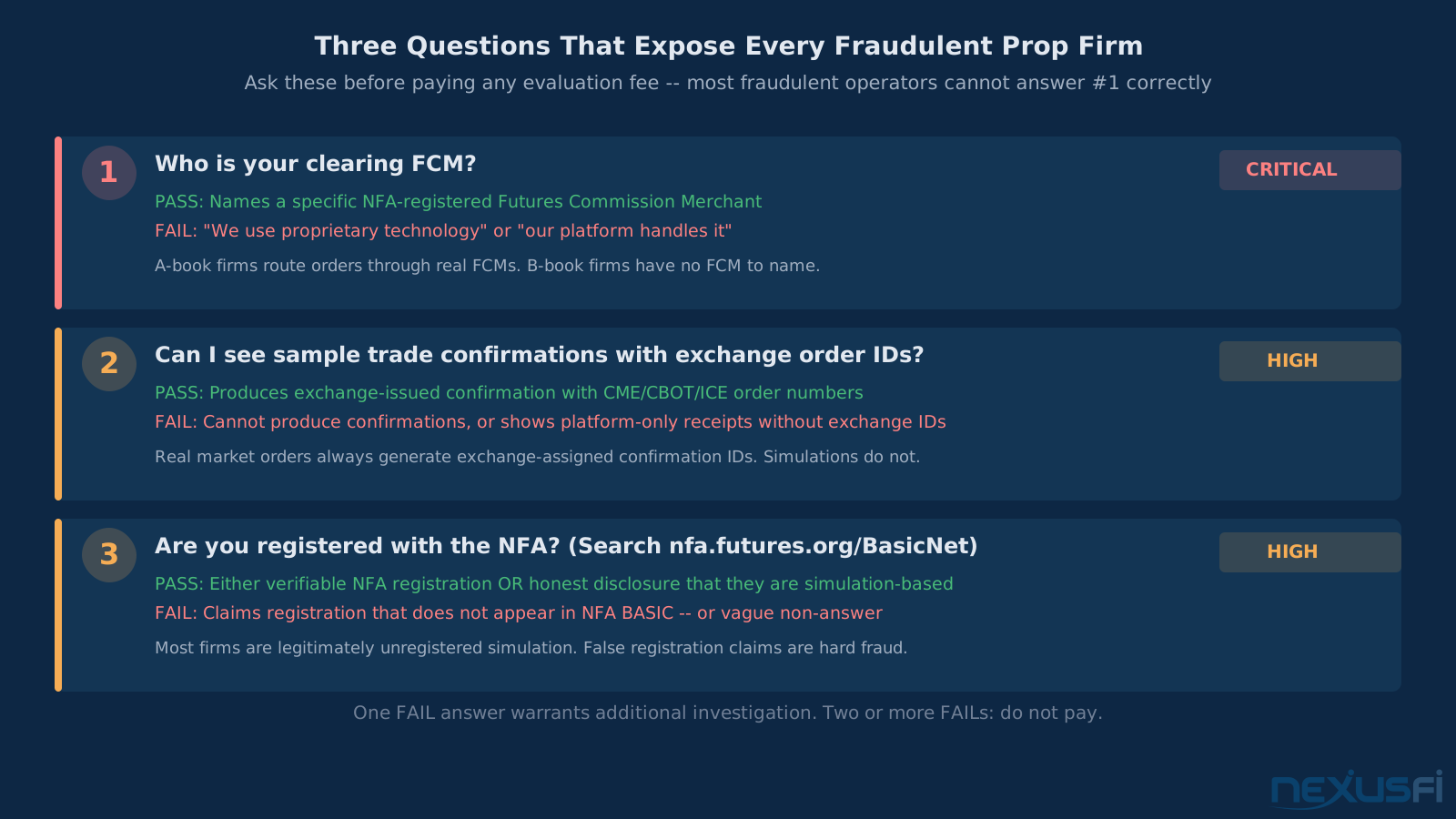
No order routing disclosure: Ask directly: who is your clearing FCM? If they cannot name a registered FCM, your funded trades are not reaching the market. This single question distinguishes most legitimate operators from B-book simulations.
Refusal to provide trade confirmations: Real market orders generate confirmations with exchange-issued order IDs. If your prop firm cannot produce trade confirmations referencing exchange-assigned IDs, the trades did not occur in a real market.
Ask every prop firm you evaluate one question before paying: "Who is your clearing FCM?" A legitimate A-book operator names a specific, NFA-registered FCM immediately. "We use proprietary technology" or "our platform handles execution" are non-answers that indicate B-book operation.
Governance Red Flags
Retroactive rule changes: Many fraudulent operators update their terms after traders have paid, adding new restrictions or expanding discretionary authority over payouts. Read terms carefully at signup, screenshot them, and check again before your first funded month.
Payout denial patterns: NexusFi's Funded Trading Evaluation Firms section aggregates trader experiences with specific firms over time. Consistent accounts of payout denials after profitable months, sudden account terminations, or withdrawal delays that extend indefinitely are among the most reliable signals of governance problems.
The CFTC/NFA Regulatory Framework #
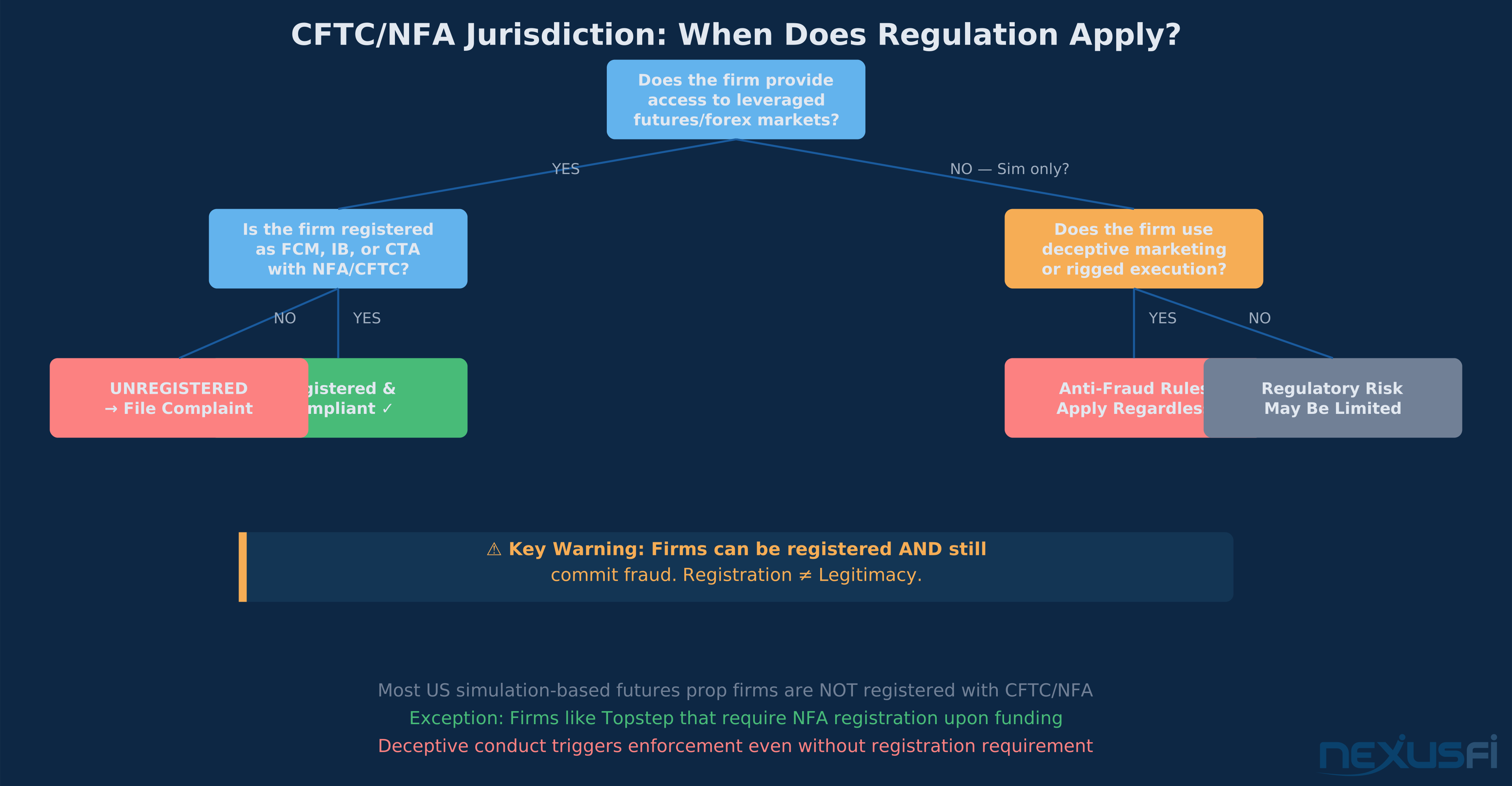
The Commodity Exchange Act requires registration as an FCM, Introducing Broker, or CTA when a firm provides access to leveraged futures transactions to retail traders, holds customer funds, or exercises discretion over customer trading. A prop firm routing funded trader orders to live futures markets is conducting regulated activity.
Most funded trading evaluation firms argue their accounts are simulated — no real orders are executed, no real capital is at risk, so no regulated activity is occurring. This argument has legal merit for genuinely simulation-based operations.
Where the grey area ends: The CFTC's fraud authority extends beyond registration requirements. Even a firm whose evaluation structure might escape registration triggers can face enforcement for: material misrepresentation about the trading environment, deceptive marketing about regulatory status, manipulation of the execution environment, or conduct that resembles operating as an unregistered commodity broker. The MFF allegations described these exact violations.
Practical implication: Most US simulation-based futures prop firms are not registered with the CFTC or NFA. Topstep is the notable exception — it holds NFA membership and requires professional trader registration at funding, consistent with routing funded trades to live markets. As @bobwest documented in 2020, Topstep's involvement of registered brokers (NinjaTrader Brokerage, TradeStation, Tradovate) and direct CME professional fees is evidence of real order routing — the infrastructure of a genuine A-book operation. [9] Registration is a positive signal but not a guarantee; unregistered firms carry higher regulatory risk and more limited recourse pathways.
Verification: The 7-Step Due Diligence Process #
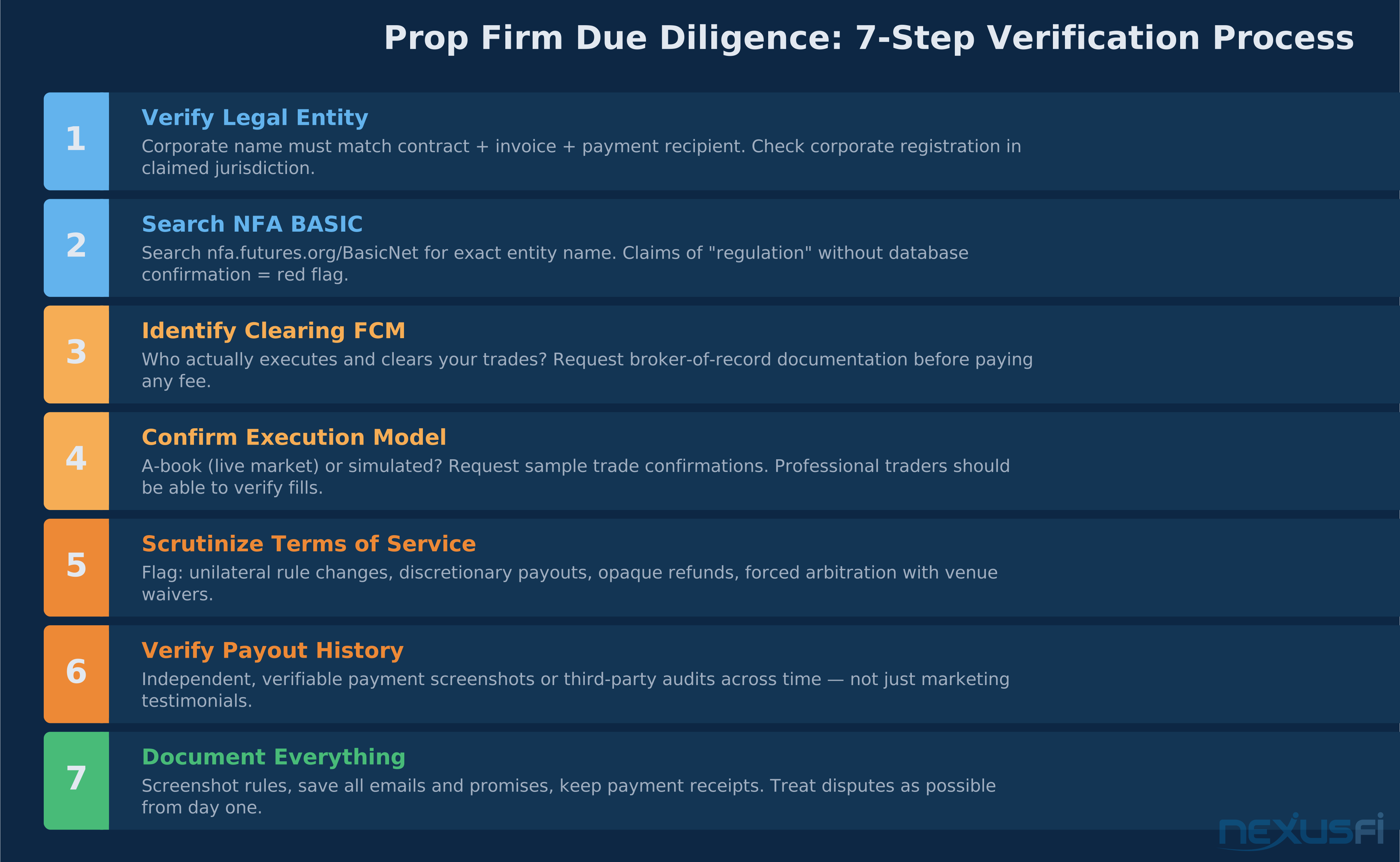
Before committing any evaluation fee, this process substantially reduces the risk of engaging with a fraudulent or high-risk operator.
Step 1: Verify the legal entity. Search for the company's corporate registration in the jurisdiction where it claims to operate. The legal entity name must match the name on your contract, invoice, and payment confirmation.
Step 2: Search NFA BASIC for registration. If the firm claims any CFTC or NFA registration, verify at nfa.futures.org/BasicNet. False claims of registration are definitive fraud indicators. Absence from BASIC does not by itself indicate fraud — most prop evaluation firms are not registered — but false claims are a hard stop.
Step 3: Identify the clearing FCM. Ask the firm directly. A legitimate answer names a specific, verifiable, NFA-registered FCM. "We use proprietary technology" is a non-answer. If no FCM can be named, treat funded account positions as simulated and size risk so.
Step 4: Confirm the execution model. Request sample trade confirmations from the evaluation or funded phase. Legitimate A-book executions generate order confirmations with exchange-assigned identifiers. B-book simulations cannot produce these.
Step 5: Scrutinize the Terms of Service for three specific provisions. First, the discretionary payout clause — does the firm reserve the right to deny payouts without documented cause? Second, the unilateral rule change provision — can the firm change evaluation rules after you have paid? Third, the dispute resolution mechanism — is there independent arbitration, or is the firm's decision final?
Step 6: Verify payout history through independent sources. Firm-produced testimonials are marketing. Search NexusFi's Funded Trading Evaluation Firms forum for independent community experience. Look for patterns: consistent payouts, occasional issues, or systematic denial at profit thresholds.
Step 7: Document everything before you pay and throughout your funded tenure. Screenshot the rules, terms, and any promises made during your research. Export account statements regularly. Treat the documentation as potential evidence from day one — disputes can arise and fraudulent firms maintain dishonest records.
The three highest-signal verification steps: (1) ask for the clearing FCM name, (2) request sample trade confirmations with exchange-assigned IDs, (3) search NexusFi for independent payout history. Most fraudulent firms fail on all three. Most legitimate operators pass all three.
When Things Go Wrong: Recourse Options #
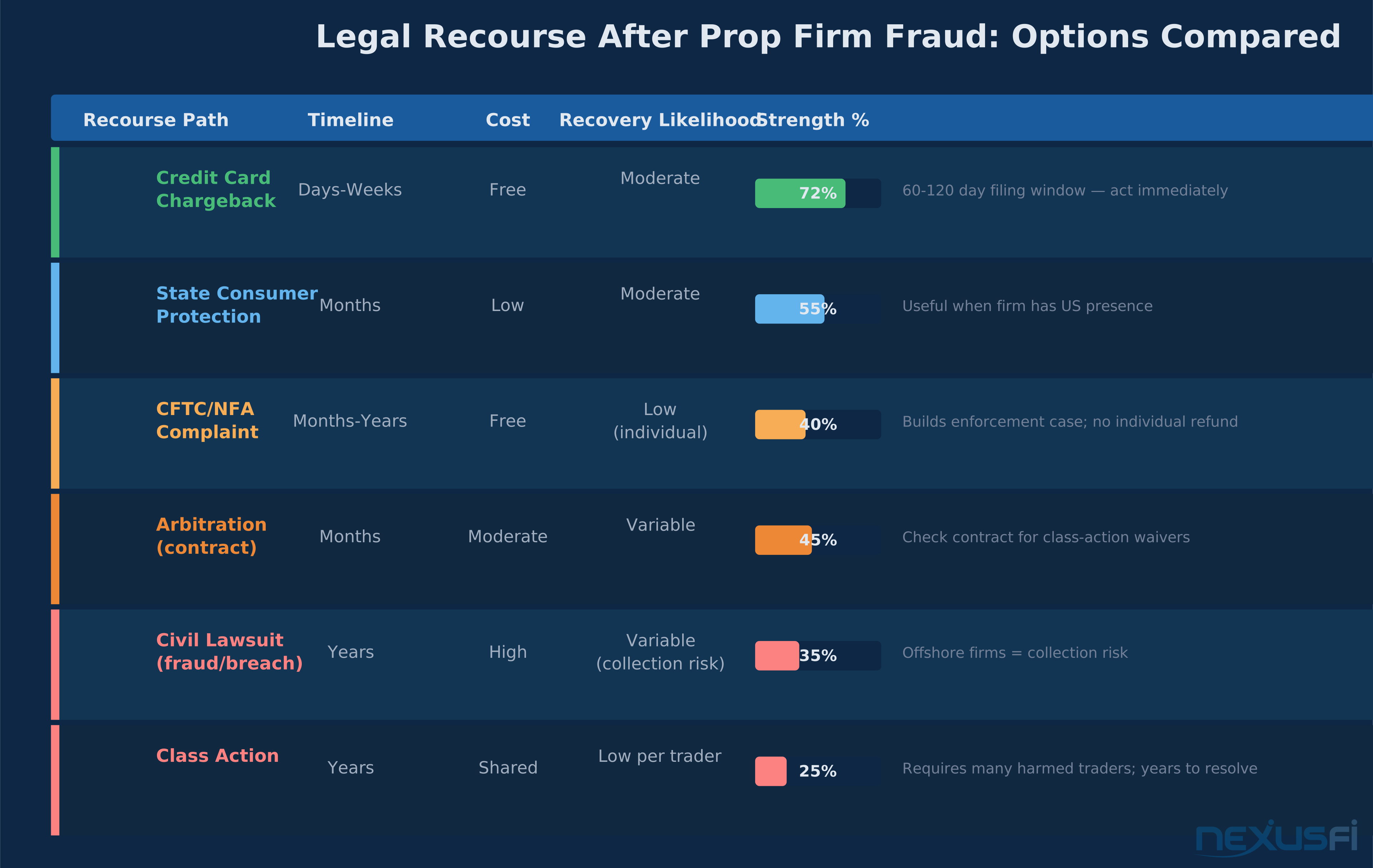
Credit card chargeback (act within 60-120 days): If you paid by credit card, initiate a chargeback immediately under "services not rendered" or "misrepresentation." This is the fastest recovery path. Do not wait for the dispute to resolve — the window closes.
CFTC and NFA complaints: File formal complaints with both agencies. Individual complaints do not automatically generate refunds, but they build the enforcement case that can lead to industry-wide action and create pressure in subsequent civil disputes.
Civil litigation: If the firm has assets in a jurisdiction where judgment can be enforced, fraud, breach of contract, and consumer protection theories are strong when documentation is solid. Most fraudulent prop firms structure offshore entities to limit collectible assets — this is why documentation from day one matters.
Class action coordination: When multiple traders share the same experience, class action becomes viable. Monitor NexusFi and other trading communities for coordination efforts. Recovery per trader is typically modest and the process takes years, but class actions create settlement leverage that individual claims cannot.
How Informed Traders Protect Themselves #
Treat evaluation fees as risk capital with zero expected return. The framing matters: an evaluation fee is payment for an opportunity to prove your capability, not a deposit that earns you a funded account. Size evaluation fee exposure so — never committing more than you can afford to lose entirely.
Verify before committing, not after. Most fraud victims report that warning signs were present before they paid. The systematic pre-commitment verification process in Step 6 eliminates the rationalization pathway.
Monitor for behavioral changes post-funding. Legitimate firms behave consistently throughout the trader relationship. Fraudulent firms often become difficult after receiving payment — slower communication, stricter rule enforcement, longer withdrawal processing. Any significant behavioral change after funding is a signal to initiate protective action immediately.
Maintain parallel documentation outside the firm's platform. Export account statements regularly. Keep external records of positions and fills. Screenshot account balances at regular intervals. Relying on a firm's platform to maintain your trade history means relying on potential adversaries to preserve your evidence.
Use community knowledge before committing. NexusFi's Funded Trading Evaluation Firms forum (forum 313) is the most detailed repository of trader experiences with specific firms. Searching for a firm's name before paying surfaces experiences — both positive and negative — that inform the risk assessment beyond what any individual could gather independently.
Industry Timeline: Key Events #
The Core Trade-Off #
The funded trading evaluation industry offers genuine opportunity for traders who cannot access traditional capital. Legitimate firms exist. Some traders build sustainable careers through prop evaluations. The regulatory grey area does not mean every firm is fraudulent.
But the industry's rapid growth, light regulation, and evaluation-fee-dependent economics create structural conditions where fraud can emerge and persist. The collapses of 2024 and the regulatory scrutiny of the MFF case are not aberrations — they are predictable outcomes of a business model that misaligns incentives between operators and traders.
The evidence-based approach does not avoid prop evaluations; it changes how you enter them. Verify the legal entity, search for the clearing FCM, scrutinize the terms, document everything, and treat the evaluation fee as risk capital. The market's history demonstrates that fraud eventually surfaces. The question is whether you are protected when it does.
For evaluating specific firms before entering an evaluation, see Prop Firm Due Diligence: How to Evaluate a Funded Trading Firm Before You Pay. For understanding what happens when firms fail, see Prop Firm Collapse and Account Protection. For the mechanics of simulated vs live accounts, see Simulated vs Live Funded Accounts: What Prop Firms Are Actually Giving You.
Knowledge Map
Go Deeper
Build on this knowledgeReferences This Article
Articles that build on this topicCitations
- — Prop firm fraud in Futures? (on the back of My Forex Fund scam/CFTC ruling) (2023) 👍 6“Earlier this week Deel stopped providing payout services to the unregulated futures evaluation prop firms.”
- — Prop firm fraud in Futures? (on the back of My Forex Fund scam/CFTC ruling) (2023) 👍 9“This case is not only about forex. Both the Complaint and Statutory Restraining Order specifically and repeatedly include retail commodity transactions as well.”
- — Prop firm fraud in Futures? (on the back of My Forex Fund scam/CFTC ruling) (2023) 👍 4“Once you get funded orders go to actual market. I even proved it with a video. With futures you can immediately check if you are A-booked or not.”
- — Prop firm fraud in Futures? (on the back of My Forex Fund scam/CFTC ruling) (2023) 👍 5“Futures prop firms employ trailing drawdowns of unrealized profits on traders, while simultaneously saying they want long-term traders.”
- — Prop firm fraud in Futures? (on the back of My Forex Fund scam/CFTC ruling) (2023) 👍 4“Do simulation-based future prop firms fall under those regulations? It appears the answer is NO, if you do not actually make the market for the trades.”
- — Prop firm fraud in Futures? (on the back of My Forex Fund scam/CFTC ruling) (2025) 👍 1“The case was dismissed with prejudice due to CFTC misconduct -- they withheld evidence and misrepresented $31.5M in legitimate tax payments as suspicious transfers.”
- — Funded Trader platforms (2024) 👍 8“Skilled Funded Trader and The Funded Trader both just collapsed. Customer accounts locked, payouts denied. Looks like both were illegally using the bucket-shop model.”
- — CFTC v. Traders Global Group Inc. (My Forex Funds), Case No. 1:23-cv-24663-DPG (2023)
- — Is this true about funded accounts? (2020) 👍 19“In Topstep there is an involvement of brokers (NinjaTrader Brokerage, TradeStation, Cunningham and Tradovate) who have the accounts and collect fees, plus the CME collects a monthly professional fee directly from the trader credit card.”