



Risk Acceptance as a Mental Framework: Mark Douglas and the Path From Knowing to Feeling
Most traders understand risk. Very few have accepted it. The gap between those two states is where accounts go to die.
Overview #
Mark Douglas spent decades trying to explain why traders who understand every rule still violate every rule. His conclusion, developed across The Disciplined Trader (1990) and Trading in the Zone (2000), points to a single foundational problem: traders confuse knowing about risk with accepting risk. These are different cognitive states, they live in different parts of the nervous system, and they produce completely different behavior under market pressure.
A trader who intellectually understands that "losses are part of trading" can still freeze at entry, move stops, revenge trade after a loss, and check their P&L compulsively during a position. The knowledge is real. The acceptance is absent. And the market exploits this gap with ruthless consistency.
This article covers what genuine risk acceptance means as a psychological state, how to identify the physiological and behavioral markers of non-acceptance, and the concrete practices that build true acceptance over time. This is not about thinking positively about losses. It is about reaching a state where the presence of risk no longer triggers the threat responses that degrade your execution.
Intellectual Understanding vs. Genuine Acceptance #
The distinction Douglas draws is neurological before it is philosophical. Intellectual understanding lives in the prefrontal cortex — the rational, language-based part of the brain. Genuine acceptance lives in the limbic system and the autonomic nervous system. These systems operate on different timescales and respond to different conditions.
When you say "I know I could lose on this trade," you are making a cognitive statement. Your prefrontal cortex registers the claim as true. But when the market moves against you by three ticks, your amygdala — the threat-detection center — does not consult your trading journal. It fires based on pattern recognition built from past pain, social conditioning, and every loss that felt like failure. The cascade that follows — elevated cortisol, narrowed attention, urgency to act — happens in milliseconds, before the rational mind can intervene.
Genuine risk acceptance means the threat system has been recalibrated. Loss is no longer processed as danger. The amygdala has been conditioned, through repetition, to recognize a stop-out as neutral data rather than threat. When that recalibration occurs, execution becomes mechanical in the best sense: the plan runs without emotional interference.
The practical test is simple. Do you feel the same emotional weight on trade 47 of your system as you did on trade 3? Does a three-loss streak produce the same cognitive clarity as a three-win streak? If not — and for most traders, the answer is not — intellectual acceptance has not become emotional acceptance.
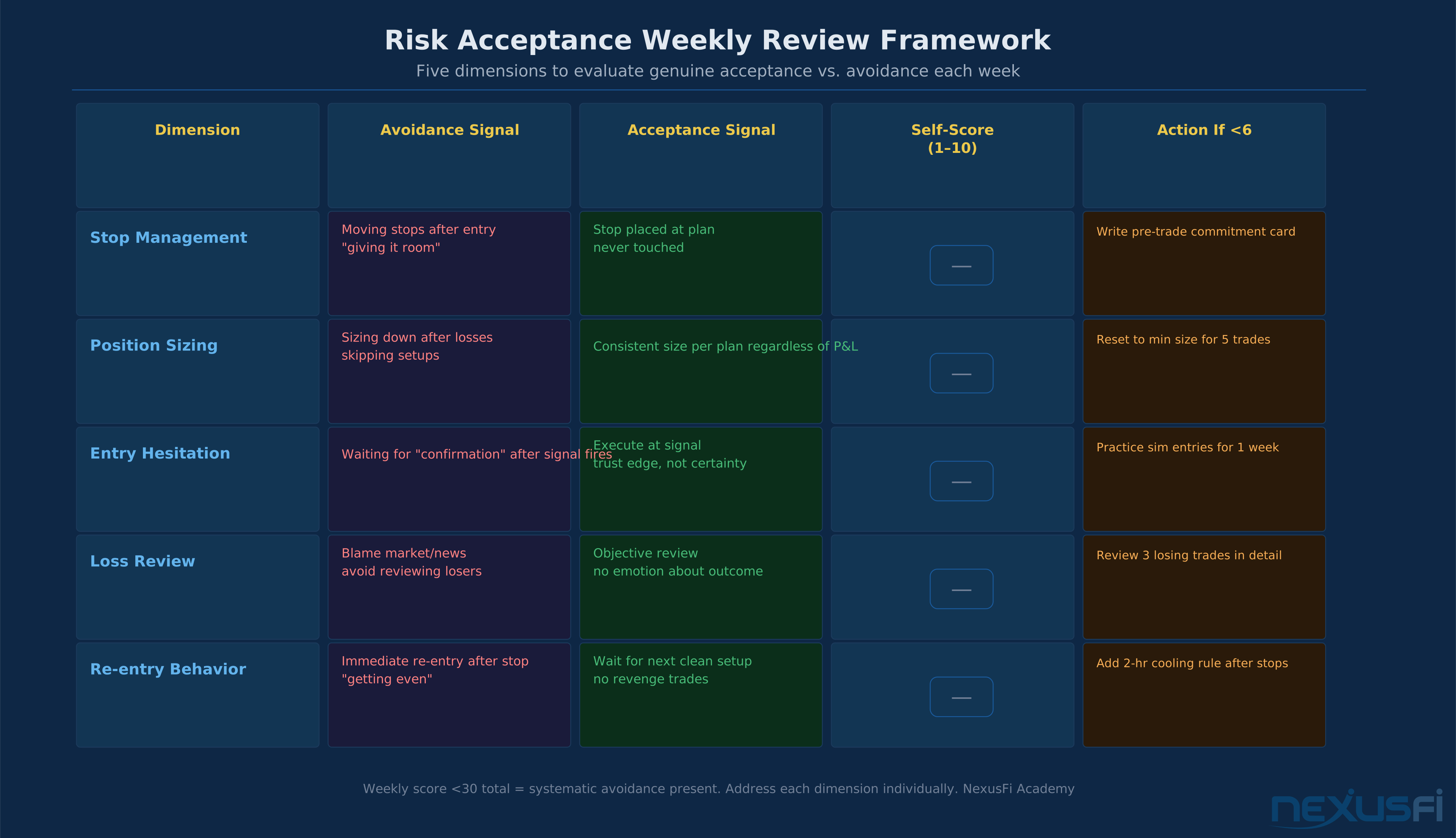
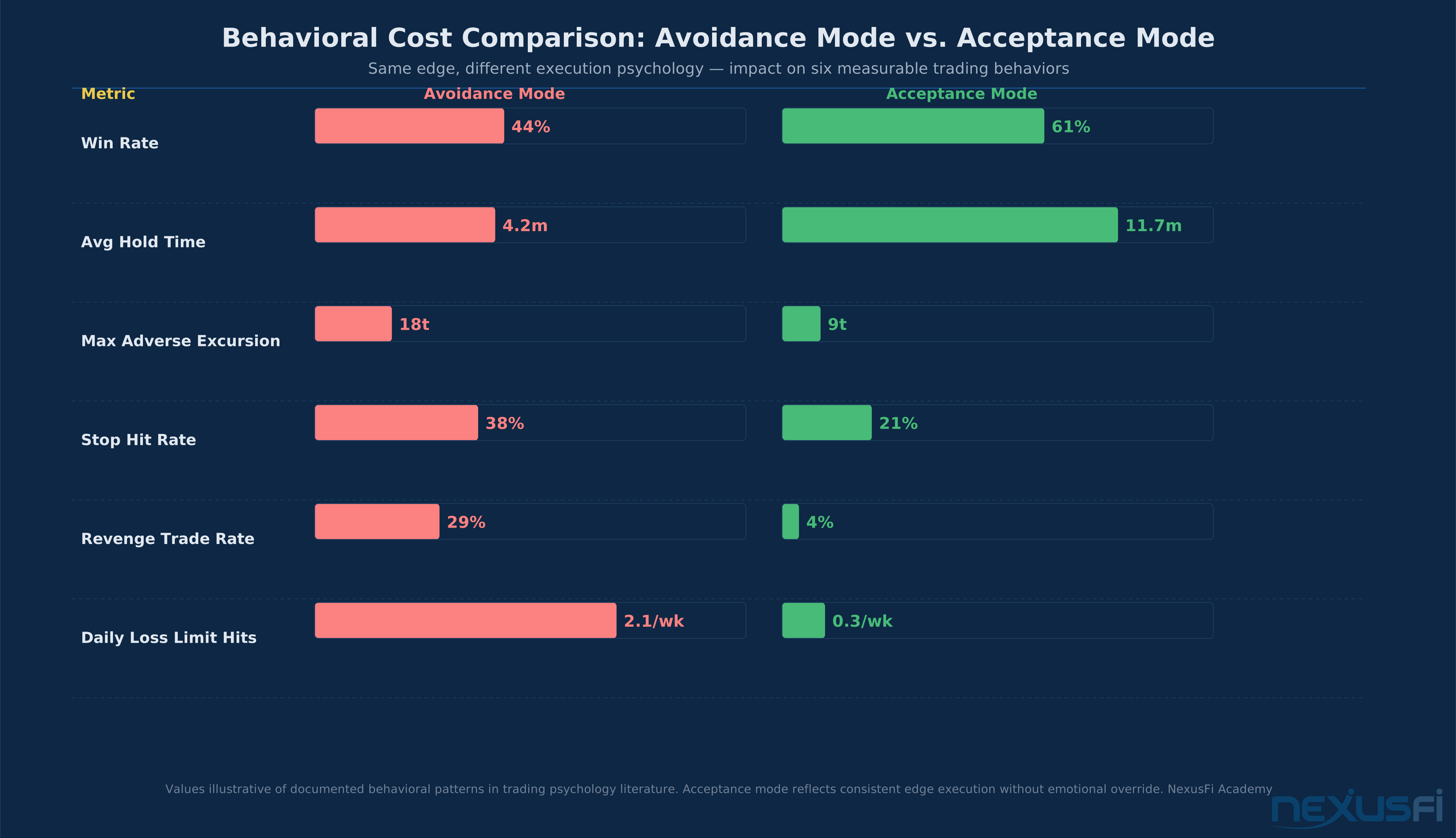
The avoidance that Douglas and DbPhoenix identify is not always obvious. It rarely looks like refusing to trade. More often it looks like: waiting for "one more confirmation" before a valid entry, adjusting stops just after entry to "give the trade room," cutting winners before target because you want to "lock in profits," and re-entering three times after being stopped out because the original thesis still feels correct.
All of these are forms of risk avoidance masquerading as risk management.

The Body Reveals What Words Deny #
The most reliable diagnostic for genuine risk acceptance is not your trading journal — it is your body. The autonomic nervous system does not lie, and it does not care about the story you tell yourself about your emotional state.
Signs of non-acceptance at trade entry:
- Hesitation after a clear signal — the entry looks right but you wait for more confirmation
- Shallow breathing or breath-holding in the seconds before clicking
- Finger hovering over the mouse without completing the action
- Elevated heart rate disproportionate to the dollar risk on the table
- Muscle tension in the shoulders, jaw, or hands
Signs of non-acceptance during the trade:
- Checking P&L every few minutes instead of watching price structure
- Inability to walk away from the screen while in a position
- Moving the stop order back from its original placement
- Adding to a losing position to "average the cost"
- Sleep disruption from positions held overnight
Signs of non-acceptance after the trade:
- Euphoria after wins that is outsized relative to the trade size
- Devastation after losses that affects your next two or three sessions
- Revenge trading within the same session after a loss
- Analysis paralysis — extensive re-examination of the losing trade
- Blaming platform, data, or market manipulation for outcomes
The emotional override welly192 describes is not a character flaw. It is neurobiology. The limbic system responds to perceived threats faster than conscious thought, and in a risk environment, incomplete acceptance registers every loss as threat. The emotional cascade arrives before the prefrontal cortex has time to apply the rules you memorized.
The solution is not to become emotionally numb or to apply willpower harder. It is to recondition the threat response through the specific practices described in this article.
The "What If" Trap #
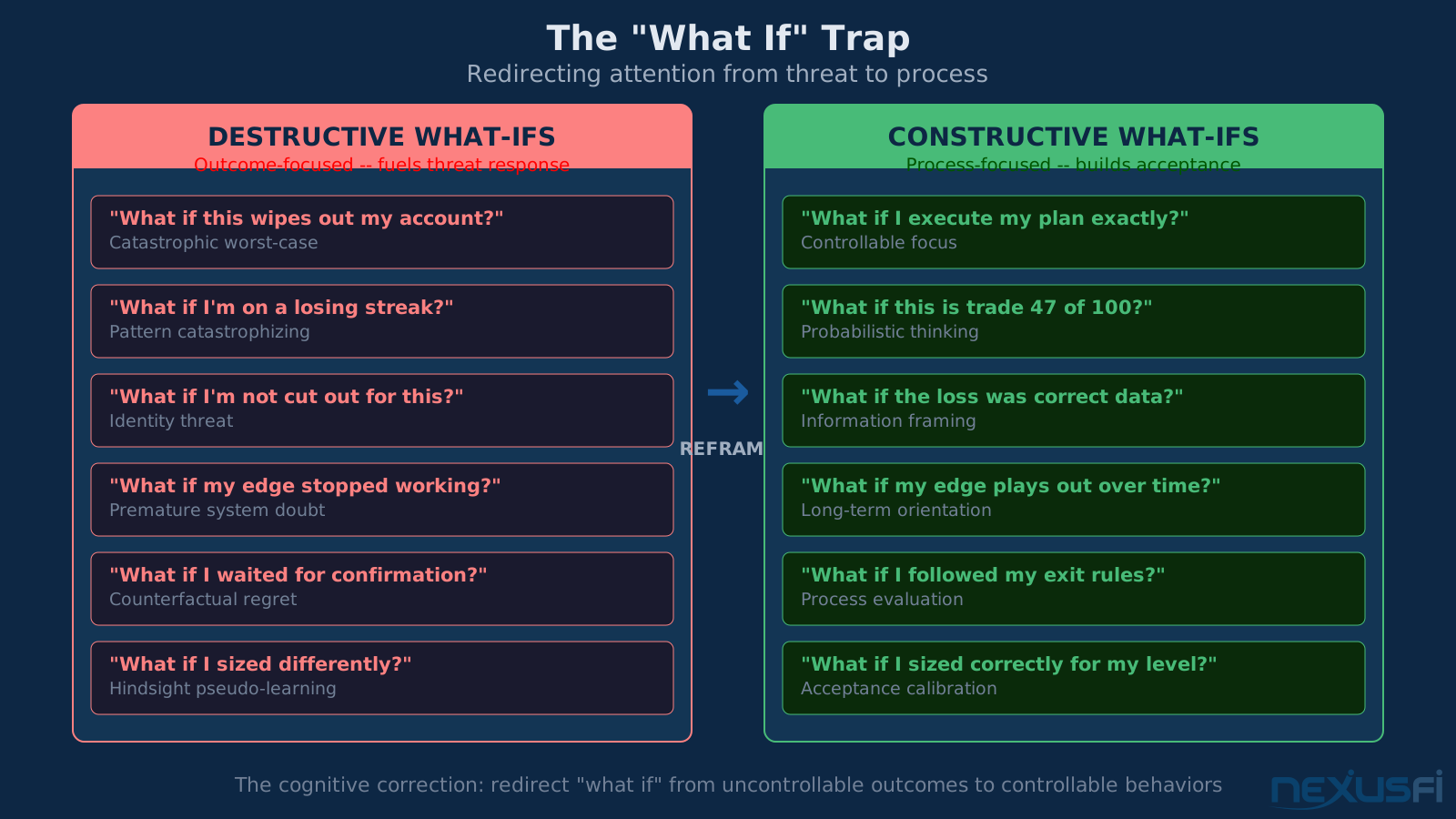
Douglas identifies "what if" thinking as the primary cognitive symptom of non-acceptance. The pattern is predictable and self-reinforcing.
Catastrophic what-ifs keep the trader anchored to threat scenarios:
- "What if this is the trade that wipes out my account?"
- "What if I'm on a losing streak and can't stop it?"
- "What if I'm not cut out for this?"
- "What if my edge has stopped working?"
These questions are not risk analysis. They are threat signals generated by a nervous system that has not accepted the cost of playing. The rational answer to each ("statistically improbable, define your daily stop, edge evaluation is a sample-size question") does not reduce the emotional charge, because the charge is not coming from reasoning — it is coming from conditioning.
Counterfactual what-ifs arrive after losses and generate regret-based pseudo-learning:
- "What if I'd waited for the 9:30 pivot to confirm?"
- "What if I'd sized half?"
- "What if I'd taken the earlier entry at the open?"
These questions feel like analysis but produce nothing actionable. They replay randomness through a filter of hindsight and teach you that if you'd been smarter, you'd have won. This is false, and the lesson it installs — that precision of analysis should eliminate loss — directly contradicts what acceptance requires.
The cognitive correction is to redirect "what if" toward controllables:
- "What if I execute my plan exactly on the next trade?"
- "What if this is trade 47 in a sample of 100, and my job is just to execute?"
- "What if the loss was correct and the market showed me valid information?"
Tigertrader's distinction matters. You can reconcile yourself to the idea that losses are inevitable without actually accepting any individual loss as neutral. Reconciliation is intellectual. Acceptance is operational — it shows up in execution, not in what you can articulate.
The Acceptance Spectrum #
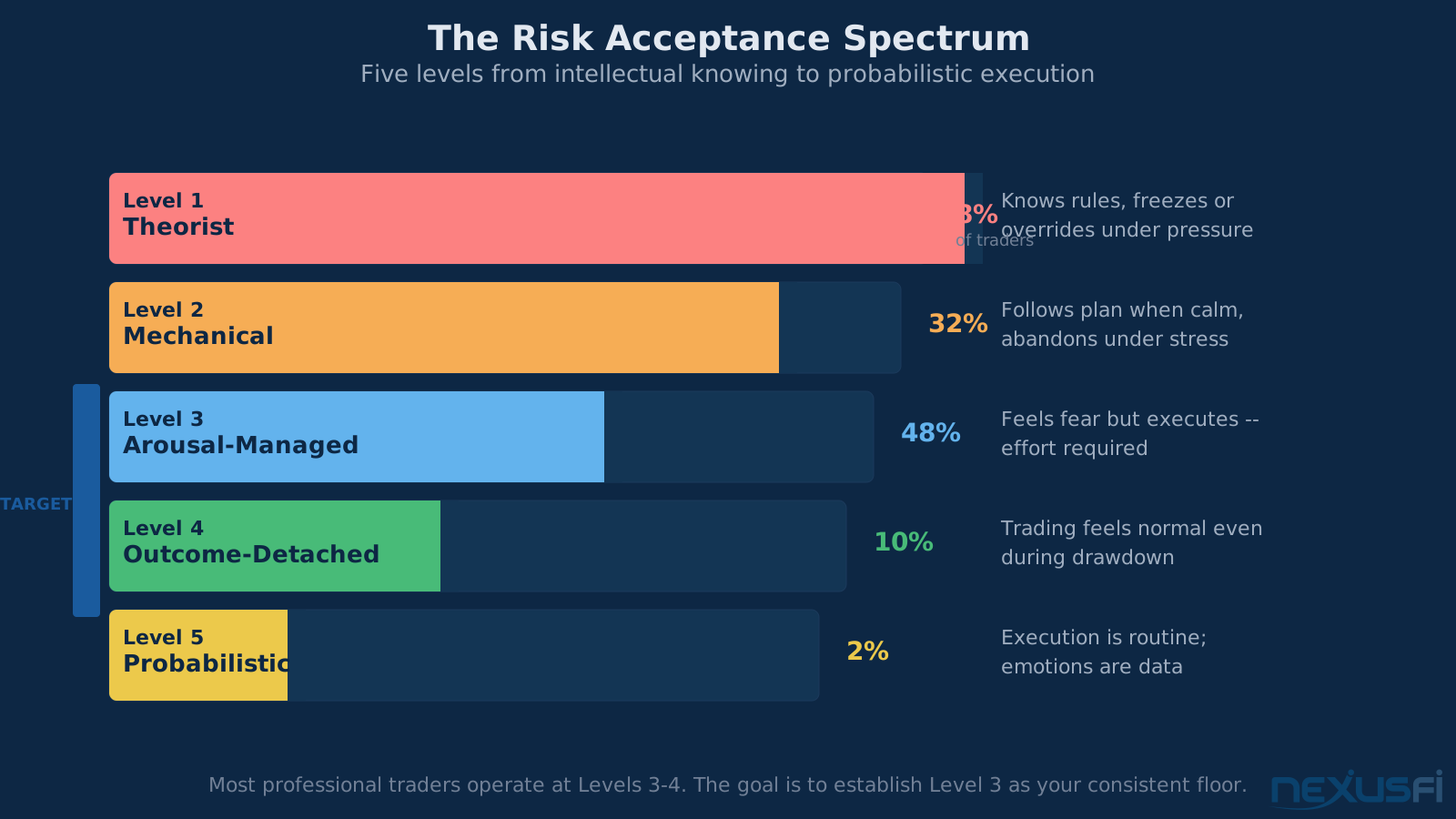
Acceptance is not binary. It exists on a continuum, and most traders occupy the middle ranges — they accept risk for small positions, calm market conditions, or their first trade of the day, and they lose acceptance when size increases, volatility spikes, or consecutive losses accumulate.
Understanding where you sit on this spectrum is the first step toward moving up it.
Level 1 — Theorist: You can explain risk management correctly. You know the position sizing formulas, the expected value math, and the importance of cutting losses. You believe you understand risk. Your execution tells a different story: you hesitate on valid entries, move stops under pressure, and your P&L for any given session correlates heavily with your emotional state.
Level 2 — Mechanical compliance: You follow your rules when conditions are calm. You use stop losses consistently. You stay near your sizing plan. Under stress — after two consecutive losses, during a volatile session, approaching a daily stop limit — your compliance drops sharply and your behavior reverts to threat-avoidance patterns.
Level 3 — Arousal-managed: You acknowledge the emotional response when it arrives and execute anyway. You feel fear but click the button. You feel the pull toward the stop-moving impulse and resist it. You are consistent, but consistency requires effort. You are not yet in flow.
Level 4 — Outcome-detached: Trading positions no longer carry significant emotional charge. A loss registers as data. A win registers as data. Consecutive losses are a statistical sequence, not an indictment. You do not feel especially different after a good week than a bad one, within the context of your expected performance band.
Level 5 — Probabilistic practitioner: Individual trades have basically zero emotional weight. You are executing the edge. You have genuine curiosity about outcomes in the way you might be curious about the result of a scientific experiment. This level is rare and aspirational — most professionals operate around Level 3-4 consistently.
The practical goal is not to reach Level 5. It is to establish Level 3 as your floor and extend your range toward Level 4. The specific practices below are how that movement happens.

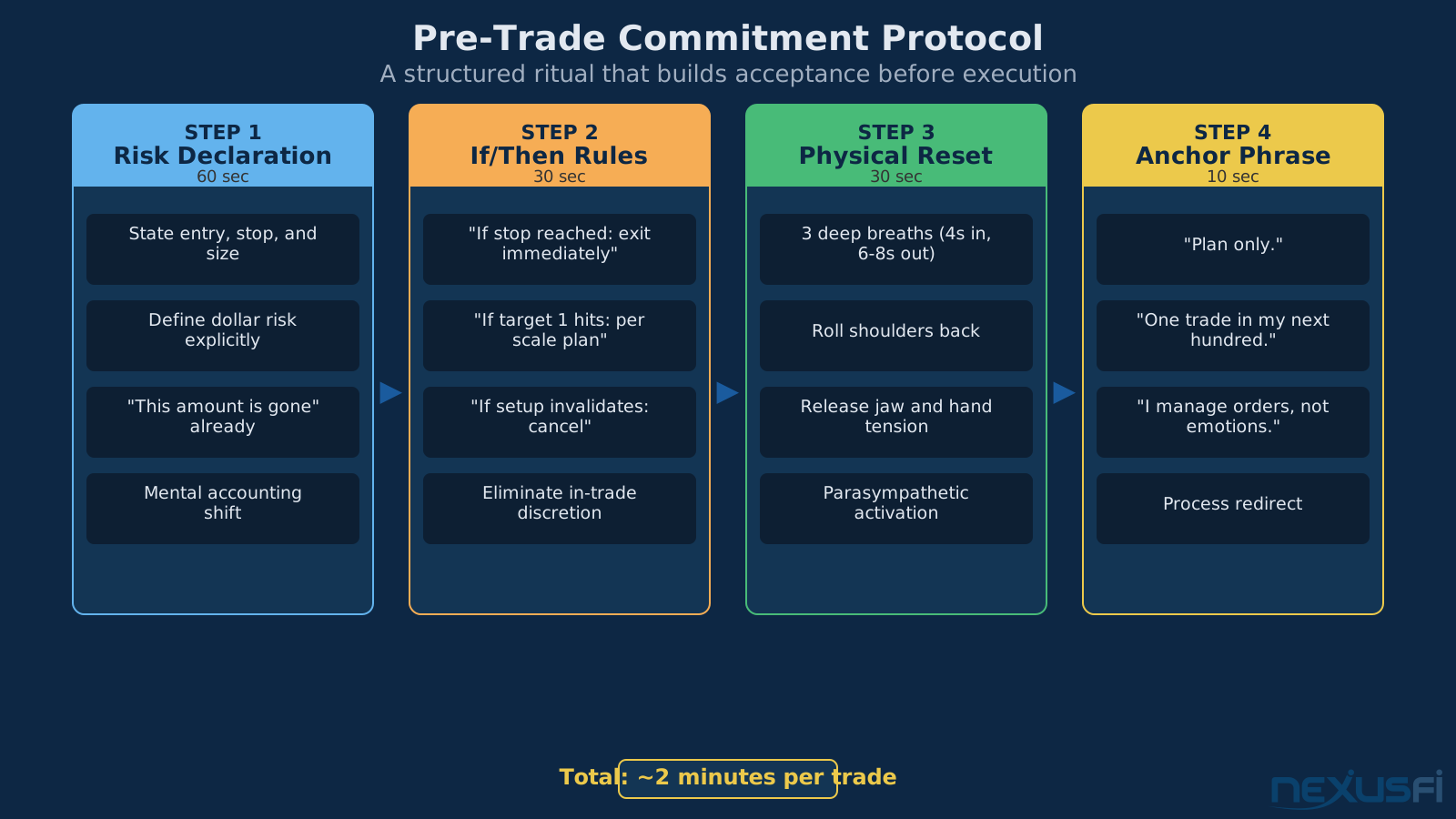
Pre-Trade Commitment Protocol #
The most immediate actionable change a trader can make is to establish a structured pre-trade ritual that builds acceptance before execution. The purpose is not superstition — it is state management. You are deliberately inducing the neurological conditions under which acceptance-based execution is possible.
Step 1: Risk declaration (60 seconds)
Before every entry, articulate the following — written, spoken, or mentally formed with complete specificity:
- Entry price
- Stop level
- Position size
- Dollar risk: "This is $X, and this amount is already gone"
The last element is critical. The mental accounting shift from "money at risk" to "money already spent" reduces the threat signal associated with an adverse move. You are not going to lose $250 on this trade — you already paid $250 for the opportunity to discover whether your edge is present in this instance.
Step 2: If/then rules (30 seconds)
State your execution commitments in conditional form:
- "If price reaches my stop, I exit immediately — no widening, no second-guessing."
- "If Target 1 hits and momentum reverses, I follow my scale-out rule."
- "If the setup invalidates before entry, I cancel and wait."
These rules eliminate discretionary decisions under emotional pressure. You are not deciding what to do in response to market movement — you committed to the decision before the movement occurred. The emotional brain cannot negotiate with a decision that was already made.
Step 3: Physical reset (30 seconds)
Three slow breaths — four seconds inhale, six to eight seconds exhale. Roll the shoulders back, release tension in the jaw and hands. This brief parasympathetic activation lowers cortisol and prepares the nervous system for clear-headed execution.
Step 4: Anchor phrase
One sentence that brings you to process. Choose from something like:
- "Plan only."
- "This is one trade in my next hundred."
- "I manage orders, not emotions."
Different traders respond to different anchors. The key is that yours is short enough to recall under pressure and specific enough to redirect attention from outcome to process.
Jamiej83's description of waiting without hesitation and trading without hesitation reflects the operational end-state this protocol is designed to produce. The ritual is not the destination — it is the daily practice that makes that state increasingly available.
Exercises That Build Genuine Acceptance #
The pre-trade protocol manages your state on any given day. These exercises build your acceptance capacity over time through conditioning — the same mechanism that underlies all skill acquisition.
Minimum Viable Risk Training #
This exercise is specifically for traders whose acceptance breaks at current position sizes. The objective is to find the size at which you can execute without any emotional interference, and to make execution at that size your default.
Start at the smallest tradeable position — one micro contract, one share, the minimum position your platform allows. Execute 20 trades following your system exactly. Monitor your emotional state throughout. If your body stays calm, your entries are clean, and you follow every rule without effort at this size, you have found your acceptance floor.
Increase position size by the smallest increment available. Repeat the 20-trade sequence. If emotional interference appears — hesitation, P&L-watching, stop-moving impulses — you have found your current acceptance ceiling. Stay at the previous level until the new level becomes calm.
This is not a permanent solution. It is a diagnostic and a training tool. Most traders who go through this process discover that their acceptance ceiling is lower than they thought — and that the size they've been trading has been actively working against their execution quality.
Pre-Loss Visualization (Daily) #
Before each trading session, spend three to five minutes visualizing your maximum daily loss in complete sensory detail. See the market moving against every position. Feel the P&L number. Notice the response.
Then ask, with genuine honesty: "Can I respect myself after this? Can I show up tomorrow? Is my life intact?"
Enter only when the answer is genuinely yes — not "yes, but I really hope it doesn't happen," but an actual yes with no residual dread.
This exercise sounds dramatic. Traders who practice it consistently report a specific and measurable effect: the feared event loses its charge. After 30 days of visualizing the maximum daily loss, actually experiencing it registers as familiar rather than catastrophic. The nervous system has been there before.
The Catastrophe Exploration (Weekly) #
Every Sunday, write down your worst trading fear in specific detail. Not "blowing up the account" in the abstract, but the concrete scenario: the specific amount, the specific circumstances, what you tell your partner, what it means for your financial situation.
Then follow it to its logical conclusion. After the worst scenario happens — then what? Six months later, what does life look like? One year later?
Most traders who complete this exercise discover that the worst-case outcome, while genuinely painful, is survivable. The fear has been sustained by avoidance of the specific scenario. Completion — following it all the way through — reduces the fear to a real but manageable event rather than a vague catastrophic threat.
Process-Only Journaling (After Every Session) #
Remove P&L from your primary performance metric. For a minimum of 30 trading days, evaluate each trade only on execution quality:
- Did I enter when my criteria were met (not "close enough" — actually met)?
- Did I follow my stop rule without deviation?
- Did my exit follow my predefined exit logic?
- Was my size consistent with my risk parameters?
A trade that follows all four criteria and loses money is a successful trade. A trade that violates any of these criteria and makes money is a failure — because the data it produces corrupts your understanding of your edge. If you cannot evaluate your results on process alone, you are still measuring yourself against outcomes — which means you have not yet built process-based identity.
The five truths rubyslippage cites are not affirmations — they are a description of market reality that, when genuinely internalized, makes acceptance structurally necessary. If anything can happen on any trade, attaching emotional significance to any individual outcome is philosophically indefensible.
The Loss Simulation (Bi-Weekly) #
Using a simulator or replay mode, deliberately run trades to your stop level. The goal is not to practice losing — it is to practice the execution of your stop rule under conditions of simulated loss.
For each simulated stop, practice the complete behavioral sequence out loud:
- "Price has reached my invalidation level."
- "I am exiting now."
- "This trade is complete. I paid for information."
- "Next: re-read structure before considering another entry."
The verbalization matters. You are conditioning a specific behavioral chain to the trigger event of a stop being reached. After 50 practice sequences in simulation, the real event triggers the practiced response — not the emotional override.

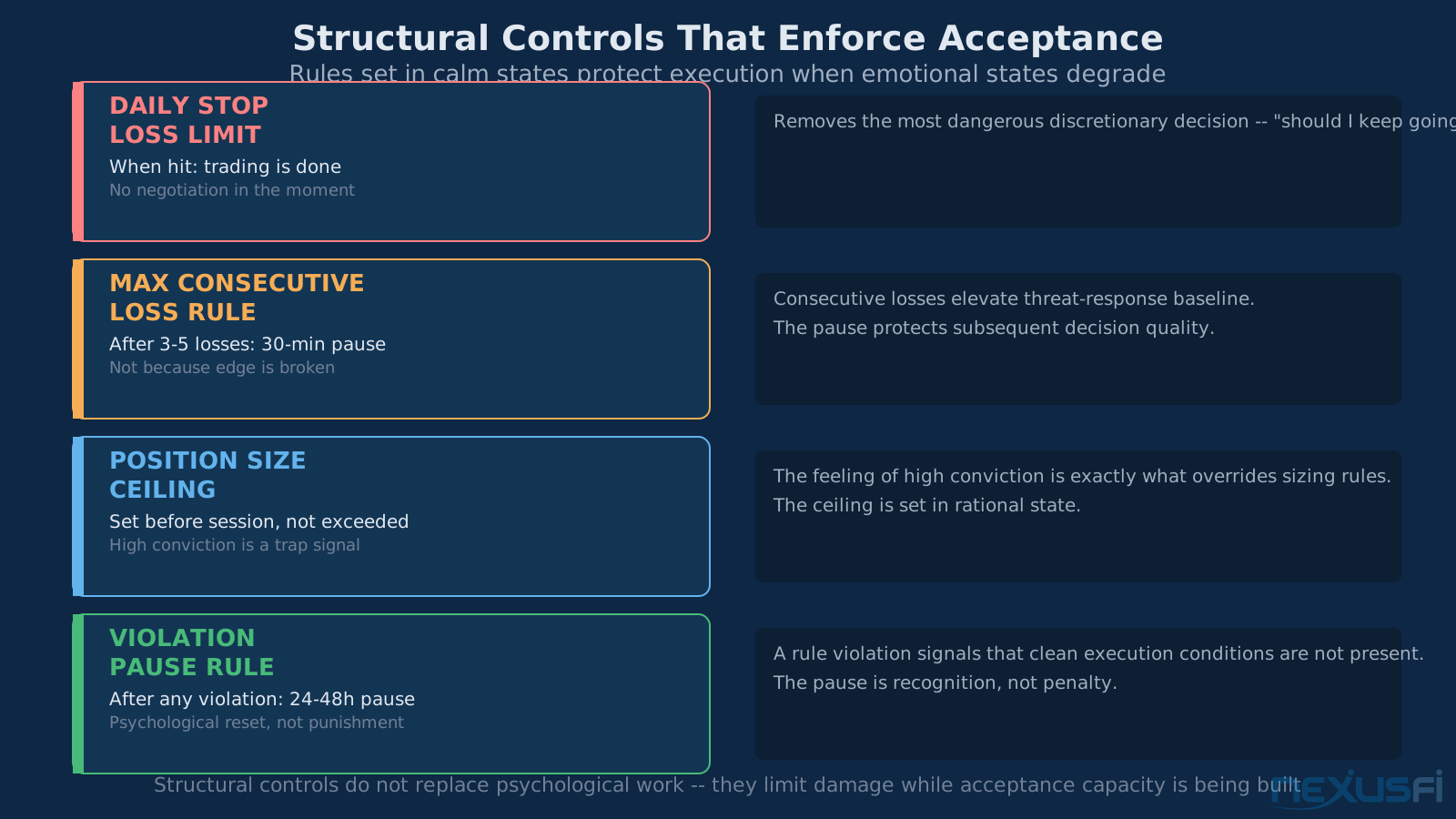
Structural Risk Controls That Enforce Acceptance #
The practices above build acceptance capacity. Structural controls limit the damage during periods when acceptance breaks down — and at some point, under sufficient stress or adverse conditions, acceptance will break down for any trader.
Daily stop loss limit: The most important structural control. When this number is reached, trading is done for the day. The limit is set in advance, during a calm state, when your judgment about appropriate risk is reliable. The limit is not negotiated in the moment.
Maximum consecutive loss rule: After a pre-specified number of consecutive losses (typically three to five), you step away from the screen for a minimum of 30 minutes. Not because the system is broken — loss streaks within a functioning edge are statistically expected — but because consecutive losses elevate the threat-response baseline and degrade subsequent decision quality.
Position size ceiling: Maximum size is defined before each session and is not exceeded regardless of conviction level. High-conviction trades feel different, and that feeling is precisely what overrides position sizing rules. The ceiling is set in advance, during a rational state.
No-trade pause after violations: When you violate any of the above rules, the next session begins with a defined pause period before any new trades — typically 24 to 48 hours. This is not punishment. It is recognition that a violation indicates that the psychological conditions for clean execution are not currently present.
The pattern josh identifies is the endpoint of the non-acceptance loop. The trader seeks more knowledge to remove risk — which is impossible — and the growing knowledge base provides new reasons not to trade, which reinforces hesitation, which produces worse results, which triggers more analysis. Structural controls interrupt this loop by limiting the decision space. When the daily stop is reached, there is no decision to make.
Common Acceptance Mistakes #
Confusing acceptance with indifference. Genuine acceptance is not "I don't care about this trade." It is "I am calm and clear in the presence of this trade's risk." Indifference to P&L outcomes can indicate dissociation from the trading process — a different problem entirely. The marker of genuine acceptance is calm engagement, not emotional flatness.
Expecting acceptance to arrive before the work. Acceptance is built through repetition, not through understanding. Many traders believe that once they truly understand Douglas's framework, acceptance will follow automatically. It does not. The neural recalibration requires practice — not insight, but practice.
Scaling before acceptance is built. The most common acceleration mistake. Position size amplifies whatever psychological state is already present. A trader at Level 2 acceptance who increases size in pursuit of larger returns does not increase to Level 4 — they descend to Level 1 or below, where the elevated emotional stakes override the compliance they demonstrated at smaller sizes.
Using acceptance as an excuse for poor results. There is a corrupted version of this framework where "accepting the loss" becomes a way to avoid examining whether the trade idea was sound. Acceptance applies to losses generated by correct process. It does not apply to losses generated by rule violations, undisciplined entries, or sizing errors.
Practicing acceptance only in winning periods. Acceptance is easiest during winning streaks and hardest during drawdowns. The exercises above are most important — and most commonly skipped — during adverse periods. That is exactly when the conditioning needs reinforcement, not when you are feeling good.
Practical Takeaways #
Genuine risk acceptance is a trained state, not a belief you adopt. The path runs through defining risk in specific terms before each trade, committing to specific execution rules in advance, using physiological regulation to manage the nervous system state, and evaluating performance exclusively on process quality for a sustained period.
The body is the most reliable indicator of where you actually sit on the acceptance spectrum. Monitor it honestly. When tension arrives at entry, that is information about what additional conditioning work is needed — not a character flaw, not a reason to abandon trading.
The traders who have built genuine acceptance consistently report the same experience: the market stopped feeling like a threat and started feeling like a workbench. Risk did not disappear from their trading — they stopped treating it as an adversary to be defeated and started treating it as a condition to be managed. That shift does not happen through reading. It happens through the daily, repetitive practice of the protocols described here.
The practical objective for most traders is not to achieve the probabilistic flow state described at Level 5. It is to establish Level 3 — where you acknowledge the emotional response and execute anyway — as the consistent floor. That alone is a transformation that most traders never achieve, and it is sufficient to sustain a viable trading career.
Knowledge Map
Go Deeper
Build on this knowledgeReferences This Article
Articles that build on this topicCitations
- — Trading the SLA/AMT Intraday (2015) 👍 8“The degree to which you do not accept the risk is the same degree to which you will avoid the risk. Trying to avoid something that is unavoidable will have disastrous effects on your ability to trade successfully. --Mark Douglas”
- — Day Trading the ES PATS style (2013) 👍 5“Our emotions are WAY stronger than our intellect or plans. You can read the books -- do the courses -- set the strategy and plans, but if your emotions are stronger than your plans, they will override your plans.”
- — My Plan to become a Full-Time Trader in 365 days (2015) 👍 17“There is a big difference between reconciliation and acceptance and intellectualization and avoidance. Reconciliation is the action of making one view or belief compatible with another. Acceptance goes beyond just intellectual understanding.”
- — Concerning risk per trade sizing (2012) 👍 43“I accept the 5 fundamental trading truths. I just WAIT until my edge appears and trade without hesitation, have a defined risk on every trade, and understand that anything can happen.”
- — Dear Ruby (2013) 👍 14“Mark Douglas captures the essence of profitable trading with what I like to call The 5 & 7: The 5 Fundamental Truths of Trading: Anything can happen, you don't need to know what will happen, random distribution between wins and losses, an edge is just a higher probability, every moment is unique.”
- — Why most traders fail, in 1 minute of an interview (2019) 👍 17“We want to be sure that the trade will work so we learn more about markets, technical analysis, etc., hoping to remove our risk -- which leads to fear of pulling the trigger because we talk ourselves out of trading every setup.”
- — Trading in the Zone (2000)
- — CL Trades (2012) 👍 16“You struggle with losing trades. Just the wording...struggle, as if losing trades are a bad thing in themselves. Losing trades are not a bad thing. In fact, losing trades are a good thing. Ever hear the term 'embrace your losses'? With proper perspective, trades that result in a loss of capital are more important than trades that result in a gain.”
- — Desperate call for help, I CANT execute my discretionary trading plan (2022) 👍 18“I was very risk adverse, because it was in my DNA. I knew for a fact that some of the guys who were making big money had more balls than me. You should be able to accept losing as a necessary prerequisite to winning.”