



Process-Focused Trading: Why What You Control Matters More Than What You Make
Overview #
Here's a question that separates consistently profitable futures traders from everyone else: after a trade, what's the first thing you evaluate?
If the answer is "whether I made money," you're measuring the wrong thing. And that measurement error is quietly destroying your edge.
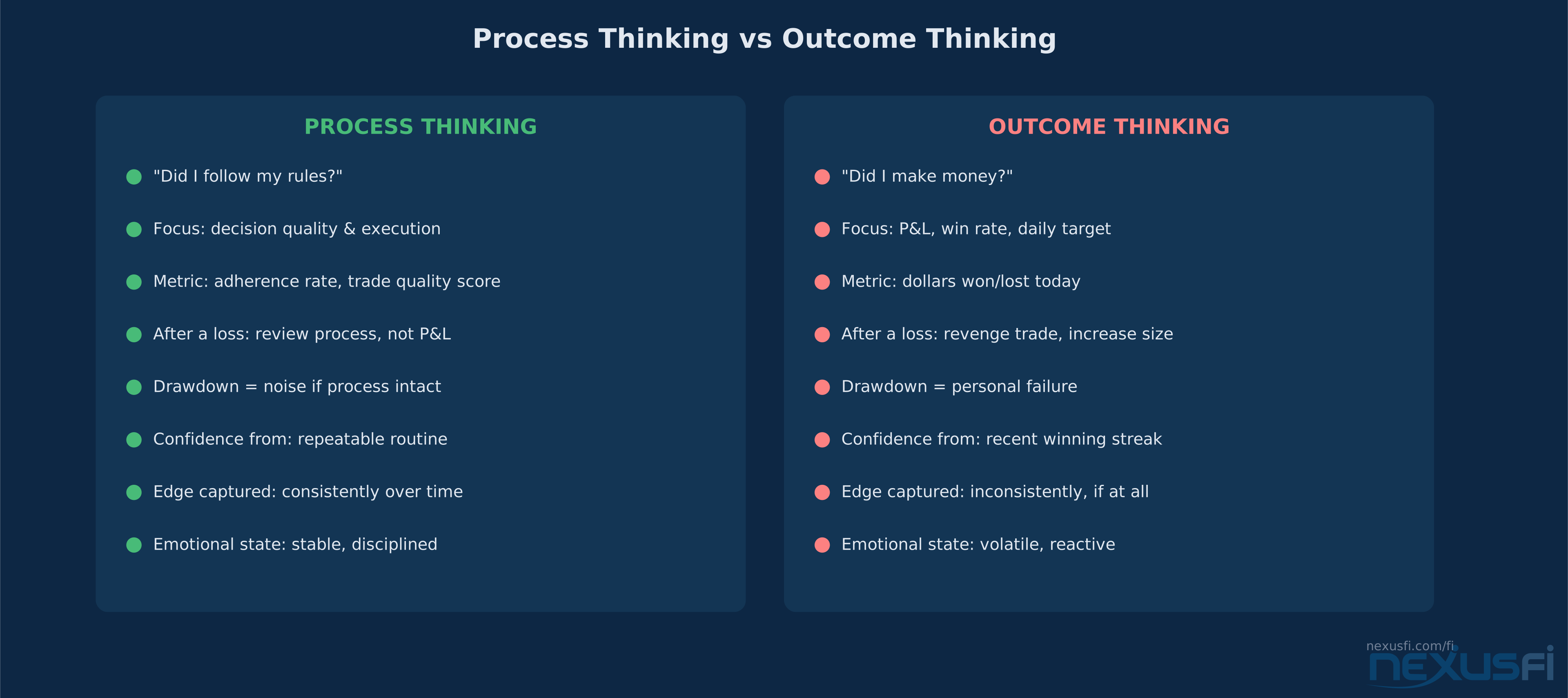
Process-focused trading means evaluating every trade by the quality of your decisions and execution — not by whether the trade happened to win or lose. It's the difference between asking "did I follow my rules?" and "did I make money?" Those two questions lead to completely different behaviors, completely different emotional states, and completely different long-term equity curves.
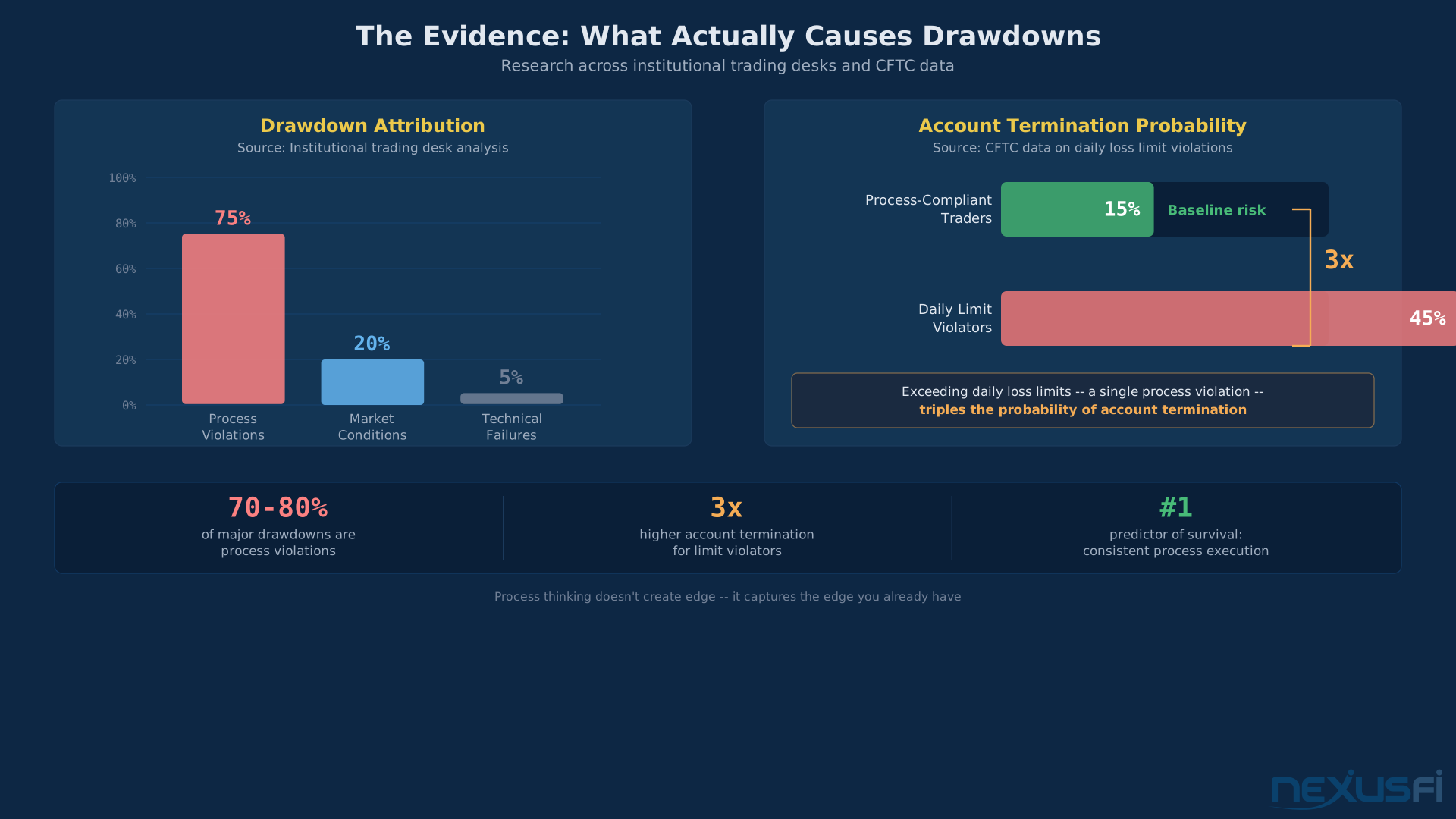
This isn't motivational poster psychology. The evidence is concrete: research on trader behavior consistently shows that 70-80% of significant drawdowns are attributable to process violations — not market conditions, not bad luck, not regime changes. Process breaches. The traders who track adherence metrics outperform those who track only P&L, and it's not close.
The concept applies with particular force in futures markets, where leverage amplifies every behavioral error. A single revenge trade in ES with 50:1 effective leverage can wipe out weeks of disciplined gains. Process thinking is the firewall.
Key Concepts #
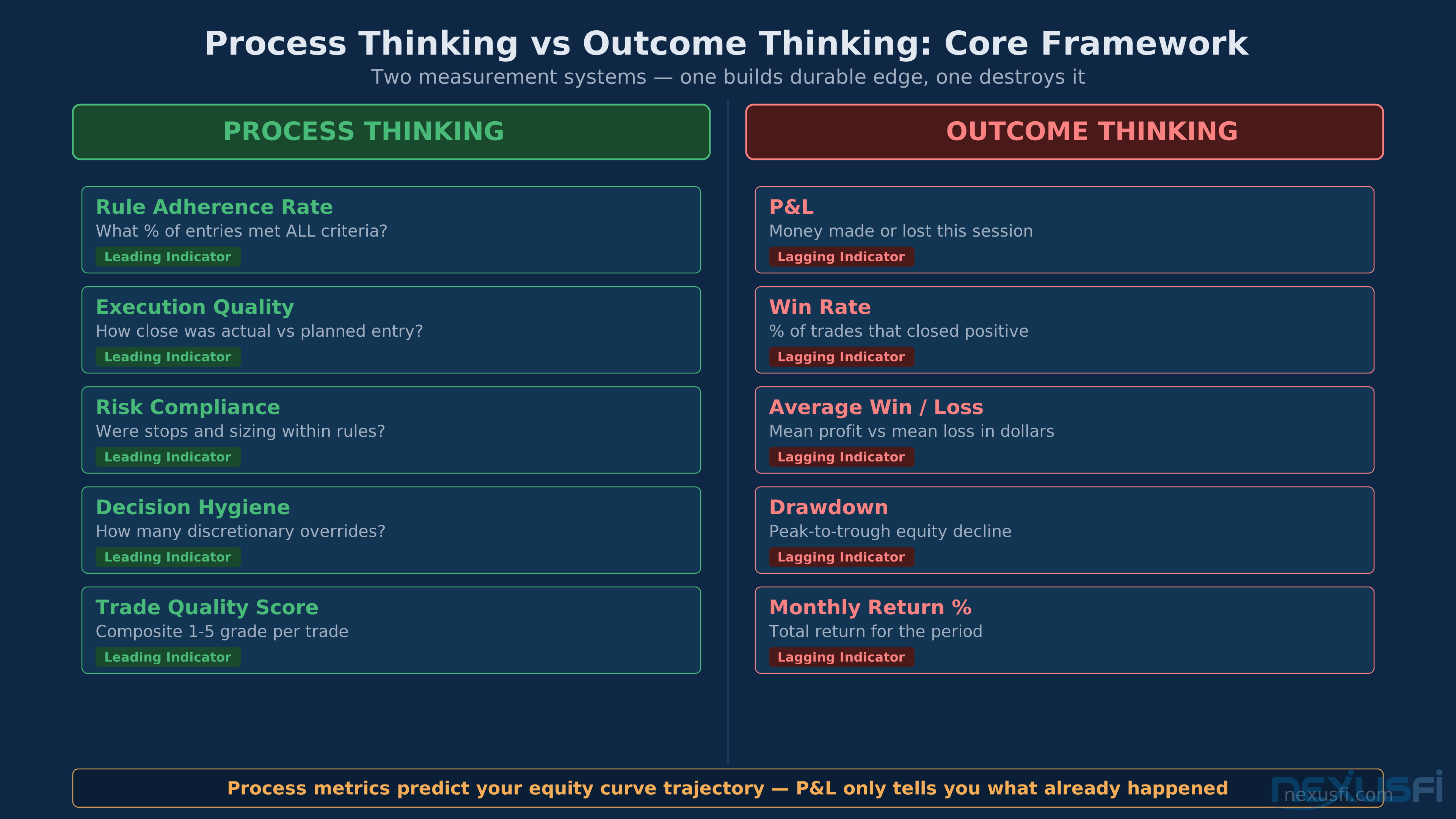
Process thinking is commitment to repeatable decision rules, measured by adherence and implementation quality — not by profit. You define what a good trade looks like before the outcome is known: correct setup identification, proper sizing, accurate stop placement, rule-consistent management. Then you grade yourself on those criteria, regardless of whether the trade won or lost.
Outcome thinking evaluates trade quality primarily by P&L. Won money? Good trade. Lost money? Bad trade. This creates a feedback loop that reinforces luck and punishes disciplined losses — the exact opposite of what builds a durable edge.
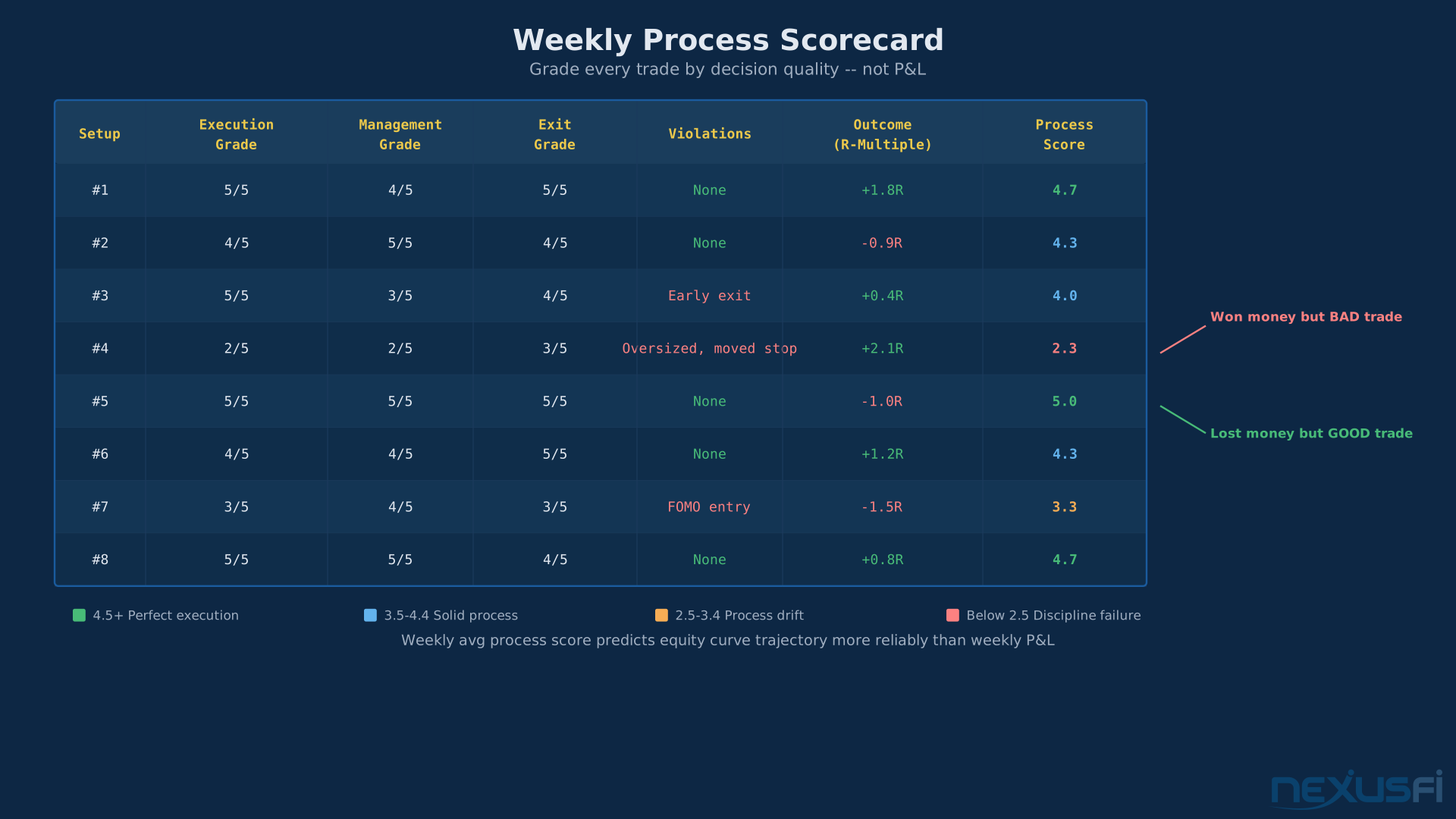
Decision quality is the measurable assessment of whether your actions matched your predefined rules. A losing trade executed perfectly is a high-quality decision. A winning trade that violated three rules is a low-quality decision. Over hundreds of trades, decision quality predicts equity curve trajectory far more reliably than any individual outcome.
Process metrics are the KPIs that measure your trading behavior independently of results. Rule adherence rate, execution quality score, risk compliance percentage, discretionary override count. These are your leading indicators. P&L is a lagging indicator — it tells you what already happened, not whether your process is intact.
Expectancy is the average R-multiple per trade over a large sample. It's downstream from process discipline. You don't control expectancy on any single trade. You control the behaviors that allow your statistical edge to express itself across hundreds of trades.
@tigertrader's blackjack analogy captures the stakes precisely: "A guy playing blackjack in Vegas is dealt 17 and asks the dealer to 'hit' him, and gets dealt a 4. Bad process, good outcome. Stick with this strategy and you are sure to lose over time."[7]
As @tigertrader [puts it on NexusFi][0]: "You can control your decisions, but not the outcomes. It stands to reason then, that you should focus on the process and not the outcome of a trade."
The Decision Funnel #
Every trade passes through a chain of decisions. Process thinking means having explicit, measurable criteria at each stage — and grading yourself on adherence at each stage independently.
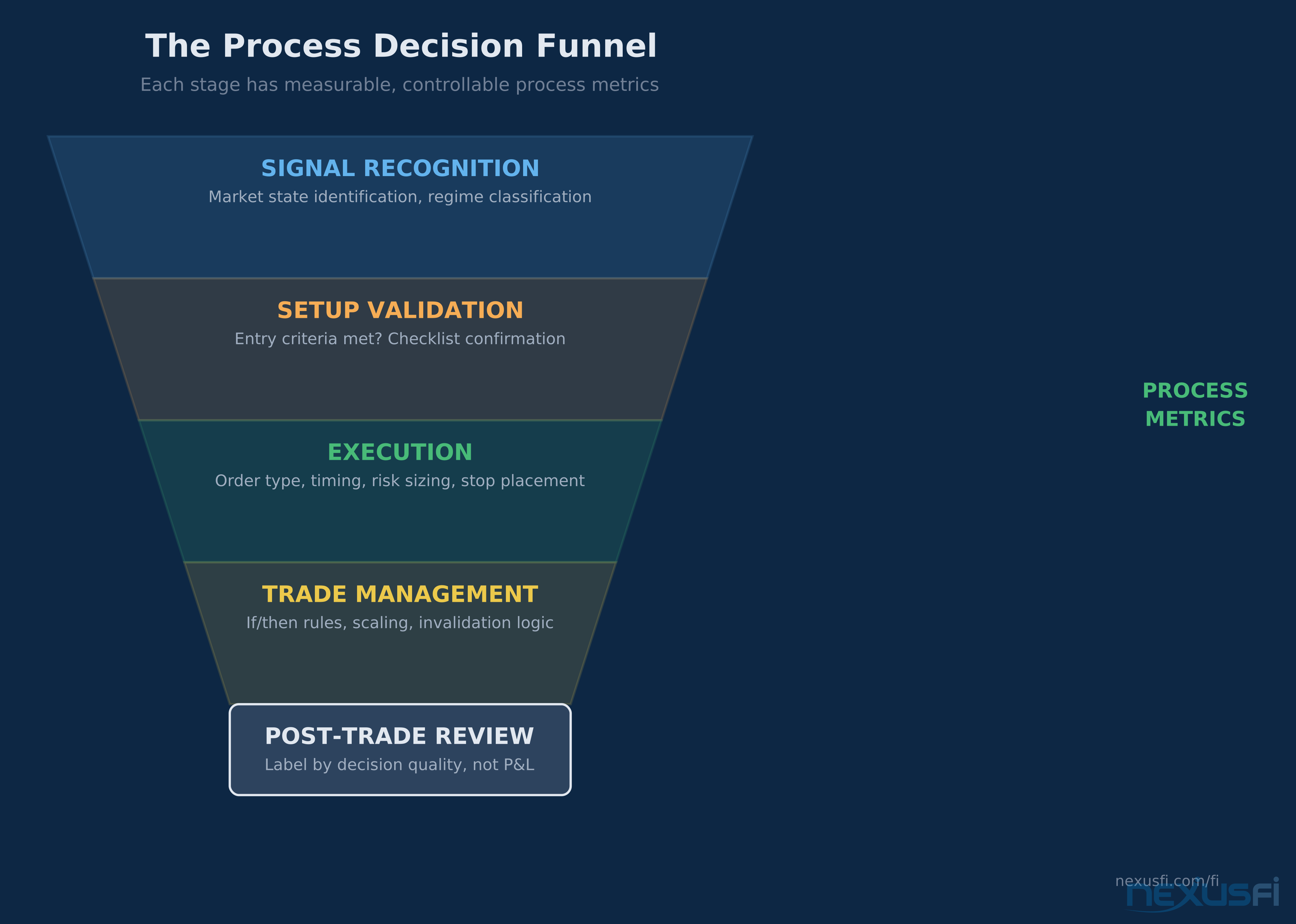
Signal Recognition: What market state are you observing? Trending, ranging, expanding volatility, contracting? Your process defines which states you trade and which you sit out. Grading criteria: did you correctly identify the regime before acting?
Setup Validation: Does the specific price action match your predefined entry criteria? Checklist confirmation — not gut feeling, not "it looks right." Grading criteria: can you point to every checklist item being satisfied?
Execution: Order type selection, timing, position sizing, stop placement. Each is a measurable decision. Grading criteria: was the stop placed at the correct level? Was position size within your risk rules? Did you use the correct order type?
Trade Management: Your if/then rules for scaling, trailing, adding, and invalidation. No improvisation. Grading criteria: did you follow the management plan, or did you deviate?
Post-Trade Review: Label the trade by decision quality and execution quality — not by P&L. This is where the cycle feeds back into improvement.
@indextrader7 describes the power of this approach in their [trading journal][0]: "I CAN'T SPEAK HIGHLY ENOUGH OF DAILY PROCESS GOALS. For so long I begged and pleaded and demanded of myself to be a good trader... follow the day's process goal to the death. That's how I really started to turn things around."
Controllables vs Uncontrollables #
The core insight of process thinking is brutally simple: you cannot control outcomes. You can only control behaviors. Directing your energy at outcomes is directing energy at something you at the core cannot influence on any individual trade.
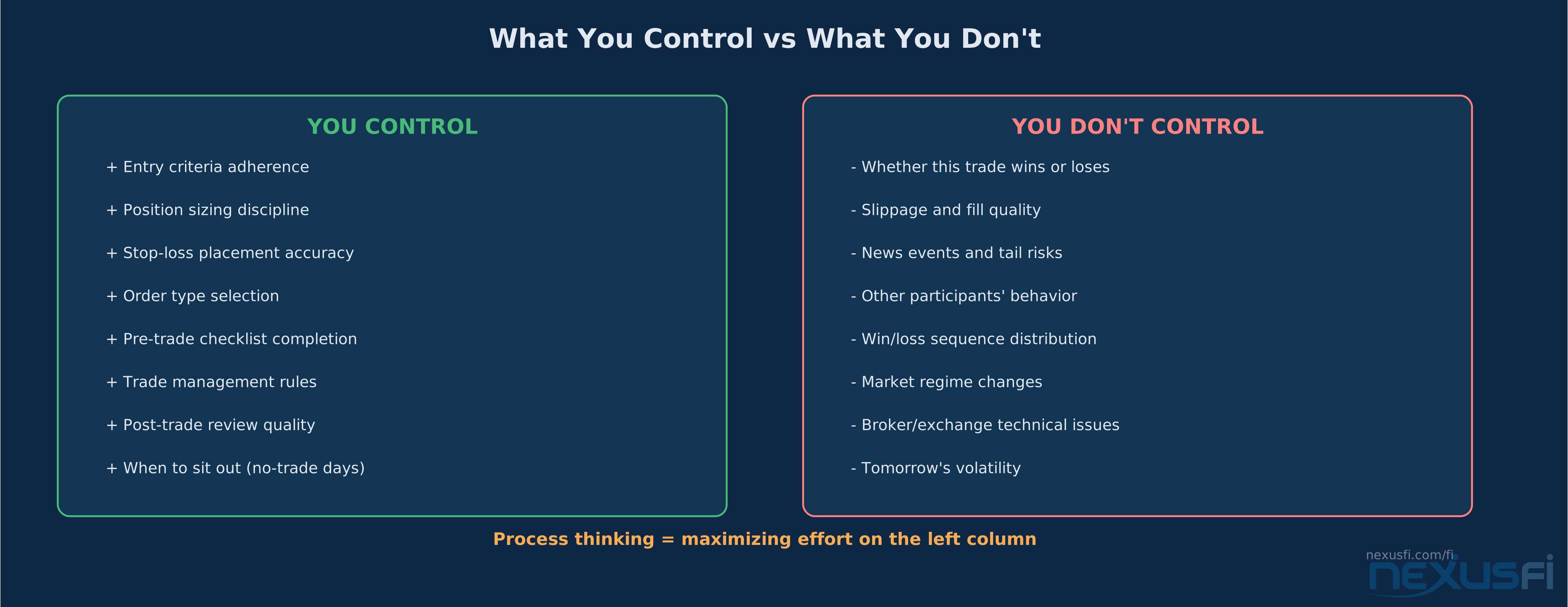
What you control: entry criteria adherence, position sizing, stop-loss placement, order type selection, pre-trade checklist completion, trade management rules, post-trade review quality, and the decision to sit out when conditions don't match your criteria.
What you don't control: whether this specific trade wins or loses, slippage and fill quality, news events and tail risks, other participants' behavior, the sequence of wins and losses, market regime changes, broker or exchange technical issues, or tomorrow's volatility.
This isn't philosophical — it's operational. Every minute you spend worrying about the P&L of your current position is a minute you're not spending on the only thing that matters: are you executing your process correctly?
@PandaWarrior captures it precisely in their [NexusFi journal][0]: "Outcome based goals are a direct result of correctly pursuing process based goals."
Process Metrics: What to Measure Instead of P&L #
Most traders track only P&L. That's like a pilot tracking only altitude without monitoring airspeed, heading, fuel, or engine temperature. P&L is the altitude — it's important, but it's a lagging output of everything else working correctly.
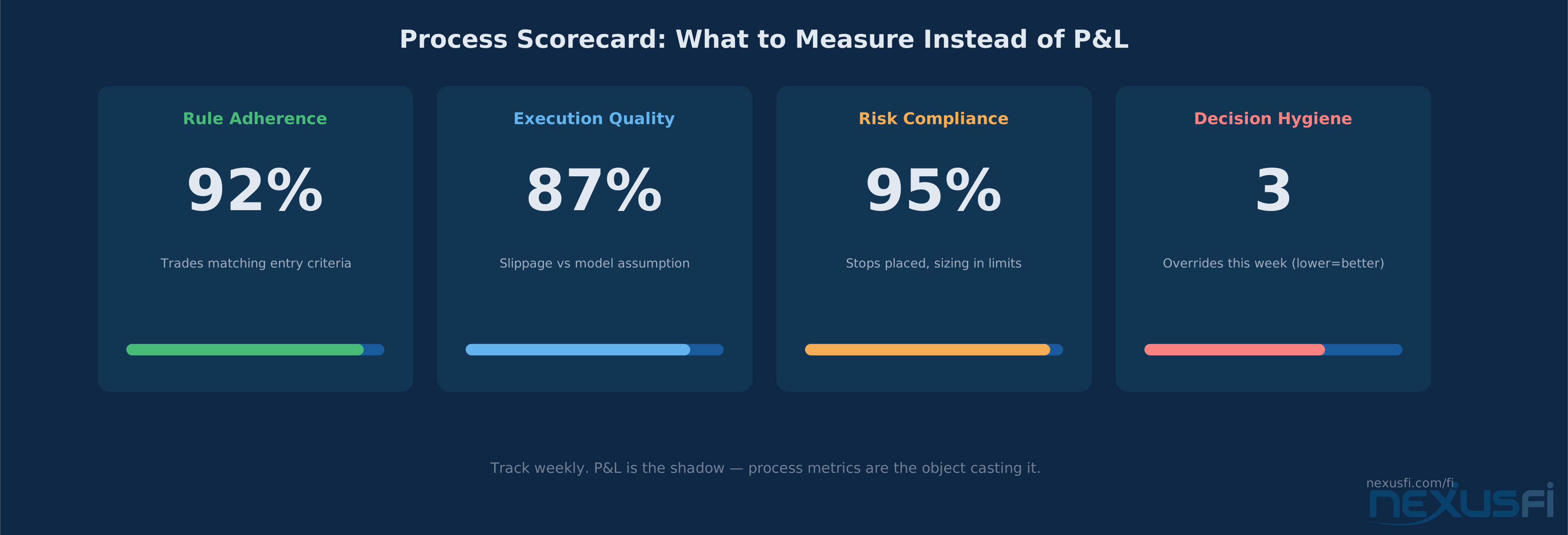
Rule Adherence Rate: What percentage of your trades met every entry criterion before execution? Target: 90%+. If you're below 80%, you don't have a process problem — you have a discipline problem that no amount of strategy optimization will fix.
Execution Quality: How close was your actual execution to your planned execution? Measure slippage versus your model's assumptions. Measure entry timing versus the trigger signal. A consistently negative execution quality score means your process works on paper but breaks down in live markets — and the fix is execution mechanics, not strategy changes.
Risk Compliance: Were stops placed at the correct level? Was position sizing within your per-trade and daily risk limits? Was maximum adverse excursion (MAE) within acceptable range for each setup type? Risk compliance below 95% is a warning sign. Below 90% is an emergency.
Decision Hygiene: How many discretionary overrides did you make this week? Every override is a deviation from process. Some may be justified — regime changes happen — but they should be rare and documented. If you're averaging 5+ overrides per week, your "process" is actually discretionary trading with a checklist you ignore.
Trade Quality Score: A composite metric that combines the above into a single score per trade. Grade each trade 1-5 on process compliance, independent of outcome. Track this score weekly. The trend of your trade quality score predicts your equity curve trend far more reliably than your recent P&L.
@worldwary started their [NexusFi journal][0] specifically as "a method of keeping myself accountable... a forum of shame where I am forced to admit when I've broken" their rules. That accountability structure — measuring rule breaks, not losses — is process thinking in action.
Why Individual Trade Outcomes Are Noise #
Here's the math that makes process thinking not just psychologically healthier but statistically inevitable.
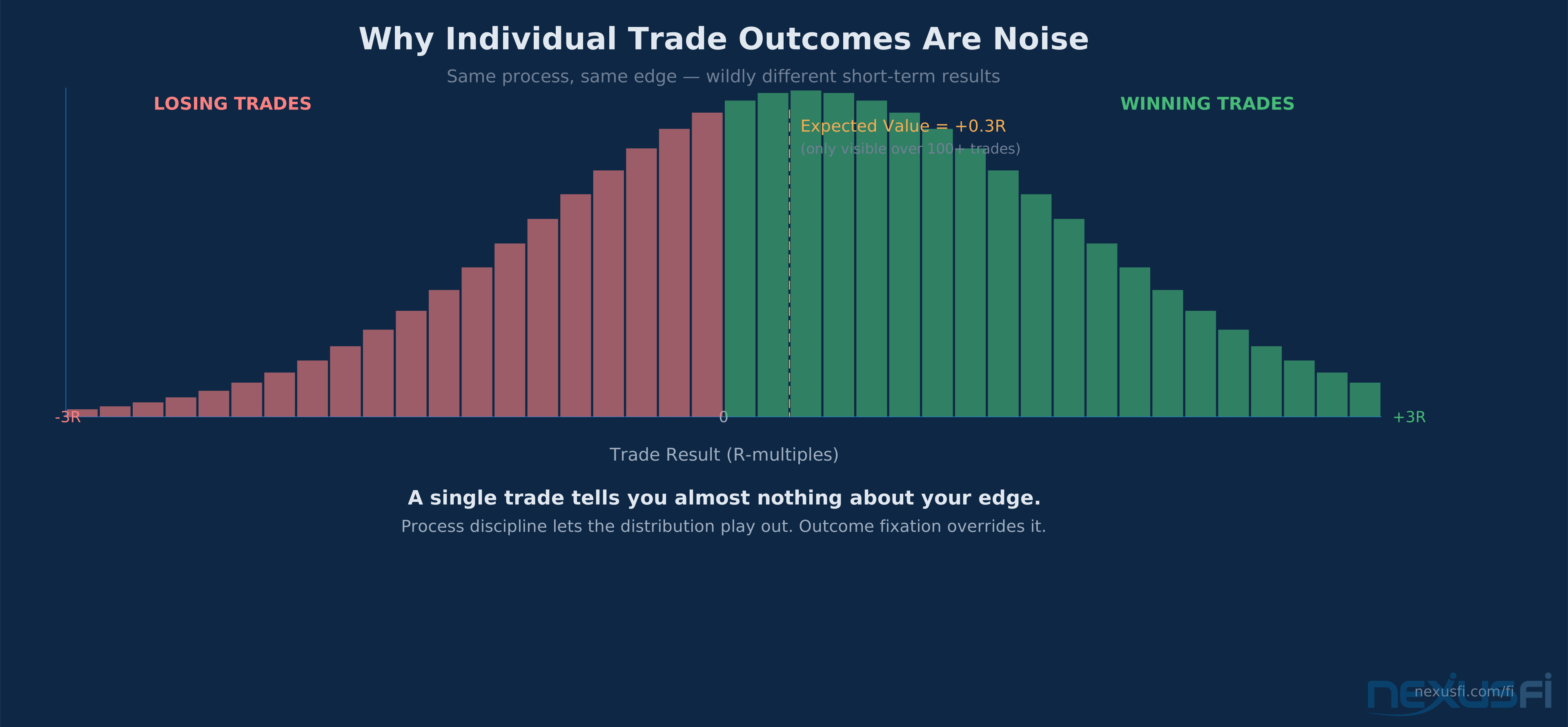
Assume you have a genuine edge: a process that produces an expected value of +0.3R per trade over a large sample. That's a solid edge — better than most retail traders achieve. Now look at the distribution of individual trade outcomes around that mean.
With a standard deviation of 1.2R (typical for futures day trading), any individual trade can easily land anywhere from -3R to +3R. The expected value of +0.3R is invisible at the single-trade level. It only becomes statistically distinguishable from noise after roughly 100+ trades executed with consistent process.
This means something profound: judging your process by any single trade — or even a week of trades — is statistically meaningless. A losing day doesn't mean your process is broken. A winning day doesn't mean your process is working. The signal is buried in noise until sample sizes get large enough for the edge to emerge.
Outcome-focused traders react to noise. They tighten stops after a loss (reducing edge). They increase size after a win (increasing risk). They abandon strategies after normal losing streaks. Every reaction to individual outcomes degrades the very process that would eventually produce the positive expectancy they're chasing.
Process-focused traders let the distribution play out. They know that maintaining consistent execution is the only way to let the statistical edge express itself. Variance is the cost of doing business — not a signal to change your approach.
The Drawdown Response Protocol #
Drawdowns are where process thinking faces its hardest test. When your equity curve drops, the emotional pressure to abandon process and "do something" becomes intense. This is exactly when having a predefined protocol matters most.
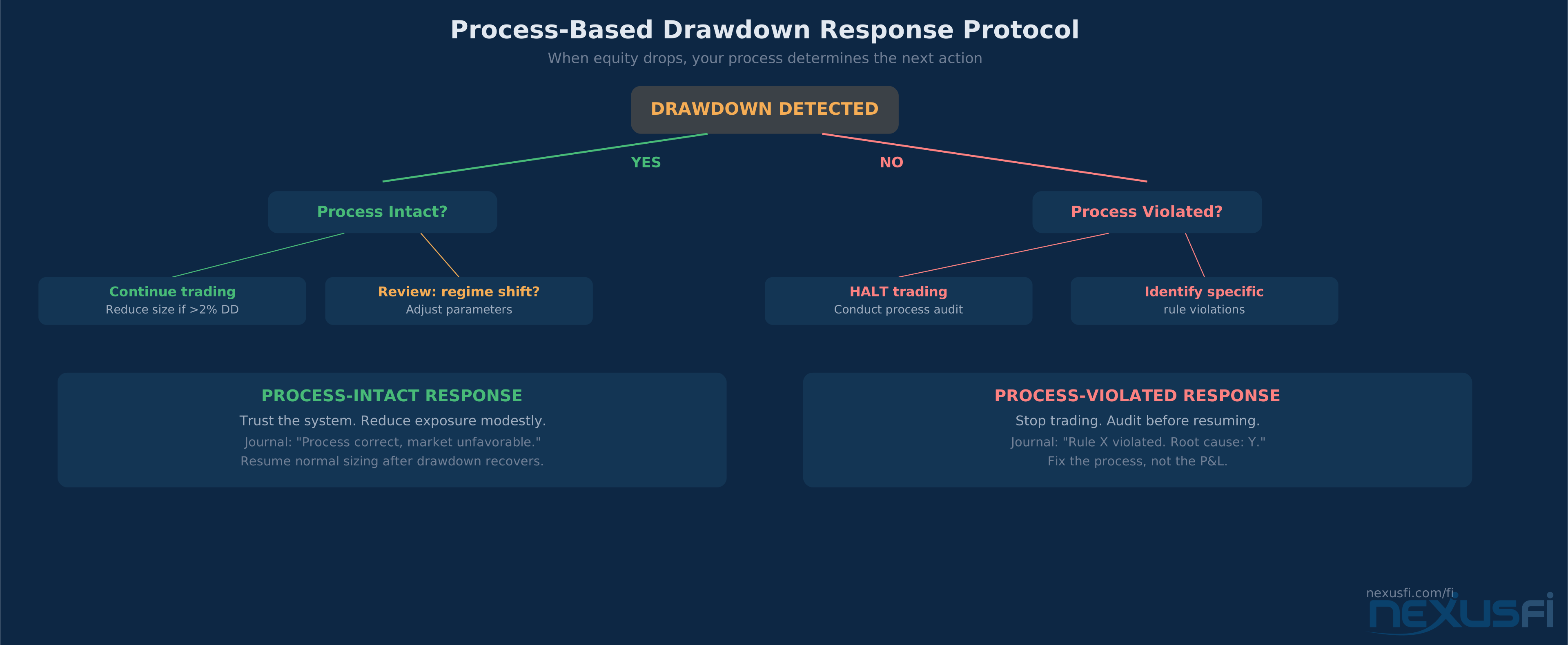
The first question isn't "how do I make it back?" The first question is: was my process intact?
If process was intact: the drawdown is likely variance — normal sampling noise from a positive expectancy distribution. Response: continue trading with modestly reduced position sizing (optional, depends on your risk governance framework). Journal the drawdown as "process correct, market unfavorable." Resume normal sizing when equity recovers. The key insight: a drawdown with intact process is information that your edge is experiencing a normal losing cluster. Changing your approach would be the error.
If process was violated: the drawdown may be partially or fully your fault. Response: halt trading immediately. Conduct a process audit. Identify which specific rules were violated and why. Journal the root cause. Fix the behavioral failure before resuming. The key insight: a drawdown with violated process is a discipline problem masquerading as a market problem. Trading through it makes it worse.
@tigertrader, one of the most respected voices on NexusFi, [emphasizes][0]: "Do not put pressure on yourself to make money. Prioritize the process, and not the outcome. Once you have the methodology down, you can focus on the outcome that the methodology was intended to produce."
This diagnostic — "was process intact?" — transforms drawdown management from an emotional crisis into an operational decision. And that's exactly the point.
The Continuous Improvement Cycle #
Process thinking isn't a destination. It's a cycle that runs continuously: plan, execute, document, review, refine.
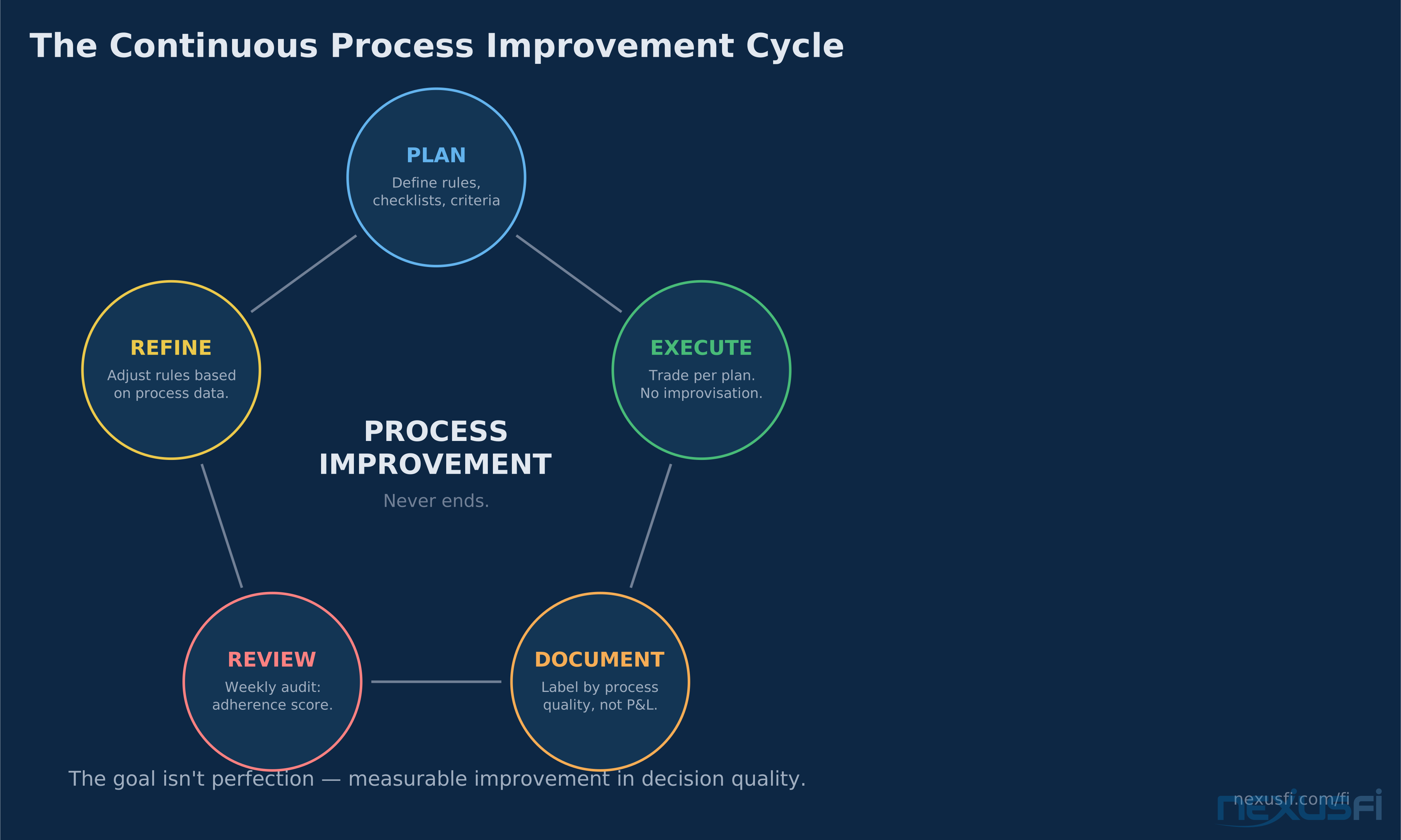
Plan: Define your rules, checklists, and entry/exit criteria before the session begins. Pre-market preparation isn't optional — it's the foundation of process compliance.
Execute: Trade according to the plan. No improvisation, no ad-hoc decisions. If conditions don't match your criteria, don't trade. Sitting out is a process-correct action.
Document: Label every trade by process quality, not P&L. Use a structured format: setup type, entry grade (1-5), management grade (1-5), exit grade (1-5), rule violations (list), and — separately — the outcome in R-multiples. The outcome is recorded for statistical analysis; the grades are recorded for process analysis.
Review: Weekly process audit. Calculate your adherence rate, execution quality, and risk compliance. Identify patterns: are certain setup types generating more rule violations? Are overrides concentrated at specific times of day? Are stop-placement errors correlated with volatility?
Refine: Adjust your rules based on process data — not outcome data. If your process produces consistent adherence scores above 90% but expectancy is negative over 200+ trades, the process itself may need modification. If adherence is below 80%, the process is fine — your execution is the problem.
@Fluid Fox documents this approach perfectly in their [NexusFi journal][0], describing the four stages of trader development from unconscious incompetence to unconscious competence — a progression that only happens through the continuous improvement cycle.
Integration with Prop Firms and Constraints #
Process thinking becomes non-optional in funded trading environments. Prop firm evaluation structures are naturally path-dependent: daily loss limits, trailing drawdown rules, profit targets with time constraints. Outcome thinking under these constraints almost guarantees failure.
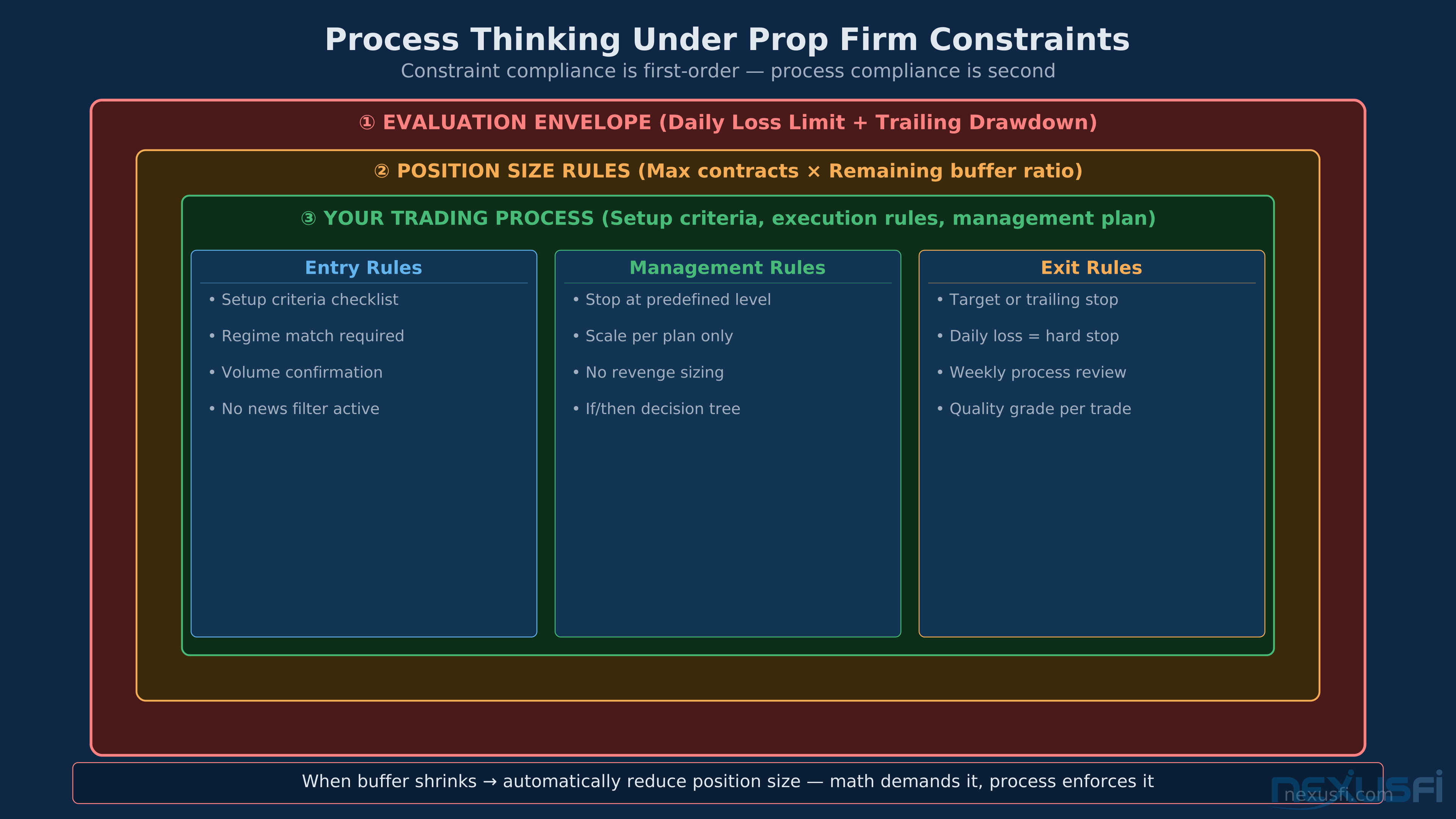
Consider the mechanics: a typical prop evaluation allows a $2,500 maximum drawdown on a 50k account. One revenge trade at 3x normal size after a losing morning can consume 60% of that drawdown budget in a single trade. The evaluation doesn't care about your win rate or your edge — it cares about whether you survive the path to the profit target.
Process thinking under prop constraints means:
Your process must explicitly include constraint compliance as a first-order rule. Maximum daily risk isn't a suggestion — it's a hard stop that your process enforces before any trade logic kicks in. If you've lost 40% of your daily allocation, your process says "stop trading," regardless of whether the afternoon session looks promising.
Position sizing under trailing drawdown rules requires process-level discipline that outcome thinking can't provide. When your remaining drawdown buffer shrinks, your process should automatically reduce position size — not because you're scared, but because the math demands it. A 1R loss when your remaining buffer is 10R is survivable. A 1R loss when your remaining buffer is 2R is catastrophic. Same loss, completely different process response.
The traders who pass evaluations consistently aren't the ones with the highest win rates. They're the ones whose process is built around constraint survival first, edge capture second. That's process thinking applied to a constrained environment — and it's the same framework that works in personal accounts, just with different constraint parameters.
Practical Implementation: Starting Today #
If you're currently an outcome-focused trader, the shift to process thinking doesn't require new strategies, new indicators, or new markets. It requires a different measurement system.
Step 1: Define your process. Write down your entry criteria, position sizing rules, stop placement logic, management rules, and exit criteria. If you can't write them down, you don't have a process — you have a vague intention. Be specific: "enter when price breaks above the opening range high with volume above 20-period average" is a process rule. "Enter when the market looks strong" is not.
Step 2: Create a process scorecard. After every trade, grade yourself on four dimensions: setup identification (did the criteria exist?), execution (did you enter/size/stop correctly?), management (did you follow your rules during the trade?), and review (did you document the trade properly?). Use a 1-5 scale. Calculate weekly averages.
Step 3: Separate your review sessions. One session for process analysis (adherence scores, violation patterns, execution quality trends). A completely separate session for outcome analysis (expectancy, R-multiple distribution, win rate by setup type). Never combine them. When you're reviewing process, P&L numbers should not be visible.
Step 4: Implement a drawdown protocol. Write down exactly what you'll do at 1%, 2%, and 3% daily drawdowns. At what point do you reduce size? At what point do you stop trading? Make these decisions now, when you're calm, so you don't have to make them later, when you're not.
Step 5: Track process metrics weekly. Plot your adherence rate, execution quality, and risk compliance on a chart. Look for trends. A declining adherence rate is an early warning signal of process drift — and it shows up in your metrics weeks before it shows up in your P&L.
@rahulgopi's [post on NexusFi about anxiety and trading][0] captures the identity shift: "Form identity-based habits instead of outcome-based habits." The process-focused trader doesn't say "I want to make $500 today." They say "I am a trader who follows my rules." Different identity, different behavior, different results.
The Evidence #
The case for process thinking isn't just anecdotal. Research from multiple fields converges on the same conclusion: controlling behavioral inputs produces better outcomes than fixating on results.
Locus of control research — pioneered by Julian Rotter's foundational 1966 monograph Generalized Expectancies for Internal Versus External Control of Reinforcement — consistently shows that performance under stress improves when people focus on controllable inputs rather than uncertain outputs. Rotter demonstrated that people who perceive reinforcement as contingent on their own behavior (internal locus) outperform those who attribute outcomes to chance or external forces. In trading, your decisions are the controllable input. Market outcomes are the uncertain output. Process thinking is internal locus of control applied to the trading desk.
Goal-setting literature from performance psychology demonstrates that task-focused goals (process) outperform outcome-only goals in maintaining performance under pressure. Locke and Latham's 35-year research program on goal-setting theory, published in the American Psychologist in 2002, established that specific, difficult goals tied to process behaviors consistently produce superior performance compared to vague outcome targets like "do your best." Athletes who focus on technique outperform athletes who focus on the scoreboard — and futures trading is a performance discipline with the same dynamics.
Annie Duke makes this case accessibly in Thinking in Bets (2018), drawing on her career as a World Series of Poker champion and her cognitive psychology training at Penn: you can't judge decision quality by outcomes in any domain where luck plays a role. A good decision can produce a bad outcome, and a bad decision can produce a good outcome. Over time, decision quality — process — is the only thing that compounds.
Credit assignment in noisy environments: when outcomes are delayed and noisy (exactly the situation in trading), research on reinforcement learning shows that focusing on intermediate steps — the process — supports learning far more effectively than reacting to outcomes.
Trading-specific evidence: analysis of equity curves across institutional trading desks has shown that 70-80% of significant drawdowns are attributable to process violations rather than adverse market conditions. Regulatory enforcement actions — from the CFTC's risk disclosure requirements for FCMs to the OCC's $920M penalty against JPMorgan Chase for CIO risk control failures in 2012 — consistently demonstrate that exceeding established risk limits leads to outsized losses and account terminations. The pattern is the same whether you're a retail trader blowing past daily loss limits or a bank's chief investment office ignoring VaR breaches.
The mechanism is straightforward: process thinking improves execution quality, discipline, and risk control. These improvements increase the portion of your theoretical edge that you actually capture in live markets. Process thinking doesn't create edge. It captures the edge you already have — and stops you from giving it back.
Knowledge Map
Prerequisites
Understand these firstGo Deeper
Build on this knowledgeReferences This Article
Articles that build on this topicCitations
- — How do I not take losses personally? (2014) 👍 10“You can control your decisions, but not the outcomes”
- — Short term TF trading (2012) 👍 13“Daily process goals”
- — The PandaWarrior Chronicles (2012) 👍 6“Outcome based goals are a direct result of correctly pursuing process based goals”
- — VWAP Journal (2012) 👍 21“A method of keeping myself accountable”
- — The PandaWarrior Chronicles (2013) 👍 21“Prioritize the process, and not the outcome”
- — Zach's Log (2019) 👍 5“Four stages of trader development”
- — Anxiety and Trading (2021) 👍 11“Form identity-based habits instead of outcome-based habits”
- — Concerning risk per trade sizing (2012) 👍 8“Bad process, good outcome. Stick with this strategy and you are sure to lose over time.”