



Trading Belief Systems and Market Assumptions: How Your Mental Framework Shapes Every Trade
Overview #
Mark Douglas spent his career answering one question: why do traders with profitable systems still lose money? His answer — developed across The Disciplined Trader (1990) and Trading in the Zone (2000) — was that the problem isn't in the market. It's in the mental framework traders bring to it. Beliefs about what losses mean, what the market owes you, and what kind of trader you are don't just influence your psychology. They determine what you perceive, what decisions you make, and ultimately whether your edge ever gets expressed consistently enough to matter.
This article covers Douglas's belief systems framework in depth: how beliefs form, how they filter your perception of market information, the six categories of limiting beliefs that most traders carry, and the systematic process for identifying and changing the beliefs sabotaging your results.
Primary sources: The Disciplined Trader: Developing Winning Attitudes (Mark Douglas, New York Institute of Finance, 1990) and Trading in the Zone: Master the Market with Confidence, Discipline and a Winning Attitude (Mark Douglas, Prentice Hall Press, 2000).
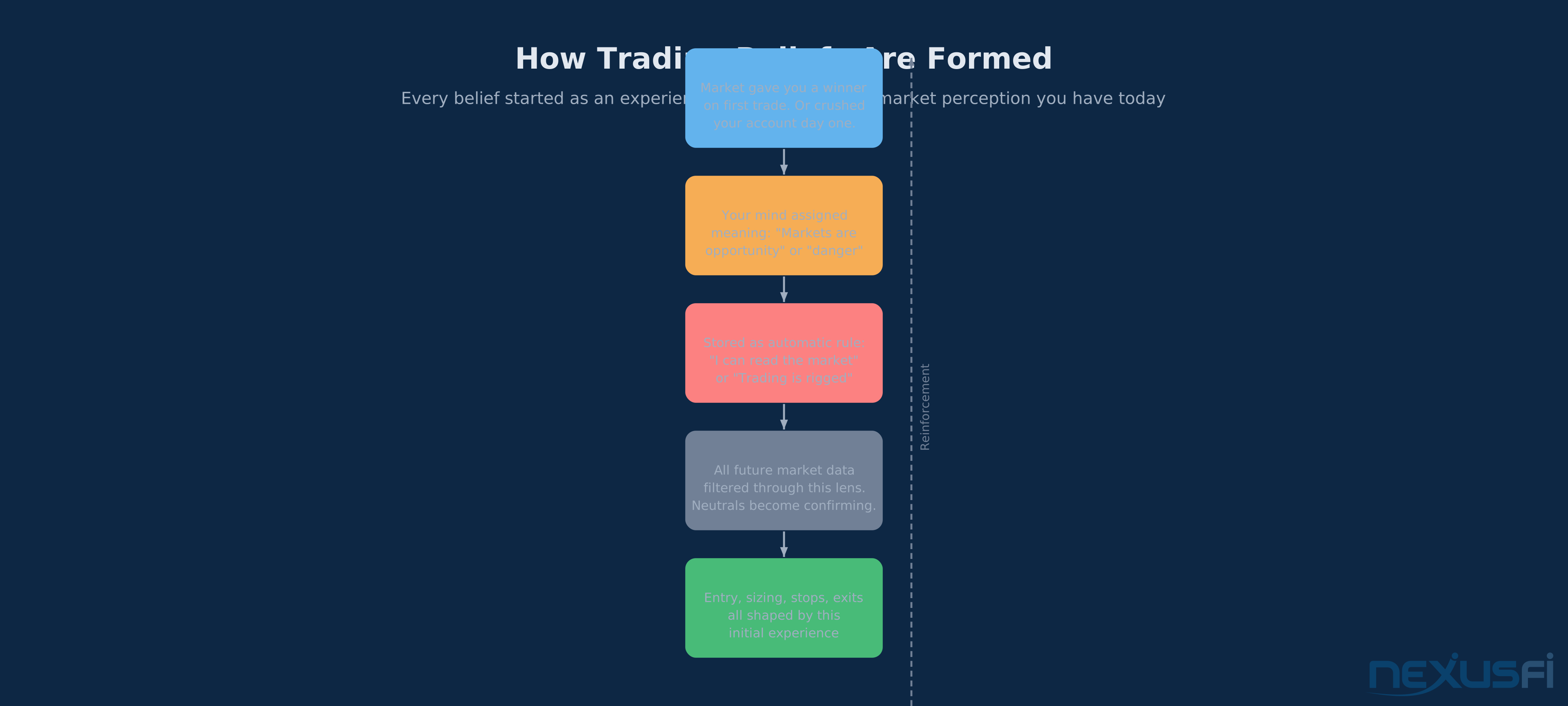
How experiences become automatic belief-filters on market interactions — the feedback loop makes beliefs self-reinforcing and resistant to change.
What Are Trading Beliefs? #
A belief, in Douglas's framework, is a stored interpretation of an experience — one that your mind has generalized into an automatic rule about how reality works. You don't consciously decide to apply beliefs; they run automatically in the background, determining what market information gets processed, what gets filtered out, and what it all means to you.
Crucially, beliefs are not opinions. You can change an opinion by hearing a good argument. Beliefs resist change because they're stored in the emotional memory system, not the intellectual system. When your trading system tells you to take a stop, and something stops you from doing it, that's a belief. When you feel a visceral urgency to get back the money you just lost, that's a belief. When you hesitate on a textbook setup because it "feels different," that's a belief. None of those responses are rational. All of them are automatic.
Douglas was specific: the source of most trading failure is not lack of knowledge about the market. It's the set of beliefs, formed over a lifetime, that prevent traders from acting on the knowledge they have.
Forum citation: Notes from The Disciplined Trader — @lovetotrade, Psychology and Money Management (2016, 10 thanks)
The important implication: you don't have to change the market to trade better — you have to change the beliefs that distort your perception of it. Beliefs can be identified, tested, and systematically updated.
The Mental Environment: Douglas's Core Framework #
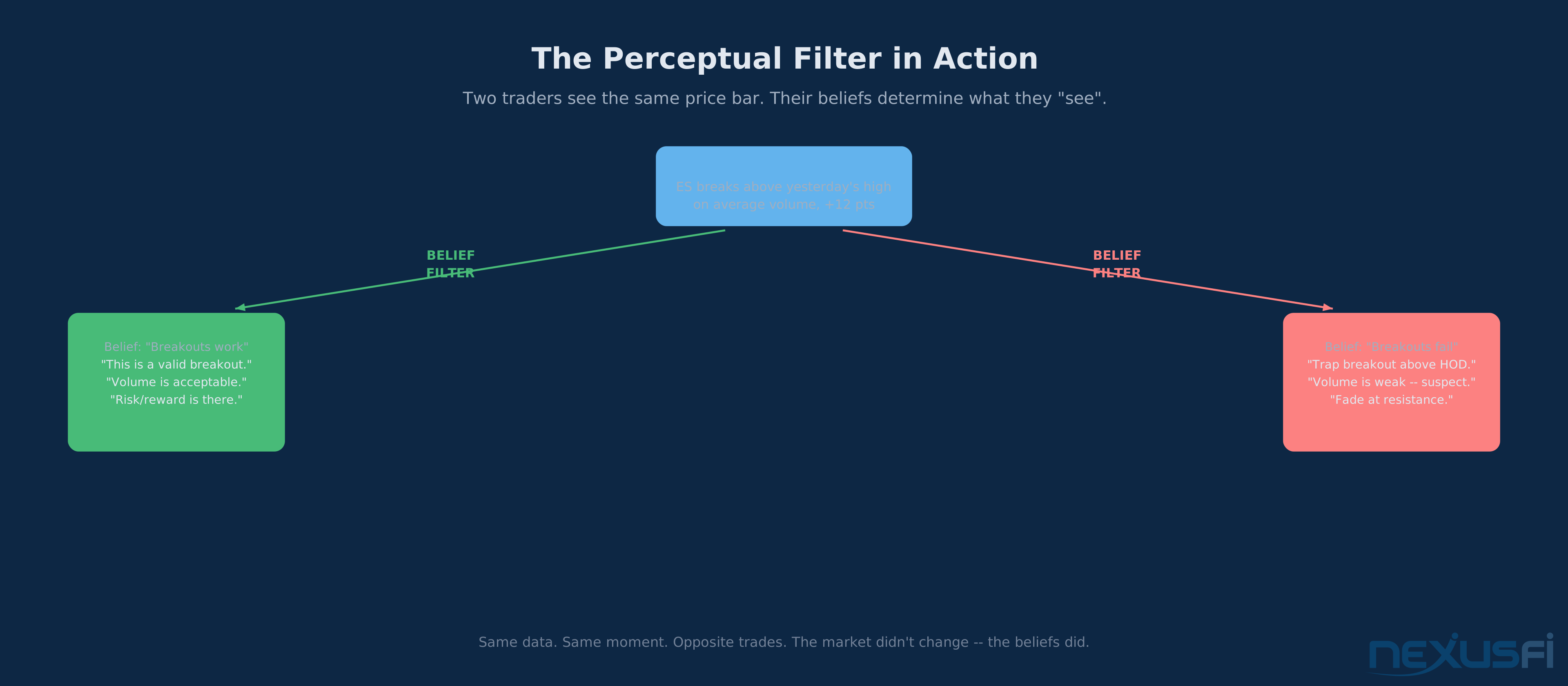
Douglas's most fundamental concept is the distinction between the physical environment and the mental environment. The physical environment is the market: price, volume, order flow, news. This environment doesn't have opinions about you. It doesn't reward good analysis, punish bad thinking, or track your P&L. It just produces outcomes based on the aggregate behavior of all participants.
The mental environment is your inner world: your beliefs, memories, associations, emotional responses, and self-concept as a trader. This environment is entirely subjective and entirely yours to control — though most traders don't realize this, because the mental environment feels as objective and real as the physical market.
Physical market and mental environment both shape trading decisions — Douglas's insight was that the mental side offers far more leverage for improvement than better charts or data.
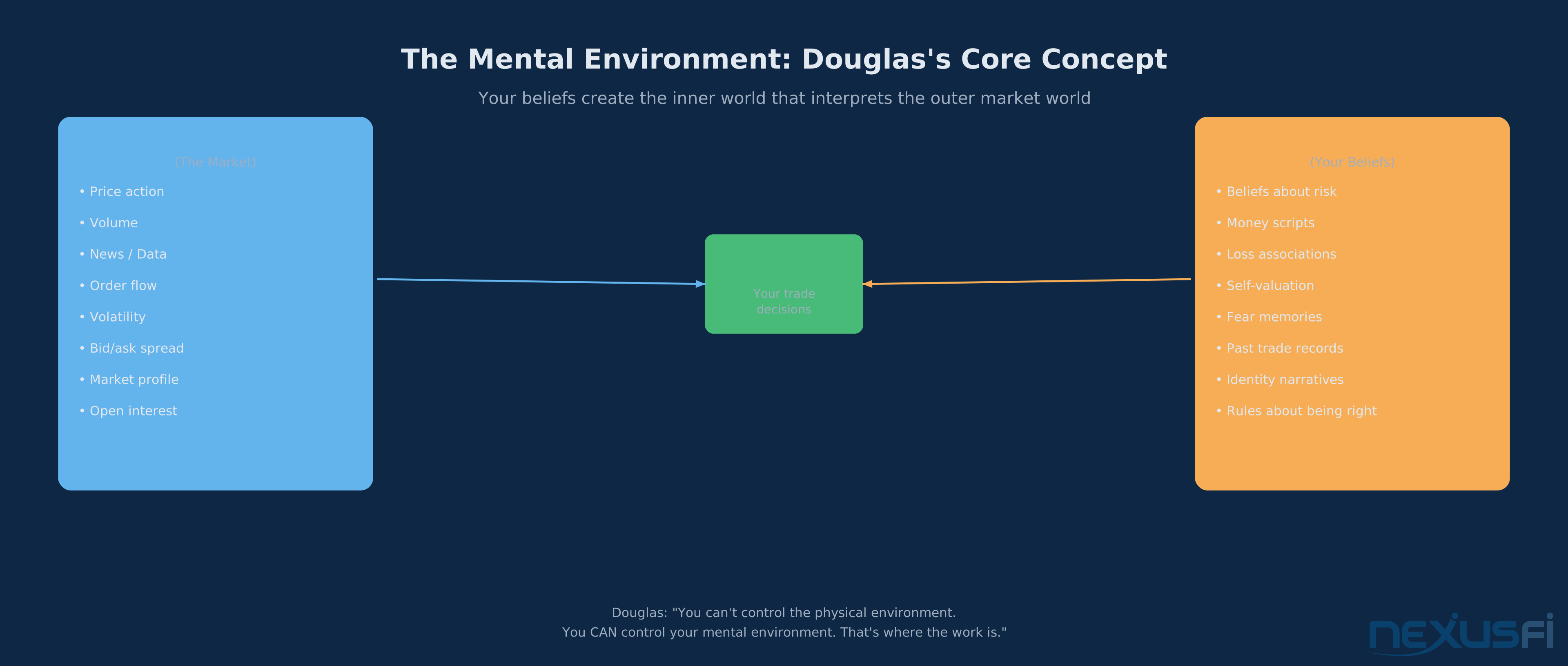
The same price bar that represents a valid setup to one trader represents a trap to another — not because the bar is ambiguous, but because each trader's mental environment interprets it differently.
Forum citation: Trading in the Zone — Mark Douglas — @bijeremiad, Psychology and Money Management (2012, 15 thanks)
This is Douglas's core argument: the solution to trading problems is not better analysis of the physical environment. It's better control of the mental environment — specifically, better alignment between your beliefs and market reality. A trader with mediocre analysis skills but sound beliefs about risk and probability will outperform a technically gifted trader whose beliefs create fear, hesitation, and self-sabotage.
How Beliefs Shape What You See: Perceptual Filters #
One of Douglas's most important contributions is the concept of perceptual filters: the mechanism by which beliefs determine what market information reaches conscious awareness and how it gets interpreted. You don't see the market directly. You see a filtered version, shaped by everything you believe about what the market is, what it does to you, and what you're capable of doing within it.
Same breakout, two opposing beliefs, two opposite interpretations — beliefs pre-determine market analysis before conscious thought begins.
Perceptual filters operate at multiple levels: they determine which market information you even notice (a trader with volume beliefs processes volume prominently; one who discounts it won't register it at all) and what that information means. A price pullback is neutral statistical noise, but a trader who believes losses are dangerous interprets it as a threat — triggering the cascade of anxiety and behavioral errors that follow from fear.
The confirmation bias connection: Perceptual filters are the mechanism through which confirmation bias in trading operates. When you believe a trade will work, your filters pass through confirming information and suppress disconfirming information. You're not deliberately ignoring warning signs — your belief system is doing it automatically. This is why technical analysis doesn't solve the psychology problem: you can draw perfect lines on a chart and still only see the signals that confirm your bias.
How Trading Beliefs Are Formed #
Douglas identified three primary mechanisms through which trading beliefs form, and understanding these mechanisms is essential because they explain why some beliefs resist change so stubbornly while others shift easily.
Direct emotional experience is the most powerful belief-forming mechanism. A trader who takes a full position on a breakout, watches it reverse violently, and takes a 5% account hit in ten minutes has just formed a belief. That belief isn't "breakouts have a 55% success rate in trending markets" — it's "breakouts are traps that cause pain." The emotional intensity burns the interpretation into memory as an automatic rule, not a data point to be weighted against future evidence.
This is why first experiences carry disproportionate weight: three early wins versus three early failures creates at the core different belief systems, even though both sequences are statistically normal for a 50-60% win-rate system. The mind stores experiences not as neutral probabilities but as emotionally tagged narratives that become filters for all future market information.
Associative linking connects unrelated events to market outcomes: the indicator used on the biggest win, the conflict that preceded the worst loss, sequences of good or bad days. These associations are rarely conscious — they operate as vague feelings that certain conditions are "good" or "bad" for trading, without the trader being able to articulate why.
Cultural and social conditioning forms the deepest layer of trading beliefs because these exist before the first trade. Attitudes about money, risk-taking, and who "deserves" market profits are absorbed from family and culture and pre-load the belief system before any market experience occurs.
The critical implication: beliefs formed under high emotional intensity are far more resistant to change than beliefs formed through calm analysis. You can't read your way out of a belief that was formed through emotional experience — Douglas insisted that belief change requires accumulated experience under controlled conditions, not intellectual understanding alone.
The Four Primary Trading Fears #
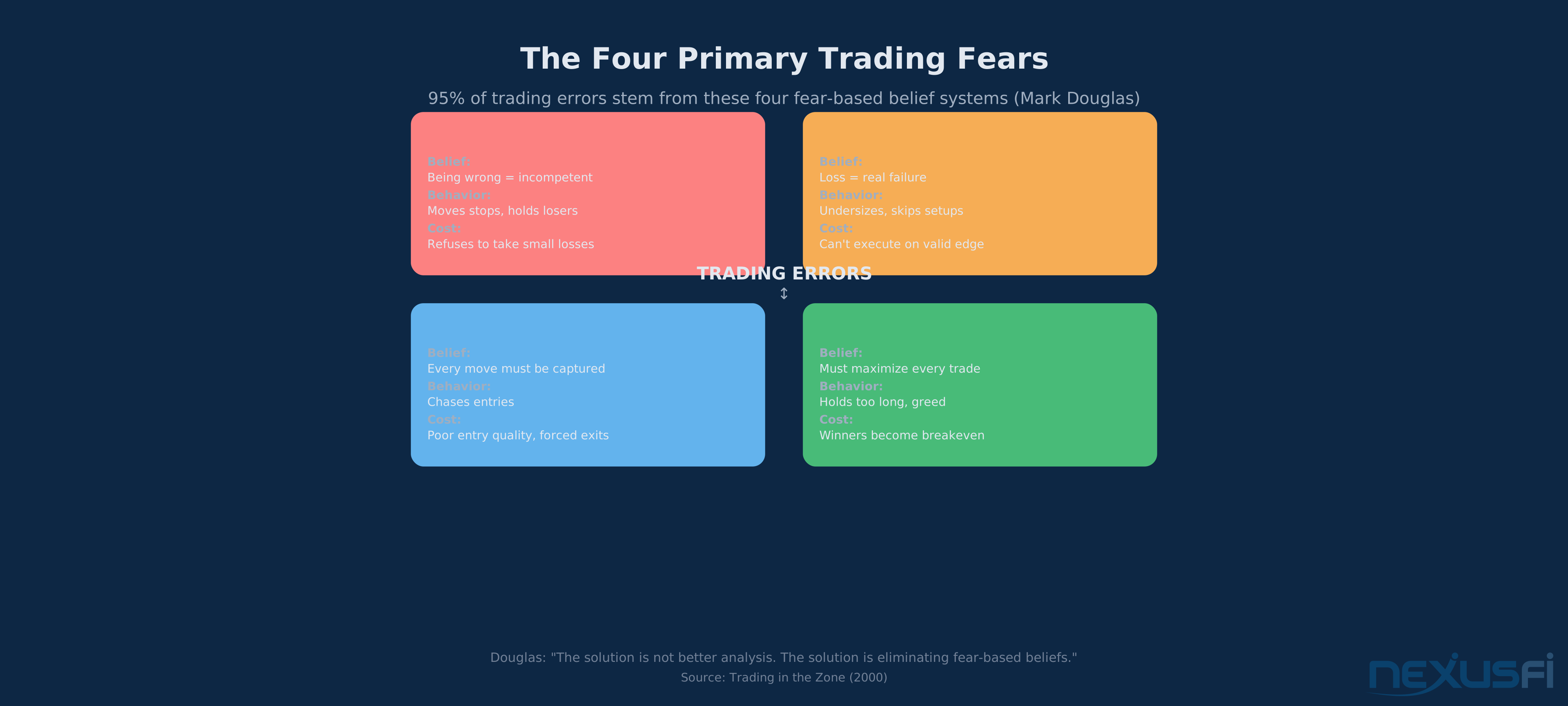
Douglas identified four specific fears — each rooted in a belief — that account for the vast majority of trading errors. Understanding these fears as belief states, rather than rational responses to market conditions, is the first step to working with them effectively.
Each fear links a specific belief to a specific behavior and cost — the belief-behavior-cost chain makes the framework actionable rather than just descriptive.
Fear of Being Wrong: The belief underlying this fear is that being wrong is dangerous or shameful — reflecting on intelligence, competence, or worth. The cost: a trader afraid of being wrong holds losers hoping for a reversal, redefines stop levels when price approaches, and adds to losing positions — all as ways of refusing to acknowledge an incorrect thesis.
Fear of Losing Money: The underlying belief: losing money is dangerous, threatening, or indicative of failure. Traders with this fear undersize their positions — abandoning whatever position sizing framework they've built — skip valid setups (especially after recent losses), and constantly manage positions to minimize realized losses — often by taking profits too early and running losers too long. The fear isn't irrational in a vacuum; it becomes destructive because it operates regardless of whether the loss is within predefined risk parameters.
Forum citation: Overcoming the Fear of Losing — @ZviTradingCoach, Psychology and Money Management (2022, 18 thanks)
Fear of Missing Out (FOMO): The underlying belief: every significant market move should be captured, and missing one represents failure. This creates the specific behavior of chasing entries — entering after a move has already developed, at prices that no longer offer the original risk/reward. FOMO traders often have excellent entry analysis but poor entries: they identify the right direction, then get in at the worst possible time because they couldn't stand the feeling of watching a move happen without them.
Fear of Leaving Money on the Table: The underlying belief: maximum profit should be extracted from every trade, and taking a partial profit represents failure. This fear keeps traders from scaling out, from taking profits at predetermined levels, and from protecting gains with trailing stops. The result is that winning trades routinely become breakeven trades as the trader waits for maximum profit that never materializes.
Forum citation: Trading in the Zone — Mark Douglas — @bijeremiad, Psychology and Money Management (2012, 15 thanks)
The critical insight: these fears are not responses to market risk. A trader who genuinely accepts risk doesn't fear being wrong, because being wrong on any given trade is an accepted cost of operating an edge — not a threat to identity or financial security.
Six Categories of Limiting Beliefs #
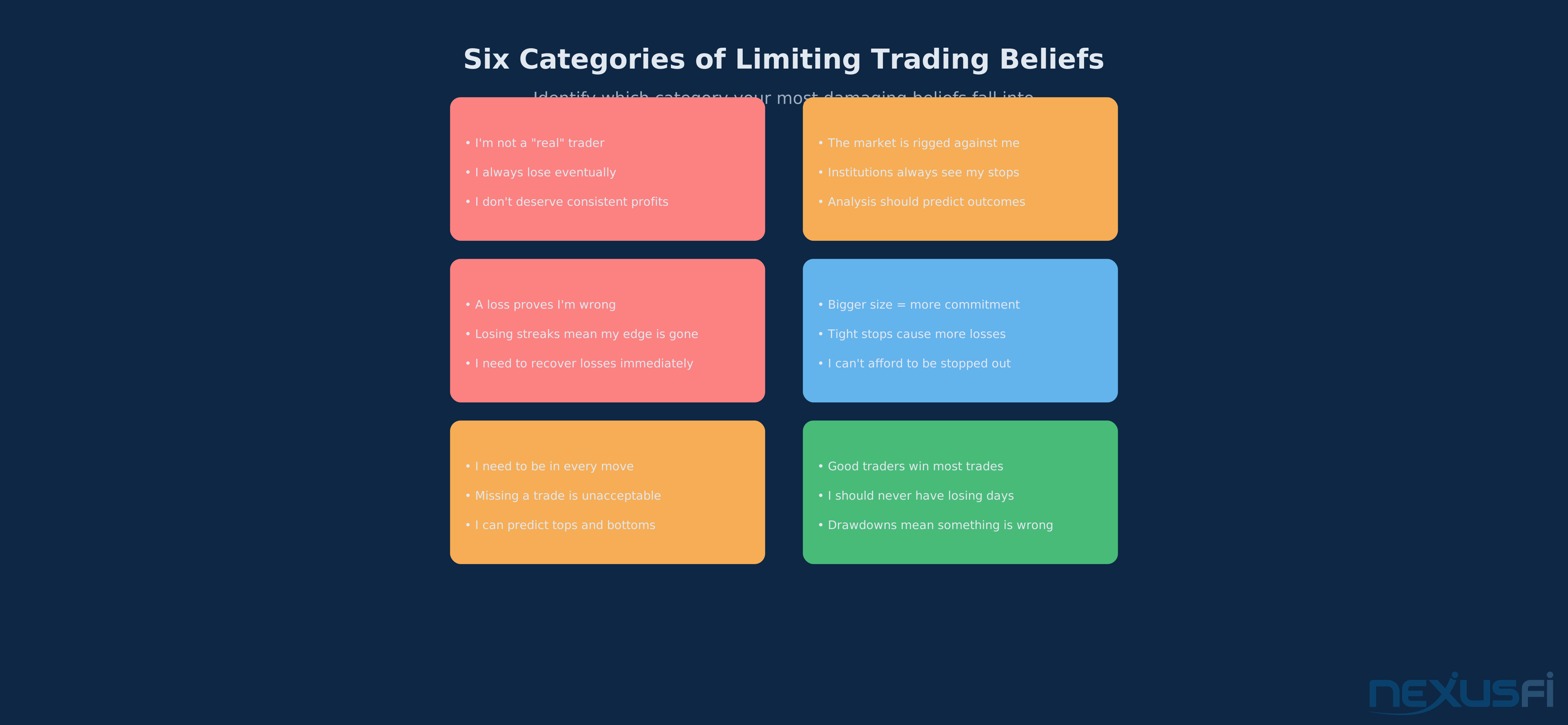
Most traders carry beliefs across multiple categories; identity beliefs are the most damaging because they define what outcomes you believe you're allowed to have.
Beyond Douglas's four fears, trading limiting beliefs can be organized into six functional categories. Most struggling traders carry beliefs from multiple categories simultaneously, which is why targeted work on one belief often doesn't produce lasting change.
Identity beliefs are the most fundamental and most damaging. These define what kind of trader you are: "I'm not a natural trader," "I always eventually give back my profits," "People like me don't make real money in markets." These operate as self-fulfilling prophecies: a trader with an "I always give back gains" belief will systematically create conditions that produce the expected outcome. Identity beliefs are the hardest to change because they feel like simple objective description.
Market beliefs determine how you understand the market as an entity. "The market is rigged against retail traders," "institutions are always hunting stops," "technical analysis doesn't work in modern markets" — these beliefs deflect responsibility for poor outcomes onto market structure — and prevent traders from developing genuine edge because there's always an external explanation for failure.
Loss beliefs determine what losses mean. The healthiest loss belief is: losses are a normal, necessary cost of executing an edge. Common limiting alternatives: "a loss means my analysis was wrong," "consecutive losses mean my system is broken," "I need to recover losses before I can trade properly." These create the same errors at different time scales: stop movement on individual trades, system abandonment after streaks, escalating size to "make back" drawdowns.
Risk beliefs govern position sizing and exposure. Common limiting examples: "bigger size shows I'm serious about the trade," "tight stops cause more losses," "you can't be stopped out of a position that you have conviction in." These produce the most immediately dangerous behaviors — oversizing, stop avoidance, adding to losers — that can destroy an account quickly.
Timing beliefs determine how you relate to opportunity. "I need to be in every significant move," "missing a trade is failure," "I can predict tops and bottoms" — these create overtrading, FOMO entries, and prediction overconfidence that consistently destroy otherwise solid setups.
Performance beliefs define what "good trading" looks like. "Good traders win most of their trades," "I should never have a losing day," "a drawdown means something is at the core wrong" — these reflect a misunderstanding of how edges work and cause traders to treat normal variance as a crisis.
@TropicalTrader, reviewing Douglas's framework after years of trading work: "Your state of mind is a byproduct of your beliefs and attitudes. Winning is a state of mind just like happiness, having fun and satisfaction are states of mind. Taking responsibility is the cornerstone of a winning attitude."
Forum citation: Finally Turning the Corner, the "its 80% Psychology" thing — @TropicalTrader, Psychology and Money Management (2020, 16 thanks)
The Self-Reinforcing Belief Loop #
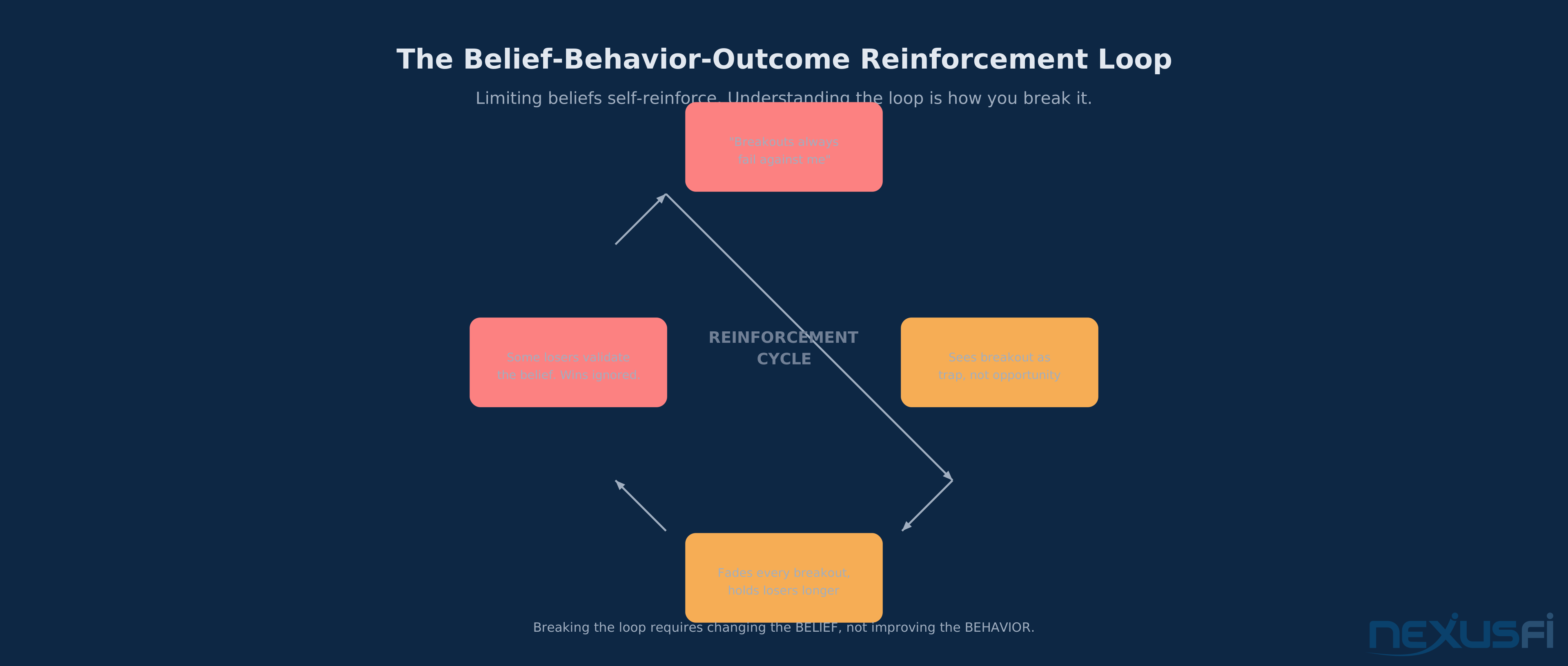
Beliefs shape perception → behavior → belief-confirming outcomes → reinforced belief. Breaking the loop requires intervening at the belief level, not the behavior level.
What makes trading beliefs so persistent is their self-reinforcing structure. Consider a trader with the belief "breakouts against me always fail." This belief generates a perceptual filter that highlights failed breakouts and minimizes successful ones. The behavior adapts: they fade breakouts, skip breakout entries even when their system generates them. These behaviors produce outcomes that confirm the belief — some breakouts do fail, and the ones that worked were skipped. The belief is "proven" again.
This loop explains why behavioral change alone rarely produces lasting improvement. A trader who decides to "take stops properly" without addressing the underlying fear-of-loss belief will succeed temporarily — until a losing sequence activates the belief and the stop gets moved anyway.
Douglas described this mechanism: "WHAT WE ALREADY KNOW WILL BLOCK WHAT WE HAVEN'T LEARNED YET. Once an experience becomes part of our mental environment as a memory, belief, or association, it becomes part of what we consider our identity — and beyond question."
Forum citation: Trading Psychology and How The Mind Works (I) — @George, Psychology and Money Management (2011, 25 thanks)
How to Identify Your Limiting Beliefs: The Belief Audit #
Because beliefs are automatic and feel like objective perception, most traders don't experience them as beliefs — they experience them as "how markets work" or "the kind of trader I am." Finding the beliefs requires working backward from behavior to the underlying assumptions that make the behavior make emotional sense.
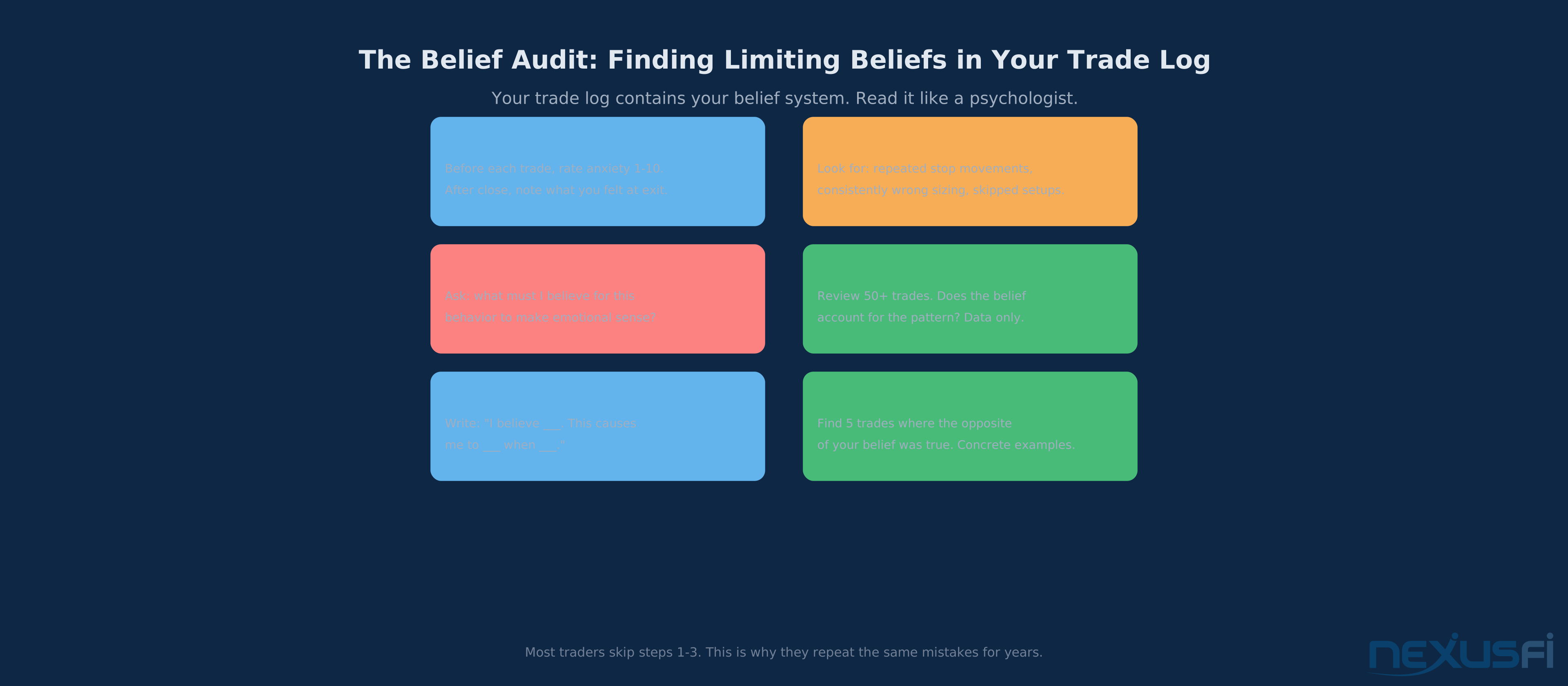
The belief audit finds hidden beliefs in your trade log — step 1 emotional logging is the most critical and most neglected step; most traders skip it and wonder why they don't improve.
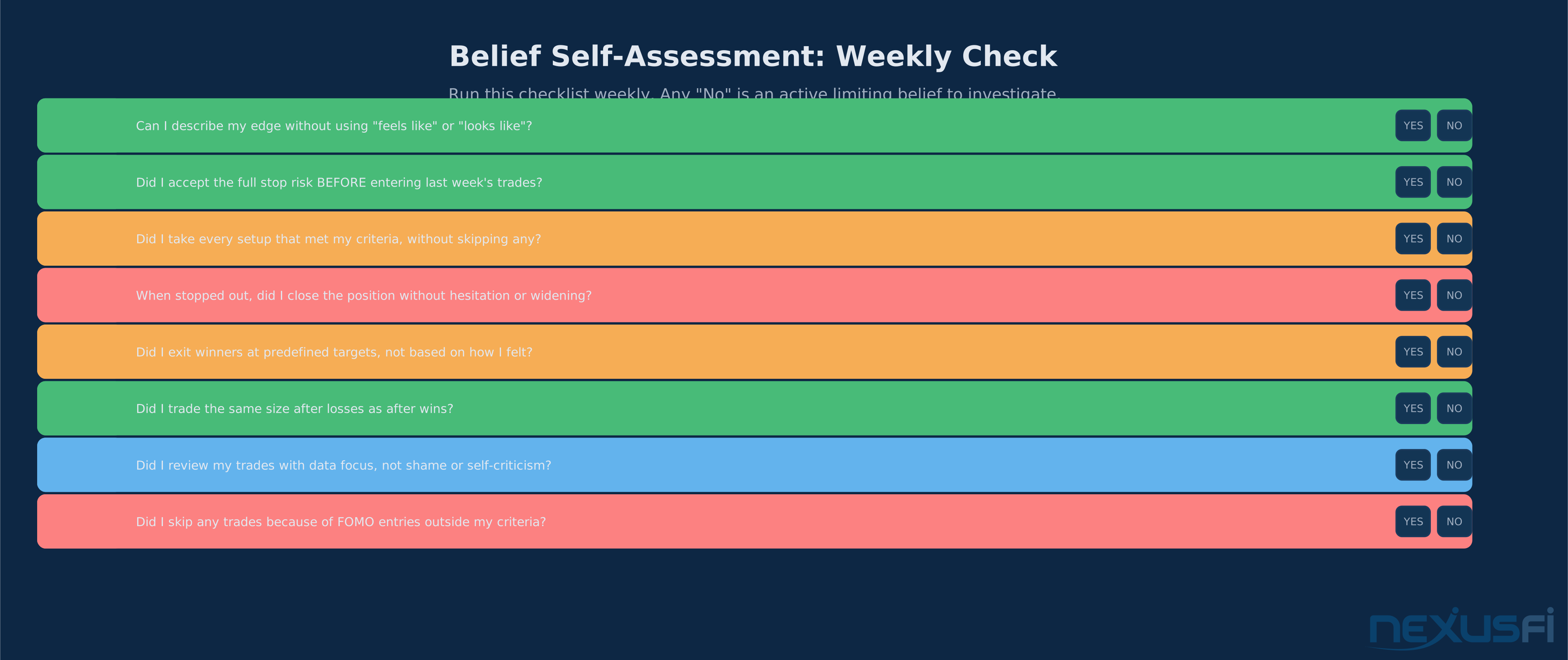
Step 1: Log your emotional state, not just your trades. Most trading journals record entry price, exit price, P&L. They don't record the anxiety rating before entry, the specific feeling at exit, the urge that was fought or acted on. Without this data, the belief audit has nothing to work with. For a minimum of four weeks, log after every trade: what did I feel when I entered? When price moved against me? When I exited? Was there an urge I acted on that contradicted my plan?
Step 2: Identify recurring behavioral patterns. After four weeks, look for patterns: specific setup types where you consistently undersize, market conditions where you skip valid entries, repeated stop movements or early exits. These behaviors are the fingerprints of underlying beliefs. One occurrence is noise; recurring patterns across different conditions are signal.
Step 3: Extract the belief. For each behavioral pattern, ask: what would I have to believe about the market, about myself, or about this situation, for this behavior to make emotional sense? Write the belief in the first person, explicitly: "I believe that..." If you consistently move stops when the trade moves against you, what belief does that behavior express? ("Losses are dangerous and must be avoided at all costs" is the typical extraction.)
Step 4: Test the belief against 50+ trade samples. Take the extracted belief and test it against your actual trading data. If you believe "breakouts always fail against me," count: how many breakout setups did you take in the last 100 trades? What was the actual win rate? Compare it to your overall system win rate. Is the belief descriptively accurate, or is it a story your mind is telling about a small, emotionally salient sample?
Forum citation: Dear Ruby — @rubyslippage, Psychology and Money Management (2013, 13 thanks)
Constructive vs Limiting: The Same Situation, Different Beliefs #
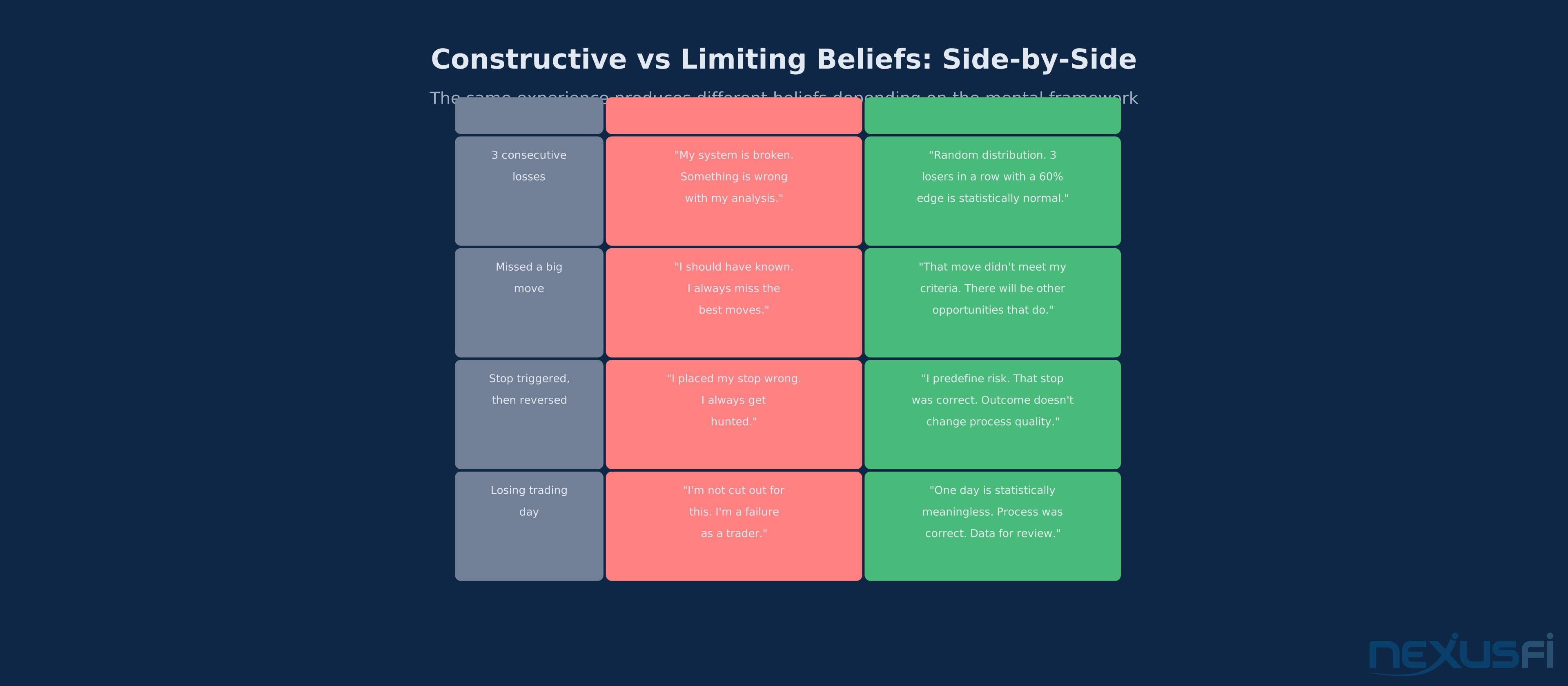
Same trading situation, opposite behavioral responses — the constructive column is not more optimistic than the limiting one, just more accurate to how statistical edges work.
The goal of belief work is not more optimism — it's beliefs more accurate to how probabilistic edge-based trading works. Consistent winners' beliefs aren't positive thinking; they're realistic thinking about randomness and probability.
Consider three consecutive losses. A limiting belief interprets this as: "My system is broken. Something is wrong with my analysis. I need to stop trading until I figure out what changed." A constructive (and more accurate) belief interprets it as: "Three consecutive losses with a 60% win rate system has a 6.4% probability on any given 3-trade sequence. This is statistically normal. My edge requires 50+ trades for statistical validity. Behavior was correct; outcomes were random."
The practical difference: the limiting belief produces system-switching, reduced size, fear-based skipping, and potentially a complete loss of confidence in a working system. The constructive belief produces continued mechanical execution and accurate attribution of the loss streak to normal variance — exactly the kind of probabilistic thinking that Douglas considered the foundation of consistent performance. Over a year of trading, these two responses produce substantially different equity curves: one trader executed their edge consistently, the other repeatedly interrupted it.
Douglas emphasized this point: "If your goal is to trade like a professional and be a consistent winner, then you must start from the premise that the solutions are in your mind and not in the market." The solutions aren't in the market because the market isn't causing the inconsistency — the beliefs are.
Changing Limiting Beliefs: The Three-Stage Process #
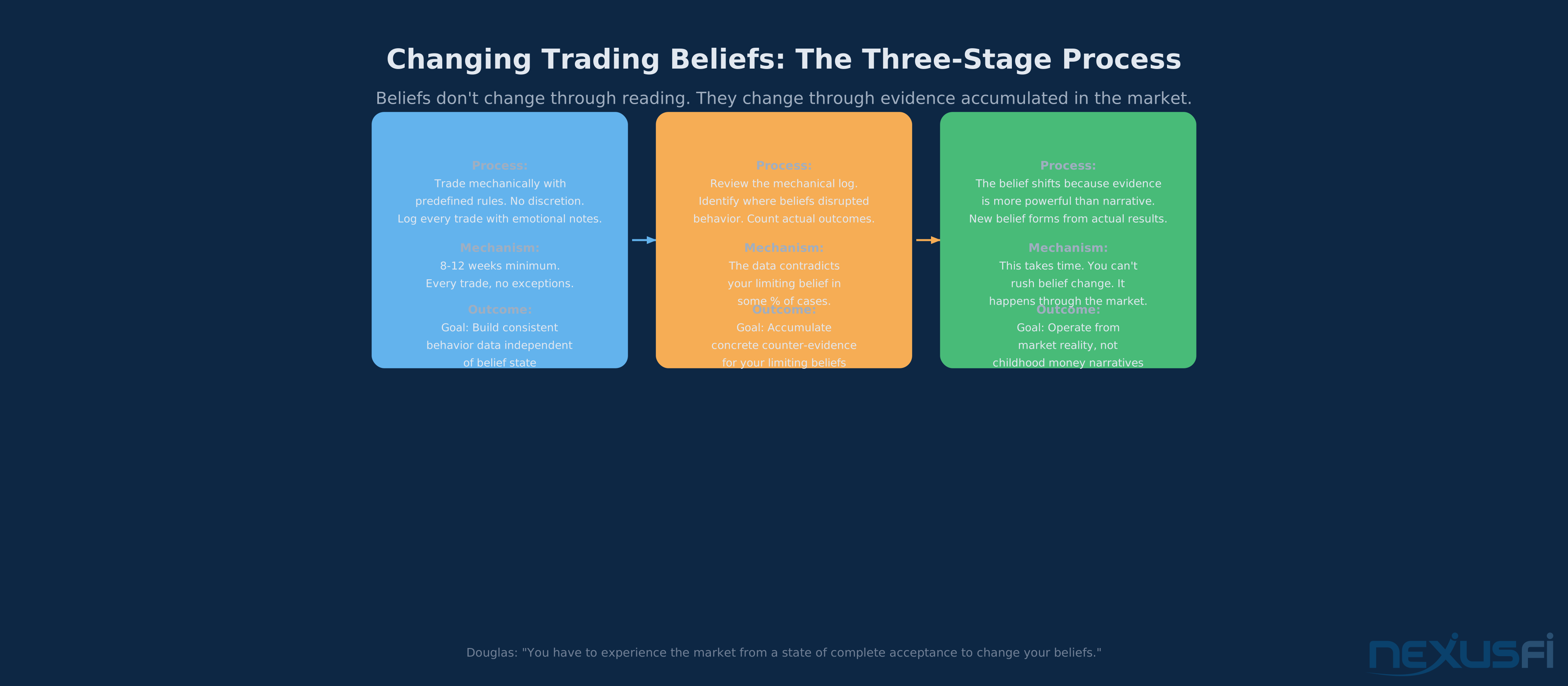
Belief change requires market evidence, not intellectual persuasion: Stage 1 builds behavioral data, Stage 2 finds contradictions to limiting beliefs, Stage 3 integrates when evidence makes the old belief untenable.
Beliefs don't change through reading or intellectual persuasion. You can read Trading in the Zone cover-to-cover and have your limiting beliefs fully intact — because beliefs are stored in emotional memory, not in the intellectual system where reading operates. Belief change requires accumulated evidence gathered through actual trading experience.
Stage 1: Mechanical trading. Trade your system with total mechanical discipline for 8-12 weeks minimum. No discretionary overrides. No skipping setups because they "feel wrong." No sizing deviations from your plan. Every setup that meets criteria gets taken. The purpose is to generate a clean behavioral data set — captured in a detailed trading journal that tracks not just entries and exits but emotional states — that isn't contaminated by belief-driven deviations.
@Cashish, after years of working through exactly this process: "In my own trading, I found if I focused my efforts on controlling my actions instead of controlling my emotions, the intensity of the emotions dropped dramatically. Learning how to lose a predefined amount of risk capital, and closing down my trading station for the day was probably the hardest and most profitable trading skill I've learned."
Forum citation: Trading the 6E Old School, With a Twist — @Cashish, Trading Journals (2012, 22 thanks)
Stage 2: Evidence collection. Review the complete data set for evidence that contradicts your limiting beliefs. If your belief is "my stops always get hit at the worst time," count: what percentage of mechanical stops produced eventual recoveries? You're looking for concrete instances where the belief's prediction was wrong — not to prove it totally wrong, but to show it overstates a partial truth.
Stage 3: Integration. This stage can't be forced or scheduled. It happens as the evidence accumulates to the point where the old belief becomes genuinely untenable — where you've seen enough counter-examples that the automatic fear response starts to decay. This is what Douglas means by "trading from a state of complete acceptance": you've accumulated enough market experience under mechanical conditions that the beliefs generating fear have been replaced by beliefs rooted in actual trading data.
The timeline is real: transforming a limiting belief system typically takes 6-18 months. But traders who report the breakthrough describe it consistently — at some point the fear response stopped being triggered. The trade was taken not by overcoming fear, but by no longer generating it.
The Bottom Line #
Mark Douglas's belief systems framework is uncomfortable for analytically-oriented traders because it relocates the source of trading failure from the market to the trader. It's easier to believe that losses come from bad analysis, wrong indicators, or a rigged system than to accept that the same market information that produced winning trades for someone else produced losses because of what you believe about yourself, about risk, and about what losses mean.
But Douglas's framework is also the most hopeful model available, because it identifies a tractable solution. You can't change the market's structure. You can't eliminate statistical variance. What you can change is your mental environment — the set of beliefs, associations, and self-concepts that determine how you interact with the market's constant stream of probabilistic opportunities.
Forum citation: Notes from The Disciplined Trader — @lovetotrade, Psychology and Money Management (2016, 10 thanks)
That inner environment is your belief system. And unlike the market, it's something you can actually work on.
Knowledge Map
Go Deeper
Build on this knowledgeReferences This Article
Articles that build on this topicCitations
- — Notes from The Disciplined Trader (2016) 👍 10“Your ability to execute your trades is a function of the amount of fear you generate or the lack of it. Fear is always the result of your beliefs about the threatening nature of the environment.”
- — Trading in the Zone -- Mark Douglas (2012) 👍 15“Taking responsibility means believing that all of your outcomes are self-generated; that your results are based on your interpretations of market information, the decisions you make and the actions you take as a result.”
- — Dear Ruby (2013) 👍 13“The solution, he says, is to change your mind, to change the way you think. You've got to eliminate the potential to think that the market's going to disappoint you.”
- — Notes from Trading in the Zone (2016) 👍 16“There's no potential to define, interpret, and therefore perceive any market information from either a painful or euphoric perspective. When you stop making trading errors, you'll begin trusting yourself.”
- — Dear Ruby (2013) 👍 14“Mark Douglas captures the essence of profitable trading with what I like to call The 5 & 7: The 5 Fundamental Truths of Trading. Any individual trade is based on a random distribution of wins and losses.”
- — Finally Turning the Corner, the "its 80% Psychology" thing (2020) 👍 16“The 4 Trading Fears: Fear of losing money, Fear of missing out, Fear of being wrong, Fear of leaving money on the table. Remember that this is a process and usually requires a long time to work through.”
- — Overcoming the Fear of Losing (2022) 👍 18“The real fear is not of losing. It's only disguised as such. What they really fear is failing as a trader. Most people experience a fear of losing almost identical to that of real trading -- until real money is at stake.”
- — Trading Psychology and How The Mind Works (I) (2011) 👍 25“If you're able to trade consistently on a regular basis, then it means that you have a good method/system. If you're not consistent, it means that you're doing something that is sabotaging your consistency -- and that's the psychology.”
- — Dear Ruby (2013) 👍 20“Our beliefs, our feelings, our emotions, cause us to violate our rules. Fear of missing out, jumping the gun, hesitating and chasing, moving stops, averaging down -- all these trading no-nos are most often rooted in beliefs.”
- — Trading the 6E Old School, With a Twist (2012) 👍 22“If a trader has a systematic approach and is still struggling with consistent profitability, focusing on psychology will propel them to where they want to be. Trading is all about risk -- accepting it, managing it, and not letting fear of it distort your decisions.”
- Mark Douglas — The Disciplined Trader: Developing Winning Attitudes (1990)
- Mark Douglas — Trading in the Zone: Master the Market with Confidence, Discipline and a Winning Attitude (2000)