



CFTC Whistleblower Program: How Traders Can Report Market Manipulation and Earn Awards
Overview #
If you have ever watched unusual order-book behavior — a wall of bids that vanishes the moment you try to trade against it, or a pattern of trades that looks designed to paint a price rather than reflect genuine supply and demand — you may have witnessed a violation of the Commodity Exchange Act. What you do with that observation is a choice. The CFTC Whistleblower Program exists to make that choice financially meaningful.
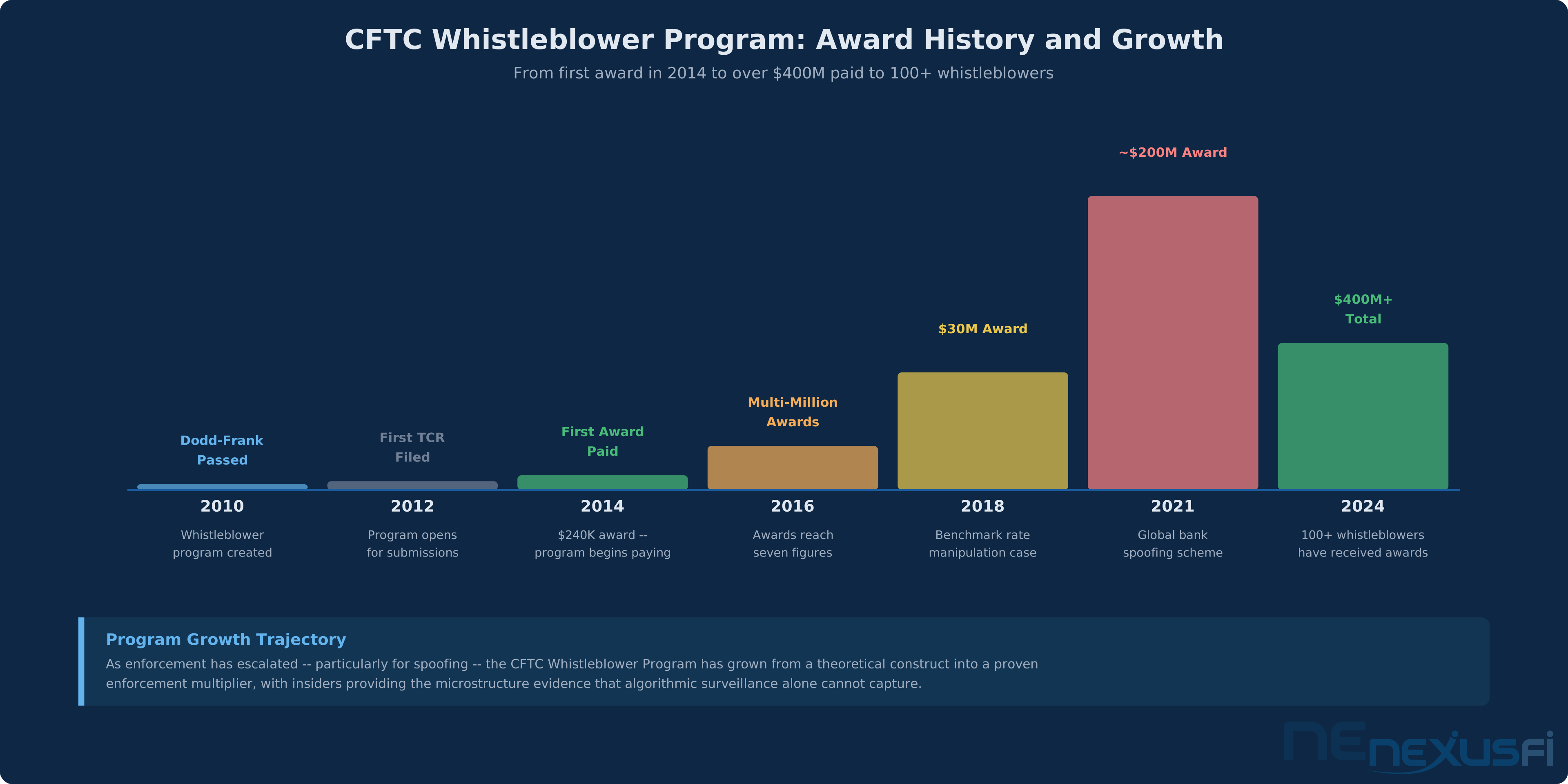
Established under Title VII of the Dodd-Frank Wall Street Reform and Consumer Protection Act of 2010, the program offers cash awards of 10% to 30% of monetary sanctions collected in successful enforcement actions. Since the program's first award in 2014, the CFTC has paid out over $400 million to more than 100 whistleblowers. A single award in 2021 exceeded $200 million — the largest in the program's history — connected to a global bank's spoofing operation in precious metals and Treasury futures markets.
This article explains exactly how the program works, who qualifies, what counts as a reportable violation, how to build and submit a credible tip, and what legal protections exist against employer retaliation. For futures traders who witness manipulation in their markets, this knowledge is as operationally important as understanding margin rules or position limits.
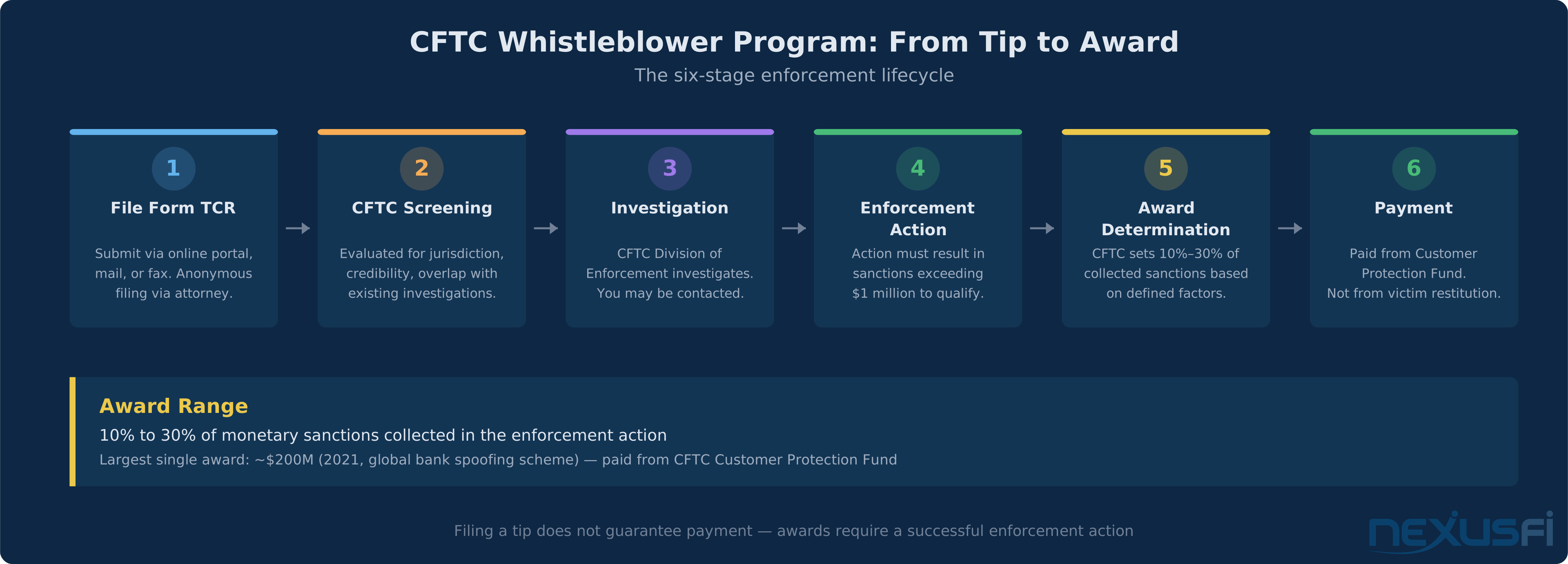
:::chart /a/images/fada11d6-89ed-45b4-810d-d1a3cae63ed9.svg CFTC Whistleblower Program: the six-stage process from Form TCR submission to award payment, including the $1 million minimum enforcement threshold :::
What Is the CFTC Whistleblower Program? #
The CFTC Whistleblower Program is a formal enforcement mechanism administered by the CFTC's Whistleblower Office within the Division of Enforcement. Its purpose is to surface violations of the Commodity Exchange Act (CEA) that would otherwise remain hidden — especially in complex electronic markets where surveillance technology has inherent limitations.
Unlike a customer complaint line, the program is an evidentiary channel. Whistleblowers do not simply report grievances; they provide original information that helps enforcement staff build cases. The distinction matters because award eligibility is tied to the outcome of an enforcement action, not the quality of your initial tip in isolation.
The program sits within the same enforcement framework described in the Academy article on CFTC and NFA regulation — it is one of the primary ways the Division of Enforcement receives information about violations that exchange surveillance systems and routine examination cannot detect.
Governing Framework #
The program operates under:
- Section 23 of the Commodity Exchange Act — the statutory foundation, added by Dodd-Frank
- CFTC Part 165 Rules — the implementing regulations governing the program
- CFTC Customer Protection Fund — the source of award payments, funded from penalties collected in enforcement actions
The Customer Protection Fund is maintained separately from the monetary sanctions paid to victims. This is a critical design feature: whistleblower awards do not come out of victim restitution, and paying an award does not reduce what aggrieved traders receive.
The program is distinct from customer complaints. Filing a Form TCR is not a way to report a dispute with your broker or seek a refund. It is an intelligence channel for potential enforcement actions. Customer disputes go through NFA arbitration or CFTC reparations proceedings.
How the Program Works: Process Lifecycle #
Understanding the six-stage lifecycle helps manage expectations. Many traders assume that filing a Form TCR automatically triggers an investigation or a payment. Neither is guaranteed.
Stage 1: Filing Form TCR #
Everything begins with a Form TCR (Tip, Complaint, or Referral), submitted through one of three channels:
- Online portal: The CFTC's electronic submission system at whistleblower.cftc.gov
- Mail: Send to the CFTC Whistleblower Office in Washington, D.C.
- Fax: A less common option but explicitly permitted
Anonymous filing is available, but it requires an attorney to submit on your behalf and serve as the communication intermediary. More on anonymity mechanics in a later section.
The TCR asks for:
- Your relationship to the information (employee, market observer, counterparty, etc.)
- Specific identification of the suspected violation
- The commodity, futures contract, exchange, or other instrument involved
- Timeframes and key events
- Supporting documentation (attached or referenced)
- Names and identifying information of persons or entities involved, to the extent known
Stage 2: CFTC Screening #
The Whistleblower Office reviews submissions for:
- Jurisdictional fit: Does this fall under the CEA and CFTC enforcement authority?
- Specificity and credibility: Is the information detailed enough to investigate?
- Overlap: Does this duplicate existing investigations or previously reported matters?
- Originality: Is this information new, or already known to the CFTC?
Tips that pass screening move to the Division of Enforcement for consideration. Tips that do not pass may still be retained and referenced if supporting information arrives later.
Stage 3: Investigation #
If your tip is viable, it feeds into an enforcement investigation. This stage can take months or years. The CFTC may contact you — through your attorney if you filed anonymously — for follow-up information, clarification, or testimony.
Your cooperation at this stage directly affects your award percentage. Whistleblowers who actively assist investigators, respond promptly to requests, and provide additional evidence as the case develops are rewarded at higher percentages within the 10%--30% range.
Stage 4: Enforcement Action #
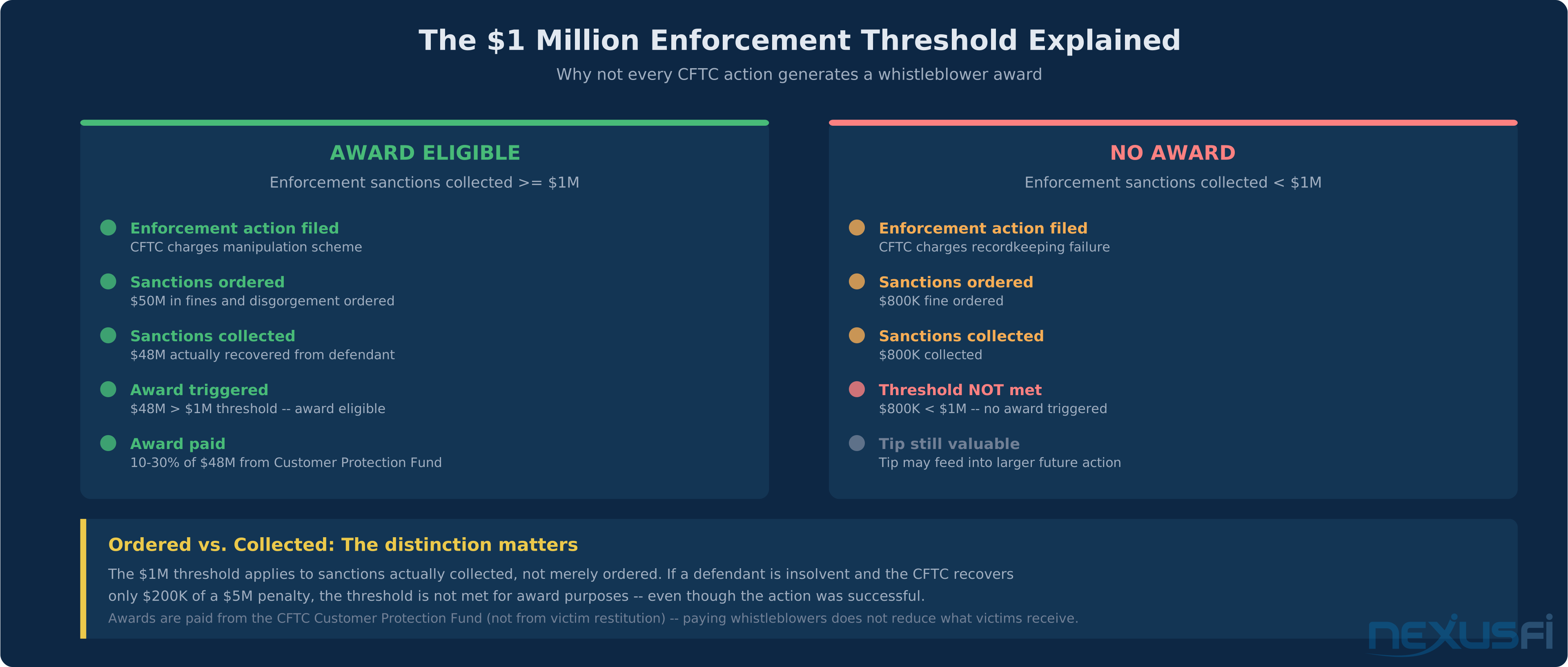
An enforcement action must be filed and resolved, resulting in monetary sanctions exceeding $1 million. This threshold is calculated on collected sanctions, not ordered sanctions. The CFTC cannot always collect 100% of an ordered penalty — if the respondent is insolvent, actual collections may fall short. Award eligibility is triggered by the $1 million collection threshold, not the amount originally ordered.
Stage 5: Award Determination #
After a successful enforcement action, the Whistleblower Office publishes a Covered Action Notice in the CFTC's case list. Whistleblowers have 90 days from the notice to file a Form WB-APP (Application for Award). If you filed an anonymous tip through an attorney, this is when your identity is disclosed to the CFTC.
The CFTC evaluates each award application against the statutory factors and sets a percentage. The preliminary determination can be challenged through an internal review process, and ultimately through a federal Court of Appeals if the challenger pursues further review.
Stage 6: Payment #
Awards are paid from the Customer Protection Fund. If the enforcement action involved shared contributions from multiple agencies (for example, the DOJ and CFTC in a joint investigation), award calculations may incorporate sanctions from related actions at other agencies, subject to specific rules.
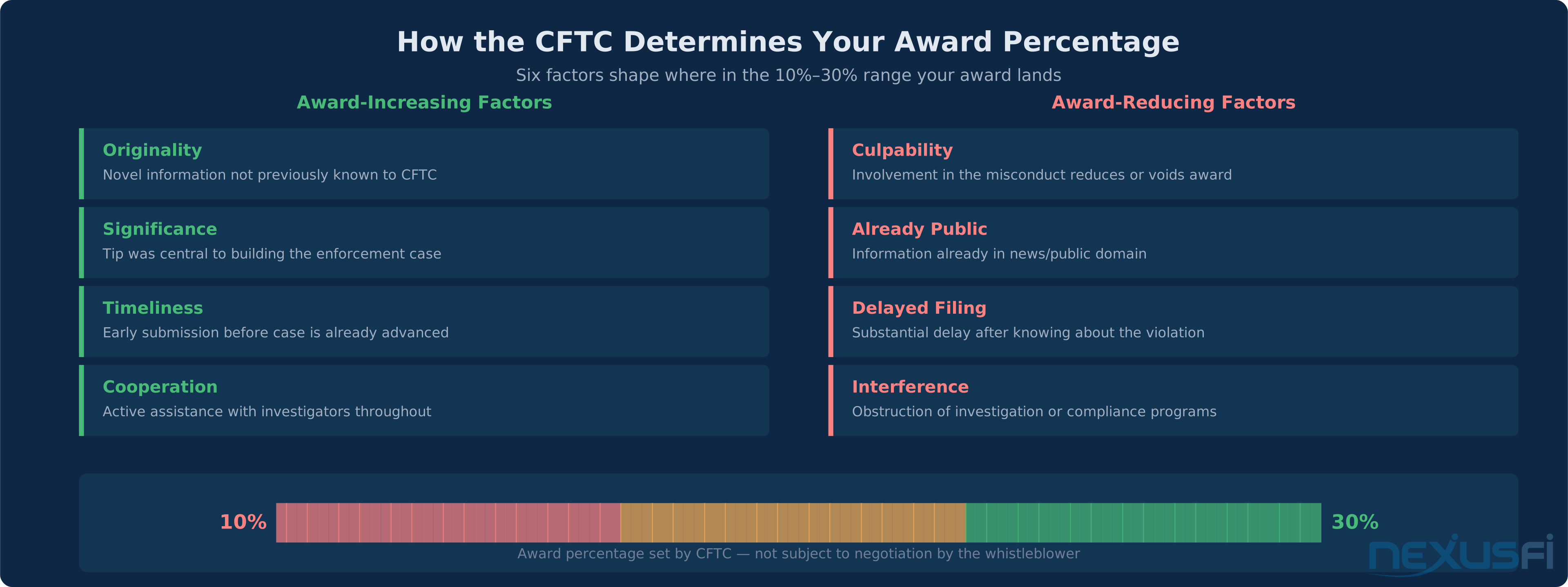
:::chart /a/images/a0002898-a9d5-4c48-889f-2ffa217b195b.svg Six factors that shift award percentage toward 30% (originality, significance, timeliness, cooperation) versus toward 10% (culpability, delayed filing, interference) :::
Award Structure: What Determines Your Percentage #
The program offers a mandatory range of 10% to 30% of collected sanctions. The CFTC cannot award below 10% or above 30% — these are statutory floors and ceilings. Within that range, six primary factors govern the determination.
Factors That Increase the Percentage #
Originality: Information that is truly novel — not previously known to the CFTC, not publicly available, not derivable from public sources — commands the highest consideration. A tip built from independent analysis of trading data that reveals a pattern investigators could not have found on their own is maximally original.
Significance: Was your tip central to building the enforcement case, or did it merely confirm what was already suspected? Tips that provide the critical link investigators needed — the communication logs that showed intent, the account relationships that explained the coordination — receive higher weight.
Timeliness: Submitting early in the violation's lifecycle, before the scheme has concluded and before other evidence has emerged, is rewarded. Late submissions — even with accurate information — score lower on timeliness.
Degree of cooperation: Active, ongoing assistance through the investigation, including responding to follow-up requests, testifying if needed, and providing additional materials as they emerge, increases the award percentage.
Factors That Decrease the Percentage #
Culpability: This is the most consequential factor. If you participated in the misconduct — even peripherally — your award can be reduced much or eliminated. A trader who knowingly benefited from manipulated prices before reporting the scheme is in a very different position than one who observed it from the outside.
Already public information: Tips based entirely on information already available in press reports, SEC or CFTC dockets, or other public sources receive little or no award premium. The program compensates original intelligence.
Delayed filing: The CFTC considers whether the whistleblower delayed filing despite knowing about the violation. Unexplained long delays after learning of violations reduce the award.
Interference with compliance: Whistleblowers who obstructed internal compliance programs, threatened colleagues not to report, or otherwise interfered with detection mechanisms face reduced awards.
Notable Historical Awards #
| Year | Amount | Context |
|---|---|---|
| 2014 | $240K | First award paid under the program |
| 2018 | $30 million | International benchmark interest rate manipulation |
| 2019 | $3 million | Spoofing in precious metals futures |
| 2021 | ~$200 million (shared) | Global bank's multi-year spoofing scheme in precious metals and Treasury futures |
The 2021 award is especially instructive: it was shared among multiple whistleblowers who each contributed distinct pieces of a larger pattern. Awards can be split among several parties whose tips together formed the evidentiary foundation of a case.
:::chart /a/images/901adc95-f545-4fcd-8968-4acd475b00bc.svg CFTC Whistleblower Program award history from 2010 to 2024: from program creation through first award to over $400M paid out to 100+ whistleblowers :::
Eligibility: Who Can and Cannot File #
Generally Eligible #
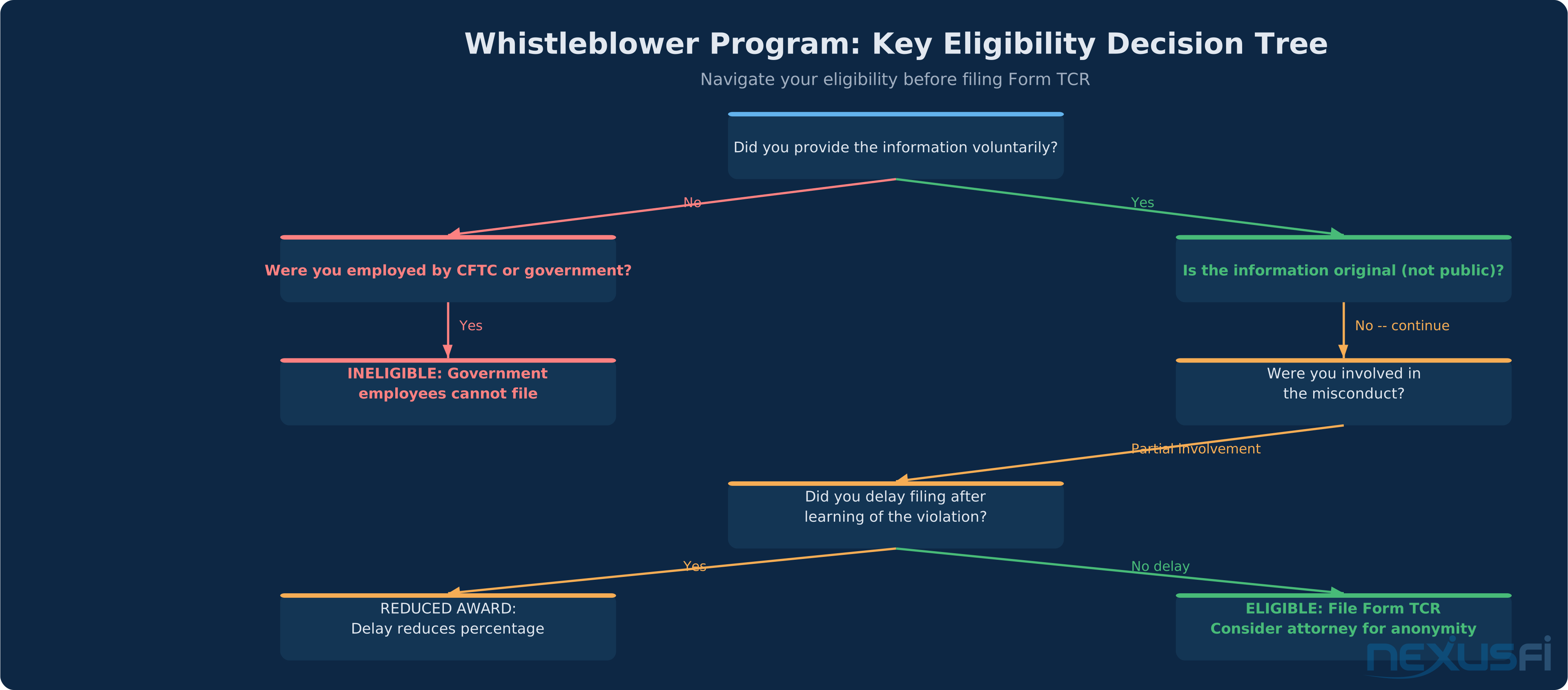
:::chart /a/images/a5748e48-6ea6-40a1-a892-d72968c079f6.svg Whistleblower eligibility decision tree: work through voluntary provision, government employment, information originality, and personal involvement to determine award eligibility ::: Any natural person who provides original, voluntary information about a CEA violation. "Voluntary" means you provide the information before receiving any request from the CFTC, the DOJ, or any other law enforcement body. Entity-level submissions (e.g., from a trading firm) are generally not eligible.
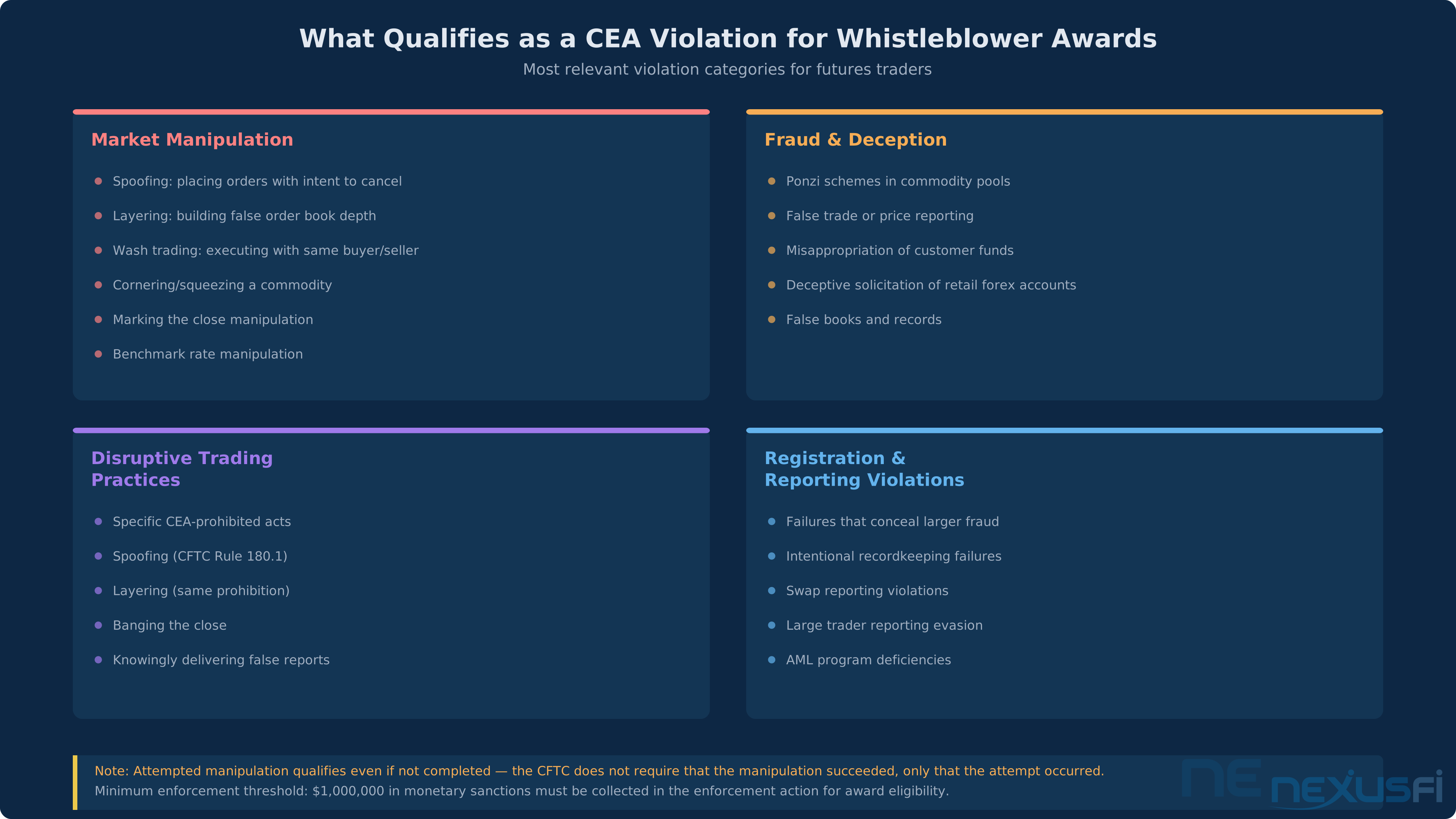
:::chart /a/images/30bf0879-0fcc-4fe4-82f7-96c25a43737c.svg Violation categories that qualify for whistleblower awards: market manipulation, fraud, disruptive trading practices, and reporting violations :::
Generally Ineligible #
CFTC employees and regulators: Individuals employed by the CFTC or any other federal, state, or foreign government entity in a capacity relating to the tip are ineligible.
Compliance and audit professionals: Persons who learn of violations through their employment in compliance, audit, risk management, or legal roles are generally ineligible, unless specific exceptions apply — such as when they have a reasonable basis to believe the firm's internal compliance is inadequate, the firm is impeding investigation, or a defined period has elapsed without the firm acting.
Persons with related convictions: Individuals convicted of crimes related to the violation being reported are ineligible.
Persons under investigation: If you are already a subject or target of the same enforcement action you are reporting, eligibility is much constrained or eliminated.
The Culpability Problem #
The most complex eligibility issue arises when a trader was involved in the misconduct before deciding to report. Involvement does not automatically bar award eligibility — the program is designed to incentivize insiders with knowledge unavailable to outsiders — but it triggers serious analysis. Award amounts can be dramatically reduced, and depending on the nature of your involvement, reporting could accelerate your own prosecution.
If you have any personal exposure to the conduct you are reporting, retain a securities/futures attorney before filing. This is not a generic legal disclaimer; it reflects the reality that the same report can simultaneously be your protection and your risk depending on how it is framed. Self-involvement can void eligibility entirely or dramatically reduce the award.
What Qualifies as a Violation #
Market Manipulation: The Core Category #
The CEA prohibits manipulation in its various forms, and manipulation-related tips account for the largest and highest-profile awards.
Spoofing is the most common subject of recent enforcement. The CEA explicitly prohibits "bidding or offering with the intent to cancel the bid or offer before execution." The behavioral signatures, enforcement history, and regulatory framework for spoofing are covered in depth in the Academy's Spoofing and Layering in Futures Markets article, which includes the specific order-flow patterns that regulators use to distinguish legitimate cancellations from prohibited spoofing.
When forum members have noted unusual order-book behavior — walls of offers disappearing the moment a large buy order approaches, or buy pressure evaporating precisely as sellers take action — they are often observing the pattern that has been at the center of CFTC enforcement actions.
On NexusFi, a member noted a specific CFTC case:
[cite url="https://nexusfi.com/showthread.php?t=34295&p=530215#post530215" author="ron99" post_date="Oct 20, 2015" post_id="530215"]
The case that citation references — CFTC action against trader Igor Oystacher and his firm 3 Red Trading LLC — is an example of spoofing enforcement in ES and other futures markets. The CFTC used internal exchange data to document the pattern: large layered orders on one side designed to move the price, then canceled before execution while the trader profited on the other side.
Wash trading involves executing trades between accounts that are effectively under common control, creating artificial volume without genuine economic risk transfer. The prohibited patterns and regulatory history are covered in the Academy's Wash Trading Rules in Futures Markets article. The regulatory prohibition against wash trading exists because artificial volume misleads other market participants about genuine liquidity.
Cornering and squeezing involve establishing control over a commodity's supply or delivery mechanism to coerce prices — the classic corner play that has been prohibited since the CEA's origins.
Benchmark manipulation targets the rate-setting processes for financially settled instruments. The 2018 whistleblower award involved manipulation in this category.
Attempted Manipulation #
A critical nuance: attempts to manipulate qualify even if the manipulation failed. A trader who places a spoofing order pattern but cancels too slowly and actually gets filled has still attempted the prohibited act. The enforcement theory does not require that the market was actually moved or that other traders suffered measurable harm.
[cite url="https://nexusfi.com/showthread.php?t=4890&p=486908#post486908" author="SMCJB" post_date="Apr 1, 2015" post_id="486908"]
Fraud in Commodity Pools and Retail Forex #
Ponzi structures in commodity pools — where pool operators use new investor capital to pay returns to older investors while concealing losses — are a historically significant enforcement category. These are often detectable only from inside the operation, making whistleblowers essential.
Retail forex fraud is another major category, especially schemes involving fake account statements, misrepresentation of returns, or trading in customers' accounts contrary to their instructions.
Serious Recordkeeping Violations #
Not every reportable violation involves a dramatic manipulation scheme. Intentional recordkeeping failures, especially when structured to conceal a larger fraud, can qualify. The operative question is whether the violation would support a successful enforcement action meeting the $1 million threshold.
:::chart /a/images/0c2c47f1-6daa-47d8-b09e-46818fa44baf.svg The $1 million enforcement threshold: how ordered sanctions versus collected sanctions determine award eligibility, and why defendant insolvency matters :::
How to Report: Building a Credible Tip #
The difference between a tip that generates a $50 million award and one that receives no follow-up often comes down to documentation discipline.
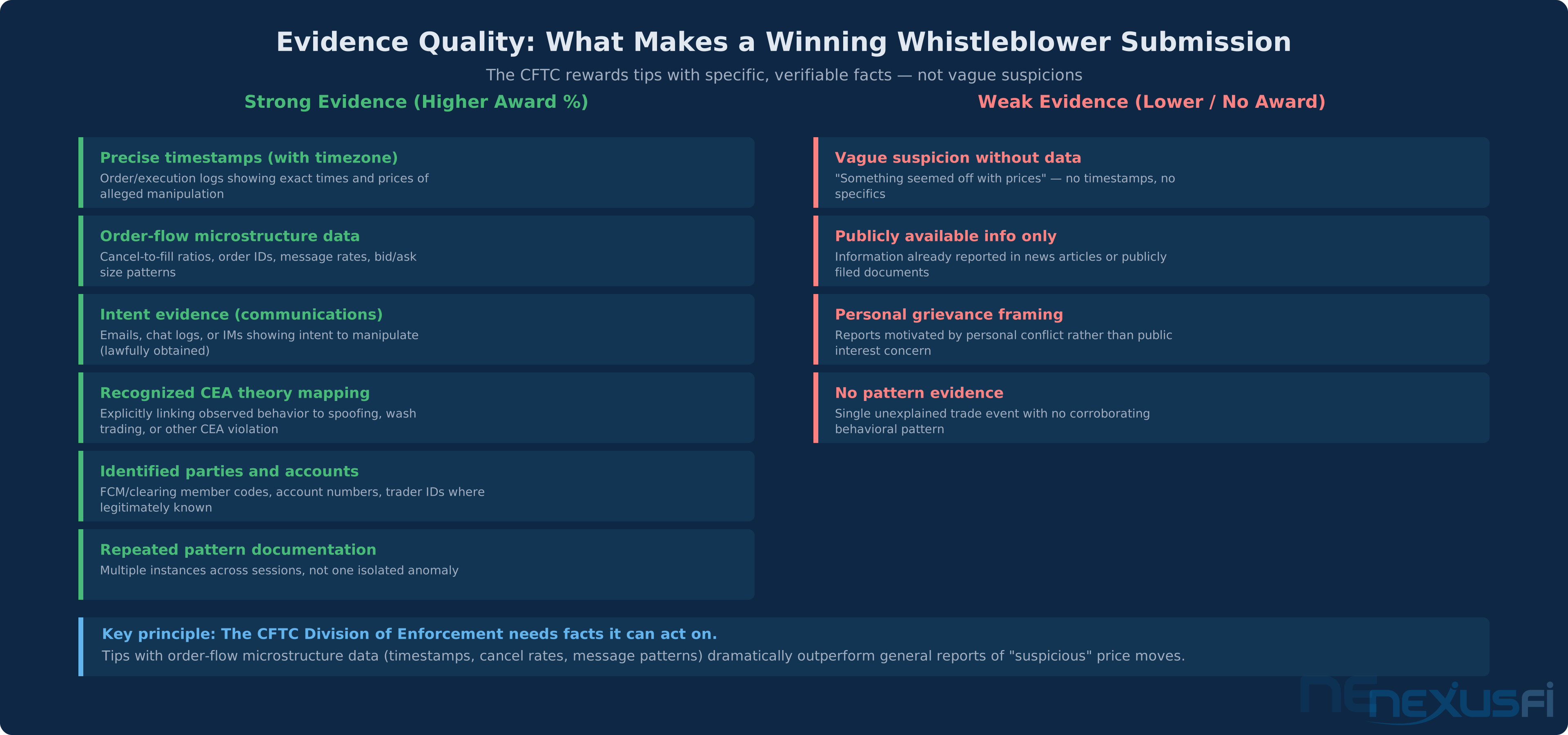
:::chart /a/images/b55ea083-bc71-4c02-87b9-7847c1b0c91b.svg Evidence quality spectrum: microstructure data, timestamps, and documented intent patterns versus vague suspicion or publicly available information :::
What Makes a Strong Submission #
Specific instruments and venues: Identify the exact futures contract (e.g., E-mini S&P 500 futures, March 2022 contract), the exchange (CME), and if relevant the specific trading session or time.
Precise timestamps: Include timestamps down to the millisecond if available, and specify the time zone explicitly. CFTC enforcement staff work with exchange-timestamped order data; your tip gains credibility when your timestamps align with what they can independently verify.
Order-flow microstructure details: The most powerful tips describe patterns in terms of:
- Cancel-to-fill ratios (a spoofer may cancel 97%+ of orders placed)
- Order message rates (frequency of order placement and cancellation)
- Order size distribution (large layered orders on one side, small execution on the other)
- Timing relationships (how quickly orders are canceled after execution occurs on the opposite side)
If you have access to Level 2 or order book data, document the visual pattern. NexusFi's trading community has significant experience reading order flow anomalies, and members who can articulate the specific behavioral signature of manipulative patterns are providing exactly the kind of specialized insight that investigators can use.
The Market Surveillance and Trade Compliance article covers how exchange surveillance systems work — understanding those systems helps you recognize what evidence investigators will find most useful to supplement their automated detection.
Intent evidence: If you have direct knowledge of communications — emails, instant messages, voice recordings of trading desk conversations — that show intent to place orders without intention of execution, that evidence is critical. The key qualifier is that it must be lawfully obtained. Evidence collected by hacking systems, recording conversations in two-party consent states without consent, or stealing documents is inadmissible and may expose you to liability.
Recognized CEA theory: Map your observations to a specific violation. "The trader was spoofing because the order-to-cancel ratio was above 95%, orders were placed at prices between the inside bid and ask to maximize visibility without execution risk, and the pattern repeated across 47 trading sessions" is actionable. "Something weird happened with prices" is not.
Party identification: If you legitimately know the account numbers, clearing member codes, or FCM identifiers involved, include them. If you know only what you observed as a counterparty, document what you observed without speculation about attribution.
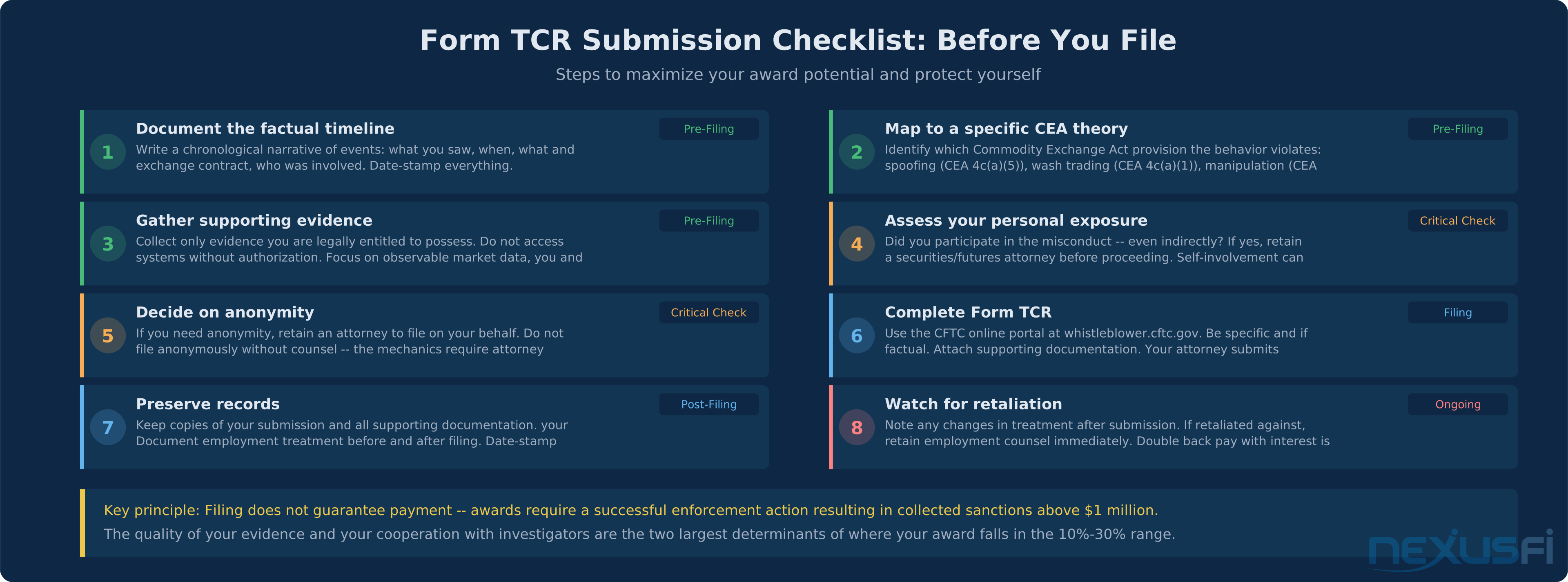
:::chart /a/images/69c8c5c1-97a7-4fed-9f40-cfa52e40c1a9.svg Form TCR submission checklist: eight steps from documenting the timeline through post-filing record preservation and retaliation monitoring :::
What to Avoid #
Speculation: Describe what you observed, not what you believe the perpetrator intended unless you have direct evidence of intent. CFTC staff will draw their own inferences from the behavioral evidence.
Unlawfully obtained evidence: The program does not provide cover for hacking, unauthorized system access, or illegal recording. Evidence collected unlawfully creates problems for both you and the investigation.
Conclusions without evidence: "This was definitely spoofing" is less useful than "orders on the bid side had a cancel rate of 96.3% while the trader simultaneously accumulated a net short position of X contracts." Let the behavioral facts speak.
Anonymous Reporting: How It Works #
The CEA whistleblower provisions explicitly permit anonymous submissions, but with important mechanics.
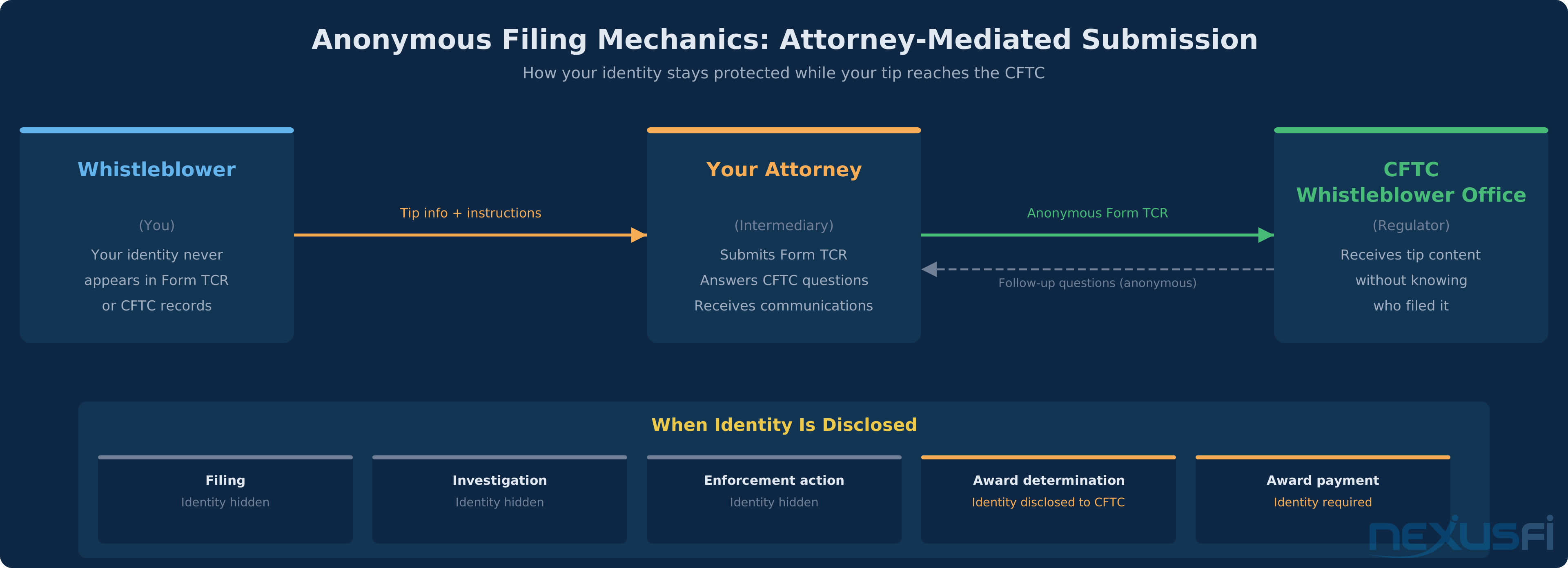
:::chart /a/images/1a8206eb-519f-4c77-95dc-001bdedadd52.svg Anonymous filing mechanics: how attorney-mediated submission protects the whistleblower's identity through the investigation phase until award determination :::
Attorney-Mediated Anonymity #
To maintain anonymity, you must be represented by an attorney who submits the Form TCR on your behalf. The attorney's contact information appears on the form; your name does not. All CFTC communications go through the attorney, who answers substantive questions without revealing your identity.
This structure preserves anonymity through the investigative and enforcement stages. Your identity is not disclosed to the CFTC until an award determination is being made — at that point, you must reveal yourself to actually receive the payment.
[cite url="https://nexusfi.com/showthread.php?t=41383&p=620837#post620837" author="tpredictor" post_date="Jan 12, 2017" post_id="620837"]
Limits of Anonymity #
"Anonymous" means protected from public disclosure, not permanent secrecy. Consider:
- If the enforcement action involves formal discovery proceedings, your identity may become discoverable
- If you are a witness in a criminal referral to the DOJ, anonymity has different parameters
- If the perpetrator is sophisticated and the information is highly specific to your vantage point, your identity may be inferable even without formal disclosure
Treat attorney-mediated anonymity as strong protection against casual or inadvertent disclosure — not as a guarantee that your identity can never be ascertained under any circumstances.
Practical Anonymity Strategy #
If you need anonymity: retain an attorney who specializes in whistleblower cases before you file anything. Do not discuss your intentions with colleagues. Do not submit any documentation that uniquely identifies your specific position or workstation. Preserve all records of your submission and subsequent communications in a location that is not subject to your employer's monitoring.
Retaliation Protections: What the Law Provides #
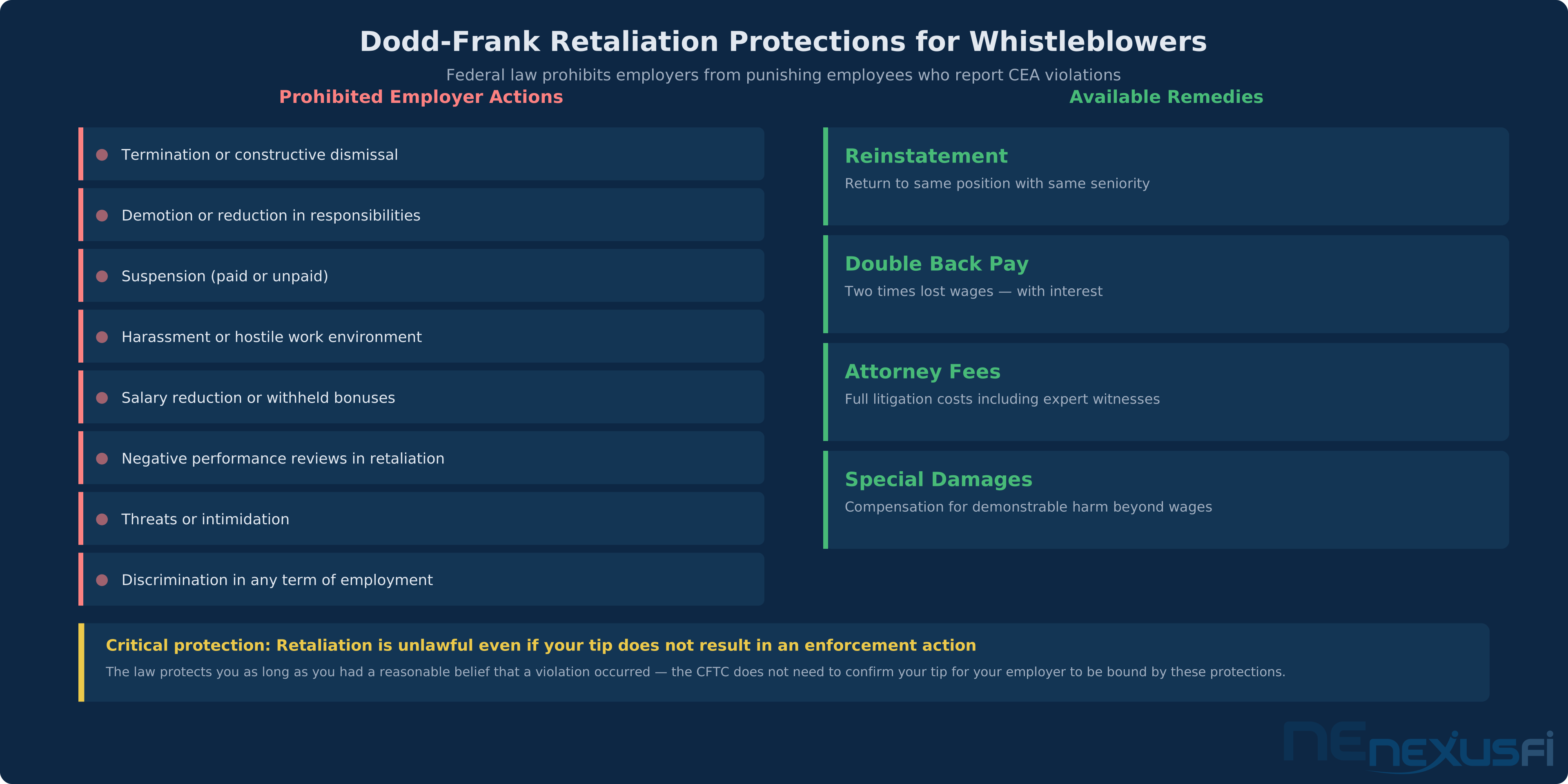
Section 23(h) of the CEA makes it unlawful for any employer to retaliate against a whistleblower who engages in protected activities. The prohibition is extensive.
:::chart /a/images/7ea8e288-5e23-4f0e-bb40-c62c73f726c9.svg Dodd-Frank retaliation protections: prohibited employer actions and the remedies available to whistleblowers who face retaliation :::
What Employers Cannot Do #
Protected whistleblowers cannot legally be subjected to:
- Termination or constructive dismissal (creating working conditions designed to force resignation)
- Demotion or reduction in job responsibilities
- Suspension, paid or unpaid
- Salary reduction or withheld bonuses
- Negative performance reviews in retaliation for the report
- Harassment or creation of a hostile work environment
- Any other adverse employment action
The statute covers direct employers, supervisors acting within the scope of employment, and third parties acting at an employer's direction.
Available Remedies #
Whistleblowers who experience retaliation can pursue:
Reinstatement: Return to the same or equivalent position with no diminution in seniority, status, or benefits.
Double back pay with interest: Two times the lost wages, calculated from the date of the adverse action through reinstatement or final judgment.
Attorney fees and costs: Full recovery of litigation expenses, including expert witness fees.
Special damages: Compensation for non-wage harm such as reputational damage, emotional distress, or career disruption, in appropriate circumstances.
The "Reasonable Belief" Standard #
This is one of the most important nuances in the retaliation protection framework: protections apply even if your tip turns out to be wrong, as long as you had a reasonable belief that a violation occurred at the time you reported it.
You do not need to be correct about the law. You do not need to be right about the facts. You need to have genuinely and reasonably believed, based on what you knew at the time, that you were witnessing a violation of the CEA. This standard provides meaningful protection for good-faith reporters who interpret ambiguous behavior as manipulative even when investigators ultimately disagree.
The Dodd-Frank context: The whistleblower provisions were part of the same reform package that mandated central clearing for swaps and created the CFTC's expanded oversight of swap dealers. The full scope of those reforms is covered in the Dodd-Frank Act and Futures Trading article.
[cite url="https://nexusfi.com/showthread.php?t=39648&p=577958#post577958" author="Cloudy" post_date="Jun 13, 2016" post_id="577958"]
Practical Steps When Retaliation Occurs #
- Document the timeline of every adverse employment action with specific dates and descriptions
- Note any meetings, communications, or changes in treatment that follow your report
- Preserve records in a personal location not subject to employer access
- Retain an employment attorney who specializes in whistleblower or securities law
- Do not resign without legal advice — constructive dismissal claims are available but require evidence of the employer's intent to force departure
The Career Calculation #
The most technically qualified traders to report manipulation are often insiders — people working at trading desks, at brokers, at clearing firms, or in positions where they can see the full behavioral pattern. Those same people face the most complex personal calculations.
Even with strong statutory protections, the practical reality of whistleblowing in a specialized industry involves career risks that no statute fully addresses. You may be technically protected against termination but find that employment opportunities in your sector narrow after you become known as a whistleblower. Industry relationships matter in trading, and those relationships can be affected regardless of legal protections.
The cases that have generated the largest awards typically involved insiders — people with access to the full picture of a manipulation scheme that could not be assembled from outside. The 2021 $200 million award case, involving a global bank's precious metals and Treasury futures spoofing operation, required insiders who could identify not just the trading patterns but the internal communications that established intent.
The connection between the whistleblower program and position limit regulations is worth noting here: large trader reporting requirements create an audit trail that investigators can use alongside whistleblower tips to reconstruct manipulative schemes. Understanding what data regulators already have helps you frame your tip around what they are missing.
[cite url="https://nexusfi.com/showthread.php?t=13452&p=491060#post491060" author="SMCJB" post_date="Apr 21, 2015" post_id="491060"]
The Sarao case illustrates the range of actors who may be positioned to observe and report violations. Sarao operated from a suburban home outside London, placing and canceling large orders in E-mini S&P 500 futures to move prices. It was not a high-frequency firm with co-located infrastructure; it was a single trader executing a pattern that market participants found observable and eventually reportable.
Key Takeaways #
- The CFTC Whistleblower Program offers 10%--30% of collected sanctions (minimum $1M enforcement threshold) to individuals who provide original information leading to successful enforcement actions
- The largest award exceeded $200 million (2021); total program payments exceed $400 million to date
- Form TCR is the submission vehicle; anonymous filing is available through attorney representation
- Spoofing, wash trading, fraud, and benchmark manipulation are the most common qualifying violations for futures traders
- Evidence quality determines award size: order-flow microstructure data, precise timestamps, and documented intent evidence vastly outperform vague suspicions
- Retaliation protections are extensive and apply even if the tip turns out to be factually incorrect, as long as the whistleblower had a reasonable belief a violation occurred
- Personal exposure assessment is mandatory before filing — consult a securities/futures attorney if you have any involvement in the misconduct or need to preserve anonymity
The CFTC Whistleblower Program does not eliminate the personal risks of reporting. What it does is make the decision financially meaningful and legally protected for those who choose to report genuine misconduct they have observed in the markets.
Knowledge Map
Go Deeper
Build on this knowledgeReferences This Article
Articles that build on this topicCitations
- — NexusFi Discussion (2015) 👍 3
- — NexusFi Discussion (2015) 👍 3
- — NexusFi Discussion (2015) 👍 12
- — NexusFi Discussion (2016) 👍 3
- — NexusFi Discussion (2017) 👍 5
- — NexusFi Discussion (2013) 👍 2