



Market Surveillance and Trade Compliance: How Futures Exchanges Police the Order Book and What It Means for Your Trading
Overview #
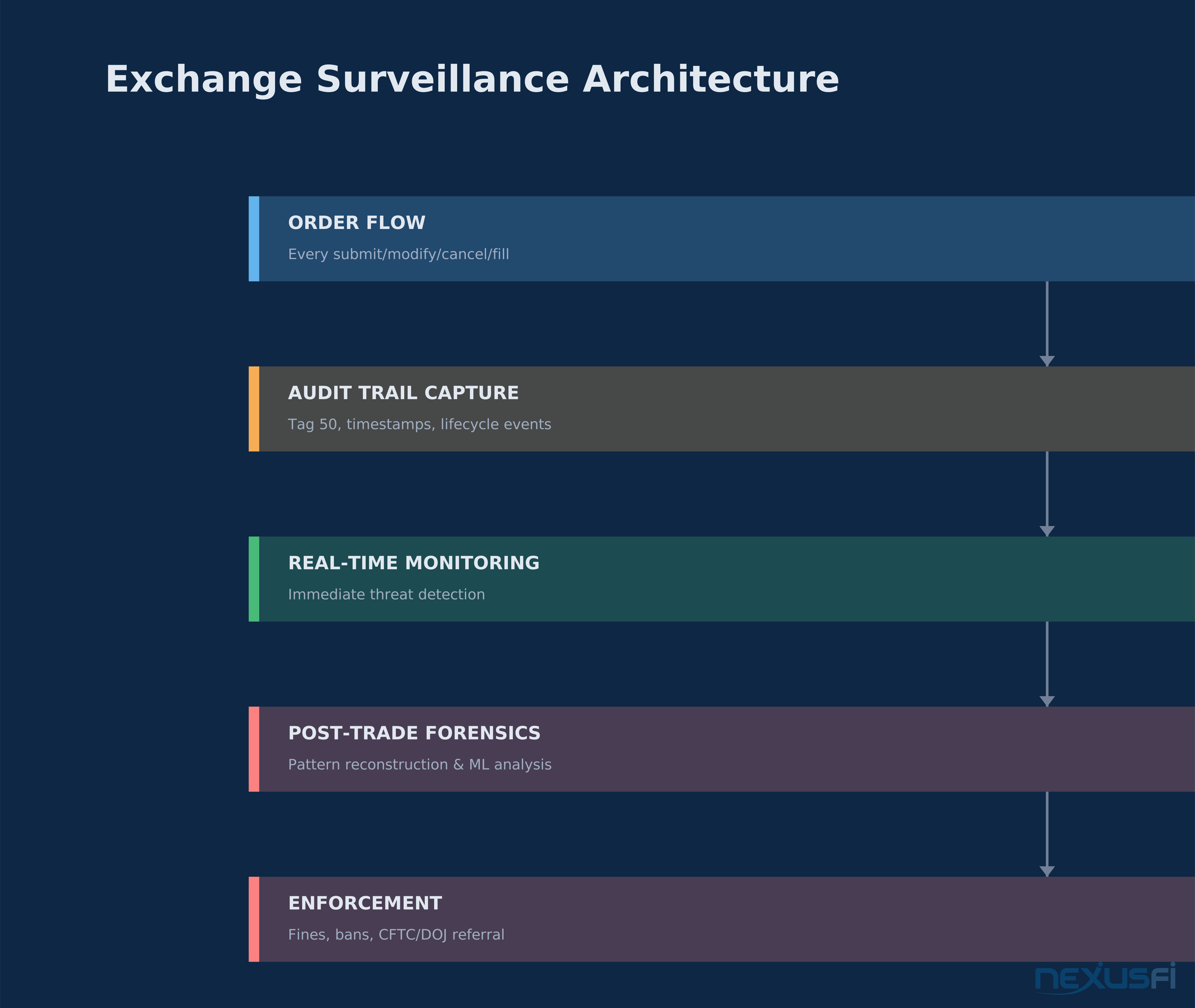
Every order you submit to a futures exchange is recorded, timestamped, and analyzed. Not just the fills — every submission, every modification, every cancellation. The exchange's surveillance systems reconstruct your order flow into a behavioral narrative, looking for patterns that suggest manipulation rather than legitimate trading.
This isn't paranoia. It's the infrastructure that makes futures markets trustworthy. When you see 50,000 contracts of ES depth in the book and trust that most of it is real, that trust exists because exchanges actively hunt for fake liquidity, spoofing, wash trading, and other forms of manipulation. Understanding how this surveillance works doesn't just keep you out of trouble — it makes you a better reader of the order book.
Here's what most traders don't realize: the exchange doesn't care that you lost money. It doesn't care that your strategy underperformed. What it cares about is intent. Did you place orders with the genuine intention of executing them? Or did you place them to mislead other participants about supply and demand? That distinction — intent to trade vs. intent to deceive — is the entire foundation of market surveillance.
Key Concepts #
Market surveillance is the systematic monitoring of trading activity by exchanges and regulators to detect manipulation, abuse, and rule violations. Futures exchanges operate sophisticated surveillance platforms that analyze order flow patterns in real time and reconstruct trading behavior after the fact.
Self-Regulatory Organization (SRO) describes the dual role of futures exchanges. CME Group, ICE, and other major exchanges are commercial businesses that also serve as their own regulators — mandated by the CFTC to police their markets through independent Market Regulation Departments. This creates a structural tension: the exchange profits from volume but must penalize participants who generate artificial volume.
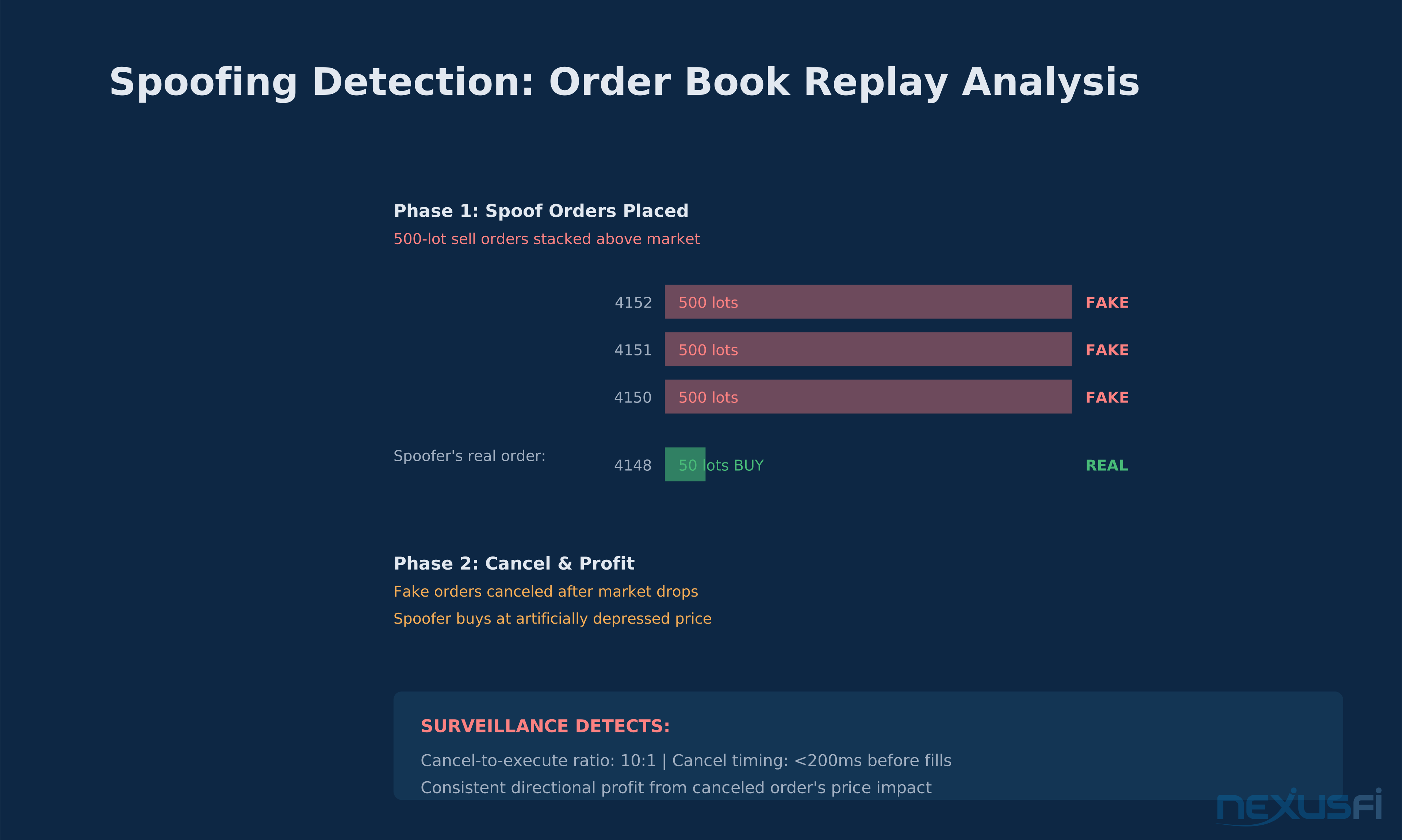
Spoofing is placing orders you intend to cancel before execution, designed to create a false impression of supply or demand. Under the Dodd-Frank Act (2010), spoofing is explicitly illegal in US futures markets.
Layering is a variant of spoofing where multiple orders are placed at different price levels to create the illusion of deep liquidity, then canceled in coordination once the market moves in the desired direction.
Layering creates the illusion of deep liquidity at multiple price levels. Unlike simple spoofing that typically uses a single large order, layering distributes deceptive orders across several prices, making the false liquidity harder to distinguish from genuine order flow.
Wash trading involves entering transactions where you're effectively both buyer and seller, creating artificial volume without genuine change in market position. In futures, this often involves coordinated trading across linked accounts.
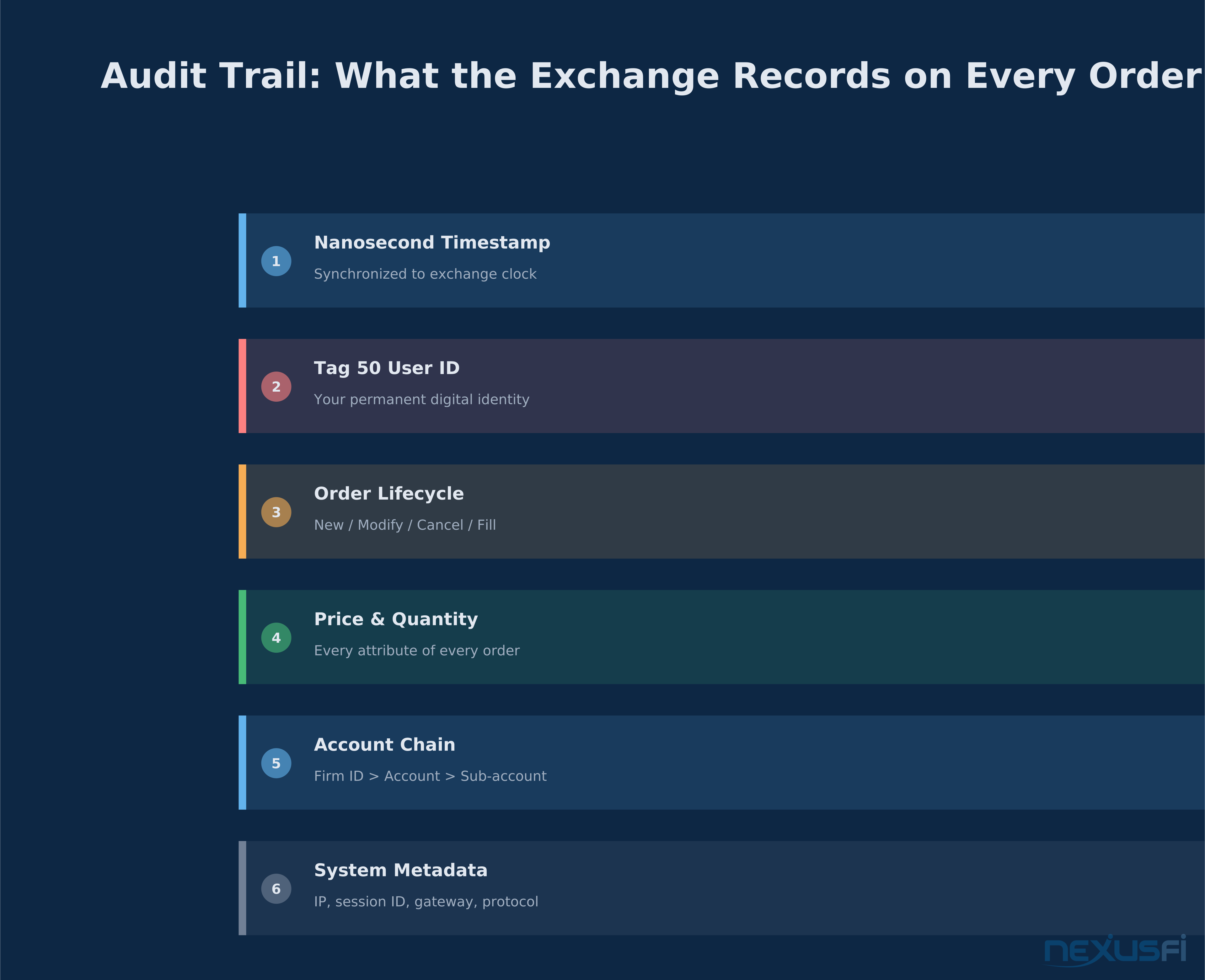
Tag 50 ID is the unique trader identifier attached to every order in the CME Globex system. It's your digital fingerprint — every order lifecycle event (submit, modify, cancel, fill) is permanently linked to your Tag 50 and timestamped to the nanosecond.
Audit trail is the complete record of every order and trade, including timestamps, account identifiers, order attributes, and lifecycle events. This data enables complete reconstruction of the order book at any point in time.
How Exchange Surveillance Actually Works #
The Detection Engine #
Modern exchange surveillance has moved far beyond simple threshold alerts. Platforms like SMARTS (used by major exchanges globally) reconstruct the entire depth of book at microsecond intervals, analyzing behavioral patterns across millions of order events.
The core methodology is Order Book Replay — rebuilding the limit order book moment by moment, then overlaying individual trader behavior against the evolving market state. This lets surveillance teams ask: "At the exact moment this trader placed a 500-lot offer, what was the rest of the book doing? And when they canceled it 200 milliseconds later, how did the market react?"
Detection relies on behavioral context, not isolated metrics. A high cancellation rate alone doesn't trigger investigation. But a high cancellation rate combined with consistent price impact in the direction that benefits the trader's other positions? That's a pattern that surveillance systems are specifically designed to identify.
What Gets Detected #
Spoofing and fake liquidity: The surveillance engine looks for orders placed near the best bid or offer with implied intent to cancel before execution. Key signals include high cancel-to-execute ratios clustered around decision points, non-economic order footprints designed to move price, and systematic withdrawal of liquidity after the desired price movement occurs.
As @tpredictor noted in a NexusFi discussion on spoofing, "Spoofing or fake liquidity is a factor in the markets. From my experience, it is most used during low volume periods when institutional players can push price more easily." The observation is accurate — surveillance systems weight behavior more heavily during thin liquidity conditions where manipulation has outsized impact.
As @iantg explained in a NexusFi discussion on scalping activity recognition, proving spoofing ultimately comes down to establishing intent — a trader is within their right to place a large order and cancel it. The challenge for surveillance teams is distinguishing legitimate order management from orders placed with intent to deceive, which is why behavioral context around order placement and cancellation timing is so critical.
As @Jigsaw Trading described in a NexusFi discussion on order book dynamics, spoofing in practice involves stacking the order book on one side to push traders in the opposite direction while using iceberg orders on the opposite side to capture the fooled traders' exits. The pattern — stack, flip, trap, profit — is exactly what modern surveillance systems reconstruct and flag.
Layering: Multiple resting orders at different price levels, canceled in coordinated fashion once the market moves. Surveillance identifies repeated cycles of rest-cancel-market-moves with temporal proximity to price impact.
Wash trading: Round-trip trades across linked accounts creating artificial volume. Detection uses cross-account linkage — common ownership, FIX/Gateway IDs, IP fingerprinting, strategy code signatures, or consistent execution patterns that reveal coordinated activity.
As @bobwest detailed in a NexusFi discussion on wash trading, CME Rule 534 explicitly prohibits placing buy and sell orders where the person "knows or reasonably should know that the purpose of the orders is to avoid taking a bona fide market position exposed to market risk." He also shared a case where a trader running two automated strategies that independently took opposite positions had to argue with his broker's compliance department to prove the trades were not wash trades — illustrating how the burden of proof typically falls on the trader.
Front-running: Trading ahead of known large orders to profit from the anticipated price impact. Detection uses time-priority analysis around identifiable large-order footprints, checking whether a trader's fills show systematic adverse selection avoidance.
Real-Time vs. Post-Trade Surveillance #
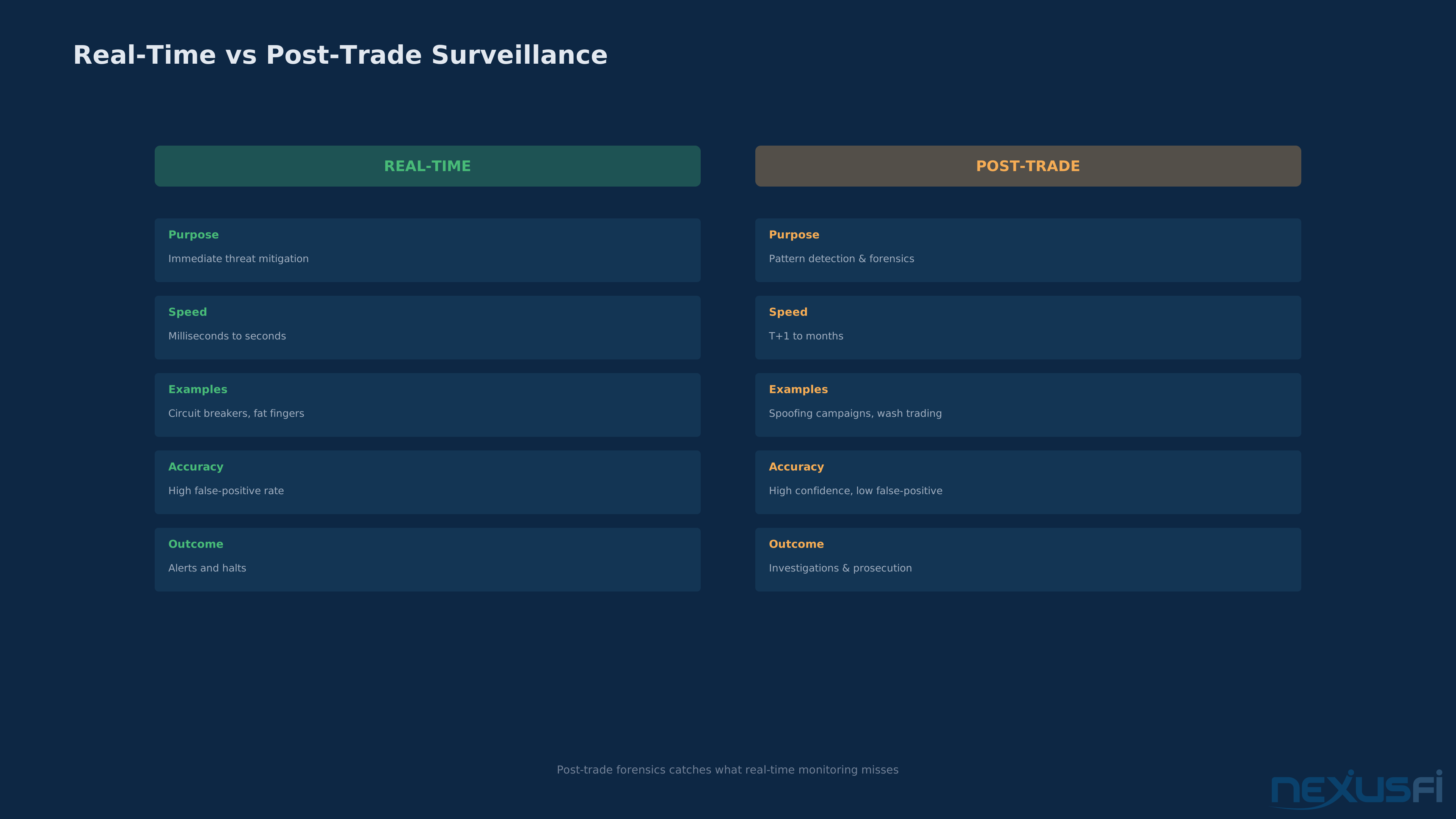
Exchange surveillance operates on two timescales, each serving a different purpose:
Real-time monitoring handles immediate threats — extreme spoofing bursts, circuit breaker triggers, fat-finger detection, and rapid behavioral anomalies. Real-time systems are intentionally sensitive, which means they generate false positives. A trader's activity might trip a real-time alert that gets cleared during post-trade review.
Post-trade forensic analysis is where the serious enforcement happens. T+1 (next-day) reconstruction examines complete order lifecycles, applies statistical and network analysis, and compares trader behavior to counterfactual market conditions. Post-trade surveillance can identify sophisticated patterns that play out over days or weeks — the kind of subtle manipulation that real-time systems can't catch.
The practical implication: a trader can avoid real-time alerts but still face investigation months later if the behavioral signature is clear in post-trade analysis.
Post-trade forensic analysis — not real-time alerts — is where exchanges build serious enforcement cases. A trader can operate cleanly on the surface for months while surveillance reconstructs the full behavioral pattern from historical data.
The Audit Trail: Your Digital Fingerprint #
Every order event generates a permanent record. Here's what exchanges capture:
For every order: Nanosecond timestamp, Tag 50 User ID, executing firm ID, account identifier, side (buy/sell), price, quantity, order type, time-in-force, and routing details. Every modification and cancellation is logged as a separate lifecycle event linked to the original order.
For every fill: Execution timestamp, trade ID, match engine identifiers, fill quantity and price, and flags for special execution venues or auction windows.
For system-level metadata: Session IDs, gateway identifiers, IP addresses, protocol fingerprints, and in some cases device-level information.
As @SMCJB pointed out in a NexusFi discussion about trading errors that result in fines, CME publishes disciplinary notices where you can see the specific evidence used in enforcement actions. These notices reveal the level of granular data available to surveillance teams.
The critical point for traders: the exchange can replay the entire market from your perspective. Every order you placed, when you placed it, when you modified it, when you canceled it, what the rest of the book looked like at each moment, and what happened to the market afterward. This replay capability is what makes modern enforcement so effective.
How Traders Get Flagged #
Pattern Detection #
Surveillance systems have evolved from simple threshold alerts to machine learning-driven anomaly detection. The current generation of systems compares trader behavior against multiple benchmarks:
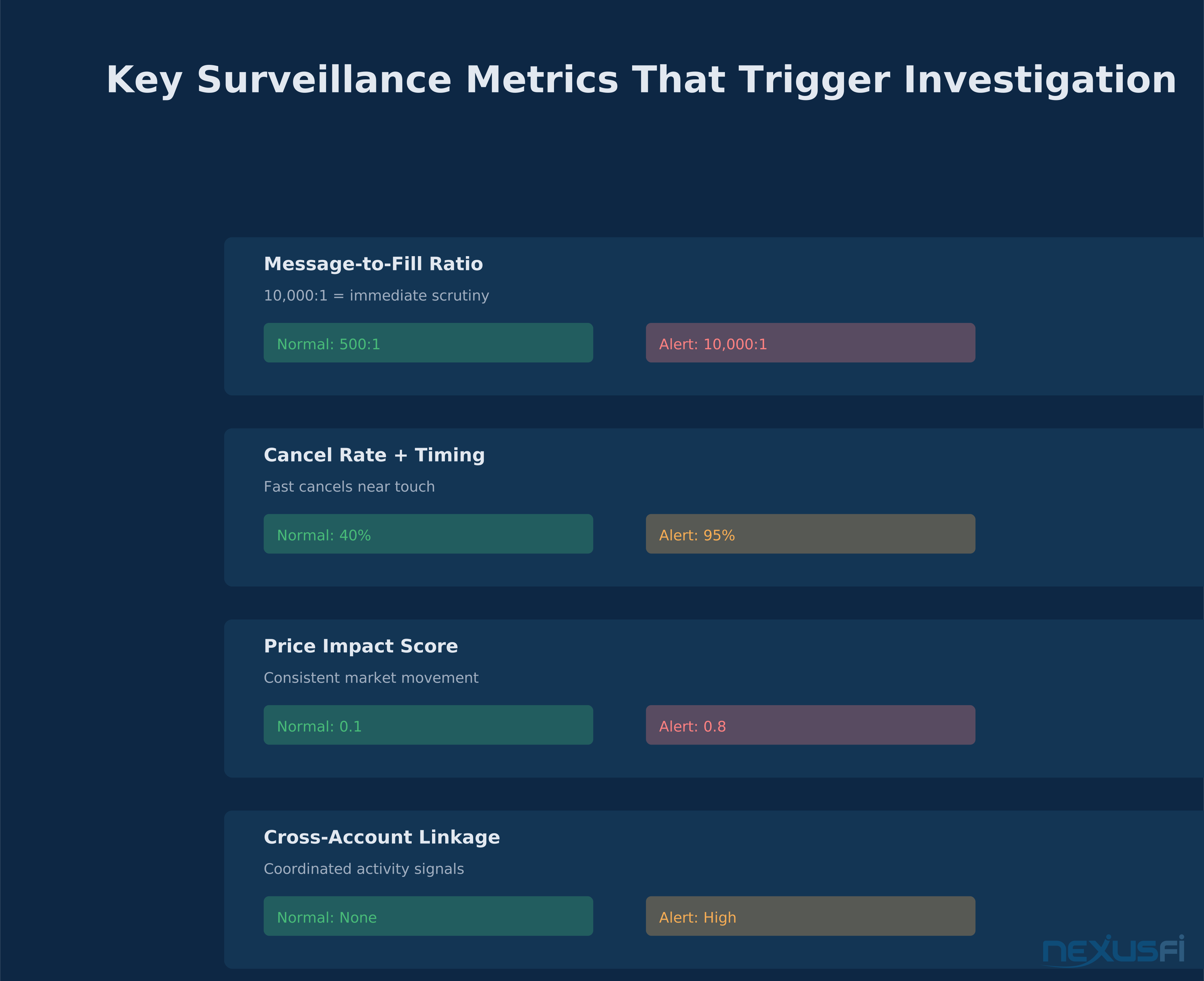
Order-to-trade ratio (OTR): The ratio of orders submitted to orders that actually execute. A message-to-fill ratio of 10,000:1 puts a trader immediately under scrutiny. But context matters — market makers legitimately maintain high OTRs during volatile conditions.
Cancel rate and timing distribution: Not just how many cancellations, but when they occur relative to price movements and other traders' activity. Systematic cancellation immediately before aggressive executions on the other side of the book is the classic spoofing signature.
Price aggressiveness: Orders placed very close to the best bid/offer that are repeatedly withdrawn are treated differently from deep-book resting orders that get canceled. Near-touch, fast-cancel behavior in tight markets draws the most attention.
Market impact analysis: Does the trader consistently induce price movements that benefit their other positions? Surveillance compares the trader's P&L around order events against what would have happened without their activity.
Volatility Normalization #
Sophisticated surveillance accounts for market conditions. High cancellation rates during a volatile news event are treated differently from the same cancellation rate during a quiet afternoon session. Systems normalize behavior against:
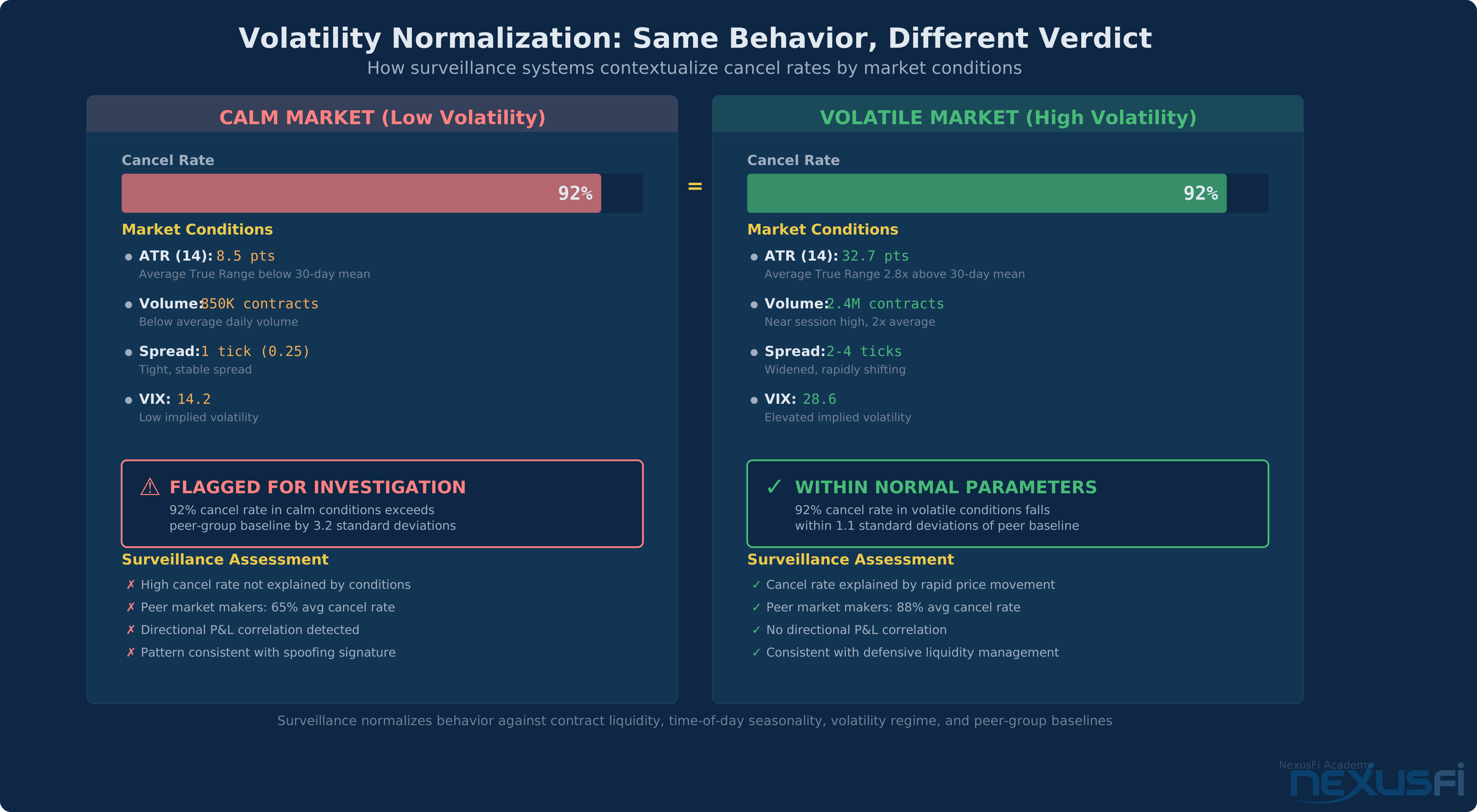
- Contract-specific liquidity profiles
- Time-of-day seasonality (overnight vs. RTH vs. settlement)
- Volatility regime benchmarks
- Peer-group behavioral baselines
This normalization prevents legitimate market-making activity in volatile conditions from being confused with manipulation.
The SRO Function: Exchanges Policing Themselves #
CME Group, ICE, and other major futures exchanges are Self-Regulatory Organizations — they're commercial entities with a federally mandated duty to enforce market integrity. Their Market Regulation Departments operate behind a firewall from the commercial and sales teams, functioning as an independent enforcement arm.
This creates the SRO paradox: the exchange profits from trading volume, but its Market Regulation team must penalize artificial volume. The CFTC oversees this arrangement, requiring exchanges to demonstrate that their surveillance programs meet regulatory standards.
For traders, the SRO function means:
- Most cases are pursued first at the exchange level, not by the CFTC
- Exchange disciplinary records become evidence in subsequent federal proceedings
- The exchange has access to granular data that external regulators may need to request
The Market Regulation Department conducts investigations triggered by surveillance alerts, trader complaints, or referrals from other departments. Investigations can be lengthy — months of analysis before a trader receives any notification. By the time you hear from Market Regulation, they've already reconstructed your trading activity in detail.
Cross-Market Surveillance #
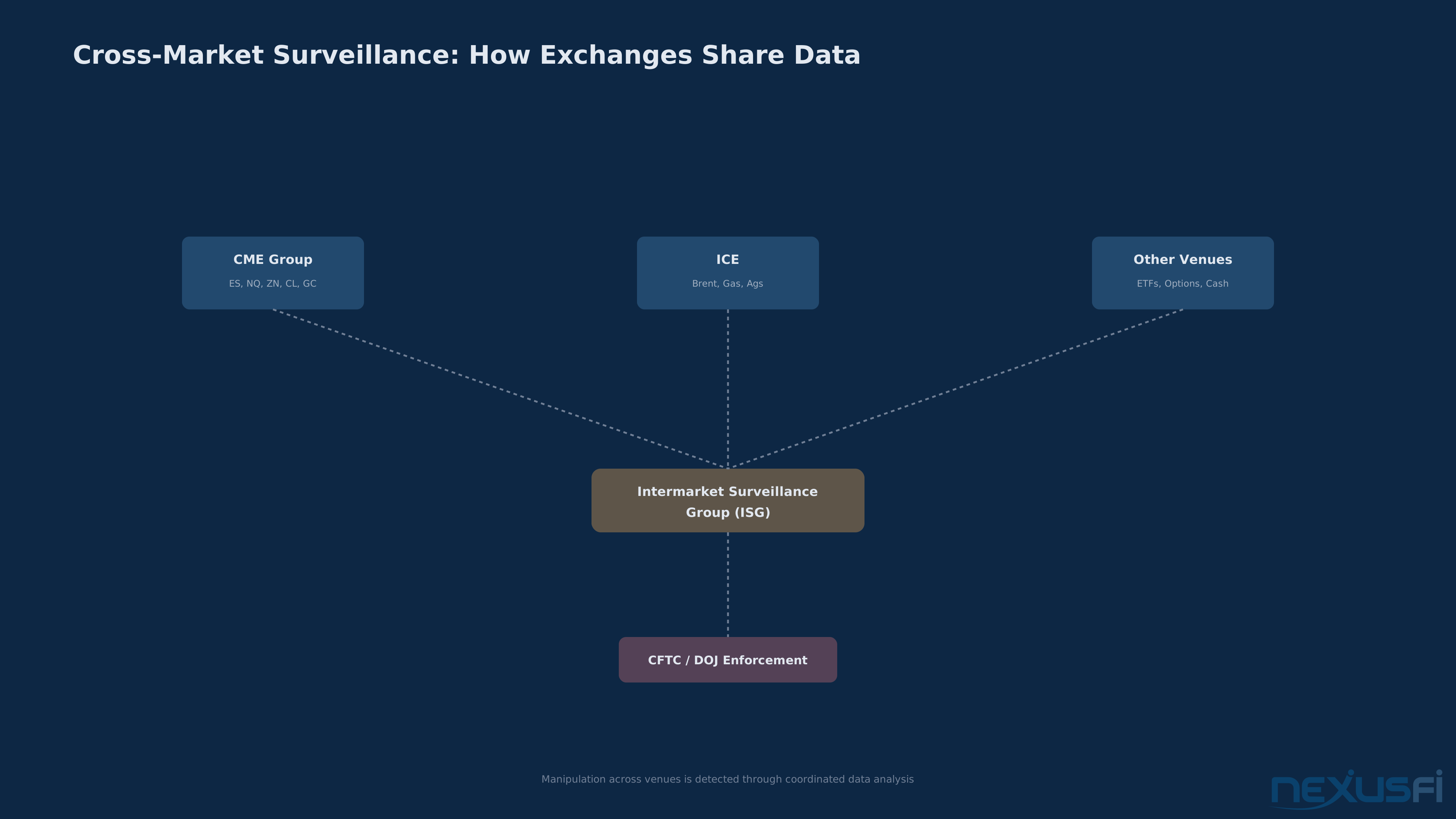
Manipulation doesn't respect venue boundaries. A trader might spoof ES futures on CME while hedging through SPY options on another exchange, or coordinate activity across CME and ICE energy products. Cross-market surveillance addresses this through several mechanisms.
The Intermarket Surveillance Group (ISG) facilitates data sharing between exchanges. When CME surveillance detects suspicious ES activity, it can cross-reference with SPY ETF trading data from other venues to determine whether the behavior represents a coordinated cross-market manipulation strategy.
As @SMCJB reported in a NexusFi discussion about HFT, regulatory probes often span multiple trading firms and venues simultaneously. The Bloomberg-reported CFTC probe into high-frequency trading firm Allston Trading exemplified how cross-market analysis connects behavior across venues.
For algorithmic firms trading the same underlying across CME, ICE, and other exchanges: your order flow is being analyzed not just within each venue but across all of them simultaneously. A pattern that looks legitimate on one exchange may appear manipulative when combined with your activity on another.
How Algorithmic Trading Changed the Game #
Algorithmic trading at the core transformed surveillance requirements in three ways:
Order lifecycle complexity: Algorithms generate orders of magnitude more messages than manual traders — submits, cancels, and modifies at rates that require real-time telemetry and automated analysis. Human reviewers can't process this volume; ML-driven systems are the only viable approach.
Sophisticated behavioral signatures: Algorithmic manipulation is harder to detect because it operates at microstructure levels — dynamic order placement, adaptive cancellation patterns, and learning-based execution that adjusts to market conditions. Surveillance shifted from rule-based detection to state-aware pattern recognition that models "normal" algorithm behavior and flags deviations.
Mandatory algorithmic controls: Exchanges now require pre-trade risk controls on all algorithmic order flow. CME Rule 575 mandates that firms implement kill switches, maximum order size limits, message frequency caps, and pre-trade risk checks. These aren't optional — failure to implement adequate controls is itself a rule violation.
As @artemiso observed in a NexusFi discussion, "Spoofing is almost uniquely a small-time discretionary trading strategy that tries to take advantage of electronic market makers." The observation highlights an important surveillance nuance: the detection systems are calibrated to distinguish between legitimate algorithmic market-making (high cancel rates, narrow spreads) and manipulative spoofing (high cancel rates with directional intent).
Consequences: The Enforcement Ladder #
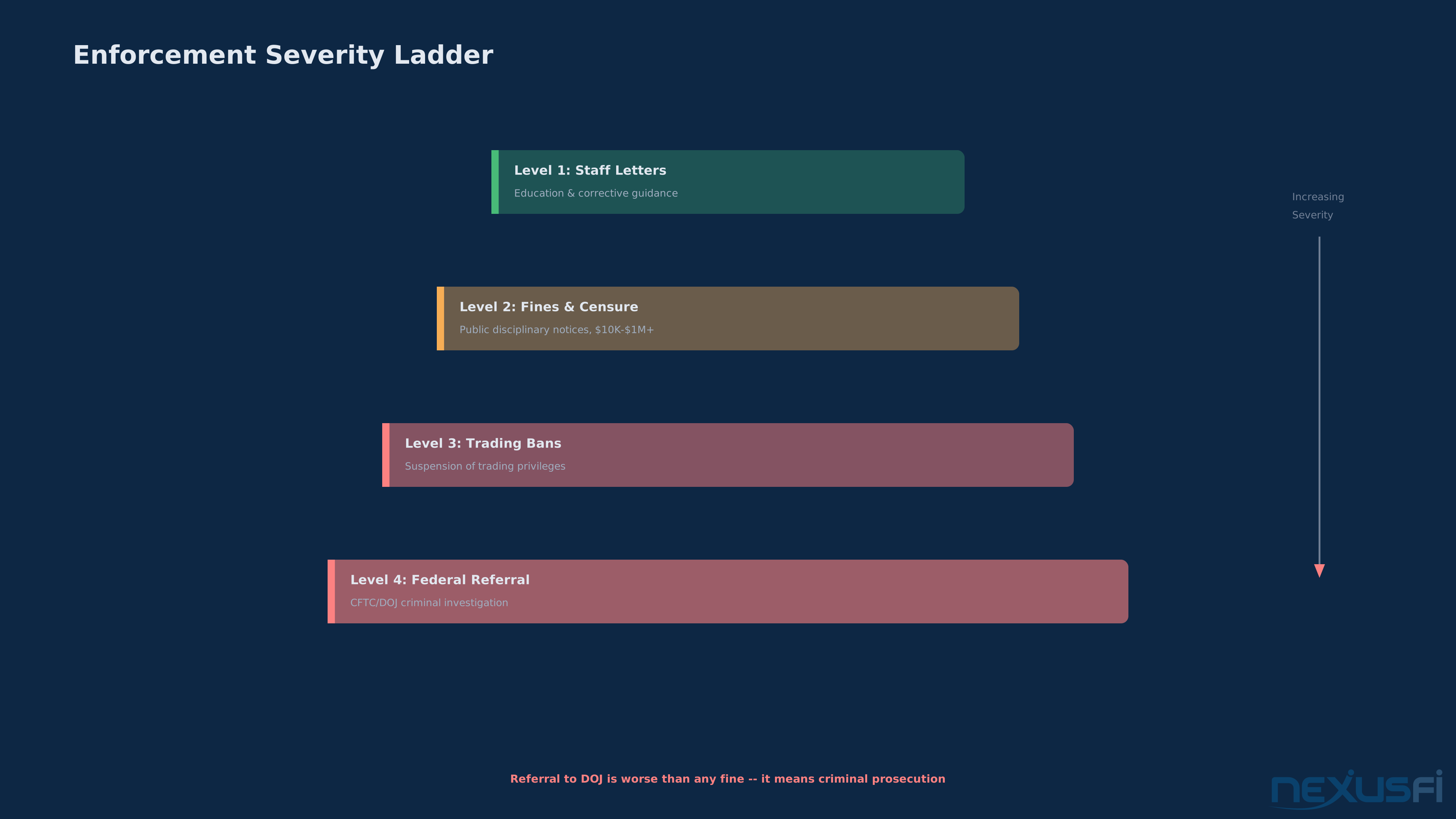
Exchange enforcement follows a graduated severity model:
Level 1 — Staff letters and education: For minor, unintentional violations. A connectivity issue that causes unusual order patterns, or a new trader who inadvertently generates wash trades through poor execution. The exchange contacts the firm or trader with corrective guidance.
Level 2 — Disciplinary notices and fines: Public censure for confirmed rule violations. CME publishes these notices with details of the conduct, the rules violated, and the penalties imposed. Fines typically range from tens of thousands to millions of dollars depending on severity and duration.
Level 3 — Trading bans and suspension: For serious or repeated violations. The exchange can suspend trading privileges for specific products, time periods, or indefinitely. Combined with fines and mandatory compliance undertakings.
Level 4 — Referral to CFTC and DOJ: The most severe outcome. When conduct suggests criminal manipulation or fraud beyond exchange rule violations, the exchange refers the matter to federal authorities. This transitions the case from regulatory discipline to potential criminal prosecution.
Exchange enforcement doesn't stop at fines. Severe spoofing and manipulation cases get referred to the DOJ for criminal prosecution — traders have received prison sentences, not just penalties. RICO charges have been applied to institutional-scale spoofing, treating it as organized crime.
Landmark Enforcement Cases #
Navinder Singh Sarao (2010 Flash Crash): A London-based trader whose spoofing in ES e-mini futures contributed to the May 6, 2010 Flash Crash. As @SMCJB shared in a NexusFi discussion, the case demonstrated how surveillance data — specifically the timing of large order cancellations relative to price movements — built the evidence for criminal prosecution. Sarao eventually pled guilty to spoofing charges.
JPMorgan precious metals spoofing (2020): Eight traders, including managing directors, were charged in a years-long spoofing scheme in gold and silver futures. The DOJ used RICO (racketeering) charges — treating systematic spoofing as organized crime. Three traders were convicted. The CFTC ordered JPMorgan to pay a record $920 million in penalties, disgorgement, and victim compensation. This case established that institutional-scale spoofing faces criminal, not just regulatory, consequences.
CME Disciplinary Notices: The exchange regularly publishes enforcement actions on its Market Regulation page. These notices provide unusual transparency into the specific patterns detected, the rules violated, and the penalties imposed. Reviewing them periodically is genuinely educational for understanding what surveillance catches.
Practical Compliance: What This Means for Your Trading #
For All Traders #
Self-reporting errors immediately is the single most effective way to mitigate penalties. Exchanges and the CFTC treat proactive disclosure very differently from discovered violations — the difference can be a warning letter vs. a formal enforcement action.
Never share Tag 50 credentials. Your Tag 50 is your identity in the audit trail. If someone else uses your credentials to manipulate the market, the evidence points to you first.
Self-report errors immediately. If an algorithm malfunction or fat-finger error generates unusual order patterns, contact your broker's compliance desk immediately. Proactive self-reporting is the single most effective way to mitigate penalties for unintentional violations.
Keep records. Maintain your own logs of strategy changes, code deployments, and trading rationale. If you receive an inquiry months later, you'll need to explain what you were doing and why.
Understand what normal looks like. If your trading strategy has unusual characteristics — high cancel rates, rapid order modifications, or large orders near the best bid/offer — document the economic rationale. You need to be able to explain why your behavior is legitimate trading, not manipulation.
For Institutional and Algorithmic Traders #
Implement pre-trade controls. This is mandatory under exchange rules, not optional. Required controls include: maximum order size limits, message frequency caps, kill switches for runaway algorithms, and spread/volatility regime checks.
Maintain auditability. Your internal order management system logs must align with exchange-reported timestamps and message IDs. If there's a discrepancy during an investigation, it creates additional problems.
Monitor for behavioral drift. After code deployments, verify that your algorithm's actual behavior matches its intended behavior. Post-deployment drift — where an algorithm starts generating patterns that resemble manipulation due to an unintended interaction with market conditions — is a real and documented source of enforcement actions.
Document strategy approvals. Maintain a record of what strategies were approved, who approved them, and when. If a strategy comes under investigation, you need to demonstrate that it was designed and reviewed with compliance input.
For Retail Traders #
Avoid wash trading. Don't trade with yourself across multiple accounts to generate artificial volume. Even if unintentional (e.g., two accounts at different brokers trading the same contract), the pattern can trigger investigation.
Don't game the order book. Placing orders you don't intend to execute — even small ones — is spoofing. It doesn't matter that you're trading 1 lot instead of 1,000. The legal standard is about intent, not scale.
Trade through compliant brokers. Your broker is your first line of defense. Reputable FCMs maintain their own pre-trade controls and compliance monitoring that filters your order flow before it reaches the exchange.
Common Misconceptions #
CME disciplinary notices include enforcement actions against individual retail traders trading as few as a handful of contracts. Surveillance systems detect behavioral patterns regardless of account size — intent to deceive matters more than order magnitude.
"Only big traders get caught." Not true. CME disciplinary notices include enforcement actions against individual retail traders. The surveillance systems don't discriminate by account size — they detect behavioral patterns regardless of scale.
"High cancellation rates mean I'll get flagged." Not necessarily. Surveillance normalizes cancel rates against market conditions and peer benchmarks. A market maker with a 95% cancellation rate during volatile conditions is behaving normally. A directional trader with a 95% cancellation rate who consistently profits from the price impact of their canceled orders is a different story entirely.
"If I'm not spoofing, I have nothing to worry about." Mostly true, but with a caveat. Unintentional patterns that resemble manipulation can still trigger investigation. If your strategy generates unusual behavioral signatures, document the legitimate rationale before you need to explain it.
"The exchange has to catch you in real time." Post-trade surveillance is the primary enforcement mechanism. Cases are built from historical data reconstruction, not real-time observation. The exchange may investigate activity from months ago.
"Exchange fines are just a cost of doing business." For minor violations, maybe. But severe cases result in trading bans and referral to federal authorities. Criminal prosecution — as demonstrated in the Sarao and JPMorgan cases — carries prison time, not just fines.
Knowledge Map
Go Deeper
Build on this knowledgeReferences This Article
Articles that build on this topicCitations
- — Spoofing and fake liquidity in low volume periods (2020)“Spoofing or fake liquidity is a factor in the markets. From my experience, it is most used during low volume periods when institutional players can push price more easily.”
- — Scalping activity recognition and proving spoofing intent (2018)“Proving spoofing comes down to establishing intent vs legitimate order management”
- — Order book dynamics and spoofing mechanics (2012)“Described practical spoofing pattern: stack, flip, trap, profit using iceberg orders”
- — CME Rule 534 wash trading prohibition (2022)“Detailed wash trading rules and shared case of trader proving automated strategies were independent”
- — CME disciplinary notices and HFT enforcement (2015)“Referenced CME disciplinary notices and Allston Trading CFTC probe”
- — Spoofing as discretionary trading strategy (2017)“Spoofing is almost uniquely a small-time discretionary trading strategy that tries to take advantage of electronic market makers”
- CME Group — CME Market Regulation and Disciplinary Actions (2026)
- CFTC — CFTC Orders JPMorgan to Pay Record $920 Million for Spoofing (2020)
- U.S. Department of Justice — Former JP Morgan Traders Convicted of Fraud and Spoofing (2020)
- CME Group — CME Rule 534 - Wash Trades Prohibited (2020)
- — Former Delta Air fuel executive banned from CME markets (2016) 👍 3“Former Delta Air fuel executive received lifetime CME ban for front-running employer's fuel orders through wife's trading accounts, resulting in $2.8M disgorgement and $300K fine”