



Wash Trading Rules in Futures Markets: What Every Trader Must Know
Illegal under CME Rule 534 and the Commodity Exchange Act — here's how to recognize it, avoid it accidentally, and understand what regulators actually look for.
Overview #
Wash trading is one of the oldest prohibited practices in futures markets, and one of the most misunderstood. The concept sounds simple enough: buying and selling the same contract simultaneously so you end up in the same position as before, with no net change in market exposure. No risk taken. No price discovery contributed. Just the appearance of activity.
The regulatory framework built around this prohibition is anything but simple. CME Rule 534, the Commodity Exchange Act, and CFTC enforcement authority together create a web of obligations that extends well beyond deliberate manipulation. Accidental wash trades — from automated systems without Self-Trade Prevention enabled, from multi-account strategies with offsetting positions, from prop firm hedging gone wrong — carry the same regulatory exposure as intentional violations.
This article covers the legal definition under CME Rule 534 and the CEA, how CFTC investigations actually work, how exchanges detect suspicious patterns in real time, the specific scenarios that trap retail traders, and what a proper compliance framework looks like for anyone running automated strategies or multiple accounts.
The single most important fact: CFTC wash trading enforcement is pattern-driven, not intent-driven. You can be investigated and penalized based on trading patterns that _look_ like wash trading, even if you never intended manipulation. Pattern and effect are the primary evidence standard.
The Legal Framework: CME Rule 534 and the Commodity Exchange Act #
Wash trading in U.S. futures markets is prohibited under two parallel authorities: CME Group Rule 534 at the exchange level, and Section 4c(a) of the Commodity Exchange Act at the federal level. Both address the same core behavior but through different enforcement paths.
CME Group Rule 534 — titled "Wash Trades Prohibited" — is the primary rule governing exchange-traded futures. It states:
"No person shall place or accept buy and sell orders in the same product and expiration month, and, for a put or call option, the same strike price, where the person knows or reasonably should know that the purpose of the orders is to avoid taking a bona fide market position exposed to market risk (transactions commonly known or referred to as wash trades or wash sales). Buy and sell orders for different accounts with common beneficial ownership that are entered with the intent to negate market risk or price competition shall also be deemed to violate the prohibition on wash trades. Additionally, no person shall knowingly execute or accommodate the execution of such orders by direct or indirect means."
-- CME Group Rule 534
Three things stand out in this language. First, it covers not just same-account trades but different accounts with common beneficial ownership — this is the clause that catches multi-broker strategies. Second, the "knows or reasonably should know" standard is objective, not subjective — you don't have to have intended a wash trade, only to have created a pattern that should have been recognizable as one. Third, brokers and other intermediaries who "accommodate" wash trades face their own violations.
At the federal level, the Commodity Exchange Act Section 4c(a) prohibits "fictitious sales" and "fraudulent transactions" — the statutory foundation the CFTC uses when pursuing wash trading through federal courts rather than through exchange administrative proceedings. CEA violations carry higher penalties and create criminal referral pathways that exchange-level violations typically do not.
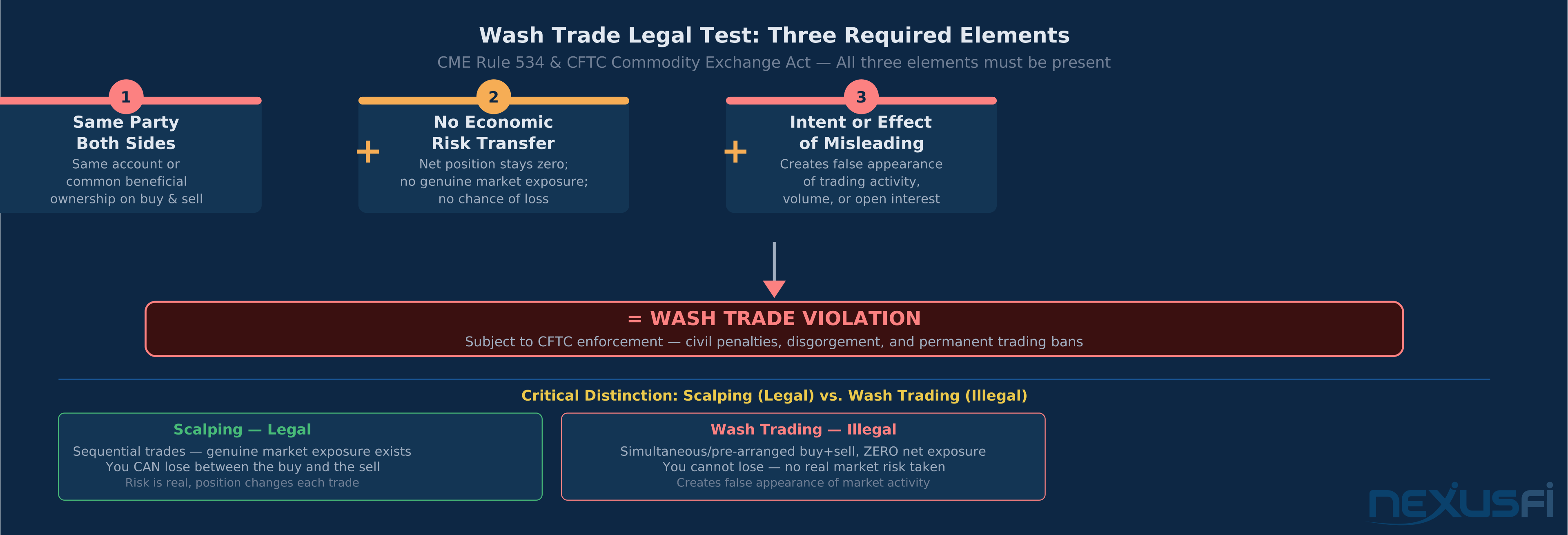
The Three Elements Surveillance Focuses On #
Exchange market regulation teams and CFTC investigators look for three interconnected elements when evaluating whether trading constitutes a wash trade. All three typically need to be present:
1. Same party on both sides. The same account, or different accounts with common beneficial ownership, appearing on both the buy and sell side of the same transaction. This extends across brokers — CME Market Surveillance receives beneficial ownership data from all member firms, not just individual brokers.
2. No economic exposure change. The net position after the trades remains effectively zero — no real market risk was taken. The trader could not lose on the transaction because the opposing position offsets any potential movement.
3. Misleading market activity. The trading creates a false appearance of volume, open interest, or price discovery. Critically, the CFTC focuses on pattern and effect — stated intent alone is not a defense. If your trading pattern systematically produces zero-net-exposure round-trips, that pattern becomes evidence of the third element regardless of what you were trying to accomplish.
This third element is where traders get surprised. You don't need to have intended to manipulate anyone. The pattern itself is the evidence.
Wash Trading vs. Legitimate Trading: Where the Line Is #
The question that comes up constantly in active trading communities is how wash trading differs from legal scalping, market making, or running multiple strategies. The answer comes down to one thing: net risk exposure between transactions.
A scalper who buys 10 ES contracts and sells them 30 seconds later could have lost money during that 30 seconds. That's real risk, and that's legal. A wash trader who simultaneously holds 10 long and 10 short contracts in the same expiration has zero net risk — they cannot lose regardless of what the market does.
The key temporal distinction:
- Sequential trades with genuine exposure between buy and sell = legal (scalping, market making)
- Simultaneous opposing positions in same product/expiration with same beneficial owner = wash trade risk
Spreads between different expirations (ES March vs ES June) are different products under Rule 534 and generally don't create wash trade exposure. Offsetting positions in ES and MES (Micro E-mini) are different products. The rule specifically targets the same product and expiration month — that's the relevant scope.
Rebate-seeking volume generates the highest-risk wash trade patterns. When the primary motivation is hitting a volume threshold to earn exchange rebates — rather than expressing genuine directional intent — the trades may lack "bona fide market position" character. The $5M CFTC enforcement against Rosenthal Collins (aka DV Trading) is a textbook example: eight thousand wash transactions to generate rebates, none of which reflected genuine market interest.
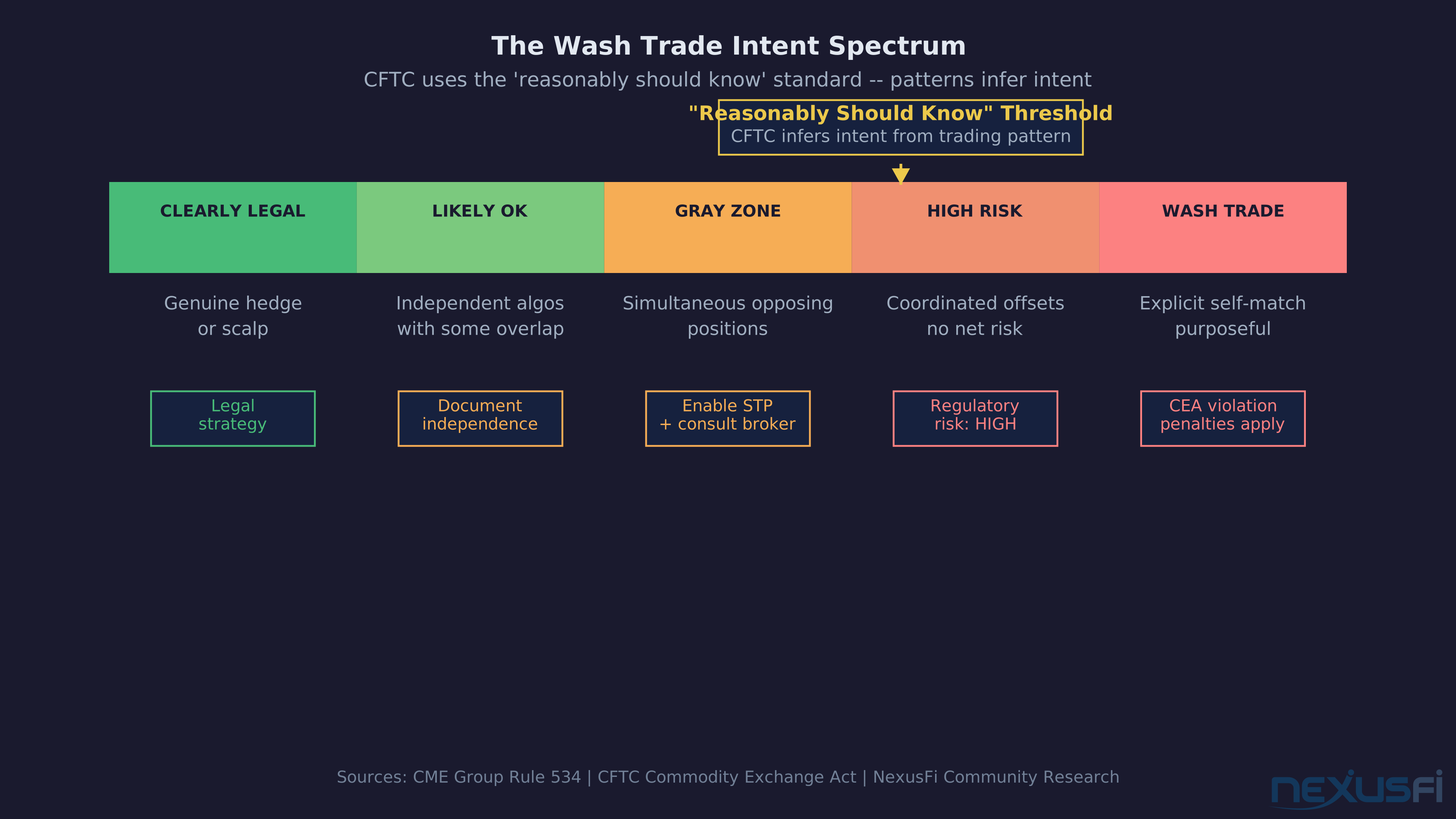
Intent and the "Reasonably Should Know" Standard #
Intent matters in wash trading cases, but not in the way most traders assume. It's required — but can be inferred from circumstances rather than requiring proof of a deliberate manipulation scheme.
This is the critical point: intent can be inferred from structure. If you consistently enter opposing orders in the same contract at similar prices for accounts you control, the CFTC may infer intent from the pattern even if each individual trade had independent motivation. The "reasonably should have known" standard sets a low bar.
Once a pattern is identified, the burden effectively shifts. The trader must demonstrate why the pattern does not reflect intent to create false market activity. "I didn't intend to wash trade" becomes much harder to maintain when trading records show thousands of round-trip trades producing near-zero net P&L. Documentation of independent strategy logic is the primary defense — and it must exist before the investigation, not after.
The three-part test for inferred intent that CFTC enforcement decisions consistently apply:
- Did the trades produce a wash result (net-zero exposure)?
- Were the orders structured in a way that would predictably produce that result?
- Could the trader have known this would happen?
If all three are yes, intent is established even without a confession or proof of a manipulation scheme. This is why automated strategies that trade the same contract simultaneously in different accounts require extra scrutiny — the "I didn't know" defense has limited shelf life.
CFTC Enforcement: Consequences and How Prosecution Works #
The CFTC's enforcement authority over wash trading is strong. The agency has multiple tools available depending on severity, and the penalties escalate dramatically:
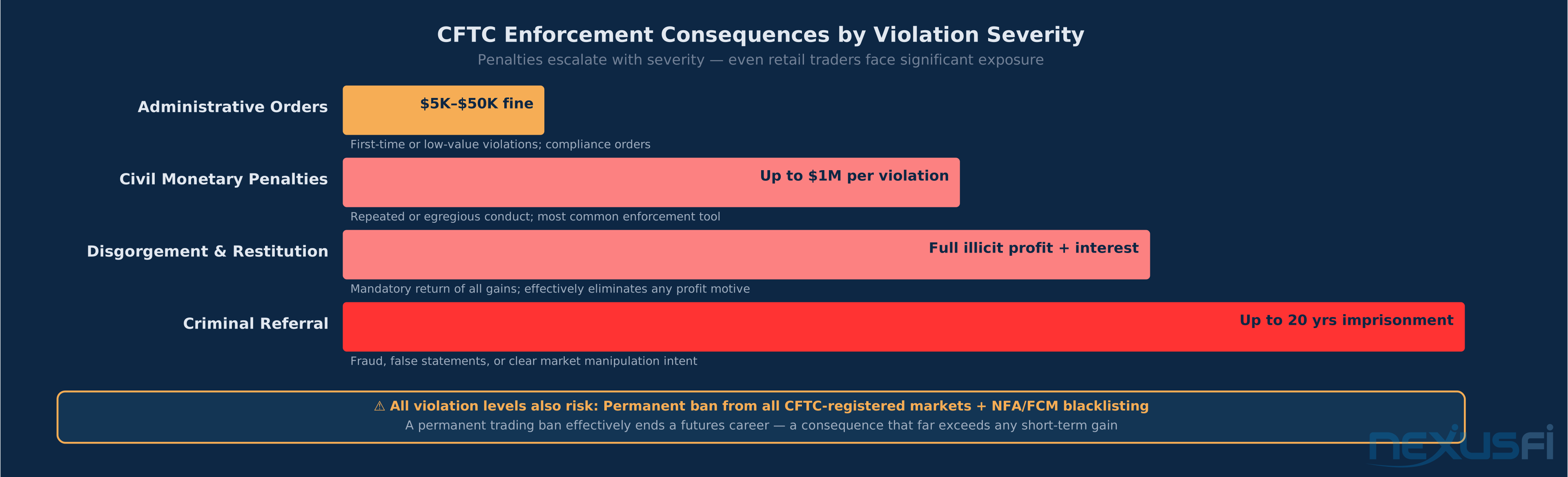
Administrative Orders. For first-time or lower-severity violations, the CFTC may issue administrative cease-and-desist orders paired with monetary fines in the $5,000--$50,000 range. These create a public enforcement record and often include compliance undertakings — requirements to implement specific monitoring or reporting systems.
Civil Monetary Penalties (CMPs). For more egregious or repeated conduct, the CFTC seeks CMPs in federal court. Under the CEA, the maximum CMP for individuals is $1 million per violation. "Per violation" can mean per trade, per day, or per series of related transactions. In cases involving thousands of round-trip trades, this exposure can become very large, very fast.
Disgorgement. The CFTC consistently seeks disgorgement of all profits derived from prohibited activity, plus interest. This is separate from the CMP — a trader faces both the fine and return of gains. Wash trading provides no financial benefit even when the direct penalty is limited, because the ill-gotten profits disappear regardless.
Criminal Referral. When wash trading involves fraud or false statements, the CFTC may refer to the Department of Justice for criminal prosecution. Criminal penalties under the CEA include imprisonment of up to 20 years plus asset forfeiture. Criminal referrals are less common but not rare in cases involving coordinated manipulation schemes.
Trading Bans. Across all enforcement levels, the CFTC routinely seeks permanent bans from all CFTC-registered markets. A banned trader finds every regulated futures broker unwilling to open an account. This ends a trading career more completely than any financial penalty alone.
Real-world example: In 2017, the CFTC ordered Rosenthal Collins Capital Markets (later DV Trading) to pay a $5 million civil penalty for wash trades designed to generate exchange rebate fees. Traders at the firm ran three separate wash trading strategies to hit volume thresholds in a CME market maker rebate program. The individual trader who devised the third strategy paid a separate $200,000 CMP.
How Exchanges Detect Wash Trading in Real Time #
Modern futures exchange surveillance is automated, continuous, and sophisticated. CME Group's Market Regulation department runs real-time analytics that flag suspicious patterns before they accumulate into large violations.
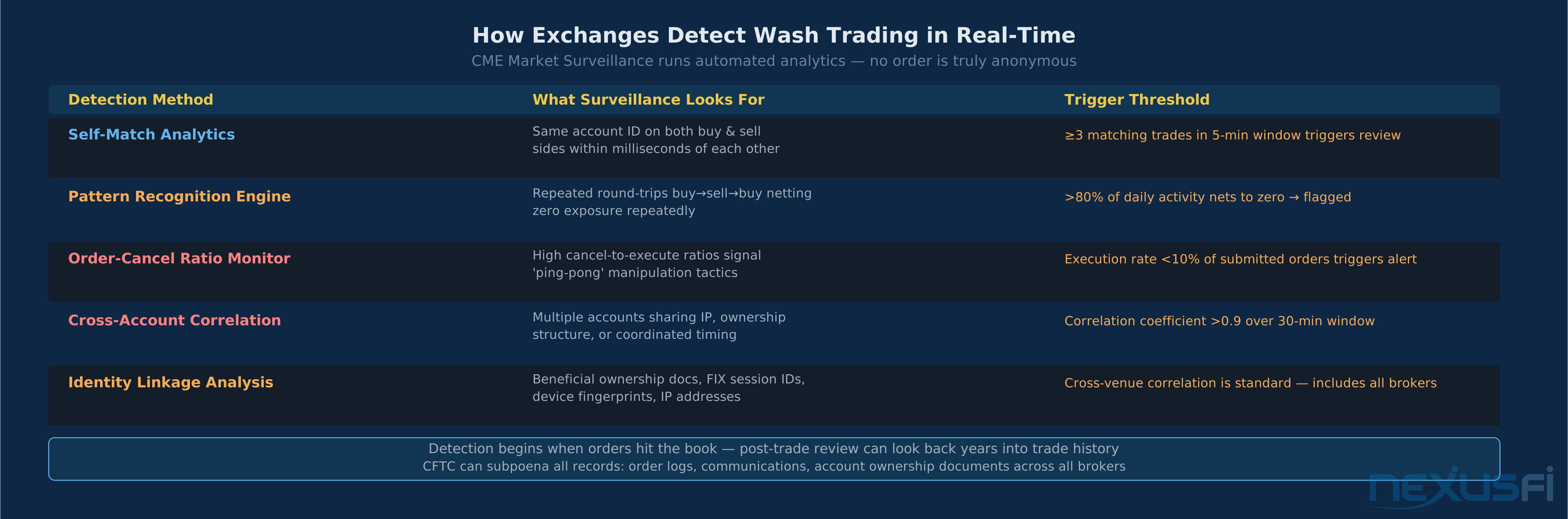
Self-Match Analytics. The most direct detection method looks for the same account identifier (or identifiers linked by beneficial ownership) appearing on both sides of a transaction within milliseconds of each other. Three or more such matching trades within a five-minute window typically triggers an automated alert for human review. This is the clearest signal and the most common basis for initial investigations.
Pattern Recognition Engines. More sophisticated surveillance looks for patterns across longer time windows. Round-trip trades — buy followed by sell of the same quantity at similar prices — that consistently produce net-zero exposure become suspicious when they account for more than 80% of a trader's daily activity. Isolated round-trips are common in legitimate scalping, systematic patterns of them are not.
Order-Cancel Ratio Monitoring. High cancel-to-execute ratios signal "ping-pong" manipulation — placing and cancelling orders repeatedly to create the appearance of activity without genuine commitment to trade. When a trader submits orders with an execution rate below 10--15%, this pattern triggers review.
Cross-Account Correlation Analysis. Surveillance teams look for accounts that trade with each other in coordinated patterns — high correlation coefficients (above 0.9) in trade timing, similar IP addresses, shared ownership structures, common funding sources.
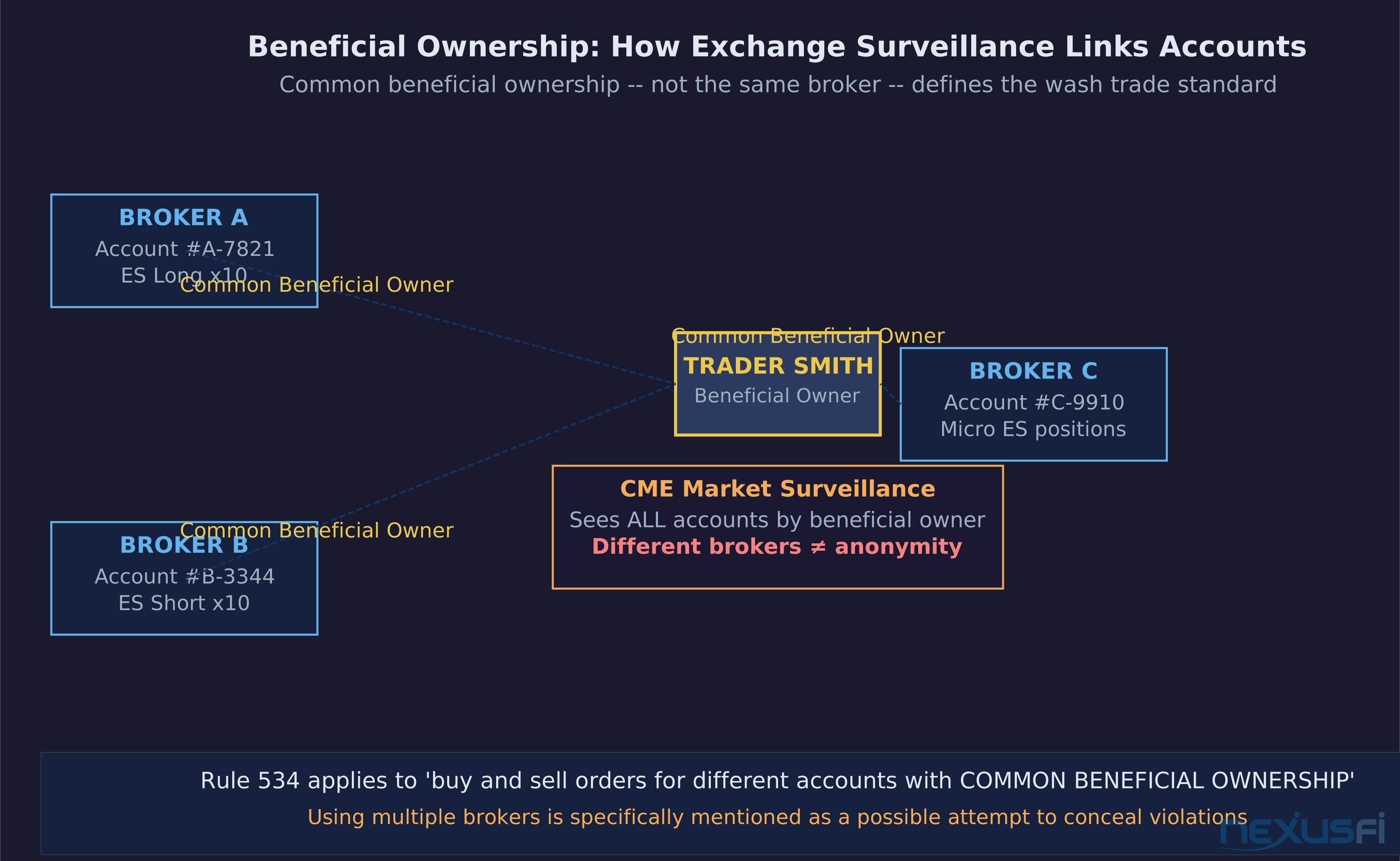
Identity Linkage. This is the most underestimated surveillance capability. Exchanges and the CFTC can connect accounts through beneficial ownership documentation, FIX session identifiers, device fingerprints, IP addresses, and cross-venue order pattern correlations. Using multiple brokers does not create anonymity.
Ask your broker directly: "Does your firm perform cross-account wash trade monitoring for accounts under my name, and what triggers a review?" Most FCMs now run automated surveillance and will tell you what their thresholds are. This conversation documents your good faith and may head off issues before they escalate.
Common Accidental Violations for Retail Futures Traders #
Most retail traders do not set out to wash trade. But several common strategies and platform features create meaningful risk of accidental violations.
Multi-Account Strategies With Offsetting Positions #
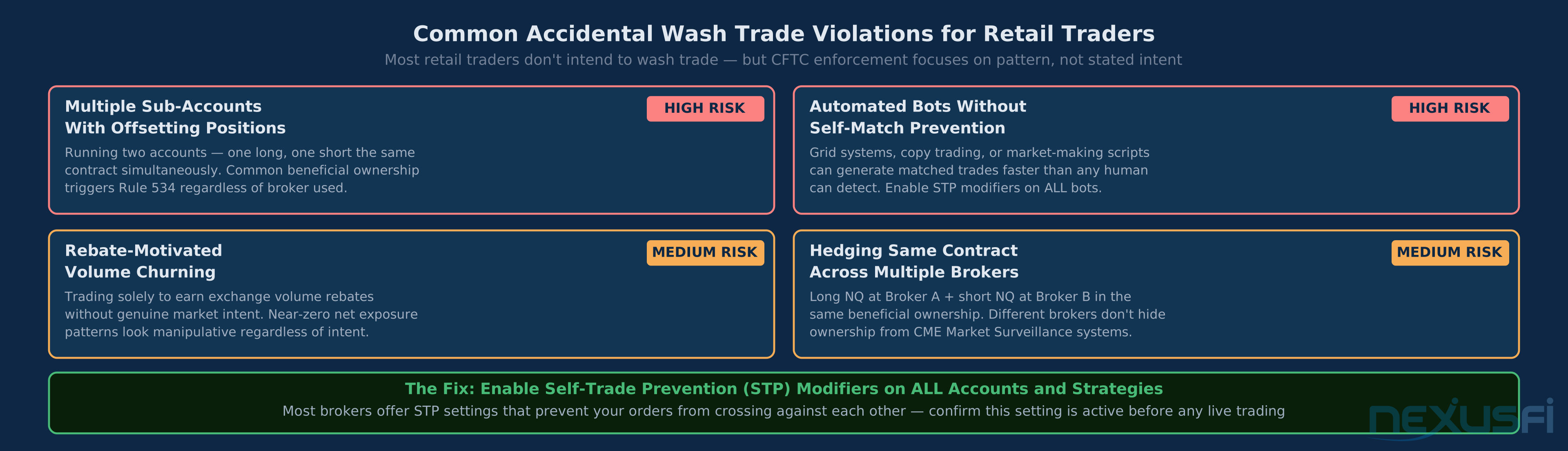
A trader running two accounts — one long-biased trend system, another running mean-reversion that is frequently short — may hold opposing positions in the same contract at any given time. This is precisely what Rule 534 targets when it refers to "buy and sell orders for different accounts with common beneficial ownership that are entered with the intent to negate market risk."
Real-world precedent: @kevinkdog documented his experience defending this exact situation with Tradestation Compliance:
The defense — that strategies are independent and not coordinated — can succeed, but it requires documentation and, in some cases, escalating all the way to firm leadership. That's not a position you want to be in without records you created before the inquiry.
Automated Bots Without Self-Trade Prevention #
Grid trading systems, market-making algorithms, and copy trading platforms can generate matched trades faster than any human can detect. A grid system that simultaneously places a buy at 5,300 and a sell at 5,300.25 on ES — where the same account fills both sides — creates a wash trade pattern even if the individual sizes are small.
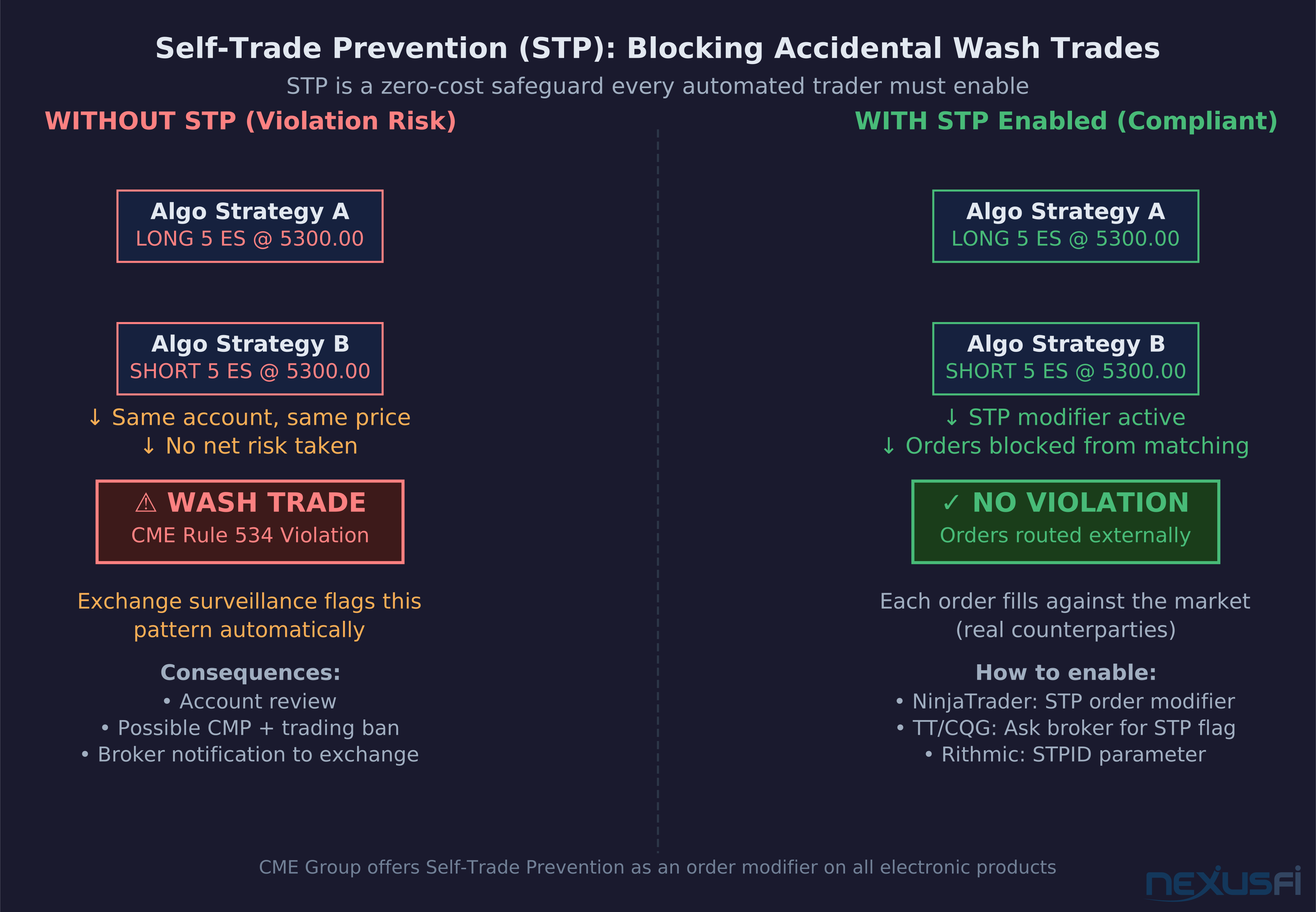
Self-Trade Prevention (STP) order modifiers prevent your orders from matching against each other. Most brokers offer this as an optional setting, but it is not universally enabled by default. Before deploying any automated strategy, confirm STP is active on every account involved.
Prop Firm Account Hedging #
Traders using funded evaluation accounts sometimes attempt to hedge drawdown risk using their own personal retail account. If both accounts are under the trader's beneficial ownership, the hedging strategy creates a wash trade structure.
The practical reality: even if your prop firm holds the evaluation account "for" you, the question of who the beneficial owner is determines whether Rule 534 applies. Most evaluation structures are designed so the trader is not the beneficial owner of the funded account — but if you're uncertain about this, ask your prop firm compliance team directly.
Multi-Broker Same-Product Hedging #
Going long at one broker and short at another in the same contract and expiration month, while the same individual controls both accounts, violates Rule 534. The rule applies to "the same product and expiration month" — not to the same brokerage account.
Different brokers does not equal different beneficial owner. CME Market Surveillance receives data from all member firms, specifically to identify common beneficial ownership across accounts at different FCMs. This capability is the explicit reason the multi-broker "hedge" strategy fails as a wash trade defense.
Rebate-Motivated Volume #
When a trader's primary motivation becomes hitting a volume threshold to earn rebates — rather than expressing genuine directional or risk-transfer market intent — the trades may lack "bona fide market position" character. If the round-trip patterns produced by rebate-seeking behavior consistently result in near-zero net exposure, surveillance will flag it. This is the most common fact pattern in mid-size enforcement actions.
Real-World Enforcement Patterns #
CFTC enforcement actions provide the clearest picture of what actually triggers investigations and how they resolve.
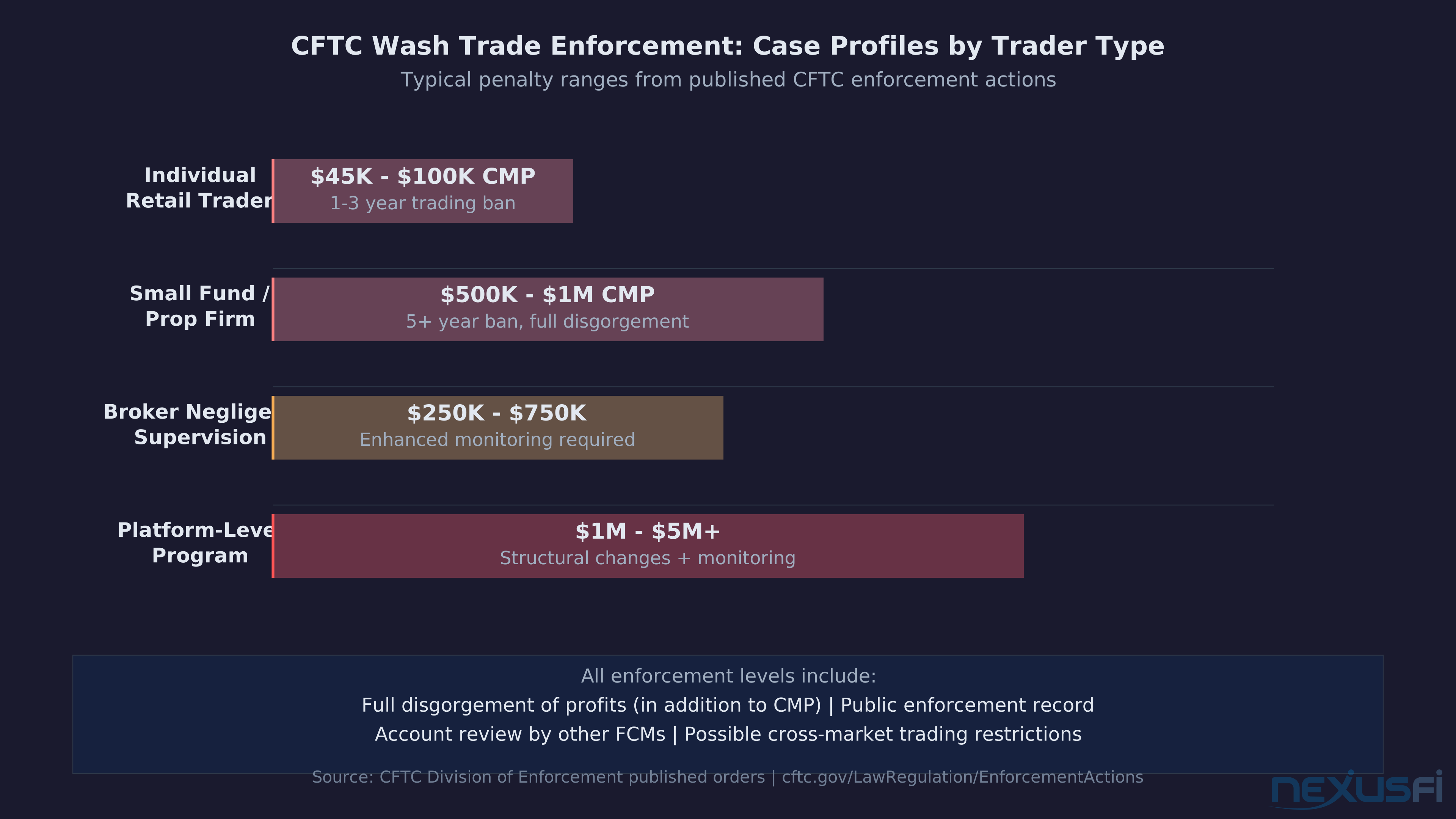
Individual Day Traders. Actions against individual retail traders typically involve large numbers of round-trip trades — often thousands — within compressed timeframes. In cases involving ES e-mini futures, traders who generated sustained zero-P&L round-trip patterns received civil penalties in the $45,000--$100,000 range, accompanied by multi-year trading bans. Traders in these cases often claimed system testing or technical issues, but the sustained pattern undermined those explanations.
Small Funds and Rebate Strategies. A recurring pattern in mid-size enforcement actions involves small prop trading firms using satellite accounts to coordinate wash-sell strategies, primarily to manipulate exchange volume rebate programs. Crude oil, natural gas, and agricultural contracts appear frequently. Penalties typically reach $500,000--$1,000,000 with full disgorgement requirements.
Broker Supervisory Failures. Several enforcement actions have targeted brokers who failed to monitor client "ping-pong" scalping patterns. Even when the broker was unaware of the manipulation, negligent supervision resulted in fines and mandatory enhancements to internal surveillance systems. This enforcement pattern explains why FCMs have become increasingly aggressive about questioning unusual client trading patterns — they face their own regulatory risk from failing to catch violations.
Platform-Level Programs. Some enforcement actions have targeted trading platforms and exchanges themselves — especially crypto futures platforms — for running "liquidity provider" programs that effectively required participants to submit matched orders. These cases produce the largest penalties and demonstrate that the prohibition applies to trading infrastructure, not just individual participants.
The common thread across all of these: the CFTC worked backward from the pattern. Investigators didn't start with a confession or an email chain. They started with trade data that didn't make economic sense, and built the case from there.
The Compliance Framework: Protecting Yourself #
For retail futures traders, wash trading compliance comes down to technical safeguards, behavioral discipline, and documentation. The framework below addresses every common risk scenario.
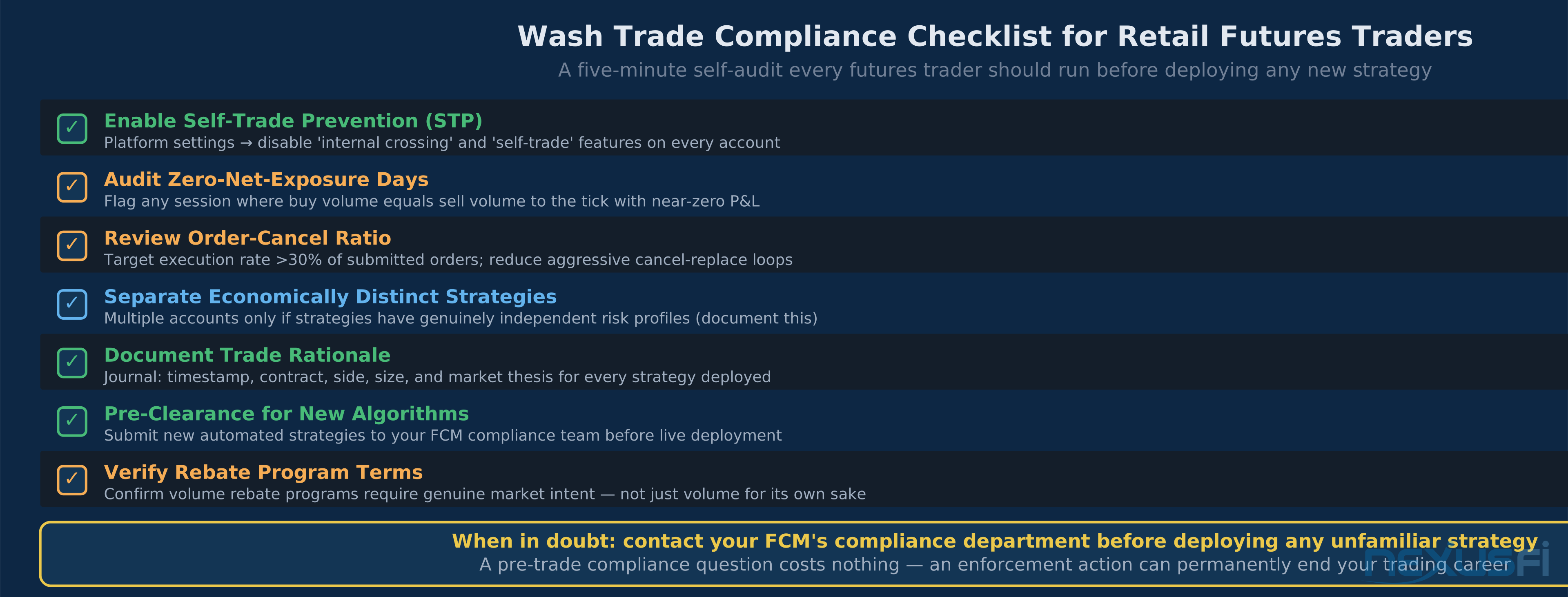
Enable Self-Trade Prevention on All Accounts. STP modifiers are order-level settings that prevent your orders from matching against orders from the same account or linked account group. Before deploying any automated strategy or trading multiple accounts simultaneously, confirm STP is active on every account. Zero-cost safeguard, no downside for legitimate strategies.
Audit Your Zero-Net-Exposure Days. Export your trade history monthly and flag any session where total buy volume equals total sell volume to the exact quantity with near-zero net P&L. This doesn't necessarily mean you committed a violation — legitimate strategies can produce such patterns on individual days — but a systematic pattern warrants a strategy structure review.
Review Your Order-Cancel Ratio. For active scalpers, an execution rate of 50% or higher is normal. Ratios below 10--15% — especially if sustained over many sessions — indicate aggressive cancel-replace strategies that can attract scrutiny.
Document Independent Strategy Logic. If you run multiple accounts or multiple automated strategies, document the independent market thesis behind each one — in writing, before deployment. The documentation should explain what market edge each strategy captures, why it might naturally take positions opposite to another strategy, and how the strategies are kept operationally independent. This documentation is the primary defense if a compliance inquiry ever arises.
Submit a description of any new automated strategy to your broker's compliance department before going live. Most FCMs have compliance teams that will review strategy descriptions and confirm whether they present regulatory concerns. This costs nothing and creates a record that you proactively sought compliance review — a factor regulators weigh favorably when evaluating intent.
Understand the Rebate Environment. If you participate in any exchange or broker rebate program, read the terms to confirm they require genuine market intent, not just volume generation. Rebate structures that incentivize volume without regard for whether genuine risk is transferred should be treated with caution.
Questions to ask your broker before any multi-account strategy:
- "Does your platform have Self-Trade Prevention modifiers available, and are they enabled by default?"
- "If I run two separate automated strategies in different accounts under my name, what triggers a wash trade review?"
- "Is there a process to review a new algorithmic strategy for compliance before I go live?"
- "What is the firm's policy on beneficial ownership reporting for traders with multiple accounts?"
Asking these questions is not suspicious — it demonstrates exactly the kind of proactive compliance mindset that regulators look for when evaluating intent.
The CFTC enforcement framework is pattern-driven, not intent-driven. An exchange sees the order book before you do. Surveillance flags suspicious patterns in real time, and post-trade review can look back years. You do not need to have intended manipulation, profited from it, or traded with anyone you knew. If your trading pattern systematically produces zero-net-exposure round-trips in the same contract across accounts you control, the three elements of wash trading may be present regardless of your actual motivation. Proper STP configuration, documentation, and proactive broker communication eliminate this risk entirely for legitimate strategies.
Knowledge Map
Go Deeper
Build on this knowledgeReferences This Article
Articles that build on this topicCitations
- — Wash Trade Question (2022) 👍 7“Rule 534 says No person shall place or accept buy and sell orders in the same product and expiration month...where the person knows or reasonably should know that the purpose of the orders is to avoid taking a bona fide market position exposed to market risk.”
- — Nasdaq wash trading (2022) 👍 4“It's when you are both long and short the same thing at the same time for the same amount, so you never have an actual market risk, but you do create the impression of more actual trading activity than there really is.”
- — HFT High Frequency Trading (2015) 👍 3“A wash trade requires: a) that the transaction or series of transactions produces a wash result; and b) that the party(ies) intended to achieve a wash result. Intent may be inferred from evidence of prearrangement.”
- — Ask any Trading Question (2012) 👍 4“This is not a real hedge. A true hedge mitigates risk while still being profitable. Being both long and short on an identical inverse position does neither.”
- — Hedging NQ and MNQ 1-10 (2022) 👍 4“Using different brokers would keep it off the broker's radar -- neither would know about the other. But using different brokers could easily look like an attempt to conceal something.”
- — CFTC fines Rosenthal Collins Capital Markets (aka DV Trading) $5MM civil penalty (2017) 👍 3“The CFTC has ordered Rosenthal Collins Capital Markets (aka DV Trading) to pay a civil penalty fine of $5 million USD, for engaging in illegal wash sales designed to generate exchange rebate fees.”
- — Wash Trade Question (2022) 👍 5“A few years ago, I had to explain this type of situation with Tradestation Compliance, all the way up to the CFO of Tradestation. They finally accepted my explanation, and the case was closed.”
- CME Group — CME Group Rule 534: Wash Trades Prohibited (2024)
- CFTC Division of Enforcement — CFTC Enforcement Actions: Wash Trading (2024)