



Scaling In and Out of Futures Trades: The Complete Position Management Playbook
Subtitle: How professional futures traders build into winners and exit with precision — before the entry, not during it
Overview #
Every futures position starts with a number: how many contracts. Most developing traders treat that number as fixed from entry to exit. Professional traders treat it as a dial.
Position scaling — deliberately adding contracts to winners and systematically removing them at targets — is one of the most powerful and least understood tools in futures trading. Done correctly, it transforms your risk-reward dynamics: smaller exposure on uncertain initial entries, maximum size when the trade is already working, partial exits that lock in profit while keeping a portion running for the larger move.
Done incorrectly — specifically, adding contracts to losing positions — it turns the same leverage that makes futures profitable into a mechanism for rapid account destruction.
The line between the two approaches is clear: always scale into strength, never into weakness. This article covers both sides of the position management equation with specific methods, stop management frameworks, and the psychological realities that determine whether scaling systems work in practice.
The single most important rule in position scaling: add to winning trades, not to losing ones. This is not a suggestion. It is the categorical difference between amplifying profits on confirmed trades and amplifying losses with no theoretical ceiling.
The Fundamental Distinction: Scaling Into Winners vs. Averaging Into Losers #
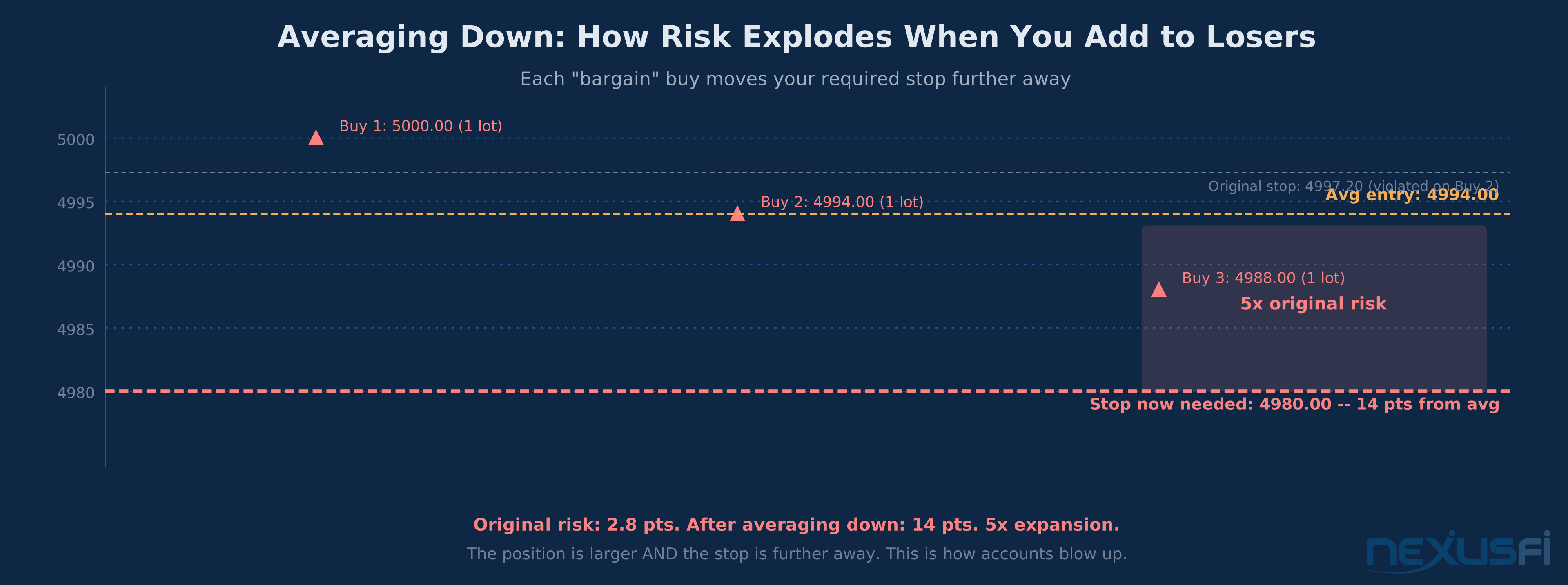
The physical action is identical: you buy (or sell) more contracts. The risk profiles are opposite.
When you scale into a winning position, your original entry has been validated by the market. Your average cost basis sits below (for longs) the current price. If the trade reverses, you give back some open profit, but your original capital is protected. Every additional contract has a rising floor beneath it.
When you average down into a losing position, your original entry has been invalidated. Your average cost basis moves toward an adverse market. There is no theoretical limit to how far the market can move against you. As @kevinkdog stated in his trading journal at NexusFi:
The math is unambiguous. A single ES contract at $50/point means a 50-point adverse move costs $2,500. If you average down at 10-point intervals, by the time you are 50 points offside you hold 6 contracts — and a loss exceeding $75,000 on a position that started as a single contract. Leverage amplifies averaging-down into an account-termination strategy.
{IMAGE:0f07c0dd-455a-4739-ae06-9a1dcff8c61c}
@sstheo, who documented his scaling evolution across multiple journals at NexusFi, described the worst-case outcome with memorable directness:
The Pyramid Entry Method #
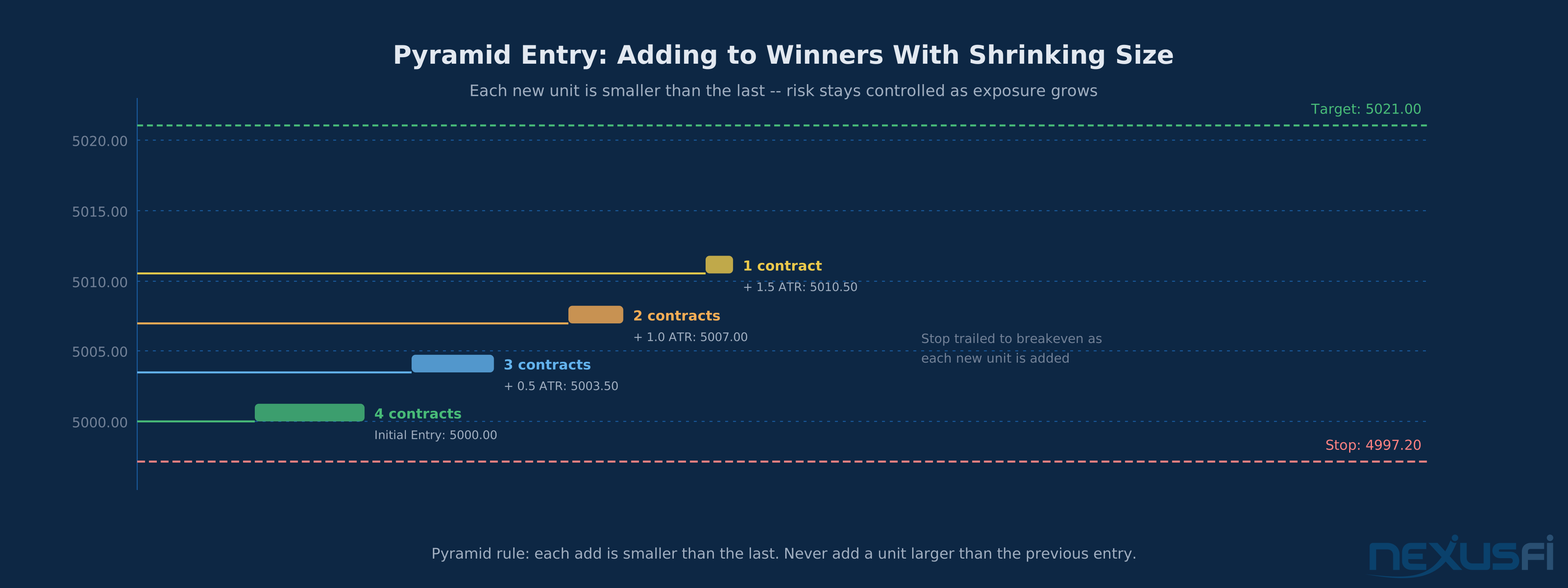
The pyramid approach is the classic professional scaling structure. You enter your largest unit first, then add progressively smaller units as the trade moves in your favor:
- First entry (largest): At the primary signal, highest certainty, lowest average cost
- Second entry (smaller): After price confirms the initial move
- Third entry (smallest): Final confirmation, smallest unit, highest average cost
As @tigertrader articulated in his trading thread — one of the most-read at NexusFi:
The arithmetic behind this matters. If you buy 3 contracts at 4500, 2 contracts at 4510, and 1 contract at 4520, your average cost is 4506.67 — well below the current price at final entry. A reversal back to 4500 costs only 6.67 points average, not 20 points as it would if you'd entered all 6 contracts at the top.
{IMAGE:6e6c675c-0537-461c-a648-6e0efef2eae4}
The Turtle System Approach #
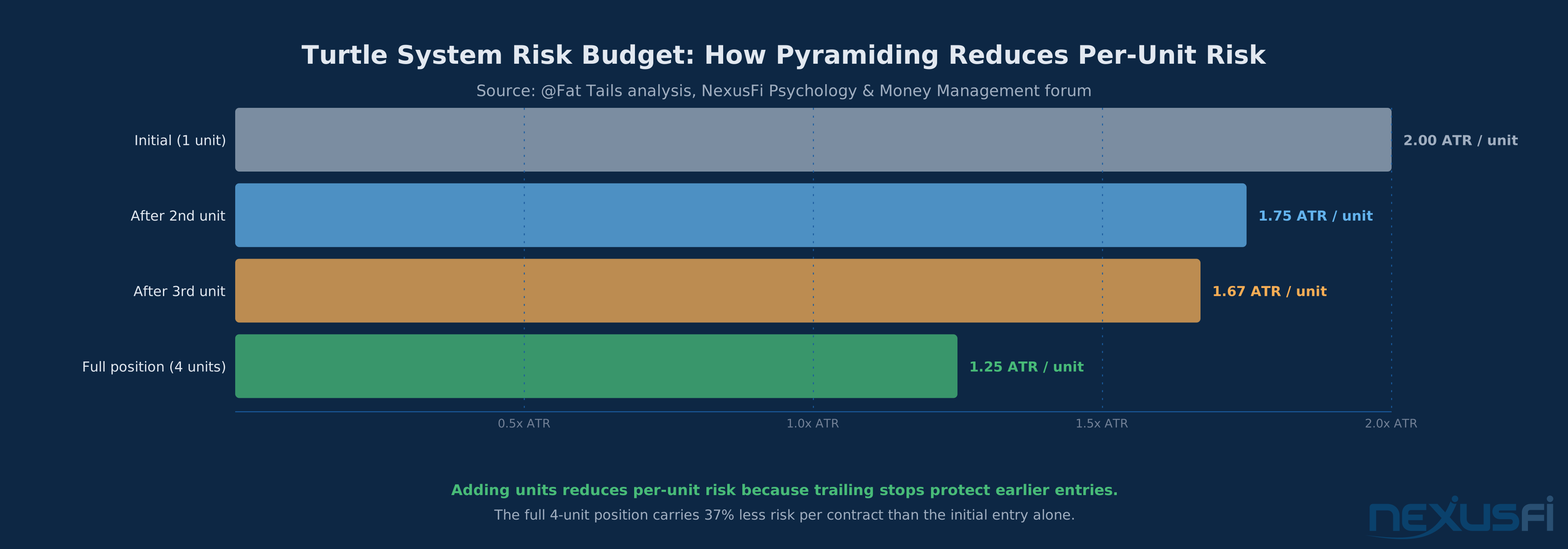
The Turtle Traders, trained by Richard Dennis in 1983-1984, formalized position scaling into a systematic framework that became one of the most-studied in trading history. Their approach sized positions in "units" — each unit equaling 1% of account equity divided by the daily ATR (Average True Range).
As @Fat Tails analyzed in the landmark NexusFi thread on scaling:
The Turtle rules permitted adding 1 unit at every 0.5N move in favor, up to 4 units maximum. Each addition kept total portfolio risk within 5% of equity. When positions moved much in favor, stops on earlier units tightened to lock in gains while the newest unit carried the trailing stop. This structure allowed the Turtles to pyramid into the large trend-following positions that generated their historic returns.
{IMAGE:20c66ea7-66d0-4045-9583-c66c7f774a8f}
All-In Versus Scale-In: Understanding the Trade-Off #
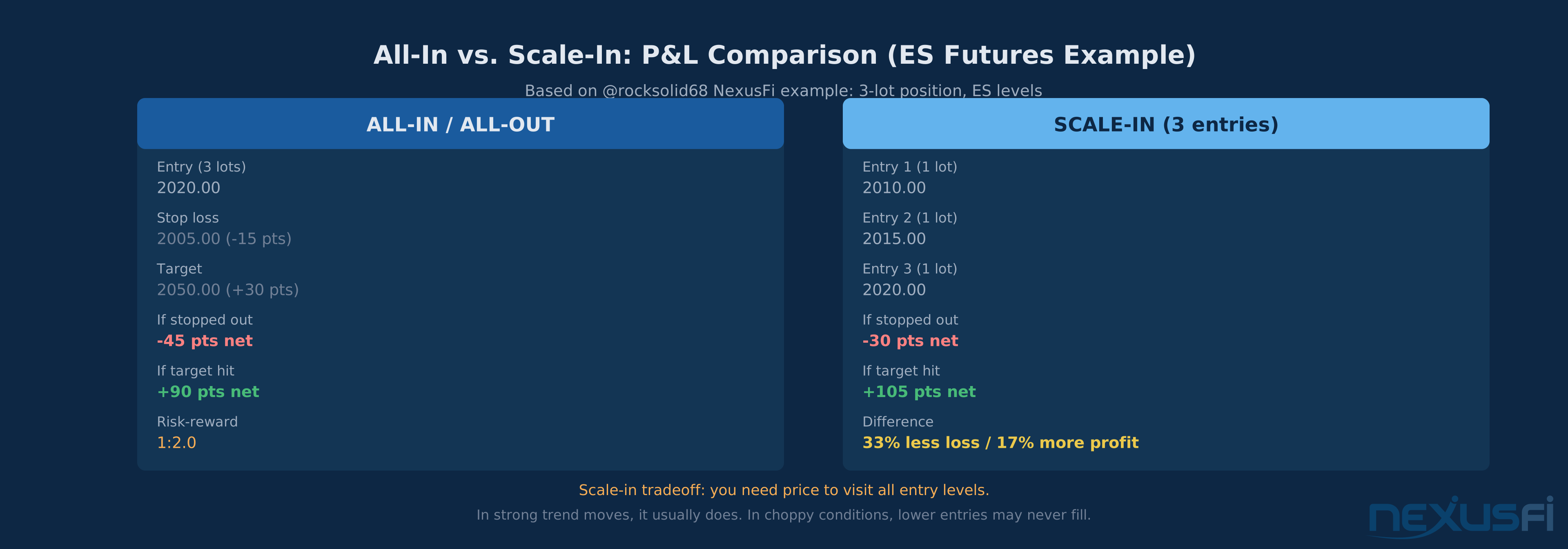
Scaling in has a real cost that traders must understand honestly. Entering your full position at once — "all-in" — captures better average prices on winning trades because you carry maximum size through the entire profitable move. Scale-in by definition means part of your position enters at worse prices.
The reason professional traders scale in anyway comes down to two realities:
Entry uncertainty: Even the best setups don't always hit the exact optimal price. Scaling in reduces the cost of being slightly early.
Psychological sustainability: Full-size entries that immediately go against you — even temporarily — produce emotional exits at the worst possible moment. Partial entries make normal heat psychologically manageable.
@Big Mike's advice in the Spoo-nalysis thread was direct: "Don't be so static with the position. Instead just scale — and allow yourself three scale ins, probably around 10 points apart from each other." This reflects the practical reality that mechanical pre-planned scaling outperforms reactive decision-making under heat.
{IMAGE:95708922-940a-49f5-9111-b22afcebbe23}
Practical Scale-In Approaches for Futures #
Beyond the Turtle system, modern futures traders use several practical structures.
The Pullback Scale-In #
Enter a small initial position at the breakout or signal. Add the rest on the first pullback to the breakout level. This structure enters at two price points — the initial breakout and the retest — providing excellent average pricing while requiring the market to confirm the breakout by holding on the pullback.
@sstheo documented his personal scaling evolution in his MES Live Account Journal:
The Time-Based Scale-In #
Enter the first unit at the setup signal, then add additional units if the trade is still working after a defined time period. This filters out false breakouts that reverse immediately while capturing sustained momentum moves with full size.
The Confirmation Scale-In #
Require specific technical confirmation before adding: second timeframe alignment, volume confirmation, failed break of support, or pattern completion. Each additional unit requires additional evidence. This is the most conservative scale-in approach and suits traders whose initial entries are highly precise.
Stop Management When Scaling In #
Multiple entries at different prices create a stop management challenge: where does your stop go?
The Hard Stop Rule #
Before scaling into any position, define the maximum loss for the entire scaled position. Calculate this based on your maximum acceptable loss, not on any single entry price.
Example: Maximum 3% account risk ($3,000 on $100,000). ES points are worth $50 each. Maximum position-wide loss = 3,000 / 50 = 60 points. Planning to scale to 3 contracts? Each contract can lose at most 20 points.
Adjusting Stops After Additions #
Each time you add to a winning position, three approaches exist:
- Keep original stop: Maximum risk increases with each unit added
- Tighten earlier units: Reduce risk on profitable positions to maintain constant overall risk
- Move stop to breakeven on initial entry: Eliminate risk on the original position once profitable
The most common professional approach is option 3: once the initial entry is sufficiently profitable, move its stop to breakeven. This converts initial risk into "house money" while scaled additions carry defined risk.
Scaling Out: Exiting a Position in Layers #
Scale-out strategies resolve a fundamental tension: you know where you entered, but never know how far a winning trade will go. Taking profits too early leaves money on the table. Holding too long turns winners into losers. Scaling out lets you do both — take partial profits at known targets and keep a portion working for the larger move.
The Classic 1/3 Rule #
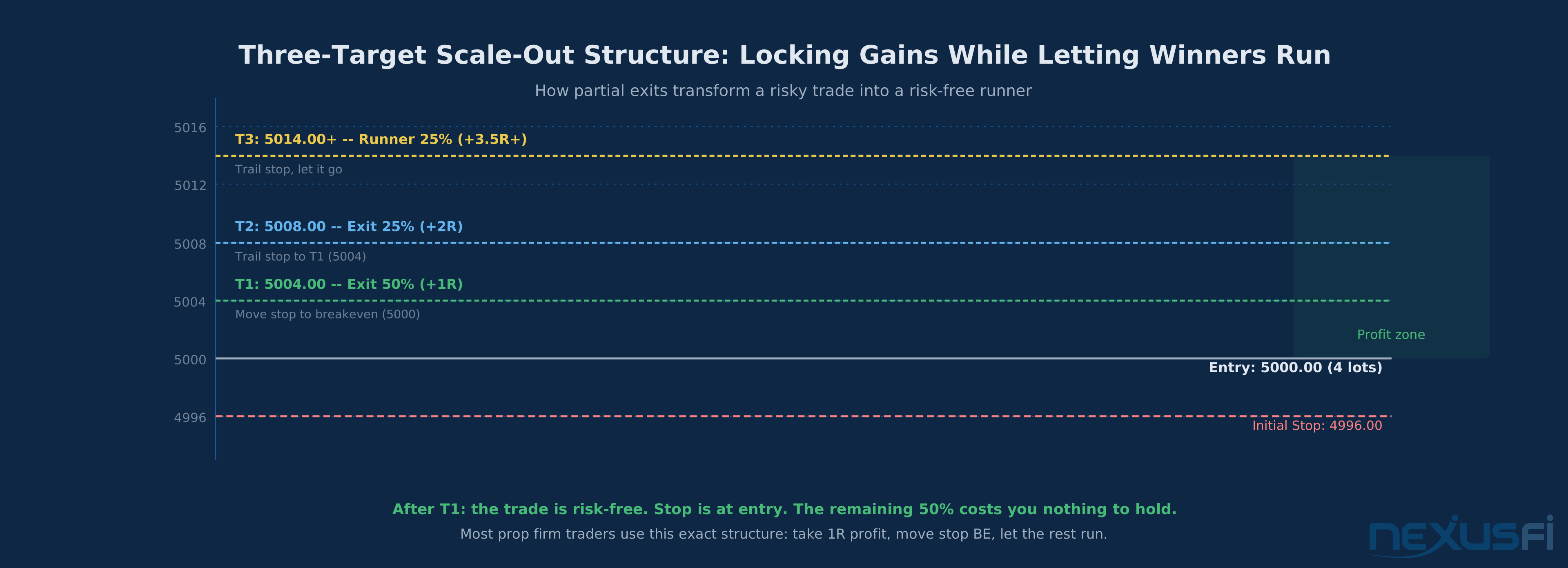
The most widely used scale-out structure divides a multi-contract position into thirds:
- First 1/3: Exit at initial target (1:1 R:R, VWAP level, known support/resistance)
- Second 1/3: Exit at extended target, or move stop to breakeven and let it run
- Final 1/3 ("runner"): No predefined target — trail stop and let the market decide
@Private Banker described his crude oil approach in his trading journal:
The Breakeven Move Protocol #
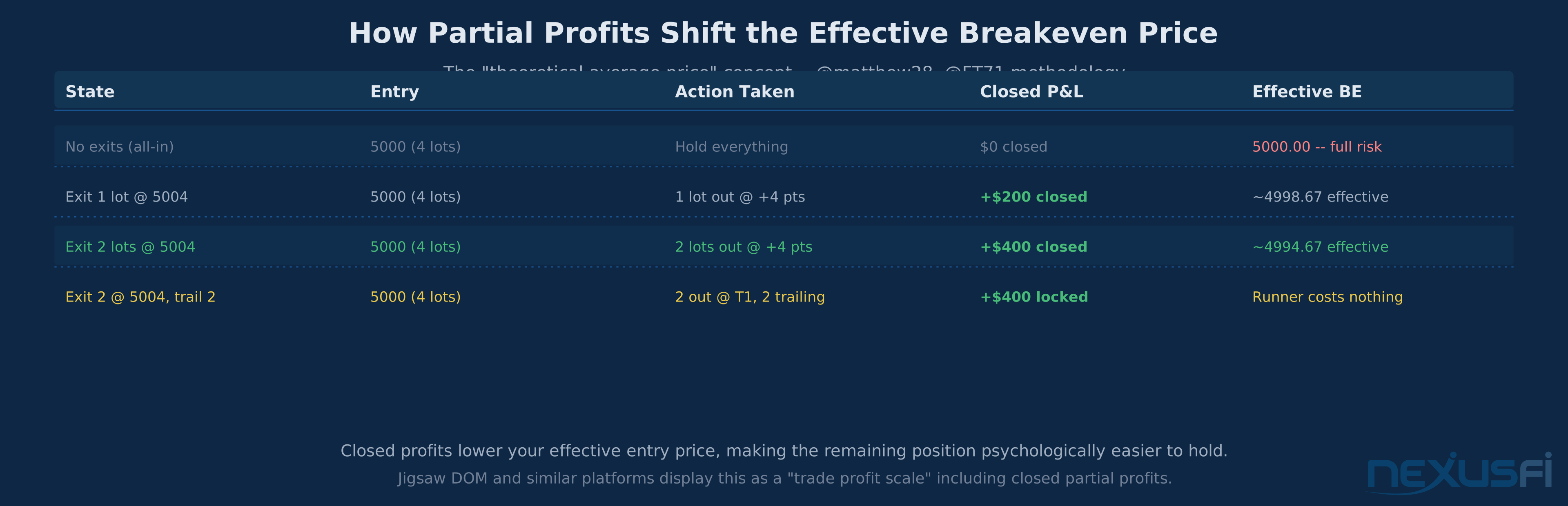
After the first scale-out, moving the stop to breakeven on remaining contracts eliminates monetary risk while preserving upside on the runner. @PandaWarrior documented his protocol:
{IMAGE:b4b91a5c-bfca-42fd-a211-73a303520e33}
The mechanical implementation matters: place the breakeven stop order immediately when the first scale-out fills. Waiting to "see what happens" introduces the same emotional decision-making that scaling is meant to eliminate.
Scale-Out Strategies for Different Market Conditions #
Not every trade deserves a runner. The optimal scale-out structure depends on market type.
Trending markets: Scale out more slowly. Keep larger positions and tighten stops progressively. The trend's duration is your primary edge; exiting too early gives up the bulk of trend-following profits. See /a/strategies/trend-following-futures for how scaling interacts with trend-following systems.
Range-bound markets: Scale out quickly at initial targets. Ranges have defined endpoints; holding through the apex risks a reversal that erases profits. A 70/30 scale-out structure works well: exit 70% at the range midpoint or top, keep 30% for potential breakout.
News and event-driven moves: Exit quickly after the initial impulse. News-driven moves often retrace as the market digests information. Front-loading exits at the peak of the immediate reaction captures the bulk of the opportunity. See /a/concepts/volatility-futures-trading for how volatility regimes affect exit timing.
{IMAGE:2ceafd60-4430-42b1-a8be-d0367e620b32}
The Psychological Dimension of Position Scaling #
Scaling is not purely mechanical — it creates specific psychological states that undermine execution if not anticipated.
The Temptation to Add to Losers #
The market makes losing positions feel like opportunities. When a trade goes against you, the mind offers: "The setup is still valid, this is just a better entry." Sometimes true. More often, it is rationalizing a reluctance to admit error and take a loss.
@rocksolid68 described the psychological danger in "How I Trade for a Living":
The structural protection is pre-defining your scaling plan before entering the trade. "I will add if X happens" is analysis. "I am losing money, should I add?" is rationalization under emotional pressure. These are different cognitive states.
Premature Scale-Out #
Fear of giving back open profit drives premature exits. Pre-defining scale-out levels and placing limit orders at trade entry removes the decision from real-time emotional pressure. If your plan says "exit 1/3 at 4530," that order should exist from the moment you enter — not when you are watching the price approach it while your P&L fluctuates.
Taking Heat by Design #
@Shivaya's thread on scaling-in raised an underappreciated point: deliberate acceptance of initial heat is part of the strategy:
This requires very clear distinction between "heat" (normal oscillation against the trade direction) and "reversal" (the thesis is invalidating). The scale-in plan must specify exactly when heat becomes reversal — and that specification must hold regardless of emotional state.
The most dangerous position in trading is one where you have already added to a loser once. The sunk-cost bias intensifies with each addition. Pre-commit to hard stops before entering any scaled position, and honor them. Every professional trader who has blown up an account has a version of the same story: "I just needed it to come back a little more..."
Risk Management Framework for Scaling Strategies #
Fixed Maximum Position Size #
Define the maximum contracts you will ever hold in a single market position. This cap applies regardless of how well the trade is working. Unlimited position growth creates unlimited risk.
Dollar Risk Per Trade #
Define maximum dollar risk for the entire scale-in structure, not just the initial entry. The whole position — initial entry plus all additions — operates within a single risk limit.
Portfolio Heat #
The Turtle system capped total portfolio risk at 5% of equity across all positions. As positions scale in and risk increases, other positions may need reduction to maintain portfolio-level risk limits. Discretionary traders who think about positions individually rather than as a portfolio consistently miss this constraint.
Drawdown Triggers #
During drawdowns, the temptation to recover through larger positions increases. This is psychologically understandable and mathematically destructive. Systematic trading rules reduce scale-in limits during drawdown periods. The math of drawdown recovery means the psychological pressure for larger risk is strongest precisely when risk management demands smaller risk. See /a/risk-management/drawdown-recovery-mathematics for the full recovery arithmetic.
Building Your Personal Scaling System #
The scaling approaches above represent different philosophies and market conditions. No single optimal scaling approach exists — the right system fits your strategy type, psychological profile, and instruments.
Trend-following strategies benefit from pyramid scale-ins and runner exits. Mean reversion strategies often work best with full entries at extremes and full exits at the mean. If watching a position go from $1,000 profit to $500 profit causes premature exits, predefined scale-out orders placed at entry are essential. If watching a trade approach your stop causes adding when you should not, hard mechanical rules against adding to losers are non-negotiable.
Different futures instruments also behave differently. ES, NQ, CL, GC, and other futures have different ATRs, liquidity profiles, and typical move sizes. Scale-in intervals appropriate for ES may be completely wrong for CL. Your scaling parameters should be calibrated to the specific instrument you trade.
The most effective development path: start with a simple structure (two entries for scale-in, two exits for scale-out) and track results in a trading journal. Document not just what happened, but what you were thinking when you made each scaling decision. The patterns in that documentation — when you added too early, exited too quickly, broke your own rules — will reveal what your personal system actually needs.
Key Takeaways #
- Scale into strength, never into weakness: Adding to winning positions amplifies profits with defined risk. Adding to losing positions amplifies losses with no ceiling.
- Define full risk before entering: The entire scale-in structure's maximum loss must be known before adding the first contract.
- Pyramid scale-ins keep average cost favorable: Largest entry first, progressively smaller additions as the trade confirms.
- The 1/3 runner approach balances certainty and upside: Exit a portion at known targets, keep a portion for the larger move.
- Move stops to breakeven after first partial exit: Convert the remainder to a zero-risk position after capturing initial profit.
- Pre-define all scaling decisions before entering: Decisions made during open positions are contaminated by emotional pressure. The pre-trade plan is more reliable.
- Match scaling structure to strategy type: Trending strategies benefit from scale-ins and runners. Mean reversion strategies often work best with full entries and full exits.
Knowledge Map
Go Deeper
Build on this knowledgeReferences This Article
Articles that build on this topicCitations
- — Killer Instinct and the Home Run Mentality (2011) 👍 8“When you are pressing a trade and adding to it, you should be scaling in a pyramid fashion, adding progressively smaller units. The advantage of scaling into your maximum position is that it keeps your average cost basis favorable.”
- — All in all out vs. scaling in and out (2010) 👍 19“Scaling in enabled the Turtles to trade larger position size with the same predefined risk. The overall return-to-risk ratio depends critically on the trading approach and the structure of the scaling.”
- — How I Trade For a Living (2016) 👍 14“When you're averaging down on a losing trade, you need to be able to sustain a draw-down that is roughly 5x your largest losing day.”
- — Making a Living with the Micros (2021) 👍 3“Keep averaging down on a trade that is going against you, adding position after position until you completely obliterate your account.”
- — My MES Live Account Journal (2019) 👍 4“Progressive scaling, where I start with one and go up to six, being rewarded for good trades.”
- — The PandaWarrior Chronicles (2012) 👍 16“Go BE once price has gone 1XR and taken my first scale out. This results in my BE on the second position.”
- — Zen & the Art of The Small Account (2011) 👍 8“I scale out at .15 and .30 and let my remaining 1/3 trail, letting the market take me out.”
- — Scaling-in/Adding near your average MAE; why not? (2010) 👍 12“I prefer adding more even though I'm taking heat, rather than taking the full position at the initial signal.”
- — New to futures and doing great (2013) 👍 10“Averaging down, or adding to a loser, with a leveraged instrument like futures is in general a path to destruction.”
- — Spoo-nalysis ES e-mini futures S&P 500 (2015) 👍 15“Don't be so static with the position. Instead just scale -- and allow yourself three scale ins.”