



Consecutive Loss Protocols and Trading Shutdown Rules: A Data-Driven Framework for Knowing When to Stop
Subtitle: How to design the circuit breakers that protect your account when your judgment can't be trusted
Overview #
Every trader has a version of the same story. The morning starts fine — maybe even strong. Then a loss. You shrug it off. Normal. Another loss. You start watching more carefully, second-guessing entries. A third loss. Now you're not trading your system anymore — you're trading your frustration, your need to get even, your fear of leaving a red day on the books. By the end of the session, you've turned a manageable $300 loss into a $1,200 disaster. You didn't break your risk-per-trade rules. You just kept trading while your edge had evaporated.
Consecutive loss protocols exist to solve exactly this problem. They're not about psychology in the abstract. They're concrete shutdown rules — pre-committed, written, and ideally platform-enforced — that remove your discretion precisely when your judgment is least reliable. Three losses in a row and you stop, not because three losses is cosmically significant, but because you've decided in advance that this is the point where the cost of continuing almost always outweighs the benefit.
This isn't a soft suggestion. As @jstnbrg put it in his years of pit trading at the Chicago Board of Trade, "I always had a rule in the pit that if I had three consecutive losing trades I was done for the day." That rule came from experience, from watching what happens when traders push through consecutive losses without a circuit breaker. What happens is predictable: the losses compound, the frustration compounds, and the P&L curve turns into a waterfall.
This article covers the complete framework: the three-tier protocol structure (intraday, daily, weekly/monthly), how to calibrate thresholds for your specific system, the size-down alternative to full shutdown, platform-level enforcement tools, and the behavioral mechanics of why traders break their rules — and what to actually do about it.
The Three-Tier Framework #
Consecutive loss protocols aren't a single rule — they're a hierarchy of circuit breakers operating across three time horizons. Think of them like electrical circuit breakers: small breakers for small surges, bigger ones for bigger problems. Each tier addresses a different type of losing pattern and carries different consequences.
Tier 1: Intraday Shutdown (2-4 consecutive losses)
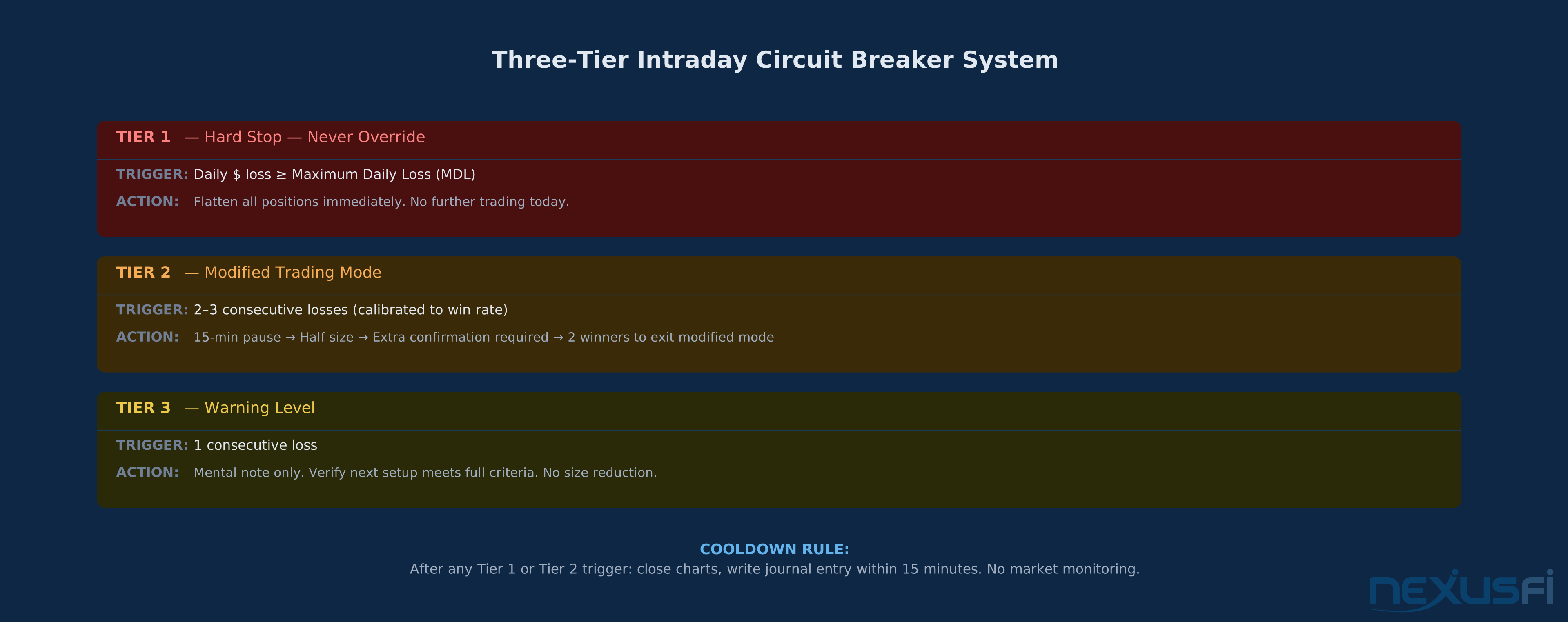
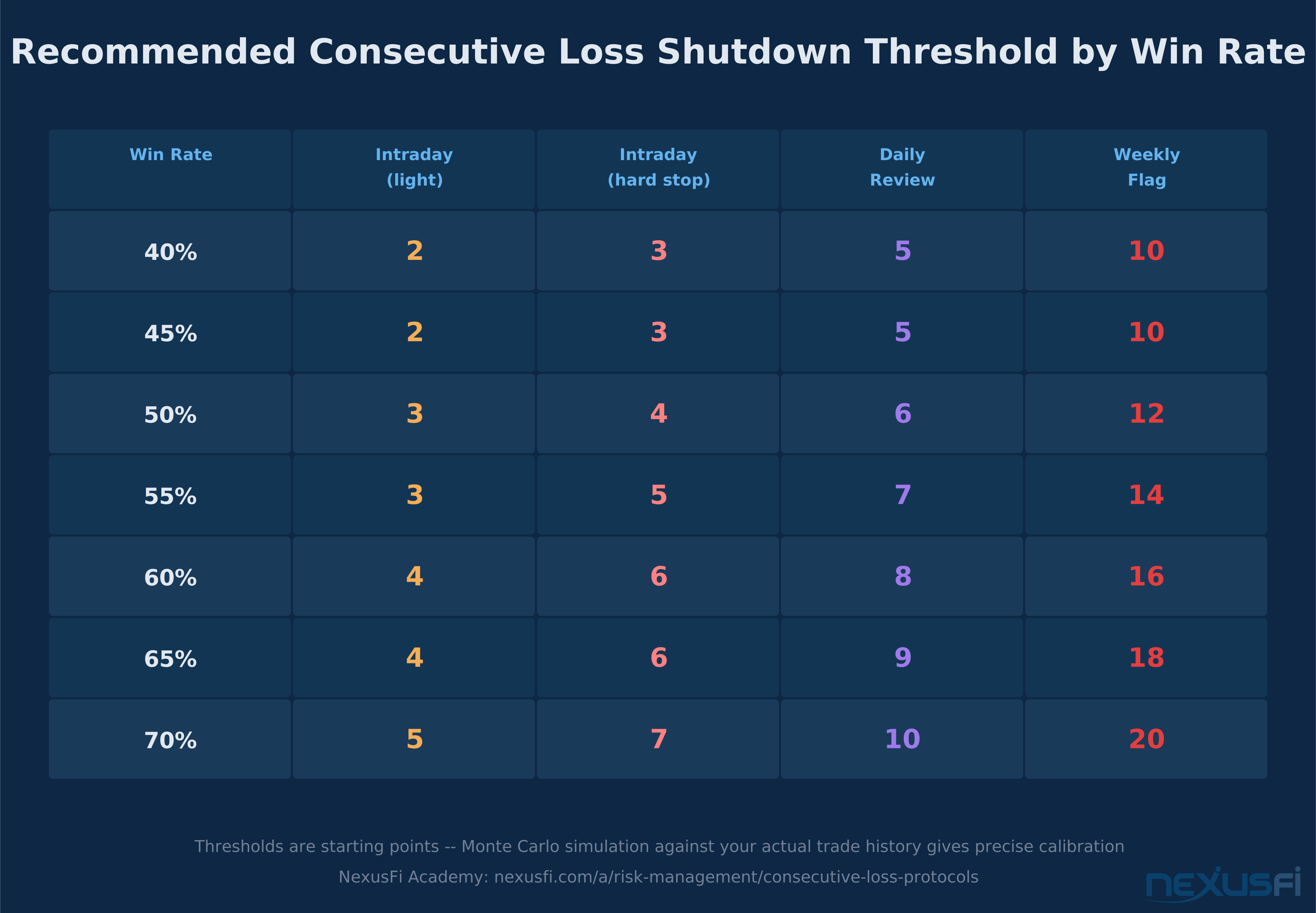
This is the most immediate circuit breaker. It fires during the trading session itself, based on trade count — not dollar amount. The trigger is typically 2-4 consecutive full-stop losers. Most experienced futures traders land at 3: enough to confirm that something is off, not so many that you've already done serious damage.
Tier 2: Daily Loss Limit (dollar-based)
The daily loss limit is a dollar amount that ends your trading day regardless of trade count or how many good setups appear afterward. It's always a dollar amount — not ticks — because dollars are what you deposit and withdraw, and because tick values differ by instrument.
Tier 3: Weekly and Monthly Circuit Breakers
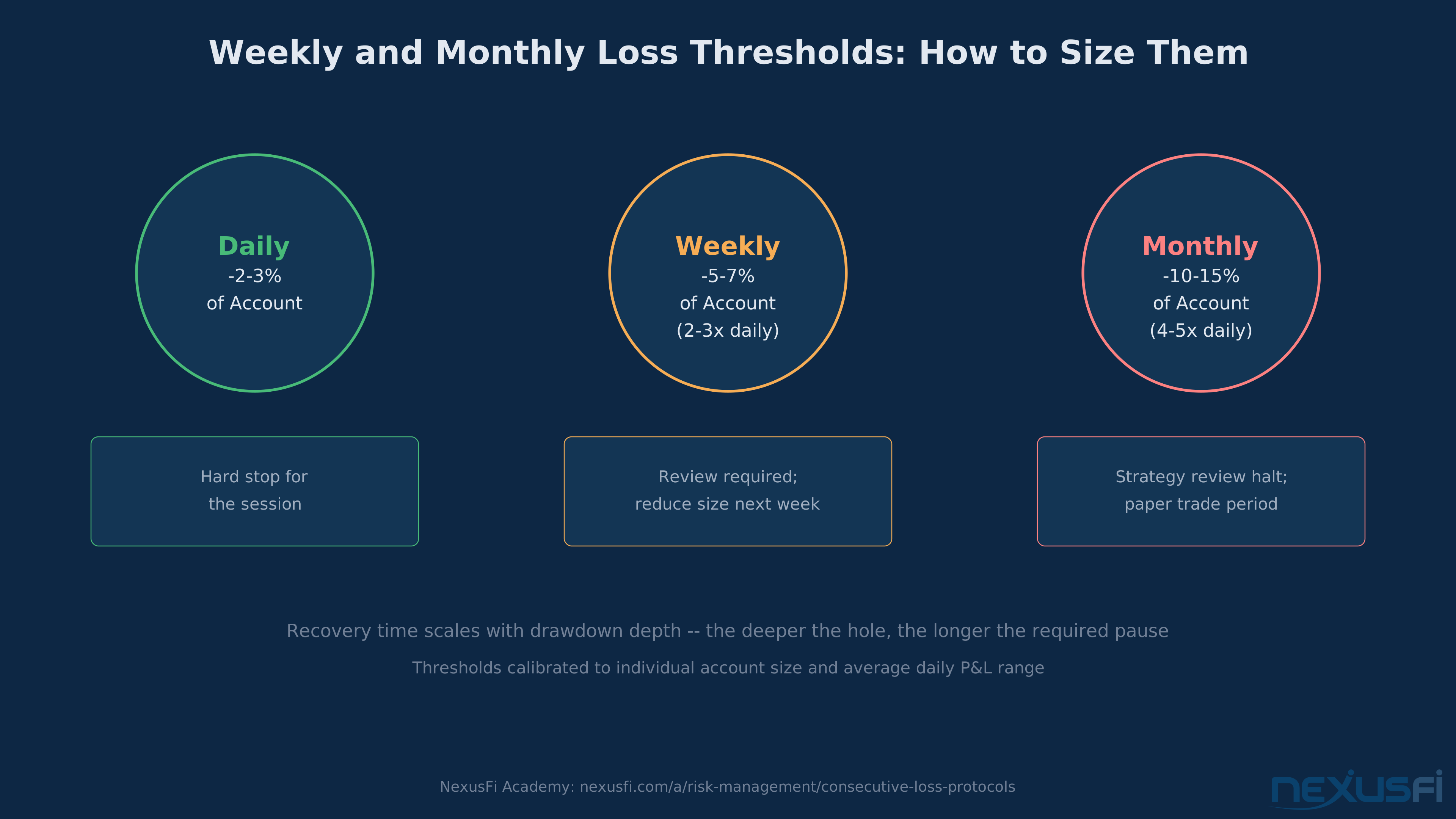
For losing weeks or months that suggest a deeper problem — strategy breakdown, market regime change, or degraded execution — the weekly and monthly limits require taking meaningful time off: a day off for a bad week, a week off for a bad month, or a structured review period before resuming.
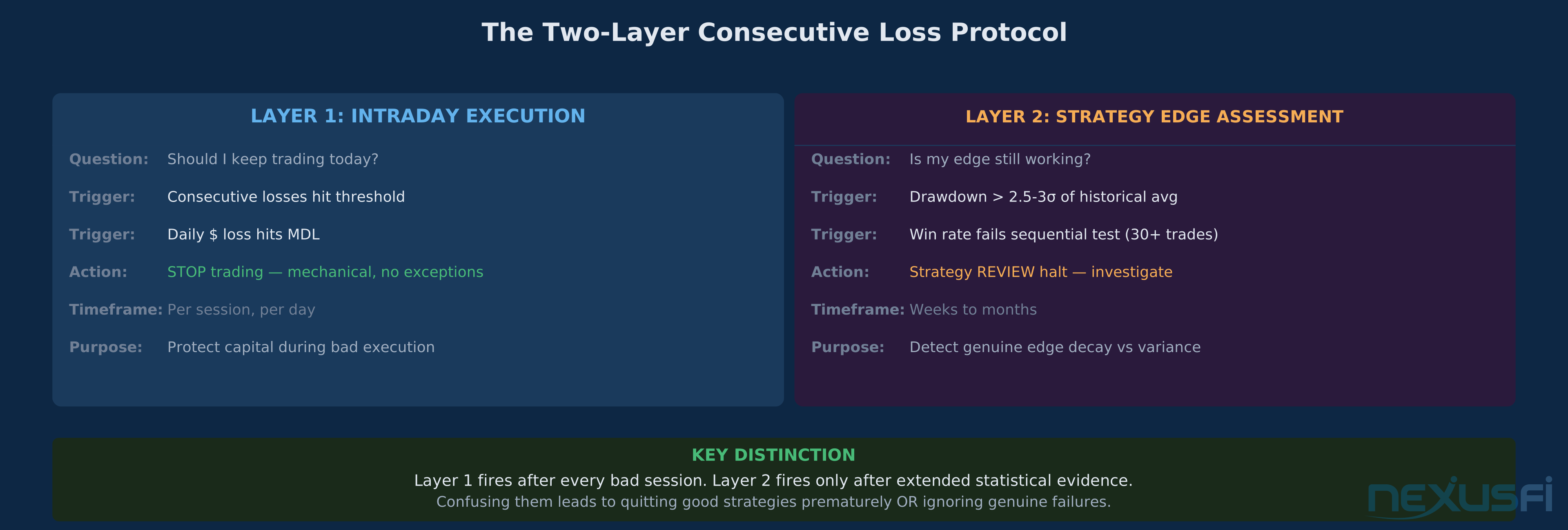
The three-tier framework works because different losing patterns require different responses. A streak of 3 bad entries in one session might just be noise. A week of consecutive losing days signals that something structural has changed. Your protocol needs to distinguish between them — and apply the right intervention size to each.
The three tiers work together rather than independently. On any given day, either the intraday trigger or the daily dollar limit can fire first. Whichever hits first ends the session. The weekly and monthly tiers operate at a higher level — they can trigger even in weeks where no single day hit its individual limits, because the cumulative pattern matters too.
Tier 1: Intraday Shutdown Triggers #
Setting the Loss Count Threshold #
The most common intraday trigger is 3 consecutive full-stop losers. This isn't an arbitrary number. It balances two competing risks:
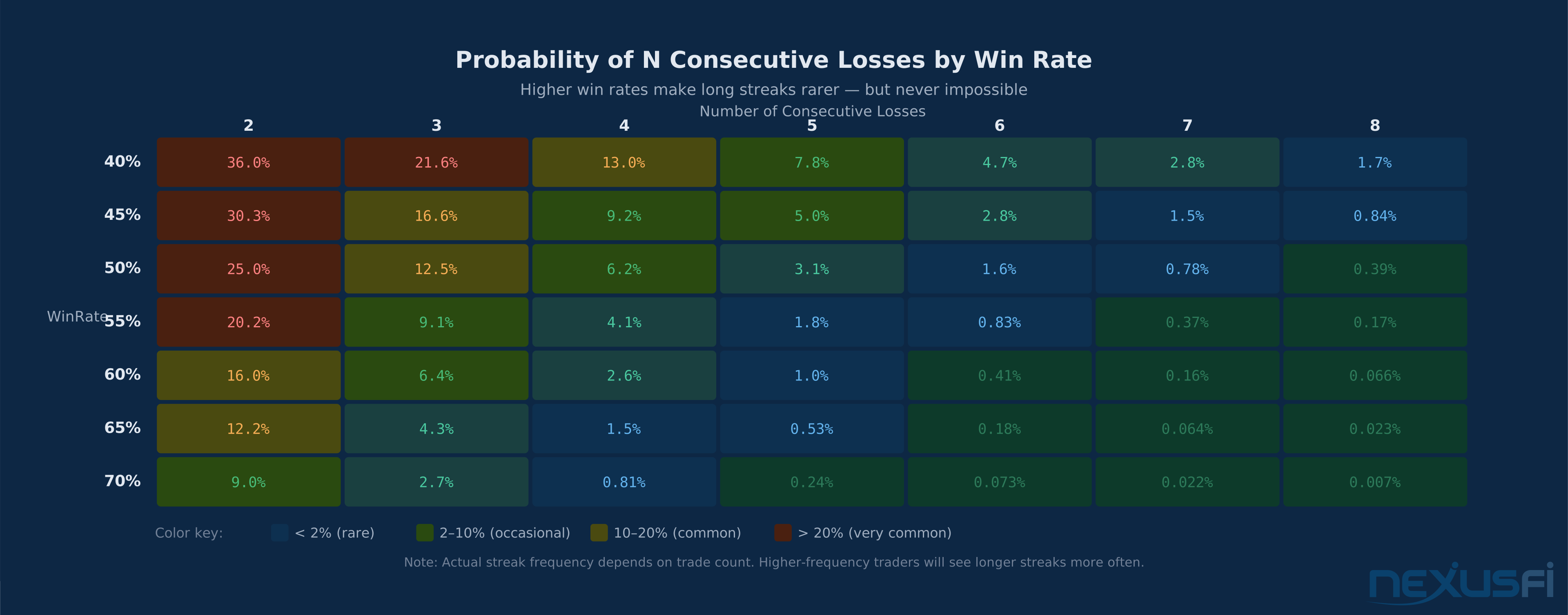
- Too few (stop after 1-2 losses): You'll false-trigger constantly. Most strategies with a 40-50% win rate hit 2 consecutive losses multiple times per week. Stopping after every 2-loss streak would gut your session frequency and your ability to exploit the setups that come later.
- Too many (stop after 5+ losses): By the time you hit 5 consecutive losses, you've typically done meaningful damage AND you're almost certainly operating in a degraded emotional state. The protocol fires too late to matter.
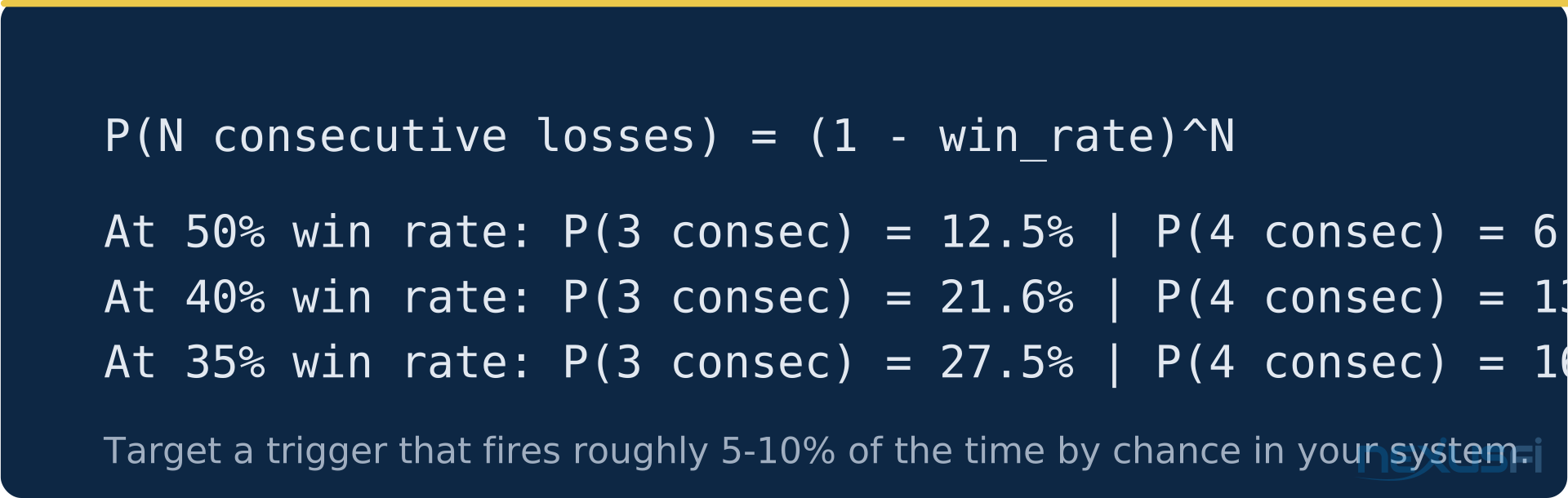
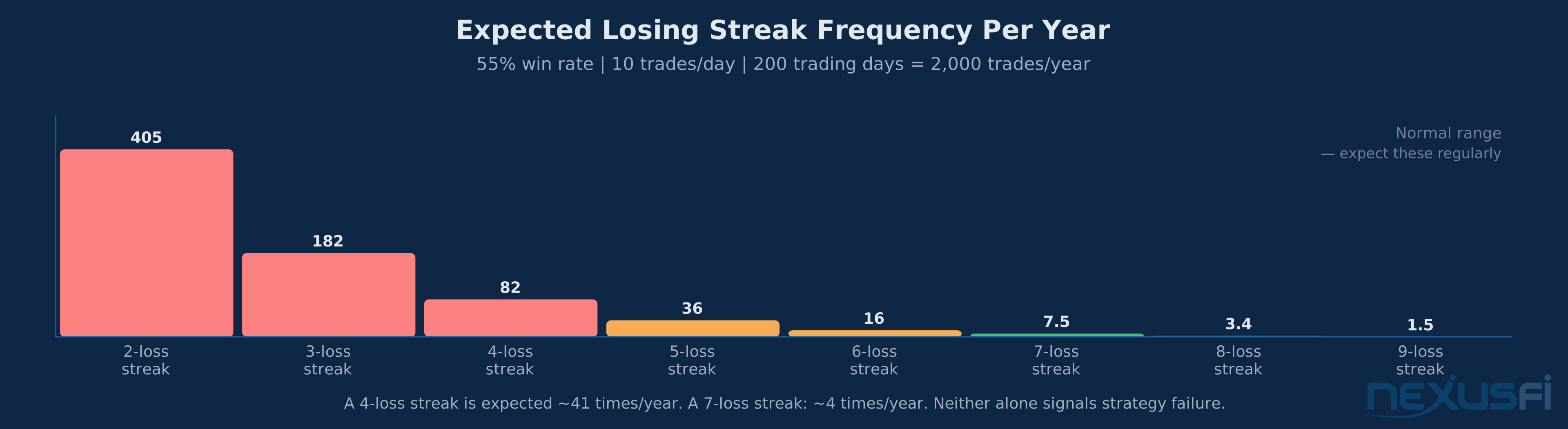
At 3 consecutive losses with a 50% win rate, probability of hitting this purely from variance is 12.5% (0.5³). Roughly once every 8 sessions, a 3-loss streak happens by chance. That false-trigger rate is real — accept it. The cost (losing a session's potential upside) is almost always less than the cost of continuing to trade in an impaired state.
For strategies with lower win rates (35-40%), consider a 4-loss trigger instead, since 3 consecutive losses is statistically more expected and will fire too frequently.
Defining "A Loss" Precisely #
This is where most traders get sloppy, and ambiguity in the protocol is fatal. Before you ever encounter an edge case, you need an unambiguous definition written in your trading plan.
- Full stop-out only: A trade that hits your predetermined stop loss. Scratched trades, partial losses, and managed exits that go modestly against you don't count. You're measuring clean stop-outs — the signal that your read on the market was wrong.
- Including near-scratches: Some scalpers count any exit below breakeven, even -1 tick. More conservative, appropriate for strategies where minimizing losers is a primary edge.
- Re-entries after reversals: If you flip direction, that counts as a new trade — not a continuation of the same thesis.
- Gap opens and slippage: Stopped out by a gap rather than clean price action? Err toward counting it. The protocol isn't about fault — it's about your current state.
Write the definition before you need it. "A loss is any trade that hits my predetermined stop loss" eliminates all ambiguity in real time. The moment you start negotiating what counts as a "real" loss during a losing streak, the protocol is already breaking down.
What "Stop Trading" Actually Means #
This sounds obvious, but it needs to be spelled out because traders find extraordinary creative ways to keep trading after they've "stopped":
- Close the platform, or close the DOM if you need to keep the platform open for monitoring open positions.
- Do not watch the charts looking for "that one perfect setup."
- Do not open a sim account to "practice" or "test" ideas.
- Do not re-open the platform 30 minutes later because "the market looks completely different now."
@matthew28 laid out four practical options when you hit your max daily loss. Each is valid depending on your personality:
- Switch off the computer and step away completely
- Step away but keep screen recording for later trade review
- Stay at the screen but close the DOM — watch price action to learn, but no trades
- Sim trade (he recommends against this specifically — if you make back the loss in sim, you'll be tempted to keep going live next time; if you lose more in sim, you're reinforcing poor technique)
Option 1 is the cleanest break. Options 2-3 work if you can genuinely separate observation from the urge to execute. Option 4 is a trap for most traders.
The Size-Down Alternative: A Step Between Full Trades and Full Shutdown #
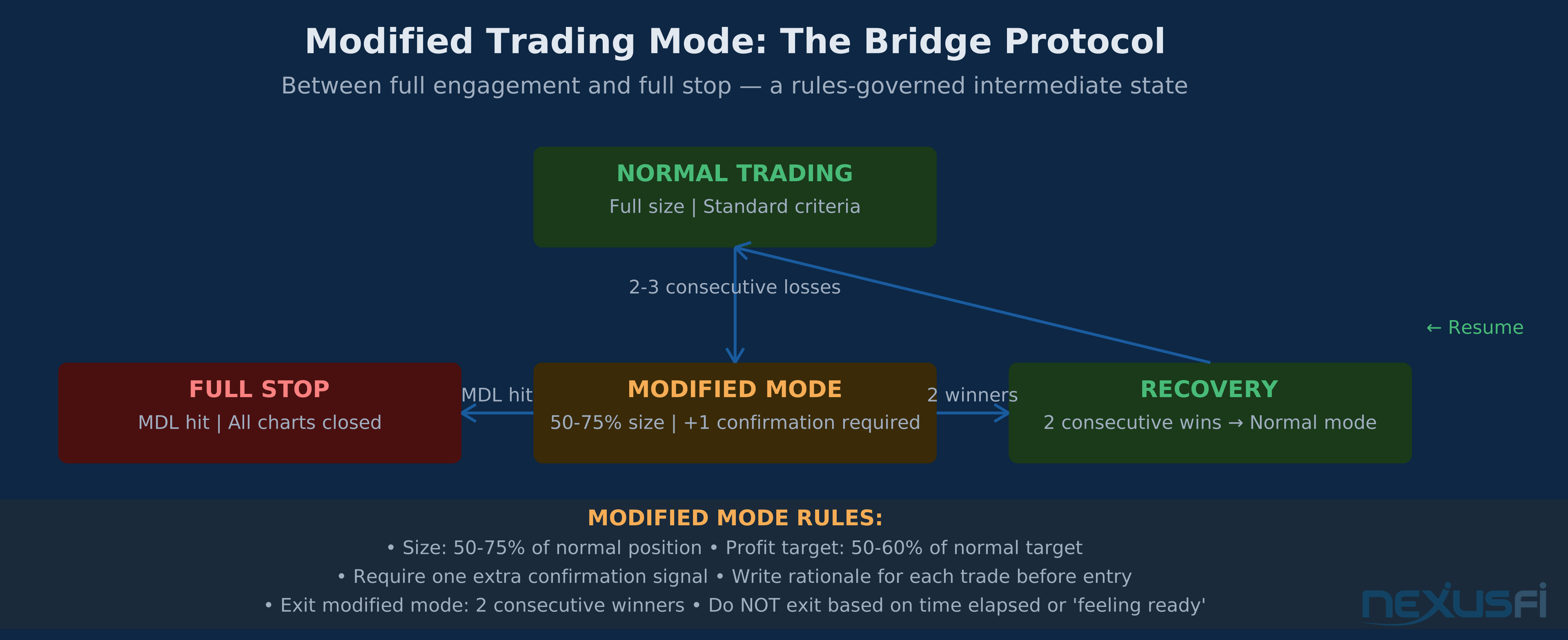
For traders who find hard shutdown rules too blunt — especially those with high-frequency setups where a bad stretch might resolve within the same session — a step-down approach offers a middle ground. Instead of stopping entirely after N consecutive losses, you reduce your position size.
How Step-Down Works #
After hitting the loss trigger, reduce position size rather than stopping:
- After 2 consecutive losses: Trade the next setup at 50% of normal size
- After 3 consecutive losses: Reduce to 25% of normal size, or stop entirely
- Reset condition: After 1-2 clean winning trades at reduced size, step back up to normal
The logic is sound — why continue losing on 2 contracts when you can lose on 1? And when the market starts cooperating again, you scale back up with a clearer head and lighter emotional load.
The Tradeoff: Depth vs. Duration #
@grausch spent considerable time researching this approach for systematic trend-following systems: "Both methods reduce the size of the drawdown since size decreases as drawdowns increase, but they increase the duration of the drawdown since the winning trades are then invariably taken with smaller size. It seems to be a case of picking your poison."
This is accurate and important to internalize. Size-down after losses means your recovery trades are smaller, which slows the recovery process. The benefit is a shallower drawdown curve. The core tradeoff: reduced drawdown depth at the cost of increased drawdown duration.
For discretionary day traders with high session-level win rates (above 60%), step-down often makes more sense than hard shutdown — you'll typically recover within the session, and the reduced size lets you get there without compounding the emotional damage. For systematic traders or those already in a multi-week drawdown, a full shutdown is typically cleaner because you need the break more than you need the trading opportunity.
If your system has a session-level win rate above 60%, step-down is probably better than full shutdown. Most losing sessions resolve by the end of the day. If your session-level win rate is 50% or below, full shutdown prevents a bad day from becoming a bad week.
@indextrader7, who went 27 straight trading days in a drawdown, learned this directly: "I really cut down on position size for this struggling period. Although I doubled my tick drawdown, my dollar drawdown was kept to roughly the same level. It's really counterintuitive and really not comfortable, but in hindsight it's really the best play." The instinct during a struggle is to trade larger to recover faster. The discipline is doing the opposite.
Tier 2: Daily Loss Limits #
Calibrating the Dollar Threshold #
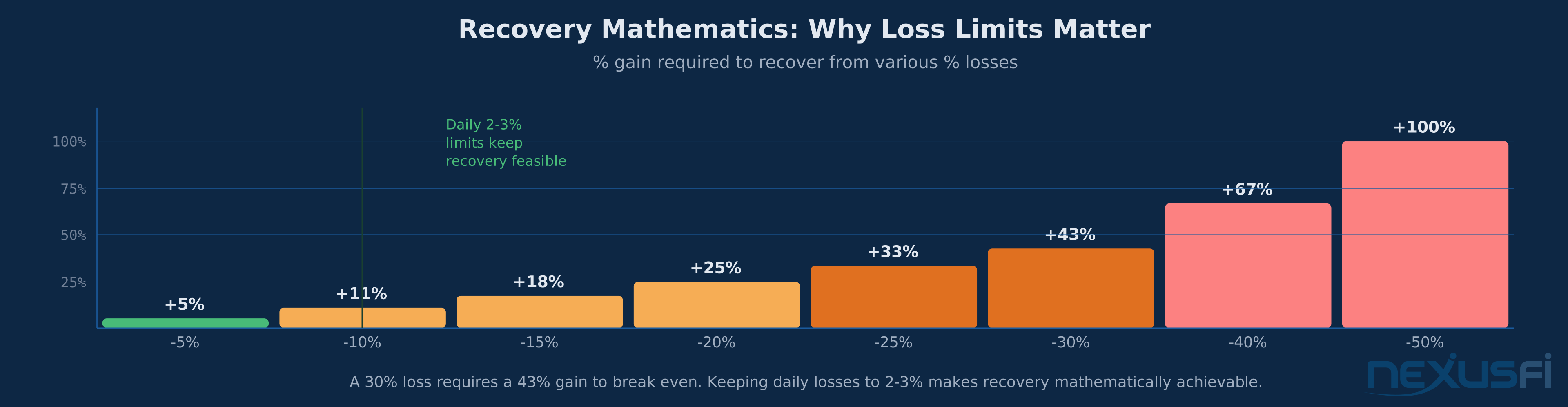
The daily loss limit is the dollar amount that ends your day, period. Your daily loss limit should be set at 1.5-2x your average losing day. If your average losing day is -$300, your limit should be -$450 to -$600. This gives enough room for a legitimately bad day without allowing a catastrophic one.
More specifically, by instrument and style:
- ES scalpers: 3-5x your per-trade risk. If each trade risks 2 ES points ($100 on 1 MES contract, $1,000 on 1 ES), your daily limit is 3-5 times that amount. For a 2-point risk on ES, that's $3,000-$5,000 — appropriate for a trader sizing 1 contract.
- NQ day traders: NQ trades around 4x the dollar volatility of ES per point. Adjust your per-trade risk calculations so and apply the same 3-5x multiplier.
- CL (crude oil) day traders: CL is naturally volatile — 10 ticks is $100, and 30-tick stops are common. Daily limits in the $300-$600 range for 1 contract day traders are reasonable.
- Prop traders on evaluations: Set your personal daily limit 20-30% inside the prop firm's hard limit. If the combine's daily limit is -$1,000, set your personal protocol at -$700. The prop firm's limit costs you the account; your personal limit maintains your career.
@lemons applied exactly this reverse-engineering approach: "I calculated how many stop outs are needed to go past the daily loss limit. With 3 stop outs in row I will be safely below daily loss limit. With 4 stop outs in row I will go past daily loss limit. I implemented rule to myself: stop trading after 3 losers in row." Work backward from your hard limit to find the trigger count that keeps you safely inside.
Never set your daily loss limit at the maximum you're willing to lose. That's not a protocol — that's just running out of money. Your daily limit should trigger while you still have meaningful capital and, more importantly, while you're still capable of trading well tomorrow. The goal is to protect next week's trading, not just today's account balance.
Trade-Count Triggers vs. Dollar Limits: Both Catch Different Problems #
These two approaches are complementary because they catch different failure modes:
- Trade-count triggers (3 consecutive losses): Catch acute deterioration. When you're wrong three times in a row, something is off with your market read. This fires fast.
- Dollar limits: Catch slow bleed days where you're taking many small losses, none of which individually trigger the trade-count protocol. If you take 8 trades at 60% win rate and all 5 losers cluster together, your trade count protocol might never fire — but your dollar damage is real.
Use both. The first to trigger wins.
Tier 3: Weekly and Monthly Circuit Breakers #
Three consecutive losing DAYS is a at the core different signal than three consecutive losing trades in one session. A daily losing streak suggests your edge may have temporarily disconnected from the current market regime — or that something has changed in your execution, your focus, or conditions in your personal life that are bleeding into your trading.
Weekly Circuit Breaker #
After 3 consecutive net-negative days, take at least one full trading day off. Not a reduced-size day. Not a sim day. A genuine break from the screens.
@jstnbrg's pit rule extended here: "If I had three losing days in a row I would take a day off. Try to identify what went wrong, but don't dwell on it, just identify the problem or problems and then do something completely unrelated to trading." When you return, start with minimal size — 25-50% of normal — for the first 1-2 sessions back.
Monthly Circuit Breaker #
After a month where your P&L is more than 2x your average monthly loss, take a week completely off. This is the nuclear option — the difference between traders who recover and traders who blow up. One bad month doesn't end a trading career. Doubling down on a bad month trying to recover before month-end does.
During the off-week:
- Review every trade from the month, not just the losers
- Identify the pattern: was the market in a regime your strategy doesn't handle well? Did your execution degrade? Were there external life factors affecting concentration?
- Consult your written trading plan and compare actual behavior to intended behavior
- Explicitly decide what adjustment, if any, you're making before returning
The Psychology of Week-Long Losing Streaks #
The psychology of a 3-day or week-long losing streak is different from intraday consecutive losses. With intraday losses, the dominant emotion is frustration and the urge to get even. With week-long losing streaks, the dominant response shifts toward depression, imposter syndrome, and the anxiety that you've lost your edge permanently.
The forced break is specifically designed to interrupt that spiral. The impulse is to trade more to "prove" you still have it. The protocol requires trading less. This is counterintuitive enough that it needs to be pre-committed — decided when you're NOT in a losing streak — rather than decided in the moment when your judgment is compromised.
The three-tier framework — intraday trigger, daily dollar limit, weekly/monthly circuit breaker — creates a proportionate response to different scales of losing patterns. Small problems get small interventions. Large problems get time to breathe and a structured review. Without the multi-tier structure, traders either over-react to normal variance or under-react to structural breakdowns.
Platform-Level Enforcement: Making Rules Stick #
The behavioral section below explains why traders break their own rules. The most effective solution isn't willpower — it's technology. Build enforcement into the infrastructure so that you can't easily override the rule in the moment.
NinjaTrader 8 Built-In Risk Settings #
NinjaTrader Brokerage (as of March 2023) has server-side risk management built into the account dashboard at account.ninjatrader.com. These settings are enforced at the broker level — meaning you cannot override them from within the desktop platform during a trading session. Overriding requires logging into the web account separately, which creates friction.
Available settings via account.ninjatrader.com → Settings → Risk Settings:
- Daily Loss Limit: Liquidates open positions and prevents new orders when the dollar limit is hit
- Weekly Loss Limit: Same trigger, weekly timeframe
- Daily Profit Trigger: Locks trading after a winning day (useful for traders who over-trade after strong positive sessions)
- End-of-Day Trailing Max Drawdown: Trailing drawdown that tightens as your day P&L improves — protects a profitable day from reverting to negative
- Real-Time Trailing Max Drawdown: Same as above, but updates tick by tick throughout the session
- Lock risk settings if trading locked: Once the limit fires, it requires an explicit web-side action to unlock
@Liberty88 noted an important design choice: the "Lock risk settings if trading locked" option means that once you hit your daily limit and are locked out, you can't simply click a checkbox to re-enable trading. You have to go through the web account. This is exactly the right amount of friction — enough to prevent emotional override, not so much that you can't get back in for a legitimate reason.
Guardian Angel and Third-Party Add-Ons #
For traders on prop accounts (Apex, Topstep, etc.) where broker-side settings aren't modifiable, third-party tools fill the gap.
Guardian Angel (NT8 add-on): Enforces intraday risk parameters from within NT8 itself. @injpowwetrust's experience: "I no longer have that itch to change my risk settings (cross fingers, almost 3 weeks now)." The key is combining Guardian Angel with a strong password specifically for the settings — you configure it when calm, set a password you won't remember under pressure, and write the password down somewhere physically inaccessible at your trading desk.
Cold Turkey / Freedom (computer-level blocking): Software that blocks specific applications (including trading platforms) or entire internet access for a preset period. After your shutdown trigger fires, start a 2-hour block. You physically cannot open the platform until the timer expires. No willpower required — the software enforces what your willpower can't.
Screen recording + external accountability: Less technical but effective for traders who respond well to social pressure. Keep a session recording and commit to reviewing it with a trading partner weekly. The awareness that someone else will watch the session creates meaningful pressure not to break rules mid-session.
Why Traders Break Their Rules: The Behavioral Mechanics #
Understanding why traders break rules isn't academic — it's tactical. Knowing the mechanism lets you design the right countermeasure.
Cognitive Traps: Sunk Cost and Loss Aversion #
"I'm already down $400. If I just get back to -$200, I'll stop." This is sunk cost logic applied to trading — and it's one of the most effective account-destroyers in existence. The $400 is gone regardless of what happens next. The decision to continue trading should be based entirely on whether the NEXT trade has positive expected value, completely independent of what you've already lost.
The insidious part: the number ($400, $600, whatever it is) makes the impulse feel rational. It sounds like risk management: "I'm managing my loss target." It's not. @bobwest was direct about this: "Making it back does not work, by the way. It does lead to bad trades and emptied accounts. It's a gambler's impulse, not a workable trading idea."
Loss aversion amplifies this trap. Behavioral finance research (Kahneman & Tversky's Prospect Theory, 1979) shows losses feel approximately 2x as painful as equivalent gains feel pleasurable. After a losing streak, this ratio worsens — your nervous system is screaming at you to do something to stop the pain. "Doing something" feels better than "doing nothing" even when doing nothing is clearly the correct action. The protocol forces doing nothing, which is precisely why it needs to be pre-committed and ideally platform-enforced rather than depending on real-time willpower.
The Tilt Cycle #
@JonnyBoy's account of a 5-loss streak captures the tilt cycle exactly: "My internal monologue went something like this: 'The VWAP setups have been consistently losing all day so I should probably fade the next setup.'" This is the hallmark of tilt: rationalizing why the rule doesn't apply right now.
The tilt cycle:
- Normal losses occur
- Rational analysis: "maybe my read is off today"
- Protocol should fire here — but instead:
- Meta-rationalization: "but this setup is different"
- Override the protocol → bigger loss → deteriorated state → catastrophe or forced exit
The protocol interrupts at steps 3-4. Once you reach step 5, you're already on compromised judgment. The goal is to fire at step 3, before the meta-rationalization solidifies.
The most dangerous moment is not when you're clearly tilted. It's when you're 30% tilted and have just enough rationality left to construct a convincing argument for why the next trade is different. Protocol-breaking almost always happens at 30% tilt, not 100% tilt. At 100% tilt you know you're done. At 30%, you're convincing yourself the rules don't apply right now.
Why Willpower Fails #
Willpower is a finite resource that degrades throughout a session, especially after stressful events like consecutive losses. Research on ego depletion (Baumeister et al., 1998) demonstrates that self-control capacity diminishes after each act of self-regulation. The exact moment you most need willpower to enforce your shutdown protocol — after consecutive losses — is the exact moment your willpower capacity is most depleted.
This is why platform-level enforcement is not optional for traders who want to protect their accounts. The circuit breaker doesn't run out of willpower. It doesn't rationalize. It doesn't have a "but this setup looks great" impulse. @bobwest's metaphor is exact: "Chain yourself — and I mean, as if you had actual chains and handcuffs, without a key — to the rules that stop you from trading when you reach a pre-set loss limit, for the day, and also, for the week and maybe even the month."
Designing Your Personal Protocol: Step by Step #
Step 1: Define Your Thresholds #
Write down specific numbers across all three tiers:
| Tier | Trigger | Action | Duration |
|---|---|---|---|
| Intraday | 3 consecutive full stop-outs | Stop for session (or step down to 50%) | Rest of session |
| Daily | -$[1.5-2x avg losing day] | Stop for day, platform flat | Rest of day |
| Weekly | 3 consecutive net-negative days | Take 1 full day off | 1 trading day |
| Monthly | -$[2x avg monthly loss] | Take 1 week off + full review | 1 week |
Step 2: Define Every Ambiguous Term #
- "A loss" = any trade that hits my predetermined stop loss at the price I specified before entry
- "Net-negative day" = day where realized P&L is below zero after commissions
- "Consecutive" = back-to-back, with no winning trades in between
- "Full day off" = no charts, no sim, no market watching — completely off
Step 3: Define Reset Conditions #
- Intraday step-down reset: 1-2 clean winning trades at reduced size
- Daily shutdown reset: Always the next scheduled session — no exceptions
- Weekly shutdown reset: After the mandatory day off; restart at 50% size
- Monthly shutdown reset: After the mandatory week off; restart at 25% size, scale up over 2-3 weeks
Step 4: Build Technical Enforcement #
Pick at least one mechanism beyond willpower:
- NinjaTrader Brokerage risk settings (Daily Loss Limit, enabled and locked)
- Guardian Angel add-on with a password you won't remember under pressure
- Cold Turkey / Freedom timer that fires after your session shutdown trigger
- A trading partner who gets a daily P&L update — social accountability
- Pre-committed rules written on an index card taped to your monitor
Step 5: Review and Calibrate Monthly #
After 30 days, audit your protocol's performance:
- How many times did each tier fire?
- Of those, how many were legitimate vs. variance-driven false triggers?
- What was your P&L trajectory after each protocol firing?
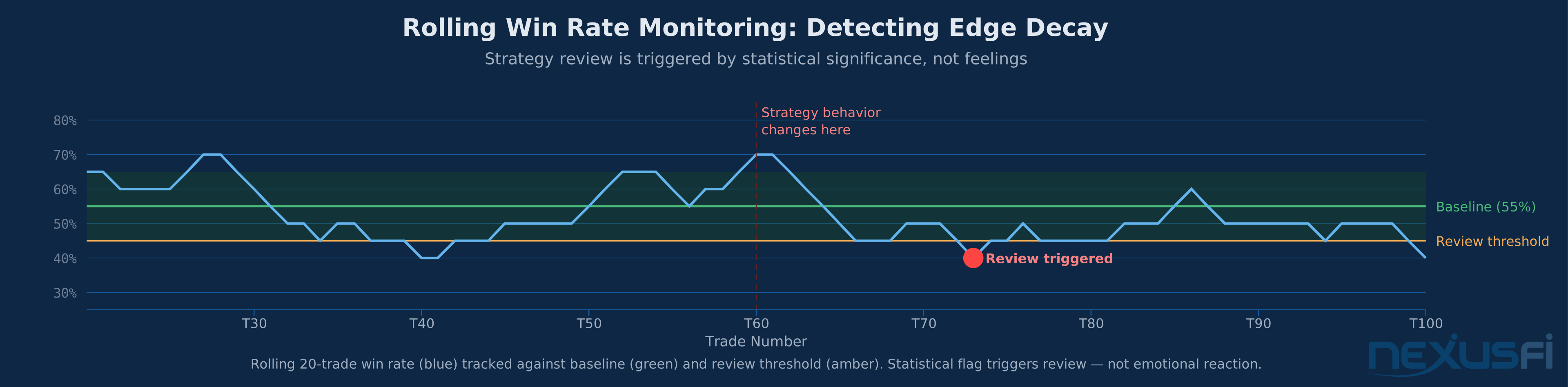
- Is your threshold too tight (constant false triggers) or too loose (fires too late to prevent damage)?
Adjust thresholds based on data, not feelings.
When Protocols Fail (and the Recovery) #
Protocols fail in specific, predictable ways. Knowing them in advance lets you design countermeasures.
Failure Mode 1: The emergency exception "This news event is different, my normal stats don't apply." Resolution: The protocol applies to all trading, always. "No exceptions" is written into the rule. News events don't improve edge — they make it less reliable, not more.
Failure Mode 2: The slow drift You don't break the protocol dramatically — you quietly raise the threshold by 1 each week. Three losses becomes four, then five. Resolution: Use a trading partner who knows your actual, original threshold. Accountability catches slow drift.
Failure Mode 3: Platform override during the session You disable the risk settings during the session because you "just want to see how it plays out." Resolution: Guardian Angel with a random password you can't easily remember under pressure, or NinjaTrader Brokerage server-side settings which require a separate web login to disable.
The Reset Protocol: What to Do After Shutdown #
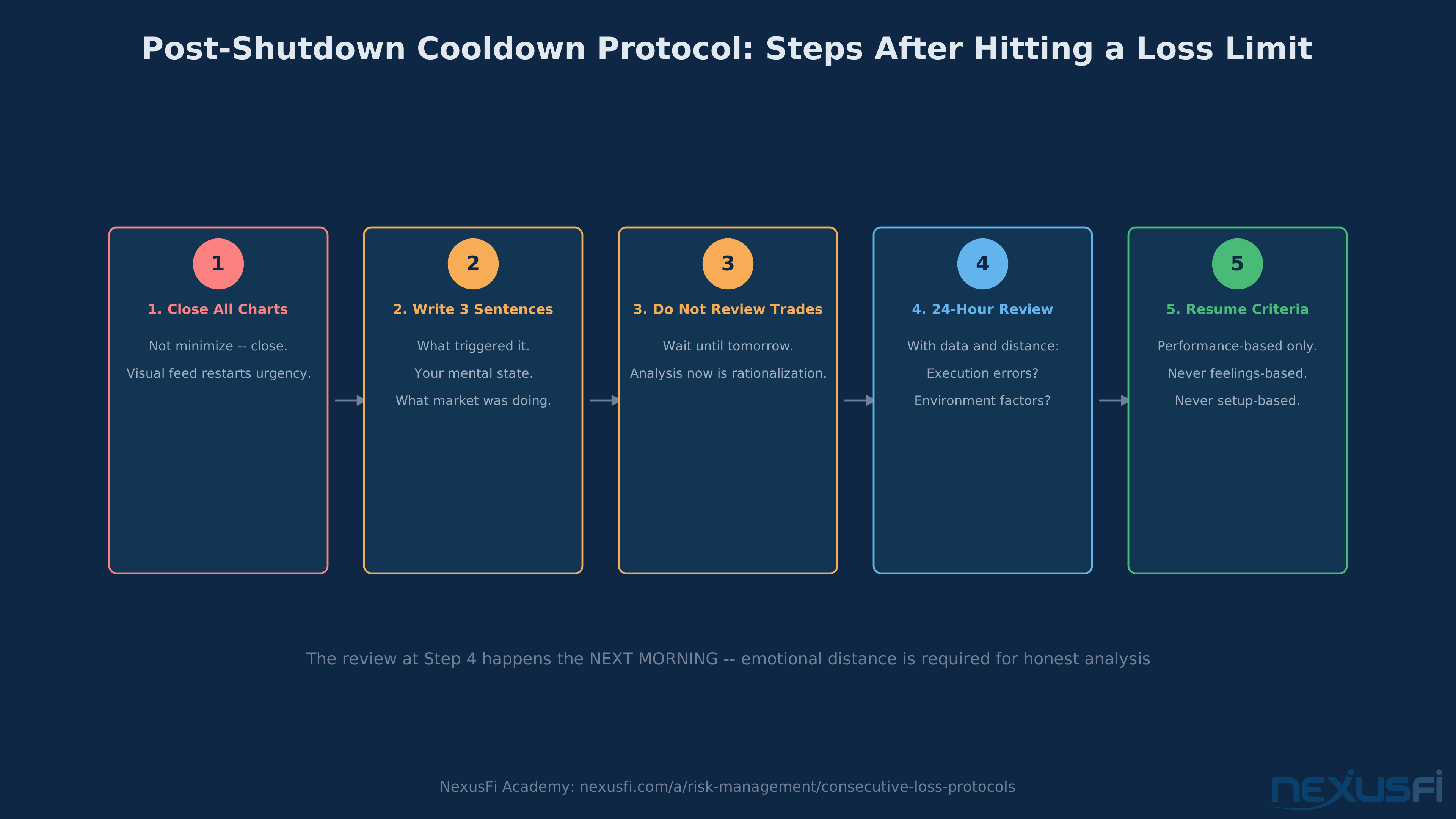
Shutdown is not the end of the protocol. What you do immediately after the shutdown determines how quickly you return to baseline performance the next session.
First 30 minutes after shutdown:
- Physical state reset: walk, exercise, food/water — something that shifts your nervous system out of fight-or-flight mode
- Do NOT review your trades yet. You're too close — you'll catastrophize or rationalize rather than learn.
- Close financial apps on your phone. Market-watching in shutdown mode undermines the break.
Within 2 hours:
- Write a brief, factual post-mortem. Not self-criticism — facts: "I took 3 trades. Here's specifically why each one lost." No emotional language.
- Identify the pattern: did the losses happen in the same market condition? Same time of day? Same setup type? Same size?
Before the next session:
- Re-read your trading plan — the whole thing.
- Set your platform risk settings for tomorrow. Reset Guardian Angel. Confirm NT Brokerage limits active.
- If you stepped down today, decide what size you're starting with tomorrow.
Knowledge Map
Go Deeper
Build on this knowledgeReferences This Article
Articles that build on this topicCitations
- — Did revenge trade today, lost big... (2011) 👍 9“before putting on the first trade, we need to go through the check-list repeat our rules for the day, such as: (1) only take the setups that give us an edge, (2) always to take a loss, never move the stop further away from our entry point, (3) never average down, (4) stop trading for the day after three consecutive losses, or if our daily threshold has been met”
- — Winning Trade % Confidence vs. Straight Losers Expectation (2011) 👍 10“Depending on your trading frequency, you can (roughly!!) estimate how many losers in a row you can expect in a year, a decade, or a lifetime of trading. For example, assume: 3 trades a day, 22 days a month, 12 months a year. About 800 trades a year.”
- — I struggle with loss limits (TST combine), advice/thoughts? (2015) 👍 10“In my experience, the rule or rules have to be mechanical, not subject to judgment. The problem is that your judgment is likely to be off at that point, and you need something to just override it.”
- — Drawdowns, when has a strategy lost its 'edge' (2010) 👍 6“I personally use a 2 SD limit: About 95% of the values lie within 2 standard deviations of the mean. Therefore, if your parameter falls outside the limit of the mean plus or minus 2SD, this represents a substantive departure from the norm and COULD represent a substantive departure from the expected performance. In my case, I would shut down the strategy if this occurred.”
- — Trading fast markets (2013) 👍 8“If my total Net P&L is negative for the day, I will stop trading if I experience 3 losing trades in a row. My largest winning day will be greater than my largest losing day. I will have a winning day percentage greater than 40.”
- — New Beginnings: The Journal of a Trader's Journey to Equanimity (2011) 👍 4“Stop after 3 losses in a row. Stop after 2 losses total for the day. Stop after 3 losses total for the day. Stop after x wins for the day. Stop after x trades for the day.”
- — The PandaWarrior Chronicles (2013) 👍 9“3 stops in a row, time to stop. Missed the big move but no room left in my daily stop limit...so no trade. Bummer. You can't believe how hard I thought about taking that trade.”
- — I struggle with loss limits (TST combine), advice/thoughts? (2015) 👍 7“I calculated how many stop outs are needed to go past the daily loss limit. With 3 stop outs in row I will be safely below daily loss limit. With 4 stop outs in row I will go past daily loss limit. I implemented rule to my self 'stop trading after 3 losers in row'.”
- — Trading ES for success -PA Day after Day (2014) 👍 6“It may help to have purely mechanical constraints on yourself, so you can step back and take stock. You may want to say that, 'If I have more than x number of losing trades in a row...I will stop for the day' -- whatever would be most helpful to you.”
- — Mergodon TopSteptrader Live Account Journaling (2014) 👍 3“Unless you actually stop trading whenever it is mathematically possible to hit the limit, then you certainly will eventually hit it. You might also think about having a lower personal loss limit than the Combine limit.”