



Risk-Reward Ratio: The Decision Gate That Separates Profitable Futures Traders from Everyone Else
Overview #
Risk-reward ratio is the single most misunderstood number in futures trading. Every new trader learns "aim for 2:1 or better" and treats it like a magic filter — take only trades where the target is twice the stop and the math works out. It doesn't. Not by itself.
R:R is a planning tool. It tells you the payoff geometry of a single trade — how much you stand to gain relative to how much you're willing to lose. That's useful information, but it's incomplete without knowing how often you actually hit that target versus how often you eat the stop. A 10:1 R:R trade that wins 5% of the time is a guaranteed path to ruin. A 0.5:1 trade that wins 85% of the time can print money.
The real power of risk-reward isn't as a filter. It's as a diagnostic — a way to evaluate whether your entry, stop, and target make sense together given what the market is actually doing. This article breaks down how R:R works in futures, why the relationship between R:R and win rate determines everything, how trade management changes the equation in real time, and why the way most traders use this number actively hurts their performance.
Key Concepts #
Risk-Reward Ratio (R:R) — the ratio of potential reward to potential risk on a trade, calculated from your planned target and stop. If your stop is 10 ticks and your target is 20 ticks, your R:R is 2:1 (or simply "2R"). The convention in futures is reward-to-risk, so higher numbers mean more reward per unit of risk.
R-Multiple — the actual outcome of a trade expressed as a multiple of initial risk. If you risked 10 ticks and made 15, that's a +1.5R trade. If you lost 10, that's a -1R trade. R-multiples let you normalize results across different position sizes and instruments, making it possible to compare your ES scalps to your CL swings on equal footing. (See also: R-multiples and expectancy guide | expectancy formula reference)
Planned R:R vs. Realized R:R — planned R:R is what you calculate before entry. Realized R:R is what actually happens after management decisions, slippage, and the market doing its thing. These two numbers are almost never the same.
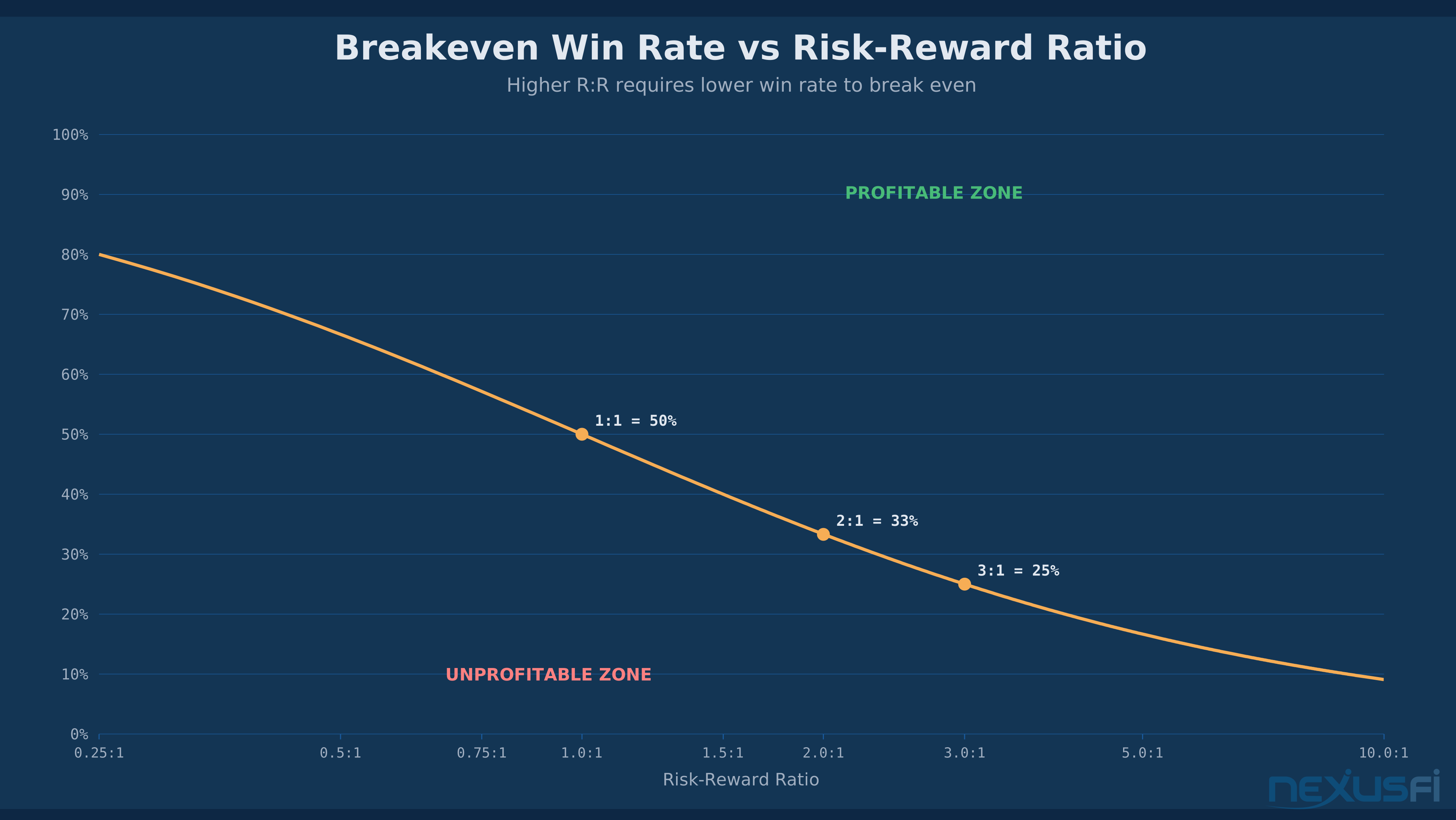
Breakeven Win Rate — the minimum win percentage required for a given R:R to produce zero profit after costs. For a fixed stop-and-target system: breakeven win rate = 1 / (1 + R). At 2:1 R:R you need to win 33.3% of the time to break even. At 1:1 you need 50%. At 0.5:1 you need 66.7%.

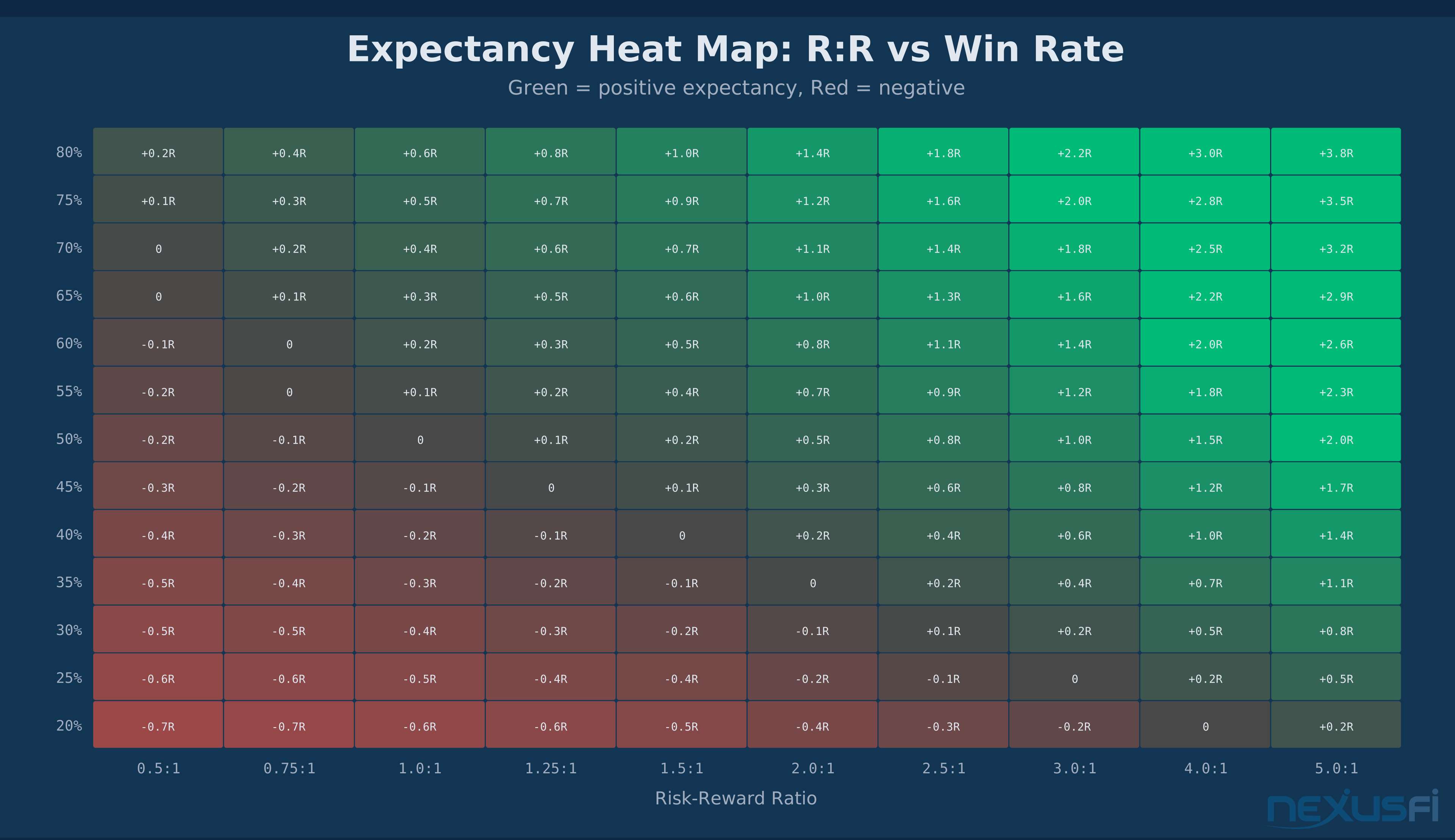
Expectancy ties R:R and win rate together into a single number that tells you whether your system actually works: Expectancy = (Win Rate x Average Win) — (Loss Rate x Average Loss). In R-multiple terms: Expectancy per trade = (Win% x Avg R-multiple of winners) — (Loss% x 1R). Positive expectancy means you make money over time. Negative means you don't.
Net R:R — the R:R after subtracting commissions and expected slippage from both sides. This is the number that actually matters for your account. Paper R:R based on chart distance alone can be misleading, especially in thin markets or around the open.
The Math That Actually Matters: R:R, Win Rate, and Expectancy #
Here's where most traders go wrong: they improve R:R in isolation. "I only take 3:1 trades" sounds disciplined. But if your win rate on those 3:1 trades is 20%, you're losing money. The math is unforgiving.
Expectancy ties R:R and win rate together into a single number that tells you whether your system actually works:
Expectancy = (Win Rate x Average Win) — (Loss Rate x Average Loss)
Or in R-multiple terms:
Expectancy per trade = (Win% x Avg R-multiple of winners) — (Loss% x 1R)
A positive expectancy means you make money over time. Negative means you don't. Zero means you're paying commissions to the market for the privilege of staying busy.
As @Fat Tails demonstrated in his analysis on NexusFi, two systems can have identical expectancy but dramatically different practical outcomes. He compared a trend-following model with a high R-multiple and low win rate against a model with a lower R-multiple and higher win rate. Both had the same expectancy of 1.1R. But the high-win-rate system required only 218 trades to reach the target account size, while the high-R-multiple system needed 450 trades. The reason: lower drawdowns allowed higher position sizing through optimal-f, compounding returns faster without increasing ruin risk.
That's counterintuitive. Most traders assume bigger R:R is always better. The math says otherwise.
The Breakeven Curve #
The relationship between R:R and required win rate follows a hyperbolic curve:
| R:R | Breakeven Win Rate | What This Means |
|---|---|---|
| 0.5:1 | 66.7% | Need to win 2 out of 3 |
| 1:1 | 50.0% | Coin flip territory |
| 1.5:1 | 40.0% | Can lose more than you win |
| 2:1 | 33.3% | Only need 1 win per 2 losses |
| 3:1 | 25.0% | 1 win covers 3 losses |
| 5:1 | 16.7% | Home run hunting |
| 10:1 | 9.1% | Lottery ticket territory |
The table looks clean. The reality is messy. As you push R:R higher, your win rate almost always drops — wider targets give price more room to reverse before reaching your exit. The question isn't "what R:R should I aim for?" The question is "at what R:R does my specific setup's win rate produce the highest expectancy?"
@Fat Tails laid this out precisely in his Trading Metrics analysis: "A scalper with a high winning percentage does not need high R-multiples, as he relies on a high winning percentage. The high winning percentage will even allow him to increase his position sizing, because the probability of a larger drawdown is reduced." The scalper's edge isn't in the size of each win — it's in the consistency that enables aggressive compounding.
Distribution Effects: Why Averages Lie #
Expectancy uses averages. But your account doesn't live in the average — it lives in the sequence. A system with 2:1 R:R and 45% win rate has a positive expectancy of 0.45R per trade. Sounds decent. But if the wins and losses cluster — five losses in a row followed by three wins — the drawdown path might blow through your risk tolerance before the statistics converge.
This is why @Fat Tails emphasized that risk of ruin "does not directly depend on the R-Multiple or the win/loss ratio" alone — it depends on the variance of returns. A system with lower variance (more consistent outcomes) can be traded with higher leverage at the same ruin probability. Two systems with identical expectancy can have wildly different survival rates.
Calculating R:R Correctly in Futures #
In futures, R:R is calculated in ticks or points, then converted to dollars using the contract's tick value:
Risk in dollars = Stop distance (ticks) x Tick value x Number of contracts
Reward in dollars = Target distance (ticks) x Tick value x Number of contracts
R:R = Reward in dollars / Risk in dollars
For a single-contract, single-instrument trade the tick values cancel out and R:R simplifies to target distance / stop distance. But there's a catch: that's the paper R:R. The net R:R after execution reality is different.
What Paper R:R Misses #
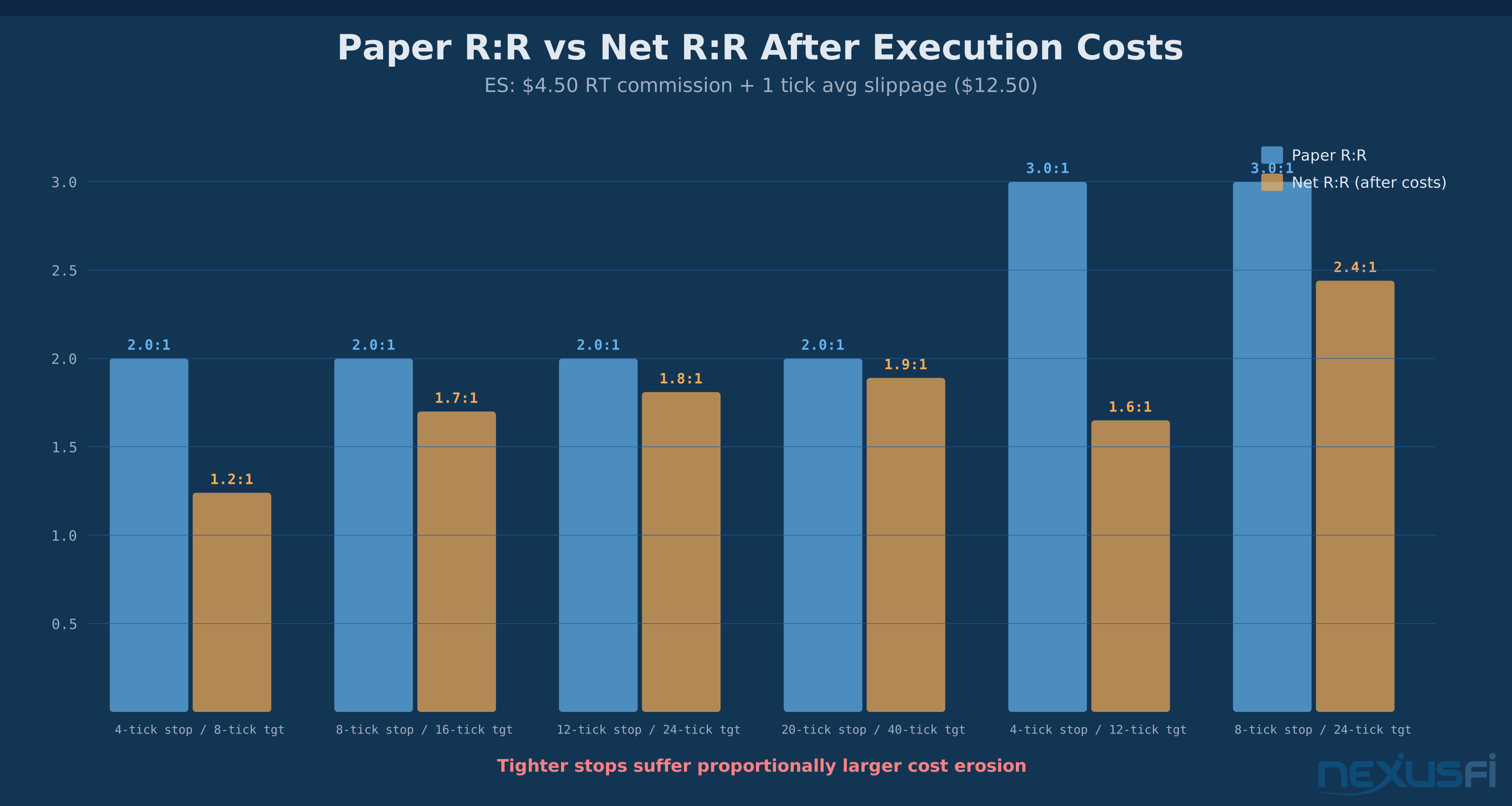
Commissions eat into both sides. On ES at $4.50 round-turn per contract, a 10-tick stop ($125 risk) becomes $129.50 actual risk, and a 20-tick target ($250 reward) becomes $245.50. Your paper 2:1 is actually 1.9:1. On small targets this erosion is worse — a 4-tick scalp at 2-tick stop goes from 2:1 paper to roughly 1.6:1 net.
Slippage is asymmetric and regime-dependent. Stop-market orders in fast-moving CL can slip 2-3 ticks easily. Your 8-tick stop becomes 10-11 ticks of realized risk. Targets hit at the bid/ask may fill exactly, but in thin markets limit targets can sit unfilled while price touches and reverses. Paper R:R assumes clean execution. Reality doesn't deliver that.
Partial fills change the math entirely when scaling. If your first target fills but your second doesn't because liquidity dried up, your realized R:R collapses.
Always calculate net R:R before committing to a trade, especially for setups with tight stops. A setup that looks like 2:1 on the chart might be 1.4:1 after execution costs — and that changes the required win rate from 33% to 42%.
Pre-Entry R:R Evaluation: The Decision Framework #
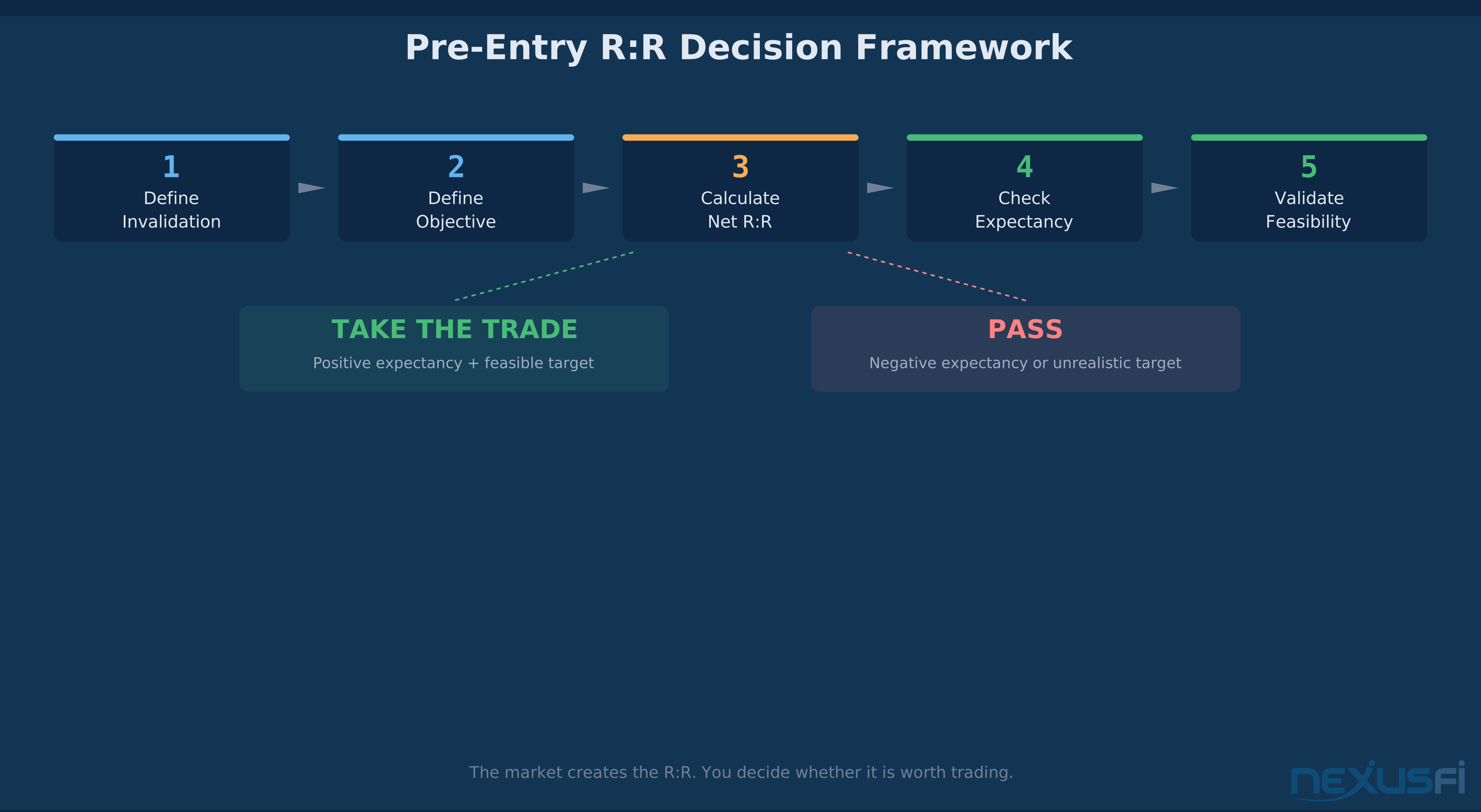
R:R should be calculated from your actual trade plan — not reverse-engineered from an arbitrary target multiple. Here's the workflow:
Step 1: Define invalidation (your stop). Where does the trade thesis break? This isn't where you "can afford to lose" — it's where the market structure tells you the trade is wrong. A long entry off a support level is invalidated below that level. A breakout trade is invalidated on a close back inside the range. The stop goes at the invalidation point plus a buffer for noise.
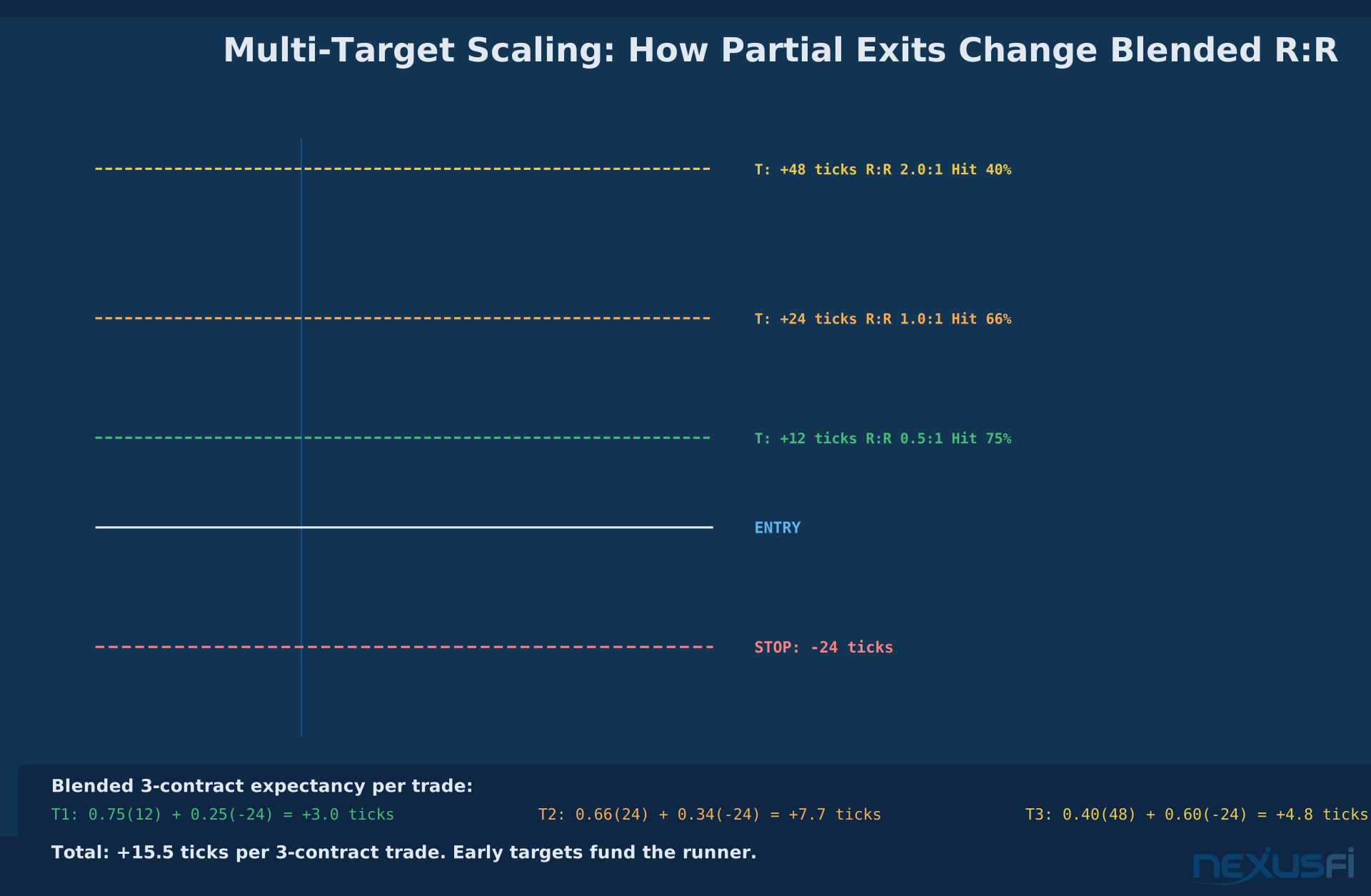
As @Big Mike described in his trading journal: "Know your risk-reward... do your homework. Study your past performance. Study charts." He laid out a multi-target framework — Target 1 at 12 ticks hit 75% of the time, Target 2 at 24 ticks hit 66%, Target 3 at 48 ticks hit 40% — with a 24-tick stop. The key insight: the risk was defined by market structure, and the targets were calibrated against actual historical hit rates, not wishful thinking.
Step 2: Define your objective (your target). Where does the reward live? This should come from market structure too — the next resistance level, the VPOC, the opposite end of the value area, a measured move projection. The target needs to be a place where price has a logical reason to reach and where other traders are likely to take the other side.
Step 3: Calculate R:R from those levels. With stop and target defined by market logic, R:R is what it is. You don't pick R:R first and then set stops and targets to match — that's backwards. The market gives you the geometry. You decide whether it's worth trading.
Step 4: Validate against your edge. Does this R:R, combined with your historical win rate on similar setups, produce positive expectancy? If your data shows 55% wins on this pattern and the R:R is 1.5:1, your expectancy is roughly 0.55(1.5) — 0.45(1) = 0.375R per trade. That's tradeable. If the R:R is 0.8:1 at 55%, expectancy drops to 0.55(0.8) — 0.45(1) = -0.01R. Basically break-even before costs. Pass.
Step 5: Check feasibility. Is the target achievable in the current volatility? A 20-tick ES target during a 6-point range day is fantasy. Is there a major level or session boundary between entry and target that could stall price? Will your stop survive normal noise, or is it so tight that regular market movement takes you out?
@indextrader7 nailed this distinction: "Risk:Reward is very very important. The PROBLEM is that most people see it as something they create, or even worse, it's arbitrary. The TRUTH is that at any point in time there is a REAL risk:reward in the market you are analyzing. This is created by the market, not by us."
Dynamic R:R: How Trade Management Changes Everything #
The moment you enter a trade, planned R:R becomes fiction. Every management decision — trailing, scaling, moving to breakeven — changes the effective payoff distribution.
Trailing Stops #
A trailing stop reduces remaining risk as price moves in your favor. At entry with a 10-tick stop and 30-tick target, planned R:R is 3:1. After price moves 15 ticks in your direction and you trail to +5, your remaining risk is only 5 ticks of the 15 you've gained (giving back profit, not risking initial capital). The remaining reward is 15 ticks. The conditional R:R from this point is 3:1 again, but the nature of the risk has changed completely — you're now playing with house money.
The tradeoff: trailing stops reduce average win size. Price frequently retraces before continuing, and a trail that's too tight gets hit on noise. The optimal trail width depends on the instrument's volatility and the trade's timeframe. ES during the open needs wider trails than ES during a slow afternoon.
Scaling Out #
@Big Mike's multi-target approach illustrates scaling's effect on R:R. With three contracts — targets at 12, 24, and 48 ticks against a 24-tick stop:
- Contract 1: R:R = 0.5:1 (12/24), hits 75% of the time
- Contract 2: R:R = 1.0:1 (24/24), hits 66% of the time
- Contract 3: R:R = 2.0:1 (48/24), hits 40% of the time
The blended expectancy per 3-contract trade is positive because the high hit rates on early targets fund the home-run attempts on the runner. The aggregate R:R isn't simply the average of the three — it's a weighted distribution. Scaling converts a single R:R into a portfolio of conditional bets.
The Breakeven Move Illusion #
Moving your stop to breakeven after price moves in your favor feels like eliminating risk. Mathematically, you've created a zero-risk trade from this point. In practice, you've done something subtler: you've created a trade that can only win or scratch, but you've increased the probability of the scratch (because price can retrace to your entry and take you out before reaching the target). Your conditional R:R is now infinite (any win / zero risk), but your conditional win rate has dropped.
@Massive l captured this tradeoff directly: "Would you rather your edge be consistently winning with lower R or would you rather it be a coin flip and let the risk management do the heavy lifting (higher R)?" There's no universal answer. The right choice depends on your trading personality, your strategy's natural win-rate distribution, and the regime you're operating in.
Why Market Regime Changes Everything #
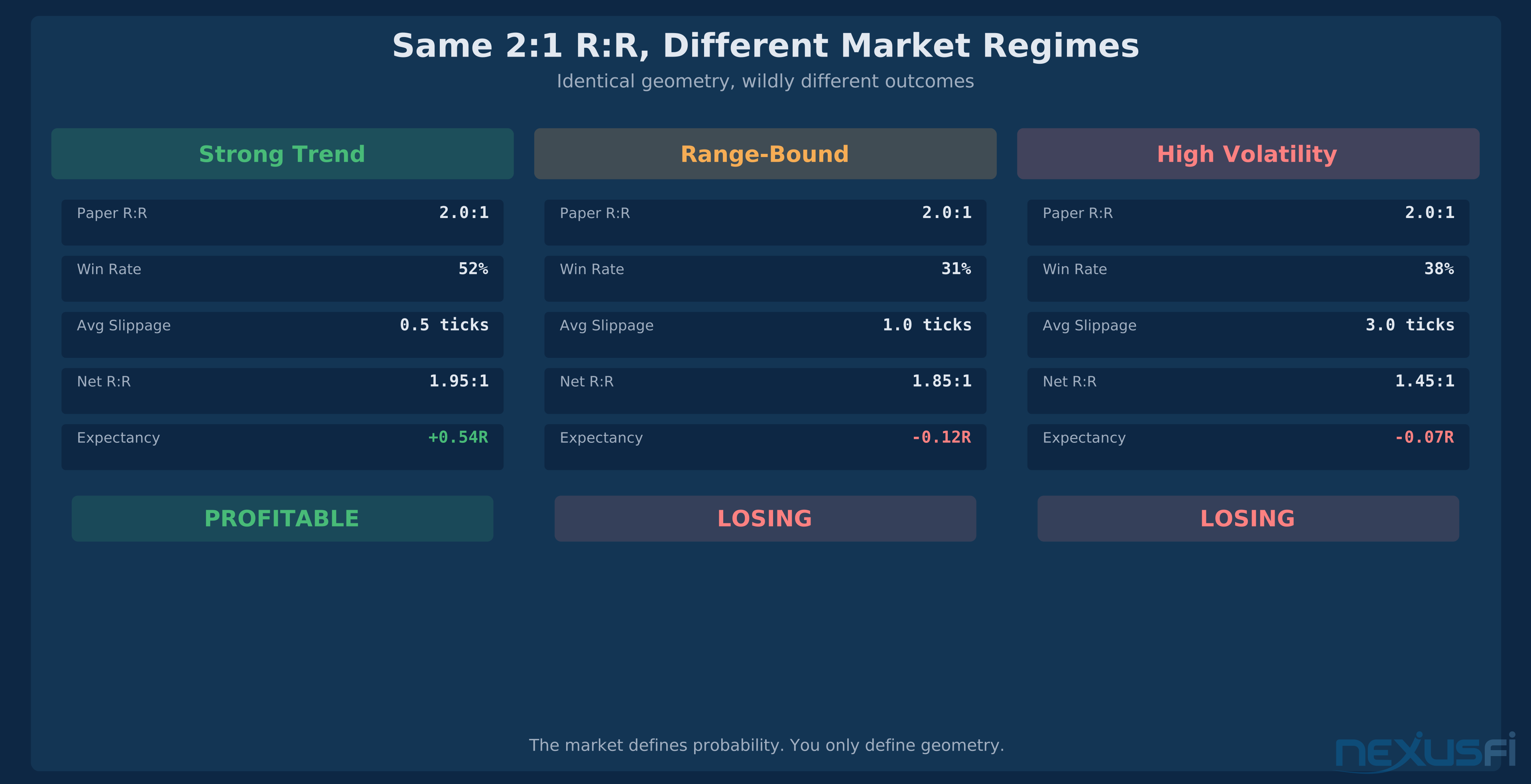
The same R:R setup produces completely different results depending on what the market is doing. A 2:1 long trade in a strong uptrend hits its target frequently. The same 2:1 long in a choppy range gets stopped out repeatedly. The geometry is identical — the probability of the outcome isn't.
Trending Regimes #
In a trending market, reward targets in the trend direction have higher hit rates. R:R of 2:1 or 3:1 with-trend can maintain 40-50% win rates because momentum carries price to extended targets. Counter-trend trades in the same environment see their win rates collapse even with favorable R:R — you're fighting the dominant flow.
Range-Bound Regimes #
In balance, extreme targets don't get hit. Price oscillates between support and resistance. The winning approach is often lower R:R (1:1 or even 0.75:1) with a high win rate, fading the edges of the range. Trying to capture 3:1 in a range means your target is on the other side of a level that's been holding all session.
Volatility Expansion #
During economic releases, FOMC announcements, or flash-crash events, everything changes. Stops get slipped, targets get blown through, and your carefully calculated R:R becomes noise. A 10-tick stop on ES during a normal afternoon is reasonable. The same stop during CPI release might get filled 25 ticks past your level. Your paper 2:1 is actually 0.8:1 after slippage.
Session-Specific Effects #
Futures markets have distinct liquidity profiles across sessions. The ES open (9:30 AM ET) has massive volume, tight spreads, and fast moves — stops get reasonable fills but targets need to be wider to capture the initial momentum. The lunch hour has thin liquidity and erratic moves — stops can slip and targets sit unfilled. Overnight Globex trading in thin markets means both risk and reward calculations need wider buffers.
The Filter Trap: Why Most Traders Misuse R:R #
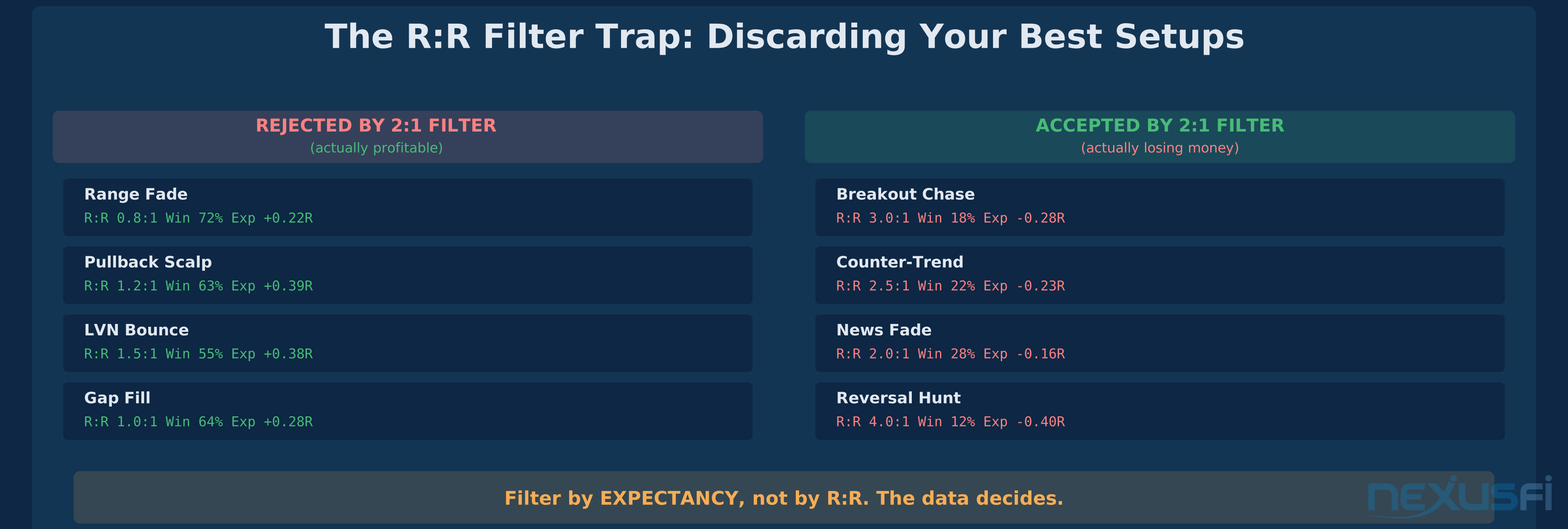
The most common misuse of R:R is treating it as a trade filter: "I only take trades with at least 2:1 R:R." This sounds disciplined. It can be destructive.
The Win-Rate Blindspot #
Filtering for high R:R without measuring conditional win rate is flying blind. If your 3:1 trades win 20% of the time, you're losing money (-0.4R per trade). But your 1.2:1 trades that win 62% might be your best setups (expectancy +0.38R per trade). The filter discards your most profitable setups in favor of ones that look good on paper.
Cherry-Picking Bias #
After the fact, every big move looks like a high-R:R opportunity. "I could have entered here with a 4-tick stop and caught 40 ticks." In real time, that entry wasn't obvious, and that 4-tick stop would have been hit by the pullback at bar 3. Traders who evaluate R:R in hindsight and apply those standards to live trading are optimizing for a reality that doesn't exist.
Stop-Target Coupling Errors #
A subtle but devastating mistake: setting stops based on "I can't be wrong here" (tight stops at obvious structure) while setting targets based on "I hope it gets here" (extended targets at distant levels). The stop has market logic behind it. The target is wishful thinking. The R:R looks great on the trade plan but the hit rate is terrible because the target was never realistic.
The fix: both stop and target must come from the same analytical framework. If your stop is at structure, your target should be at structure. If your stop is volatility-based (ATR), your target should be volatility-based too. Mixing frameworks inflates paper R:R while destroying realized expectancy.
Both your stop and target must come from the same analytical framework. Structure-based stops need structure-based targets. ATR stops need ATR targets. Mixing frameworks is the single most common reason paper R:R looks great while realized expectancy stays negative.
Time and Opportunity Cost #
R:R ignores time. A 3:1 trade that takes 4 hours to develop ties up your capital and attention. Three 1:1 trades that each take 30 minutes might produce more total profit with lower variance. When you filter only for high R:R, you're implicitly choosing infrequent large payoffs over frequent small ones — and for many traders, the frequent small payoffs are psychologically easier to execute consistently.
The Fix: Expectancy-Based Evaluation #
Instead of a hard R:R filter, evaluate every setup by estimated expectancy:
- Record the R:R of every trade you take for 100+ trades
- Group trades by setup type
- Calculate win rate and average R-multiple for each group
- Compute expectancy per group
- Only filter out setups with negative or near-zero expectancy
This approach preserves your best setups regardless of their R:R. A 0.8:1 setup with 70% wins stays in the playbook. A 4:1 setup with 15% wins gets cut. The data decides, not an arbitrary threshold.
Practical Framework: Using R:R as a Professional #
Before the Trade #
- Calculate R:R from market-structure stops and targets — don't set the ratio first
- Subtract commissions and estimated slippage to get net R:R
- Check whether net R:R x your historical win rate for this setup produces positive expectancy
- Verify the target is achievable in the current volatility regime
- If R:R is below 0.5:1, the trade needs an exceptionally high hit rate to justify itself — scrutinize hard
During the Trade #
- Track how management decisions change your effective R:R
- If trailing, know the tradeoff: tighter trails = smaller wins, wider trails = larger drawdowns per trade
- Scaling out changes your blended R:R — calculate the composite, not just the first target
- Don't move to breakeven reflexively — do it when market structure supports it, not when your P&L makes you nervous
After the Trade #
- Log planned R:R and realized R:R separately
- Track R-multiples by setup type, instrument, and session
- Review whether your actual win rates match the rates your pre-trade R:R assumes
- Recalibrate quarterly — markets change, and your R:R assumptions need to change with them
The Bottom Line #
R:R is a component of edge, not the edge itself. Combined with win rate, it determines expectancy — and expectancy is the only number that tells you whether a system makes money. Calculate R:R honestly, validate against data, adjust as the trade develops, and never use it as a standalone filter. Profitable traders aim for the highest expectancy, not the highest R:R.
R:R is a component of edge, not the edge itself. It tells you what a trade's payoff looks like — but only when combined with probability does it tell you whether the trade is worth taking. Calculate it honestly, validate it against data, adjust it as the trade develops, and never treat it as a standalone filter. The traders who profit consistently don't aim for the highest R:R — they aim for the highest expectancy.
Knowledge Map
Go Deeper
Build on this knowledgeReferences This Article
Articles that build on this topicCitations
- — Why 7% is the Difference between Failure and Success in Trading
- — Trading Metrics for journals/record keeping
- — Risk of Ruin
- — Big Mike's day trading method and advice
- — Trade Journal
- — IchibomB Futures Trading
- — Expectancy and R-multiples: the plain-English guide
- — Trading Expectancy Formula: The Number That Shows Edge