



Fibonacci for Trade Management
Overview #
Fibonacci tools are most commonly discussed in the context of identifying entries — the 61.8% retracement where buyers expect support, the 127.2% extension where a pattern completes. What receives far less attention is how Fibonacci ratios govern the entire trade lifecycle: stop placement, profit target selection, position sizing, trailing stop mechanics, and re-entry after missed moves.
This article treats Fibonacci as a trade management framework rather than an entry signal tool. The distinction matters because entries are only one component of edge. Risk-reward structure, stop placement discipline, and systematic exit mechanics determine whether a positive-expectancy setup translates into long-term profitability. Fibonacci provides the structural logic for each of these decisions, creating consistency that discretionary "feel" cannot.
Return to the Fibonacci hub article for the mathematical foundations, or see Fibonacci Confluence and Cluster Zones for the highest-probability entry identification framework before applying the management principles in this article.
Fibonacci Stop Placement: Structure Over Dollar Amounts #
The most common mistake in stop placement is sizing stops by dollar amount before considering price structure. A trader who says "I'll use a 10-point stop on ES" has defined their risk in dollar terms without reference to what price levels mean anything structurally. The result: stops placed in arbitrary locations that the market has no reason to respect.
Fibonacci stop placement reverses this logic: define the structural invalidation level first, then calculate the dollar risk from the stop distance.
The Invalidation Level Framework #
Every Fibonacci-based entry has an implicit invalidation level — the price at which the setup's logic no longer applies:
Entry at 38.2% retracement: The trade thesis is that this shallow pullback represents a healthy correction in a strong trend. Invalidation occurs when price breaks much below the 38.2% level. The most conservative stop is just below the 50% level; the widest is below the 61.8% level.
Entry at 61.8% retracement (the golden ratio): The trade thesis is that price is pulling back deeply but the trend remains intact. Invalidation: price breaks below the 78.6% level. A close below the 78.6% level on a 5-minute or 15-minute chart is more significant than a momentary wick — the stop should reflect this distinction.
Entry at 78.6% retracement (deep retracement patterns): The trade thesis is that an extreme correction is setting up a continuation. Invalidation: price closes below the swing origin (Point X). The distance to X is large, requiring smaller position size to maintain consistent dollar risk.
Entry at extension levels (harmonic D points): Invalidation: price extends beyond D in the direction of the pattern, or closes beyond X for the full pattern. See Harmonic Trading Patterns for complete invalidation logic.
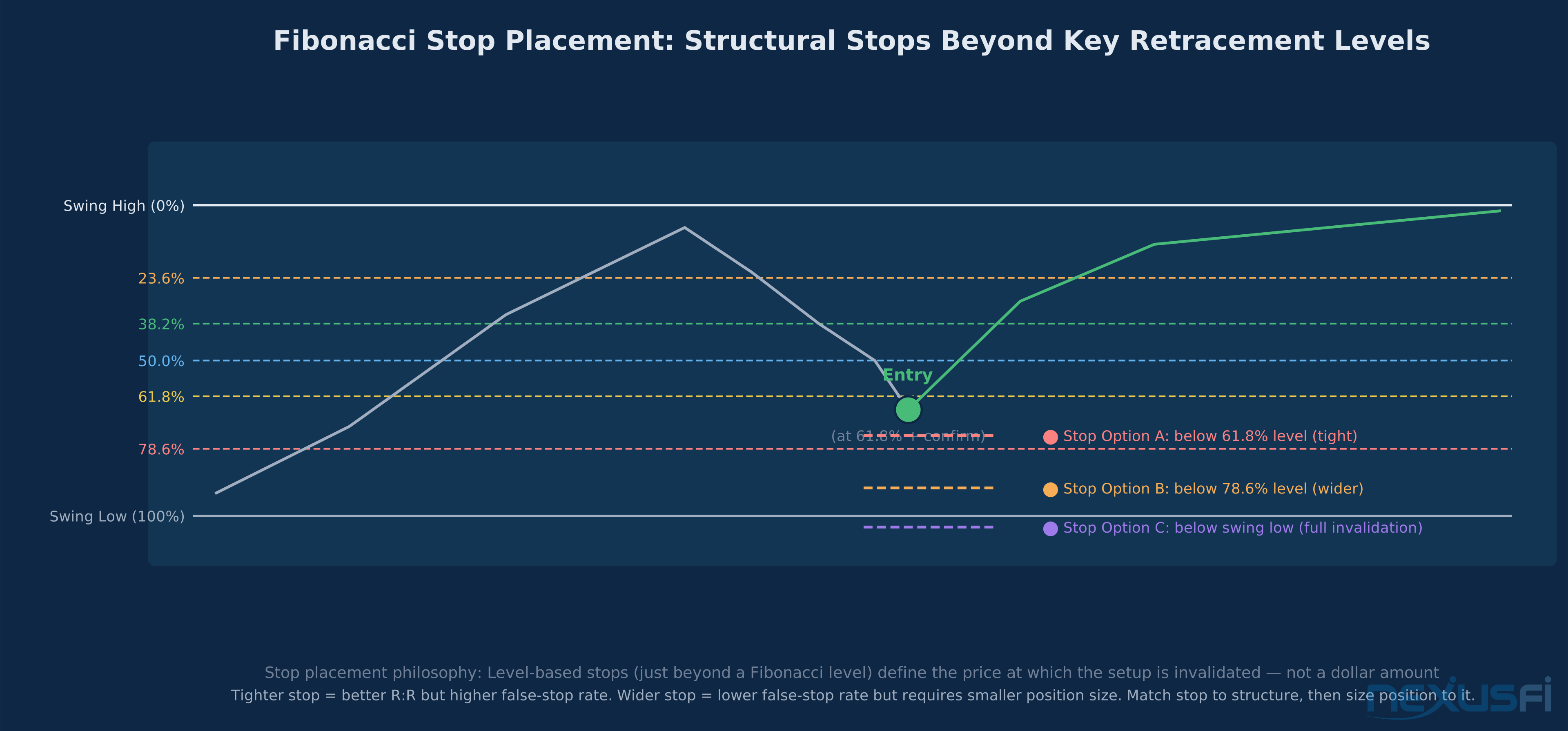
Every Fibonacci-based entry has an implicit invalidation level — the price at which the setup's logic no longer applies: Entry at 38.2% retracement: The trade thesis is that this shallow pullback represents a healthy correction in a strong trend.
The Buffer Zone Principle #
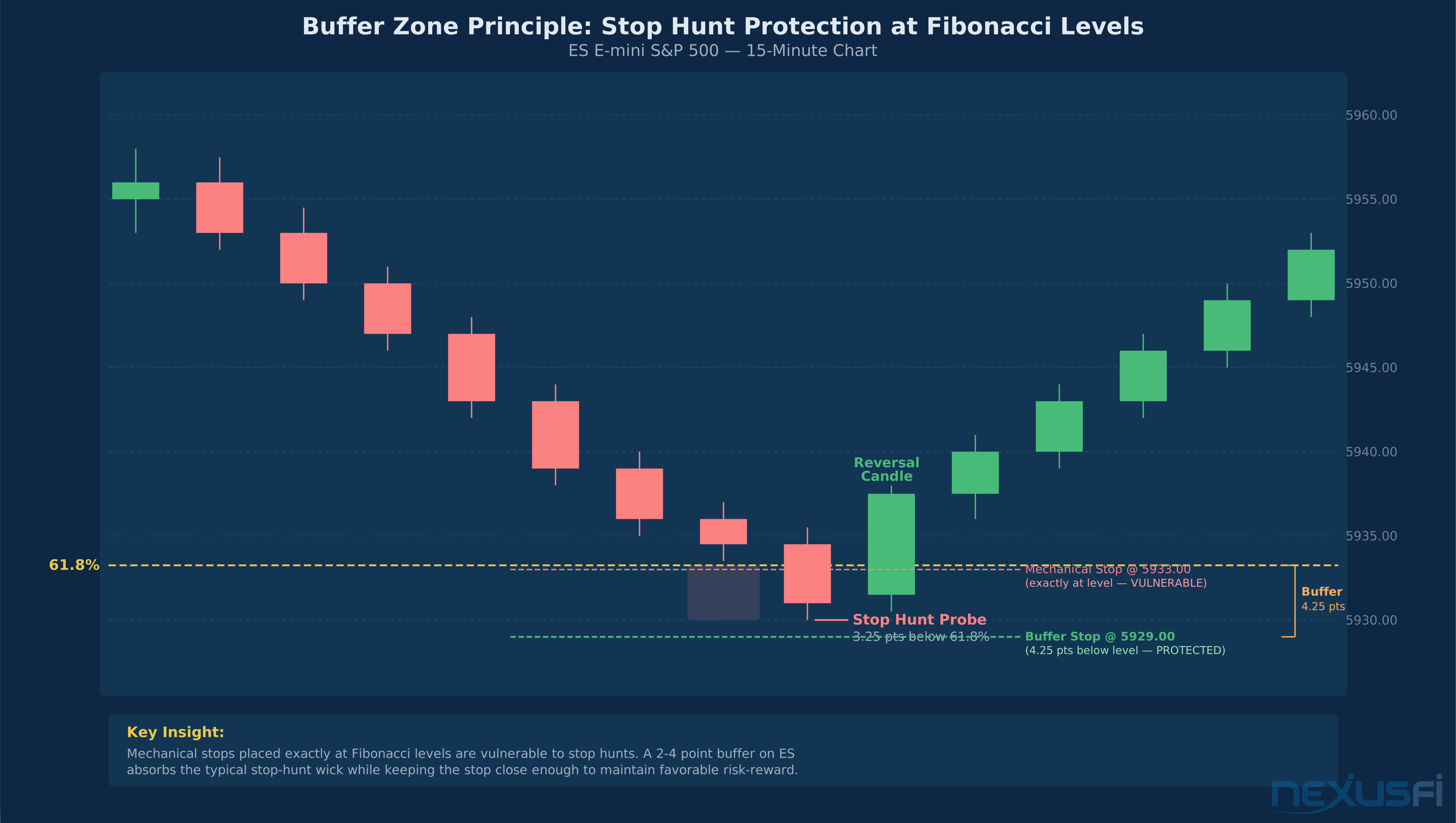
Mechanical stops placed exactly at a Fibonacci level — with no buffer — are vulnerable to stop hunts. Market makers and algorithmic systems are aware of where cluster stops accumulate, and a brief penetration of a well-known level is a reliable liquidity collection mechanism before the intended price movement.
The buffer zone principle: place stops beyond the Fibonacci level by a meaningful margin that separates the stop from the level itself. In ES futures (0.25 tick increment), a common buffer is 2-4 points beyond the Fibonacci level. This buffer absorbs the stop hunt without moving the stop so far that the risk-reward structure breaks down.
The buffer size should be calibrated to the instrument's typical wick extension at the relevant Fibonacci level. Reviewing historical touches of the specific level on the instrument being traded — how far beyond the level did price typically probe before reversing? — provides the empirical basis for buffer selection.
NexusFi member @Fat Tails analyzed this dynamic extensively, noting that Fibonacci retracements and extensions function as "meeting points where traders enter and exit positions" that "entirely rely on self-fulfilling prophecy." Because traders cluster orders at well-known levels, the liquidity available for stop hunts concentrates precisely there — reinforcing the need for a buffer beyond the exact Fibonacci number. @Lmess, who shared a complete ES Fibonacci trading system on NexusFi, enforces a strict risk-reward filter on every setup: "if the stop is 3 ticks larger than the profit target, then no trade is to be taken." This rule prevents the structural stop from creating trades where the invalidation point produces an unfavorable payoff.
Fibonacci Target Ladder: Systematic Profit Taking #
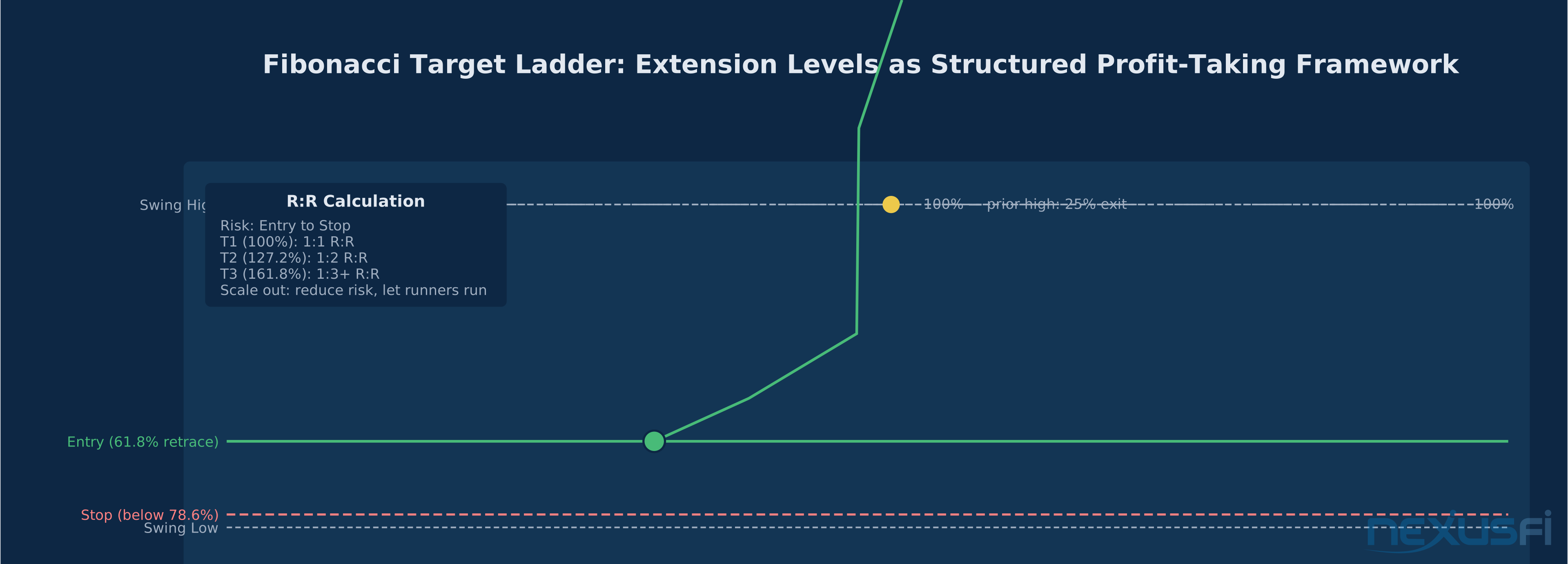
The Fibonacci target ladder converts the defining swing into a structured exit framework. Rather than selecting a single profit target (which forces a binary stay-or-exit decision), the ladder provides multiple exit levels with pre-defined position reduction percentages.
Constructing the Target Ladder #
The base of the target ladder is the defining swing (the XA leg used to identify the entry). Extension levels are projected forward from this leg:
100% Extension (Measured Move): Price reaches the same distance as the XA leg in the trade's direction. This is the simplest and most widely watched target. For a bullish trade, if the XA leg was 40 points, T1 is 40 points above the entry. This level often coincides with a prior high or structural resistance.
127.2% Extension: The first Fibonacci extension beyond the measured move. In harmonic analysis, this is where many butterfly patterns complete — meaning other participants may be anticipating a reversal here, creating natural selling pressure. An exit of 30-40% of the position at this level removes risk during the most likely reversal zone.
161.8% Extension (Golden Ratio Extension): The highest-probability extension target. Market participants watching Fibonacci extensions typically use 161.8% as their primary target. This creates order concentration at the level, producing the support/resistance effect that makes it a genuine target rather than an arbitrary number.
200% Extension (Double Measured Move): For strong trending moves with momentum, the 200% extension is achievable. This target is typically reserved for partial positions (20-25% of original size) rather than the full position — the remaining capital after T1, T2, and T3 exits.
Target Ladder Exit Schedule #
A practical exit schedule for Fibonacci-based trades:
| Target | Level | Position Reduction | Remaining | Action on Hit |
|---|---|---|---|---|
| T1 | 100% (measured move) | 25% exit | 75% remaining | Move stop to break-even |
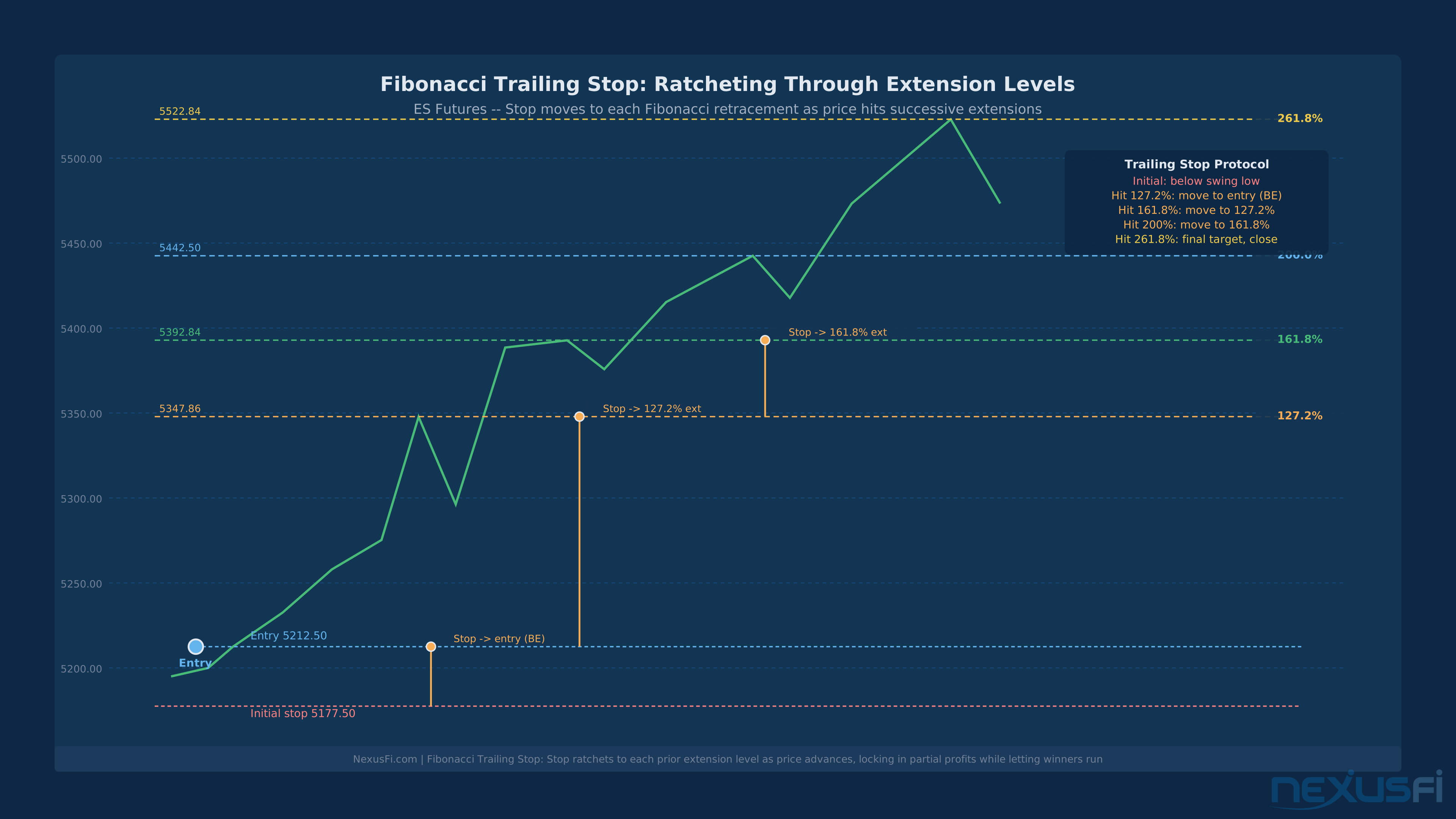
| T2 | 127.2% extension | 35% exit | 40% remaining | Trail stop to 61.8% of T1-T2 swing |
| T3 | 161.8% extension | 25% exit | 15% remaining | Trail with Fibonacci trailing stop |
| T4 | Runner | 15% exit | 0% | Exit at trend reversal signal |
The key principle: exit in tranches, never all at once. Each exit reduces risk while allowing the remaining position to capture further extension. The first exit (T1) should convert the trade to a minimum risk-neutral position (stop at break-even) before the position encounters its first significant resistance test.
NexusFi member
His method: scale out at the 127.2% extension, set the next target at 161.8%, and let the structure dictate exits instead of fear.
Target Confirmation: Not All Extensions Are Equal #
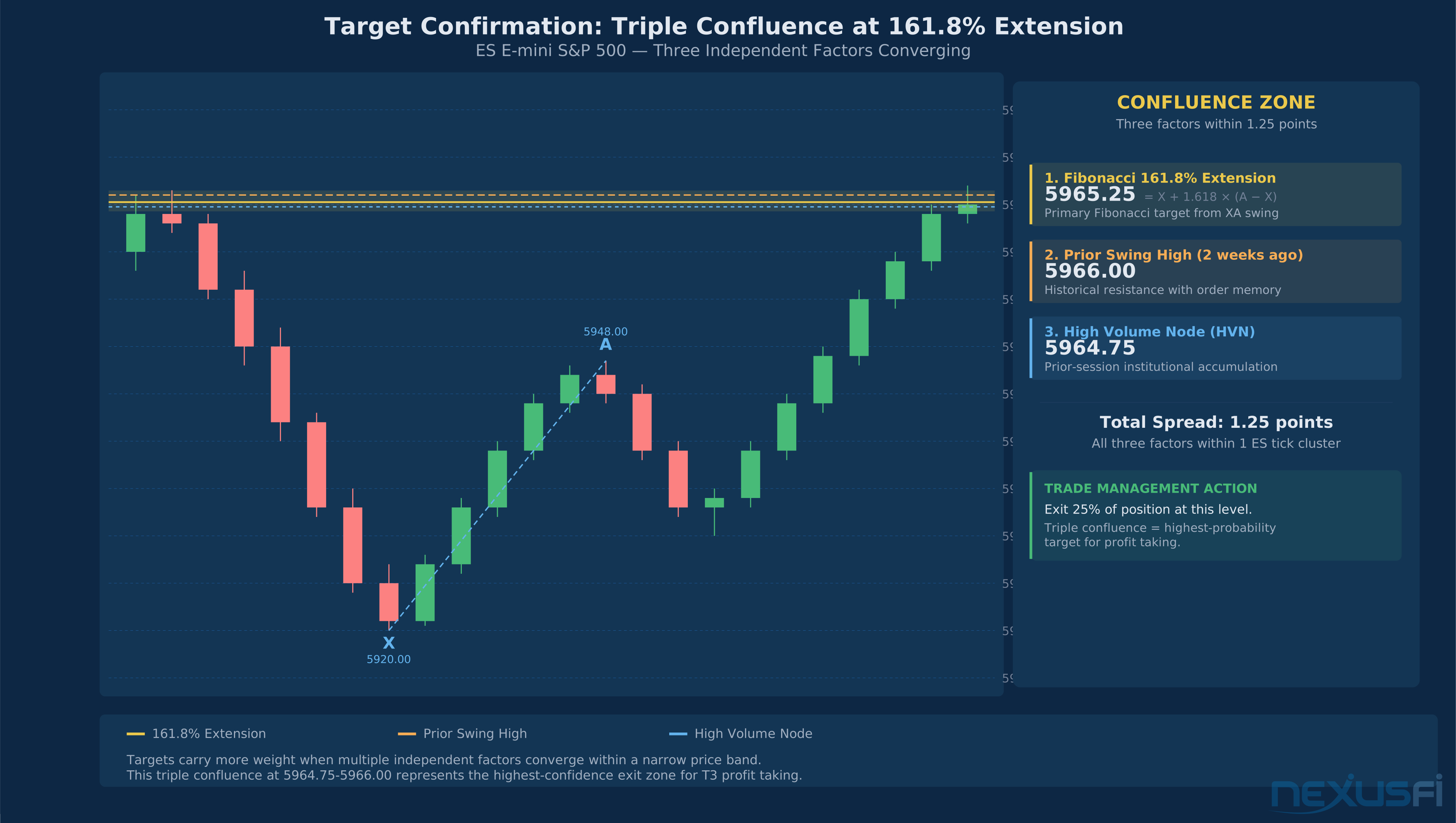
Fibonacci extension targets carry more weight when they coincide with:
- Prior structural highs or lows: A 161.8% extension that aligns with a prior swing high from two weeks ago combines Fibonacci projection with historical order memory
- Volume profile peaks: An extension target at a High Volume Node (HVN) from a prior session — where institutional accumulation or distribution occurred — has behavioral backing behind the Fibonacci math
- Round numbers: In index futures, whole numbers and quarter points attract disproportionate attention. A 161.8% extension within 1-2 points of a round number like 5500.00 or 5425.00 concentrates multiple ordering factors at the same level
Academic research on Fibonacci effectiveness supports this confluence emphasis. Saputri, Haanurat & Jaya (2025) found that Fibonacci levels 38.2% and 61.8% achieved a 74% effectiveness rate for take profit and stop loss identification across LQ45 stocks — but only when applied as a systematic framework, not as isolated price predictions. The takeaway: Fibonacci targets work best when they align with additional structural evidence, not when treated as standalone exit signals.
Fibonacci Trailing Stops: Locking Profits in Trending Markets #
Static stops — once set, never moved — do not capture the dynamic nature of trending price action. A trade that moves 30 points in favor before reversing to the original stop has "given back" the entire gain without generating realized profit. Fibonacci trailing stops address this by systematically moving the stop as new swing structures develop.
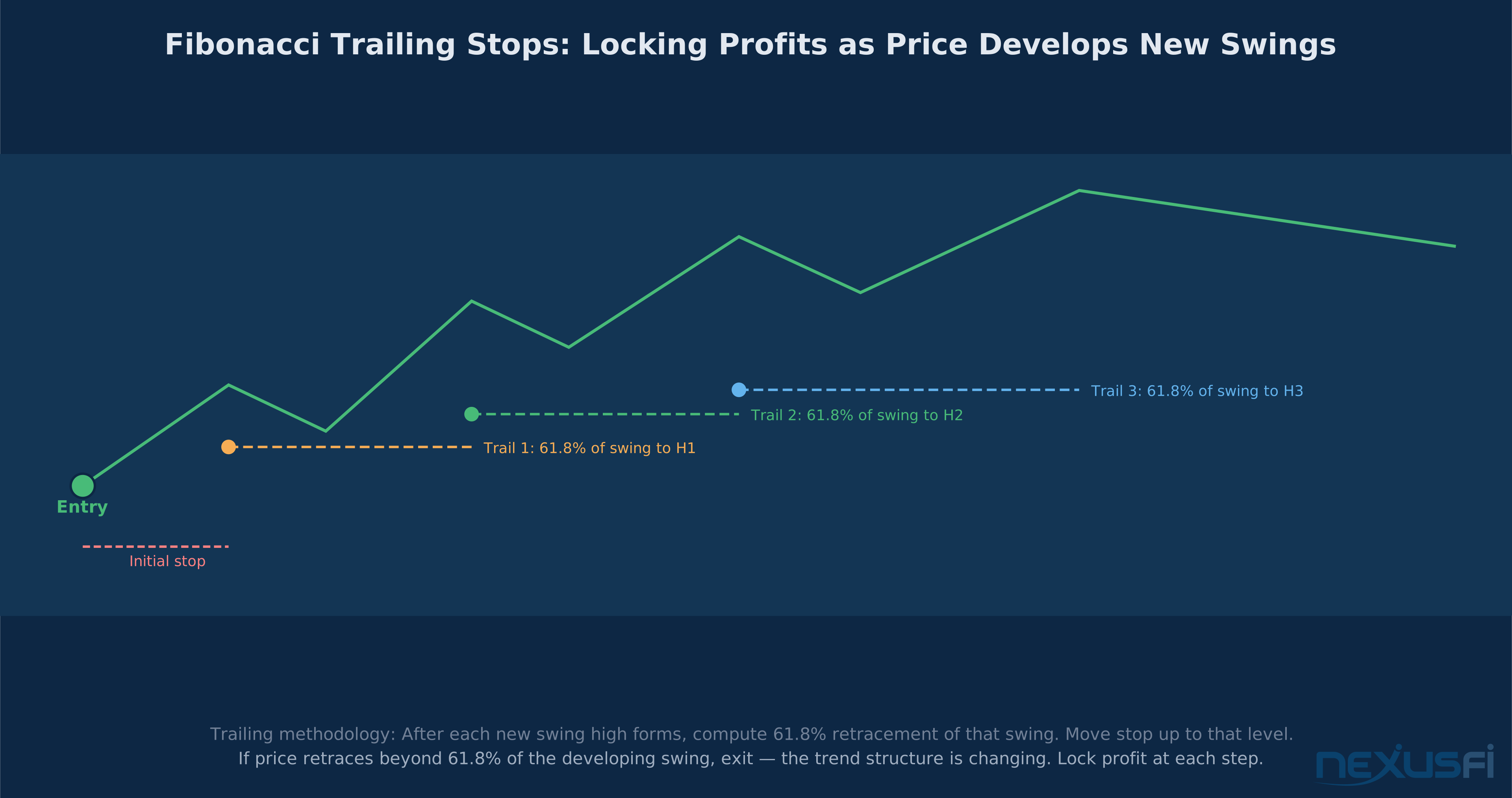
The 61.8% Trailing Method #
The most commonly used Fibonacci trailing stop methodology:
- Wait for a new swing high to form (for long positions) — a local high where price pauses or begins pulling back
- Measure the sub-swing from the most recent significant low to the new high
- Compute the 61.8% retracement level of this sub-swing
- Move the stop to just below this level (with a buffer for false breaks)
- Repeat each time a new swing high forms
The 61.8% trailing method defines "trend structure intact" as "price has not retraced more than 61.8% of the most recent sub-swing." A retracement beyond 61.8% indicates a meaningful momentum shift — not necessarily a full trend reversal, but a change significant enough to warrant exiting the position and reassessing.
The emotional logic behind why these trailing levels work is well-stated by NexusFi member @ratfink, who argues that Fibonacci levels represent "the mathematics of emotion, fear and greed" — and that "there is no line on any chart that doesn't sometimes turn price and sometimes get crossed by price other than price itself." The 61.8% trailing stop works not because the ratio is magic, but because enough market participants use it as their definition of "trend intact" that order flow concentrates at the level.
The 38.2% Trailing Method (Aggressive) #
For very strong trending moves where the goal is maximum participation:
Move the stop to just below the 38.2% retracement of each sub-swing. This keeps the stop tight to the developing trend but increases the probability of being stopped out by normal intrabar fluctuations. This method is appropriate for:
- High momentum trending sessions where pullbacks are consistently shallow
- Positions sized smaller than normal (to accommodate the lower stop accuracy)
- Trailing toward a defined target rather than an open-ended position
The same logic applies to trailing: use 38.2% trailing in strong momentum, 61.8% trailing in normal trends.
Session and Timeframe Considerations #
In futures markets, trailing stops require careful session boundary management:
Regular-session trailing vs. overnight holding: If a position is held overnight, the overnight session's behavior can trigger trail stops set from regular-session sub-swings. Many professional futures traders move the trail stop to a wider level at session end — either the daily 38.2% level or below the prior day's low — to account for overnight noise, then tighten again during the following regular session.
Timeframe of sub-swings: Trail stops should be computed from sub-swings on the same timeframe as the trade was entered. A 15-minute chart entry should use 15-minute sub-swings for trail stop computation. Using 1-minute sub-swings for a 15-minute trade creates excessive stop tightening and premature exits.
Position Sizing: The Fibonacci Stop Defines the Contract Count #
The position sizing equation is straightforward:
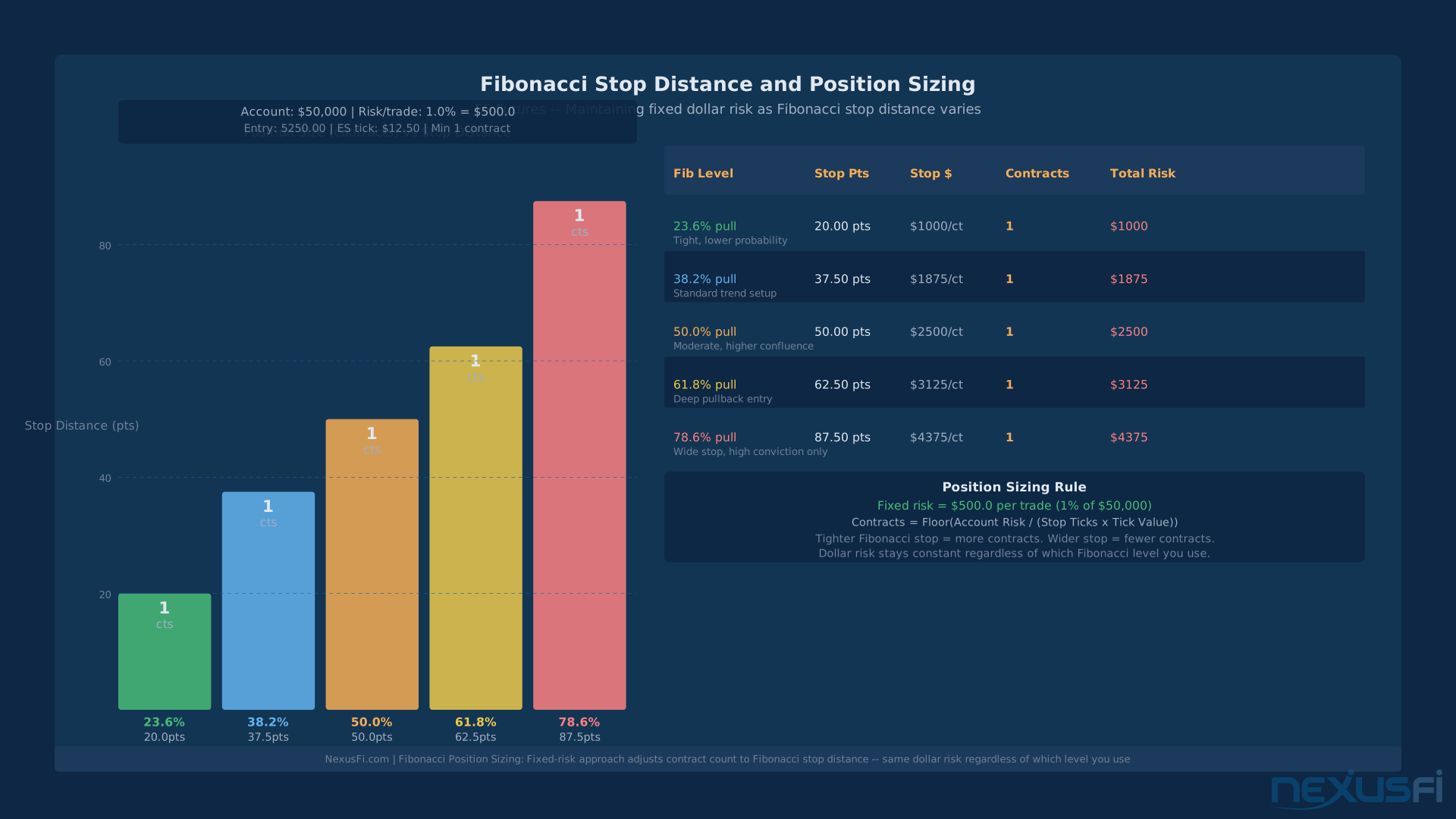
Contracts = Dollar Risk Per Trade / Dollar Risk Per Contract
Where:
- Dollar Risk Per Trade = Account Size x Risk Percentage (typically 0.5-2%)
- Dollar Risk Per Contract = Stop Distance (in points) x Tick Value per contract
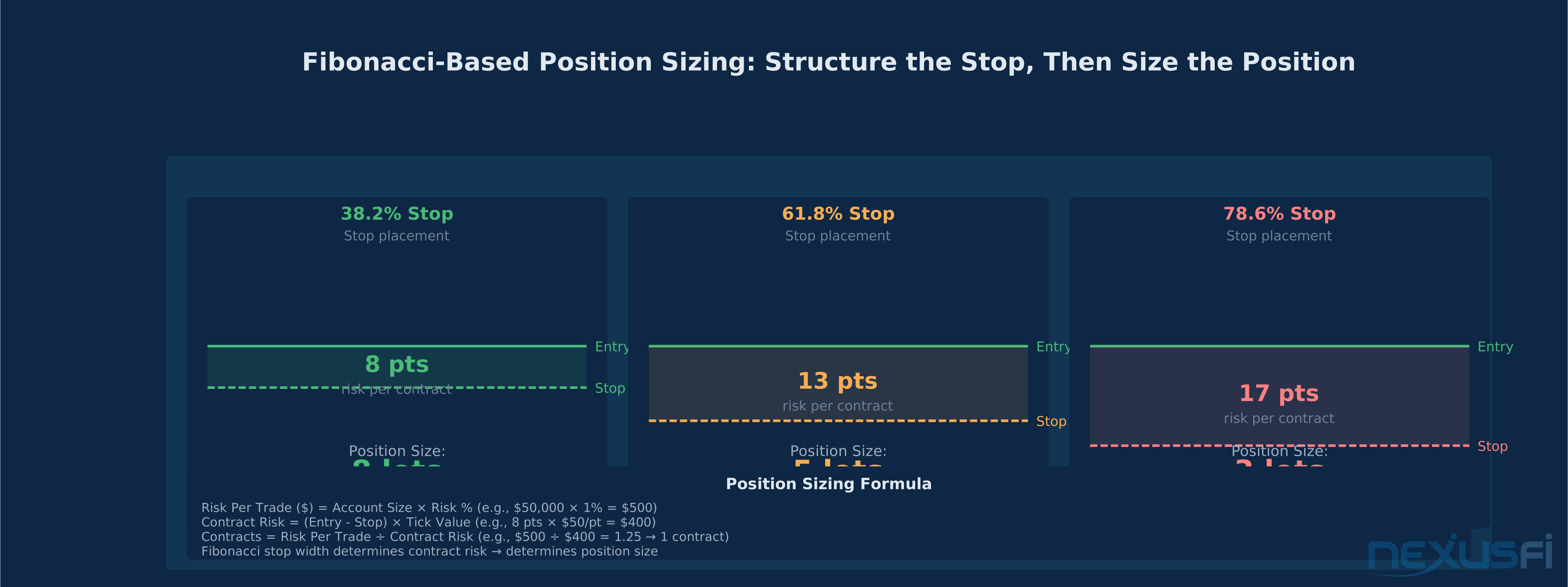
The Fibonacci stop level determines the stop distance, which determines the dollar risk per contract. A tighter Fibonacci stop (38.2% level) creates smaller dollar risk per contract, allowing more contracts within the same dollar risk. A wider stop (below swing low) creates larger dollar risk per contract, requiring fewer contracts.
Practical Sizing Example (ES Futures) #
An ES futures trade setup:
- Account size: $50,000
- Risk per trade: 1% ($500)
- Entry: 5,420.00
- Stop: below 61.8% level at 5,407.00 (13 points below entry)
- ES tick value: $12.50 per 0.25 point = $50 per point
- Dollar risk per contract: 13 points x $50 = $650
Position size: $500 / $650 = 0.77 -> 1 contract (round down)
If the stop were tighter — below the 38.2% level at 5,415.00 (5 points): Dollar risk per contract: 5 x $50 = $250 Position size: $500 / $250 = 2 contracts
Same dollar risk ($500), different position size (1 vs. 2 contracts), different stop structure. The tighter stop permits a larger position but increases stop frequency. This trade-off is the core decision in Fibonacci-based position sizing.
Avoiding the Over-Sizing Trap #
The danger in tight Fibonacci stops is the temptation to over-size. A trader who uses the 38.2% stop to justify trading 5 contracts instead of 2 has not maintained consistent dollar risk — they have doubled or tripled the effective position size while telling themselves they have a "better" setup. Strict adherence to the dollar risk percentage, regardless of stop width, prevents this discipline failure.
His conclusion after years of Fibonacci-based trading: "taking small profits with proper money management has made my account grow in a consistent and steady way." The Fibonacci framework enforces this discipline — the stop level determines the position size, not the trader's appetite for risk.
Fibonacci Re-entry: Structuring the Missed-Move Recovery #
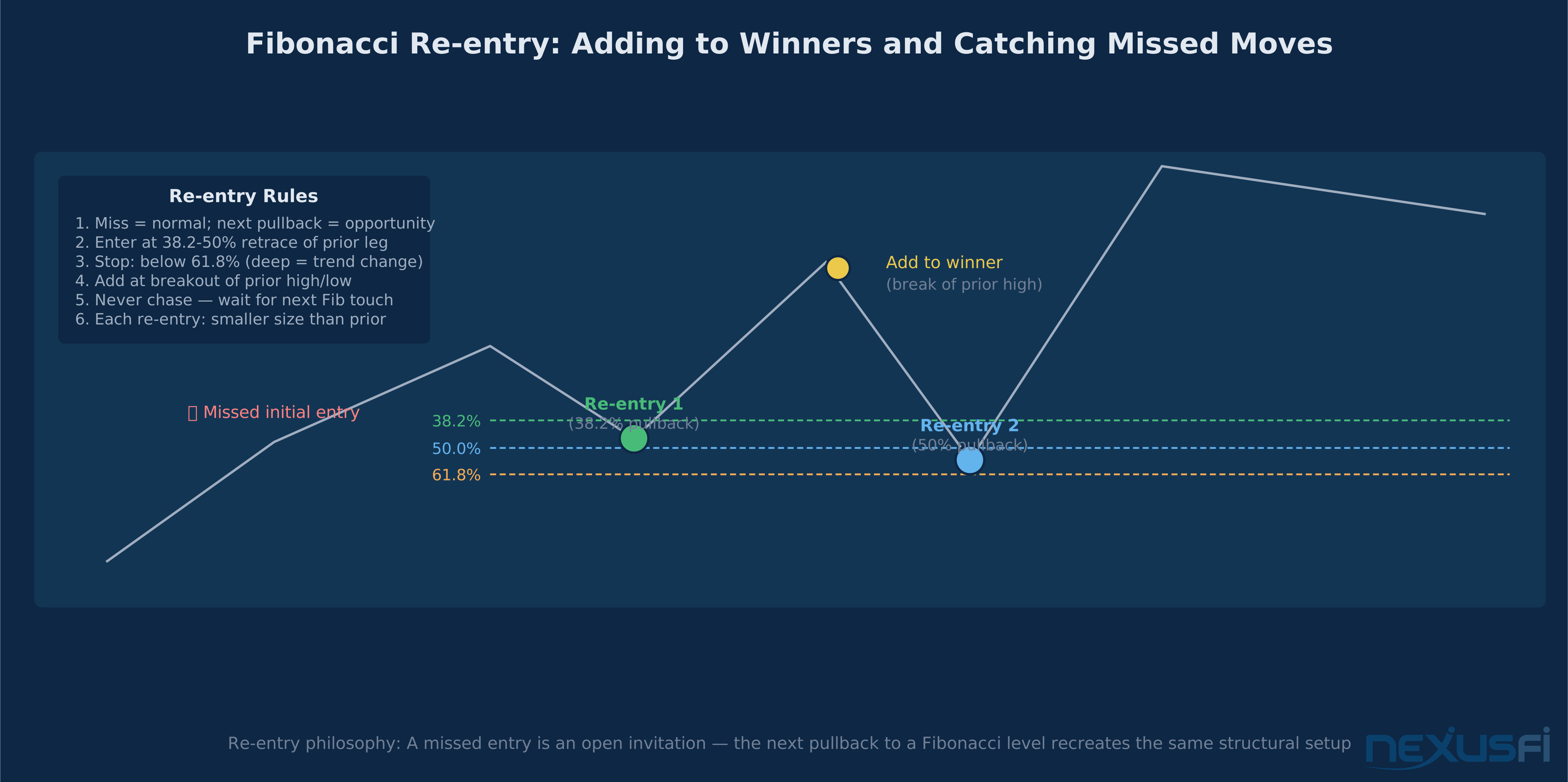
No trader enters every significant move at the optimal Fibonacci level. Missed entries — where price moves much before any pullback occurs — are a routine occurrence in trending markets. The Fibonacci re-entry framework provides a systematic response: wait for the next pullback to a Fibonacci level and treat it as a new entry opportunity.
Re-entry Qualification #
A Fibonacci re-entry is valid when:
- The trend is intact: The primary trend structure has not reversed. A missed entry in an uptrend should be followed by a re-entry attempt only if price is still making higher highs and higher lows.
- Price pulls back to a meaningful Fibonacci level: The re-entry level should be at the 38.2%, 50%, or 61.8% retracement of the most recent impulse leg — not an arbitrary pullback.
- The entry timeframe is consistent: If the original planned entry was on a 15-minute chart, the re-entry should use the same timeframe for pullback measurement.
- Confirmation is still required: A re-entry at a Fibonacci level follows the same confirmation requirements as an original entry. Price touching the 38.2% retracement level alone is not sufficient — a confirmation candle indicating reversal is required.
Position Sizing on Re-entries #
Re-entry positions typically should be smaller than the originally planned position:
First re-entry: Full planned position size, identical to the original planned entry. The re-entry is a new setup, not a revenge trade — same rules apply.
Second re-entry (if first re-entry is also missed): 75% of planned position size. Multiple missed entries in sequence suggest either the trend is moving faster than anticipated or the Fibonacci levels being watched are not the correct reference points.
Adding to a winning position (scaling in): When already in a position, adding at the next Fibonacci level on a pullback is a different operation than re-entering from flat. Scale-in sizing should be smaller than the initial position — typically 25-50% — to avoid over-concentration at a single idea.
Re-entry and the Trailing Stop Interaction #
A re-entry after a missed move creates a trailing stop management challenge: the original swing from which Fibonacci levels are drawn may be far below the current price, making the stop distance large. Options:
- Use the re-entry sub-swing for trailing: Rather than trailing from the original impulse, trail the stop from the sub-swing that created the re-entry opportunity. This places the stop near the recent pullback low — a more relevant invalidation level.
- Accept a reduced risk-reward: If the only structurally valid stop is the original swing origin, the risk-reward at the re-entry point may be less favorable than the original setup. A 1:2 target-to-risk ratio may compress to 1:1.5 on the re-entry. If the risk-reward is still positive, the re-entry remains valid.
- Skip the re-entry if risk-reward is insufficient: Not every missed move should be chased. If the pullback to a Fibonacci level produces a stop distance that creates an unfavorable risk-reward, the correct action is to wait for the next identifiable Fibonacci opportunity — which will come.
Integrating Trade Management with Entry Analysis #
Fibonacci trade management is most effective when the entry analysis and management framework use the same underlying reference swing. The XA leg that identified the entry determines:
- The retracement levels that define the entry zone
- The extension levels that define the target ladder
- The invalidation level that defines the stop
- The sub-swings that drive the trailing stop computation
- The re-entry opportunities on subsequent pullbacks
This consistency — using a single reference swing throughout the trade lifecycle — creates a coherent framework where all decisions derive from the same structural analysis rather than a patchwork of unrelated signals.
The Fibonacci Trading Workflow #
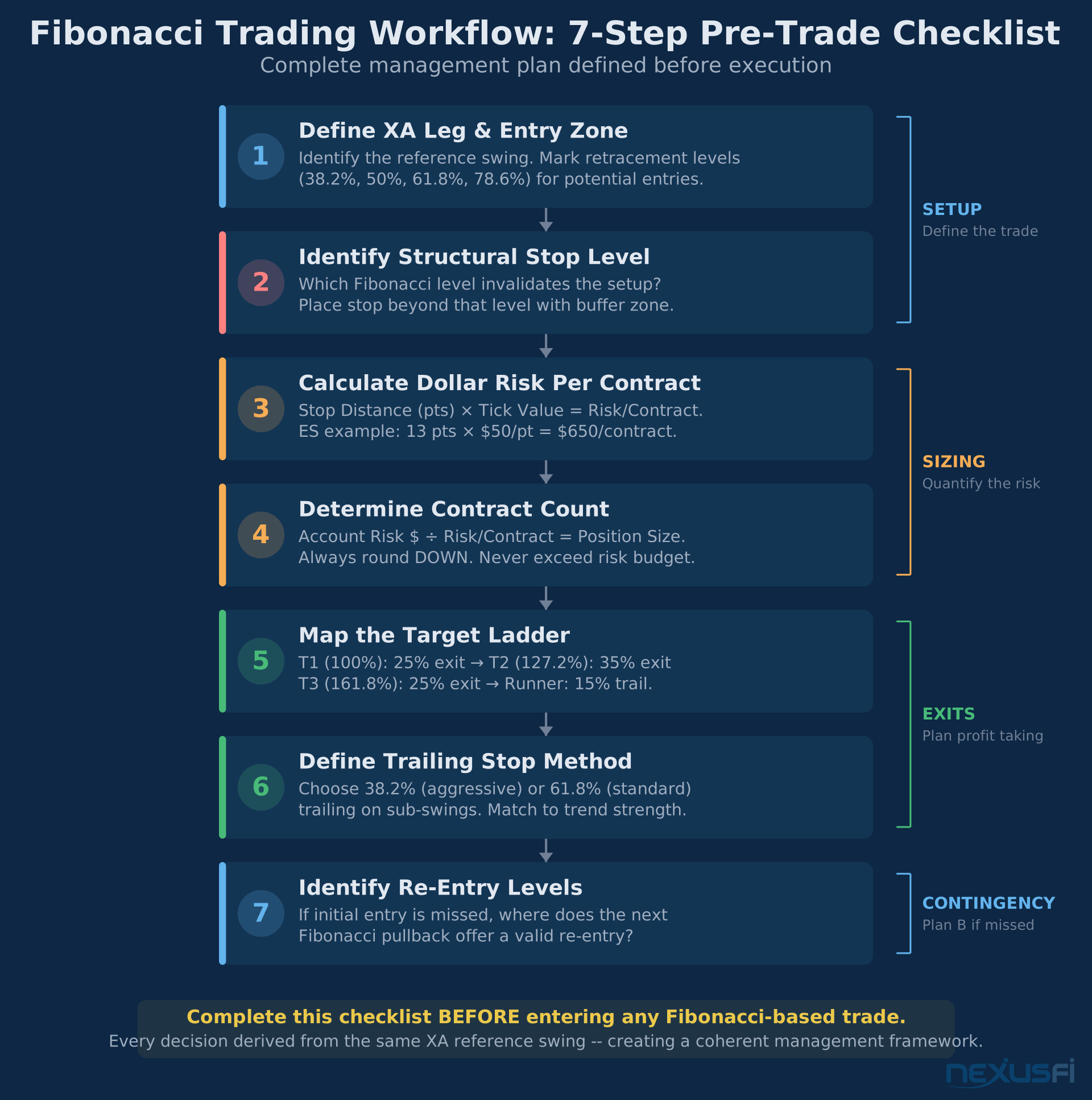
Before executing a Fibonacci-based trade, the complete management plan should be defined:
Pre-trade checklist:
- Define the XA leg and entry zone
- Identify the structural stop level (which Fibonacci invalidation level)
- Calculate the dollar risk per contract at this stop distance
- Determine contract count based on account size and risk percentage
- Map the target ladder (T1, T2, T3, runner)
- Define the trailing stop method (38.2% or 61.8% of sub-swings)
- Identify re-entry levels if the initial entry is missed
During the trade:
- Move stop to break-even at T1
- Reduce position size at each target level
- Trail stop as new sub-swings form
- Document the trade in real time (entry, stop, targets, adjustments)
Post-trade:
- Record the actual exit versus the planned exit
- Note which management decisions were followed and which were improvised
- Track the distance from entry to stop at each stage to calibrate future stop selection
Fibonacci Trade Management: A Framework for Consistency #
The value of applying Fibonacci tools to trade management is not predictive precision — no tool predicts price with precision. The value is consistency: a trader who uses the same Fibonacci-based stop and target logic across all setups has a repeatable process that can be analyzed, measured, and improved over time.
Discretionary trade management — "I'll move the stop when it feels right," "I'll exit when I sense it's topped" — cannot be backtested, cannot be systematically improved, and is subject to the cognitive biases that compound trading losses. Fibonacci management, by contrast, provides a structural rule that exists independent of the trader's moment-to-moment emotional state.
That framing applies to trade management even more than to entries. The Fibonacci levels in your stop, target, and trailing logic are not predicting where price will reverse — they are providing structural context for decision-making that removes discretionary guesswork.
Academic research supports this view. Tsinaslanidis, Guijarro & Voukelatos (2022) studied three equity markets and found that "prices are equally likely to bounce on Fibonacci levels as they are to bounce on non-Fibonacci levels" — confirming that Fibonacci's value in trade management lies in the consistency of the framework, not the predictive accuracy of any individual level. The numbers are not magic. The discipline they create is.
The consistency principle extends across all Fibonacci tools covered in this article set:
- Fibonacci Retracement and Extension Levels: The foundational tool — how levels are drawn and interpreted
- Fibonacci Confluence and Cluster Zones: Highest-probability entry zones
- Fibonacci Time Zones and Cycles: Temporal structure for entry timing
- Harmonic Trading Patterns: Pattern-based entry with built-in stop logic
- Fibonacci Fan Lines and Arcs: Dynamic support and resistance
- Fibonacci Sequence and Golden Ratio in Trading: The mathematical foundation
The NexusFi community has explored Fibonacci effectiveness thoroughly: thread t=11159 documents @Lmess's complete ES Fibonacci trading system with specific stop and target rules, while thread t=37501 hosts one of the most candid 434-reply debates on Fibonacci usefulness anywhere — essential reading for building realistic expectations about what these levels can and cannot do in live conditions.
Knowledge Map
Prerequisites
Understand these firstGo Deeper
Build on this knowledgeReferences This Article
Articles that build on this topicCitations
- — Are Fibonacci retracements and projections useful? (2015) 👍 22
- — Fibonacci trading system for the ES (2011) 👍 4
- — Fibonacci trading system for the ES (2011) 👍 4
- — Are Fibonacci retracements and projections useful? (2015) 👍 11
- — Are Fibonacci retracements and projections useful? (2015) 👍 10
- — Are Fibonacci retracements and projections useful? (2015) 👍 3
- — Optimization of Stock Investment Strategy with The Fibonacci Retracement Method to Determine Take Profit and Stop Loss (2025)
- — Automatic identification and evaluation of Fibonacci retracements: Empirical evidence from three equity markets (2022)