



Fibonacci Fan Lines and Arcs
Overview #
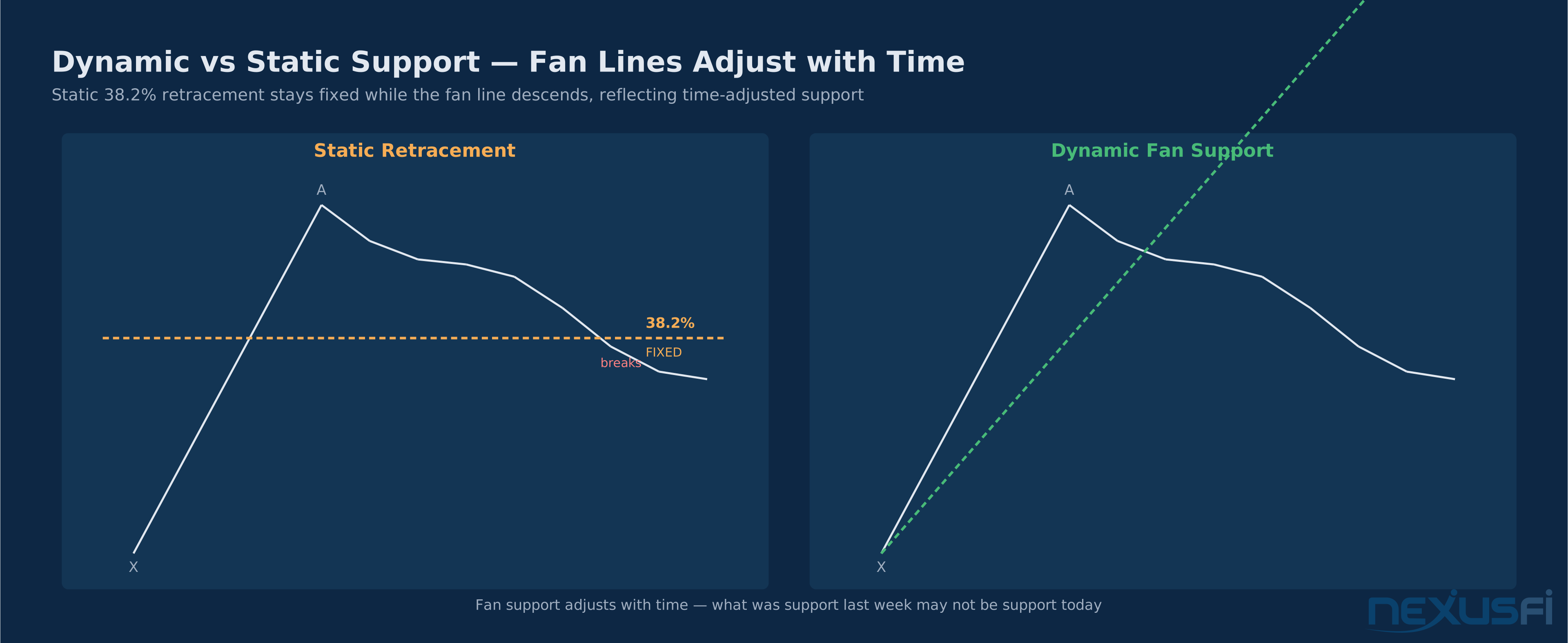
You draw a 38.2% retracement on a strong uptrend. It holds beautifully — price bounces right off it the next day. Two weeks later, the trend has continued higher, price pulls back to that same 38.2% level, and it slices through like it doesn't exist. The level hasn't moved, but the market has. That's the fundamental limitation of horizontal retracement levels — they're static snapshots applied to a market that's continuously evolving.
Fibonacci fan lines and Fibonacci arcs solve this problem. They project support and resistance zones that change as price moves through time, creating diagonal and curved boundaries that track the trend's developing structure rather than anchoring to a fixed price. For traders working in trending markets where horizontal levels consistently miss pullback lows and rally highs, fan lines provide a framework that accounts for the trend's pace and the passage of time.
These tools are less commonly discussed than retracements and extensions, but they capture something genuinely different: the angular and radial relationships between price swings rather than the purely vertical relationships that retracement levels measure. This article covers construction methodology for both tools, how they function as dynamic support and resistance, the concept of convergence when fans and arcs intersect, and practical trading frameworks. Return to the Fibonacci hub article for the mathematical basis, or see Harmonic Trading Patterns for the most structured Fibonacci application in active trading.
Fibonacci Fan Lines: Construction and Interpretation #
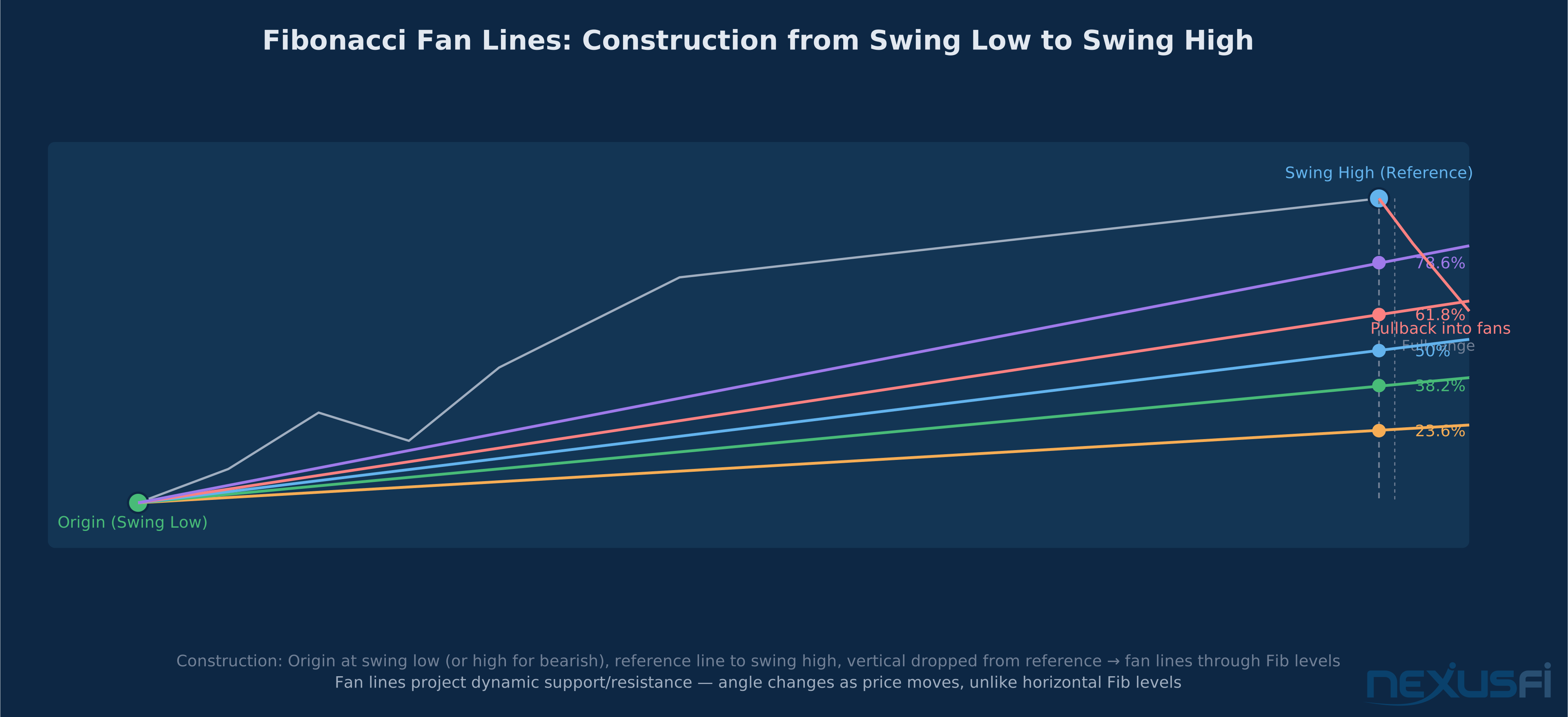
A Fibonacci fan is constructed from a single price swing — the XA leg, in harmonic terminology — and produces a series of diagonal lines that radiate from the swing's starting point at angles corresponding to Fibonacci ratios.
Construction Methodology #
The construction follows a defined geometric process:
Step 1: Identify the defining swing — a clear, significant high-to-low or low-to-high move. In trending markets, this is typically the most recent impulse leg. In range markets, it is the high-to-low that defines the range.
Step 2: Mark the origin point (Point X) at the beginning of the swing. For a bullish fan, the origin is the swing low; for a bearish fan, the origin is the swing high.
Step 3: Mark the reference point (Point A) at the end of the swing.
Step 4: Drop a vertical line from the reference point (Point A) straight down (for bullish) or straight up (for bearish). This vertical line represents the full range of the swing.
Step 5: Mark Fibonacci ratio points on the vertical line at 23.6%, 38.2%, 50%, 61.8%, and 78.6% of the vertical's length.
Step 6: Draw diagonal lines from the origin through each Fibonacci ratio point on the vertical, extending them across the chart.
The resulting fan of diagonal lines radiates from the origin at angles that encode the Fibonacci ratios — steeper lines for smaller ratios, shallower lines for larger ratios. For a detailed walkthrough of this construction with annotated charts, StockCharts' ChartSchool Fibonacci Fans reference provides step-by-step examples on equity and index charts that translate directly to futures construction.
Why Fan Lines Create Dynamic Support and Resistance #
The geometric insight behind fan lines is this: as time passes after a swing, a price retracement of a given magnitude (say, 38.2% of the swing) should not hold at the same price level as it did immediately after the swing concluded. A trend that has persisted for multiple sessions has demonstrated structural strength that warrants a higher support level — the fan line captures this by angling upward with the passage of time.
Consider a bullish fan constructed from a significant swing low. Immediately after the swing high forms, the 38.2% fan line is close to the swing high. As days and weeks pass, the fan line descends from left to right (in price terms), tracking progressively lower levels. A price retracement that encounters this line will find support at progressively lower absolute prices — but those prices remain consistently at 38.2% of the angular distance from the origin at that specific moment in time.
Fan lines define price-time relationships, not just price levels. A touch of the 38.2% fan line two days after the swing is a at the core different signal than a touch fourteen days later — horizontal retracements treat both identically, but the fan captures the distinction.
Primary Fan Levels in Practice #
While five or more fan lines are mathematically possible, experienced traders typically focus on three:
The 38.2% Fan: In a well-structured trend, this is the primary dynamic support line. Price pullbacks in a healthy uptrend frequently find support near the 38.2% fan before resuming the trend direction. Multiple successive touches of this line without a break indicate trend strength and conviction. NexusFi member @Fat Tails ran probability distributions on Fibonacci levels and found that the 38% and 50% levels on a 60-minute chart using a 3-day lookback period deliver a consistent edge for ES — the 50% level (balance point) adds directional bias to intraday action, while the 38% functions as the primary support gauge in trending sessions.
The 50% Fan: The midline of the fan, often acting as a transition zone. Price holding above the 50% fan indicates the trend is intact; price breaking below the 50% fan suggests weakening momentum and the possibility of a larger correction.
The 61.8% Fan: Secondary support in a correcting trend. When the 38.2% fan is breached, the 61.8% fan becomes the next significant test level. A break below the 61.8% fan is a strong signal that the trend structure has changed materially.
The fan-break cascade: When the 38.2% fan breaks, expect a move to the 50% fan. When the 50% breaks, expect the 61.8%. Each successive fan break signals increasing loss of trend momentum — and the cascade accelerates. The first break is a warning; the second break is a structural change.
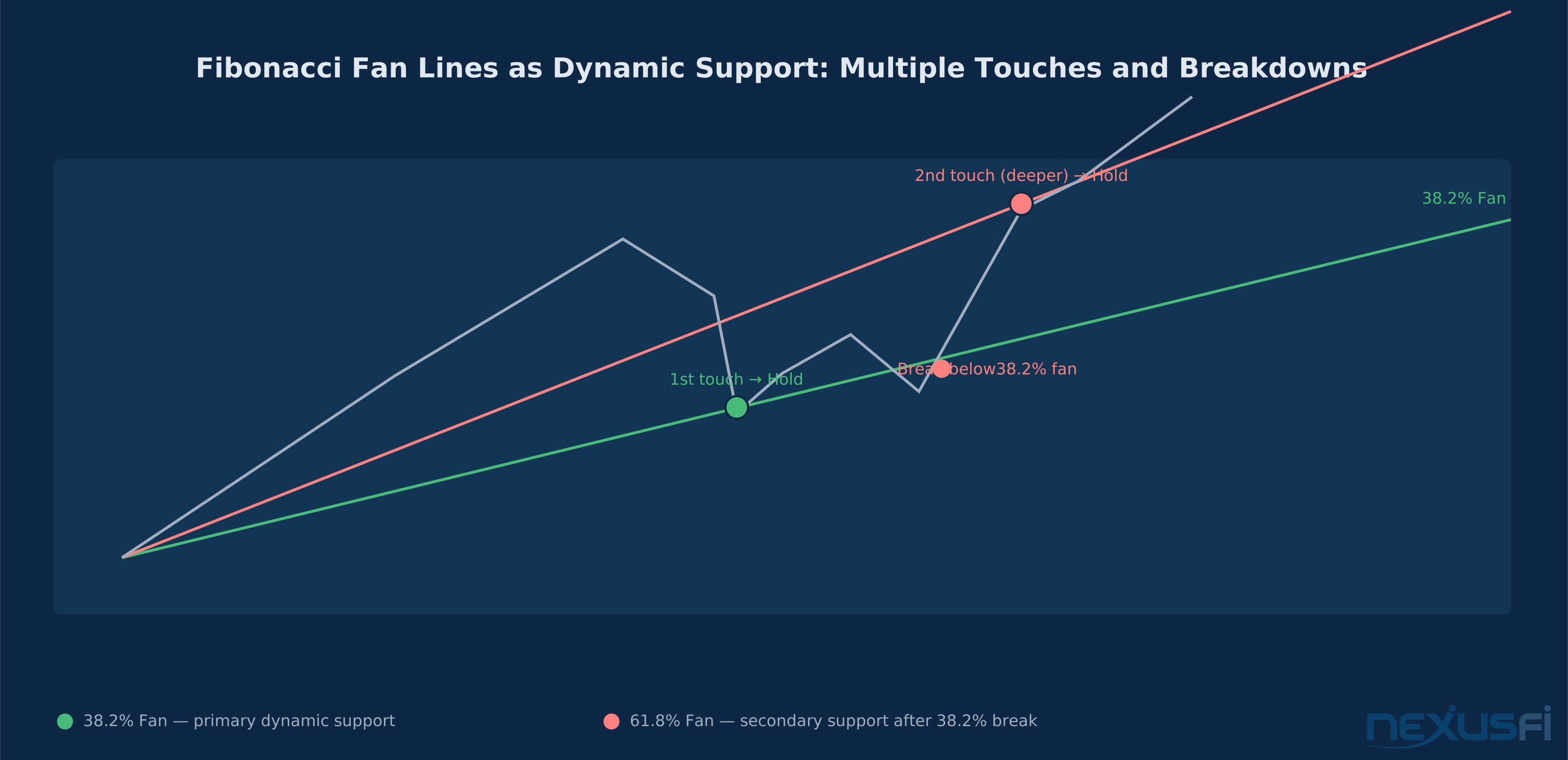
Bottom line: Fan lines work because they encode the trend's pace. The 38.2% fan is your primary support gauge; a break there doesn't end the trend, but it tells you the trend is now working harder to hold together. As @srgtroy noted in the long-running ES Spoo-nalysis thread, fibs work best in confluence — the 38.2% fan becomes far more powerful when it aligns with other structural levels rather than standing alone.
Fibonacci Arcs: Radial Projection #
Fibonacci arcs differ from fan lines in their geometric structure. Where fan lines are straight diagonal lines radiating from the origin, arcs are curves — specifically, circular arcs drawn at radii corresponding to Fibonacci ratios of the swing range.
Construction Methodology #
Step 1: Identify the same defining swing used for fan construction.
Step 2: Calculate the distance from the swing's origin (Point X) to its terminus (Point A). This is the Euclidean distance — not the vertical range, but the actual diagonal length accounting for both price and time dimensions: √((price range)² + (time range)²).
Step 3: Draw circular arcs centered at the terminus (Point A), at radii equal to 23.6%, 38.2%, 50%, 61.8%, and 100% of the calculated distance.
Step 4: The visible portion of each arc — the part below the swing (for a bearish arc) or above (for a bullish arc) — is the relevant zone.
The key difference from fan lines is the radial geometry: arcs expand from a central point (the swing terminus) in all directions equally. The intersection of an arc with the price axis defines a support or resistance zone that simultaneously encodes both the price level and the time elapsed since the swing terminus.
Arc vs. Fan: Key Conceptual Distinction #
Fan lines emanate from the swing origin (Point X) and project forward in time. Arcs emanate from the swing terminus (Point A) and project radially outward.
This distinction matters for interpretation:
- Fan lines are most useful for measuring the pace of retracement — how quickly price is giving back the swing move
- Arcs are most useful for measuring the extent of retracement — how far in price-time space price has moved from the swing terminus
In practice, the most significant support and resistance occurs where arcs and fan lines overlap — where both tools agree.
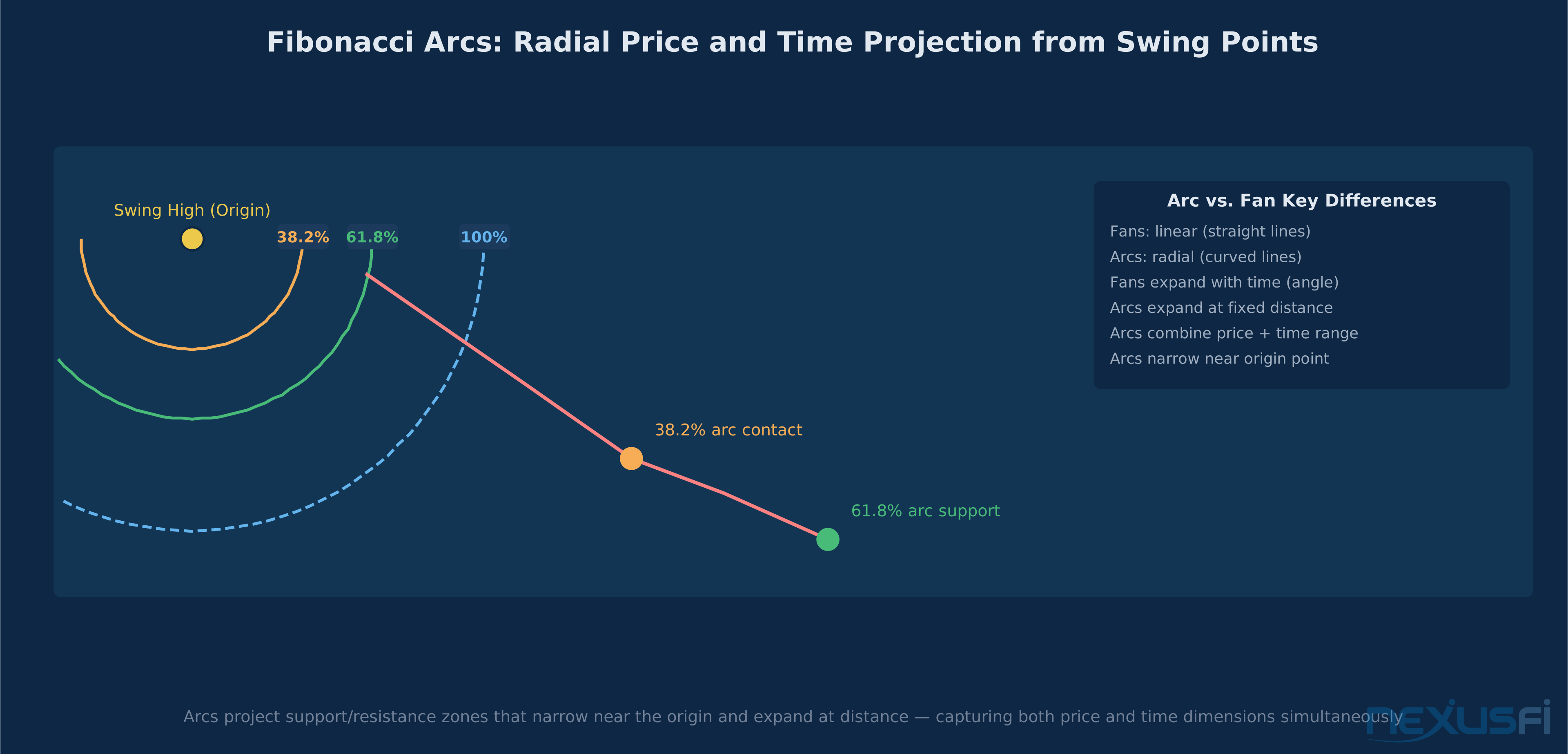
Bottom line: Fans measure pace; arcs measure extent. Using both together gives you a price-time framework that neither tool provides alone.
Convergence Zones: Where Fans and Arcs Intersect #
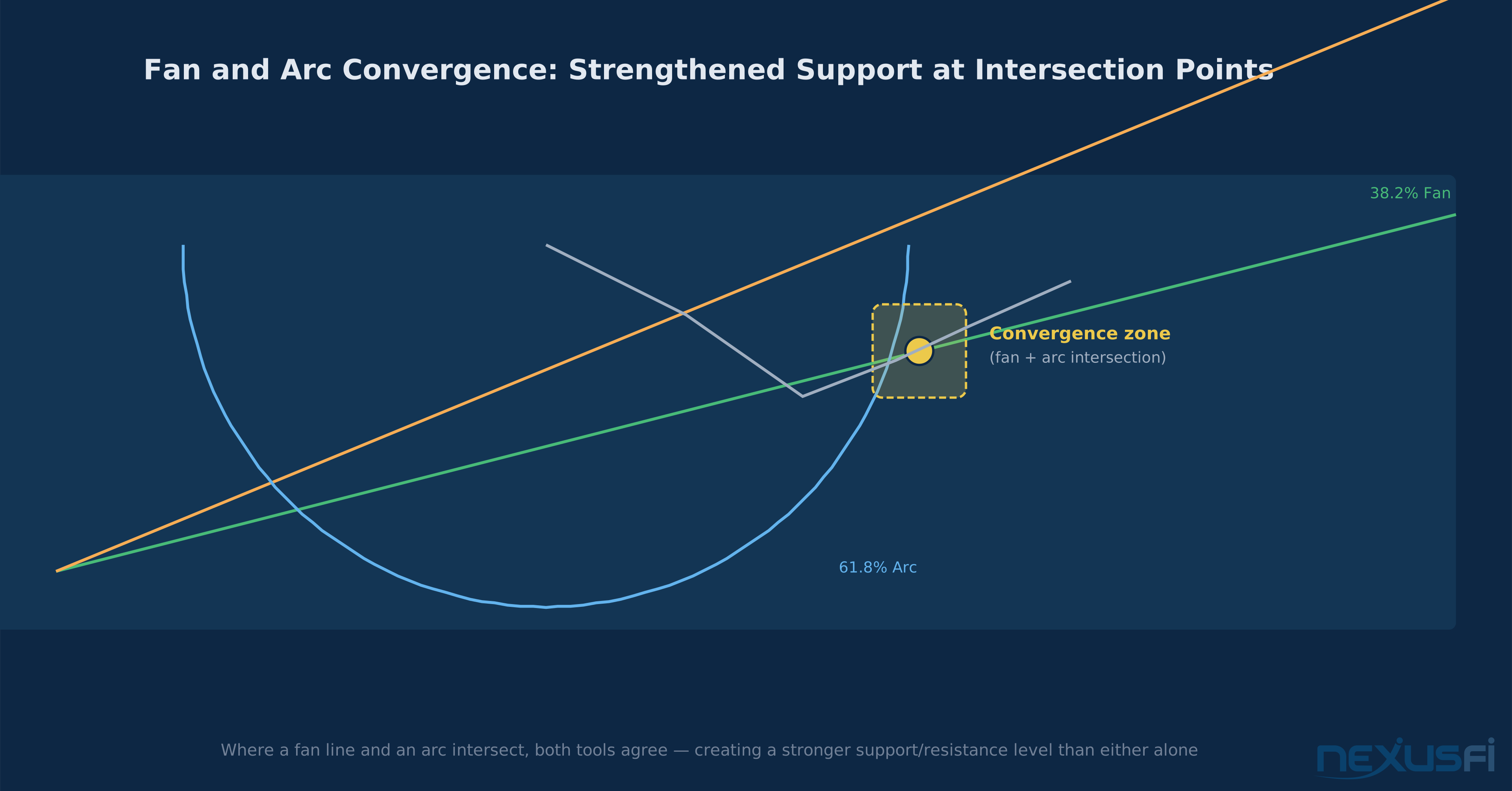
The most powerful signal in Fibonacci fan and arc analysis occurs when a fan line and an arc cross at or near the same price at approximately the same time. This convergence zone concentrates two independent geometric frameworks on a single price-time area — creating a stronger prior for a market reaction.
Why Convergence Strengthens the Signal #
Fan lines project from the swing origin at angular relationships. Arcs project from the swing terminus at radial relationships. These are geometrically independent constructions — they do not guarantee intersection at the same location. When they do converge, it is because the market's price action has reached a location that simultaneously satisfies both the angular relationship (fan) and the radial relationship (arc) to the defining swing.
The behavioral interpretation: participants using fan lines and participants using arc analysis are both watching the same area. The combined order flow at the convergence zone creates the same amplification effect as multi-swing Fibonacci confluence in traditional retracement analysis. @Fat Tails demonstrated this confluence principle quantitatively in his Fibonacci Cluster and Confluence Zones analysis, where he ran probability distributions across over 500 Fibonacci lines drawn from 10 different zigzag timeframes and found that cluster zones — areas where multiple independent Fibonacci projections converge — have measurably higher reversal probabilities than isolated levels. His CL crude oil analysis illustrated the principle with a specific resistance cluster composed of five independent Fibonacci lines (a 127.2% expansion, two 161.8%/200% expansions, a 100% projection, and a measured move) all converging within a 0.08-point range on crude oil futures.
Identifying Convergence in Practice #
Convergence zones are defined by two criteria:
- A fan line and an arc cross within a narrow price range (ideally within 0.1-0.25% of the instrument's current price)
- The crossing occurs within the relevant time window (not far in the future where the angle of both tools creates excessive uncertainty)
In futures markets with tight tick sizes (ES at 0.25 points, NQ at 0.25 points), convergence zones can be identified to within a few ticks — narrow enough for practical stop placement.
Bottom line: Convergence zones are where fans and arcs agree — two independent geometric frameworks pointing at the same price-time area. These are your highest-probability setups.
Fan Lines in Futures Markets: Structural Considerations #
Fan lines and arcs were originally developed for equity analysis where time is measured in calendar days. Futures markets present specific adaptations:
Time Axis: Trading Sessions vs. Calendar Days #
Futures price action is more compact in overnight sessions and more significant during regular trading hours. Practitioners typically construct Fibonacci fans on regular-session-only charts or use daily charts that aggregate regular session activity — this prevents the overnight session from distorting the fan's angular relationships.
@Fat Tails addressed this session configuration issue directly in his Correct Sessions for Your Charts thread, emphasizing that each instrument has contractual trading times and session templates must reflect them accurately — a misconfigured session template will produce incorrect pivot calculations and, by extension, distorted fan line angles. @bobwest explored the significance of pre-market and post-market sessions, noting that significant trends can develop during the Asian session that affect the structural picture when regular hours open — context worth considering when deciding whether to anchor your fan origin at the overnight extreme or the regular-session pivot.
For index futures (ES, NQ), the primary fan should be constructed on the 30-minute or 60-minute chart during the regular session, with the swing origin and terminus drawn from significant regular-session pivot points rather than overnight extremes.
Fan Line Timeframe Selection #
The most effective fan lines in active futures trading are constructed from:
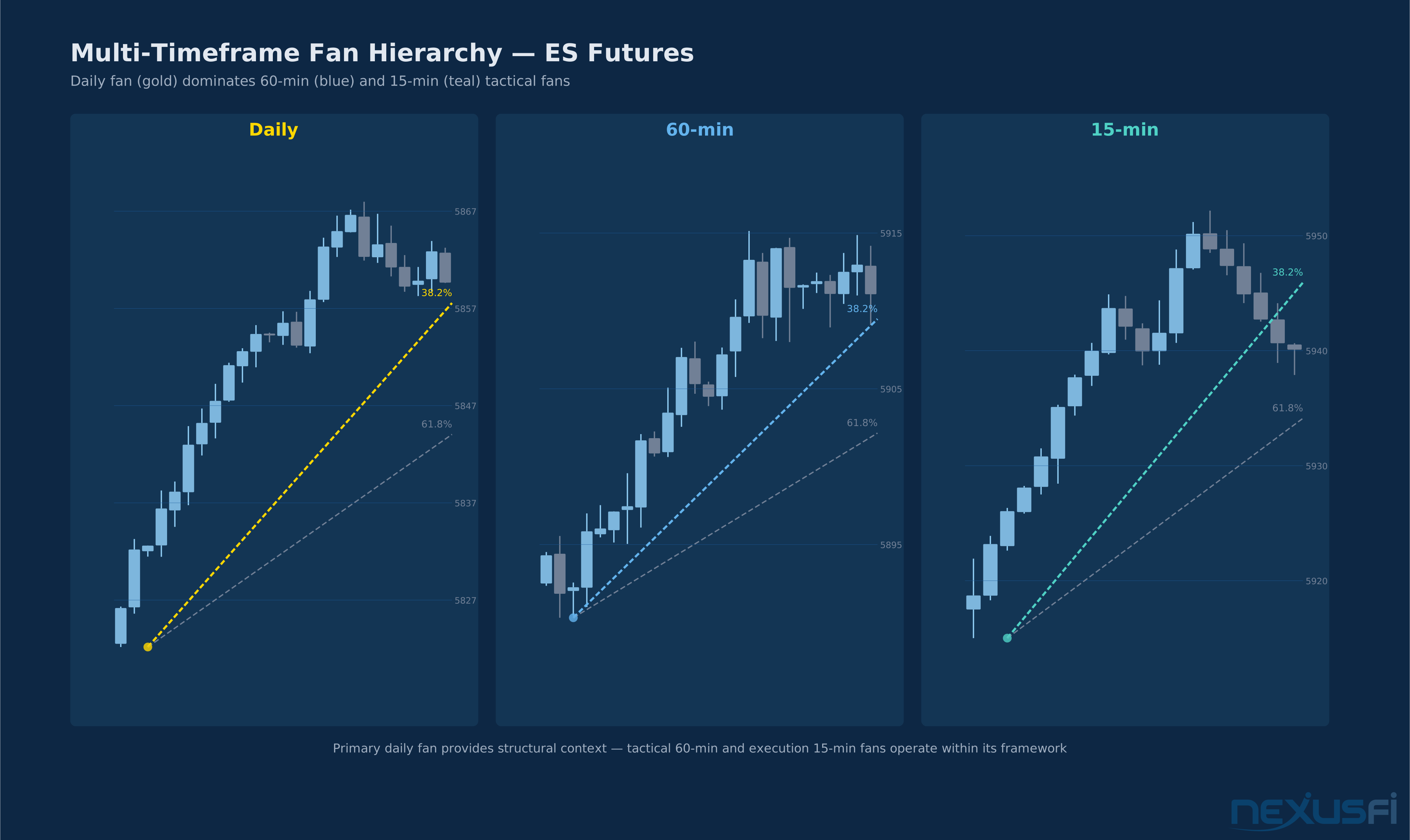
Primary fans (daily chart): Drawn from multi-week swings, these provide the major support and resistance framework that longer-term participants reference. A daily-chart 38.2% fan provides context for intraday traders — if price is well above the daily 38.2% fan, the trend remains structurally sound regardless of intraday noise.
Tactical fans (60-minute chart): Drawn from the current week's dominant swing, these provide actionable support/resistance for intraday and swing traders. The 60-minute fan's 38.2% level is the most common intraday support target during healthy trending sessions.
Execution fans (15-minute chart): Drawn from the session's opening range expansion or the current hour's dominant swing, these provide precise entry levels for scalp and short-term trades.
The hierarchy of fans mirrors the hierarchy of Fibonacci retracement levels — primary levels from larger swings dominate tactical levels from smaller swings.
Integration with Volume Profile #
Fibonacci fans provide price-time projections; volume profile provides evidence of where institutional participation has concentrated. The combination is effective because they measure different things:
- Fan line at the 38.2% level: Geometric support based on the trend's angular relationship
- High Volume Node (HVN) at the same level: Historical institutional accumulation or distribution at that price
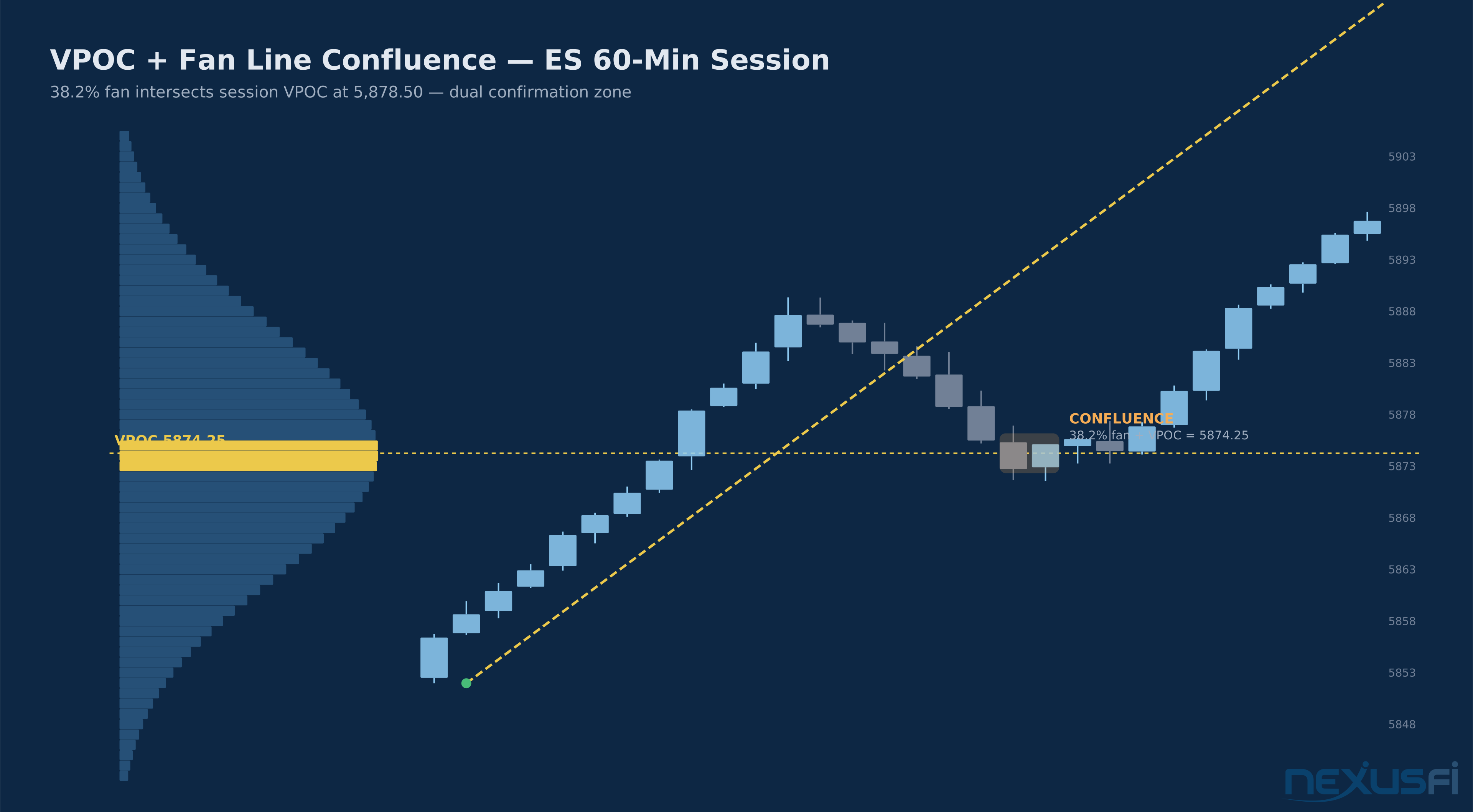
When the fan touches a significant HVN, the fan's angular support is confirmed by volume-based evidence. This dual confirmation raises the probability of a reaction substantially compared to either signal in isolation.
Volume Point of Control (VPOC) alignment is the most valuable confirmation: a fan line that coincides with the VPOC of the prior session or a multi-session composite profile has the combined weight of geometric and behavioral support. @Big Mike's foundational Volume Profile and Footprint discussion thread established the framework for understanding POC, Value Area, and naked levels as support and resistance — concepts that map directly onto fan line confluence when the two tools agree. @Private Banker extended the analysis by tracking developing VPOC (DVPOC) and developing Value Area boundaries intraday, noting that HVN ranges function as bell curves where edge dissipates at the center — a principle that applies equally when a fan line passes through the middle of an HVN versus its edge.
Bottom line: Construct fans from regular-session pivots, not overnight noise. The daily fan gives you the structural context; the 60-minute fan gives you the actionable levels.
Trading Framework: Entries, Stops, and Targets #
Fan lines require a structured trading framework to convert support/resistance levels into actionable setups.
Entry Methodology #
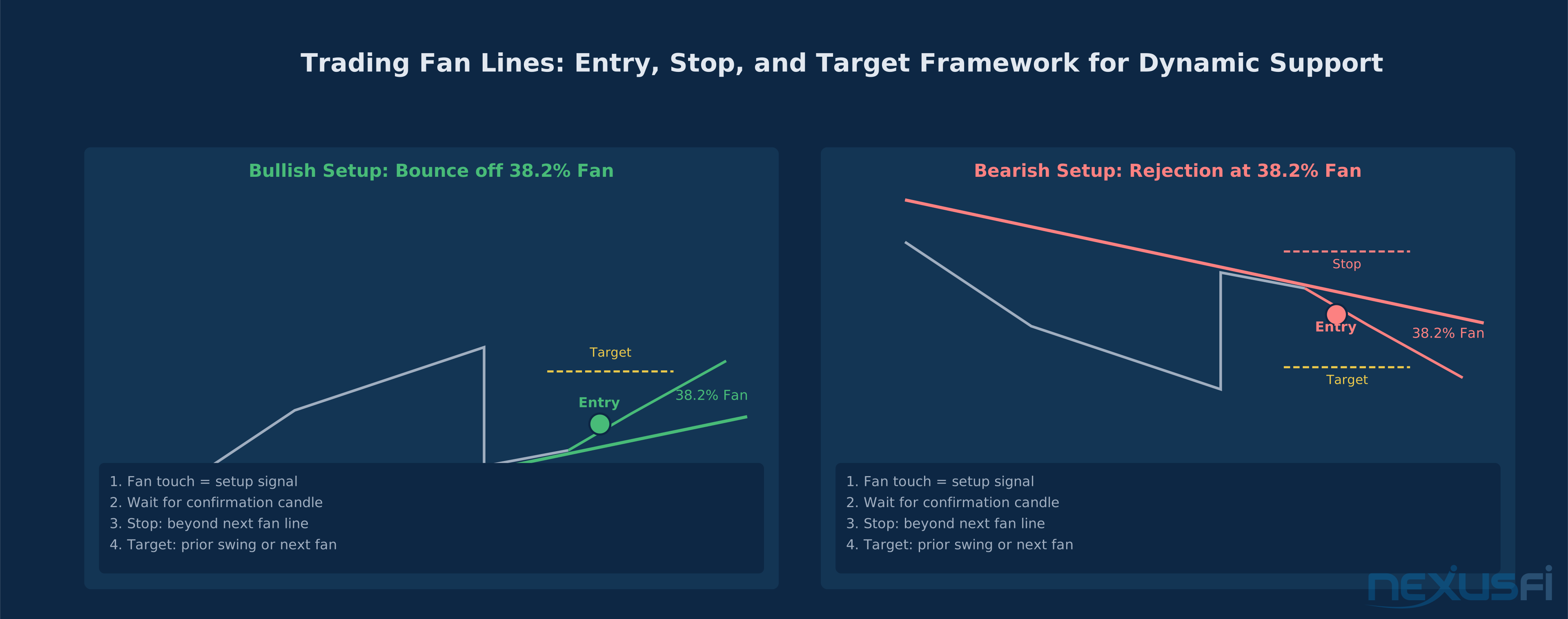
Fan line entries follow the same confirmation principle as horizontal Fibonacci levels: contact with the fan is not sufficient. A confirmation candle (or bar structure) within the fan zone is required before committing to a position.
For bullish fan support entries:
- Price approaches the fan from above
- A test candle contacts the fan line (wick touch or body overlap)
- Confirmation: the test candle closes near its high (rejection of lower prices), OR the following bar opens above the test candle's high
- Entry: limit at the test candle's high, or market at the open of the confirmation bar
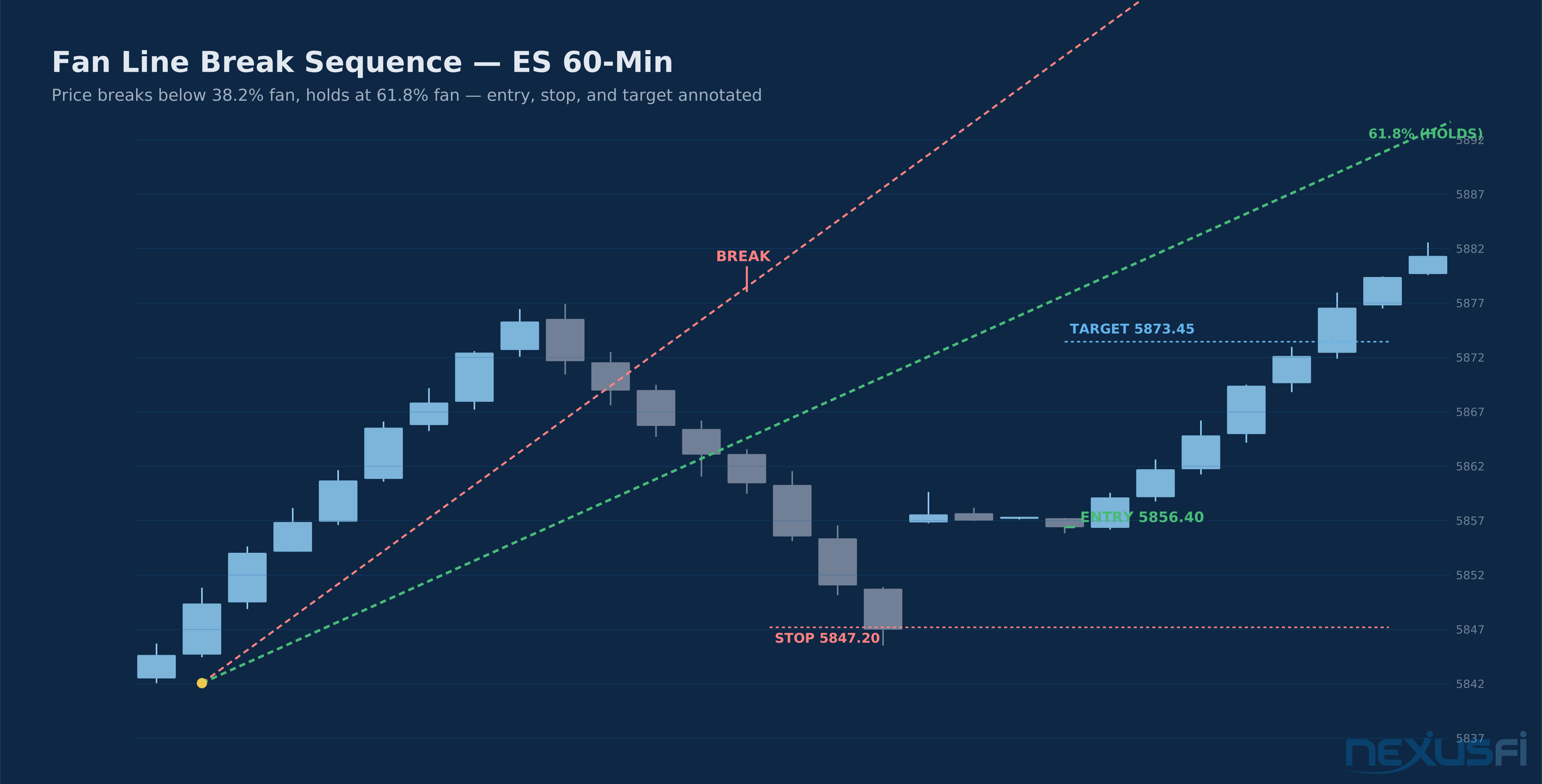
- Stop: below the next fan line (e.g., if entering at 38.2% fan, stop below the 50% or 61.8% fan)
@sstheo, trading ES micros and working through Fibonacci tools for the first time, documented the specific moment this clicked for him: "The 50% retracement and the 61.8% retracement are excellent at holding price much of the time... I used to think fibs were hocus-pocus, but after seeing the evidence (many times to the tick!) I am now a believer." That "to the tick" observation is exactly what makes fan-based confirmation entries workable — the fan identifies the zone, but precise candle structure at the zone is the actual signal.
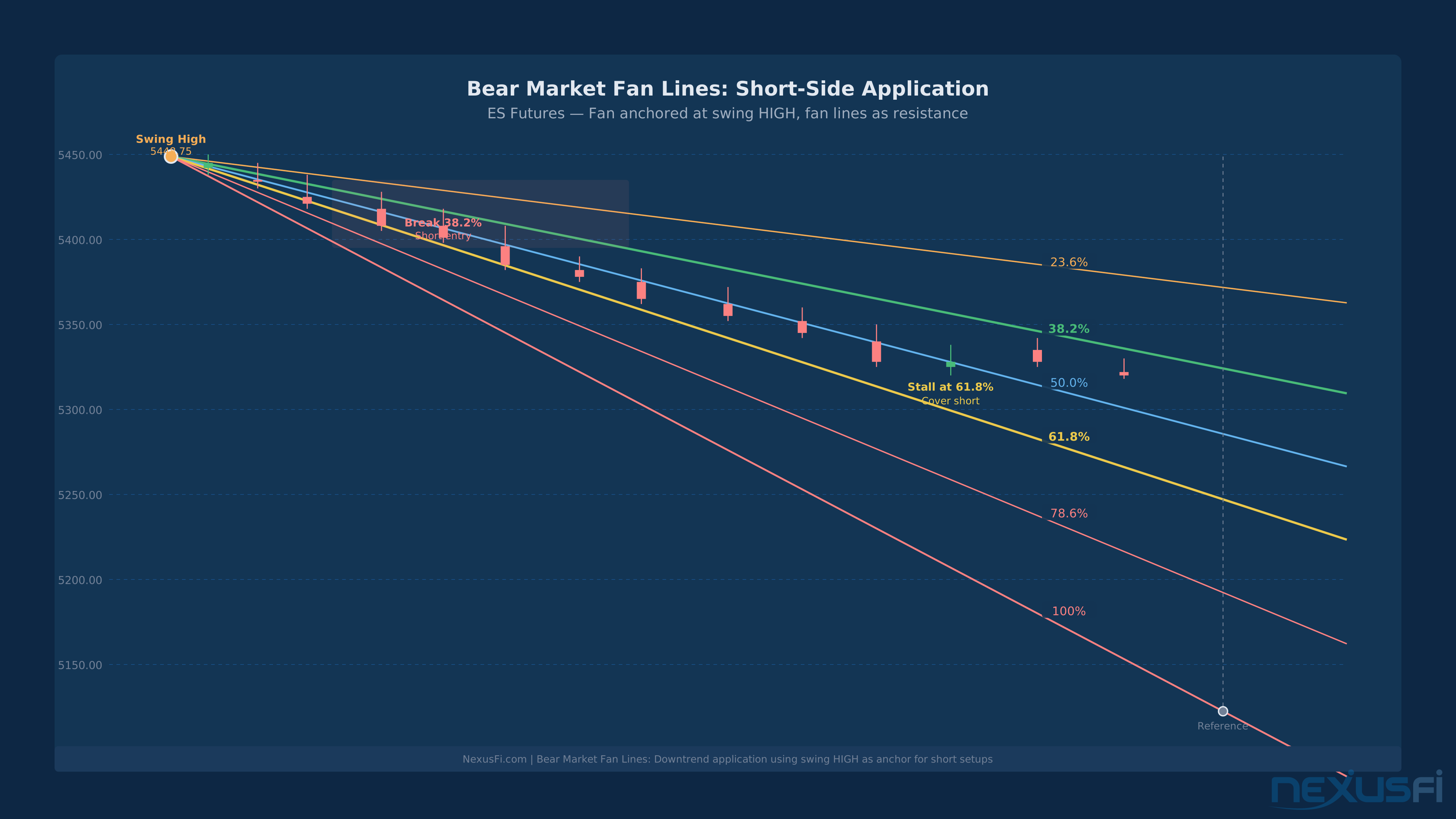
For bearish fan resistance entries: The inverse applies — approach from below, test at fan, confirmation of rejection, entry on the confirmation.
Stop Placement #
The defining advantage of fan lines over horizontal Fibonacci levels is built-in stop logic: a break below the 38.2% fan (bullish) does not necessarily invalidate the trend, but it does indicate momentum has shifted toward a test of the 50% or 61.8% fan. The next fan line serves as the natural stop level.
This creates a tiered structure:
- First stop candidate: Just below the next fan line (38.2% fan entry → stop below 50% fan)
- Trend invalidation stop: Below the 61.8% fan or below the swing origin (Point X)
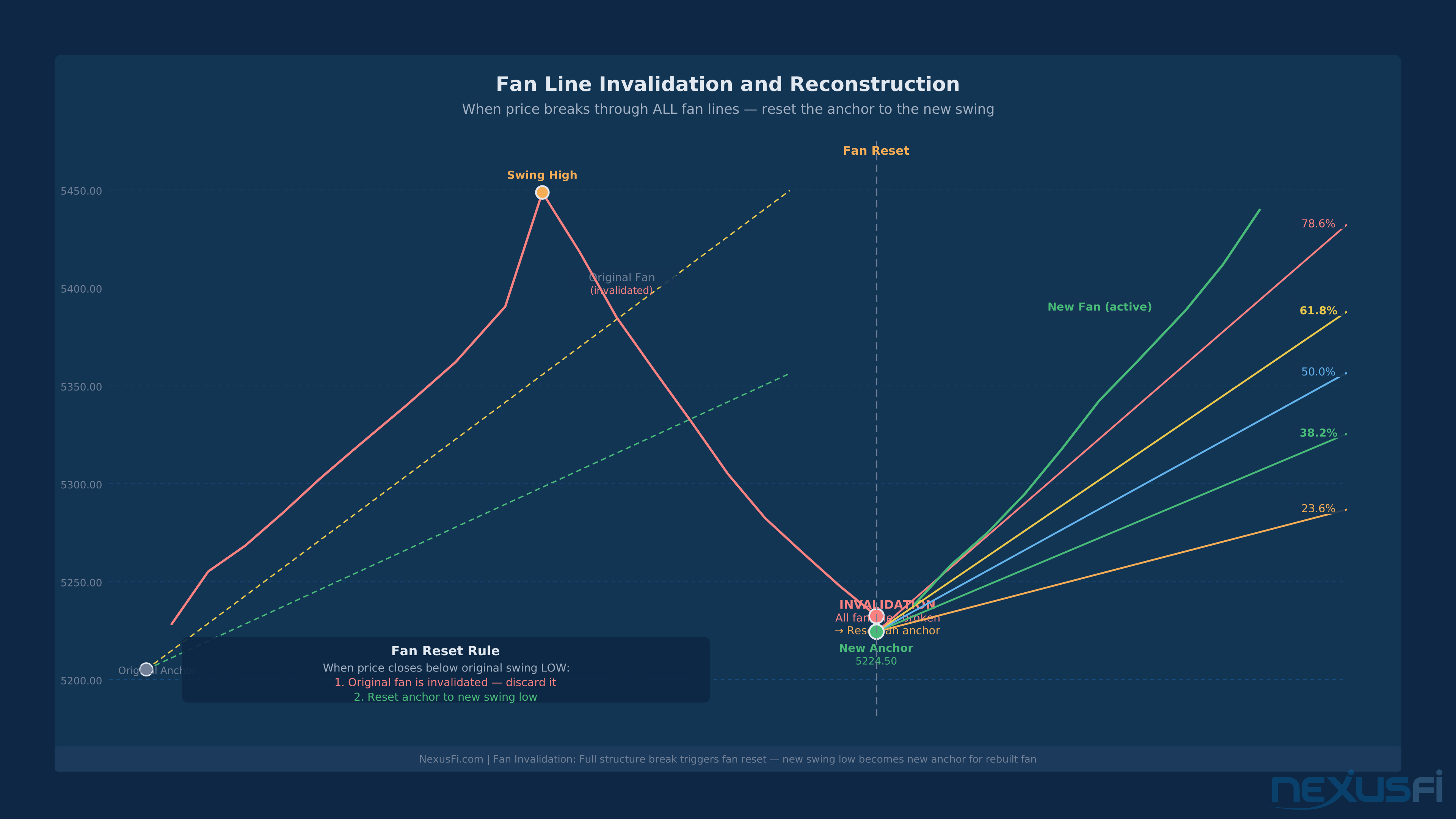
- Maximum stop: Below Point X — if price breaks below the swing origin, the fan structure is entirely invalidated
Stop distance from fan entry to the next fan level is typically small for tightly angled fans (trending markets) and larger for broadly angled fans (range markets). This natural stop calibration makes fan-based trading compatible with systematic position sizing.
Profit Targets #
Fan line targets follow a logical hierarchy:
- Prior high or low — the most recent significant turning point
- Next fan line level at a projected future time — if entering on a bounce from the 61.8% fan, target the 50% fan
- Swing terminus (Point A) — the reference point from which the fan was constructed
- Fibonacci extension levels from the current swing — for continuation after fan confirmation
@Lmess, who shared a dedicated Fibonacci trading system for the ES thread, outlined a key structural rule that applies directly to fan targets: "extension levels are used to determine when to draw a new fib and how to draw it." This is the practical answer to the question of when a fan structure expires — when price reaches a significant extension, you have your signal to anchor a fresh fan from the new swing rather than continuing to project from the original origin.
In practice, the most reliable fan targets are the next sequential fan line (for momentum trades within the trend) and prior structural highs/lows (for reversal trades when the primary fan structure is tested).
Worked Example: ES Daily Chart Fan Support Entry #
The following walk-through traces a single fan-based entry on the E-mini S&P 500 (@ES#) daily chart from swing identification through risk-reward calculation.
Step 1 — The defining swing.
ES established a significant swing low at 7408.00 on May 14, 2026, then rallied to a swing high of 7537.00 by May 22. Swing range: 129.00 points across 6 trading sessions.
Step 2 — Fan reference points on the vertical at Point A.
Drop a vertical from the swing high (7537). Apply Fibonacci ratios to the 129-point range, measuring downward:
- 38.2%: 7537 - (0.382 x 129) = 7487.75
- 50.0%: 7537 - (0.500 x 129) = 7472.50
- 61.8%: 7537 - (0.618 x 129) = 7457.25
Each fan line radiates from Point X (7408 at session 0) through its reference point at session 6.
Step 3 — Fan line slopes.
- 38.2% fan: (7487.75 - 7408) / 6 = 13.29 pts/session
- 50.0% fan: (7472.50 - 7408) / 6 = 10.75 pts/session
- 61.8% fan: (7457.25 - 7408) / 6 = 8.21 pts/session
Step 4 — Projected fan levels on May 27 (session 9 from origin, 3 sessions after swing high).
- 38.2% fan: 7408 + (13.29 x 9) = 7527.50
- 50.0% fan: 7408 + (10.75 x 9) = 7504.75
- 61.8% fan: 7408 + (8.21 x 9) = 7481.75
The 38.2% fan has risen from 7487.75 at the swing high to 7527.50 three sessions later — dynamic support in action. This is what horizontal retracements cannot capture: the support level adjusts upward as the trend persists.
Step 5 — The setup.
After reaching 7570 on May 23, ES pulled back. On May 27, a daily candle wicked to 7524 — three points below the 38.2% fan at 7527.50 — then closed at 7541, near the session high. The long lower wick and strong close form a rejection candle at the fan.
Step 6 — Entry and risk management.
- Entry: 7543.00 — buy-stop above the rejection candle high (7541.25), triggered on the following session open
- Aggressive stop: 7521.00 — below the wick low (7524) by 3 points. Risk = 22 points x $50 = $1,100 per contract
- Structural stop: 7502.25 — below the 50% fan (7504.75) by one tick. Risk = 40.75 points x $50 = $2,037.50 per contract
Position sizing context (2% risk on a $100,000 account = $2,000 max): the aggressive stop fits 1 ES contract ($1,100 risk, well within 2%). The structural stop slightly exceeds 2% per contract — use 4 MES contracts ($203.75 risk each, $815 total) to stay within the threshold.
Step 7 — Targets and risk-reward.
- Target 1: Prior swing at 7570 — reward = 27 pts
- Target 2: Measured extension at 7600 — reward = 57 pts
- Target 3: Full swing projection at 7650 — reward = 107 pts
R:R comparison by stop placement:
- Aggressive stop (22 pts risk): T1 = 1.23:1 | T2 = 2.59:1 | T3 = 4.86:1
- Structural stop (40.75 pts risk): T1 = 0.66:1 | T2 = 1.40:1 | T3 = 2.63:1
With the aggressive stop, the setup delivers strong R:R across all targets. With the structural stop, T1 serves as a partial profit level (scale out 30-40% of the position) while T2 and T3 carry the trade to favorable R:R.
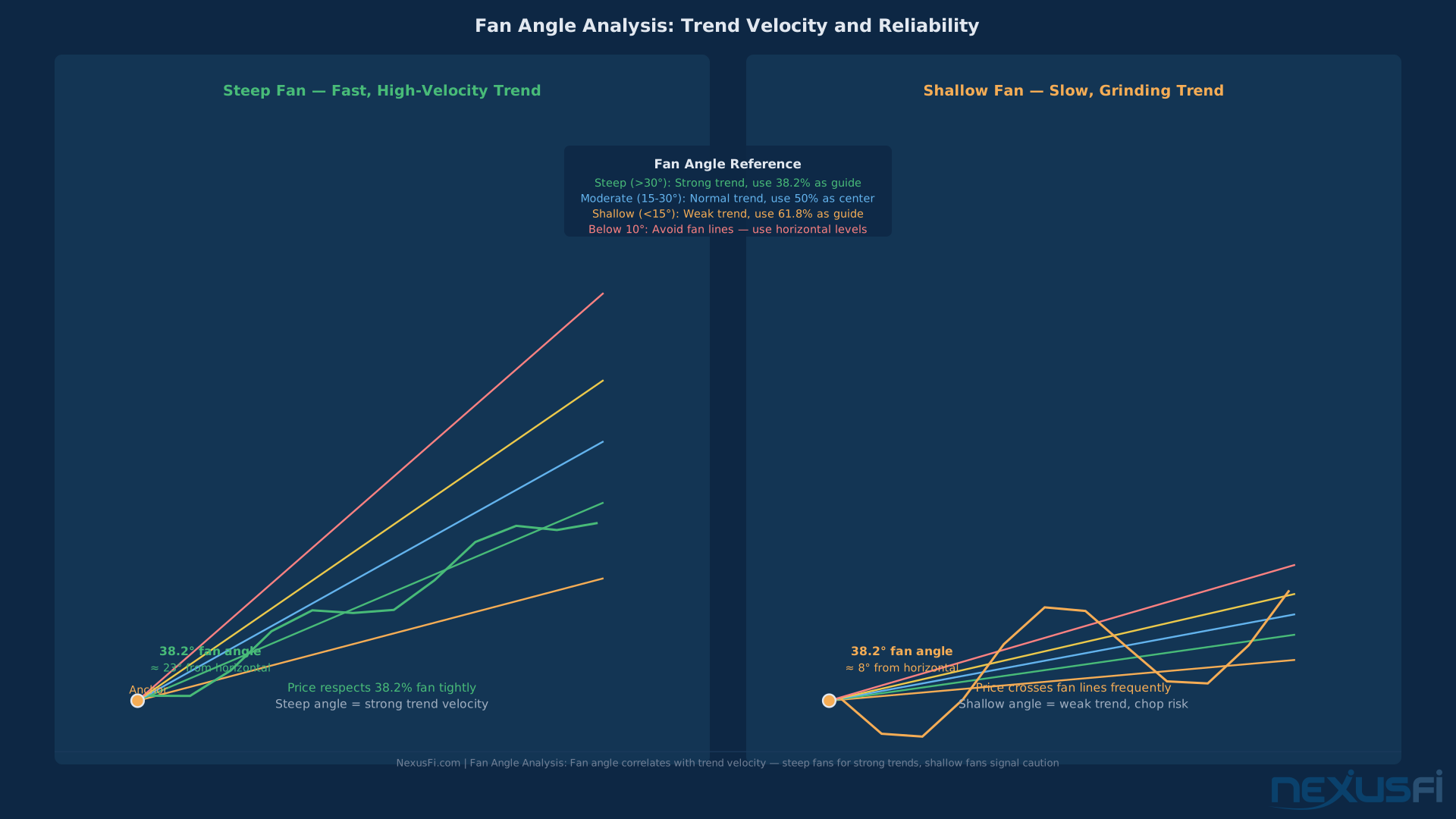
Typical R:R for fan setups: 1.5:1 to 3:1 depending on fan angle and stop placement. Steeper fans in strong trends produce tighter spacing between fan lines, narrowing the stop distance and improving R:R. Shallower fans in range-bound markets widen the spacing and demand wider stops relative to typical reward.
Bottom line: The fan gives you natural stop placement that horizontal levels can't — your stop sits just beyond the next fan line, and the fan's angle automatically adjusts the risk as the trade develops.
Common Misapplications and How to Avoid Them #
Using Too Many Fan Lines #
The most frequent error: drawing fans from every significant swing, resulting in a chart covered in crossing diagonal lines. Fan analysis loses its value when every price level has a fan line nearby.
The 2-3 fan maximum rule: Keep at most two or three active fans — one from the highest-timeframe dominant swing, one from the current timeframe's swing, and optionally one from the prior session's key swing. More than that, and every price level has a fan nearby, which means none of them mean anything.
Inconsistent Construction Timeframes #
Fan lines drawn from a daily swing but traded on a one-minute chart will produce constant false signals. The fan's angular relationships are only meaningful at the timeframe from which they were drawn. A 38.2% fan on a daily chart does not predict where the one-minute chart will react; it predicts where the daily chart will react — which translates to a price zone, not a precise intraday tick level.
Misidentifying the Defining Swing #
Fan line quality depends entirely on the swing quality. An unclean, ambiguous swing produces fan lines with low predictive value. The best fans are drawn from clear, significant swings with definitive start and end points — swing lows/highs that are visually obvious at their timeframe, not arbitrary points selected to make the fan look clean.
Treating Fan Contact as Entry Signal #
Price reaching a fan line does not constitute a trading signal. The fan identifies a zone of potential reaction; the actual signal is the price behavior within that zone. Entries on first contact without confirmation lead to excessive false signals.
Bottom line: Most fan line failures come from over-plotting, wrong timeframe matching, or entering on contact without confirmation. Discipline on these three points eliminates most false signals.
Key Takeaways #
- Fan lines solve the stale-level problem. Horizontal retracements become irrelevant as time passes; fan lines adjust with the trend's pace, keeping support and resistance relevant as the market develops.
- Limit yourself to 2-3 active fans. One from the primary timeframe swing, one from the current timeframe — more than that creates noise, not clarity.
- The fan-break cascade is your trend health gauge. 38.2% break = warning. 50% break = weakening. 61.8% break = structural change. Each successive break accelerates momentum loss.
- Convergence zones are the highest-probability setups. When a fan line and an arc intersect at the same price-time area, two independent geometric frameworks agree — that's where you want to be looking for entries.
- Never enter on fan contact alone. The fan identifies the zone; price behavior within that zone provides the signal. Wait for confirmation before committing.
- Construct fans from clean swings on session-appropriate charts. Regular-session pivots for futures, not overnight noise. Match the fan's timeframe to the trade's timeframe.
Integration with the Fibonacci Toolkit #
Fibonacci fan lines and arcs represent the geometric and temporal dimension of the broader Fibonacci methodology:
- Fibonacci Retracement and Extension Levels: The horizontal reference points from which fans and arcs derive their ratios
- Fibonacci Confluence and Cluster Zones: Horizontal cluster zones that, when aligned with fan or arc levels, create exceptionally high-probability setups
- Fibonacci Time Zones and Cycles: Pure temporal projections that complement arcs' price-time structure
- Fibonacci Sequence and Golden Ratio in Trading: The mathematical foundation
The NexusFi community has produced extensive practical work on Fibonacci methods across multiple instruments. @Fat Tails' Fibonacci Indicators thread catalogs his progression from basic retracement indicators to sophisticated multi-timeframe confluence tools — including the statistical foundations that underpin effective fan and arc analysis. For broader context on fan line construction methodology and terminology, Investopedia's Fibonacci Fan reference provides an accessible overview of the core concepts. The community focus on ES and NQ futures means these examples are directly applicable to the most liquid and actively traded markets — essential calibration for translating theoretical geometric analysis into executable trading setups.
Knowledge Map
Prerequisites
Understand these firstGo Deeper
Build on this knowledgeReferences This Article
Articles that build on this topicCitations
- — Applying Fibonacci Cluster and Confluence Zones (2010) 👍 60“Fibonacci cluster do provide an edge that can be exploited. Cross support or resistance is when several of these methods reinforce each other.”
- — Fibonacci Queen (2010) 👍 5“The 38% and 50% on a 60 minute chart (3-day-period) and the 76% on intraday charts for ES give you an edge. The 50% level over a 3-day-period will also add a bullish or bearish note to the price action.”
- — CL Light Crude Analysis TPO/MP/VWAP/VPOC (2013) 👍 7“Out of the five cluster lines above, the 127.2% expansion calculated from the October 10 high and the November 7 low is clearly the most important line, as it is watched by longer term traders focusing on expansion moves.”
- — Spoo-nalysis ES e-mini futures S&P 500 (2016) 👍 6“Like everything else, fibs work best in confluence. Why the 38.2 line? Because of the confluence of 38.2 retracement (Daily), 161.8 extension (60 Min), and the psychological 2000 level.”
- — Correct Sessions for Your Charts (2010) 👍 15“The US index futures ES, YM, NQ and EMD have the same session. Night session: 3:30 PM - 8:30 AM. Floor session: 8:30 AM - 3:15 PM. All times are Central Time, timezone of CME.”
- — TRADING HOURS - post trading hours and Lots of Action (2020) 👍 6“You can see that, especially during the European session, price can get some impressive moves going. This is where the gaps that show on pure regular trading hours charts come from.”
- — Volume Profile and Footprint discussion (2012) 👍 118“POC = Point of Control, the price where the most volume of the session traded. HVN and LVN act as support and resistance, as these are areas where price is most or least accepted.”
- — Volume Profile and Footprint discussion (2012) 👍 36“I track the day's volume distribution as well as the developing value area high (DVAH), low (DVAL) and the developing volume point of control (DVPOC). The DVPOC acts similar to the VWAP in that it too can act as support and resistance.”
- — Making a Living with the Micros (2021) 👍 13“The 50% retracement and the 61.8% retracement are excellent at holding price much of the time. I used to think fibs were hocus-pocus, but after seeing the evidence (many times to the tick!) I am now a believer.”
- — Fibonacci trading system for the ES (2011) 👍 8“It relies on Fibonacci retracements and extensions. Retracement levels are used to determine entry, stop and target, while extension levels are used to determine when to draw a new fib and how to draw it.”
- — Fibonacci Indicators for NinjaTrader (2010) 👍 16“I use Fibonacci tools for trading, not because I believe in black magic or the omnipresence of the golden ratio, but because they are an efficient tool to establish support and resistance.”
- — Fibonacci Fan Explained: How to Use Them in Technical Analysis (2024)
- — Fibonacci Arcs (2025)