



Poor Highs and Poor Lows
Weak extremes that mark unfinished auction business — the market's bookmark for "we'll be back"
Overview #
A poor high or poor low is a session extreme that lacks clean auction completion. The market pushed to that level but didn't finish the job — there's no sharp rejection tail, no clear evidence that opposing participants stepped in with conviction. The extreme just... stopped. Volume stayed thick right up to the edge instead of tapering off into a proper buying or selling tail.
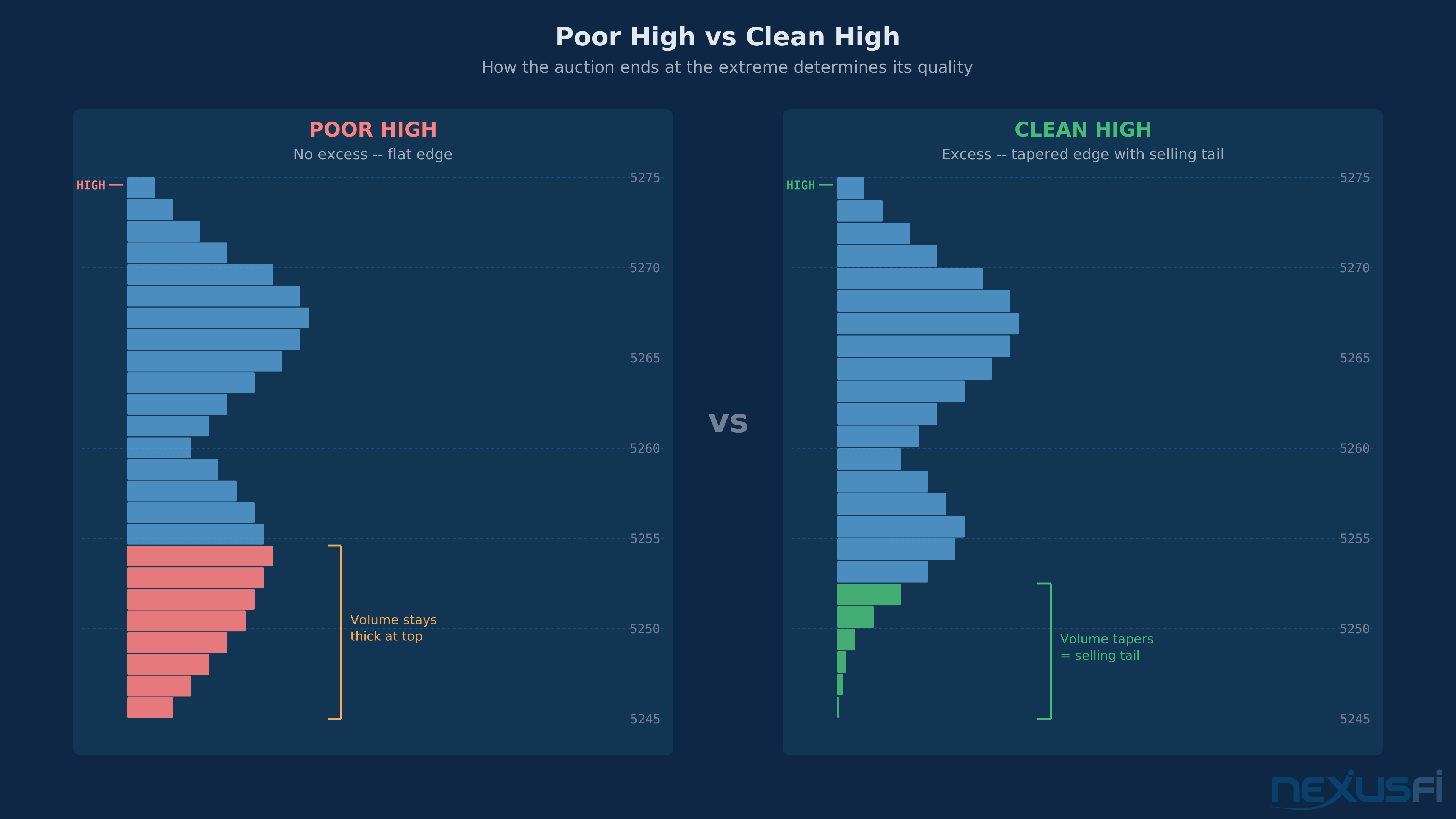
On a TPO chart, a poor high shows multiple prints clustered at the top of the range without the single-print excess that marks a clean extreme. On a Volume Profile chart, it shows as volume staying heavy at the high instead of thinning to a point. The distribution doesn't taper — it gets cut off, like somebody took scissors to the profile.
[1] That two-tick minimum for excess is the practical dividing line. Less than two ticks of thin activity beyond the profile body? That's a poor extreme. The market didn't extend far enough past the congestion zone to signal real commitment.
Poor extremes matter because they're structural magnets. The auction at that price was incomplete — one side ran out of steam before the other side could demonstrate genuine rejection. The market tends to come back and retest these levels. When it does, you get a high-probability decision point: either the extreme gets repaired (proper acceptance or rejection this time) or it fails again and becomes an even stronger reference level.
For the broader framework, see Volume Profile Trading.
What Makes an Extreme "Poor" #
Every session produces a high and a low. The question is whether those extremes show clean auction completion or not. The distinction comes down to excess — the thin, single-print tails at the edges of the profile that mark where initiative activity probed beyond the main body and got turned back.
Clean Extremes: Excess Present #
A clean high has a buying tail — a few TPO prints or thin volume extending above the main cluster where aggressive buyers pushed price up, found responsive sellers, and got rejected. The profile tapers to a point at the extreme. This is proper auction completion: the market tested, found opposition, and reversed with conviction.
Same logic at the low. A clean low has a selling tail — thin volume below the main body where sellers pushed price down, found responsive buyers, and bounced. The tapering shape says: "We tested this level, found real interest on the other side, and the auction is resolved."
Poor Extremes: No Excess #
A poor extreme has no tail — or a tail too small to count. The profile body extends right to the edge of the range. Volume doesn't thin out at the extreme; it stays thick. The market reached that price with plenty of two-sided activity still happening, then just stopped moving. Nobody drove it further. Nobody rejected it cleanly.
[2] Not because sellers overwhelmed the buyers — because buyers ran out of gas. There's a critical difference. Clean highs end because responsive sellers showed up in force. Poor highs end because the initiative side simply stopped pushing.
[3] The market gets down there but doesn't spring away. It lingers, doesn't build excess, doesn't show conviction in either direction.
Visual Identification #
On a TPO profile:
- Clean high: The top of the range shows one or two isolated letters extending above the main body. Clear excess.
- Poor high: The top of the range shows the same letter density as the main body. Multiple TPO brackets touching the high. No thinning.
On a Volume Profile:
- Clean high: Volume thins progressively as you approach the top. The histogram tapers.
- Poor high: Volume stays heavy right up to the last price. The histogram looks like it was cut flat at the top.
Don't confuse poor extremes with single prints. Single prints are thin zones inside the profile body — air pockets from fast directional moves. Poor extremes are specifically about the session high or low lacking proper excess. Different concept, different location on the profile.
Why Poor Extremes Get Revisited #
The auction at a poor extreme is unfinished. One side ran out of energy, but the other side never demonstrated that it could hold that level against a real test. The market leaves that price as an open question.
@Meklon connects it to the broader framework: "Unfinished Auction is equivalent to a Poor TOP and Poor Bottom of the TPO Market Profile concept." [5] The terminology varies across platforms and literature — unfinished auction, poor extreme, weak high/low — but the concept is identical. The market probed, didn't complete the auction, and left a structural loose end.
The Retest Dynamic #
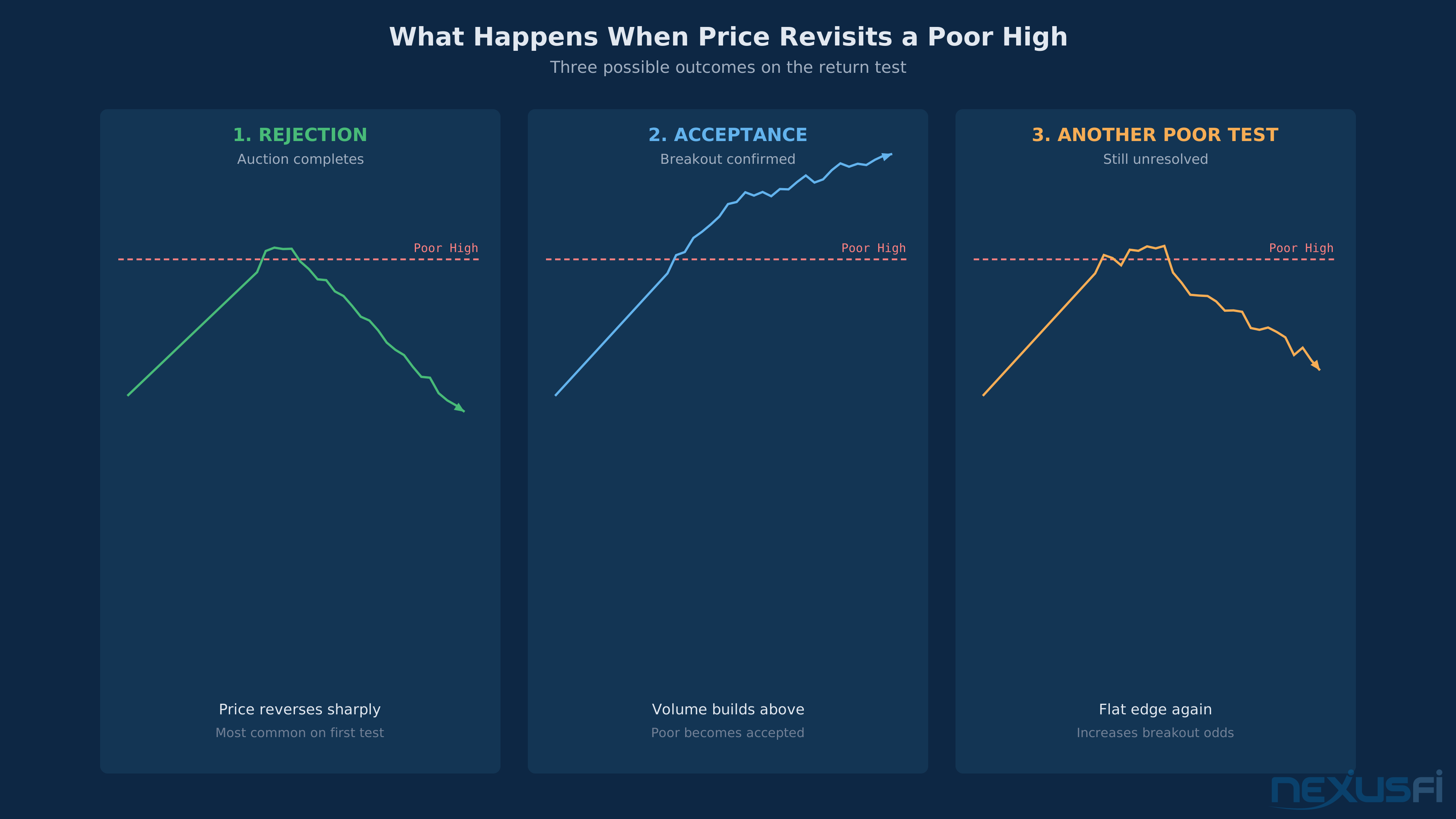
When price returns to a poor extreme, three outcomes are possible:
1. Repair — Proper Rejection. Price reaches the poor high and this time responsive sellers show up in force. The market builds a proper selling tail, price reverses sharply, and the extreme is repaired. What was a poor high becomes a clean high with excess. The auction is now complete at that level.
[4] A failed retest at a poor high that produces real excess is actually a bullish resolution for sellers — the level has been defended. You can trust it as genuine resistance.
2. Breakout — Acceptance Above. Price reaches the poor high and this time initiative buyers push through. Volume builds above the old extreme. The developing VPOC migrates higher. The poor high becomes a support level as value moves beyond it. The market answered the open question by accepting higher prices.
3. Another Poor Extreme. Price reaches the old poor high, stalls again, and leaves another weak structure without excess. Same inconclusive result. This is the worst outcome for clarity but the best outcome for anticipation — a twice-tested poor high that still lacks excess is an even stronger magnet for future revisits.
Multi-Timeframe Confirmation #
@Botts extends the concept across timeframes: "It would make sense to look for these Unfinished Auctions on different timeframes to give yourself confirmation." [6] A poor high on a daily profile is important. A poor high on a daily profile that aligns with a poor high on the weekly composite is a bigger deal. When multiple timeframes show unfinished business at the same level, the magnetic pull is stronger.
Check your composite profiles for poor extremes. A weekly composite with a poor high at 5340 means the entire week's auction left that level unresolved. If the daily profile then shows a poor high at 5338, you have multi-timeframe confluence for a revisit target.
Poor extremes are the market's to-do list. The auction didn't finish its business there. Like any to-do item, the market tends to circle back — and the longer the item stays on the list, the more likely the revisit.
Trading Setups #
Setup 1: Balance Range Edge Fade at Poor Extreme #
The highest-probability use of poor extremes is as targets and entry zones during balanced markets.
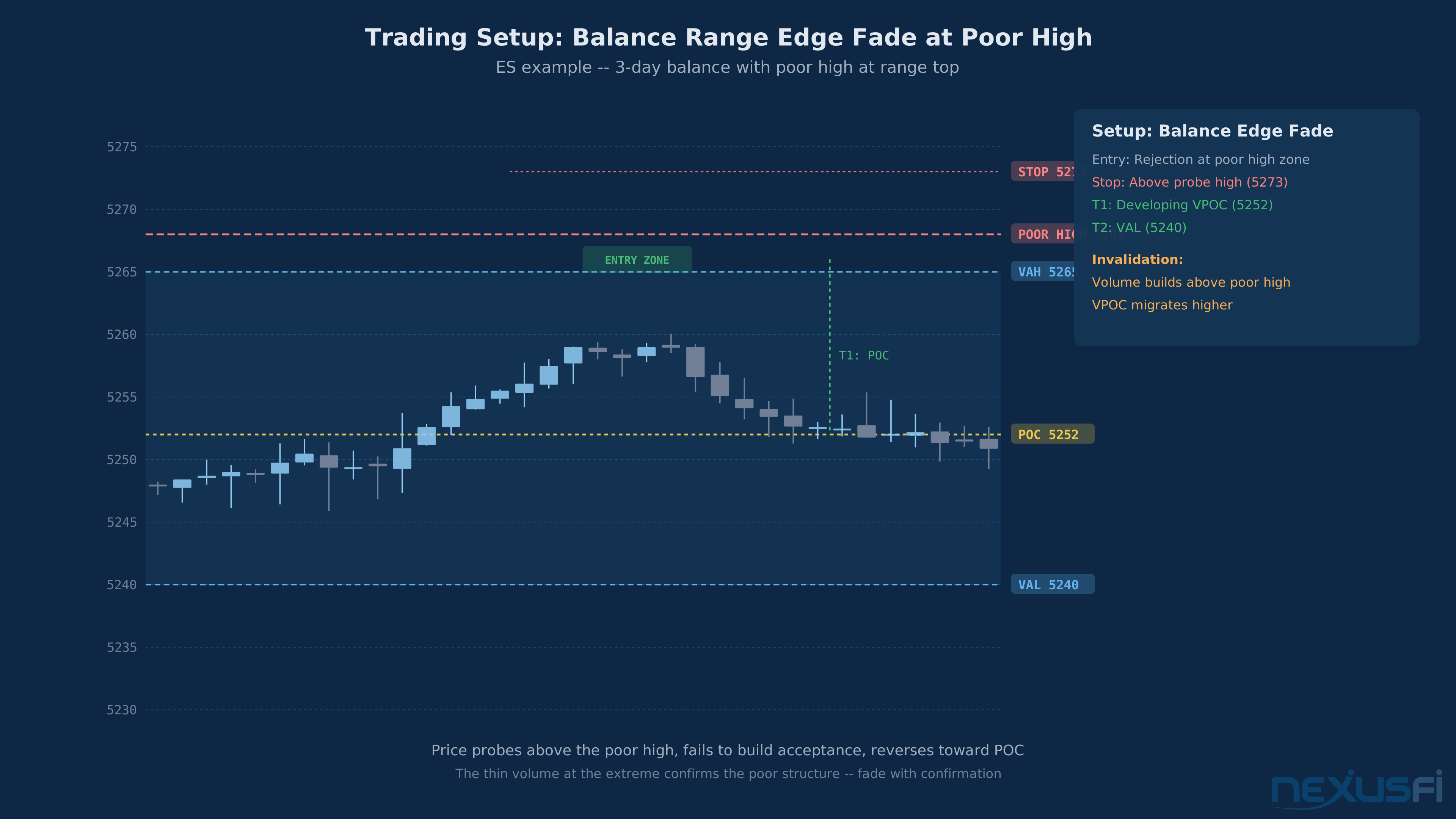
Context: ES has been in a multi-day balance range. The range high is a poor high from Tuesday — volume stayed thick at the top, no excess. Price is currently near the middle of the range rotating.
Setup: When price rotates back up toward the poor high, watch for one of two trades:
Fade the second test. If price reaches the poor high zone and this time the developing profile shows responsive selling (volume not building above the old high, developing VPOC staying anchored below), fade short with stop above the old high by 2-3 points. Target the composite POC first, then the balance range low. The thesis: the market is testing its homework, and if it can't break through and build acceptance above, the balance continues.
Join the breakout. If price reaches the poor high zone and this time initiative buyers push through with volume building above (developing VPOC migrating higher, acceptance forming at new prices), that's the breakout. The poor high is being repaired through acceptance, not rejection. Go long on a pullback to the old high — it becomes new support. Target the range expansion calculated from the balance width.
The decision framework: Don't pre-commit to fade or breakout before price reaches the level. Let the developing profile at the poor high zone tell you which outcome is playing out. Thin volume on the push above? Fade. Thick volume building above? Breakout.
Setup 2: Gap Fill Target #
When the market gaps open above a prior session's poor low, that poor low becomes a high-probability gap fill target — especially in the first 60-90 minutes of RTH. The logic: the gap opened above a level where the auction was incomplete. The market has gravitational pull toward resolving that open question.
Context: Yesterday's session left a poor low at 5220 (no selling tail, volume stayed heavy at the bottom). Today opens at 5235 — 15 points above the poor low.
Setup: If the opening type is an auction or test drive (not a strong open drive away), the poor low at 5220 is the first meaningful downside target. Don't chase the gap fill mechanically — but if the developing profile shows no interest in holding above yesterday's value (thin volume, VPOC not migrating higher), a move back toward 5220 is structurally expected.
Setup 3: Overnight Poor High as RTH Target #
Overnight sessions frequently produce poor extremes because Globex liquidity is thinner and moves often peter out without clean resolution. An overnight poor high sitting above the RTH open creates a natural upside target for the first few hours of regular trading.
Context: The overnight session pushed to 5285 but left a poor high — no excess, volume heavy at the top. RTH opens at 5275, below the overnight poor high.
Setup: Mark 5285 as a target. If the market breaks above yesterday's RTH VAH with volume, the overnight poor high at 5285 is where you take profits on the first push. The market will likely revisit it to resolve the incomplete auction. If you're already long, trail your stop and watch how the profile develops at 5285 — proper rejection (excess forms) means take the rest off. Acceptance above (volume building) means hold for further extension.
Setup 4: Poor Low as Stop Placement Guide #
When you're long in a balanced market, a prior session's poor low provides structural stop placement guidance. Your stop goes below the poor low — not at it. The reasoning: a poor low is expected to get retested. If your stop sits right at the poor low, you'll get taken out on the retest before finding out whether the level holds.
Place the stop 2-4 points below the poor low on ES. Give the market room to retest the poor extreme, potentially build the excess it lacked the first time, and reverse. If price drives through the poor low with initiative and builds acceptance below, then the thesis is invalidated and you want to be out.
The core pattern: poor extremes create targets during balance, entry zones on retest, and invalidation levels for stop placement. The developing profile at the poor extreme zone tells you which of the three outcomes is playing out.
When This Doesn't Work #
Trend days override poor extremes. On a strong trend day with one-time framing and a migrating VPOC, yesterday's poor high doesn't matter. The market isn't coming back to test it — value has migrated away. If you're waiting for a rotation back to a poor extreme while the market is trending 50 points in the other direction, you're fighting the tape.
Aged poor extremes lose relevance. A poor high from yesterday is a strong reference. A poor high from two weeks ago that's been tested once with a partial fill is weak. The market moves on. Structure from current and prior sessions carries the most weight. Beyond 5 sessions back, poor extremes are context at best, not actionable levels.
Event risk invalidates the structure. A poor low sitting 10 points below the current price means nothing if CPI prints 30 minutes from now. The post-event profile will overwrite whatever structure existed before. Don't anchor to pre-event poor extremes.
Confusing "poor" with "untested." Not every session extreme is poor. If a session ends at its high with a proper buying tail (excess present), that's a clean extreme that happens to be at the high — not a poor high. Check the excess. If the tail exists, the auction completed. Don't mark every untested extreme as poor.
Over-counting poor extremes in rotational markets. In choppy, low-conviction sessions, you can end up marking poor extremes on every rotation. When every swing high and low is "poor," none of them carry structural significance. Poor extremes matter most when they form on strong moves or at the edges of multi-day ranges — not on every 30-minute wobble.
Knowledge Map
Prerequisites
Understand these firstGo Deeper
Build on this knowledgeReferences This Article
Articles that build on this topicCitations
- — Spoo-nalysis ES e-mini futures S&P 500 (2016) 👍 4“A poor high means no excess, at least two ticks of excess above/below the main body of the profile.”
- — TST Combine Journal (2013) 👍 4“A poor high is simply an auction that was ended because of buying exhaustion.”
- — Spoo-nalysis ES e-mini futures S&P 500 (2014) 👍 6“A weak or poor low occurs when the market tests a low and can't move away from it readily.”
- — Spoo-nalysis ES e-mini futures S&P 500 (2014) 👍 7“If a poor high is tested and fails, I will have much more confidence that now it has been properly auctioned.”
- — How to learn to read the Tape (2016) 👍 2“Unfinished Auction is equivalent to a Poor TOP and Poor Bottom of the TPO Market Profile concept.”
- — GOMI all NT7/8 and SC (2016) 👍 4“It would make sense to look for these Unfinished Auctions on different timeframes to give yourself confirmation.”