



Single Prints
Price levels the market blew through without building acceptance — unfinished auction business that tends to get revisited
Overview #
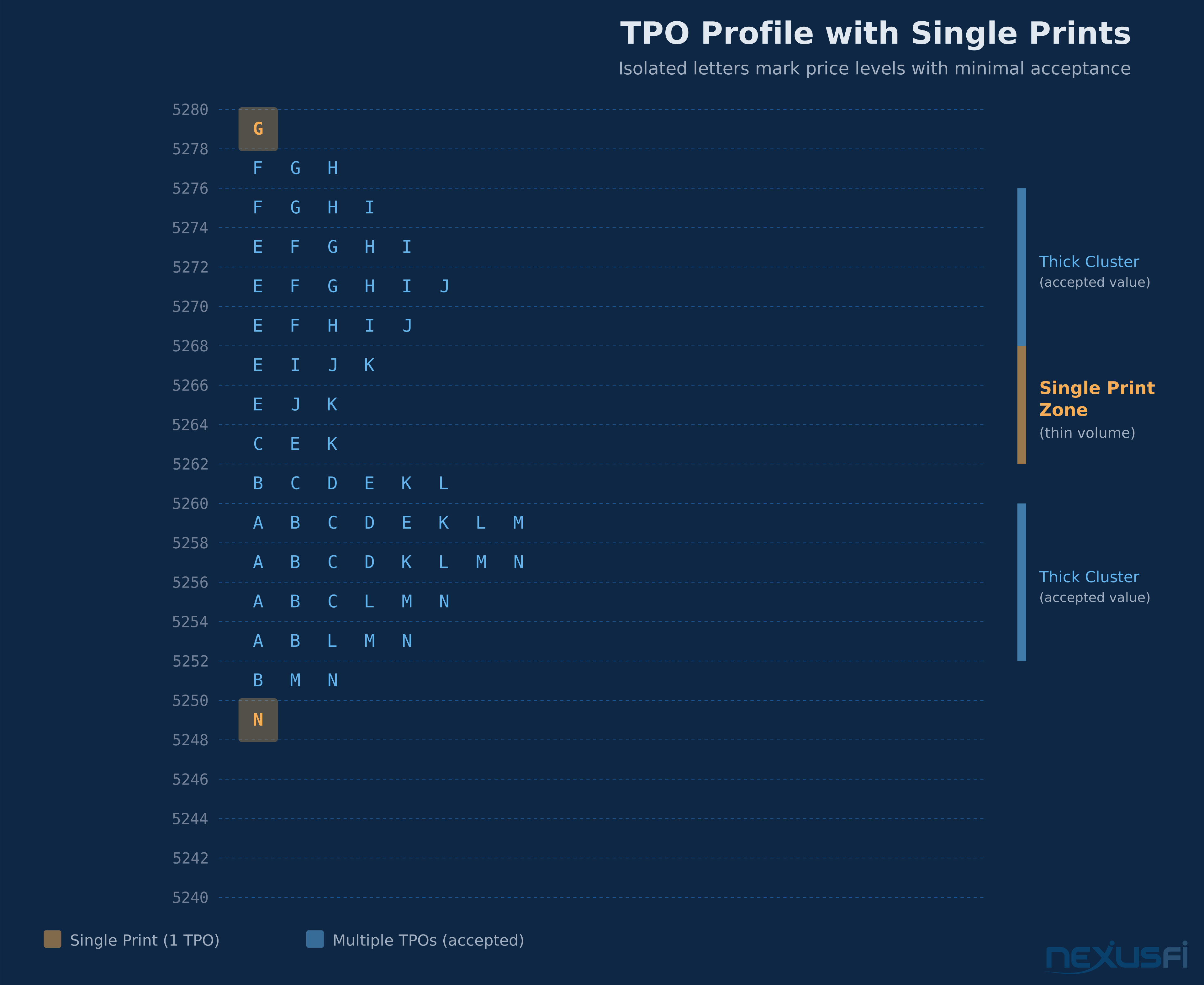
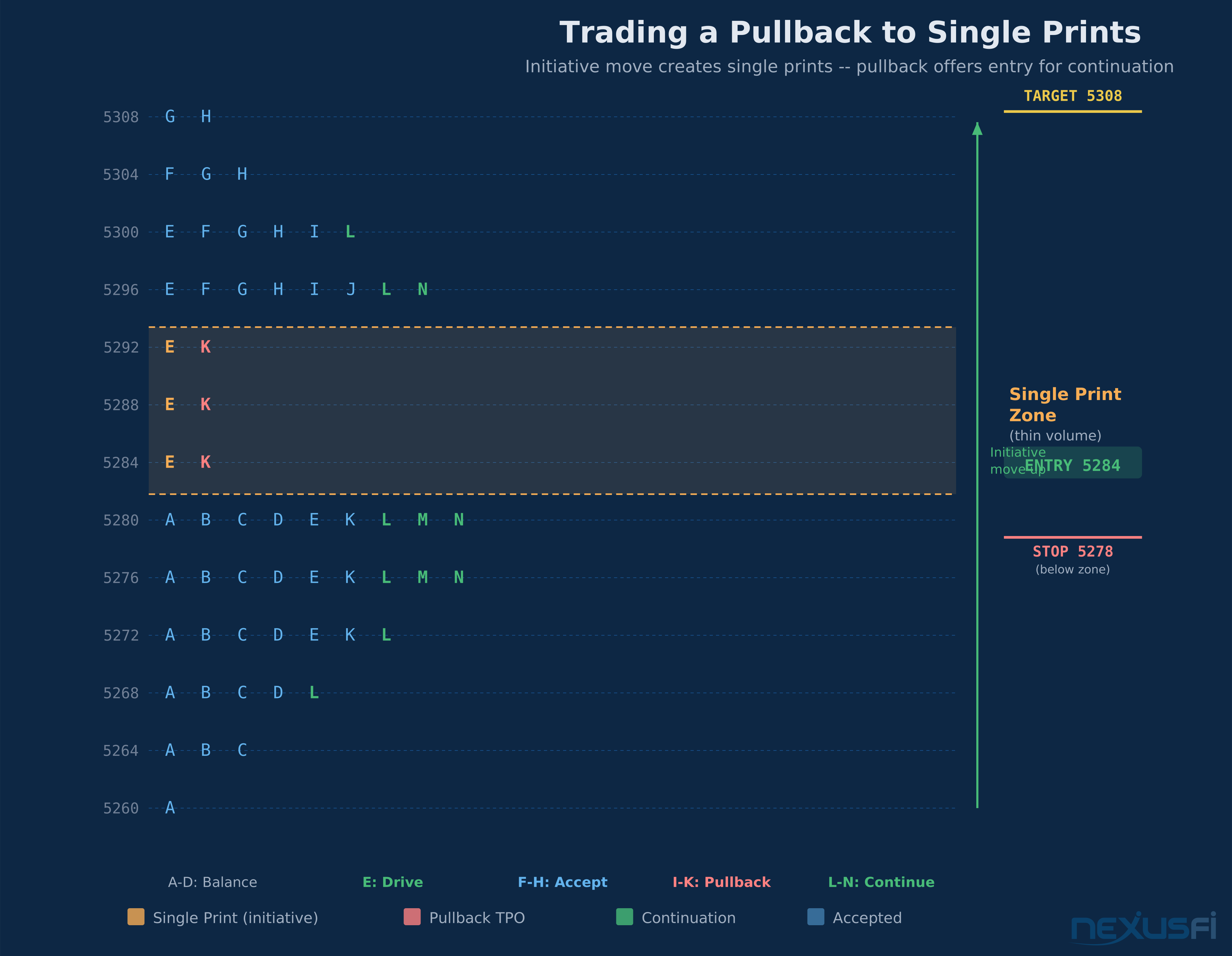
Single prints are price levels where the profile shows minimal volume — one or two TPOs with almost no time spent there. They appear during fast directional moves when the market blew through a zone without any two-sided trade. On a profile chart, they look like thin lines or gaps in the distribution, sandwiched between thicker clusters of activity.
The concept originates from Market Profile (TPO) analysis where a single letter prints at a price level, indicating only one 30-minute bracket traded there. Volume Profile adapted the concept: a price level with extremely thin volume relative to surrounding levels serves the same structural function. Either way, the reading is the same — somebody pushed price through that zone with conviction and nobody stepped in to oppose them.
Single prints matter because they mark unfinished business. The market didn't explore those prices properly. It drove through without building the two-sided acceptance that creates stable value. That makes them structurally significant reference points — price tends to come back and complete the auction.
For the broader framework that single prints fit into, see Volume Profile Trading.
What Creates Single Prints #
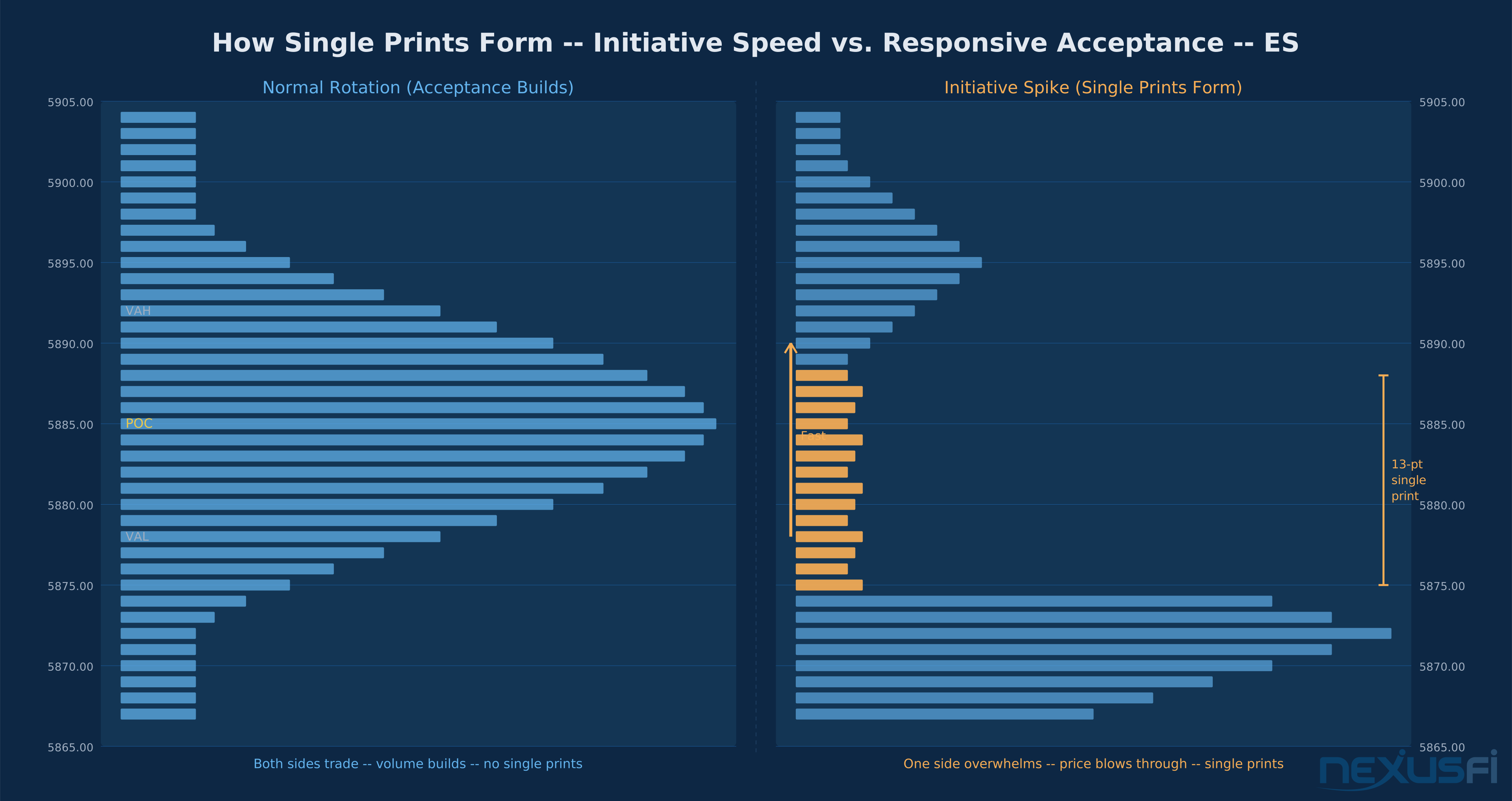
Single prints form when one side of the market overwhelms the other and price moves fast. The mechanism is initiative activity — aggressive directional order flow that consumes available liquidity at each price level before responsive participants can step in.
[1] When initiative activity is strong enough, price doesn't linger. It slices through levels in seconds, leaving thin volume behind.
Common formation contexts on ES:
- Gap moves at the RTH open. The market opens 20 handles above yesterday's close and drives higher. The zone between yesterday's close and today's open prints thin — nobody transacted there in size during RTH.
- News-driven spikes. CPI drops, ES moves 40 points in two minutes. Every level in that 40-point range shows minimal volume because price traversed them before two-sided trade could develop.
- Trend legs during the session. After a narrow Initial Balance, price breaks out and extends in one direction. The breakout zone shows single prints because the move was one-sided.
- Overnight sessions. Globex often produces single prints because liquidity is thinner and directional moves face less opposition.
The signature is always the same: fast move, thin volume, no acceptance.
Reading Single Prints on the Profile #
On a TPO chart, single prints appear as isolated letters — price rows with exactly one TPO bracket while adjacent rows have multiple brackets. On a Volume Profile chart, they show as thin horizontal bars between thicker clusters.
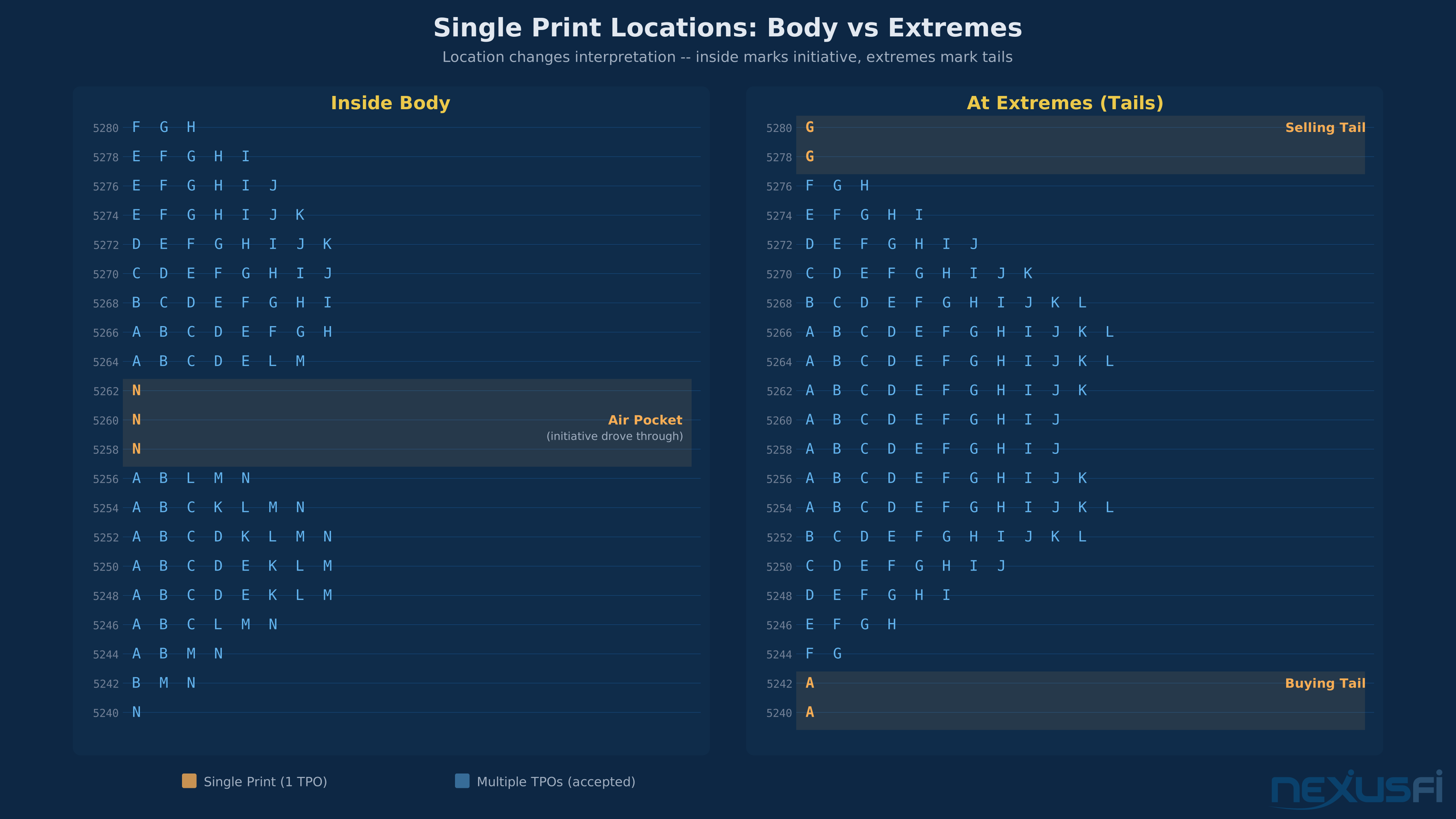
@rahulgopi categorizes single print zones systematically in his ES analysis: "Red: down side single print zones inside body. Green: up side single print zones inside body. Magenta: Single prints at days extremes (buying / selling tail). Yellow: days with no single prints, usually a double touch." [2]
That classification matters because location changes the interpretation:
Single prints inside the profile body mark the price levels where a directional move cut through the middle of the day's range. These are the air pockets within the distribution. Price moved so fast through them that the normal bell-curve shape has a visible gap or constriction.
Single prints at the extremes (tails) mark buying or selling tails — the outer edges of the profile where initiative activity pushed price to an extreme before responsive participants brought it back. A buying tail (single prints at the low) shows aggressive buyers stepped in at those prices but didn't need to stay long because they overwhelmed the sellers quickly. Same logic inverted for selling tails at the high.
No single prints indicates a day where price revisited every level multiple times — a balanced, rotational session. Double-touch profiles suggest two-sided trade throughout the range.
Don't confuse bin size artifacts with real single prints. On ES with 1-tick bins, a few thin rows between thick clusters are genuine single prints. With 4-tick bins, you might smooth them out of existence. Check your bin resolution before drawing conclusions.
Initiative Activity Marker #
Single prints are the footprint of initiative activity. When you see them on the profile, you're looking at evidence that one side — buyers or sellers — drove price through that zone with enough conviction that the opposing side couldn't establish a presence.
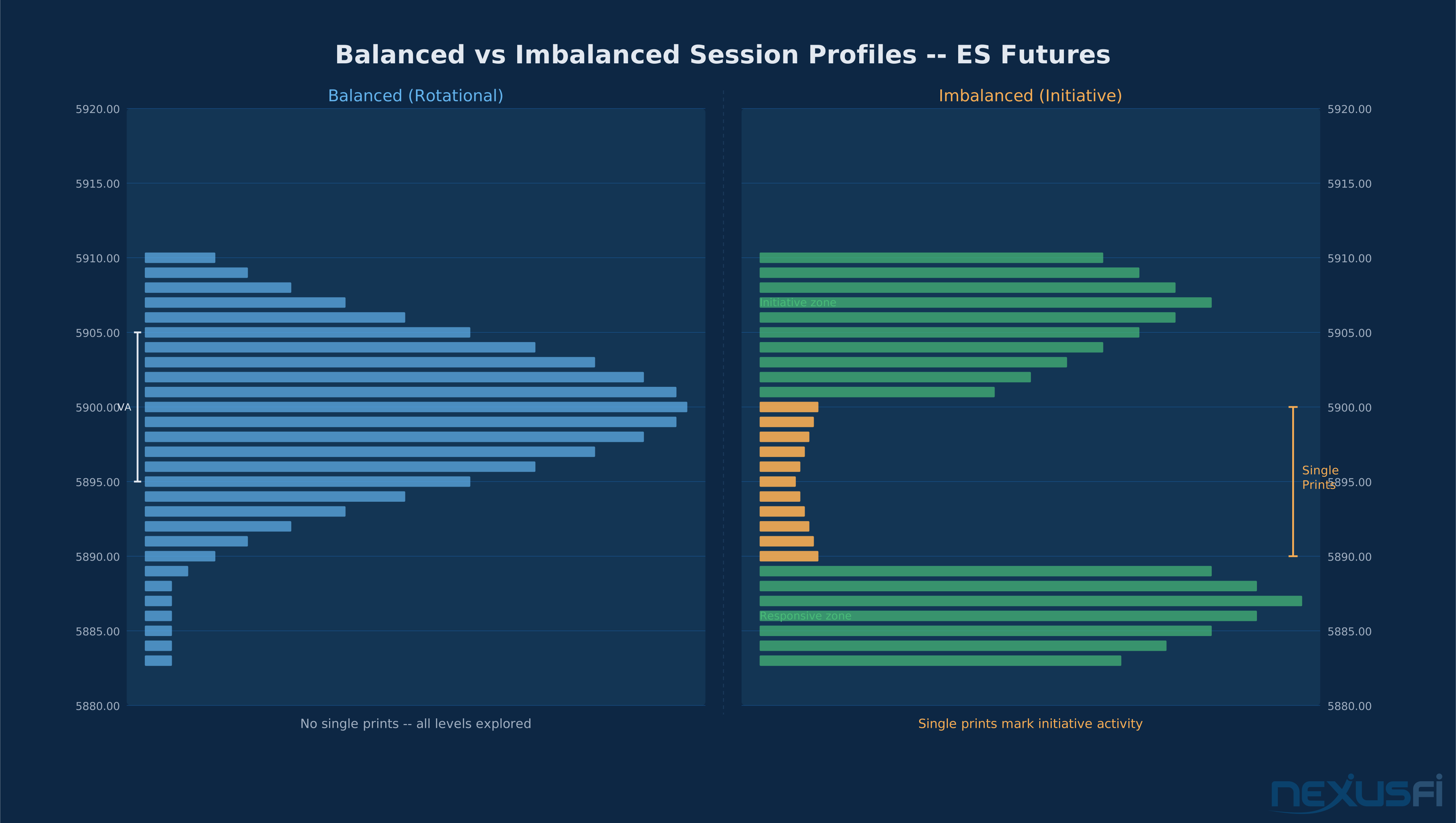
This connects directly to the balance/imbalance framework from Auction Market Theory. In a balanced session, price rotates between value area edges, building volume at every level. The profile fills out. There are no gaps. In an imbalanced session, price moves directionally, leaving single prints behind as it goes. The profile is elongated with thin zones.
@Private Banker illustrates this with an ES example showing responsive buying and selling creating tails at the extremes of a five-day balance range. [1] Those tails — marked by single prints — tell you where initiative activity probed but couldn't sustain. The market found its boundaries.
The practical question every time you see single prints: was this initiative move strong enough to establish new value, or was it a probe that the market will retrace?
Single Prints vs. Low Volume Nodes #
These two concepts get confused constantly, and the distinction matters for how you trade them.
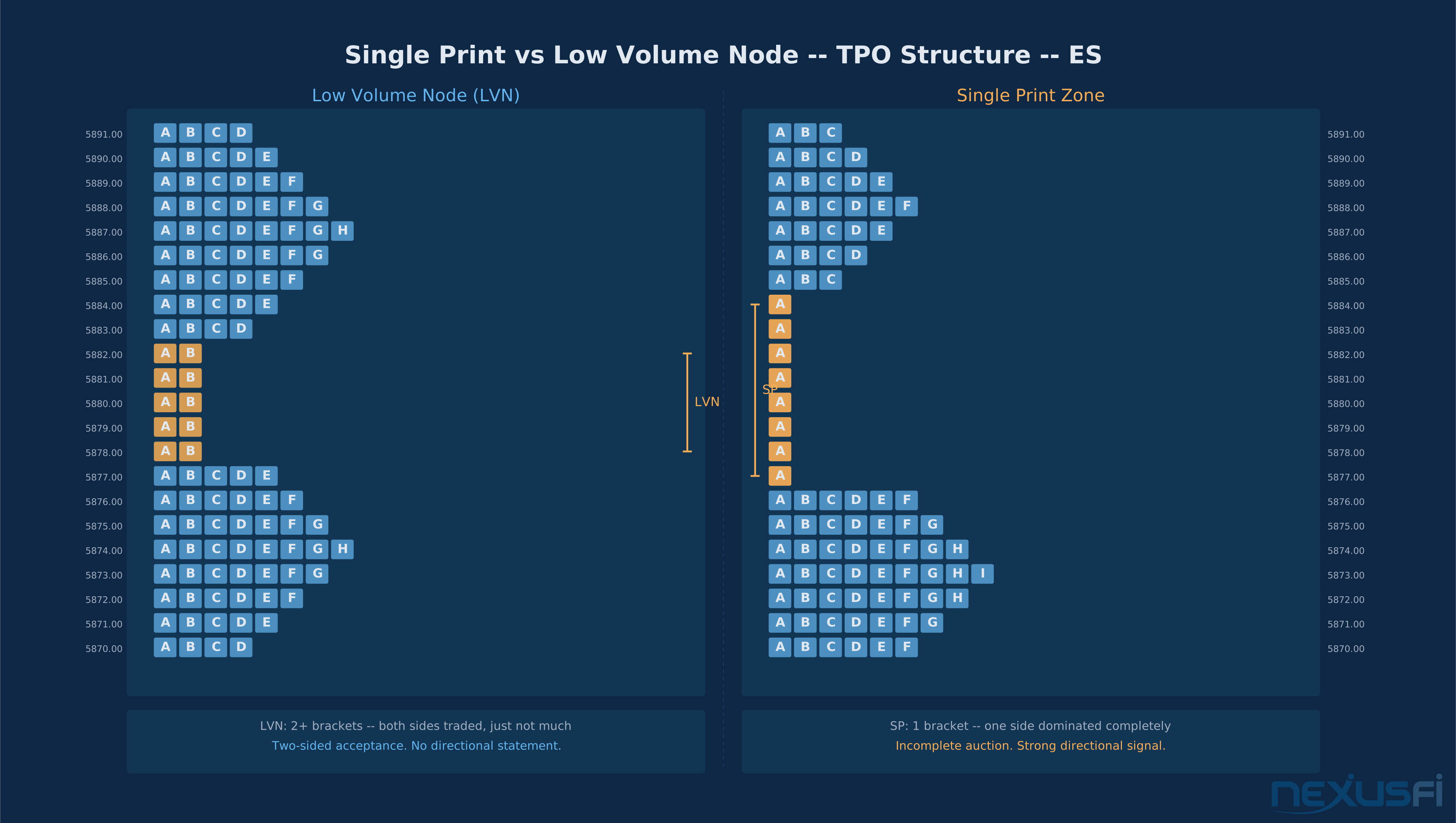
Single prints are price levels where the TPO chart shows one letter — a single 30-minute bracket. On Volume Profile, they're the thinnest bars in the distribution. The defining characteristic is speed: price moved through so fast that only one time period registered at that level. Single prints are the product of initiative activity that overwhelmed all opposition at those prices.
Low Volume Nodes (LVNs) are valleys between High Volume Nodes on a Volume Profile. They show below-average volume but can have multiple time periods of trade at those prices. The key difference: LVNs had two-sided activity — buyers and sellers both traded there, just not in large quantities. Price spent time at those levels, it just didn't attract the same participation as surrounding areas.
The formation mechanism is at the core different:
- Single prints: One side dominates completely. Price slices through with no opposition. The TPO shows one letter because there was no rotation back to that level.
- LVNs: Both sides participate but neither finds the level interesting enough to build significant volume. Price may rotate through an LVN multiple times within a session, each time spending little time and attracting little volume before moving to a more accepted area.
Why This Matters for Trading #
LVNs act as transition zones — price moves through them quickly on the way to the next HVN. Think of HVNs as rest stops and LVNs as the highway between them. Price accelerates through LVNs and decelerates at HVNs. This makes LVNs useful as areas where you expect price to travel through, not park.
Single prints carry directional information that LVNs don't. A single print tells you the market made a statement about direction at that price. An LVN just tells you the market didn't find much business there — no directional conviction required.
When price revisits an LVN, it often speeds through again — the same low-interest dynamic repeats. When price revisits a single print, the reaction is more binary — either the original directional thesis holds (bounce) or it's being unwound (fill). LVNs don't carry that fill-or-reject tension because they were never an unfinished auction in the same way.
@matthew28 highlights a related nuance when comparing Market Profile and Volume Profile across sessions: single prints between distributions "where one might be a low volume distribution and the other a high volume RTH distribution" deserve different treatment depending on which framework you're using. [5] An overnight single print looks the same on a TPO chart as an RTH single print, but the market conditions that created them are at the core different.
Quick test: did price spend time at the level but just didn't attract volume? That's an LVN. Did price blow through the level so fast that only one bracket registered? That's a single print. The distinction drives how aggressively you trade the level when price returns.
| Feature | Single Prints | Low Volume Nodes |
|---|---|---|
| TPO count | Exactly 1 bracket | Multiple brackets possible |
| Formation speed | Fast — price blew through | Variable — price visited but didn't stay |
| Two-sided trade | None or negligible | Present but below average |
| Directional signal | Strong — one side dominated | Weak — both sides participated |
| Revisit behavior | Fill-or-reject binary | Often speeds through again |
| Unfinished business | Yes — incomplete auction | Partially — low-interest area |
Session Context: How Day Type Changes Everything #
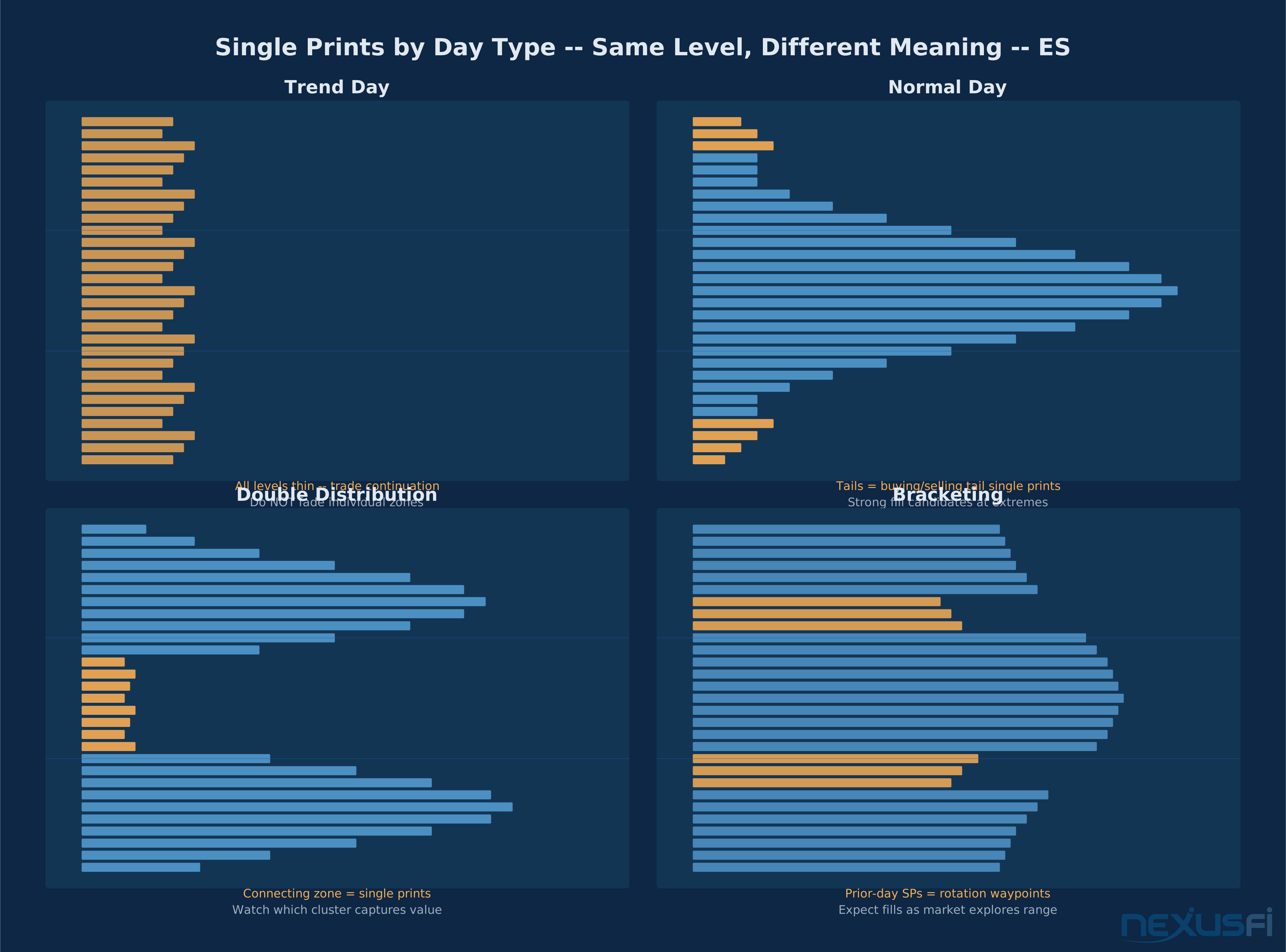
The same single-print pattern means different things depending on what kind of day created it. A single print from a trend day is a completely different animal than one from a balanced rotation.
Trend Days #
On a trend day, single prints are everywhere. The entire profile is elongated because price moved directionally without rotating back. When you see a profile with 80% of its levels showing thin volume, you're looking at a trend day, and every thin level is technically a single print.
The trap: treating each individual thin zone as a tradeable reference level. On a true trend day, the market has made its statement. Those single prints may never get revisited because value has migrated. The research backs this up — full intraday reversals of single-print trend days happen only 6-10% of the time. [8]
How to handle trend-day single prints:
- Don't target them as fill zones during the active trend. The market isn't interested in going back.
- After the trend day, mark the entire range as a macro zone that the market needs to work through.
- Focus on the single prints at the origin of the trend — the levels where the initiative move launched. Those carry more weight than the air in the middle of the drive.
- If subsequent sessions trade into the trend-day range and build volume, the single prints are being filled. That's a sign the trend impulse is being digested.
@snax documented exactly this pattern in his ES trading journal, observing a session with "all the hallmarks of a classic bearish trend day" where "other than the single-print selling tail from the Opening Bell, all other single-prints were retraced as price kept auctioning back and forth." [6] His observation illustrates the key distinction: the opening tail (initiative start) retained its single-print status while mid-range single prints got retraced through rotation.
Normal / Balanced Days #
On a normal or balanced day, single prints carry more weight individually. The profile develops a bell-curve shape with clear HVNs, and any single prints stand out as genuine structural anomalies.
Single prints at the extremes of balanced days form buying and selling tails — these are the strongest single prints you'll encounter. They represent levels where initiative activity probed and was emphatically rejected. A 4-5 point buying tail on a normal ES day tells you responsive buyers stepped in with conviction.
Single prints inside the body of a balanced day are rare and meaningful. If the profile is otherwise thick and well-distributed, a thin zone in the middle represents a genuinely fast move that disrupted the balance. These are prime fill candidates because the balanced market around them suggests price wants to revisit and complete the auction.
Bracketing / Multi-Day Balance #
During multi-day balance areas — where the market is rotating between a defined high and low across several sessions — single prints from prior sessions become the scaffolding of the range.
In this context, single prints serve as waypoints within the rotation. Price bounces between the range extremes, and single-print zones from prior days act as speed bumps or acceleration zones within that rotation. They're not unfinished business in the trend sense — they're checkpoints the market cycles through as it explores the balance.
The critical behavioral difference: single prints in a balance area are far more likely to get filled than single prints from a trend day. The balanced market is exploring, not driving. It revisits. That's what balance means — the market is trading the same range repeatedly, filling in any gaps left by prior sessions.
Day Type Identification Shortcuts #
Before trading around single prints, classify the current session (see Market Profile Day Types):
| Day Type | Profile Shape | Single Print Behavior | Trading Implication |
|---|---|---|---|
| Trend | Elongated, thin throughout | Everywhere — structural, not individually tradeable | Trade continuation, don't fade |
| Normal | Bell curve, clear POC | At extremes = strong rejection. Inside body = fill candidate | Trade tails as support/resistance |
| Double Distribution | Two clusters connected by thin zone | The connecting zone is single prints | Watch for which distribution captures value |
| Bracketing | Wide, relatively even | Prior-day single prints become rotation waypoints | Expect fills within the range |
The bottom line: always know what day you're in before trading around single prints. A single-print zone on a trend day is wallpaper. The same zone on a balanced day is an opportunity.
Fill Scenarios #
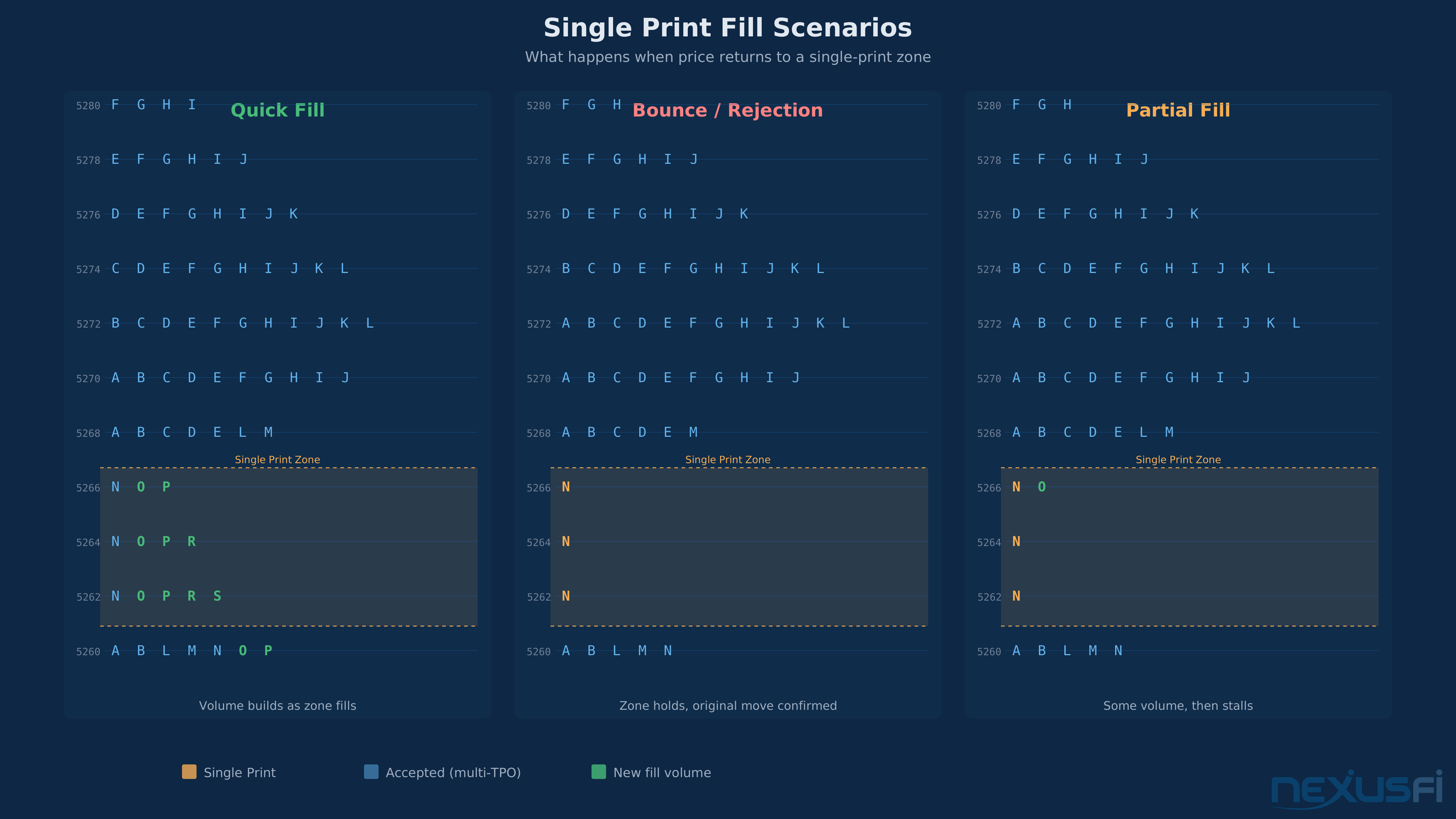
Like naked POCs, single prints represent unfinished business that the market tends to revisit. The auction at those prices was incomplete — not enough two-sided trade happened to establish acceptance. When price returns to a single-print zone, three outcomes are possible.
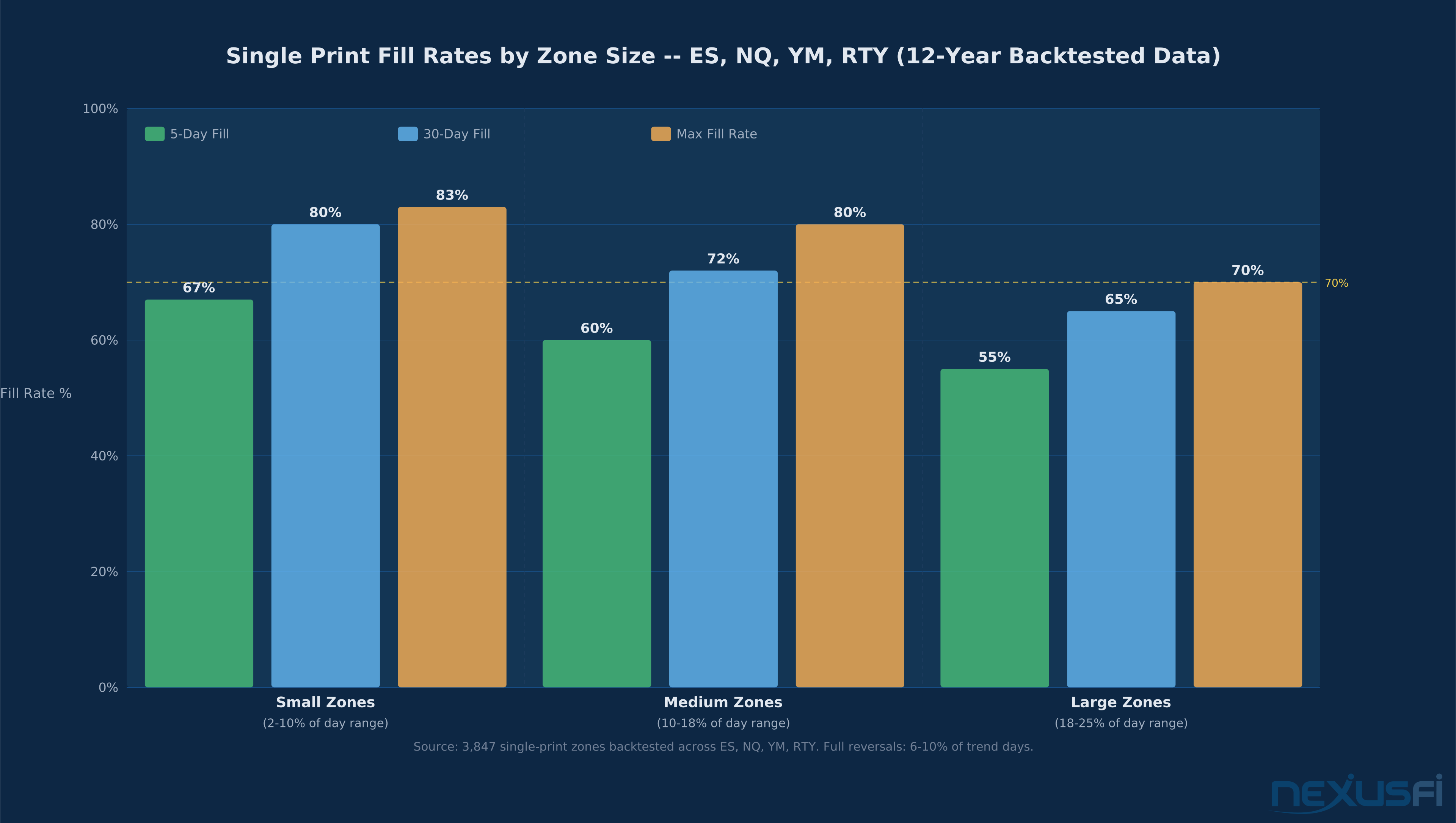
Research across 3,847 single-print zones on ES, NQ, YM, and RTY over 12 years of data quantifies this: small zones (2-10% of day range) fill 64-70% of the time within five trading days, medium zones fill at 57-63%, and large zones are less consistent at 47-72%. About 14-17% of zones never fill within 30 days. [8] These aren't random numbers — they give you a concrete baseline for how aggressively to target single-print fills.
Quick Fill #
Price runs through the zone and builds volume as it goes. The air pocket fills. The developing profile shows bars thickening at those prices. This happens when the original directional move is being unwound — the market is rotating back and now has enough participation to establish proper acceptance at those levels. After a quick fill, the single prints are gone. Those prices are no longer structurally significant in the same way.
Bounce / Rejection #
Price hits the single-print zone and reverses sharply. The air pocket holds. The original directional move is confirmed — the market still doesn't accept those prices as value. When you see this, the single prints gain weight as a reference level. They've been tested and held.
@rahulgopi trades this setup explicitly: "Sell a Failure of Single Print Zones at extremes." [3] His approach treats a failed test into single prints as a directional signal — if the market can't fill the zone, the original initiative move was right.
Full intraday reversals — where price completely undoes a single-print move — happen only 6-10% of the time across all four major index futures. [8] That's a critical number. It means fading a single-print trend day is a low-probability play. The data says don't fight them.
Partial Fill #
Price enters the zone, builds some volume, but stalls without completing the fill or reversing cleanly. The zone is partially resolved — still structurally relevant but weaker than a fresh single print. This is common during lower-liquidity periods or when the market is transitioning between balance and imbalance. The zone loses some of its magnetic pull but doesn't disappear entirely.
The fill/hold distinction is the decision engine. Price approaching a single print zone is not a signal by itself. The reaction at the zone — fill, bounce, or partial — tells you whether the original initiative move is being confirmed or unwound.
Trading Around Single Prints #
As a Pullback Entry #
When the market creates single prints during an initiative move and then pulls back, the single-print zone becomes a potential entry point for continuation trades.
[3] His strategy pairs the single print as a structural reference with VWAP as a dynamic level. When both align, the pullback zone has confluence.
The logic: if the initiative move that created the single prints was genuine (strong delta, clear directional conviction), a pullback to that zone is an opportunity to join the trend at a structurally defined level.
Entry trigger specifics on ES:
- Wait for price to re-enter the single-print zone on declining delta. You want to see the pullback losing steam — cumulative delta flattening or printing under 500 contracts on the 5-minute bar as price touches the zone. Heavy delta into the zone means the opposing side is genuine and may push through. Light delta means it's a responsive fade-back, not new initiative.
- Confirm with TICK or breadth. On a long setup, NYSE TICK should be pulling back but not making new session lows. A shallow TICK pullback while price tests the single-print zone is the sweet spot — broad market selling pressure is fading even as ES dips.
- Enter when price shows the first sign of rejection from the zone — a 1-minute or 5-minute bar that dips into the zone and closes back above it (for longs). Don't front-run the zone with a naked limit order unless you're scaling into a planned position.
Stop placement:
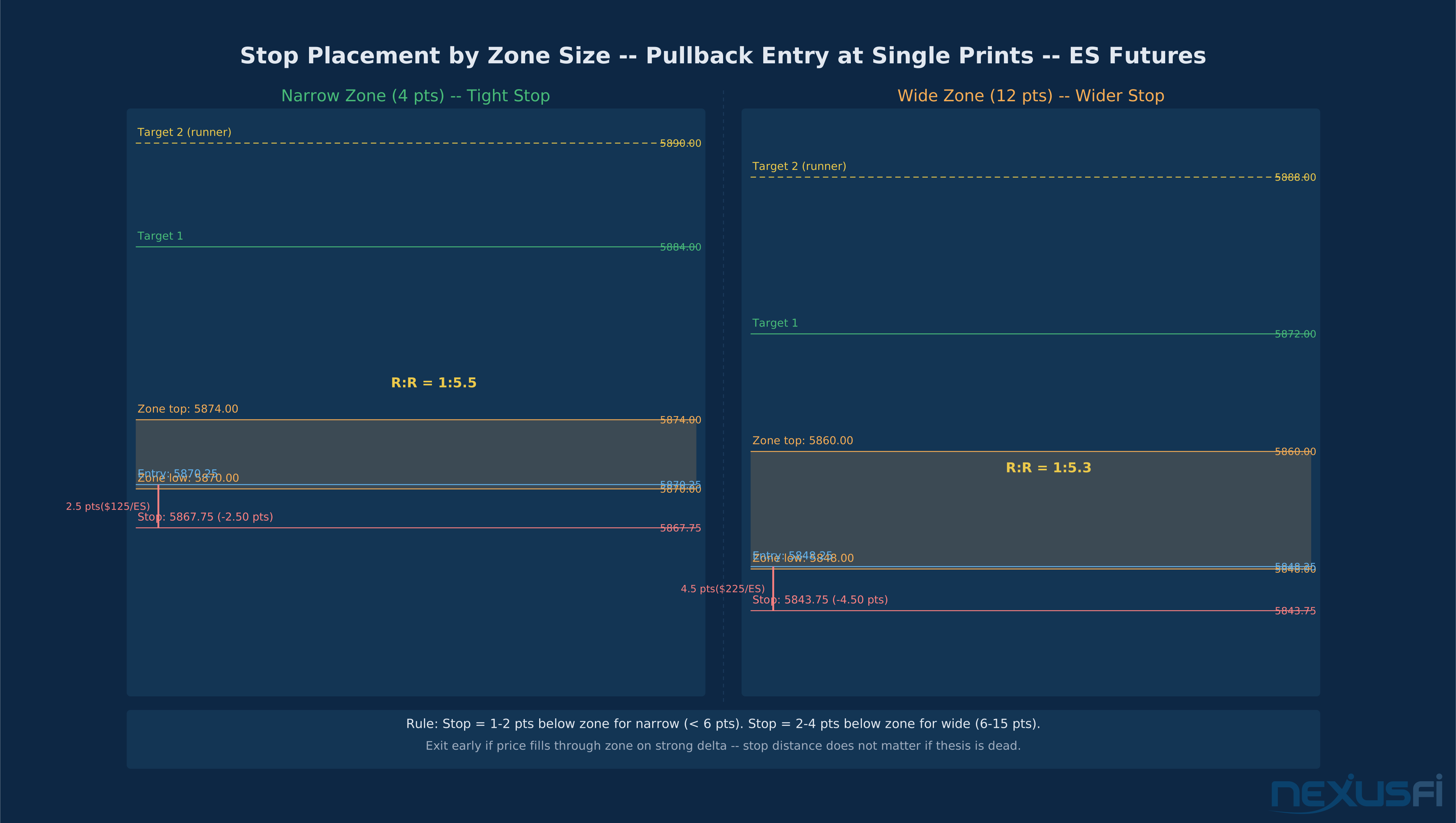
- Tight zones (3-5 points on ES): Stop 1-2 points beyond the far edge of the zone. If the zone spans 5850.00-5853.00, your stop on a long goes at 5848.00 or 5849.00. The zone is narrow enough that any meaningful fill through it invalidates the thesis quickly.
- Wide zones (8-15 points on ES): Stop 2-4 points beyond the far edge. A wider zone gives price more room to probe before the fill/reject decision is clear. If the zone spans 5830.00-5842.00, your stop on a long goes at 5826.00-5828.00.
- Universal rule: If price fills through the zone with strong delta in the opposite direction — multiple 5-minute bars closing deeper into the zone with accelerating volume — the thesis is dead regardless of your stop distance. Exit early rather than waiting for the stop to get hit.
Targets:
- Target 1: The high (or low) that initiated the move creating the single prints. This is the most conservative target and also the most common outcome.
- Target 2 (runner): Prior session high/low or a 2x Initial Balance extension. Once target 1 is hit, trail the stop on any remaining contracts to below the single-print zone.
Worked Example: ES Pullback to Single-Print Zone #
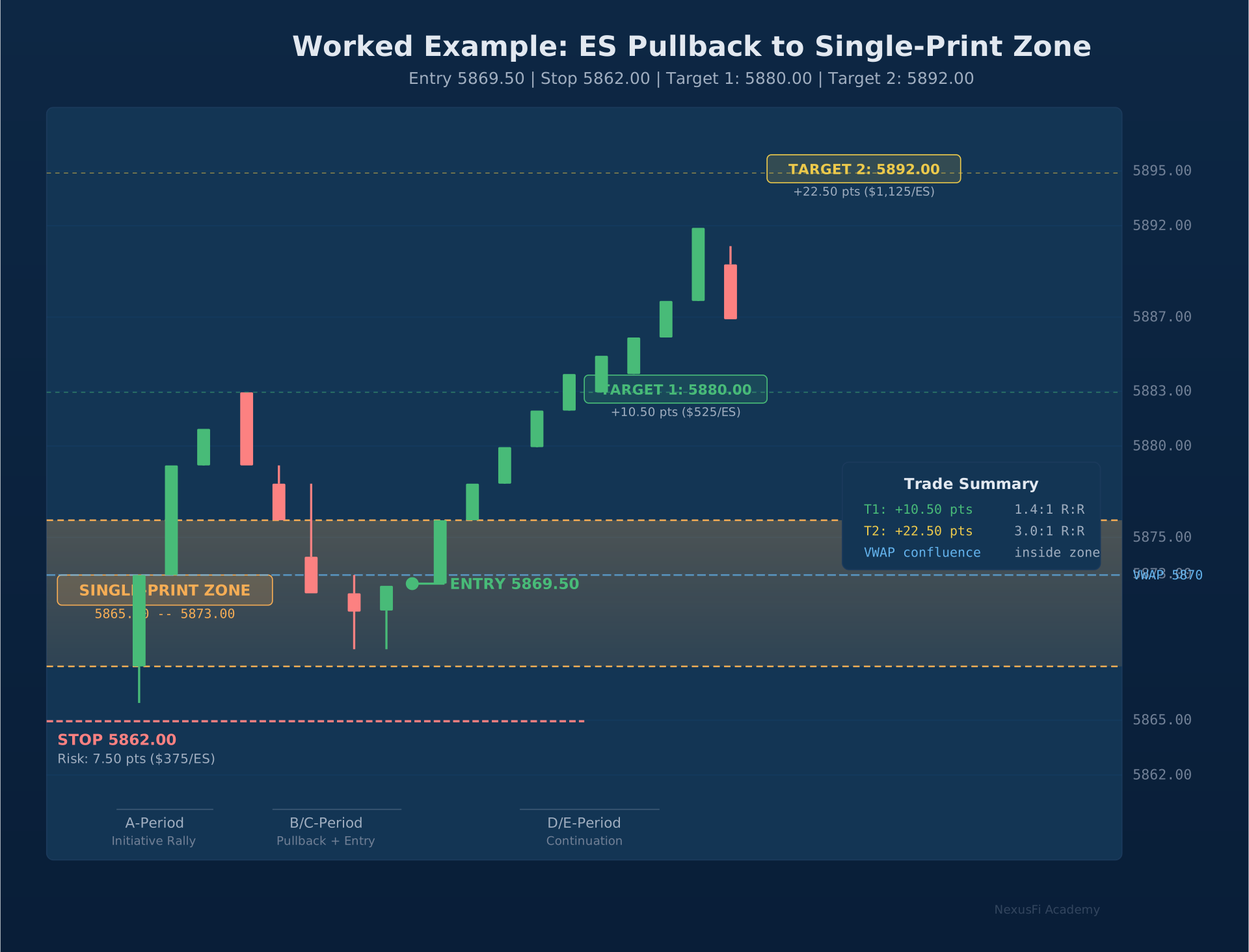
Context: ES opens the regular session at 5862 after a strong overnight rally driven by better-than-expected GDP data. The A-period (9:30-10:00) drives price from 5862 to 5878 in a nearly vertical move. Single prints form between 5865 and 5873 — eight points where only one TPO letter printed because price moved too fast for two-sided trade.
During the B-period, price stalls at 5880 and begins pulling back toward the single-print zone.
Setup identification:
- Fresh single prints between 5865-5873 from the A-period initiative drive
- Developing VWAP sitting around 5870 — inside the single-print zone, providing confluence
- Overnight rally established higher value, suggesting the initiative was genuine, not a news spike into a vacuum
Entry:
- Price dips into the zone during the C-period, touching 5868
- Cumulative delta on the 5-minute pullback bars is weak — under 400 contracts per bar, indicating the pullback is responsive, not new initiative selling
- NYSE TICK pulls back to +200 but holds well above the session low of -350
- A 1-minute bar prints 5866.50 low and closes at 5869.25 — rejection candle from the zone
- Enter long at 5869.50
Risk management:
- Zone spans 5865-5873 (8 points — a medium-width zone)
- Stop at 5862.00, three points below the zone edge
- Risk: 7.50 points = $375 per ES contract, $37.50 per MES contract
Targets:
- Target 1: 5880.00 (the high that preceded the pullback) — 10.50 points, 1.4:1 reward-to-risk
- Target 2: 5892.00 (prior session high, also near 2x IB extension) — 22.50 points, 3:1 reward-to-risk
Outcome:
- Price bounces from the zone, reclaims 5880 within 45 minutes
- Target 1 filled at 5880.00 (+10.50 points, $525 per contract)
- Runner trails with stop at 5874 (below the zone's upper edge) and captures the move to 5889 before stopping out
- Net result: +10.50 on first contract, +19.50 on runner = +30.00 points across a 2-lot ($1,500)
Why this worked: The single-print zone provided a structurally defined entry with a tight stop and favorable reward-to-risk. The low delta on the pullback confirmed the retracement was responsive — not a new initiative move to sell through the zone. The VWAP confluence inside the zone added a second structural reference. Research across 3,847 single-print zones in index futures shows full intraday reversals occur only 6-10% of the time — meaning pullback entries in the direction of the single-print move carry a significant statistical edge. [8]
As Support or Resistance #
Single prints from prior sessions function as reference levels on subsequent days. They mark where the market previously moved with conviction, and price often reacts when it revisits those levels.
@josh demonstrates this approach by marking low-volume zones days in advance, then watching how subsequent sessions interact with them. In one ES example, price twice dipped into a low-volume zone and was bought aggressively both times — the market "did not accept prices lower" and the tapered profile shape confirmed buying interest was overwhelming selling at those levels. [4]
The key insight from josh's analysis: the profile shape around a single-print zone tells you who's winning the battle. A tapered profile (thin at the extreme, building higher) means responsive buyers are cutting off sellers before they can establish acceptance at lower prices.
As Targets #
In balanced sessions, single prints from prior moves become targets for rotation. If the market is range-bound and a single-print zone sits inside the range, expect price to gravitate toward it. The auction wants to complete its business.
Mark fresh single prints from the prior session as potential intraday targets. A single print from yesterday's afternoon drive that sits 15 points above today's opening range is a reasonable upside target if the market shows signs of rotating higher. The data backs this up — roughly 32% of surviving single-print zones fill by the next trading day, and about 64% fill within five days. [8]
When Not to Trade Them #
Single prints from trend days that never rotated are tricky. On a strong trend day, the entire profile is elongated with thin zones throughout. Every level looks like a single print. Don't treat a trend day's profile the same way you'd treat a single-print zone from a balanced session. The market may never revisit those levels — value migrated away.
Also, single prints from overnight sessions carry less weight than RTH single prints. Globex liquidity is thinner, so thin zones can form without the same initiative conviction behind them. Don't give overnight single prints the same priority as RTH structure.
Common Mistakes #
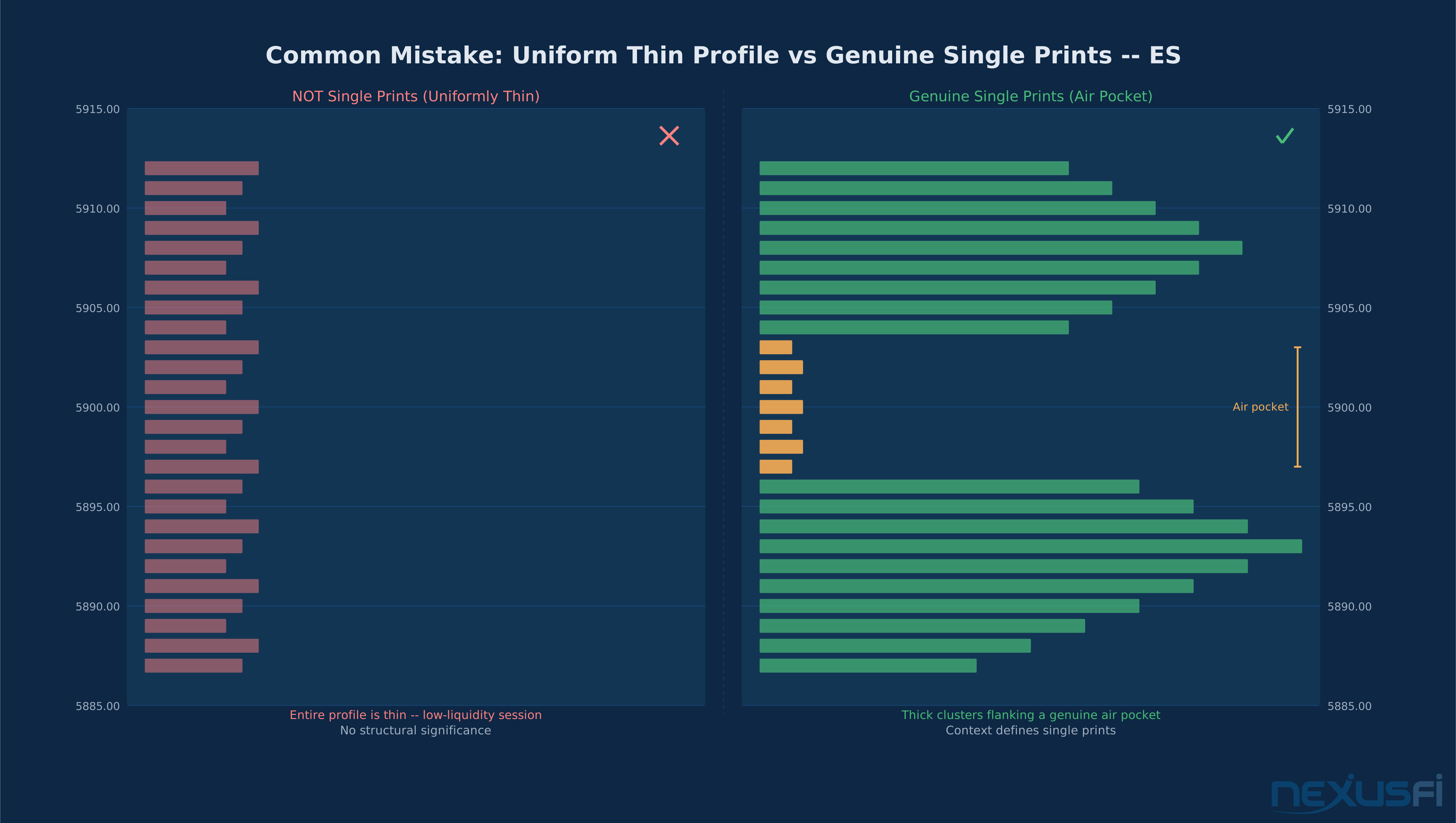
Treating every thin zone as a single print. A single print has structural context — it appears between thicker clusters and marks a specific directional move. A uniformly thin profile from a low-volume session doesn't have meaningful single prints because the entire distribution is thin.
Fading single prints during initiative activity. If the market is actively trending and you try to fade a pullback into a single-print zone, you're fighting initiative with a responsive thesis. Check whether the market has shifted to rotation before trading the fill. The backtested numbers are clear — full reversals of single-print days happen only 6-10% of the time. [8] Don't be on the wrong side of that statistic.
Ignoring time decay. Like naked POCs, single prints lose relevance over time. A fresh single print from yesterday's session is a strong reference. A single print from two weeks ago that's been tested twice and partially filled is structural noise. Prioritize recent structure.
Treating single prints as exact prices. Single prints define zones, not precise levels. On ES, a single-print zone might span 3-5 points. Don't set a limit order at the exact edge — the market doesn't know where your chart draws the boundary. Scale into the zone or use a bracket of limit orders across 2-3 ticks.
Ignoring zone size. Not all single-print zones carry equal weight. Small zones (2-10% of the day's range) fill faster and more reliably — 64-70% within five days. Large zones (18-25% of range) are less predictable and fill at rates as low as 47% depending on the instrument. [8] Size your expectations to match the zone.
Knowledge Map
Prerequisites
Understand these firstGo Deeper
Build on this knowledgeReferences This Article
Articles that build on this topicCitations
- — Volume Profile and Footprint discussion (2012) 👍 11“Initiative activity is any buying above or within the previous session's value and initiative selling below or within the previous session's value. Responsive is simply buying below the previous session's value and selling above the previous session's value.”
- — Spoo-nalysis ES e-mini futures S&P 500 (2016) 👍 5“These are single print zones from market profile. Red: down side single print zones inside body. Green: up side single print zones inside body. Magenta: Single prints at days extremes (buying / selling tail). Yellow: days with no single prints, usually a double touch.”
- — RG's Emini Journal (2015) 👍 5“Buy a pullback to 24 hr VWAP / VWAP around a single print Zone. Sell a Failure of Single Print Zones at extremes.”
- — Trade Breakdowns and Other Musings (2023) 👍 3“The market did not accept prices lower than 4595. The key here is the shape of the profile. Look how beautifully tapered it is.”
- — Market profile vs Volume profile (2021) 👍 4“I don't want the relatively low volume Asian, European hours being considered with the same weight when it comes to formation of the Market Profile regarding single prints between distributions where one might be a low volume distribution and the other a high volume RTH distribution.”
- — Snax's /ES & /CL Trading Journal (2019) 👍 4“All the hallmarks of a classic bearish trend day or multi-distribution trend day hiding under all the oscillation. Other than the single-print selling tail from the Opening Bell, all other single-prints were retraced as price kept auctioning back and forth.”
- — Spoo-nalysis ES e-mini futures S&P 500 (2015) 👍 36“Range Day, Upside Trend Day, Downside Trend Day, Upside Breakout Day, Downside Breakout Day, False Upside Breakout Day, False Downside Breakout Day -- each producing distinctive profile shapes.”
- — Tradingstats.net (2026)
- — Harmonics With Volume Trade Journal (2021) 👍 1“After Initial Balance - Single Prints Reversion. After a large run up of the B period, price completed a range extension and began to balance. Anticipating a Normal Variation day where single prints could fill in for the day.”
- — Books.google.com (2007)