



The 80% Rule
A value area re-entry heuristic from Market Profile — powerful in concept, more subtle than the name suggests
Overview #
The 80% Rule is one of the most widely cited setups in Market Profile and Volume Profile trading. The premise is straightforward: if the market opens outside the prior session's value area, then re-enters value and sustains inside for two consecutive 30-minute periods, there's a high probability it will rotate all the way to the opposite value area edge.
@addchild traces the origin: "The 80% Rule is a simple, yet powerful value area trading strategy which was first mentioned in The Profile Reports (Dalton Capital Management 1987 - 1991). It stated that there is an 80% chance when a market opens (or trades) above or below the value area, and then trades in the value area for two consecutive half hour periods, then the market has an 80% chance of filling the entire value area." [1] Dalton later codified these principles in Mind Over Markets (1990), the first full treatment of Market Profile trading methodology, expanding on the value area framework that the 80% Rule depends on [6].
The concept is rooted in auction market theory. An outside-value open signals potential directional initiative — the market is attempting to establish new value away from the prior session's fair price zone. But if that attempt fails and price gets pulled back inside value, the breakout has been rejected. The trapped participants who positioned for the breakout now provide fuel for rotation through value in the opposite direction.
Here's the critical nuance that separates proficient VP traders from beginners: the "80%" in the name is a heuristic, not a universal constant. When you apply strict criteria and actually test it on real data, the numbers tell a more complex story. The concept is sound. The specific percentage depends entirely on how you define the setup, what instrument you trade, and whether the market is in a balanced or trending regime.
For the broader framework, see Volume Profile Trading.
The Rule Defined #
Step-by-Step Criteria #
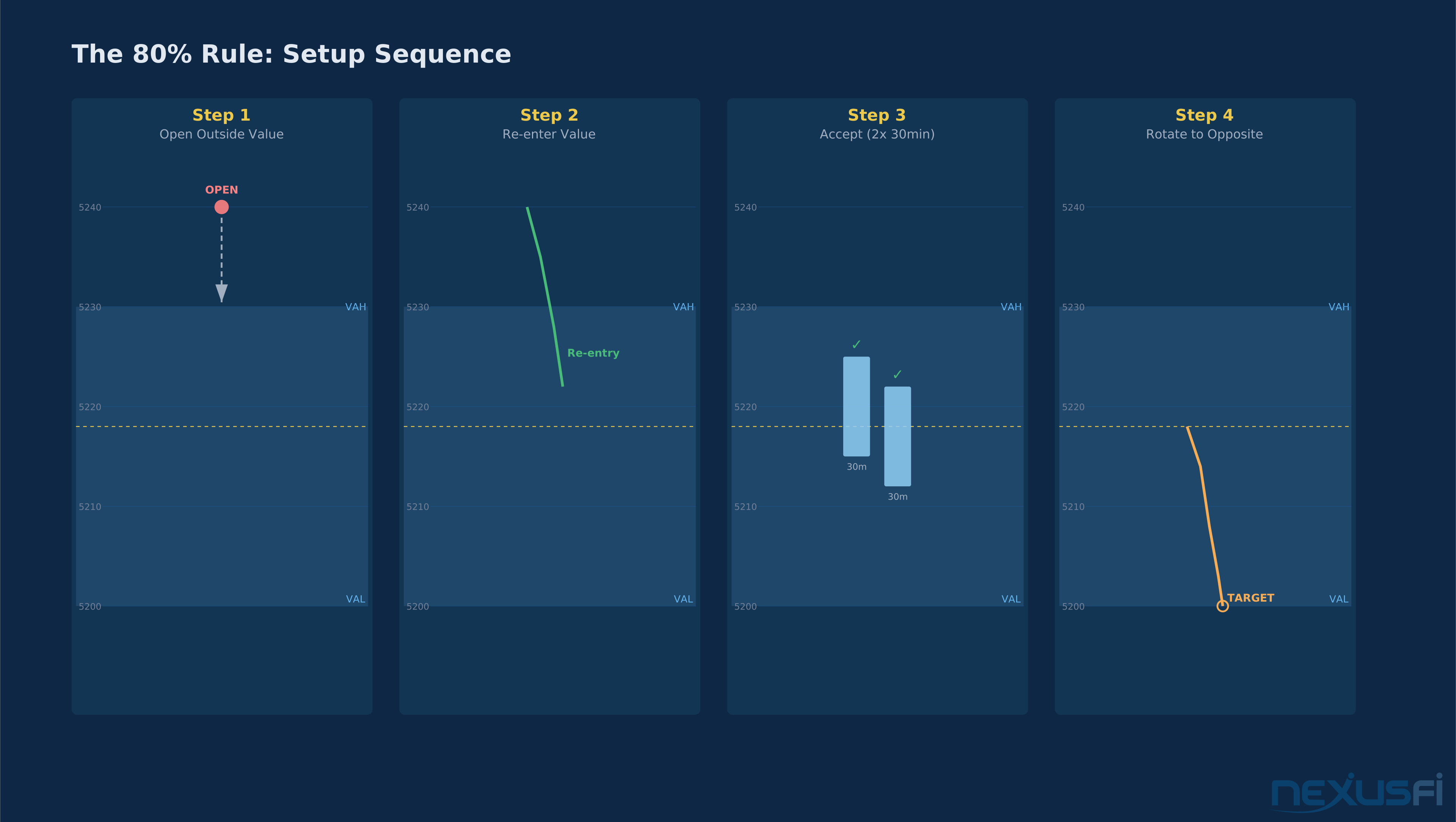
The classic formulation has five components:
1. Construct the prior value area. Calculate VAH, VAL, and POC from the prior RTH session. The value area encompasses approximately 70% of the session's volume (Volume Profile) or TPO distribution (Market Profile).
2. Opening location. Today's session opens outside the prior value area — either above VAH or below VAL. This is the trigger condition. An open inside value doesn't qualify.
3. Re-entry. After opening outside, price trades back into the prior value area. This is the failed breakout signal — the market tried to establish new value outside the prior range and couldn't sustain it.
4. Acceptance (the two-period test). Price sustains inside the value area for two consecutive 30-minute periods. This is the confirmation that the re-entry is genuine, not just a wick or a liquidity sweep. Two periods of acceptance suggests the market has truly rejected the outside-value probe.
5. Expected outcome. Once acceptance is confirmed, the expectation is rotation toward the opposite value area edge. If price entered from above (opened above VAH, re-entered), the target is VAL. If price entered from below (opened below VAL, re-entered), the target is VAH.
Why "Two 30-Minute Periods" #
The two-period requirement exists as a noise filter. Without it, every brief wick back into value would trigger the rule — and most of those wicks are noise, not genuine re-acceptance. Requiring two full 30-minute periods inside value gives the market enough time to demonstrate that it's actually accepting the prior value range, not just passing through on a liquidity sweep.
Some traders define "sustain" as two consecutive 30-minute closes inside value. Others require the entire bar to trade within the value area boundaries. The close-based definition is more practical for live trading — you can evaluate it objectively at each 30-minute mark.
The two-period rule comes from Market Profile's original TPO framework where each letter represents a 30-minute bracket — a convention established by J. Peter Steidlmayer and formalized in the CBOT Market Profile manual [7]. Volume Profile traders can apply the same time-based filter even though VP itself is a volume-at-price tool. The time component filters for acceptance; the volume component confirms where business is actually getting done.
What the Data Actually Shows #
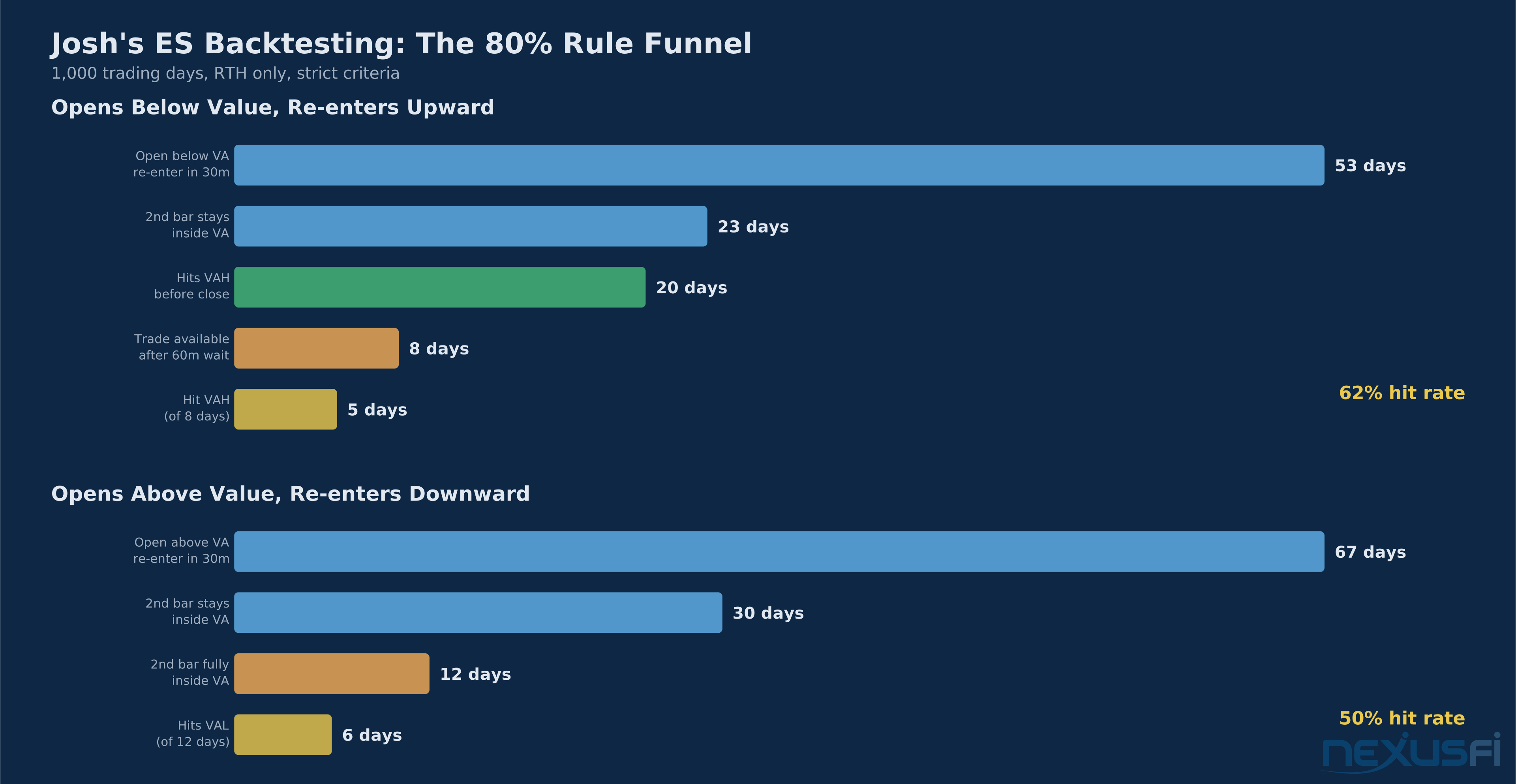
The "80%" label gets repeated so often that many traders accept it without question. @josh didn't. He ran the numbers on ES with strict criteria over 1,000 trading days.
His methodology was rigorous. On ES using continuous contracts, RTH only:
That 20/23 (87%) number looks great at first glance. But josh digs deeper: "the prior VAH was actually taken out during that second 30 minute period on all but 8 days. In other words, if you wait for the first 60 minutes, then on all but 8 days you had no trade."
The punchline: "In the past 4 years, 5 out of 8 days (62%) have fit the picture where the price opens below prior value, and the first 30 minute bar closes inside, and the second 30 minute bar stays inside the prior value area." [2]
For the opposite scenario (open above value, re-enter downward), josh found 67 qualifying days, of which 30 had the second bar staying within value, of which only 12 had the second bar completely inside value. Of those 12, 6 hit VAL (50%).
What This Tells You #
Three takeaways from josh's analysis:
1. The setup is rare. When you apply strict criteria, the 80% Rule triggers on a small handful of days per year on ES. Don't sit around waiting for it.
2. The hit rate depends on your filter. Loose criteria (any re-entry into value) produce more trades but lower reliability. Strict criteria (both 30-minute bars completely inside value) produce very few trades. The "80%" figure probably comes from somewhere in between — and from a different era of market behavior.
3. The concept still has value. Even though 62% and 50% aren't 80%, they're still positive-expectancy numbers when paired with a reasonable risk/reward setup. The rule points you toward a legitimate structural tendency: failed breakouts from value tend to lead to rotation.
The 80% Rule is better understood as a structural tendency than a precise statistic. Failed breakouts from value tend to produce rotation — and that tendency is tradeable. But don't anchor to the "80%" number. Your mileage will vary based on instrument, era, and definitions.
Trading Application #
The Setup in Practice #
Despite the imperfect statistics, the 80% Rule provides a clear operational framework for one of the most common market scenarios: the failed breakout from value.
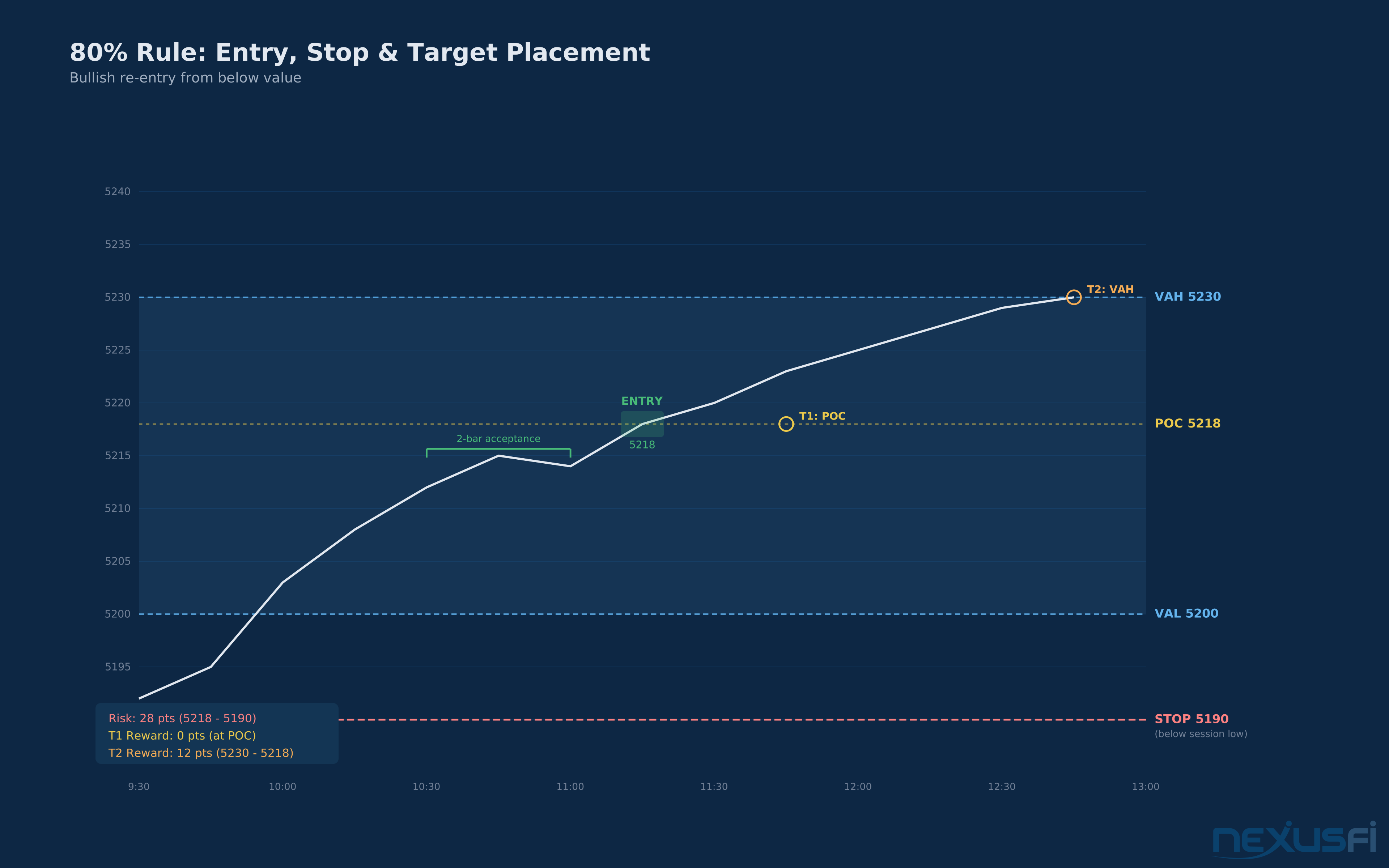
Bullish example (re-entry from below):
- Prior day value: ES 5200-5230, POC at 5218
- Today opens at 5192 — below VAL
- First 30 minutes: price rallies back above 5200, closing the first 30-minute bar at 5208 (inside value)
- Second 30 minutes: price holds inside value, closing at 5212
- Acceptance confirmed. Target: VAH at 5230
Bearish example (re-entry from above):
- Prior day value: ES 5200-5230, POC at 5218
- Today opens at 5238 — above VAH
- First 30 minutes: price drops back below 5230, closing at 5224
- Second 30 minutes: price stays inside value, closing at 5220
- Acceptance confirmed. Target: VAL at 5200
Entry and Risk Management #
Entry timing. The conservative approach: wait for the second 30-minute bar to close inside value before entering. The aggressive approach: enter during the second 30-minute period once you have confidence price is accepting value, using the developing profile as confirmation.
Stop placement. Place the stop beyond the session's extreme — the furthest point the outside-value probe reached before failing. If the market opened at 5238 and peaked at 5244 before re-entering value, the stop goes above 5244. If price can get back above the failed probe's extreme, the re-entry thesis is dead.
Targets. Primary target: the opposite value area edge. Secondary target: the POC (often reached first). Scale out in pieces — take half at POC, let the rest run toward the opposite VA edge with a trailing stop.
Position sizing. The risk (distance from entry to stop) is often wider than typical intraday setups because the stop sits at the session extreme. Size so. A trade where the stop is 20 ES points away requires smaller size than one where the stop is 8 points away.
Developing Profile Confirmation #
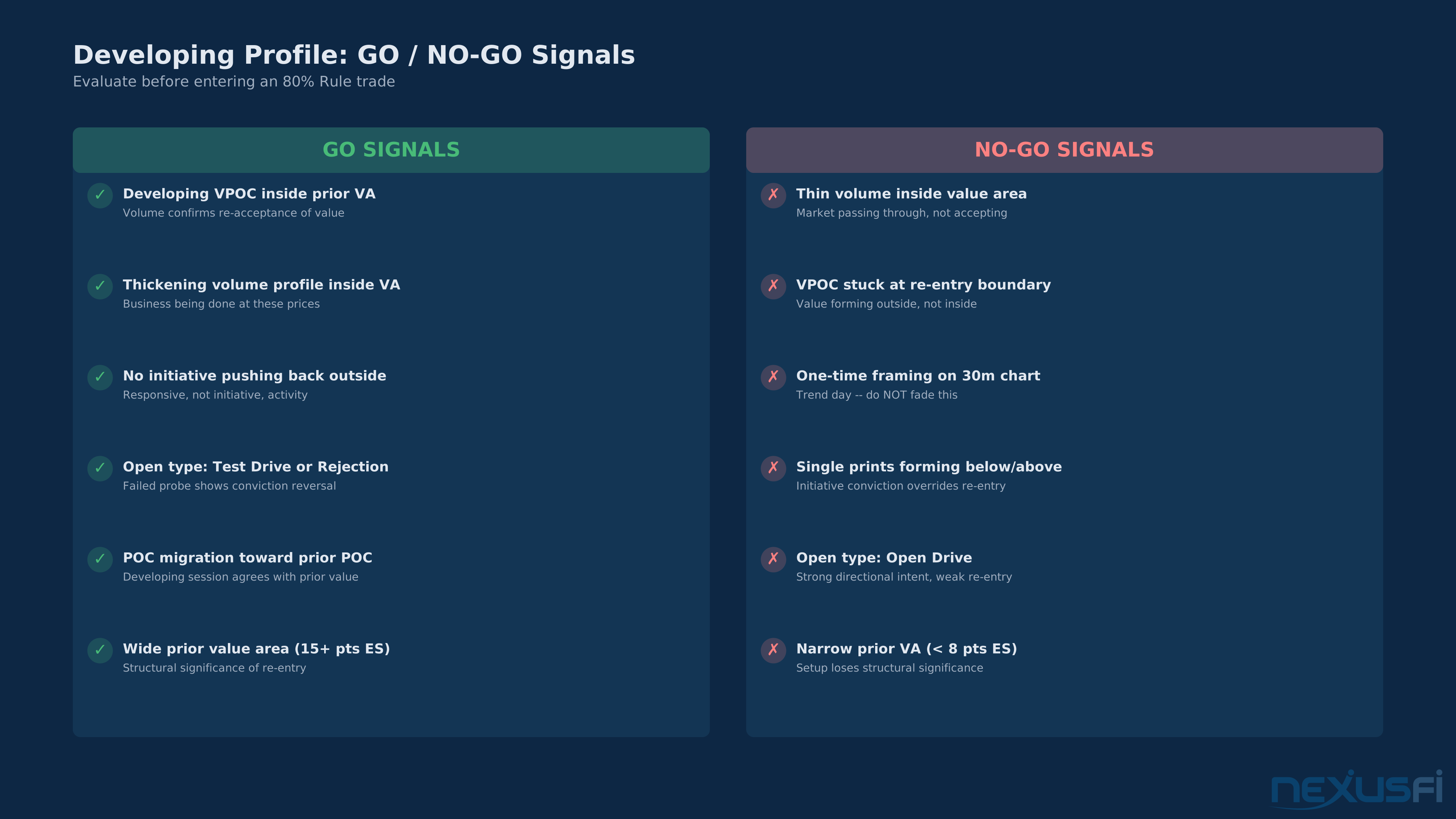
Don't take the 80% Rule setup without checking the developing profile. The two 30-minute acceptance filter is necessary but not sufficient. Look for:
- Developing VPOC anchored inside value. If the session's developing VPOC is migrating toward the prior POC or sitting inside the prior VA, the re-acceptance thesis has volume confirmation.
- Volume building inside value. The developing profile should show thickening inside the prior VA, not just price passing through.
- No initiative activity pushing back outside. If the developing profile shows thin volume inside value and heavy volume at the re-entry boundary, the market may be setting up to push back out.
@Private Banker demonstrates this contextual approach with balance area analysis: tracking how price respects VAH and VAL as support and resistance across multiple sessions, then trading the rotation when a breakout fails and price returns to the balance area. [4] The value area isn't just a level — it's a zone where the market has demonstrated acceptance, and that acceptance creates gravitational pull. @Private Banker also extends the underlying principle beyond the traditional value area: "The 80% rule also should apply to the VWAP standard deviation bands and IB levels" [5] — meaning the same failed-breakout-and-rotation logic works anywhere the market has established a distributional reference, not just the prior session's value area.
Combining with Open Type #
The 80% Rule pairs naturally with open type classification:
- Open test drive + re-entry = strongest setup. The market tests one direction, fails, and reverses back into value. This is the textbook 80% Rule scenario.
- Open rejection reverse + re-entry = also strong. The market opens outside, gets rejected, and reverses through value.
- Open drive + re-entry = weakest. If the market drove hard outside value and only later drifted back, the re-entry may be temporary. The initial drive showed conviction.
- Open auction = doesn't qualify. An auction open inside value doesn't trigger the rule.
When This Doesn't Work #
[3] The 80% Rule is one reading of that structure, not a mechanical system.
Strong trend days. When the market is in a genuine imbalance — VPOC migrating, single prints forming, one-time framing — a brief re-entry into prior value is often just a pause, not a reversal. The market sweeps liquidity inside value and then continues trending. Trading the 80% Rule against a trend day is how you get run over.
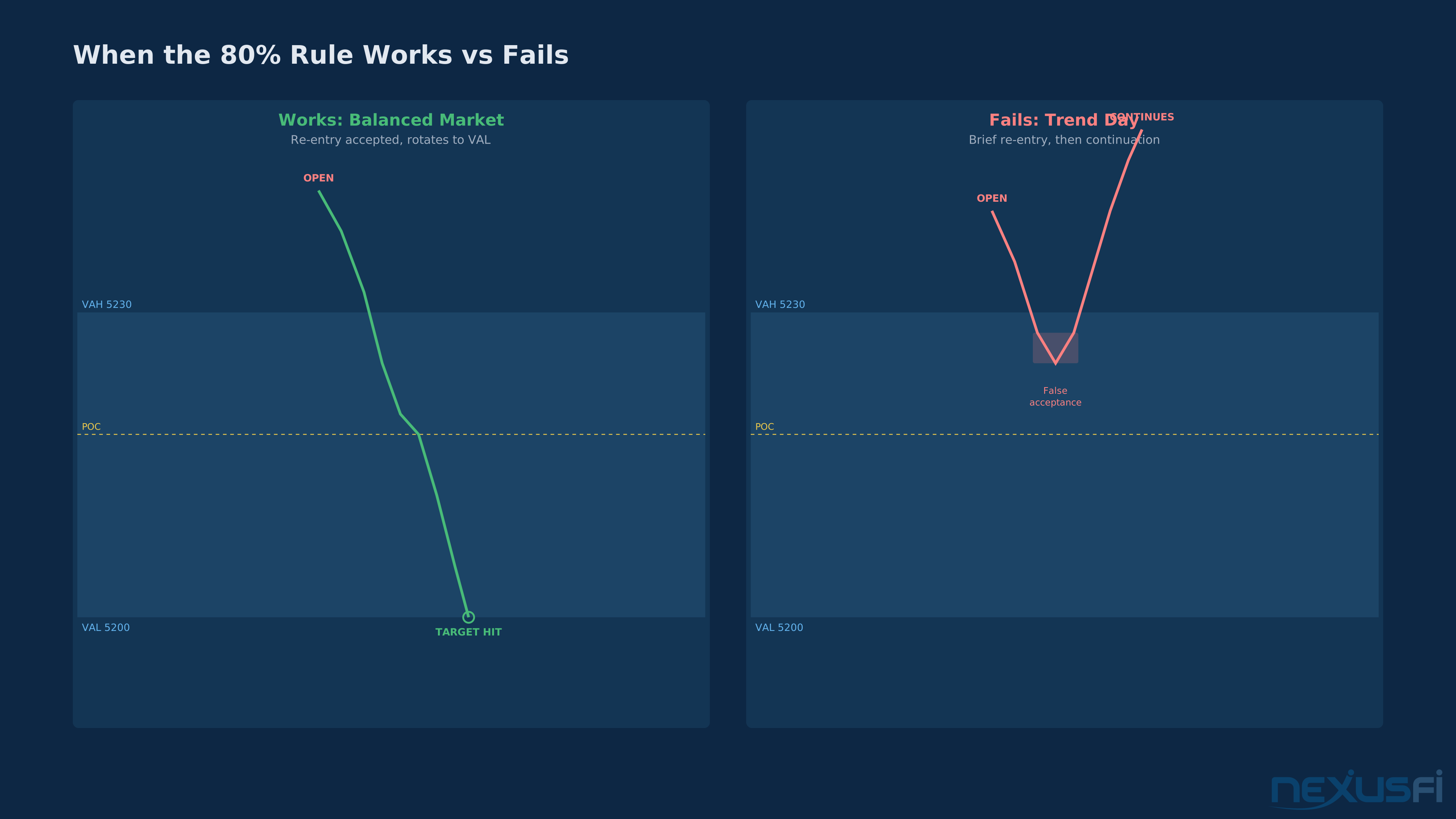
News-driven sessions. CPI, FOMC, NFP — these events create new auction regimes. The prior value area becomes irrelevant the moment new information reprices the market. A re-entry into yesterday's value after a major release doesn't carry the same structural meaning.
Narrow prior value areas. When the prior session's VA is only 5-8 points on ES, re-entering value requires almost no movement. The setup loses its structural significance because "opening outside value" and "re-entering value" are basically the same thing. The wider and more established the prior value area, the more meaningful the re-entry.
Late-session re-entry. The rule is most meaningful in the first 2-3 hours of RTH. A re-entry that doesn't happen until the afternoon lacks the time needed for a full rotation to the opposite edge. The auction may close before completing the move.
The liquidity sweep trap. Sometimes the market re-enters value just long enough to trigger two 30-minute bars inside, then reverses right back out. This is the false acceptance scenario — the market was sweeping stops and filling orders inside value, not genuinely accepting those prices. Watch the developing profile: if volume doesn't build inside value during those two periods, the acceptance may be hollow.
Over-reliance on a single rule. @phantomtrader's broader point applies: "I don't agree with the two 30 minute bars — trading the value area can happen any time of the day as far as I'm concerned. I'm only looking for price to be at these levels." [3] The 80% Rule is one lens. Value area levels matter as support/resistance independent of whether the specific 80% Rule criteria are met.
The biggest mistake traders make with the 80% Rule is treating it as mechanical. "Price re-entered value for two periods, so I must take the trade." That's not how structural analysis works. The rule identifies a tendency. Your job is to evaluate whether the current context supports that tendency or overrides it.
Knowledge Map
Prerequisites
Understand these firstGo Deeper
Build on this knowledgeReferences This Article
Articles that build on this topicCitations
- — Volume Profile and Footprint discussion (2012) 👍 6“The 80% Rule is a simple, yet powerful value area trading strategy which was first mentioned in The Profile Reports (Dalton Capital Management 1987 - 1991).”
- — Volume Profile and Footprint discussion (2012) 👍 19“In the past 4 years, 5 out of 8 days (62%) have fit the picture.”
- — 80 percent market profile rule (2014) 👍 3“the profile was never intended to give trade setups or entry points.”
- — Volume Profile and Footprint discussion (2012) 👍 16“Price finally broke below and quickly came back into balance. Once that happens, expect price to test the VAH.”
- — ES entries/targets & risk/rewards (2012) 👍 5“As for the 80% rule, it also should apply to the VWAP standard deviation bands and IB levels.”
- — Mind Over Markets: Power Trading with Market Generated Information (1990)
- — CBOT Market Profile (1991)