



Stellar (XLM): The Payments Blockchain That Actually Moves Real Money
Overview #
Stellar is the payments network that nobody outside fintech circles talks about — until it quietly shows up distributing humanitarian aid to a million refugees or settling MoneyGram transfers across 180 countries. XLM, its native token, doesn't have XRP's legal drama or Bitcoin's cultural gravity. What it has is a legitimate, verifiable track record of moving real money for real people at costs that make traditional wire transfers look like a rip-off.
For traders, that combination — genuine adoption, nonprofit governance, evolving smart contract capability, and a much cleaner regulatory profile than most crypto assets — creates a specific kind of opportunity. XLM isn't the altcoin you chase on Twitter momentum. It's the one you position in before adoption metrics break higher and retail discovers the narrative exists.
This guide covers what Stellar actually is, how it works mechanically, where XLM's price comes from, how it compares to XRP, what the Soroban smart contract launch means for the thesis, and how to trade it without getting carved up by the volatility.
One thing upfront: XLM is a patience trade in most market regimes. It rewards people who understand the adoption calendar — UNHCR programs, SDF grants, Soroban TVL growth — and punishes those who position for a quick trade based on generic altcoin seasonality.
What Stellar Is (and Why It's Different From What You Think) #
Stellar was founded in 2014 by Jed McCaleb — the same person who co-founded Ripple — after he left the XRP project over strategic disagreements. The name on the founding documents includes payments pioneer Joyce Kim as co-founder, and the architecture benefited from early collaboration with cryptographer David Mazières, who designed the consensus mechanism that makes Stellar work.
CME now lists regulated futures for both XLM and XRP, giving traders clean instruments for trading the relative value between these two payments-focused networks. SMCJB tracked the expansion of CME crypto contracts beyond BTC and ETH to include XRP and then Stellar, noting the growing breadth of regulated altcoin exposure available to futures traders.
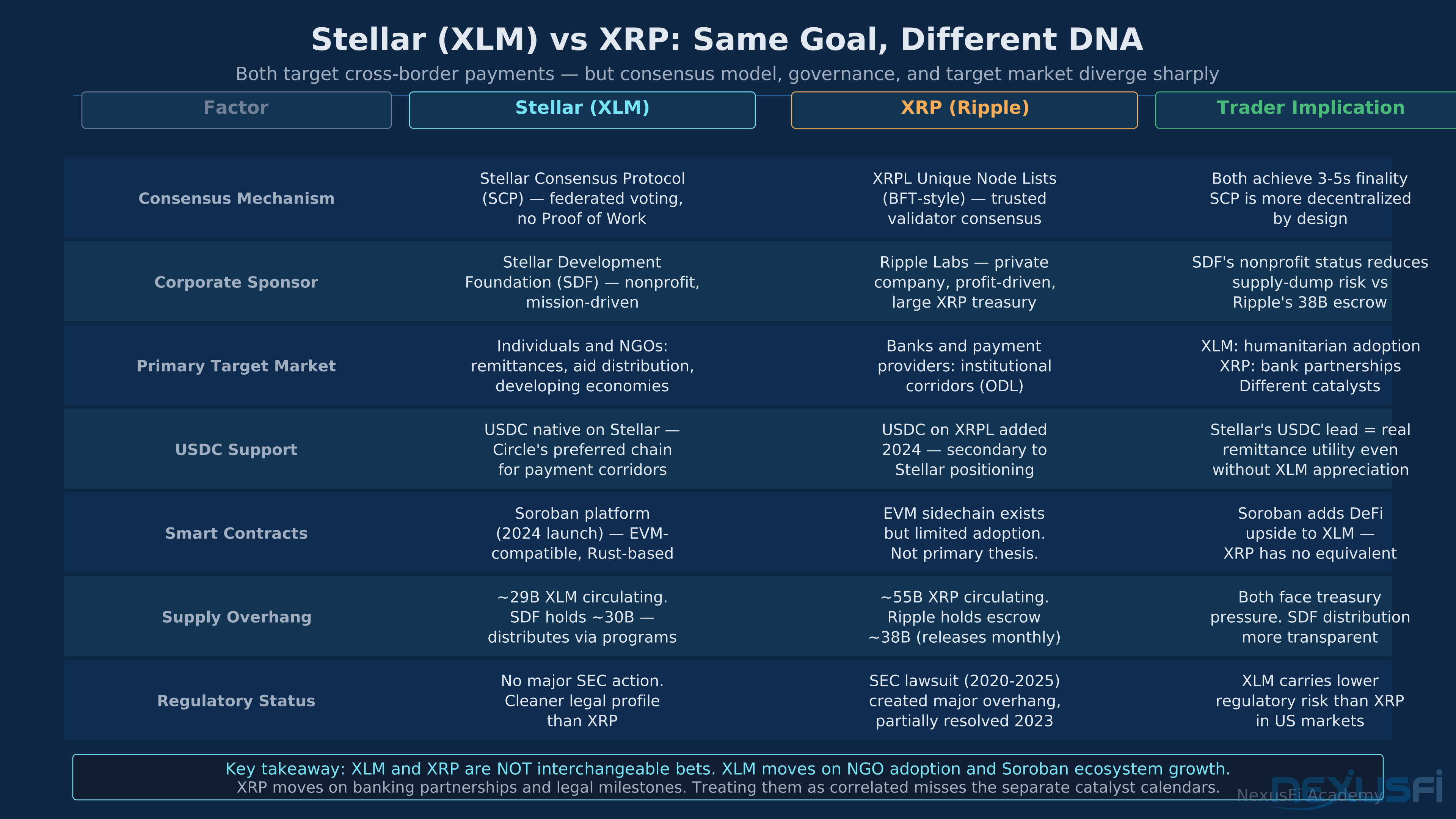
The key distinction from Ripple is structural and ideological:
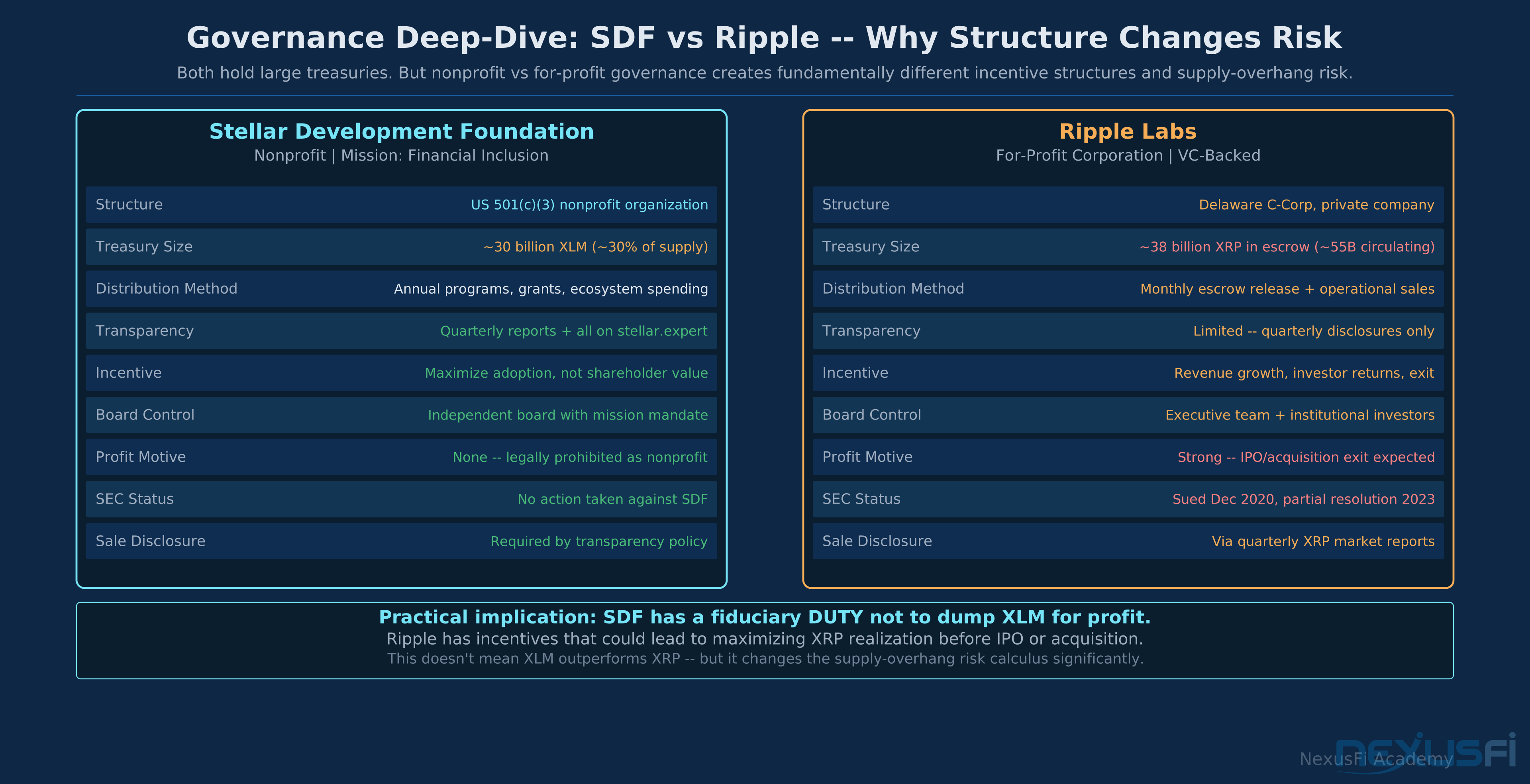
Ripple Labs is a for-profit company that built a bank-focused payments product and holds a large XRP treasury position. Its incentive is shareholder value.
Stellar Development Foundation (SDF) is a nonprofit that received 100 billion XLM at genesis and has been distributing it to grow the ecosystem ever since. Its stated mission is financial inclusion for the world's unbanked population. Its incentive is adoption.
That isn't just marketing language — it shapes every decision the network makes. Where Ripple signs deals with banks, SDF builds programs for refugees. Where XRP's ecosystem is monetized through ODL corridors, Stellar's ecosystem is funded through grants to developers building remittance tools in Southeast Asia and sub-Saharan Africa.
The XLM network itself has three components that traders should understand:
The Stellar network is the public ledger — open-source, permissionless, operated by validators worldwide. Like XRPL, it's not controlled by SDF.
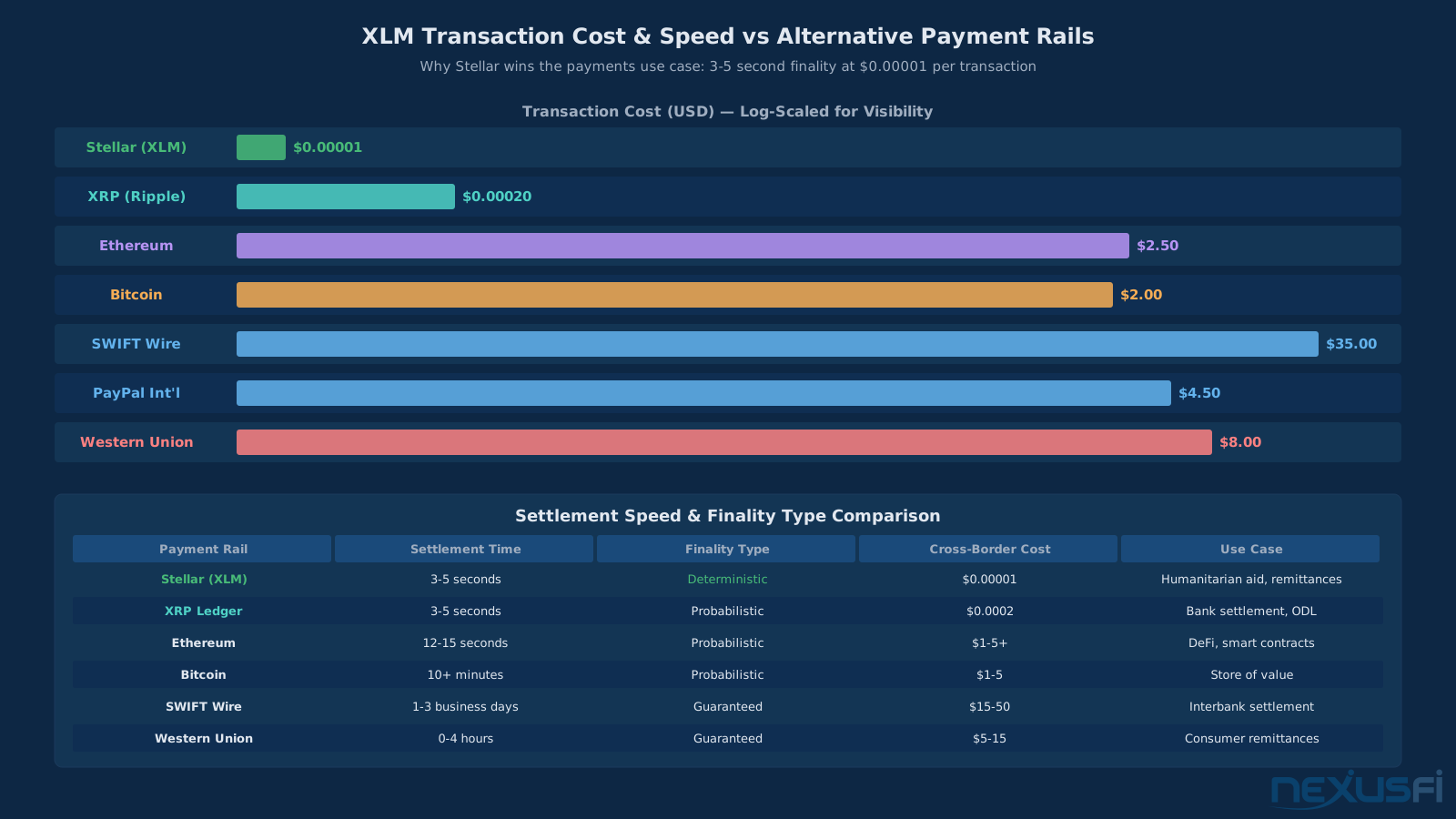
XLM (Lumens) is the native asset. It serves two functions: paying transaction fees (0.00001 XLM per operation, under $0.000005 in dollar terms at any reasonable XLM price) and acting as a bridge asset for Stellar DEX trades and anchor conversions.
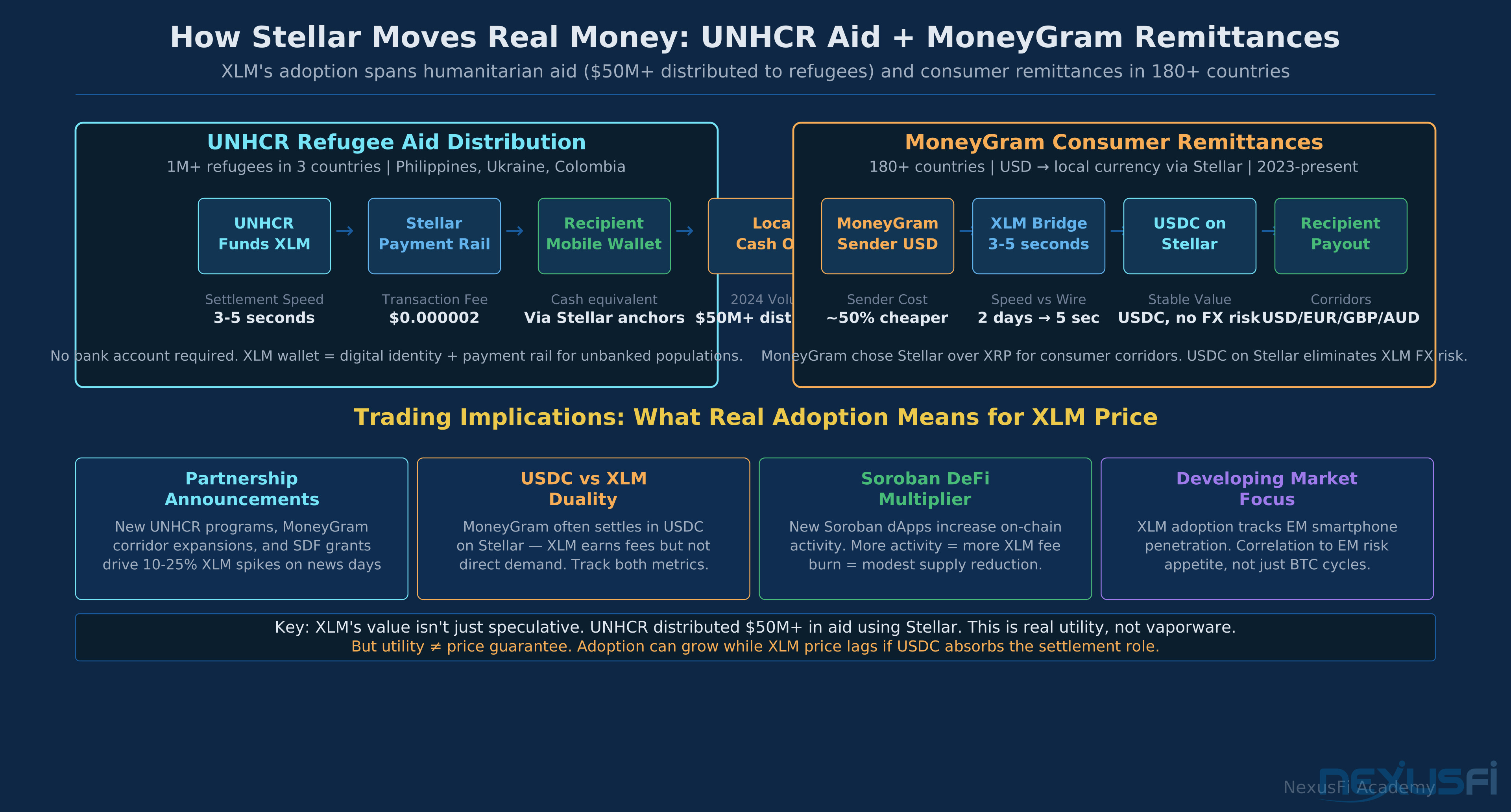
Anchors are Stellar's version of payment gateways — companies that issue tokenized fiat currency on the Stellar network. MoneyGram is an anchor. Circle (USDC issuer) treats Stellar as a preferred chain. These anchors are what connect the Stellar ledger to real-world cash.
For traders: Stellar's business model creates a at the core different trigger profile than XRP. When a new anchor joins, XLM transaction volume grows. When SDF launches a new humanitarian program, real XLM demand is created. The catalysts are adoption metrics, not court filings.
How the Stellar Consensus Protocol Works #
Most crypto consensus explanations are either too simple (miners vote) or too technical (federated Byzantine fault-tolerant quorum intersection safety). Here's the version that's actually useful for understanding what you're trading.
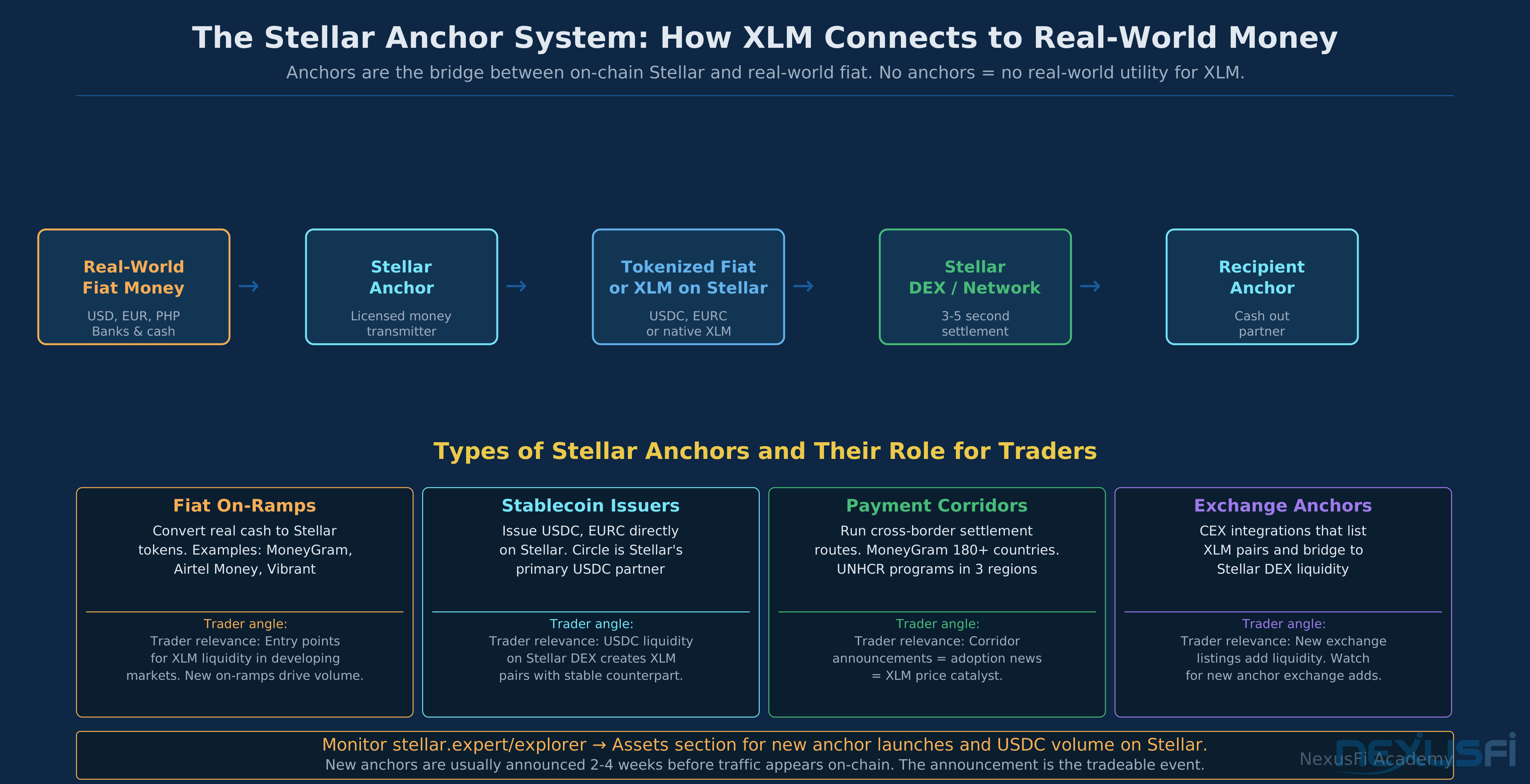
The Stellar Consensus Protocol (SCP) uses a concept called Federated Byzantine Agreement (FBA). Instead of all nodes agreeing with all other nodes (which doesn't scale), each node picks a set of validators it trusts — its "quorum slice." The network achieves consensus when these overlapping quorum slices reach agreement.
The five-step process works like this:
Nomination: Nodes propose candidate transaction sets; FBA narrows to a single candidate with broad quorum-slice support. Ballot: Validators vote requiring agreement from 2/3+ of each node's trusted validators. Ledger close: The new state is confirmed, final, and irreversible — no rollback, no reorg.
Total time: 3-5 seconds from submission to irreversible finality.
This is meaningfully different from Proof of Work (Bitcoin: 10-minute blocks, 6-confirmation "safety" = ~60 minutes for large transfers) and more comparable to Proof of Stake Ethereum (~12 seconds per slot, finality after two epochs = ~12 minutes for the strongest guarantee).
For payments specifically, SCP's deterministic finality matters. A MoneyGram recipient in the Philippines doesn't need to wait for 6 Bitcoin confirmations. When Stellar says the transaction is confirmed, it's confirmed.
The decentralization question: SDF publishes a default Unique Node List that most nodes start with. SDF has been diversifying the UNL since 2019 and any operator can modify it, but the network is less decentralized than Bitcoin.
Stellar's Real-World Adoption: UNHCR, MoneyGram, and the Remittance Market #
This is where XLM separates from most crypto assets. The adoption isn't vaporware — it's verifiable on the blockchain and documented in public reports.
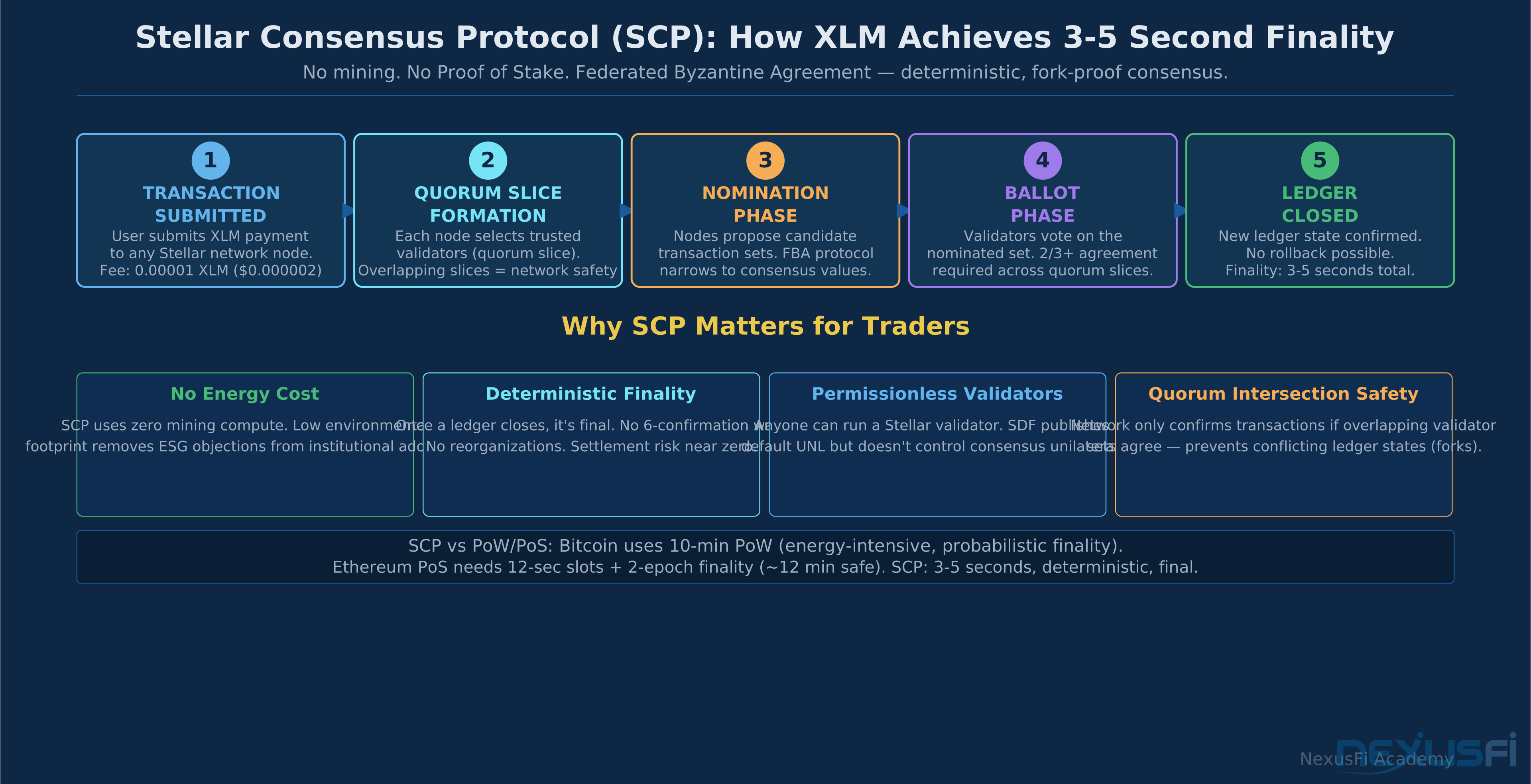
UNHCR (United Nations Refugee Agency) chose Stellar for humanitarian aid distribution in multiple programs across the Philippines, Ukraine, and Colombia. The program targets refugees who lack traditional bank accounts. Aid recipients get a Stellar wallet, receive XLM or tokenized fiat, and can cash out through local anchor partners. Over a million beneficiaries have been served. Tens of millions of dollars in aid distributed. All of it verifiable on stellar.expert.
UNHCR chose Stellar for its negligible transaction costs, adequate speed, and reliable network — not speculation. That's a reference customer no other crypto asset can match for humanitarian use.[4]
MoneyGram partnered with Stellar in 2023 to offer cash-in/cash-out services in 180+ countries. Their integration uses Stellar anchors and USDC (not necessarily XLM directly) as the settlement layer. MoneyGram customers can send money via the MoneyGram app, it settles on Stellar in seconds, and recipients withdraw cash at MoneyGram locations worldwide.[5]
The nuance traders miss: MoneyGram uses USDC on Stellar, not XLM directly. XLM benefits from this as fees are paid in XLM, and increased transaction volume burns more XLM. But the direct demand is for USDC, not XLM. Don't confuse network activity with XLM appreciation.
Developing markets: Stellar anchors are active in Southeast Asia, sub-Saharan Africa, and Latin America — exactly where Stellar's low fees and instant finality create genuine utility for remittance senders.
Soroban: Stellar's Smart Contract Platform #
In February 2024, Stellar launched Soroban — its smart contract execution environment. This development, which most traders who only know the "XLM is a payments coin" narrative haven't priced in, changes the narrative at the core.
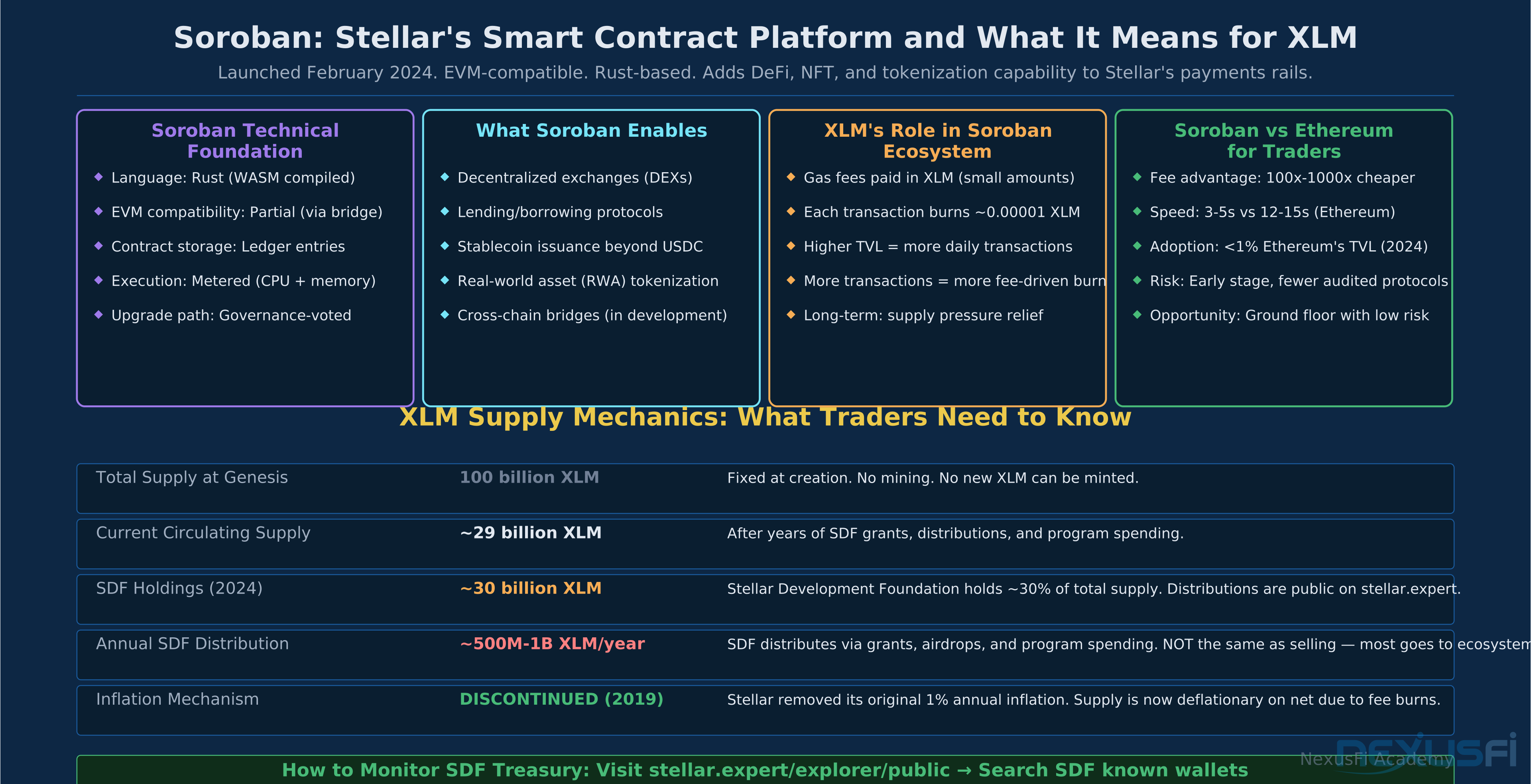
What Soroban is: A smart contract platform built natively into Stellar. It uses Rust, compiles to WebAssembly, and runs on the same validators that process XLM payments — not a separate chain or sidechain. It enables DEXs, lending protocols, stablecoin issuance beyond USDC, and RWA tokenization — DeFi primitives rebuilt with Stellar's performance and fee advantages.
Why this matters for XLM price: Every Soroban execution pays fees in XLM. More dApps = more XLM burned. At 2024 levels the burn is modest, but if Soroban TVL reaches even 1% of Ethereum's, the supply pressure becomes material. More importantly: Soroban changes the narrative from "payments coin threatened by USDC" to "smart contract base layer with real payment adoption." That's a structurally different story.
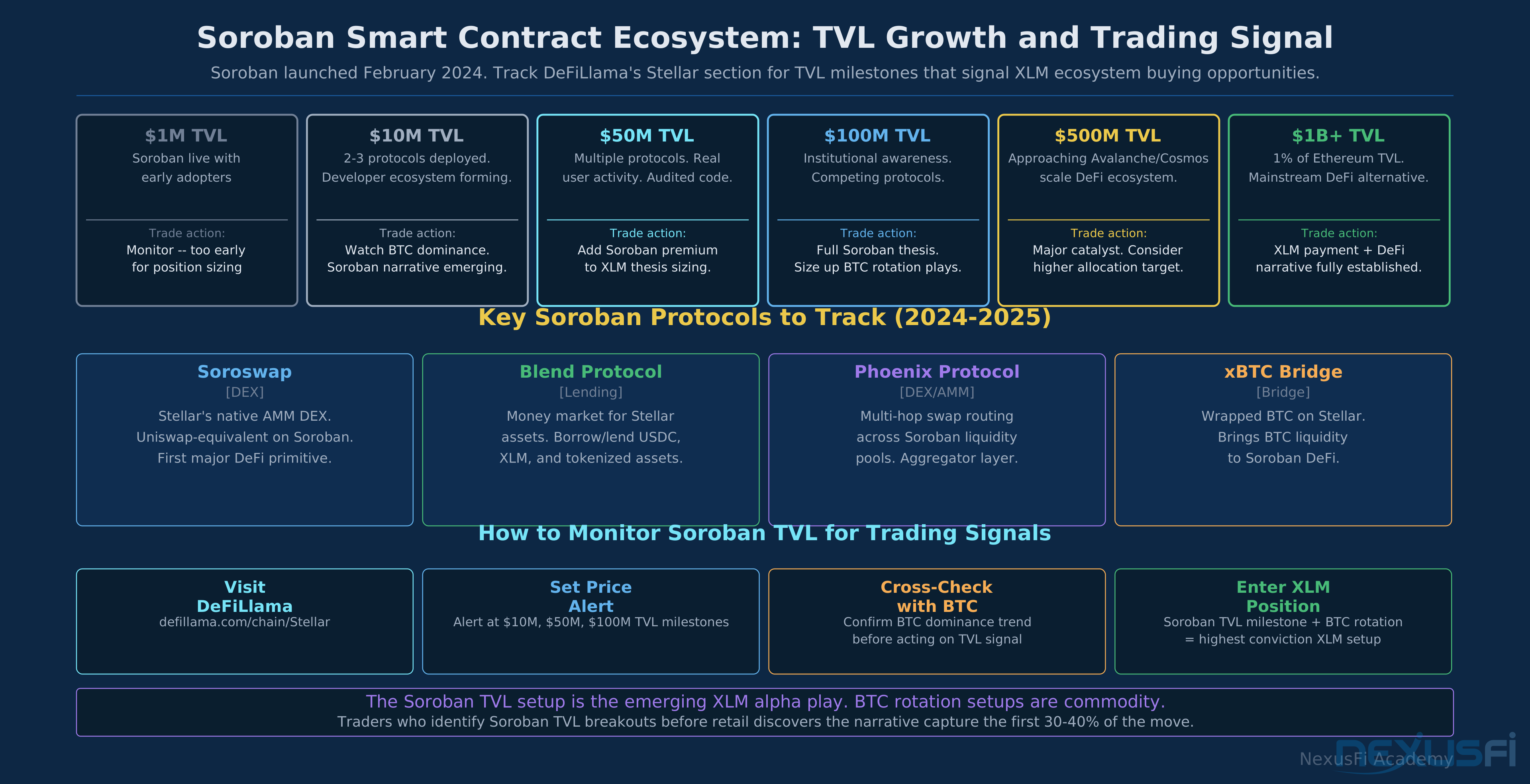
Honest caveat: In 2024, Soroban's TVL was a fraction of one percent of Ethereum's. Adoption is early, protocols aren't battle-tested at scale, and the developer ecosystem is smaller. Ground-floor risks, not thesis-breaking ones.
Track Soroban's TVL via DeFiLlama (Stellar section). When TVL starts growing consistently — not just from one protocol launch, but from multiple protocols — that's the signal that Soroban adoption is genuine. Connect that metric to XLM positioning.
XLM Supply Mechanics: The SDF Treasury #
Understanding XLM's supply is essential for not getting blindsided by fear-driven selloffs.
Genesis allocation: 100 billion XLM created at the start. No mining, no new issuance possible.
Current circulating supply: Approximately 29 billion XLM. The rest has been distributed, burned, or remains in the SDF treasury.
The SDF treasury: The Stellar Development Foundation holds roughly 30 billion XLM as of 2024 — about 30% of total supply. Unlike Ripple's escrow (a smart contract releasing 1 billion XRP monthly), SDF's holdings aren't in a smart contract. They're in SDF-controlled wallets, and distributions are made based on programmatic need — grants to developers, marketing programs, humanitarian programs, and ecosystem liquidity.
What this means for traders:
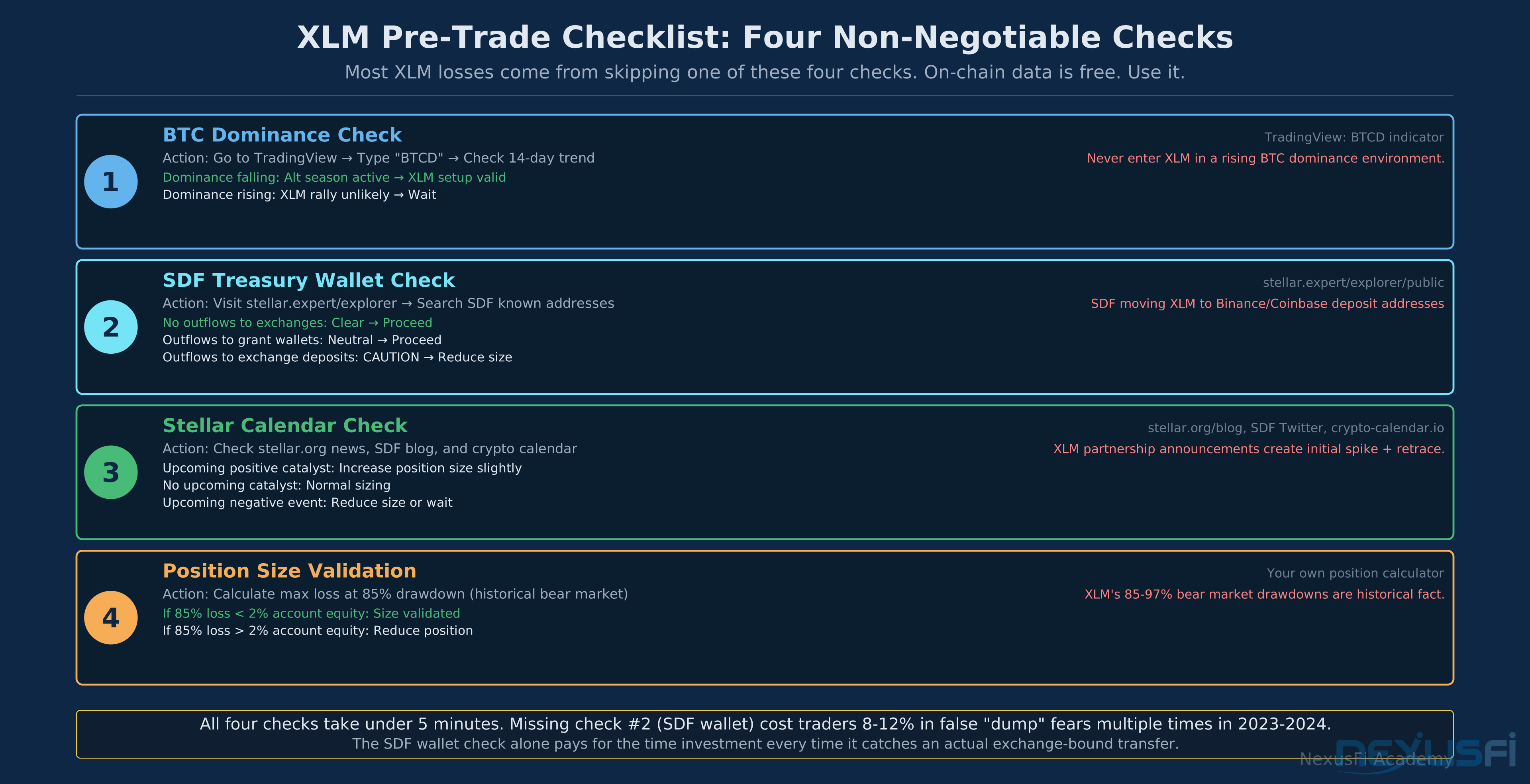
When on-chain tools (stellar.expert is the go-to) detect large XLM outflows from known SDF wallets, retail panic follows. The key question isn't "is SDF moving XLM?" — they always are. The question is "where is it going?"
- SDF to known exchange deposit addresses: This is potential sell pressure. Take it seriously.
- SDF to known grant recipient wallets: This is ecosystem development spending. Neutral to positive.
- SDF to burn address: This is permanent supply reduction. Bullish.
SDF quarterly reports: SDF publishes quarterly transparency reports disclosing wallet balances, distributions, and program spending. Worth reading before taking any significant XLM position — no comparable transparency exists elsewhere in crypto.
The inflation question: Stellar originally had a 1% annual inflation mechanism. It was voted out by the community in 2019. Since then, XLM supply is technically deflationary — fees paid in XLM are burned. At current usage levels, the burn is small. But the inflationary pressure is gone.
What Drives XLM Price: Six Factors Ranked by Impact #
XLM's price drivers are meaningfully different from XRP's. Traders who apply the XRP playbook — watch for legal catalysts, track escrow releases — to XLM will miss the actual moves.
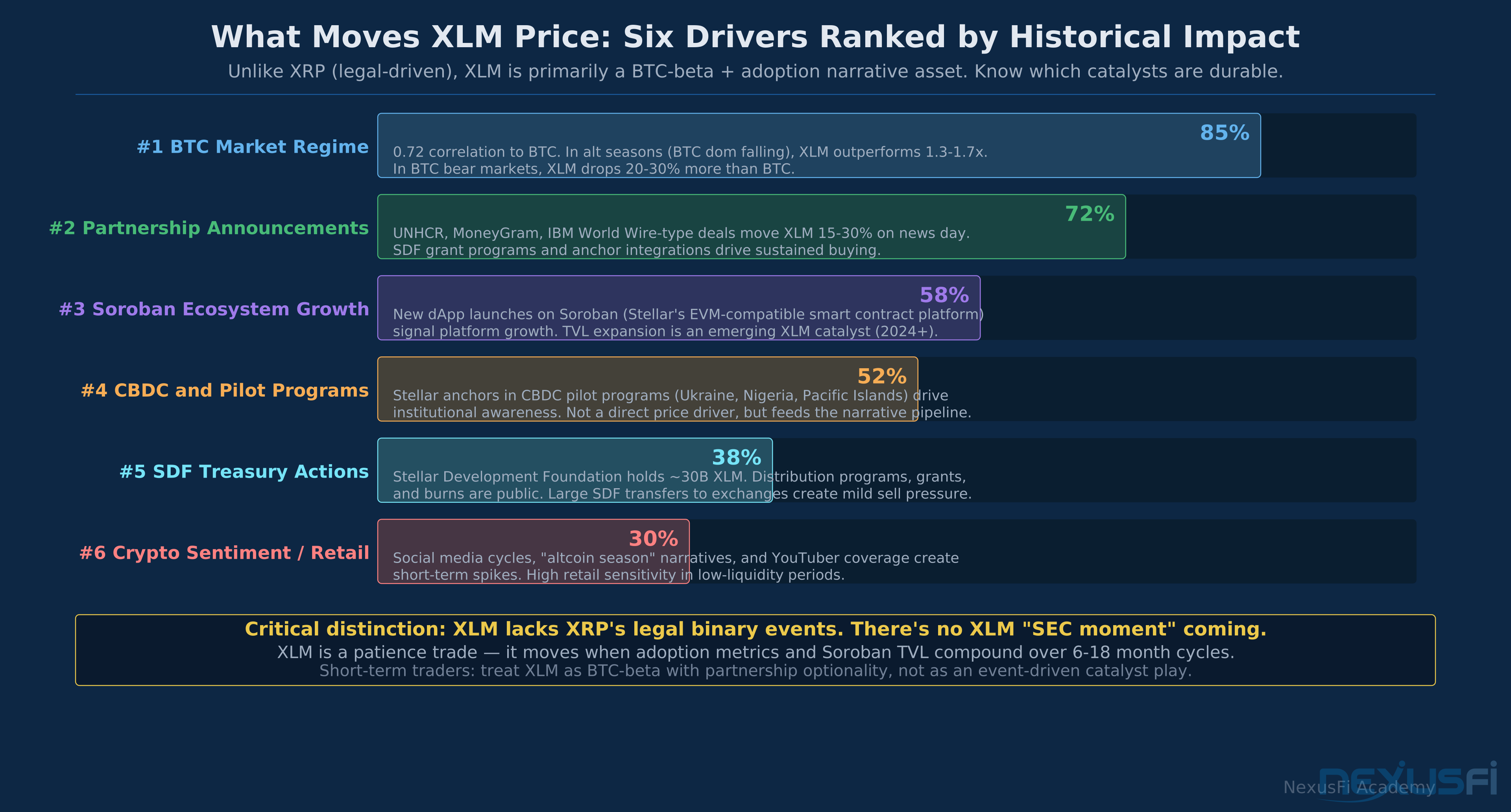
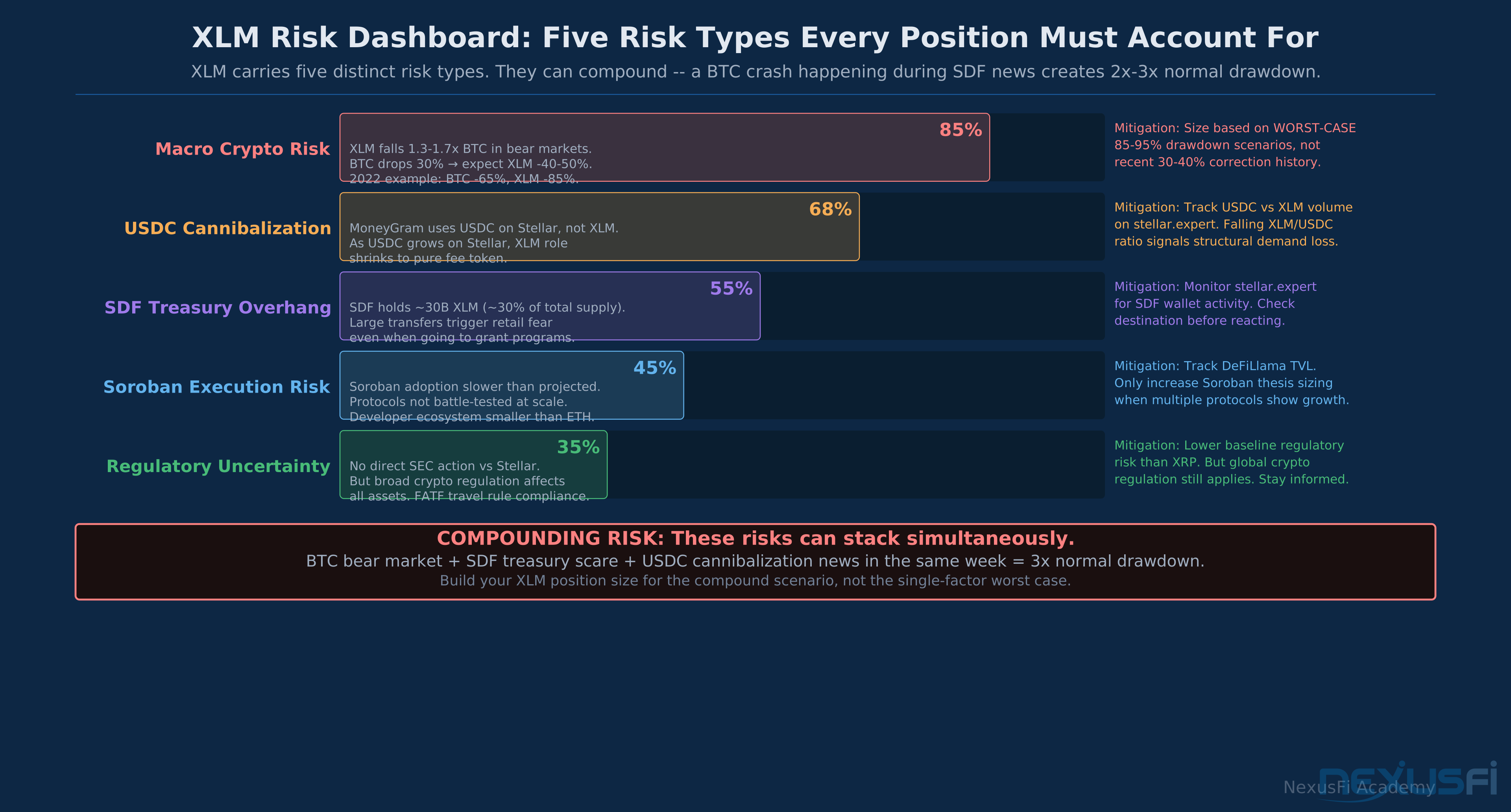
1. BTC Market Regime (Impact: ~85%) Like most altcoins, XLM's dominant driver is broader crypto risk appetite. In altcoin seasons (BTC dominance declining while BTC price rises), XLM typically outperforms BTC by 1.3-1.7x. In BTC bear markets, XLM drops 20-30% more than BTC.[1] This isn't a flaw — it's the nature of being a mid-tier altcoin. Respect the BTC cycle before sizing any XLM position.
2. Partnership and Adoption Announcements (Impact: ~72%) When SDF announces a new anchor integration, UNHCR program expansion, or institutional adoption (like the MoneyGram partnership), XLM moves 15-30% on the news day. These moves are often partially retraced within a week as the initial reaction was pricing in a longer-term trigger. The durable moves come when adoption metrics actually confirm the partnership is generating volume.
3. Soroban Ecosystem Growth (Impact: ~58%) This is the emerging trigger that wasn't in play before 2024. New dApp launches, TVL milestones, and developer activity on Soroban drive XLM sentiment in ways that compound the payments narrative. Track DeFiLlama (Stellar) for TVL data.
4. CBDC and Pilot Programs (Impact: ~52%) Stellar anchors have been involved in CBDC pilot programs in Ukraine, Nigeria, and Pacific Island nations. These announcements don't directly drive XLM demand (CBDCs don't require XLM as a bridge), but they establish Stellar's credibility with governments and central banks, feeding the medium-term adoption narrative.
5. SDF Treasury Actions (Impact: ~38%) Large on-chain transfers from SDF wallets trigger fear responses even when the transfers are programmatic grant distributions. Conversely, announced burns or clear-language transparency reports can provide temporary relief rallies. The market is hypersensitive to SDF's wallet activity relative to what the activity actually means.
6. Retail Sentiment and Crypto Social Cycles (Impact: ~30%) XLM has a retail community that's smaller than XRP's but present. Social media cycles, altcoin season narratives, and coverage from crypto YouTube can drive short-term moves independent of fundamentals. These tend to have lower persistence than adoption-driven moves.
Stellar vs XRP: Two Payments Blockchains With At the core Different Risk Profiles #
This comparison matters because retail often conflates XLM and XRP as "the same trade." They're not. If you hold both expecting them to move together, you're missing the point of both.
Corporate sponsor model:
- XRP: Ripple Labs, a for-profit company with profit incentives and ~38 billion XRP in escrow that they control. SEC scrutiny of insider XRP sales was a years-long overhang.
- XLM: Stellar Development Foundation, a nonprofit with a humanitarian mission. SDF holdings are public and disclosed quarterly. No equivalent regulatory action has targeted SDF.
Target market:
- XRP: Banks, payment companies, institutional corridors. ODL targets the wholesale FX market.
- XLM: Individuals, NGOs, developing market remittances. The UNHCR wouldn't touch XRP for refugee aid.
Smart contracts: XRP's EVM sidechain has limited adoption. XLM's Soroban is integrated natively and is the primary growth thesis alongside payments.
Regulatory risk:
- XRP: The SEC sued Ripple in 2020. The case was partially resolved in 2023 (retail programmatic sales not securities; institutional sales were). Residual legal risk remains for appeals and new enforcement.
- XLM: No SEC action targeting Stellar or SDF. The cleaner regulatory profile is a genuine advantage for US-based institutional allocators.
The cross-correlation trap: XLM and XRP do correlate in broad BTC-driven moves. But during asset-specific events — an XRP court ruling, an XLM UNHCR announcement — they decorrelate sharply. If you're holding both as "payments blockchain exposure," you're probably doubling up on macro correlation while paying double the asset-specific event risk.
How to Trade XLM: Instruments and Venues #
Spot trading is the cleanest approach for most XLM positions. XLM is listed on all major exchanges: Coinbase, Binance, Kraken, Gemini, and most regional exchanges. Liquidity is adequate for retail-to-mid-institutional size. Spreads are tight on the major exchanges (usually sub-0.1% on XLM/USDT).
CME Group launched regulated XLM futures in February 2026 — both standard (250,000 XLM) and micro (12,500 XLM) contracts — joining BTC, ETH, XRP, and SOL in the regulated crypto suite.
Leverage limits: 5x maximum for most XLM strategies. XLM can drop 15-25% in a single session during BTC liquidation cascades. Above 5x, stop placement becomes impractical without also being too far from current price to protect meaningfully.
On-chain DEX: The native Stellar DEX (accessible via Lobstr, Solar Wallet, StellarX) offers zero counterparty risk. Liquidity is thinner than centralized exchanges for large trades.
Funding rates: Check XLM 8-hour funding rates before entering perpetuals. Sustained negative funding signals bearish crowding and potential mean reversion. Sustained positive funding signals crowded longs prone to squeezes.
Four Practical XLM Trading Setups #
These setups reflect how XLM actually moves based on its specific driver profile.
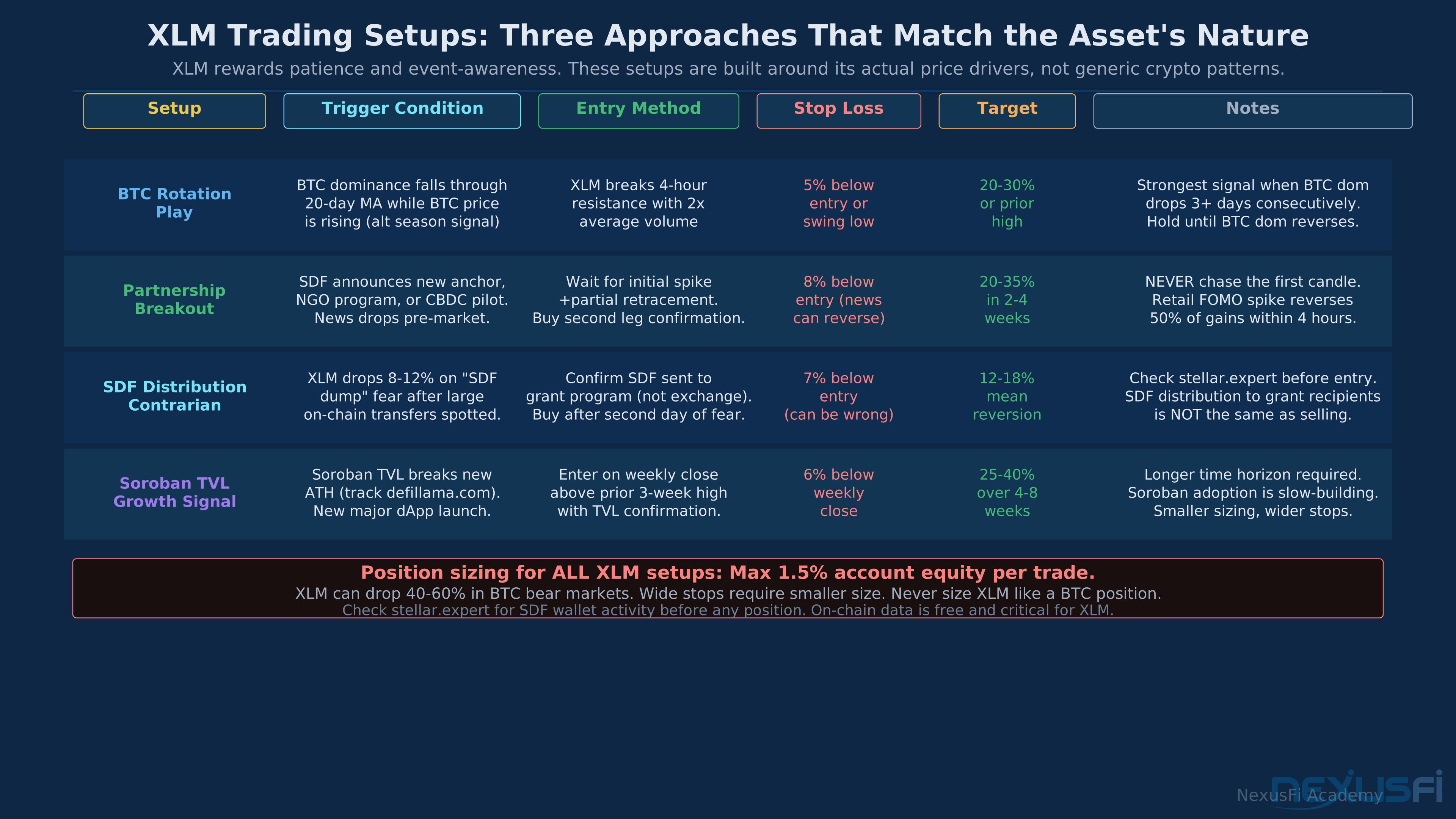
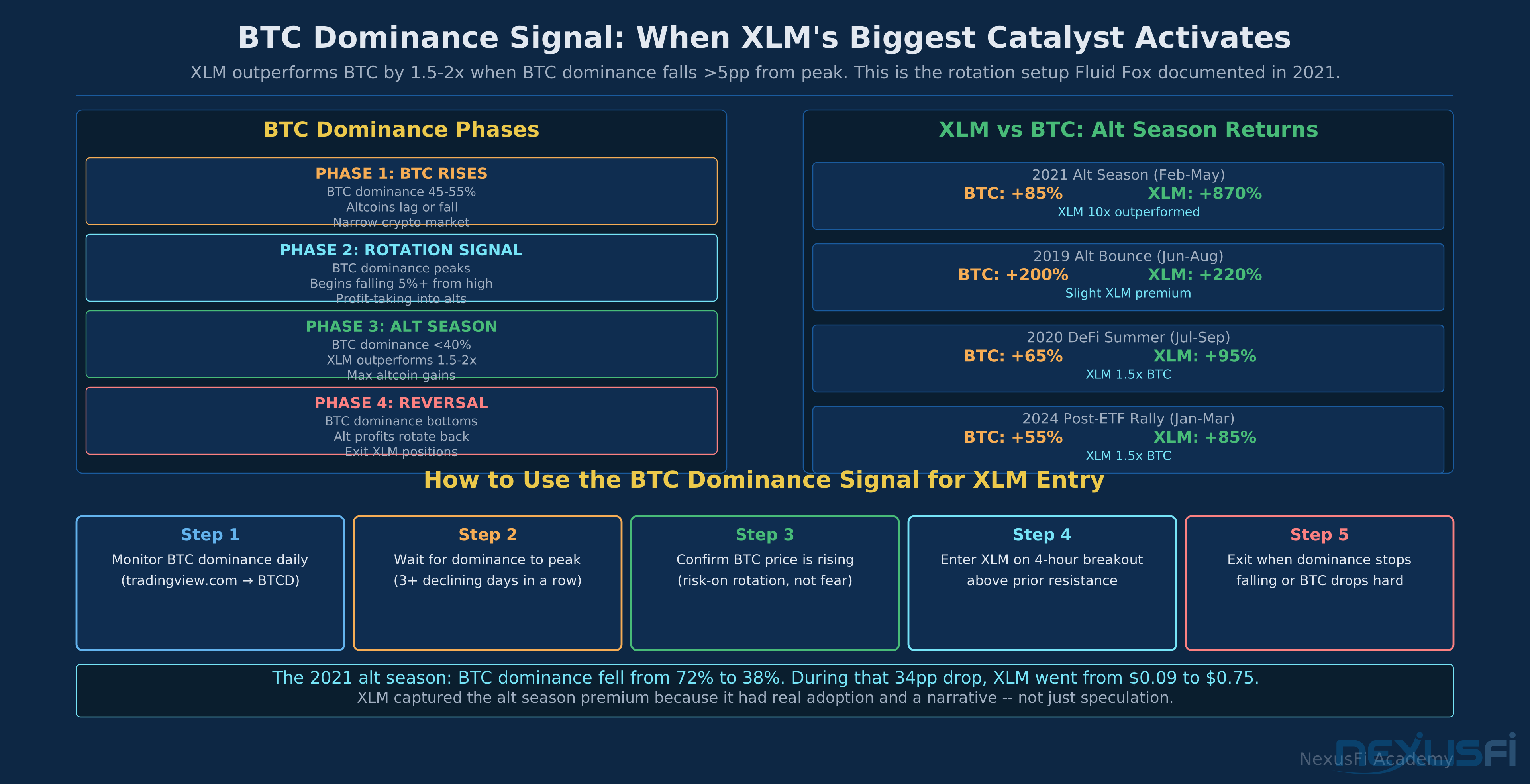
Setup 1: BTC Rotation Play (Highest Frequency) When BTC dominance falls through its 20-day moving average while BTC price is rising, altcoin season is signaled:
- Entry: XLM breaks a key horizontal resistance on the 4-hour chart with volume expansion (2x average)
- Stop: 5% below entry or below the 4-hour swing low, whichever is tighter
- Target: 20-30% gain or prior cycle resistance, whichever is reached first
- Sizing: Up to 1.5% account equity (standard altcoin sizing)
This is the cleanest, most repeatable XLM setup. It doesn't require any Stellar-specific research — just proper BTC dominance reading.
Setup 2: Partnership Breakout (High Conviction, Low Frequency) When SDF announces a new anchor integration, UNHCR program expansion, or significant institutional partnership:
- Wait for the initial spike and 40-50% retracement of that spike
- Entry: Buy when price stabilizes above the pre-announcement level with declining volume
- Stop: 8% below entry (news can be misread; initial moves often reverse)
- Target: 20-35% from the stable entry point over 2-4 weeks
Never buy the first candle on partnership news. The initial spike is retail FOMO. The second leg — if the news is genuine — is institutional positioning.
Be careful about SDF grant announcements. A new developer grant program doesn't directly drive XLM demand. What matters is whether the grant recipients build products that actually generate network transaction volume. The gap between announcement and volume impact can be 6-12 months.
Setup 3: SDF Distribution Contrarian (Occasional) When XLM drops 8-12% on SDF wallet movement fear, check stellar.expert for the destination before acting:
- Exchange deposit addresses: Don't fade — the fear is valid
- Grant recipient wallets: Buy opportunity
- Entry: Day 2 of the fear selloff after confirming destination
- Stop: 7% below entry
- Target: 12-18% mean reversion within 2-3 weeks
Setup 4: Soroban TVL Milestone Play (Emerging) When Soroban TVL breaks a new all-time high with multiple protocols contributing:
- Entry: Weekly close above prior 3-week high with TVL confirmation
- Stop: 6% below weekly close, 1% account equity
- Target: 25-40% over 4-8 weeks
XLM's four setups share one trait: confirmation before commitment. The BTC rotation waits for dominance to actually break. Partnership breakouts wait for the retracement. SDF contrarian waits for wallet destination confirmation. Soroban play waits for weekly close. Entering on anticipation of these signals is how traders get caught in false moves.
Risk Factors: Where the XLM Thesis Breaks Down #
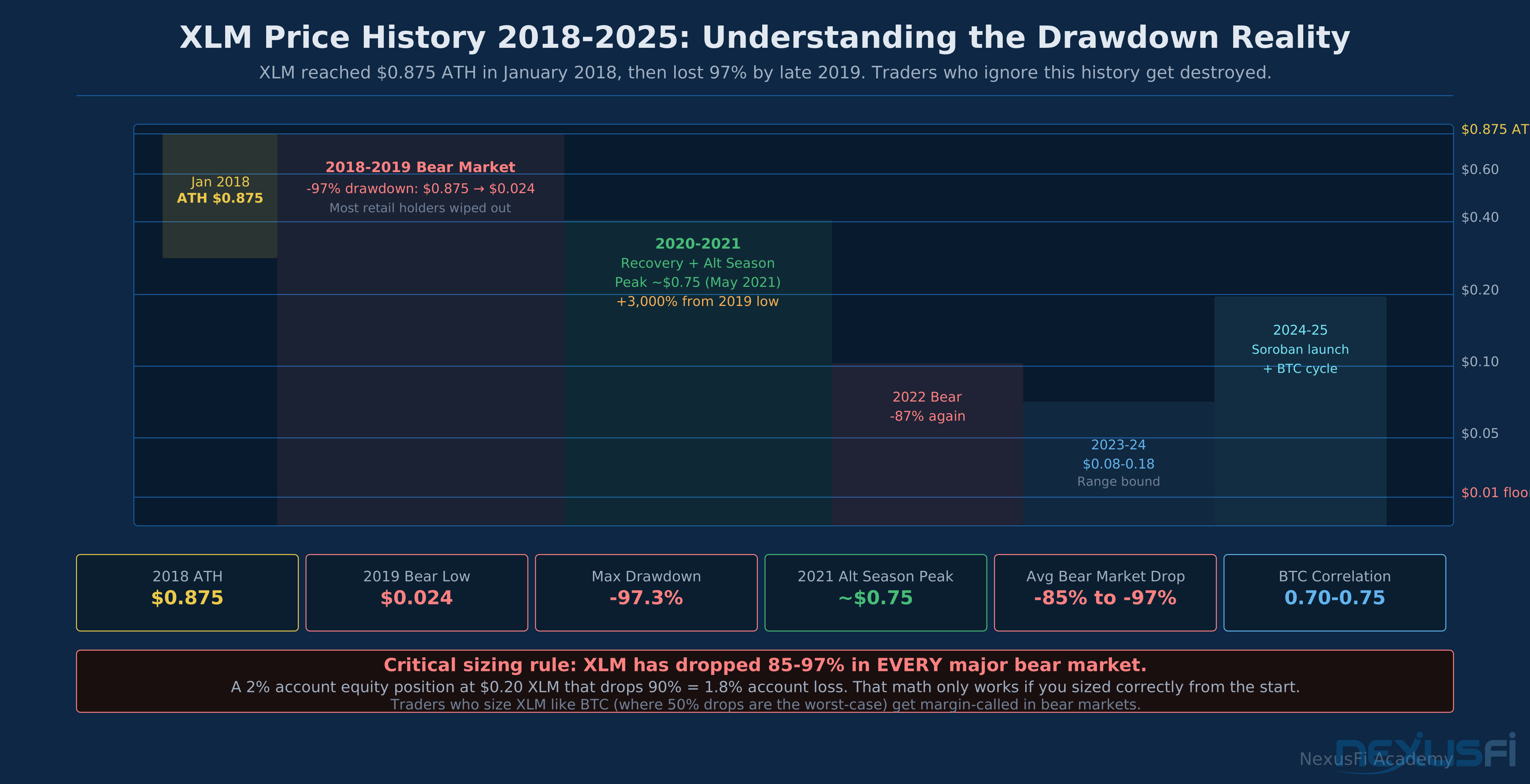
The position sizing principles from traditional futures apply with extra force to crypto. As @jamiej83 explained on NexusFi, understanding your personal drawdown tolerance and defining ruin points before entering is the most important question a trader can answer — and with XLM's 97% historical drawdown, the stakes of that question are higher than most instruments.
USDC cannibalization risk is real. MoneyGram's integration uses USDC on Stellar, not XLM directly. As stablecoins capture more settlement volume, XLM's role shrinks to "fee token" — valuable, but less so than "bridge currency." The XLM appreciation thesis breaks if USDC captures the settlement role entirely.
Soroban adoption is slower than expected. TVL growth in 2024 was gradual despite a technically successful launch. The thesis requires patience measured in years, not quarters — position so.
BTC correlation means brutal drawdowns. XLM dropped 90%+ from its 2018 ATH. The 2021-2022 cycle: rallied to ~$0.75, then fell below $0.10. Ignore this drawdown range and position sizing becomes reckless.
SDF treasury overhang. The market treats SDF's ~30B XLM holdings as a supply overhang, even with transparent quarterly reports showing most distributions go to ecosystem development. This perceived ceiling is partly irrational but persistent.
Competition: Solana, Ripple's AMM features, and dedicated payment protocols compete for the same remittance use case. XLM's humanitarian aid track record is real, but it's not an insurmountable moat.
No institutional trigger on the horizon. Bitcoin's spot ETF (Jan 2024) was a structural shift for institutional access. XLM has no equivalent product in the pipeline — institutional exposure remains via OTC and direct custody.
The most dangerous XLM trade: buying heavily into a "Stellar is going to be the global payments layer" thesis with no defined exit, then holding through a 70-80% drawdown because the thesis is "still intact." The thesis may be intact. Your portfolio may not be. Size your conviction to the asset's actual volatility, not to the quality of the narrative.
XLM in the Broader Crypto Framework #
XLM sits in an interesting position in the crypto taxonomy:
- It's not a store of value (that's Bitcoin)
- It's not a smart contract platform leader (that's Ethereum and Solana)
- It's not a meme coin
- It's not an exchange token
XLM is best classified as a payment-focused blockchain with genuine adoption and an early-stage smart contract ecosystem. For portfolio purposes: BTC correlation 0.70-0.75 in normal regimes (lower on Stellar-specific catalysts), beta 1.3-1.5x BTC moves in both directions. Treat it as a high-beta altcoin position.
Allocation: max 1.5% account equity per trade, standard altcoin risk framework. No leverage unless you have a specific event-driven thesis with a defined binary outcome. Don't size XLM like Bitcoin — the volatility profile is at the core different.
The Bottom Line on Trading Stellar (XLM) #
Stellar is a rare thing in crypto: a project with verifiable real-world adoption, transparent nonprofit governance, and a coherent path from "payments coin" to "smart contract platform." It's not hype — the UNHCR program data is on the blockchain. The MoneyGram partnership has documented volume. The SDF quarterly reports are published.
Trading it well requires three things: respect the BTC correlation (XLM amplifies BTC moves in both directions — size it so), know the Stellar-specific calendar (SDF announcements, UNHCR expansions, Soroban TVL — not court dates), and don't confuse network utility with XLM price appreciation (USDC capturing settlement volume is good for the Stellar network but less directly bullish for XLM).
XLM rewards traders who understand what actually drives it. It punishes those who treat it as a cheaper, faster XRP bet.
The XLM edge is its real adoption base and clean regulatory profile — two things that XRP traders wish XRP had. But adoption doesn't automatically translate to XLM price appreciation if stablecoins absorb the settlement role. The Soroban smart contract layer is the trigger that could change this equation. Track it.
Knowledge Map
Citations
- — Becoming A Better Trader (2021) 👍 7“Alt season is taking longer than I thought it would to arrive. But just look at these charts.. Very bullish IMO. Altcoin marketcap and dominance charts show the potential move.”
- — Becoming A Better Trader (2021) 👍 3“Altcoin dominance is 60% relative to BTC and climbing. Usually when BTC tanks, altcoins go down with it substantially -- 20%-60% losses.”
- — Concerning risk per trade sizing (2012) 👍 18“Position sizing has 2 key elements - number of ticks risked and dollar amount risked. Only YOU know what is optimal for you -- find that out through experience and understanding your psychology.”
- — CME Group Launches Cardano, Chainlink, and Stellar Futures Today (2026)“CME XLM futures: Standard 250,000 tokens, Micro 12,500 tokens. CME facilitated nearly $3 trillion notional in crypto trading in 2025. Micro contracts make XLM accessible to retail-sized accounts.”
- — How much do you know about Bitcoin? (2021) 👍 4“The intrinsic value of crypto lies in its ability to transfer value cross-border over a network without friction and without a trusted third party -- pennies in cost, sub-20-minute settlement.”
- — Killer Instinct and the Home Run Mentality (2011) 👍 8“Fine tune your risk profile by adjusting position for varying volatility levels. Since volatility commonly increases as a trade works out, adding to positions is significantly less efficient than building a full position at the outset.”
- — Money management help please (2013) 👍 10“Your drawdown tolerance defines your position size. If your risk appetite requires drawdown less than 25% at 95% confidence, you can calculate the exact position size -- the math is straightforward.”
- — Risk of Ruin (2012) 👍 13“Position sizing depends on acceptable risk level. The risk of ruin framework tells you exactly how much to bet per trade given your win rate and drawdown size -- essential math for volatile assets.”
- Stellar Development Foundation — How UNHCR Distributes Cash Assistance Through Stellar Aid Assist (2023)
- Neowin — MoneyGram and Stellar launch crypto-to-cash service to boost financial inclusion (2024)
- CME Group — CME Group Launches Stellar XLM Futures (2026)
- Circle — USDC on Stellar Network (2024)