



Block Trade Data in Futures Markets: What It Is, How to Access It, and What It Actually Tells You
Overview #
Most futures traders watch the order book and time & sales the same way every day: they see bids, offers, aggression, sweeps, and the normal mechanics of price discovery playing out in the public limit order book. But a significant portion of futures volume — sometimes the most consequential trades of the day — never touches that order book at all.
Block trades are privately negotiated, large-volume transactions executed off the public exchange and reported after the fact. They represent how institutions actually move size: not by slamming through levels and creating instant market impact, but through negotiated bilateral transactions that transfer large risk positions at a single agreed-upon price. Understanding block trade data — what it means, how to find it, and how to interpret it alongside CFTC large trader reporting — gives futures traders a window into institutional activity that the order book simply cannot provide.
This is not a mystical signal system. Block trade data is real, publicly available (with delays), and the basis for legitimate institutional flow analysis. The challenge is knowing what it actually tells you versus what it appears to tell you — and avoiding the common traps that lead retail traders to over-interpret single data points as directional signals.
What Block Trades Are: The Mechanics #
A block trade in futures is a privately negotiated transaction between two eligible counterparties that meets or exceeds a minimum size threshold set by the exchange. The trade is arranged off the central limit order book (CLOB) — typically through a voice broker, electronic OTC platform, or direct negotiation — and then submitted to the exchange for clearing and public reporting.
The key characteristics that define a block trade:
Private negotiation. The price and quantity are agreed upon bilaterally before the trade is submitted. There is no open-auction mechanism. One party agrees to buy a specific number of contracts at a specific price from a counterparty who agrees to sell.
Exchange reporting. Despite being executed off the order book, block trades are reported to the exchange shortly after execution — typically within 5 to 15 minutes. CME Group's rules specify that block trades must be reported within five minutes for most equity index futures during RTH, and within 15 minutes for other products and extended hours.
Clearing. Block trades clear through the same central counterparty clearing (CCP) infrastructure as any exchange-traded transaction. The trade becomes part of the exchange's official record and open interest.
Minimum size thresholds. Not every large trade qualifies as a block trade. Exchanges set minimum contract thresholds — below which a trade is simply a large order and must go through the order book like any other. Above the threshold, parties can choose the block trade mechanism.
As NexusFi Elite member SMCJB — who actively participates in the block trade market for energy futures — explained in the forum:
"To participate in Block Trades I believe you need to be an ECP (Eligible Contract Participant). While the criteria for this are probably onerous for a retail trader, you don't have to be a large institution. I can and do participate in this market. For CME energy futures the minimum block trade size is 50 lots. On ICE you can block trade Natural Gas trades as small as 25 lots, which given that ICE contracts are a quarter the size of standard NYMEX contracts, means this is equivalent to just 6.25 NG lots!"
-- SMCJB, NexusFi Elite Member
This is an important clarification: block trades are not exclusively the domain of billion-dollar hedge funds. The ECP qualification creates a barrier, but it is not insurmountable for sophisticated traders with sufficient assets. For most retail traders, however, participation is not the goal — data interpretation is.
CME Block Trade Minimum Thresholds #
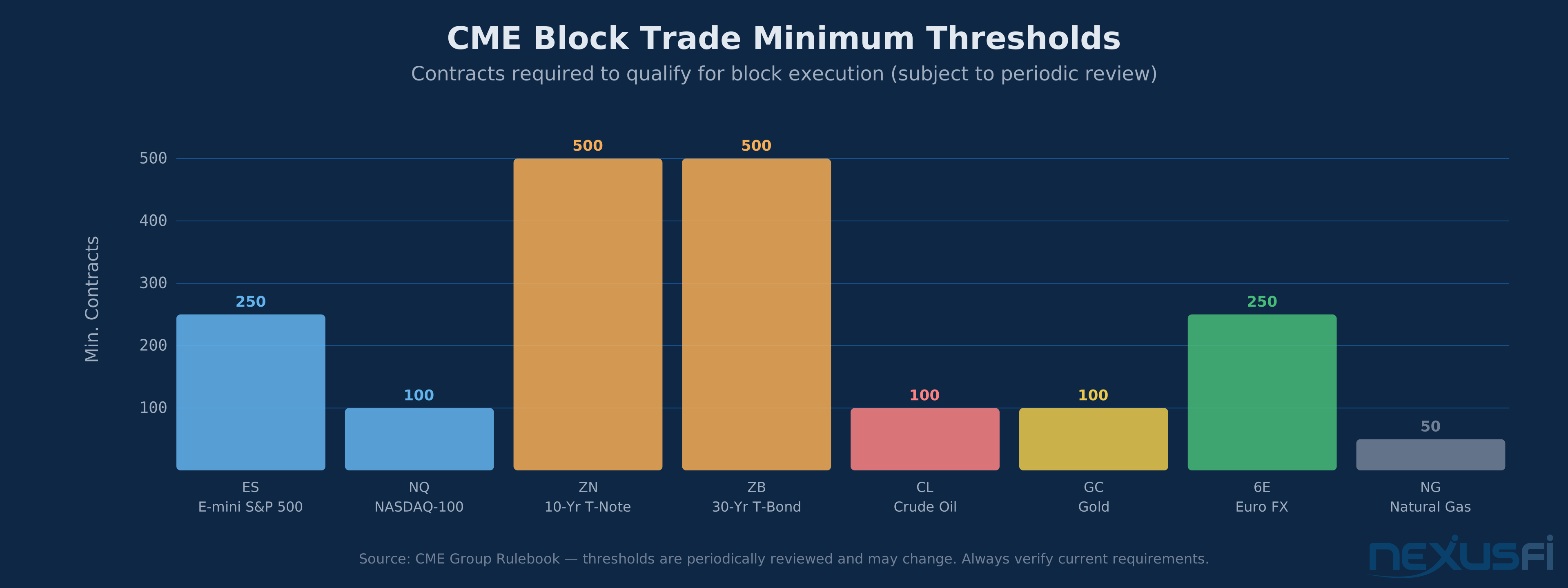
CME Group publishes block trade minimum size requirements for every eligible contract. These thresholds are periodically reviewed and adjusted based on liquidity conditions. The authoritative source is always the CME Rulebook and its block trade minimum size table — not third-party summaries, which may be out of date.
Representative thresholds for major products (subject to change — always verify at CME Group):
| Product | Symbol | Minimum Block Size |
|---|---|---|
| E-mini S&P 500 | ES | 250 contracts |
| E-mini NASDAQ-100 | NQ | 100 contracts |
| E-mini Russell 2000 | RTY | 100 contracts |
| Crude Oil | CL | 100 contracts |
| Natural Gas | NG / HH | 50 contracts |
| Gold | GC | 100 contracts |
| Silver | SI | 50 contracts |
| 10-Year Treasury Notes | ZN | 500 contracts |
| 30-Year Treasury Bonds | ZB | 500 contracts |
| 5-Year Treasury Notes | ZF | 500 contracts |
| Euro FX | 6E | 250 contracts |
| Japanese Yen | 6J | 250 contracts |
| British Pound | 6B | 250 contracts |
The notional value of these minimum thresholds is significant. At 250 ES contracts, a minimum block trade represents roughly $26 million in S&P 500 exposure (at 5200 × $50 per point). At 500 ZN contracts, a minimum Treasury block is approximately $55 million face value. These are not casual trades.
For calendar spreads and other structured products, thresholds may differ from outright positions. Multi-leg transactions are subject to their own rules — in many cases, the spread is treated as a single instrument with its own block threshold.
Why Institutions Use Block Trades #
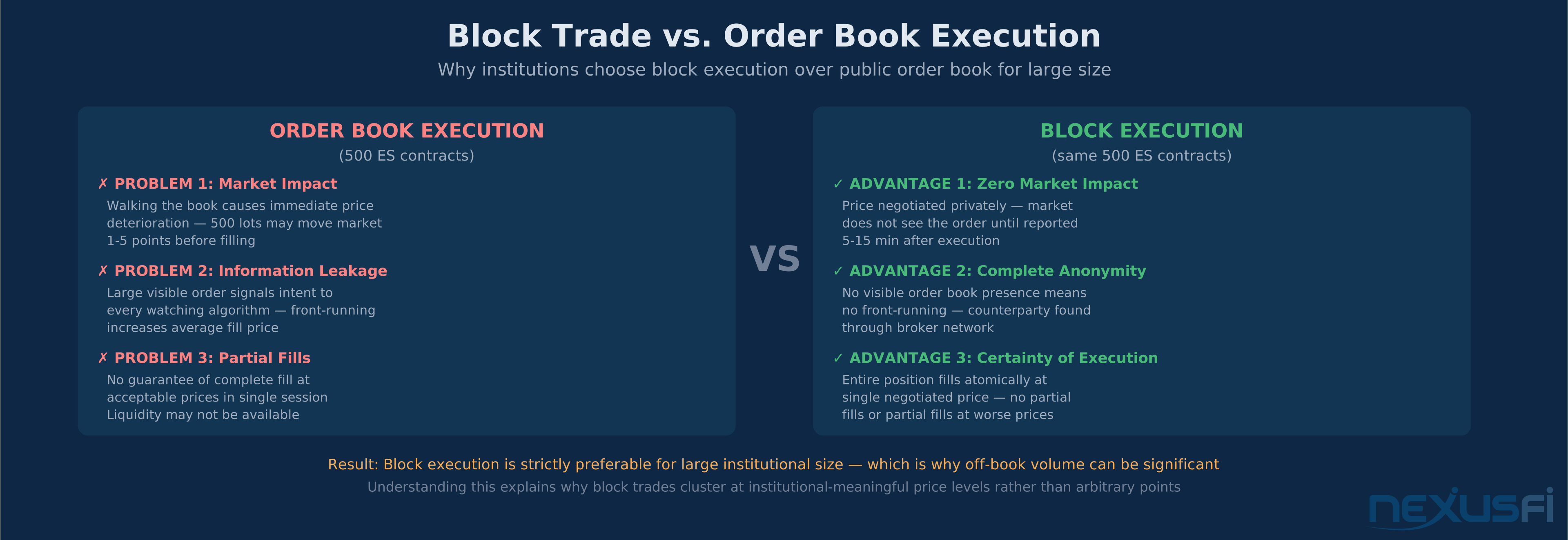
Understanding the institutional motivation for block execution is essential for interpreting the data correctly. Institutions do not use block trades because they are trying to signal their intentions — they use them because the alternative (working through the public order book) creates problems that block execution solves.
The Market Impact Problem #
Every large order placed through the public order book changes the market. A 500-lot market order at the ES offer immediately depletes all offers up to that price and signals aggressive demand to every algorithm watching the tape. This is market impact — the phenomenon where the act of executing changes the price at which you can execute.
For an institution managing a billion-dollar portfolio, market impact is not an abstraction. A few basis points of slippage on a $100 million position is $100,000 in execution cost. Scaled across the portfolio over many rebalances, poor execution practices compound into significant underperformance.
Block trades solve this by taking price discovery off the public order book. Instead of bidding into displayed offers and signaling demand, the institution negotiates a price with a counterparty bilaterally. The public market doesn't see the negotiation — only the reported print, after the fact.
Anonymity and Information Leakage #
Showing a large order in the public order book is the equivalent of posting a billboard that says "I need to buy 500 ES." Predatory algorithms will immediately step ahead, lifting offers faster than the institution can fill, and then sell back to the institution at worse prices. This is front-running in its modern electronic form.
Block trades avoid this by keeping the negotiation private. As NexusFi member Schnook explained:
"These are privately negotiated transactions between large institutional accounts and their brokers. Sometimes these trades have multiple legs, like simultaneously selling ZF to buy a duration-neutral equivalent of ZB. Executing trades like that can get a bit sloppy or expensive if you have several thousand lots to do per side and need to maintain hedge ratios, so that's when you just pick up the phone and call your broker to get it done quickly and efficiently at one price."
-- Schnook, NexusFi Elite Member
Execution Efficiency for Complex Structures #
SMCJB's description of his block trade activity illustrates another major use case — executing complex spread structures that would be operationally difficult or impossible to do on-exchange at a single price:
"Due to producer hedging in the crude oil markets... there is a strong demand for these structures as they are very difficult to execute on exchange. Hence somebody may quote the CL Z7-M8-Z8 10c at 11c. If I was to sell 50 lots of that at 10c, I would be selling 50 CLZ7 at 64.34, buying 100 CLM8 at 63.84, and selling 50 CLZ8 at 63.44."
A butterfly spread across three expiry months would require three separate orders in the order book, with no guarantee of simultaneous execution at the intended ratios and prices. Through the block market, this executes atomically: one negotiated price, all legs filled simultaneously.
This is why the majority of block trades in the energy markets fall into three categories, per SMCJB: large outright positions that would move the market, complex spread structures that are difficult to execute electronically, and calendar month average swaps and other OTC-style products that have always traded over-the-counter.
The Block Trade Execution Workflow #
Understanding how block trades actually get done clarifies why the public tape shows what it shows — and what the reporting delay means for interpretation.
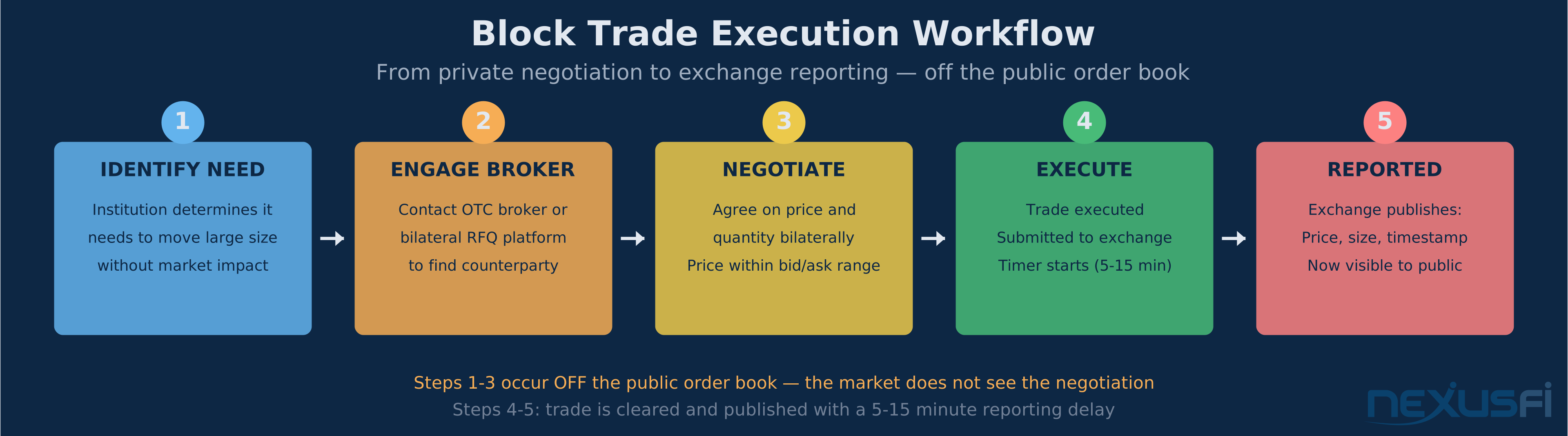
Step 1: Identify the need. The institution determines it needs to execute a large position — a rebalance, a hedge, a strategy implementation, or an end-of-month adjustment.
Step 2: Engage the broker network. Rather than hitting the public order book, the institution contacts an OTC broker or uses a bilateral electronic platform to find a counterparty. These broker networks maintain relationships with parties on both sides of common trades — knowing who wants to sell natural gas strips while others want to buy them.
Step 3: Negotiate. Price and quantity are negotiated, often verbally ("voice brokering") or through an electronic request-for-quote (RFQ) system. The negotiated price is typically within the current bid-ask spread of the public market, though it may be at a slight premium or discount depending on the counterparty's motivation.
Step 4: Execute and report. Once both parties agree, the trade is executed and submitted to the exchange for clearing. The reporting timer starts at execution — parties have 5 to 15 minutes (depending on product and session) to complete the submission.
Step 5: Public reporting. The exchange publishes the block trade: instrument, price, quantity, execution time. This appears in official data feeds and is visible on the CME website's block trade tool.
The reporting delay is critical for interpretation. By the time a block trade becomes visible to the public, the negotiation has already concluded, the position has already changed hands, and the market may have already moved. This is not a real-time flow signal — it is a lagging record of a decision that was already made.
Finding and Accessing Block Trade Data #
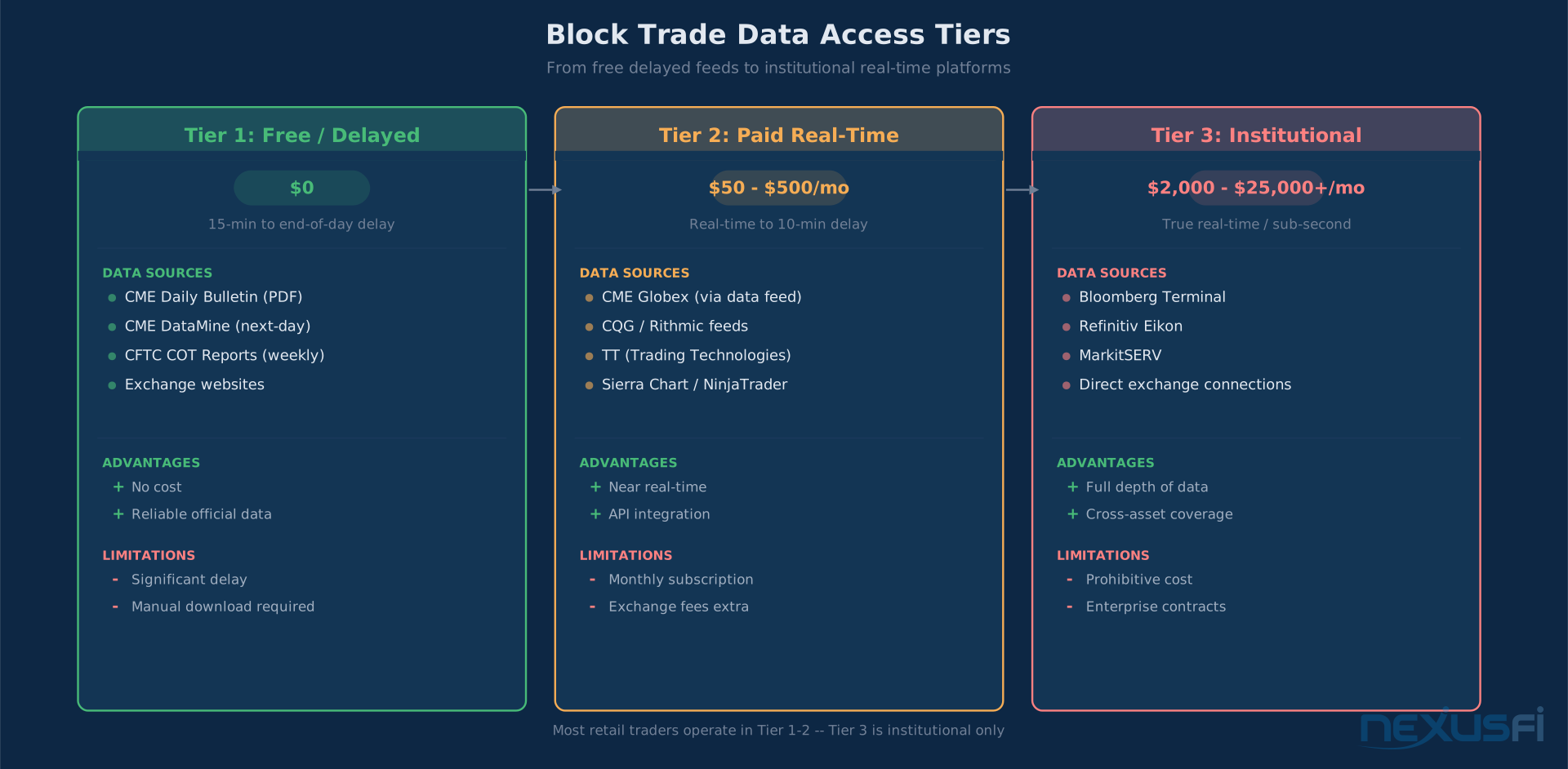
CME Group provides block trade data through multiple channels. Access varies by whether you need real-time data, delayed data, or historical records.
Official CME Sources #
CME Block Trade Tool: CME Group maintains a web-accessible tool showing recent block trades by product. This is delayed (typically 30 minutes or more) but free and covers all CME-eligible products. Traders can filter by product, date range, and trade size.
CME Market Data Platform: Real-time or near-real-time block trade data is available through CME's official market data subscriptions. This is institutional-grade data with associated costs.
Clearport: CME's OTC clearing facility (Clearport) processes and publishes data on cleared swaps and block trades. For energy products especially, Clearport volume and block trade data provides insight into OTC market activity.
Third-Party Data Vendors #
Most professional market data vendors flag block trade activity in their time & sales feeds:
- Bloomberg Terminal: Real-time block trade markers on futures time & sales; historical data available
- Refinitiv (LSEG): Similar coverage with integration into Eikon and Workspace
- CQG: Block trade flags integrated with standard futures data feeds
- Bookmap: Visual order flow tool that identifies large prints and can highlight off-book activity
For retail-accessible analysis platforms with block-oriented features:
- FlowAlgo: Specializes in unusual options and futures flow, including block-identified prints
- Tradytics: Aggregates institutional flow data including block trade activity
What to Look For in the Data #
When working with block trade data, capture these key fields:
| Field | What It Tells You |
|---|---|
| Instrument | Which contract and expiry |
| Timestamp | When the trade was executed (not reported) |
| Size (contracts) | How large relative to the threshold |
| Price | Where the block was negotiated |
| Trade type | Outright, calendar spread, inter-commodity spread |
| Direction indicator | Buyer-initiated vs. seller-initiated (often unavailable) |
The direction indicator is the most critical field — and the one most often missing. Many block trade datasets do not cleanly flag whether the initiating party was a buyer or seller. Without this information, a 500-lot ES block could be bullish accumulation or bearish distribution, and you genuinely cannot tell from the print alone.
As the NexusFi community noted in discussing large institutional trades:
"Due to the way CME reports transactions, it's largely irrelevant whether a large trade is shown as a bid or an offer transaction. For a large trade, you need to look at what happens after, not the actual print."
-- josh, NexusFi Forum
This insight is fundamental. The block print is the evidence that a large transaction occurred. The meaning of that transaction only becomes interpretable through subsequent price action.
CFTC Large Trader Reporting: The Weekly Positioning View #
Block trade data gives you a window into when large size changes hands on a transactional basis. CFTC Large Trader Reporting gives you a complementary view of who holds what on a weekly basis. Neither is complete without the other.
Commitments of Traders (COT) Reports #
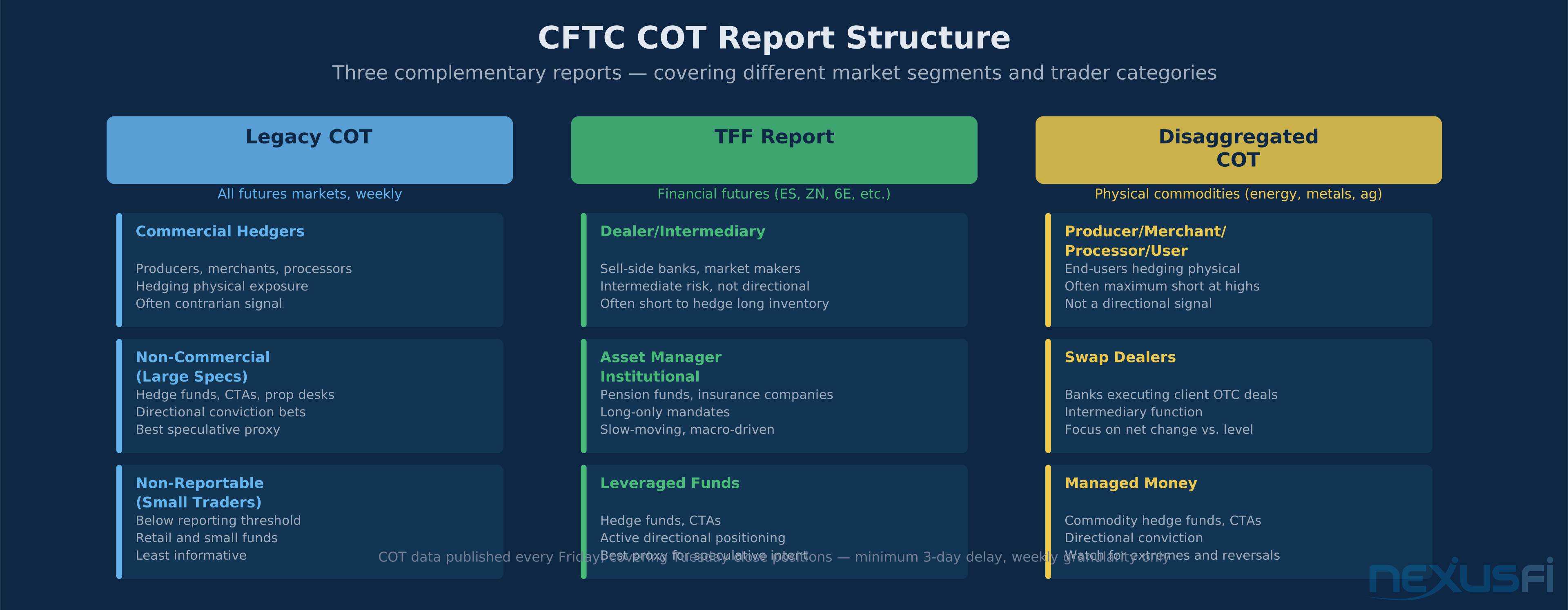
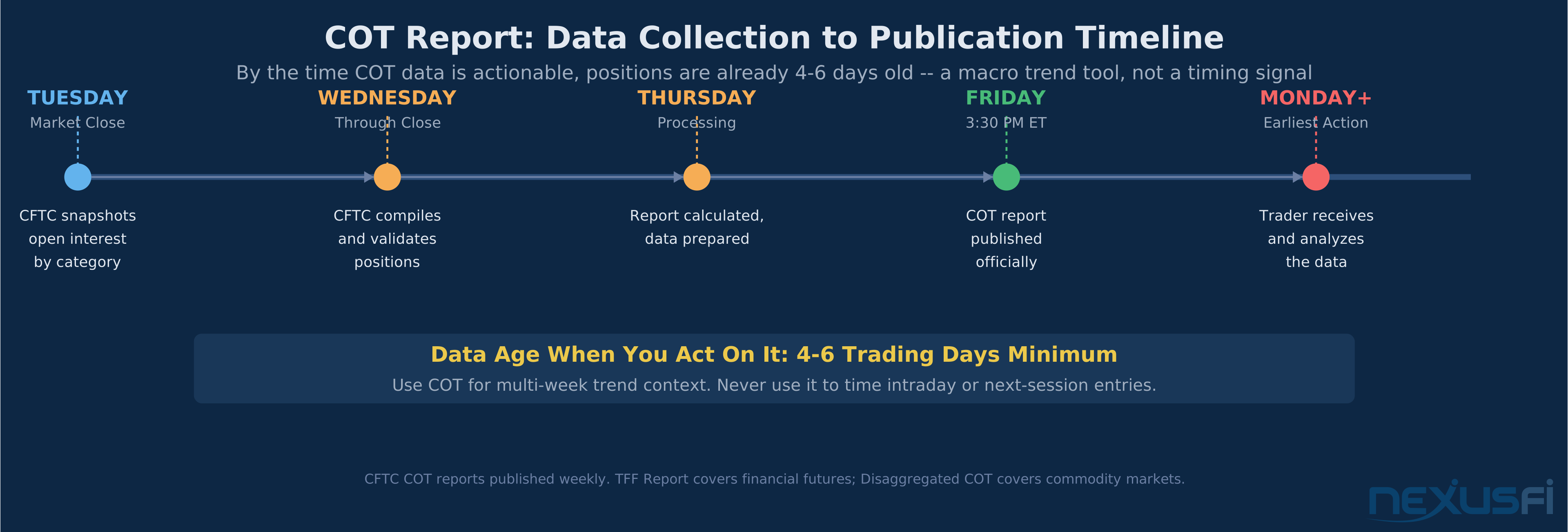
The CFTC publishes several versions of the COT report every Friday, covering positioning as of the prior Tuesday close. The reports break open interest into trader classification buckets:
Legacy COT Report (the original):
- Commercial hedgers: Companies using futures to hedge physical exposure (agricultural producers, energy companies, financial institutions hedging balance sheet risk)
- Non-commercial (large speculators): Hedge funds, CTAs, proprietary trading firms, and other large non-hedging traders
- Non-reportable positions: The residual — smaller traders below reporting thresholds
Disaggregated COT Report (commodity markets): Provides more granular breakdown for physical commodity markets:
- Producer/Merchant/Processor/User
- Swap Dealers
- Managed Money (hedge funds, CTAs)
- Other Reportables
Traders in Financial Futures (TFF Report): Specific to financial futures (equity index, currency, interest rate):
- Dealer/Intermediary (sell-side firms, intermediating risk)
- Asset Manager/Institutional (long-only funds, insurance companies)
- Leveraged Funds (hedge funds, CTAs with leverage)
- Other Reportables
Reporting Thresholds #
The CFTC requires large trader reporting from entities holding positions above specified thresholds — for example, 250 contracts for ES, 350 contracts for ZN. Traders below these thresholds fall into the "non-reportable" category. The categorization represents a snapshot of positioning, not the full picture of who is trading.
Key Interpretive Principle: COT Is Positioning, Not Transaction #
This distinction matters enormously. COT tells you net positioning by trader category — how much, in aggregate, each category is long or short. It does not tell you:
- When specific positions were established
- At what price positions were entered
- Whether positions are being actively managed or passively held
- Whether positions represent directional bets or hedges
The commercial category is especially prone to misinterpretation. Heavy commercial short positioning in agricultural futures often reflects producers locking in forward sales at profitable prices — not a bearish forecast. Interpreting commercial shorts as "smart money is bearish" misunderstands the hedging function entirely.
As NexusFi member Fat Tails observed in a forum discussion on COT:
"The COT report is extremely useful, as it shows the market positions of different groups of traders. You want to know what the other's are doing."
-- Fat Tails, NexusFi Elite Member
The caution embedded in that framing — "what the others are doing" — is appropriate. COT shows you the composition of the market's open interest. Whether that composition is bullish, bearish, or neutral requires context that COT alone cannot provide.
Three CFTC Reports: Which to Use #
| Report | Markets | Best For |
|---|---|---|
| Legacy COT | All futures | Quick commercial vs. speculator positioning overview |
| Disaggregated COT | Physical commodities (energy, metals, agriculture) | Understanding hedger vs. managed money dynamics |
| TFF Report | Financial futures (equity index, FX, interest rate) | Understanding asset manager vs. leveraged fund dynamics |
For ES futures traders, the TFF report is most directly relevant: it separates asset managers (pension funds, insurance companies with long-only mandates) from leveraged funds (hedge funds, CTAs making active directional bets). A sustained buildup in asset manager longs with neutral leveraged fund positioning tells a different story than a squeeze in leveraged fund shorts.
Combining Block Trade Data with COT: A Practical Framework #
The most powerful use of institutional data is combining block trade analysis (tactical, intraday) with COT positioning (strategic, weekly). Neither is complete alone; together, they form a more coherent picture.
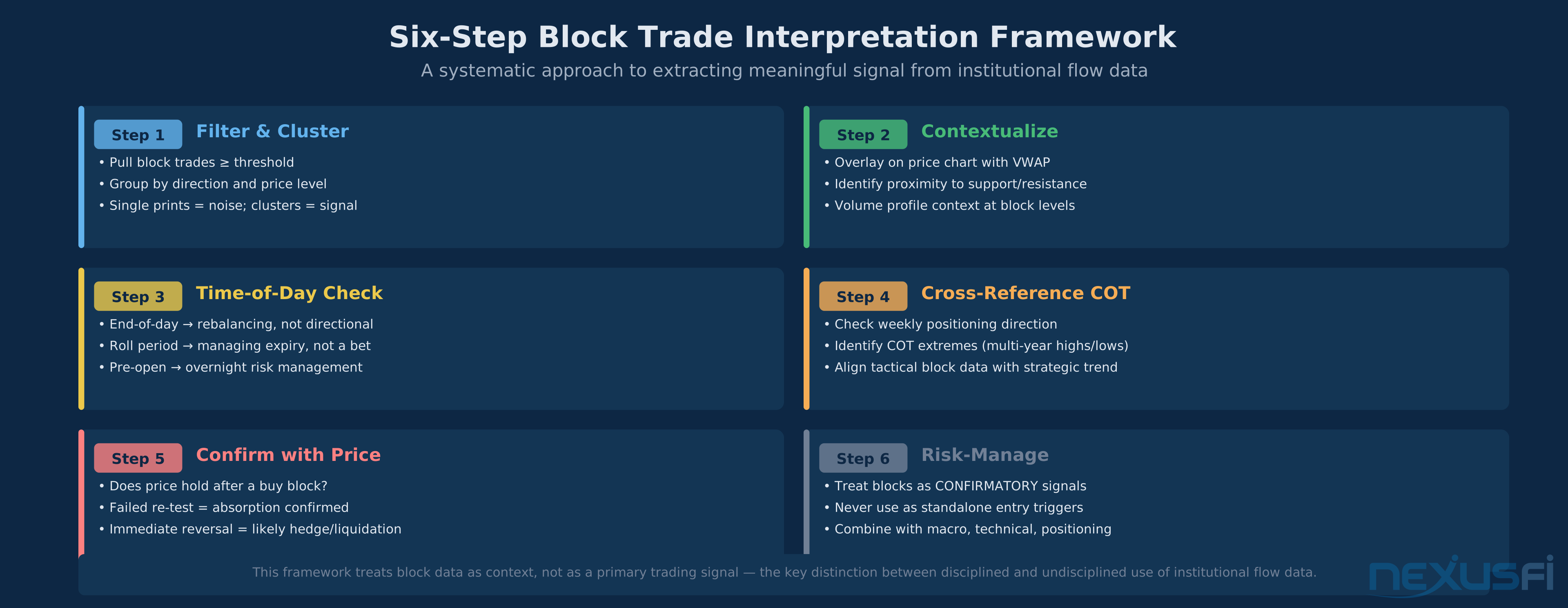
The Six-Step Interpretation Workflow #
Step 1: Filter and cluster block trades. Pull block trade data for your instrument over a meaningful period (at minimum, the prior two weeks). Filter for trades at or above the minimum threshold. Cluster by price level and direction (where direction is available). Single isolated block trades are noise. Repeated blocks at similar price levels, especially on the same side, begin to suggest intent.
Step 2: Contextualize with price structure. Overlay the block trade timestamps and prices on your chart. Note whether blocks are occurring:
- At established support or resistance levels
- Near VWAP or key volume nodes from the volume profile
- In the context of trend continuation or potential reversal
- During specific market sessions (RTH vs. overnight)
A cluster of large block buys at a volume node that coincides with a support level has different implications than the same blocks occurring in the middle of a trending market.
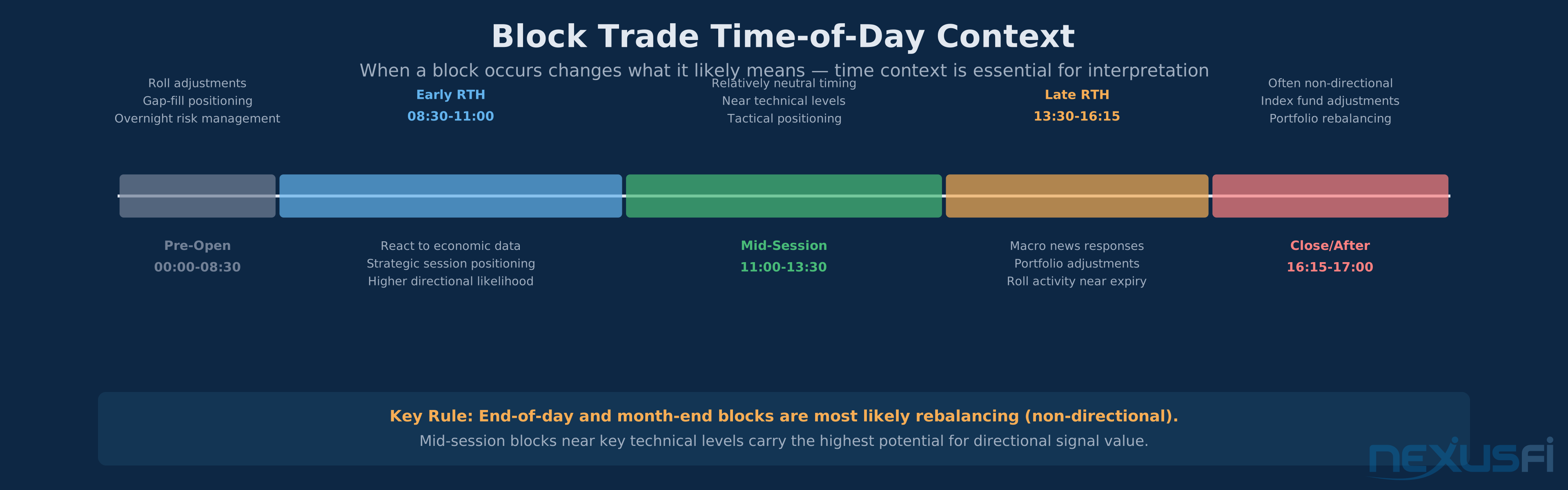
Step 3: Apply the time-of-day filter. This is critical and consistently underappreciated:
- End of day / end of month blocks: These frequently represent portfolio rebalancing — index funds adjusting to track their benchmarks, pension funds rebalancing to target allocations. These are often not directional bets at all.
- Pre-open and early RTH blocks: May represent overnight risk management, gap fills, or strategic positioning for the day's anticipated move.
- Mid-session blocks: More likely to reflect tactical positioning around known catalysts or technical levels.
- Roll period blocks: During quarterly futures rolls, large block activity often reflects the roll itself, not directional conviction.
Step 4: Cross-reference with COT positioning trends. Check the most recent TFF (for financial futures) or Disaggregated COT (for commodities). Look for trend direction in relevant categories:
- Is managed money (leveraged funds in TFF) building net long or net short positions?
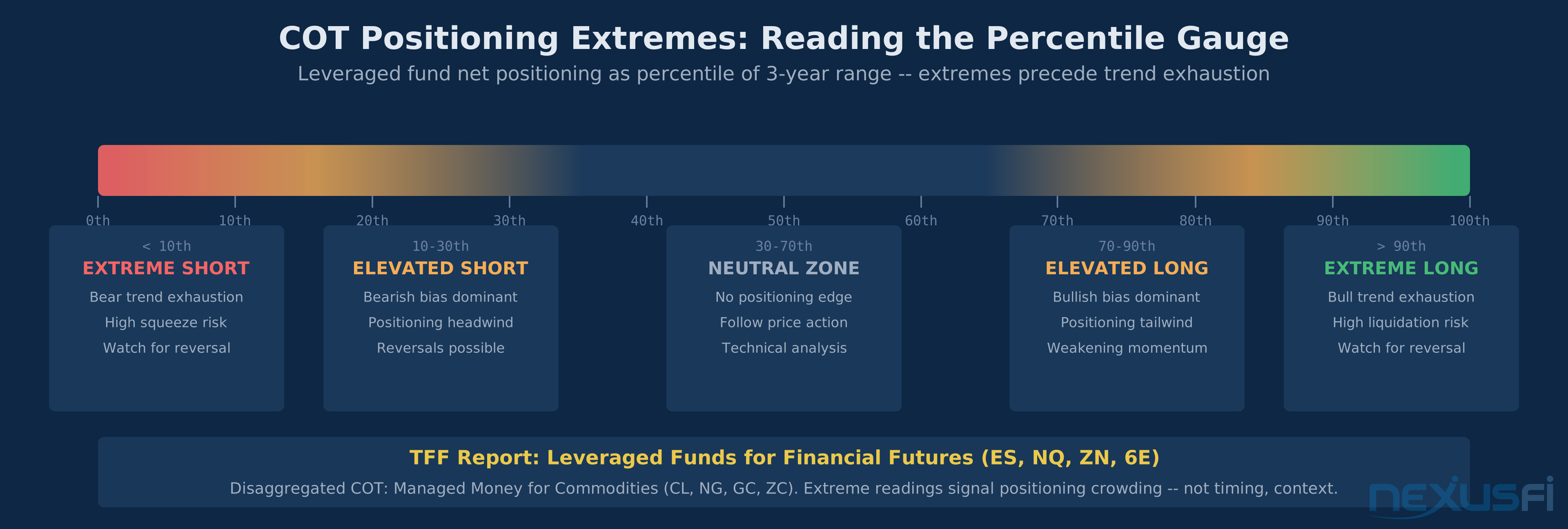
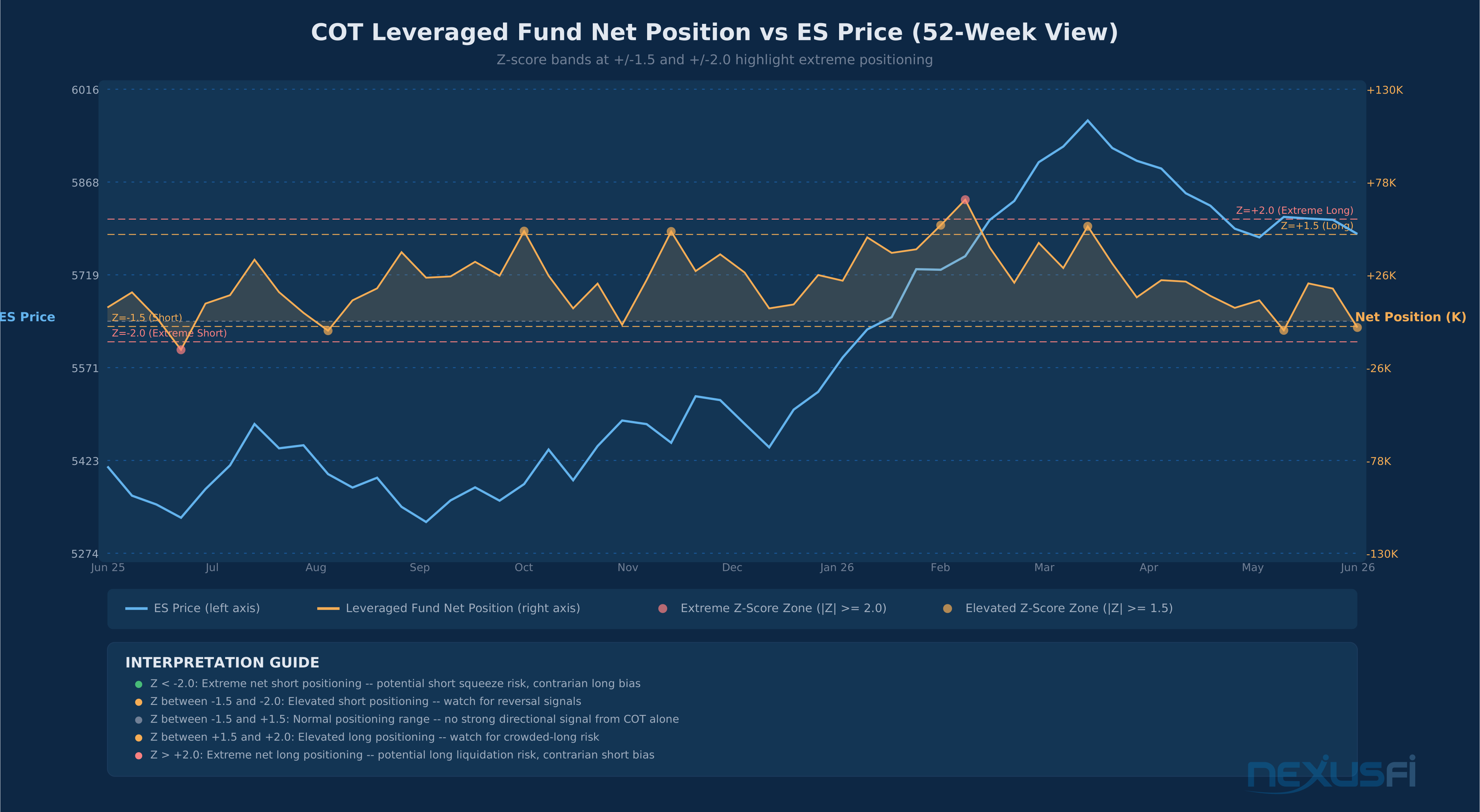
- Is there a COT extreme — net positioning at multi-year highs or lows?
- How does current positioning compare to prior peaks that coincided with market reversals?
Block trade clusters that align with the direction of COT positioning changes carry more weight than blocks that run counter to the weekly positioning trend.
Step 5: Evaluate subsequent price behavior. This is the most important step and the one most often skipped. After a cluster of block buys at a specific price level:
- Does price hold above that level in subsequent sessions?
- Do sellers attempt to break through and fail?
- Does volume at that level contract as price moves away?
These are the signs of "price acceptance" — the indication that the block activity represented genuine absorption of supply (for buy blocks) or distribution into demand (for sell blocks). Blocks that lead to immediate price reversal against the block direction are often hedges or liquidations, not directional accumulation.
Step 6: Risk-manage appropriately. Treat institutional flow analysis as confirmatory context, not as a primary entry signal. The block print is a lagging indicator — by the time it's public, the institution has already completed its transaction. Using blocks to confirm existing analysis (technical, macro, positioning) is appropriate. Using blocks as standalone entry signals is not.
Common Pitfalls and Misinterpretations #
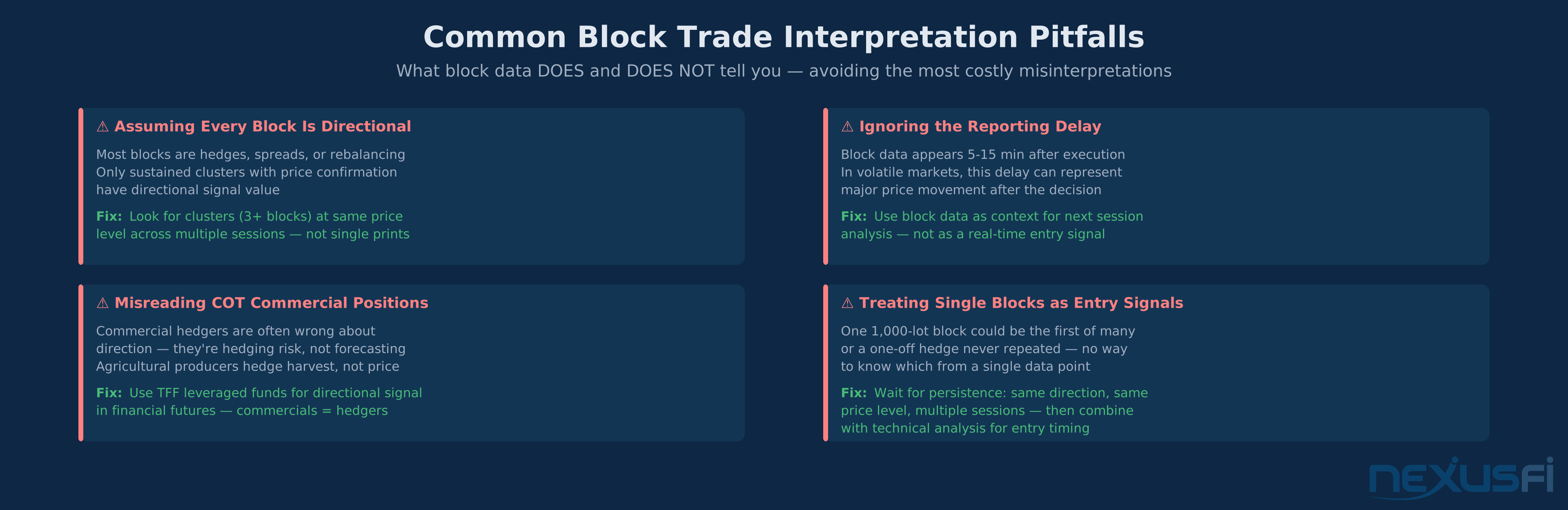
Pitfall 1: Assuming Every Block Is Directional #
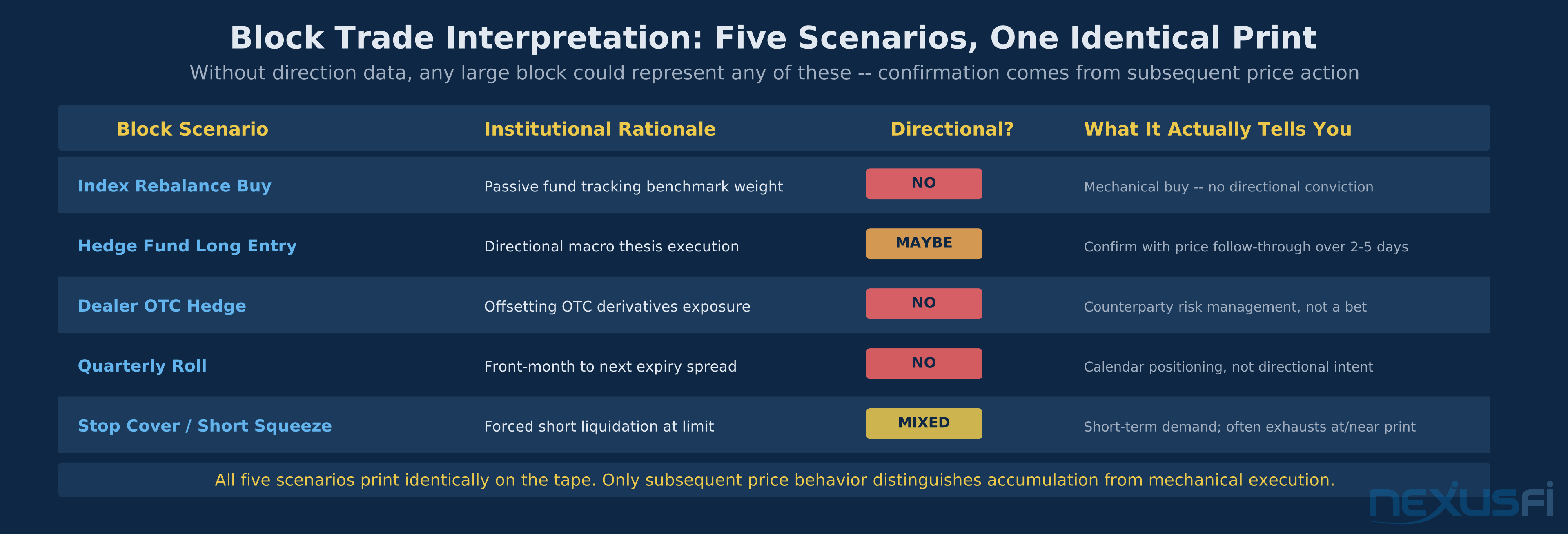
This is the most common mistake. A 500-lot ES block might represent:
- A pension fund rebalancing after equity outperformance
- A hedge fund covering a short position and establishing a long
- A dealer hedging an OTC derivatives position
- A cross-exchange spread being exchanged between NYMEX and another venue
- An institution closing an expiring position and rolling to the next front month
All five scenarios produce an identical block trade print. The data alone cannot tell you which one it is. SMCJB made this point explicitly in the NexusFi forum:
"The vast majority of Block Trades will be trades that are difficult to execute electronically, which means they will either be for large size, or in a less liquid product."
-- SMCJB, NexusFi Elite Member
Many blocks — by volume — are spread trades and hedges, not outright directional bets. Treating every large print as a bullish or bearish signal will generate far more false positives than actionable signals.
Pitfall 2: Ignoring the Reporting Delay #
Block trades appear in public feeds 5-15 minutes after execution. In a volatile, fast-moving market, price can travel much in 15 minutes. A block buy at $4,200 ES that appears in your data feed 10 minutes later, with ES now trading at $4,195, may already be underwater by the time you see it. Using delayed block trade data as a "front-running" signal for real-time entries misunderstands the data's temporal relationship to the market.
Pitfall 3: Over-Weighting Single Prints #
One block trade, even a very large one, is insufficient evidence of institutional intent. Institutions execute large positions over time, in multiple transactions. A single 1,000-lot block could be a one-off hedge or the first of many transactions in a developing position. Only sustained, repeated block activity in the same direction and at similar price levels begins to constitute meaningful evidence of institutional positioning.
Pitfall 4: Confusing COT Categories #
The commercial category in the Legacy COT report is often read as "smart money" positioning. This is incorrect for most markets. In agricultural futures, commercial shorts are grain elevators and farmers locking in prices for their harvest — they're hedging, not predicting bearish price action. In energy, commercial hedging often represents airlines buying jet fuel futures or producers selling forward production. The commercial position reflects hedging demand, not directional conviction.
For financial futures, the TFF report's leveraged funds category is a better proxy for directional speculative positioning than "non-commercial" in the legacy report.
Pitfall 5: Expecting COT to Time Entries #
COT is weekly data, covering a Tuesday snapshot published on Friday. By the time you act on COT information, it is four days old. Major position changes can occur in a single session. COT is a macro trend indicator — useful for understanding multi-week positioning dynamics — not a tactical timing tool for intraday or even short-swing entries.
Practical Data Analysis: Building Your Block Trade Workflow #
Minimum Required Infrastructure #
To work meaningfully with block trade data, you need:
- Access to block-qualified trade data: Either via CME's website (delayed), a broker platform that flags large prints, or a third-party service (FlowAlgo, Bookmap, etc.)
- A way to filter by threshold: Trades below the block minimum are not block trades — filtering by size ensures you're looking at the right category
- Historical depth: Minimum two weeks of data for context; 90 days for seasonal or roll-pattern analysis
- A price chart with context overlays: VWAP, volume profile, key support/resistance levels, and open interest changes
Building the Daily Block Trade Summary #
At the start of each session, pull the prior session's block trade data for your primary instrument:
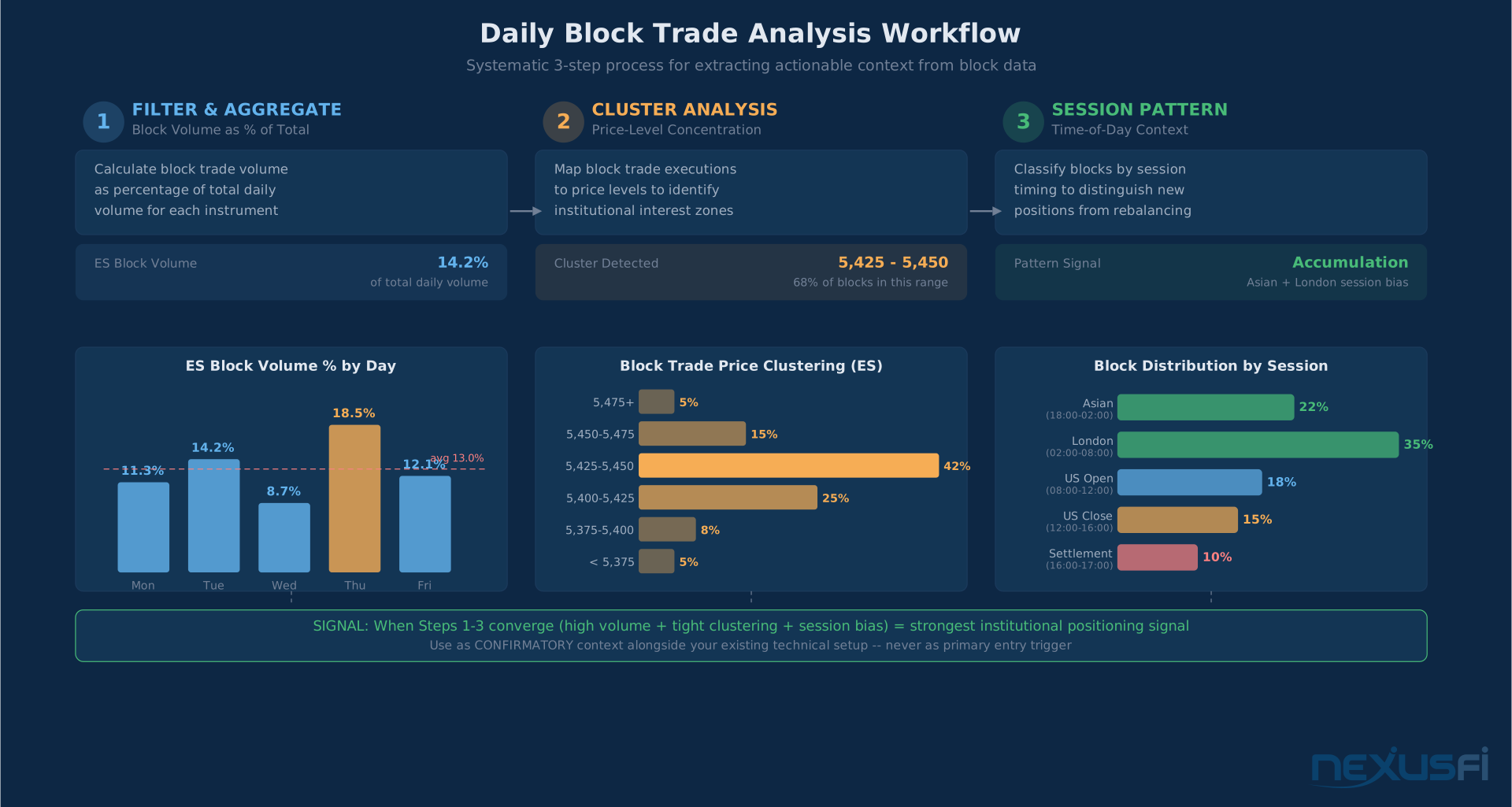
- Count total block volume vs. exchange volume (block as percentage of total)
- Identify any unusually large or repeated block prints
- Note the price levels where block activity concentrated
- Flag any blocks that occurred outside normal timing patterns (odd hours, pre-open)
High block-to-total-volume ratios may indicate institutional repositioning. Low ratios suggest normal retail-dominated price discovery. Neither is naturally bullish or bearish — but the ratio shifts provide context.
Weekly COT Analysis Process #
- Download the latest TFF report (for financial futures) or Disaggregated COT (for commodities)
- Track the weekly changes in managed money / leveraged fund net positioning
- Calculate the current positioning as a percentile of the historical range (Z-score approach)
- Identify any approaching extremes — multi-year highs or lows in speculative positioning often correlate with trend exhaustion
Combine the weekly COT trend with the daily block trade activity to form a positioning narrative for your trading.
What Block Data Actually Tells You: An Honest Assessment #
Block trade data and CFTC large trader reporting are genuinely useful tools for understanding institutional activity in futures markets. But the word "understanding" is key — this data improves your contextual awareness, not your entry precision.
What block data tells you:
- Large transactions occurred at specific prices and times
- Institutions were active in a product during a given period
- Certain price levels attracted significant institutional attention
What block data does not tell you:
- Whether the blocks were bullish or bearish in intent
- Whether the institutions profited or lost on those trades
- When or if price will reach a target related to those blocks
- Whether similar activity will continue in the same direction
The most disciplined use of institutional flow data treats it as a supporting layer of market context — one that, when aligned with strong technical setups and confirmed by subsequent price behavior, increases confidence in an existing thesis. It is not a system for generating trades, and traders who use it as one will find it generates more confusion than clarity.
NexusFi member FulcrumTrader's perspective on exchange transparency captures the right attitude:
"The more transparency in the markets the better. I would actually prefer the CME report the reality of all trades down to the most granular level."
-- FulcrumTrader, NexusFi Elite Member
More transparency is valuable precisely because it requires more careful interpretation. Block trade data and COT reporting are the most transparent windows currently available into institutional futures activity. Using them well requires understanding their limitations as clearly as their insights.
Summary #
Block trade data gives futures traders access to a layer of market activity that never touches the public order book. These privately negotiated, exchange-reported transactions represent how institutions move large positions: at negotiated prices, with reduced market impact, through broker networks that match natural counterparties. CME block trade data is publicly available (with delay) through the CME website and various market data platforms.
CFTC large trader reporting — especially the TFF report for financial futures and the Disaggregated COT for commodities — provides the weekly positioning complement: who holds what, at the category level, with a Tuesday snapshot published each Friday.
The most effective use of this data combines both layers: block trade clusters provide tactical evidence of where large transactions are occurring; COT trends provide strategic context for understanding whether institutional positioning is growing, contracting, or approaching historical extremes.
Neither is a trading signal in isolation. Both, interpreted with discipline and combined with sound technical and macro analysis, provide genuine insight into the institutional dynamics that ultimately drive major price moves in futures markets.
The institutional community's use of block execution is a rational response to the problem of moving large size without destroying their own entry prices. Understanding that context is the first step toward using the data correctly — not as a front-running tool, but as a window into the structural forces that shape price action over days and weeks.
Knowledge Map
Go Deeper
Build on this knowledgeReferences This Article
Articles that build on this topicCitations
- — CME Block Trades (2025) 👍 3“Block Trades are privately negotiated trades between eligible counterparties. The vast majority of Block Trades will be trades negotiated through an OTC Broker.”
- — Block trades with the CME (2017) 👍 4“To participate in Block Trades I believe you need to be an ECP (Eligible Contract Participant). I can and do participate in this market.”
- — Block trades with the CME (2017) 👍 3“These are privately negotiated transactions between large institutional accounts and their brokers.”
- — Spoo-nalysis ES e-mini futures S&P 500 (2015) 👍 12“Due to the way CME reports transactions, it's largely irrelevant whether a large trade is shown as a bid or an offer transaction.”
- — Commitment of traders (2010) 👍 5“The COT report is extremely useful, as it shows the market positions of different groups of traders.”
- — CME data changes and Cumulative Delta tracking (2011) 👍 7“The more transparency in the markets the better.”
- CME Group — Block Trade FAQs (2026)
- CFTC — Commitments of Traders Reports (2026)
- — Block trades with the CME (2017) 👍 2“When looking at block trades you need to be careful as you may not know what you are looking at. A 1000-lot block could be a large outright, a NYMEX-ICE margin trade, or one side of a spread -- the same print tells three different stories.”
- — COT Report? (2022) 👍 2“COT reports can be very useful for longer time horizon swing traders. Positioning matters. A lot. As long as you're aware of the data's limitations and familiar with its applications it can be a very valuable tool.”
- — Why are S&P and EMini S&P COT reports so different? (2011) 👍 4“The TFF Report separates financial futures traders into Dealer/Intermediary, Asset Manager/Institutional, and Leveraged Funds -- providing a much more useful breakdown than the legacy Commercial/Non-Commercial split for equity index and currency futures.”