



Time and Sales Data for Futures Trading: Reading the Tape, Identifying Aggression, and Making Execution Decisions
Overview #
Every chart you've ever looked at is a summary. Bars, candles, volume histograms — they're all compressions of something more granular. Time and Sales is that granular thing. It's the raw, uncompressed record of every trade that actually happened — who hit whom, at what price, for how many contracts, and when. If the chart tells you what happened, the tape tells you how it happened.
Tape reading is one of the oldest skills in trading. Before electronic screens, floor traders literally read transaction prints off a paper tape. The medium changed but the core idea didn't — watching the flow of actual executions to infer who's in control, who's getting squeezed, and where the pressure is building. Modern Time and Sales windows display the same information at vastly higher speed, and the interpretation framework has evolved to match.
This article breaks down what Time and Sales data actually contains, how to read it for directional clues, and where it fits alongside tools like the DOM, footprint charts, and cumulative delta. The emphasis is on futures markets — ES, NQ, CL, ZB — where centralized matching engines produce clean, sequential trade data that's actually interpretable.
What the Time and Sales Window Shows #
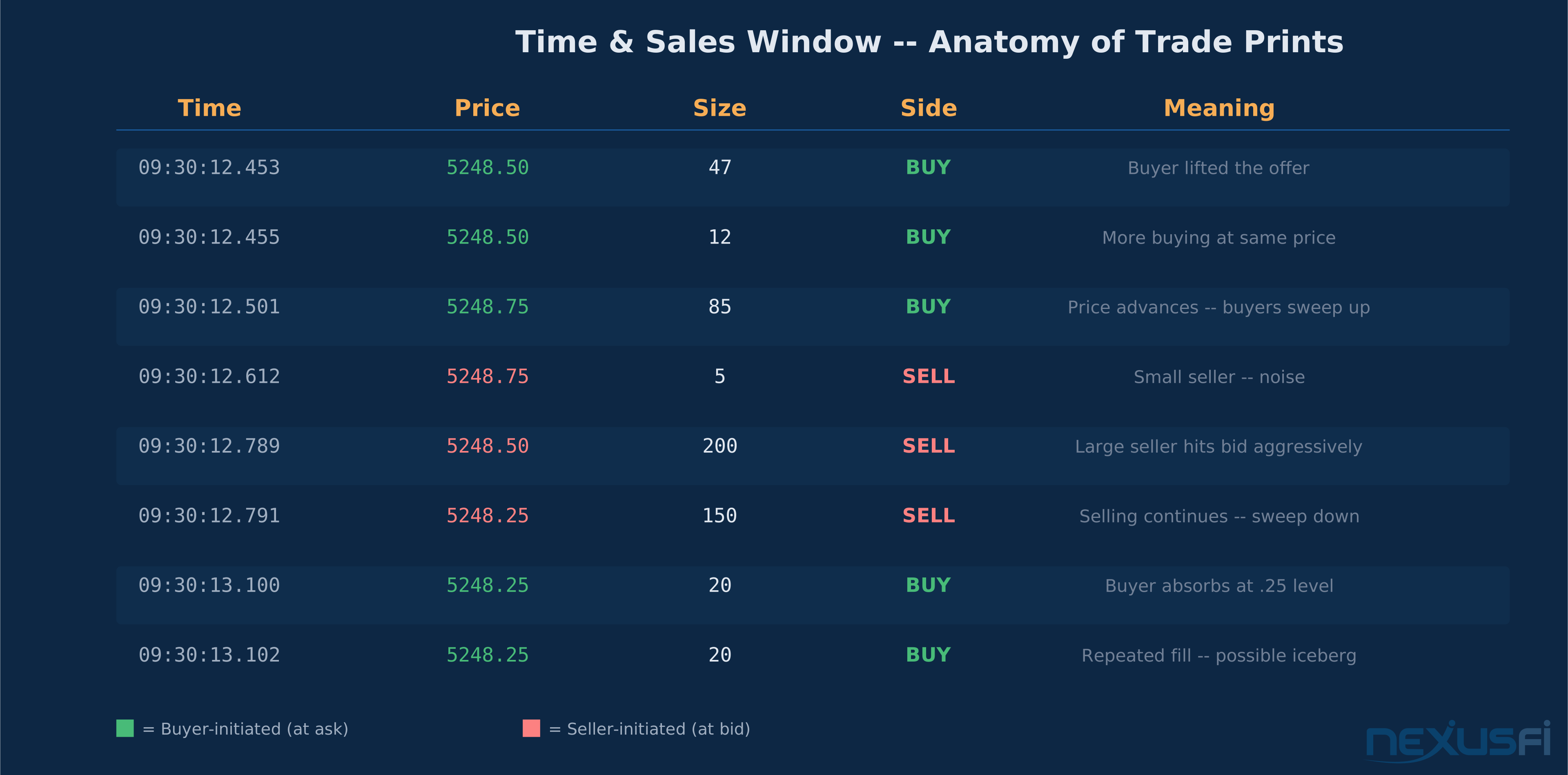
A Time and Sales window displays a scrolling list of executed trades. Each line — called a "print" — represents a completed transaction where a buyer and seller matched. The standard fields are:
Timestamp — The exact time of execution, usually down to milliseconds on direct feeds. This is exchange time, not your local clock. Sequencing matters because the order of prints tells you whether aggression is building or fading.
Price — The price at which the trade executed. Most platforms color-code this — green for trades at or above the ask (buyer-initiated), red for trades at or below the bid (seller-initiated). The coloring convention varies by platform, so verify yours.
Size — The number of contracts in that single execution. A 1-lot and a 500-lot print look identical in structure but mean very different things. Size is where the real information lives.
Aggressor indicator — Some feeds and platforms explicitly flag whether the trade was buyer-initiated or seller-initiated. On CME futures, the matching engine determines this based on which order was resting (passive) and which was incoming (aggressive). When this flag is available, use it. When it's not, you infer aggression from the trade price relative to the bid-ask spread.
That's the fundamental mechanic — aggressive orders cross the spread to get filled, and their direction tells you who initiated the trade.
Key Concepts: Aggressive vs Passive Orders #
Before reading any tape, you need this distinction locked in.
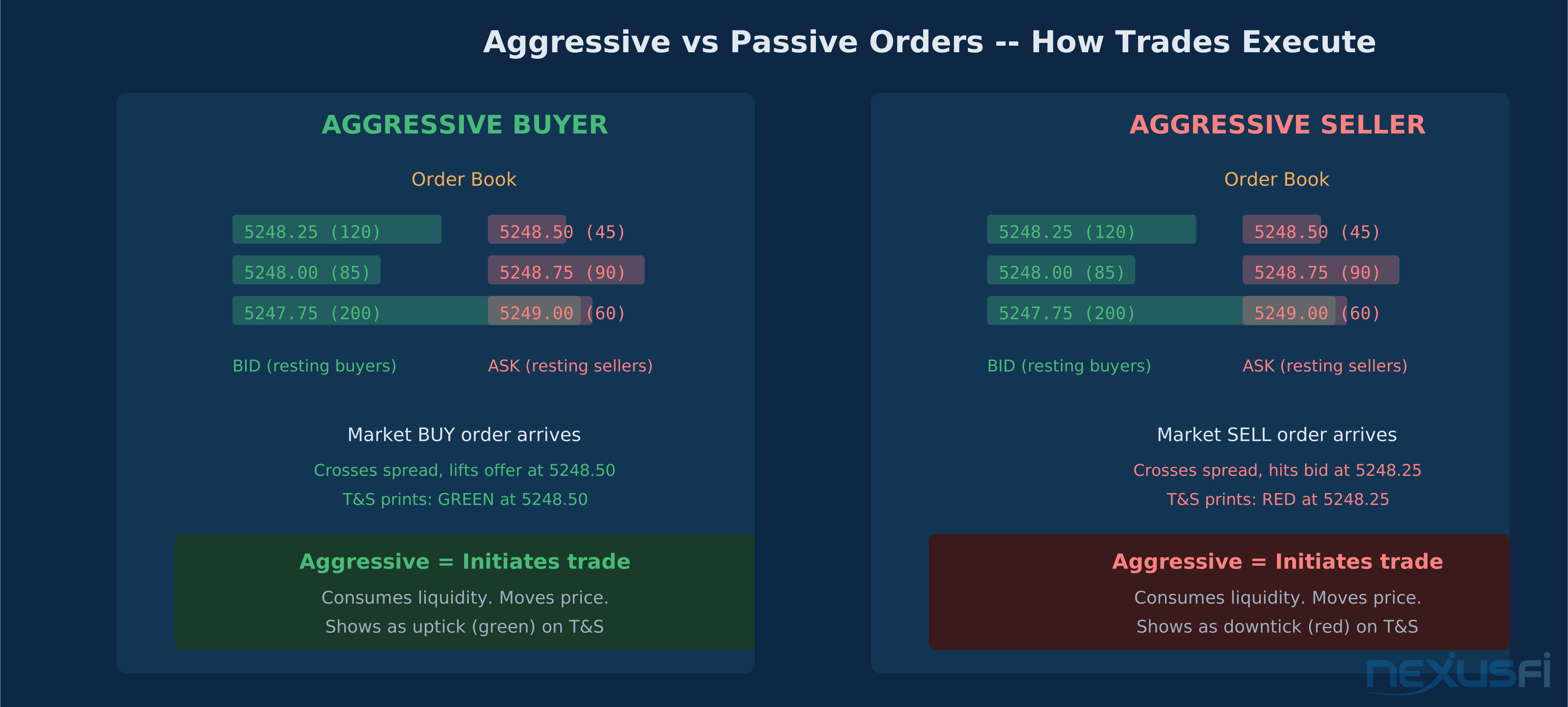
Aggressive orders are market orders or marketable limit orders that hit resting liquidity. They cross the spread. The buyer who lifts the offer is aggressive. The seller who hits the bid is aggressive. These orders consume liquidity and are the ones that actually move price.
Passive orders are limit orders sitting in the order book, waiting to be hit. They provide liquidity. The seller resting on the ask is passive. The buyer resting on the bid is passive. They don't move price by themselves — they move price when they get pulled or when aggressive orders eat through them.
In the DOM, which side is the "buy side" and "sell side"? (@tcdouglas)
This distinction matters because the tape shows you executed trades, not resting orders. Every green print at the ask means someone was aggressive enough to pay the offer price. Every red print at the bid means someone was aggressive enough to sell into the bid. The tape is a record of who blinked first.
Reading the Tape: The Four Dimensions #
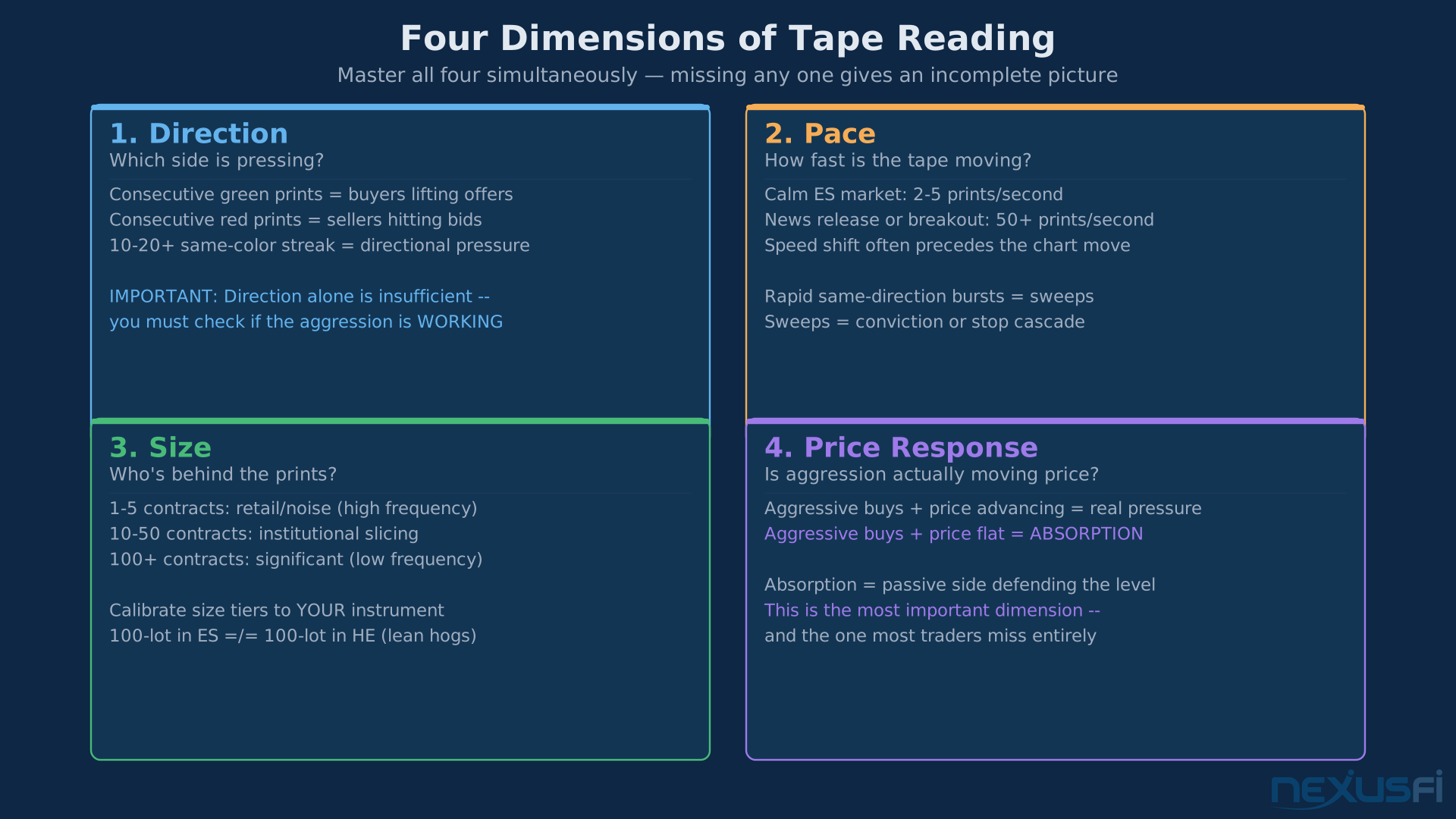
Raw tape reading comes down to four things happening simultaneously. Miss any one of them and you're reading an incomplete story.
1. Direction — Which Side Is Pressing? #
The simplest tape read: are prints predominantly hitting the ask (green) or the bid (red)? Consecutive green prints mean buyers are lifting offers. Consecutive red prints mean sellers are hitting bids. When one color dominates the tape for 10, 20, 30 prints in a row, that's directional pressure.
But direction alone is insufficient.
The theory of Supply and Demand (@Aragorn)
Direction tells you which side is taking action. What it doesn't tell you is whether that action is working.
2. Pace — How Fast Is the Tape Moving? #
Trade rate — prints per second — reveals urgency. A calm market might see 2-5 prints per second in ES. A news release or breakout can spike that to 50+ prints per second. The shift in pace often precedes the price move that shows up on your chart.
Rapid bursts of same-direction prints are "sweeps" — aggressive orders eating through multiple price levels of resting liquidity. A sweep on the buy side means someone wanted size badly enough to pay progressively worse prices to get it. That's conviction, or it's a stop cascade. Context determines which.
@Jigsaw Trading described this dynamic in the legendary "Tape is my shape" thread: "This is when a good tape reader will enter, NOT when you see the waterfall because you see this first." The tape shows the setup before the chart confirms it.
Tape is my shape (tape reading, time and sales) (@bloom)
3. Size — Who's Behind the Prints? #
Size distribution in futures T&S typically breaks into rough tiers:
- 1-5 contracts: Retail, small algo orders, noise. High frequency, low information per print.
- 10-50 contracts: Institutional slicing — larger orders broken into digestible pieces. Mid-frequency, moderate information.
- 100+ contracts: Significant. Could be a single institutional order, an iceberg tip, or a block. Low frequency, high information.
The absolute numbers vary by instrument. A 100-lot in ES is routine institutional flow. A 100-lot in a less liquid contract like HE (lean hogs) is a monster. Calibrate your size filters to the instrument you're trading.
@bloom, one of the most insightful tape readers on NexusFi, explained the interpretive framework: "Large prints are simple large transactions. Someone selling, someone buying at the same time. What we care for is the type of behavior. Aggressive or passive and how market reacts to big limit orders."
Tape is my shape (tape reading, time and sales) (@bloom)
4. Price Response — Is Aggression Moving Price? #
This is the dimension most traders miss, and it's the most important one. Volume without price movement means something completely different than volume with price movement.
If aggressive buy prints are pouring through the tape and price is advancing — that's genuine buying pressure. Demand exceeds available supply at current prices.
If aggressive buy prints are pouring through the tape and price is not advancing — that's absorption. Someone is passively selling into every aggressive buyer without pulling their offers. The tape looks bullish (lots of green) but the price action is telling a different story.
Tape is my shape (tape reading, time and sales) (@bloom)
The divergence between tape aggression and price response is where the highest-probability setups live.
Absorption: When the Tape Lies #
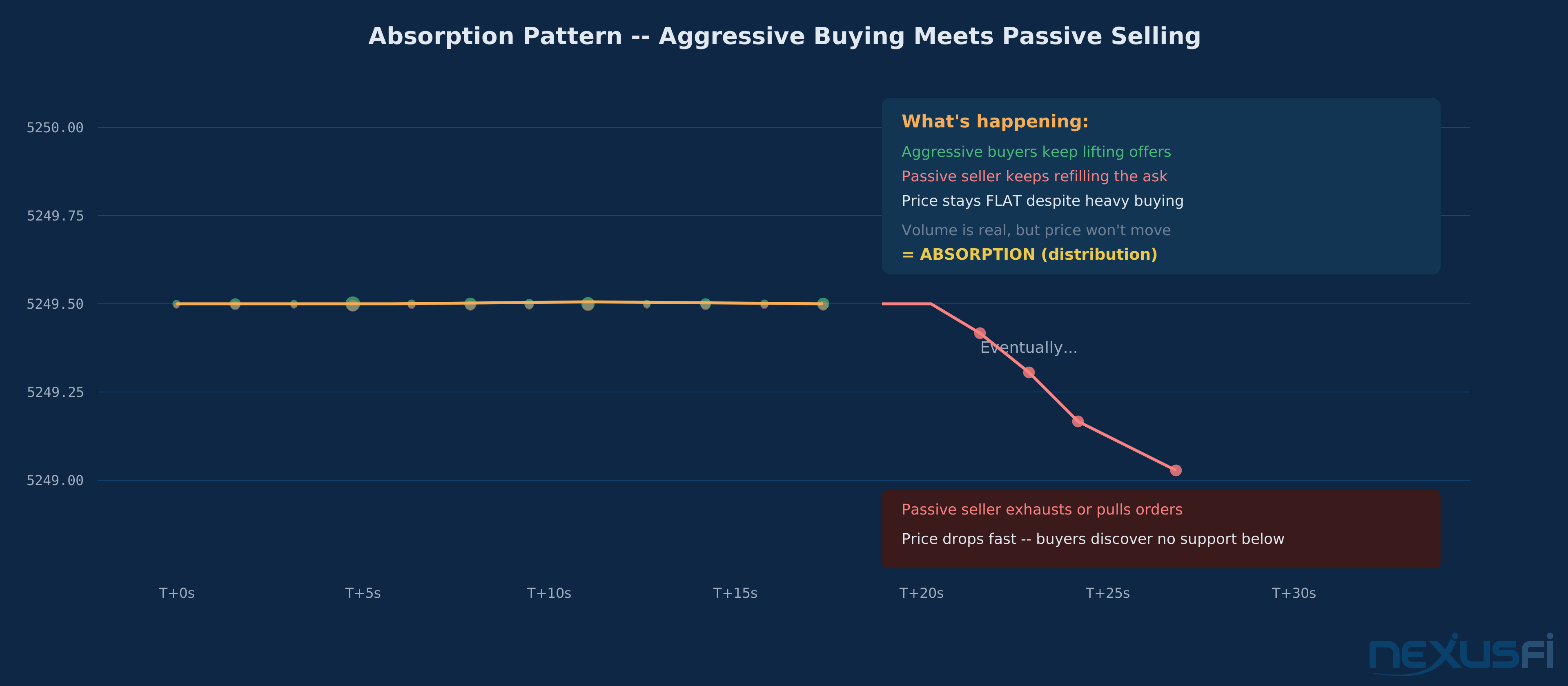
Absorption is the single most valuable concept in tape reading. It occurs when aggressive orders from one side are met with sufficient passive liquidity from the other side, preventing price from moving despite heavy one-directional flow.
Here's what it looks like on the tape: you see a stream of buy prints — 10, 20, 50 contracts at a time — all hitting at the ask. Green, green, green. The pace is high. The volume is real. But the price level doesn't change. The offer stays put. Someone is refilling that offer as fast as it's getting hit.
This is the hallmark of institutional distribution (selling into strength) or accumulation (buying into weakness). The aggressive side thinks they're pushing the market. The passive side is taking the other side of every contract without moving their price.
Tape is my shape (tape reading, time and sales) (@bloom)
When absorption breaks — when the passive side finally exhausts or pulls their orders — price tends to move violently in the direction the passive side was defending. If sellers were absorbing at a level and they stop, price drops fast because the buyers who thought they were in control now discover there's nothing supporting the bid below.
Absorption is the most powerful signal in tape reading. When aggressive buying fails to lift price, the passive seller at that level has more size than every buyer combined. When that seller finally exhausts or pulls, price doesn't drift lower — it drops hard. You're not predicting the move; you're watching it set up in real time.
Block Trades and Large Prints #
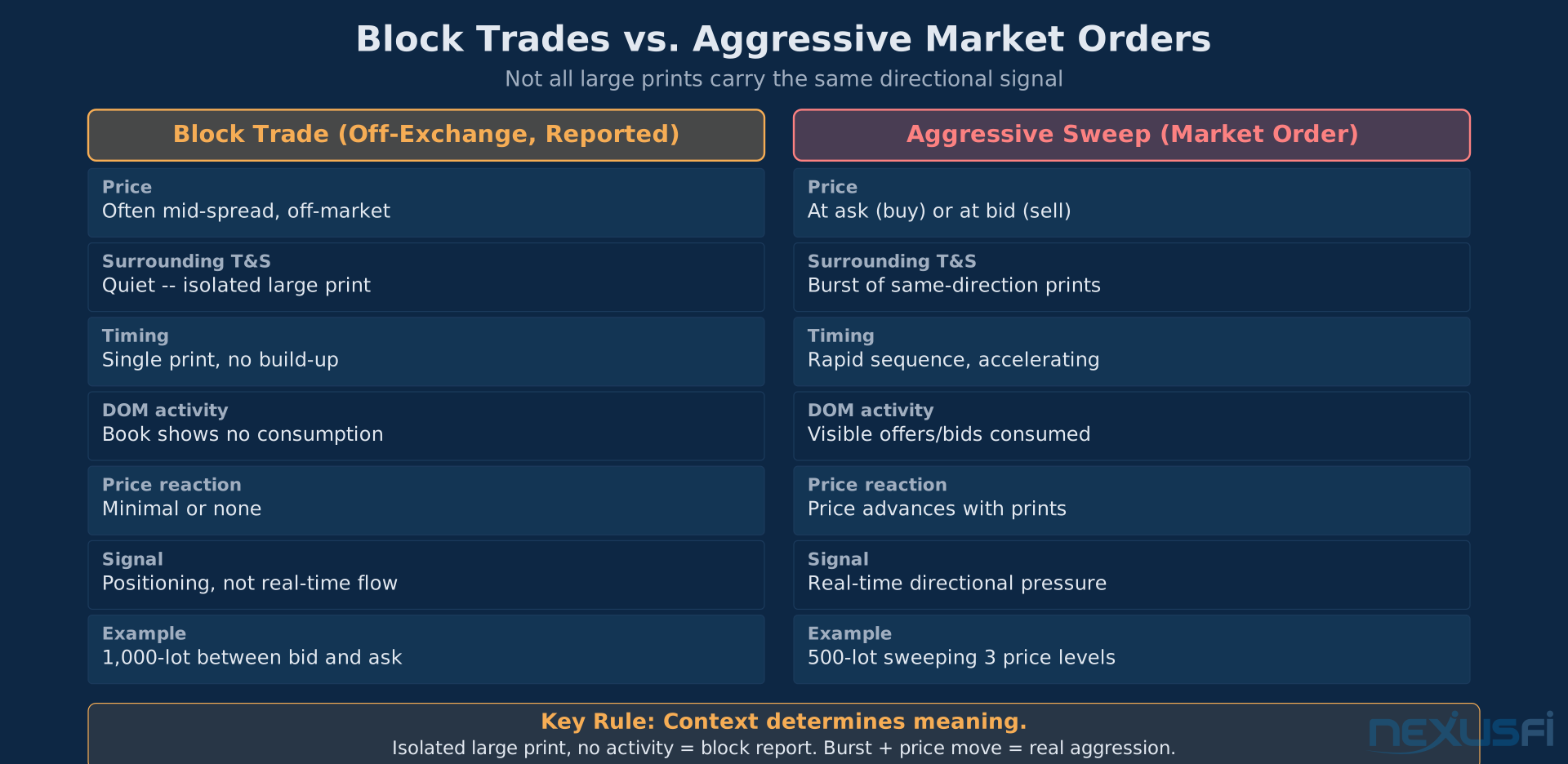
Not all big prints are created equal. A 500-lot print in ES could be:
- An aggressive market order sweeping through the book
- A pre-negotiated block trade reported to the exchange
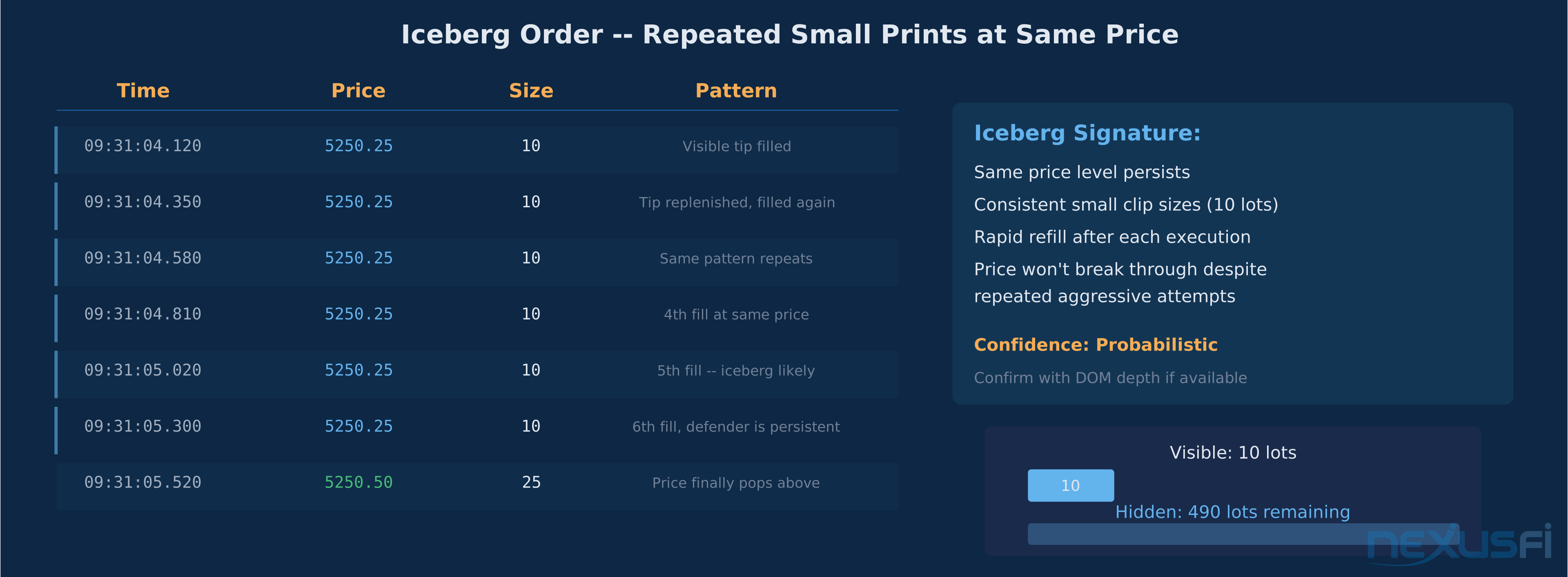
- An iceberg clip finally showing its full remaining size
Block trades in futures are typically negotiated off the central limit order book and reported afterward. They show up as single large prints, sometimes at prices that don't align with where the visible market was trading. On CME, block trades have specific minimum size thresholds and reporting windows.
The practical implication: don't automatically treat every large print as directional signal. A block trade between two institutions who negotiated price offline tells you about positioning but not about real-time aggressive flow. If a 1,000-lot print appears at a price between the bid and ask with no surrounding tape activity, that's likely a block report — not someone sweeping the book.
@josh's observation from the Cumulative Delta thread applies here: when interpreting volume, "price went up, while delta was negative 100 contracts. Maybe sellers were more aggressive, but buyers wanted to buy that level, so ultimately there were not enough sellers compared to buyers."
Cumulative Delta Volume Trading (@Big Mike)
The lesson: large prints need context. Do they align with the existing tape flow? Did price react? Was the surrounding tape active or quiet? Isolated large prints are data points, not trading signals.
Cumulative Delta: Quantifying the Tape #
Cumulative delta takes what you see on the tape and turns it into a running total. For each trade, if it's buyer-initiated (at the ask), add the volume. If seller-initiated (at the bid), subtract the volume. The running sum is cumulative delta.
This transforms the visual "lots of green" or "lots of red" into a measurable quantity. Instead of eyeballing the tape, you have a number — and that number can diverge from price, confirm trends, or signal exhaustion.
Simple mechanics, powerful implications.
Cumulative Delta Volume Trading (@Big Mike)
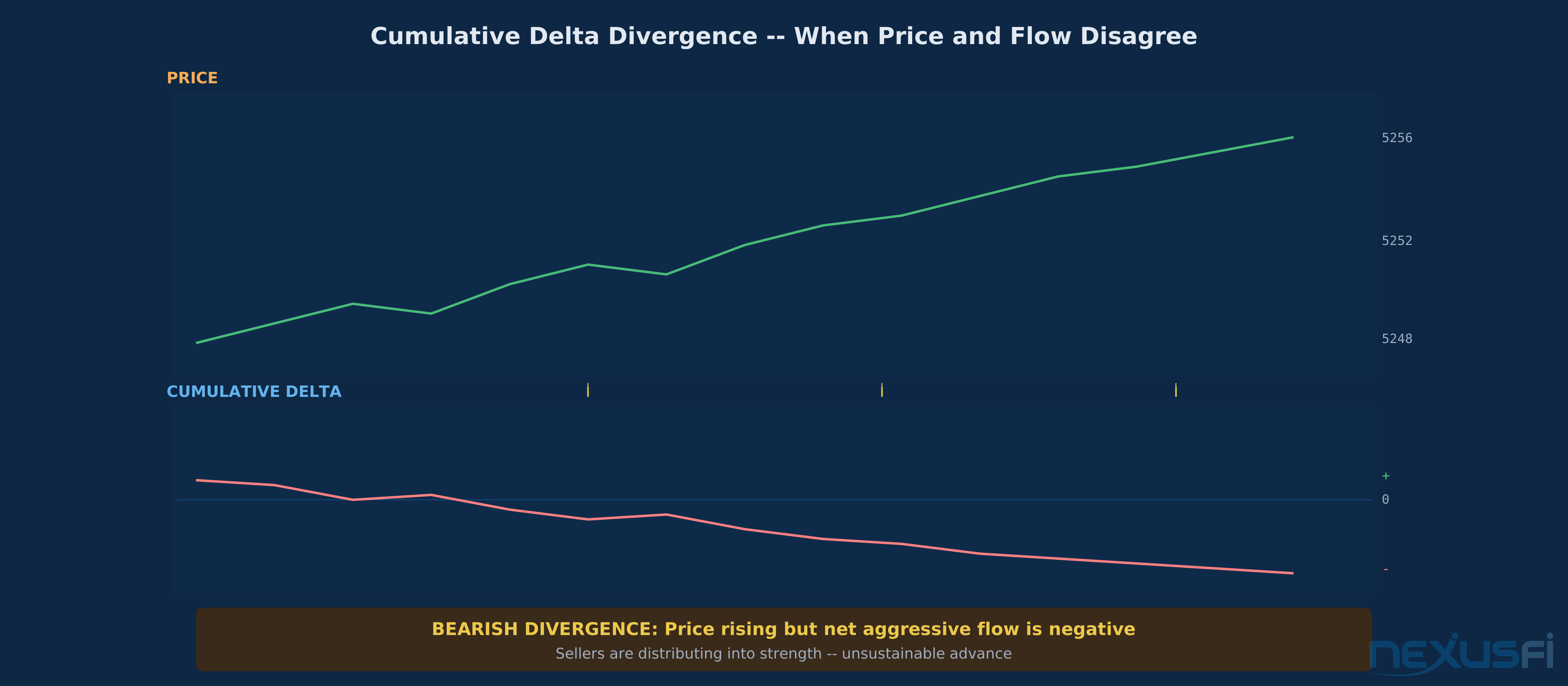
The most actionable signal from cumulative delta is divergence.
When price rises while cumulative delta falls, buyers are pushing price up but sellers are hitting the bid with more total volume. That's unsustainable — either the buyers are right and delta will catch up, or the sellers are distributing into strength and price will eventually follow delta down.
Delta divergence doesn't give you exact entries. It gives you a bias — a probabilistic lean based on whether the tape's net flow agrees with what price is doing. The strongest setups combine delta divergence with a level (support, resistance, prior day high/low, VWAP) where the divergence can resolve. For the complete framework on CVD profile shapes, multi-timeframe integration, and divergence trading, see Delta Analysis & Cumulative Volume Delta.
Footprint Charts: The Tape Organized by Price #
Footprint charts take Time and Sales data and organize it by price level within each bar. Instead of a scrolling list of prints, you see — for each price — how many contracts traded at the bid versus the ask. This is basically a structured version of tape reading.
@trepidation's breakdown on NexusFi explains the visual: "When you see large positive delta, it tells you buyers are aggressive, lifting the offer or placing market buys. When you see very negative delta, sellers are aggressive, hitting the bid or selling via market orders."
Understanding Footprint Charts / Number bars (@Grantx)
Footprint charts solve a real problem with raw T&S: at speed, the tape scrolls too fast for human processing. In ES during a volatile session, you might see 100+ prints per second. No human can read that in real time. What humans can do is look at a footprint bar and instantly see: at 5,250.00, there were 800 contracts traded at the bid and 1,200 at the ask. Net buyer aggression, +400 delta at that level.
The relationship between T&S and footprint charts is source and summary. T&S is the raw feed. Footprints are T&S aggregated by price within a time or volume bucket. Both tools use the same underlying data — executed trades classified by aggressor side. For a deeper look at interpreting bid-ask volume structure within price bars, see the full footprint charts guide.
Using Time and Sales for Trading Decisions #
Here's where all of this becomes operational.
Momentum Continuation Setup #
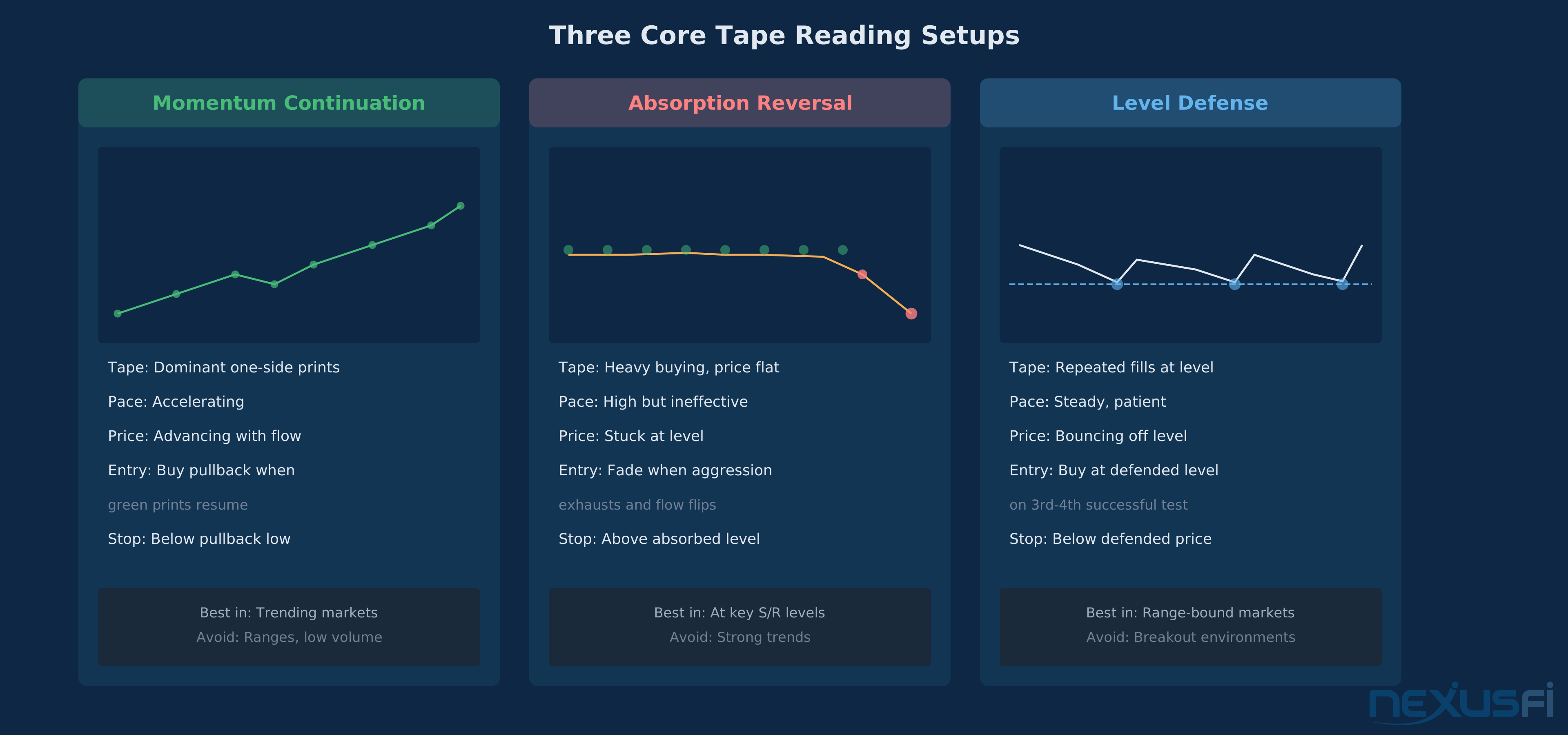
What you're looking for: Aggressive prints dominate one side, price is advancing, pullbacks are shallow and quickly met with renewed aggression.
On the tape: 15-20 consecutive buy prints, price advancing 2-3 ticks, brief pause where a few sell prints appear, then another burst of buy prints at the new high. The pace is fast but not frantic. Size is consistent or increasing.
Entry logic: Enter on the first pullback that gets bought. The tape tells you the pullback is bought when green prints resume at or near the pullback low.
Invalidation: Aggression flips — sustained sell prints at the bid, price breaks the pullback low, pace of selling accelerates.
Absorption Reversal Setup #
What you're looking for: Heavy aggressive buying or selling that fails to move price. The tape looks directional but the chart is flat.
On the tape: Continuous green prints at the ask, large size, high pace — but price stays at the same level for 30+ seconds. The offer keeps getting refilled. Then the buying slows, a few sell prints appear, and the level breaks to the downside.
Entry logic: Fade after the aggressive side clearly exhausts and the first prints in the opposite direction appear with conviction (not just a single 1-lot).
Invalidation: Absorption fails and the aggressive side breaks through. If buyers finally overwhelm the offers and price pops above, your absorption read was wrong.
Level Defense Setup #
What you're looking for: Repeated tests of a price level where the tape shows passive liquidity defending each time.
On the tape: Price approaches a level, aggressive sell prints hit the bid, price touches the level — and buy prints appear. Not aggressive sweeps, but steady passive filling. This repeats 2-3 times. Each test generates a burst of selling that gets absorbed.
Entry logic: Buy at the defended level on the third or fourth test, with a stop below. The working hypothesis is that whoever is defending the level has size and patience.
Invalidation: The level breaks cleanly with sustained aggressive selling through it. Defended levels fail when the defender either runs out of size or pulls their orders.
The full decision framework for combining these setups with DOM context, market structure levels, and session timing is covered in DOM Trading and Tape Reading as an Integrated Strategy.
Common Mistakes in Tape Reading #
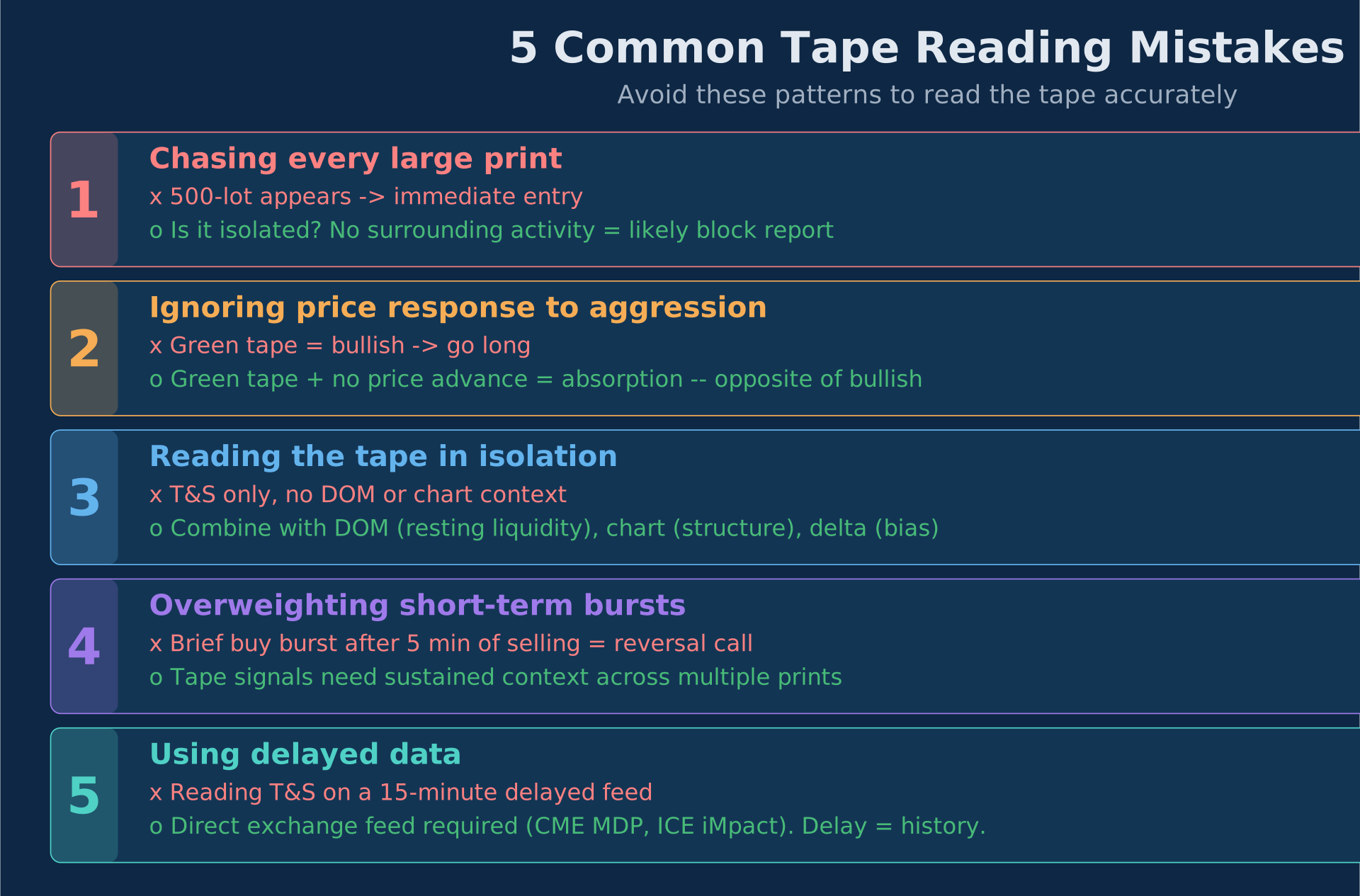
Treating every large print as a signal. A 500-lot print with no surrounding context — no price movement, no tape acceleration — is probably a block report or a negotiated cross. Don't chase it.
Ignoring the price response. Green tape doesn't mean "go long." Green tape that moves price means go long. Green tape that doesn't move price means someone is selling to you. The price response matters more than the color of the prints.
Reading the tape in isolation. T&S is most useful when combined with at least one other tool — DOM for resting liquidity, a price chart for structure, cumulative delta for quantified bias. Pure tape reading without context is noise watching.
Overweighting short-term bursts. A 3-second burst of buy prints after 5 minutes of sell-side dominance doesn't constitute a reversal. Tape signals need context. @Jigsaw Trading's advice: "It takes weeks/months before you get something meaningful out of it. Dumbing Tape down into an indicator is not going to be a substitute for the hard work required to read Tape."
Tape is my shape (tape reading, time and sales) (@bloom)
Using delayed data. Tape reading with delayed data is useless. If your prints are 15 minutes behind real time, you're not reading the tape — you're reading history. Direct market data feeds are the minimum requirement for any serious tape work.
Data Feed Requirements #
Time and Sales quality depends entirely on your data feed. The differences matter:
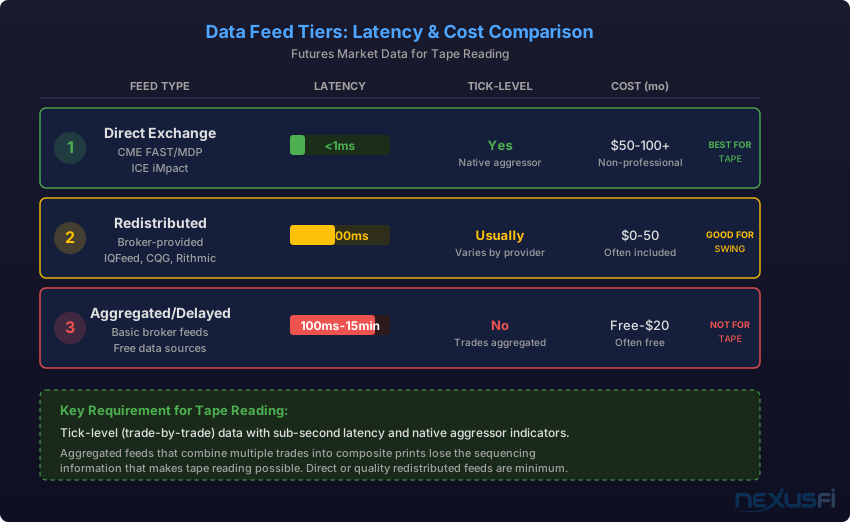
Direct exchange feeds (CME FAST/MDP, ICE iMpact) deliver trade data with sub-millisecond latency and native aggressor indicators. This is the gold standard for tape reading. The downside: cost. According to the CME Group Market Data Fee List, non-professional depth of market data runs $12.10/month per exchange ($36.50/month bundled for all four CME Group exchanges), with additional platform and broker fees typically pushing the total to $50-100+/month depending on your data provider.
Consolidated/redistributed feeds (through your broker) aggregate data from the exchange and redistribute with added latency. For most retail traders, this latency is 10-100ms — fast enough for swing trading, borderline for scalping, insufficient for HFT.
Start with direct exchange feeds (CME MDP or ICE iMpact) when possible. Broker-redistributed feeds typically add 10-100ms latency — workable for swing trading, borderline for scalping. If you're reading T&S to make real-time decisions, feed latency matters more than platform features.
Tick-level vs aggregated feeds. Some data providers aggregate small trades into composite prints. If your feed shows 50 contracts at a price where the exchange actually matched five separate 10-lot trades, you've lost the sequencing information. For tape reading, you want tick-level (trade-by-trade) data, not aggregated.
Platform filtering. Most platforms let you filter T&S by minimum size, direction, or time. Start with no filters and a reasonable scroll speed. As you learn what matters, add size filters to highlight prints above your attention threshold — 10+ contracts in ES, 5+ in CL, etc.
Where Time and Sales Fits in the Data Hierarchy #
T&S doesn't replace other tools. Here's how it relates to the broader data ecosystem:
Level 1 data gives you the best bid and ask — the narrowest representation of the market. T&S shows you what actually executed at or near those prices.
Level 2 data shows the full visible order book — all resting bids and offers at multiple price levels. Combined with T&S, you see both what's waiting (Level 2) and what's trading (T&S). This combination is the foundation of DOM-based trading.
Bar/candle data compresses T&S into OHLCV summaries. Useful for structure and patterns but hides the execution-level detail that tape readers depend on.
Tick data is basically archived T&S — every trade, stored for historical analysis. You can replay historical tape data for practice, backtesting, or pattern research.
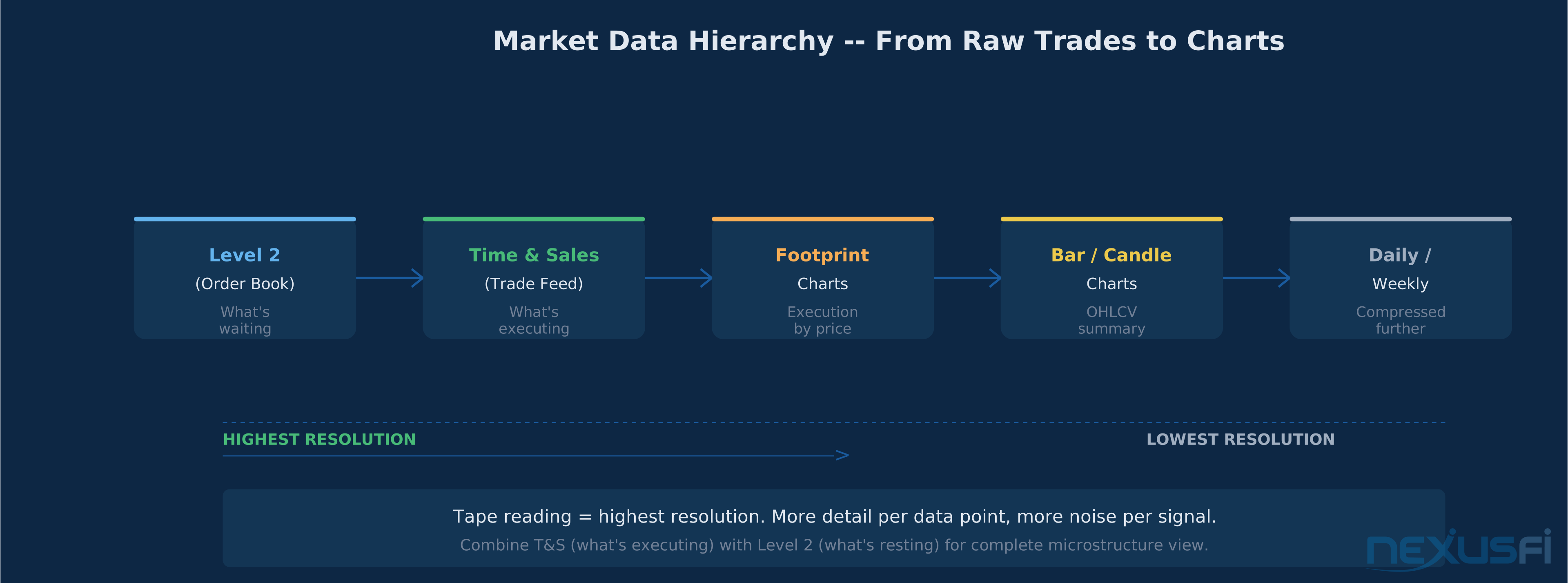
The hierarchy runs: Level 2 (what's resting) + T&S (what's executing) -> Footprint (execution organized by price) -> Bars (execution compressed to OHLCV) -> Daily charts (bars compressed further). Each step up gains perspective and loses resolution. Tape reading operates at the highest resolution level.
Getting Started with Tape Reading #
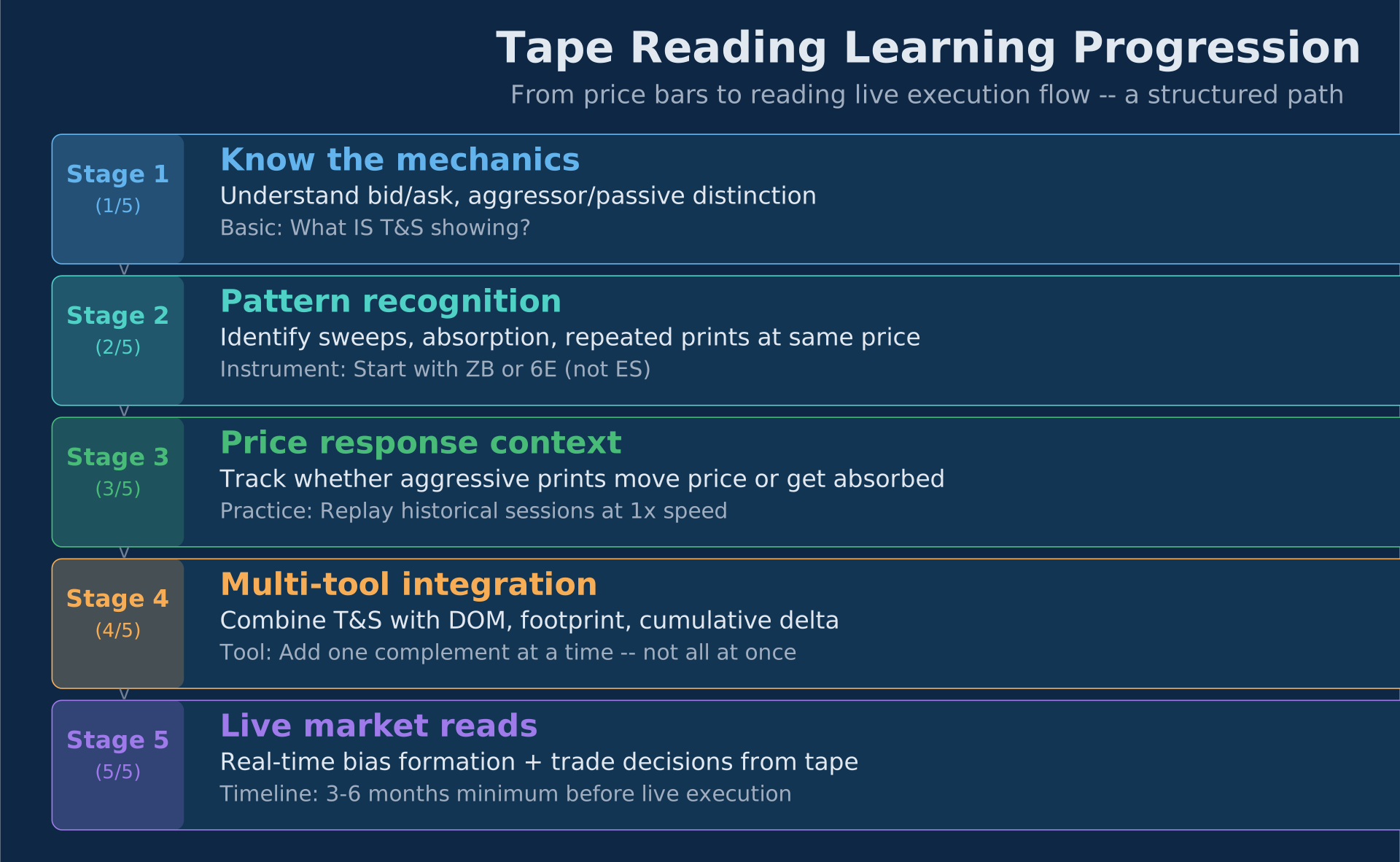
Don't try to read ES tape on your first day. Start with a less active instrument where the tape moves at a human-readable pace — ZB (30-year bonds) or 6E (Euro FX) during off-peak hours. Watch the tape for 30 minutes without trading. Note patterns: what does a level break look like? What does absorption look like? What happens after a burst of same-direction prints?
Replay is your friend. Most platforms with tick data can replay historical sessions at adjustable speed. Find a session with a clear trend, a reversal, and a range — then replay it at 1x speed and practice reading the tape in real time. Increase speed as your pattern recognition improves.
@Jigsaw Trading's guidance for beginners: "For the time & sales — you need to get context of what is going on... often you will see a combination of the above." Start by learning the basic patterns (sweeps, absorption, icebergs) individually, then learn to recognize them in combination during live markets.
Tape is my shape (tape reading, time and sales) (@bloom)
The goal isn't to react to every print. The goal is to develop a feel for the market's rhythm — when aggression is building, when it's fading, when the passive side is in control, and when a shift is about to happen. That feel comes from screen time, not from reading about it. The reading tells you what to look for. The screen time teaches you to see it.
Knowledge Map
References This Article
Articles that build on this topicCitations
- — NT Time & Sales (2016) 👍 1“You are correct. When you buy with a market order you are buying at the offer (or ask), when you sell with a market order you are selling the bid. People tend to talk about passive buyers and aggressive buyers.”
- — In the DOM, which side is the "buy side" and "sell side"? (2023) 👍 1“As you say correctly; DOM: Buyers waiting = left, sellers waiting = right. Fooprint: Aggressive buys=right, aggressive sells=left.”
- — The theory of Supply and Demand (2012) 👍 3“I just refer to it as "aggressive buying" or "aggressive selling", in other words, if a buyer really wants it, they are willing to drive the auction higher and higher. It's all about the auction process and what each individual perceives as value.”
- — Tape is my shape (tape reading, time and sales) (2011) 👍 2“Good stuff. What you traded there is described as the 'waterfall' by many Tape practitioners. That stream of trades when the market breaks looks like a waterfall running down. When you see this - it's too late to get in.”
- — Tape is my shape (tape reading, time and sales) (2011) 👍 7“large prints are simple large transactions. Someone selling someone bying at the same time. What is care for us is the type of behavior. Agressive or passive and how market reacts to big limit orders.”
- — Tape is my shape (tape reading, time and sales) (2011) 👍 4“Ok hello to everyone. Atleast i am free))) So as i promised Large orders Pros, with large contracts, in general need to open positions with a limit order, which is filled with the other traders.”
- — Tape is my shape (tape reading, time and sales) (2015) 👍 7“Well - I think there's a flip side. You can.... - watch the market move to a level you know a lot of people are looking at - see that someone steps up and absorbs there - see another attempt at the level - see a bunch of buyers come in and push price...”
- — Tape is my shape (tape reading, time and sales) (2012) 👍 3“Rocky I think it depends on the sort of iceberg. Some trading platforms support iceberg orders but some exchanges do to. So - with the CME, they do the following http://www.cmegroup.com/globex/files/GlobexRefGd.”
- — Cumulative Delta Volume Trading (2013) 👍 15“Bid/ask calculation subtracts the volume if the price of the transaction was at the bid, and adds the volume if the price of the transaction was at the offer.”
- — Cumulative Delta (2022) 👍 2“WoodyFox 's description was spot on. I'll try to answer this but the "exactly" part might be difficult. ;) In very broad terms, watching the how price and cumulative delta move in relation to one another can reveal things to a trained eye.”
- — Understanding Footprint Charts / Number bars (2020) 👍 20“https://nexusfi.com/attachment.php?attachmentid=289124 Everything can be explained with 1 simple graphic. This means is that sellers are aggressive hitting the bid or selling via market orders. Buyers are lifting the offer or placing market buys.”
- — Tape is my shape (tape reading, time and sales) (2012) 👍 10“There's 2 things that come into play here. 1 - the 3 types of reversal 2 - the participation in the pullback to your entry point Reversals - By that, I mean the top/bottom of ANY swing high/low.”
- — Tape is my shape (tape reading, time and sales) (2011) 👍 3“Let's say you are looking at 10 min bars and an average volume of 6000 contracts per bar. Then you see a rush of sell orders with a move to the downside and suddenly there's no more selling. Interest has dried up.”