



CME Group's 24/7 Extended Futures Trading: What Expanded Hours for WTI Crude Oil and Gold Mean for Active Traders
Overview #
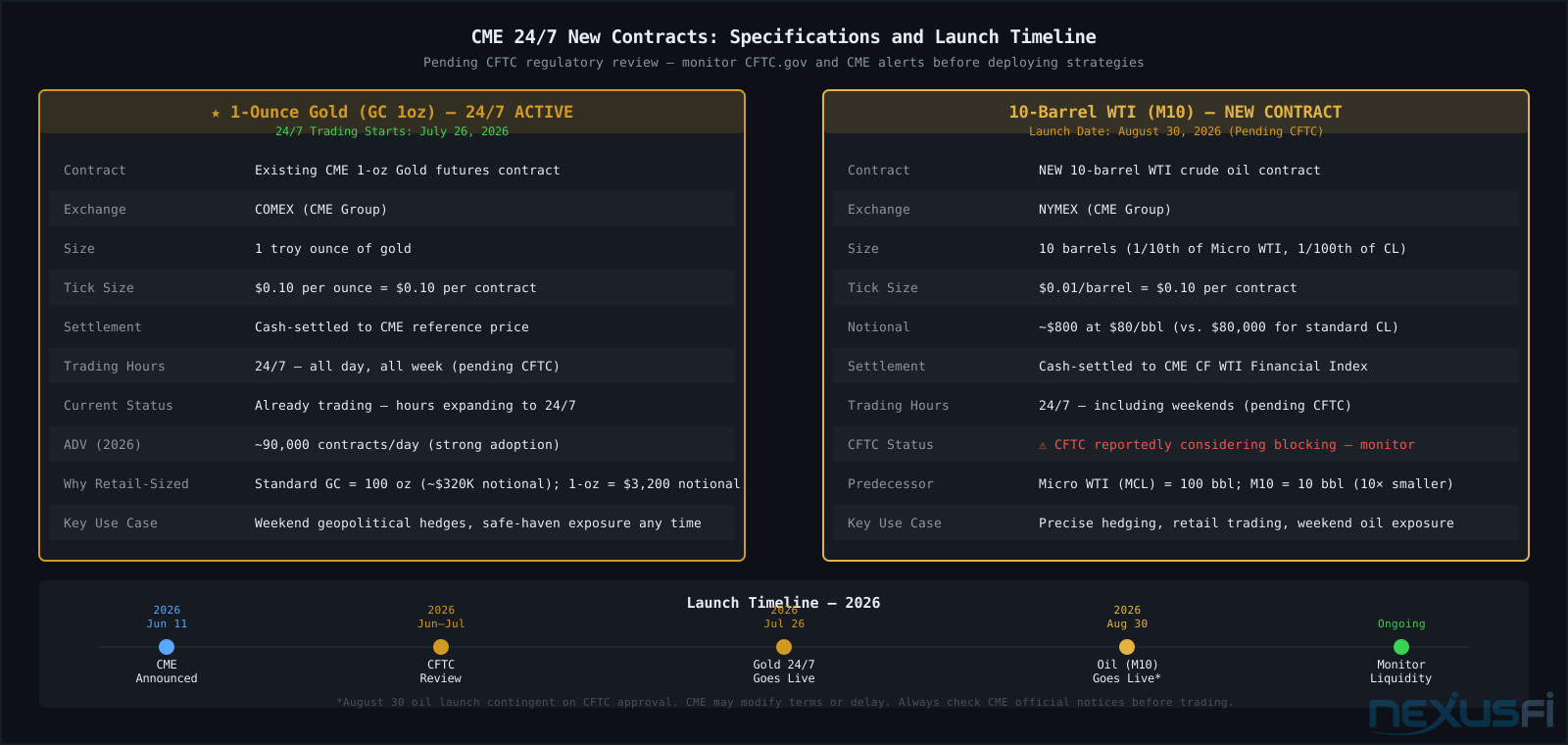
On June 11, 2026, CME Group announced it will offer 24/7 trading for two new commodity contracts: a new 10-barrel WTI crude oil contract launching August 30 and expanded around-the-clock trading for its existing 1-ounce gold futures starting July 26. Both are pending CFTC regulatory review — the oil contract in particular faces scrutiny, with Bloomberg reporting the CFTC is considering blocking it.
Before you decide this is a press release you can skim and move on, what really changes: if you've ever held a CL or GC position into the weekend and stared at your account Sunday evening at 6 PM wondering where the market was going to open, this is for you. If you trade crude oil and have watched geopolitical headlines move prices $5--$7 in a single gap that you couldn't do anything about — this is the structural fix. And if you're in Europe or Asia and have been working around the U.S.-centric trading schedule for years, CME just opened the door.
But 24/7 access is not 24/7 liquidity. That distinction is the single most important thing this article will teach you. Getting it wrong will cost you real money.
What CME Actually Announced #
CME is introducing two products:
10-Barrel WTI Crude Oil (M10, launching August 30): This is a brand-new contract — one-tenth the size of the existing Micro WTI (MCL), which is itself one-tenth of the standard CL contract. The math: standard CL = 1,000 barrels; MCL = 100 barrels; M10 = 10 barrels. At $80/barrel, that's roughly $800 notional per contract, making it accessible to retail traders who found even the Micro WTI too large for weekend positioning. It's cash-settled to the CME CF WTI Financial Index, so no physical delivery complications. It will list on NYMEX.
24/7 Gold (existing 1-oz futures, starting July 26): This isn't a new contract — it's CME's existing 1-ounce gold futures expanding to around-the-clock trading. The 1-oz contract launched in January 2025 and already trades 90,000 contracts per day in 2026. Adding 24/7 hours means the maintenance window that currently pauses trading for about an hour each weekday, and closes the market on weekends, goes away. It lists on COMEX, also cash-settled.
Derek Sammann, CME's Senior Managing Director for Commodities, framed the rationale directly: "Traders are increasingly looking to diversify their portfolios across commodity markets in the face of geopolitical uncertainty. Our new WTI and Gold futures provide regulated products that are right-sized and available 24/7, ensuring traders can manage exposure whenever news breaks."
He's referring to a real problem. When U.S.-Israeli strikes killed Iran's Supreme Leader Ali Khamenei in March 2026, oil markets couldn't trade. NYMEX was closed. The result was a Sunday night open that gapped WTI roughly 11% higher — crude oil futures surged roughly 11% at the open, gold climbed nearly 2%, and equity futures slipped, with the Strait of Hormuz under threat carrying roughly 20% of global oil supply. Traders who were long couldn't protect their gains. Traders who were short couldn't exit. Some traders turned to cryptocurrency markets and gold-backed tokens just to get any kind of hedge on — the regulated futures market wasn't available.
That's the problem 24/7 trading solves. It doesn't eliminate gap risk — it distributes it over more time, during which you can actually act.
The Liquidity Reality: Connected Ponds, Not One Deep Ocean #
Here's where most traders will get burned if they misunderstand 24/7 trading: the market being open does not mean the market is liquid.
Think of global commodity trading as a series of connected ponds rather than one continuous ocean. Each pond (U.S. RTH, European session, Asian session, weekend) has different depths, different currents, and different behavior. They're connected — a move in one flows into the next — but you can't treat them identically.
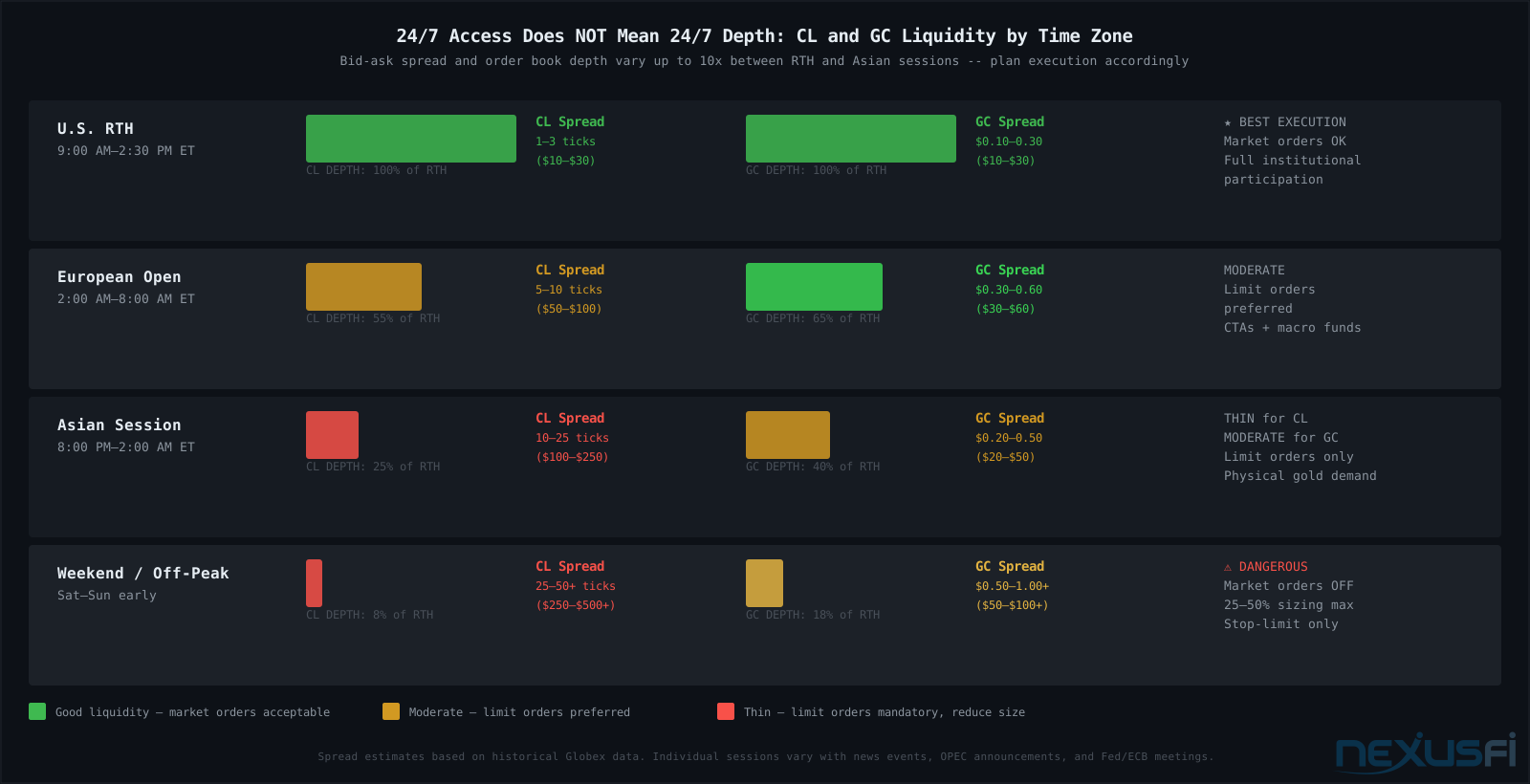
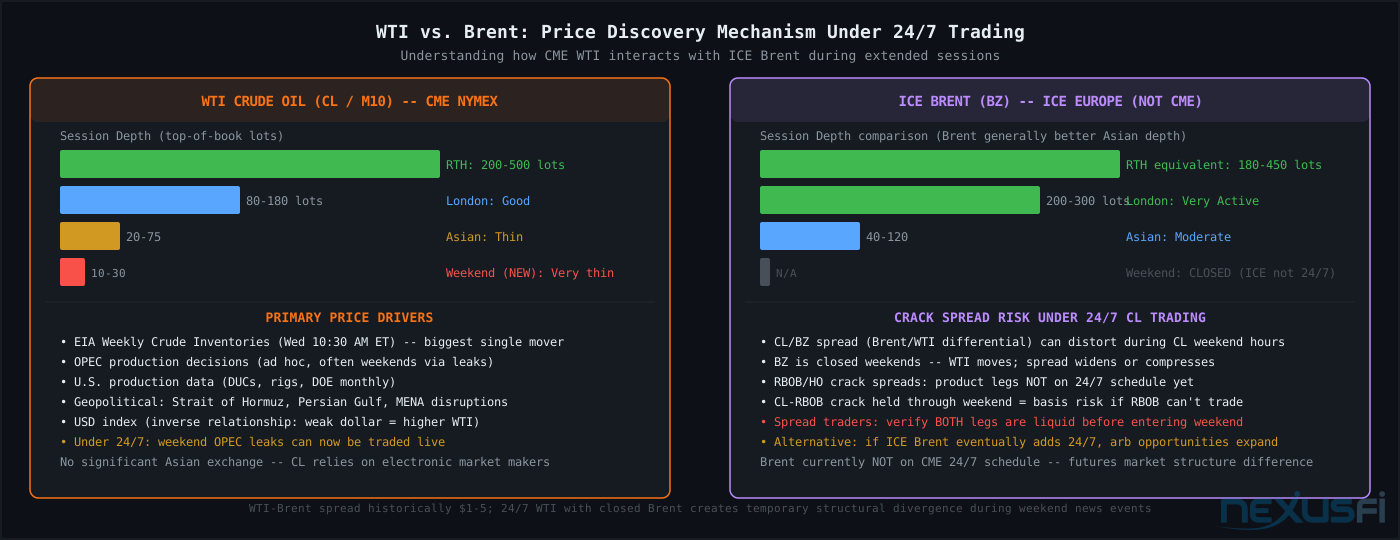
The numbers that matter are bid-ask spreads and order book depth. In CL during U.S. RTH (9:00 AM to 2:30 PM ET), you're looking at 1--3 tick spreads and 200--500+ contracts sitting at the top of the book. In the Asian session (roughly 8:00 PM to 2:00 AM ET for CL), spreads widen to 10--25 ticks and top-of-book depth can collapse to 20--75 contracts. On weekends — the new trading window — spreads can reach 25--50 ticks or more and depth falls to 10--30 contracts.
What does that mean practically? A market order that costs you $10 in RTH (1 tick × $10/tick on CL) can cost $250 at 3 AM on a Saturday (25 ticks × $10). You're paying 25 times more for the same execution. And that $250 cost is the expected case — in a fast market, you might walk the book through multiple levels and pay far more.
Gold behaves differently here, which we'll cover in the CL vs. GC section. The short version: GC has better Asian session liquidity than CL because Asian physical gold demand (Shanghai, Hong Kong) provides persistent bids. CL has basically no Asian exchange, so it's dependent entirely on electronic market makers who widen spreads aggressively when participation drops.
The Sunday Gap Problem -- And How 24/7 Transforms It #
The March 2026 Iran event illustrated the Sunday gap problem at its worst. As @SMCJB observed in the NexusFi discussion afterward[1]: "the gap tells you where the fear is, not where the institutional money is. Bigger the gap, bigger the fear. Crude opened up $7. Hope you sold. 2 hours later it's +$2.50 down $4.50 from the open. Some serious volume went through for Sunday evening — people de-risking, panicking, speculating."
That's the classic Sunday night pattern: retail panic meets institutional liquidity. Institutions are ready to fade the move because they understand that a $7 gap on a geopolitical shock is pricing in worst-case scenarios that rarely fully materialize. Retail traders who held through the weekend and couldn't exit during the gap — they're on the wrong side of that trade with no recourse.
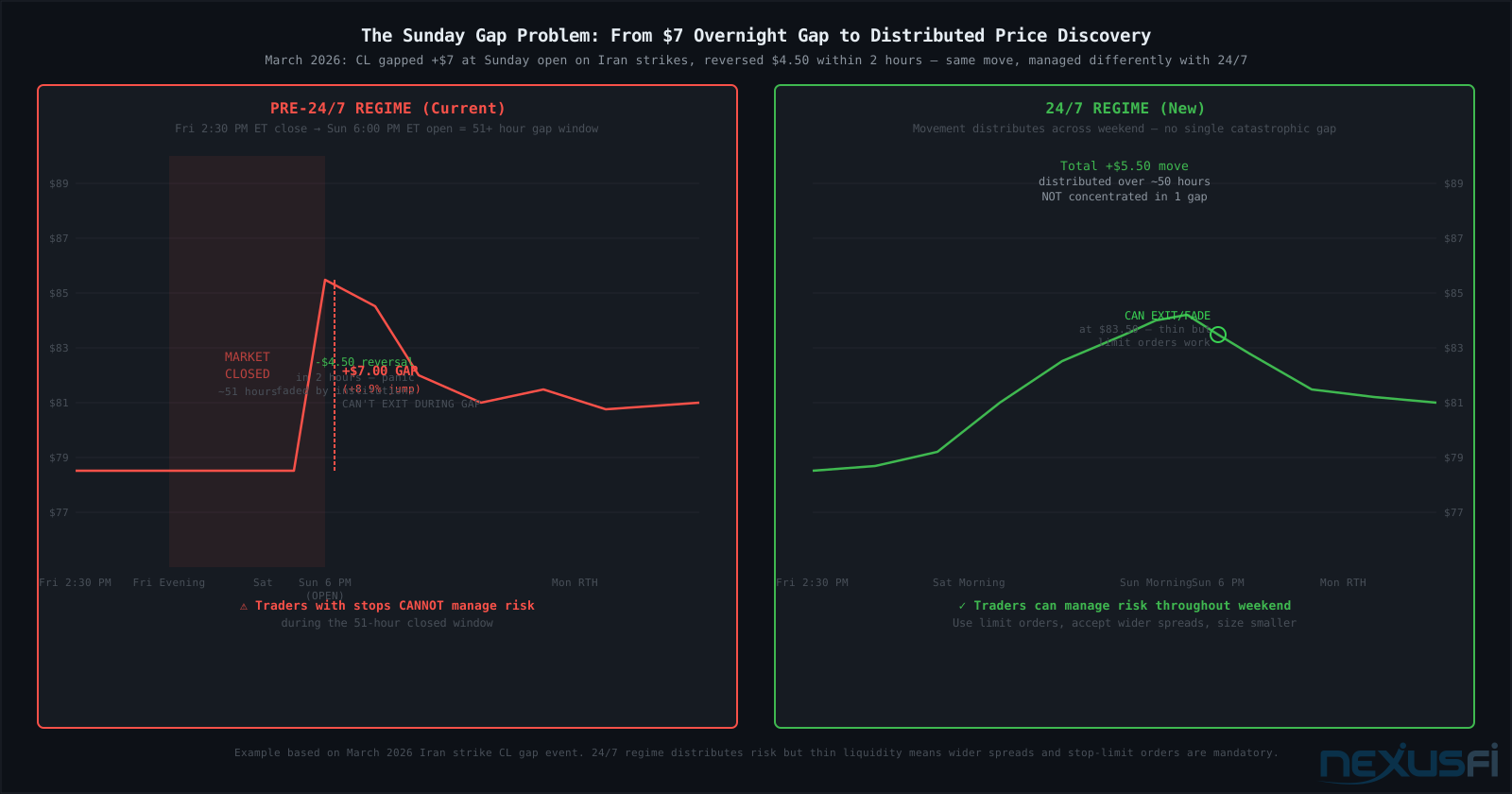
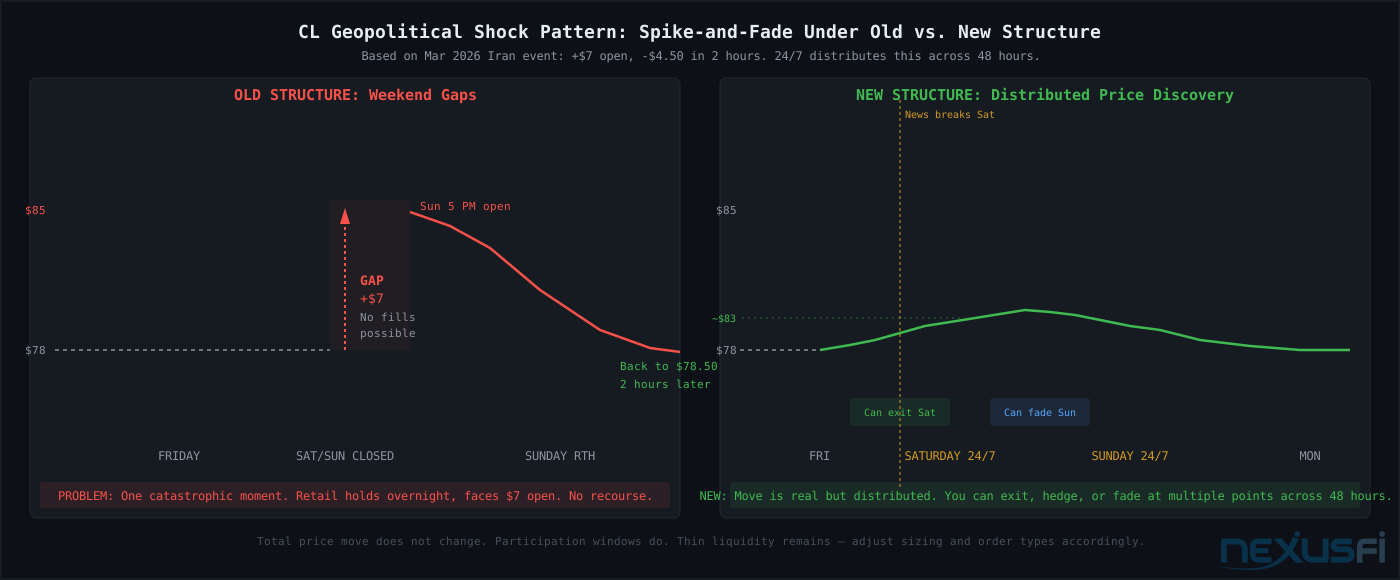
Under 24/7 trading, the same Iran-type event plays out differently. When headlines break Saturday afternoon, the 10-barrel WTI contract and 1-oz gold are open. Yes, spreads are wide. Yes, liquidity is thin. But the move happens over 30--40 hours rather than materializing in a single catastrophic gap. A trader who sees crude moving from $78 to $84 over a Saturday can make a decision — exit a position that's gone wrong, add to one that's going right, or fade the spike with a tight stop using a limit order at the midpoint. None of those options existed before.
An over-weekend hold is much riskier than a weekday overnight hold because while the market is closed, stops can't pull you out when many world events take place. Many an account-killing trade have taken place as the opening price for a contract on Sunday at 5 PM is far, far, far away from where the trader's position closed on Friday.
-- @hedgeplay, NexusFi "Holding futures overnight" thread [2]
24/7 doesn't eliminate that risk. It transforms it: instead of one moment of helplessness, you get continuous exposure to thin-market risk that you can actively manage — if you adjust your execution approach so.
Price Discovery: Who Prices What, and When #
Extended hours change who drives price discovery, which matters for understanding why prices move when you're not watching.
Under the current regime, U.S. RTH is where the real action happens. Institutional hedgers, ETF rebalancing, CTA trend-followers, and retail speculation all concentrate in a five-and-a-half-hour window. Price discovery is dense and fast. Overnight, it's largely algorithmic market-making keeping spreads alive but not driving directional moves except on specific catalysts.
Under 24/7 trading, the Asian session gains genuine price influence — especially for gold. Singapore, Shanghai, and Hong Kong are centers of physical gold demand. When rates data or central bank statements move the USD in Asian hours, gold will now reprice continuously rather than waiting for the COMEX open. For crude oil, the Singapore hub and China demand play a similar role — Chinese PMI data, OPEC-related statements, and Strait of Hormuz shipping updates can now move CL prices incrementally rather than concentrating into a single gap.
The distinction between quote-driven and trade-driven activity matters here. During thin sessions, market makers provide quotes (bid/ask), but actual execution volume is low. Price "moves" in this environment can be distorted — a small order can shift the market 5--10 ticks because there's nothing behind the initial quote. When real news breaks, quote-driven sessions suddenly become trade-driven (lots of aggressive orders hitting the book), and that's where the execution risk spikes. The price movement is real; the ability to get a clean fill is not.
Volatility: Same Risk, Different Distribution #
One common misconception about 24/7 trading: people assume it reduces volatility. It doesn't — it redistributes it.
Currently, commodity markets compress volatility into the Sunday open and the first hour of RTH. That's where CL and GC make their biggest moves relative to the weekend's news accumulation. A 2.5--4x normal volatility spike in the first 15 minutes of CL trading on Sunday at 6 PM ET is well-documented. Bid/ask spreads of $0.25--$0.50 on CL (versus $0.01--$0.03 in RTH) illustrate the dysfunction.
With 24/7 trading, those same total moves happen — but distributed across 48 hours of weekend trading rather than concentrated into one volatile open. The total risk doesn't change; you're just managing it continuously rather than discovering it at one moment.
What does change: the pattern of event sensitivity. Currently, a Saturday OPEC leak is priced at Sunday's open. Under 24/7, it starts repricing immediately — creating overnight positions that carry real risk for anyone not watching. CTAs and systematic funds will update their signals continuously rather than waiting for Monday morning, which means the "CTA wash" that often accelerates Monday morning trends may become more distributed throughout the weekend.
For practical trading: expect more continuous movement on weekends rather than one violent open. But don't underestimate the thin-liquidity windows that still concentrate within the weekend — especially during the early Sunday hours before Asian desks are fully staffed.
Execution Realities: Stop Orders Are Your Biggest Risk #
The most dangerous thing a trader can do in thin extended sessions is use a standard stop-market order. Here's the mechanics of why:
When your stop price is touched, a stop-market order converts to a market order and fills at whatever the book will bear. In RTH with 200+ contracts at the top of the book, that's fine — you'll fill within 1--2 ticks. In an Asian session with 25 contracts at the top and wide spreads, that converted market order can walk the book through multiple levels. You set your stop at $78.00 on a CL long. At 3 AM, a 50-contract sell order sweeps through the thin book, touching your stop. Your order fires as a market sell — and fills at $77.75, then $77.65, averaging out somewhere awful. The price rebounds to $78.20 within five minutes. You've been stop-hunted — not necessarily by intentional manipulation, but by thin-market mechanics that make stops easy to run.
The fix is
stop-limit orders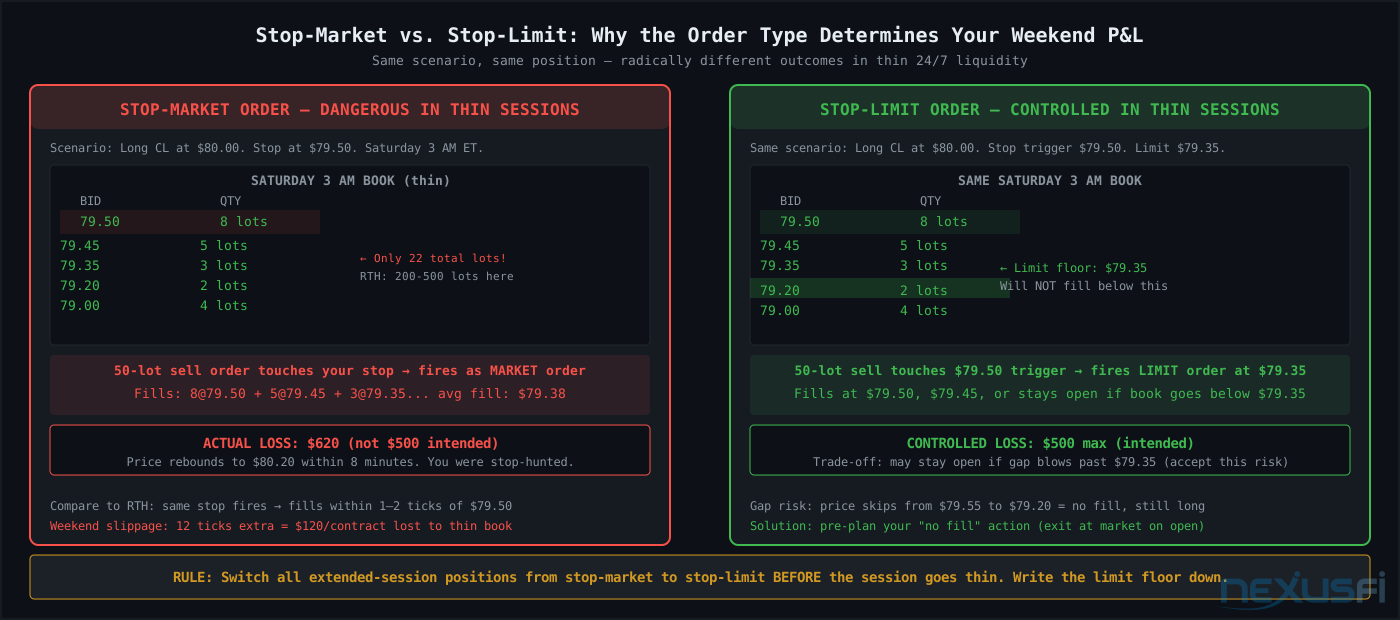
The execution framework by session:
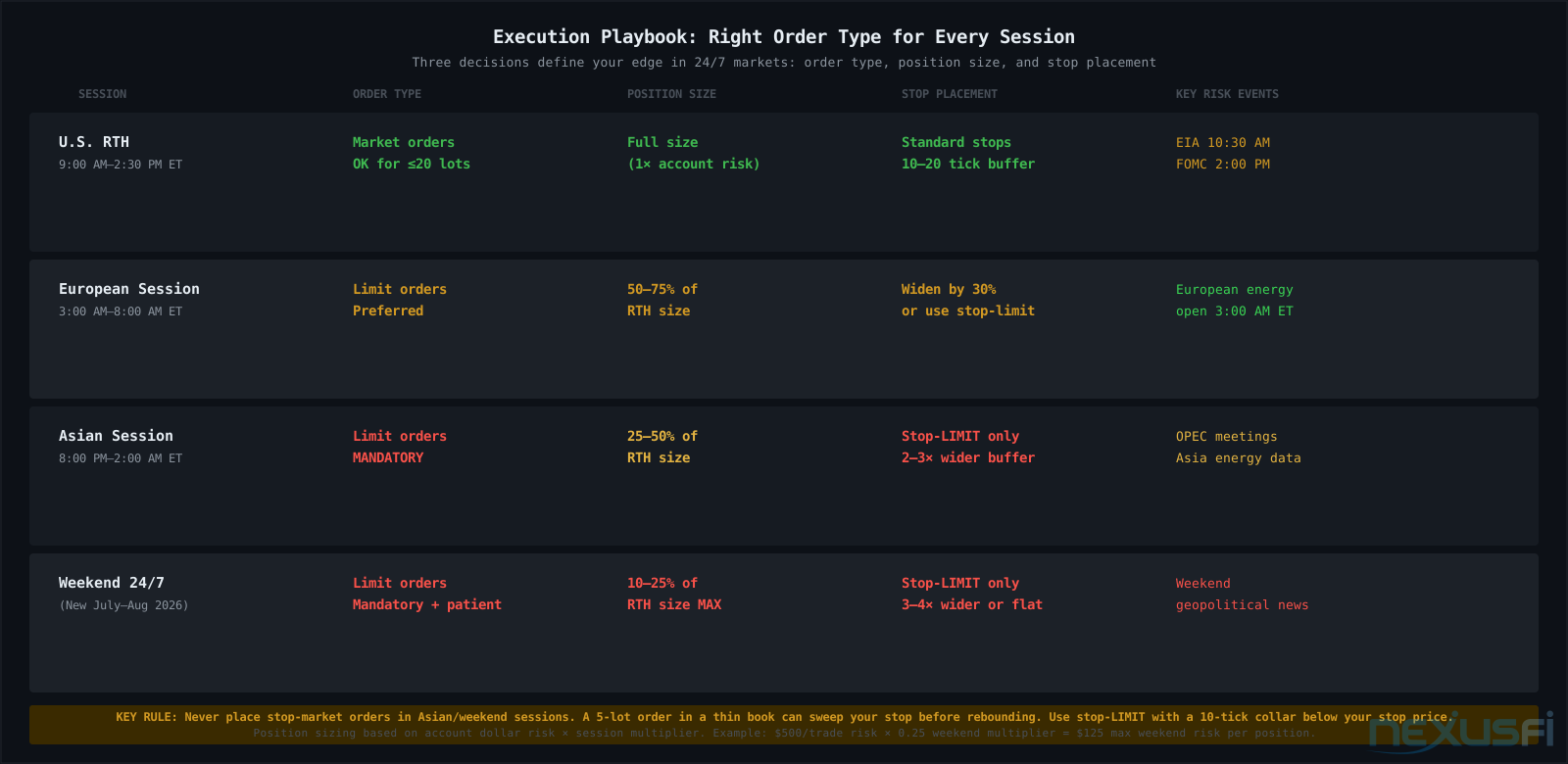
U.S. RTH (9:00 AM--2:30 PM ET): Market orders acceptable for reasonable size (under 20 lots on CL). Full institutional participation. Standard stop-market orders are fine. This is where the real trading happens.
European session (3:00 AM--8:00 AM ET): Limit orders preferred.
London open (3:00 AM ET) often marks the first meaningful reference point for the developing day's VWAP. Size at 50--75% of your RTH position, widen stops by 30%.CL sometimes trades well with news during the Asian session but usually is thin when nothing pushing it. The best times overnight are during the London session — it moves well and my edge allows profit similar to day sessions.
-- @DavidHP, NexusFi "Anyone trading overnight successfully?" thread [3]
Asian session (8:00 PM--2:00 AM ET): Limit orders mandatory on CL. Gold has better liquidity here due to physical demand.
Size at 25--50% of RTH. Stop-limit orders only. Gold (GC) is more tradeable than crude in this window.Around the 3 AM EST period, CL tends to mark a top or bottom for the freshly developing day. Quite often this involves the VWAP. Developing VWAP is key — it serves as fairly reliable S/R for scalps and often allows runners.
-- @Beljevina, NexusFi "What is the best time to trade CL?" thread [4]
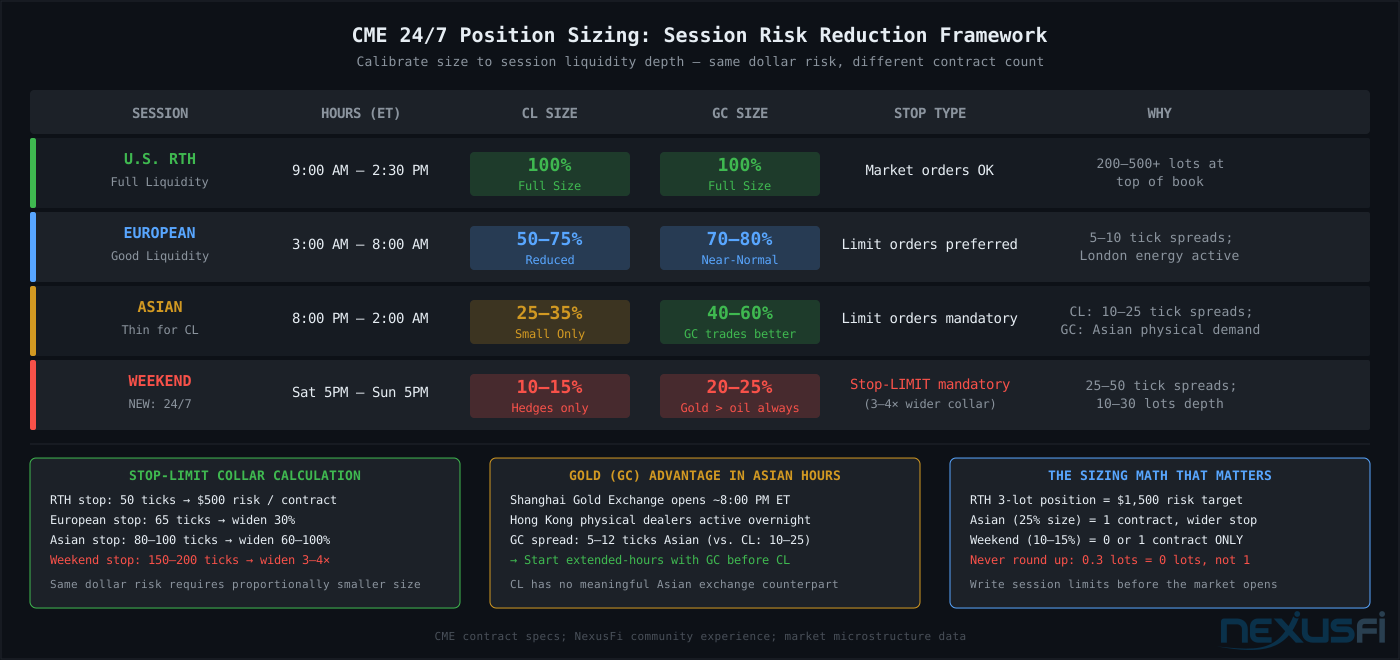
Weekend (the new 24/7 window): Limit orders mandatory. Position size at 10--25% of normal RTH sizing. Stop-limit orders with collars 3--4× wider than your RTH buffer. Or don't trade at all — "watching" is a valid strategy. The goal is risk management, not maximizing weekend trading activity.
CL vs. GC: Two Animals, One New Cage #
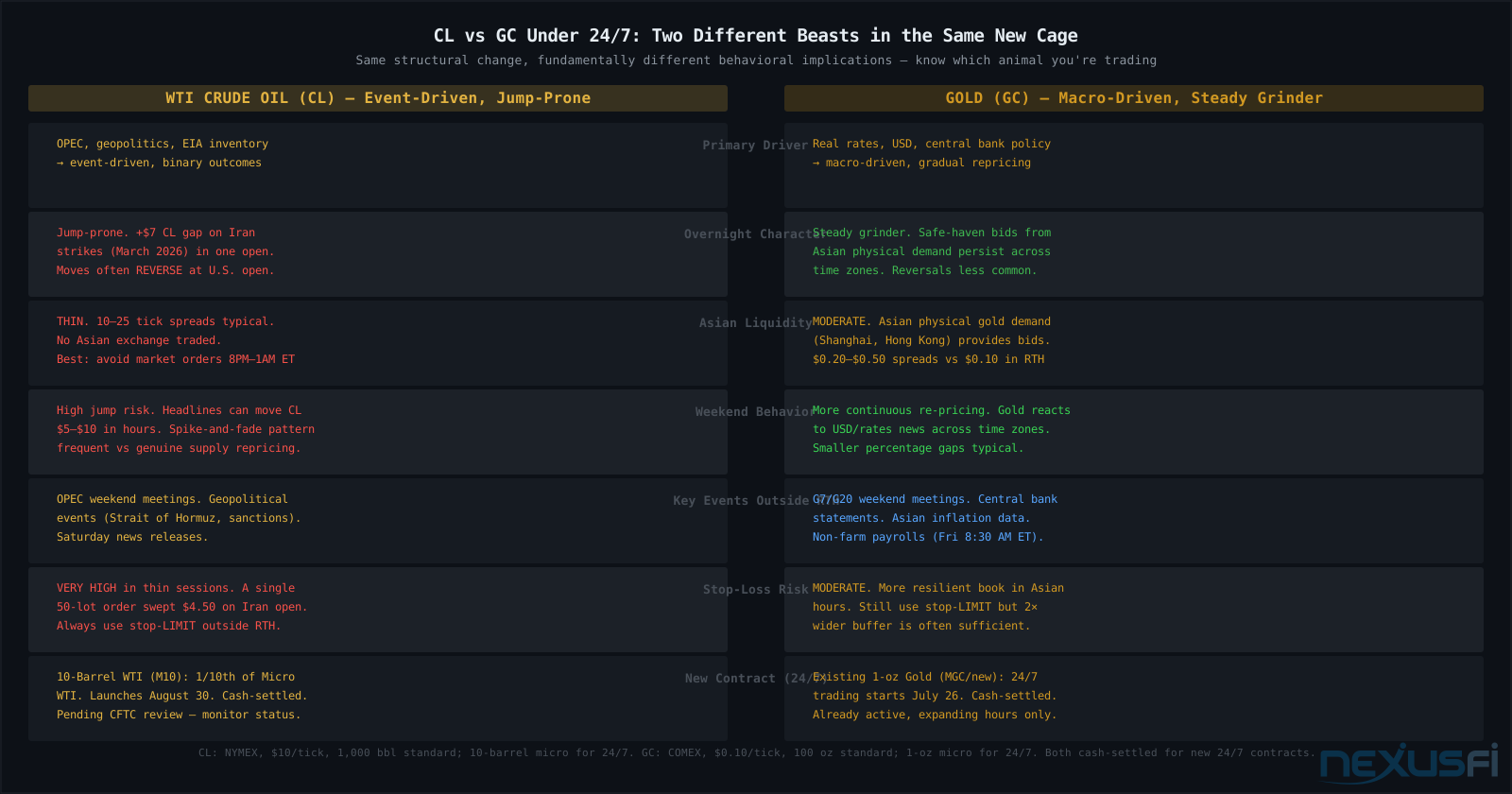
CME is applying the same 24/7 structure to two at the core different markets. Don't treat them identically.
WTI Crude Oil (CL) is an event-driven, jump-prone commodity. Its primary drivers are OPEC production decisions, EIA inventory data (released Wednesday at 10:30 AM ET), geopolitical risk to supply routes, and physical supply/demand expectations. When a geopolitical shock hits, crude can gap $5--$10 in hours on thin liquidity. But crucially: these moves often reverse once the U.S. market opens and real institutional analysis arrives. The March 2026 pattern — crude gapped $7 at open, gave back $4.50 within two hours — is not unique. As SMCJB noted, "it's a coin flip. Who knows what the next headline is." The spike-and-fade is the dominant pattern because geopolitical risk premiums tend to be priced in quickly and then deflate as logistics analysis arrives.
Asian overnight liquidity in CL is thin. There's no Asian crude oil exchange with meaningful electronic volume (Singapore's DME trades Dubai crude, not WTI). Extended hours won't change the fundamental liquidity structure dramatically during Asian hours — it just means markets are technically open rather than technically closed.
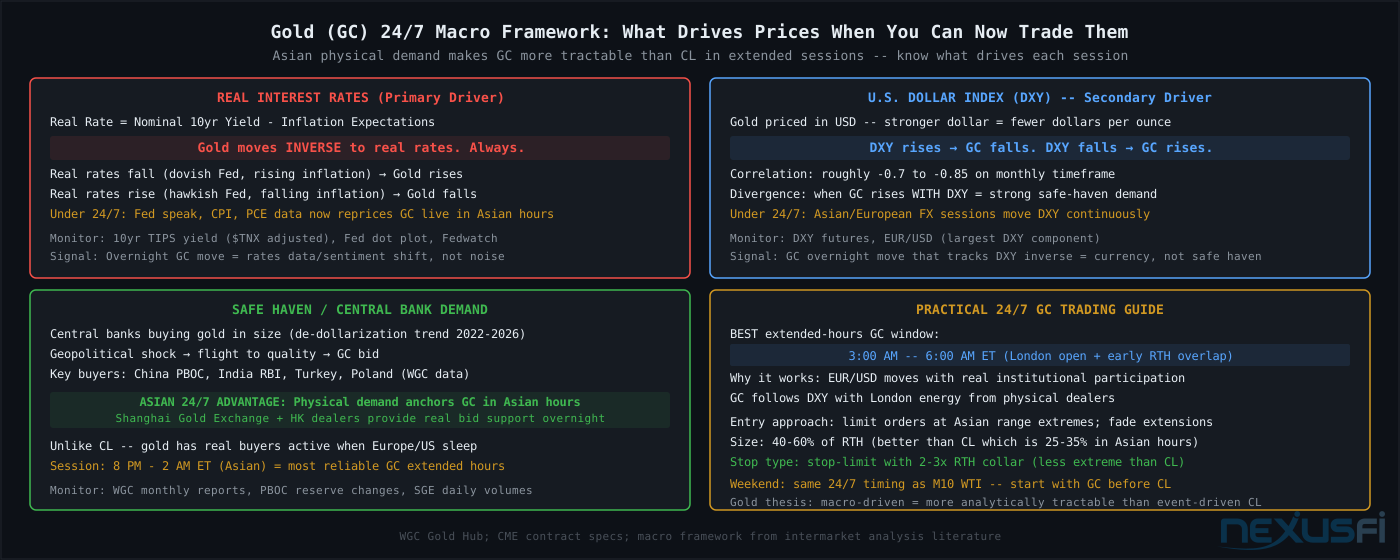
Gold (GC) is a different animal. Gold is macro-driven — real interest rates, the U.S. dollar, central bank activity, and risk sentiment are its primary drivers. When USD weakens or real rates fall, gold grinds higher steadily across time zones. Asian physical gold demand (Shanghai Gold Exchange, Hong Kong dealers) provides a persistent bid that CL doesn't have from Asia. The result: GC has meaningfully better liquidity during Asian hours than CL does, and its moves tend to be more directionally persistent rather than spike-and-fade.
The practical implication: if you're going to trade extended hours, start with GC before CL. Gold's overnight liquidity structure is better, its moves are more analytically tractable (you can explain why gold is moving based on USD/rates data), and the Asian session gives you real counterparties rather than thin-air market making.
For crude oil in extended hours: the 10-barrel M10 contract's small notional size makes it tempting, but small size doesn't fix thin liquidity. A 10-barrel contract in a 20-contract-deep book is still meaningfully exposed to slippage. Use limit orders, size tiny, and accept that CL weekend trading is primarily for hedging existing exposure — not for speculation.
Risk Management for 24/7 Positions #
The risk management adjustments for 24/7 trading are non-trivial. Several things that worked in a 23-hour market need rethinking:
Position sizing by session: Your standard position size (calibrated to RTH volatility and liquidity) is too large for extended sessions. A rough framework: RTH = full size[6]; European session = 50--75%; Asian session = 25--50%; weekend = 10--25% max. The reason isn't just liquidity — it's also that your stop placement needs to be wider in thin markets, so the same dollar risk requires smaller size. Example: if you risk $500 per trade in RTH using a 50-tick CL stop, that's 1 contract. In the Asian session, a 100-tick stop (2× wider for thin market noise) still holds $500 risk at 1 contract — but your equity must support the wider price excursion without triggering a margin call.
Margin mechanics and mark-to-market: Initial margin requirements don't change with extended hours. But your liquidity risk increases: if you hold a 24/7 weekend position, CME's daily settlement still happens. Your account gets marked to market at settlement prices, margin calls can occur any time your account falls below maintenance levels, and CME may have different processes for weekend variation margin. Verify your broker's specific policies for weekend margin monitoring before holding positions through Saturday night.
Cash-settled mechanics: Both new 24/7 contracts are cash-settled. This matters because there's no physical delivery to worry about and no delivery risk from holding near expiry. But settlement still occurs at reference prices (CME CF WTI Financial Index for oil, CME reference for gold), and positions mark to those levels. Don't conflate "cash-settled" with "safe to ignore settlement dates."
System connectivity: 24/7 trading means your trading system, data feeds, and risk monitoring need to be operational around the clock. A platform outage at 3 AM Saturday when you're holding CL positions is a real operational risk. Have backup plans: a mobile trading app, a phone number for your broker's emergency desk, or simply not holding overnight positions you can't monitor.
Strategy Adaptations for Extended Sessions #
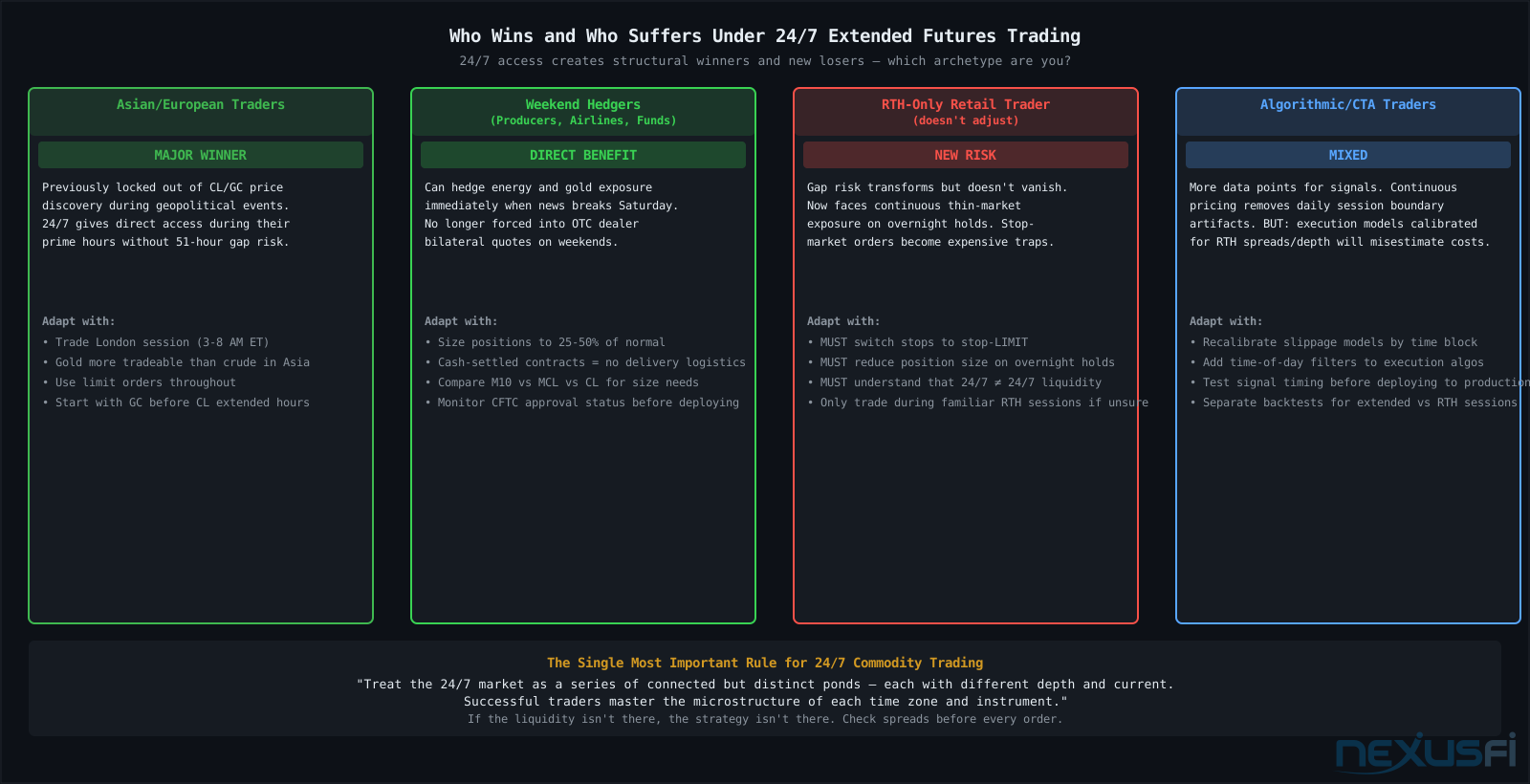
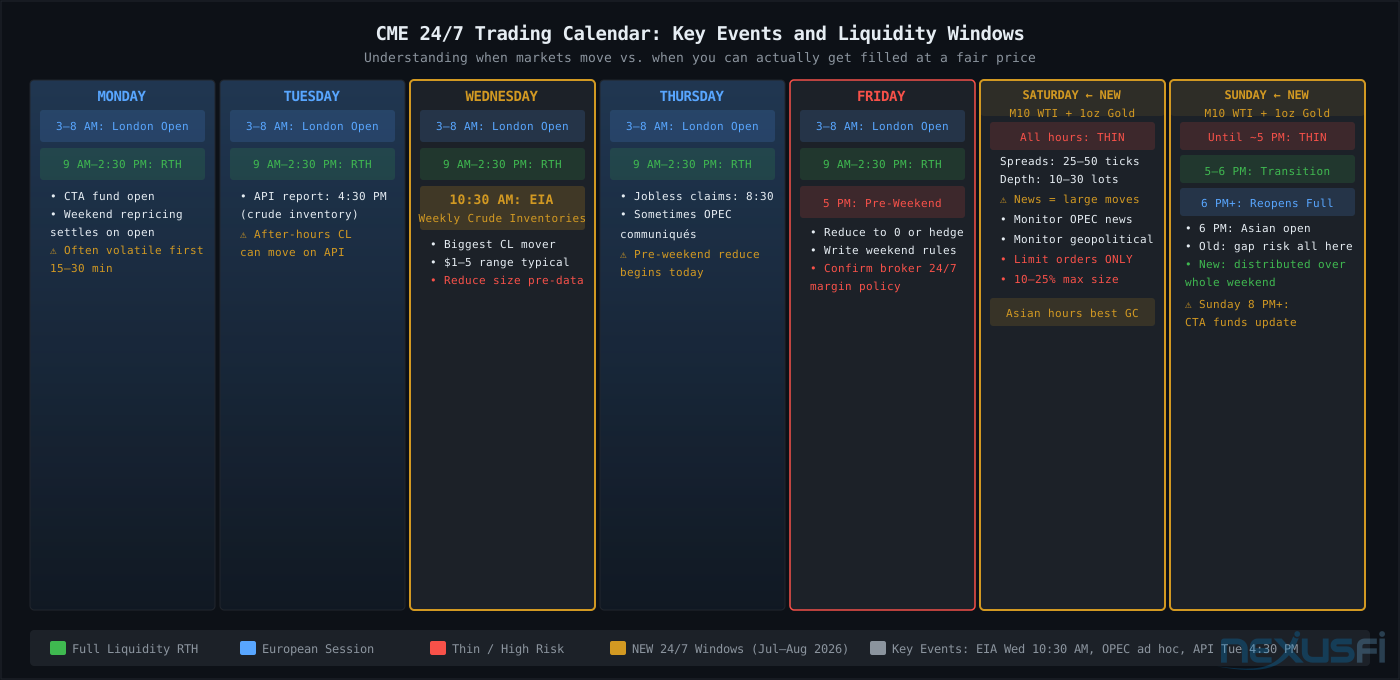
A few specific strategy adaptations that work under the new structure:
Asian Range Fade on Gold: During the Asian session (8 PM--2 AM ET), GC often establishes a range driven by physical demand flows and macro positioning from Asian desks. When the European session opens (3:00 AM ET), the range set during Asian hours frequently gets tested. Fading the first 30-minute extension of the Asian range at the European open — with a tight stop and a target back to the range midpoint — is a setup that leverages the session transition dynamic. This works better in GC than CL because GC has the liquidity to sustain the setup.
Weekend Spike Fade on Oil: The classic CL pattern during weekend geopolitical events: spike on the news (fear premium), fade as the logistics reality sets in (supply disruption often less severe than feared). Under 24/7 trading, you can now execute this fade as it happens rather than waiting for the Monday open. Key: fade only with limit orders at obvious overhead resistance levels, use stop-limit protection, and size at 10--15% of your RTH position. The move that took the SMCJB approach — "crude opened up $7, hope you sold" — becomes executable during the weekend rather than requiring you to execute at a chaotic Sunday evening open.
European Open CL: This is well-established as the best extended-hours window for crude oil. @DavidHP trades the London session as his primary CL vehicle, and @Beljevina has documented the pattern extensively: "the London open and NY midnight open — as well as those same times from previous days — can be invaluable. London fairly often reverses/retraces what the NY session just did." With 24/7 trading, this window remains the most reliable extended-hours CL opportunity. Spreads narrow to 5--10 ticks (still wider than RTH but workable), depth improves, and the European energy complex (Brent/WTI arb activity, European refiners hedging) provides real counterparty volume.
Don't Strategize the Weekend if You Won't Monitor It: The worst approach is adding weekend trading exposure and then going to sleep. Thin liquidity, wide spreads, and stop-hunting risks mean weekend positions require active monitoring or very wide (and explicit) risk tolerance. If you can't watch the market over the weekend, keep your standard practice of reducing or eliminating commodity exposure before Friday's close.
Calendar Spreads and Curve Implications #
Extended hours affect spread traders and systematic curve traders in specific ways worth understanding:
Calendar spreads (CL and GC inter-month): Currently, the front month of CL reprices on a geopolitical event, but back months may trade thinly or not at all, creating temporary curve dislocations. Under 24/7 trading, both legs are technically open — but the liquidity imbalance between front and back months during thin sessions may actually worsen these dislocations temporarily. Calendar spread traders should avoid entering spread positions during weekend or Asian hours unless both legs have sufficient depth[5] (check individually, not just the spread).
Crack spreads: CL-related crack spreads (CL vs. RBOB gasoline, CL vs. heating oil) depend on refined product contracts that may not be on the 24/7 schedule. Even if CL trades 24/7, RBOB and HO may maintain existing hours. This creates a structural imbalance: you can trade the crude leg continuously, but the product legs have trading gaps. Crack spread positions held through those gaps carry basis risk that doesn't exist during RTH.
Futures-spot arbitrage: For cash-settled contracts like M10 (WTI) and 1-oz gold, convergence to the cash reference price still matters. Arbitrageurs who maintain the futures-cash relationship are generally active during liquid hours. In thin extended sessions, this arbitrage mechanism may be less active, allowing temporary deviations between futures and cash. This is usually self-correcting when liquidity returns, but it can be exploited by sophisticated traders who understand when futures are trading rich or cheap to fair value.
The CFTC Factor: What to Monitor Before August 30 #
CME's announcement explicitly notes both products are "pending regulatory review." For gold, this is largely expected to go smoothly — the 1-oz contract exists and functions, and adding hours is procedurally simpler. For the 10-barrel WTI oil contract, Bloomberg reported that the CFTC is considering blocking the product entirely.
CFTC concerns in these situations typically center on: whether exchanges can maintain adequate surveillance of 24/7 markets, risk controls for thin-liquidity periods, market manipulation prevention when only a handful of market makers are active, and the adequacy of clearinghouse risk management for continuous settlement.
What traders should do before August 30:
- Monitor CME official product notices for the M10 contract status
- Check CFTC rulemaking dockets for any no-action letters or objections
- Don't build trading strategies around a contract that may not launch in its current form
- Have an alternative plan: if M10 is delayed or modified, MCL (Micro WTI, 100 barrels) is the next-smallest option, or ICE Brent via the BZ contract for crude exposure if CME oil 24/7 faces issues
Gold's July 26 launch is more likely to proceed as announced. Still, verify before trading.
The single highest-leverage change you can make before your first 24/7 trade: switch your default stop orders from stop-market to stop-limit for all positions held outside U.S. RTH. One platform change, every extended-session position, immediate slippage reduction.
Practical Checklist for 24/7 Commodity Trading #
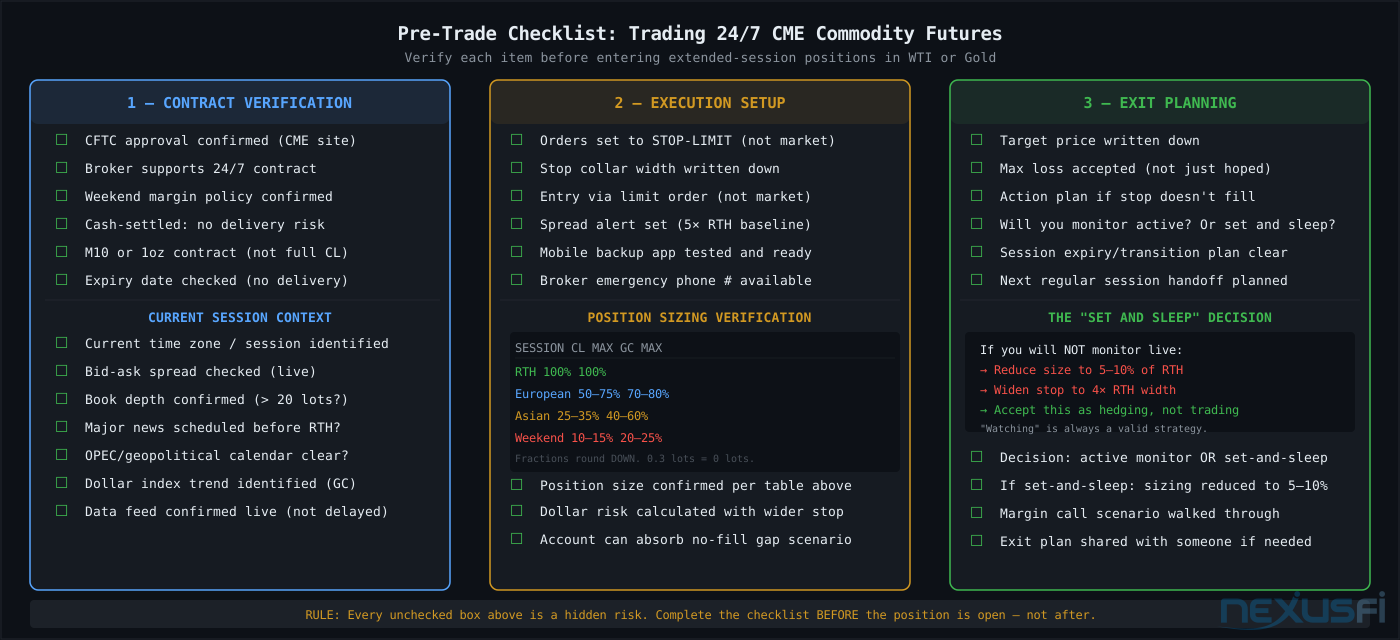
Before your first extended-hours CL or GC trade:
Contract verification: Confirm launch dates and CFTC approval status (CME website, not news). Verify your broker supports M10 and the 24/7 gold hours. Confirm margin requirements for weekend holds.
Execution setup: Change your default stop orders to stop-limit for all extended-session positions. Test limit order entry in your platform during off-hours before trading live. Set up alerts for when spreads exceed 5× your RTH baseline.
Sizing rules: Write down your session-specific position limits before you trade. Defaults: European = 70%, Asian = 35%, Weekend = 15% of RTH size. Adjust based on your own risk tolerance, but have written rules before the market opens.
Exit planning: Identify what you'll do if price gaps against you in thin liquidity and your stop doesn't fill cleanly. Know your broker's emergency phone number. Have a mobile app backup.
Session-specific edges: If you're a U.S. RTH trader who doesn't have a defined edge in extended sessions, the most valuable use of 24/7 trading is hedging existing positions — not speculating. Don't let access create the illusion of opportunity.
Knowledge Map
Prerequisites
Understand these firstGo Deeper
Build on this knowledgeCitations
- — US-Israeli Strikes Kill Iran's Supreme Leader -- Oil Surges (2026) 👍 3“the gap tells you where the fear is, not the institutional money is. Bigger the gap, bigger the fear. Crude opened up $7. Hope you sold. 2 Hours later it's +$2.50 down $4.50 from the open.”
- — US-Israeli Strikes Kill Iran's Supreme Leader -- Oil Surges (2026) 👍 2“Crude oil futures surged roughly 11% at the open, gold climbed nearly 2%, and equity futures slipped. With the Strait of Hormuz under threat -- carrying roughly 20% of global oil supply.”
- — US-Israeli Strikes Kill Iran's Supreme Leader -- Oil Surges (2026) 👍 1“That kind of volume in a thin Sunday session is usually retail panic meeting institutional liquidity. The speed of the reversal supports your fade thesis more than it supports sustained repricing.”
- — Anyone trading overnight successfully? (2019) 👍 6“CL sometimes trades well with news during the Asian session but usually is thin when nothing pushing it. The best times overnight to trade it is during the London session. It moves well and my edge allows profit similar to the day sessions.”
- — What is the best time to trade CL? (2013) 👍 20“The start of the London session can be some of the simplest and potentially profitable CL trading IMHO. Quite often, there's a tendency for CL to mark a top or bottom for the freshly developing day around the 3am EST period. Developing VWAP is key -- it serves as fairly reliable S/R for scalps.”
- — Holding futures overnight (2021) 👍 2“An over-weekend hold is much riskier than a weekday overnight hold because while the market is closed and stops can't pull you out when many world events take place. Many an account-killing trade have taken place as the opening price for a contract on Sunday at 5 PM is far, far, far away from where the trader's position closed on Friday.”
- — Prnewswire.com
- — Kitco.com
- — Trading calendar spreads? (2016) 👍 5“One of the most attractive things about spread trading is the extremely low margin requirements. Current margin for prompt month crude oil is $2,900, for a calendar spread it is $80. That said, thin liquidity in one leg can create devastating dislocations when a position needs to be exited quickly.”
- — The CL Crude-analysis Thread (2015) 👍 8“Asian session CL will typically be stuck in a 40-60 tick range. If you are comfortable with that, put your stop and forget about CL until the start of European session. Trading in that environment with a directional bias usually leads to getting stopped out repeatedly.”