



FTSE 100 (Z) Futures: The Complete Trading Guide to the UK's Blue-Chip Index Contract
Overview #
If you trade the E-mini S&P 500 and want to add a second index to your rotation, the FTSE 100 futures (ICE ticker: Z) look attractive on the surface — major western economy, deep market, liquid contract. But the FTSE 100 is not just a British ES. It behaves completely differently, driven by commodity prices, Sterling dynamics, and global macro forces that have almost nothing to do with UK domestic economic health. Understanding why is the difference between adding genuine diversification to your book and adding a correlated position with extra FX risk hidden inside it.
This guide covers everything: what the Z contract actually is, why the GBP/USD relationship is the single most important thing to understand, the dominant sector forces that drive daily price action, how to trade the London open window, and how to construct a FTSE/DAX spread if you want to isolate relative value without taking broad European equity directional risk.
What the FTSE 100 Actually Represents #
The FTSE 100 (Financial Times Stock Exchange 100 Index) is a market-cap weighted price index of the 100 largest companies listed on the London Stock Exchange. The index is maintained by FTSE Russell and rebalanced quarterly. It launched in January 1984 with a base level of 1,000. As of 2025, it trades in the 7,500--8,500 range.
But here is the critical thing most retail traders miss: roughly 75% of FTSE 100 constituent revenues are earned outside the United Kingdom. Shell derives most of its revenue from global oil markets. HSBC is one of the world's largest banks with most of its business in Asia. Rio Tinto mines copper in Chile, iron ore in Australia, and alumina in Canada. The FTSE 100 is not an index of UK economic health — it is a globally-diversified index of large companies that happen to be listed in London, many of which report earnings in USD, EUR, and AUD but pay dividends in GBP.
This global revenue profile is the root cause of the FTSE 100's most distinctive characteristic: its inverse relationship with Sterling.
The GBP/USD Inverse Correlation: Your Most Important Risk Factor #
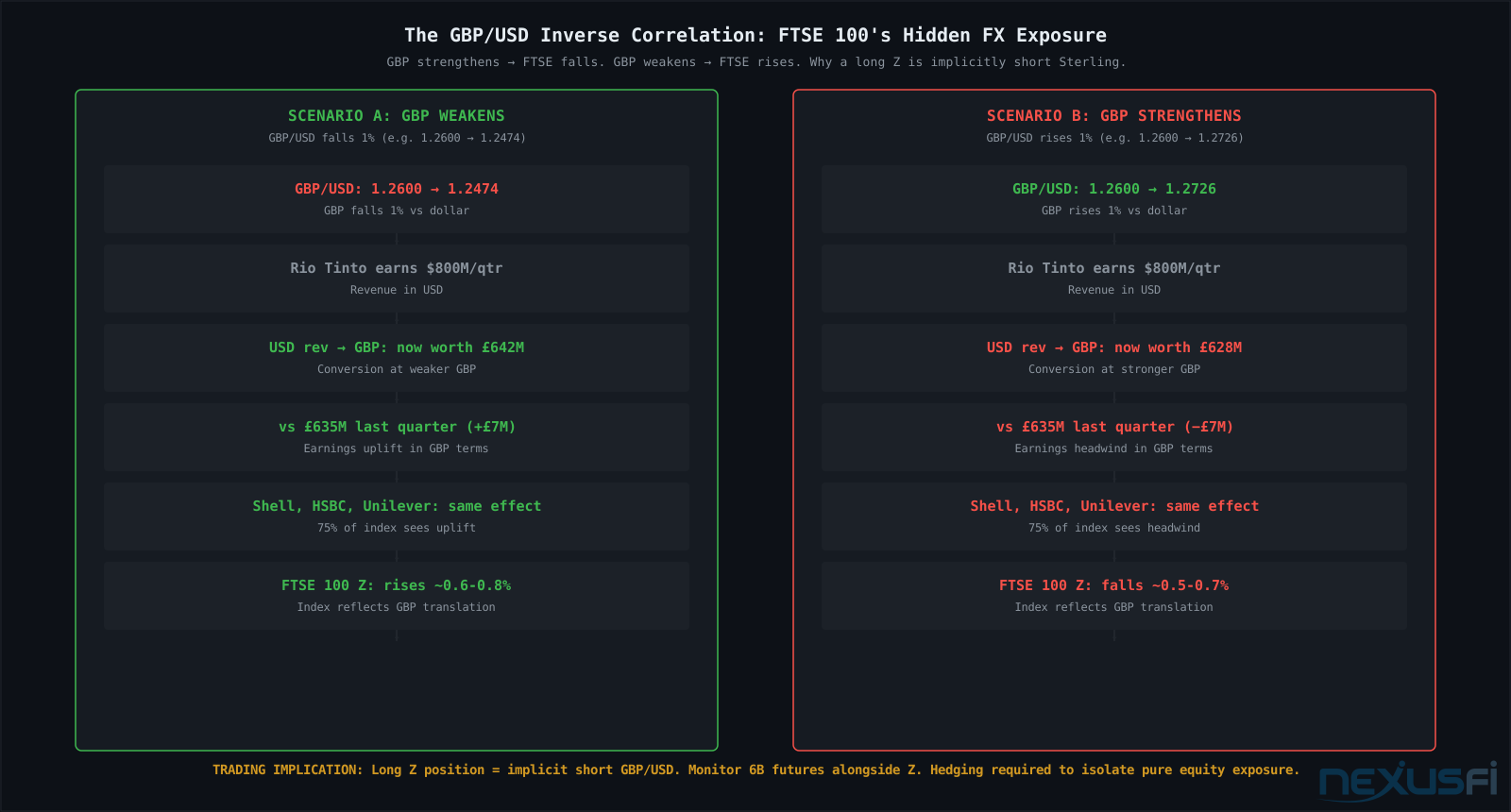
When GBP/USD rises, the FTSE 100 typically falls. When GBP/USD falls, the FTSE 100 typically rises. This inverse correlation runs at roughly -0.5 to -0.7 over medium-term timeframes, and on high-conviction FX days, it is even more pronounced.
The mechanism is straightforward. Take Shell, which earns billions of USD annually from global oil operations. Those USD earnings get converted to GBP for reporting. When GBP weakens — say from 1.2600 to 1.2474 (a 1% fall) — each dollar of Shell's earnings translates into more pounds, boosting reported GBP earnings and lifting the share price. Multiply this across 75+ FTSE 100 constituents earning in foreign currencies, and you get a systematic inverse relationship between Sterling strength and index performance.
The practical trading implication is significant: when you go long the Z contract, you are implicitly short GBP/USD. Your equity thesis and your currency position are linked. If you are bullish on UK equities and bullish on Sterling, these views are in partial conflict — Sterling strength will work against your FTSE long. Traders who ignore this carry unintended FX exposure inside what they think is a pure equity position.
At NexusFi, @tigertrader has written extensively about index arbitrage mechanics and how fair value pricing works across index futures — the same framework applies here, with the added complexity that fair value for Z has an embedded FX component.
If you want pure FTSE equity exposure without the FX drag, you need to hedge the GBP component. One approach: hold a short GBP/USD position sized to offset the FX translation effect. Another: use a total return version of the index that strips out the dividend/FX distortion. For directional traders, the simpler approach is to monitor 6B (GBP/USD futures) alongside Z and only take FTSE long positions when Sterling is weakening or neutral — not when it is in a strong uptrend.
Sector Composition: Why This Index Thinks in Commodities and Rates #
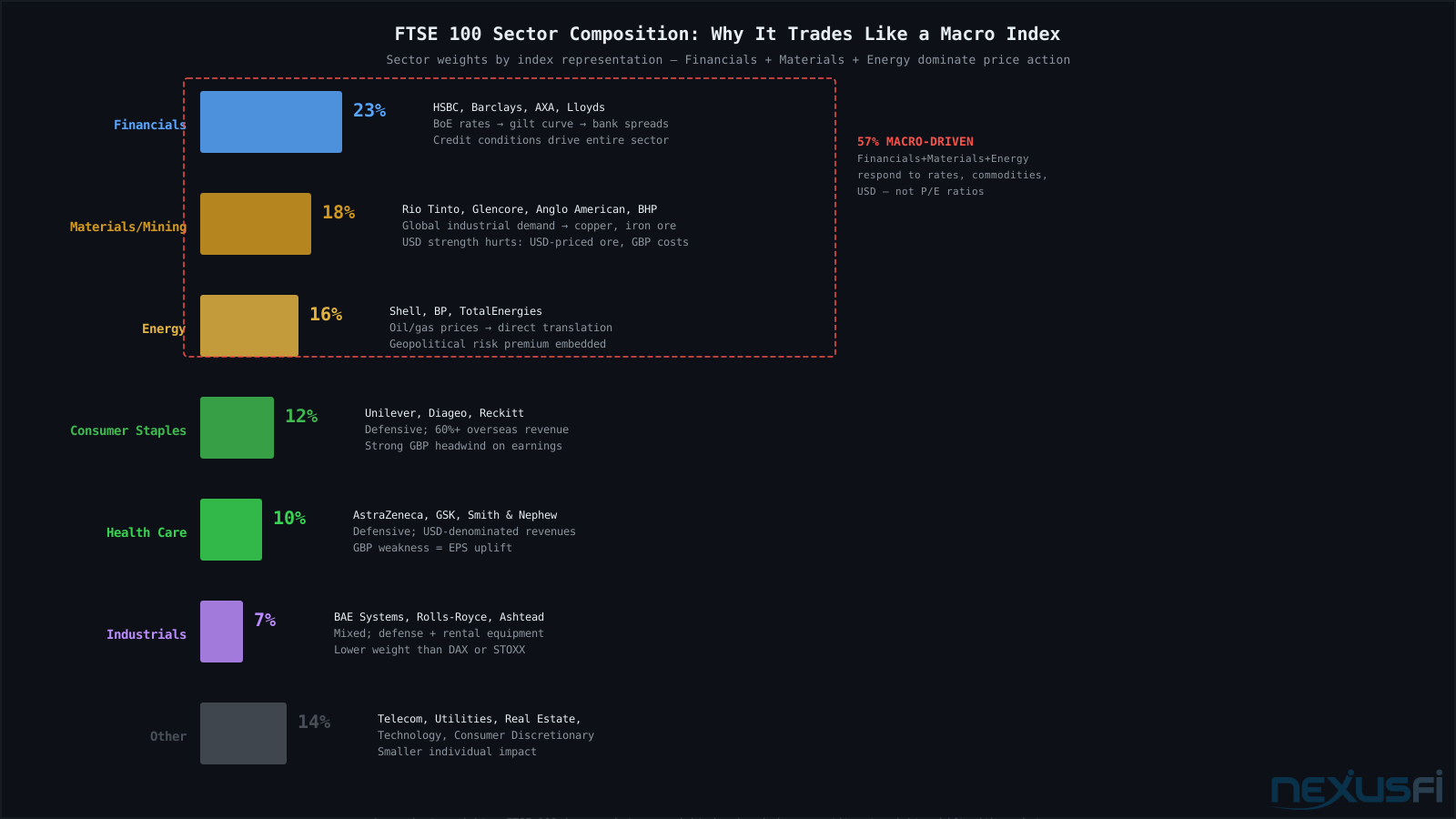
The FTSE 100's sector composition is dramatically different from the S&P 500 or the DAX. Where the S&P 500 carries roughly 29% in technology, the FTSE 100 has approximately 1%. Where the DAX is heavy in industrial and automotive companies (Volkswagen, BASF, Siemens), the FTSE 100's heavy sectors are:
- Financials (~23%): HSBC, Barclays, Standard Chartered, Lloyds, Prudential, Legal & General. These companies move on Bank of England rate decisions, UK gilt curve shape, credit conditions, and international banking margins. When the BoE surprises the market with a rate hike or cut, financials can swing 2--4% intraday, dragging the entire index.
- Materials and Mining (~18%): Rio Tinto, Glencore, Anglo American, Antofagasta, BHP (UK-listed). These companies are commodity-price pure plays. When copper prices rise 3% on China PMI data, Rio Tinto opens up 4--5%. When iron ore demand concerns hit, the same stocks fall hard. This sector makes the FTSE 100 behave partly like a commodity complex, responding to global industrial demand, China growth data, and supply disruption news.
- Energy (~16%): Shell, BP. These two companies alone carry significant index weight. Brent crude price action, OPEC decisions, and geopolitical risk premiums in oil markets translate directly into FTSE 100 price action through this sector. The 2022 energy spike that sent oil past $120/barrel was one of the reasons the FTSE 100 outperformed most other western indices that year -- energy stocks surged while everything else fell.
Combined, these three sectors represent roughly 57% of the index — and all three respond to macro forces rather than earnings-growth narratives. A strong Q4 earnings report from Apple does nothing for Rio Tinto. A Fed rate hike concerns US equity markets but may actually help FTSE 100 miners through a weaker USD boosting commodity prices. The drivers are genuinely different.
ICE Z Futures Contract Specifications #
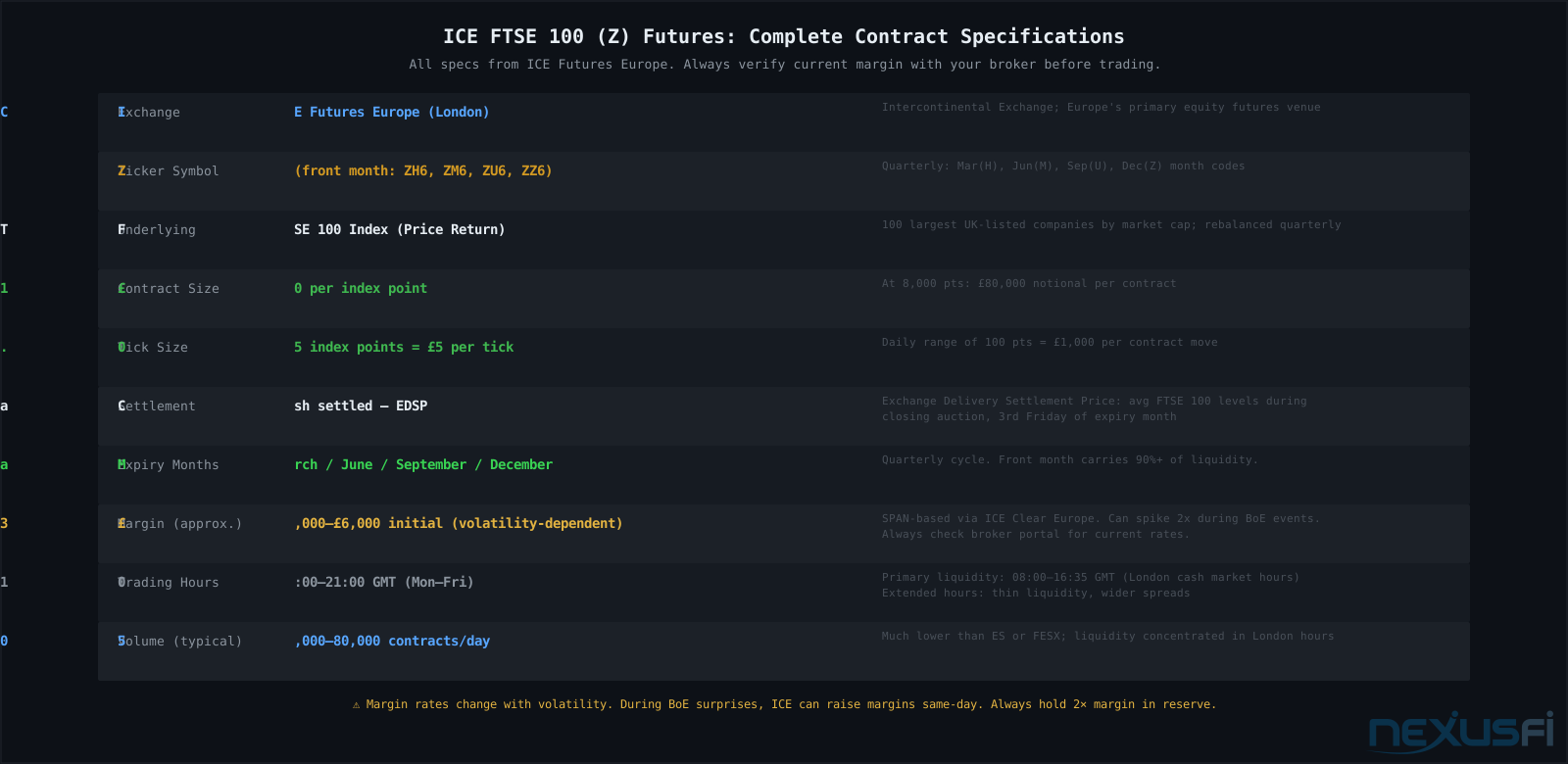
FTSE 100 futures trade on ICE Futures Europe (Intercontinental Exchange) in London. The primary contract code is Z, with quarterly expiry months using standard futures month codes: H (March), M (June), U (September), Z (December). A front-month contract might appear as ZH6, ZM6, ZU6, or ZZ6 depending on your data vendor.
Key specifications:
- Multiplier: £10 per index point
- Tick size: 0.5 index points = £5 per tick
- Settlement: Cash-settled against the EDSP (Exchange Delivery Settlement Price), calculated as the average of FTSE 100 levels at one-minute intervals during the closing auction on the third Friday of the expiry month
- Expiry cycle: Quarterly (March, June, September, December)
- Trading hours: 01:00--21:00 GMT, Monday--Friday; primary liquidity 08:00--16:35 GMT
- Initial margin: Approximately £3,000--£6,000 per contract in calm conditions (SPAN methodology, set by ICE Clear Europe)
At 8,000 index points, one contract controls £80,000 notional. A 100-point daily range (common in moderate volatility) means £1,000 per contract move. This is smaller notional than ES (where a similar daily move might mean $1,250--1,500 per contract) but the Z contract is trading in GBP, adding currency risk if your account is USD-denominated.
Always verify current margin requirements with ICE Clear Europe or your broker before sizing positions. Margin can expand sharply and rapidly during volatility events — especially around BoE decisions, UK budget announcements, and global risk-off episodes. ICE has the authority to raise margins same-day during extreme volatility, which can force position reductions at exactly the wrong time if you are carrying size.
Liquidity Windows: London Rules Everything #
The FTSE 100 Z contract is a London product. It trades on London hours. Everything about execution quality flows from this fact.
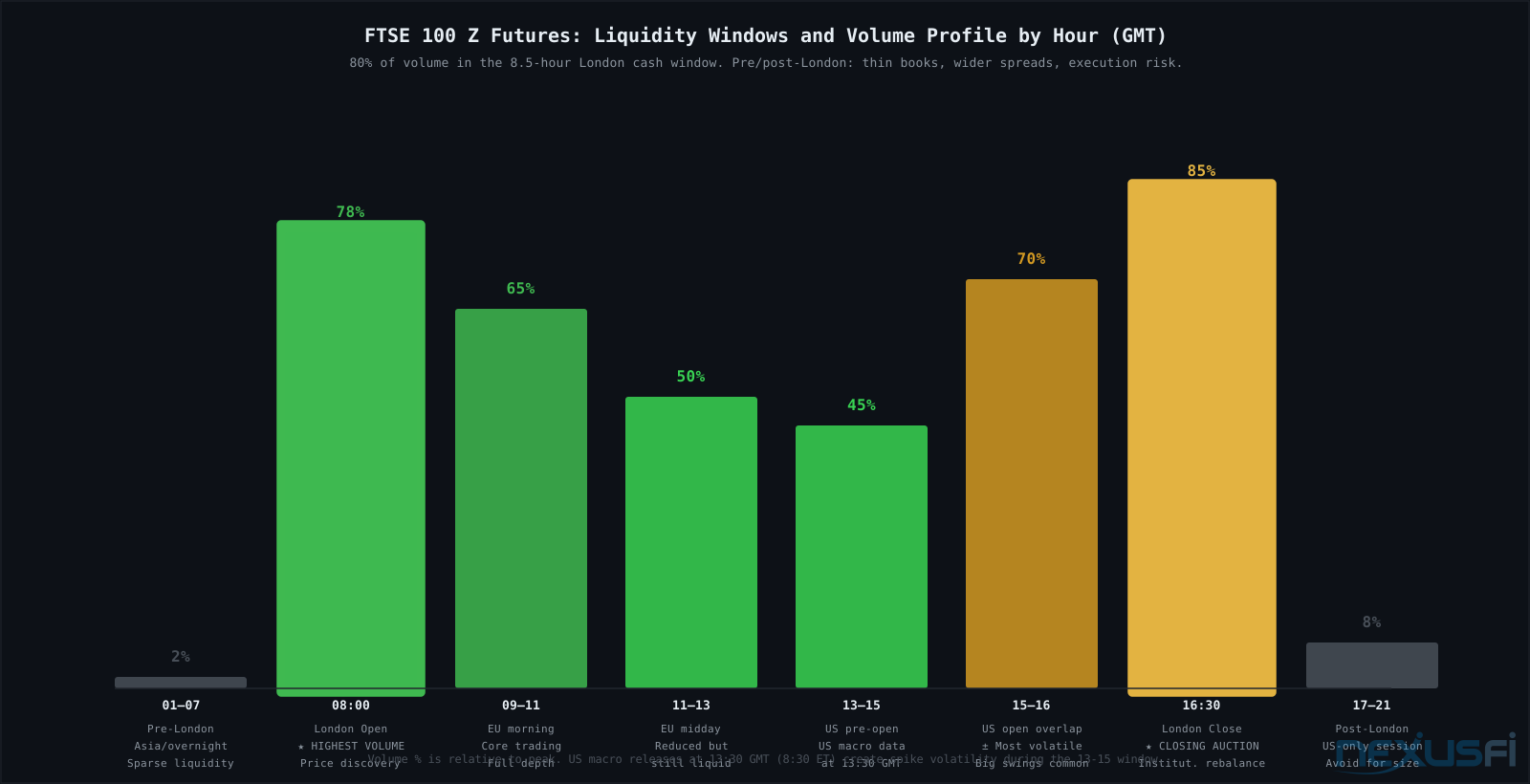
During the London cash market session (08:00--16:35 GMT), the Z contract is well-bid with tight spreads and depth at multiple price levels. Outside this window — especially during US-only hours (17:00--21:00 GMT) — order book depth thins dramatically, spreads widen, and fills on any size become unpredictable. Trading the Z contract at 19:00 GMT is like trading ES at 03:00 EST: technically possible, practically unwise for anything beyond small positions.
Two windows within the London session deserve special attention:
The London Open (08:00--08:30 GMT): The highest-volume period of the day. UK cash equities open at 08:00, triggering institutional rebalancing, overnight gap fills, and the translation of any Asian or US overnight price discovery into London prices. For FTSE futures, this window often produces the session's largest moves in the shortest time.
The London Close and Closing Auction (16:15--16:35 GMT): The closing auction at 16:30 GMT is when institutional investors execute their end-of-day rebalancing. This creates significant but unpredictable volume. The closing auction can trap retail traders who hold positions too close to the market close — a 30-point gap in the final 5 minutes is not unusual during large rebalancing days. Unless you specifically understand what is happening in the closing auction, exit before 16:15 GMT to avoid this noise.
US Economic Data and Cross-Market Impact #
US economic releases at 13:30 GMT (08:30 ET) — nonfarm payrolls, CPI, retail sales — create spike volatility in the FTSE 100 Z contract during an otherwise quieter mid-session window. The mechanism: US data moves the dollar, which moves GBP/USD, which moves FTSE 100 through the earnings-translation effect described above. A much-stronger-than-expected US jobs report causes the dollar to strengthen, GBP/USD to fall (even though it has nothing to do with the UK economy), and FTSE 100 Z to spike higher as the weaker pound makes FTSE constituents' USD earnings more valuable in sterling terms.
This creates an unusual situation where FTSE 100 traders need to understand US economic data not for what it says about the UK, but for what it implies about GBP/USD through USD strength. It is one more reason the FTSE 100 is a genuinely different kind of index to trade — you need macro breadth across commodities, GBP, UK rates, and US data simultaneously.
Spread Trading: FTSE 100 vs DAX or Eurostoxx #
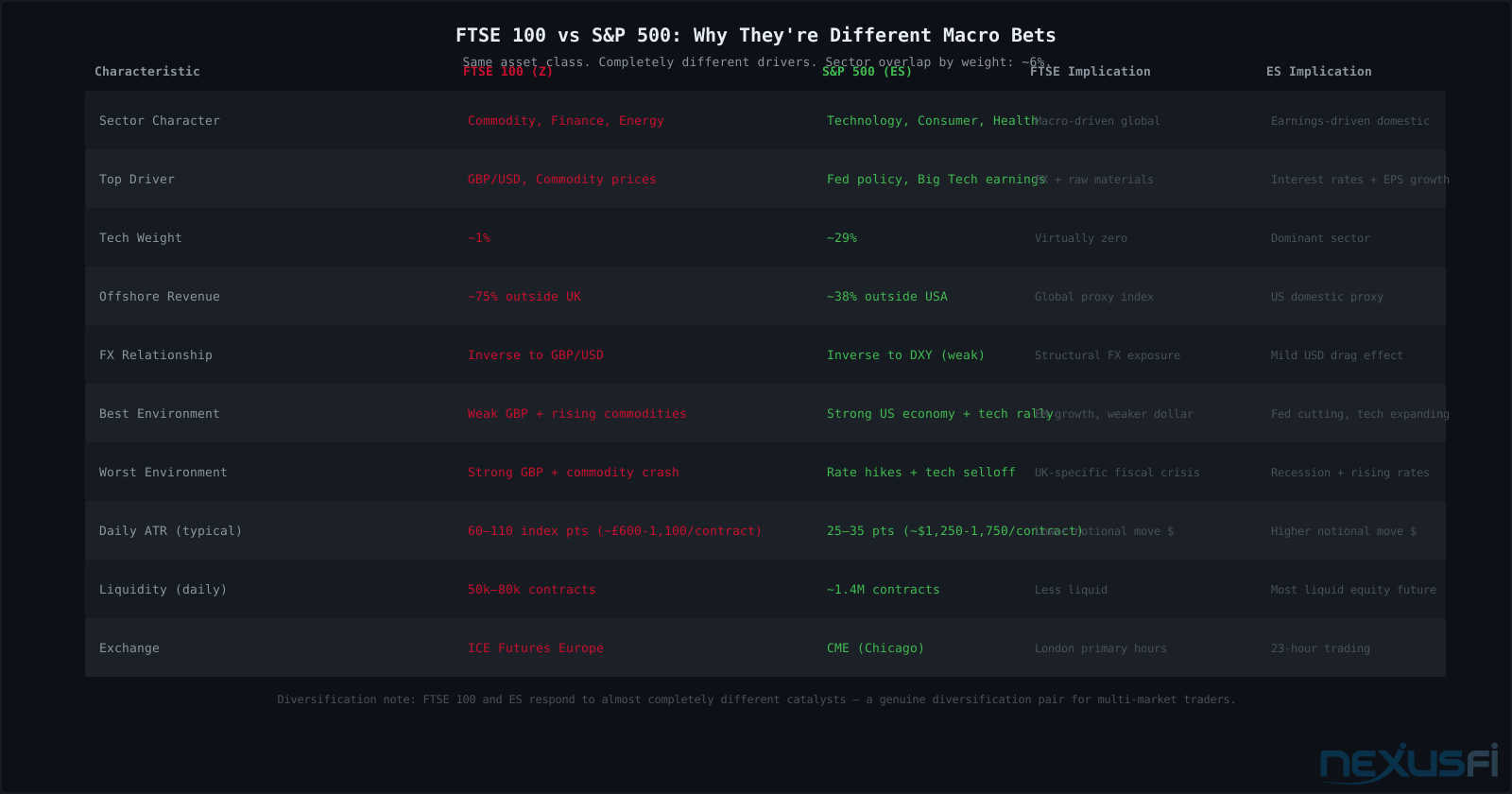
Advanced traders use FTSE 100 / DAX (FDAX) or FTSE 100 / Eurostoxx 50 (FESX) spreads as relative value plays within the European equity complex. The rationale: both indices are large-cap European equity benchmarks, share roughly 0.75--0.88 correlation during normal conditions, and respond similarly to broad European risk sentiment — but they diverge meaningfully on sector rotation, currency, and UK-specific events.
@Fat Tails analyzed the mechanics of cross-index spread construction at NexusFi, noting that the ratio between ES and FDAX requires careful calculation when building fair spreads across different contract sizes and index levels.
The same principle applies to FTSE/DAX spreads. The naive approach — buy one Z, sell one FDAX — creates a lopsided position because the notional values differ much (£80,000 for Z at 8,000 pts vs roughly €175,000 for FDAX at ~17,500 pts). A properly constructed FTSE/DAX spread requires calculating a beta-adjusted hedge ratio and potentially trading 2 Z contracts per 1 FDAX contract, depending on current volatility.
The FTSE 100 tends to outperform the DAX when:
- Commodity prices are rising (mining stocks surge; DAX industrials are not a direct beneficiary)
- GBP weakens relative to EUR (earnings translation boosts FTSE; DAX reports in EUR)
- Global value rotation favors financials and materials over industrials and tech
- Oil supply disruption premium is elevated (benefits Shell/BP more than any DAX constituent)
The FTSE 100 tends to underperform the DAX when:
- European manufacturing data is strong (Germany's industrial complex benefits most)
- GBP strengthens versus EUR (hurts FTSE translation; neutral for DAX)
- UK-specific political or fiscal stress (Brexit uncertainty, budget crises)
- Commodity prices falling (mining sectors gets hit harder than DAX's diversified composition)
@kkfx documented the realities of spread and pairs trading with index futures at NexusFi, noting that the ES/NQ spread ratio varies between traders and requires volatility-normalization to avoid creating inadvertent directional exposure.
The same discipline applies to FTSE/DAX. Recalculate your hedge ratio weekly using trailing 20-day implied volatility. Monitor GBP/EUR as a confirmation signal — the spread and the currency pair often move together. Watch for correlation breakdowns around UK-specific events (BoE meetings, UK budget statements, CPI releases) where the spread can widen dramatically and then snap back, creating both risk and opportunity.
One margin benefit of the spread: if your clearing house and broker recognize the offsetting risk in your FTSE long and DAX short, you may receive a combined margin credit that reduces total initial margin requirement by 20--35%. This makes the spread more capital-efficient than running two directional positions. Verify with your broker — margin netting is not guaranteed and depends on your specific clearing arrangement.
FTSE 100 vs S&P 500: They Are Not the Same Bet #
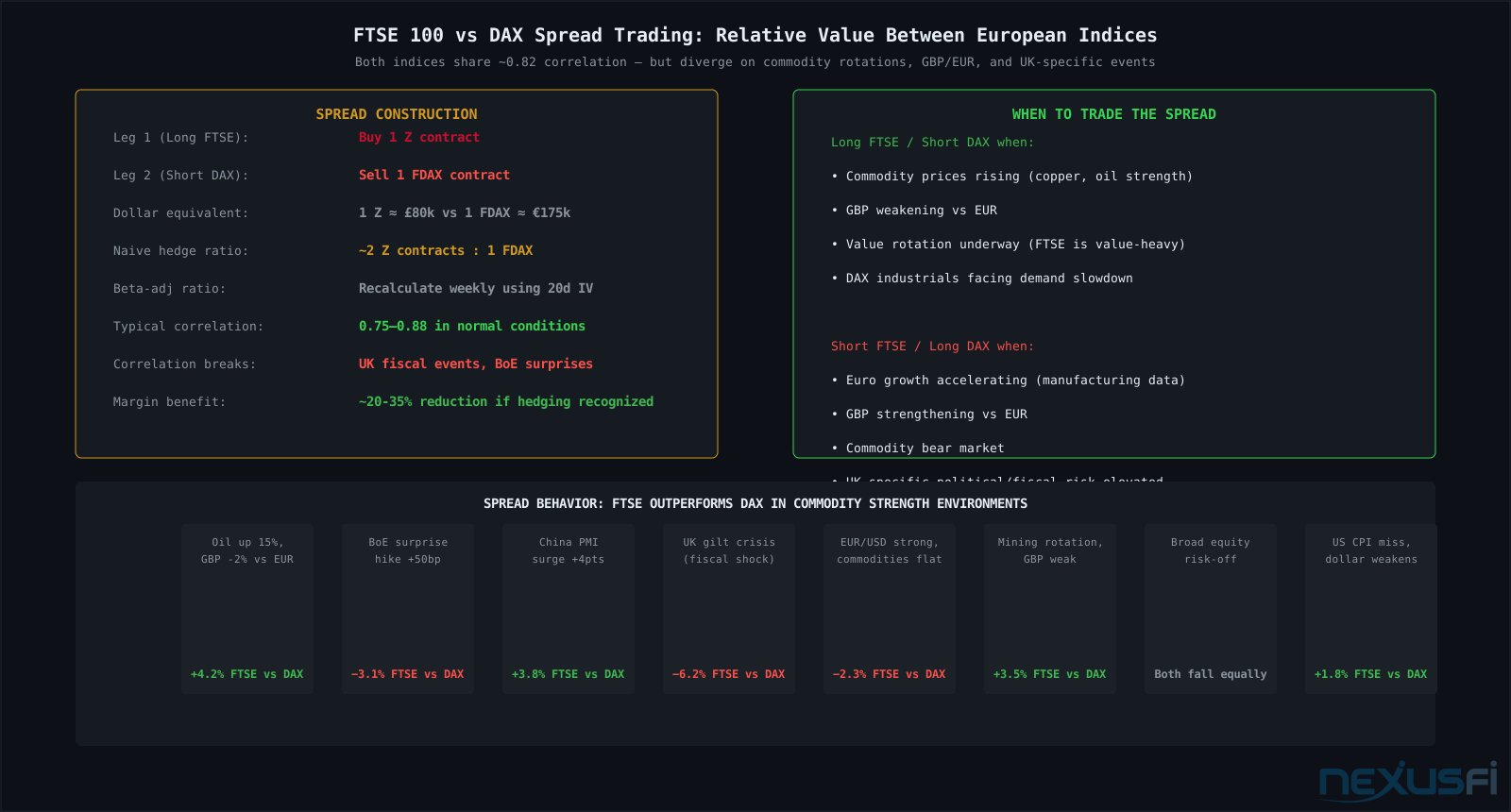
The FTSE 100 and S&P 500 share roughly 6% sector overlap by weight. The two indices respond to almost completely different catalysts:
The S&P 500 is driven by tech earnings, Fed policy, consumer spending, and domestic US growth. The FTSE 100 is driven by commodity prices, GBP/USD, UK gilt yields, and global macro. A strong US payrolls report is generally positive for ES and potentially positive for FTSE (through USD strength → weaker GBP → FTSE translation boost) but for completely different reasons. A China PMI miss is negative for FTSE (mining stocks fall) but may be neutral or only mildly negative for ES (tech companies care about it mainly through financial conditions, not direct commodity exposure).
This genuine lack of overlap makes FTSE 100 futures an interesting addition to a US equity futures book for traders who want to hold overnight exposure to equities without doubling their effective position in US market risk. The diversification is real, not cosmetic — the correlation between Z and ES on most days runs around 0.55--0.70, which is meaningful but not high enough to make them substitutes.
The primary risk to holding Z when you already hold ES is an unexpected, sharp global risk-off episode: in extreme moves (COVID crash March 2020, 2008 financial crisis, etc.), both indices fall together and the correlation spikes toward 1.0. In those moments, diversification between world equity index futures provides minimal protection because global equities sell off as a single asset class.
Margin Management and Position Sizing #
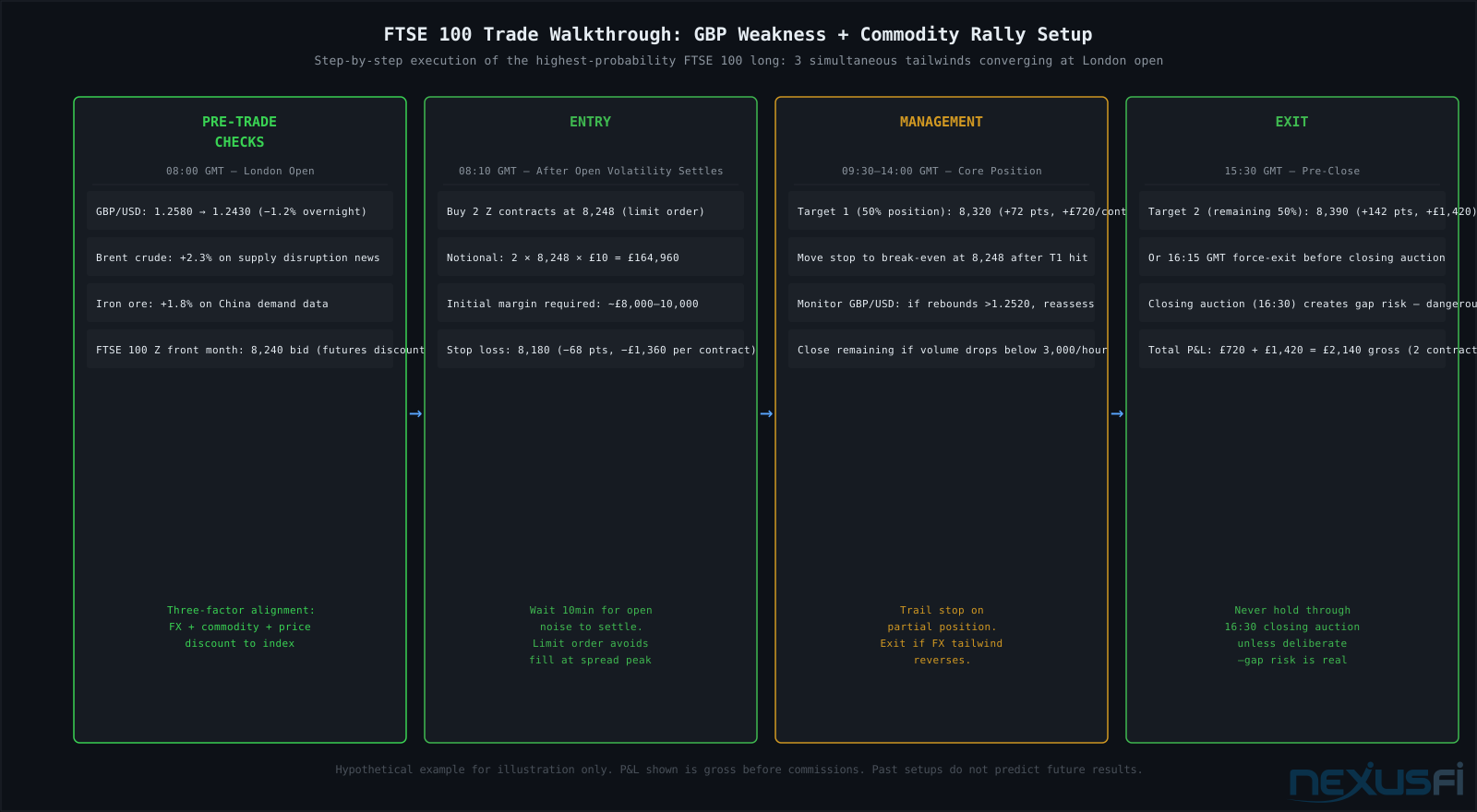
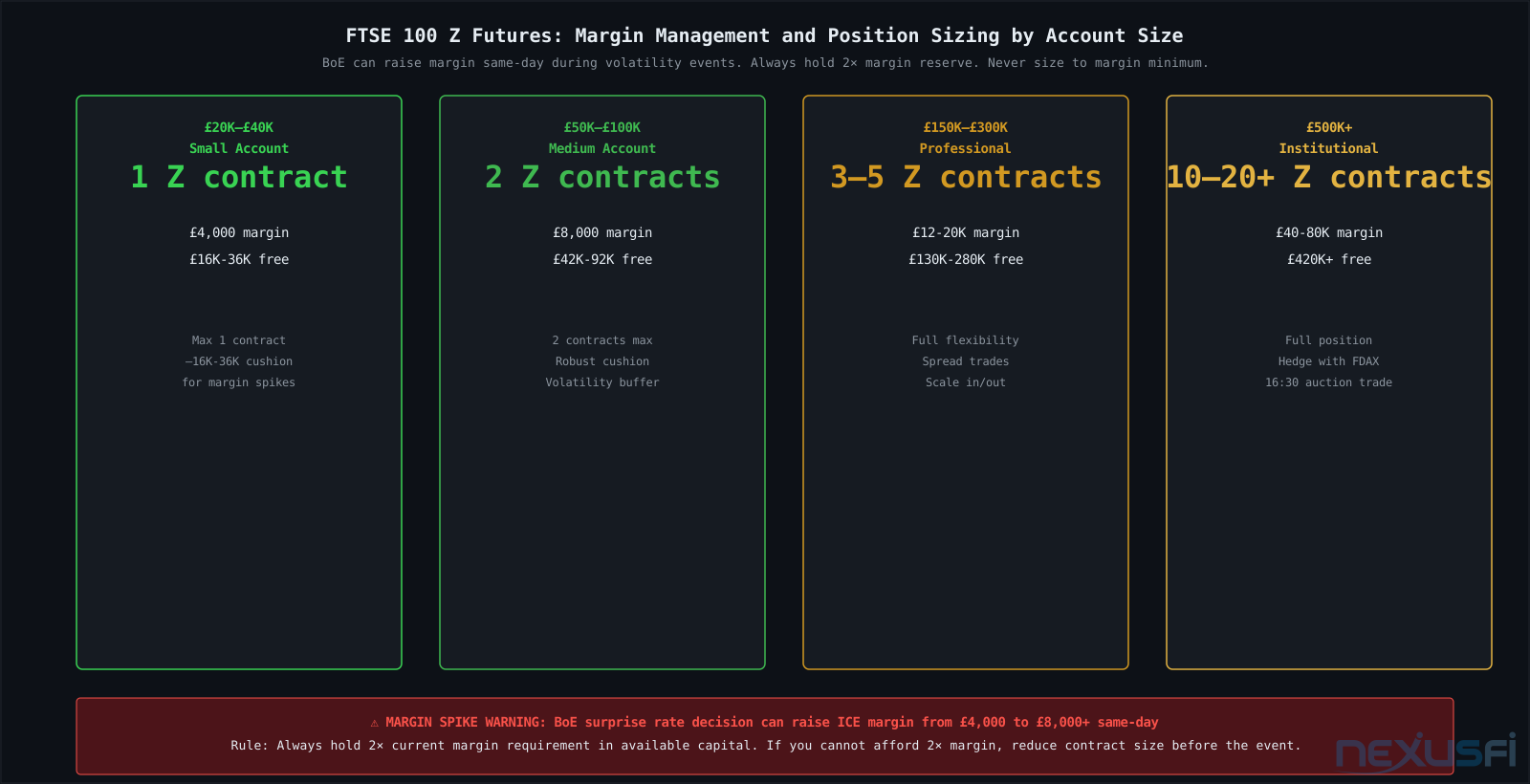
FTSE 100 Z futures require disciplined margin management. In calm conditions, initial margin runs approximately £3,000--£4,000 per contract. During volatility events — especially around BoE decisions or UK political shocks — ICE has the authority to raise margins to £6,000--£8,000 or higher, and can do so same-day. If you are holding multiple contracts and this happens, you may face a margin call that forces you to reduce your position size at exactly the wrong moment.
The professional approach: always hold at least 2× the current initial margin in available capital per contract. This gives you buffer against margin expansions and prevents forced liquidations during the exact moments when you might want to add to a position rather than reduce it.
Position sizing should account for the FTSE 100's daily average true range. In moderate volatility conditions, the index moves 60--110 points per day. At £10/point, that is £600--£1,100 per contract per day. For a trader with a £50,000 account, one contract represents meaningful daily P&L swings. Two contracts means potentially £2,200 daily range exposure on rough days — a significant fraction of capital that requires careful risk management.
Key Drivers to Monitor Daily #
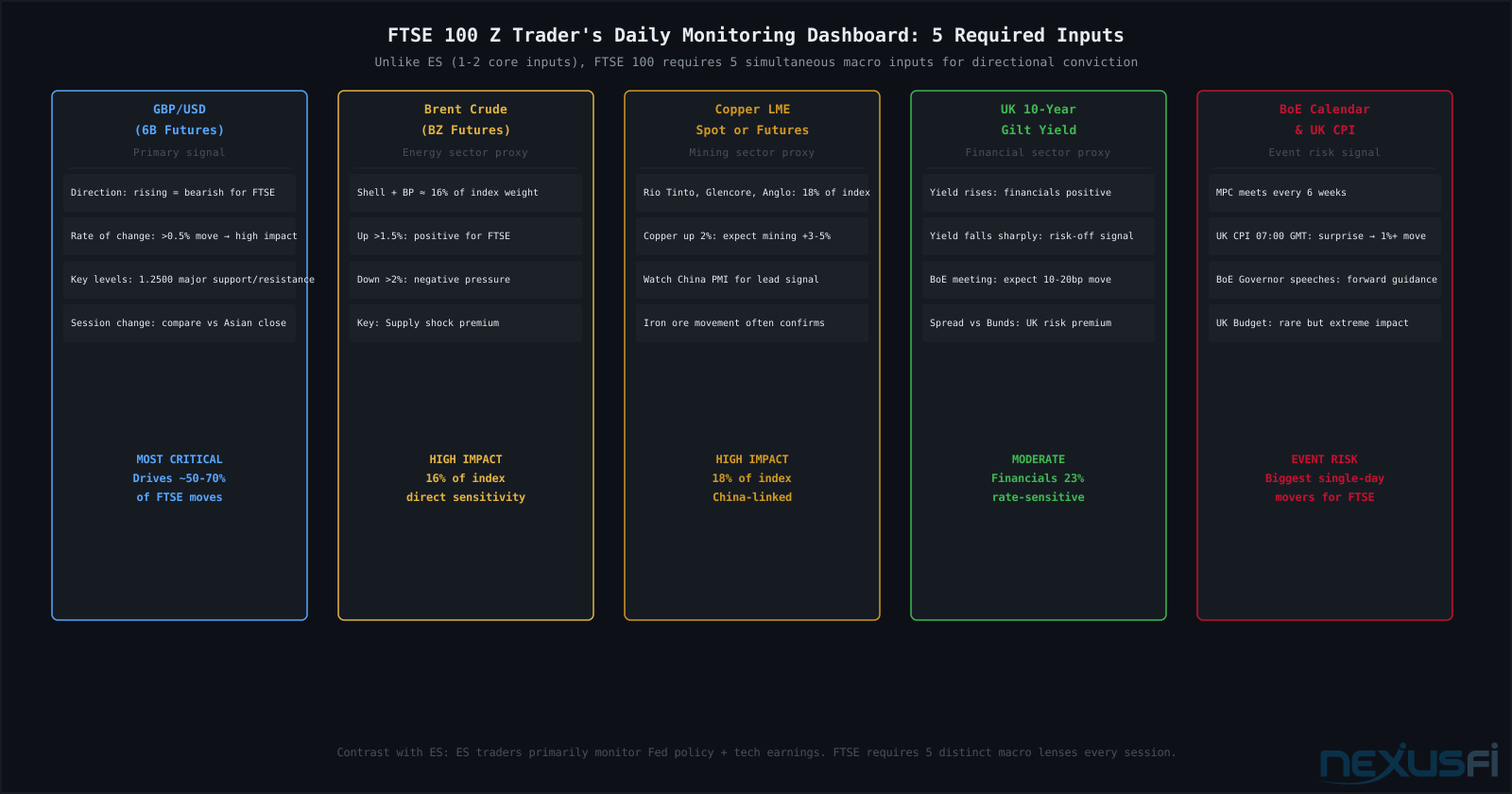
To trade FTSE 100 Z futures effectively, you need a daily monitoring routine that tracks:
- GBP/USD (6B futures): Direction, rate of change, key levels. The most important single input.
- Brent crude (BZ futures): Energy sector moves ~16% of the index.
- Copper and iron ore spot prices: Mining sector driver. Look for London Metal Exchange copper as the proxy.
- UK gilt yields (10-year): Financial sector and rate-sensitive names.
- Bank of England calendar: MPC meetings, rate decisions, BoE Governor speeches -- all can trigger 1%+ intraday moves.
- US data releases (13:30 GMT): Through USD and GBP/USD, major US releases affect FTSE.
- China PMI and industrial production: Mining stocks move directly on China demand expectations.
@kkfx at NexusFi covered the structural framework of pairs trading in index futures, emphasizing that the ratio between index legs needs to neutralize dollar value as the baseline before applying any volatility adjustment.
The same analytical discipline applies to understanding FTSE 100 macro drivers: identify the primary signals first, normalize them to their dollar impact on the position, then make a weighting decision.
Practical Considerations for Non-UK Based Traders #
If you are a US-based trader, FTSE 100 Z futures introduce additional complexity:
Currency conversion: P&L settles in GBP. If your account is USD-denominated, your broker converts daily mark-to-market P&L at the prevailing GBP/USD rate. This means your actual USD return on a FTSE position includes both the index move and the GBP/USD move since your entry. If FTSE rises 100 points (+£1,000 per contract) but GBP/USD falls 0.5% while you hold the position, your USD return is roughly £1,000 × (1 - 0.5%) × USD conversion rate — less than you would expect from the index move alone.
Trading hours: The primary FTSE liquidity window (08:00--16:35 GMT) is 03:00--11:35 EST in US Eastern time. This is early morning to late morning US time — workable for traders willing to be active during these hours, but not compatible with a US daytime trading schedule if you want peak liquidity.
Broker access: Not all US retail futures brokers offer ICE futures products directly. Verify your broker has access to ICE Futures Europe before planning to trade the Z contract. Some US brokers provide this through a clearinghouse arrangement; others require opening an account with a UK-regulated broker instead.
How FTSE 100 Reacts to UK-Specific Events #
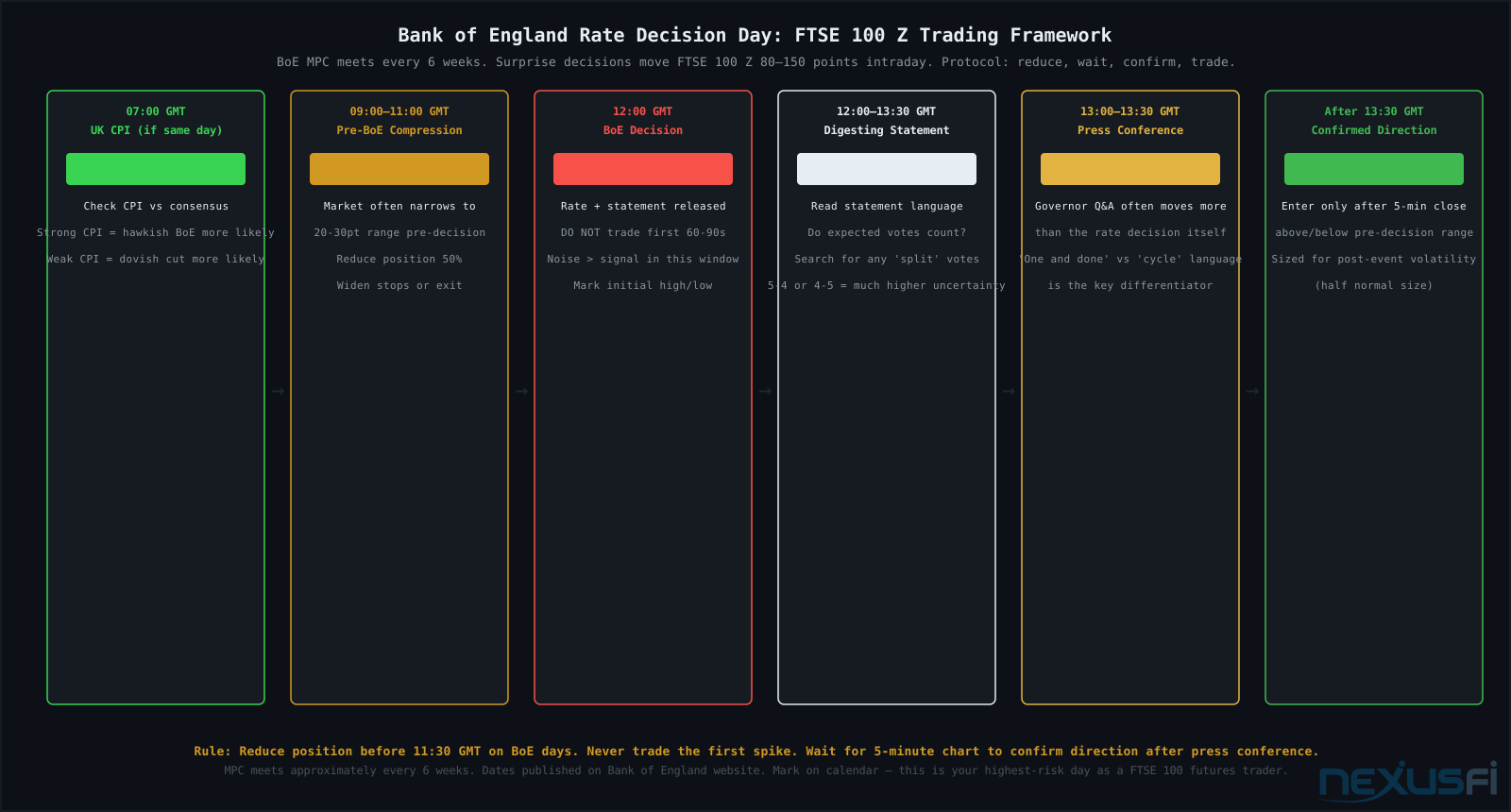
While the FTSE 100 is globally driven, UK-specific events can dominate over all other factors on specific days:
Bank of England rate decisions: The MPC meets roughly every 6 weeks. Surprise decisions — or hawkish/dovish language departing much from market expectations — can move FTSE 1.5--3% intraday. Financial stocks react first; the rest of the market follows. Markets price BoE expectations through gilt yields, so watching UK 10-year gilt levels heading into BoE meetings gives advance signal on how positioned the market already is.
UK Budget and fiscal announcements: The Chancellor's Budget can create sharp moves in FTSE 100 if it contains unexpected spending, taxation, or borrowing plans. The 2022 mini-Budget (Truss/Kwarteng) is the extreme example: gilt yields spiked dramatically, GBP crashed, and FTSE financials were hit hard within hours — a UK-specific shock that had no parallel in other indices that day.
UK CPI and inflation data: Released monthly, typically at 07:00 GMT. Stronger-than-expected inflation → higher probability of BoE hike → GBP strengthens → FTSE falls (through the FX mechanism). Weaker inflation → potential for BoE cuts → GBP weakens → FTSE rises. The relationship is consistent enough to use as a first-principles guide when interpreting UK inflation surprises.
Getting Started: What You Need to Trade Z #
To trade FTSE 100 Z futures:
- Broker with ICE access: Confirm your broker offers ICE Futures Europe products. Request the ICE margin requirements directly -- they update more frequently than CME margins.
- Data feed: Ensure your data feed covers ICE Z futures with accurate historical data. Symbol mapping varies by vendor -- verify you are looking at ICE FTSE 100 futures, not a CFD or spread-bet synthetic.
- GBP/USD monitoring: Add 6B futures (or spot GBP/USD) to your layout. This is not optional -- it is the most important context signal for FTSE direction.
- Commodity context: Add a Brent crude (BZ) chart and a copper spot or futures chart. These drive 34% of the index collectively.
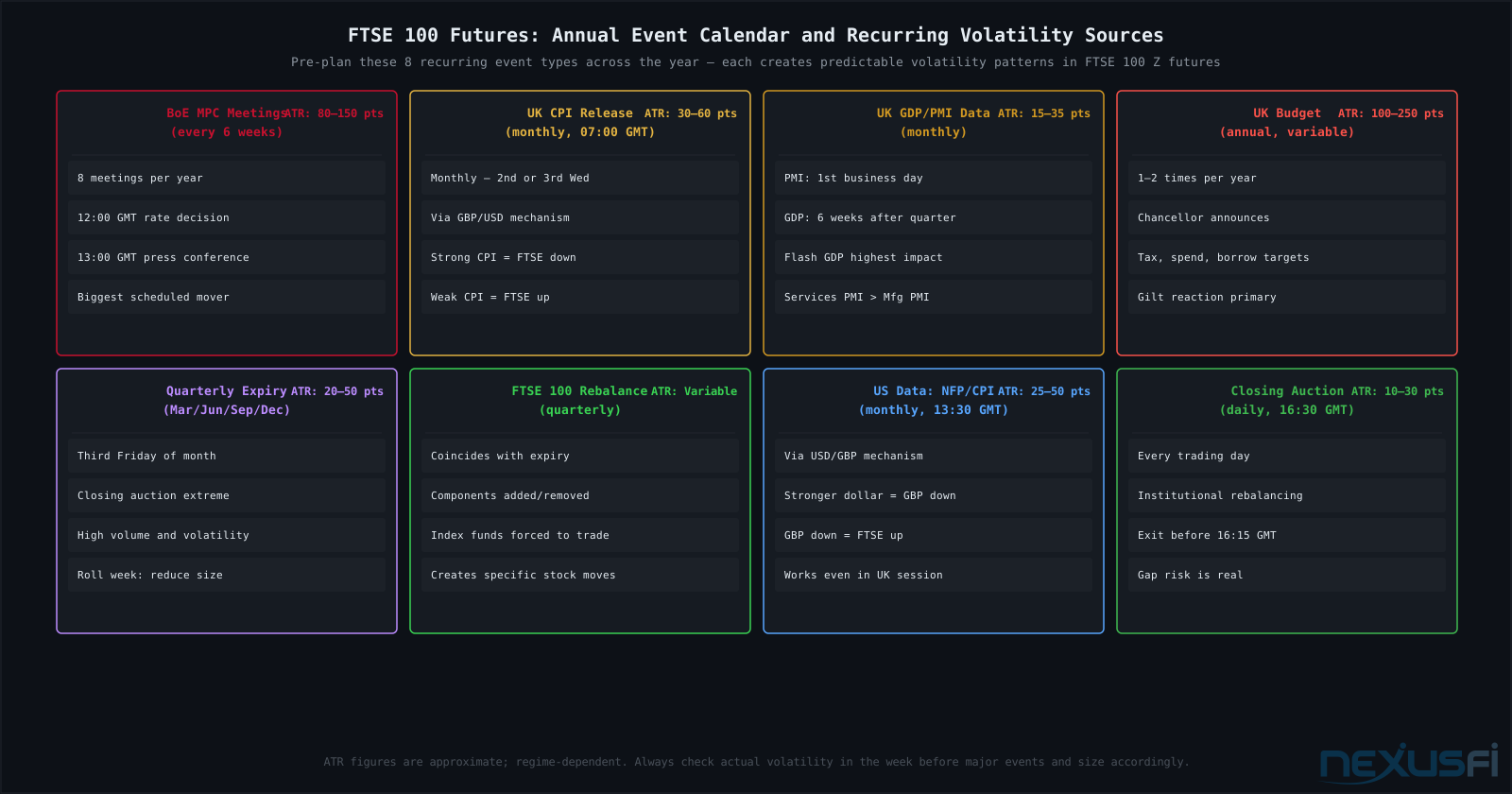
- Economic calendar: Mark BoE meetings, UK CPI, US 13:30 GMT releases. These are your primary event risk windows.
- Position sizing: Start with 1 contract and hold at least £10,000 in reserve margin before adding a second contract.
FTSE 100 Z vs Other International Index Futures #
If you are choosing between international index futures for portfolio diversification, here is how Z fits in the context of other options:
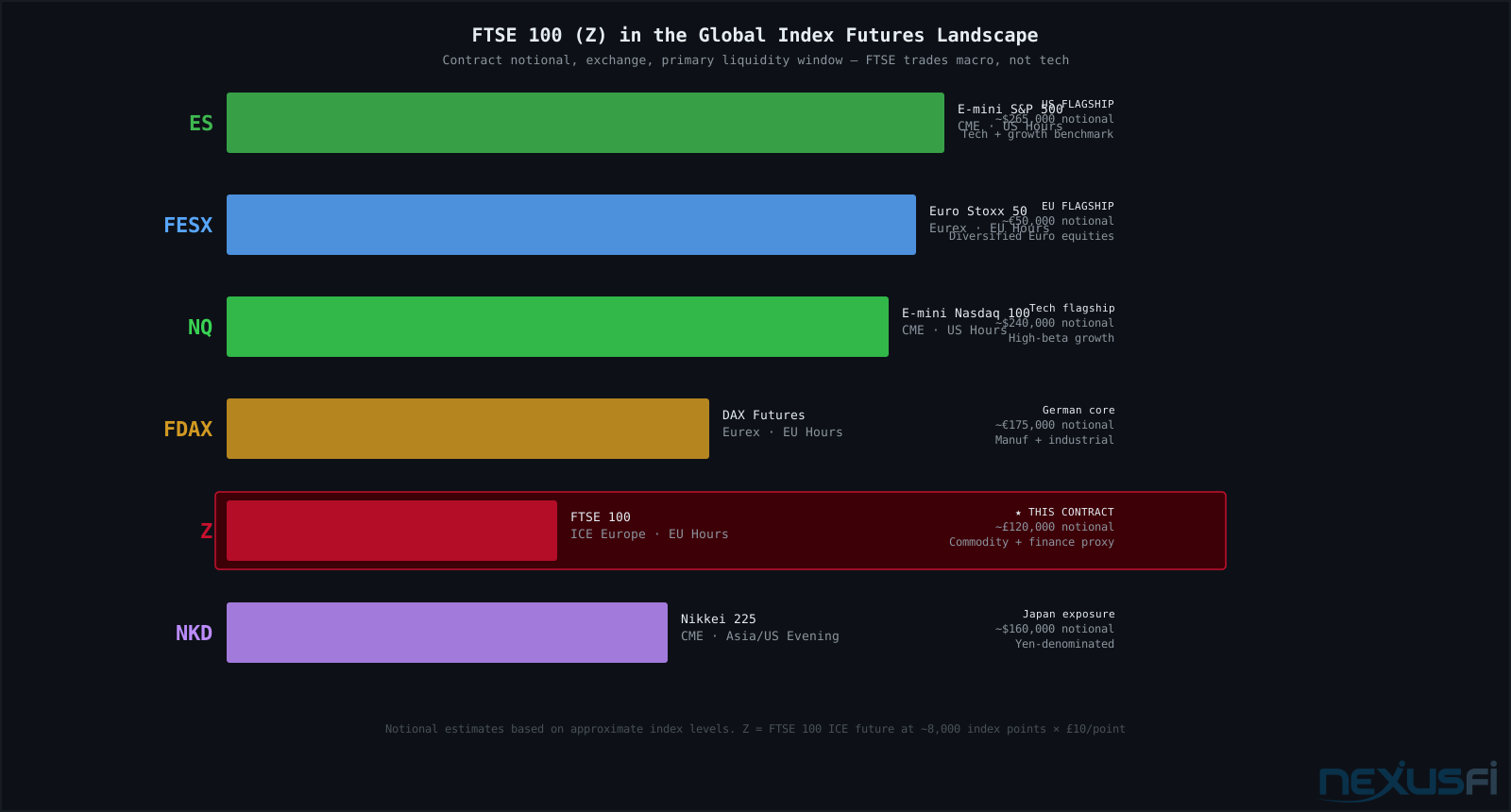
vs DAX (FDAX/FDXM): Both are European index futures trading on different exchanges (ICE vs Eurex). DAX is industrial-heavy, FTSE is commodity-heavy. The correlation (~0.80) makes them suitable spread trading partners. Eurex (DAX) has much higher volume and deeper liquidity.
vs Euro Stoxx 50 (FESX): FESX is the broadest European index future, covering 50 companies across the Eurozone. It is more liquid than Z and more diversified. FESX correlation with Z runs around 0.78--0.85. Traders wanting general European equity exposure with minimal currency complexity often prefer FESX (denominated in EUR, avoiding the idiosyncratic GBP exposure).
vs Nikkei 225 (NKD): Japan exposure. Very different sector and currency dynamics (JPY/USD instead of GBP/USD). Genuinely diversifying against FTSE.
For a complete picture of European equity index futures and their interplay, see the Academy articles on DAX Futures (FDAX/FDXM) and Euro Stoxx 50 (FESX) Futures.
Bottom Line: What the FTSE 100 Z Contract Is Actually For #
FTSE 100 Z futures are a global macro instrument wearing equity index clothing. The 75% offshore revenue profile, the commodity-heavy sector composition, and the inverse GBP/USD relationship mean that trading Z requires a macro-trading mindset: you need to understand currencies, commodity cycles, and UK monetary policy simultaneously.
The traders who do well with Z typically fall into one of three categories: UK-based professional traders who have the local context and access to London-hours information flow; global macro funds using FTSE as a component in basket trades; and international spread traders using FTSE/DAX or FTSE/FESX for relative value. For US retail traders, the combination of early trading hours, GBP currency risk, and the requirement for broad macro competency makes Z a second-tier instrument compared to ES, NQ, or YM — but a genuinely valuable one for those willing to do the work.
The edge in trading FTSE 100 Z futures comes from understanding that correlation with other equity indices is only the starting point. The actual price driver on any given day is more likely to be a copper price move, a BoE press conference tone shift, or GBP/USD breaking a key level than anything happening in US tech stocks.
Knowledge Map
Go Deeper
Build on this knowledgeCitations
- — Spoo-nalysis ES e-mini futures S&P 500 (2014) 👍 12“futures are a function of 2 factors; interest rates and dividends. in the index arb world traders want to know how futures are trading relative to their fair value”
- — What is the best time to trade CL? (2013) 👍 20“The London open and NY midnight open -- as well as those same times from previous days -- can be invaluable. This is what the Bank drives trades around.”
- — Help for a new strategy (2012) 👍 3“FDAX is a future on a total return index. At around 1350, the FDAX around 6700. You would therefore need to calculate a spread from 5 contracts ES against 1 contract FDAX.”
- — Spread / Pairs Trading - the allure and the reality (2013) 👍 10“The ES/NQ spreads ratio will be different for different spread traders, some traders adjust it for volatility in addition to the dollar value and some neutralise it with tick-value.”
- — Pairs trading (2019) 👍 4“For equity indices futures spreads, there is a white paper on CMEgroup website. The common spreads are NQ/ES, YM/ES, ES/EMD, EMD/RTY.”
- — FTSE 100 Index Futures Contract Specifications -- ICE Futures Europe (2025)
- — FTSE 100 Index Methodology and Constituent Data -- FTSE Russell (2025)
- — Spoo-nalysis ES e-mini futures S&P 500 (2023) 👍 4“Another trade idea: buy the YM/NQ spread. Dow is -1% on the year, and NDX is up 32% on the year. We've seen massive rotation into tech. Is it time for value to close the gap?”
- — Comparing Index Futures (2010) 👍 7“I think one of the reasons for the divergence between ES and TF is the strong move of the Euro. If the Euro strengthens, exports from the Euro zone become more expensive.”
- — Bank of England Monetary Policy Committee -- Interest Rate Decisions and Meeting Dates (2025)