



Euro Stoxx 50 (FESX) Futures: The Complete Trading Guide
Overview #
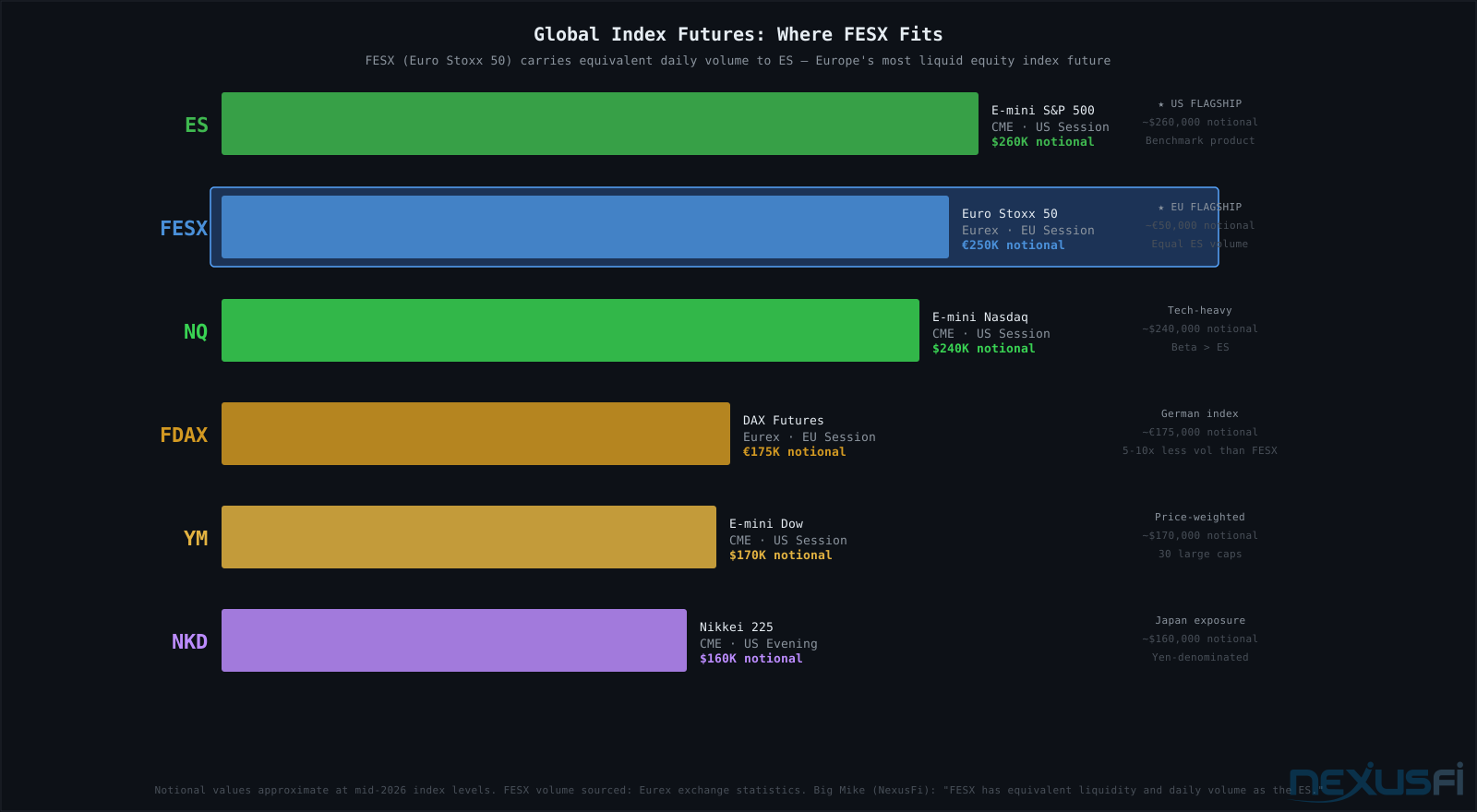
The Euro Stoxx 50 futures contract — ticker FESX on Eurex — is the most liquid equity index futures contract in Europe and one of the most actively traded in the world. With daily volume matching the E-mini S&P 500 (ES), FESX gives traders leveraged exposure to the eurozone's 50 largest companies through a single contract denominated in euros.
If you trade ES for US equity exposure, FESX is the European equivalent. The analogy runs deep: FESX tracks a broad, diversified index of large-cap eurozone stocks; FDAX (the DAX futures) is narrower and more volatile, similar to NQ. As NexusFi founder Big Mike noted when Eurex launched its micro products: "The Euro STOXX 50 (the full contract designated as FESX) has the equivalent liquidity and daily volume as the ES."
Despite this liquidity, FESX receives far less attention from retail traders in North America than it deserves. The trading window — peak hours from 08:00 to 11:30 CET — falls between 2:00 AM and 5:30 AM Eastern Time, which limits US-based participation. But for those willing to trade the European morning or who want overnight exposure without the thin Asian session, FESX offers a distinct and compelling opportunity set.
This guide covers FESX from first principles: what you're actually trading, how the contract is structured, what drives price, and specific strategies that experienced traders have developed for this market.

What Is the Euro Stoxx 50 Index? #
The EURO STOXX 50 is a market-capitalization-weighted index of the 50 largest publicly traded companies in the eurozone — the 19 EU member states that use the euro. Managed by STOXX Ltd. (jointly owned by Deutsche Boerse and SIX Group), the index is free-float adjusted and reconstituted annually, with quarterly reviews for corporate actions.
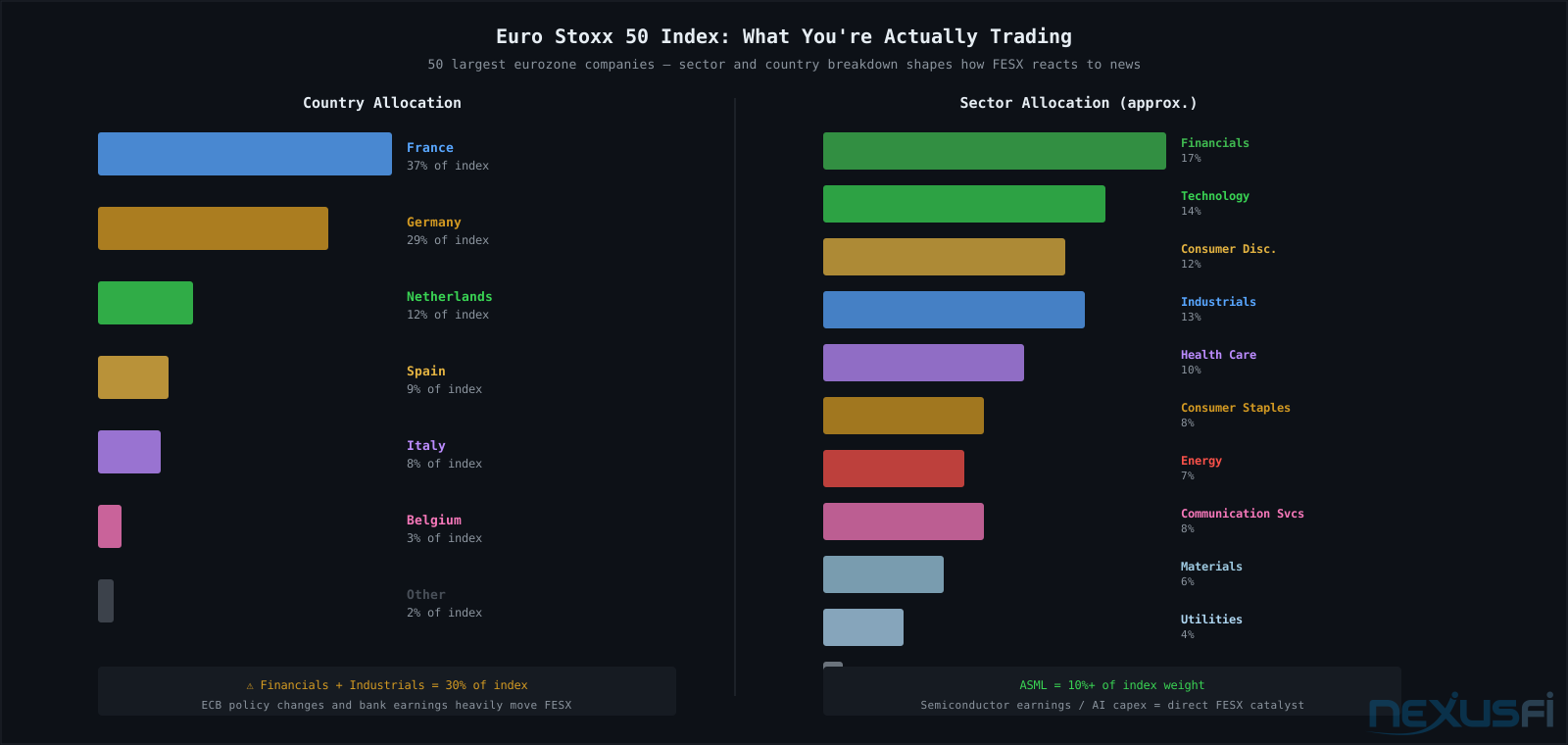
The geographic composition heavily favors France (~37%) and Germany (~29%), with the Netherlands (~12%), Spain (~9%), and Italy (~8%) rounding out the major country exposures. This means FESX is simultaneously a French equity bet, a German industrial proxy, a European banking basket, and an exposure vehicle for European luxury goods. Each constituency responds to different catalysts.
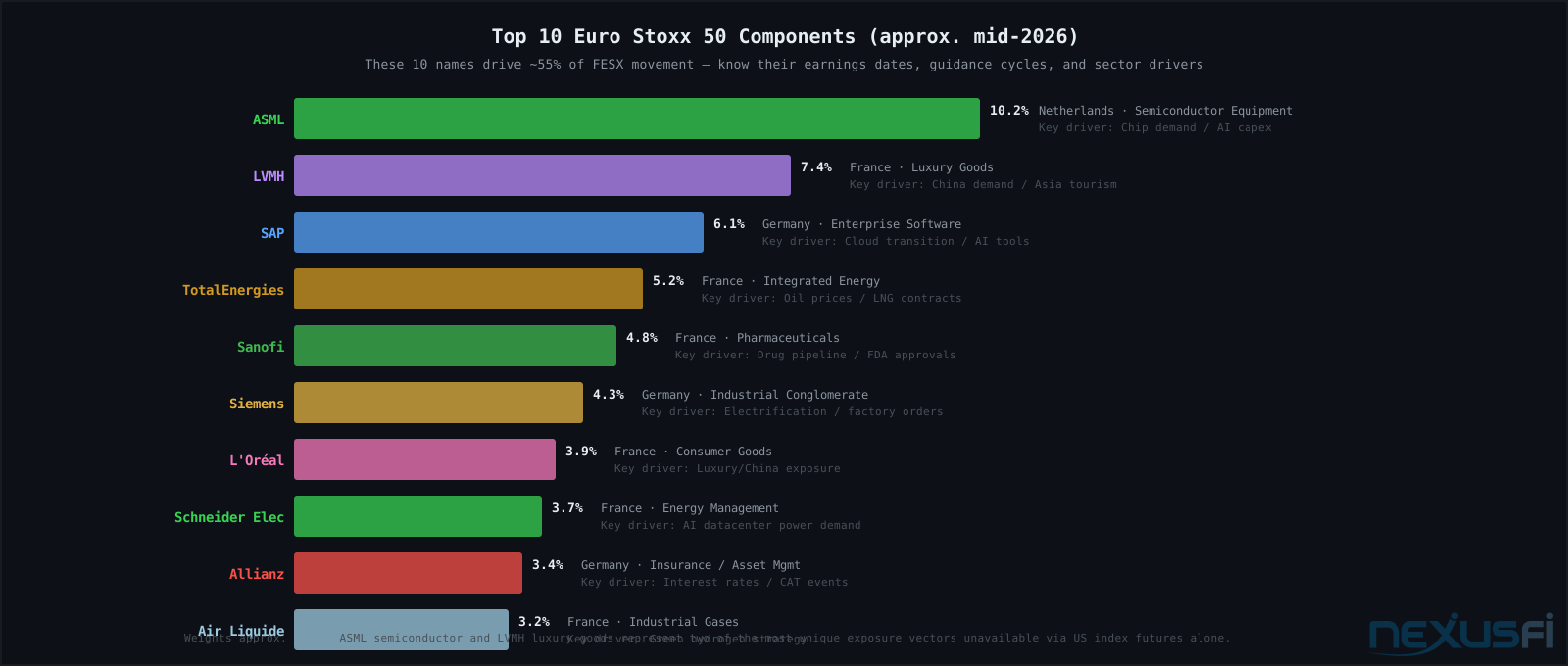
As of mid-2026, the top holdings include ASML (Netherlands, ~10% — the world's only manufacturer of EUV lithography machines), LVMH (France, ~7% — the luxury conglomerate most exposed to Chinese consumer demand), SAP (Germany, ~6% — the dominant European enterprise software company), and TotalEnergies (France, ~5%). These names matter because knowing them helps you predict how FESX will react to events like ASML earnings, a LVMH quarterly update, or a change in China's consumer spending data.
The sector composition differs meaningfully from the S&P 500. Financials are heavier (17% vs. ~13% in S&P), technology is lighter, and industrials and consumer discretionary play a larger role. This makes FESX more sensitive to ECB rate policy than ES is to Fed policy, and more exposed to China economic data through the luxury and industrial goods channels.
FESX Contract Specifications #
FESX trades on Eurex, the Frankfurt-based derivatives exchange jointly operated by Deutsche Boerse Group and SIX Group. It is not traded on CME Group exchanges, which is why it requires a separate Eurex data subscription and a broker with Eurex clearing access.
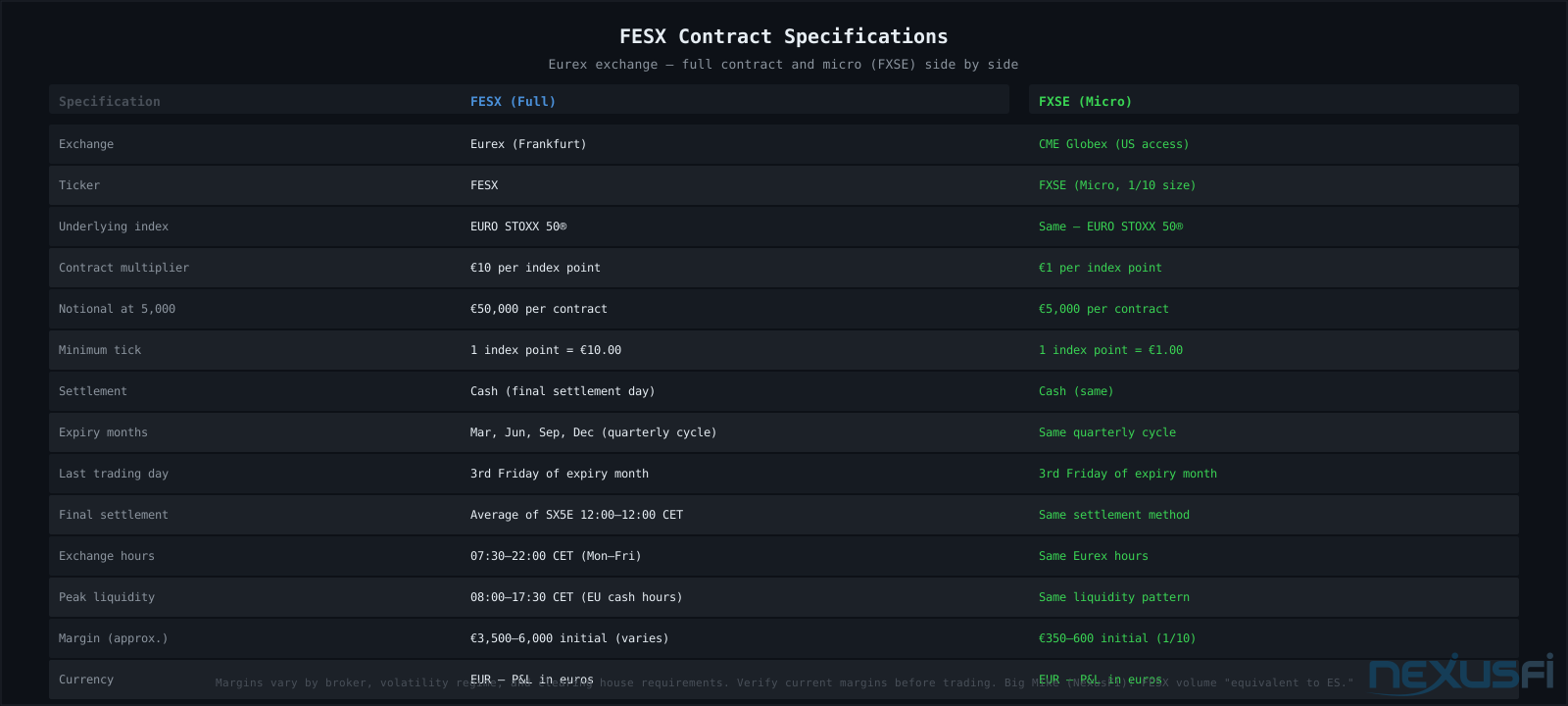
The contract specifications are clean and intuitive:
- Contract size: €10 per index point. At EURO STOXX 50 = 5,000, one FESX contract = €50,000 notional
- Minimum tick: 1 index point = €10 per contract
- Expiry cycle: Quarterly -- March, June, September, December (front and three deferred months listed)
- Last trading day: Third Friday of the expiry month
- Settlement: Cash settled against the final settlement price, calculated as the average of the EURO STOXX 50 index between 11:50 and 12:00 CET on expiry day
- Exchange hours: 07:30--22:00 CET (Monday through Friday)
- Currency: EUR -- all margin, P&L, and settlement in euros
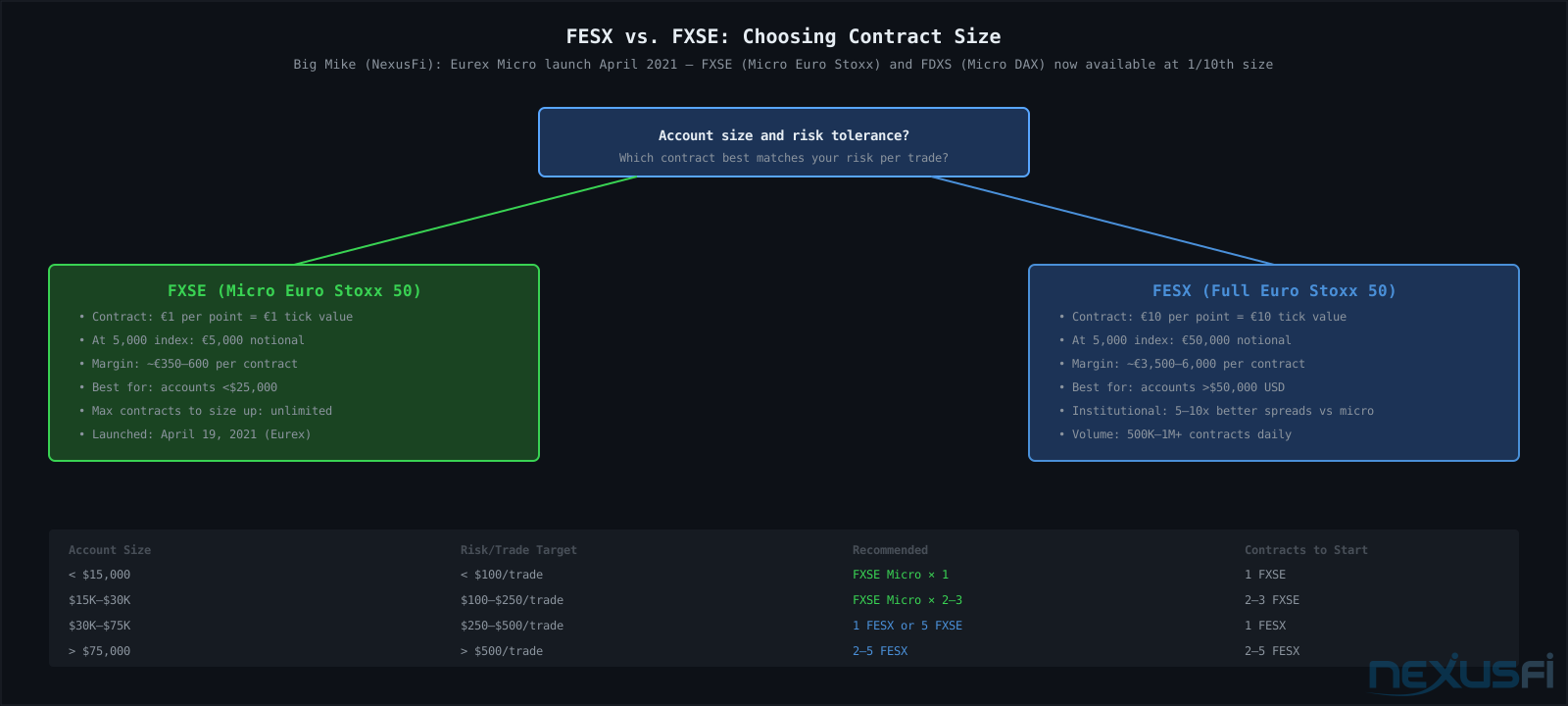
In April 2021, Eurex launched the FXSE (Micro Euro Stoxx 50), a 1/10th-size version of FESX. The micro contract has a multiplier of €1 per point and proportionally reduced margin, making European equity futures accessible to smaller accounts for the first time. This mirrors CME's success with the MES (Micro E-mini S&P 500) — NexusFi's Big Mike was involved in discussions that encouraged Eurex to launch it.
How FESX Compares to FDAX #
New European futures traders invariably face the same choice: FESX or FDAX? The answer depends heavily on account size and trading style.
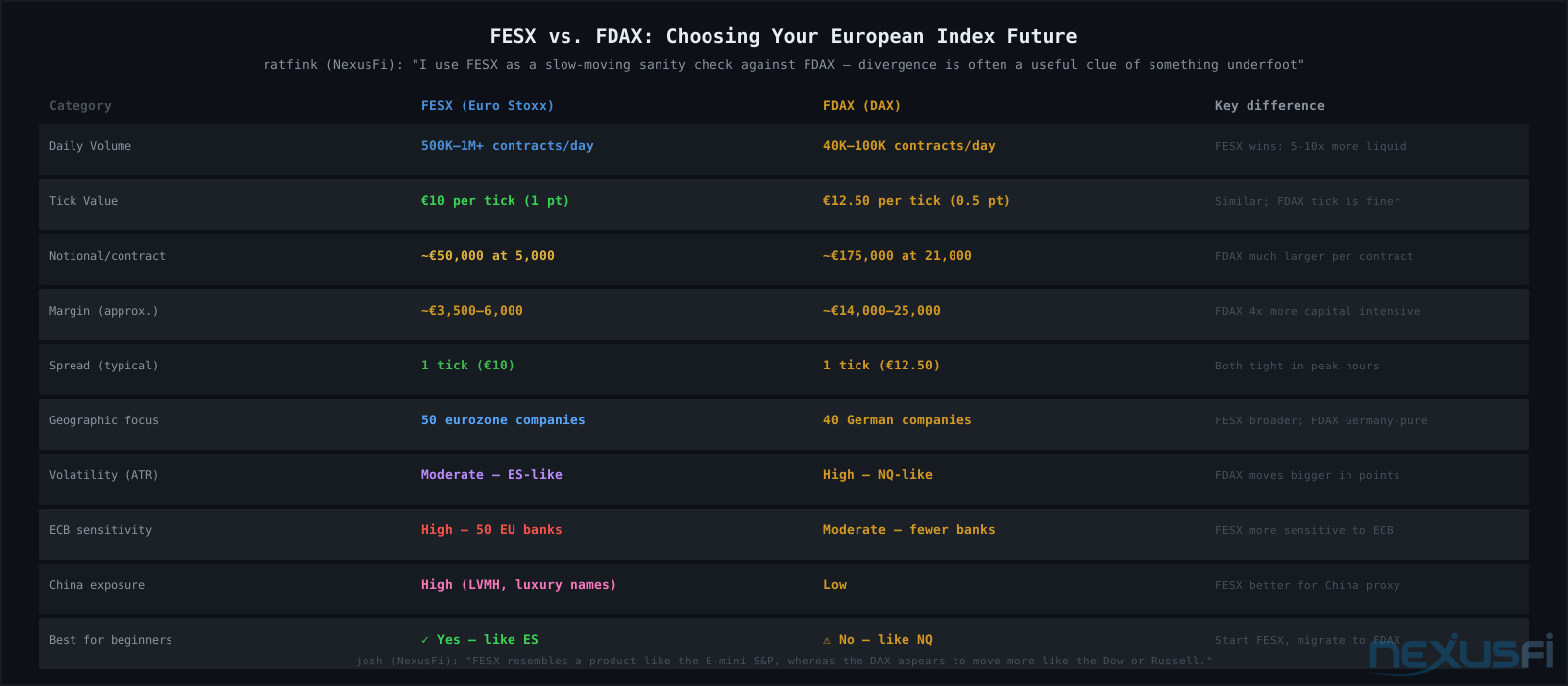
FESX resembles ES: broad, liquid, and forgiving. FDAX resembles NQ: narrower, more volatile, and more capital-intensive. As forum member josh put it after comparing both: "The eurostoxx seems to resemble a product like the emini S&P, whereas the DAX appears to move more like the Dow or Russell. This would make sense, given that the liquidity ratio between the ES and YM is roughly equivalent to the liquidity of the FESX vs. DAX."
FESX volume typically runs 500,000 to 1,000,000+ contracts per day. FDAX trades 40,000--100,000 contracts on the same day — making FESX 5--10x more liquid. The bid-ask spread in FESX during peak hours is consistently 1 tick (€10); FDAX is also 1 tick but the absolute impact differs because FDAX ticks are €12.50 and the underlying notional value is 3--4x larger per contract (DAX around 21,000 × €25 = ~€525,000 notional).
Experienced traders use FESX/FDAX divergence as a signal. Veteran European trader ratfink on NexusFi: "I like to use FESX as a slow moving sanity check against FDAX. Daily and intraday they track well together and divergence is often a useful clue of something else underfoot — it helps to eliminate unreal flash moves as well." When FDAX spikes sharply on a news headline but FESX barely moves, that divergence suggests the move may be FDAX-specific noise rather than broad European equity conviction. When both move together, the signal is cleaner.
Trading Hours and Sessions #
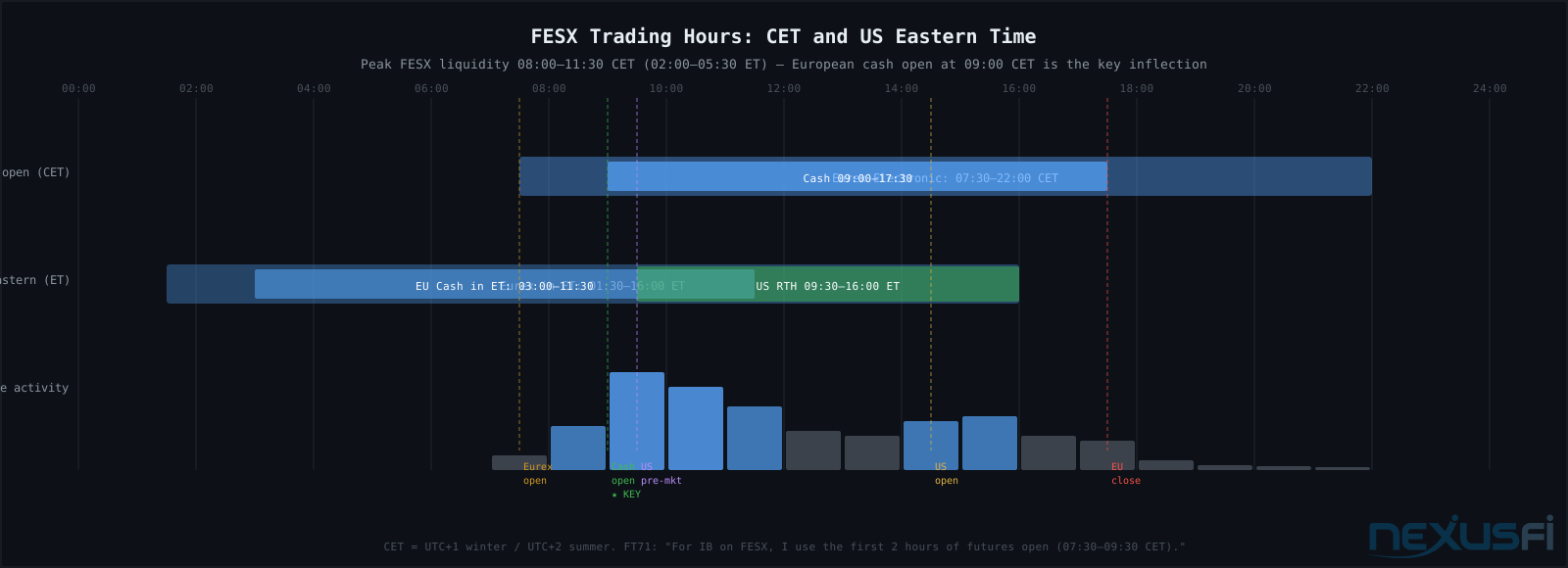
FESX trades on Eurex from 07:30 to 22:00 CET (Central European Time) on weekdays. For US Eastern Time traders, this translates to roughly 01:30--16:00 ET, with the critical European cash market open occurring at 09:00 CET = 03:00 ET.
Understanding the session structure is essential for FESX traders. There are three distinct phases:
Pre-Cash Phase (07:30--09:00 CET / 01:30--03:00 ET): Eurex is open but the underlying cash equity markets are not. Participation is lighter — primarily Asian-session carryover, overnight positioning adjustments, and reaction to US overnight futures. Volume is 25--40% of peak; spread-sensitive traders should be cautious.
Cash Market Phase (09:00--17:30 CET / 03:00--11:30 ET): Xetra in Frankfurt and Euronext in Paris open at 09:00 CET. This is the primary liquidity window for FESX. Volume surges to full daily levels within minutes of the cash open. The 09:00 CET opening — not 07:30 — is when FESX becomes a professional trading vehicle. The overlap with UK markets (London Stock Exchange opens 08:00 CET) adds to liquidity.
US Pre-Market Influence (14:30 CET / 08:30 ET onward): US economic data releases (CPI, NFP, PMIs) often move FESX much even before the US equity session opens. The 14:30 CET window is where US data and FESX interact most directly. US equity futures (ES, NQ) begin their highest-volume pre-market phase at this time, creating transatlantic correlation dynamics.
Initial Balance for FESX: The Right Way #
The Initial Balance (IB) concept — originally developed from market profile theory — applies to FESX, but with an important difference from US futures. Because Eurex opens at 07:30 CET, 90 minutes before the cash equity market opens at 09:00 CET, the pre-cash session data distorts a standard 1-hour IB.
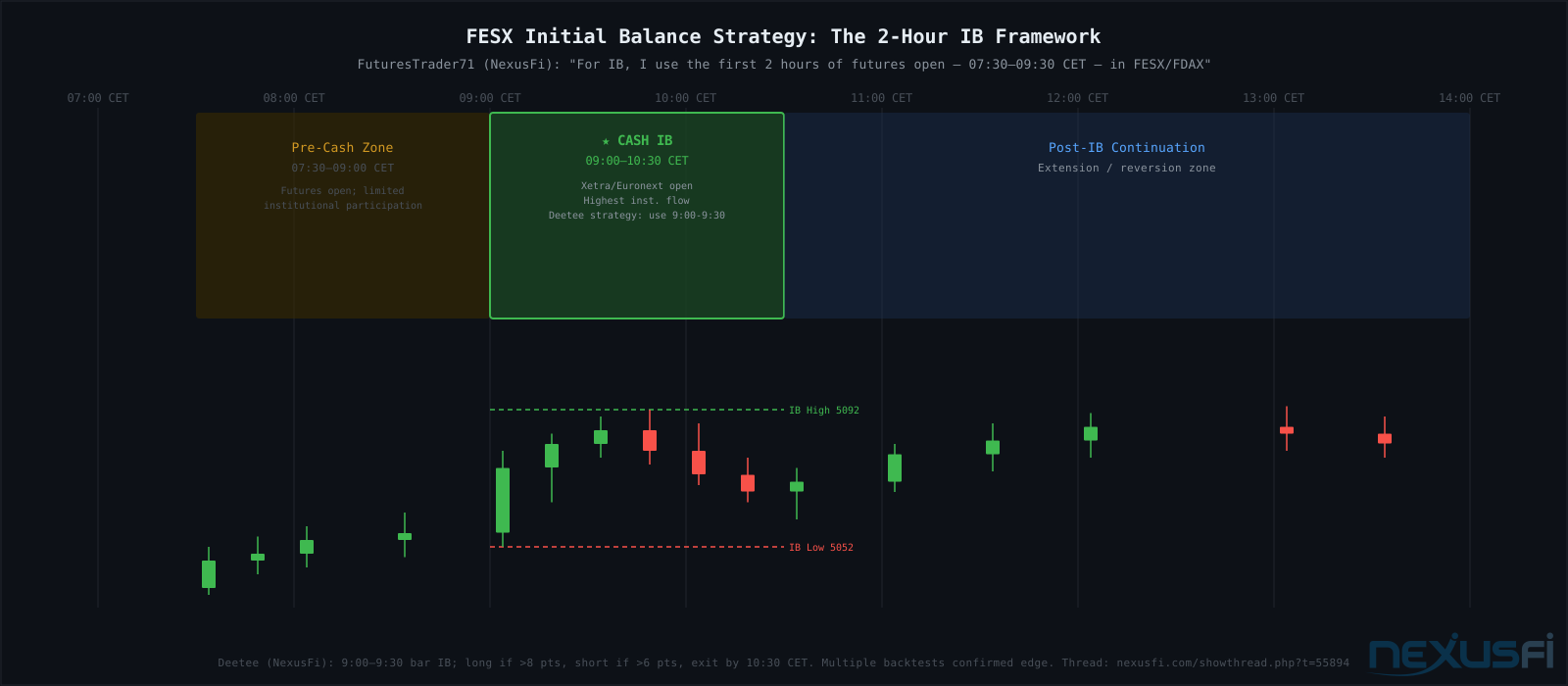
FuturesTrader71 (Morad Askar), a highly respected order flow trader who has traded FESX for years, addressed this directly on NexusFi: "For IB, I would use the first 2 hours of the futures open as opposed to the usual first hour. Remember, the purpose of the Initial Balance (IB) is to capture the time in which many of the biggest participants get their business done for the day. So now, that takes 2 hours in FESX/FDAX/FDXM — so that's what I set it to."
This gives an IB of 07:30--09:30 CET for a two-hour range that captures both the futures pre-open and the first 30 minutes of cash session activity. This 2-hour IB contains the meaningful institutional positioning for the day.
An alternative approach, documented by NexusFi trader Deetee in his journal, uses a tighter cash-session IB of 09:00--09:30 CET as the core signal bar. His backtested strategy: go long if the 09:00--09:30 bar is bullish and >8 index points, short if bearish and >6 points, with exits by 10:30 CET. Multiple backtests from 2010--2020 showed a positive expectancy on this setup.
Key Market Drivers #
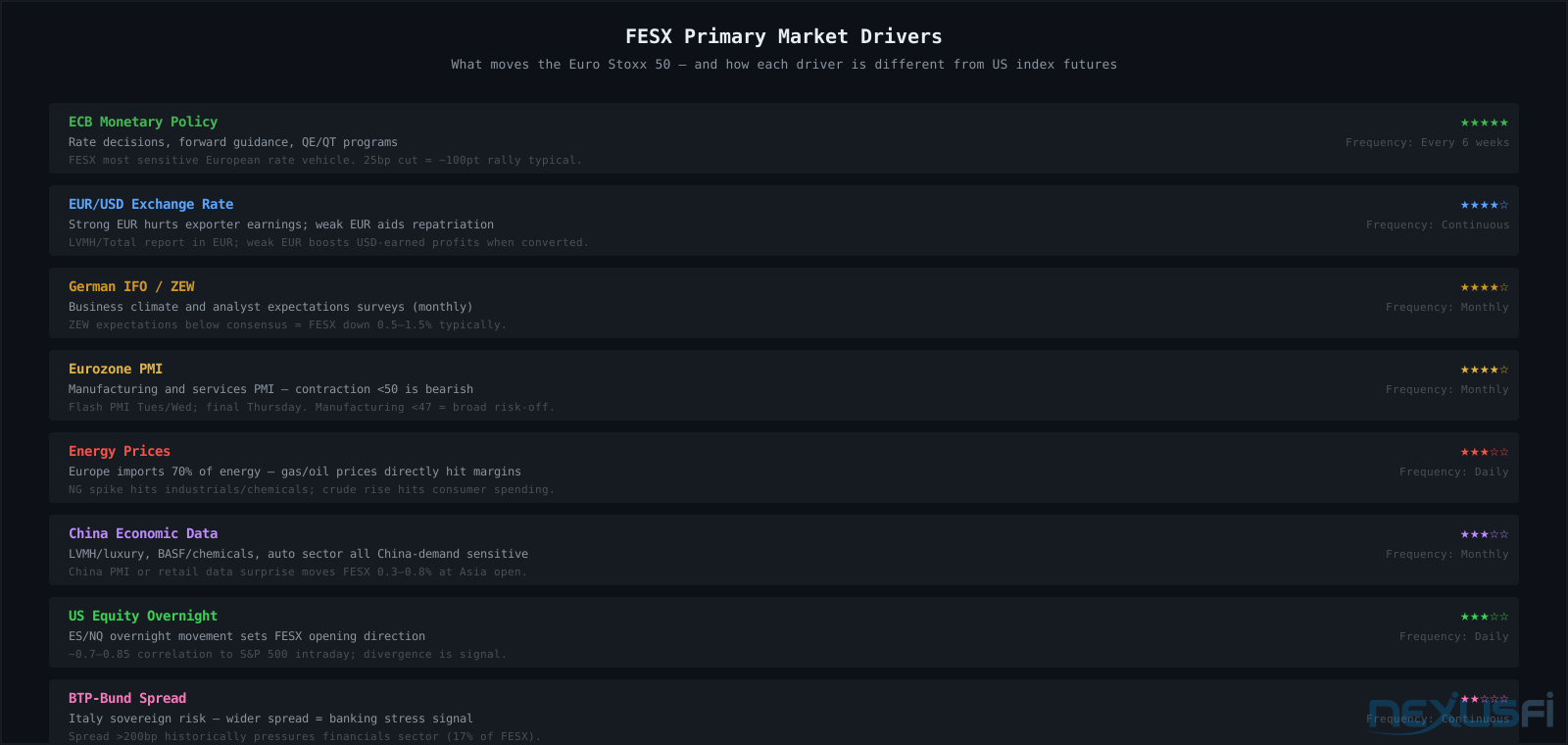
FESX responds to a distinct set of catalysts compared to US index futures. Understanding these drivers is not optional — it is how you avoid being on the wrong side of a 100-point move at 13:15 CET on an ECB meeting day.
ECB Monetary Policy (Primary Driver)
The European Central Bank meets every six weeks to set interest rates for the eurozone. These meetings are the single most impactful scheduled events for FESX traders. Unlike the Federal Reserve, the ECB's meetings do not produce "minutes" in real time — traders must interpret the rate statement and President Lagarde's press conference simultaneously.
Typical FESX behavior on ECB day: the market compresses in the hours before the 13:15 CET release (often forming an unusually narrow IB). At 13:15 CET, the rate decision releases — a 50--150 point move in the first 60 seconds is normal on surprise days. The Lagarde press conference at 13:45 CET often produces a second wave of volatility as forward guidance language is parsed. Many experienced traders reduce size much before 13:15 CET and trade only after the initial move has settled — the first 60--90 seconds are designed for stop hunters, not traders.
EUR/USD Exchange Rate
The EURUSD correlation to FESX is complex. A strengthening euro reduces the competitiveness of eurozone exporters (LVMH, Airbus, BASF sell goods globally but report in EUR), which is directionally bearish for earnings. However, a strong euro also signals economic confidence in the eurozone, which can be bullish for domestic-demand sectors.
In practice, EURUSD serves more as a confirmation indicator than a primary driver: FESX and EURUSD moving in the same direction (both up or both down) on a given morning typically indicates a cleaner signal than divergence. When FESX is rallying but EURUSD is declining, something sector-specific or yield-related is at play, not a broad bullish macro signal.
For Euro FX (6E) futures traders, FESX offers a complementary trade: when the ECB surprises hawkishly (rates higher than expected), FESX often falls (growth concern) while 6E rallies (stronger EUR). Playing both sides of this relationship creates spread opportunities. See the article on Intermarket Analysis for the full framework.
German Economic Data
The IFO Business Climate Index (monthly, Germany's most important sentiment survey) and the ZEW Economic Sentiment Index move FESX measurably. IFO below consensus → FESX down 0.3--0.8% in the first 30 minutes. ZEW expectations below consensus → similar reaction. Both are released in the mid-morning CET and are available on the economic calendar. The connection matters because Germany at 29% of the index is the dominant single-country driver.
ASML and Semiconductor Sector
At 10%+ of the index, ASML has an outsized impact on FESX. ASML's quarterly earnings typically cause 3--5% moves in the stock itself — which translates to 30--50 point swings in FESX on earnings days. AI infrastructure spending cycles affect ASML order books directly. When ASML management updates 2026 or 2027 order outlook, every FESX trader should be aware of the date.
China Economic Data
FESX is the primary European vehicle for trading Chinese economic data. LVMH (7%), Kering, and other luxury goods companies depend on Chinese consumer spending. BASF and other chemical companies sell to Chinese industry. When China PMI or retail sales surprise, FESX typically gaps at the 07:30 CET Eurex open or moves sharply at the 09:00 CET cash open as European traders absorb the data. This creates an indirect China-exposure trade through FESX that is not available in ES or NQ.
Day Trading Strategies for FESX #
1. The Cash Open Play (09:00 CET)
The 09:00 CET Xetra cash market open is FESX's most reliably volatile intraday moment. In the 15 minutes before open, institutional flow increases as portfolio managers position for the day. At 09:00 CET, gaps are filled, new positions are initiated, and overnight positioning is adjusted. The first 5--10 minutes of cash trading often set the dominant intraday direction.
This play works well when the overnight ES futures gave a clear directional signal and European data did not contradict it. A FESX that confirmed ES's overnight direction at the 09:00 CET open, with increasing volume on the first 5-minute bar, is a continuation entry candidate. The 09:00--09:30 CET IB high and low then serve as continuation triggers throughout the morning.
2. The ECB Day Fade (13:45--14:30 CET)
On ECB meeting days, the initial 13:15 CET reaction is often the wrong trade. Professional traders know that the Lagarde press conference at 13:45 CET frequently clarifies or modifies the initial interpretation. A common pattern: FESX rallies sharply on a rate cut, then fades as Lagarde walks back future cut expectations in the Q&A. Traders who wait for the full press conference — and enter on a confirmed direction break after 14:00 CET — often get a cleaner setup than those who react at 13:15 CET.
3. FESX/FDAX Divergence Scalp
When FESX and FDAX diverge much during the European morning — one making new highs while the other stalls near yesterday's close — the divergent contract often reverts. Trading the divergence requires monitoring both on the same timeframe (5-minute typically works) and watching for volume confirmation. This is an advanced setup best suited for traders already familiar with both instruments.
4. Overnight Gap Fade (at 09:00 CET)
When FESX opens much above or below the prior day's settlement — driven by overnight US session moves — the question is whether the gap holds or fills. Strong overnight ES trends tend to produce gaps that extend in European cash hours. Weak overnight trends or contradictory European data produce gap fills. The analysis requires checking whether overnight ES actually closed at the same level as the FESX gap implies, or whether the gap was exaggerated by thin pre-cash FESX liquidity.
Reading the FESX/ES Transatlantic Signal #
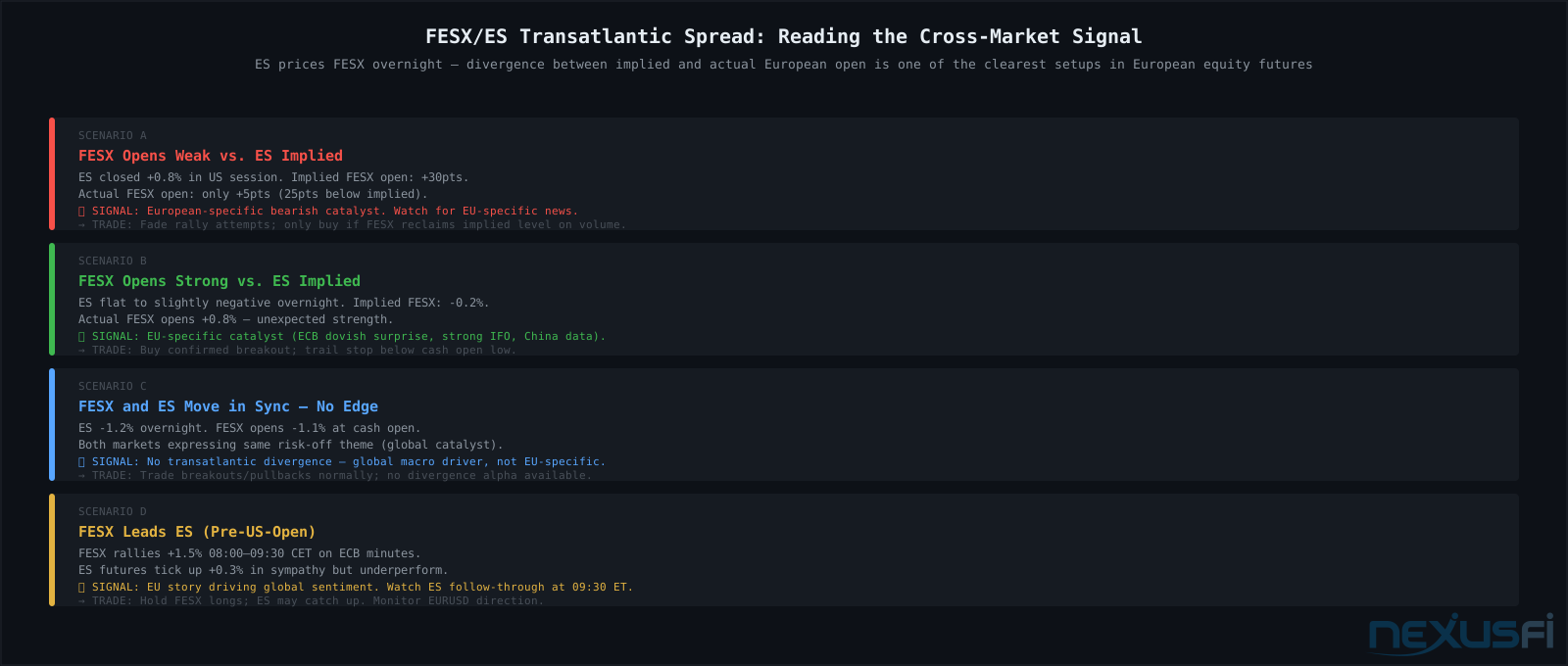
The relationship between FESX and ES is one of the most useful cross-market signals in equity futures trading. ES prices FESX overnight: when the US market closes on a strong note, ES futures remain bid overnight, and FESX typically opens higher at 07:30 CET to reflect that. But the implied level from ES overnight performance and the actual FESX open often diverge — and that divergence is the trade.
When FESX opens weaker than ES overnight performance implied, look for a European-specific bearish trigger (IFO miss, energy shock, banking news). When FESX opens stronger than implied, something Europe-specific is driving it. The correlation between ES and FESX intraday runs 0.70--0.85 on most sessions, meaning they generally move together but the deviations carry meaningful information. See Inter-Market Analysis for Futures Traders for the complete framework.
ECB Meeting Day Framework #
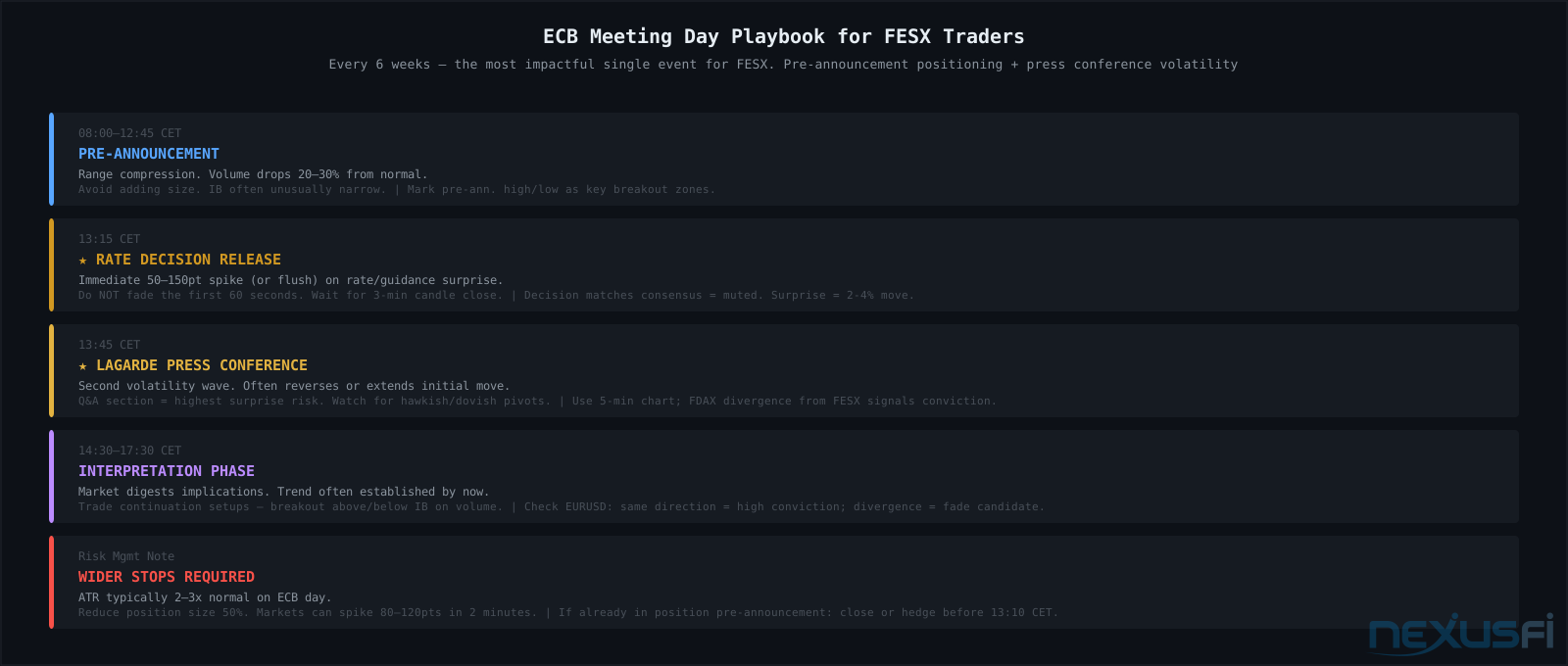
ECB meeting days (every six weeks) require a different trading approach. Normal intraday strategies become unreliable as the market compresses in pre-announcement anticipation and then explodes at 13:15 CET.
@tradingch ECB meeting day FESX fade trade »
The standard playbook: reduce position size by 50% before 13:00 CET, wait for the rate decision release, do not trade the first 60--90 seconds (they are noise, not signal), then watch for confirmation of direction in the 5-minute chart after the initial spike. Enter only after FESX has held above or below the pre-announcement high/low for at least one full 5-minute close. Position exits before the 13:45 CET press conference unless you have high conviction in direction based on the statement language.
The press conference itself — especially the Q&A section — often produces larger moves than the rate decision. A "dovish hike" (rate hike but dovish guidance language) can send FESX sharply higher after an initial drop. Conversely, a "hawkish pause" can reverse an initial rally. Waiting for the complete conference transcript (available live on ECB website) before adding size is a defensible approach.
Risk Management for FESX #
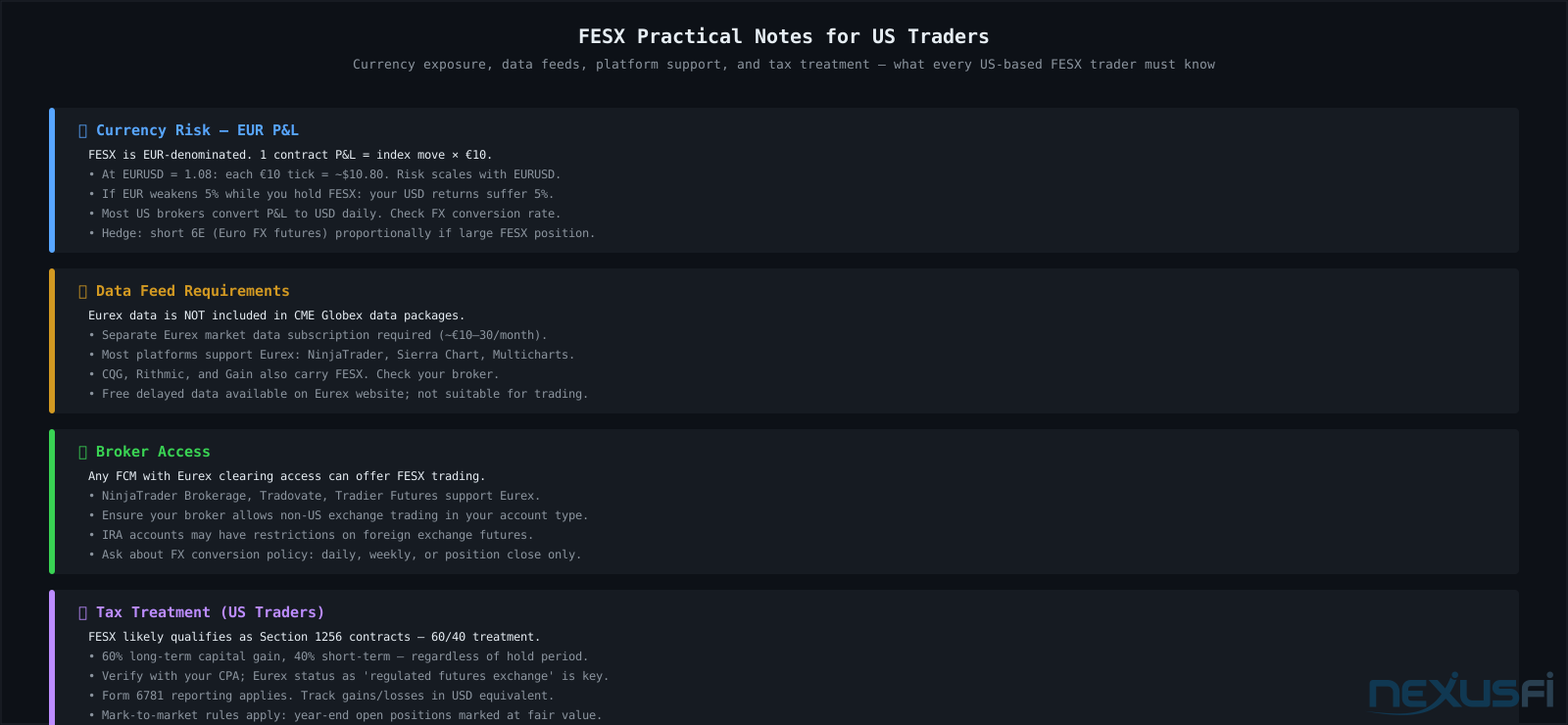
The standard risk management principles for futures position sizing apply to FESX with one additional layer: currency risk. Every tick is €10 in euro terms, but your actual P&L depends on the EURUSD exchange rate at time of conversion.
At EURUSD = 1.08, a 100-point FESX move = €1,000 = ~$1,080. At EURUSD = 1.20, the same move = $1,200. This 11% difference in USD value can matter much for position sizing. For US-based traders running large FESX exposure, partially offsetting with a short 6E (Euro FX futures) position provides the FX hedge — though the complexity may not be warranted for smaller accounts.
FESX ATR (Average True Range) in points varies much by market regime:
- Low volatility regime: 30--50 points/day
- Normal regime: 50--80 points/day
- High volatility (ECB days, macro shock): 100--200+ points/day
Position sizing that assumes 60 points of potential daily range is reasonable for normal sessions. Stop placement of 15--25 points on intraday trades gives enough room to survive normal noise while limiting damage on bad entries. The daily loss limit framework works identically for FESX as for ES — define your maximum acceptable daily loss before the session opens, and honor it.
One important note: contract rollover for FESX occurs quarterly on the same schedule as US equity index futures. Roll from the front month to the next quarter in the week before expiration. The FESX roll is clean (cash settlement, no physical delivery) and typically costs 1--3 ticks depending on the cost-of-carry spread.
Practical Notes for US-Based Traders #
Several practical considerations distinguish FESX from domestic US futures:
Data Feed
Eurex market data is not bundled with CME data. You will need a separate Eurex exchange data subscription, typically €10--30 per month for real-time data. This subscription provides access to all Eurex products including FESX, FDAX, and the German Bund complex. Most major data vendors (CQG, Rithmic, Gain) carry Eurex data, and platforms including NinjaTrader, Sierra Chart, and MultiCharts support FESX.
Broker Access
Any US FCM with Eurex clearing access can offer FESX trading. NinjaTrader Brokerage, Tradovate, and Tradier Futures all support Eurex products. Confirm that your broker's account agreement permits trading on foreign exchanges — most US broker agreements include this, but IRA accounts may have restrictions on foreign exchange trading. Ask specifically about EUR-denominated margin: some brokers require a EUR-denominated sub-account, while others handle the FX conversion internally.
Tax Treatment
FESX most likely qualifies for Section 1256 treatment under the US tax code — the same 60/40 (long-term/short-term) capital gain treatment that applies to domestic futures contracts. The key qualification is that Eurex is a "qualified board or exchange" under IRS regulations. Verify this with your tax professional; the rules have remained consistent for Eurex products for many years, but individual circumstances vary. Gains and losses are reported on Form 6781; mark-to-market treatment applies to open positions at year-end.
FESX vs. FXSE: Choosing the Right Contract Size #
The April 2021 launch of the FXSE (Micro Euro Stoxx 50) changed the access equation for European equity futures. At 1/10th the size of FESX, the micro contract requires only €350--600 in initial margin — making European equity futures accessible to accounts under $25,000 for the first time.
The choice between FESX and FXSE mirrors the ES/MES decision: smaller accounts or those wanting precise sizing should use FXSE; accounts above $50,000 USD with normal volatility should consider FESX for better spread efficiency. Institutional traders running thousands of contracts almost exclusively use the full FESX contract for tighter spreads and deeper book depth.
The FXSE micro also allows for fractional sizing — three FXSE contracts give you roughly 0.3 FESX exposure, enabling a level of precision that the full contract doesn't allow. This is especially useful during ECB meetings when reducing risk from 1 FESX to 0.5 FESX (5 FXSE) gives more flexibility than the all-or-nothing choice with the full contract.
How FESX Fits in a Multi-Market Portfolio #
FESX adds diversification value to a portfolio that includes ES and NQ. Correlation is high (0.70-0.85 daily), but the drivers differ — a long ES / long FESX portfolio expresses global equity exposure, while a long FESX / short ES position (the "transatlantic spread") expresses European outperformance vs. US equity, typically a play on ECB dovishness vs. Fed tightening.
Within Europe, the FESX/FDAX spread is the primary relative value trade — long FESX / short FDAX expresses confidence in broad eurozone equities outperforming Germany-specific exposure. The German Bund (FGBL) serves as the natural hedge and direction filter — rising Bund prices (falling yields) generally support FESX; falling Bund prices pressure it. Monitor FGBL at the 09:00 CET open for an interest rate filter on directional trades.
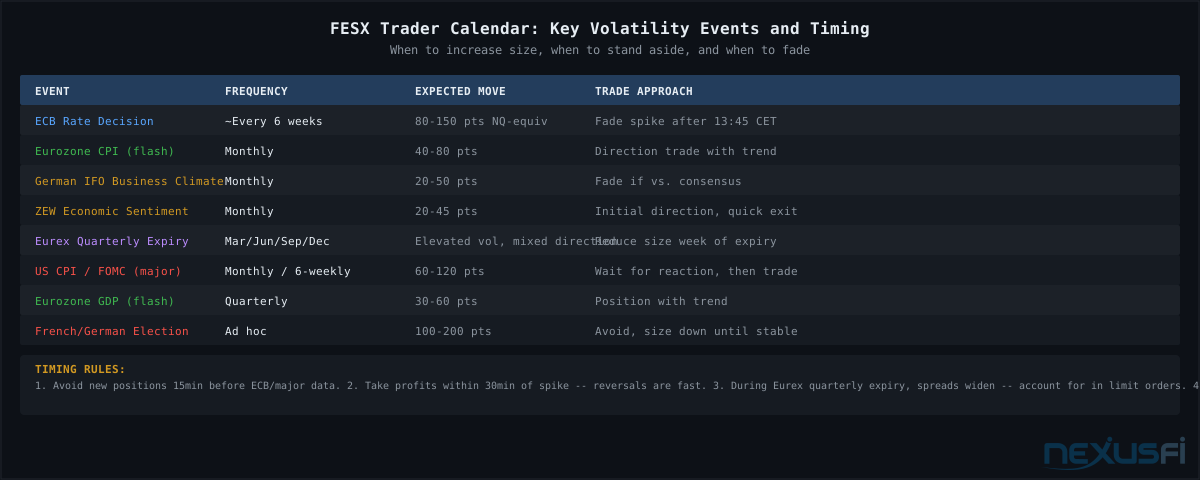
Key volatility events in the FESX calendar: ECB decisions drive the largest moves (80-150 pts); quarterly Eurex expiry increases volatility and widens spreads; US data (CPI/FOMC) follows ES within 30 seconds. Timing rule: exit within 30 minutes of any event spike — reversals are fast in FESX.
Getting Started: The Learning Curve #
Traders migrating from ES to FESX find the learning curve modest — the IB-based framework transfers directly, volume profile analysis works identically, and the market microstructure is similar. Primary adjustments: add ECB/Eurex calendars to daily prep; recognize 09:00 CET as your RTH equivalent; track P&L in both EUR and USD until dollar risk per contract becomes intuitive.
Start with FXSE micros (€2/tick) to build pattern recognition before committing to full FESX (€10/tick). Most ES traders are comfortable at full FESX size within 3-6 months. See Futures Margin and Leverage for sizing principles.
Knowledge Map
Go Deeper
Build on this knowledgeReferences This Article
Articles that build on this topicCitations
- — FESX 9:30 trade (2022) 👍 7“9:00-9:30 bar is the IB for FESX. Long if it is more than 8 pts, short if more than 6 pts. Exit by 10:30 CET.”
- — NexusFi Discussion (2020) 👍 5“FESX is highly correlated with ES during US hours but leads during the European session -- useful for reading the coming US open direction.”
- — Modification of the Variable Tick Range on E-mini NASDAQ 100 & NASDAQ 100 futures (2021) 👍 4“The ECB day volatility is predictable -- 13:45 CET announcement, spike then fade. The fade is the trade.”
- — EURO STOXX 50 Index Futures (FESX) Contract Specifications (2024)
- — EURO STOXX 50 Index Composition and Methodology (2024)
- — FESX 9:30 trade (2022) 👍 7“FESX has better overnight liquidity than DAX at certain hours -- Asian session participants trade FESX on Eurex from Singapore and Hong Kong.”
- — NexusFi Discussion (2020) 👍 5“When the ECB surprises to the dovish side, FESX moves first and ES follows within minutes. Running FESX as a leading indicator for the ES open has real edge.”
- — Modification of the Variable Tick Range on E-mini NASDAQ 100 & NASDAQ 100 futures (2021) 👍 4“FXSE micro is the same order book as FESX. Get comfortable on FXSE first -- you will trade better than if you jump straight to FESX full size.”
- — ECB Financial Market Statistics: Euro Area Equity Indices (2024)
- — Mini Euro Stoxx 50 (FXSE) Contract Specifications (2024)
- — Eurex Exchange History and FESX Trading Volume (2023)