



Coffee Futures (KC): The Complete Trading Guide to Arabica's Volatile, Weather-Driven Market
Coffee Futures (KC): The Complete Trading Guide to Arabica's Volatile, Weather-Driven Market
Overview #
Coffee futures (KC) — the Arabica "Coffee C" contract on ICE Futures U.S. — occupy a category apart from the index and energy contracts most futures traders start with. KC is supply-dominated, weather-driven, and capable of moving 10% in a single session on a frost report from a region of Brazil most traders couldn't find on a map. That volatility is the opportunity. Understanding what drives it is the job.
The KC market trades on fundamentals that can't be tracked with a Bloomberg terminal alone: CONAB crop estimates from Brasília, frost risk maps for Minas Gerais, the biennial bearing cycle of Arabica trees, and the Brazilian Real exchange rate. Traders who understand these layers have access to a genuine edge that equity index traders don't compete for. Traders who ignore them get stopped out of positions that were at the core sound because they didn't size for a 5% gap.
This guide covers the complete picture: contract mechanics, Brazil's seasonal rhythm, the fundamental data that moves prices, calendar spread structures where edge concentrates, and position sizing for a market where your stop-loss may not execute anywhere near the price you set it at. If you're coming from equity index futures, the cognitive shift required is larger than you might expect — but so is the potential edge for those willing to put in the work.
See also: Fundamental Data for Commodity Futures, Seasonality Data for Futures Trading, Spread Trading in Futures Markets.
Key Concepts #
Arabica Coffee (C-type) — The premium grade of coffee underlying the KC contract. Grown primarily in Brazil, Colombia, and Central America at altitude. Distinct from Robusta (traded separately as the RC contract) in flavor profile, growing conditions, and price behavior. Higher quality, higher price, more weather-sensitive.
Coffee "C" Contract (KC) — The benchmark global Arabica futures contract traded on ICE (Intercontinental Exchange, part of CME Group). The "C" designates a specific quality and grade standard enabling physical delivery of qualifying Arabica beans at approved warehouses primarily in the United States.
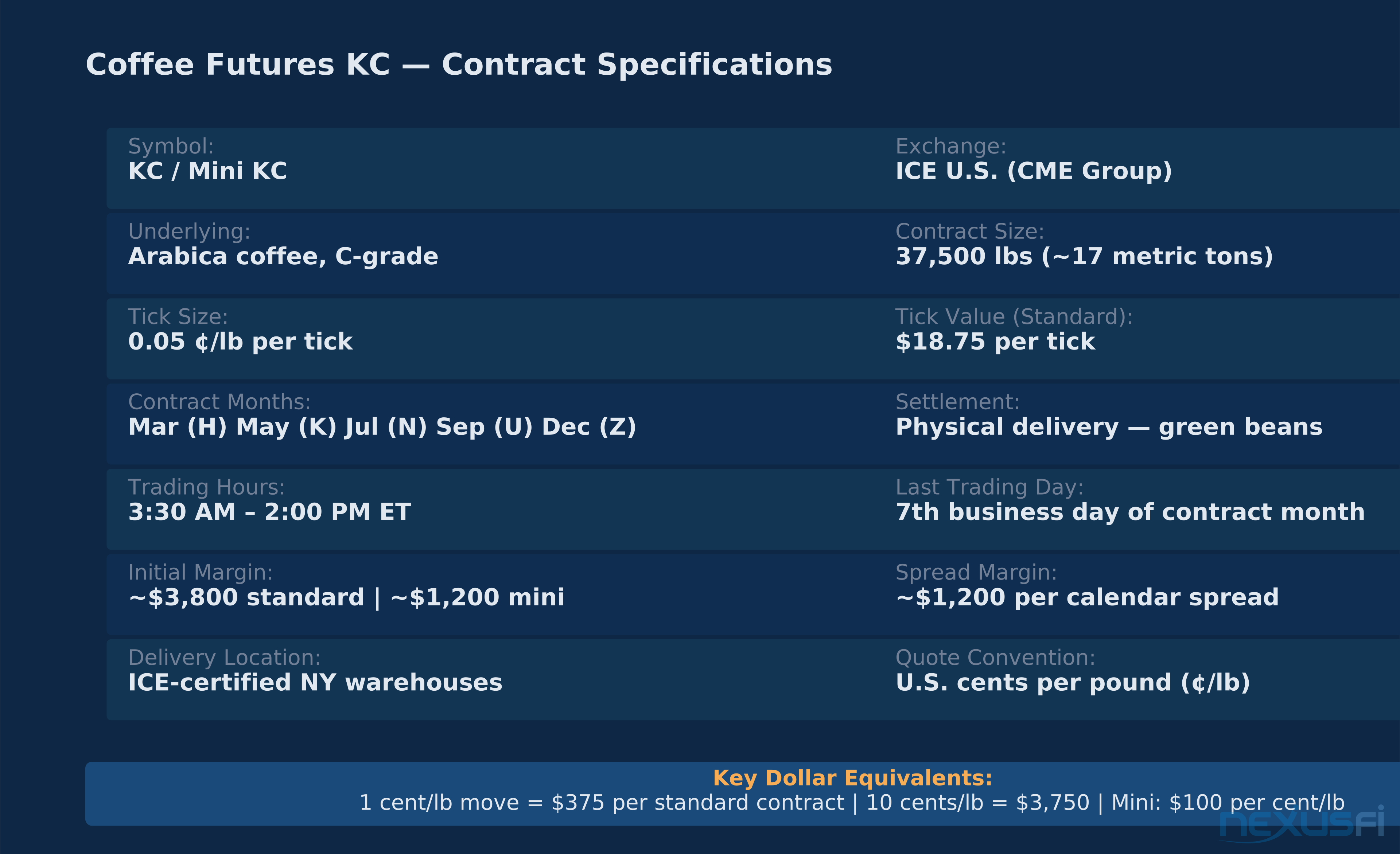
Contract Size — 37,500 pounds of green Arabica coffee per standard contract. Roughly 250 bags, or about 17 metric tons. Large by soft commodity standards and a primary reason position sizing requires extra discipline in KC.
Tick Size and Dollar Value — Prices quote in U.S. cents per pound. The minimum tick is 0.05 cents/lb, translating to $18.75 per standard contract. A 1-cent/lb move equals $375 per contract. A 10-cent move, which happens multiple times per year, is $3,750 per contract.
Coffee Off-Year / On-Year Cycle — Brazil's Arabica production follows a biennial bearing cycle. On-years produce heavier crops, off-years lighter ones. This cycle creates a predictable multi-year supply rhythm traders overlay with weather and inventory data.
COT Report (Commitment of Traders) — The weekly CFTC report on KC open interest by trader category. Interpretation for KC trading is covered in detail in the Commitment of Traders Positioning section below.
CONAB — Brazil's National Supply Company. Publishes seasonal crop estimates typically from May through January. The first CONAB estimate of the season, usually released in May, often triggers significant price reactions.
ICO (International Coffee Organization) — Publishes monthly global supply/demand balance data, export statistics, and price indicators. Useful for longer-horizon inventory and demand trend analysis.
BRL/USD — Brazilian Real to U.S. Dollar exchange rate. A critical KC driver covered in detail in the Currency: The BRL/USD Relationship section below.
Frost Risk — The primary single-event trigger in KC, with peak risk running July through August in Brazil's coffee belt. Mechanics, historical examples, and market pricing are covered in detail in the Primary Driver: Brazilian Weather section below.
Term Structure — The price relationship across contract months (backwardation vs. contango). Covered in detail in the Calendar Spreads section below.
Weather Risk Premium — The additional price premium embedded in KC during periods of weather uncertainty. Research confirms KC prices carry a statistically significant weather risk premium during Brazil's growing season, representing 5-15% of contract value during high-uncertainty periods. This premium builds ahead of frost season and unwinds afterward.
The KC Contract: What You're Actually Trading #
| Specification | Standard KC | Mini KC |
|---|---|---|
| Exchange | ICE U.S. (CME Group) | ICE U.S. |
| Underlying | Arabica coffee, C-grade | Same grade |
| Contract Size | 37,500 lbs (~17 metric tons) | 10,000 lbs |
| Price Quote | U.S. cents per pound | Same |
| Tick Size | 0.05 ¢/lb | 0.05 ¢/lb |
| Tick Dollar Value | $18.75 | $5.00 |
| Contract Months | March (H), May (K), July (N), September (U), December (Z) | Same |
| Trading Hours | 03:30--14:00 ET (electronic) | Same |
| Last Trading Day | 7th business day of contract month | Same |
| Settlement | Physical delivery | Physical delivery |
| Initial Margin (approx.) | ~$3,800 | ~$1,200 |
| Calendar Spread Margin | ~$1,200 per spread | N/A |
The five contract months reflect agricultural seasonality. March represents pre-harvest positioning. May coincides with the start of Brazil's harvest. July carries peak frost risk. September captures harvest completion. December bridges to new-crop positioning.
Physical delivery settlement is meaningful even if you never intend to deliver beans. It creates real-world basis relationships between futures and cash prices, and means you must roll or close positions before the last trading day if you're not set up for physical delivery in New York.
Price History and Range
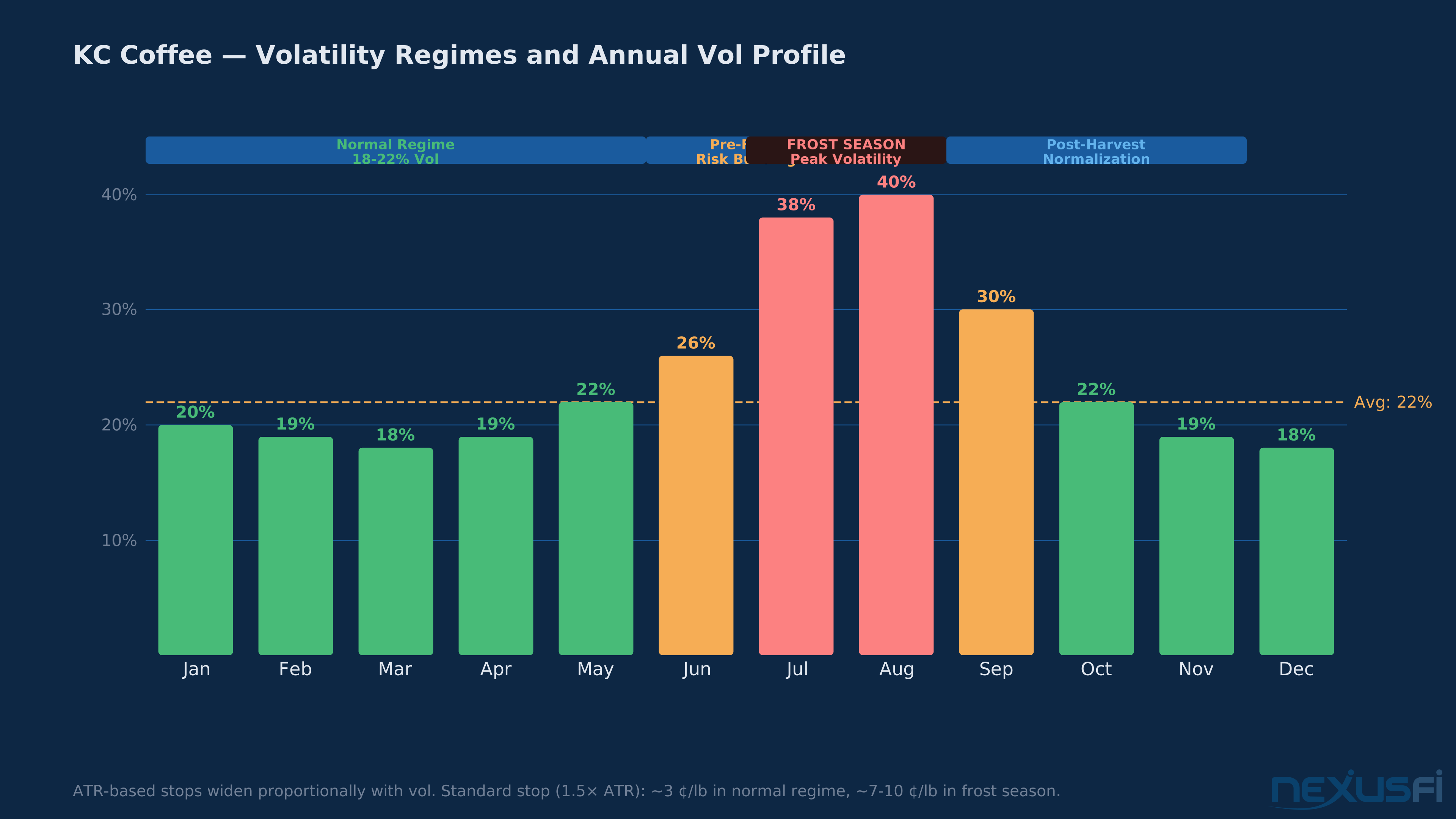
KC prices have traded below 60 ¢/lb during Brazilian supply abundance and above 350 ¢/lb during supply crises. The 2010-2011 bull market ran KC from 120 to 310 ¢/lb driven by supply shortfalls. Annual volatility runs 20-25%, but this understates episodic risk. During weather events, 90-day realized volatility has spiked above 40%. A 1% daily move is routine. A 5% move — $1,875 per standard contract — happens multiple times per year. During frost events, 10% daily moves occur.
The Seasonal Framework: Brazil Dominates the Calendar #
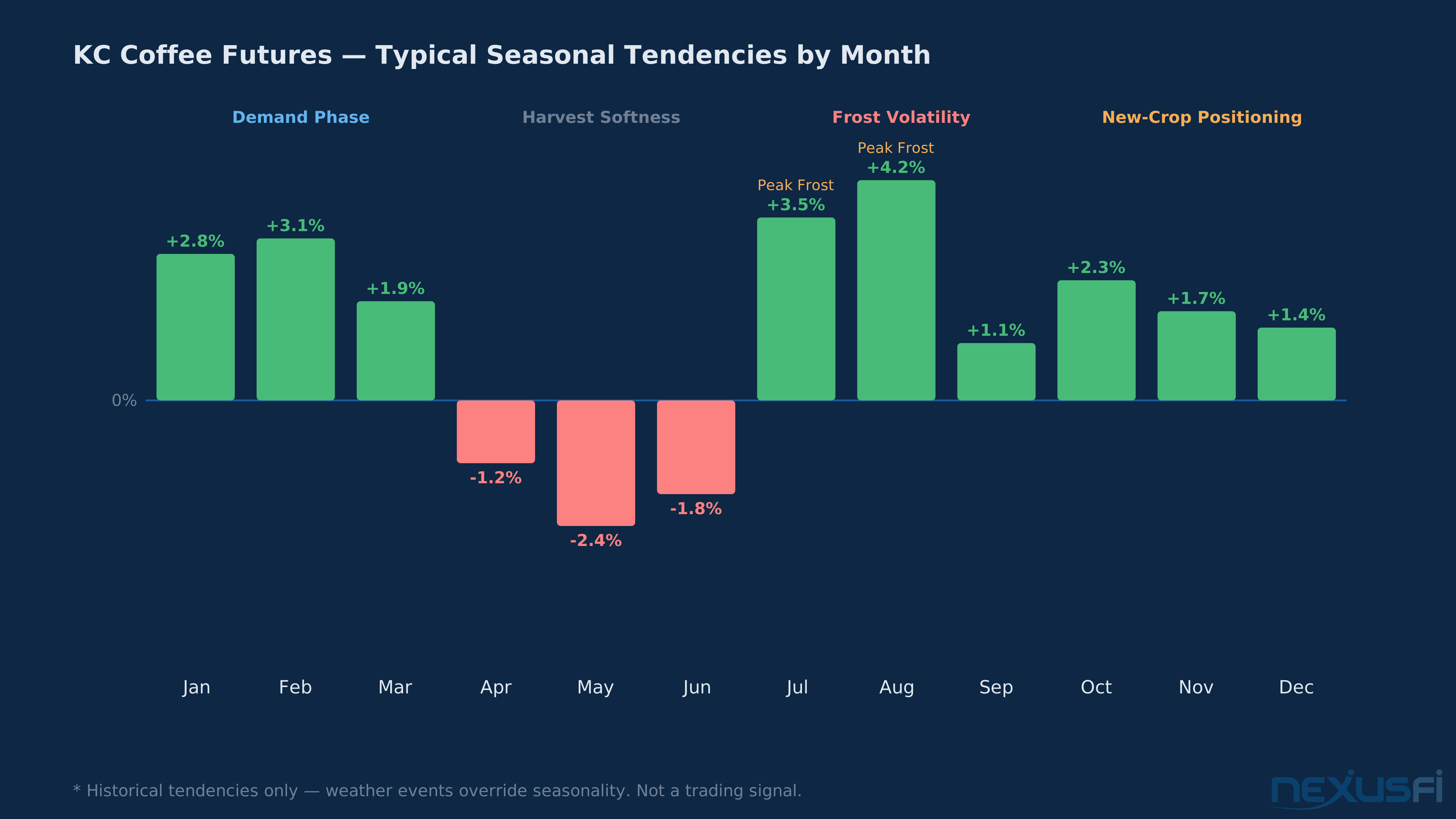
KC has one of the clearest seasonal patterns in futures markets. Brazil accounts for 35-40% of global Arabica production, and the Brazilian harvest cycle defines the price calendar. The seasonal tendency sets probabilities, not certainties. Abnormal weather overrides everything.
Phase 1: January — March — Demand-Driven Rally
The demand-dominant phase. Holiday consumption has drawn down roaster inventories. The prior harvest's production data is established, but the coming crop is months from confirmation. Uncertainty about Brazil's flowering season — which runs October through January — adds risk premium as traders wait for CONAB's first crop estimates.
Large speculators tend to position long during this window, anticipating the harvest news cycle. March contracts see particular activity. Volatility is generally lower than July-September, making option premiums more reasonable for call buying.
Phase 2: April — June — Supply-Driven Softness
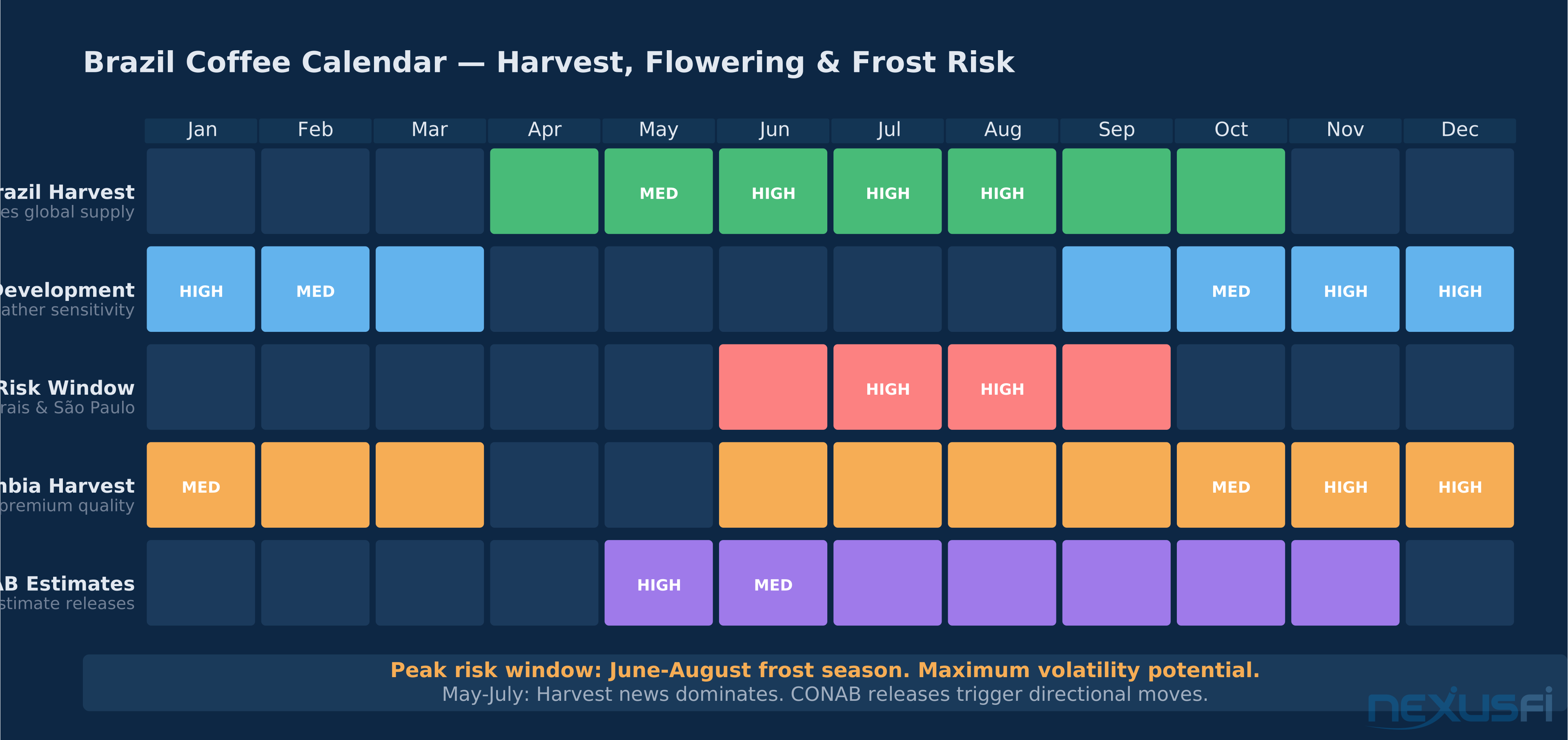
Brazil's harvest begins in May, running through July. As the crop comes in and early estimates confirm supply, uncertainty premium fades. COT data typically shows managed money reducing long positions. If harvest conditions are favorable, KC faces selling pressure as risk premium unwinds.
The critical exception: frost risk begins in June. The 1994 frost launched KC from below 80 ¢/lb to above 250 ¢/lb within eight weeks — completely overriding seasonal softness. Traders who follow the seasonal mechanically without monitoring frost risk get hurt badly in that scenario.
Phase 3: July — September — Peak Volatility Window
The highest-risk period in the KC calendar. Peak frost season runs July-August in Brazil's Minas Gerais Cerrado region and São Paulo state. The crop is mid-harvest. A single frost bulletin can move KC 5-10 ¢/lb overnight.
Normal stop-loss execution becomes unreliable. A stop-market order at 190.00 following a 186.00 long entry might execute at 180.00 if a frost headline hits overnight and the market gaps lower. Stop-limit orders help but carry non-fill risk. This phase favors calendar spreads over outright positions, reduced size, and explicit acknowledgment of gap risk in the sizing calculation.
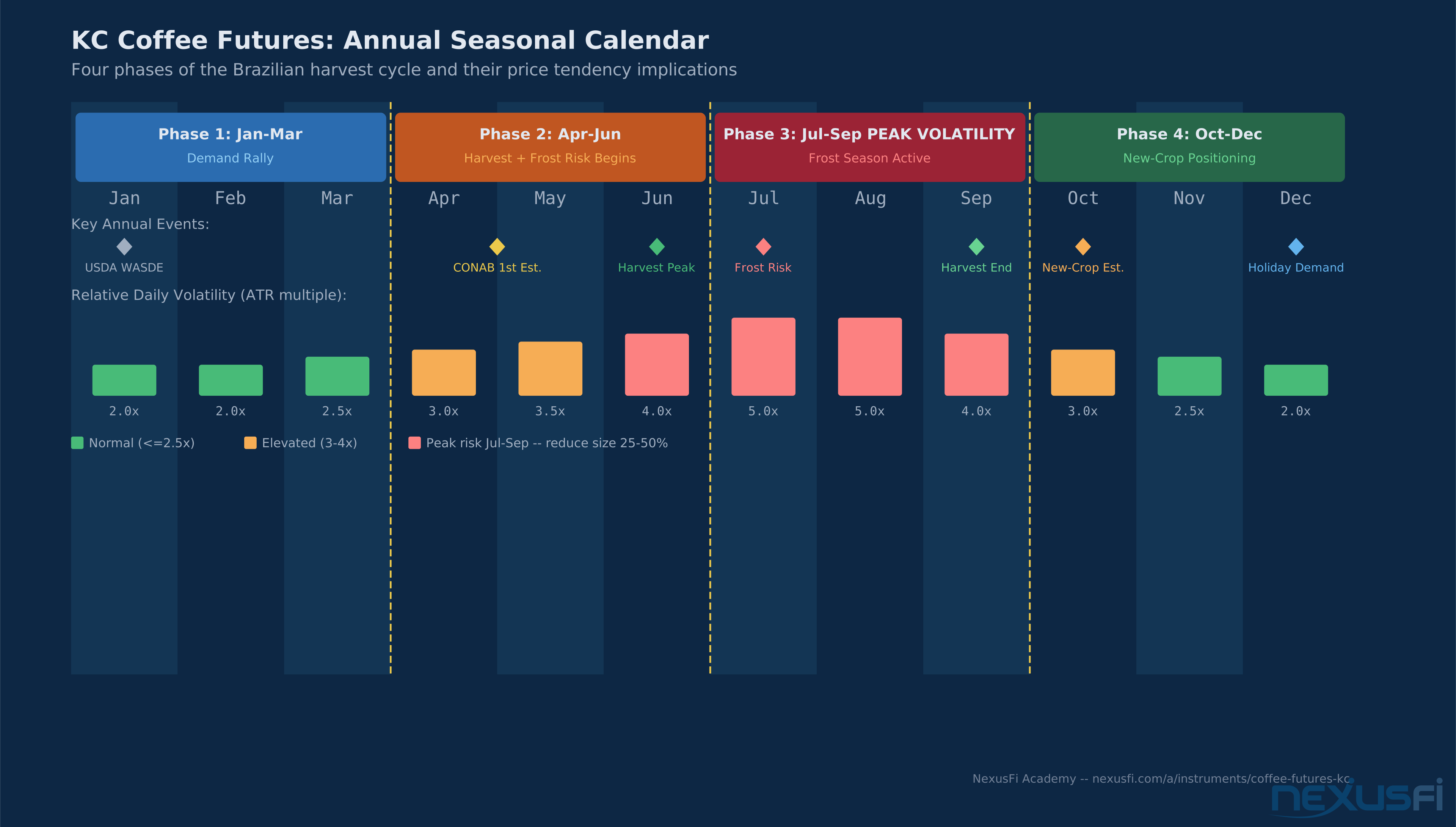
Phase 4: October — December — New-Crop Positioning
With the current-year harvest largely complete, attention shifts to next year. Roasters are buying forward. CONAB begins releasing next-crop estimates. The biennial bearing cycle question — on-year or off-year? — drives positioning. Colombia's late-season harvest (October through December) adds supply nuance.
Why Seasonality Can't Be Traded Mechanically
The seasonal tendency reflects a probability distribution. In 2021, La Niña-driven drought hit during the April-June "softening" phase. Instead of the seasonal down-move, KC rallied sharply as supply destruction overrode harvest pressure. Use seasonality for context. Use fundamentals to determine the actual regime. Use technicals for entry timing.
What Moves KC: The Fundamental Stack #
Primary Driver: Brazilian Weather #
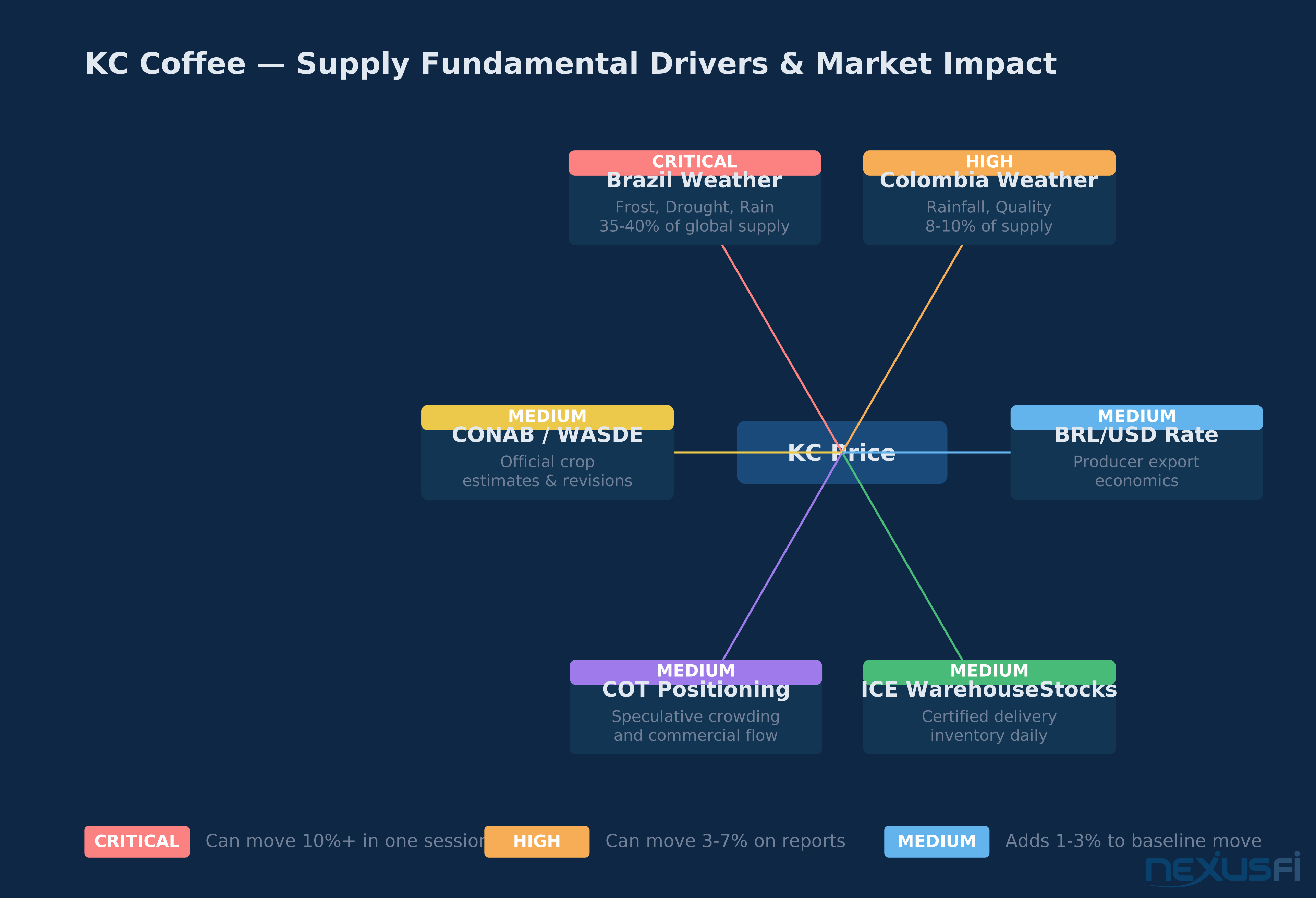
Nothing moves KC like Brazilian weather. Brazil's Arabica production can range from 28-30 million bags in a bad year to 38-42 million bags in a good year — a swing that directly determines whether the world is in supply surplus or deficit.
Frost — Temperatures below 0°C for sustained periods kill flowering, damage developing beans, or outright kill trees. The 2021 frost drove KC from 135 ¢/lb to above 230 ¢/lb within six weeks. Markets price frost risk probabilistically before events occur — a 25% probability of damaging frost affecting 20% of production creates measurable weather risk premium even if frost never materializes.
Frost risk geography: Minas Gerais (Cerrado and Sul de Minas regions), São Paulo state, and Paraná state are the primary risk areas. The Cerrado plateau is especially exposed during cold fronts from the South.
Drought — Extended drought during Brazil's critical growth phases (November through February covers flowering and early bean development) reduces cherry development and causes biennial cycle disruptions. The 2020-2021 drought drove the extended bull market that carried KC from below 100 ¢/lb to above 250 ¢/lb.
ENSO Influence — La Niña typically brings drier conditions to southern Brazil (frost risk) while bringing wetter conditions to northern regions. El Niño generally produces the opposite pattern. ENSO forecasts become a KC fundamental input 6-12 months in advance of actual growing season impacts.
Secondary Driver: Colombian Production #
Colombia produces roughly 8-10% of global Arabica through two harvest seasons — the main harvest (October through January) and the mitaca harvest (April through June). Supply disruptions from La Niña-linked excessive rainfall — which drove below-average Colombian crops in 2021-2022 — can tighten high-quality supply even when Brazilian production is adequate on volume.
Inventory and Balance Data #
ICE Certified Warehouse Stocks — ICE publishes daily certified warehouse stock data for Arabica in approved delivery warehouses. When stocks fall below 1 million bags, the market treats it as a tightening signal. Stocks above 2-3 million bags suggest ample nearby availability. Historically low stocks in the 2022-2025 period contributed to elevated price levels.
USDA WASDE — Monthly global coffee balance sheets. The market reacts to revisions versus prior estimates. A single month's revision carries less signal than a pattern of consecutive revisions in the same direction. Brazil's production estimate going down three consecutive months is a different signal than a single-month revision.
CONAB Crop Estimates — Brazil-specific estimates published throughout the season, first estimate typically in May. The first estimate each season often drives significant price reaction as the market reprices from pre-harvest uncertainty to actual crop assessment.
ICO Monthly Reports — Global supply/demand balances, composite prices, and trade statistics. Most useful for identifying whether price trends reflect supply or demand changes — information that determines trend sustainability.
Currency: The BRL/USD Relationship #
The most underappreciated driver for traders from equity index markets. Brazilian producers incur costs in BRL and receive USD revenue. A stronger Real reduces BRL per bag, reducing urgency to sell. A weaker Real incentivizes selling, potentially pressuring USD-denominated KC prices.
@myrrdin, a longtime NexusFi member trading soft commodity fundamentals for decades, cited Brazilian Real strength explicitly when describing a KC price move: "Reasons for the recent sharp price move were extremely bullish COT data, results of the recent elections in Brazil and the rise of the Brazilian Real." Currency was on the list alongside COT and supply data — because it always belongs on that list.
Commitment of Traders Positioning #
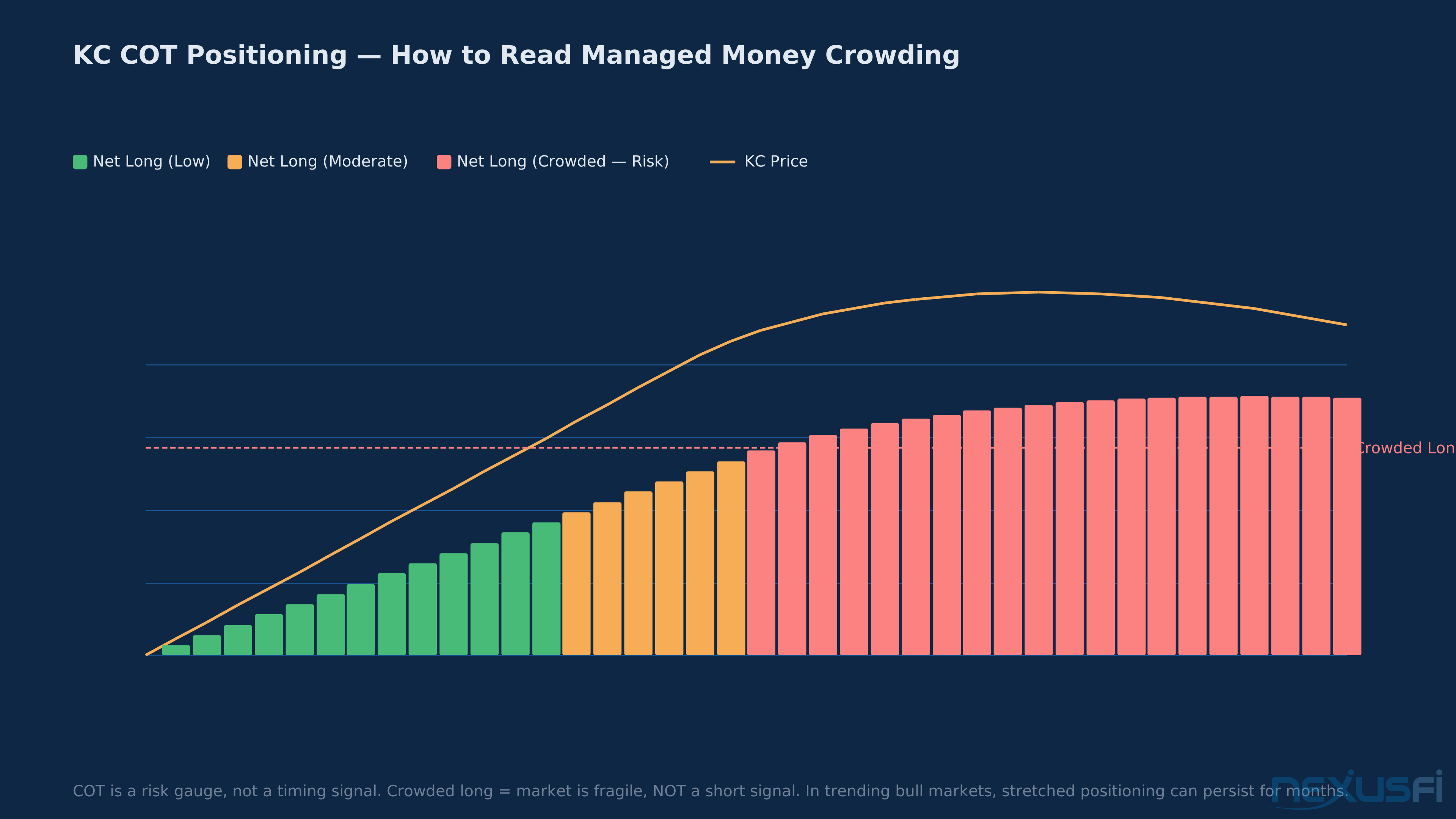
The weekly COT report shows positioning of commercial hedgers (exporters, roasters), large speculators (managed money), and small speculators. Use it as a crowding and risk gauge, not a timing signal.
When managed money net long exceeds 50-60K contracts and price shows distribution patterns, that's a vulnerability setup — not a short signal. It tells you the market is fragile to a supply-positive surprise. In trending bull markets during supply crises, COT can stay stretched for many months while price continues rising. Calling tops based on "extreme" COT readings has destroyed accounts.
How to Trade KC Futures #
The Hybrid Method #
The professional standard in soft commodity trading is a two-layer approach: fundamental regime filter combined with technical entry/exit timing.
Step 1: Establish the fundamental regime
At any given time, KC is in one of three supply regimes:
- Bullish — Drought or frost risk elevated, inventory tightening, constructive COT positioning, BRL appreciating
- Bearish — Strong harvest outlook, inventory building, crowded long positioning vulnerable to reversal, BRL weakening
- Neutral/uncertain — Mixed or conflicting signals across supply, demand, and currency inputs
Don't trade against a confirmed fundamental regime. If supply data is unambiguously bearish, buying KC on technical patterns is low-probability.
Step 2: Apply technical tools for timing
Within the established regime, technical levels and indicators provide entry and exit precision: 50-day moving average — Acts as dynamic support in bullish regimes and resistance in bearish ones. KC frequently consolidates at the 50-DMA before resuming trend.
Weekly pivot points — Entry zones around historically significant support/resistance. Apply to prior week's high/low/close.
ATR-based stops — 14-day ATR for KC in normal volatility runs approximately 3-5 cents/lb ($1,125-$1,875 per contract per day). Set stops at 1.5-2× ATR to accommodate normal volatility. During weather events, ATR can expand to 8-12 cents/lb.
Candlestick signals at key levels — Hammer or shooting star patterns at the 50-DMA or major support/resistance during the harvest window frequently precede short-term reversals.
Strategy Types #
Outright Directional Trade
Direct long or short KC futures with a defined stop and target. Best for traders with clear regime views, sufficient margin buffer, and explicit acknowledgment of gap risk. Most retail traders should use mini contracts (10,000 lbs, $5/tick) for the same directional exposure at 4× less risk per contract.
Calendar Spreads — The Primary KC Vehicle
This is where edge concentrates in KC, and it's the approach most professional soft commodity traders use as their primary structure. A calendar spread buys one contract month while simultaneously selling another. The position profits from the differential move between the two months, not from absolute price direction.
Why calendar spreads dominate KC trading:
- Margin efficiency: ~$1,200 per spread vs. ~$3,800 for outright
- Volatility reduction: spread volatility is approximately 30-40% of outright volatility
- Cleaner fundamental expression: weather events affect supply timing, which directly reprices near vs. deferred month relationships
- Partial currency and macro noise hedging
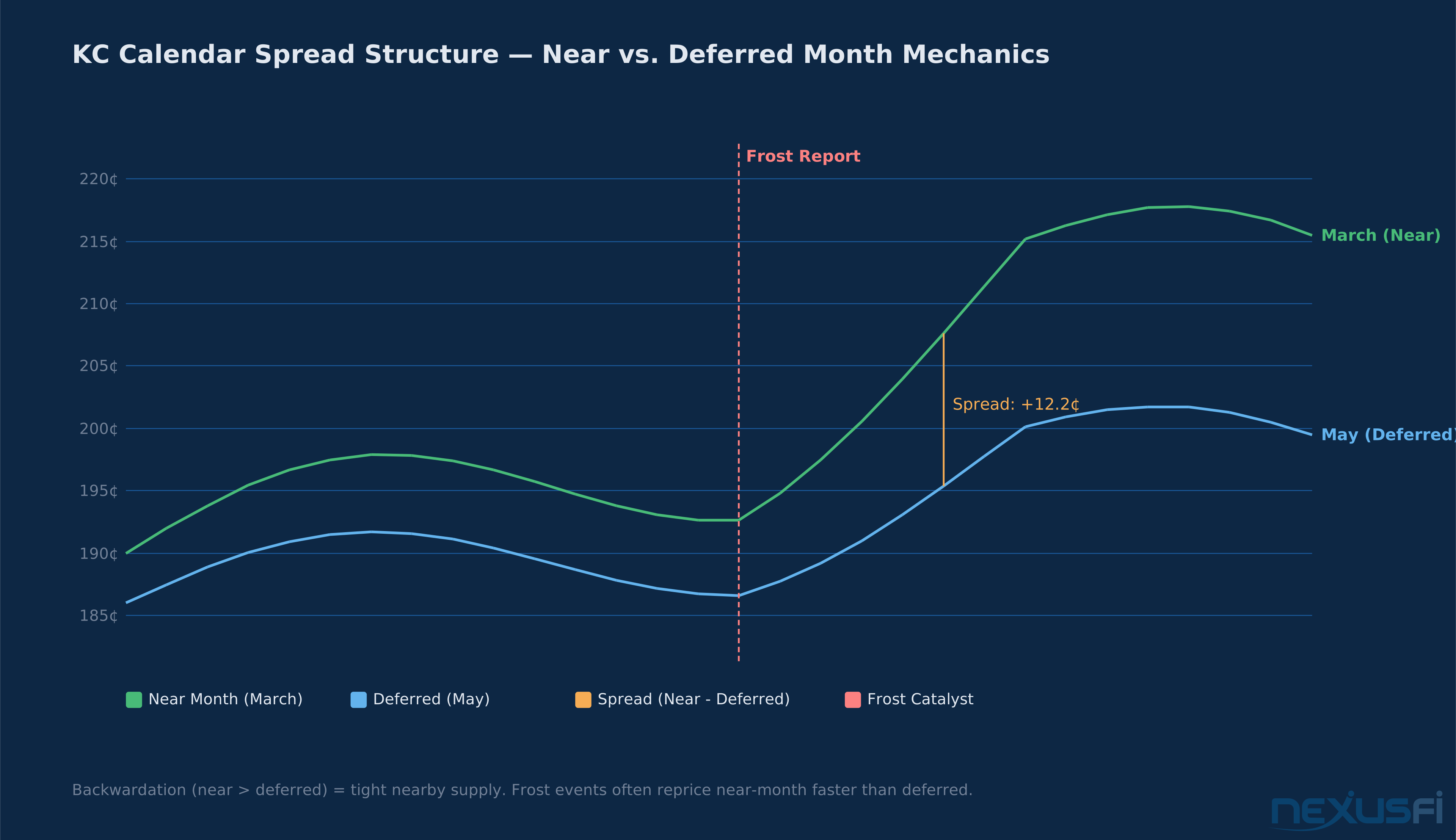
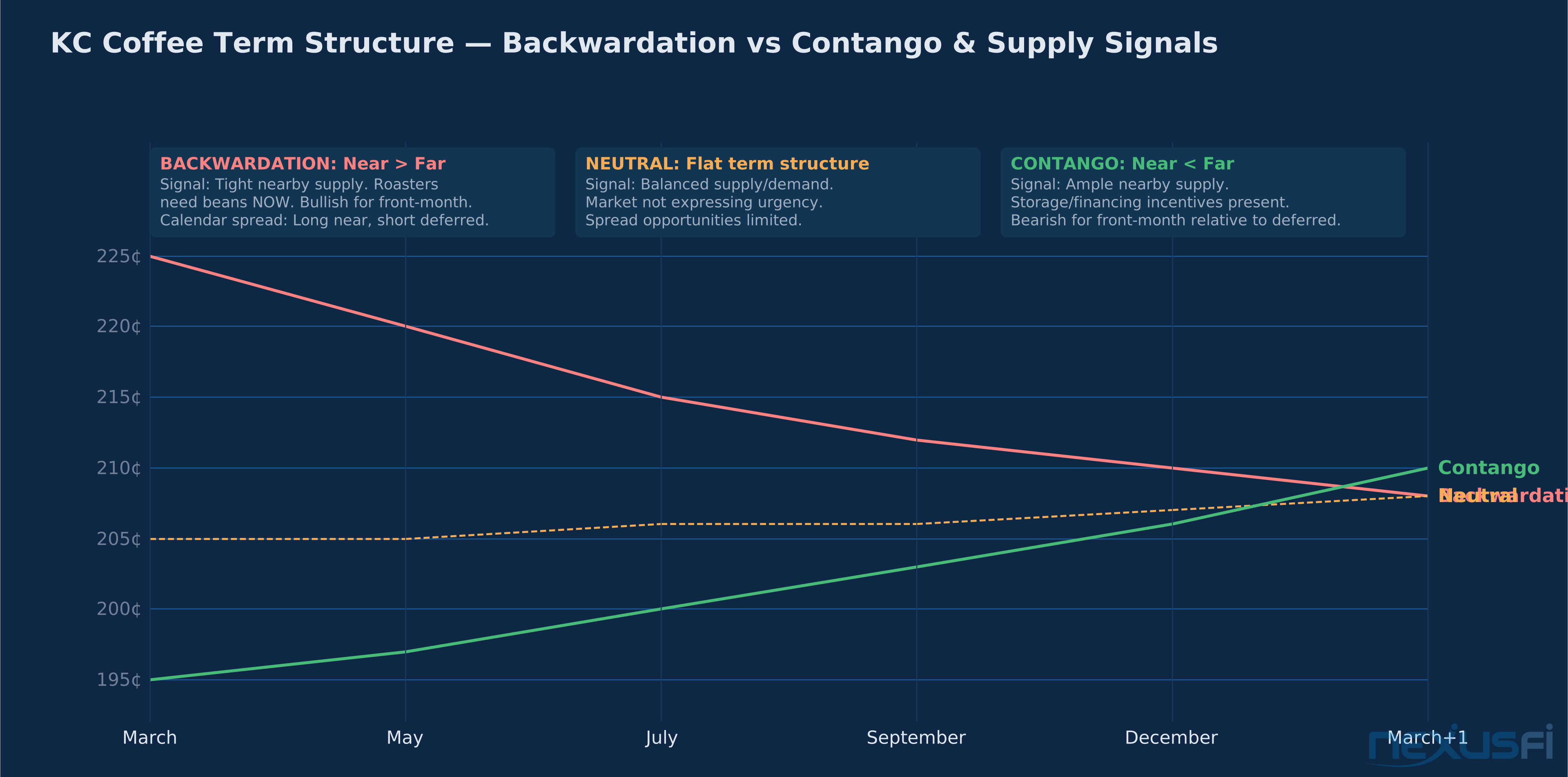
Why term structure matters here: In KC, term structure often leads outright price when supply narratives shift. When weather risk causes the near-month to price in supply disruption, the spread between near and deferred months widens. Backwardation (near-month trading at a premium to deferred) signals current supply tightness; contango signals comfortable supply. Calendar spreads allow you to express this view directly without directional price exposure.
Classic calendar spread setups:
Long March / Short May — Used when expecting near-term supply tightness that will resolve by the May harvest. This spread widens when nearby supply is tight and normalizes as harvest supply flows. During frost risk periods, near-month contracts often reprice faster than deferred months.
Long July / Short December — Expresses a view that the current-year harvest will disappoint relative to expectations, but next-crop pricing will eventually normalize.
Long May / Short September — Reflects a view about harvest timing and quality. If you expect the harvest to be delayed or of below-average quality, the May-September spread tightens as available supply decreases in the intermediate window.
Critical risk: Calendar spreads are not risk-free. During sharp headline-driven repricing of the entire forward curve, spreads can gap. The spread dampens macro noise but doesn't eliminate headline risk.
Options Strategies
Long calls during bullish regime — Buy calls with 90-120 days to expiration when the fundamental regime is bullish but you want defined downside risk. Especially useful during elevated frost risk when a supply shock is possible but uncertain. Straddles around weather events — Buying both a call and put captures volatility expansion without directional exposure. Justified only if you believe actual volatility will much exceed implied volatility (typically 22-28% for KC front-month options). Short puts at support in bullish regime — Selling out-of-the-money puts below key support when COT data is constructive and price is near historical support.
Order Execution #
Always use limit orders for entries. Market orders in active KC sessions can slip 2-5 ticks.
Stop-limit vs. stop-market for exits: A stop-market order following a weather bulletin can execute 10-20 ¢/lb from your intended stop level — that's $3,750-$7,500 per standard contract. Stop-limit orders define your worst acceptable fill price, though they carry non-fill risk if price gaps through the limit. During weather season, some traders accept the non-fill risk as preferable to guaranteed poor execution on stop-markets.
KC is most liquid during 08:00-13:00 ET. Overnight sessions have materially lower liquidity and wider spreads. Close or roll positions before the last 7 business days of expiry unless you're set up for physical delivery.
Position Sizing for KC: The Math You Can't Skip #
The Framework #
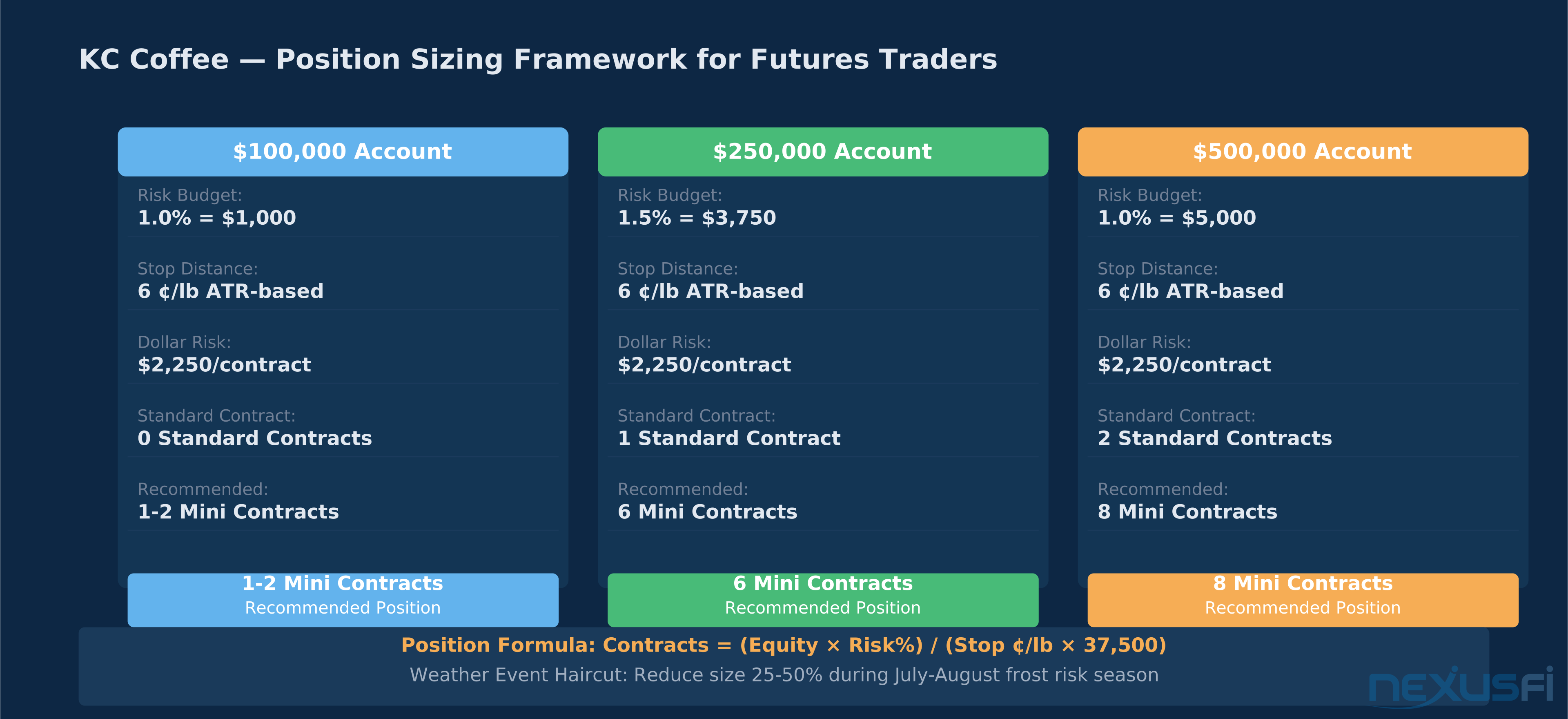
Step 1: Set maximum risk per trade — 0.5%-1.5% of account equity per trade is the practical range for KC. The standard 2% rule used in equity index trading often creates forced exits in KC when normal volatility moves against you. Step 2: Determine stop distance — Use 1.5-2× the 14-day ATR. If 14-day ATR = 4 ¢/lb, a 1.5× stop is 6 ¢/lb = $2,250 per standard contract. During frost risk windows (July-August), expand the stop assumption to 8-12 ¢/lb ($3,000-$4,500 per contract) to account for gap risk.
Step 3: Calculate position size
Position size = (Account Equity × Risk%) / Dollar Risk per Contract
Example: $200,000 account, 1% risk = $2,000 budget. Stop of 6 ¢/lb = $2,250 per standard contract. You can't take even a single standard contract without exceeding your risk limit. Options: use a mini contract ($600 risk at the same stop), or tighten the stop to 5 ¢/lb ($1,875 per standard). This math is why most retail traders should default to mini contracts or calendar spreads.
Step 4: Apply weather event haircut — During July-August frost risk periods, reduce position size by 25-50% regardless of what the standard calculation suggests. Volatility can double overnight. The haircut is not optional.
| Account | Risk % | Budget | ATR Stop (6 ¢/lb) | Standard Contracts | Mini Contracts |
|---|---|---|---|---|---|
| $100,000 | 1.0% | $1,000 | $2,250 | 0 | 1-2 |
| $200,000 | 1.0% | $2,000 | $2,250 | 0 | 3 |
| $250,000 | 1.5% | $3,750 | $2,250 | 1 | 6 |
| $500,000 | 1.0% | $5,000 | $2,250 | 2 | 8 |
The Gap Risk Reality #
Gap risk in KC is not theoretical. The July 1994 frost moved KC from approximately 85 to 120 ¢/lb over three sessions including overnight gaps. Any trader who had a stop-market below 85 likely got filled somewhere around 78-82 ¢/lb as the market gapped the other direction before reversing sharply upward.
The practical implication: size positions so that even a 2× ATR gap move doesn't force a catastrophic exit. This usually means smaller positions than the standard ATR-stop calculation suggests.
KC vs. Equity Index Futures: The Cognitive Shift #
Traders from ES, NQ, or other index contracts frequently underestimate how different KC is. The misapplication of index-market thinking to coffee causes specific, predictable losses.
| Dimension | Equity Indices (ES/NQ) | Coffee Futures (KC) |
|---|---|---|
| Primary drivers | Macro policy, earnings, liquidity | Weather, crop supply, logistics, BRL/USD |
| Volatility pattern | Policy-driven, mean-reverting | Seasonal, trigger-clustered, can trend weeks |
| Gap risk | Moderate — deep liquidity cushions | High — weather headlines gap through stops |
| Stop reliability | Generally executable near intended levels | Frequently slipped during weather/news events |
| Edge source | Earnings models, flow data, macro | Weather probability, crop stage, export data |
| COT relevance | Moderate | High — primary contrarian/crowding indicator |
Common index-trader mistakes in KC:
Assuming trend continuity at intraday timeframes. Index traders expect relatively smooth intraday action. KC can reverse 5-10 ¢/lb intraday around news events. Intraday trend following during weather season gets chopped up.
Ignoring BRL correlation. Currency impacts on stock indices are indirect. In KC, BRL directly impacts producer selling decisions and is often the first thing to check on a morning where KC is moving without obvious news.
Using stops as if the market is frictionless. ES traders can rely on stop-markets executing within 1-2 ticks in normal sessions. KC stop-markets execute at much worse prices during events. Sizing based on stated stop versus actual execution level is systematically wrong.
Treating forecast as certainty. A NOAA frost probability of 40% is a 40% probability. The market already partially prices this. Traders who enter on the probability as if it's confirmed fact often buy into a market that has already priced the risk, then sell at a loss when the probability reverts.
Report Calendar and Interpretation #
CONAB crop estimates drive the biggest single-release reactions in KC. Focus on the revision direction relative to prior estimates and versus market consensus (USDA, private forecasters). Below-consensus is bullish. Above-consensus is bearish. The absolute number matters less than the consensus delta. First estimate of the season (typically May) is the most impactful.
USDA WASDE provides global coffee balance sheets monthly. Watch for patterns — multiple consecutive revisions in the same direction carry more signal than single-month changes. React to revision direction and magnitude, not just the headline number.
ICO reports provide global supply/demand/balance context, most useful for identifying whether price trends reflect supply or demand changes. ICO data often lags what experienced traders already know from direct export statistics. If ICO confirms what the market has already priced, the reaction is muted.
ICE warehouse stock reports are published daily and track certified Arabica delivery inventory in real time. This is the most current supply signal available between report releases.

A Pre-Trade Checklist for KC #
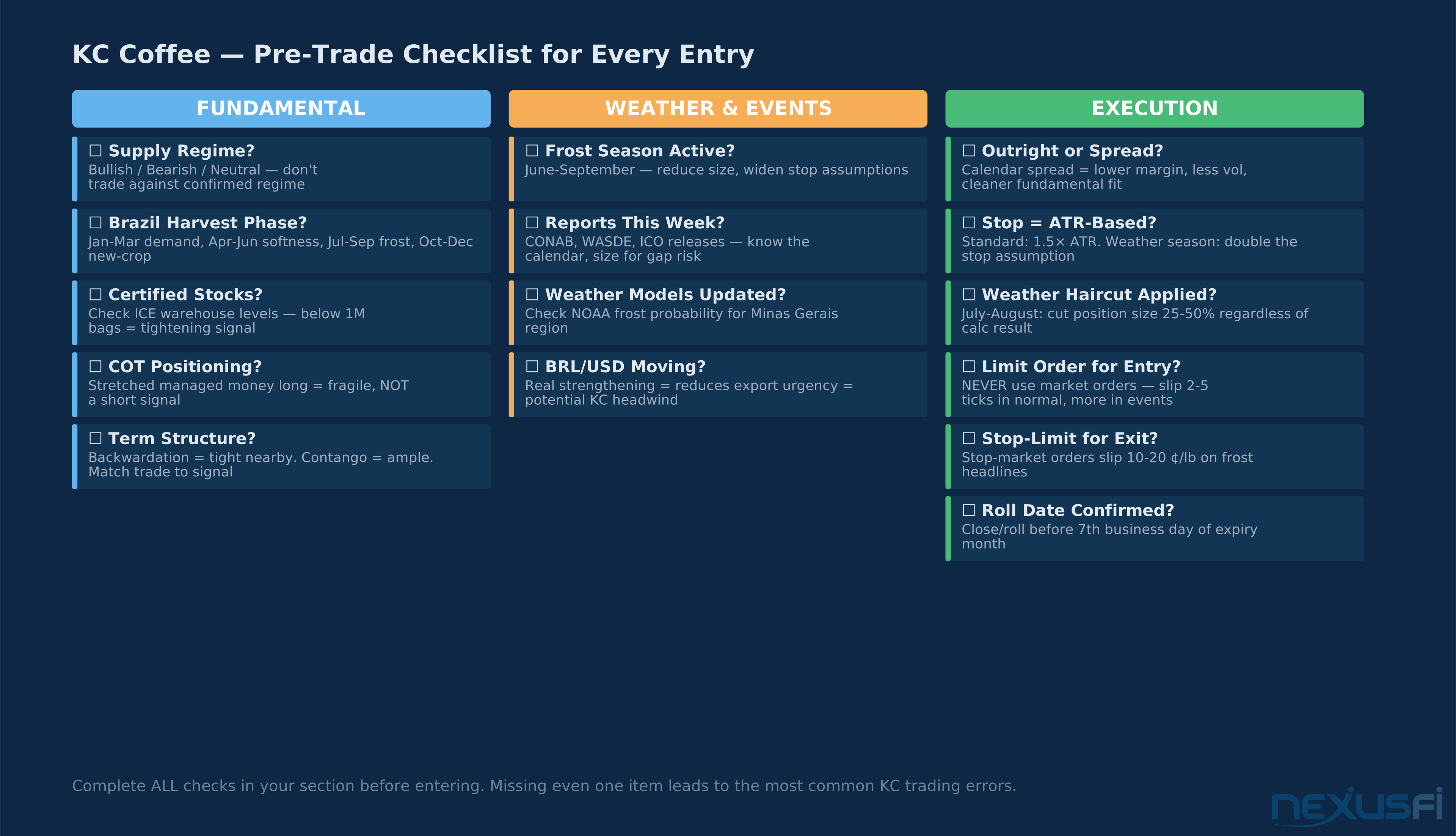
Before entering any KC position:
Fundamental context:
- What is the current supply regime? (bullish / bearish / neutral)
- Where are we in Brazil's harvest calendar?
- What do certified warehouse stocks show?
- What is managed money net positioning? Is it stretched?
- What is the term structure signal? (backwardation vs. contango)
Weather and event risk:
- Is frost season active (June-September)?
- Are any weather model updates or CONAB estimates expected this week?
- Does position sizing assume gap risk?
Trade structure:
- Outright or calendar spread?
- If calendar spread: which months and what is the fundamental basis?
- Stop distance calculated from current ATR?
- Weather event haircut applied if July-August?
Execution:
- Limit order for entry?
- Stop-limit (not stop-market) for exit?
- Position closed or rolled before last 7 days of contract?
Soft Commodity Portfolio Context #
KC fits within a diversified soft commodity portfolio. For portfolio construction and inter-commodity spread strategies, see the related guides for Corn Futures (ZC), Wheat Futures (ZW), and Soybean Futures (ZS).
What KC Requires From You #
Coffee futures reward traders who invest in the fundamental work. The market has clear structure — defined seasonal patterns, identifiable supply catalysts, a manageable set of fundamental inputs — but that structure only produces edge if you're monitoring it consistently.
The specific commitments:
- Check weather models weekly during frost season (June through August)
- Know when CONAB publishes and track consensus estimates ahead of releases
- Monitor certified warehouse stocks when supply narrative is active
- Track BRL/USD alongside price whenever KC is moving without obvious news
Traders who make those commitments find KC a genuinely compelling market with clear edges. Traders who approach it with chart-only thinking and full-size contract positions find out why it's different the hard way.
Key Takeaways #
Master these fundamentals: Brazil weather dominates price action with seasonal concentration in July-August frost risk and May-July harvest risk. CONAB estimates, USDA WASDE revisions, and COT positioning are the primary data tools. BRL/USD adds currency dimension that most chart-only traders ignore.
Use calendar spreads as your primary structure: lower margin, lower volatility, cleaner fundamental expression, partial macro noise cancellation.
Size for gap risk: The standard contract is large. ATR-based stops frequently execute worse than stated levels during weather events. If your account can't absorb a 10-cent/lb gap move, you're either oversized or should be in minis or spreads.
Apply the hybrid method: Fundamental regime filter establishes the direction. Technical tools time the entry. This combination outperforms both pure approaches over time.
KC requires more upfront fundamental knowledge than most futures markets. The edge is real and well-defined. The risk is real and poorly understood by traders who come in without that foundation.
Knowledge Map
Prerequisites
Understand these firstGo Deeper
Build on this knowledgeReferences This Article
Articles that build on this topicCitations
- — Softs (Fundamentals) (2018) 👍 3“Reasons for the recent sharp price move were extremely bullish COT data, results of the recent elections in Brazil and the rise of the Brazilian Real, and smaller weather issues in various coffee areas.”
- — Softs (Fundamentals) (2019) 👍 2“I currently hold long futures (and in the case of coffee short put options) in coffee, sugar, and orange juice. For all these commodities COT data is bullish. Prices of all these commodities are close to round number supports.”
- — Softs (Fundamentals) (2017) 👍 2“I hold a long position in coffee, as the blooming period in Brazil approaches and the weather forecast is dry. COT data is bullish. My stop is close, as a change in the weather forecast will bring coffee price down again.”
- — Selling Options on Futures? (2013) 👍 3“The specs have been short KC futures for months. Now we get into the cold times, possible frost, right before harvest. World supplies are strong. This will put a lid on KC.”
- — Softs (Fundamentals) (2018) 👍 2“Coffee currently trades around 100. One point corresponds to US$ 375. There are elections in Brazil on 7th of October. As there is uncertainty about the further development of the Brazilian Real some shorts begin to liquidate.”
- — Softs (Fundamentals) (2019) 👍 2“There are several fundamental arguments to be long coffee: off-year in 2020 in Brazil, blooming period in Brazil as a high risk period, and reduced Vietnam crop in 2019 due to weather problems.”
- — Softs (Fundamentals) (2016) 👍 6“Another excellent fundamental news source for the trading of soft commodities is useful for tracking crop reports and weather impacts on KC and other softs.”
- ICE Futures U.S. — Coffee C Futures Contract Specifications (2024)
- CFTC — Commitment of Traders Reports (2024)
- CONAB — Brazilian Agricultural Supply Company - Coffee Crop Surveys (2024)
- — Selling Options on Futures? (2013) 👍 5“In May people are worried about a frost in Brazil before the beans are harvested even though most coffee groves have been moved further away from frost prone areas. But when we get past that early May worry about frost the prices come off. And with only a 24 cushion it wouldn't take much of a futures drop to force you out.”
- — Softs (Fundamentals) (2018) 👍 2“The most important thing: Keep lot size small. COT data is extremely bullish, and any weather problem will cause a severe price move. This is why I prefer buying ATM options in this case.”