



US Dollar Index (DX) Futures: The Complete Trading Guide to the Legacy Euro-Weighted Dollar Basket
Overview #
The US Dollar Index futures contract — ticker DX, trading on ICE Futures U.S. — is the cleanest listed instrument for expressing a directional view on the dollar. One contract, one ticket, one P&L. No need to leg into six separate FX positions or build a synthetic basket. If your thesis is "the Fed stays hawkish while the ECB blinks," DX is where that trade lives in futures form.
But DX is also widely misunderstood. Traders call it a "broad dollar index" — it isn't. They assume it tracks all major currencies equally — it doesn't. They use it as a perfect hedge against USD exposure — it's not. The index was built in 1973, the basket hasn't changed since, and 57.6% of the weight sits in the euro. That single fact shapes everything about how DX moves, when it diverges from your intuitions, and why using it incorrectly burns you.
This guide covers the contract mechanics from first principles, explains exactly why the euro dominates the calculation, maps DX against the individual CME FX futures you might already trade, and walks through the practical setups — speculation, hedging, and spread trading — where DX earns its place in the toolkit.
Key Specifications #
The DX contract trades on ICE Futures U.S. (Intercontinental Exchange), not the CME. That's the first thing traders get wrong — they look for DX on their CME data feed and can't find it. ICE exchange data fees apply, and your broker needs to carry ICE connectivity. Most major brokers do, but double-check before sizing up.
Contract size is 1,000 times the USDX value. At an index level of 100, one contract equals $100,000 notional. Each full index point moves your P&L $1,000. The minimum price increment (tick) is 0.005 — that's $5 per tick. Most moves in DX are 5-25 ticks per hour during European session overlap, which means intraday swings of $25-$125 per contract are typical on a normal trading day.
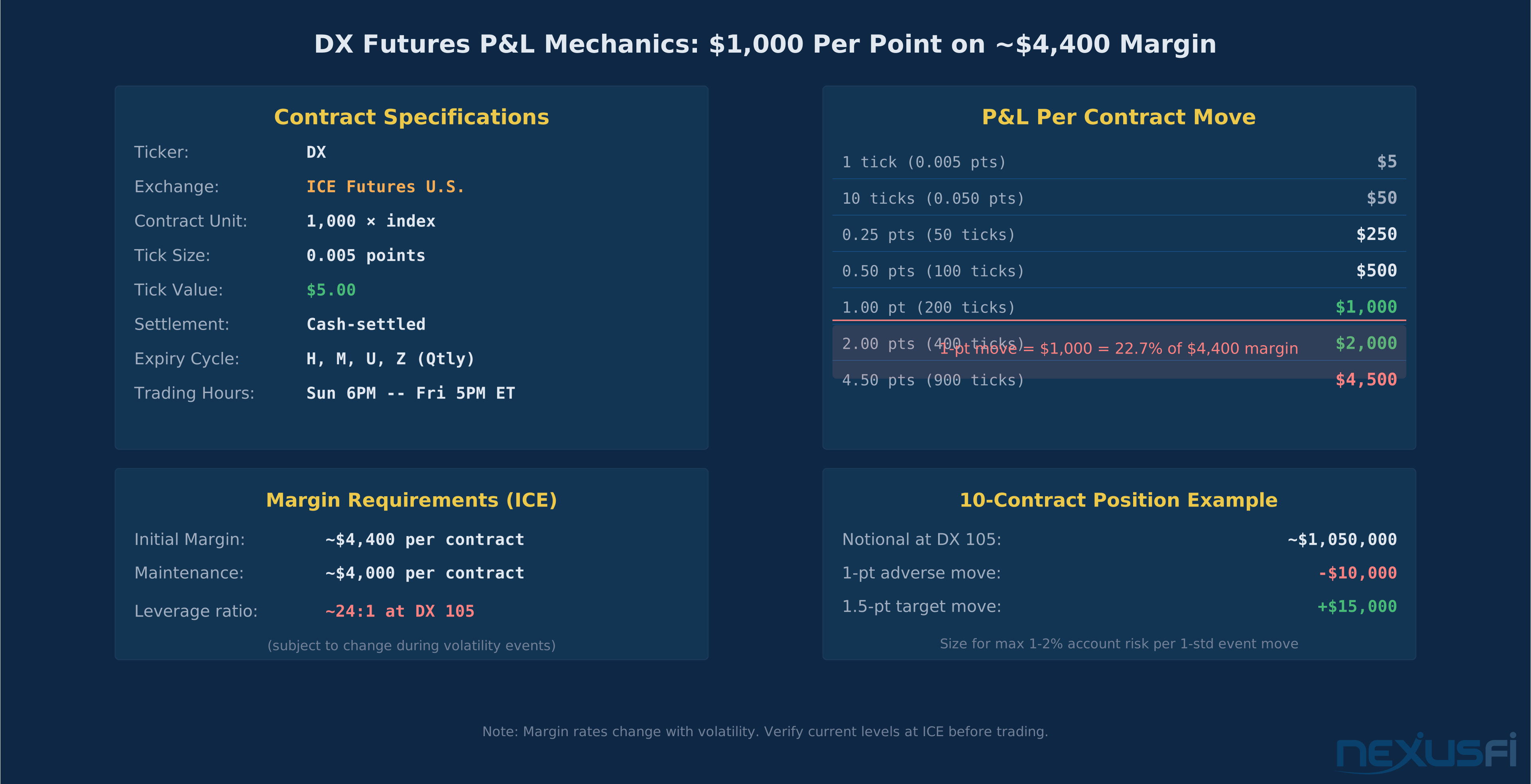
Trading hours run nearly continuously: Sunday 6:00 PM ET through Friday 5:00 PM ET, with a daily 1-hour maintenance break from 5:00-6:00 PM ET. Most DX volume concentrates between 3:00 AM and 11:00 AM ET — that's when European session participants are active and EUR/USD (which dominates the index) is generating real two-way flow. Outside this window, DX bid-ask spreads widen noticeably and liquidity thins.
Expiration cycles are quarterly: March (H), June (M), September (U), and December (Z). The front month carries roughly 80% of total open interest. Last trading day is two business days before the third Wednesday of the contract month. Settlement is cash-based against the index value at expiration — there's no physical delivery, which simplifies rollover much compared to commodity futures.
DX initial margin is approximately $1,500-$2,000 at most brokers, with day-trading margins often lower. Always check with your specific broker — ICE sets the minimum, but brokers set their own requirements. The contract's leverage ratio (~50:1 at 100 DX level) demands strict position sizing discipline.
Key contract details at a glance: Exchange: ICE Futures U.S. | Symbol: DX | Contract size: $1,000 x Index | Tick: 0.005 = $5.00 | Trading hours: Sun 6 PM — Fri 5 PM ET | Settlement: Cash | Expiry: Quarterly (Mar/Jun/Sep/Dec) | Volume: Moderate (30,000-60,000 contracts per day average)
How DX Is Calculated: The Euro Problem #
Understanding DX's calculation is non-negotiable. Traders who skip this section make systematic mistakes in how they interpret DX signals relative to their other positions.
The USDX is a geometric weighted mean of six currency pairs, using weights set in 1973 when the Bretton Woods fixed exchange rate system collapsed and the modern floating rate era began. The formula:
USDX = 50.14348112 × EUR/USD^(-0.576) × USD/JPY^(0.136) × GBP/USD^(-0.119) × USD/CAD^(0.091) × USD/SEK^(0.042) × USD/CHF^(0.036)
Base period: March 1973 = 100.000
The negative exponents on EUR and GBP reflect that these are quoted as X per dollar (EUR/USD, GBP/USD), while positive exponents on JPY and CAD reflect those currencies quoted as dollars per unit (USD/JPY, USD/CAD). Algebra aside, the practical interpretation is straightforward: when EUR/USD rises, DX falls almost immediately, because EUR carries more than half the weight.
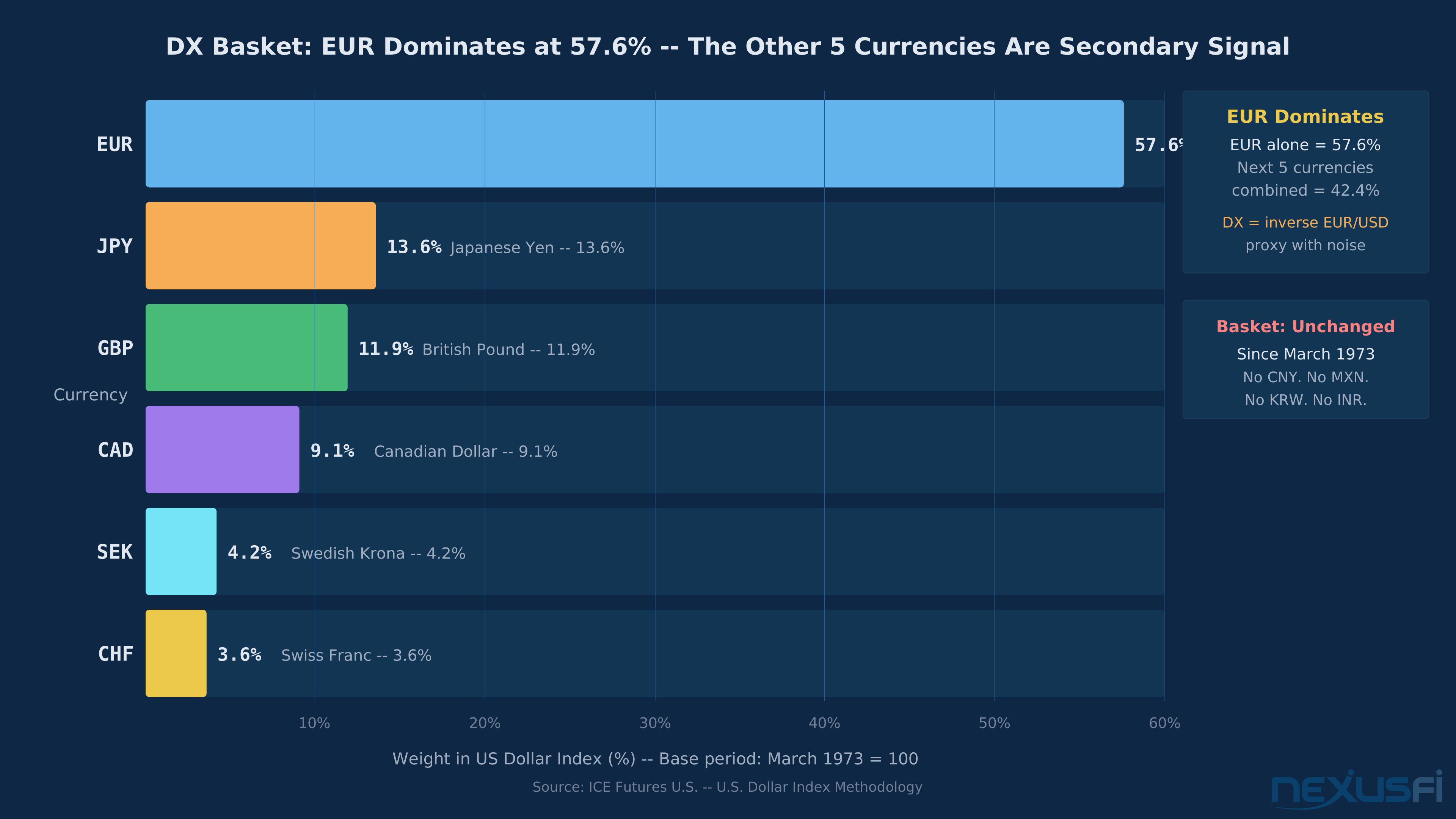
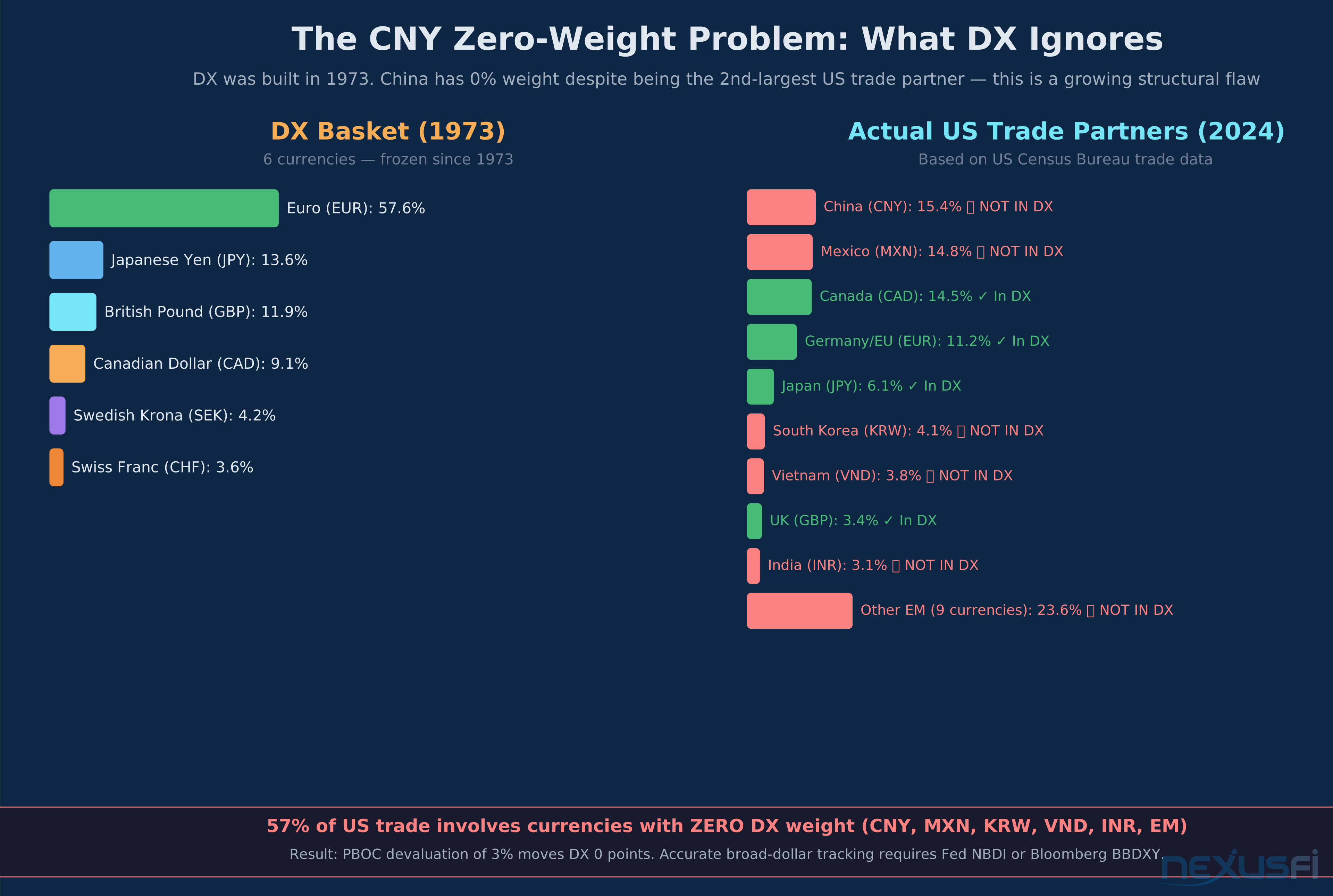
The weights haven't changed since the index launched, which creates a structural problem: China (the world's second-largest trading partner) has zero representation. Neither does Mexico, South Korea, India, or Brazil. The index reflects the 1973 world of US trade relationships, not 2026. This matters when you try to use DX as a proxy for US competitiveness or trade conditions — it isn't one.
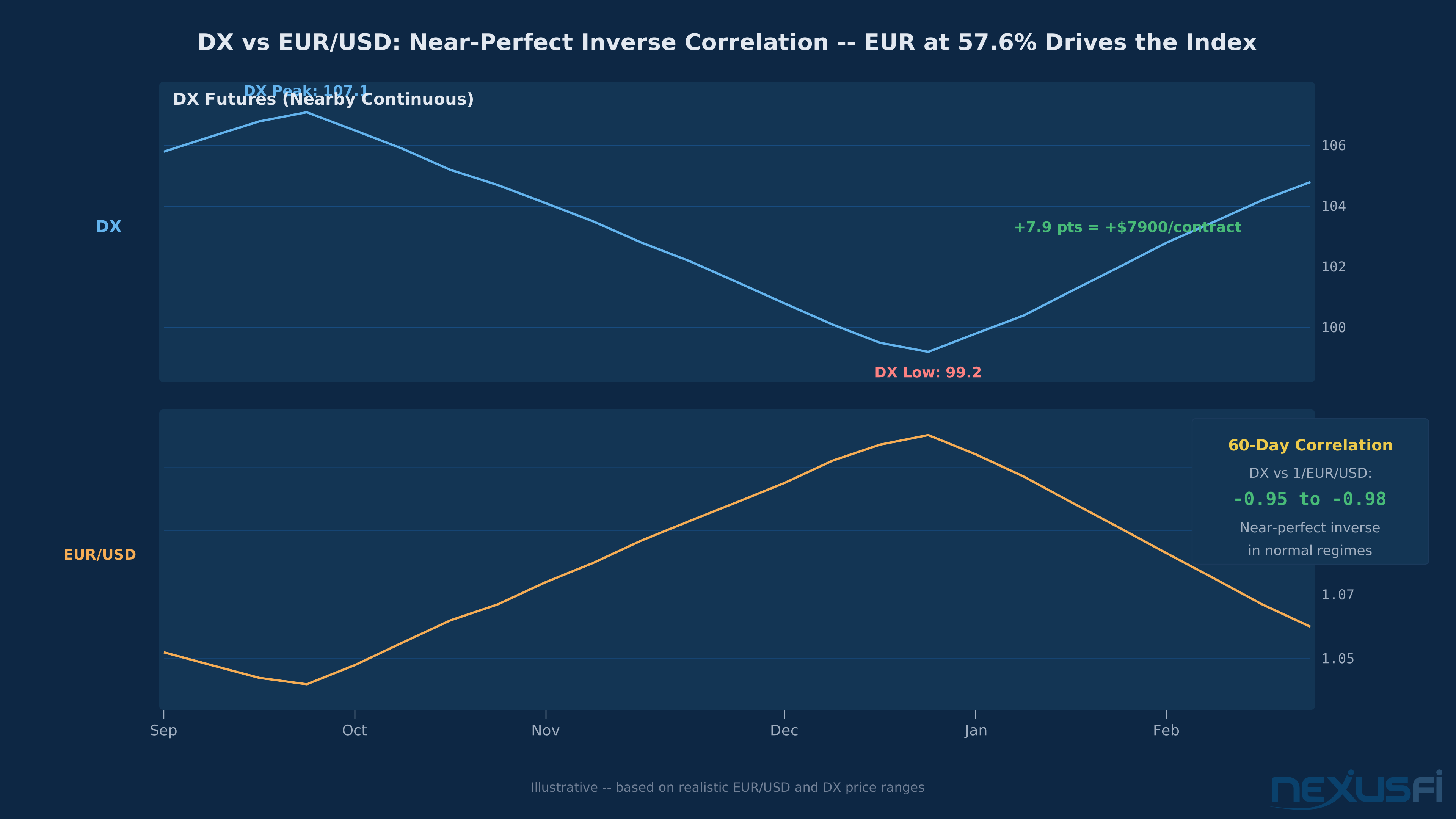
As @Fat Tails noted in the Elite Circle thread "Trading 6E and DX": "If you look at the definition of the US Dollar Index, it is a synthetic quote calculated from 6 different currency pairs. The EURUSD accounts for 57.6% of the Dollar Index. So by definition, there is a huge correlation between DX and the Euro." [2] The practical implication: DX and 6E (Euro FX futures) basically have the same information content. You cannot profitably hedge one against the other — they move in parallel, not with a lead-lag relationship.
The DX basket's lack of CNY representation is a growing signal divergence problem. As US-China trade has expanded to roughly 15-20% of total US trade, DX increasingly fails to capture dollar moves driven by yuan policy. When the PBOC devalues the yuan sharply, DX barely registers. This is the core reason sophisticated macro traders track Bloomberg's BBDXY (which includes CNY) alongside DX.
What Drives DX: The Four Macro Forces #
DX doesn't move randomly. Four structural forces drive the majority of sustained DX trends, and understanding their priority order determines how you read daily price action.
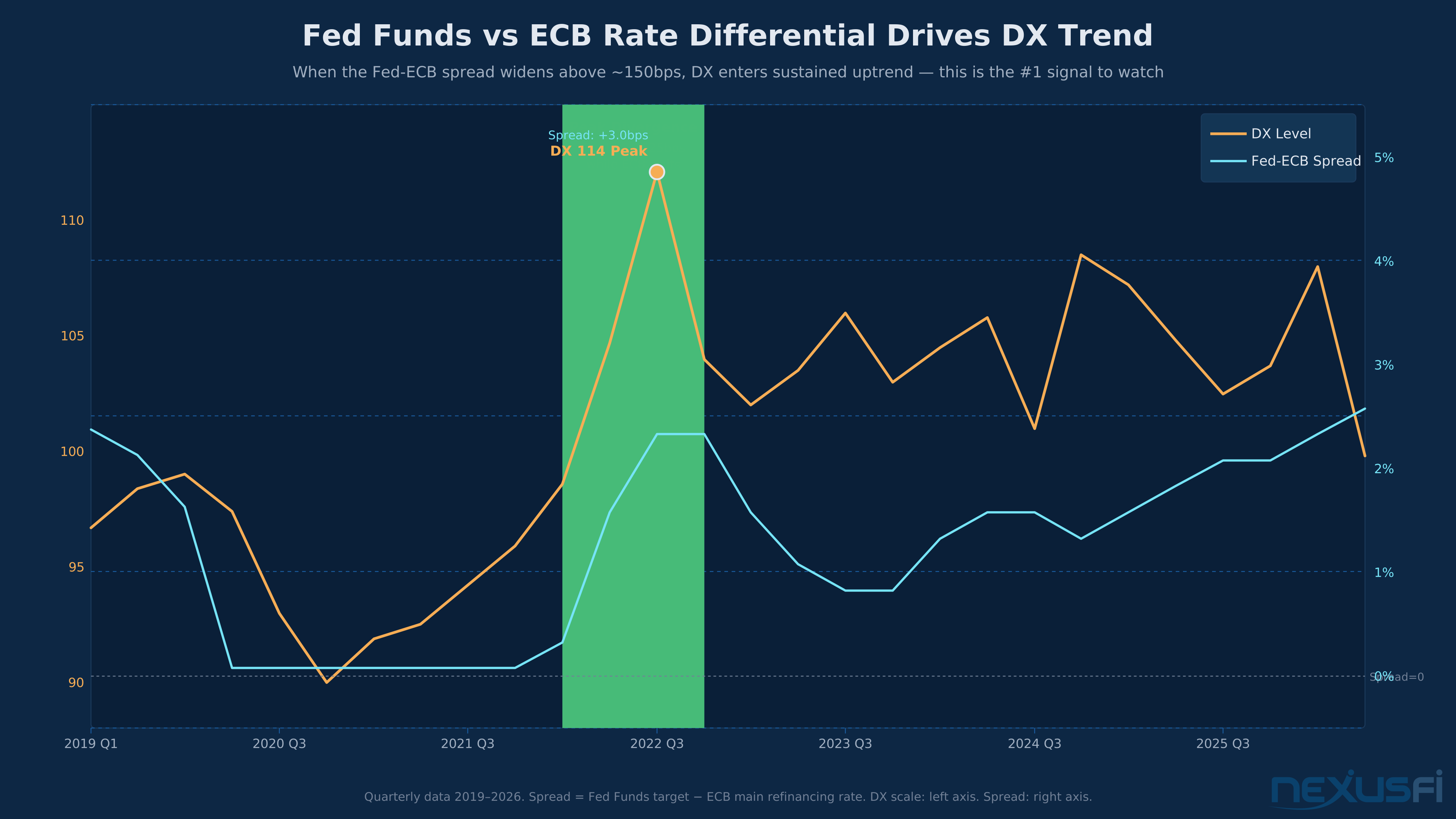
Federal Reserve policy differential. The single most powerful driver of DX. When the Fed is raising rates faster than the ECB, JPY, and BoE combined (on a GDP-weighted basis, not an equal-weighted basis), capital flows toward dollar-denominated assets, pushing DX higher. The 2021-2022 hiking cycle that took DX from 89 to 114 is the textbook example. During that period, DX correlations with CL and GC broke down completely because the currency was doing its own thing on a structural policy divergence. The Fed-ECB rate differential is the first number to check when assessing DX's macro backdrop — as @tigertrader analyzed during the 2015 policy divergence: "dollar is strong due to u.s./ecb, boj, pboc central banks policy divergence and short-covering from traders who got caught leaning the wrong way." [11]
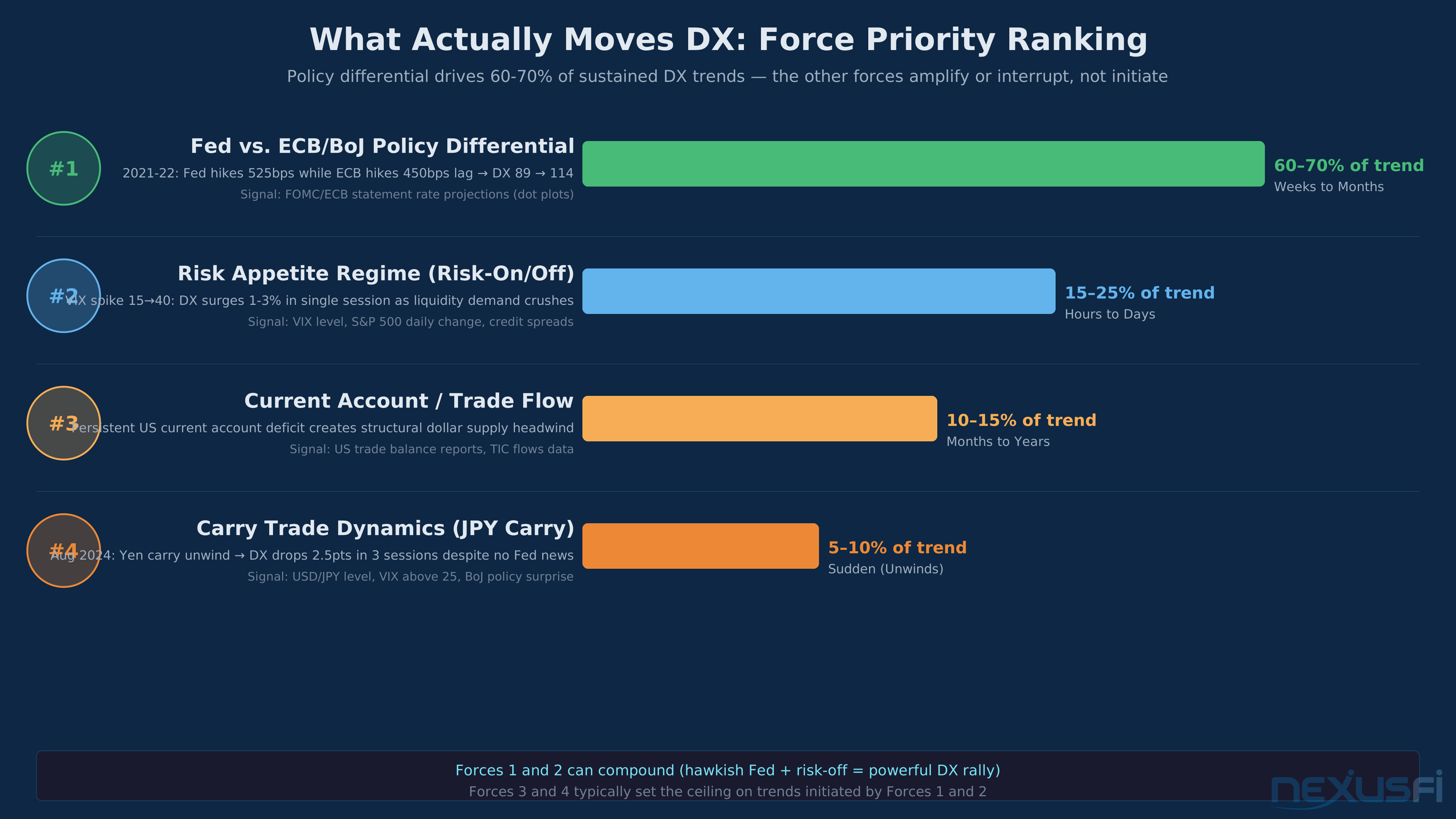
Risk appetite regime. In risk-off regimes — equity selloffs, credit crises, geopolitical shocks — the dollar typically strengthens as global investors seek liquidity. The 2008 financial crisis, the March 2020 COVID crash, and the 2022 Russia-Ukraine market dislocation all showed this pattern. DX spiked while ES collapsed. In risk-on regimes, the opposite typically holds. @tigertrader, analyzing the 2022 market in the Spoo-nalysis thread, observed: "Real rates are also inversely correlated to GOLD and positively correlated to the Dollar." [4]
Current account dynamics. The US runs a structural current account deficit, which over long periods creates dollar supply (exporters converting dollar receipts to local currency). This creates a persistent headwind for multi-year DX uptrends. Short-term, this force is overwhelmed by the policy differential and risk appetite drivers. But on 6-18 month horizons, current account shifts can flip DX trends.
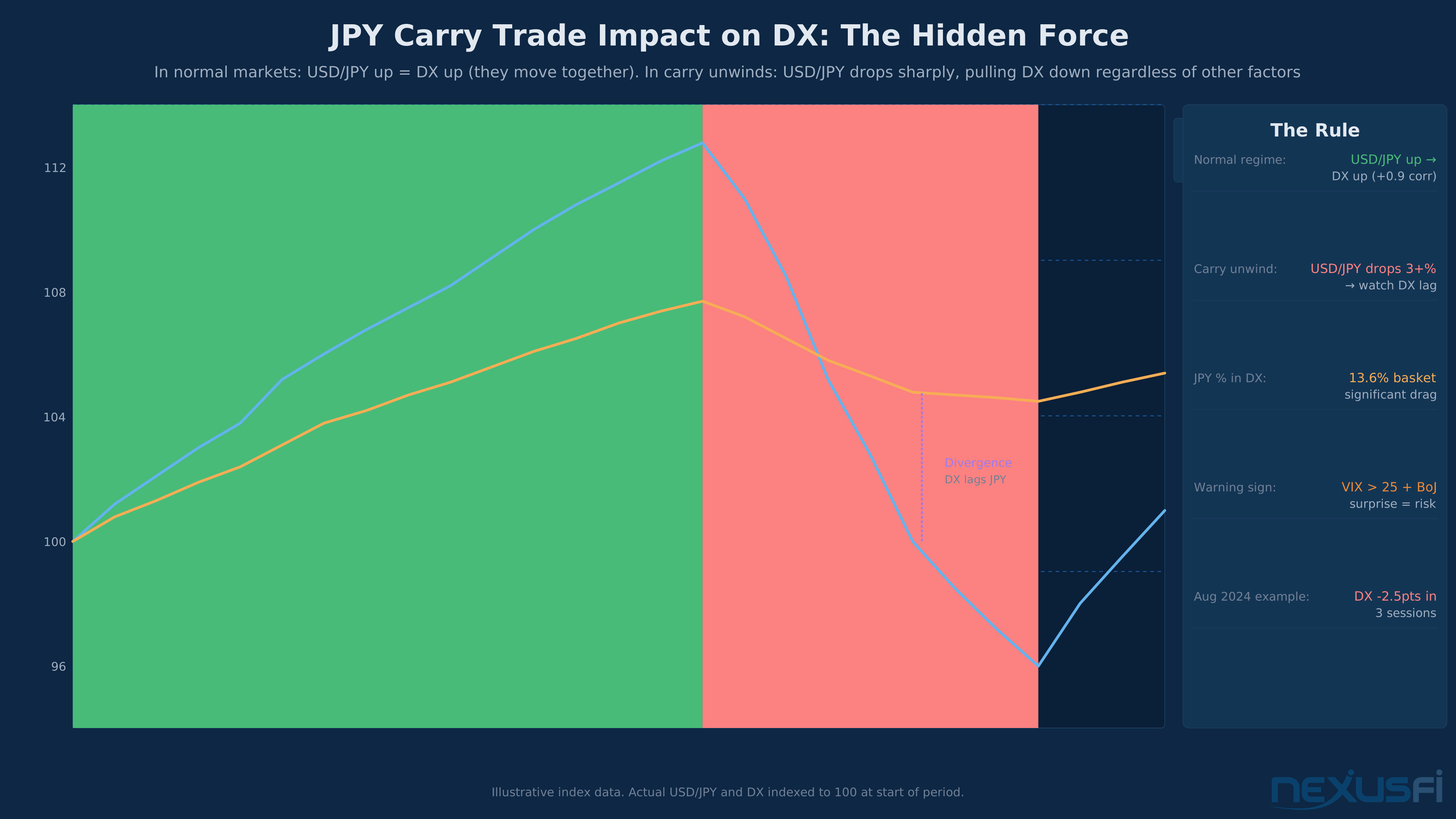
Carry trade dynamics. The yen's 13.6% DX weight creates a specific dynamic: Japanese carry trades (borrow cheap yen, invest in dollar assets) support DX when the yen-dollar rate differential is wide. When carry trades unwind — as they do sharply when volatility spikes — yen strengthens (JPY/USD rises), which drags DX lower via the USD/JPY component. The August 2024 carry unwind is the most recent major example: DX dropped 2.5 points in three sessions. [9]
Intermarket Correlations: How DX Connects to Your Other Positions #
DX's correlations with other asset classes are among the most practically useful intermarket signals in futures trading — but they're regime-dependent, not permanent. Treating DX correlations as constants will hurt you. Understanding when they hold and when they break is what matters.
DX vs Gold (GC). The classic inverse relationship — strong dollar, weak gold. The intuition: gold is priced in dollars. When the dollar strengthens, gold becomes more expensive for foreign buyers, reducing demand. Historically, DX-GC correlation runs around -0.6 to -0.8 on monthly timeframes. [8] But this breaks during inflation panic regimes — in 2022-2023, gold and the dollar rose simultaneously as both were bidding for safe-haven flows.
DX vs Crude Oil (CL). Also typically inverse — dollar strength reduces purchasing power of oil for non-dollar buyers. The correlation is real but noisier than DX-GC because crude has its own supply-side drivers (OPEC decisions, geopolitics, inventory data) that frequently override currency effects. @rocksolid68 in "How I Trade For a Living" described this directly from practice: "CL is a wild beast with no master. CL is tricky because some days it moves the ES and some days it doesn't." [3] Short-term DX-CL correlation is unreliable intraday but meaningful on weekly timeframes. [10]
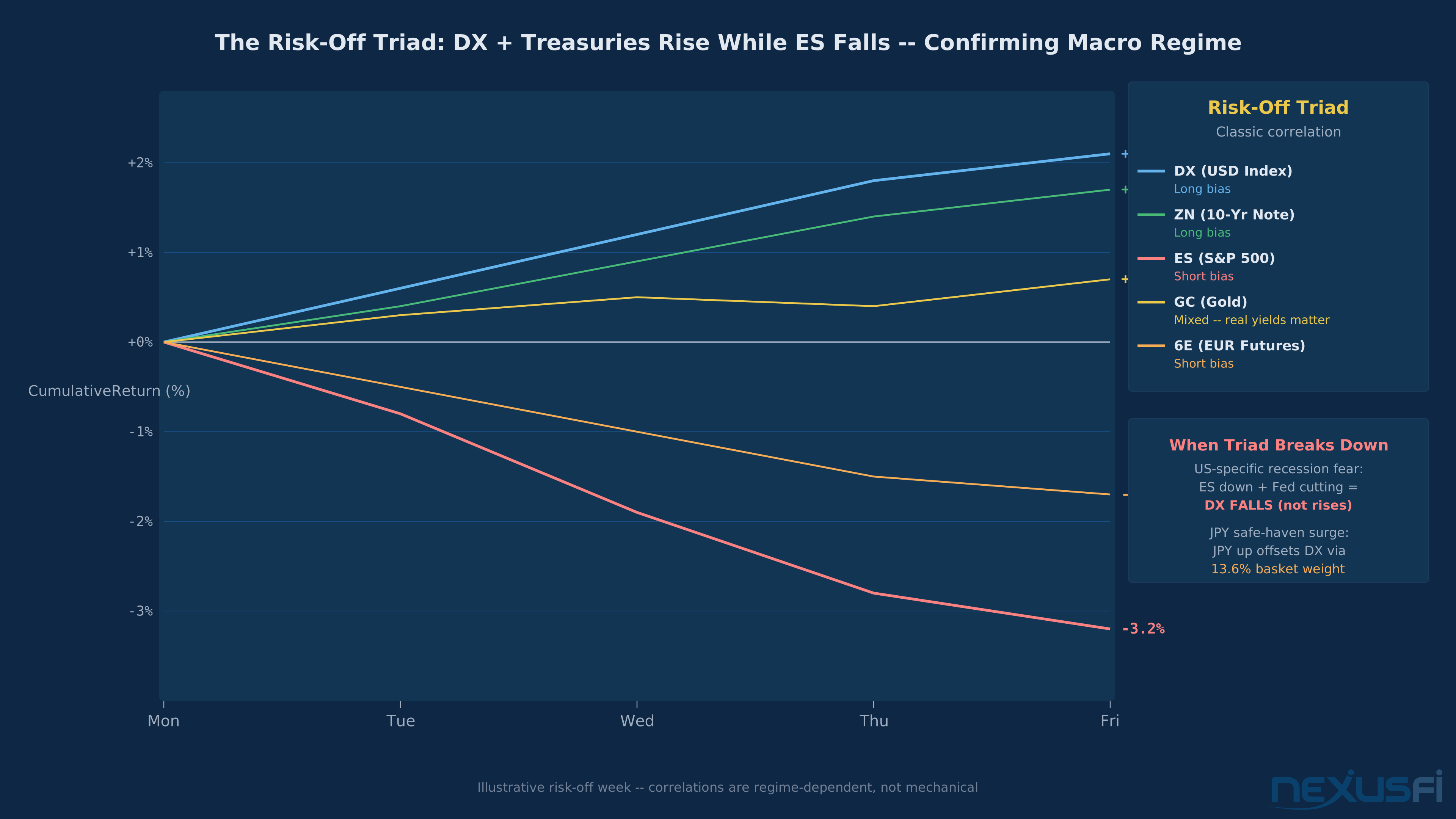
DX vs Equity Futures (ES/NQ). This one surprises most traders: the correlation is not consistently inverse. In normal "risk-on" environments, both USD and equities can rise together as global capital flows into US assets. In genuine risk-off environments (2008, 2020), DX typically spikes as equity futures collapse. In slow grinding bear markets driven by rate expectations, DX and equities can fall together.
[3] The key variable is whether it's a liquidity crisis (dollar and equities diverge) or an expectation-driven move (can move together).
DX vs Treasury Futures (ZB/ZN). Rising yields (falling ZB/ZN prices) attract foreign capital into dollar assets, supporting DX. This creates a positive correlation between DX moves and rate expectations. When the Fed signals rate cuts, treasuries rally (ZB up) and DX typically weakens. On inflation-driven selloffs, both ZB and DX can fall simultaneously. The relationship is most reliable during Fed policy decision windows.
DX correlations are regime-dependent, not constants. The reliable correlations: DX inverse to GC (risk-off) and inverse to CL (on weekly timeframe). The unreliable ones: DX vs ES intraday (can go either direction depending on the driver). Check what regime you're in before leaning on correlation trades.
How Traders Actually Use DX #
There are three legitimate use cases for DX in a futures toolkit, and one illegitimate one. Know which bucket you're in.
Use Case 1: Macro directional speculation. Clean dollar view, one contract. If your thesis is that the Fed holds while the ECB cuts, DX long captures that policy divergence trade without having to pick which specific EUR pair to trade. If you think yen repatriation will weaken the dollar, DX short is simpler than sizing individual USD/JPY through 6J futures. The single-ticket simplicity is DX's core value proposition for directional macro traders.
The mechanics work like this: At DX 101.50, your stop is at 100.75 (0.75 points, $750 per contract), and your target is 103.00 (1.50 points, $1,500 per contract). That's a 2:1 risk-reward setup with a defined risk amount. Intraday traders can work smaller: a 0.20-point stop ($200) targeting 0.40 points ($400) with DX near key support/resistance levels in European session overlap.
Use Case 2: Intermarket confirmation. DX as a context tool rather than a primary trade. If you're trading ES and DX is breaking out of a 3-month range to the upside, that's relevant macro context — it signals dollar strength that may weigh on multinational earnings and create headwinds for US equity valuations. If you're in a gold trade and DX is rolling over from resistance, that's confirmation for the GC long. Serious day traders keep DX on a secondary screen to identify whether the dollar is supporting or undermining their primary trades.
Use Case 3: Spread trading against 6E. The DX vs 6E spread (also called a cash-futures basis trade) is a specialized strategy that exploits temporary divergences between the DX futures price and the calculated index value implied by 6E, 6J, 6B, 6C, 6S, and Swedish Krona spot rates. This is institutional territory — execution requires precise timing, multiple positions, and calculator-fast math. Most retail traders should skip this and treat the two instruments as equivalent information sources, not as spread candidates.
The illegitimate use: hedging non-euro USD exposure. Here's where traders get burned. DX is a 57.6% euro instrument. If you're hedging against dollar weakness in a portfolio with significant Asian FX exposure (CNY, KRW, INR), DX doesn't hedge what you think it hedges. It hedges euro risk with noise from four other developed-market currencies. For anything involving emerging market currencies or CNY specifically, DX is the wrong tool.
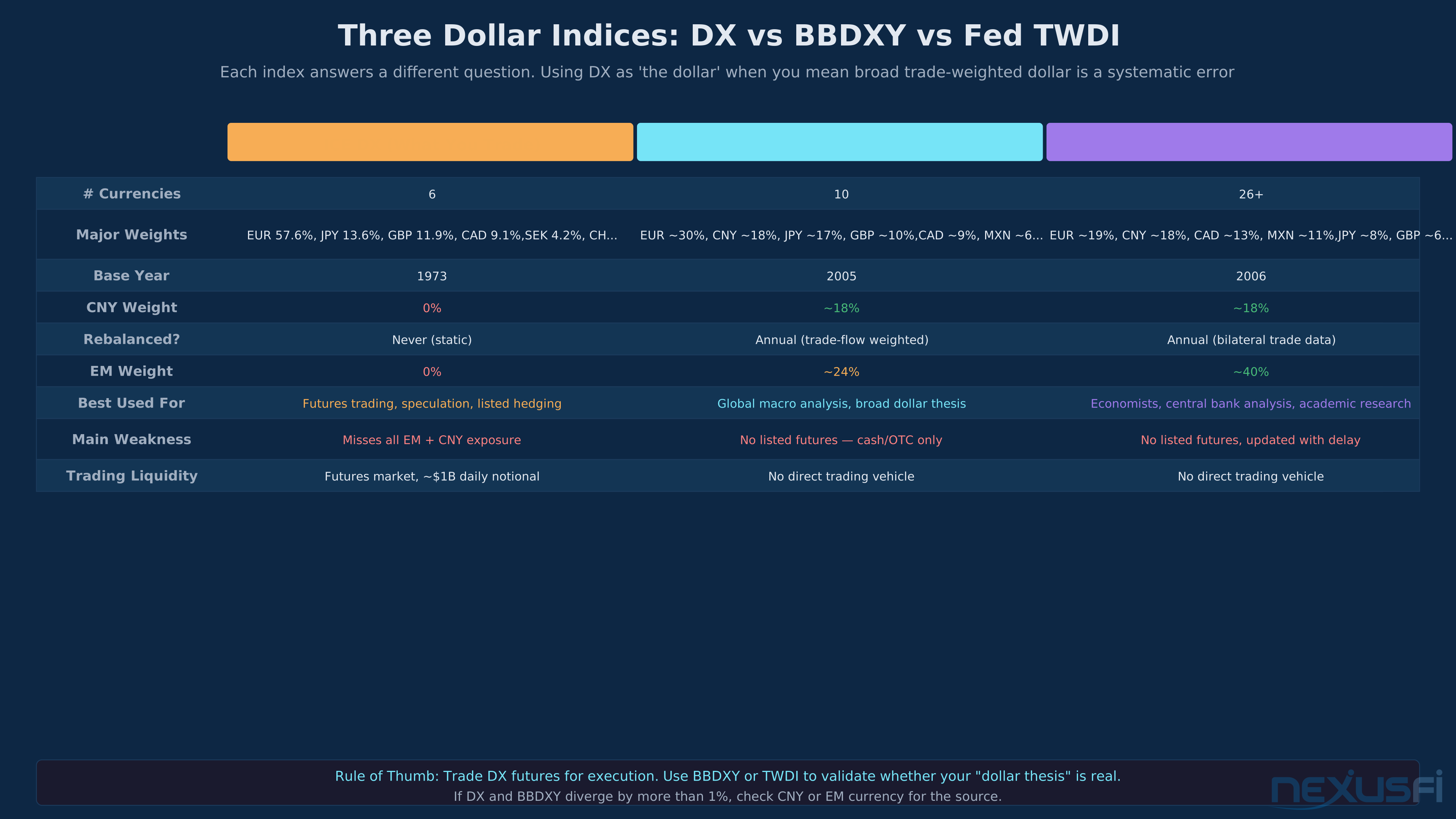
Using DX to hedge a broadly diversified international portfolio creates a false sense of security. The index has zero exposure to CNY, INR, KRW, MXN, or BRL — currencies that represent a significant fraction of actual US trade relationships. A sharp CNY devaluation can hurt dollar-denominated assets much while DX barely moves. For genuine broad dollar hedging, Bloomberg BBDXY or the Fed's trade-weighted TWDI are the correct benchmarks.
Trade Setups: Reading DX in Context #
The two most reliable DX setups come from reading the macro clock — not from indicator signals on a DX chart in isolation.
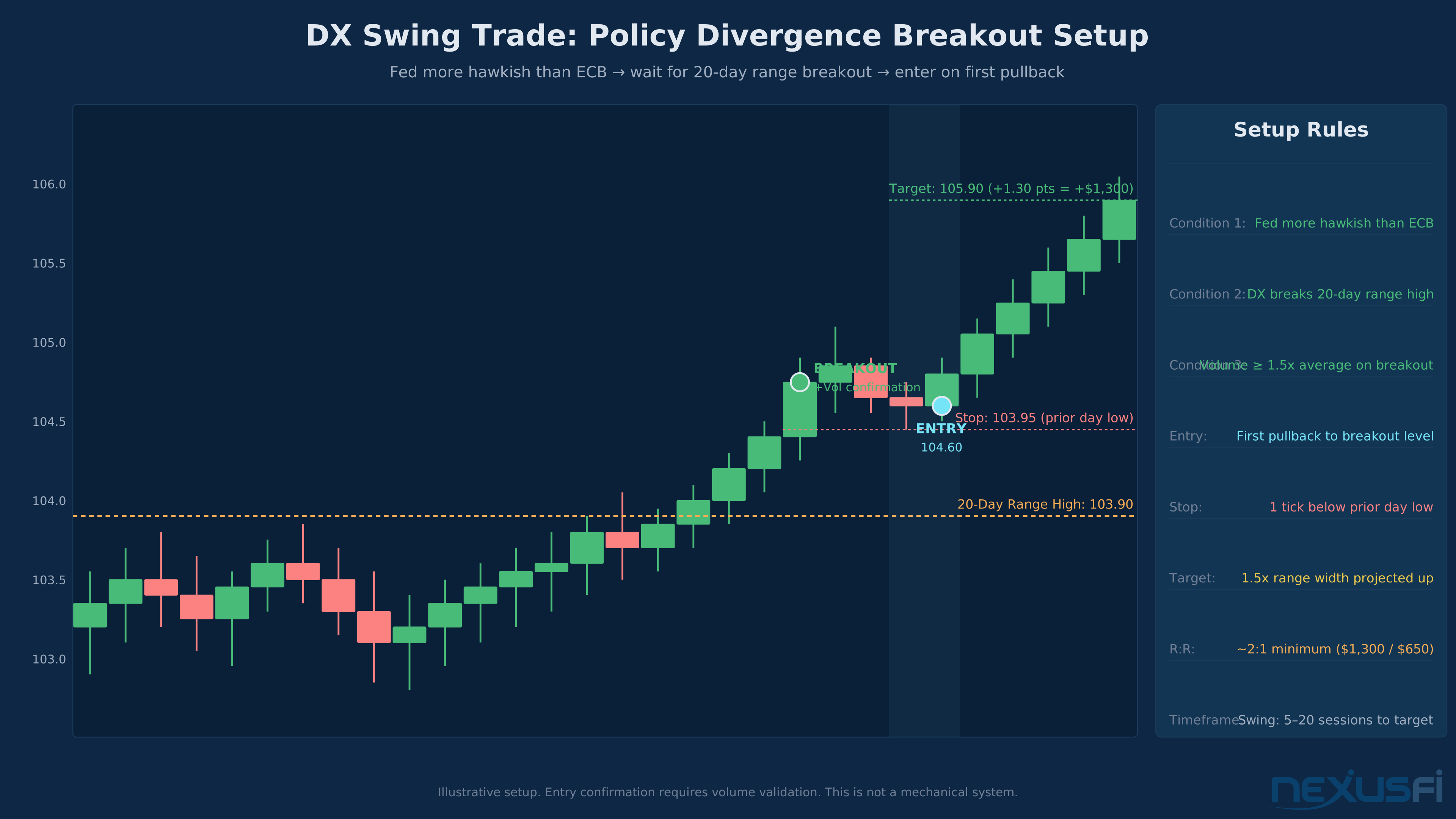
Setup 1: Fed vs ECB divergence breakout. When Federal Reserve guidance shifts decisively more hawkish than ECB guidance — or vice versa — DX enters a sustained directional trend. The setup procedure: (1) Read the latest FOMC and ECB meeting statements side-by-side. Identify which central bank is more hawkish on a forward-looking basis. (2) Look for DX breaking above a 20-day range high (bullish) or below a 20-day range low (bearish) on elevated volume. (3) Enter on the first pullback to the breakout level, stop below the prior day low (long) or above prior day high (short), target measured from the range width projected forward. This is a swing trade — 5-20 sessions to target, not a day trade.
Example using data from May 6, 2026: ES closed at 7389.50, EUR/USD at 1.17715, which implies DX around 99-100 range. A macro trader seeing the Fed on hold while ECB cuts further would watch for DX to break above recent highs with volume confirmation before entering a 1-2 week swing trade targeting a 1.5-2 point range expansion.
Setup 2: Risk-off DX surge trade. When equity futures break down on elevated volume with VIX spiking, DX often surges simultaneously as global liquidity demand drives capital into dollars. This is one of the few intraday correlation trades in DX that's reliable: ES breaks 1% with VIX moving 3+ points, DX rallies 0.3-0.8 points in the same session. The entry is on the first DX pullback of 0.10-0.15 during the equity selloff, with a stop at the open of the DX surge candle. Target is partial profit at the daily R1 pivot, remainder held with trailing stop while the risk-off move extends.
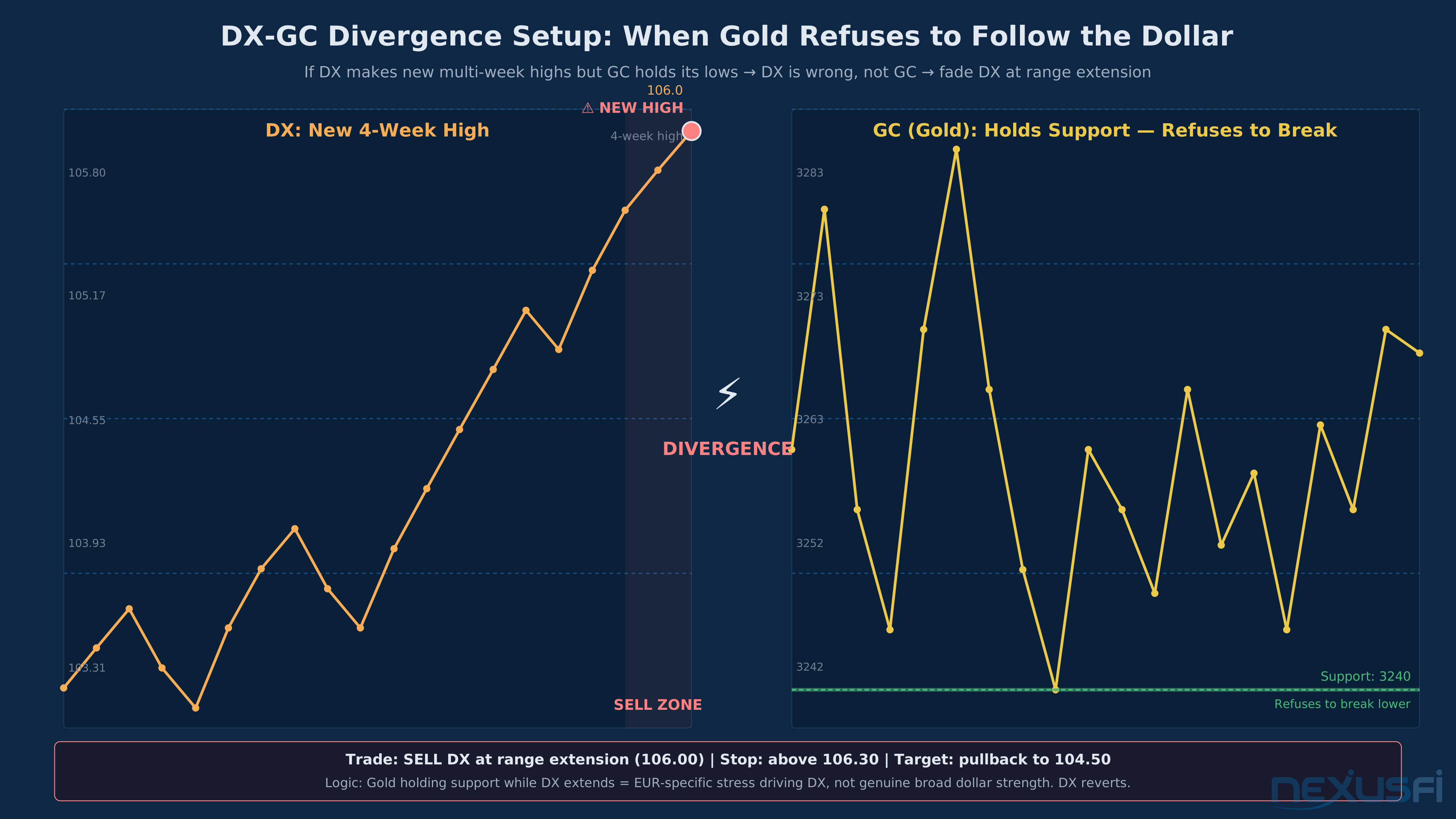
Setup 3: DX-GC divergence fade. When DX makes new multi-week highs while GC fails to make new multi-week lows (or vice versa), a mean-reversion setup develops. The divergence indicates one market is wrong about the macro state. The trade fades the outlier — if DX is surging but gold refuses to break down, sell DX at range highs with a tight stop. The divergence setup requires patience: wait for 5+ sessions of persistent divergence before acting, not just a single session gap.
The best DX setups happen when you know WHY DX is moving before you trade it. A DX rally driven by pure safe-haven flows (equity selloff) has very different follow-through than a DX rally driven by better-than-expected US CPI data. Policy-driven DX moves sustain longer and trend more cleanly. Liquidity-driven DX moves reverse faster. Know which one you're in before sizing up.
When DX Fails: Limitations and Divergence Conditions #
DX gives false reads more often than most traders admit. The conditions where DX diverges from what you'd expect:
Chinese yuan policy shocks. The PBOC sets the USD/CNY fixing daily and intervenes actively. A sharp PBOC devaluation weakens the dollar against the yuan without DX registering it at all (CNY has 0% weight). Meanwhile, commodity markets — where China is the dominant buyer — react immediately. If you're trading CL or GC during China's active hours and wondering why your DX-correlation read is wrong, this is usually the answer.
Euro-specific stress events. Eurozone sovereign crises, ECB emergency announcements, or Italian/Greek contagion events drive EUR dramatically without necessarily reflecting "dollar strength." In these episodes, DX spikes because EUR is collapsing, not because the dollar is broadly strengthening. A trader short crude oil because "DX is strong" in this scenario is wrong — oil's fundamentals are unchanged, just EUR collapsed. This divergence manifests most clearly in the DX-CL correlation: DX up 2%, CL flat is a signal that EUR stress is driving the DX move, not genuine dollar strength.
Yen carry unwind cascades. When global volatility spikes suddenly (think VIX moves above 30 in a single session), yen carry trades unwind rapidly. USD/JPY drops 2-4 handles in a day, pulling DX down via the 13.6% JPY weight. Meanwhile, gold and bonds are spiking on safe-haven demand. The result: DX falls at the same time bonds rally and equities collapse — a configuration that confuses traders who expect DX to rise in risk-off. This is the carry unwind signature, and it's happened multiple times since 2022.
Swedish Krona idiosyncrasies. The 4.2% SEK weight is small but not negligible on days of sharp Riksbank announcements. Most traders aren't watching SEK, which means DX moves 0.1-0.2 points for reasons that have nothing to do with EUR, USD, JPY, or GBP dynamics. This creates noise on daily closes that appears to violate correlations. Filtering it out requires checking whether a major Riksbank policy event occurred.
On days when DX is moving primarily because of EUR/USD with no confirming JPY or GBP movement, the "dollar signal" is weaker than it looks. Check whether DX move is broad-based (confirmed across 3+ currency pairs) or concentrated in EUR before using it as intermarket confirmation for GC, CL, or ES trades. Single-currency-driven DX moves have lower follow-through than multi-currency DX moves.
The more fundamental limitation: DX doesn't track the real effective dollar exchange rate. The Federal Reserve publishes the Nominal Broad Dollar Index (NBDI) and the Real Broad Dollar Index (RBDI), both of which include 26 currencies weighted by actual US trade flows. In periods of significant EM currency moves, the Fed's index diverges meaningfully from DX. Professional macro traders maintain awareness of both indices even when trading DX as their listed instrument.
Practical Considerations: Building DX Into Your Workflow #
DX earns a place on your workspace in exactly three scenarios: you're trading FX futures and want macro context, you're trading commodities and want to weight dollar effects versus supply/demand, or you have a direct macro view on USD policy divergence and want a single clean expression.
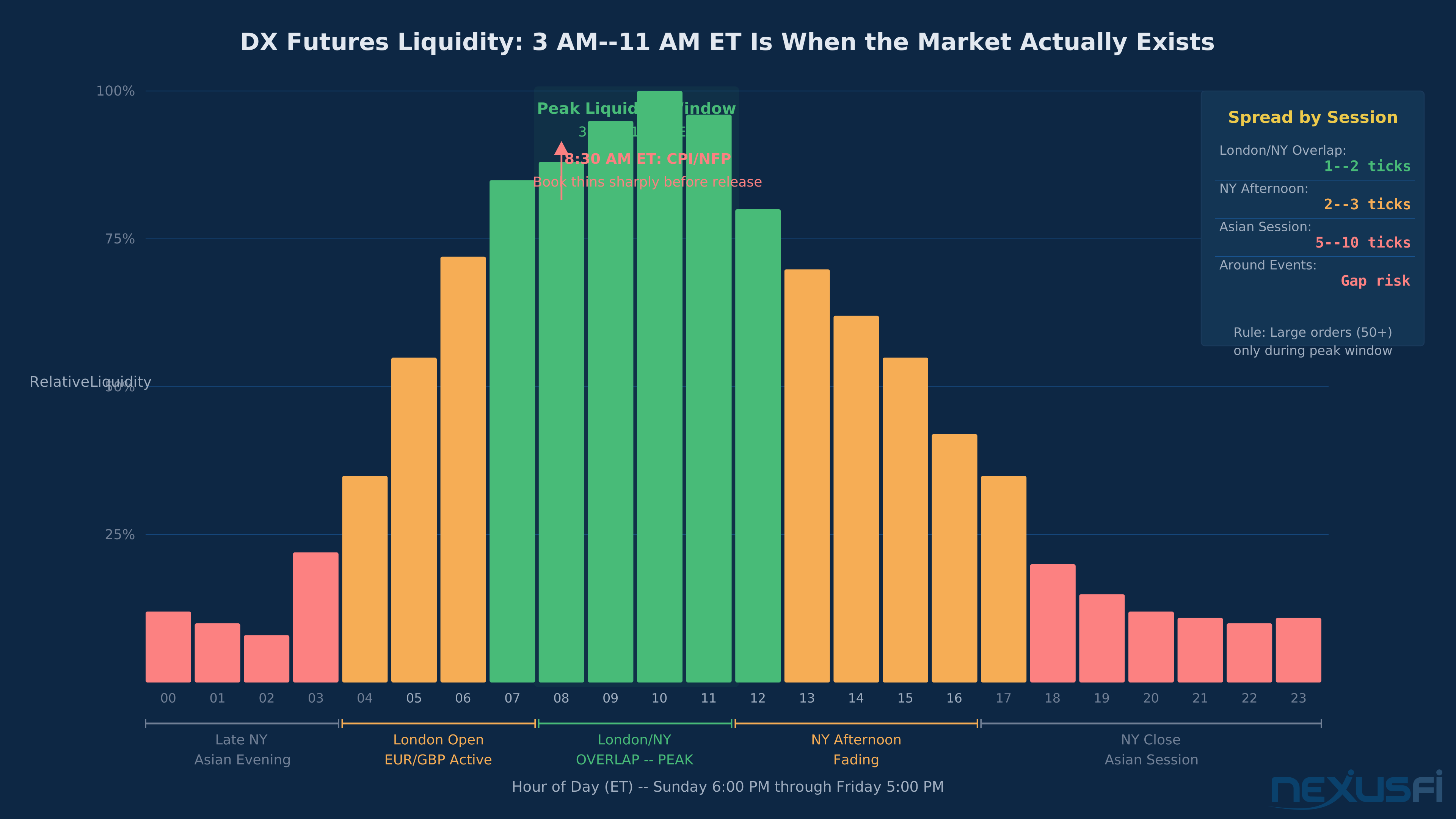
Liquidity management is the most underrated operational consideration. DX average daily volume runs 30,000-60,000 contracts — respectable but thin compared to ES (1+ million daily) or 6E (200,000+ daily). The bid-ask spread is typically 1 tick ($5) during European session but can widen to 3-5 ticks during thin overnight periods. For traders holding multi-contract positions, market depth at any given price level is limited — DX is not a market for large institutional block size. The practical limit for retail traders is 5-10 contracts without meaningful market impact on entries and exits.
Data access is non-trivial. Because DX trades on ICE rather than CME, many common broker data setups include CME data (ES, NQ, CL, GC, ZB) but require a separate ICE subscription for DX.
[1] Costs vary by broker and data plan, but expect $10-70/month depending on your provider and whether you need raw tick data versus delayed quotes.
If you can't access live DX futures due to data constraints, there are proxies: the ETF UUP tracks the index and carries a correlation above 0.99 to spot DX. PowerShares' UUP is available on any equity data feed and gives a reasonable substitute for directional context (though obviously you can't trade futures strategies with ETF fills). For pure chart reading purposes, the DXY chart at Investing.com or TradingView's DXUSD provides the spot index for free.
Rolling DX contracts is simple but requires attention. The roll happens 10-15 business days before expiration, when front-month open interest begins migrating to the next quarterly contract. The calendar spread between front and back month is typically 0-0.05 points ($50 per contract), reflecting carry that's close to zero at current rate environments. Unlike commodity futures with large calendar spreads driven by storage costs, DX rolls are mechanical and cheap.
If your platform shows you a "DXY" symbol but not "DX," you're looking at the spot index, not the futures contract. The spot DXY and DX futures track nearly identically but have different P&L mechanics. For actual trading, you need the DX futures contract — which requires ICE exchange connectivity. Confirm with your broker that ICE data is included in your data plan before assuming you can trade it.
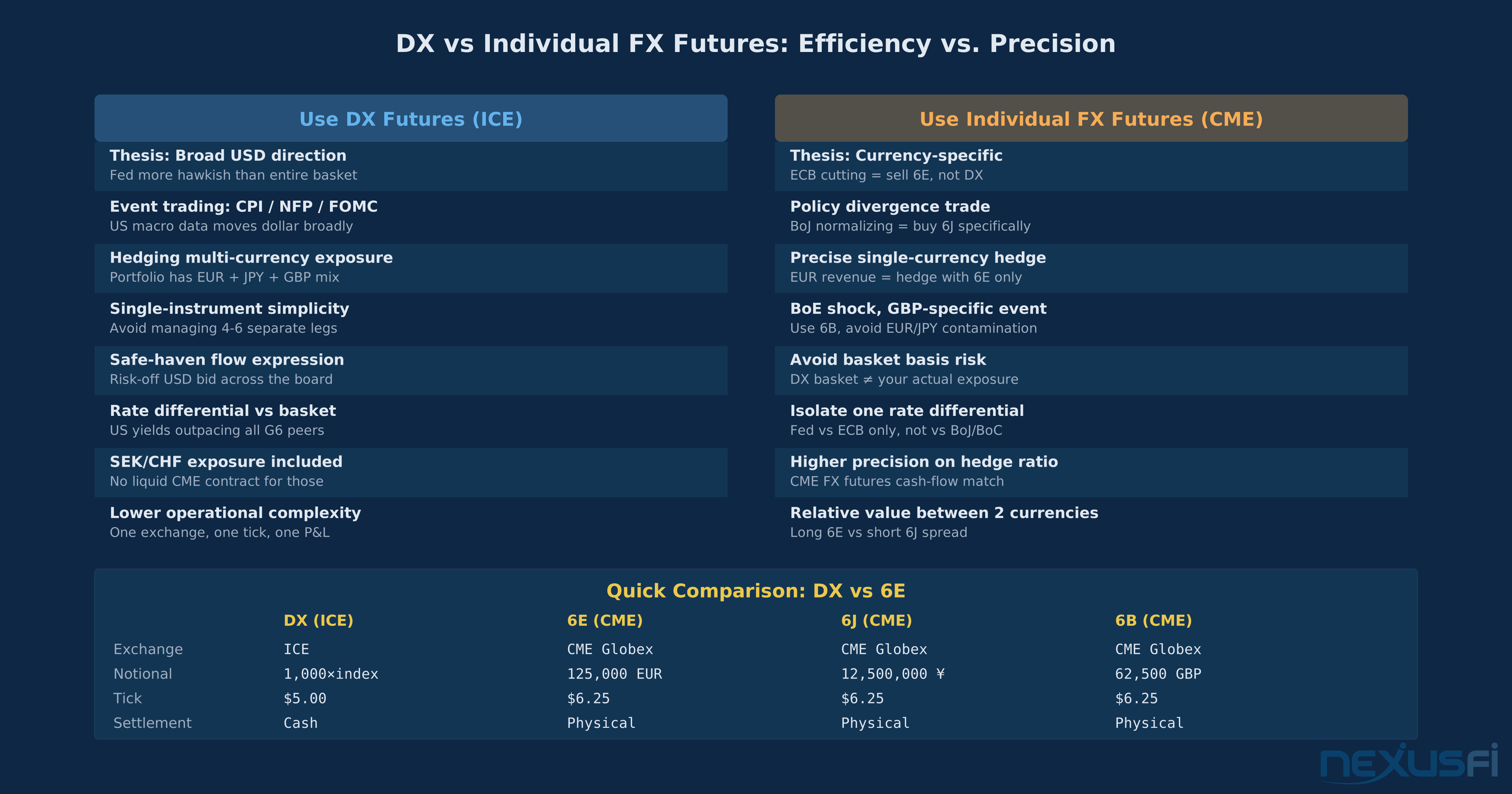
The interplay between DX and the broader FX futures complex is worth understanding before you commit capital. The CME offers 6E, 6J, 6B, 6C, 6A, 6S, and other FX contracts that together could theoretically replicate DX exposure. They don't, because DX's geometric formula isn't replicable by linearly combining FX futures positions. More practically, for a simple macro dollar view, DX is more capital-efficient: one contract, one margin requirement, one position to manage. Six CME FX futures to approximate the basket is operationally cumbersome and more expensive in commissions.
Where the individual CME contracts win: when your thesis is specifically about one currency. Fed versus ECB divergence is better expressed through 6E because you're capturing exactly the relationship you believe in. If your view is "dollar broadly strengthens across all majors including CAD, GBP, and JPY simultaneously," DX captures that more cleanly than any single FX pair.
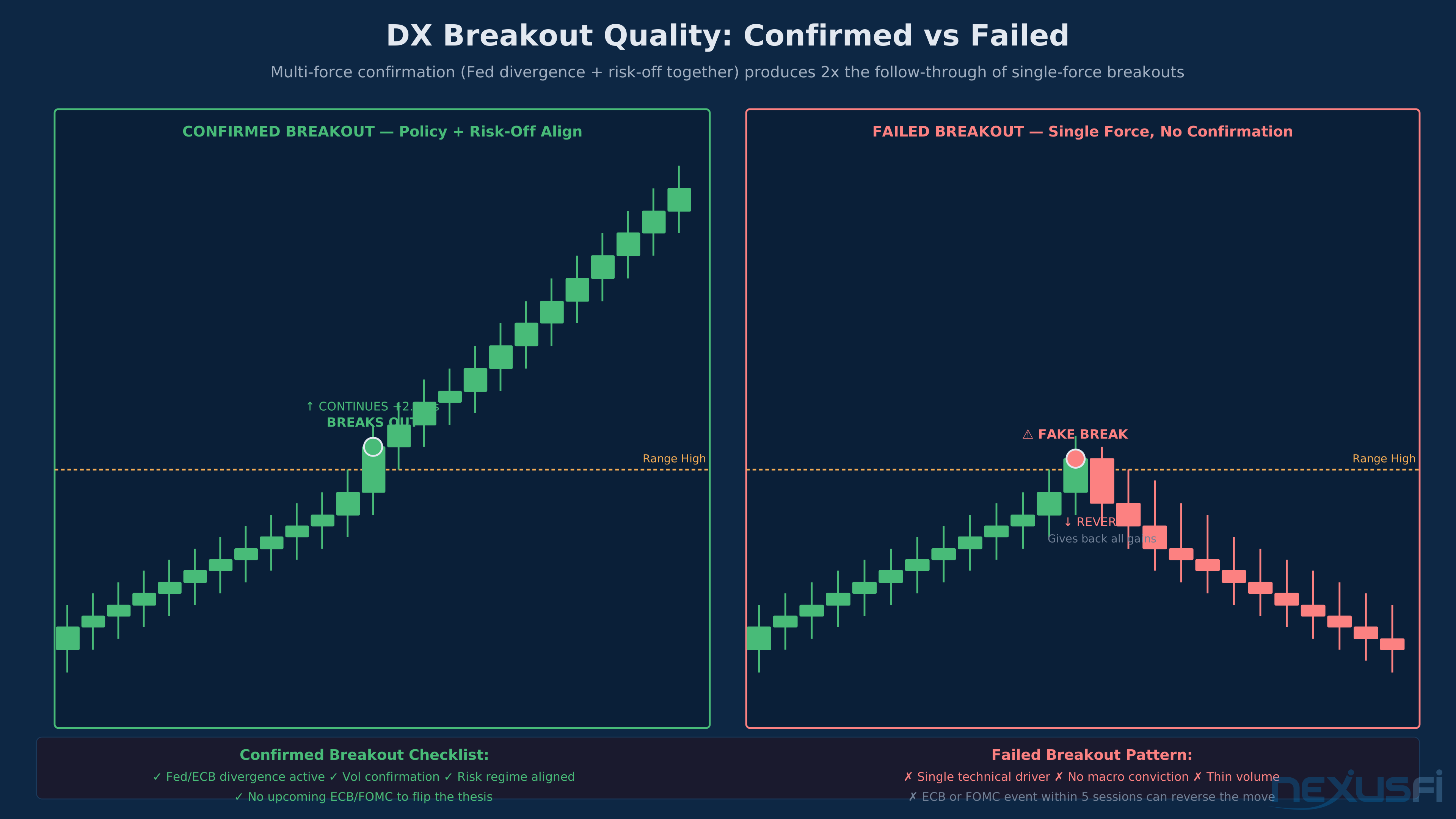
DX is the right instrument when your thesis is "broad dollar directional move" driven by Fed policy, risk regime, or global capital flows. It's the wrong instrument when your thesis is about a specific currency cross, when your hedging needs include CNY or EM exposure, or when you need to trade size beyond 5-10 contracts. Know which question you're answering before picking the instrument.
Knowledge Map
Prerequisites
Understand these firstGo Deeper
Build on this knowledgeReferences This Article
Articles that build on this topicCitations
- — The Dollar Index (2011) 👍 11“The trade weighted US Dollar Index, DX.X generally has an excellent negative correlation to the equity and commodity indices.”
- — Trading 6E and DX (2010) 👍 4“The EURUSD accounts for 57.6% of the Dollar Index. By definition, there is a huge correlation between DX and the Euro.”
- — How I Trade For a Living (2016) 👍 24“USD tends to move in tandem with the ES (ES goes up, USD goes up). CL is a wild beast with no master.”
- — Spoo-nalysis ES e-mini futures S&P 500 (2022) 👍 10“The dollar index or dollar futures should be on your screen. Real rates are inversely correlated to GOLD and positively correlated to the Dollar.”
- — The Scalper's Journey (2016) 👍 9“Keep in mind that all commodities are priced in USD so all are sensitive to currency valuations.”
- — Is DXY effected by futures transactions? (2020) 👍 3“DXY is a weighted geometric mean of 6 USD spot exchange rates which is very heavily weighted to the USD:EUR rate.”
- ICE Futures U.S. — US Dollar Index Futures (2024)
- — Salao's Journal (2023) 👍 7“I had wondered last week if the dollar was dragging around GC and ES. Gold was inversely correlated to a pretty high degree most of the time.”
- — HumbleTrader's next chapter (2024) 👍 5“The carry trade is unwinding. The Nikkei topped on the same day the Nasdaq topped, which is the same day USDJPY topped. Not a coincidence.”
- — CRB Commodities Index (2015) 👍 7“Commodities as an asset class are negatively correlated to the dollar. 40% of current commodity/equity correlation is a spillover from fx/equity correlation.”
- — Spoo-nalysis ES e-mini futures S&P 500 (2015) 👍 12“dollar is strong due to u.s./ecb, boj, pboc central banks policy divergence and short-covering from traders who got caught leaning the wrong way.”