



Iceberg Orders and Hidden Liquidity: What the DOM Isn't Showing You and How to Trade Around It
Overview #
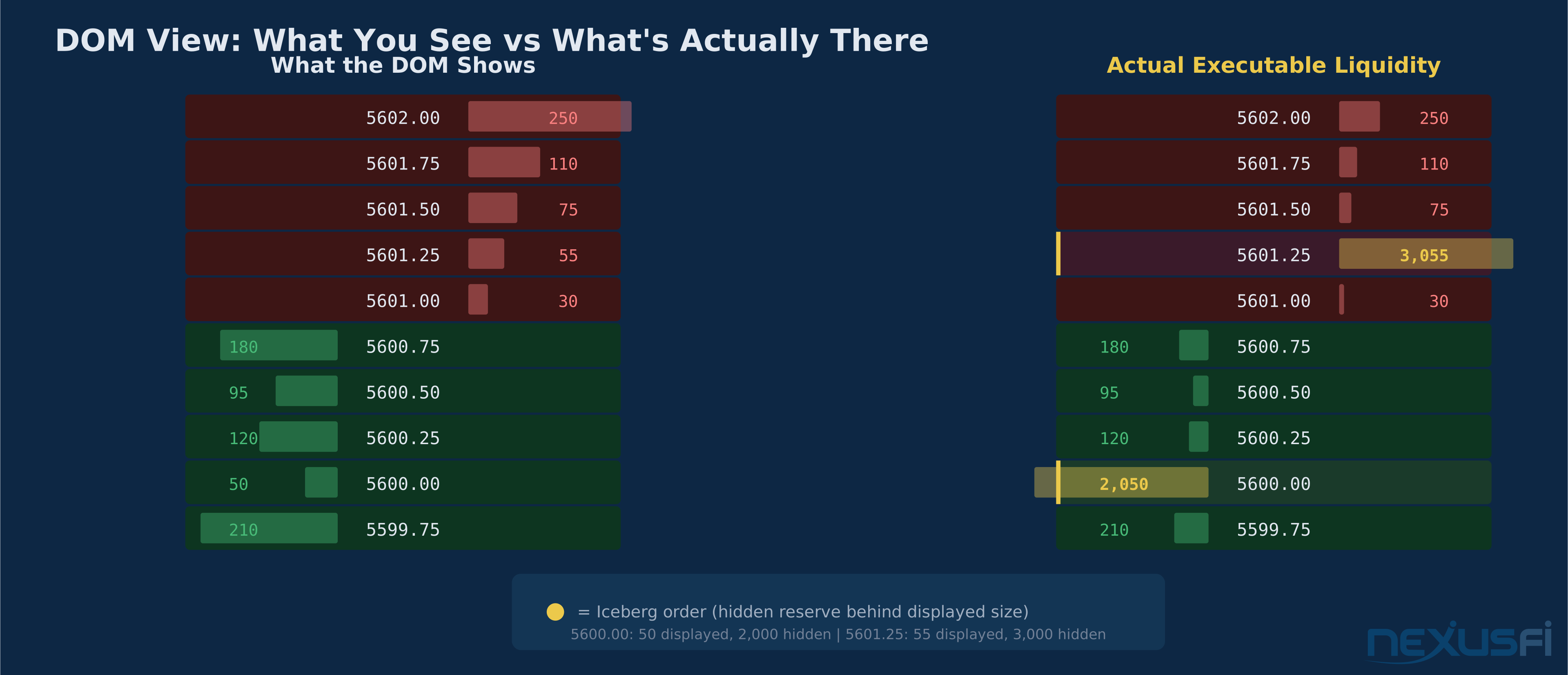
Every futures trader stares at the DOM. The depth ladder, the bid/ask stacks, the size sitting at each price. And every futures trader, at some point, watches price slam into a level where 200 contracts are displayed on the bid, absorb 2,000 contracts of aggressive selling, and refuse to move. The size keeps refreshing. The level holds. The sellers exhaust themselves. Price rips the other way.
That's an iceberg order at work — and if you're reading the DOM at face value, you're only seeing the tip.
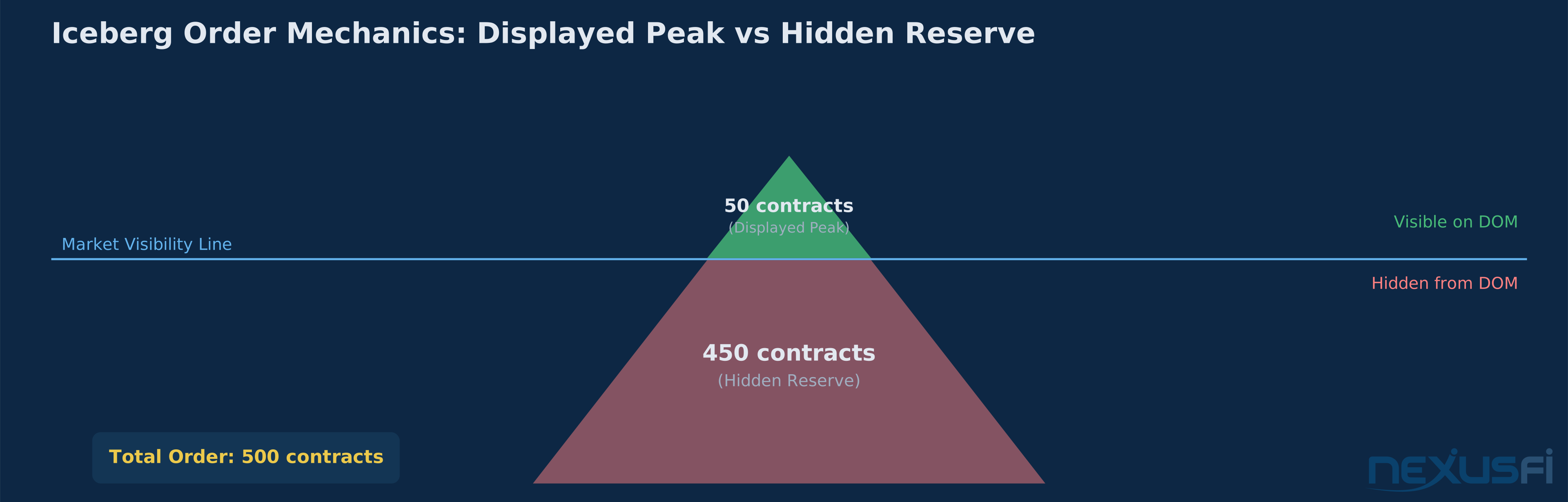
Iceberg orders are one of the most important concepts in futures market microstructure because they at the core break the assumption that displayed depth equals real liquidity. They're the reason a level with 50 contracts showing can absorb 5,000. They're the reason breakout traders get trapped when "thin" levels hold like concrete. And they're the reason experienced order flow traders focus less on what's visible in the book and more on what's happening at price.
This article covers how iceberg orders actually work on futures exchanges, how to detect them from tape and order flow data, and how to trade around hidden liquidity rather than being fooled by it.
Key Concepts #
Native Iceberg: An iceberg order handled directly by the exchange's matching engine (e.g., CME Globex). The exchange manages the hidden reserve and automatic refresh process. Detectable via MBO data because the OrderID persists across refresh cycles.
Synthetic Iceberg: An iceberg-like order managed by the broker's or trader's software, not the exchange. The platform slices a large order into smaller pieces and submits them sequentially. Each clip appears as a new, independent order — invisible to MBO-based detection.
Absorption: When aggressive orders (market orders) are consumed at a price level without moving price, indicating hidden resting liquidity. The classic behavioral signature of an iceberg — and the primary observable evidence for traders without MBO data feeds.
MBO (Market by Order) Data: Individual order-level data from the exchange that shows each discrete order in the book. CME's MBO feed can reveal native iceberg OrderIDs because refreshed clips share the same OrderID as the original. The gold standard for iceberg confirmation, but available only on specific platforms and data plans.
How Iceberg Orders Work on Futures Exchanges #
CME Globex Implementation #
On CME Globex — the matching engine behind ES, NQ, CL, ZB, GC, and most major futures contracts — iceberg orders are a native order type. Here's the mechanical sequence:
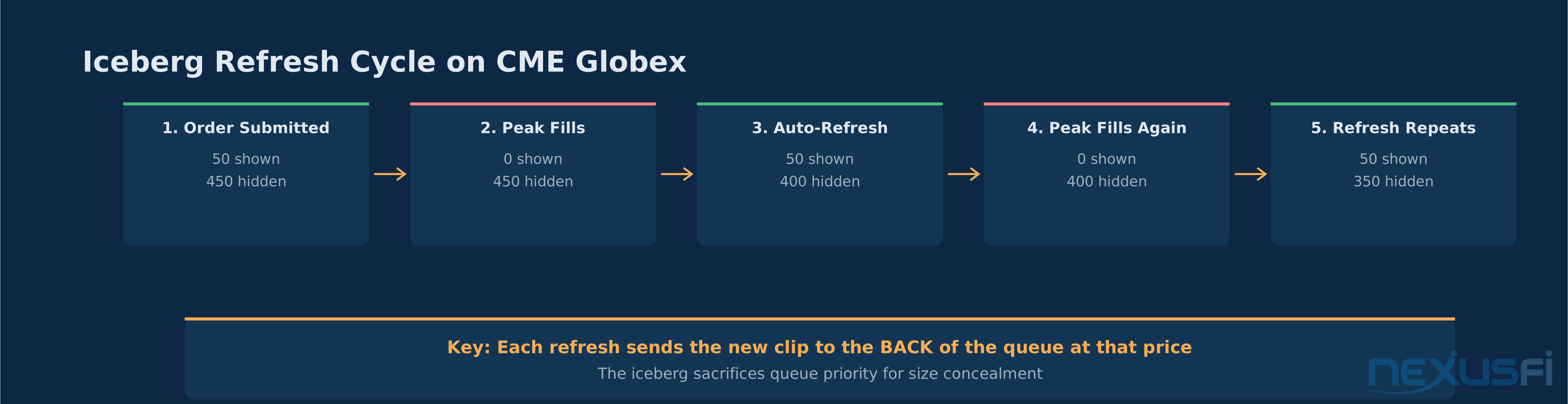
Step 1: A trader submits an order for, say, 500 ES contracts with a displayed quantity of 50. The exchange posts 50 contracts at the specified price in the visible order book. The remaining 450 sit as hidden reserve at the exchange.
Step 2: Market orders come in and fill the 50 displayed contracts. The exchange automatically refreshes the displayed quantity — posting a new clip of 50 contracts at the same price.
Step 3: This cycle repeats until the entire 500-contract order is filled or the trader cancels.
Queue Priority — The Critical Detail #
Here's where it gets interesting for execution quality. On CME Globex, when the displayed clip refreshes, the new clip goes to the back of the queue at that price level. The refreshed order does not retain the time priority of the original submission.
This matters because it means iceberg orders trade with a significant disadvantage in terms of fill priority. Every refresh puts the new clip behind all other resting orders at that level. The tradeoff is clear: you hide your size but you give up queue position every single refresh cycle. CME Group's official Matching Algorithm documentation spells this out directly: when a Display Quantity order refreshes, "the Display Quantity order's priority is refreshed to be the lowest of the remaining orders at the price level" — back of queue is formal exchange policy, not informal convention.
As @Jigsaw Trading explained on the NexusFi forums: the hidden reserve is "back of the queue" — and this has real implications for how you interpret iceberg behavior.
OrderID Persistence #
One mechanical detail that matters for detection: on CME Globex, native iceberg orders retain the same OrderID across refreshes. When the displayed quantity replenishes, the refreshed clip carries the same exchange-assigned OrderID as the original. This is visible in MBO (Market by Order) data feeds.
CME themselves acknowledged this detection vector. Their own documentation notes that for traders "concerned this function gives other participants greater ability to detect presence of iceberg," they recommend using synthetic (ISV-held) iceberg orders where the total quantity is managed off-exchange by the broker's server.
Native vs Synthetic: Different Visibility Profiles #
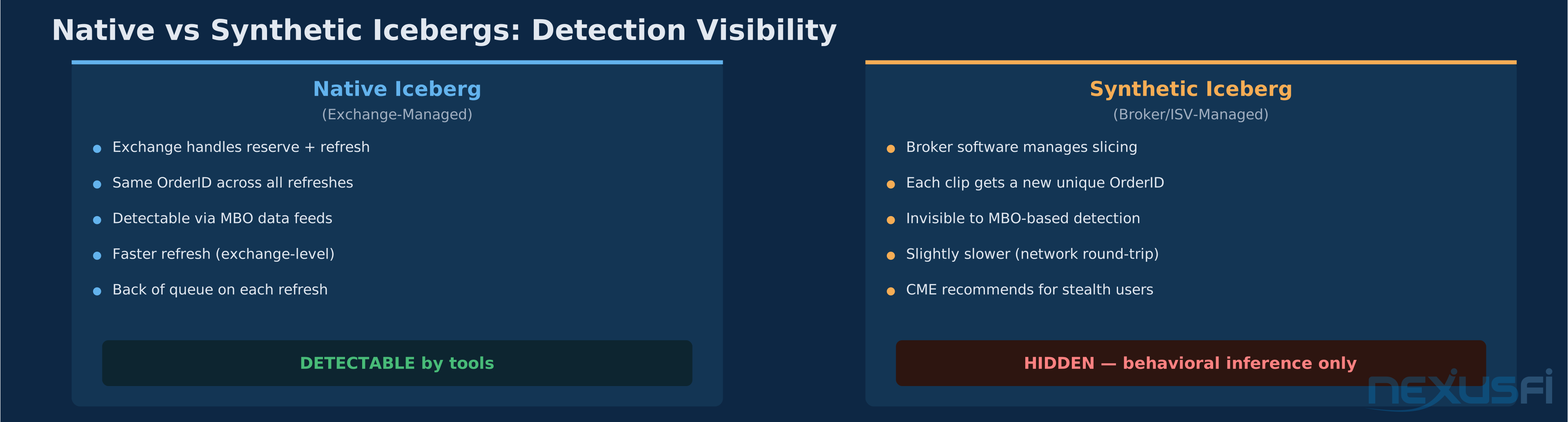
Native icebergs (exchange-managed): Detectable via MBO data because the OrderID persists across refreshes. Faster refresh because it's handled at the exchange level. Subject to exchange queue priority rules.
Synthetic icebergs (broker/ISV-managed): Each clip appears as a new, independent order with a unique OrderID. Harder to detect via MBO data. Slightly slower refresh because each new clip must travel from the broker's server to the exchange. But invisible to MBO-based detection algorithms.
In practice, both types exist simultaneously in the market. Tools like Bookmap and Jigsaw that offer "iceberg detection" are primarily detecting native icebergs via MBO data. Synthetic icebergs require behavioral inference — you can't see them directly.
Detecting Iceberg Activity from Tape, DOM, and Order Flow #
Detection is probabilistic, not definitive. You're inferring hidden liquidity from behavioral signatures, not reading a label that says "iceberg here." Every experienced order flow trader needs to internalize this: you are building a probability estimate, and false positives are part of the game.
Signature 1: Absorption Without Price Movement #
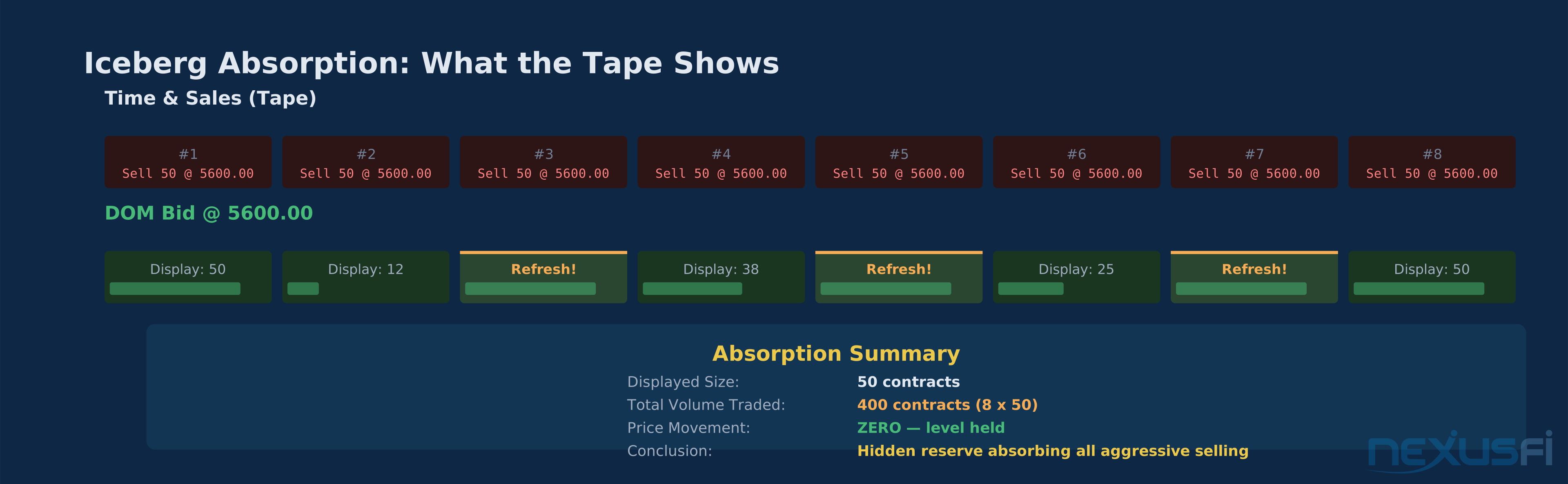
The single most reliable iceberg signature. Price reaches a level. Aggressive orders hit that level repeatedly. Volume prints are large. But price doesn't move.
What you see on tape: continuous execution at the same price, with traded volume far exceeding the displayed resting size. If 50 contracts are showing on the bid and 800 contracts trade at that price without the bid moving, something is refilling.
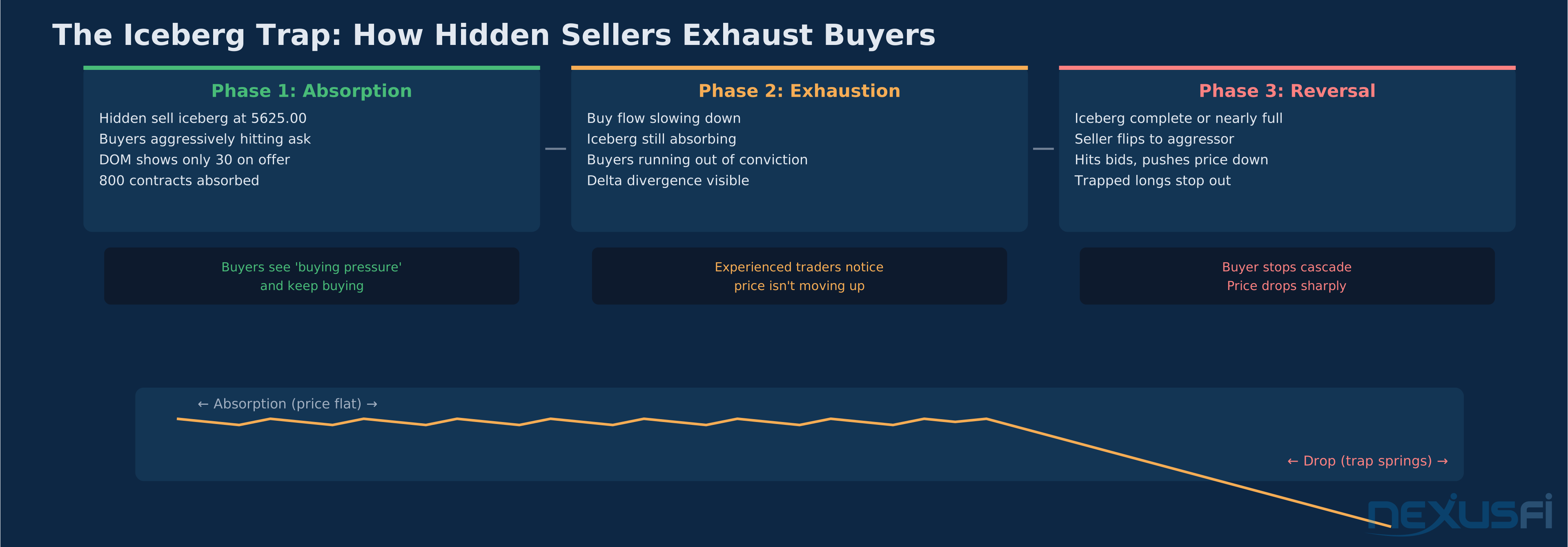
This is the classic iceberg trap: the tape looks like aggressive buying into resistance (bearish), but the reality is hidden supply absorbing that buying. When buyers exhaust, price drops.
Signature 2: Stair-Step DOM Reloading #
Watch the DOM at a specific price level. The displayed size drops from 50 to 0 as orders fill, then instantly jumps back to ~50. Again. And again. The clip size is consistent across refreshes.
@vvhg built a dedicated iceberg detection tool for NexusFi's Elite Circle that captured exactly this pattern: the tool "looks at the initial volume on the book when a price level gets hit. Then it collects the volume traded at this price as long as price does not jump away more than one tick." When traded volume far exceeds the initial displayed size at a consistent refresh rate, you're likely seeing an iceberg.
Signature 3: Delta Divergence at Key Levels #
On a footprint chart, you might see heavy delta (aggressive buying) into a level with no upward progress. Cumulative delta pushes aggressively in one direction while price flatlines. This delta-to-price divergence often signals hidden absorption.
@Private Banker demonstrated this on footprint charts: at key levels, you can see "big prints at the bid at the bottom of the candles cutting off the sellers and pushing the market higher." The footprint reveals the volume; the flat price reveals the absorption.
Signature 4: Time Duration at Level #
Not all icebergs are created equal. @Jigsaw Trading (Peter Davies) offered a practical quality filter: "The more time at that level, the better quality the iceberg is. If you hit a level and 4000 trade and it's an iceberg but it's done in 20 seconds, wait to see how it plays."
An iceberg that absorbs flow for 3-5 minutes at a key level tells you something different than one that gets consumed in 15 seconds. Duration signals conviction.
Signature 5: MBO-Based Detection (Limited) #
If your platform provides MBO data (Bookmap, Jigsaw, some Sierra Chart setups), you can detect native CME icebergs directly by tracking OrderIDs. When the same OrderID appears, disappears (fills), and reappears with refreshed size, that's a confirmed native iceberg.
But here's the critical caveat that
Using MBO iceberg data alone introduces three flawed presumptions:
- That the iceberg is part of a directional trade (it might be a spread leg)
- That the iceberg is initiating a new position (it might be closing one)
- That the iceberg is part of a short-term trade that will be defended
All three need to be true for "lean on the iceberg" to work as a directional signal. In reality, the iceberg could belong to a hedger, a spreader, or a long-term position trader who doesn't care about the next 5 ticks.
Practical Trading Strategies Around Iceberg Detection #
Strategy 1: Trading With the Iceberg at Key Levels #
When you identify probable iceberg absorption at a high-quality location — previous day's high/low, a value area boundary, a VWAP level — you can join the iceberg's side.
The setup: Price pulls back into a level where you observe absorption signatures (repeated fills without price movement, consistent clip refreshing, high volume relative to displayed depth). The iceberg is on the bid.
The entry: Enter long at or near the iceberg's level. Your stop goes below the iceberg — if it breaks, the thesis is wrong.
The logic: If someone is willing to absorb thousands of contracts at a level, they've committed capital. When sellers exhaust, the path of least resistance is up.
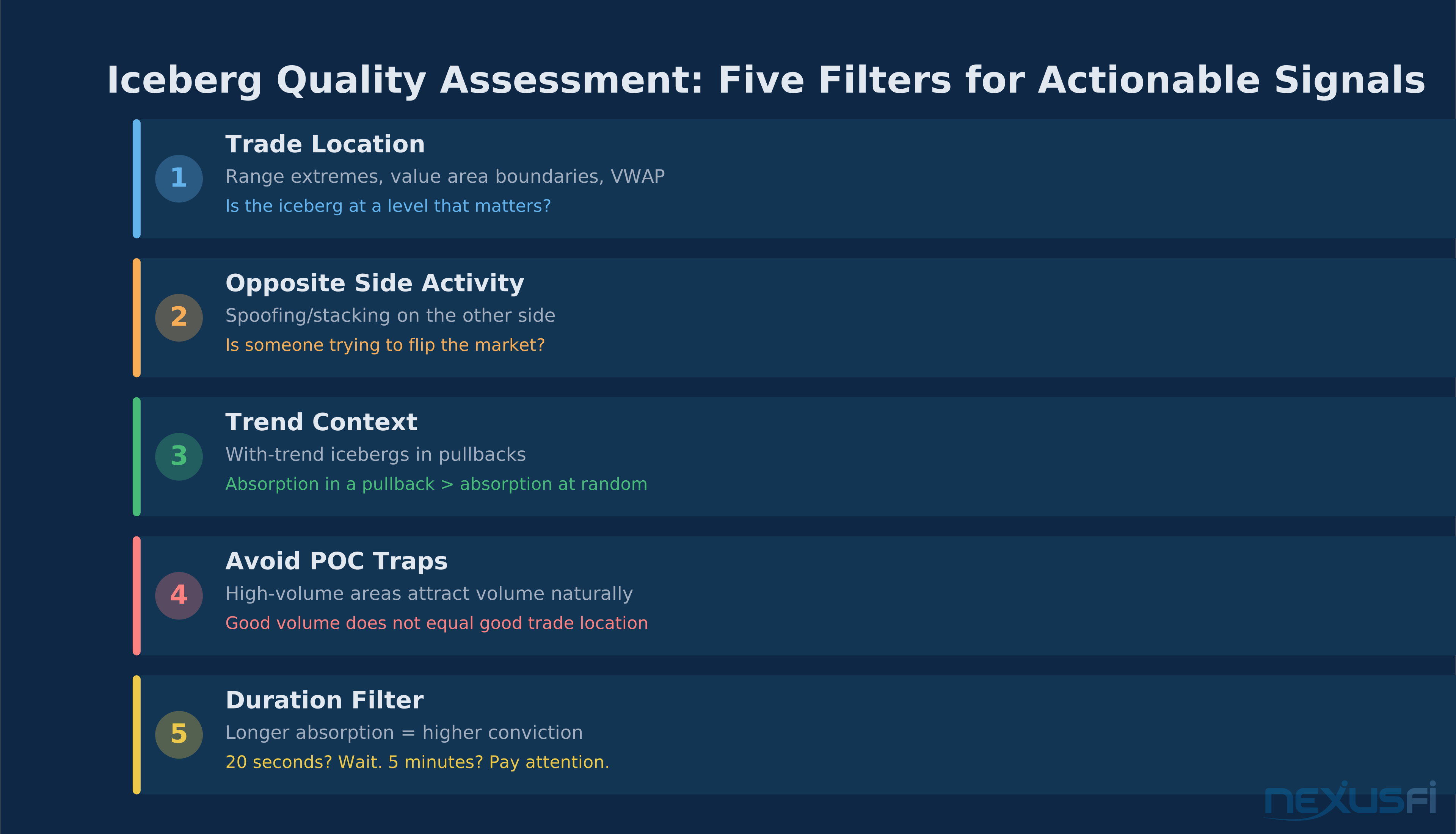
Peter Davies offered five practical filters for this setup:
- Good trade location (range extremes, volume profile nodes)
- Spoofing on the opposite side (offers stacked while iceberg absorbs on bid)
- Icebergs in the pullback of a trend (with-trend absorption)
- Awareness of POC icebergs (high volume area will attract volume but location isn't ideal)
- Duration filter (longer absorption = higher quality signal)
Strategy 2: Breakout Validation #
Before committing to a breakout trade, check whether the other side of the book shows iceberg-like absorption.
If price is pushing toward resistance at 5625.00 and you see aggressive buying, but the displayed offers at 5625 keep refreshing and absorbing every wave of buying — that's a warning. The "breakout" is running into hidden supply. Price hasn't broken through; it's being absorbed.
Genuine breakouts consume displayed liquidity and move through. Icebergs create the appearance of buying pressure while price goes nowhere.
Strategy 3: Stop Placement Relative to Hidden Liquidity #
If you identify an iceberg absorbing on the bid at 5600.00, placing your stop at 5599.75 (one tick below) is too tight. The iceberg has a total order size — if 500 contracts have already been absorbed and the refresh is still going, the hidden reserve might still be deep. But if the iceberg gets consumed entirely and price breaks through, that's a genuine failure of support.
Place stops where the iceberg thesis definitively fails — below the level by enough margin that normal price noise doesn't trigger it, but tight enough that you're protected if the entire hidden reserve gets consumed.
Strategy 4: Identifying Exhaustion After Icebergs #
After an iceberg absorbs significant flow, watch for the moment when the aggressive side exhausts. The exhaustion point is where the iceberg's owner often flips to the aggressor side, accelerating the move.
Institutional Use: Accumulation and Distribution #
Institutions use iceberg orders for one fundamental reason: reducing information leakage. A pension fund rebalancing a $2 billion futures position doesn't want the market to see a 10,000-lot order sitting on the DOM. That would move the market against them before they're filled. The underlying mechanism was formally documented in Hasbrouck's landmark "Measuring the Information Content of Stock Trades" (Journal of Finance, vol. 46, 1991): trades permanently move prices because they signal private information about fundamental value to other market participants. A 10,000-lot visible order doesn't hint at institutional knowledge — it broadcasts it to every participant watching the tape, inviting front-running and adverse price movement before the order is complete.
Accumulation Pattern #
Institutional accumulation via icebergs typically looks like this:
- Price drifts into a target zone (often near VWAP, previous settlement, or a key moving average)
- Hidden bids absorb selling pressure without letting price fall through the zone
- Volume at the level grows steadily without proportional price movement
- After sufficient accumulation, the remaining position is filled aggressively, or the buyer simply waits for organic price movement
Distribution Pattern #
Distribution is the mirror image. Hidden offers absorb buying at resistance while the institution offloads a large position. Buyers see continued demand (their own orders filling), but price stalls. When buyers exhaust themselves, price drops — and the institution has exited at favorable levels while retail traders are now long at the highs.
Why Not All Icebergs Are Directional #
This is the most common mistake retail traders make with iceberg data. @Jigsaw Trading was blunt about it: "A hedger is right because he hedged well — but it doesn't mean price will go up from his hedge. A spreader is right because the legs of the spread moved his way. A long-term trader is right in days, weeks or months time."
An iceberg on the bid at 5600 might be:
- A directional buyer accumulating a long position (bullish intent)
- A hedger placing a hedge against a physical or OTC exposure (no directional opinion)
- A spread trader executing one leg of a multi-leg trade (directional on the spread, not the outright)
- An algo rebalancing a portfolio to a target weight (mechanical, not predictive)
Only the first scenario maps cleanly to "buy alongside the iceberg." The rest don't give you useful directional information.
Spoofing vs Legitimate Iceberg Behavior #
Spoofing and iceberg orders both affect what you see in the order book, but they're at the core different in intent and execution.
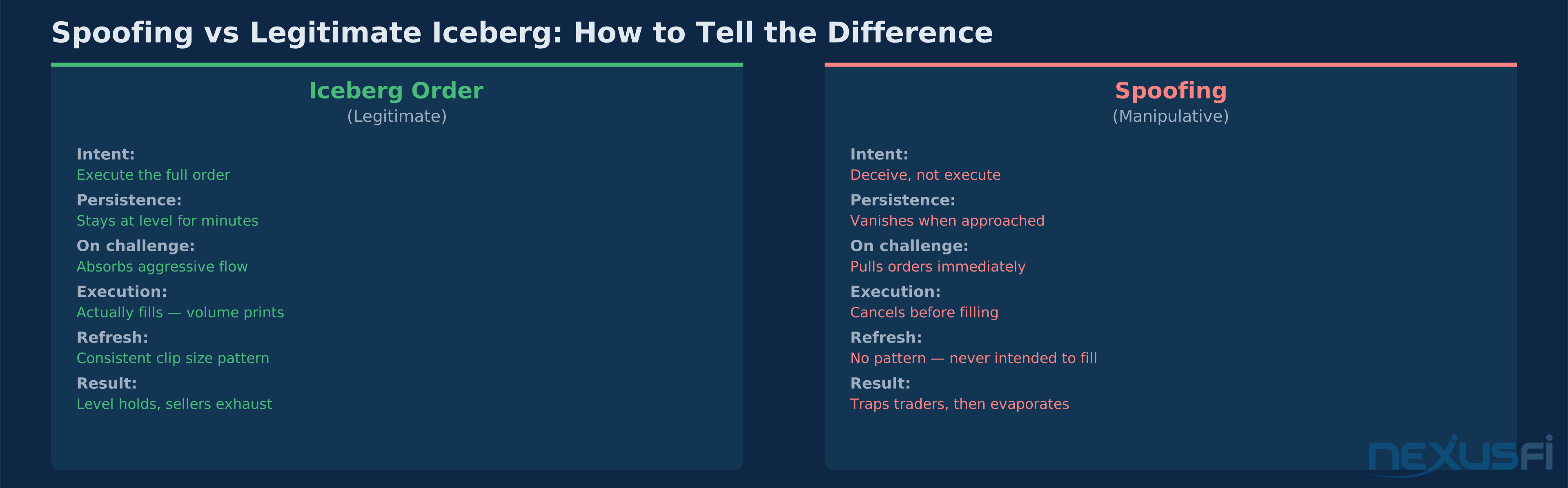
Iceberg orders: Real intent to execute. The hidden reserve exists to be filled. The order stays at the price level and absorbs flow until it's complete or canceled. The trader wants to trade — they just don't want to advertise the full size.
Spoofing: Deceptive intent. Orders are placed with no intention of being filled, designed to create a false impression of supply or demand. They're typically pulled before they can execute. The "trader" wants to mislead, not to trade.
Practical Discrimination Framework #
How to tell the difference in real-time:
| Characteristic | Iceberg | Spoofing |
|---|---|---|
| Persistence at level | High — stays for minutes, absorbs flow | Low — evaporates when challenged |
| Execution | Actually fills — volume trades at the level | Cancels before meaningful execution |
| Refresh behavior | Consistent clip size, systematic replenishment | No refresh pattern (was never intended to fill) |
| Reaction to challenge | Continues absorbing | Pulls immediately when other side approaches |
| Location | Often at significant reference levels | Can appear anywhere, often placed to influence |
The key tell: icebergs absorb aggressive flow and survive. Spoofed orders vanish when someone actually tries to trade against them.
— meaning most icebergs aren't directional bets at all. They're providing liquidity. This further undermines the narrative that every iceberg is "smart money" signaling direction.
Impact on DOM Interpretation and Liquidity Analysis #
The DOM Is Always a Lower Bound #
Once you internalize iceberg mechanics, your relationship with the DOM changes permanently. Every price level you see is displaying a minimum, not a measurement. A level showing 200 on the bid might hold like 200 — or like 2,000.
This has direct consequences:
Support and resistance from depth: Thin displayed levels don't necessarily mean weak support. Thick displayed levels don't necessarily mean strong support (they could be pulled). The only way to assess actual support is to watch what happens when price arrives — does the level absorb flow or break?
Liquidity estimates for execution: If you're sizing a trade based on displayed depth, you'll systematically overestimate your market impact on levels with hidden reserves and systematically underestimate it on levels where displayed size is genuine.
Imbalance readings: A DOM showing 500 on the bid and 100 on the offer looks like a buy imbalance. But if the offer has a 5,000-contract iceberg behind those 100 displayed, the actual imbalance is the opposite.
Contract-Specific Behavior #
Iceberg prevalence and detectability vary much by contract:
ES (E-mini S&P 500): The most liquid futures contract. Iceberg activity is heavy, especially near key reference levels (VWAP, previous settlement, round numbers). Detection is harder because normal order flow is already thick — distinguishing icebergs from regular deep liquidity requires pattern recognition.
CL (Crude Oil): Thinner than ES. Icebergs are more visible because normal depth is lower. A 50-lot iceberg in CL stands out more than a 50-lot iceberg in ES. Crude also has more pronounced absorption patterns at session extremes.
ZB (30-Year Treasury Bond): Institutional participation is extremely high. Icebergs from hedgers and portfolio managers are common, but they're often non-directional (hedging, not speculating), making directional inference from iceberg detection less reliable.
NQ (E-mini Nasdaq): Thinner book than ES despite growing volume, which makes iceberg activity more detectable — a 200-lot iceberg in NQ creates more pronounced absorption signatures because background noise is lower. NQ's $5/tick value (vs ES's $12.50) means the contract is cheaper per tick but the point value ($20/point) concentrates institutional activity around round numbers and tech-sector event levels. Watch for iceberg patterns around options-related strikes (round 100-point intervals) and pre-market session opens, where tech-focused institutional flow tends to cluster. NQ icebergs around major earnings releases (AAPL, NVDA, MSFT) can be especially aggressive — hedgers will absorb thousands of contracts at specific levels to manage gamma exposure.
GC (Gold): Iceberg behavior in gold reflects its unique participant mix. Central bank reserve managers, sovereign wealth funds, and large bullion dealers routinely use icebergs to accumulate or distribute positions over hours or days without moving spot. These participants are almost never directional in the short-term trading sense — their icebergs represent strategic allocation, not tactical bets. Activity clusters heavily around round numbers ($50 increments), options strikes, and London Fix times (10:30 AM and 3:00 PM London). GC icebergs near geopolitical events (rate decisions, CPI releases, geopolitical escalations) often come from opposing participant types simultaneously — safe-haven accumulators on the bid while speculative sellers take profits on the offer — creating a unique double-iceberg dynamic where absorption appears on both sides.
Limitations, False Positives, and What Can Go Wrong #
Not Everything That Looks Like an Iceberg Is One #
Multiple non-iceberg phenomena produce similar observable signatures:
- Algorithmic order splitting: An algo breaking a large order into many small independent orders creates similar "repeated fills at the same price" patterns without any iceberg mechanics
- Multiple unrelated participants: Three separate traders all wanting to buy at the same level, independently submitting moderate-sized orders, looks like a single entity with a large hidden position
- Peg orders and market makers: Some participants dynamically replenish orders at levels as part of market-making obligations — this creates refresh-like behavior without iceberg intent
- Exchange-driven refresh: In spread markets, implied orders can create apparent liquidity that refreshes as outright orders interact
The Detection Arms Race #
As detection tools improve, sophisticated participants adapt. The shift from native icebergs (detectable via MBO) to synthetic icebergs (broker-managed) is a direct response to detection capability. Some participants randomize their clip sizes, add random delays between refreshes, or split across multiple price levels to avoid pattern detection.
You're always observing the icebergs that couldn't or didn't bother to hide better. The best-hidden liquidity, by definition, is the liquidity you never detected.
Overconfidence in Directional Inference #
The biggest practical risk: treating every detected iceberg as a directional signal. As covered above, the majority of iceberg activity is non-directional. A trader who buys every time they see an iceberg on the bid will have a noisy, low-edge signal that occasionally works (when the iceberg really is directional accumulation) and frequently fails (when it's hedging, spreading, or rebalancing).
Icebergs are context enhancers, not standalone signals. They matter at key levels, in the context of broader market structure, with confirmation from other order flow data. By themselves, they're just large orders that someone chose to hide.
Summary and Trading Takeaways #
Iceberg orders create a systematic gap between what the DOM displays and what's actually executable in the market. For futures traders, the implications are practical and immediate:
The mental model shift:
Iceberg awareness changes how you process the DOM from a data display into a probabilistic puzzle. The question at every price level stops being "how much size is here?" and becomes "how much size could be here that I can't see?" That shift — from certainty to inference — is the real edge.
Practical integration:
- Pair iceberg detection with location analysis: absorption at a VWAP retest carries different weight than absorption at an arbitrary mid-range level. The iceberg itself is just volume — the location gives it meaning.
- The strongest iceberg signals combine three elements: a high-quality reference level, sustained time-at-price (not just a quick burst), and visible exhaustion of the aggressive side. Missing any one of these degrades the signal much.
- Before sizing a trade around detected iceberg activity, ask: "If this iceberg belongs to a hedger or spreader, does my thesis still hold?" If the answer is no, your position sizing should reflect that ambiguity.
- Breakout validation through iceberg lens: genuine breakouts chew through hidden reserves and keep going. If price repeatedly hits a level, volume prints heavy, but the level keeps reloading — that's not a breakout setup, that's a trap.
The traders who profit from hidden liquidity aren't the ones with the best detection tools. They're the ones who understand what icebergs can and can't tell you — and who use that understanding to avoid getting trapped on the wrong side of depth that isn't what it appears to be.
Knowledge Map
Go Deeper
Build on this knowledgeReferences This Article
Articles that build on this topicCitations
- — Real-world Order Flow Strategies (2020) 👍 8“MBO icebergs are just some icebergs...back of the queue”
- — Real-world Order Flow Strategies (2020) 👍 13“overwhelming portion of hidden orders on CME are attributable to net liquidity provision”
- — Volume Profile and Footprint discussion (2012) 👍 21“huge Iceberg order of 2,000 contracts but only advertises a limit order amount of 100”
- — Ninja Trader Custom Order Book (2013) 👍 3“T&S window shows lots of trades at the Ask indicating buying pressure”
- — Hunting Icebergs (2012) 👍 30“looks at the initial volume on the book when a price level gets hit”
- — Peter Davies AMA (2013) 👍 13“The more time at that level, the better quality the iceberg is”
- — Transactions below the bid (2014) 👍 4“larger traders may use iceberg orders to inject new limit buy orders”
- CME Group Client Systems Wiki — CME Globex Matching Algorithm Steps (2025)
- Review of Finance — Hide-and-Seek in the Market: Placing and Detecting Hidden Orders (2007)