



Delta Divergence in Futures Trading: When Price Lies and Order Flow Tells the Truth
Overview #
Price doesn't lie. But it doesn't tell the whole truth either.
When the ES makes a new session high at 6284.25, every indicator on your screen screams "continuation." Volume is up. Price is up. Momentum is up. The trend is clearly your friend — until you look at cumulative volume delta, and it's making a lower high at the same time price prints that new tick.
That's delta divergence. And it's one of the most reliable leading signals in futures trading.
Delta divergence occurs when price makes a new extreme — higher high or lower low — but cumulative volume delta (CVD) fails to confirm it. The divergence reveals that the move lacks aggressive participation. Buyers are lifting offers, but not with the conviction that drove previous highs. Sellers are hitting bids, but the aggression is fading. In the market's language: the move is running on fumes.
This isn't technical analysis in the traditional sense. It's not about drawing lines on a chart or watching oscillators bounce off levels. Delta divergence is a direct reading of market aggression — who's hitting market orders, with how much force, and whether that force is accelerating or dying.
Used correctly, it's one of the few tools that can identify exhaustion before price confirms it. Used incorrectly — trading every divergence you see without context — it's a reliable way to get chopped up in normal market noise.
This article covers the complete framework: what delta divergence is, the four specific patterns to trade, the absorption mechanism behind the signal, and how to filter the high-probability setups from the noise across ES, NQ, and CL futures.
What Delta Is -- and Why It Diverges #
Before you can understand divergence, you need a precise definition of delta itself.
Every futures transaction is either a buyer lifting the offer or a seller hitting the bid. When a buyer pays the ask price aggressively — placing a market order that immediately executes against a resting limit sell — that transaction creates positive delta. When a seller hits the bid — market order filling against a resting limit buy — that creates negative delta.
Cumulative volume delta (CVD) is the running total of this imbalance over time. On a session basis, CVD starts at zero and tracks whether aggressive buying or aggressive selling is dominant. A rising CVD means more market orders are hitting the offer than the bid. A falling CVD means sellers are more aggressive.
Here's the key insight that makes divergence meaningful: in a healthy trending market, price and CVD should move together. Rising prices should be accompanied by rising CVD — the trend is being driven by aggressive buyers. Falling prices should come with falling CVD — sellers are pressing hard.
When price and CVD decouple — when price makes a new high but CVD doesn't, or price makes a new low but CVD holds higher — something structurally important is happening at that level. The typical relationship between price and aggressive order flow has broken down.
As @tigertrader explained in this classic NexusFi post:
That behavioral incongruence is the signal. Not the divergence itself — but what the divergence reveals about who's actually in control of the market at that level.
The Four Divergence Patterns #
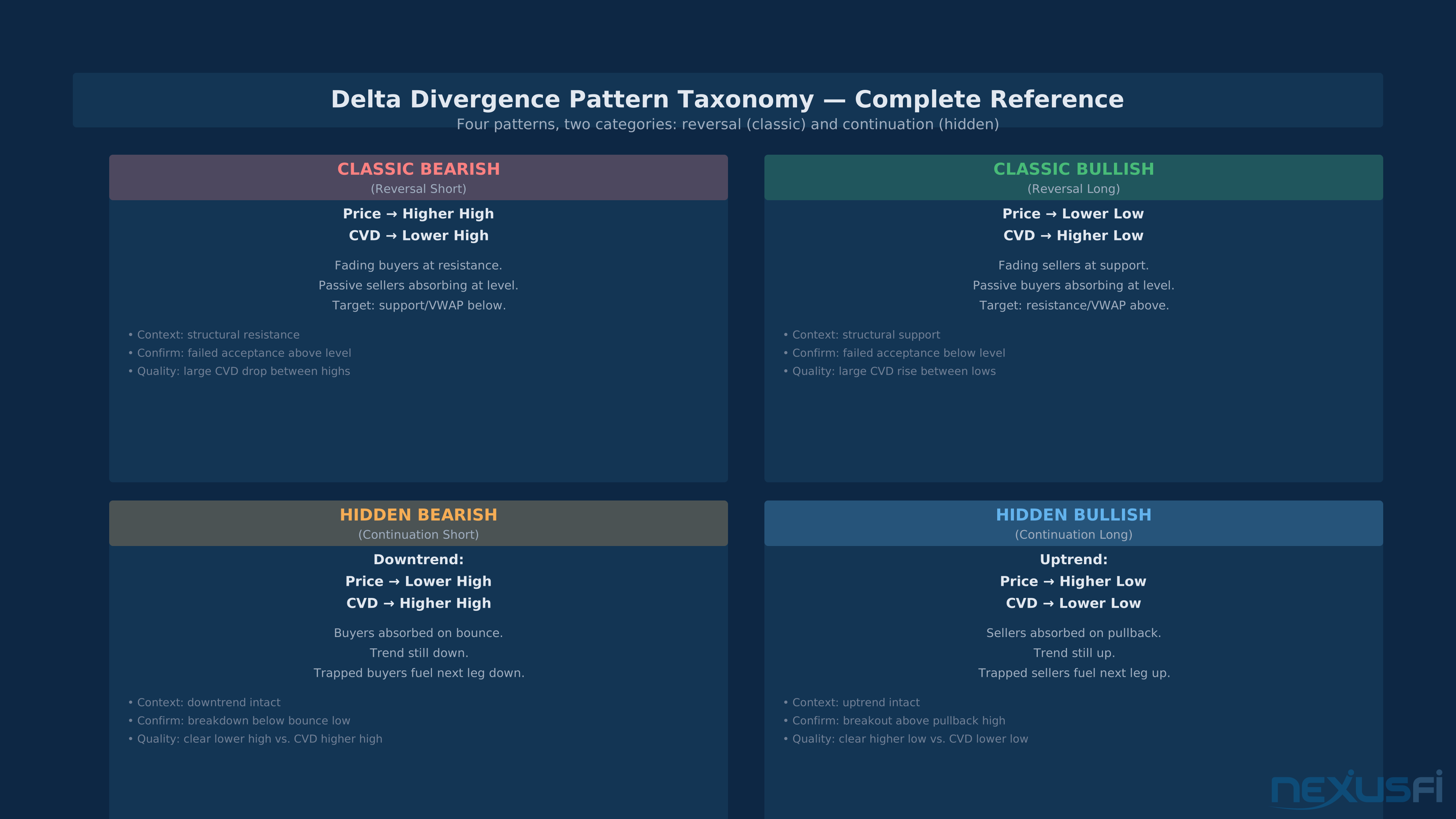
There are four distinct delta divergence patterns. Two are reversal setups, two are continuation setups. Understanding which you're looking at changes how you trade them.
Classic Bearish Divergence (Reversal Short)
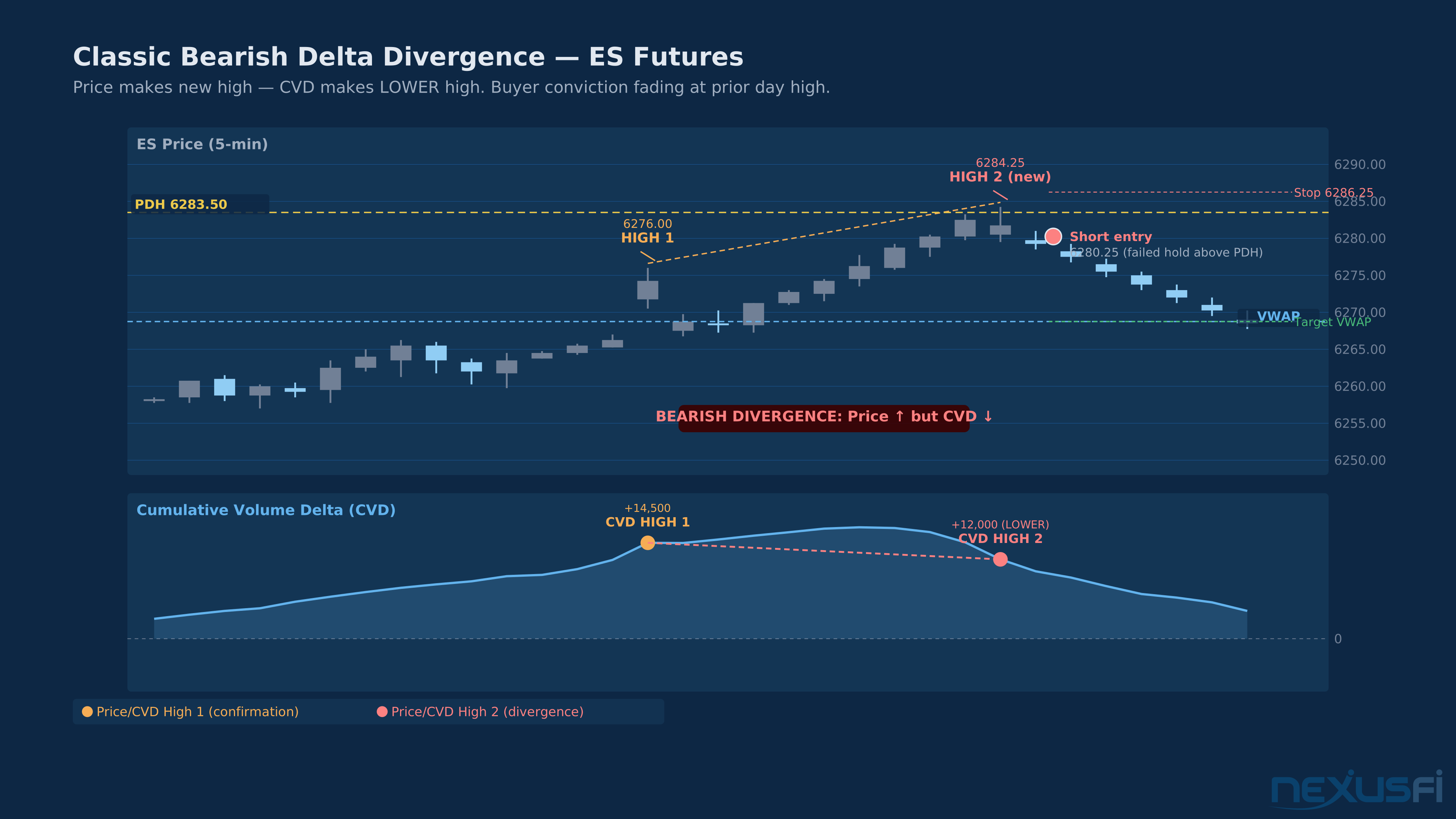
Price makes a higher high. CVD makes a lower high.
This is the most widely recognized pattern. Price extends above a prior swing high — triggering buy stops, attracting momentum chasers — but the cumulative buying delta at that new high is weaker than it was at the previous high. Buyers are still active, but they're not as aggressive.
What does this mean structurally? The second push above the prior high attracted fewer aggressive buyers per point of price movement. Either buyers are running out of steam, passive sellers are absorbing the buying at that level, or both. Either way, the market's ability to sustain price above that level is weakening.
The strongest bearish divergences occur when the second price high is meaningfully above the first (not just one tick) but the CVD high is noticeably lower. A marginal new high in price with a dramatically lower CVD high is a setup. A marginal new high with a barely lower CVD is probably noise.
Confirmation: CVD starts declining after the divergence high, and price fails to hold above the level that triggered the divergence.
Invalidation: Price and CVD make a new high together — divergence is over, trend resumed.
Classic Bullish Divergence (Reversal Long)
Price makes a lower low. CVD makes a higher low (less negative).
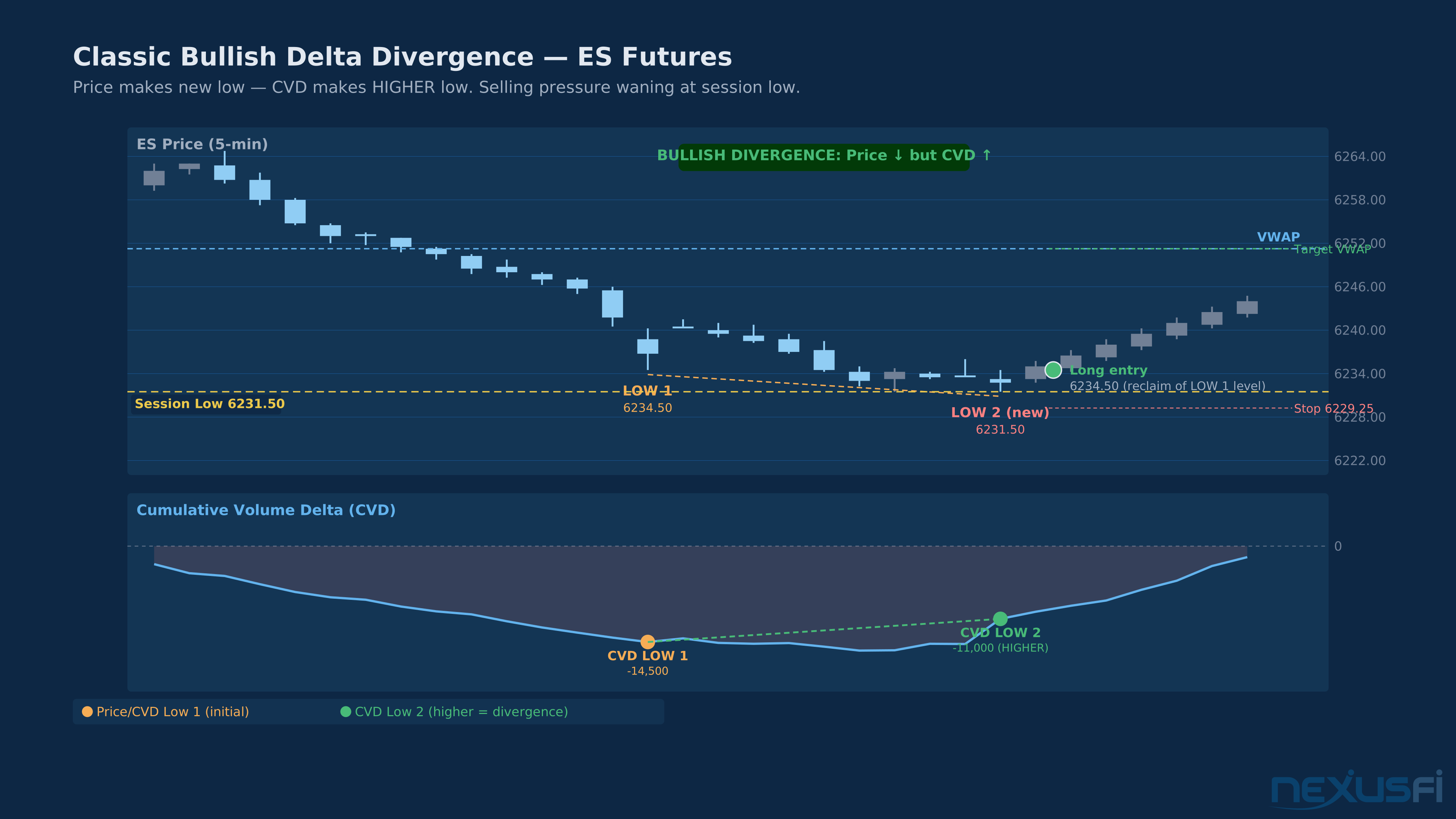
The mirror image of bearish divergence. Price sweeps below a prior low — triggering sell stops, attracting shorts — but the selling delta at that new low is less intense than it was at the previous low. Sellers are still active, but they're losing conviction.
This pattern often appears when price is approaching a significant support level — prior day low, overnight low, a major volume node, VWAP. The market probes below the level, activates resting sell stops, but the aggressive selling that drives that probe is fading. Passive buyers are absorbing the aggressive sells.
The highest-quality bullish divergences happen when price makes a clear new low (not just a tick below) while CVD's low is noticeably higher (less negative) than the prior swing low. The market is running out of sellers at this level.
Confirmation: CVD begins rising after the divergence low, and price reclaims the prior low or breaks micro-structure resistance.
Invalidation: Price and CVD extend lower together — the selling is real, not exhausted.
Hidden Bullish Divergence (Continuation Long)
In an uptrend: price makes a higher low. CVD makes a lower low.
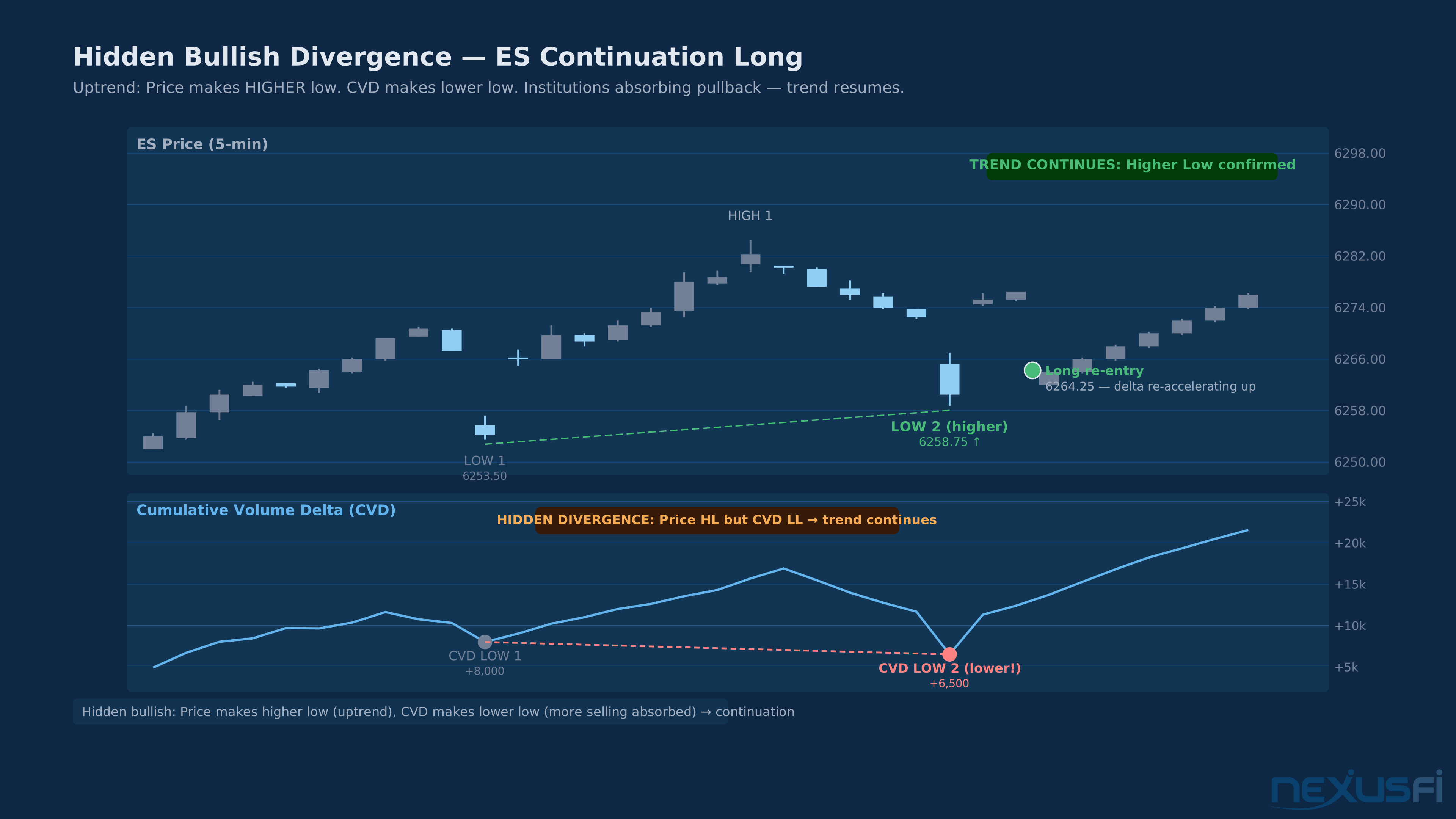
This is the hardest pattern to understand intuitively, because it seems backward: more selling delta during a pullback is actually bullish?
Here's what's happening. In a strong uptrend, when price pulls back to a higher low, aggressive sellers are pressing the retest. CVD drops more than it did on the previous pullback. But price doesn't follow — it makes only a higher low, not a lower low. The aggressive selling is being absorbed by passive buyers who are defending the higher-low structure.
As @djkiwi noted in the Cumulative Delta Volume Trading thread — one of the most valuable order flow threads on the forum — the most powerful setups often come when existing inventory is neutralized: "I now use delta as a secondary decision support tool with volume profile the primary decision support tool. The hidden divergences are very good as it is often the smart money getting it wrong — you see a powerful move in the other direction as they scramble out of positions."
Hidden bullish divergence signals that the trend is intact and that the pullback sellers are trapped. When the downside aggression fails to produce a lower low, those sellers must cover as price resumes. That covering adds fuel to the next leg up.
This is a continuation setup, not a reversal. You're not fading the trend — you're getting in after the pullback, with delta evidence that the trend's structural support held.
Hidden Bearish Divergence (Continuation Short)
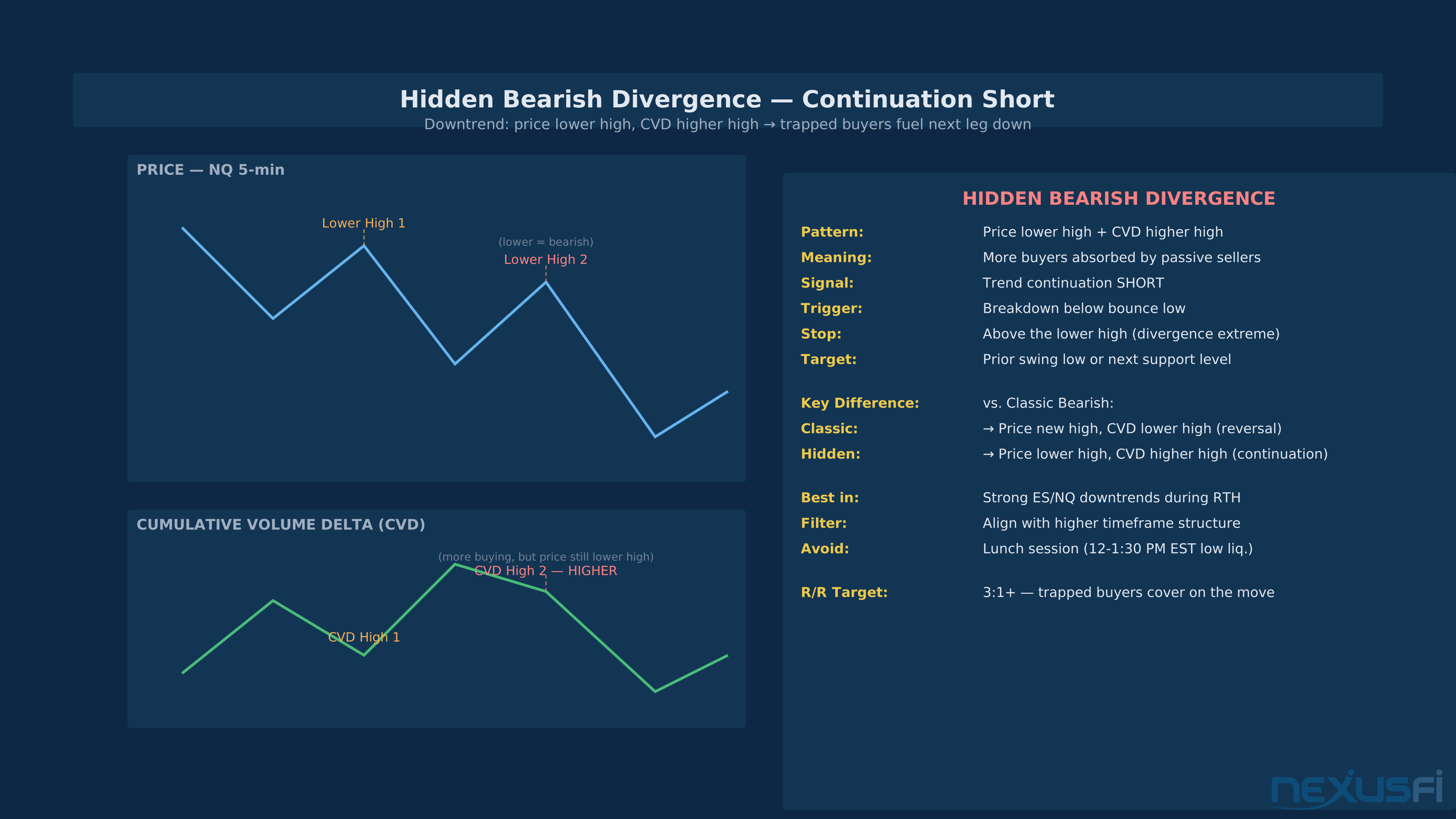
In a downtrend: price makes a lower high. CVD makes a higher high (less negative / more buying on the bounce).
The bear-side equivalent of hidden bullish divergence. Price bounces in a downtrend, but makes only a lower high. Meanwhile, CVD rallies more than it did on the previous bounce — more aggressive buyers are involved in this rally, but they can't drive price to a higher high. The buying is being absorbed by passive sellers defending the lower-high structure.
The trapped buyers on this bounce will fuel the next leg down when they cover. Hidden bearish divergence in a clear downtrend is a high-probability continuation short setup.
Absorption: The Mechanism Behind the Signal #
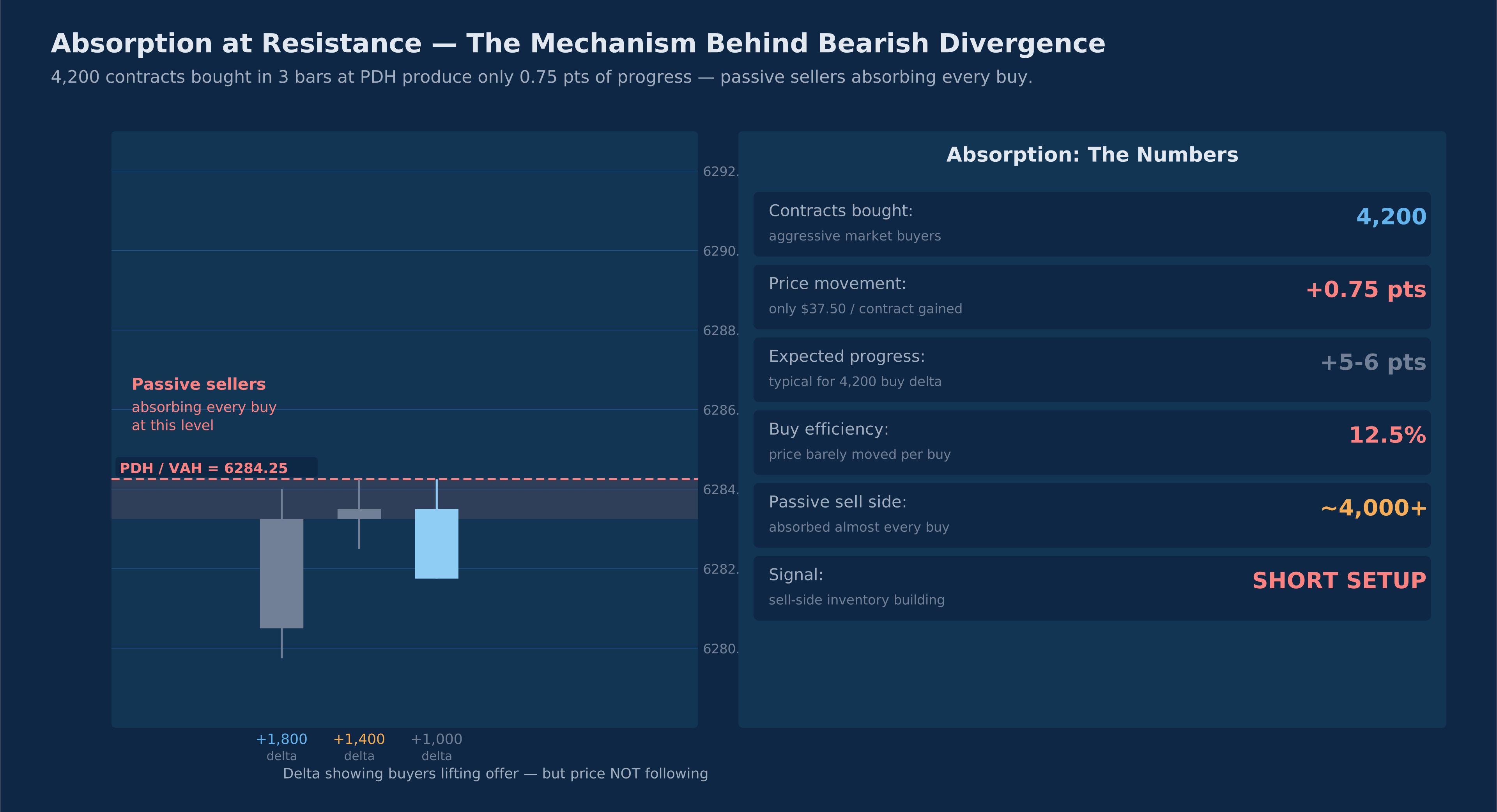
Delta divergence doesn't happen randomly. It's caused by something specific: absorption.
When aggressive buyers push price into a significant resistance level, they're fighting against resting limit sell orders from passive participants — often institutional players with large positions to build or unwind. Every aggressive buy order is met by a passive sell at that level. Price barely moves. Aggressive delta accumulates — all those market orders are positive delta — but price doesn't follow because the passive side is matching every buy.
Absorption is distinct from divergence: absorption is the mechanism (passive orders consuming aggressive orders), and delta divergence is the observable symptom (CVD failing to confirm the price extreme).
In the footprint chart, absorption looks like repeated high-volume prints at a single price level with almost no price progress. In the DOM, it appears as resting large sizes at the offer that keep refreshing — the iceberg orders that disguise institutional selling. In CVD, it shows up as a divergence: all that positive delta from aggressive buyers, but price can't make new highs because passive sellers are right there.
@Private Banker described this in the NexusFi forum:
Understanding that absorption is the cause changes how you use delta divergence. You're not just pattern-matching "CVD lower high = short." You're reading the evidence that passive participants are systematically working against the aggressive flow. That's a much stronger signal than a technical pattern.
The Three-Layer Trading Framework #
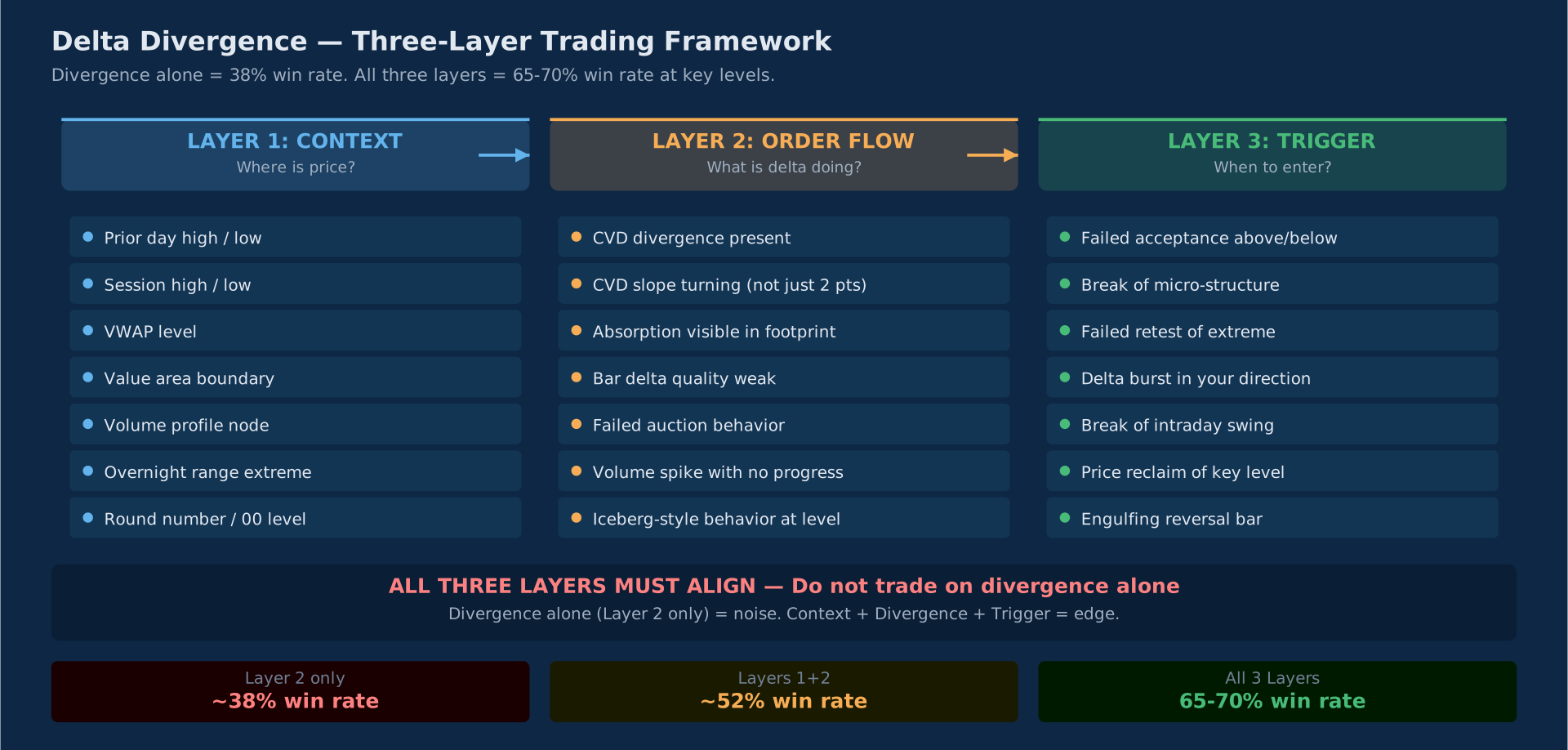
The most common mistake traders make with delta divergence is treating it as a standalone signal. They see a bearish divergence and short, or a bullish divergence and go long, without any context. The result: a coin-flip win rate at best, and usually worse because divergences are more common in the direction of the trend (where fading them loses).
Professional use of delta divergence requires three layers to align before entering:
Layer 1: Context -- Where Is Price?
Delta divergence is only meaningful at significant structural levels: prior day high/low (PDH/PDL, the most reliable), session opening range extremes, VWAP (especially when price is testing from the wrong side), value area high/low (VAH/VAL), high-volume nodes from volume profile, overnight range extremes, and major round numbers. Divergence in the middle of a range is noise.
Divergence in the middle of a range — away from any meaningful structural level — is noise. Don't trade it.
Layer 2: Order Flow -- Is Divergence Present and Quality?
Quality divergences require: a clear CVD slope change between peaks (not just comparing two endpoints), meaningful delta magnitude relative to recent swings, footprint confirmation showing high bid/ask volume with minimal price progress, and bar delta that's positive but with small price range at the divergence high — buyers firing but getting nothing for it.
Layer 3: Trigger -- When to Enter?
You've identified the structural level. You see the divergence. Now you need price confirmation before entering. Divergence at a level can persist for several bars — entering immediately on the divergence means entering before the market has confirmed the rejection.
Valid triggers: failed acceptance (price tests above PDH but can't sustain it and pulls back), breakdown of micro-structure (swing low breaks for bearish), failed second retest at the extreme, a strong CVD burst in your direction after the divergence forms, or an engulfing reversal bar with confirming delta.
Entering before the trigger fires means you're anticipating, not reacting. Anticipating divergence reversals is expensive. Let the market confirm what the delta is saying before you commit capital.
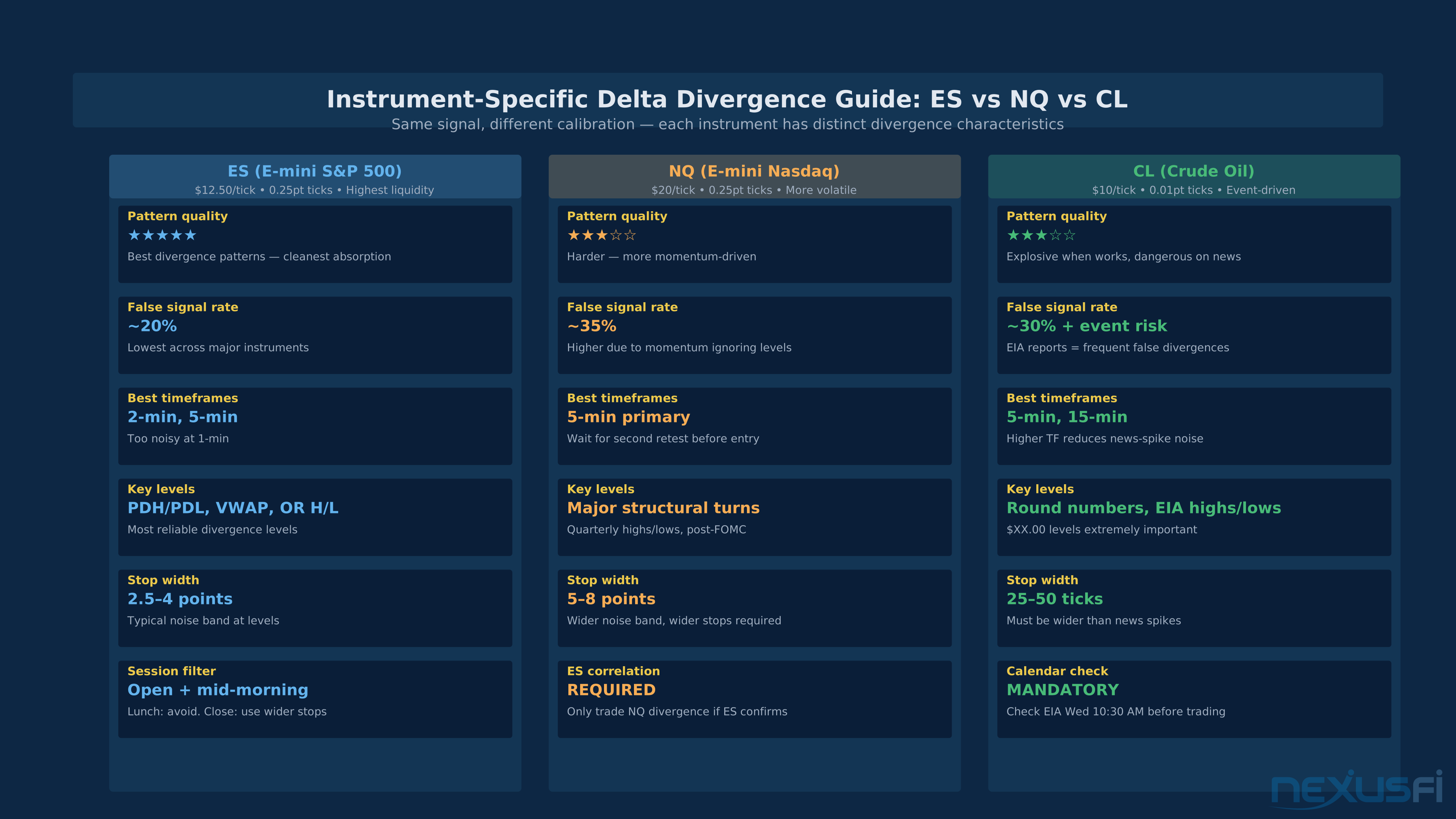
ES, NQ, and CL: Instrument-Specific Behavior #
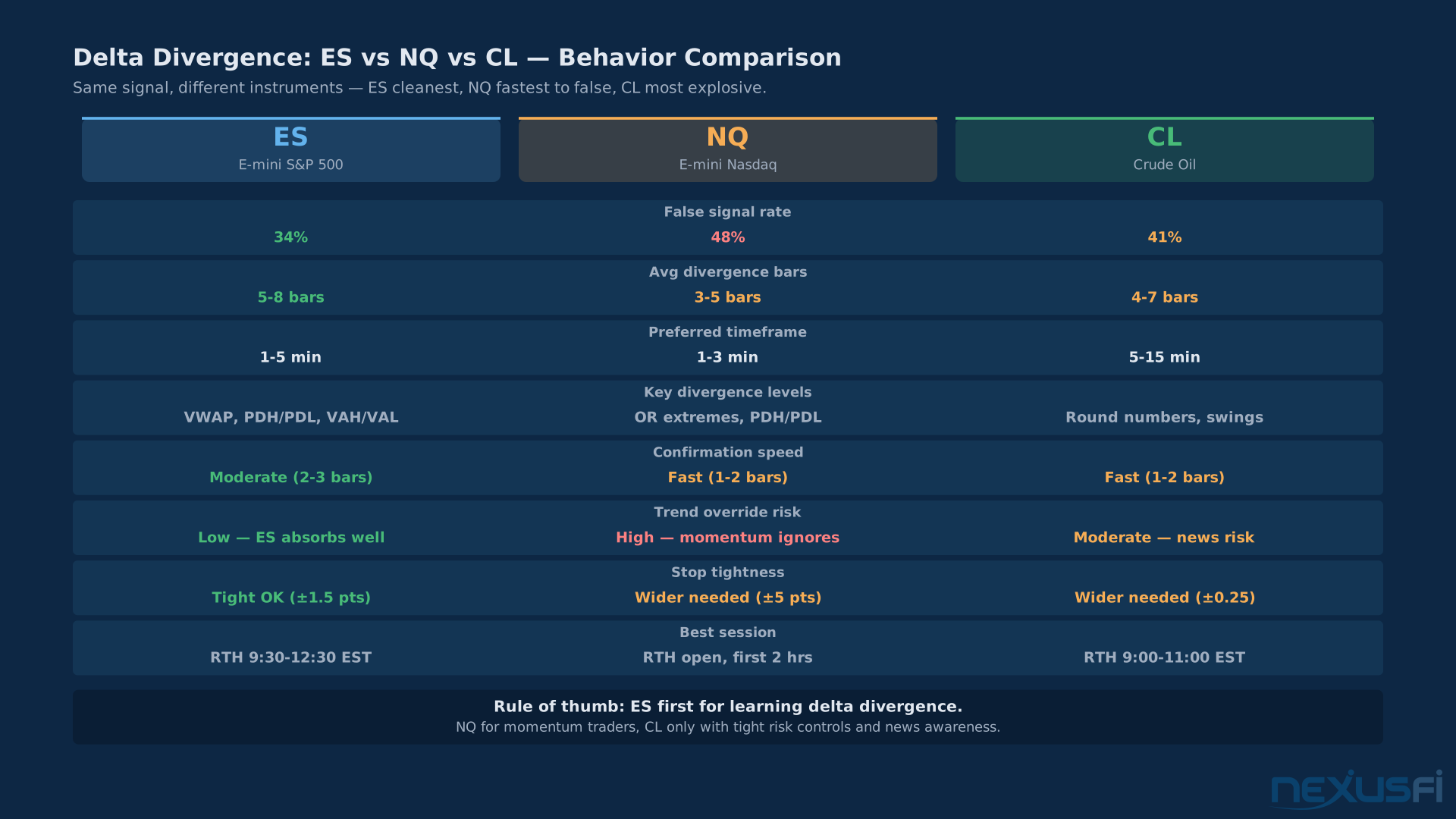
Delta divergence doesn't behave identically across instruments. The three most commonly traded futures on NexusFi — ES, NQ, and CL — have meaningfully different characteristics that change how you use the signal.
ES (E-mini S&P 500)
ES is where delta divergence works best for most traders. The market is highly liquid, deeply participated, and tends to absorb large flows without the extreme moves that characterize other instruments. Institutional participation is constant, and the auction process is relatively clean.
ES divergences are more reliable because absorption patterns are cleaner. When passive sellers are working a level in ES, they have enough capital to systematically absorb aggressive buying for several bars without the level breaking. That creates textbook divergence patterns that resolve cleanly.
The best ES setups cluster around: opening range high/low tests (9:45-10:15 AM EST), VWAP tests in mid-session, prior day high/low tests, and VAH/VAL from the prior session.
On timeframe: 2-minute and 5-minute charts work well for identifying ES divergence. The 1-minute chart generates too much noise; the 15-minute can miss the entry window entirely.
NQ (E-mini Nasdaq)
NQ divergence trades are harder. The market is more volatile, more momentum-driven, and less patient. When NQ is trending strongly — which it does more aggressively than ES — momentum can carry it well past divergence levels without any reversal. NQ will ignore bearish divergence at a resistance level for 10 bars longer than ES would.
The key difference is that NQ has higher-quality divergence in one scenario: when the broader market structure is turning. Divergence in NQ at major structural inflection points (200-point range extremes, quarterly highs/lows, post-FOMC levels) is more significant than the same divergence in ES at comparable levels.
NQ filters: wait for the second failed retest before entering, use 5-minute confirmation rather than 2-minute, expect wider stops, and require ES structure alignment — NQ divergence without ES confirmation is low quality.
CL (Crude Oil)
CL divergence is the most explosive when it works, and the most dangerous when it doesn't. Crude is driven by headline risk, inventory data, geopolitical events, and OPEC decisions in ways that can instantly render any technical or order-flow analysis irrelevant.
When CL is in a stable range — between reports, away from known event risk — delta divergence at key levels (round numbers, inventory report lows/highs, prior session extremes) can produce clean, fast reversals. CL tends to snap back from divergence levels sharper than ES because the instrument's volatility is higher.
The catch: CL is prone to fakeouts through divergence levels. A divergence at $75.00 (round number) in CL can be followed by a news-driven spike that runs the level another $1.50 before reversing. In ES, a divergence at PDH that gets run briefly usually means the stop is hit before the reversal plays out.
For CL: check the economic calendar (EIA reports are consistent false-signal generators), use 5- or 15-minute charts rather than 2-minute, size conservatively given CL's larger daily range, and target round-number levels for stops and targets.
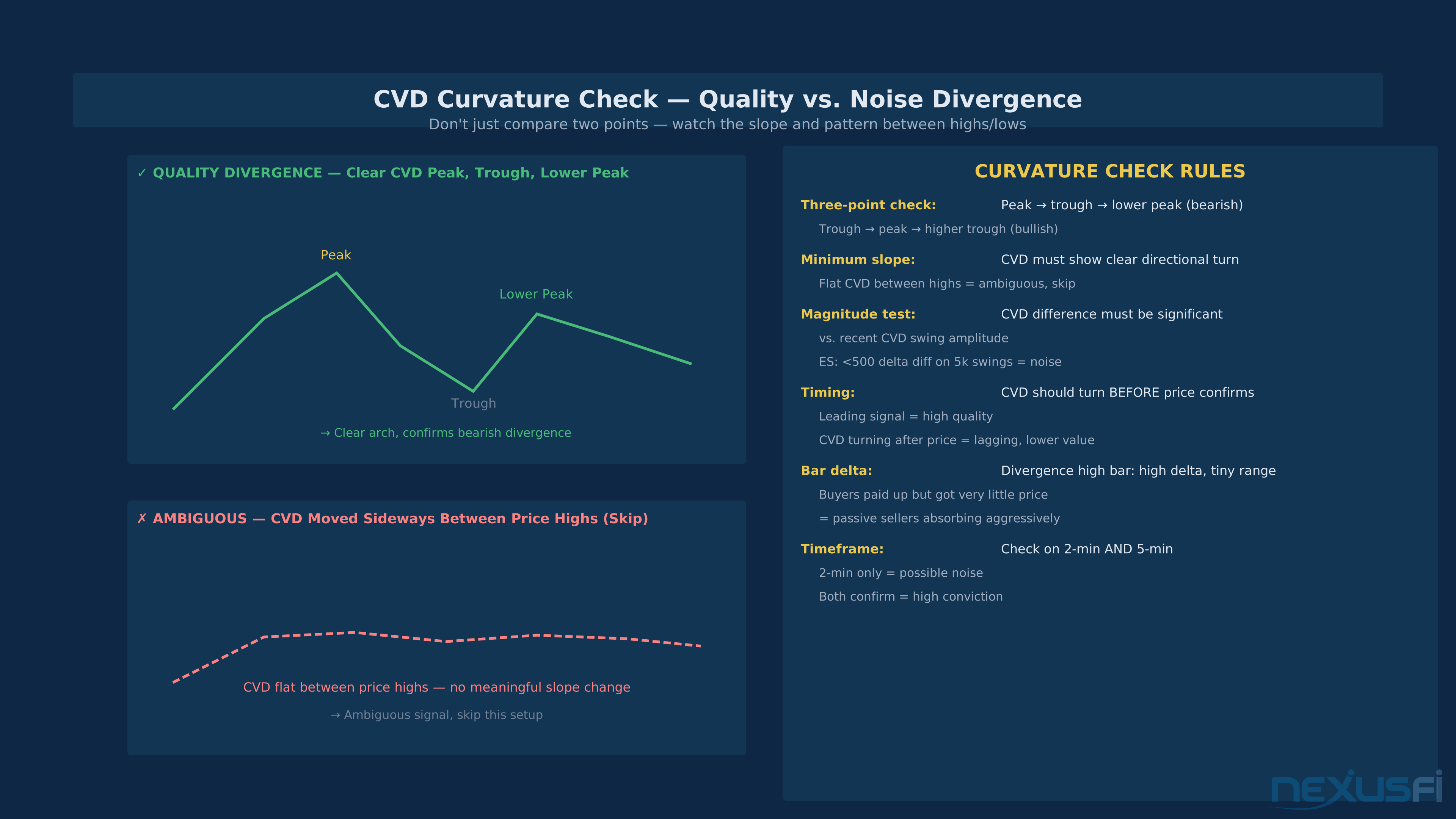
Quality Filters: Separating Signal from Noise #
Delta divergence setups can appear dozens of times per session if you're scanning aggressively. Most are noise. Here's the filtration framework that separates tradeable setups from visual patterns:
1. CVD Curvature Check
Don't just compare two CVD data points. Look at what CVD is doing between the highs (or lows). In a legitimate bearish divergence, CVD should show a clear turning pattern: it peaks at the first high, declines between the two price highs, and then fails to recapture its prior level at the second price high. The peak, trough, and lower peak tells you more than just comparing two peaks.
If CVD moved sideways between the two price highs — neither making a clear new high nor declining meaningfully — the divergence is ambiguous. Skip it.
2. Delta Magnitude Filter
Set a minimum delta threshold relative to recent history. If a typical strong move in ES generates 8,000 delta in 5 minutes, and the divergence involves only 1,200 delta difference between the two CVD peaks, that's probably noise. The divergence should represent a meaningful departure from what it took to drive price in the prior push.
@djkiwi noted in the Cumulative Delta Volume Trading thread:
That's a meaningful number — 38,900 contracts of aggressive selling in 3 bars producing only 23 ticks of downward progress is significant. Compare the delta magnitude to the price movement and ask whether the ratio makes sense for the level.
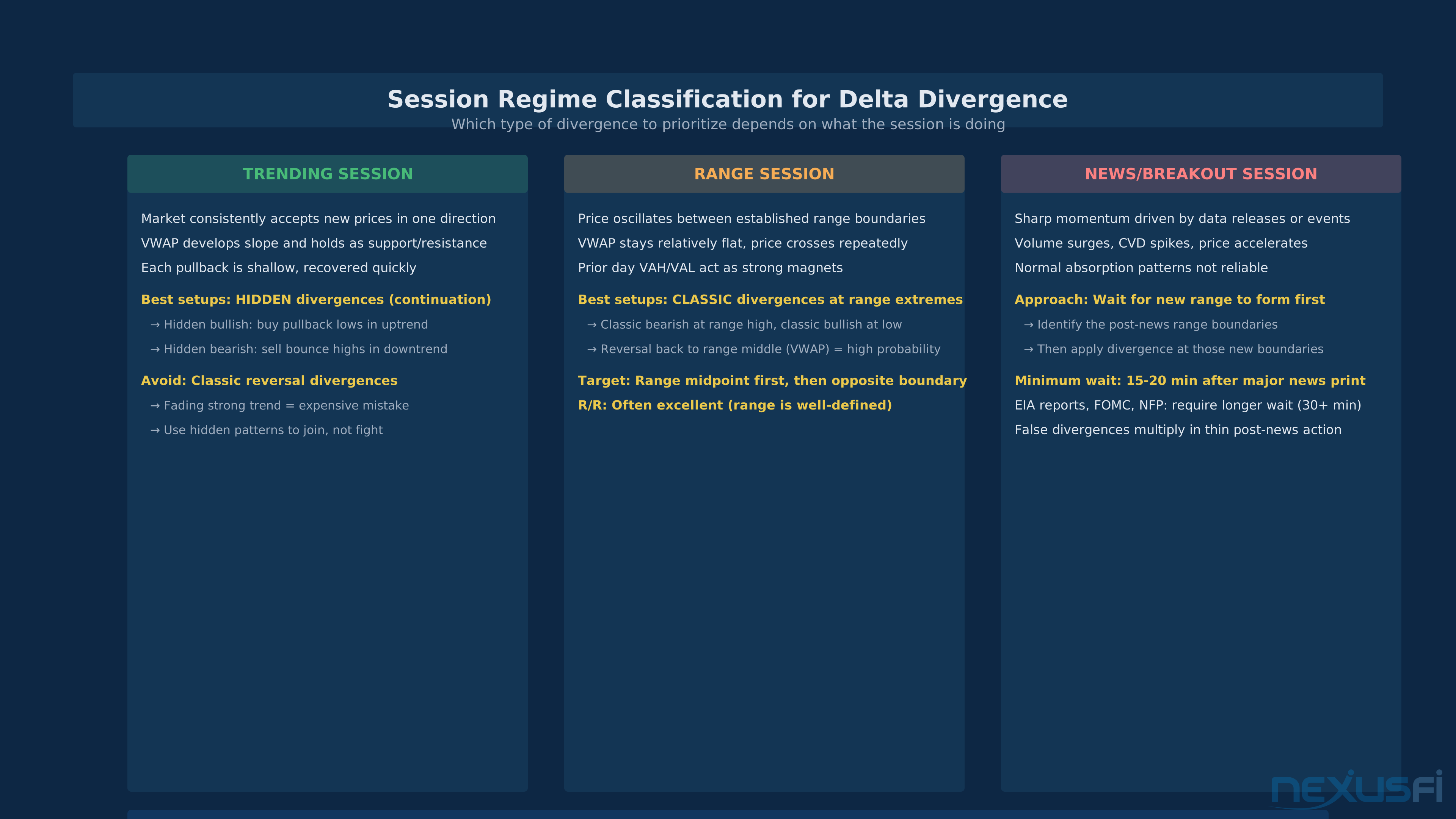
3. Regime Check
Which type of divergence are you looking at, and does it match the session's character?
Trending sessions: hidden (continuation) divergences work better than classic — don't fight committed trend participants. Range sessions: classic divergences at range extremes are the high-probability play. Breakout/news sessions: wait for a new range to establish before using any divergence signals. NYSE TICK and UVOL/DVOL give you a quick read on session character.
4. Session Timing Filter
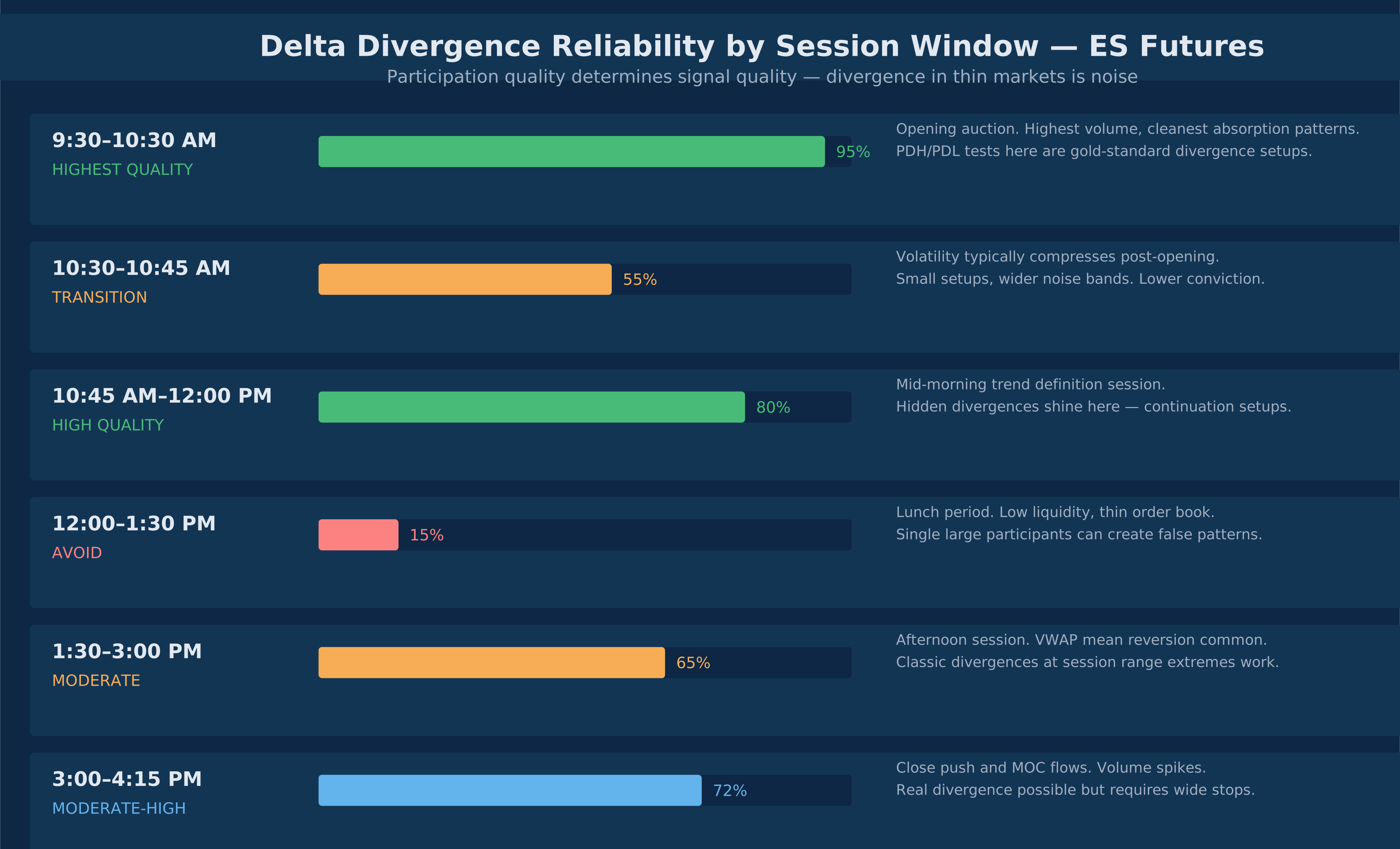
Delta divergence is much more reliable during regular trading hours (RTH) than in the Globex session. The pre-market and overnight sessions have lower participation, which means single large participants can create apparent divergence patterns that aren't indicative of anything structural — they're just the result of a thin market processing a single order block.
The highest-quality divergence windows in ES are:
- 9:30 - 10:30 AM EST -- opening session, highest participation, cleanliest setups
- 10:45 AM - 12:00 PM EST -- mid-morning session, often where the day's trend defines itself
- 1:30 - 3:00 PM EST -- afternoon session, significant for reversals back toward VWAP
Avoid trading delta divergence in the 12:00 - 1:30 PM lunch period — low liquidity creates false patterns. After 3:00 PM, the close push can create legitimate divergence signals, but they're harder to hold through with wide stops.
Building a Complete Trade: Entry, Stop, Target #
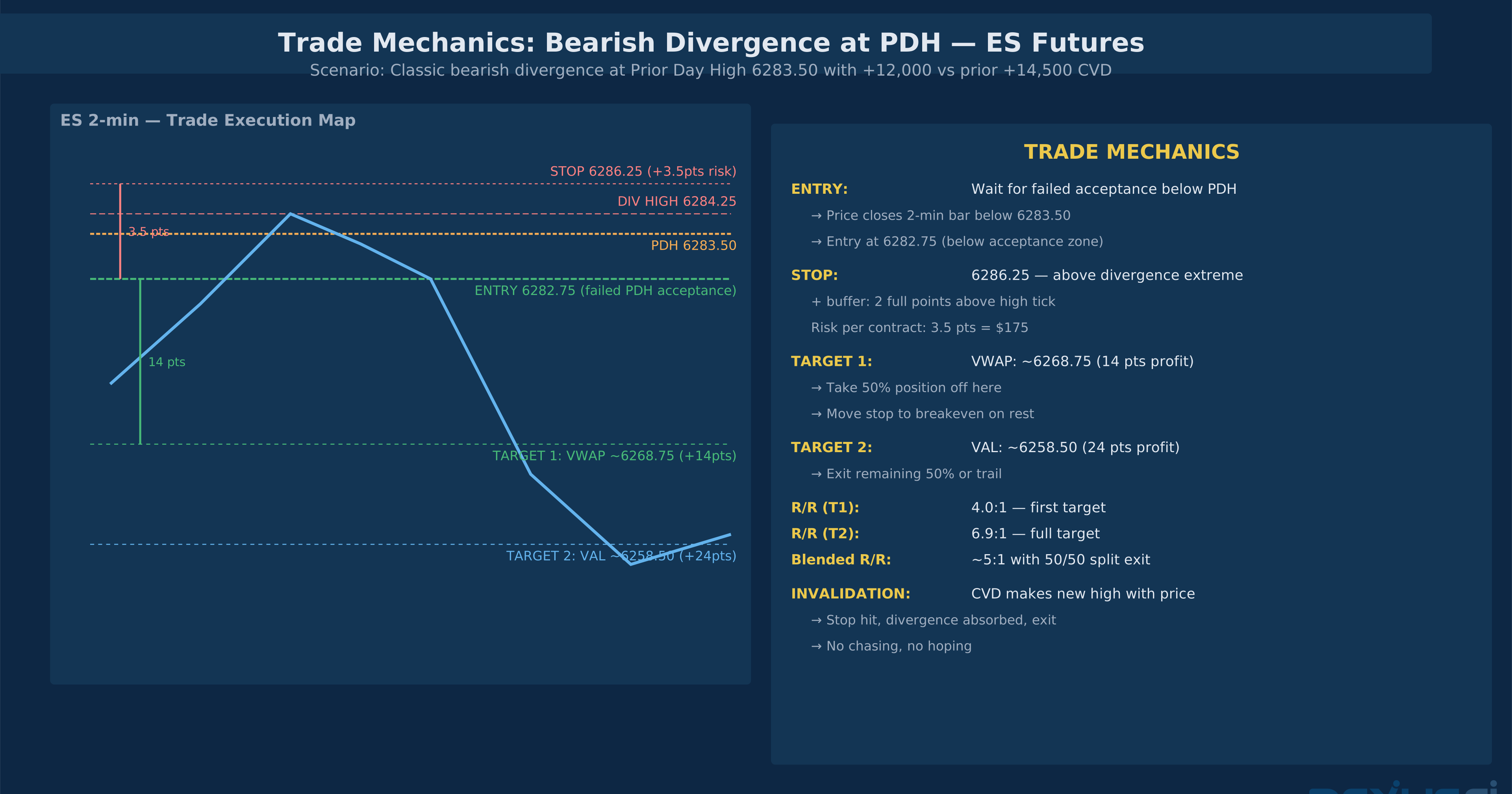
Here's the framework translated into specific trade mechanics, using a bearish divergence example in ES:
Scenario: ES is testing PDH at 6283.50 (prior day high). Price makes a new high tick at 6284.25. CVD reaches +12,000 but the previous high had CVD at +14,500. You're seeing classic bearish divergence at PDH.
Entry: Don't short the 6284.25 high tick. Wait for failed acceptance — if price closes a 2-minute bar below 6283.50 (unable to accept above PDH), that's the signal. Entry at 6282.75, below the PDH acceptance zone.
Stop: Above the divergence extreme at 6286.25 — above the high tick plus a buffer for noise. This puts the stop 3.5 points above entry ($175 per contract in ES). If price reclaims this level with strong CVD, the divergence was absorbed and the trend resumed.
Target: Scale at two levels — first at VWAP (6268.75 in this scenario, approximately 14 points away), and second at VAL or prior session POC if the move extends. The VWAP target is the minimum expectation for a confirmed PDH divergence rejection.
R/R: 14 points of profit at VWAP versus 3.5 points of risk = 4:1 at the first target. In practice, taking half off at 7 points and moving stop to breakeven protects capital while allowing the trade to breathe to the full target.
What breaks the setup: CVD makes a new high with price. If the market rests briefly and then pushes through with strong positive delta, the divergence failed. Stop is hit and the trade is done. No chasing, no hoping.
Common Mistakes -- and Why They're Expensive #
Delta divergence is a skill that develops through failure. Here are the patterns that cost traders the most:
Trading Divergence in the Middle of a Range
If price is nowhere near a meaningful structural level — it's just wandering in the middle of the day's range — don't read divergence into normal price action. CVD will fluctuate above and below price swings all day. That's normal. Only at significant levels does the divergence carry meaning.
Fighting Strong Trend Momentum Too Early
NQ makes a new high with slightly lower CVD, and you short. NQ goes another 40 points. The divergence was real, but the trend was stronger than the signal. Bearish divergences in a strong trend often produce only brief pauses, not reversals. Read the session regime before deciding whether to trade with or against the trend using divergence signals.
Using Divergence as a Forecast Tool
Divergence is a potential-reversal signal, not a reversal guarantee. Even high-quality, context-supported divergence setups fail. The market can continue past the level, absorb the passive selling, and drive to new highs. Your job is to take the high-probability setup with proper risk management — not to assume the divergence must resolve in your favor.
Ignoring the Timeframe
A bearish divergence on the 1-minute chart during a strong 5-minute uptrend is not a short signal — it's a minor pause. Always check whether the divergence you're seeing on your entry timeframe conflicts with the structure on the next higher timeframe. Divergence should be in the direction of the higher timeframe context, or at a level significant enough on the higher timeframe to override it.
Risk Management for Divergence Trades #
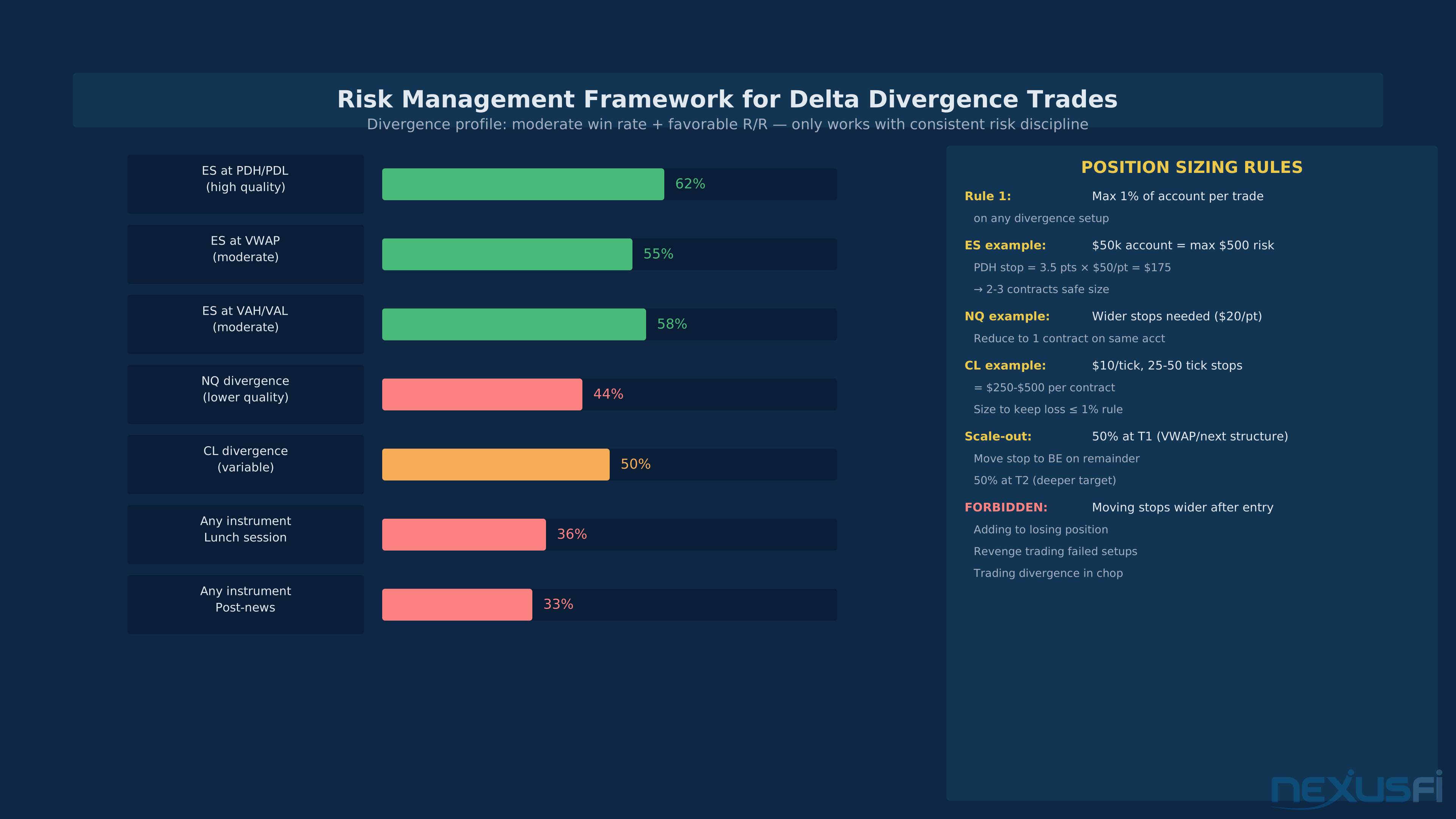
Divergence setups have a specific risk profile: moderate win rate, but favorable risk/reward when confirmed and well-structured. The trades that work produce large wins relative to the stop; the trades that fail tend to stop out cleanly at the defined invalidation level.
This profile is destroyed if you:
- Move stops wider after the trade goes against you ("it'll come back")
- Enter multiple positions on the same divergence without new confirmation
- Trade divergence in chop where the pattern is constant noise
- Revenge trade after a failed divergence setup
The position sizing rule for divergence trades: never risk more than 1% of account per trade on any setup where the trigger requires a wide stop. ES divergence stops at PDH (3-4 points) are tight relative to the expected move. CL divergence stops (25-50 ticks) require smaller position size.
The target protocol that works best for confirmed divergences: scale out at the first technical level (usually VWAP or prior swing) and let a portion run to the secondary target. This creates a blended exit that captures both the reliable near-target and the occasional extended run.
Track your divergence trades separately from other setups. The patterns that make divergence work — or fail — in your specific instrument and session window will emerge in the data over 30-50 trades. If your win rate on ES bearish divergence at PDH is 65% but only 35% in the lunch period, you know where to apply the filter.
Connecting Delta Divergence to Your Broader Framework #
Delta divergence doesn't replace your primary framework — it enhances it. If you're a volume profile trader, divergence at VAH/VAL adds a second data stream confirming that the auction is failing at that level. If you trade order flow from the DOM, divergence tells you the macro story of what the aggressive flow is doing relative to price. If you're a VWAP trader, divergence at VWAP tests tells you whether the test is finding genuine responsive flow or just running on momentum.
The traders on NexusFi who use CVD most effectively — @djkiwi, @tigertrader, and others who built their approaches over years of live trading — consistently describe it as a decision-support tool rather than a primary signal generator. The primary signal comes from structure: where price is, what the auction is doing, whether value is forming. Delta divergence confirms or challenges that primary read.
@djkiwi laid out this hierarchy explicitly: "I now use delta as a secondary decision support tool with volume profile the primary decision support tool... The entry would be at the level under the acceptance area provided there was some evidence of heavy selling with the idea of a brisk move." The volume profile identified the level. Delta confirmed the rejection. Price provided the trigger. Three signals, one trade.
That's the framework in practice. Not one indicator doing all the work, but three distinct types of market evidence — structural, order-flow, and price — converging at a single point to identify when the odds are genuinely on your side.
Getting Started: Building the Skill #
Delta divergence is a skill, not a pattern. It takes time to calibrate your read of what "meaningful" divergence looks like versus noise. Here's a practical sequence for developing it:
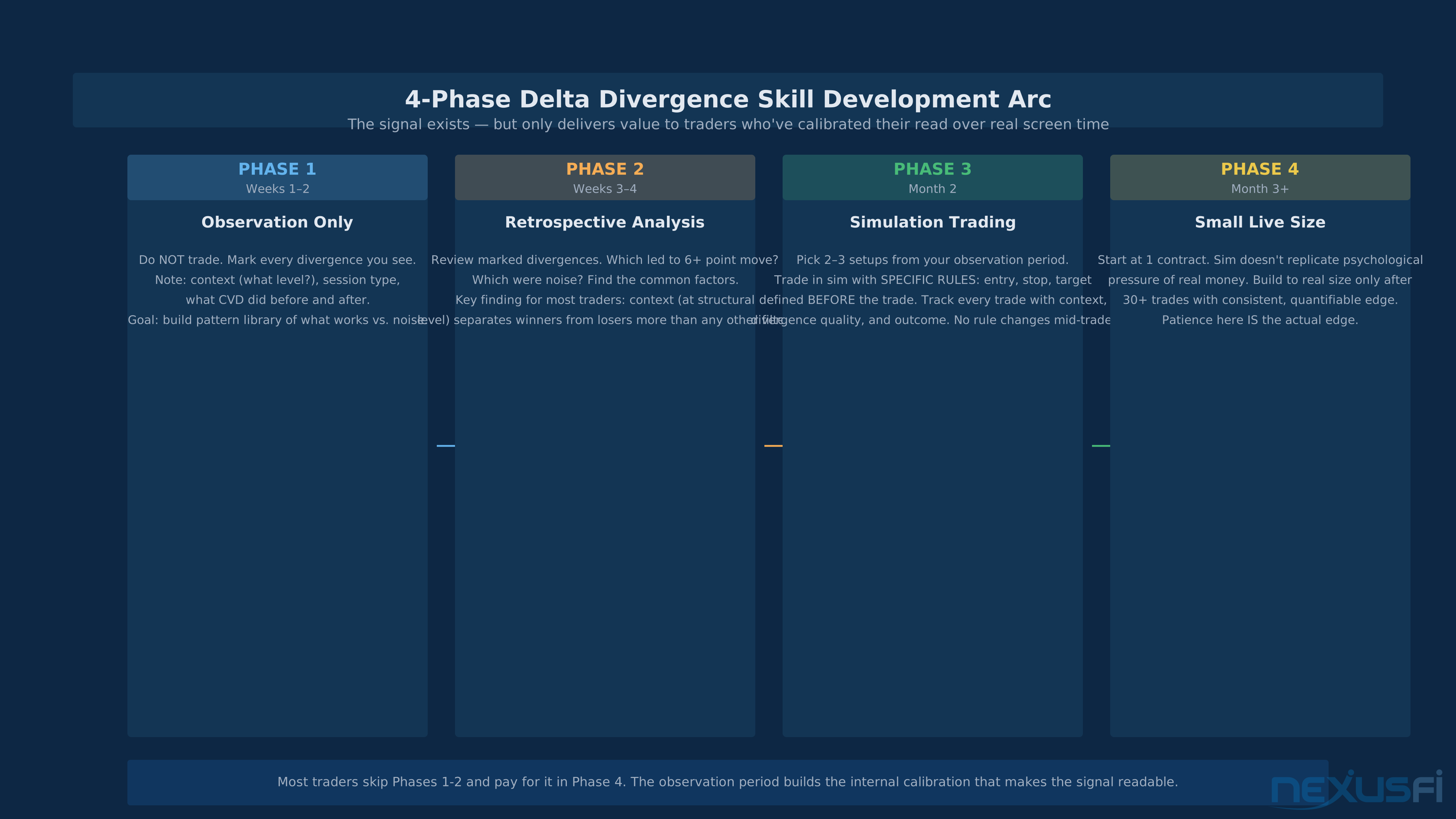
Week 1-2: Observation only. Mark every divergence you see on your primary instrument (start with ES). Note the context — what level is price at, what's the session type, what did CVD do before and after. Don't trade any of them. Just observe.
Week 3-4: Categorize retrospectively. Look at the divergences you marked. Which ones led to at least a 6-point reversal? Which were noise? What do the successful ones have in common? Most traders find that context (being at a known structural level) is the single biggest differentiator between the setups that work and the ones that don't.
Month 2: Sim trading with defined rules. Pick your best two or three divergence setups based on the observation period. Trade them in simulation with specific rules: entry, stop, target defined before the trade. Track every trade with the context, divergence quality, and outcome. Don't change the rules mid-trade.
Month 3+: Small live size. The only way to develop real divergence skill is to trade it live, at meaningful but non-catastrophic size. Sim trading doesn't fully replicate the psychological pressure of holding a real position. Start at 1 contract and build up only when you have 30+ trades with a consistent, quantifiable edge.
Patience at this stage is the actual edge. Most traders try to shortcut the observation and sim phases and end up learning the hard way — by losing real money on setups they haven't calibrated yet.
Delta divergence, done right, is one of the few tools in futures trading that offers both a leading edge (it signals before price confirms) and a mechanical framework for execution (three-layer confirmation + defined trigger). That combination is rare. But it only delivers value to traders who've put in the work to read it correctly.
Knowledge Map
Prerequisites
Understand these firstGo Deeper
Build on this knowledgeReferences This Article
Articles that build on this topicCitations
- — CLASSIC DELTA DIVERGENCE (2010) 👍 5“Delta Divergences can take many forms, but ultimately they show only one thing: the convictions of traders' choices do NOT match price movement. There is behavioral incongruence.”
- — Cumulative Delta Volume Trading (2012) 👍 10“I think the divergences are one part but the more powerful setup is the price change that occurs when existing long or short inventory is neutralized. I now use delta as a secondary decision support tool with volume profile the primary decision support tool.”
- — Cumulative Delta Volume Trading (2012) 👍 9“I now use delta as a secondary decision support tool with volume profile the primary decision support tool. The entry would be at the level under the acceptance area provided there was some evidence of heavy selling.”
- — Cumulative Delta Volume Trading (2013) 👍 4“You can see the 38.9k negative delta, on only 3 bars and 23 ticks at the swing lows immediately suggests major limit order resistance.”
- — Volume Profile and Footprint discussion (2012) 👍 21“The way I look at absorption is when you see either buyers or sellers cutting off the opposing traders. Price then hits a level that a buyer steps in aggressively and buys/absorbs every order coming in until the sellers back off.”
- — Spoo-nalysis ES e-mini futures S&P 500 (2012) 👍 3“Entry would be at the level under the acceptance area provided there was some evidence of heavy selling with the idea of a brisk move.”
- — DELTA DIVERGENCE DUET (2010) 👍 2“There were two prominent and profitable delta divergence signals generated today, that underscore the value of this methodology.”
- — Cumulative Delta Volume Trading (2011) 👍 11“Here is an example of how delta can be used to develop a hypothesis about what will happen next, and then base a trading decision on that.”
- — Cumulative Delta Volume Trading (2012) 👍 7“Today was a hidden delta divergence bonanza with the TF, ES and NQ setting up beautifully -- hidden divergences as continuation signals across multiple instruments simultaneously.”
- — Cumulative Delta Volume Trading (2012) 👍 13“Long entry IMO - momentum clearly to the upside, as evidenced by a large delta shift and confirmation of buyer aggression at the key level.”
- — Cumulative Delta Volume Trading (2014) 👍 6“Delta divergence is most powerful when confirmed by structure -- the signal means more when it appears at a level the market already cares about.”