



Single Prints, Poor Highs, and Poor Lows in Market Profile: Reading the Incomplete Auction
Overview #
Market Profile is a framework for reading the market's auction process — the continuous back-and-forth between buyers and sellers trying to find price levels where both sides will do business. Most traders focus on the Value Area and the Point of Control: the prices where the market spent the most time. But the more powerful signals are often the prices where the market didn't spend time.
Single prints, poor highs, and poor lows are the fingerprints of an incomplete auction. They tell you where price ran through without establishing value, where the market reached an extreme without the conviction to close it off, and — most importantly — where it will likely need to return before the next directional move can sustain itself.
These aren't obscure indicators or complex calculations. They're structural patterns in the TPO (Time Price Opportunity) chart that reflect something real: the auction wasn't finished. And unfinished auctions get revisited. That's the core premise, and understanding it in detail — what these patterns mean, how to identify them on your platform, and when to trade them — is what this article covers.
The Auction Framework: Why Completion Matters #
Before diving into the patterns themselves, you need a mental model for what the market is doing at every moment. Market Profile treats price movement as an ongoing auction: the market is perpetually searching for a price level where sufficient two-sided trade can occur to create balance.
When the market finds that level — when buyers and sellers both engage at a price and transactions happen across multiple time periods — you get a balanced profile. Multiple TPO letters stack up at the price level. The market has "accepted" that price as fair value. This is the foundation of the Value Area.
When the market doesn't find acceptance at a price — when it moves through quickly because buyers overwhelmed sellers (or vice versa) and no meaningful two-sided trade happened — you get gaps in the profile. Prices with only one or two TPO letters. This is an incomplete auction, and the market has a structural tendency to return to complete it.
Think of it like a negotiation that ended abruptly. One side made an aggressive move, the other backed off immediately, and no deal got done. Eventually someone comes back to the table. In market terms: price that was visited without acceptance will be revisited.
This principle — that incomplete auctions create future reference levels — is why single prints and poor structures matter. They're not just visual patterns. They're the market's unfinished business.
Single Prints: One TPO, One Period, No Acceptance #
What They Are
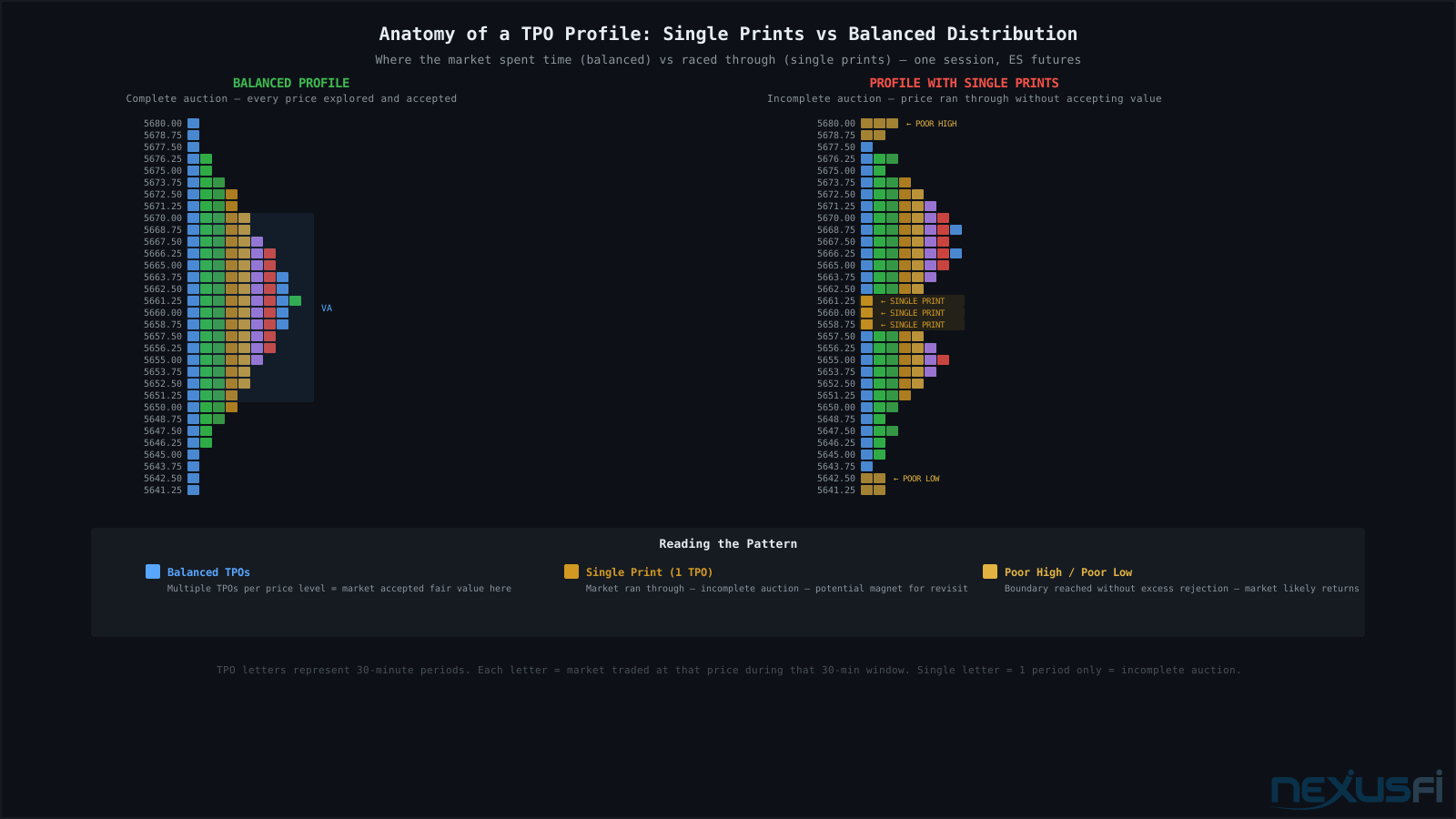
A single print is a price level where only one 30-minute period (one TPO letter) traded. In the TPO chart, it appears as an isolated letter — a single column of one character with no overlap from adjacent periods. The market visited that price level for exactly one 30-minute window, then moved on.
The reason matters: price moved through that level too fast for balanced two-sided trade to occur. One side — buyers in a rally, sellers in a decline — was so aggressively dominant that price ran through without pause. No deals were made at meaningful volume. The price level was visited but not accepted.
Single prints most commonly appear in two situations:
During breakouts from a balance area: When price escapes from a range it's been locked in for multiple sessions, it often does so with conviction — running through price levels in a single 30-minute period on its way to the next acceptance zone. The single prints mark the breakout trajectory.
At the extremes of a trending session: A strong directional day (a trend day in Market Profile terminology) will often have single prints throughout the middle of the day's range, reflecting the market's continuous push without pausing to balance.
What They Tell You About the Auction
Single prints indicate incomplete price discovery. The auction didn't finish at those prices — it moved through too quickly. This creates what traders call "unfinished business": a structural expectation that the market will eventually return to those levels to test whether value can be established there.
As @rahulgopi documented in NexusFi's Spoo-nalysis thread (the most-watched ES analysis thread on the site), single print zones appear clearly on the TPO chart as isolated rows — often color-coded differently — that sit apart from the main body of the distribution:
The directional qualifier matters.
The directional qualifier matters. Upside single prints (from a rally) suggest the market may pull back to visit those prices from above. Downside single prints (from a decline) suggest the market may bounce back up to revisit from below. The single print marks the price where demand and supply haven't been tested at all — just skipped over.
Single Prints vs. Price Gaps
Traders sometimes confuse single prints with gaps, but they're different. A price gap is an opening that skips price levels entirely between sessions. Single prints occur within a session — the price was actually traded, but only for one time period. Both represent incomplete auctions, but single prints have the advantage of being visible directly in the TPO profile.
Poor Highs and Poor Lows: Boundaries Without Conviction #
What They Are
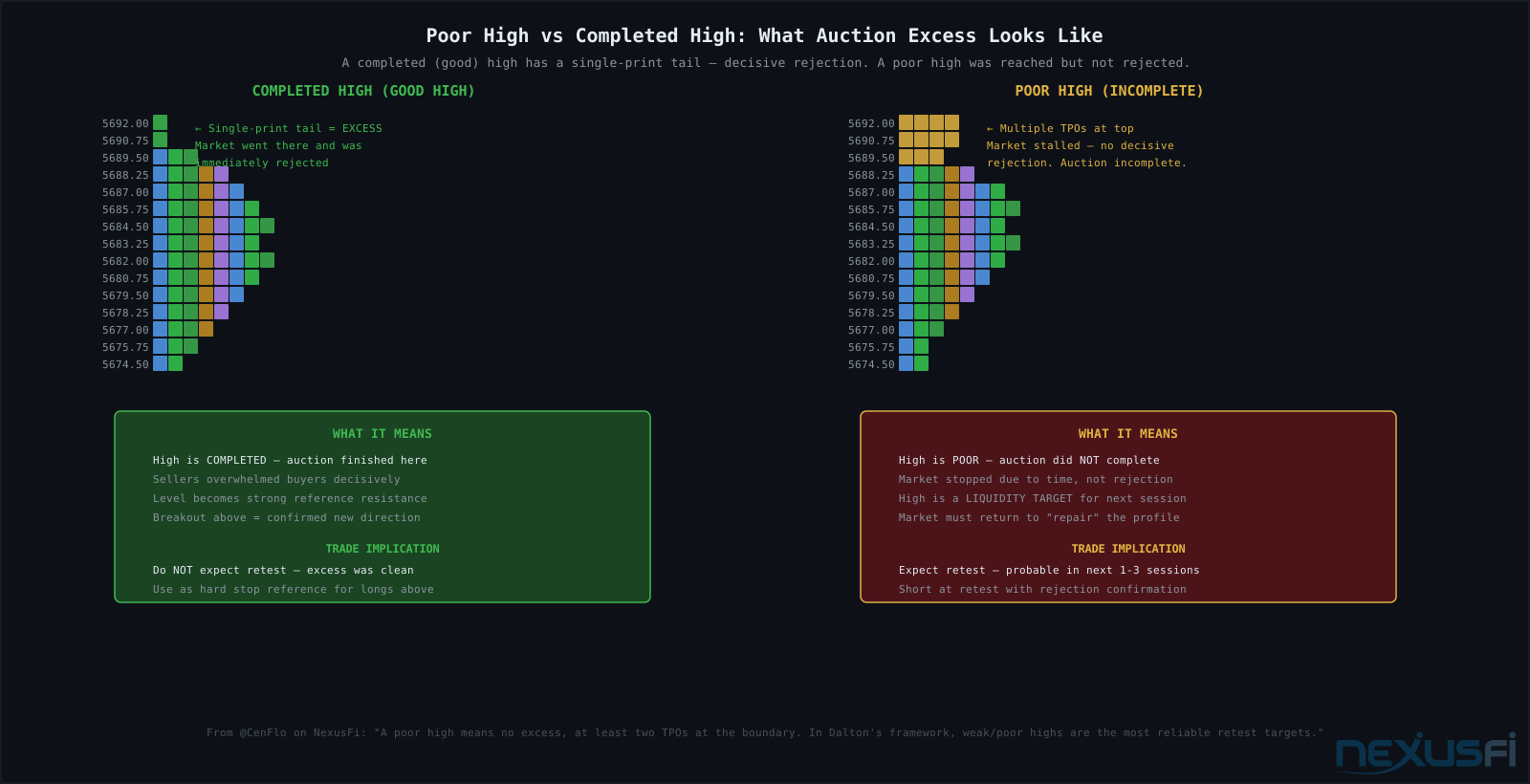
A poor high occurs when a session's highest price level has multiple TPO letters at the extreme — two, three, or more periods traded at the top of the range — but without the decisive single-print "tail" that marks genuine supply overwhelming demand. A poor low is the mirror image at the bottom.
This distinction is subtle but critical. A completed (good) high has a short single-print tail at the top: price spiked into that area, sellers immediately overwhelmed buyers, and the market got rejected decisively in a single 30-minute period. The single print at the high is actually a good sign — it means the auction was completed with conviction.
A poor high, by contrast, has multiple TPOs stacking up at the boundary. The market tried to push higher across two or three consecutive periods but never got convincingly rejected. Buyers kept coming back. The market stopped moving higher not because sellers overwhelmed it, but because time ran out — the session ended or the period closed without a decisive rejection.
@CenFlo, who studied directly under Jim Dalton (one of the primary architects of Market Profile theory), described it precisely in the Spoo-nalysis thread:
The key word is "excess." In Market Profile terminology, excess is the single-print tail that marks a completed auction — the market rejected the price with such force that only one period touched it. No excess means the market didn't reject the price; it just stopped going there for now.
Why They're Liquidity Targets
Poor highs and poor lows are among the most reliable retest setups in Market Profile trading. The logic is structural: if the market reached a price level multiple times in a single session without establishing conviction in either direction, the auction at that level is unresolved. The next session — or the one after that — will likely revisit it.
@josh captured this dynamic in the Spoo-nalysis thread after watching a poor high get retested and hold:
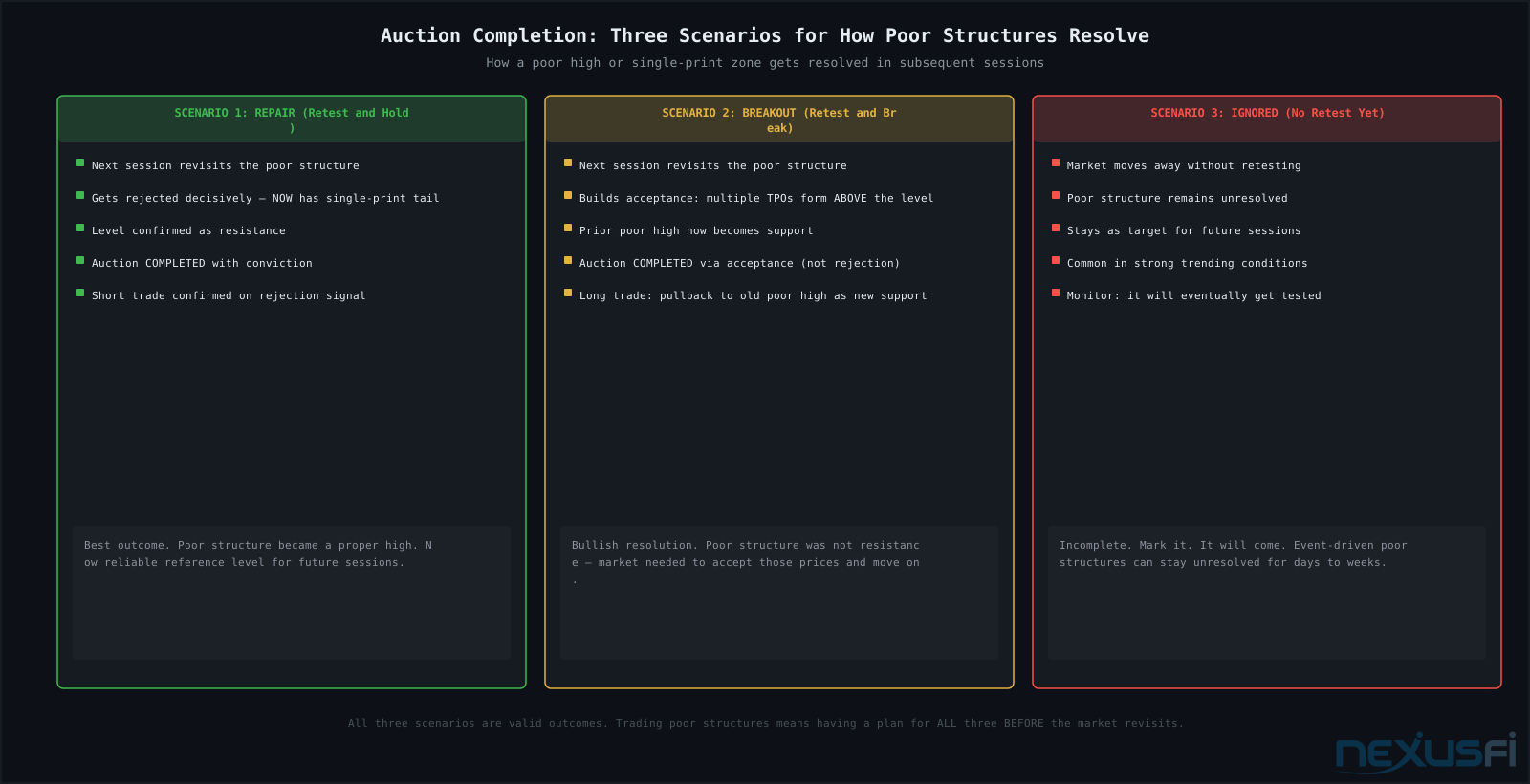
The behavior he's describing: the market comes back to a poor high, tests it, and then either (1) fails — confirming it as resistance and completing the auction with a rejection — or (2) breaks through — confirming that what looked like a high was actually just a pause before continuation. Either outcome resolves the incomplete auction. Before that resolution, the poor high sits as an open question in the profile.
From an institutional trading perspective, @tturner86 quoted FuturesTrader71's explanation on NexusFi:
Key Insight: Excess vs Poor Structure When the market demonstrates excess at a low, it signals strong conviction that participants determined value at those levels is too cheap — and they acted immediately. A poor low is the opposite: the market stopped falling, but nobody declared the bottom emphatically. — @tturner86 citing FuturesTrader71, NexusFi
In other words: a good (excess) low shows the market found definitive value above that price. A poor low shows the market merely stopped going down — there was no definitive "this is too cheap" signal. That ambiguity is what makes poor lows magnets for future tests.
Poor Highs/Lows vs. Weak Highs/Lows
Market Profile traders, especially those who follow Dalton's work, distinguish between poor and weak highs/lows. A weak high is one where the market didn't even explore the upper edge of the prior value area — it failed even to test the boundary. A poor high reached the boundary but lacked conviction at it. Both represent incomplete auctions, but poor highs are the more commonly cited setup because they involve an actual price exploration that wasn't resolved.
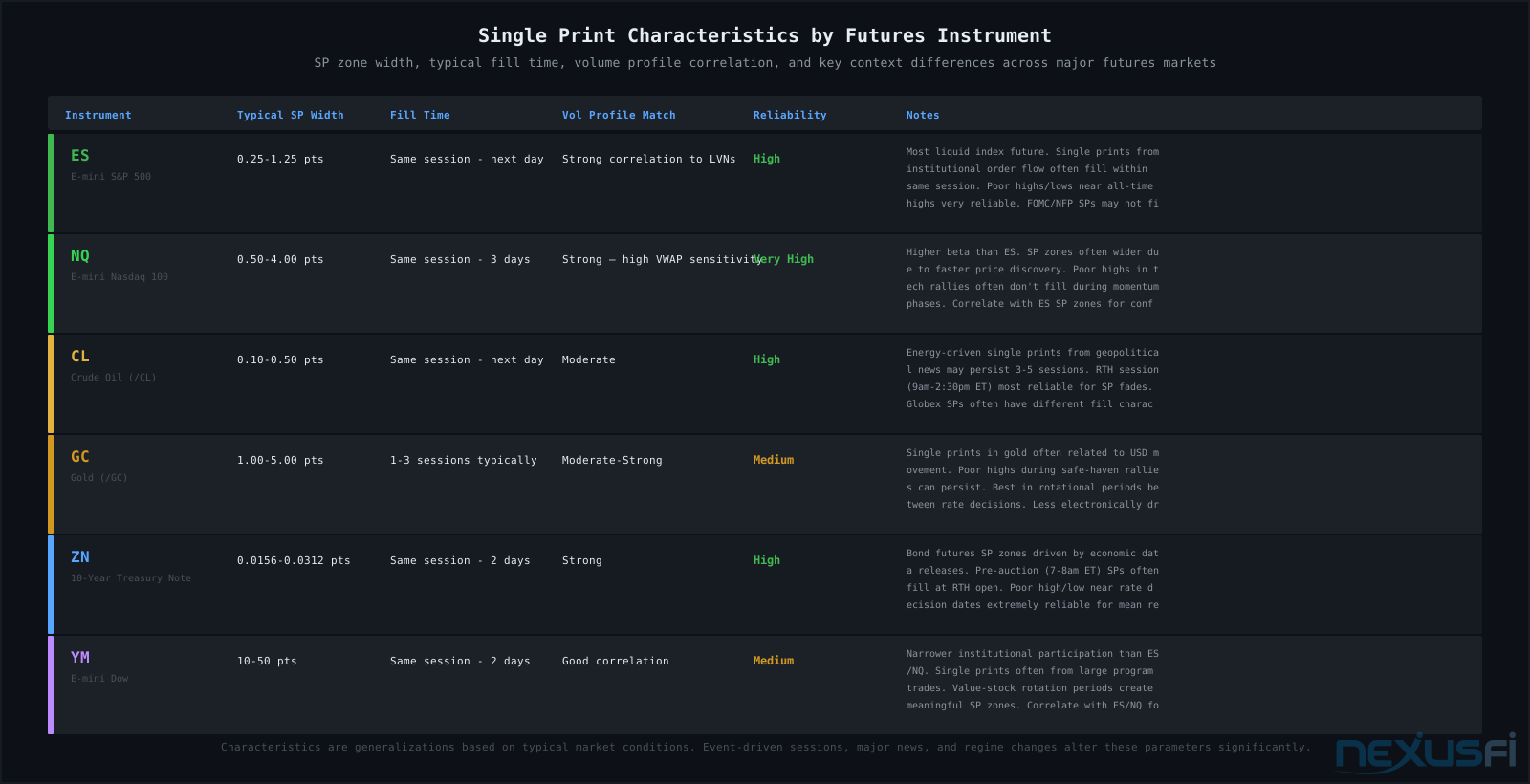
Identifying the Patterns on Your Chart #
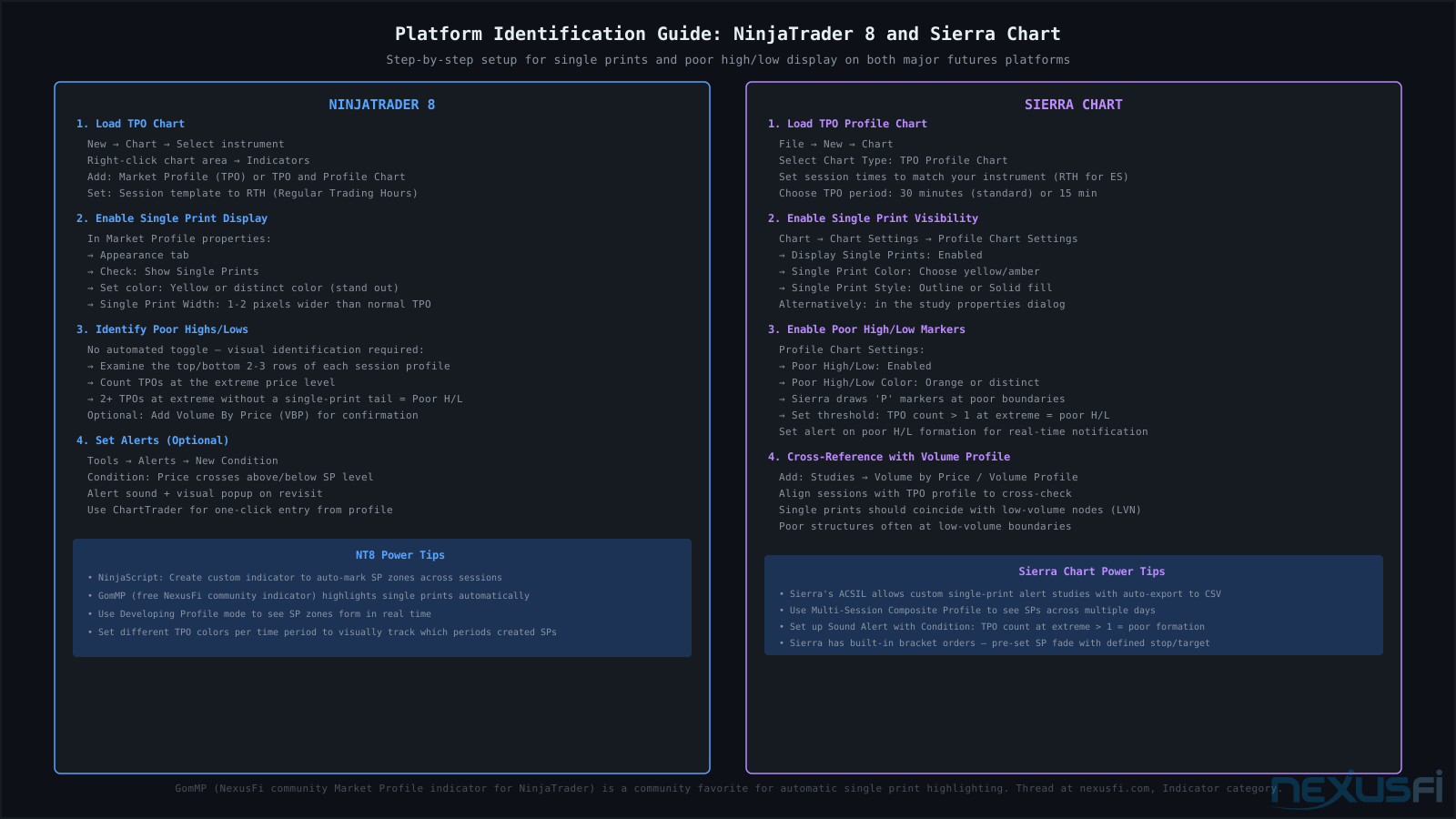
NinjaTrader 8
In NT8, load the Market Profile (TPO) indicator from the Studies menu. Under the Appearance tab, enable "Show Single Prints." These will render in a distinct color — set it to something that stands out from your normal TPO letters (yellow or amber works well against the typical blue/green TPO palette).
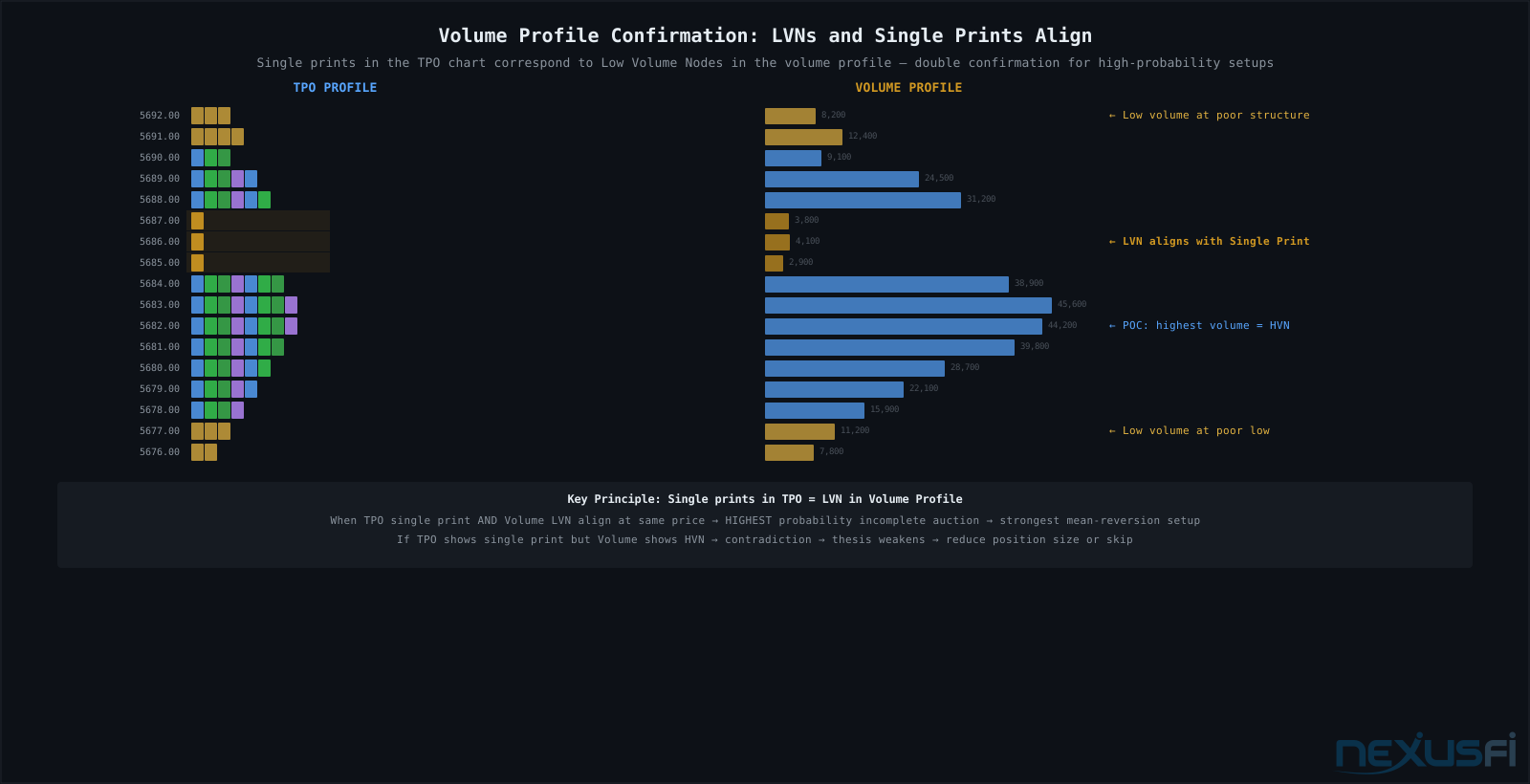
For poor highs and lows, NT8 doesn't have a single automated toggle. You identify them visually: look at the top and bottom rows of each session's profile. If the extreme price level shows 2+ TPO letters without a single-letter tail above it (for a high) or below it (for a low), you have a poor structure. Overlay a Volume by Price study to confirm — poor structures typically coincide with low-volume nodes at the boundary.
The NexusFi community's GomMP indicator (available free in the Indicators section of the forum) provides enhanced Market Profile visualization in NT8 with automatic single print highlighting. As @Silvester17 noted in the GomMP thread, the indicator handles the visual work of marking isolated TPO rows so you can focus on the trading decision rather than the chart reading.
Sierra Chart
Sierra Chart's TPO Profile Chart (File → New Chart → Chart Type: TPO Profile Chart) has built-in poor high/low detection. In Profile Chart Settings, enable "Display Single Prints" and set a distinct color. Enable "Poor High/Low" — Sierra draws "P" markers at qualifying extremes based on a configurable TPO count threshold.
Sierra's alert system allows you to trigger a sound or popup when a poor high/low forms in real time — useful for markets you're monitoring but not actively watching. The alert condition is: TPO count at session extreme exceeds your threshold (typically >1 TPO without a single-print tail).
Cross-reference with Sierra's Volume Profile pane. Single prints should coincide with Low Volume Nodes (LVNs) in the volume distribution. Poor highs/lows typically appear at the upper or lower edge of low-volume areas. This double confirmation — thin TPO structure plus thin volume — increases the reliability of the setup.
What to Look For in Real-Time
The most valuable application is watching poor structures develop in real time. As @mtzimmer1 observed in a late-session ES analysis:
An incomplete auction at the end of the session — poor high or poor low forming in the final 30-60 minutes of RTH — is one of the highest-probability next-session setups. The market closed without resolving the auction. Morning gap, globex action, or the next day's open will almost certainly test that level.
Trading the Patterns: A Complete Framework #
The Non-Negotiable Filter: Trend vs. Rotation
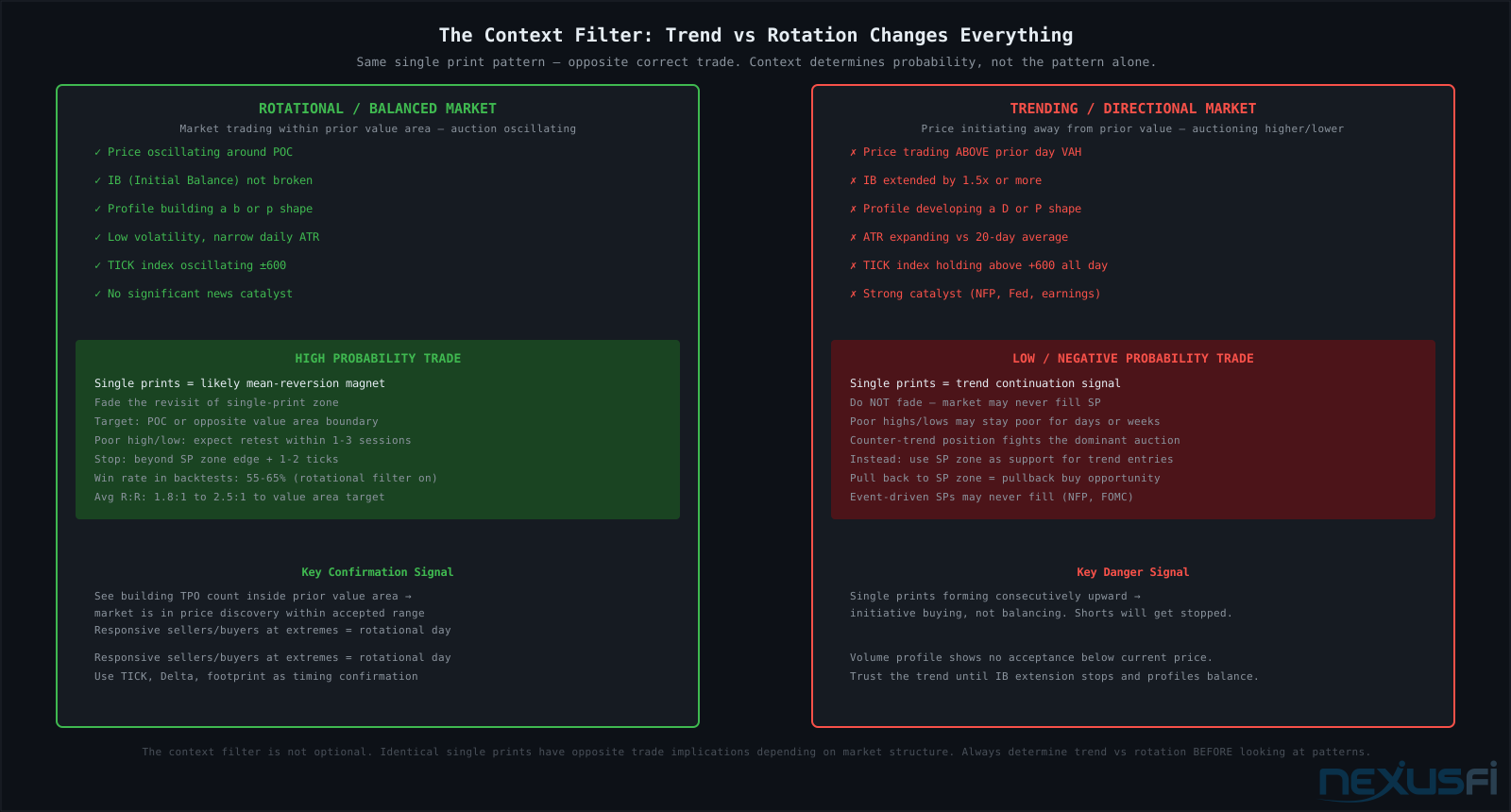
Before anything else — before entry, stop placement, or target selection — you must determine whether the market is trending or rotating. This single decision changes the correct interpretation of every single print and every poor structure on your chart.
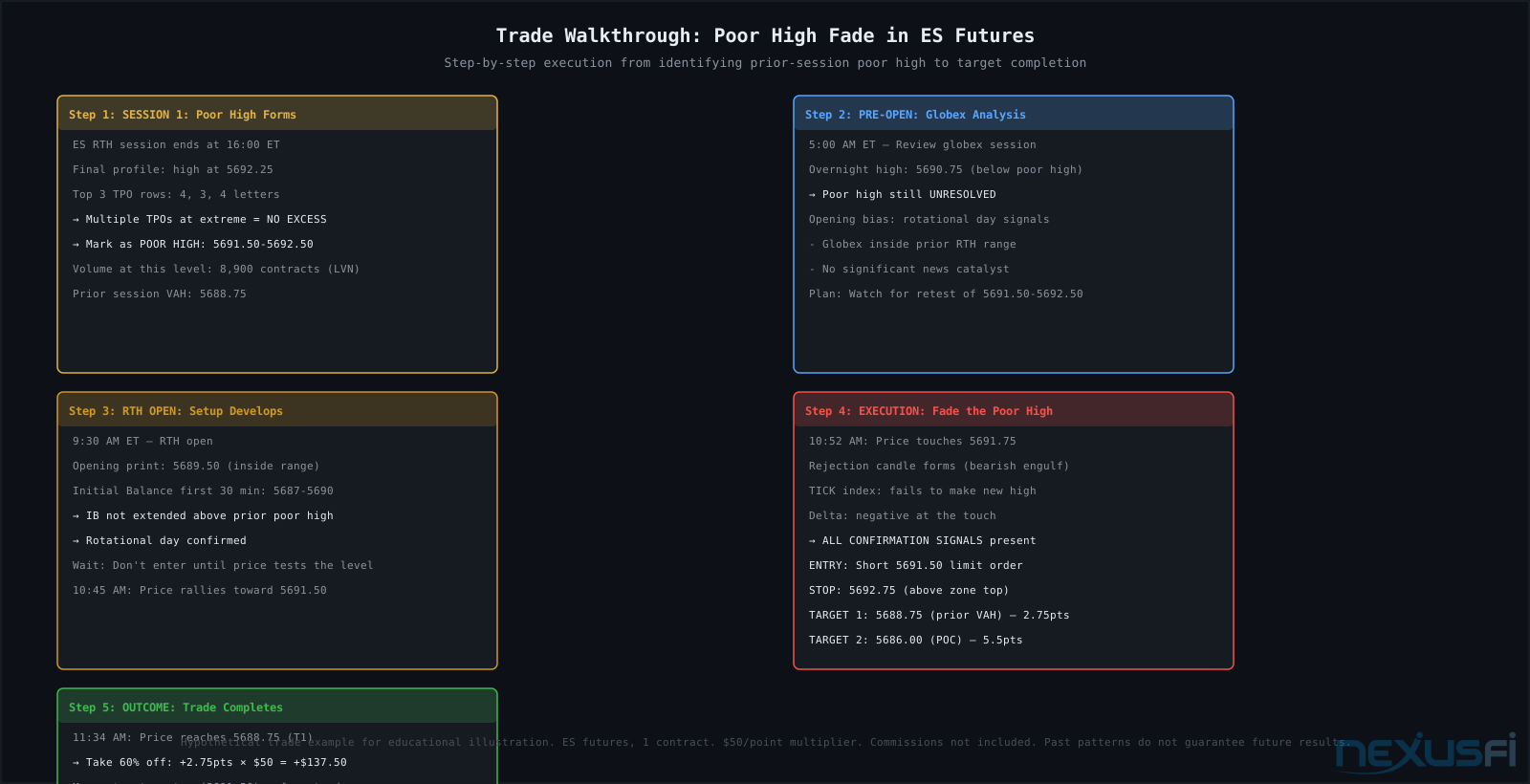
In a rotational market (price oscillating within or near the prior day's value area, IB not extended much, profile building a balanced shape), single prints and poor structures are high-probability mean-reversion setups. The market is searching for value within a defined range. When price revisits a single-print zone or tests a poor high/low, it's likely to reject and rotate back toward the value area center. These are the conditions where the "incomplete auction magnet" thesis has the highest probability.
In a trending market (price initiating away from prior value area, IB being extended, profile showing a D or skewed shape, strong news trigger driving the move), single prints may never fill — at least not quickly. In a trend day, the market creates single prints because it's deliberately auctioning away from prior value. Trading counter-trend to "fill the gap" is fighting the dominant auction. The correct trade in a trending market is to use single print zones as potential pullback support (in an uptrend) or resistance (in a downtrend) for continuation entries, not as fades.
@Mercury, in a dedicated NexusFi thread on failed auctions in Market Profile, emphasized this context dependency:
"I use Market Profile in my trading, I keep on exploring new concepts of MP. Got to know it..." -- @Mercury, NexusFi "Market Profile- Failed Auction" thread
The thread that followed went deep into exactly this distinction — that failed auctions (which include single prints and poor structures) behave differently depending on whether the market is in an exploratory (trending) or balancing (rotational) phase.
Entry Framework
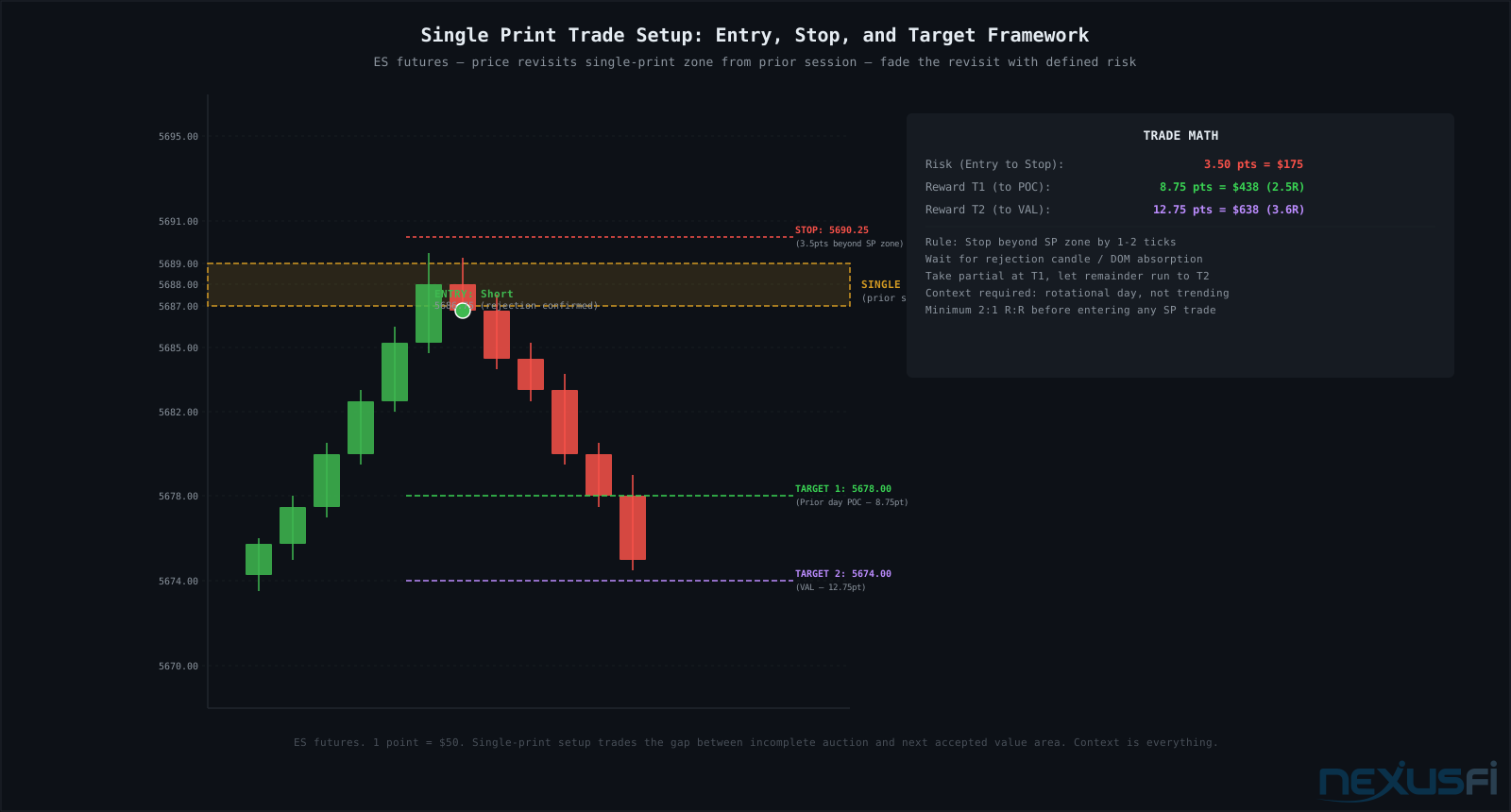
In a rotational context, here's how to structure an entry when price revisits a single-print zone or tests a poor high/low:
Step 1 — Identify the level. Mark the single print zone or poor structure from the prior session (or current session if developing in real time). Note the exact price range of the isolated TPO row(s) or the poor boundary.
Step 2 — Wait for price to come to you. Don't anticipate the revisit from a distance. Let price approach the zone. The setup only exists when price actually enters or touches the marked level.
Step 3 — Look for rejection confirmation. This is the most important step. Price entering a single-print zone or touching a poor high/low doesn't automatically mean the trade is on. You need confirmation that the auction is failing — that the market is being rejected rather than accepted at this level. Confirmation signals include:
- A reversal candle at the level (bearish engulfing, shooting star, pin bar for a fade from above; bullish equivalent for a fade from below)
- DOM absorption: the order book showing large bids appearing to absorb selling pressure (or large offers absorbing buying pressure)
- Delta divergence on a footprint chart: price moving into the zone but delta failing to follow
- TICK index failing to make a new high as price retests the zone (for shorts at single-print highs)
Step 4 — Enter on rejection confirmation. For a short at a single-print high or poor high: enter as the reversal candle closes, or on a break below the low of the reversal candle. For a long at a single-print low or poor low: enter on the bullish reversal candle.
Stop Placement
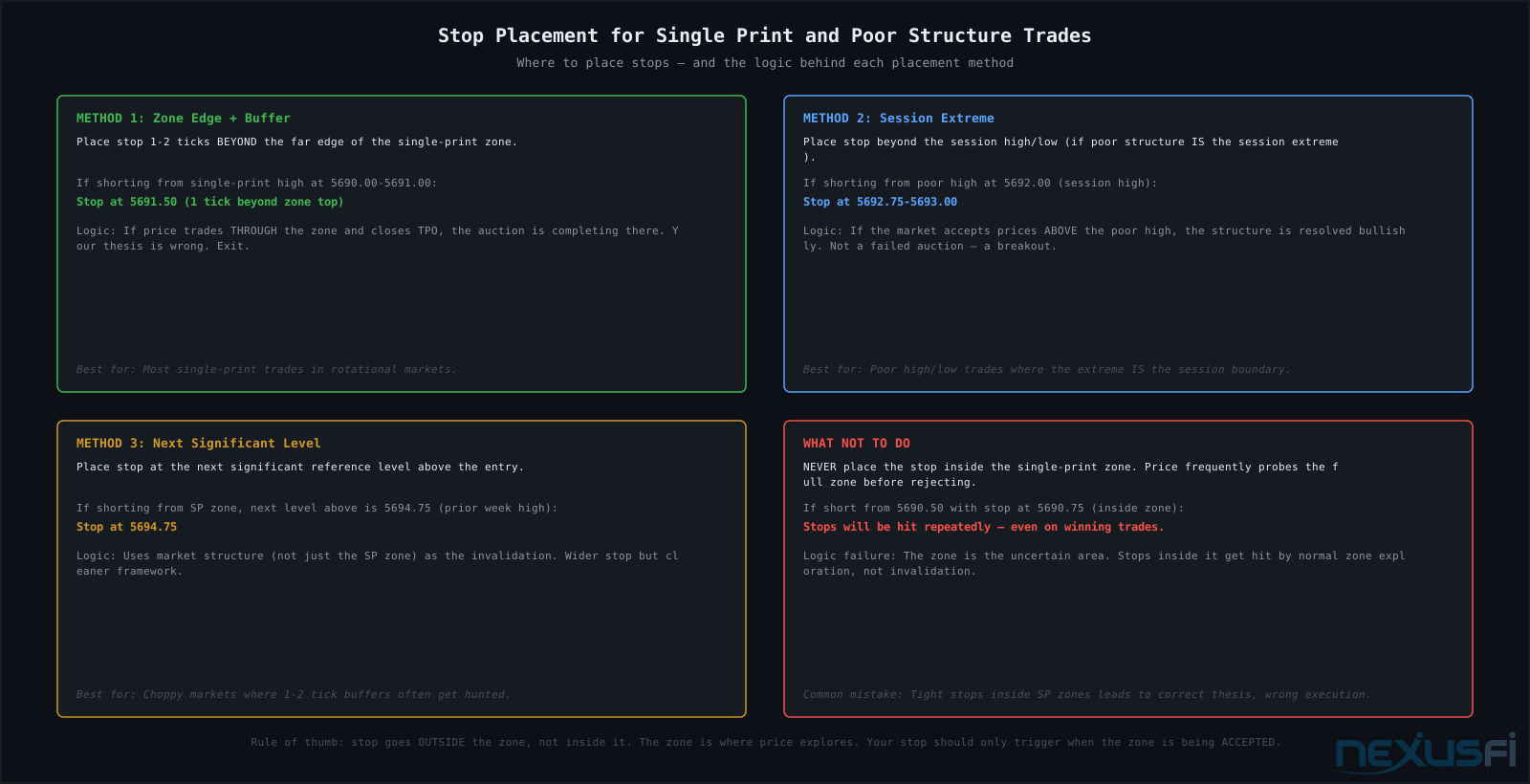
Place the stop beyond the far edge of the single-print zone — specifically, 1 to 2 ticks (0.25 to 0.50 points in ES) beyond the opposite side of the zone from your entry direction. For a short at a single-print high, the stop goes above the top of the single-print zone. For a long at a single-print low, the stop goes below the bottom of the zone.
The logic: if price trades beyond the far edge of the single-print zone and builds acceptance there (new TPOs form), the zone is no longer a single print — it's becoming a balanced level, and the fade thesis is invalidated. Your stop protects against that scenario.
For poor highs and poor lows, the stop typically goes 1-2 ticks beyond the actual poor extreme: above the poor high for shorts, below the poor low for longs.
Target Selection
The primary target for single-print and poor structure fades is the nearest value area boundary in the direction you're fading toward. For a short from a single-print high, the primary target is the Value Area High (VAH) of the current or prior session's profile. Secondary target is the Point of Control (POC) or Value Area Low (VAL).
The logic: price is leaving the incomplete auction zone and returning toward where the market previously established value. The value area boundaries are the most logical termination points for a mean-reversion move.
In practice, take partial profits (50-75% of position) at the first value area target and let the remainder run to the secondary target. This approach locks in a winning trade while maintaining exposure to the full move if the setup develops.
Multiple Single Prints: When the Entire Middle Is Thin
Sometimes a session creates single prints not just at an extreme but throughout the middle of the day's range — this happens during trend days or strong momentum sessions. In this case, the entire body of the profile is thin, and there's no clear "zone" to fade at. The correct response here is not to fight the move. Let the trending session develop. The single prints from that session become reference levels for the next day's mean-reversion opportunities once the trend stalls.
Real-World Considerations #
Event-Driven Single Prints Often Don't Fill Quickly
Single prints created by major data releases — NFP, FOMC, CPI — have different characteristics than those from technically-driven moves. The momentum from a major trigger can sustain for hours or days, leaving single prints that persist unfilled for multiple sessions. Trading the mean-reversion thesis on event-driven single prints requires extra caution and typically a longer time horizon than the intraday framework described above.
Time Horizon Matters
In the @snax ES/CL trading journal on NexusFi, the author describes watching a Market Profile develop across the day and noting when single print zones from early in the session get revisited later:
"...price auctioned around the lower value area established later in the trading session. This market-profile has a pretty neat shape, I think the theme this week is a hotly-contested..." -- @snax, NexusFi
The key phrase: "auctioned around the lower value area established later in the trading session." Value areas establish and shift throughout the day. Single prints from the morning session may get filled by midday if it's a rotational day. Single prints from the final hour of the session carry over to the next day. Understanding this time dimension — when the single print was created and how much time the market has had to revisit it — is part of the context filter.
The "Repair" Frame
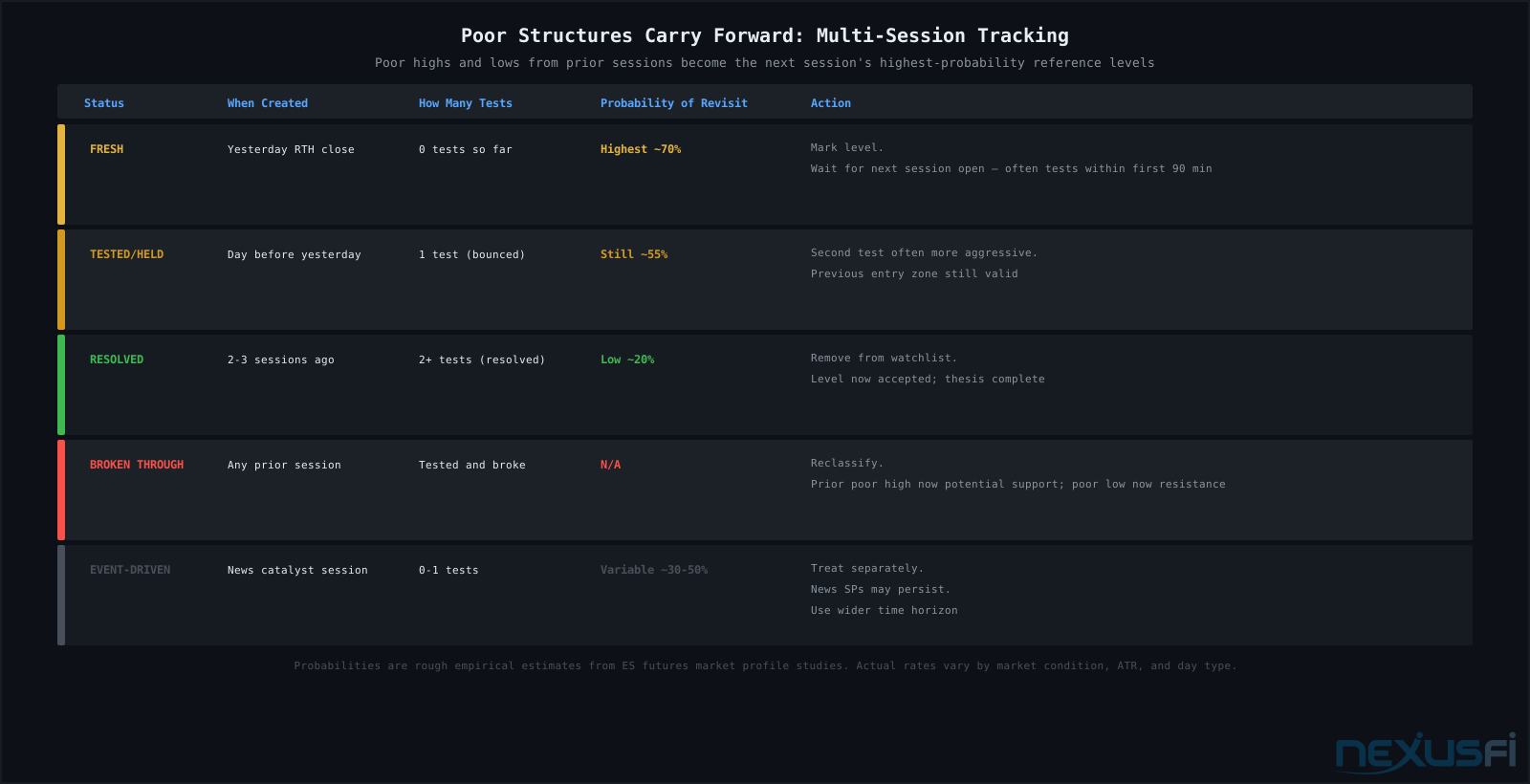
One useful mental model for poor highs and poor lows: the market is "repairing" the profile when it returns to test these levels. A repaired poor high is one where price comes back, trades at the boundary, builds acceptance or gets rejected decisively, and the auction at that level is resolved. An unrepaired poor high is still a live target.
You can track this in real time. If the market opens above a prior session's poor high and builds new TPOs there — if multiple letters stack up at and above the old boundary — the poor high is being resolved into a new acceptance zone. The retest setup is over; a new value area is forming. If price touches the poor high and immediately reverses with single prints pointing away, the auction is being completed with conviction — the "good high" is now forming.
Higher Timeframe Context Matters
An intraday poor low fighting a weekly uptrend has different probability than the same pattern with the weekly structure confirming downside. The patterns described here work most reliably when intraday structure aligns with higher timeframe context. If the daily profile shows multiple poor highs forming in a trending market, those levels are likely to be tested and broken rather than held — they mark the edge of a range that's in the process of being left behind.
Integration With Other Market Profile Concepts #
Single prints, poor highs, and poor lows don't exist in isolation. They're most powerful when integrated with the full Market Profile framework:
Initial Balance: An IB that gets extended by initiative buying often creates single prints in the extension zone above the IB high. These single prints are typically NOT fade setups — they're signs of a directional day developing. But if the IB extension reverses and price comes back inside the IB, those extension single prints become reference levels for potential fade setups in subsequent sessions. See the Academy article on Initial Balance: The First Hour That Defines Your Entire Trading Day for the full IB framework.
Value Area: Single prints at the edge of a value area are especially significant — they often mark the exact point where initiative activity (moving away from value) ended and responsive activity (returning to value) began. The Value Area itself is defined by the 70% rule, but the single prints at its edges add precision to the boundaries. See Value Area: Where the Market Accepts Price and How to Trade Around It.
Naked VPOC: A session's Point of Control that has never been revisited ("naked" VPOC) is a close cousin to single prints — it's a price where maximum volume occurred in one session but hasn't been tested since. These naked VPOCs often sit adjacent to single print zones and add confirmation to the mean-reversion thesis. See Naked VPOC: How Unfilled Point of Control Levels Magnetize Price.
Volume Profile: The volume profile almost always confirms single-print zones as Low Volume Nodes (LVNs). LVNs are price levels with thin volume — the market moved through quickly without significant transaction volume. When your TPO profile shows single prints and your volume profile shows an LVN at the same location, the incomplete auction thesis becomes much stronger. See Volume Profile: Reading the Market's Structural Blueprint at Every Price Level.
Footprint Charts / Delta: The footprint chart shows you the order flow within each TPO bar — exactly how much buying and selling occurred at each price. A single-print zone on the TPO chart should show very low volume on the footprint and often a delta imbalance (one side overwhelmed the other). This micro-level confirmation can improve entry timing much. See Footprint Charts: Reading the Bid-Ask Volume Inside Every Price Bar.
Common Mistakes #
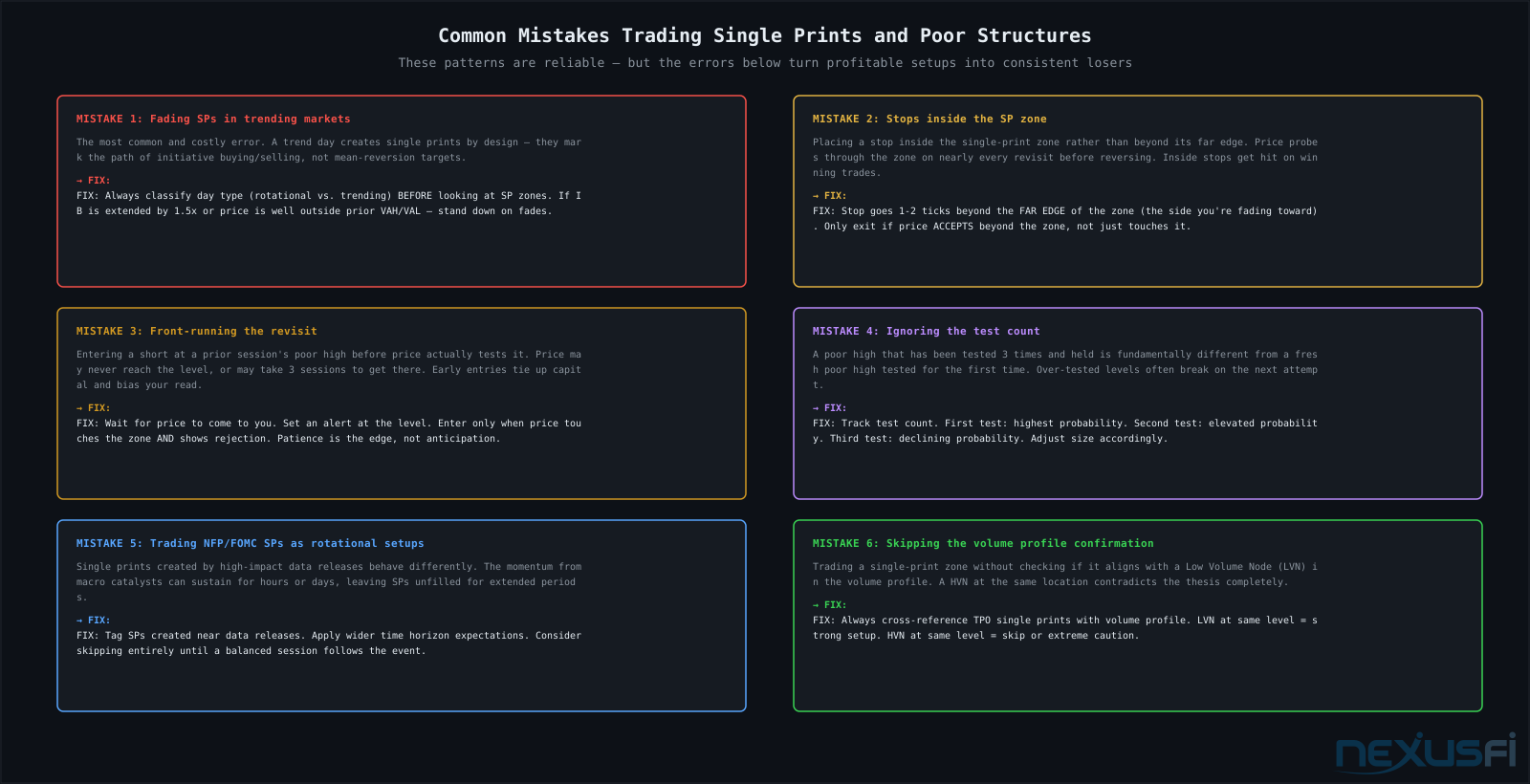
The Non-Negotiable: Context Before Pattern The biggest single-print mistake is treating it as a mechanical signal. Pattern alone = 50/50. Pattern with rotational context + volume confirmation + rejection signal = genuine edge. Apply ALL filters, every time.
Trading every single print in a trending market. This is the most common error. Trend days create single prints by design — they're not fade setups, they're trend continuation signals. The context filter (rotational vs. trending) must be applied before every setup.
Not waiting for rejection confirmation. Entering as soon as price touches a single-print zone or poor high/low without waiting for rejection confirmation leads to getting run over by continuation moves. The pattern only works when the market shows it's being rejected at the level, not just touching it.
Setting stops inside the single-print zone. A stop placed inside the single-print zone (rather than beyond its far edge) gets hit by the normal testing behavior — price often probes slightly through the zone before reversing. The stop belongs beyond the zone, not inside it.
Assuming all single prints will fill. Some single prints, especially those created by major news events or during strong trending conditions, persist for sessions or weeks without being filled. The mean-reversion thesis is probabilistic, not guaranteed. Manage positions so.
Ignoring multi-day structure. A poor low from three sessions ago that has already been tested and held twice is a much more significant level than a fresh poor low from yesterday's session. Context and prior test history matter.
Practical Checklist Before Trading These Patterns #
Before taking a single print or poor structure trade, run through this framework:
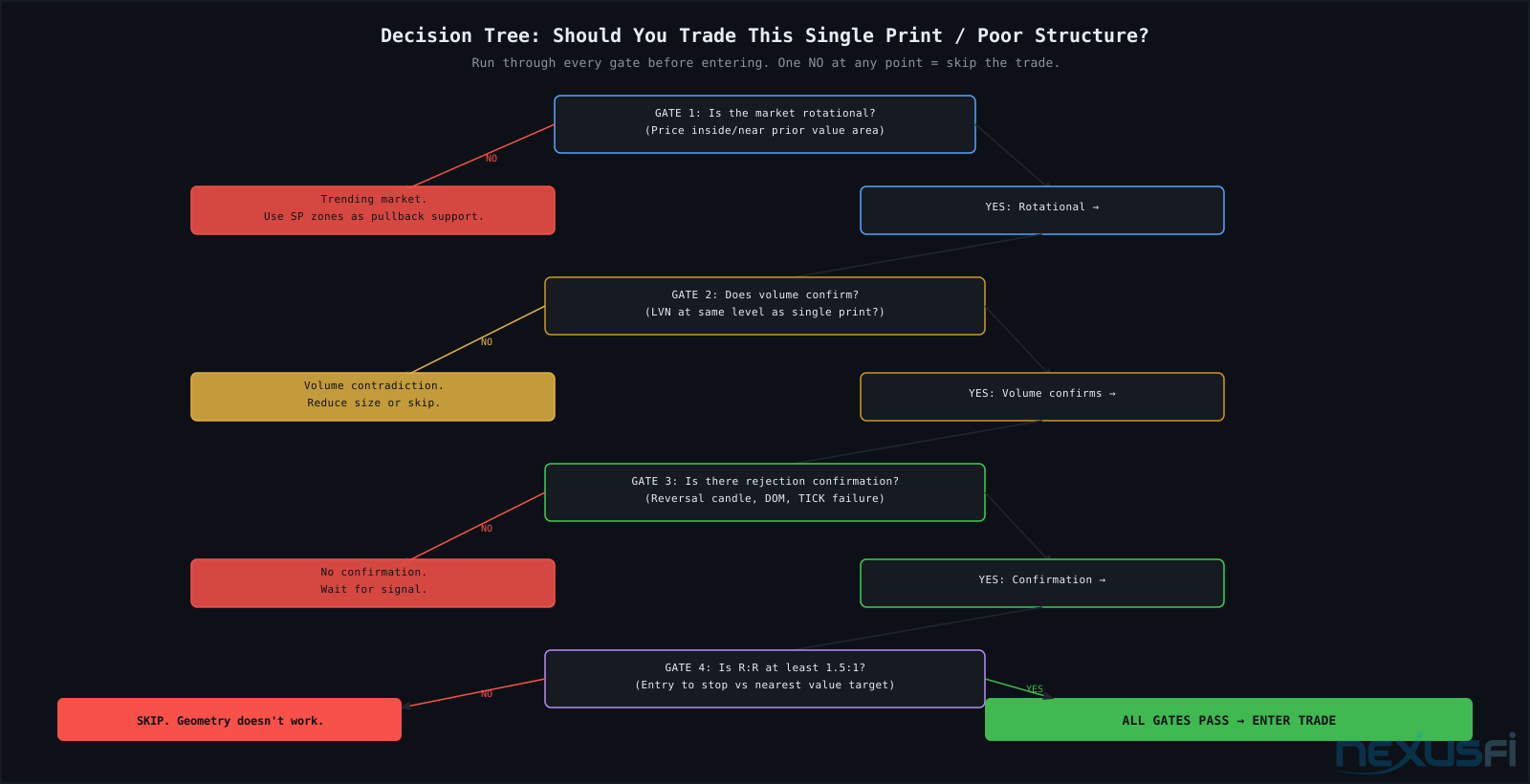
Before You Trade: The Four-Gate Framework Every single-print and poor-structure trade must pass four gates. One NO at any gate = skip the trade entirely. The framework exists because each gate catches a specific failure mode that burns traders repeatedly.
1. Is the market rotational or trending?
Rotational: price within or near prior value area, balanced profile shape, normal ATR. → Proceed.
Trending: price initiating away from prior value, extended IB, directional profile. → Do not fade. Reassess.
2. Is this a fresh structure or has it been tested before?
First test of a single-print zone or poor structure from prior session. → Highest probability.
Second test. → Probability still elevated if prior test held.
Third+ test. → Zone weakening; increasing probability of breakthrough rather than rejection.
3. Does volume profile confirm?
Single-print zone coincides with LVN on volume profile. → Confirmation.
Volume profile shows High Volume Node at the single-print zone. → Contradicts the thesis — reconsider.
4. Is there a rejection signal?
Reversal candle, DOM absorption, delta divergence, TICK failure at the zone. → Enter.
Price drifting through without reversal signal. → Wait; market may be accepting the zone.
5. Is the R:R favorable?
Risk (entry to stop) vs. reward (first value area target) should be at minimum 1.5:1, preferably 2:1 or better. If the geometry doesn't work — if the value area target is too close to justify the stop size — pass on the trade.
Bottom Line #
Single prints, poor highs, and poor lows are the market's IOU notes — places where the auction process started but didn't finish. The market creates them when it moves too fast (single prints) or reaches a boundary without conviction (poor highs/lows). In rotational conditions, these levels are reliable magnets that price returns to before the next directional move can sustain.
The patterns are simple to identify on any Market Profile platform. The trading framework is mechanical — defined entry triggers, stops beyond the zone, targets at value area boundaries. The non-negotiable requirement is context: you must determine whether the market is balancing or trending before applying the fade thesis. In a trend, single prints are continuation signals, not reversal setups. That distinction — made before looking at any pattern — is the difference between a profitable framework and a collection of losses.
Start by marking these levels from the prior session each morning. Over time, watching how they behave — whether price fills them, rejects from them, or simply ignores them — builds an intuition for what kind of market you're in and when these patterns carry the most weight.
Knowledge Map
Go Deeper
Build on this knowledgeCitations
- — Spoo-nalysis ES e-mini futures S&P 500 (2016) 👍 4“In the MP training that I did with Dalton, there are poor / good highs (and lows) and weak highs / lows. A poor high means no excess, at least two TPOs at the boundary.”
- — Spoo-nalysis ES e-mini futures S&P 500 (2014) 👍 22“This week during regular hours, ES has traded 124K contracts in the bottom 3 handles of its range. In the top 3 handles, it has traded 793K, 5X as much.”
- — Spoo-nalysis ES e-mini futures S&P 500 (2014) 👍 7“If a poor high is tested and fails, I will have much more confidence that now it has been properly auctioned. If a good high is even briefly tested...”
- — Spoo-nalysis ES e-mini futures S&P 500 (2014) 👍 6“From @FuturesTrader71 website: It is easiest to illustrate what a weak or poor low by discussing what a strong or excess low is. When the market demonstrates excess at a low, it signals a strong conviction that market participants have determined value at those levels is too cheap.”
- — Spoo-nalysis ES e-mini futures S&P 500 (2016) 👍 5“These are single print zones from market profile. Red: downside single print zones inside body. Green: upside single print zones inside.”
- — Market Profile- Failed Auction (2011) 👍 9“Here I want to discuss Failed Auction concept. I use Market Profile in my Trading, I keep on exploring new concepts of MP.”
- — Spoo-nalysis ES e-mini futures S&P 500 (2020) 👍 4“Up until 15:49PM EST the RTH Session auction was very incomplete. At 15:50 we saw a quick rally (short squeeze?) on elevated volume accompanied by...”
- — Snax's /ES & /CL Trading Journal (2019) 👍 4“...price auctioned around the lower value area established later in the trading session. This market-profile has a pretty neat shape, I think the theme this week is a hotly-contested...”
- — Following Market Profile Behind Jim Dalton (2017) 👍 5“Hi Everyone, I'm new to the community and trading in general but I have taken 2 intensives with Jim Dalton and thought I could share what I think I...”
- — Mind Over Markets: Power Trading with Market Generated Information -- Jim Dalton, Dalton Capital Management (2013)