



Automated Trading and Expert Advisor Rules in Prop Firm Evaluations: What Gets You Funded and What Gets You Terminated
Overview #
Automated trading in prop firm evaluations is a different animal than running an EA on your personal account. On your own account, nobody cares if your bot fires off 200 trades in a session or holds positions for three seconds. In a funded evaluation, every trade you take — and how your algorithm takes it — gets scrutinized against a rulebook that was written primarily with discretionary traders in mind.
In a funded evaluation, every trade you take -- and how your algorithm takes it -- gets scrutinized against a rulebook that was written primarily with discretionary traders in mind.
The core tension: prop firms want traders who demonstrate skill and consistency. Automated systems can do both, but they can also exploit structural edges — latency advantages, tick-level scalping, cross-account hedging — that prop firms explicitly prohibit. The line between "legitimate automation" and "prohibited strategy" isn't always obvious, and crossing it means instant account termination. No warning. No refund.
Here's the good news: most major prop firms do allow automated trading. The bad news? Each firm draws the boundaries differently, the rules aren't always clearly documented, and your EA might violate a policy you didn't know existed. This article maps out the entire environment — what's allowed, what's banned, how automated strategies interact with drawdown rules and consistency requirements, and how to structure your algo for evaluation success.
Key Concepts #
Expert Advisor (EA): A program that executes trades automatically based on coded logic. Originally a MetaTrader term (MQL4/MQL5), now used generically across platforms. On NinjaTrader, the equivalent is a NinjaScript automated strategy. Same concept, different implementation.
Algorithmic Trading (Algo): Any strategy where trade decisions — entry, exit, position sizing, or all three — are determined by a computer program rather than human discretion. Ranges from simple moving average crossovers to complex machine learning models.
Semi-Automated Trading: The strategy generates signals, but a human confirms each trade before execution. Many prop firms treat this identically to manual trading. Tools like NinjaTrader's ATM (Advanced Trade Management) strategies fall in this category — the entry is manual, but stop-loss, profit target, and trail management are automated. As discussed on NexusFi, whether a firm considers ATM-style automation "manual" or "automated" varies by firm. Always verify before deploying.
High-Frequency Trading (HFT): Strategies that execute large numbers of trades at extremely high speed, typically holding positions for milliseconds to seconds. Universally banned by prop firms. The infrastructure requirements alone (co-location, direct market access, custom hardware) make this impractical in a retail prop firm evaluation anyway.
Tick Scalping: Targeting 1-2 tick profits per trade with rapid entry and exit cycles. Most firms prohibit this because it exploits the simulated execution environment rather than demonstrating genuine market skill. An EA averaging 1.5-tick targets across 50+ daily trades is a textbook policy violation.
Latency Arbitrage: Exploiting price feed delays between the firm's data and actual exchange prices. Absolutely prohibited everywhere. Firms actively monitor for this pattern and terminate accounts immediately upon detection.
Strategy Switching Rule: Some firms require that the strategy you use to pass the evaluation is the same strategy you use on the funded account. If you pass using an EA, you must continue using that EA. Switching from automated to manual (or vice versa) after funding violates this rule.
Hyperactivity Rule: Limits on daily trade count or server message volume. Some firms cap trades at 200 per day or server requests at 2,000 per day to prevent system abuse and ensure their infrastructure isn't overwhelmed by aggressive algorithms.
How Prop Firms Classify Automated Strategies #
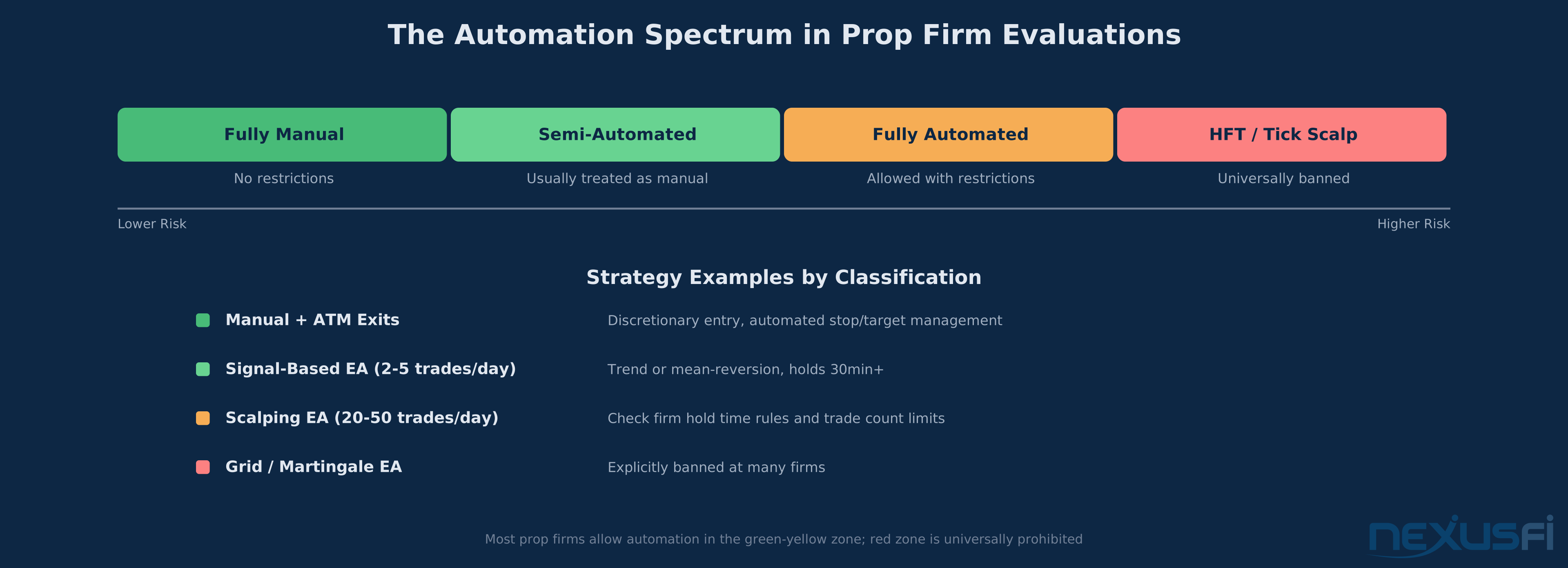
Not all automation is created equal in the eyes of prop firms. Understanding the classification spectrum helps you position your strategy correctly.
The Automation Spectrum
At one end: fully manual trading. Every entry, exit, and adjustment is a deliberate human action. No firm restricts this.
Next: semi-automated with manual execution. Your algorithm identifies setups and alerts you. You pull the trigger. ATM strategies handle exits. Most firms treat this as manual trading.
Then: fully automated with human oversight. The EA places and manages trades autonomously, but you monitor and can override. This is where most prop firm EA traders operate. Allowed by most firms with restrictions.
Finally: fully autonomous high-frequency. The algorithm runs independently, executing dozens or hundreds of trades per session at high speed. This is where firms draw the hardest line. Prohibited nearly everywhere.
The critical distinction isn't whether a computer places the trade — it's the nature of the strategy the computer executes. A trend-following EA that takes 2-5 trades per day and holds for hours? Welcome aboard. A scalping bot that fires 100 round-trips targeting single-tick profits? Account terminated.
Common Restrictions on Automated Trading #
Universal Prohibitions
These restrictions apply at virtually every prop firm, regardless of whether they explicitly mention automated trading in their rules:
HFT and Ultra-High-Speed Execution: Strategies executing dozens of trades per minute or holding positions for seconds are flagged automatically. Firms monitor execution speed, average hold time, and trade frequency. Even if your EA is technically profitable, patterns that look like HFT trigger immediate investigation.
Latency Arbitrage: Any strategy that profits from price feed delays. This includes exploiting slow quote updates during high-volatility news events. The detection systems are sophisticated — firms compare your entry timing against exchange timestamps to identify systematic latency exploitation.
Tick Scalping: Targeting minimal price movements (1-3 ticks) with rapid turnover. The threshold varies by firm, but a pattern of sub-30-second hold times combined with minimal profit targets is a consistent red flag.
Cross-Account Hedging: Running opposite positions across multiple evaluation accounts (even at different firms) to guarantee one passes. Firms share data and coordinate detection. If your EA runs on multiple accounts simultaneously, ensure the strategies aren't correlated in ways that look like hedging.
Firm-Specific Restrictions
Beyond universal bans, individual firms impose additional constraints that directly affect automated strategies:
Minimum Hold Time Requirements: Some firms require positions to be held for a minimum duration — commonly 30 seconds to 2 minutes. This directly impacts scalping EAs. If your algorithm's average hold time is under the minimum, every sub-threshold trade counts as a violation, even if some trades are held longer. Build minimum hold time logic directly into your EA.
Maximum Daily Trade Count: Caps ranging from 50 to 200+ trades per day. For a swing trading EA taking 3 trades daily, this is irrelevant. For a scalping bot, it's the binding constraint. Calculate your EA's average daily trade frequency in backtesting and add a 50% buffer — live conditions often generate more signals than historical data suggests.
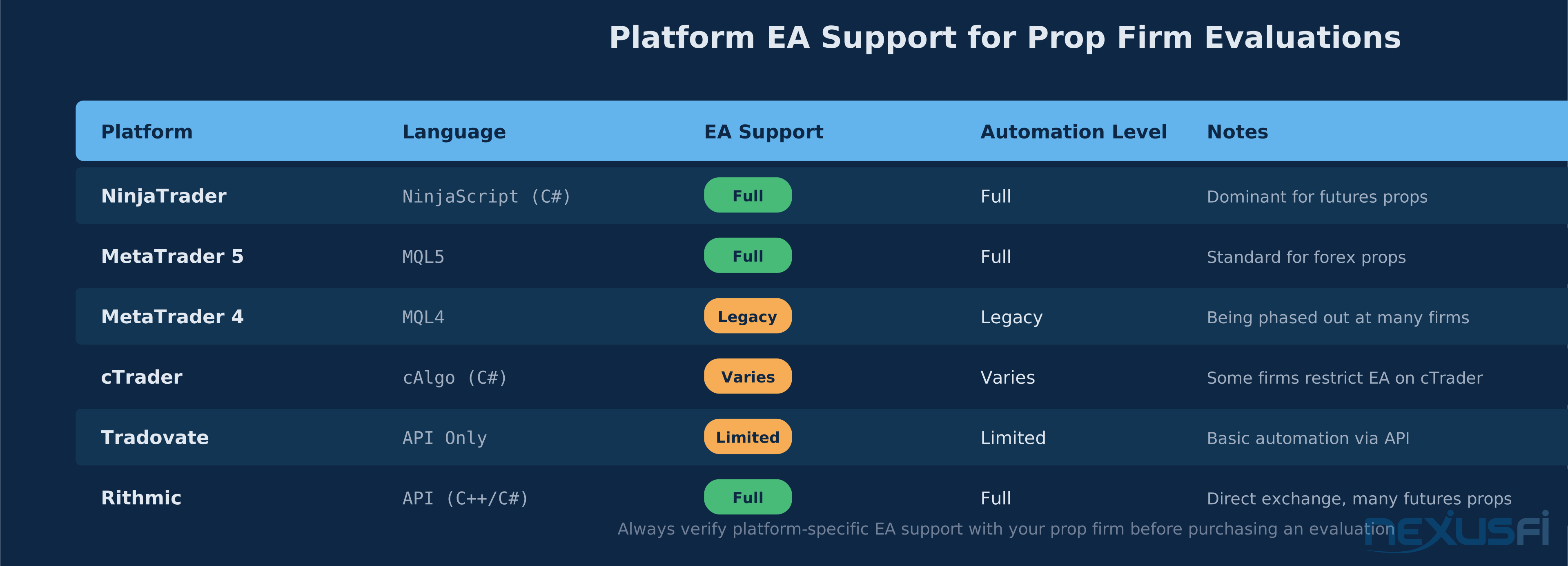
Platform Restrictions: Not all platforms at a given firm support automation equally. Some firms allow EAs on MetaTrader 4/5 but restrict automation on cTrader or proprietary platforms. For futures-focused firms, NinjaTrader NinjaScript strategies are the standard automation framework. Verify platform-specific EA compatibility before purchasing an evaluation — discovering your platform doesn't support your EA after paying is an expensive lesson.
News Trading Restrictions: Many firms restrict trading around major economic releases (FOMC, NFP, CPI). For manual traders, this means stepping away from the screen. For EAs, this means your code must include a news filter that flattens positions and stops entering new trades during blackout windows — typically 2-5 minutes before and after the release. An EA that doesn't respect news blackouts will violate policy even if the trades are profitable. See the News Trading Restrictions in Prop Firms article for the complete framework.
How EA Rules Interact with Other Prop Firm Constraints #
Automated trading doesn't exist in isolation. Your EA must work through the same constraint matrix as any manual trader — drawdown limits, consistency rules, daily loss limits — plus the automation-specific restrictions above. The interactions create complications that manual traders never face.
Consistency Rules and Algorithmic Trading
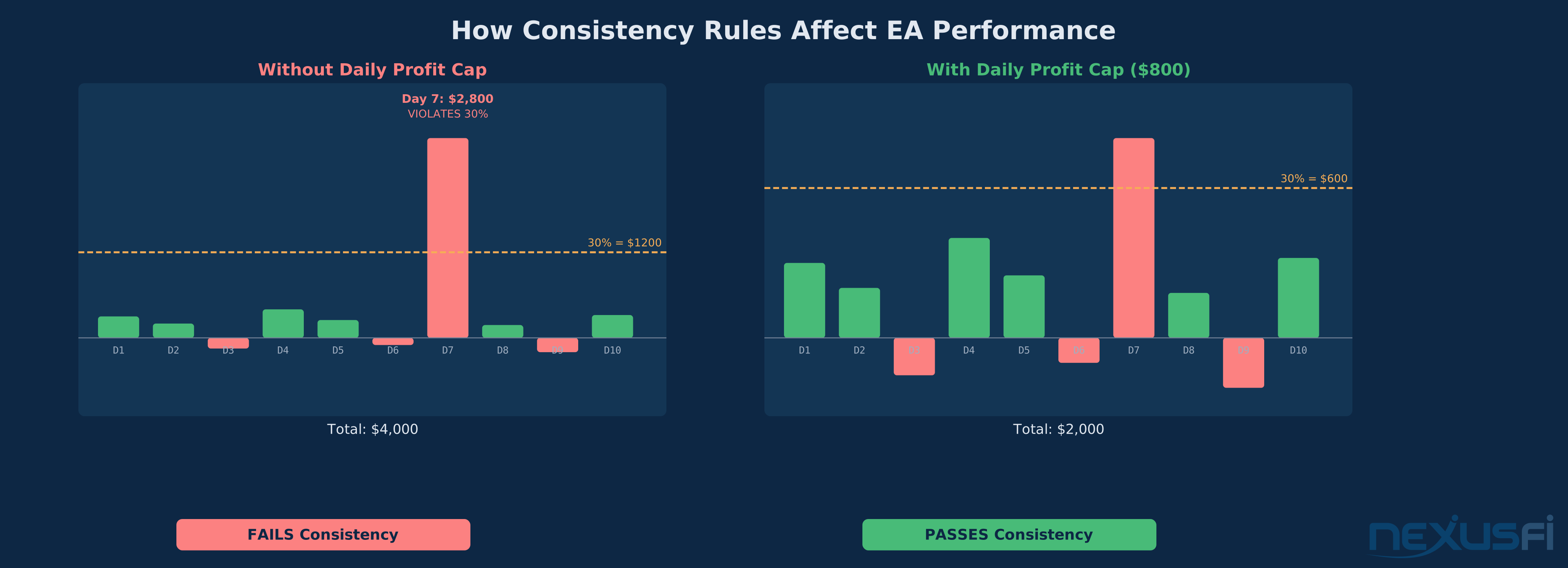
Consistency rules require that no single trading day accounts for more than a specified percentage (typically 30-40%) of your total profit. For manual traders, this means avoiding one massive winning day followed by grinding. For EAs, the implication is subtler and more dangerous.
A well-designed EA will naturally produce consistent results — that's the whole point of systematic trading. But algorithmic strategies often have streaky distributions. A mean-reversion EA might produce 10 small winners, then catch one enormous move that doubles the total P&L in a single session. That one outlier day can violate consistency rules even though the strategy is at the core consistent.
The fix: implement a daily profit cap in your EA logic. When unrealized + realized P&L hits a threshold (calibrated to stay within consistency limits), the EA stops trading for the day. This leaves money on the table occasionally but keeps you compliant. See Consistency Rules in Funded Trading for the full mechanics.
Drawdown and Daily Loss Limits
EAs must enforce prop firm risk rules internally, not just rely on the firm's risk management system to stop you out. Why? Because the firm's system terminates your account. Your EA's internal risk management preserves it.
Critical implementation details:
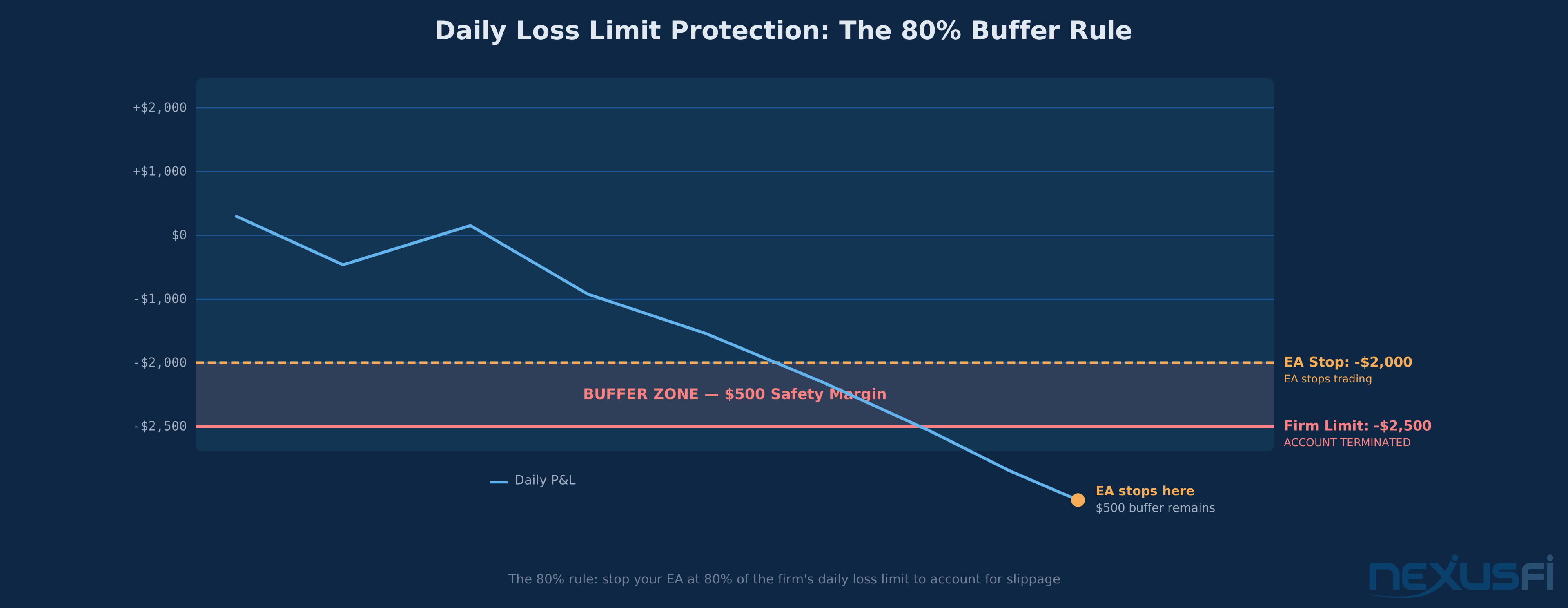
Daily loss limit protection: Your EA must track cumulative daily P&L (including unrealized losses on open positions) and stop trading before hitting the daily limit. Build in a buffer — if the daily loss limit is $2,500, configure your EA to stop at $2,000. The buffer accounts for slippage, delayed fills, and the gap between your EA's internal accounting and the firm's official calculation.
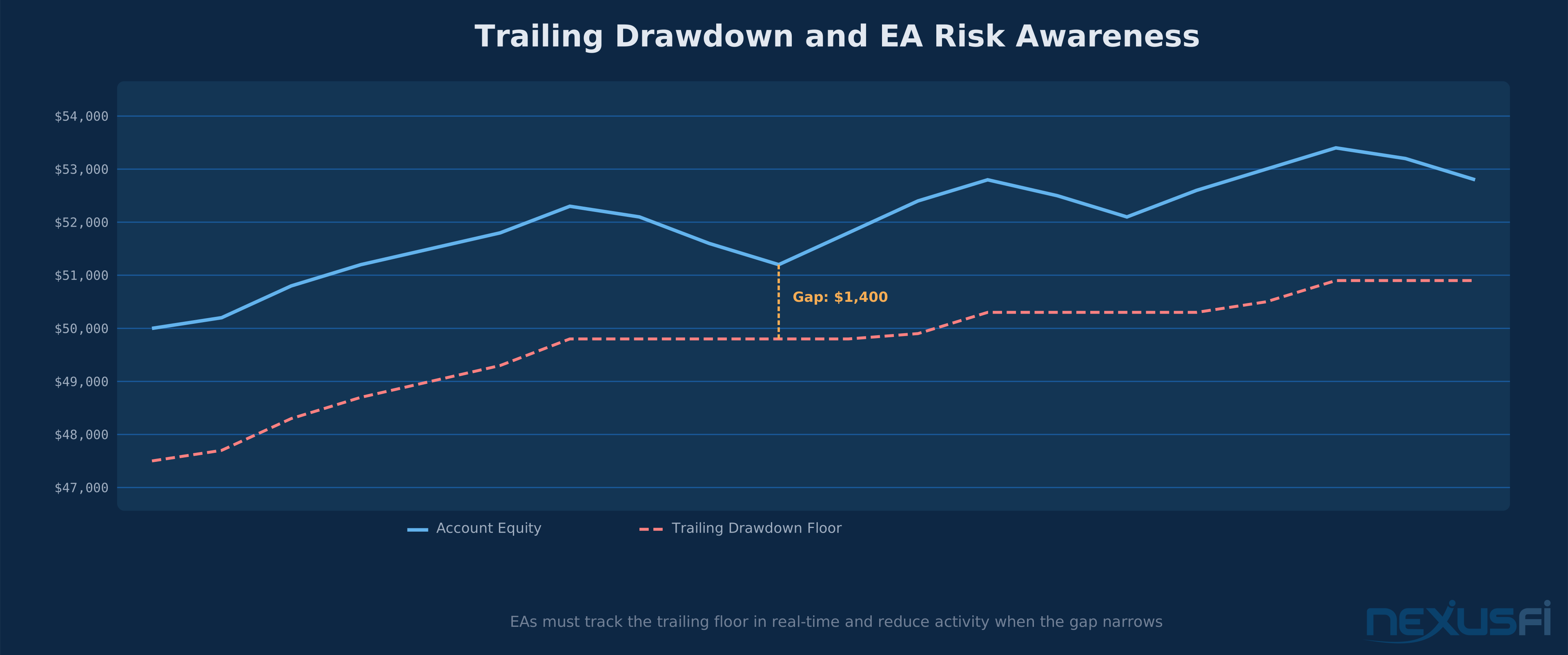
Trailing drawdown awareness: For firms using trailing drawdown, your EA must track the high-water mark and current drawdown threshold in real-time. A common failure mode: the EA enters a trade when the account is near the trailing drawdown floor, takes a small adverse excursion, and triggers termination. Manual traders feel the emotional pressure of being close to the limit and trade smaller. EAs don't feel anything — they must be explicitly programmed to recognize proximity to the drawdown floor and reduce position size or stop trading entirely.
In prop firm evaluations, ruin is defined for you — it's the maximum drawdown limit. Your EA's risk parameters must be calibrated to that number, not to your personal risk tolerance.
Position Sizing Under Prop Firm Constraints
Most EAs use some form of dynamic position sizing — fixed fractional, Kelly criterion, volatility-adjusted. In a prop firm evaluation, your sizing algorithm must account for constraints that don't exist on personal accounts:
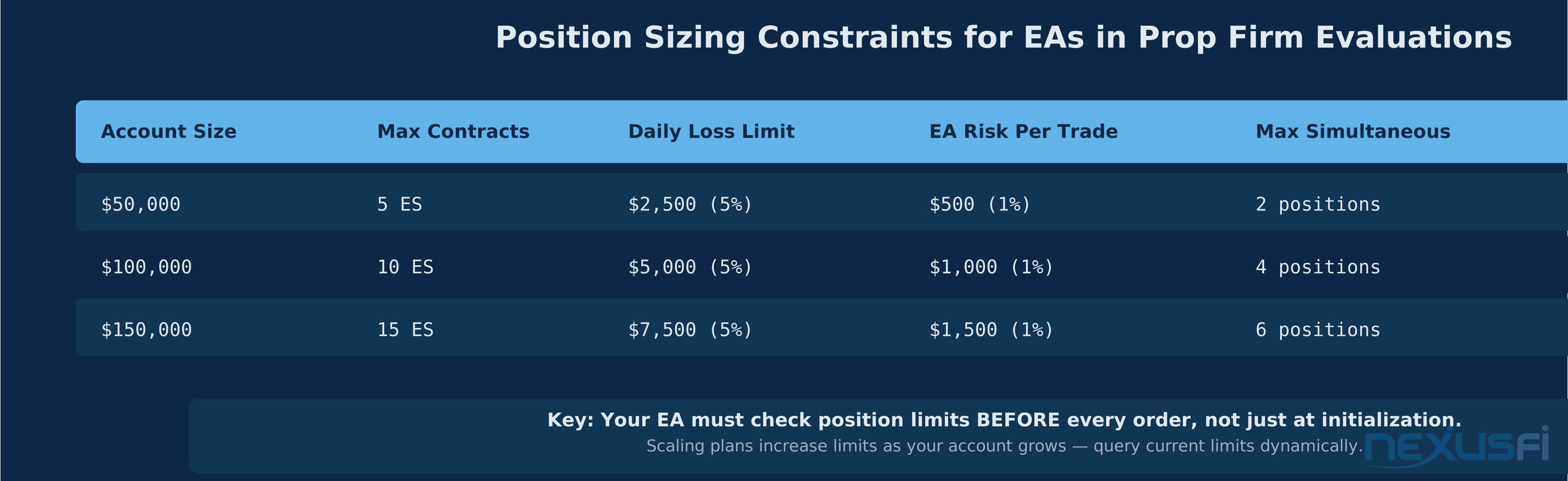
Maximum position limits: Firms cap the number of contracts you can hold simultaneously (e.g., 5 ES contracts on a $50K evaluation). Your EA must check current positions before adding.
Scaling rules: Some firms start you with lower position limits that increase as your account grows. Your EA needs to query the current allowed size, not use a static configuration.
No averaging down: Some firms prohibit or discourage adding to losing positions. If your EA uses a martingale or grid approach — adding contracts as price moves against you — check whether this violates the firm's rules. Grid trading EAs are explicitly banned at several major firms.
Platform-Specific Implementation #
NinjaTrader and NinjaScript
NinjaTrader is the dominant platform for futures prop firm evaluations, and NinjaScript is its native automation language. Key considerations for prop firm EA deployment:
Strategy vs. Indicator: NinjaScript distinguishes between strategies (place orders) and indicators (display data). For automated trading, you need a strategy. Indicators that generate alerts still require manual order entry.
ATM Strategy Integration: NinjaTrader's ATM (Advanced Trade Management) handles exits automatically — stop-loss placement, profit targets, trailing stops, breakeven adjustments. Many prop firm traders use a hybrid approach: manual or signal-based entries combined with ATM-managed exits. As discussed by @jlabtrades on NexusFi, the interaction between ATM strategies and prop firm bot detection rules requires careful attention — some firms flag ATM automation differently than full NinjaScript strategies.
Risk Management in Code: NinjaScript provides account-level properties — Realized PnL, unrealized PnL, position size. Use these to implement daily loss limits, trailing drawdown protection, and position size caps directly in your strategy code. Don't rely solely on ATM stops for risk management in evaluations.
The NexusFi community has extensive resources for NinjaScript strategy development. @Big Mike's Battle of the Bots challenge ran for years and produced hundreds of shared automated strategies, many designed specifically for futures. @Rovo27's automated MNQ strategy thread in the Elite section demonstrates a working approach from someone running live strategies on funded accounts.
MetaTrader and MQL
MetaTrader 4/5 dominates forex prop firm evaluations. For futures-focused traders, MT5 supports some futures instruments depending on the broker/firm. MQL5 (MetaTrader 5's language) is more capable than MQL4 for complex strategies.
Key consideration: MetaQuotes restricts MT4/MT5 access in some regions (notably the US), which means US-based traders at firms offering both MetaTrader and alternative platforms may be forced onto non-MetaTrader platforms that don't support EAs at all. Verify regional availability before building your strategy on MQL.
API-Based Automation
Some firms offer API access for custom automation beyond platform-native scripting. This allows strategies built in Python, C++, or other languages to connect directly to the firm's execution system. API-based automation offers maximum flexibility but requires more development expertise. If your prop firm offers an API, it's usually a sign they're genuinely supportive of automated trading — firms that offer APIs and then ban automation are rare.
Building Your EA for Evaluation Success #
Pre-Deployment Checklist
Before running your EA on a prop firm evaluation, verify every item:
Rule compliance audit: Map every rule in the firm's terms of service against your EA's behavior. Specifically check: average hold time, daily trade count, position sizing, news event handling, overnight holding, and strategy type classification (scalping vs. intraday vs. swing).
Daily loss limit protection: Confirm your EA stops trading when daily P&L (realized + unrealized) approaches the limit. Test this in simulation by deliberately creating adverse conditions.
Drawdown floor protection: For trailing drawdown accounts, verify your EA tracks the high-water mark and reduces activity near the floor. For static drawdown, verify it respects the absolute limit.
Consistency rule compliance: Backtest your EA and calculate the distribution of daily profits. If any single day regularly exceeds 30-40% of total evaluation profit, implement a daily profit cap.
News filter: If the firm restricts news trading, verify your EA has a functioning economic calendar filter that halts trading during blackout windows. Test it against actual news release schedules.
Session time limits: Many firms require trading within specific market hours. Verify your EA respects session boundaries and doesn't attempt to enter trades during restricted hours (e.g., the Globex overnight session if the firm only allows RTH trading).
Testing Protocol
@Jigsaw Trading made the point on NexusFi that realistic expectations for automated trading matter enormously — the gap between backtested performance and live execution is where most algo traders fail, and that gap widens in a prop firm evaluation where every losing day counts against a hard drawdown limit.
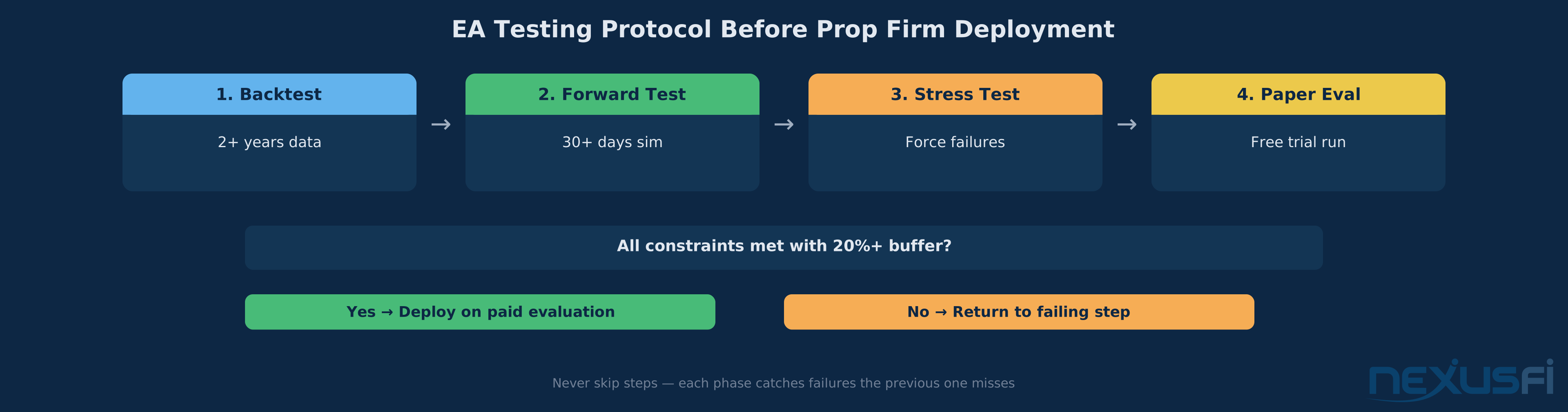
The testing sequence for prop firm EAs:
1. Backtesting: Run your strategy against at least 2 years of historical data. Calculate maximum drawdown, longest losing streak, average daily P&L distribution, and average hold time. Compare these against the firm's rules.
2. Forward testing on simulation: Run your EA on a demo/sim account for at least 30 trading days before deploying on a paid evaluation. Sim testing reveals issues backtesting misses: slippage, fill quality, data feed interruptions, and strategy behavior during live market conditions.
3. Rule violation simulation: Deliberately test your EA's protective mechanisms. Force a daily loss scenario — does the EA stop? Create a trailing drawdown scenario — does the EA reduce size? Trigger a news blackout — does the EA flatten and pause?
4. Paper evaluation: Many firms offer free trials or cheap retries. Use one as a dress rehearsal. Run the EA exactly as you would on a real evaluation. Don't intervene manually. Let it succeed or fail on its own to reveal any blind spots.
When Automation Goes Wrong in Evaluations #
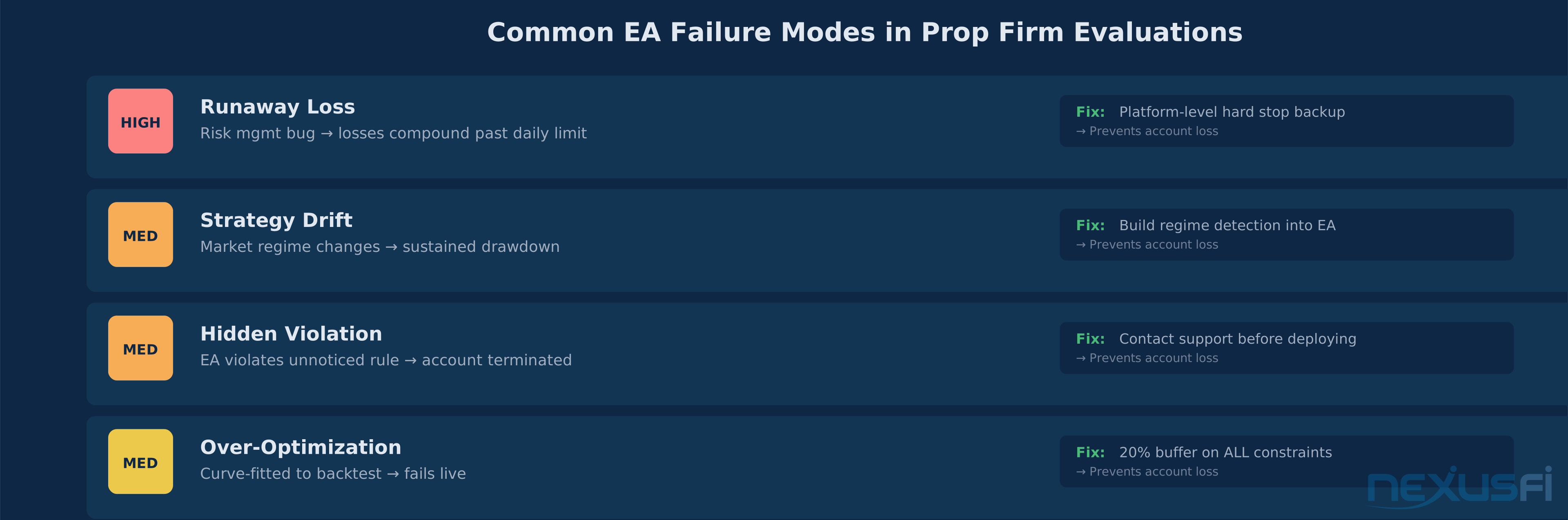
The failure modes for automated trading in prop firm evaluations are different from — and often more catastrophic than — manual trading failures.
The runaway loss: A bug in your EA's risk management logic causes it to keep adding to a losing position or fail to exit a trade. On a personal account, you eat the loss and fix the bug. In a prop firm evaluation, the daily loss limit terminates your account before you even notice. Solution: always run your EA with a hard stop-loss at the platform level (not just in your EA code) as a backup.
The strategy drift: Your EA was designed and tested on specific market conditions (trending, mean-reverting, low volatility). Market conditions change. The EA continues trading its original logic in a regime where that logic is wrong. Manual traders adapt — they see the market is "different today" and adjust. EAs don't adapt unless you build regime detection into the code.
The compliance violation you didn't know about: Your EA passes all the rules you checked — but you missed one. Maybe the firm added a new policy about maximum trade frequency that wasn't in the terms when you started. Maybe your EA's behavior during a flash crash looks like latency exploitation to the firm's monitoring system even though it wasn't. Contact the firm's support with a description of your EA's strategy before deploying.
The over-optimization trap: You curve-fitted your EA to perfectly work through a specific firm's rules — daily profit caps precisely at the consistency threshold, position sizing exactly at the maximum, trade count one below the limit. In live trading, the margins are thinner than backtesting suggests. Give yourself buffer on every constraint. As @rpm123 demonstrated in the NexusFi Battle of the Bots, even well-designed automated strategies perform differently in forward testing than backtesting. The evaluation is forward testing with real money on the line.
The Decision Framework: Manual, Semi-Automated, or Fully Automated? #
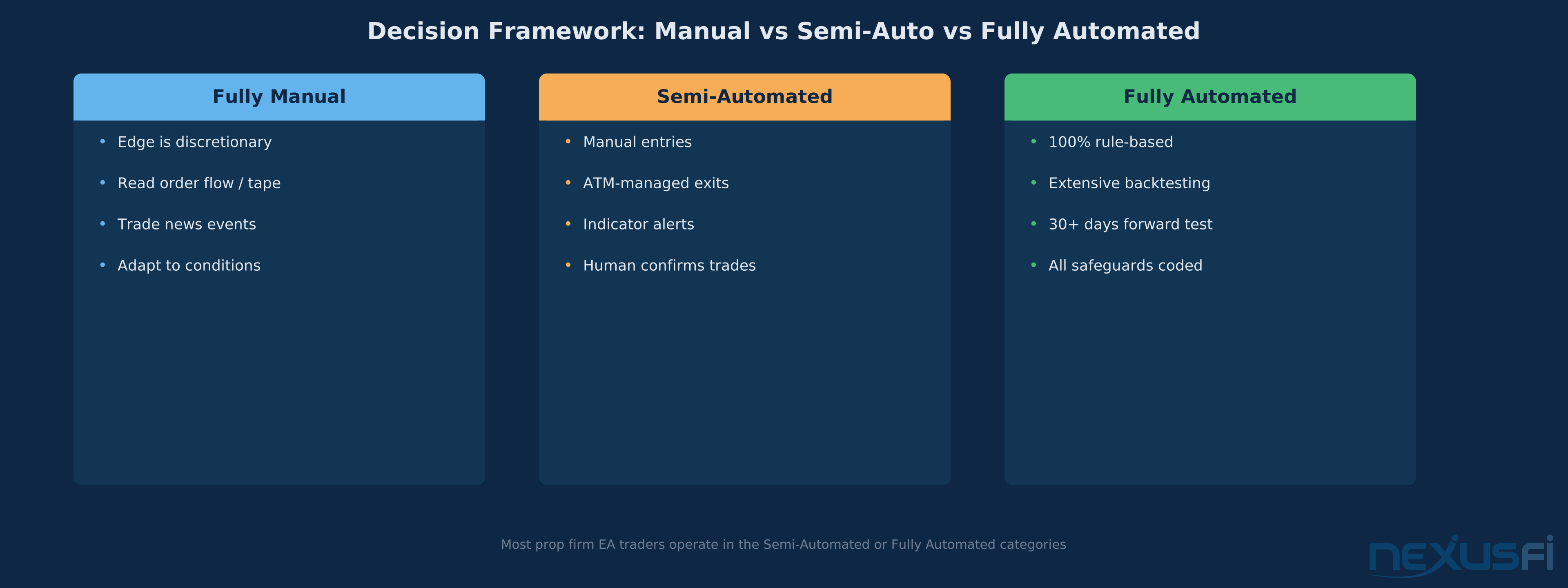
Not every trader should use automation in prop firm evaluations. The decision depends on your strategy, your coding ability, and your relationship with risk.
Go fully manual if: Your edge is discretionary — you read order flow, interpret market structure, or trade news events. Automation can't replicate genuine discretion, and forcing it into an EA creates a brittle approximation that fails when market conditions change.
Go semi-automated if: Your entries are discretionary but your exits follow mechanical rules. ATM strategies on NinjaTrader are built for exactly this workflow. You decide when to enter, the ATM handles stop-loss, profit targets, and trail management. This approach satisfies most firms' rules while reducing execution errors.
Go fully automated if: Your strategy is 100% rule-based with no discretionary component. You can express every entry, exit, and risk management decision as an if/then statement. You've backtested extensively, forward-tested for at least a month, and your EA includes all the protective mechanisms discussed above.
One more consideration: @SodyTexas's project to build an automated NinjaTrader strategy specifically for prop firm evaluations illustrates both the potential and the complexity. Building an EA that's profitable is hard. Building one that's profitable and compliant with prop firm rules and strong to changing market conditions is much harder. Be honest about whether your EA is ready.
Practical Application #
Setting Up Your EA for a Prop Firm Evaluation
Here's the step-by-step process:
Step 1: Read the firm's complete terms of service. Search specifically for: "automated," "EA," "expert advisor," "algorithmic," "bot," "HFT," "scalping," "minimum hold time," "trade frequency," and "strategy switching." If the terms are ambiguous, email support with a specific description of your strategy and ask for written confirmation that it's allowed.
Step 2: Configure your EA's risk parameters to match the evaluation account. Set daily loss limit protection at 80% of the firm's limit (leave 20% buffer). Set position size caps at or below the firm's maximum. Set drawdown protection at 80% of the firm's trailing or static drawdown limit.
Step 3: Add a news filter if required. Economic calendar APIs are available from most data providers. Integrate one into your EA and test it against the firm's specific blackout window requirements.
Step 4: Run 30+ days on simulation using the same data feed and platform you'll use in the evaluation. Document daily P&L, trade count, average hold time, maximum drawdown, and consistency metrics.
Step 5: If simulation results satisfy all firm rules with 20%+ buffer on every constraint, deploy on the paid evaluation. Monitor daily — even fully automated strategies benefit from a human checking in once per session to verify the EA is behaving as expected.
What to Do When Your EA Violates a Rule
If your EA triggers a rule violation during an evaluation:
Stop immediately: Disable the EA. Don't try to "trade your way out" of a violation.
Document everything: Screenshot your trade log, account status, and any violation notifications. Note the exact time and circumstances.
Contact support: Some violations are automated warnings, not instant terminations. Explain what happened and ask whether the evaluation can continue. Be transparent about using an EA — trying to hide it makes the situation worse.
Fix the EA: Identify which rule was violated and why your EA's protective mechanisms didn't catch it. Fix the code, test the fix, and only redeploy after confirming the issue is resolved.
Knowledge Map
References This Article
Articles that build on this topicCitations
- — TPT and ATM Bot (2025)“prop firm compliance with ATM bots”
- — TPT and ATM Bot (2025)“TPT and ATM Bot prop firm rules”
- — Money management help pls (2013) 👍 10“defining ruin in automated risk management”
- — Battle of the Bots - NinjaTrader Algorithmic Strategy Development (2011) 👍 79“Battle of the Bots automated strategy challenge”
- — Automated Strategy for MNQ (2023) 👍 32“automated MNQ strategy for funded trading”
- — Building the ULTIMATE NT8 Strategy, lets break Topstep (2022) 👍 3“building NT8 strategy for prop firm evaluations”
- — Is a daily 10 tick profit through automated trading realistic on Ninja platform? (2014) 👍 11“realistic automated trading expectations”
- — Battle of the Bots - NinjaTrader Algorithmic Strategy Development (2011) 👍 8“forward testing vs backtesting performance gap”