



Prohibited Trading Strategies in Prop Firm Funded Accounts: What Gets You Terminated and Why
Overview #
Every prop firm funded account comes with a rulebook. Most traders skim it, focus on the drawdown limits, and assume the rest is fine print. That's a mistake. The sections on prohibited strategies are where funded accounts actually die — not from hitting the drawdown, but from trading behavior that triggers an automatic review and termination before a single dollar of payout is ever requested.
The prohibited strategy list isn't arbitrary. Each category exists because it creates one of four specific problems for the firm: tail-risk exposure that can't be hedged, evaluation-integrity fraud, regulatory liability, or correlated exposure across the firm's entire book. Understanding why each strategy is banned — not just what is banned — is the difference between traders who stay funded and those who get terminated without knowing why.
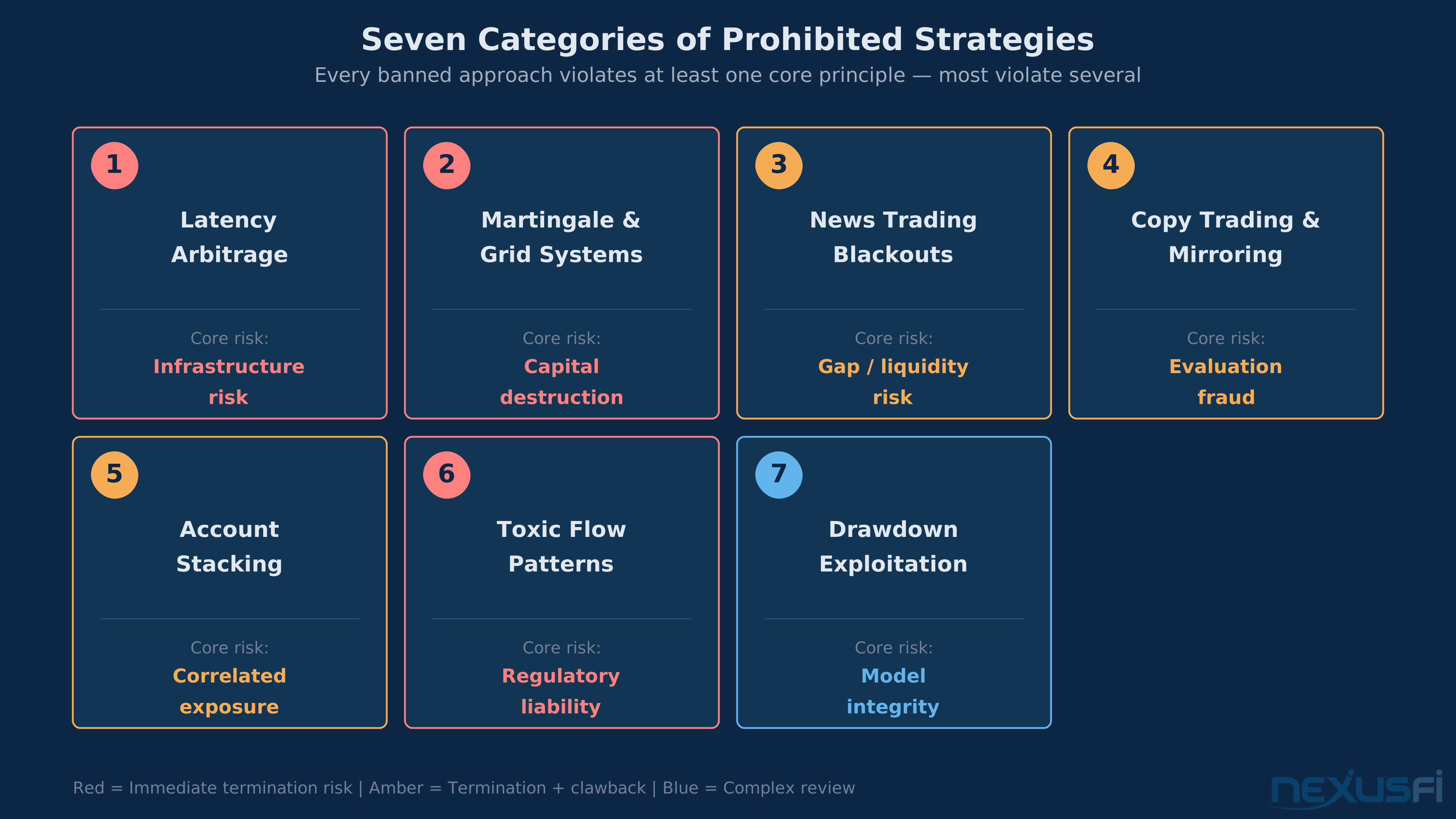
This article covers all seven major categories of prohibited strategies: what they are, why firms ban them, how the detection systems work, what happens when you're caught, and how to keep legitimate strategies well clear of the line.
The common thread across every prohibition: prop firms are capital-preserving vehicles, not profit-maximizing vehicles. Their risk model is built for controlled, independent, risk-adjusted performance. Anything that disrupts that model — whether through exploitation, fraud, or unlimited risk — gets terminated.
Key Concepts #
Latency arbitrage — A trading strategy that exploits microsecond price discrepancies between different exchanges or data feeds. Rather than predicting price direction, it profits from information asymmetry in execution infrastructure.
Martingale — A position-sizing method that increases trade size after each loss, theoretically recovering all previous losses with a single win. In practice, the sequence of required size doublings quickly reaches position sizes that exceed any account's drawdown limit.
Grid trading — A method of placing buy and sell orders at regular intervals above and below a current price, creating a "grid" of positions. When grid strategies increase position size after adverse moves to recover losses, they function as a variant of martingale.
Blackout window — A firm-defined time period around scheduled economic releases (FOMC decisions, Non-Farm Payrolls, CPI, etc.) during which new position entry is prohibited. Window duration varies by firm: common ranges are +/- 2 minutes to +/- 15 minutes around release time.
Copy trading — The practice of automatically or semi-automatically replicating trades from another account or external signal service. Ranges from trade copier software to manual execution of signals received from a third party.
Account stacking — Running the same trading strategy across multiple funded accounts simultaneously, effectively multiplying position exposure beyond what any single account's rules permit.
Toxic flow — Order flow that consistently takes liquidity at adverse prices, typically associated with latency arbitrage or strategies that exploit infrastructure delays. Clearinghouses and liquidity providers flag accounts generating toxic flow.
Drawdown exploitation — Any strategy or behavior designed to game the measurement mechanics of drawdown rules rather than trading genuinely. Includes taking excessive risk near evaluation deadlines, using temporary hedges to mask true exposure, or exploiting timing quirks in how the firm calculates its limits.
Evaluation gaming — Broader than drawdown exploitation: any approach that optimizes for passing the evaluation metrics without corresponding real-world edge. Includes passing evaluations on luck or over-fitting, then failing to trade the same way in funded accounts.
Why Prop Firms Prohibit These Strategies #
Before diving into each category, it's worth understanding the five root causes that drive all prohibitions. Every banned strategy violates at least one of these principles — most violate several.
Capital protection — Strategies with convex loss profiles have a mathematically predictable path to catastrophic drawdown. Martingale's doubling sequence, a grid system that adds after adverse moves, or drawdown exploitation near deadlines all share this property: they look fine until they don't, and when they don't, the damage is maximum. The firm's per-account drawdown limits exist specifically to prevent this. Strategies that are designed to circumvent those limits destroy the model.
Risk model integrity — Prop firms price their evaluation fees and payout structures based on a specific risk model: traders with independent, controlled strategies whose drawdowns are bounded by the firm's limits. Account stacking, hedging tricks, and drawdown exploitation all break this model by hiding true exposure. The firm's risk engine is reading reported metrics, not actual exposure — and when those diverge, the firm's capital is at risk from positions it didn't know existed.
Regulatory and reputational risk — Toxic flow patterns like spoofing, layering, and quote stuffing can constitute market manipulation under exchange rules. When a prop firm routes orders through its clearing infrastructure, manipulative order patterns flow through the firm's books. Being associated with manipulation can result in exchange sanctions, clearing house de-boarding, and regulatory investigations that dwarf any individual trader's payout.
Evaluation fairness and fraud — Copy trading and signal mirroring undermine the entire premise of the funded trading evaluation. The firm is paying for access to a specific trader's skill and risk discipline. When a trader passes using another person's signals or mirrors trades from a sophisticated system, the firm has no idea what risk engine is actually running on its capital. This is the funded account equivalent of credential fraud.
Infrastructure stability — High-frequency latency arbitrage floods order execution systems with cancel-and-replace traffic. Even if any single trader's volume is small, prop firms route through shared infrastructure and clearinghouse connections. Strategies that generate abnormally high order rates degrade execution quality for all participants using that infrastructure and can trigger circuit breakers at the clearinghouse level.
Category 1: Latency Arbitrage and High-Frequency Strategies #
Latency arbitrage exploits microsecond price discrepancies between different exchanges or data feeds. A strategy might detect that the price on one venue has moved before a second venue's feed has updated, then simultaneously buy the lagged venue and sell the faster one to capture the spread. Legitimate? Depends who you ask. For a prop firm funded account? It's an immediate termination.
Why it's banned: Clearinghouses classify this as "toxic flow." When order flow consistently picks off stale quotes, the clearinghouse flags the executing firm — not the individual trader. The prop firm risks being de-platformed from execution infrastructure entirely, an existential risk completely disconnected from whether the trader is profitable.
The broader HFT category includes any strategy relying on speed advantages: queue-position harvesting, rapid cancel-and-replace cycles, systematic order book probing, or anything requiring microsecond-scale execution. These strategies are operationally incompatible with retail-oriented prop firm infrastructure.
Detection: Order-rate telemetry is the primary tool. The firm's risk system tracks orders-per-second, cancel-and-replace ratios, and time-in-force usage patterns. A retail discretionary trader submits a few dozen orders per session. A latency arbitrage system might submit thousands. The statistical gap is obvious within minutes.
Secondary detection: time-to-execution analysis comparing order submission timestamps against exchange feed heartbeats. Any consistent pattern of trading immediately after feed updates — before the majority of participants have received the same data — is flagged automatically.
The gray zone for legitimate traders: Scalpers who use one-click order entry and fast manual execution sometimes trigger order-rate alerts. The safe zone for futures scalpers is keeping order submission rates well below 5-10 per minute for most firms. If your execution style involves rapid manual order modification, review your firm's specific language on order amendment frequency. Some firms define "excessive modification" quantitatively; others leave it to reviewer discretion.
Don't confuse execution speed with latency arbitrage. A fast scalper using a DOM is not doing latency arbitrage. The line is whether your strategy profits from infrastructure timing advantages versus price prediction. If you're trading with genuine directional conviction and executing quickly, you're fine. If your strategy requires a faster feed than your counterparty has, you're in prohibited territory.
Category 2: Martingale and Grid Recovery Systems #
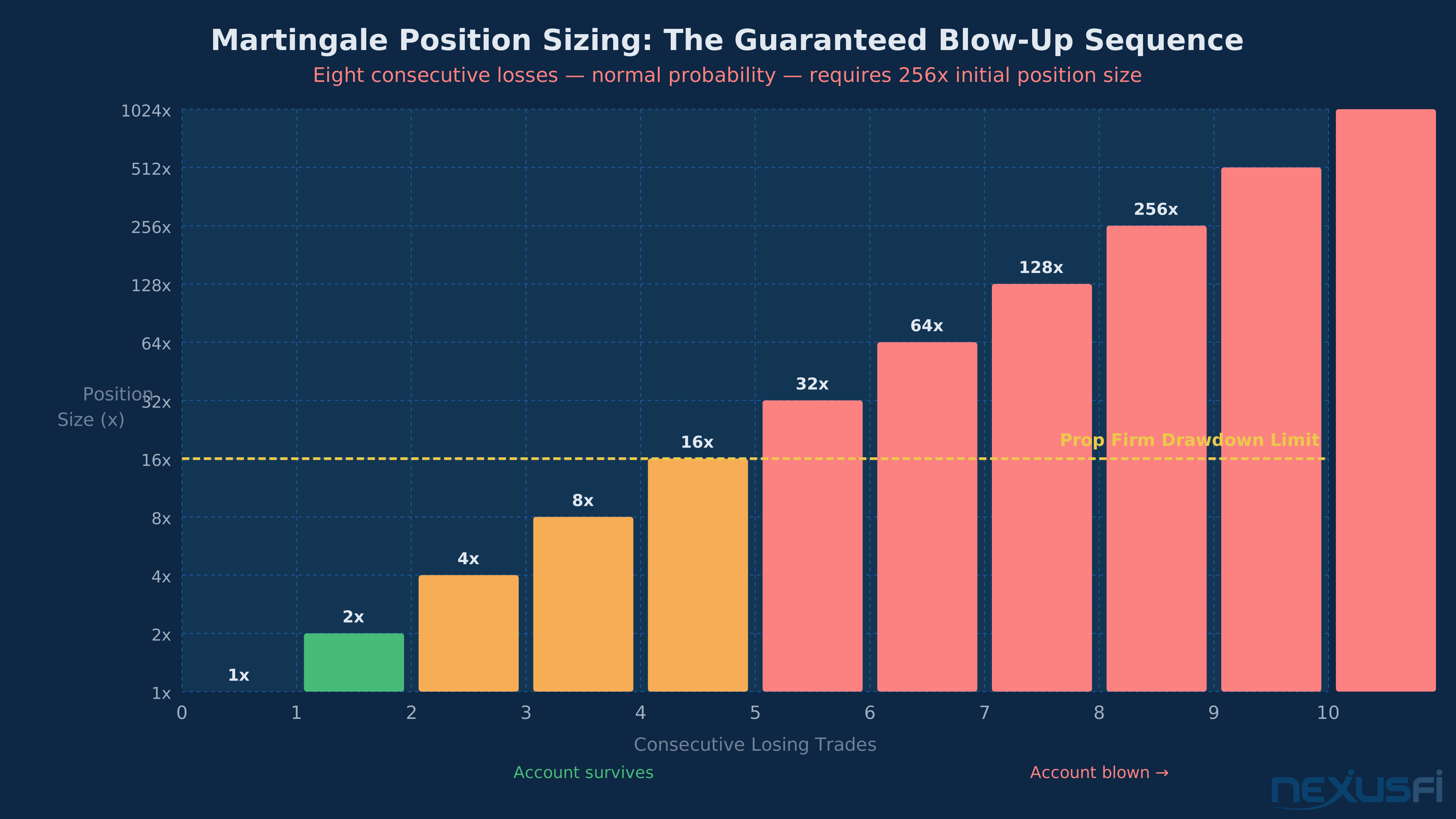
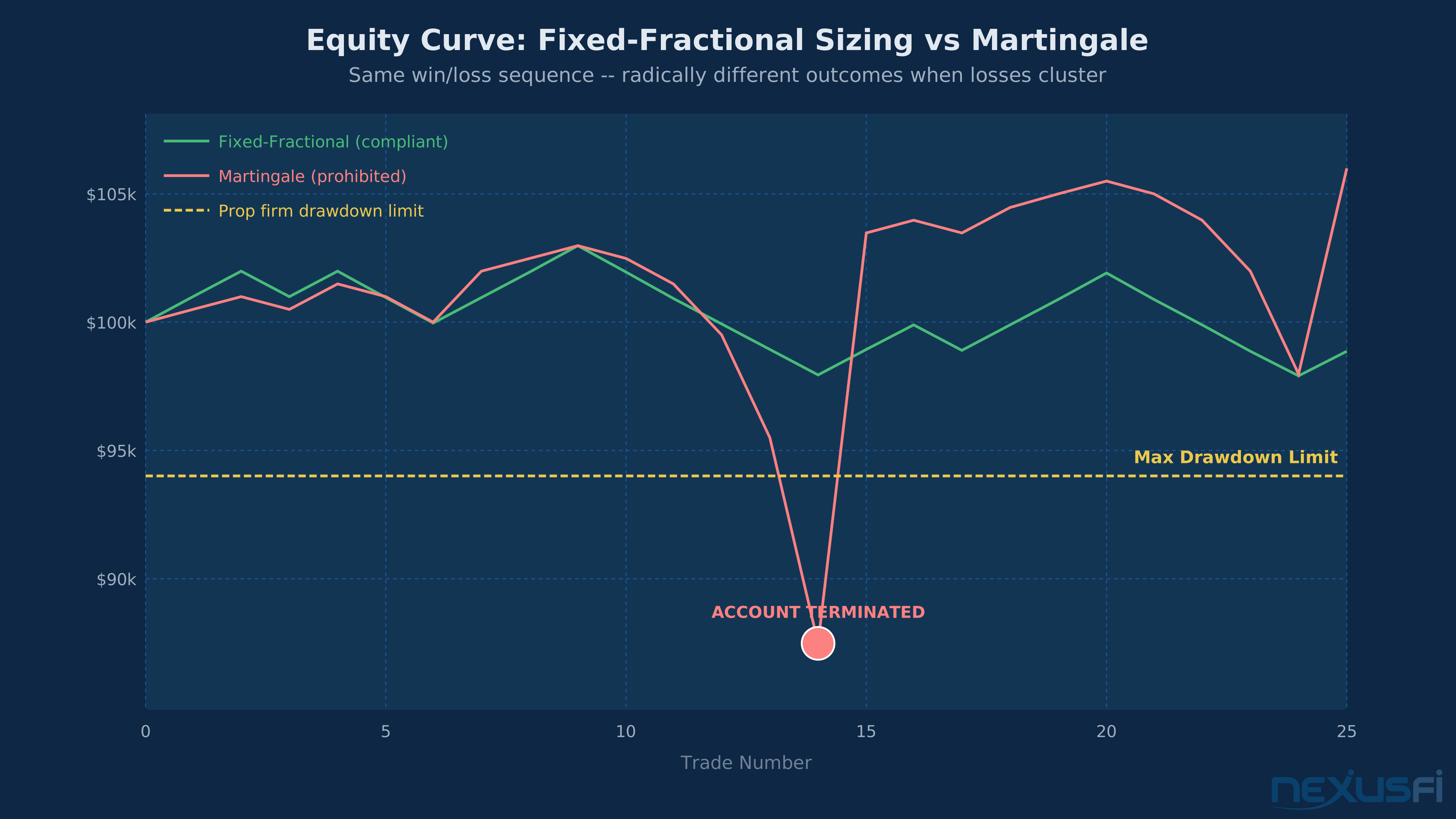
Martingale is the strategy that looks mathematically bulletproof until it isn't. Double your size after every loss, and eventually you'll recover everything with a single winning trade. The flaw is arithmetic: a losing streak of N trades requires a position 2^N times the original size. Eight consecutive losses — well within normal probability for most strategies — requires 256x the initial position. Nine losses: 512x. For any account with a finite drawdown limit, the sequence always terminates.
The issue isn't that martingale has a losing expectancy. It's that it has a guaranteed loss event — the question is only when it arrives. Prop firms aren't willing to provide capital to a strategy with a known catastrophic failure mode.
Grid trading becomes a problem when it uses recovery sizing. A symmetric grid that places buy and sell orders at fixed intervals without increasing size is different from a grid that adds position after adverse moves to "recover" losses. The former might be tolerated by some firms. The latter is functionally martingale and gets treated so.
Detection: The firm's risk system tracks position-size sequencing against trade history. When position size increases geometrically following loss streaks — especially when the pattern repeats across multiple sessions — it triggers an automatic flag. Some firms use Maximum Adverse Excursion pattern recognition to identify repeated adding to losing positions beyond a firm-defined threshold.
The detection distinguishes occasional averaging from systematic loss-recovery sizing. One add to a losing position with a defined stop is different from three to five adds on a declining position with no visible hard stop.
What's actually allowed: Fixed-fractional and volatility-based sizing are explicitly compliant. The principle: sizing that scales with account performance is fine. Sizing that scales with the depth of your current drawdown is prohibited.
Compliant sizing: Position size = (Account risk % × Account equity) ÷ (Stop distance in ticks × Tick value)
Prohibited sizing: Position size = Previous size × Multiplier (triggered by loss)
If your strategy documentation includes the phrase "double down after a loss," "average my cost basis," or "add to the position if it goes against me," read your firm's rules carefully before trading it in a funded account. The documentation you'd submit in a compliance request is exactly what gets reviewed if your account is flagged.
Category 3: News Trading During Blackout Windows #
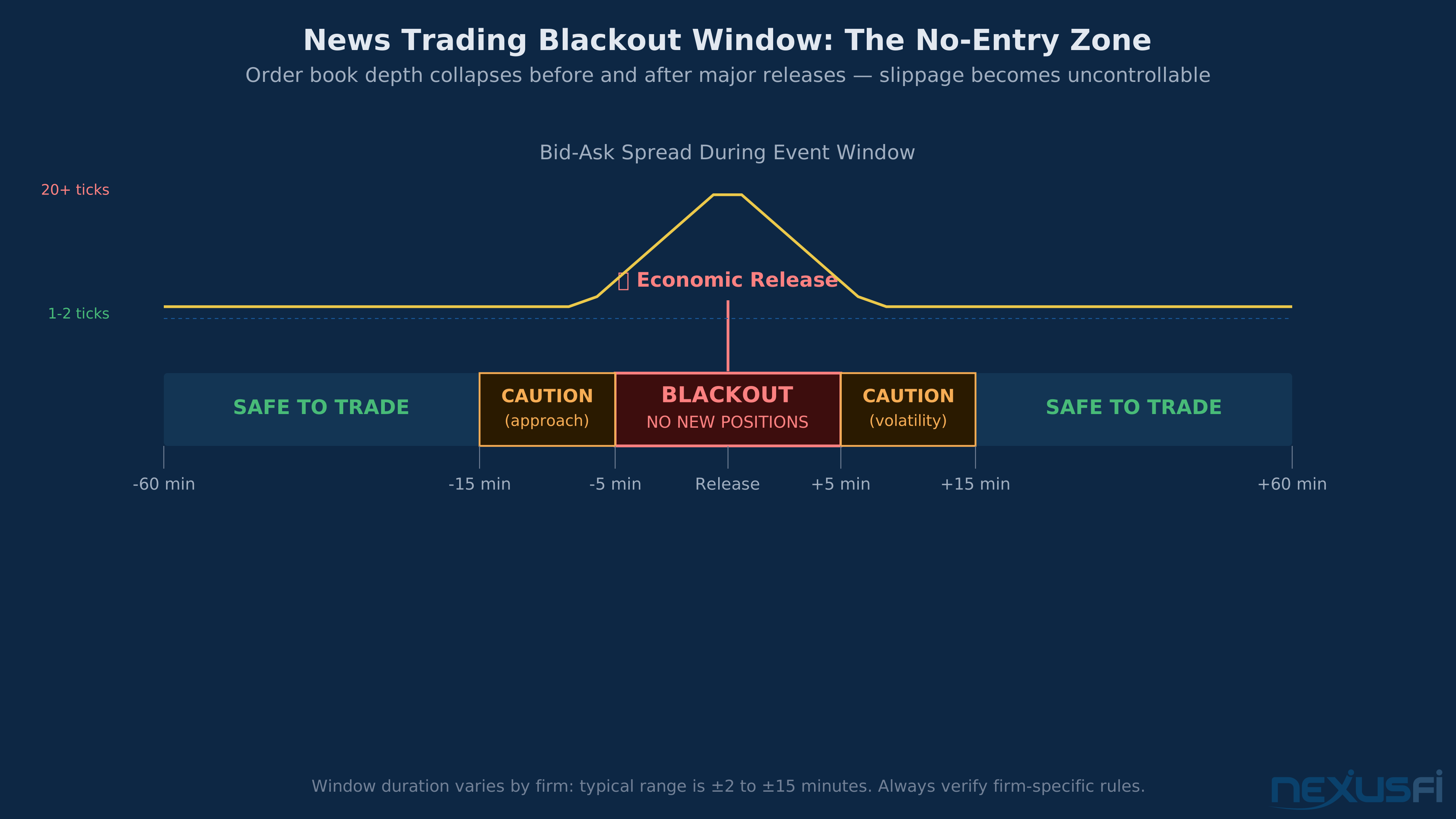
Every prop firm that evaluates futures traders defines blackout windows around major scheduled economic releases. The specific events and window durations vary, but the core prohibitions are universal: FOMC rate decisions, Non-Farm Payrolls, CPI, GDP, and similar Tier 1 events are always covered. Tier 2 events (housing data, manufacturing PMI, consumer confidence) are covered by most firms. The window is typically +/- 2 to 15 minutes around the release timestamp.
Why the blackout exists: Liquidity and gap risk. In the 10-30 seconds around a major release, order book depth evaporates. Spreads widen from 1-2 ticks to 10-20 ticks or more. Stops execute far from trigger levels. The firm cannot hedge positions entered during this window — their risk model breaks down entirely for those few minutes.
Detection: This is the simplest category to detect. Timestamps are compared directly against the firm's published economic calendar. Any new-position entry during a defined blackout is flagged automatically, with no ambiguity. If the trade happened during the window, it's a violation. No judgment call required.
The nuance is in "hold-only" policies. Some firms prohibit only new entries during blackout periods and allow previously-entered positions to remain open (but not be adjusted). Others require flat books throughout the window. Read your firm's specific language — "no trading" and "no new entries" are not the same rule.
The "I didn't know it was a news day" defense doesn't work. Every funded account trader is expected to maintain an economic calendar and know when blackouts apply. Many firms provide the calendar directly in their platform. Accidental violations on profitable trades typically result in the profit being voided. Repeat accidental violations result in termination. There is no third chance.
Practical management: Check the economic calendar before entering any position. Any session with a Tier 1 event has three options: trade before the event and close before the blackout opens, skip the session, or trade only after the post-release window closes. "Trading through" the release is never compliant.
Category 4: Copy Trading and Signal Mirroring #
Copy trading prohibitions cover a spectrum: from automated trade copiers that replicate every order from a signal provider to manually entering trades based on instructions received from an external source. The prohibition isn't about where your ideas come from — it's about whether someone else's strategy is running on the firm's capital without their knowledge or consent.
The fraud dimension is significant. The firm's evaluation is an assessment of your skill and risk discipline. If you're copying trades, you're submitting someone else's skills for evaluation and collecting funding based on performance you didn't generate. This is why some firms treat copy trading violations more severely than other rule breaches — it's closer to fraud than to simple rule violation.
As @bobwest noted in the NexusFi thread on account hedging: using multiple accounts to capture both sides of a trade, where one account absorbs the loss while the other collects the profit, "is not a legitimate trade under exchange rules" and will get accounts closed when firms find out. The same logic applies to copy trading — the trader is substituting someone else's judgment for their own while representing otherwise.
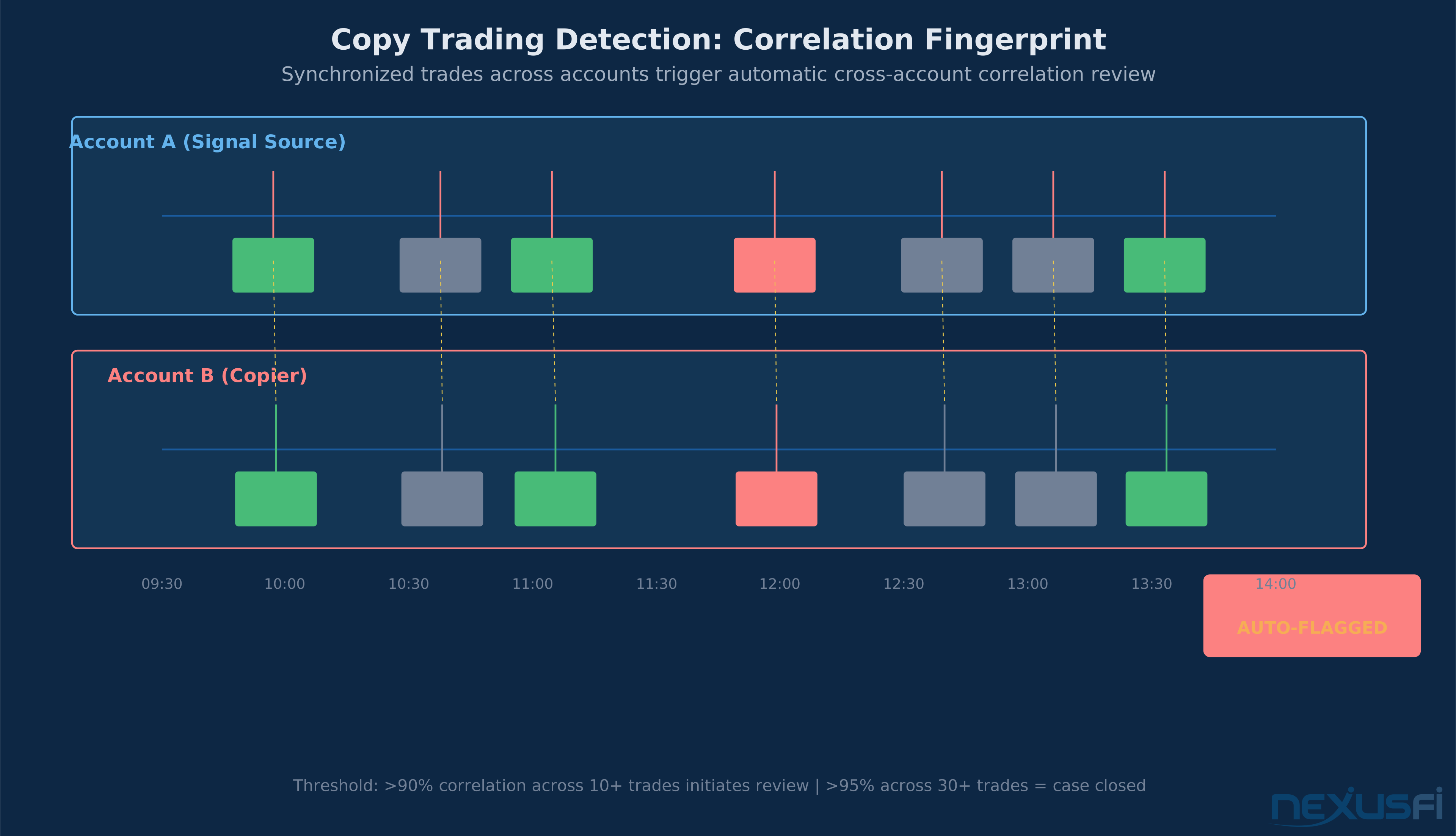
Detection: Trade correlation metrics are the primary tool. Consistent identical entry times, instruments, position sizes, and synchronized exits trigger review. Fill fingerprinting compares order size patterns and execution sequences. Network and device analysis tracks IP addresses, hardware identifiers, and login patterns.
No two traders naturally show identical trades with identical timing across dozens of sessions. A correlation coefficient above 90% across 10-20 trades initiates review. Above 95% across 30+ trades, the case is considered closed.
What's actually allowed: Using trading ideas from public analysis, educational content, or your own research that was informed by a community discussion is fine. Developing your own strategy that's similar to a well-known public methodology is fine. Writing your own indicator code based on concepts you've seen elsewhere is fine. The line is executing trades in real-time based on someone else's live signals, whether automated or manual.
Some firms explicitly permit running strategies from approved third-party algorithm vendors. If your EA (Expert Advisor) or algorithmic trading system was purchased or licensed from a vendor, check whether your firm has a pre-approval process for third-party automation. Disclosing the tool and getting explicit written approval is the only safe path if you're using external software.
Category 5: Account Stacking and Strategy Cloning #
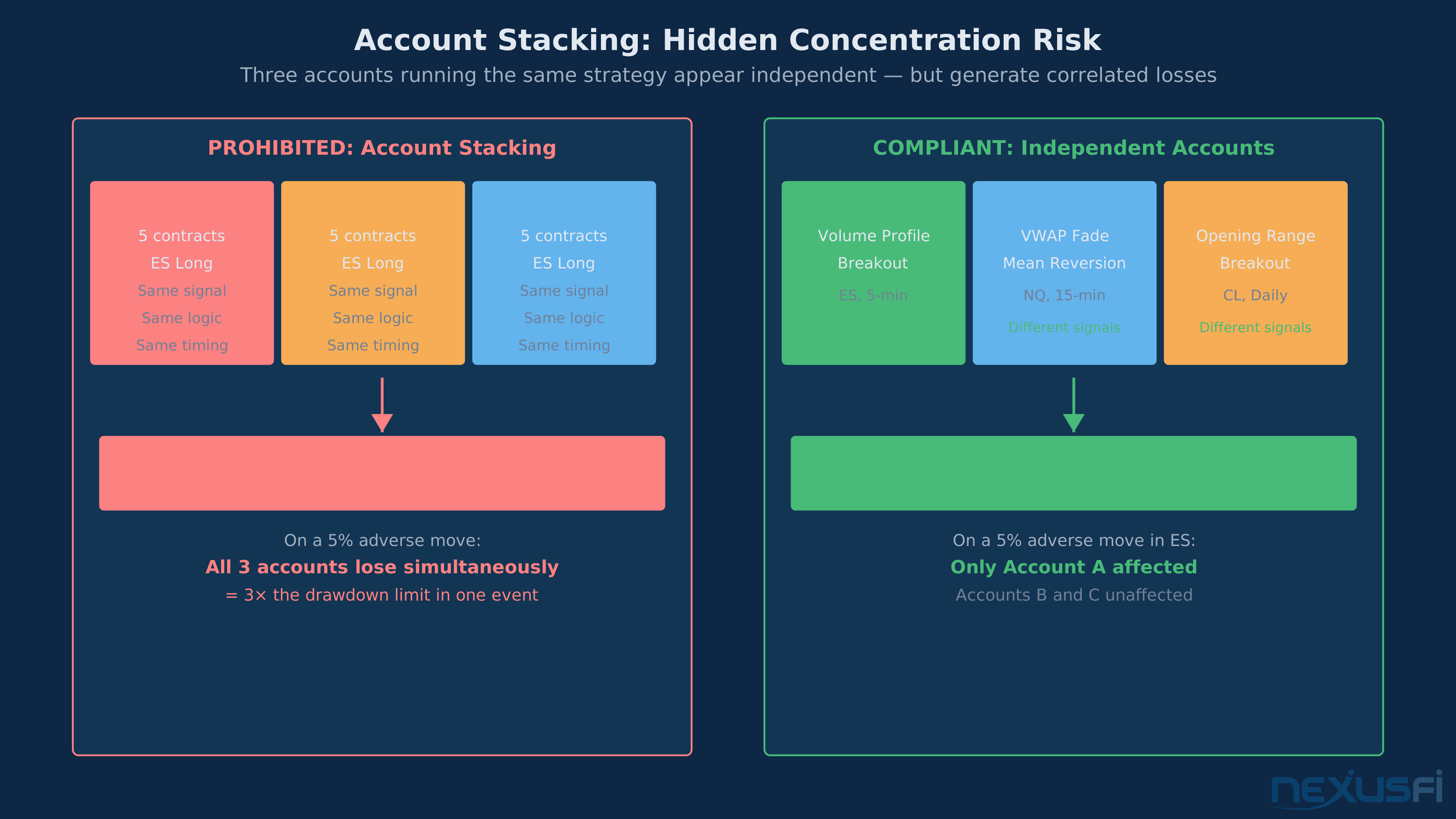
Account stacking occurs when a trader runs the same strategy across multiple funded accounts to multiply exposure beyond what any single account's rules permit. If your funded account has a 3-contract position limit, running identical strategies on three accounts gives you effective 9-contract exposure — three times the allowed limit without violating any single account's rules.
Position limits exist to bound the firm's risk from any single strategy. When a trader stacks accounts, the firm's risk engine reads three accounts at their individual limits, but actual exposure is concentrated in one correlated strategy. A 20% adverse move doesn't produce three independent losses of $X — it produces one correlated loss of $3X.
The exchange-level problem is even more direct.
Firms that route through centralized clearing infrastructure aggregate exposure across all accounts under their clearing relationships — account-level separation is administrative, not structural.
Strategy cloning is a variant: running the same engine with different parameters across multiple accounts. The correlation is still high enough to reveal concentrated exposure, even when individual trades differ.
Detection: Cross-account correlation matrices compare P&L sequences, instrument selection, position sizing ratios, and trade timing across accounts sharing any common identifier (name, email, payment method, device ID, IP address). When correlation coefficients exceed firm thresholds — typically 85-95% depending on the firm — the accounts are reviewed as a group rather than independently.
Some firms explicitly allow multiple funded accounts with genuinely independent strategies. The test: are the strategies meaningfully different in their signal generation, risk parameters, and instrument selection? Or do they converge to the same trades with slight parameter variation? If you can't articulate a substantive difference, the firm's risk team will reach the same conclusion.
Category 6: Toxic Flow and Market Manipulation Patterns #
This is the highest-severity category. Spoofing, layering, quote stuffing, and other forms of toxic-flow manipulation aren't just prop firm rule violations — they're potential exchange and regulatory violations that can result in fines, trading bans, and criminal referrals.
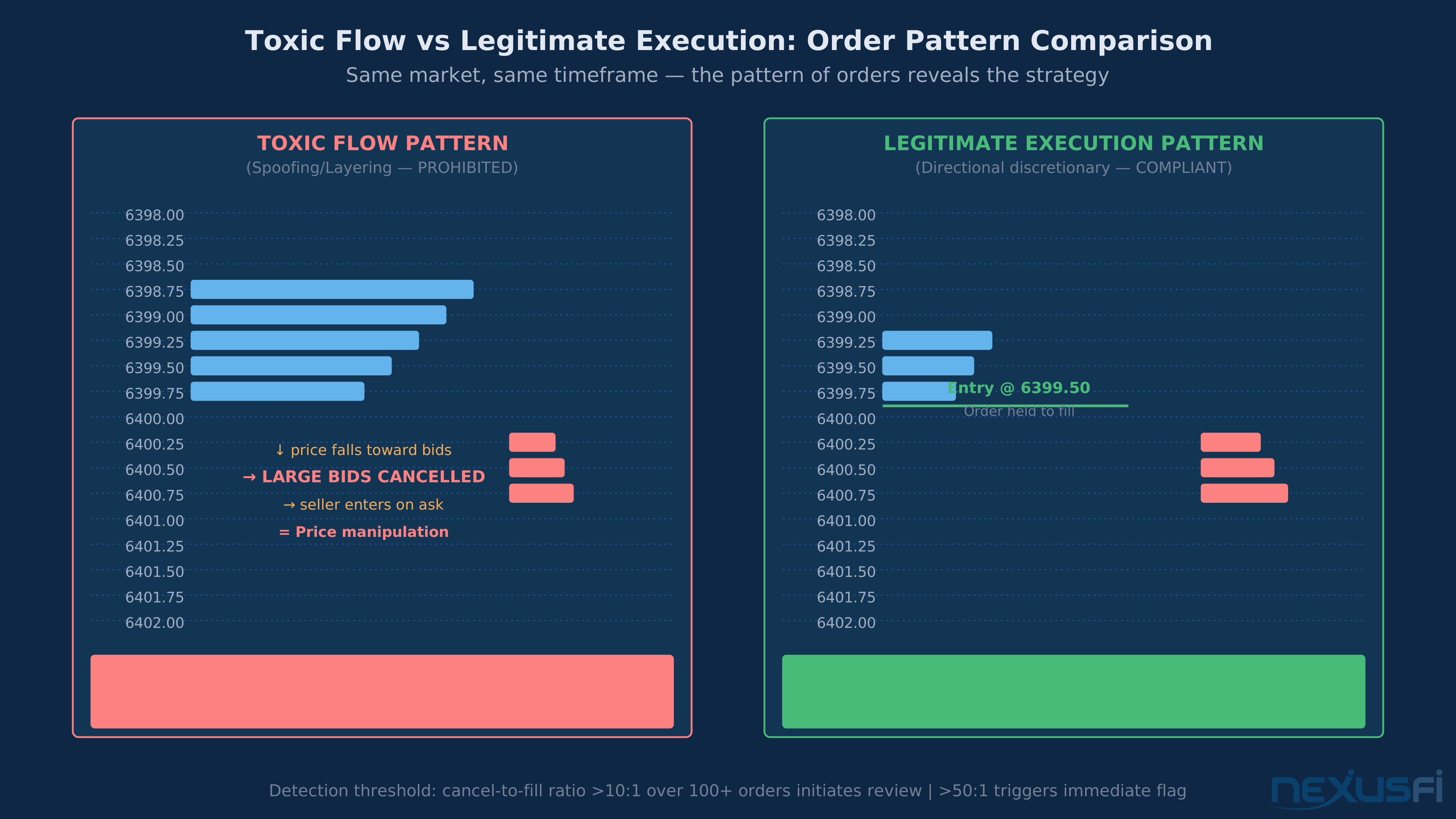
Spoofing involves placing orders with the intent to cancel them before execution, creating a false impression of supply or demand to move price before executing in the opposite direction. Layering is a variant: placing multiple orders at different price levels (creating the appearance of a deep book) and canceling them when price approaches. Quote stuffing floods the order book with rapid-fire orders and cancellations to degrade competitors' execution speed.
For most retail prop traders, the actual risk here isn't intentional manipulation — it's accidentally triggering the pattern through legitimate execution behavior. Automated strategies that frequently modify orders, scalpers who cancel limit orders quickly, or systems that use high-frequency order placement to test for liquidity can generate order-cancel patterns that look statistically similar to manipulation.
Detection: Order-book interaction analysis examines order placement, modification, and cancellation patterns relative to execution. A high cancel-to-fill ratio is the primary signal. For context: a retail discretionary trader executing at market might have a 1:1 fill ratio. A strategy that places 50 orders for every 1 that executes is in the range that triggers review. Combined with clustering of orders at key price levels and rapid cancellations when price approaches, the manipulation pattern becomes statistically clear.
Safe execution hygiene: Place limit orders with genuine intent to execute. If your strategy involves placing limits that you'll cancel if price doesn't reach a certain level within a few seconds, review the execution logic carefully. Reasonable time-in-force (GTC, IOC, or specific durations) is fine. Rapid-fire order placement with systematic cancellation before fill is not. Keep order amendment frequency within human-reasonable ranges.
Toxic flow violations are the only category where the consequences extend beyond the individual firm. Some clearinghouses and major firms share flagging data. A toxic flow termination at one prop firm can create barriers at others. This is not the category to push boundaries on.
Category 7: Drawdown Exploitation and Evaluation Gaming #
The most complex category, and the one most likely to catch legitimate traders by surprise. The prohibited behavior isn't always obvious manipulation — it's any systematic pattern of trading that optimizes for evaluation metrics rather than genuine market edge.
Direct drawdown exploitation covers the clearest cases: taking extreme concentrated risk near an evaluation deadline when loss of the account is already likely, using temporary hedges to artificially reduce the reported drawdown while maintaining net market exposure, or structuring trades around measurement timing (end-of-day vs. intraday calculation windows) rather than market conditions.
The hedge masking variant is especially important to understand. If your drawdown is calculated on a mark-to-market basis and you're long 10 ES contracts with a 50-point adverse move, adding 10 short ES contracts doesn't reduce your market risk — the positions offset at execution but the underlying market exposure is still 0 (net flat). If your strategy uses hedges to reset reported drawdown while waiting for an underlying position to recover, that's the prohibited pattern. Genuine risk-reduction hedging, with documented rationale for why the hedge reduces economic risk rather than just reported risk, is different.
Evaluation gaming is the broader pattern: structuring performance to pass metrics without corresponding sustainable edge. Passing through serial resets — paying fees and trying again until luck aligns — without a consistently executable strategy extracts firm capital through lucky outcomes without the genuine performance the firm's model requires.
The Topstep AMA on NexusFi provides a concrete example: when Topstep discovered a trader using a strategy that exploited the SIM fill engine — generating highly favorable results in evaluation that couldn't be replicated in live markets — they declined the payout and offered either a refund or a re-evaluation on terms that required changing the strategy. The trader wasn't using a "prohibited strategy" in the standard sense, but the approach violated the fundamental intent of the evaluation product.
How Detection Systems Work #
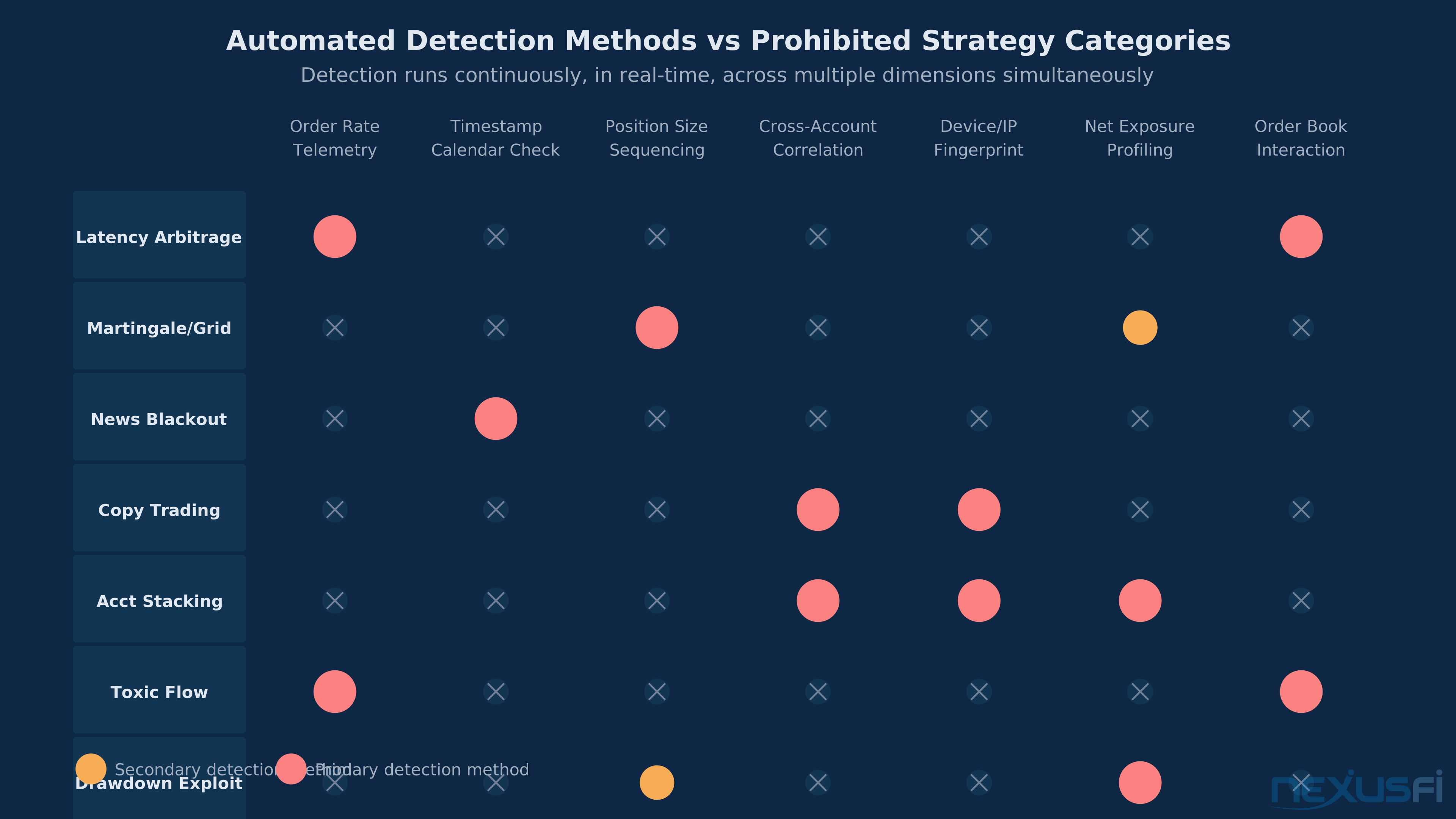
The detection architecture at most prop firms is automated, real-time, and runs across multiple dimensions simultaneously. Understanding what's being monitored changes how you think about compliance.
Order-flow telemetry runs continuously at the order level. Every order submission, modification, and cancellation is logged with microsecond timestamps. Derived metrics — orders per session, cancel-to-fill ratio, time-in-force usage, order amendment frequency — are compared against baseline distributions for that account and against peer baselines for the firm's funded trader population. Outliers trigger review flags.
Calendar-timestamp alignment is fully automated for news blackout enforcement. No human review required. If the order timestamp falls within a blackout window, it's flagged. Period.
Position-sizing sequence analysis runs pattern recognition against the full trade history. Not just the current session — the system looks for patterns across multiple sessions to distinguish random sizing variation from systematic loss-recovery scaling.
Cross-account correlation matrices are the backbone of copy-trading and account-stacking detection. The matrices run on all accounts sharing any common identifier: name, email, payment method, IP address, device fingerprint. When new accounts are opened, the system checks historical correlation against the trader's prior accounts and against all other accounts using the same infrastructure.
Net exposure profiling tracks the gap between reported drawdown metrics and actual market exposure across correlated instruments, catching hedge-masking variants of drawdown exploitation.
The automation means there's no way to "slip through." A violation without profit often goes unreviewed. A profitable violation triggers automatic flagging. Review timelines are 24-72 hours post-payout request for routine cases, and before payout is processed for clear violations like blackout windows or toxic flow.
Consequences Hierarchy #
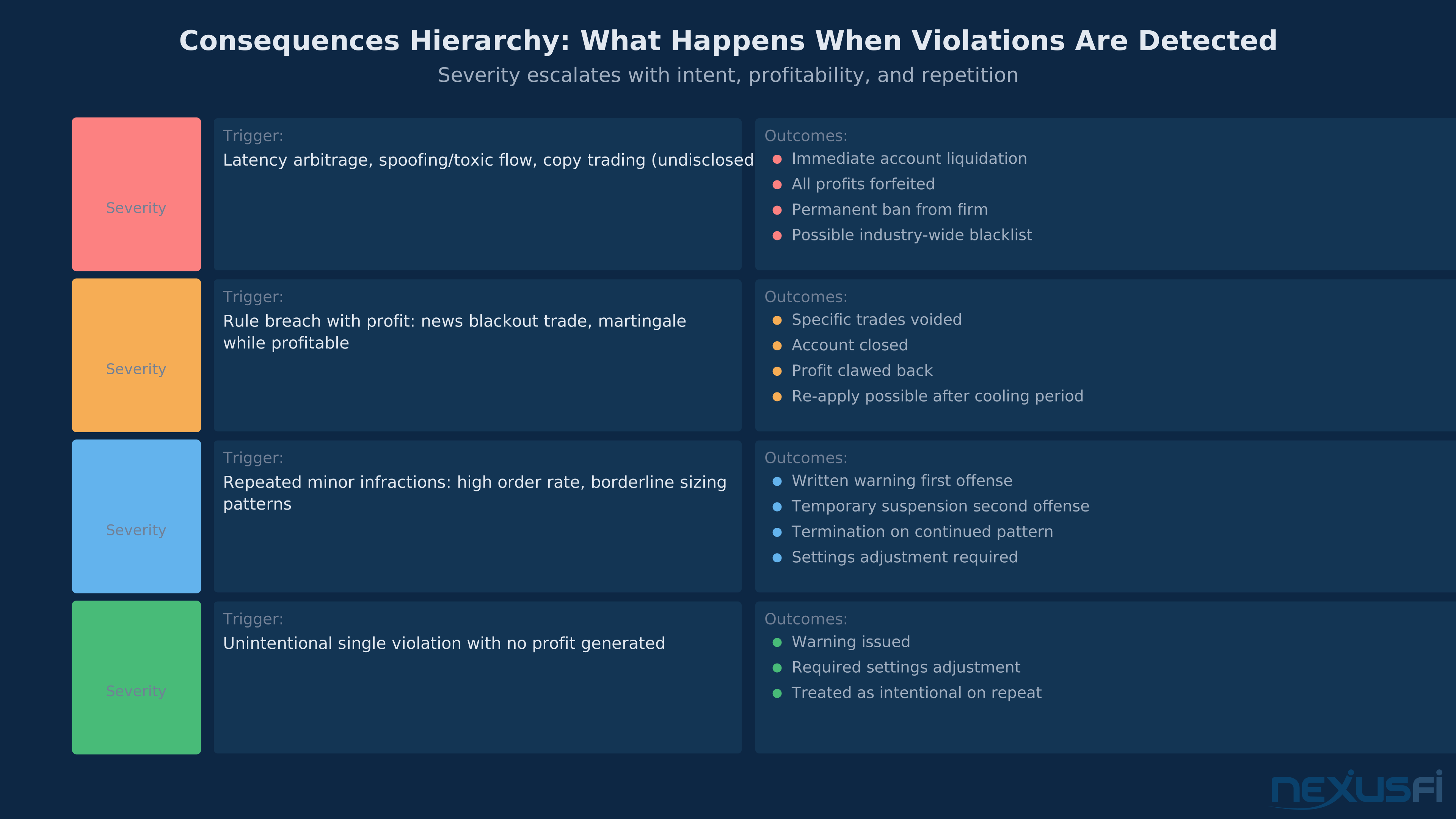
Prop firms have a tiered response that varies by violation severity, whether the violation generated profit, and whether the behavior appears intentional.
Zero-tolerance violations result in immediate account termination, profit forfeiture, and often a permanent ban from the firm. The firm may or may not communicate the specific reason. Zero-tolerance tier: latency arbitrage, toxic flow manipulation, copy trading (without disclosure), and account stacking. For latency arbitrage and manipulation specifically, some firms share flagging data across the industry — the ban can extend beyond a single firm.
Rule breach with profit is the most common scenario for discovery. If a violation generated profit and you've requested a payout, the review catches it before disbursement. Outcome: the specific trades are voided, the account is closed, and the trader may or may not be permitted to re-apply after a cooling period. The original evaluation fee is generally not refunded.
Repeated minor infractions follow escalating response: warning — temporary suspension — termination. Applies to high order amendment frequency, news-adjacent trades that don't technically violate the window, or sizing patterns resembling but not clearly demonstrating martingale. Most firms give explicit notice at the warning stage.
Unintentional single violation with no profit typically generates a warning and required settings adjustment. Repeat "mistakes" of the same type escalate quickly: the second instance is treated as intentional. Documentation matters throughout — traders who maintain strategy documentation and respond promptly to compliance inquiries consistently receive more favorable treatment.
Practical Compliance Framework #
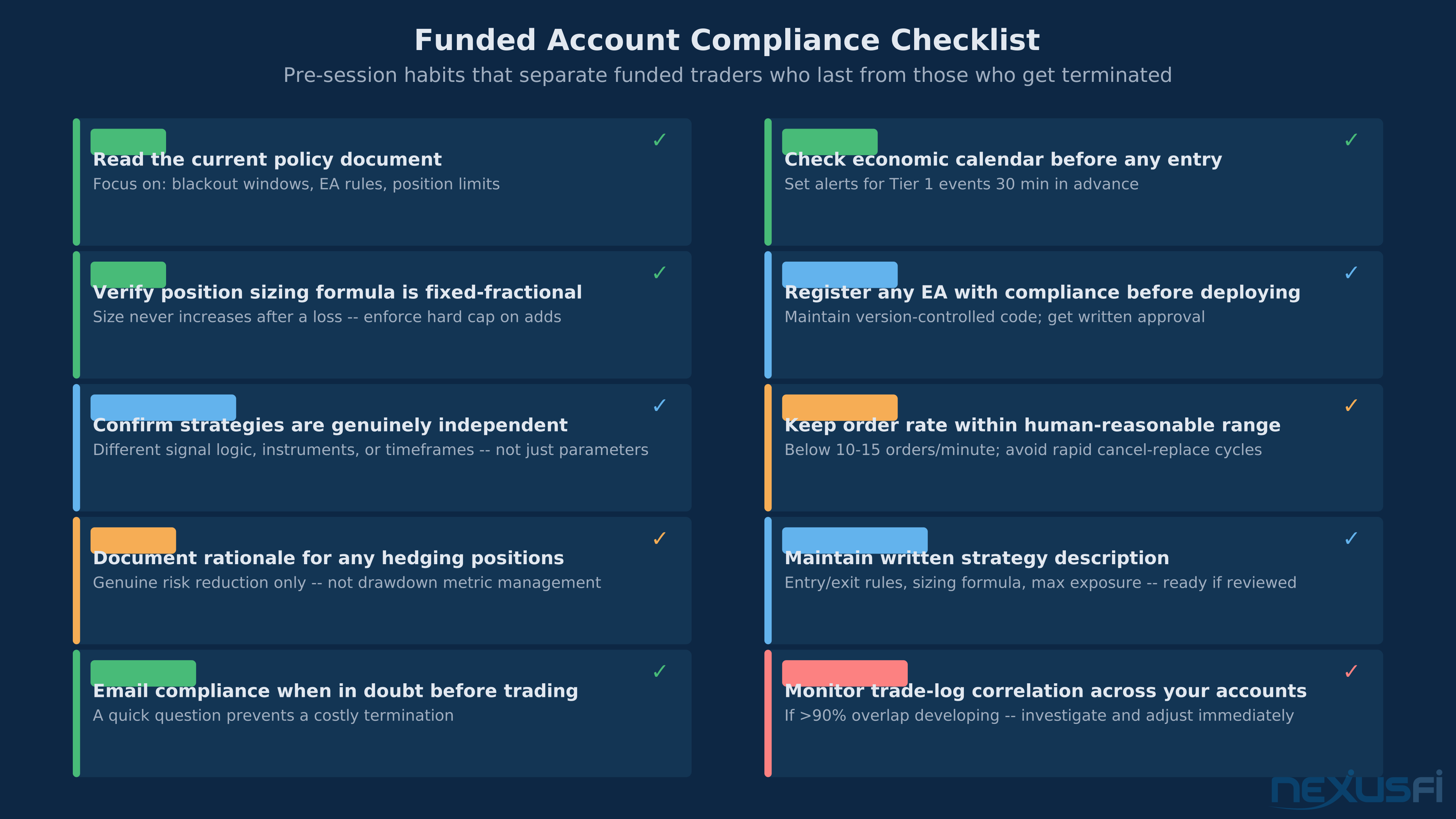
Every funded account should have a compliance process, not just a trading process. The firms that last in the funded account space for years have these habits built in — the ones who get terminated typically didn't.
Read the rulebook first: Read the current policy document in full, specifically the sections on prohibited strategies, blackout windows, position limits, and EA/automation rules. Firms update policies periodically. The responsibility is yours.
News and economic events: Subscribe to an economic calendar alert service (CME's calendar, ForexFactory, or your firm's published calendar). Set alerts for 30 minutes before Tier 1 events. If you're in a position and an event is approaching, decide before the window: exit or hold flat. Never improvise during the blackout.
Position sizing documentation: Write down your sizing formula and stick to it. "Fixed fractional: risk 1% per trade, size determined by ATR stop" is compliant. Any formula that increases size after a loss is in martingale territory. If your strategy includes averaging into positions, document the maximum adds and verify the worst-case exposure doesn't breach daily loss limits.
Automation and EAs: Email compliance before deploying any automated system. Keep a record of approval. Maintain version control on EA code. Run one instance per funded account unless explicitly permitted otherwise.
Multiple accounts: Run strategies that are genuinely independent — different signal logic, different instruments, or different timeframes. Not just different parameters on the same indicator. Keep brief written descriptions of each strategy and why they're distinct from each other.
The compliance framework isn't restriction — it's protection. Firms that terminate accounts for rule violations aren't adversaries. They're protecting capital deployed on your behalf. A compliant trader with genuine edge who asks compliance questions proactively has a durable funded account. A talented trader who cuts corners on compliance loses the account on their best month.
Knowledge Map
Prerequisites
Understand these firstGo Deeper
Build on this knowledgeReferences This Article
Articles that build on this topicCitations
- — Topstep's Nick Dolby (Social Media and Community Coordinator) - Ask me Anything (AMA) (2022) 👍 4“This was an account identified with exploiting the SIM fill engine using a method of high frequency trading that produces HIGHLY favorable results compared to if this strategy was executed in the real-time markets. When a trader is using the Trading Combine and SIM markets in such a manner that is exploitive then that goes against the intent of what the product is supposed to be used for.”
- — Long postion here and short postion there? (2023) 👍 2“He is long and short the same instrument, with the two trades being executed by different prop firms (possibly using different brokers), which is not a legitimate trade under exchange rules. This is not a winning strategy for the long term, and will get his accounts closed out if the firms involved find out what he is doing.”
- — Wash Trade Question (2022) 👍 5“Technically yes it violates Exchange rules. The exchange can look at this as you trading against yourself in order to create fake volume or open interest. Being long and short the same contract in different accounts is considered an exchange violation.”
- — Most Funding Firms are a Scam (2022) 👍 8“There are a lot of funding companies, people simply need to read the rules properly and understand the implications and then compare them all and make the appropriate decision about whether to use them or not.”
- — Hedge your losers to turn them into winners (2023) 👍 2“Futures don't move so predictably in either direction. It's impossible to time consistently for what you propose. You might get lucky once or twice but as a rule, you won't. There are much better ways to trade than trying to do this.”
- — Prop firm fraud in Futures? (on the back of My Forex Fund scam/CFTC ruling) (2023) 👍 1“Deel added this language to their Prohibited Activity List: 'Activities that relate to transactions that support pyramid or ponzi schemes, matrix programs, other get rich quick schemes or certain multi-level marketing programs.'”
- Alpha Trader Help Center — Restricted Trading Strategies (2024)
- The Funded Trader Program — Prohibited trading strategies that violate the TFT rules and Terms of Use (2024)
- Orion Help Center — Forbidden Trading Practices (2024)
- — Trading errors that result in fines (2021) 👍 4“Go to this link and search for category... you can see all the disciplinary notices for trading violations and fines issued by exchanges and regulators.”