



Copy Trading and Trade Copier Rules in Prop Firm Funded Accounts: What Every Funded Trader Must Know
Overview #
Copy trading is one of the most discussed — and most misunderstood — topics in funded trading. The concept is simple: execute a trade on one account and have it automatically replicated across others. The reality is anything but simple. Prop firms have detailed policies governing when copying is allowed, what forms it can take, and how violations are detected. Getting this wrong doesn't just mean a failed evaluation — it means forfeited fees, account termination, and potential permanent bans.
This isn't a gray area that firms overlook. It's one of the most actively monitored aspects of funded trading.
What Copy Trading Actually Means in Funded Trading #
Copy trading in the prop firm context refers to any mechanism that replicates trade execution from one source to one or more funded or evaluation accounts. That source can be:
- A master account running a strategy that broadcasts orders to slave accounts
- An automated trade copier tool like Replikanto, NinjaTrader's built-in group function, or third-party EA software
- A signal service where external alerts trigger identical entries across accounts
- Manual replication where a trader watches one screen and enters the same trade on multiple platforms
The common thread: a single trading decision produces execution across multiple accounts. Whether that's automated or manual, the core issue is the same from the firm's perspective.
Why It Matters More Than You Think #
Most traders approach copy trading as a scaling technique. Pass one evaluation, copy trades to multiple funded accounts, multiply payouts. On paper, it's efficient. In practice, it runs directly into the business model and risk architecture of every prop firm.
The evaluation exists to assess whether you can trade profitably within specific risk constraints. Copy trading short-circuits that assessment. If one skilled trader (or one successful algorithm) can generate identical results across 20 accounts simultaneously, the firm's entire risk model breaks down.
Why Firms Restrict Copy Trading #
The restrictions aren't arbitrary. They're driven by concrete business and risk concerns that directly affect a firm's ability to remain solvent.
Evaluation Integrity #
The entire funded trading business model depends on accurate skill assessment. Evaluations filter out unprofitable traders before they access real capital. Copy trading bypasses this filter entirely. A trader who can't pass an evaluation independently could pass a dozen accounts using someone else's signals.
When firms talk about "evaluation integrity," they're talking about survival. If every evaluation pass represents a genuine edge, the firm's funding pool sustains itself through profitable trading. If passes are driven by copying, the firm takes on concentrated risk from traders who may not understand the strategy they're executing.
Payout Liability Concentration #
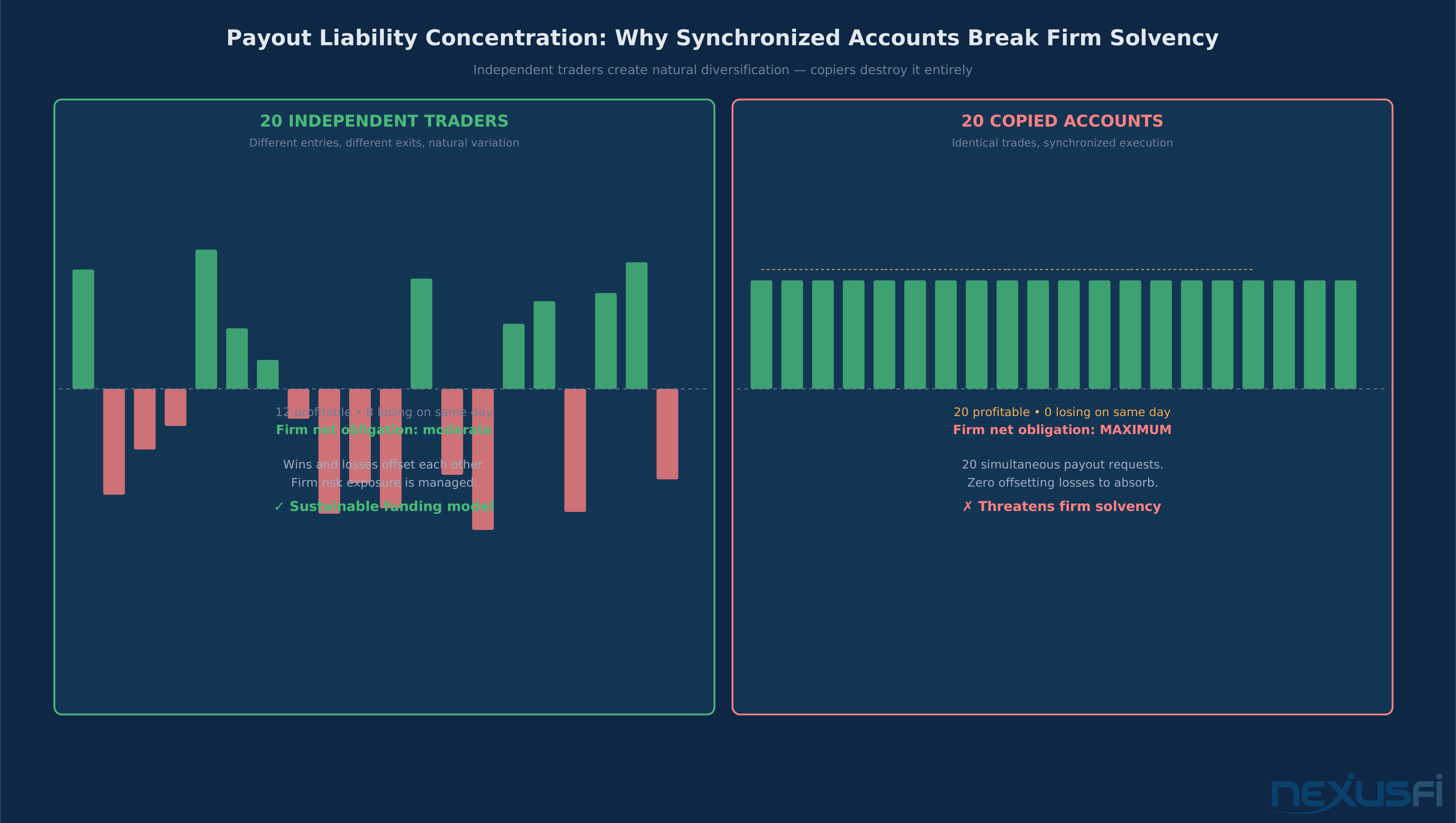
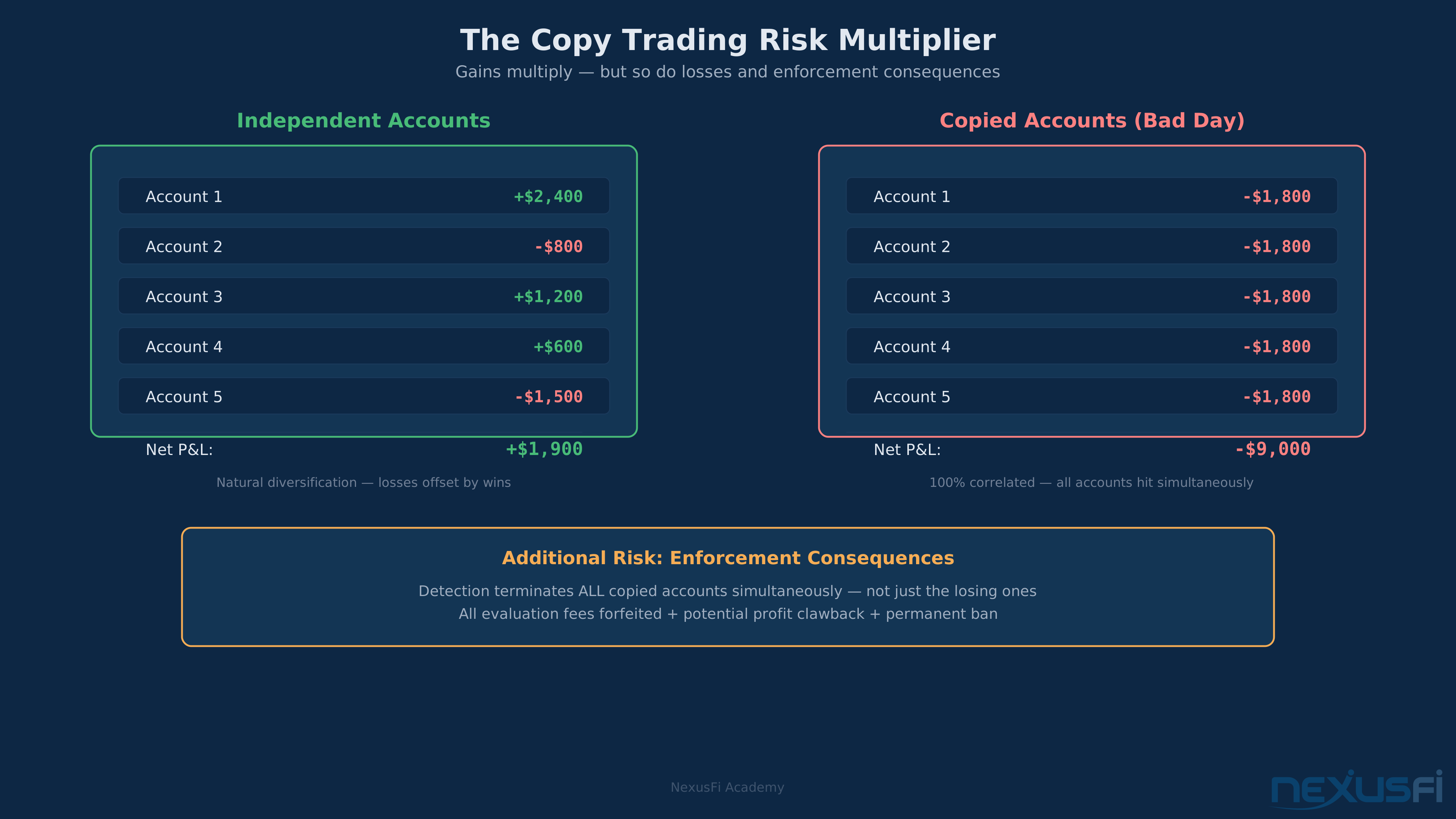
This is the risk that keeps prop firm risk managers awake. When 20 accounts execute identical trades, wins and losses are perfectly correlated. A good day generates 20 simultaneous payout requests. A bad day triggers 20 simultaneous drawdown violations.
Independent traders create natural diversification. One trader's ES long is offset by another trader's ES short. Copy trading eliminates this diversification entirely, creating clustered financial obligations that can threaten firm solvency.
Fee Model Circumvention #
The evaluation fee structure assumes each account represents a separate trading attempt. One skilled trader passing 50 evaluations via copying dilutes the funding pool without proportional fee revenue. The math simply doesn't work for firms when one $150 evaluation fee generates 50 funded accounts.
Market Conduct Risk #
Synchronized order bursts from copied accounts can distort order books, especially in thinner markets. Twenty simultaneous market orders hitting the same instrument at the same millisecond creates execution problems for everyone. Exchanges monitor for coordinated trading activity, and firms don't want that kind of attention.
CME Group's Rule 575 ("Disruptive Practices Prohibited") makes this explicit: coordinated order entry that disrupts price discovery or orderly market function is prohibited, independent of whether the traders involved consider themselves to be engaged in legitimate multi-account strategies. The same surveillance infrastructure that flags spoofing, wash trading, and quote stuffing is designed to detect synchronized order flow — and prop firm accounts clearing through CME Globex-connected brokers are fully within its scope.
How Firms Detect Copy Trading #
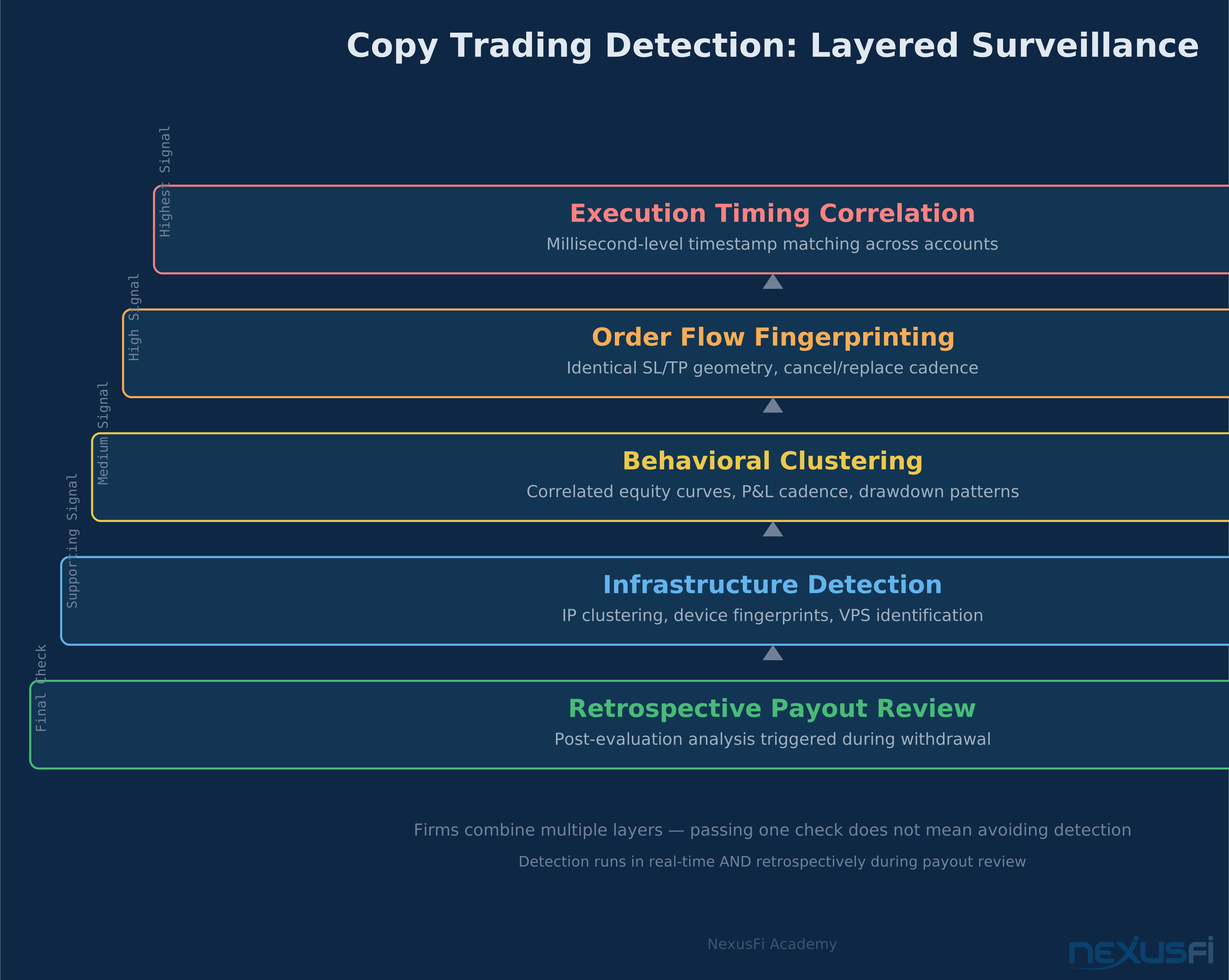
Detection technology has gotten sophisticated. Firms don't rely on a single indicator — they layer multiple analytical approaches to build a complete picture.
Execution Timing Correlation #
The highest-signal detection method. Firms monitor for trades placed across multiple accounts with near-identical timestamps. We're talking millisecond-level analysis. Independent human traders virtually never enter positions at the exact same moment. When accounts consistently show entry timestamps within seconds of each other, the pattern is unmistakable.
Even manual copying creates detectable timing patterns. The delay between looking at your master account, switching windows, and entering the trade on account two creates a consistent latency signature that analytics can identify.
Order Flow Fingerprinting #
Beyond timing, firms analyze the structure of order flow itself:
- Identical stop-loss and take-profit placement relative to entry. If every account has a 12-tick stop and 20-tick target on every trade, that's a copier signature.
- Same order lifecycle patterns. The sequence of limit orders, modifications, cancellations, and market orders creates a unique fingerprint.
- Synchronized cancel/replace cadence. When multiple accounts modify pending orders at the same rate and in the same direction, the pattern points to a single decision source.
Behavioral Clustering #
Copied accounts create strikingly similar equity curves. The shapes match up to a scaling factor. Drawdown patterns align. Session-by-session P&L cadence is virtually identical. A human trader managing multiple accounts independently creates natural variation — different entry timing, different position sizes, different reactions to market conditions. Copiers don't produce this variation.
Firms look specifically for:
- Correlated equity curve shapes across accounts
- Identical drawdown timing and magnitude
- Same instruments traded in the same sequence every session
- Dormant periods followed by perfectly synchronized bursts of activity
Infrastructure Detection #
The technical metadata layer catches what execution analysis might miss:
- IP address clustering — multiple accounts from the same IP or IP range
- Device fingerprints — browser and hardware identifiers matching across accounts
- VPS provider identification — accounts sharing the same virtual private server
- Platform-specific markers — MT4/MT5 magic numbers, API connection identifiers, and automation framework signatures
Retrospective Analysis #
Many firms run detection algorithms during payout review, not just in real-time. A trader who avoids detection during the evaluation may get caught when requesting their first withdrawal. This is why "I passed the evaluation without getting flagged" doesn't mean the copying went undetected — it may simply mean the firm hasn't looked yet.
The Copy Trading Spectrum: What's Actually Allowed #
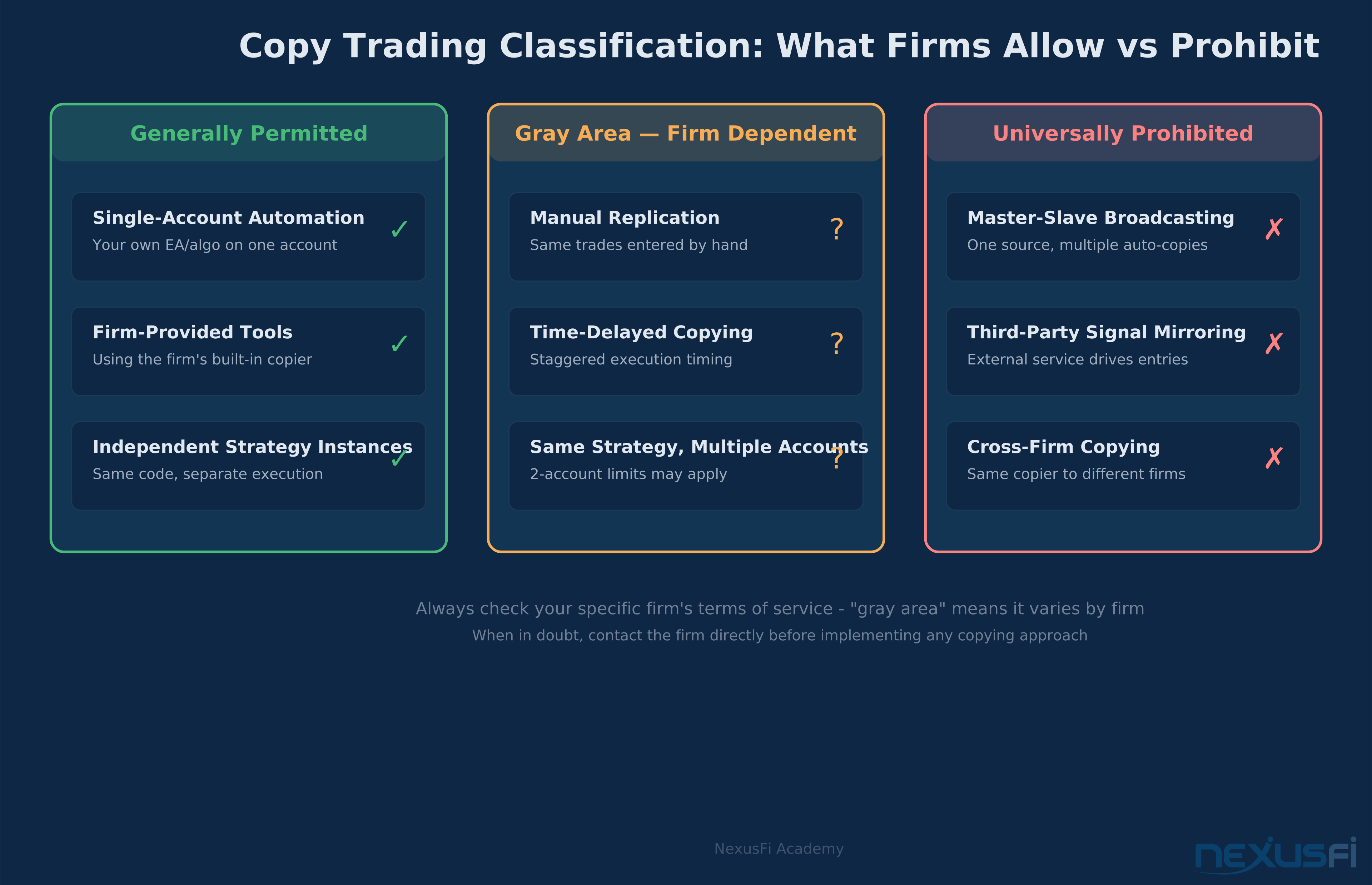
Not all copying is treated equally. Firm policies span a wide spectrum.
Single-Account Automation (Generally Permitted) #
Running your own custom EA, algorithm, or automated strategy on a single evaluation account is accepted by most firms. You built the strategy, you configured it, you're running it on one account. This is personal automation, not copying.
The key distinction: one strategy instance, one account, one execution stream. There's no replication involved.
Built-In Copier Features (Firm-Specific) #
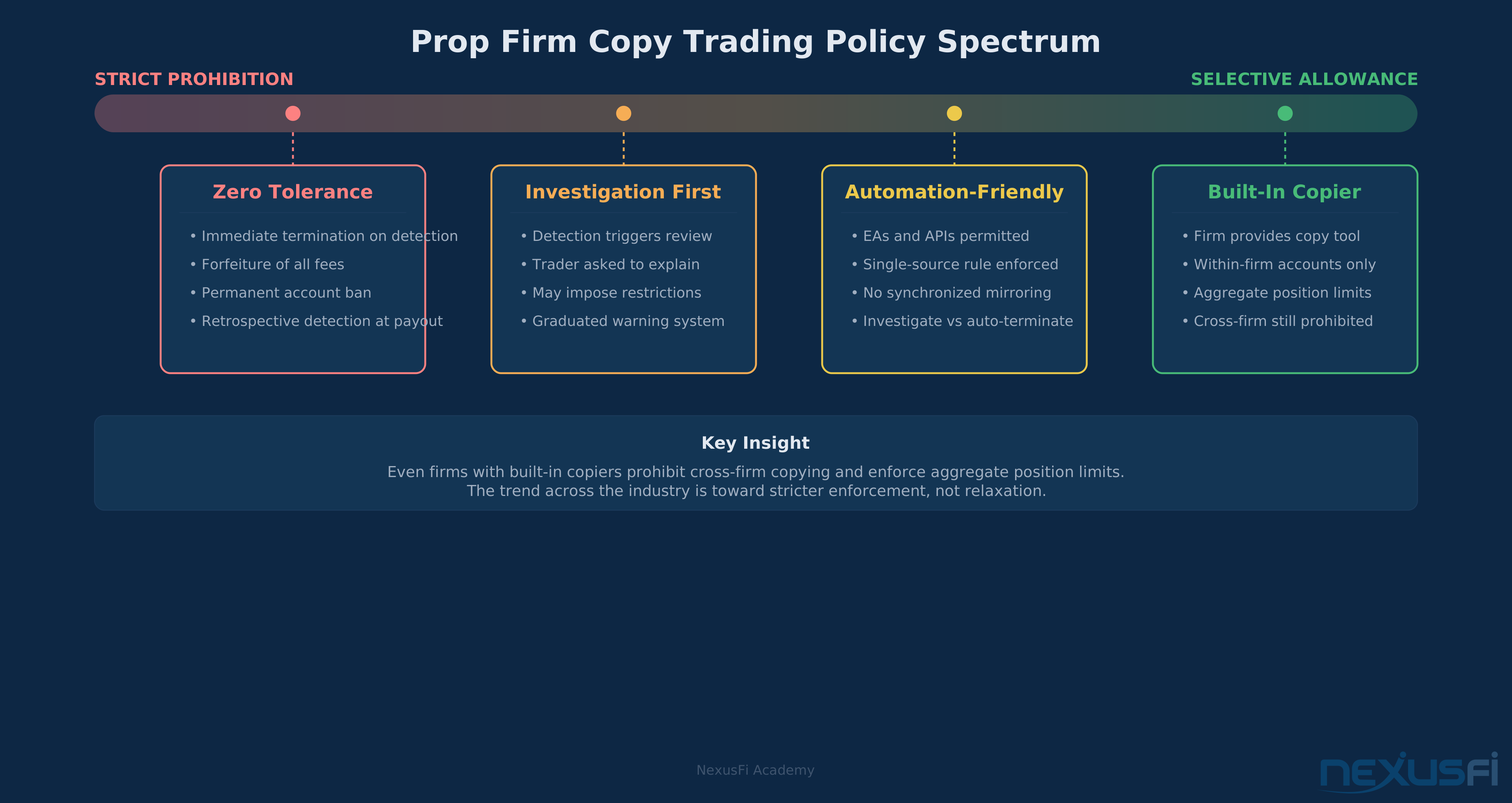
Some firms provide their own copy trading infrastructure as a feature. Apex Trader Funding offers a built-in trade copier. Tradovate provides a group account function. When the firm builds the tool and offers it to funded traders, using it within the firm's stated parameters is legitimate.
One NexusFi community member described their approach: "I only trade copy in my Tradovate prop accounts, and only inside the same company using the group account function that's built-in, not across firms." That's a critical distinction — using the firm's own tool within their rules versus using third-party software to circumvent restrictions.
Another trader noted their experience with Apex: "The goal is to play their game and get to multiple funded accounts as soon as possible and use copy trading. I use Apex and only picked up my eval accounts when they were on 90% discount."
Cross-Account Copying (Usually Prohibited) #
Using third-party copier software to replicate trades from a master account to multiple evaluation or funded accounts — especially across different firms — is where most violations occur. Even when a trader uses the same strategy, the synchronized execution creates the detection signatures firms are looking for.
Manual Replication (Gray Area) #
Watching your master account and manually entering the same trades on other accounts is technically harder to detect but still violates most firms' terms of service. The timing delays inherent in manual copying create a different execution pattern than automated copying, but firms are aware of this approach and analyze for it specifically.
Cross-Firm Copying (Highest Risk) #
Running the same copier across accounts at different prop firms is the most dangerous form. Each firm detects independently, but the industry shares information more than traders realize. A ban at one firm can trigger investigation at others.
FTMO's Forbidden Trading Practices page makes the cross-firm prohibition explicit: traders may not "perform, alone or in concert with other persons — including between connected accounts, accounts held with various operators/providers, or accounts held with other members of the Program Group — simulated trades or combinations of trades for manipulative purposes." The phrase "various operators/providers" is the key clause: FTMO explicitly targets copying across multiple prop firms, not just across accounts within the same firm.
Apex Trader Funding's Prohibited Activities policy adds the infrastructure layer: traders may not "use VPNs, proxy servers, cloud servers, anonymizing tools, or other methods or tools for the purpose of misrepresenting, concealing, or disguising your identity, device, or location." Traders who route copier traffic through a VPS to obscure the connection between accounts at different firms are doubly exposed — for the copying itself and for the concealment attempt.
Data-sharing between prop firms is more systematic than traders typically assume. Firms share termination records through informal networks, and some use shared infrastructure providers that maintain cross-firm pattern databases. A behavioral fingerprint — specific instrument preferences, session timing, position sizing ratios — that leads to a ban at one firm can surface that same pattern during onboarding review at another. Traders who believe a fresh account at a new firm resets their record are often wrong.
Account Limits and Strategy Duplication Rules #
Many firms have explicit limits on how many accounts can run the same strategy, independent of whether a copier is involved.
As one NexusFi member discovered: "You can not copy other traders, but you can't have the same strategy in more than two of your own funded accounts. Their terms and conditions were vague so I did a chat and learned this."
This is a subtlety many traders miss. Even without a copier tool, if you're manually trading the same setup on the same instruments across multiple accounts, you may be violating the firm's strategy duplication limits. The rule isn't just about the mechanism of copying — it's about the correlation of results across accounts.
Impact on Consistency Rules #
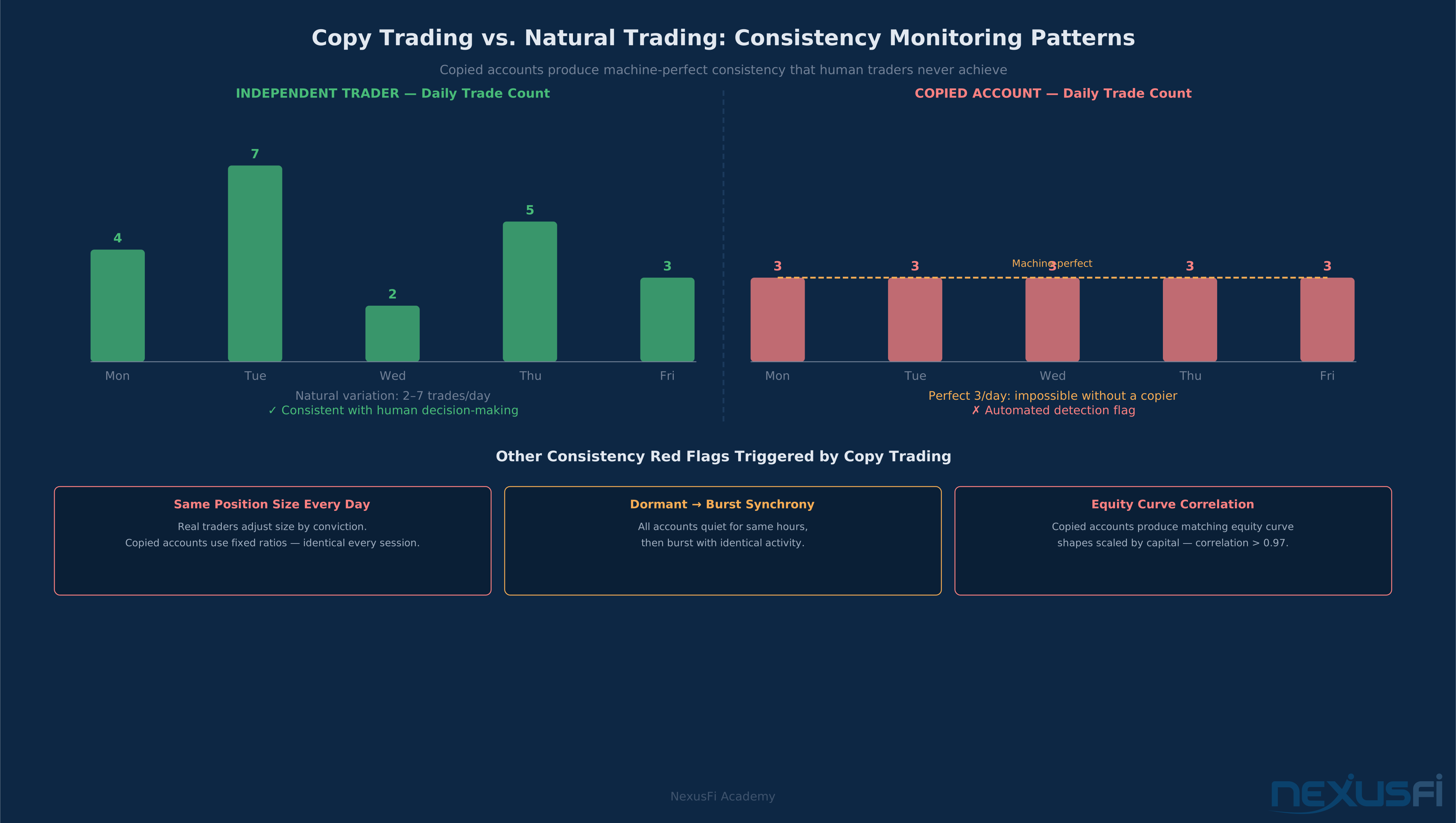
Copy trading interacts with consistency rules in ways that create additional risk. Most funded accounts require consistent trading behavior — similar position sizes, similar trade frequency, similar risk profiles session to session. When a copier replicates trades, it can produce patterns that look artificial to consistency monitoring systems.
Consider: a trader copies 3 trades per day from a master account to 10 funded accounts. Every account shows exactly 3 trades per day, every day. No variation in frequency. No days with 1 trade or 5 trades. That consistency itself becomes a red flag — real human trading has natural variation that copy trading removes.
The Copier Technology Environment #
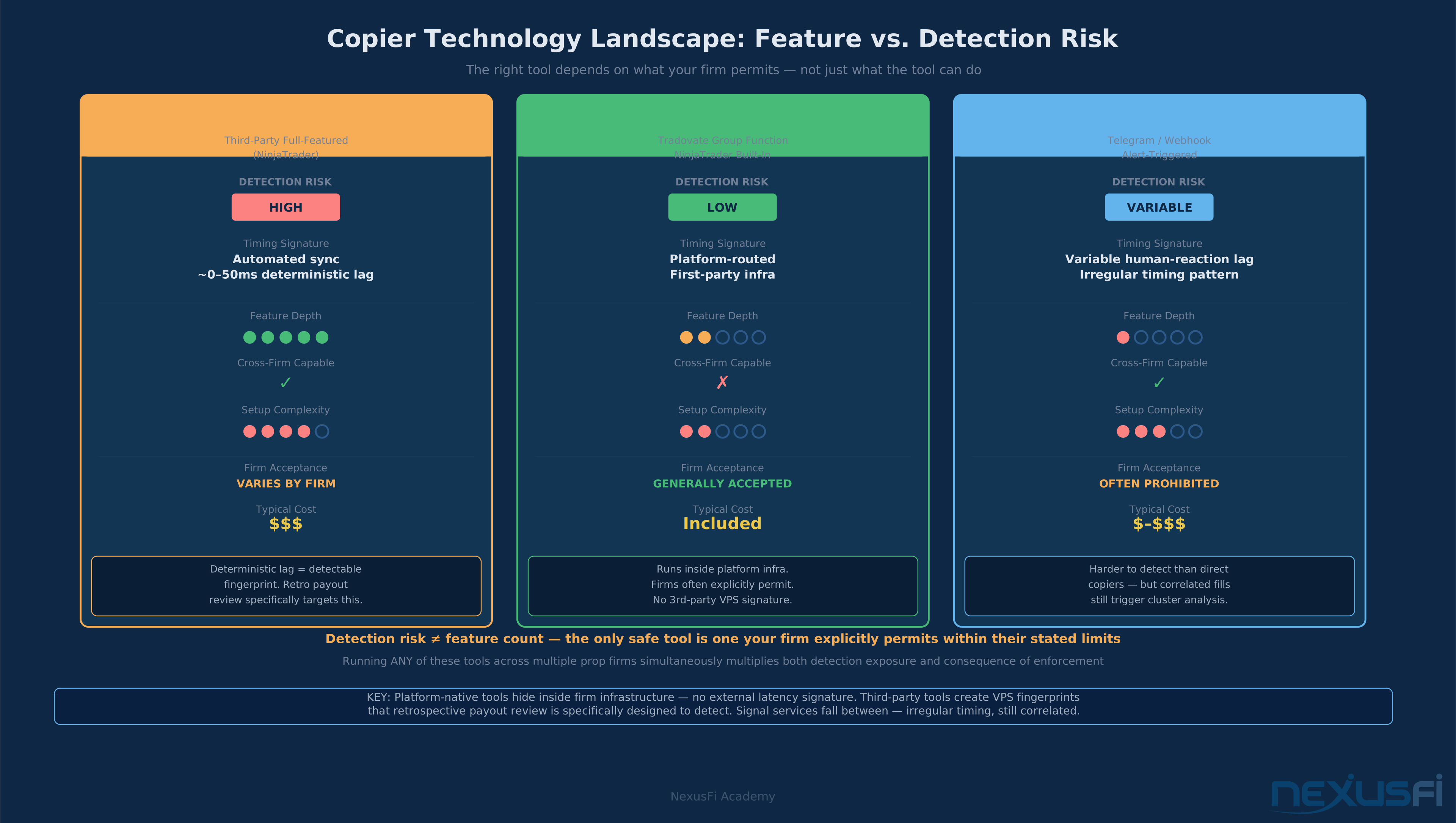
Several tools dominate the prop firm copy trading space, each with different capabilities and detection profiles.
Replikanto #
The most feature-rich third-party copier for NinjaTrader users. Handles multi-connection architecture, manages accounts across different brokers simultaneously. Significant cost relative to simpler alternatives, but offers features like position sizing controls per account, independent stop management, and latency compensation.
Platform-Native Tools #
NinjaTrader's built-in group account function and Tradovate's native copying features operate within the platform's own infrastructure. Because they're first-party tools, they integrate more cleanly with the platform's execution engine. Some firms view native tool usage more favorably than third-party alternatives.
Signal-Based Services #
External signal providers that send alerts (via Telegram, email, or webhook) which traders then execute manually or through automation. This creates a different timing profile than direct copiers — the signal-to-execution delay varies with each trader's response time, making detection harder but not impossible.
Risk-Reward Calculation #
Before implementing any copy trading strategy, the math needs to be honest.
- Multiplied profits when the master strategy wins
- Leveraged access to more funded capital
- Efficiency — one set of analysis, multiple accounts
- Forfeiture of all evaluation fees paid (non-refundable)
- Termination of all funded accounts simultaneously
- Permanent ban from the firm (and potentially others)
- Clawback of previously paid profits in some cases
- Multiplied losses when the strategy loses — drawdown hits all accounts at once
The asymmetry is important. Gains are multiplied, but so are losses. And the enforcement risk adds another dimension entirely. A profitable month across 10 copied accounts can be wiped out by a single detection event that terminates all of them.
What a Detection Event Actually Costs #
The financial exposure from a single enforcement action is rarely understood until it happens. Consider a concrete scenario: a trader runs a third-party copier across 8 evaluation accounts ($165 evaluation fee each) and 4 funded accounts that have accumulated a pending payout of $2,200 from the current month's profitable trading.
When the firm detects the copying pattern during payout review:
- Evaluation fees forfeited: 8 × $165 = $1,320 (non-refundable — evaluations are voided, not credited)
- Funded accounts terminated: All 4 accounts closed simultaneously
- Pending payouts canceled: 4 × $2,200 = $8,800 in earned withdrawals voided
- Permanent ban: No future evaluations allowed at the firm
Total financial exposure from one enforcement action: over $10,100 — gone in a single review cycle. Traders who would never risk $10,000 in a single trade regularly expose that amount through multi-account copy setups. The enforcement action doesn't happen incrementally; everything terminates at once.
This enforcement pattern — simultaneous termination of all connected accounts, no appeals process for terms violations, non-refundable evaluation fees — is consistent across major prop firms. The simultaneous closure is intentional: firms prevent the immediate re-evaluation attempt that would occur if accounts were closed one at a time.
Practical Compliance Guidance #
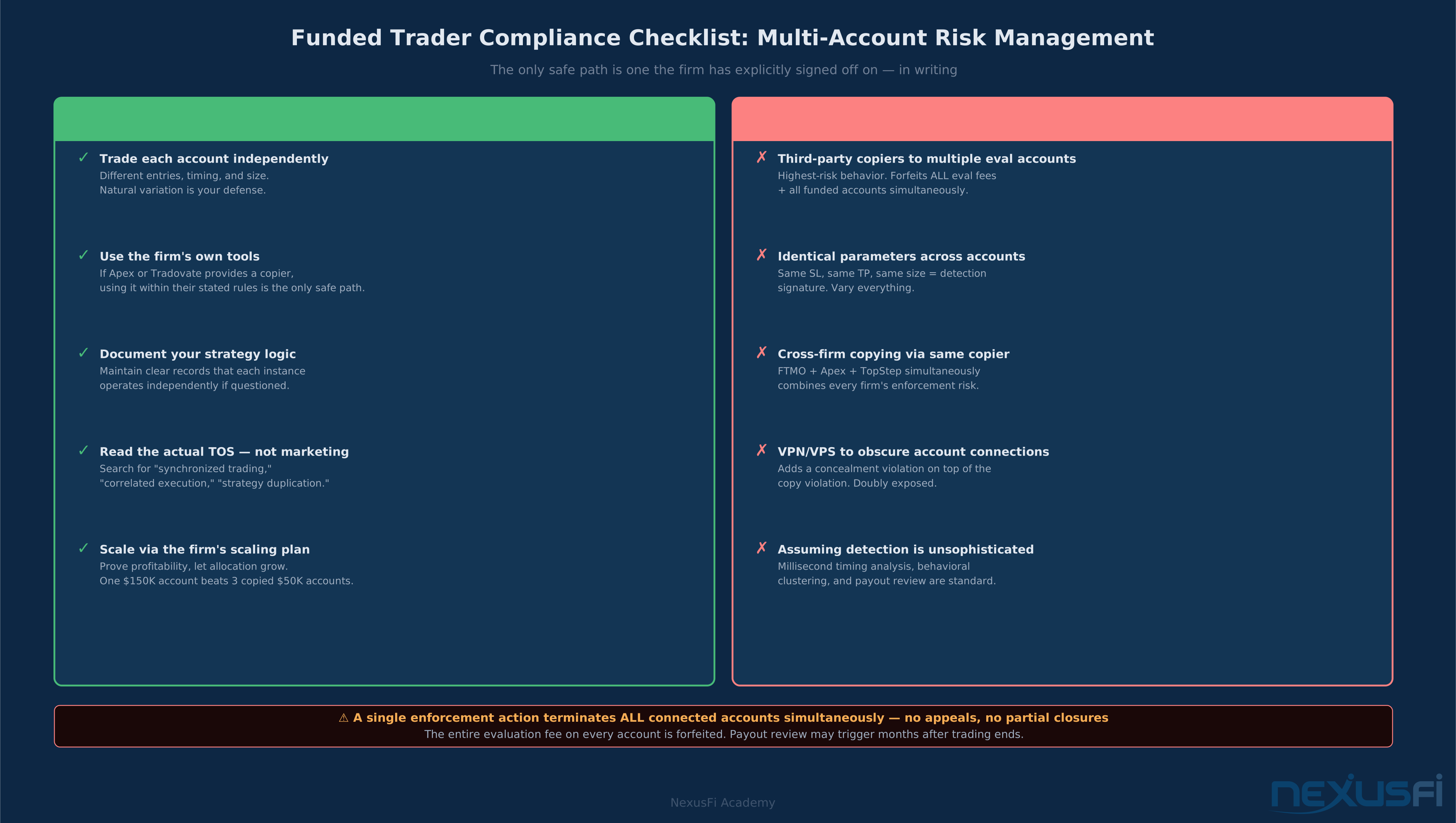
For traders managing multiple funded accounts legitimately:
What to Do #
- Trade each account independently. Different entries, different exits, different position sizing. Natural variation is your protection.
- Use the firm's own tools when copy functionality is provided. If Apex gives you a copier, using it within their stated rules is the safest path.
- Document your strategy logic. If you're running automation, maintain clear records that each instance operates independently.
- Read the actual terms. Not the marketing page — the legal terms of service. Look for specific language about "synchronized trading," "correlated execution," and "strategy duplication limits."
What to Avoid #
Highest-Risk Behavior: Using third-party copiers to broadcast trades across multiple evaluation accounts is where most account terminations originate. A single enforcement event doesn't just close one account — it terminates every connected account simultaneously, voids all pending payouts, and typically results in a permanent ban.
- Third-party copiers broadcasting to multiple evaluation accounts. This is the highest-risk behavior with the most severe consequences.
- Identical parameters across accounts. Same stop, same target, same size, same instruments, same time — that's a detection signature.
- Cross-firm copying. Running the same copier to accounts at FTMO, Apex, and TopStep simultaneously combines the risks from every firm.
- Assuming detection systems are unsophisticated. They're not. Millisecond-level timing analysis, behavioral clustering, and retrospective payout review are standard capabilities.
The Scaling Question #
If copy trading is restricted, how do successful funded traders actually scale?
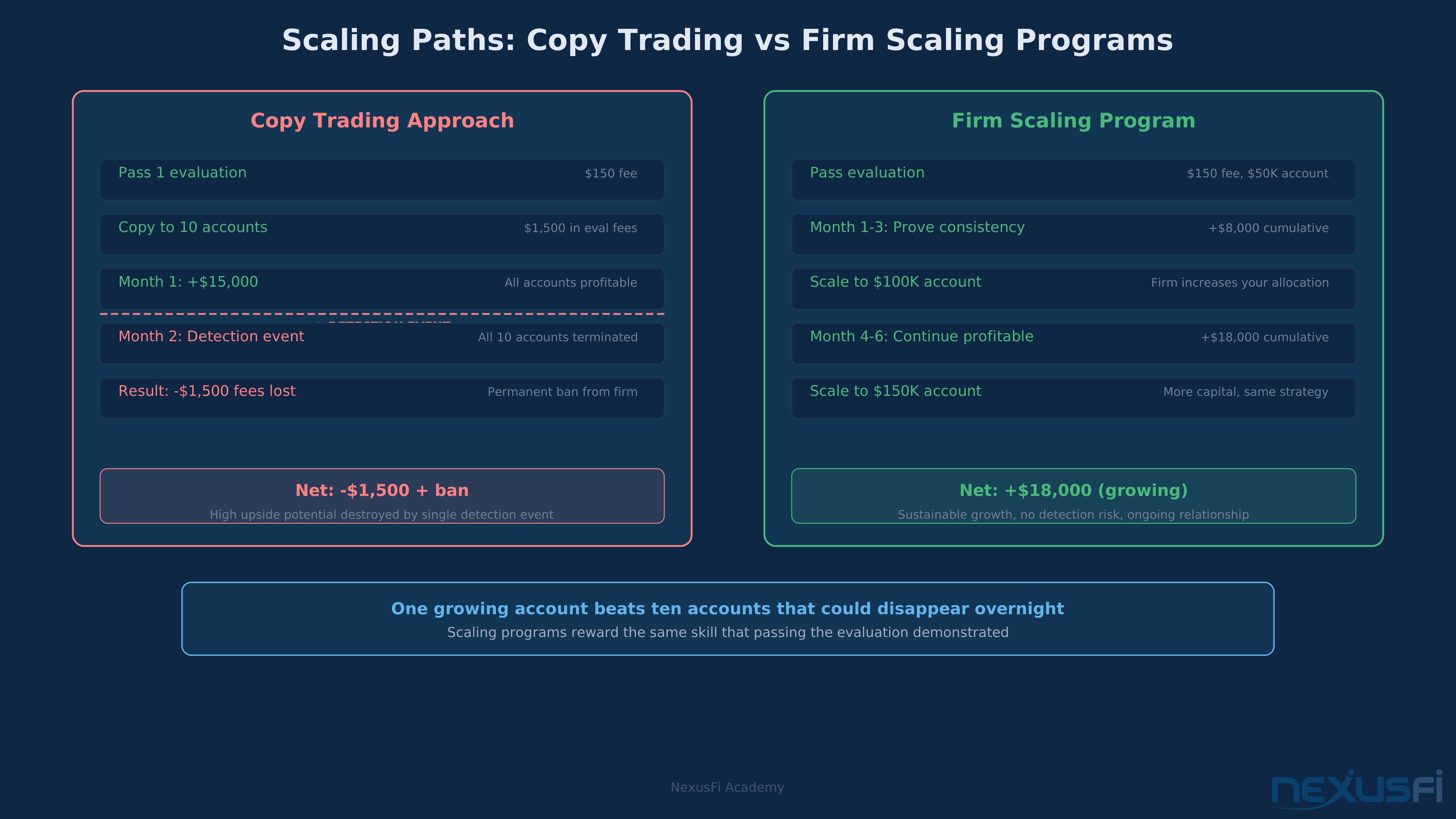
The answer is scaling plans. Most reputable firms offer formal programs that increase your funded account size based on demonstrated profitability. Pass an evaluation, trade profitably for several months, and the firm increases your allocation. One account growing from $50,000 to $150,000 is more sustainable and lower-risk than copying across three $50,000 accounts.
Several NexusFi community members have shared this perspective. The traders who build lasting funded trading businesses aren't the ones running copiers across 20 accounts — they're the ones developing genuine edge, proving it through consistent results, and scaling through the firm's own programs.
That said, some traders approach it differently. As one community member put it: "Having multiple accounts allows you to multiply your profits and losses, as well as your trailing drawdown." The strategy works until it doesn't, and when it doesn't, the losses are multiplied too.
The Bottom Line #
Copy trading in prop firm evaluations sits at the intersection of trader ambition, firm risk management, and technological surveillance. The rules are getting stricter, the detection is getting better, and the consequences are getting more severe.
The firms that permit copy trading do so within carefully defined boundaries — their own tools, their own limits, their own risk parameters. The ones that prohibit it are protecting the integrity of their evaluation process and the solvency of their funding model.
For traders, the sustainable path isn't finding ways to circumvent copy trading restrictions. It's developing the independent trading skill that makes copying unnecessary. One well-managed funded account that grows through a scaling plan generates more long-term income than a dozen copied accounts that could all terminate in a single detection event.
The firms aren't going to relax these rules. If anything, the trend is toward more sophisticated detection and stricter enforcement. Build your edge. Trade your own accounts. Scale through legitimate channels. That's where the real money is.
Knowledge Map
Go Deeper
Build on this knowledgeReferences This Article
Articles that build on this topicCitations
- — Funded Trader platforms (2024) 👍 11“Multiple funded accounts with copy trading on 90% discount evaluations”
- — Funded Trader platforms (2024) 👍 1“Cannot have same strategy in more than 2 funded accounts”
- — Daytradr + Trade Copier = Disaster and failure (2024) 👍 2“Trade copy in Tradovate prop accounts using built-in group function”
- — ApexTraderFunding.com experience and review (2022) 👍 7“Multiple accounts with trade copier to spread risk”
- — A Cautionary Tale: My 25-Year Struggle in Pursuit of Trading Success (2023) 👍 15“10 Apex accounts with trade copier multiplying profits”
- — Get funded firms 2023/2024 - Any recommendations or words of warning? (2024) 👍 4“Scale up working setups to copy trade to multiple accounts”
- — Trade Copier - Replikanto vs Apex Trade Copier (2025)“Replikanto vs Apex Trade Copier comparison for multi-account management”