



Instrument and Market Restrictions in Prop Firm Funded Accounts: What You Can Trade, What You Cannot, and Why It Reshapes Your Strategy
Overview #
Every prop firm hands you a funded account and a rulebook. Most traders fixate on drawdown limits and profit targets — the numbers that decide whether you pass or fail. But there's a quieter constraint that reshapes your entire trading approach before you even place your first trade: the instrument list.
What you're allowed to trade, how much of it, and when — these aren't footnotes. They're the foundation your strategy sits on. A profitable crude oil swing strategy is worthless if your firm caps CL at 2 contracts and bans overnight holding. A scalping edge in thin agricultural markets evaporates when the firm restricts you to the 6 most liquid CME products.
Check the instrument list before you pay for an evaluation -- not after. Most strategy-to-firm mismatches get discovered the hard way: after the fee clears and the first position gets rejected at entry.
This article maps the full environment of instrument and market restrictions across the funded trading industry. Not which firms are "best" — that's a compatibility question, not a quality question. Instead, we'll cover the categories of restrictions, how they differ between firms, and most importantly, how they force specific adaptations in your strategy design, position sizing, and execution workflow.
The goal: before you pay for an evaluation, know exactly whether your trading approach fits inside the firm's constraints — or whether you'll spend weeks discovering the hard way that it doesn't.
The Allowed Instrument Universe #
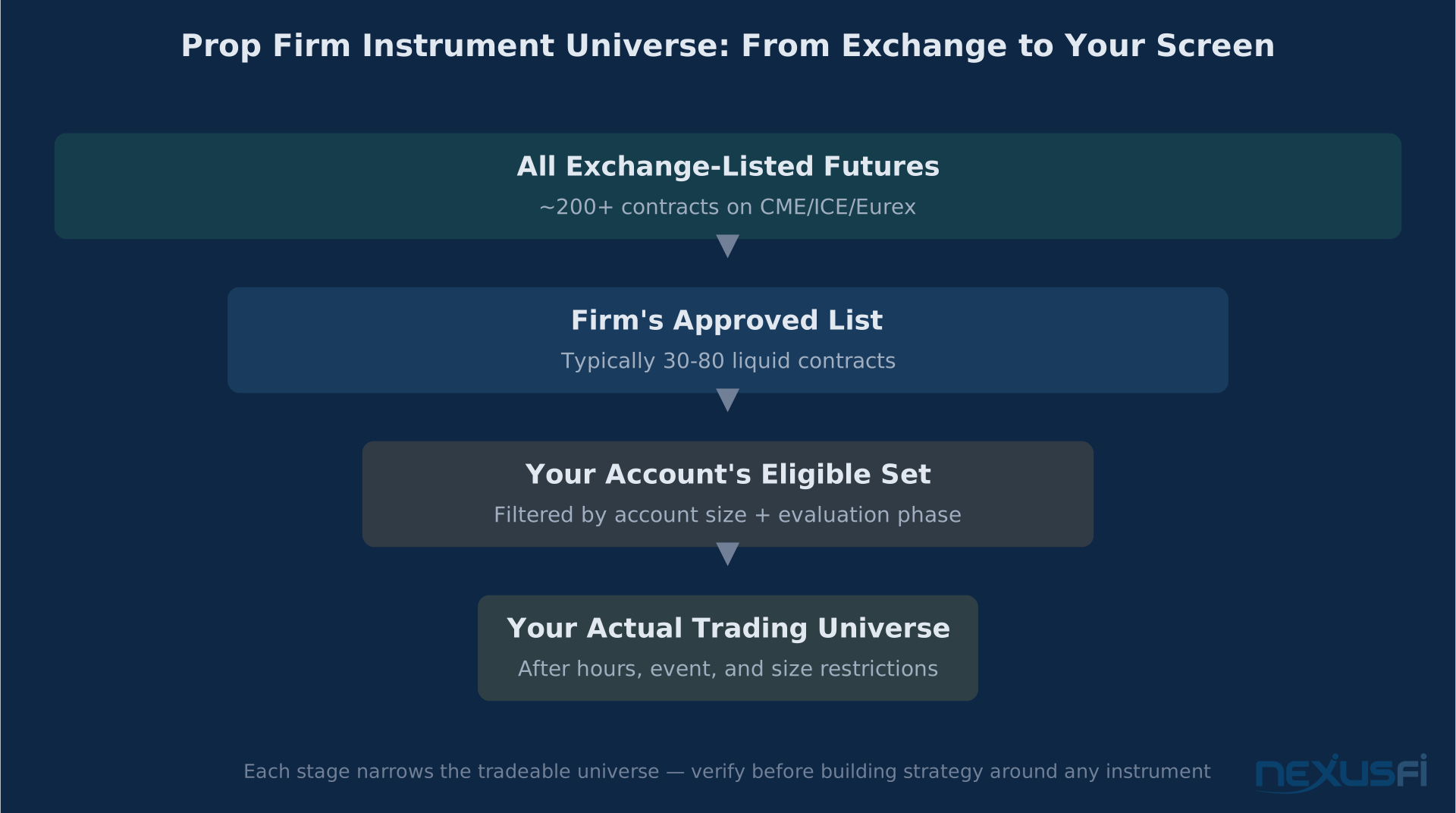
The CME Group alone lists over 200 futures contracts. Add ICE, Eurex, and other global exchanges, and you're looking at thousands of tradeable products. No prop firm gives you access to all of them. The question is how much they narrow it down and what logic drives their selection.
The Core Liquid Set
Nearly every futures-focused prop firm allows the same handful of high-liquidity products:
- Equity index futures: ES (E-mini S&P 500), NQ (E-mini NASDAQ-100), YM (E-mini Dow), RTY (E-mini Russell 2000)
- Energy futures: CL (Crude Oil), NG (Natural Gas)
- Metals: GC (Gold), SI (Silver), HG (Copper)
- Treasury futures: ZB (30-Year Bond), ZN (10-Year Note), ZF (5-Year Note)
- Currency futures: 6E (Euro FX), 6J (Japanese Yen), 6B (British Pound)
These products — all listed on the CME Group Product Slate — trade millions of contracts daily, have tight spreads, and produce predictable slippage profiles. From the firm's risk management perspective, they're modelable — the firm can calculate exposure, estimate worst-case scenarios, and set appropriate margin requirements.
Micro Contracts: The Size Equalizer
The introduction of micro contracts (MES, MNQ, MYM, M2K, MCL, MGC) changed the prop firm environment. At 1/10th the notional value of their standard counterparts, micros let firms offer smaller account sizes while still providing meaningful trading access. Most firms that allow standard contracts also allow micros, often with proportionally higher lot limits.
This matters for strategy design: a $25K evaluation account capped at 2 ES contracts can trade 20 MES contracts instead, giving far more granular position sizing. The trade-off is slightly wider spreads and marginally less depth at each price level — but for most retail strategies, the difference is negligible.
Where Firms Diverge: The Extended Universe
Beyond the core set, firms start making different choices:
- Agricultural futures (ZC, ZS, ZW, ZM, LE, HE): Some firms include these; others exclude them due to lower liquidity and wider spreads during off-hours
- Soft commodities (KC, SB, CT, CC): Rarely included in standard prop firm offerings due to thinner books and more volatile spread behavior
- Interest rate products beyond treasuries (Eurodollar successors, SOFR): Occasionally available at larger account tiers
- Volatility products (VX futures): Sometimes restricted due to extreme gap risk and complex margin requirements
As @jlabtrades noted on NexusFi when discussing acceptable prop firms: the instrument list is one of the first things to check when evaluating any funded trading program. The firm's allowed product list effectively defines your trading universe.
What's Almost Always Banned
Certain product categories are universally excluded from prop firm funded accounts:
- OTC derivatives and CFDs: No standardized pricing, no exchange-cleared risk management. Under the CFTC clearing requirements established through Dodd-Frank, exchange-traded futures must be cleared through registered derivatives clearing organizations -- OTC products bypass these protections entirely
- Binary options: Classified as gambling-adjacent products by most firms
- Single-stock futures: Too illiquid and concentrated in single-name risk
- Exotic or thinly traded contracts: Anything without reliable depth and consistent spread behavior
- Options on futures (short selling): Unbounded loss profiles make risk management unpredictable; some firms allow buying options but almost none allow selling naked
Position Size Limits and Contract Caps #
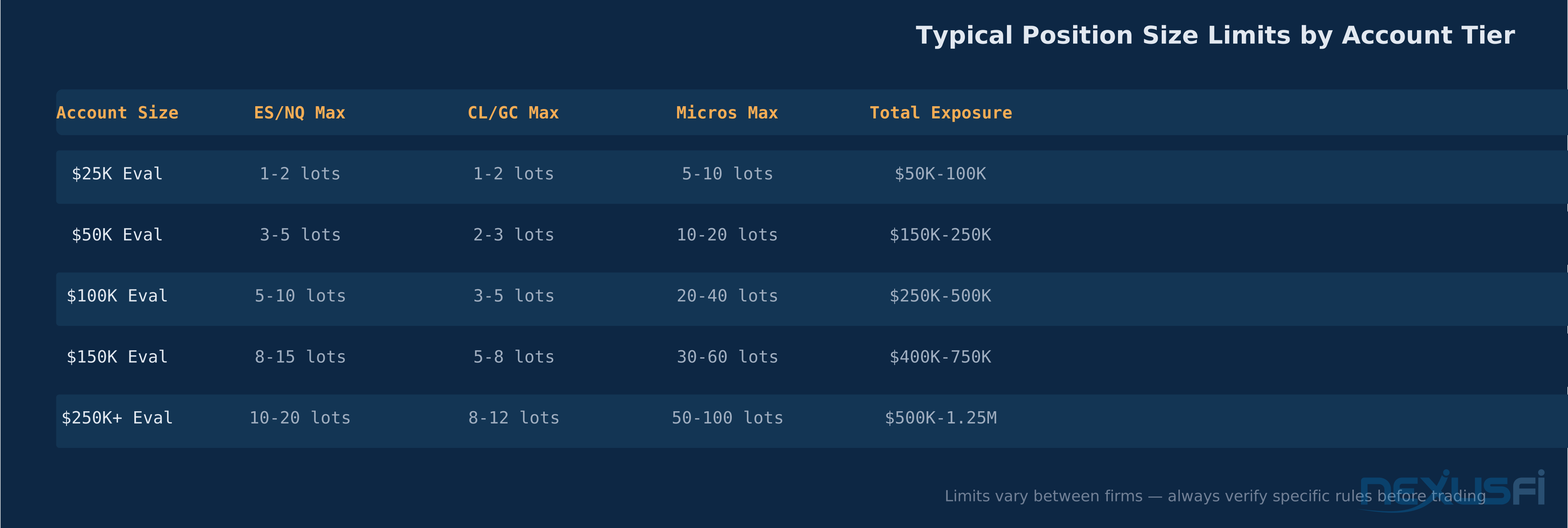
Even within the allowed instrument list, you don't get unlimited size. Every firm imposes position limits — and these limits at the core alter how you can implement your strategy.
How Limits Are Structured
Position limits come in several flavors, and most firms use more than one simultaneously:
- Maximum contracts per trade: The hard cap on any single entry. A $50K account might limit you to 5 ES contracts per order.
- Maximum open position: The total number of contracts you can hold simultaneously across all instruments. This prevents you from loading up directional risk across correlated products.
- Maximum notional exposure: Some firms calculate the dollar value of your open positions rather than just counting contracts. This is more sophisticated because it accounts for the difference between holding 1 ES contract ($250K+ notional) versus 1 MES contract ($25K+ notional).
- Margin utilization ceiling: A percentage cap on how much of your account equity can be committed to margin. CME Group performance bond requirements set the exchange-level minimums, but prop firms typically impose higher thresholds -- common ceilings range from 50-80% of funded equity.
Why Size Limits Force Strategy Adaptation
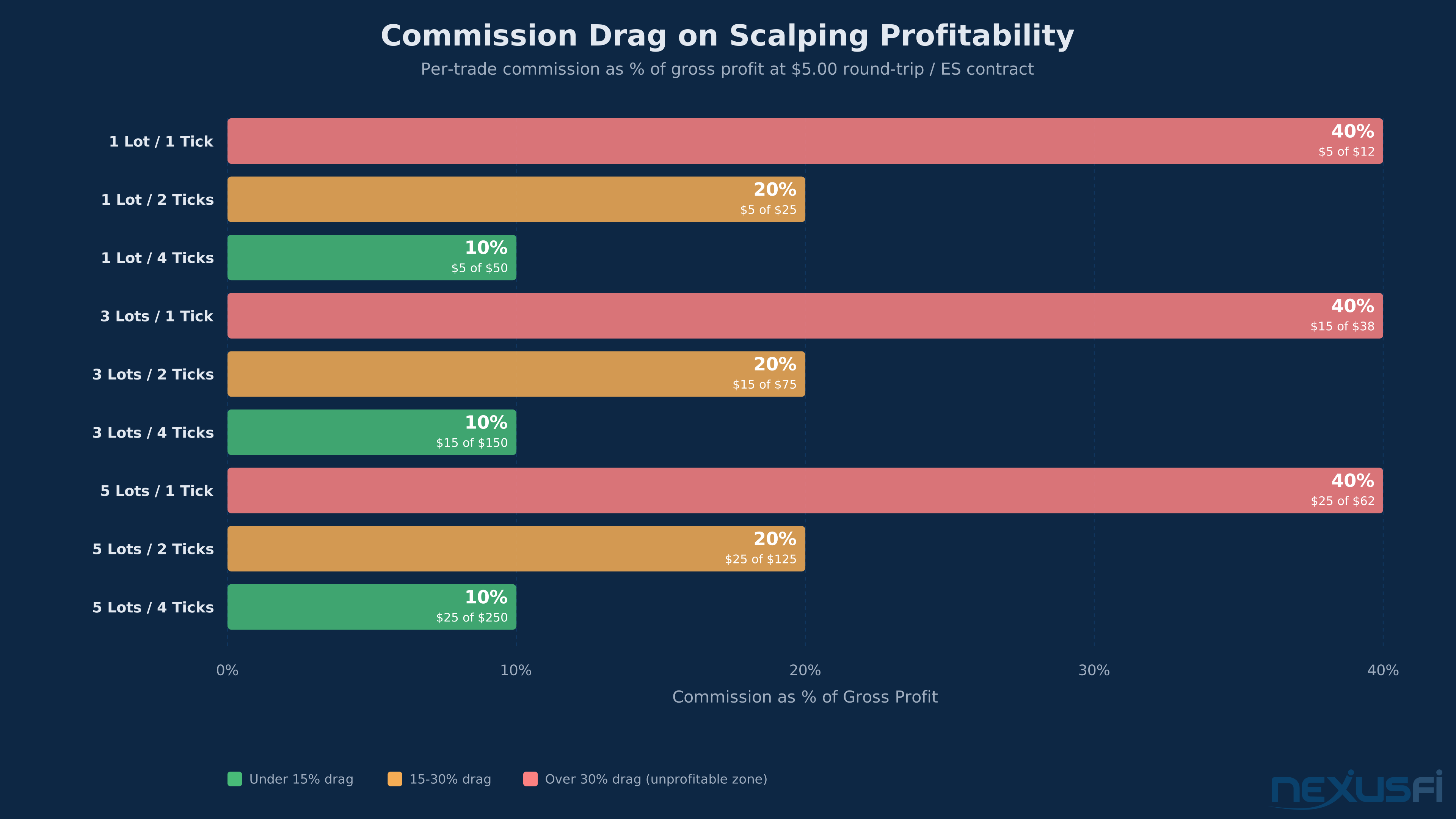
Here's where the math gets uncomfortable. If you're a scalper who relies on 10+ lots of ES to capture 1-2 ticks profitably (after commissions and slippage), and the firm caps you at 3 lots, your strategy doesn't just scale down — it may become unprofitable. The commission-to-edge ratio degrades at smaller size because fixed per-contract costs represent a larger percentage of your target profit.
The solution many funded traders adopt: shift to micro contracts for greater lot flexibility, or change instruments entirely to products with larger tick values relative to commission costs. As @matthew28 noted on NexusFi regarding prop firm evaluation criteria, understanding these limits before entering an evaluation prevents the painful discovery that your sizing model doesn't fit.
Correlation and Portfolio Limits
Some firms go beyond per-instrument limits and impose portfolio-level constraints:
- Sector concentration caps: Maximum exposure to a single asset class (e.g., no more than 60% of margin in equity index futures)
- Correlated position rules: Holding long ES and long NQ simultaneously may count as amplified directional risk rather than diversification
- Hedging treatment: Whether holding long ES / short NQ counts as a partial hedge (reducing your exposure count) or as two separate positions (doubling your contract count) varies much between firms
This distinction matters enormously for spread traders and anyone running multi-instrument strategies. Two firms that both "allow ES and NQ" can impose radically different constraints on how you combine them.
Trading Hours and Event-Based Restrictions #
When you can trade matters as much as what you can trade. Time-based restrictions are among the most impactful constraints in funded accounts because they eliminate entire categories of trading opportunities.
Session Hour Restrictions
CME Globex futures trade nearly 23 hours per day, Sunday evening through Friday afternoon. But many prop firms don't give you that full window:
- Regular session only: Some firms restrict trading to the regular trading hours (RTH) -- typically 8:30 AM to 3:15 PM CT for equity index futures. This eliminates overnight session trading entirely.
- Extended hours with reduced size: Other firms allow overnight trading but reduce your maximum position size during the electronic-only session, reflecting thinner liquidity.
- Full session access: A smaller number of firms grant access to the complete Globex session, including overnight and pre-market. In practice, only a handful of firms genuinely support holding through the close and into the next session without penalty.
Event-Based Blackout Windows
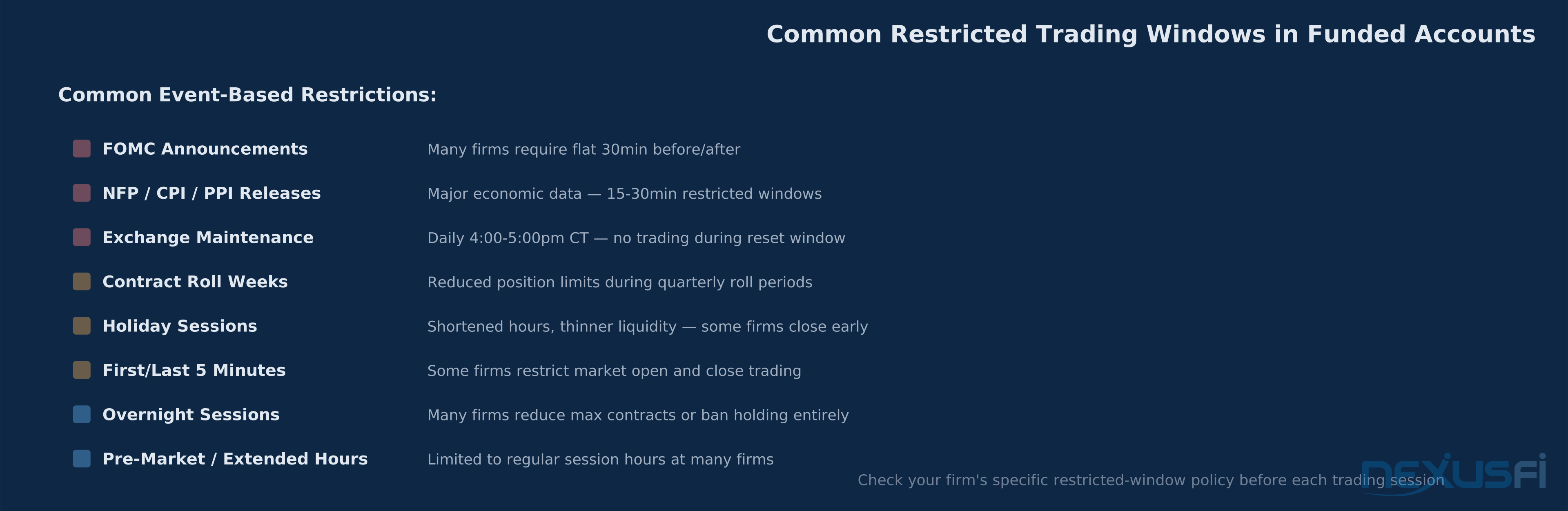
Major economic events create volatility spikes that can blow through drawdown limits in seconds. Many firms respond with explicit trading restrictions around these events:
- FOMC announcements: The most commonly restricted event. Firms typically require all positions to be flat 15-30 minutes before the announcement and restrict new entries until 15-30 minutes after. Some firms extend this to the full FOMC day.
- Non-Farm Payrolls (NFP): First Friday of each month, 8:30 AM ET. Similar blackout windows as FOMC, though often shorter (15 minutes each side).
- CPI, PPI, and other major data: Increasingly restricted as these releases have driven outsized moves in recent years.
- Contract roll periods: During quarterly futures expirations, some firms reduce position limits or require traders to roll to the new front month before a specific date.
The Exchange Maintenance Gap
Every trading day, CME Globex has a maintenance window from 4:00 PM to 5:00 PM CT (sometimes extended to 6:00 PM on Sundays). No trading occurs during this period. This is an exchange-level restriction, not a firm-level one, but traders new to futures sometimes don't account for it in their workflow planning. As @bobwest explained on NexusFi, understanding the distinction between exchange-defined sessions and broker/firm-imposed restrictions is fundamental to avoiding confusion about margin rules and position handling.
Why Time Restrictions Reshape Strategy
If your edge exists primarily in the overnight session — say, trading the Asian session's impact on ES from 7 PM to midnight CT — and your firm restricts you to RTH, that edge is inaccessible. Period. No amount of adaptation fixes that fundamental incompatibility.
Similarly, event-driven strategies that trade FOMC volatility are completely eliminated if the firm imposes blackout windows. This isn't a minor constraint — it removes a specific, well-defined trading opportunity from your calendar 8 times per year.
Order Types and Execution Constraints #
Beyond what you can trade and when, firms also constrain how you execute. Order type restrictions are less commonly discussed but can be just as impactful on strategy implementation.
Common Order Type Rules
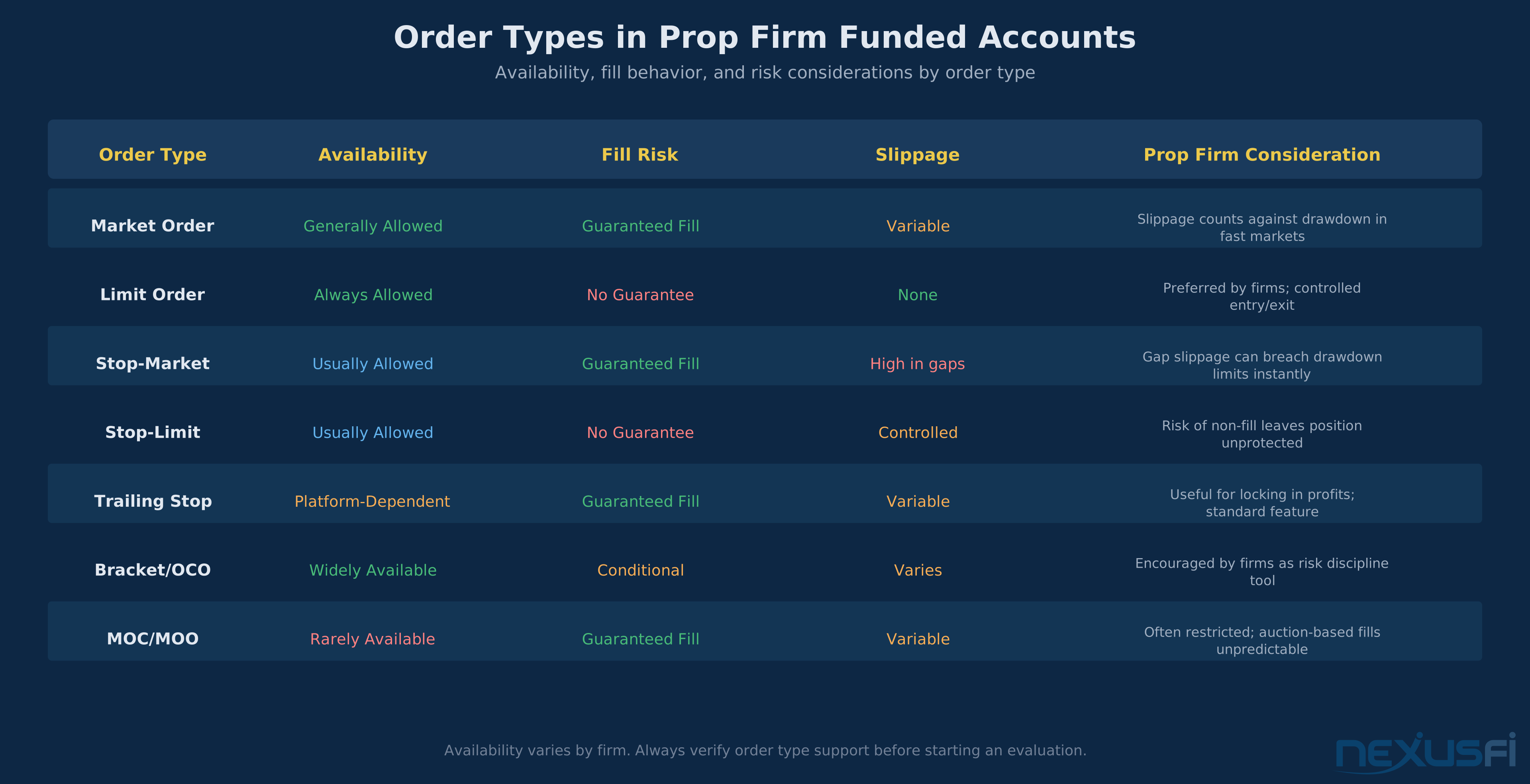
- Market orders: Generally allowed on liquid products but sometimes restricted on thinner contracts where slippage could be extreme. Some firms require limit orders for certain instruments.
- Stop-market orders: Usually allowed, but the slippage from stop-market execution during fast markets counts against your drawdown. Traders who rely heavily on stop-market entries need to factor this into their risk calculations.
- Stop-limit orders: Allowed at most firms, but the risk of non-fills during gap moves creates a different problem -- your stop doesn't protect you when you need it most.
- Trailing stops: Available at most firms through the trading platform, not typically restricted by the firm itself.
- Bracket/OCO orders: Generally available and encouraged as they demonstrate disciplined risk management.
Scalping and Frequency Constraints
Some firms impose minimum holding times or maximum trade frequency. A "no scalping" rule might define scalping as trades held less than 30 seconds, or might cap total daily round trips. This is rare but important to check if your strategy involves high-frequency entries and exits.
More commonly, firms don't explicitly ban scalping but make it unprofitable through commission structures. If the firm charges $5.50 round-trip per ES contract and you're targeting 1 tick ($12.50), your net per trade is just $7 — meaning your win rate needs to be extremely high to overcome the drag.
Averaging and Martingale Prohibitions
Nearly every prop firm explicitly bans martingale-style position management (see also: automated trading rules) — adding to losing positions with increasing size. Some firms also restrict any form of averaging down, even at the same lot size. This eliminates entire categories of mean-reversion strategies that rely on scaled entries at different price levels.
The line between "scaling into a position" (often allowed if each entry has an independent signal) and "averaging down on a loser" (almost always prohibited) is determined by the firm's specific rules and, sometimes, by their discretionary review of your trading behavior.
Matching Your Strategy to a Firm's Restrictions #
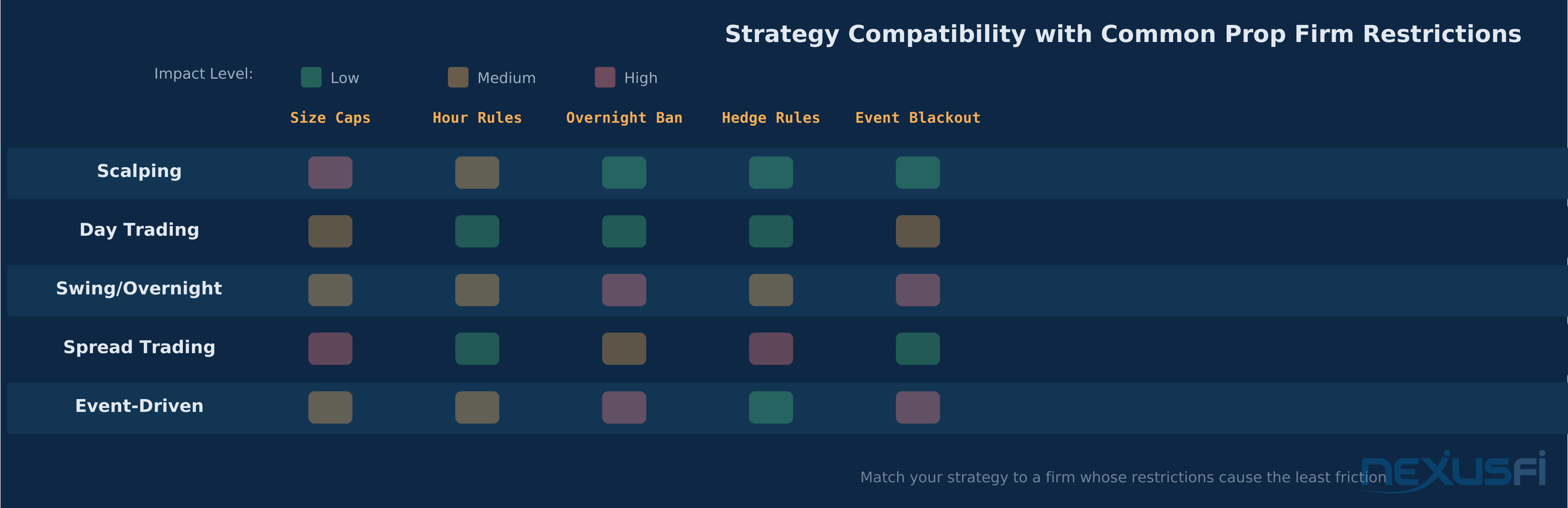
The fundamental question isn't "which prop firm has the best rules?" It's "which firm's restrictions are compatible with my specific strategy?" Different trading approaches are affected differently by each category of restriction.
Scalping Strategies
Scalpers face the highest friction from prop firm restrictions. Position size caps directly reduce the edge-to-commission ratio. Hour restrictions may eliminate the specific sessions where price action is most favorable for quick entries. If your scalping strategy relies on correlated pairs (e.g., ES/NQ divergence), hedging rules determine whether that's even possible.
Adaptation: Shift to micro contracts for better lot flexibility. Focus on the highest-volume sessions where fills are most reliable. Accept that your per-trade profit will be smaller and plan your target metrics around the actual achievable size.
Day Trading Strategies
Day trading is the most compatible approach with prop firm structures — most firms are literally designed around it. But "compatible" doesn't mean "frictionless." The details still matter, and ignoring them costs real money.
RTH session liquidity windows aren't equal. Within the regular trading hours window, volume concentration follows a predictable pattern. For ES, roughly 35-40% of daily RTH volume trades in the first 90 minutes (8:30-10:00 AM CT), volume drops much through midday, then picks back up in the final hour (2:15-3:15 PM CT). If your strategy depends on clean fills and tight spreads, you're effectively trading a 2.5-hour day inside a 6.75-hour session. Firms that restrict you to RTH-only are removing the overnight session, but the bigger practical constraint is that productive trading time within RTH itself is concentrated.
Commission math at typical firm lot limits. Run the numbers before you trade. A standard $50K prop firm account capped at 5 ES contracts, at typical all-in costs of $4.50-$5.50 per round-trip per contract, means $22.50-$27.50 in commissions per 5-lot trade. If you're targeting 4 ticks on ES ($50 per tick per contract = $200 gross on 5 lots minus $25 commissions), that's a 12.5% drag. At 2 ticks target ($100 gross), commissions eat 25%. At 1 tick ($50 gross), you're giving back half to commissions. The per-trade commission drag is the silent strategy killer that most traders don't calculate until they're already in the evaluation.
Event blackouts hit day traders too. Even if you don't trade events intentionally, FOMC and NFP blackout windows still remove some of the highest-volume, highest-opportunity sessions from your calendar. FOMC alone eliminates productive trading time on 8 days per year. NFP removes 12 first-Friday mornings — precisely when the opening 90 minutes would otherwise be most active. For a day trader doing 200 trading days per year, that's roughly 10% of the highest-quality RTH sessions gone, which compresses your annual trading calendar more than most traders realize.
Adaptation: Calculate your per-trade commission drag at the firm's maximum lot size before starting the evaluation. If commissions exceed 15% of your average trade target, either move to micro contracts (where tick value is lower but commission as a percentage of the trade can be more favorable at scale) or widen your target. Plan your monthly P&L knowing that 8-12 of your best potential trading days will be restricted by event blackouts.
Swing and Overnight Strategies
Overnight holding is the single biggest compatibility filter. Many firms either prohibit it entirely or impose significant penalties (reduced drawdown limits, higher margin requirements, restricted contract counts). If your strategy requires multi-day holds, your firm selection narrows considerably.
Adaptation: If overnight holding is allowed but penalized, consider adjusting your risk model to account for the tighter drawdown constraints during overnight sessions. Some traders maintain separate funded accounts — one for day trading, one at a firm that allows swings — to accommodate both approaches.
Spread Trading Strategies
Spread traders need clarity on two things: whether both legs of their spread are on the allowed instrument list, and how the firm treats the combined position for risk purposes. A calendar spread on ES requires both the front month and the deferred month to be tradeable. An inter-market spread (ES vs NQ) requires both products plus a hedge treatment that doesn't double-count your exposure.
Adaptation: Contact the firm directly and ask specifically how your spread would be counted. Generic rules often don't address spread treatment — you need a direct answer. If the firm counts each leg independently for drawdown purposes, your strategy's risk profile changes much.
Event-Driven Strategies
If your strategy specifically targets FOMC, NFP, or CPI volatility, most prop firms are incompatible by design. Event blackout windows exist precisely to prevent the kind of high-volatility, high-slippage trades that event-driven strategies depend on. This isn't a bug — it's a deliberate mismatch between your edge and the firm's risk tolerance.
Adaptation: Minimal. Either find one of the rare firms that allows event trading (with awareness that your drawdown limits still apply during the chaos), or redesign your strategy around non-event volatility patterns.
The Pre-Evaluation Compatibility Checklist #
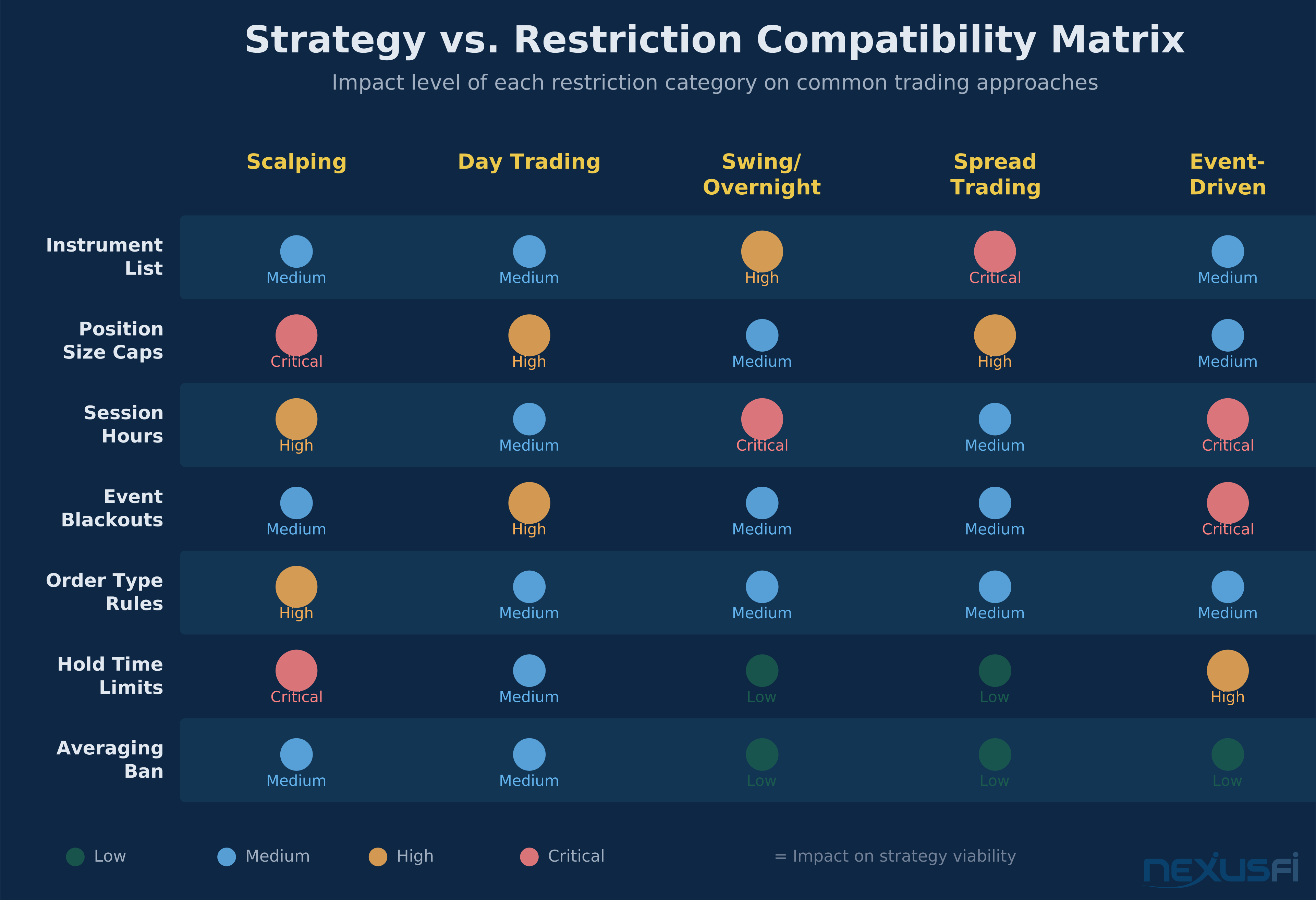
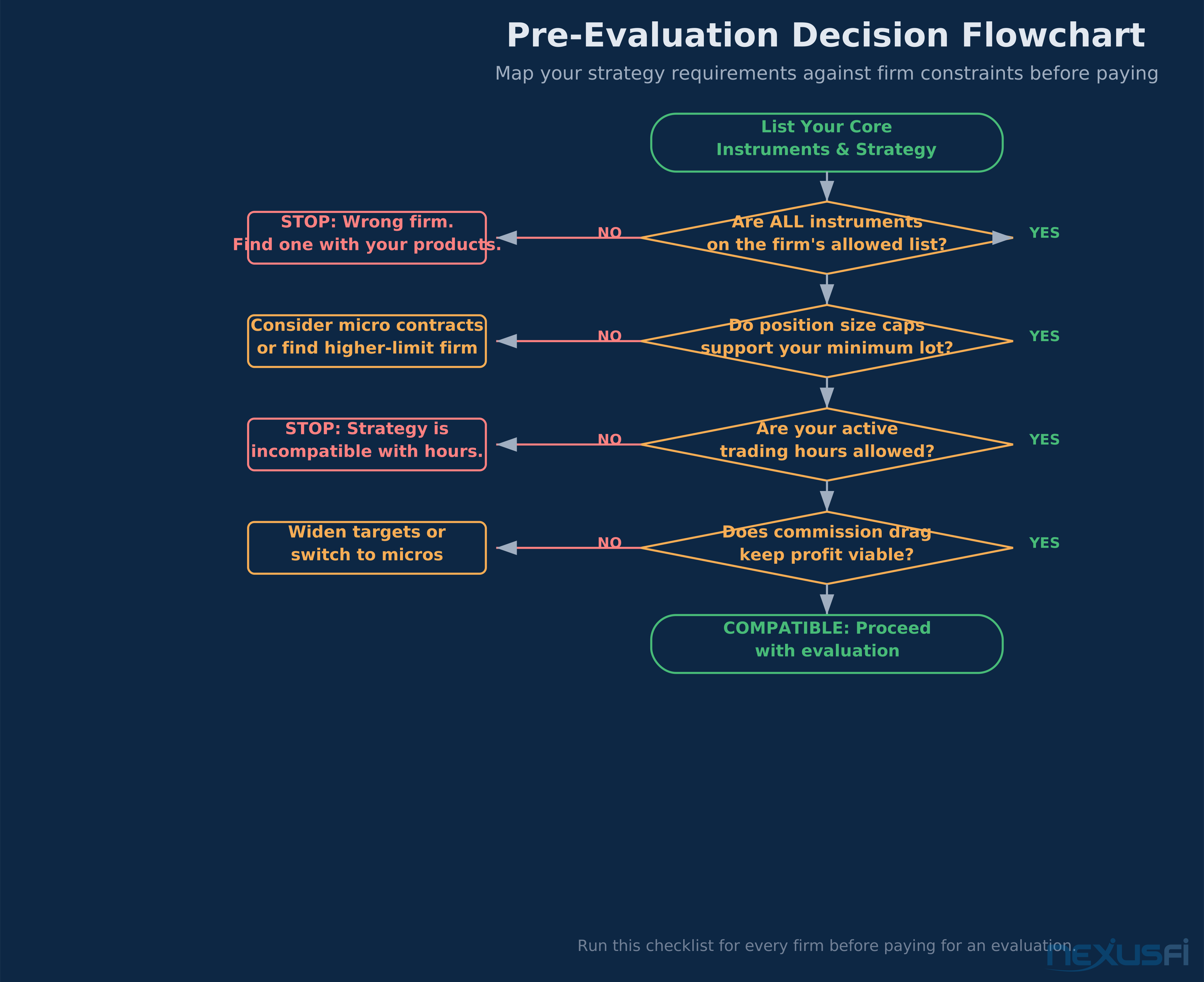
Before paying for any evaluation, map the firm's rules against your strategy. Here's the checklist that prevents the most common compatibility failures:
Instrument Compatibility
- Is your primary instrument on the allowed list? Don't assume -- check explicitly. A firm that "offers futures" may not include the specific contract you trade.
- Are micro versions available? If position limits are tight, micro contracts provide the sizing flexibility you need.
- If you trade multiple instruments, are all of them available? A multi-instrument strategy with one leg missing doesn't work at all.
Size Compatibility
- Does the maximum contract limit support your strategy's minimum viable size? Calculate your per-trade profit at the firm's max lot size. If it doesn't cover commissions plus a reasonable target, the math doesn't work.
- How are correlated positions treated? If you trade both ES and NQ, do they count separately or against a combined limit?
- What's the margin utilization ceiling? High-leverage strategies that use 90%+ of available margin may hit this limit before reaching the contract cap.
Time Compatibility
- Does the firm's allowed session cover your strategy's active hours? RTH-only restrictions kill overnight and pre-market strategies.
- What events trigger blackout windows? Count how many trading days per year are affected. For active event traders, this can eliminate 15-20 of the highest-opportunity days.
- Is overnight holding allowed? If yes, what are the conditions -- reduced size, tighter drawdown, extra margin?
Execution Compatibility
- Are your required order types available? If you rely on market orders for entry, confirm they're not restricted on your instruments.
- Is there a minimum hold time or maximum trade frequency? High-frequency scalpers need to check this specifically.
- Is your position management approach allowed? Scaling in, averaging, and martingale-style additions have different treatments at different firms.
If any answer is "no" or "I don't know," that's a red flag. Either get clarity from the firm directly or find a firm where your strategy fits cleanly. As @jlabtrades outlined on NexusFi in a complete prop firm comparison, the right approach is to list your non-negotiable requirements first and then match firms to your needs — not the other way around.
The Bottom Line #
Instrument and market restrictions aren't peripheral details buried in a prop firm's terms of service. They're the foundation that determines whether your strategy is viable, needs adaptation, or is at the core incompatible with the firm.
The most expensive mistake in funded trading isn't failing an evaluation — it's paying for an evaluation at a firm where your strategy can't work. A $100-$300 evaluation fee is small. The weeks of effort spent trying to adapt an incompatible strategy to the wrong constraint set is not.
Do the compatibility check before you trade. Map the instrument list against your watchlist. Run the math on position limits against your sizing model. Check the time restrictions against your active trading hours. Verify the order type rules against your execution workflow.
The firms that are transparent about their restrictions upfront — with clear, searchable instrument lists and explicit rule documentation — are generally the ones worth evaluating. Not because transparency makes them "better," but because it means they've thought carefully about their risk management and aren't hiding constraints that would surprise you mid-evaluation.
Pick the firm that fits your strategy. Don't reshape your strategy to fit a firm.
Citations
- — Looking for advice from seasoned TopSteppers“The current acceptable list includes: Topstep, Blusky, TakeProfitTrader, TheFuturesDesk, Tradeify, MyFundedFutures. Just go for the one that fits your style.”
- — Prop Firm Combines Criteria“Not currently allowing positions to be held over the weekend in the Swing Trading Funded accounts due to current volatility so positions can only be carried overnight during the week.”
- — What's this confusion with margins?“Positions opened and closed before the exchange-defined close of trading for the day are not subject to CME margin rules at all. Brokers can set margins wherever they like.”
- — Jlab rankings and comparison of prop firms“Rankings and comparison of prop firms -- key criteria include what platforms they support, evaluation structure, profit splits, and whether they put you on live.”
- CME Group — Cmegroup.com
- CFTC — Cftc.gov
- CME Group — Cmegroup.com