



One-Step vs Two-Step Prop Firm Evaluations: How the Challenge Structure Changes Your Trading Approach
Overview #
Every trader hitting the prop firm market faces the same fork in the road before they even place a trade: one-step or two-step evaluation? The marketing makes both sound easy. The reality is that each structure creates a at the core different risk environment that reshapes your trading plan, your position sizing, and your probability of survival.
One-step evaluations compress everything into a single phase — hit the profit target without breaching drawdown limits, and you're funded. Two-step evaluations split the process into two sequential phases, each with its own targets and rules. The conventional wisdom says one-step is "easier" because there's only one hurdle. That's wrong. The structure of the evaluation changes the math underneath your trades, and the rules that apply after you pass are often inversely related to how easy it was to get there.
This article breaks down exactly how each format works mechanically, where the math diverges, which structure matches which trading style, and — most critically — the hidden tradeoffs that marketing materials never mention.
How One-Step Evaluations Work #
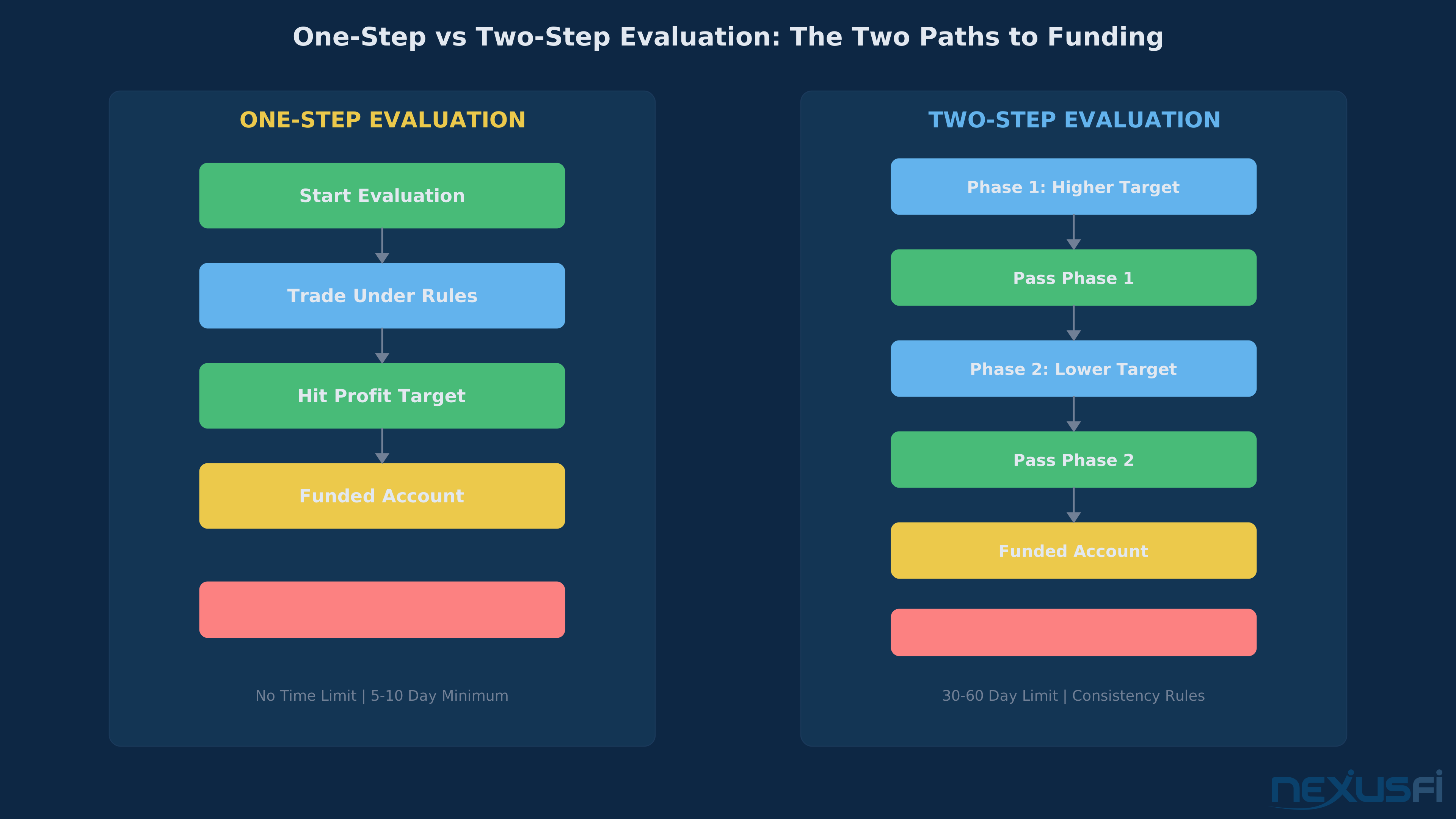
A one-step evaluation is a single-phase challenge. You receive a simulated account with a defined balance (typically $25K, $50K, $100K, or $150K in futures), a profit target, and a set of loss rules. Hit the target without violating any rules, and you qualify for a funded (or performance) account.
The core rules in a typical one-step futures evaluation:
Profit Target #
Usually 6-8% of the notional account size. On a $50K account, that's $3,000-$4,000. Some firms set it lower ($2,000-$2,500) to reduce the barrier.
Trailing Drawdown #
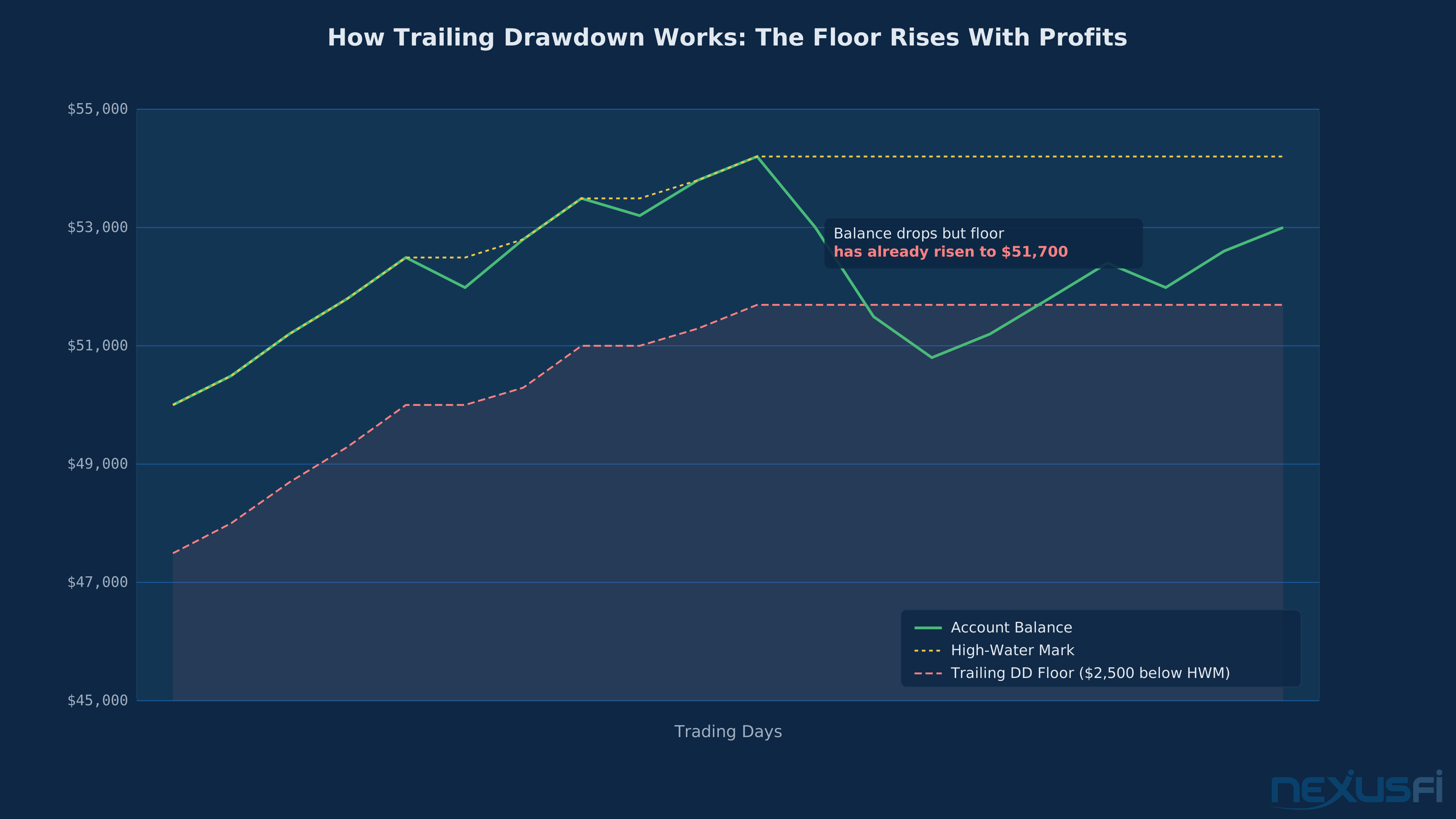
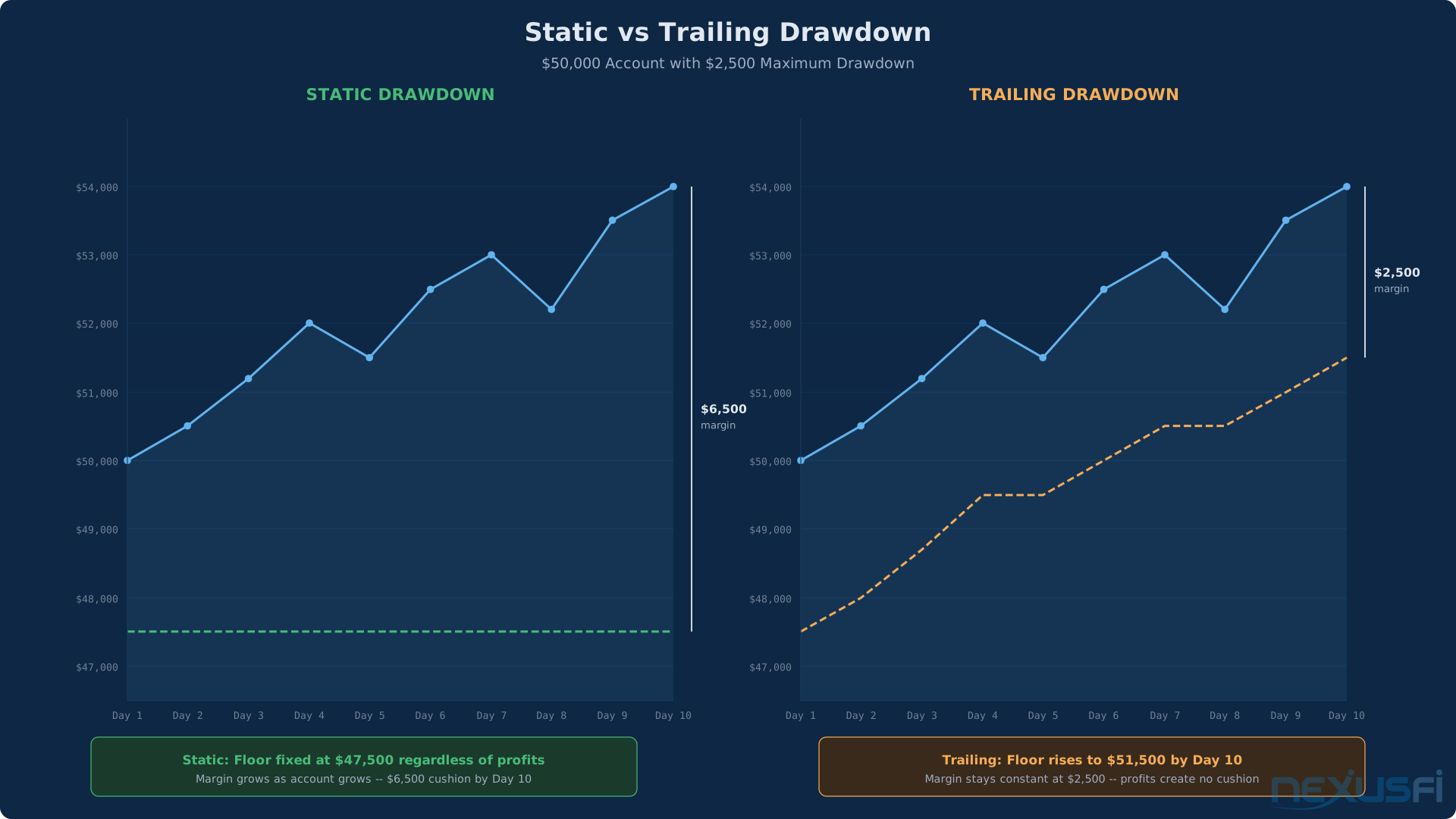
This is the rule that defines the one-step experience. The drawdown threshold trails your account's high-water mark — meaning every dollar of unrealized profit raises the floor beneath you. On a $50K account with $2,500 trailing drawdown, if your account peaks at $53,000 in open P/L, your liquidation level rises to $50,500. Give back that $3,000 of unrealized profit and you're done.
As @josh explains in a detailed breakdown on the NexusFi forums, the trailing drawdown "highlights the importance of profit taking. If the amount [your trade] runs is a huge percentage of your account value, you have taken on too much risk. It's only a problem when the size is too large for the account." [1]
Daily Loss Limit #
Some one-step evaluations include a separate daily loss limit (often $1,000-$1,500 on a $50K account). Breach it and you're locked out for the day — or in some firms, you fail the entire evaluation.
Minimum Trading Days #
Typically 5-10 days. This prevents someone from swinging for the fences on a single trade and passing in one session.
No Time Limit #
Most one-step evaluations don't expire. You can take as long as you need, which sounds generous but creates its own psychological trap — endless grinding without a deadline can erode discipline.
The math that matters: on a $50K one-step with a $3,000 target and $2,500 trailing drawdown, your profit-to-drawdown ratio is 1.2:1. You need to generate a profit equal to 120% of your maximum allowed loss. That sounds manageable until you account for the trailing mechanism — your actual margin for error shrinks with every winning trade.
How Two-Step Evaluations Work #
A two-step evaluation splits the qualification into two sequential phases, each with different parameters.
Phase 1: The Combine/Challenge #
Higher profit target, wider drawdown. Typically 8-10% profit target with a $2,500-$3,000 maximum drawdown on a $50K account. This phase tests whether you can generate meaningful returns.
Phase 2: Verification #
Lower profit target (often half of Phase 1), same or tighter drawdown. A $50K account might require $1,500-$2,000 profit in Phase 2 vs $4,000-$5,000 in Phase 1. This phase tests whether you can do it again without the "hot streak" factor.
The two-step structure was pioneered by TopStep (originally "TopstepTrader") and became the industry standard for years. As @anddaley noted when comparing firms, "TopStep has a two step process for Funding whereby you have to get to your profit target twice" while one-step firms like OneUp required only a single qualification. [2]
Rules Reset Between Phases #
When you clear Phase 1, your account resets to the starting balance for Phase 2. Your trailing drawdown resets. Your trading days counter resets. You're starting fresh — which means you can't coast on Phase 1 profits.
Consistency Requirements #
Two-step evaluations more frequently include consistency rules — caps on how much of your total profit can come from a single day (often 30-40% maximum). This prevents traders from passing on one lucky trade.
Time Limits #
Two-step evaluations sometimes impose calendar limits (30-60 days per phase), adding time pressure that one-step evaluations typically avoid.
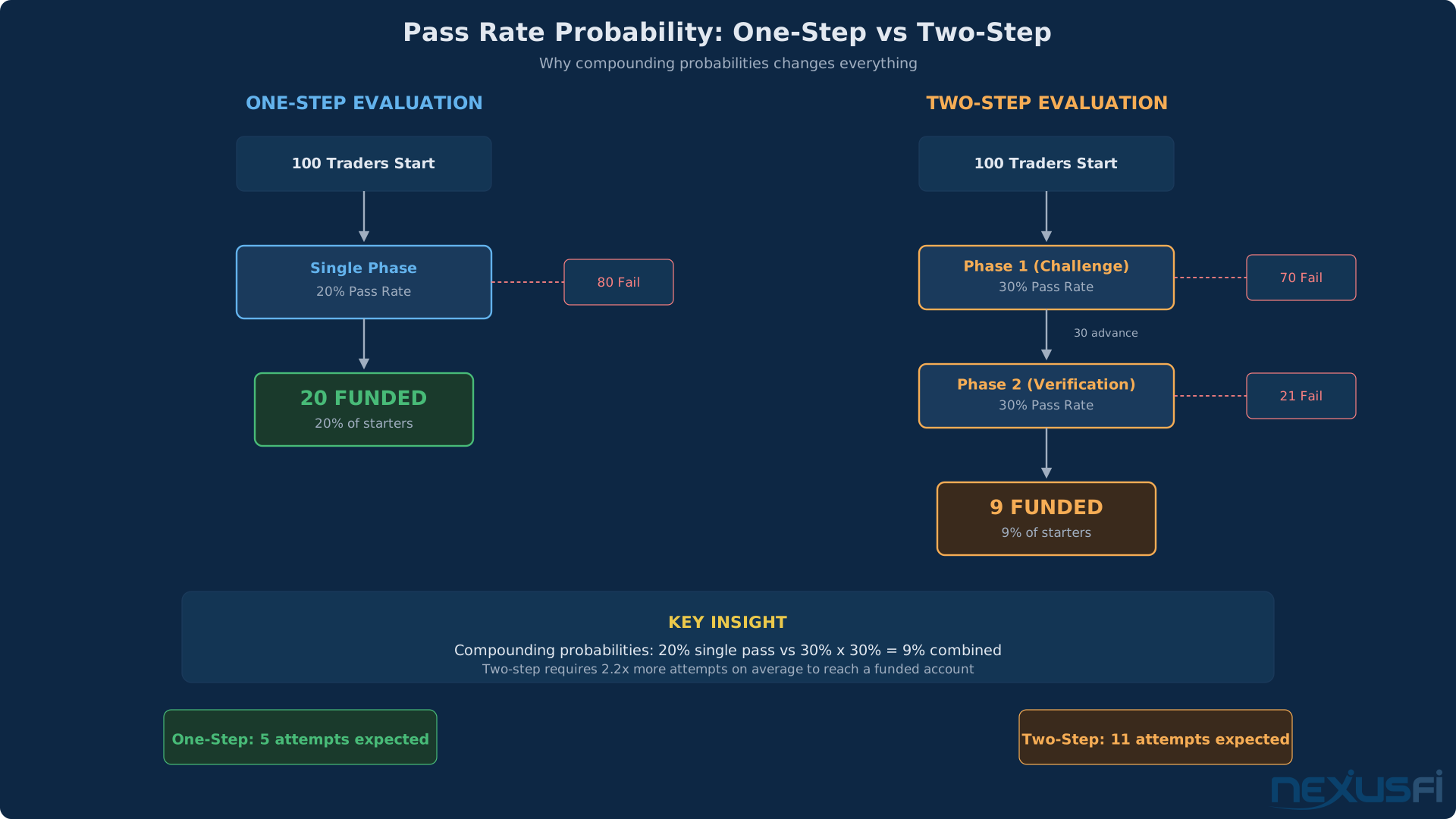
The math: if Phase 1 requires $4,000 profit with $2,500 drawdown (1.6:1 ratio) and Phase 2 requires $2,000 profit with $2,500 drawdown (0.8:1 ratio), the combined hurdle is $6,000 in profit across two independent passes. The effective difficulty isn't simply "twice as hard" — it's the probability of passing Phase 1 multiplied by the probability of passing Phase 2. If each phase has a 30% pass rate independently, the combined probability is roughly 9%. That's the compounding that most traders don't calculate before they sign up.
Rule-by-Rule Comparison #
Here's where the two formats diverge in ways that directly affect your trading:
Profit Targets #
One-step targets are typically lower in absolute terms ($2,500-$4,000 on a $50K account) because you only have to clear one hurdle. Two-step targets are higher in total ($5,000-$7,000 combined) but split across phases, making each individual hurdle feel more manageable.
The psychology matters: clearing $3,000 once feels different from clearing $4,500 and then $2,000. Some traders perform better with a single defined goal. Others do better with incremental milestones.
Drawdown Mechanics #
This is the single most important variable in any prop evaluation, and it's where the formats diverge most sharply.
One-step evaluations predominantly use intraday trailing drawdown — the floor rises in real-time as your open P/L increases. @Howard Roark illustrated this vividly: a trader up $15K on 10 ES contracts sees the trade retrace 12 points of unrealized profit. "According to the trailing drawdown rule your account just got eliminated because you gave back 12 points of profit... Does this sound like a company that's funding traders?" [3]
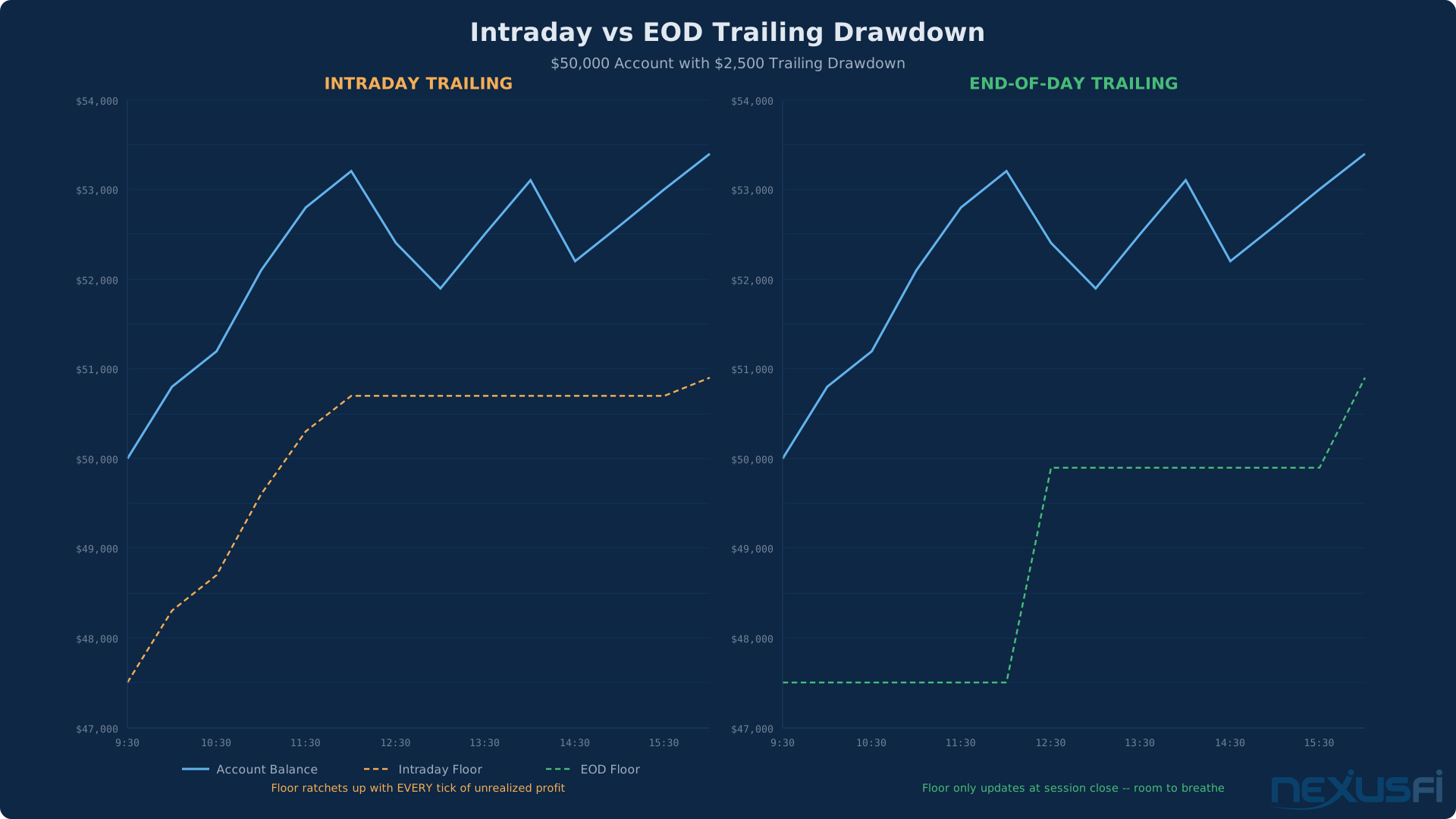
Two-step evaluations more commonly offer end-of-day (EOD) drawdown options — the trailing threshold only updates at session close, not in real-time. This gives intraday traders substantially more room to let winners breathe without raising the liquidation floor.
The distinction between intraday and EOD trailing is the single biggest factor in which evaluation structure fits your trading. A scalper who takes quick profits won't notice much difference. A swing trader who holds through intraday drawdowns will find intraday trailing drawdown far more punishing.
Intraday trailing drawdown raises the liquidation floor in real-time as your unrealized P&L increases — every tick of open profit ratchets the floor higher. EOD drawdown only updates at session close, giving you room to manage trades through intraday noise without permanently raising your risk threshold. This single rule difference can make the same strategy viable or unviable depending on which format you choose.
Recent industry moves reflect this: in March 2026, Apex Trader Funding added EOD drawdown accounts alongside their existing trailing drawdown model, with the EOD option including a daily loss limit that locks you out for the day rather than failing the entire evaluation. [4]
Static vs Trailing #
Some evaluations offer a static drawdown — a fixed dollar amount below your starting balance that never moves. A $50K account with $2,500 static drawdown means your account is liquidated at $47,500, period. It doesn't matter if you peak at $60,000 — the floor stays at $47,500.
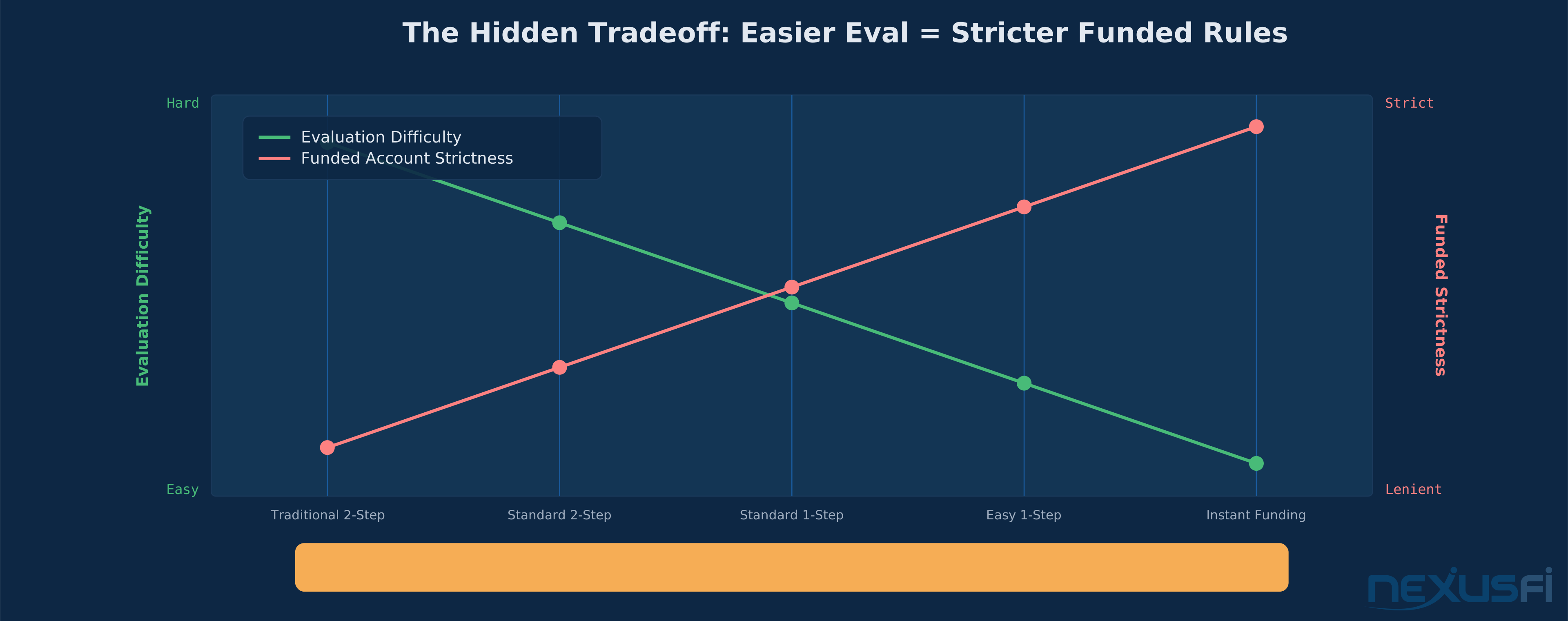
Static drawdown is strictly more forgiving than trailing drawdown. The tradeoff? Firms that offer static drawdown typically charge higher fees, impose tighter consistency rules, or reduce the profit split after funding.
Consistency Rules #
Two-step evaluations enforce consistency rules more frequently and more strictly. Common implementations:
- No single trading day can account for more than 30-40% of total profits
- Minimum trading days (7-10) must show positive or flat results
- Maximum position size limits scale with account balance
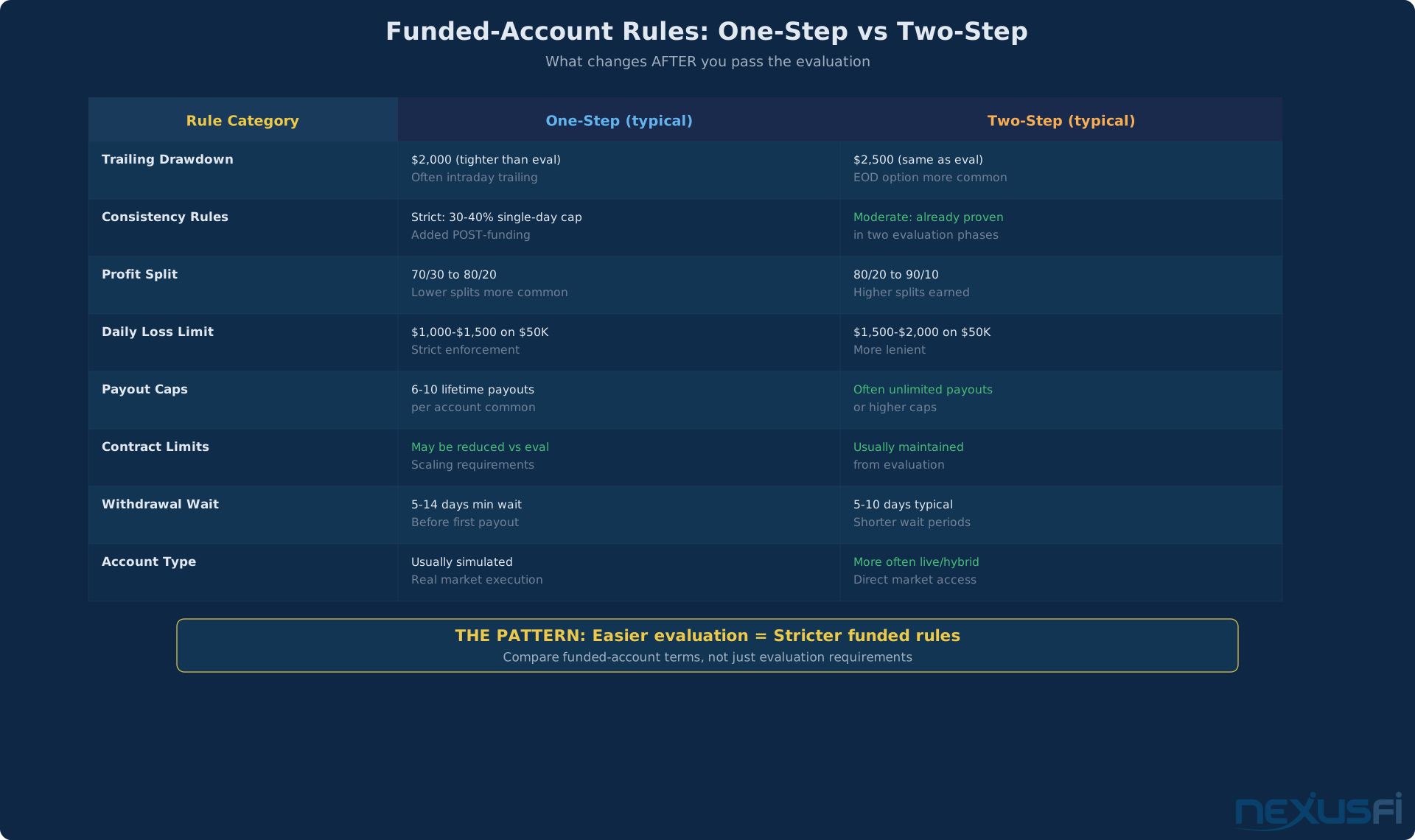
One-step evaluations tend to be more permissive on consistency during the evaluation itself — but then impose stricter consistency requirements on the funded account. This is the central tradeoff that catches most traders off guard.
News and Overnight Restrictions #
Both formats commonly restrict trading around major economic releases (FOMC, NFP, CPI). One-step evaluations are slightly more likely to allow overnight holds, while two-step evaluations — especially Phase 2 — often require flat-by-close. This matters enormously for swing traders and anyone trading European session overlaps.
Which Structure Fits Your Trading Style #
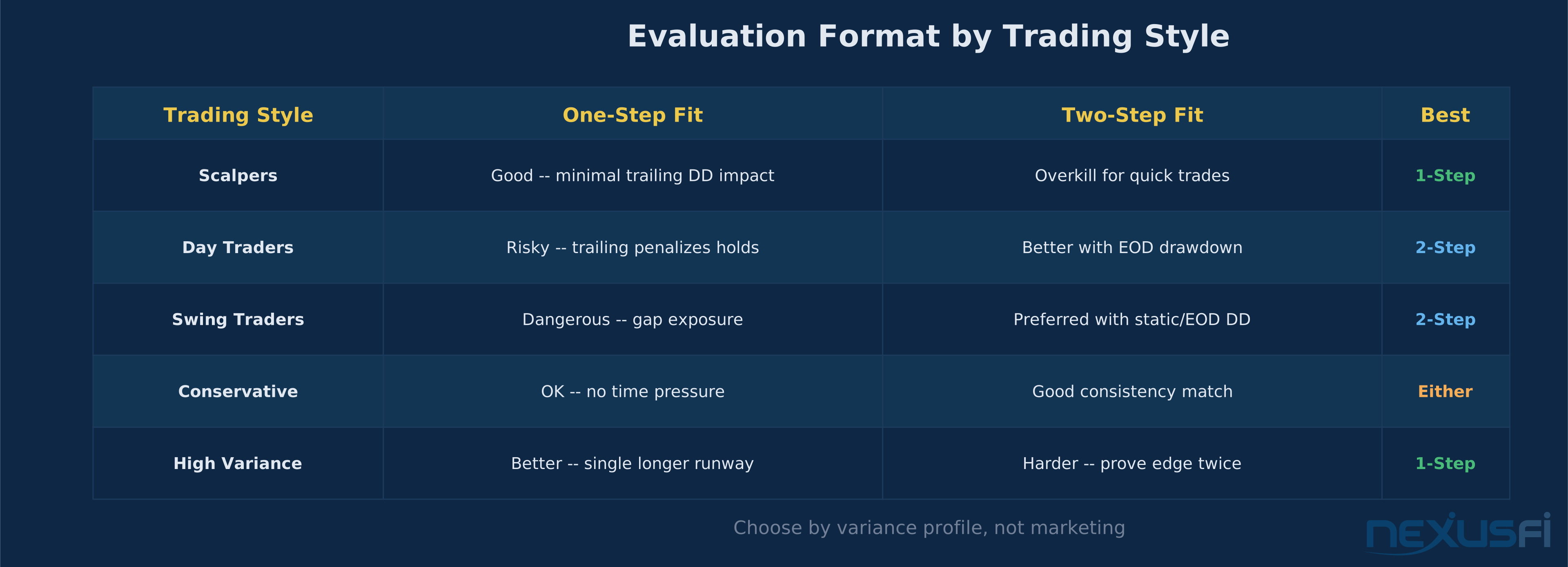
The right evaluation structure isn't about which one is "easier" — it's about which one's drawdown geometry aligns with your strategy's variance profile.
Scalpers #
One-step evaluations can work well for consistent scalpers because the trailing drawdown has minimal impact on quick in-and-out trades. If you're taking 10-20 trades per day with 2-4 tick targets on ES, your unrealized P/L never extends far enough to meaningfully raise the trailing floor.
The risk: scalpers who occasionally hold a runner. One extended position that runs 20 points before retracing can destroy a month of careful work by ratcheting the trailing drawdown up to a dangerous level.
Day Traders #
Two-step evaluations with EOD drawdown tend to suit day traders better. You need room to manage trades through intraday noise — a position that goes 10 points against you before reversing into a 15-point winner is a good trade, but intraday trailing drawdown would penalize the interim drawdown.
Swing Traders #
Two-step evaluations with static or EOD drawdown are almost mandatory for swing traders. Holding overnight means your open P/L fluctuates much during Globex hours, and intraday trailing drawdown can liquidate you on a gap that reverses by the next session's close.
Conservative/Low-Frequency Traders #
One-step evaluations without time limits can suit patient traders who take 1-3 high-conviction setups per week. The absence of time pressure allows them to wait for A+ setups. But the lack of a deadline can also enable drift — weeks of flat performance followed by impulsive trading to "finally pass."
High-Variance Strategies #
If your edge depends on occasional large winners that offset frequent small losses (trend following, breakout trading), two-step evaluations are statistically harder because you need to demonstrate the edge twice. One-step evaluations give you a longer single runway to let the strategy's distribution play out.
Cost and Reset Economics #
The true cost of a prop firm evaluation isn't the subscription fee — it's the expected total spend before you reach a funded account. This is where most traders systematically underestimate.
One-Step Fee Structure #
- Monthly subscription: $80-$200 depending on account size
- Reset fee: $80-$100 (restarts the evaluation from scratch)
- Activation fee upon passing: $79-$149
- No time limit means the monthly fee accrues indefinitely
Two-Step Fee Structure #
- Monthly subscription: $100-$300 (typically higher than one-step)
- Reset fee: $100-$150 (some firms allow Phase 2-only resets for a lower fee)
- Activation fee: $100-$200
- Time limits mean you might need to restart entirely if a phase expires
The Expected Cost Calculation #
Here's the math nobody does before signing up. Assume a 20% pass rate per attempt (generous for most traders):
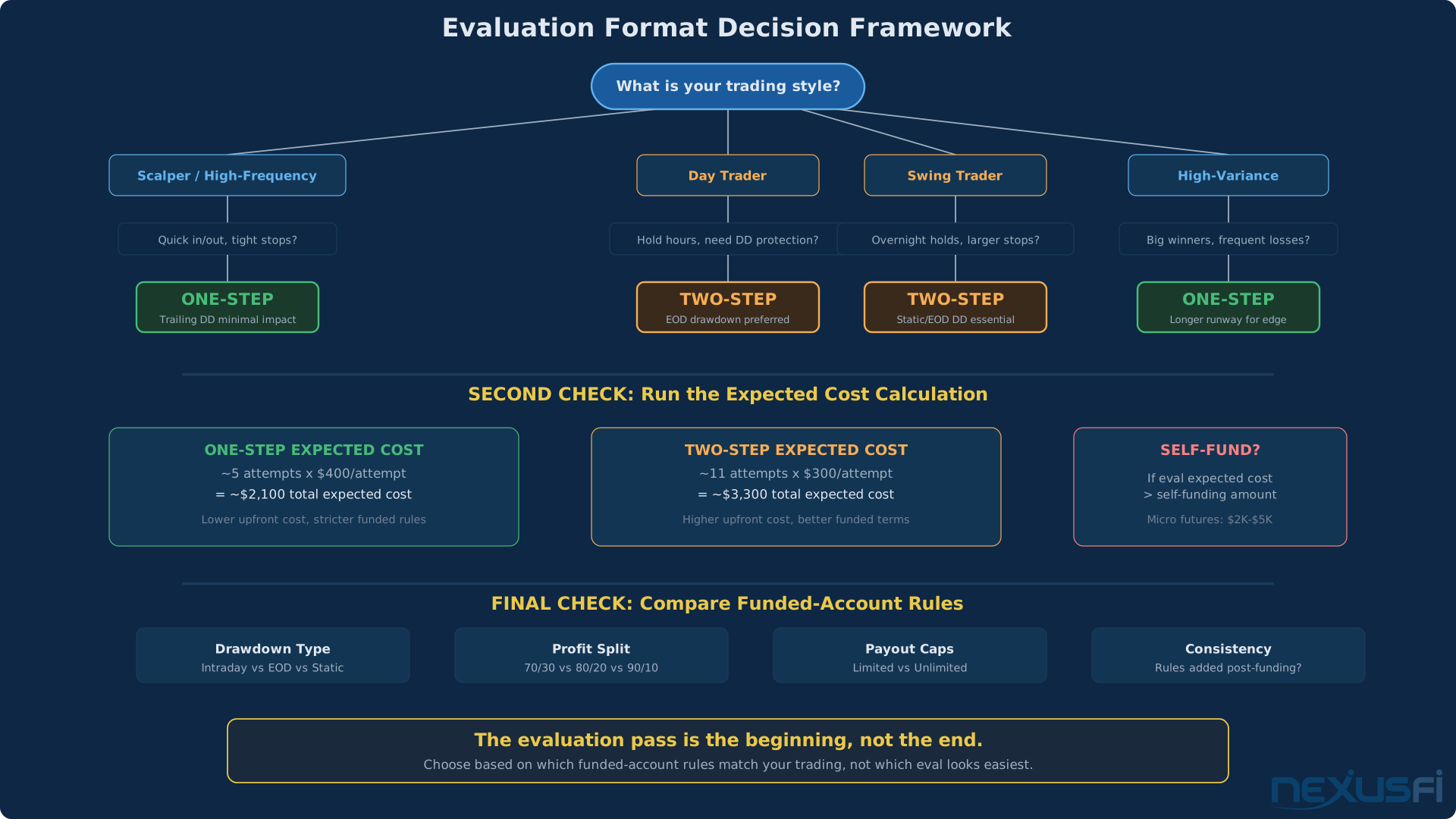
One-step: If you subscribe at $150/month and reset costs $100, and it takes you an average of 2 months per attempt, your expected cost per attempt is $400. At a 20% pass rate, you need an expected 5 attempts = $2,000 plus a $99 activation fee = ~$2,100 expected total cost to reach a funded account.
Two-step: If subscription is $200/month, each phase takes 1.5 months on average, and the combined pass rate is 9% (30% x 30%), you need roughly 11 attempts = $200 x 1.5 x 11 = ~$3,300 expected total cost before activation.
At typical pass rates, one-step evaluations cost roughly $2,100 in expected total spend to reach a funded account vs $3,300 for two-step — a 57% premium for the two-phase format. But cheaper access often means stricter funded-account rules. Run the expected cost calculation for YOUR pass rate before committing to a format.
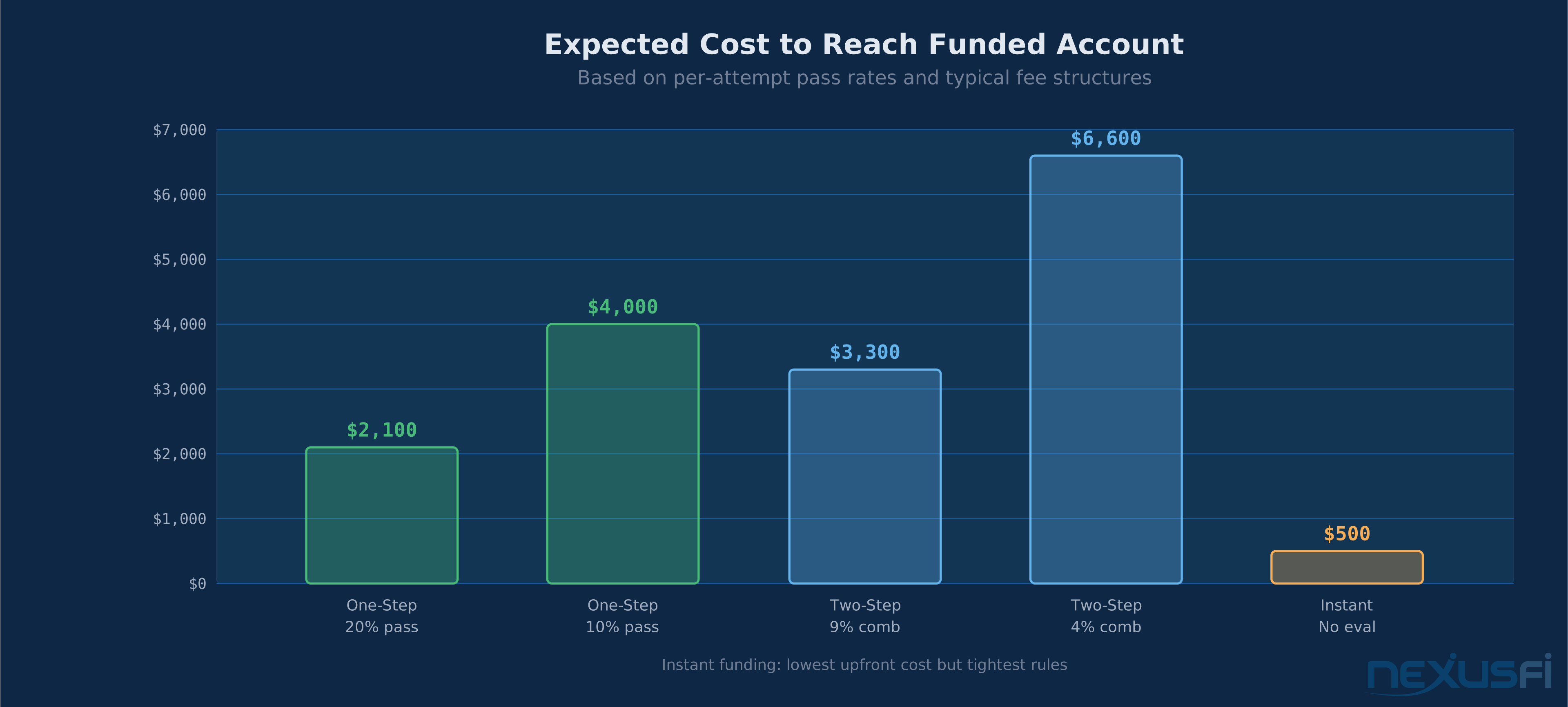
These numbers explain why one-step evaluations have gained market share. The expected path to funding is cheaper in absolute terms, even though the funded account rules may be stricter.
[5] The evaluation format doesn't fix a losing strategy — it just changes the speed and cost of failure.
Reset Strategy #
Smart evaluation traders don't just reset blindly. They analyze what went wrong:
- If you hit the trailing drawdown on one bad trade, that's a leverage problem — reduce size and reset
- If you ground to a slow death over weeks, the strategy may not have enough edge to pass any evaluation
- If you passed Phase 1 easily but failed Phase 2 on consistency rules, consider whether a one-step format would suit your style better
Industry Trends and Where the Market Is Heading #
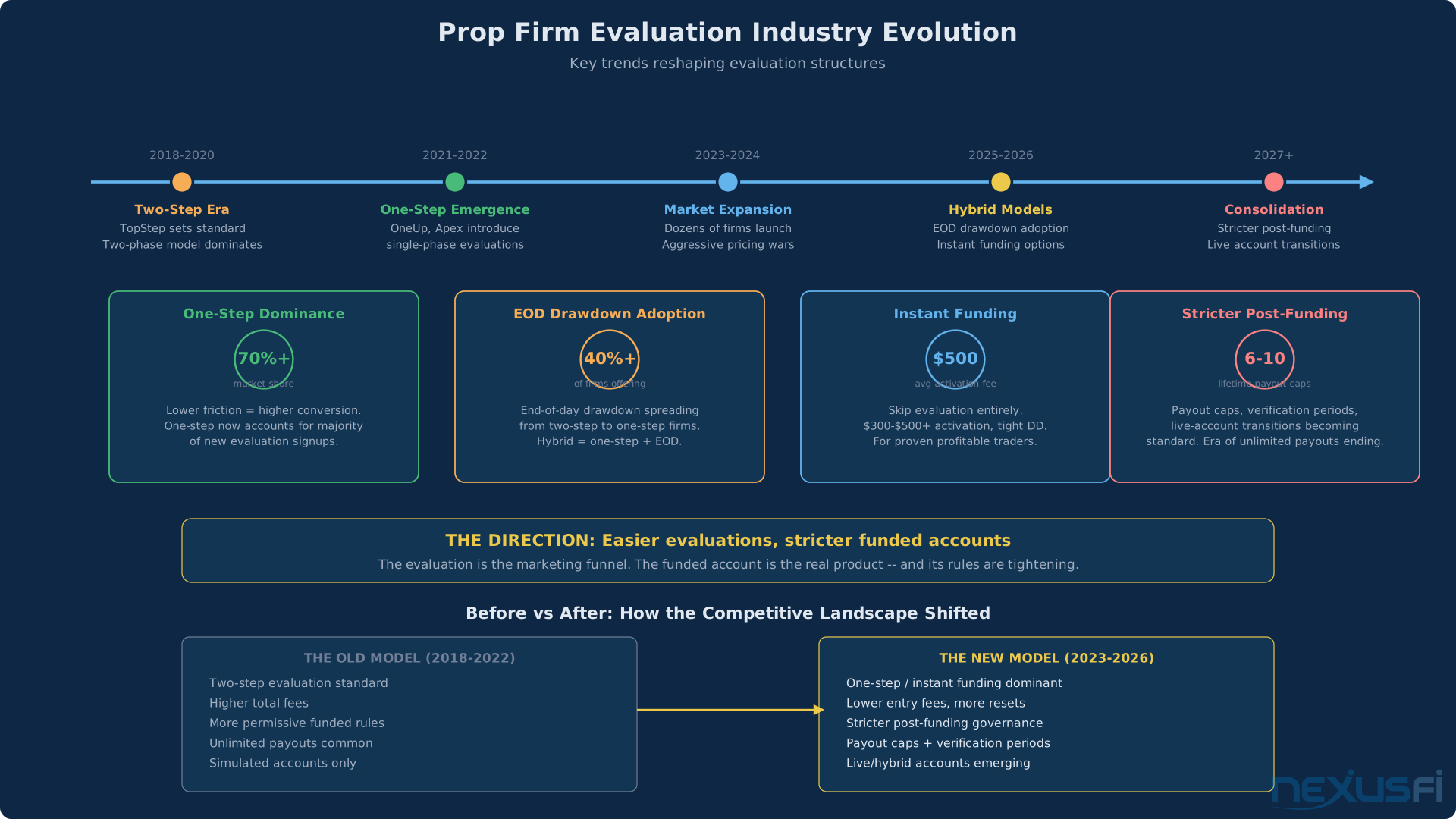
The prop firm evaluation market has shifted dramatically since 2020, and the direction is clear — though the environment is littered with casualties. According to Finance Magnates' analysis of the prop firm industry, up to 100 prop trading firms did not survive 2024 alone, with 84 out of 376 tracked firms no longer active and another 30 showing no signs of operation. [9] A solid third of the market vanished in under two years, and the survivors are the ones who got their evaluation economics right.
One-Step Dominance #
The industry has moved decisively toward one-step models. Lower friction means higher conversion, which means more revenue for firms. Two-step evaluations survive primarily at firms targeting more serious traders or those marketing on funded-account rule quality rather than evaluation ease.
EOD Drawdown Adoption #
End-of-day drawdown — long a feature of two-step firms — is spreading to one-step firms. This hybrid approach (one-step structure, EOD drawdown) represents the current competitive frontier. It offers the simplicity traders want with the intraday flexibility they need.
Instant Funding #
Some firms now offer "instant funding" — skip the evaluation entirely, pay a higher fee, and receive a funded account immediately. The tradeoff is extreme: high activation costs ($300-$500+), very tight drawdown limits, and aggressive consistency rules. This model works only for traders who already know they can be profitable and view the evaluation as wasted time.
Account Size Consolidation #
Firms are streamlining account sizes. Instead of offering 7-8 options, the trend is toward 3-4 standardized sizes ($25K, $50K, $100K, $150K). This simplifies comparison shopping but reduces flexibility for traders with very specific sizing needs.
Stricter Post-Funding Enforcement #
As the industry matures and firms face pressure to demonstrate that funded traders are real (not just fee revenue), expect payout caps, verification trading periods, and live-account transitions to become standard. The era of unlimited payouts from simulated accounts is ending. Current tracking data from PropTradingVibes shows 253 firms across 36 countries with only 192 still active — and broker-backed prop firms now dominate new launches at a rate 8.5 times higher than pre-2023, signaling that surviving firms need real institutional backing rather than pure fee-based models. [10]
Decision Framework: Choosing Your Evaluation Format #
Don't choose based on which evaluation looks easier. Choose based on which evaluation's rules create the most favorable environment for your actual trading behavior.
Choose One-Step If #
- You trade a consistent, low-variance strategy (scalping, mean reversion)
- Your average winner/loser ratio is close to 1:1 with a high win rate
- You can manage position size to avoid spiking unrealized P/L
- You want a cheaper expected path to funding
- You don't mind stricter funded-account rules as a tradeoff
Choose Two-Step If #
- You hold trades for hours or overnight and need intraday drawdown protection
- Your strategy has higher variance (trend following, breakout trading)
- You want the funded-account rules to be more permissive
- You can demonstrate consistency across two separate evaluation windows
- You trade larger timeframes where EOD drawdown is essential
Choose Neither: Trade Your Own Capital #
- You haven't yet demonstrated consistent profitability in sim or live trading
- Your strategy requires more drawdown tolerance than any evaluation allows
- You can fund a micro-futures account ($2,000-$5,000) and trade with real capital
- The math on expected evaluation costs exceeds the cost of self-funding
[8] That's a critical detail — the evaluation format is just the entrance. The funded-account economics determine whether you actually make money.
The bottom line: the evaluation structure you choose should match your strategy's variance profile, not the marketing pitch. A trader who passes a one-step evaluation by grinding small wins over 30 days has demonstrated a completely different skill set than a trader who passes a two-step by clearing two distinct profit targets with consistency constraints. Both are valid — but the funded accounts they unlock have different rules, and your strategy needs to work under both the evaluation AND the funded environment.
Run the expected cost calculation. Read the funded-account terms before the evaluation terms. And remember that the trailing drawdown — in any format — is ultimately a leverage rule.
See Also #
- Funded Trading Evaluations: How Prop Firm Challenges Work and How to Choose One
- Trailing Drawdown vs Static Drawdown: How Your Prop Firm's Rules Reshape Your Entire Trading Strategy
- Consistency Rules in Funded Trading: The Hidden Layer That Decides Whether You Get Paid
- Prop Firm Evaluation Strategies: How to Actually Pass a Funded Trading Challenge
- Prop Firm Fees and Costs: The Complete Economics of Funded Trading
Knowledge Map
Prerequisites
Understand these firstGo Deeper
Build on this knowledgeReferences This Article
Articles that build on this topicCitations
- — Funded Trader platforms (2024) 👍 8“Maybe this is a good opportunity to discuss that rule, which most people despise. Let's look at Apex's trailing drawdown rule.”
- — List of FIO traders who have passed the ONEUP Trader Evaluation or funded (2018) 👍 6“I have been funded with OneUP. (And lost it eventually). However the notion that its easier to get funded with OneUp as opposed to TopStep is a bit deceptive.”
- — ApexTraderFunding.com experience and review (2022) 👍 9“Just for illustration - this shows the stupidity of the trailing drawdown rule Apex and LeeLoo use: Let's say you're up $15K after 10 days of consistent and successful trading. Let's say your win rate is 100% and you're a fantastic trader.”
- — Apex Trader Funding Overhauls Rules (2026)“Apex Trader Funding Overhauls Rules: EOD Drawdown, Simplified Payouts, 6-Payout Cap What Happened NexusFi sponsor Apex Trader Funding rolled out sweeping changes to its funded trader program on March 1, 2026.”
- — TST/OneUp/LeeLoo/Earn2Trade (2022) 👍 9“We are told that about 90% of all new traders fail, when they are trading their own accounts. Why would it be a surprise that the same group of traders fail at the same rate when they try for a funded account? There is a variety of blame-shifting tha...”
- — ApexTraderFunding.com experience and review (2022) 👍 7“Hi BobWest, Thanks for your reply. Since most traders fail the funded account in several days, it's understandable why parties like Topstep offer their Pro account, LiveSim and other synthetic accounts in order to keep clients from trading directly o...”
- — ApexTraderFunding.com experience and review (2021) 👍 6“For transparency - I blew my evaluation account with Apex on Tuesday. I actually hit my target on Tuesday with $9500 in my account after 7 trading days.”
- — TST/OneUp/LeeLoo/Earn2Trade (2021) 👍 8“One of the biggest attractions to OneUp for me was, even after you are funded, you do not pay for data. Big plus personally. Edit: To answer your question, as far as OneUp goes, yes there trailing drawdown is based off of the unrealized profits.”
- Finance Magnates — The Great Prop Firm Shakeout: Who Survives 2026? (2026)
- PropTradingVibes — State of Prop Trading Q2 2026 -- The Quiet Consolidation (2026)