



Tharp Think Belief Examination for Traders: Van Tharp's Methodology for Auditing Your Trading Mental Models
Overview #
Van Tharp spent decades studying what makes traders profitable, and he kept arriving at the same conclusion: your beliefs about the market and about yourself determine your results more than any indicator, strategy, or platform ever will. His methodology — what he called "Tharp Think" — centers on a structured belief examination process that forces you to drag your assumptions into the open, test them against evidence, and decide whether they're helping you or destroying your account.
This isn't motivational fluff. Tharp's belief audit is a concrete, repeatable exercise drawn from his book Trading Beyond the Matrix. You write down a belief, find three references that support it, find three that contradict it, rate your stress level around the belief, and then classify it as useful or limiting. That classification drives a specific change process. The math is simple: traders carrying limiting beliefs about money, risk, or their own competence will sabotage their execution no matter how good their edge is.
Key Principle You don't trade the market. You trade your beliefs about the market. Two traders looking at the same chart will take completely different actions — and those differences trace back to their underlying belief structures.
Research on trader behavior confirms this pattern consistently. As one NexusFi community member put it while working through Van Tharp's material: "Everyone has useful and non-useful beliefs and must dig deep into understanding him/herself." [2] That "digging deep" is the belief examination exercise — and it's the core of everything covered here.
What Is Tharp Think? #
Tharp Think is Van Tharp's framework for understanding how a trader's internal mental models — their beliefs about markets, money, risk, and themselves — shape every trading decision they make. The term comes from the Van Tharp Institute, where Tharp developed a systematic approach to identifying, categorizing, and modifying the beliefs that drive trading behavior.
The foundational premise is straightforward: you don't trade the market. You trade your beliefs about the market. One trader believes "the market is out to get me" and tightens stops to the point of getting chopped out on every normal retracement. Another believes "the market rewards patience" and holds through the noise to capture the full move. Neither belief is objectively "true." Both are mental models. But one produces better trading outcomes than the other, and that's the distinction Tharp cares about. He doesn't ask "is this belief true?" He asks "is this belief useful?"
That reframing is the whole game. Traders waste enormous energy defending beliefs they've never examined. They'll argue about whether Fibonacci levels "work" or whether the market is "random" without ever questioning whether the belief they're defending is actually producing positive expectancy in their own trading. Tharp's process sidesteps the philosophical debate entirely and focuses on utility.
The framework sits at the intersection of trading psychology, cognitive behavioral techniques, and performance coaching. But unlike vague advice to "work on your mindset," Tharp Think provides an actual methodology — a step-by-step process with specific exercises, measurable outputs, and a clear path from identification to change.
The Belief Examination Exercise #
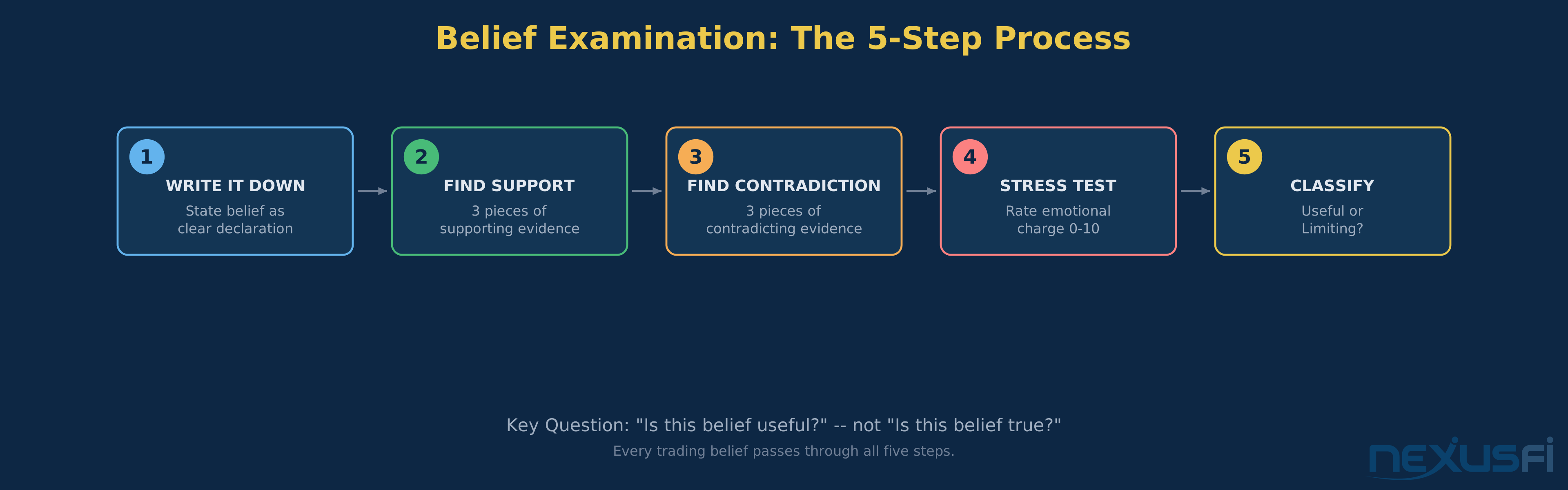
This is the core of the whole methodology. The belief examination exercise is a structured audit you run on every belief you can identify about trading. Here's the exact process:
Step 1: Write the Belief Down
Take a single belief and write it as a clear declarative statement. Not "I think maybe stops are important" but "I believe that a stop-loss must be placed on every trade before entry." Precision matters. Vague beliefs can't be examined — they just float around causing damage without ever getting pinned down.
Common starting points:
- "I need to be right on most of my trades to be profitable"
- "The market is manipulated by big players"
- "I can't make money in choppy markets"
- "Adding to losers will eventually work out"
- "A 50% win rate means my system is broken"
Step 2: Find Three Supporting References
Search for three pieces of evidence that support the belief. These can be personal experiences, academic research, mentor advice, forum posts, book excerpts — anything that argues the belief is valid. This step honors the belief. You're not dismissing it. You're acknowledging that it exists for a reason and has some supporting evidence.
Step 3: Find Three Contradicting References
Now find three pieces of evidence that contradict the belief. This is where most traders resist. The brain doesn't want to find evidence against its own operating assumptions. Push through anyway.
The NexusFi community has grappled with exactly this kind of examination. In one deeply-cited thread on risk sizing, a member described the process of "engraining powerful beliefs through consistent thoughts with regards to thinking in terms of probabilities: Accept that trading is about the ODDS." [1] That's the contradicting reference in action — replacing the "I must be right" belief with a probabilistic framework.
Step 4: Stress Assessment
Rate your emotional charge around this belief on a scale of 0-10. How much stress do you feel when this belief is challenged? A belief like "stops are necessary" might rate a 2 — low stress, easy to discuss rationally. A belief like "I'm not smart enough to trade profitably" might rate an 8 or 9 — high stress, deeply personal, difficult to examine objectively.
The stress rating tells you where the real work is. Low-stress beliefs are easy to modify. High-stress beliefs are the ones running your trading behavior from the shadows — causing you to revenge trade, overtrade, freeze on entries, or move stops.
Step 5: Classify as Useful or Limiting
Based on the evidence and stress assessment, classify the belief. A useful belief produces behavior that improves your trading results. A limiting belief produces behavior that degrades them.
Notice the criterion isn't "true or false." A belief can be factually accurate and still limiting. "Markets can gap against you overnight" is true, but if it leads you to close every position before the close and miss overnight moves that are core to your edge, it's a limiting belief despite being factually correct. The question is always utility, not truth.
Useful vs. Limiting Beliefs #
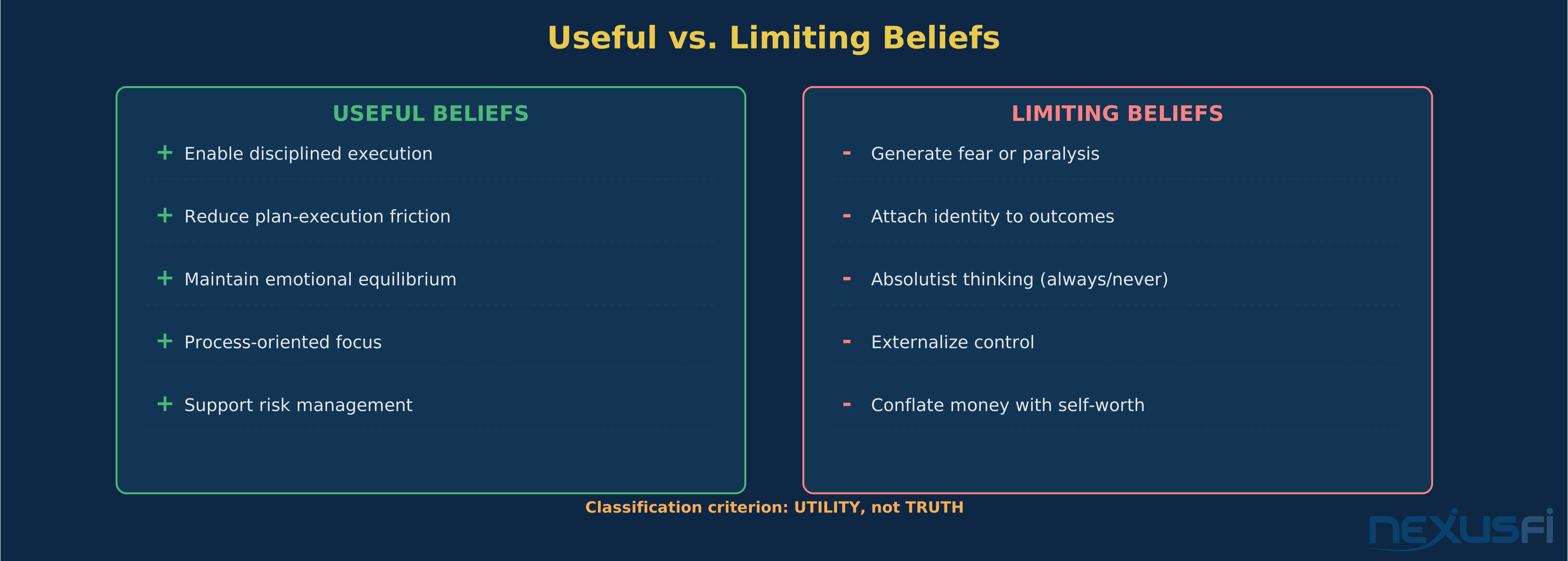
Tharp's classification system is binary by design. Every belief either helps your trading or hurts it. There's no neutral category.
Characteristics of Useful Beliefs
- They enable disciplined execution. "My edge plays out over a series of trades, not on any single trade" allows you to take the next setup without emotional baggage from the last result.
- They reduce friction between plan and execution. "I trust my backtested system" eliminates second-guessing that causes late entries and premature exits.
- They maintain emotional equilibrium. "Losses are the cost of doing business" prevents the emotional spiral that turns one losing trade into five.
- They are process-oriented. "I executed my plan" matters more than "I made money on this trade."
- They support risk management. "I will never risk more than 2% of my account on a single trade" creates a hard floor under your trading discipline.
Characteristics of Limiting Beliefs
- They generate fear or paralysis. "I always lose on Fridays" makes you either avoid trading Fridays entirely or trade them with a defeated mindset.
- They create identity attachment to outcomes. "I'm a winning trader" sounds positive until you have a losing week and your identity collapses, triggering revenge trading.
- They are absolutist. "The market always reverses at my stop level" -- always? Absolutist beliefs crumble on the first exception.
- They externalize control. "Market makers hunt my stops" shifts responsibility from your risk management to an external boogeyman.
- They conflate money with self-worth. Tharp identified "money is not important" as a belief common to successful traders. [3] The inverse -- "my trading P&L defines my value as a person" -- contaminates every decision with existential pressure.
@Anna K — ES Trading Journal
[5]
Market Beliefs vs. Self-Beliefs #
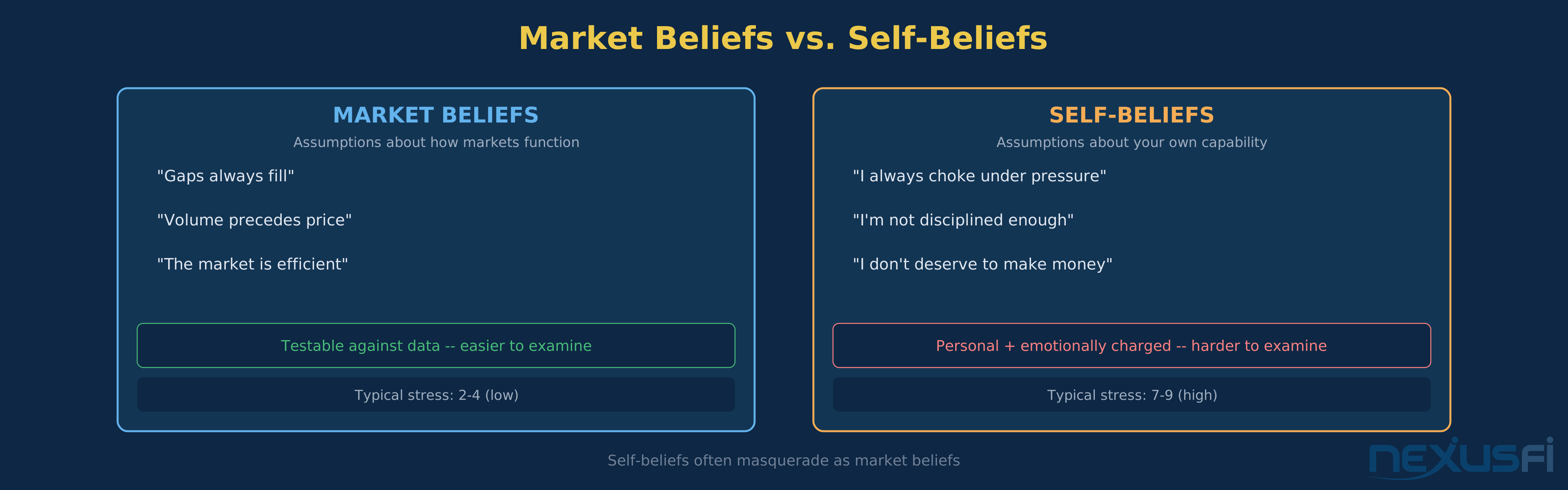
Tharp draws a critical distinction between two categories of beliefs that traders carry: beliefs about the market and beliefs about themselves. Both need examination, but they operate differently and require different approaches to change.
Market Beliefs
Market beliefs are your assumptions about how markets function: "Markets are efficient" vs. "markets are inefficient," "Volume precedes price," "Gaps always fill," "News moves markets." These are relatively easier to examine because you can test them against data. "Gaps always fill" is an empirical claim you can verify by studying gap behavior across thousands of sessions.
@welly192 — Are Fibonacci retracements and projections useful?
[4]
That's a market belief ("Fibonacci works") nested inside a self-belief ("I have the mental toughness to trade my conviction"). Tharp's methodology separates these two layers.
Self-Beliefs
Self-beliefs are your assumptions about your own capability, worthiness, and identity as a trader. These are harder to examine because they're personal, emotionally charged, and often formed early in life: "I don't deserve to make money trading," "I'm not disciplined enough to follow a plan," "I always choke under pressure," "I'm too emotional to trade well."
Self-beliefs typically score much higher on the stress assessment. A trader who believes "I always choke under pressure" will find a way to choke regardless of how good their setup is. The belief creates the behavior that confirms the belief — a self-fulfilling loop that no amount of chart study can break.
Tharp's insight was that self-beliefs often masquerade as market beliefs. "This market is impossible to trade" usually means "I believe I can't trade this market." "The market took my money" usually means "I don't believe I can manage risk effectively." The examination exercise strips away the projection and reveals the self-belief underneath.
@George — Trading Psychology and How The Mind Works
[8]
One NexusFi community member described working through this exact process in a post about feeling lost: "I recall Van Tharp identifying the belief that 'money is NOT important' as the #1 trait of successful traders." [3] That's a self-belief examination in real time — testing your relationship with money itself as a prerequisite to trading well.
Stress Assessment Deep Dive #
The stress rating isn't just a number you slap on and move past. In Tharp's methodology, the stress assessment is diagnostic. It tells you which beliefs are running your trading and which are just intellectual furniture.
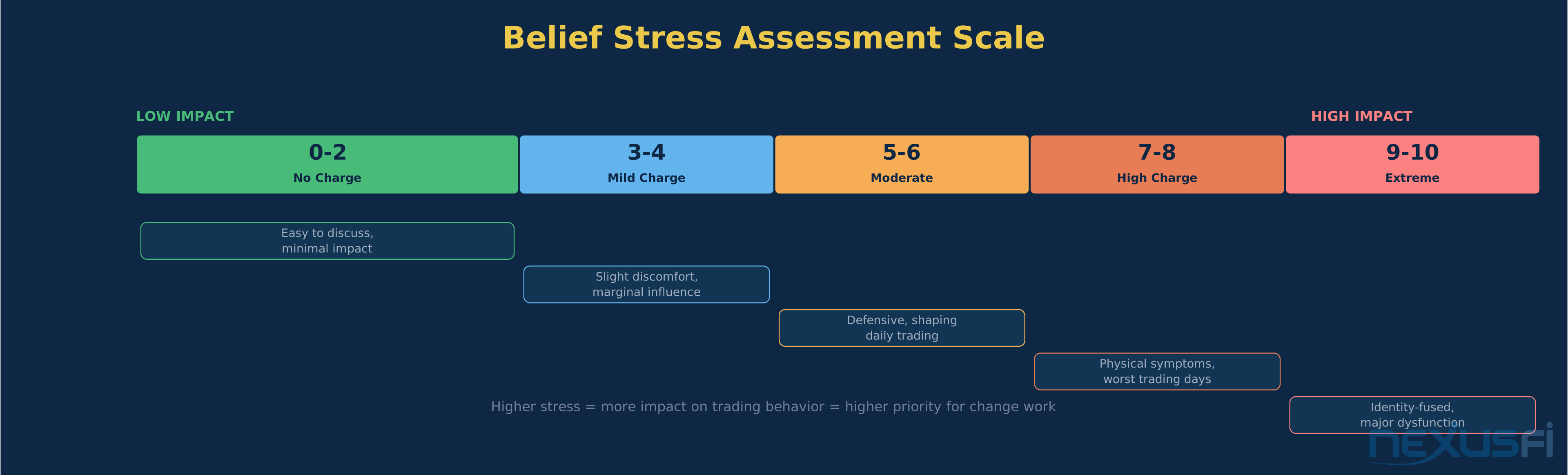
The 0-10 Scale
- 0-2 (No charge): You can discuss this belief calmly and change your position without emotional resistance. Easy to update but usually minimal impact on trading behavior.
- 3-4 (Mild charge): You have a preference but can entertain alternatives. These beliefs influence trading decisions at the margins.
- 5-6 (Moderate charge): You feel defensive when questioned. You catch yourself arguing for it. These beliefs are actively shaping your daily trading behavior.
- 7-8 (High charge): Strong emotional reaction when challenged. Physical symptoms -- tight chest, jaw clenching, elevated heart rate. These are the beliefs that cause your worst trading days.
- 9-10 (Extreme charge): This belief feels inseparable from your identity. Questioning it feels like an attack on who you are. These beliefs are almost certainly creating major trading dysfunction.
Using Stress as a Diagnostic Map
Run the stress assessment across 20-30 of your trading beliefs and you'll produce a map of your psychological environment. The high-charge beliefs cluster around specific themes — usually money, self-worth, control, or competence. Those clusters tell you where your real work is.
A trader who rates "I can't afford to lose this money" at 9, "If I blow this account I'm done" at 8, and "My family needs me to make this work" at 9 has a money/survival cluster. Their trading will be dominated by loss aversion and premature profit-taking. No chart pattern education will fix this. The work is in the beliefs.
A trader who rates "I should be further along by now" at 8 and "I keep making the same mistakes" at 9 has a competence/self-worth cluster. Their trading will feature impulsive strategy changes and indicator hopping. As one NexusFi member described it, you have to accept that "our mind has to be free to be able to execute these trades without making trading errors, and the trading errors come from believing that because the pattern is present, that it's going to give me a winning trade." [6]
The Belief Change Process #
Identifying limiting beliefs is only half the work. Tharp's methodology includes a specific process for changing them. This isn't "just think positive" — it's a structured approach that acknowledges how deeply embedded beliefs can be.
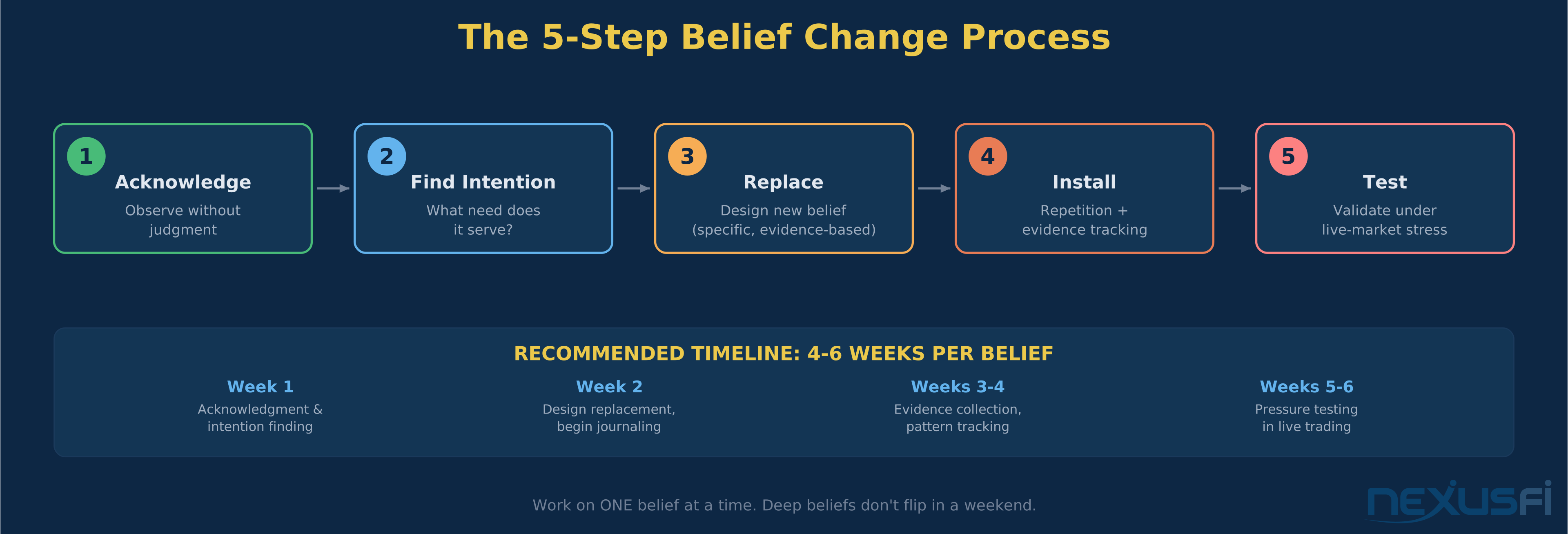
Step 1: Full Acknowledgment
Acknowledge the limiting belief without judgment. "I notice that I believe I always lose on Fridays." Don't fight it. Just observe it. This step borrows from mindfulness practice and reduces the emotional charge before attempting to change the belief. Traders who skip this step and jump straight to installing a new belief usually fail — the old belief resurfaces under stress.
Step 2: Identify the Positive Intention
Every belief, even a destructive one, exists because it serves some purpose. "I can't trade during FOMC" might protect you from volatility you're not equipped to handle. "Markets are rigged" might protect you from taking responsibility for poor risk management. Finding the positive intention means understanding what psychological need the belief is meeting so you can address that need through a different, more useful belief.
@ZviTradingCoach — Self sabotage reframed
[9]
Step 3: Create the Replacement Belief
Design a belief that meets the same underlying need but produces better trading behavior. The replacement should be:
- Specific. Vague beliefs produce vague behavior.
- Evidence-based. Point to supporting data from your own trading journal or backtesting results.
- Process-oriented. Beliefs about what you do are more powerful than beliefs about what you are.
- Low stress. If the replacement belief itself generates a stress rating above 3, it's probably too ambitious.
Bad replacement: "I will be right on every trade." Good replacement: "I focus on executing my process, and my process has a positive expected value over a series of trades."
Step 4: Install Through Repetition and Evidence
New beliefs don't stick from a single journal entry. Tharp's process involves writing the new belief in your trading journal every morning, recording evidence that supports it during each session, tracking the old belief's reappearance, and reviewing weekly. The data from your journal tells you whether you're acting from the new belief or the old one.
Step 5: Test Under Pressure
A belief isn't truly changed until it holds under live-market stress. If you used to believe "I can't trade after a loss," the test is taking the very next valid setup after a loss and executing it according to plan. If you can do this consistently across 20+ instances, the new belief is installed.
Running Your Own Belief Audit #
Here's how to conduct a Tharp-style belief audit on your own trading. This process takes several hours to do properly.
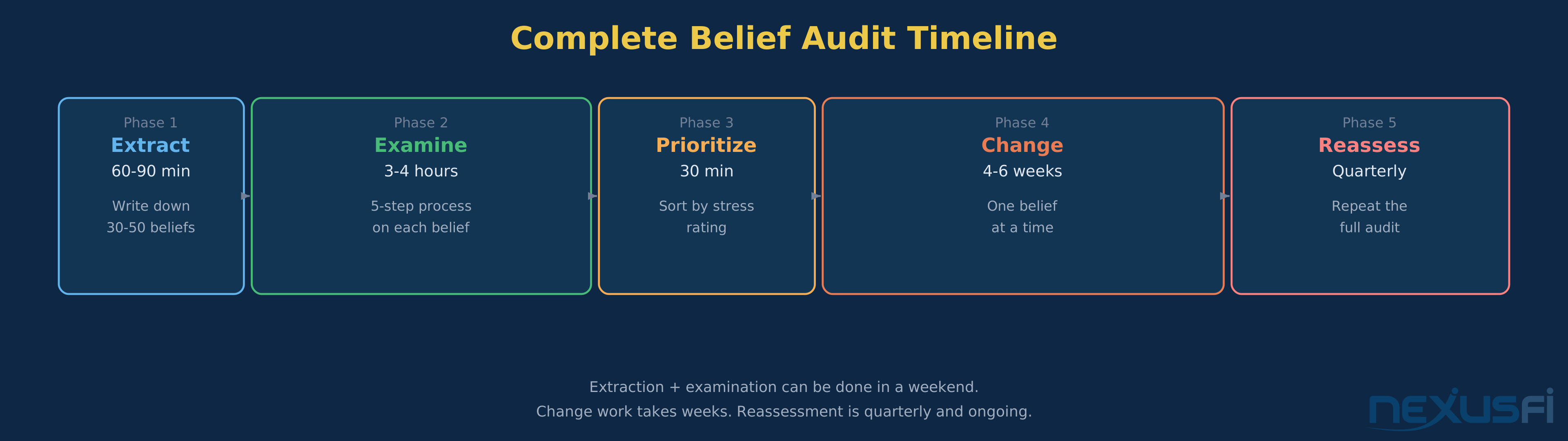
Phase 1: Belief Extraction (60-90 minutes)
Write down every belief you hold about trading across four domains: the market (how do markets move? what drives price? can markets be predicted?), your system (does my approach have an edge? what drawdown is acceptable?), money (how much can I realistically make? how do I feel about losing?), and yourself (am I disciplined enough? do I deserve to make money from trading?). Aim for 30-50 beliefs minimum. If you're struggling, look at your recent trade log and ask "what belief drove this decision?" for each entry and exit.
Common Trap Having a set of limiting beliefs that leads to scarcity thinking could be devastating for trading.
These are the beliefs that hold you back from operating at your full potential. [10]
Phase 2: Examination (3-4 hours)
Take each belief through the full examination exercise: statement, three supporting references, three contradicting references, stress rating, useful/limiting classification. Don't try to do all 30-50 in one sitting. Process 8-10 per session over several days. Belief work is cognitively demanding — you'll hit diminishing returns after about 90 minutes.
Phase 3: Prioritization (30 minutes)
Sort your limiting beliefs by stress rating, highest first. The top 3-5 are your priority targets. Pick one — the highest-stress limiting belief — and run it through the full change process before moving to the next.
Phase 4: Change Work (Ongoing)
Work on one belief at a time using the five-step change process. Allow 4-6 weeks per belief: Week 1 for acknowledgment, Week 2 for replacement belief design and daily journaling, Weeks 3-4 for evidence collection and pattern tracking, Weeks 5-6 for pressure testing in live trading.
Phase 5: Reassessment (Quarterly)
Repeat the full belief extraction and examination quarterly. Your beliefs shift as you gain experience and encounter different market conditions. New limiting beliefs emerge. Old useful beliefs may become limiting in new contexts. The audit is an ongoing practice, the same way you review your trade log and system performance.
The Most Common Limiting Beliefs in Traders #
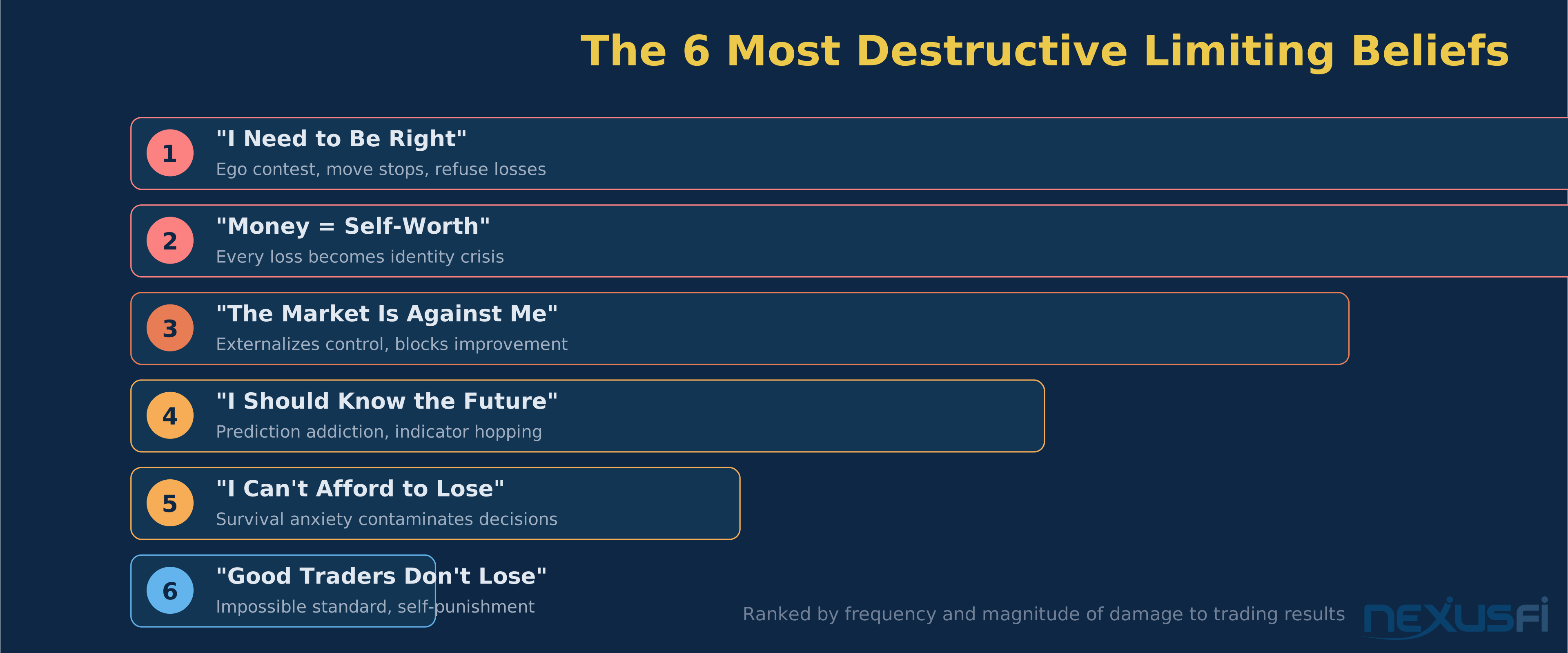
After decades of working with traders, Tharp identified recurring limiting belief patterns. Here are the most destructive:
1. "I Need to Be Right"
The #1 account killer. This belief transforms every trade from a probability exercise into an ego contest. Traders who need to be right move stops, refuse to take losses, and hold positions past their exit criteria — all to avoid the psychological pain of being "wrong."
2. "Money Equals Self-Worth"
When your P&L becomes your scorecard for personal value, every loss is an identity crisis. As Tharp noted, and as discussed in the NexusFi community: the belief that "money is NOT important" consistently correlates with trading success. [3]
3. "The Market Is Against Me"
Whether institutional players influence price around obvious levels is debatable. But the belief that the market is personally targeting you externalizes all responsibility and makes improvement impossible. You can't fix what you believe you don't control.
4. "I Should Know What the Market Will Do"
Prediction addiction drives traders to accumulate more indicators and data sources — all seeking certainty that doesn't exist. The profitable reframe: you need a system with positive expectancy and the discipline to execute it consistently.
@Hanneke — DAX Journal and trading the European Session
[11]
5. "I Can't Afford to Lose"
Trading with money you can't afford to lose guarantees that every decision is contaminated by survival anxiety. This isn't a belief to examine and replace — it's a situation to change. Reduce position size or step back to simulation until you've built capital that you can afford to lose.
6. "Good Traders Don't Have Losing Trades"
Every professional trader has losing trades. The best trading belief systems incorporate loss as a normal, expected, and manageable part of the process.
Connecting Beliefs to Trading Execution #
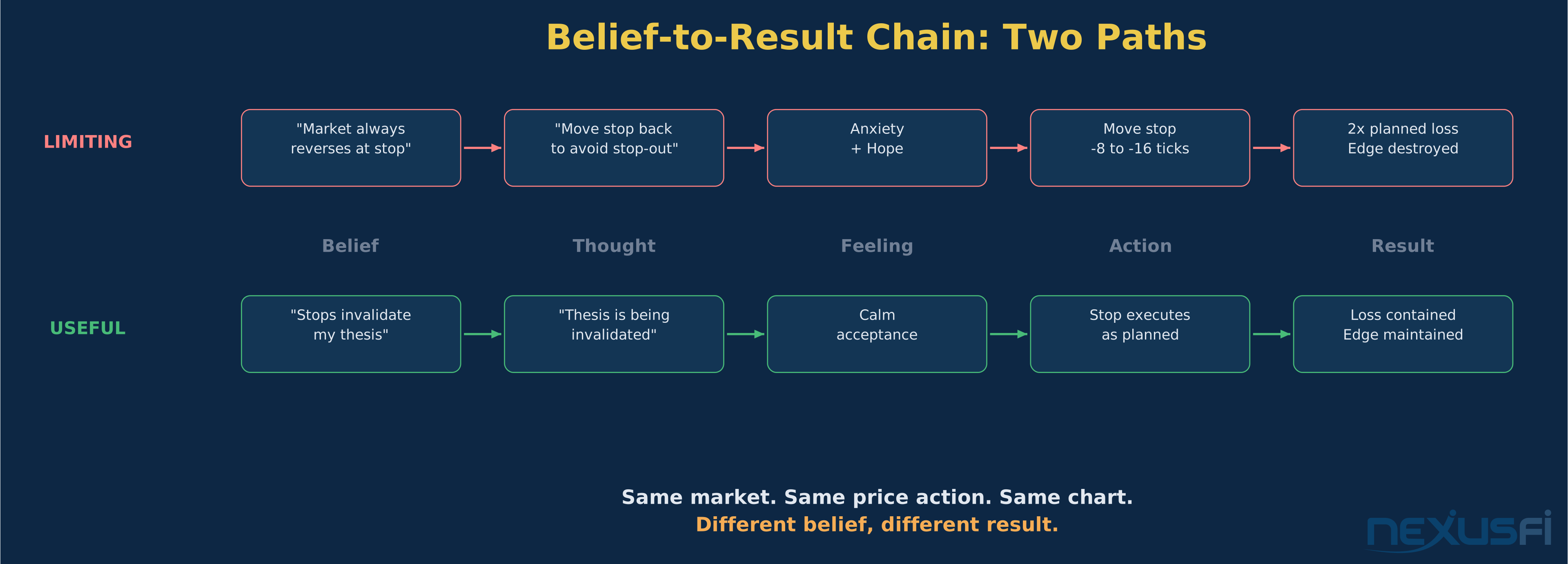
The whole point of belief examination is to trace the direct line from belief to behavior to trading result. Tharp's framework maps this chain:
Belief -> Thought -> Feeling -> Action -> Result
Consider a limiting belief chain:
- Belief: "The market always reverses at my stop."
- Thought: "If I move my stop back, I'll avoid getting stopped out on the reversal."
- Feeling: Anxiety about being stopped out, hope that moving the stop will save the trade.
- Action: Move stop from -8 ticks to -16 ticks.
- Result: When the trade does stop out, the loss is 2x what the plan called for. Over 100 trades, this destroys edge.
Now run the same chain with a useful belief:
- Belief: "My stops are placed at levels that invalidate my trade thesis."
- Thought: "Price is approaching my stop. My thesis is being invalidated."
- Feeling: Calm acceptance -- this is the cost of doing business.
- Action: Allow the stop to execute as planned.
- Result: Loss is contained to plan. Capital is preserved. Edge is maintained over 100 trades.
Same market. Same price action. Same chart. Different belief, different result. This is what Tharp means when you trade your beliefs, not the market.
The beliefs you build from experience determine the actions you take, which create the new experiences that either reinforce or modify those beliefs.
[7]
Building a Complete Belief System for Trading #
Tharp doesn't just tear down limiting beliefs. He advocates building a coherent, intentional belief system for trading — a set of mutually reinforcing useful beliefs that form the psychological foundation for consistent execution.
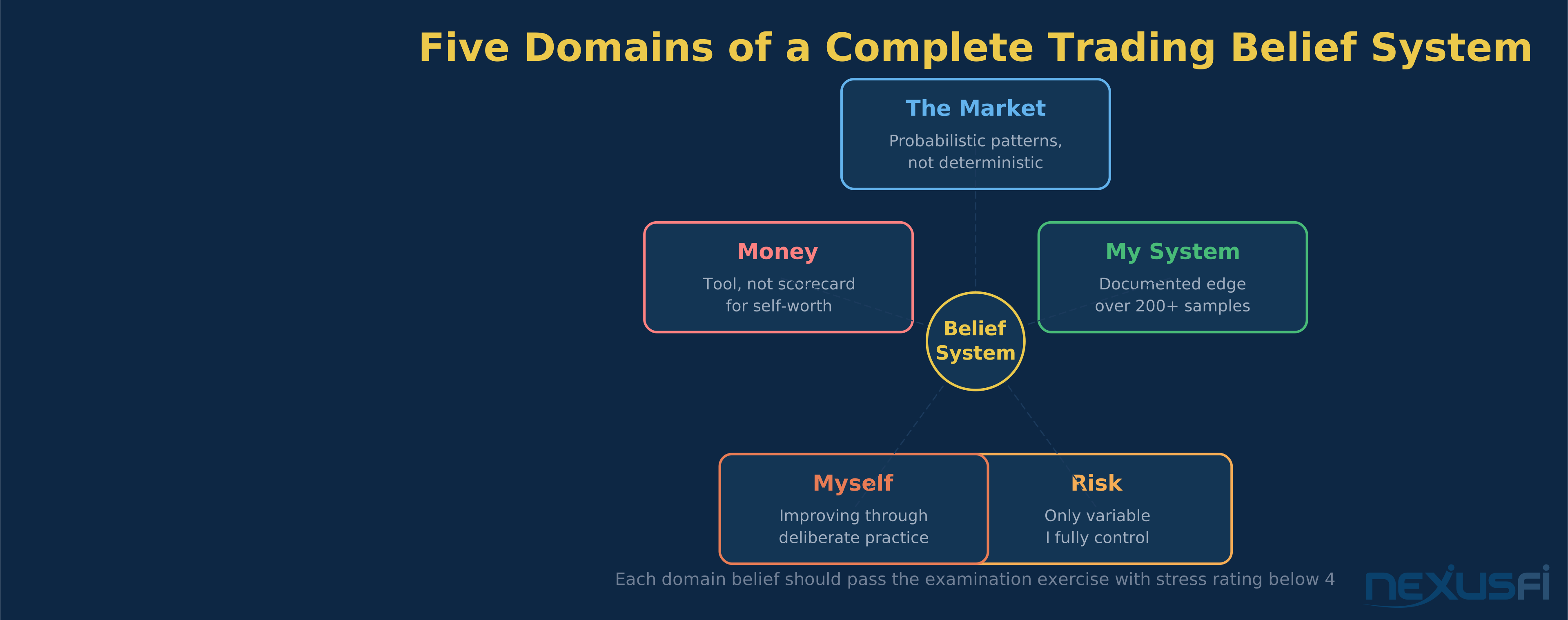
A well-constructed trading belief system covers five domains:
1. Beliefs About the Market
"The market is a complex adaptive system that exhibits patterns at multiple time frames. These patterns are probabilistic, not deterministic. My job is to identify high-probability setups and manage risk, not to predict with certainty."
2. Beliefs About My System
"My system has a documented positive expectancy over 200+ trade samples. Individual trade outcomes are random within the distribution. I trust the system's edge to manifest over a sufficient sample size."
3. Beliefs About Risk
"Risk is the only variable I fully control. I define my risk before entering every trade. My position size ensures that no single loss can materially damage my ability to continue trading."
4. Beliefs About Myself
"I am a competent trader who is continuously improving through deliberate practice and belief examination. My value is not determined by any single trade, day, or week."
5. Beliefs About Money
"Money is a tool that enables me to play the game. Making money is a natural consequence of consistent process execution. I don't trade for money — I trade to express my edge."
Each of these beliefs should pass the examination exercise with three supporting references, three you've considered and weighed, and a low stress rating. If any generate stress above a 4 when challenged, they need more work before they'll hold under live-market pressure.
Common Mistakes in Belief Work #
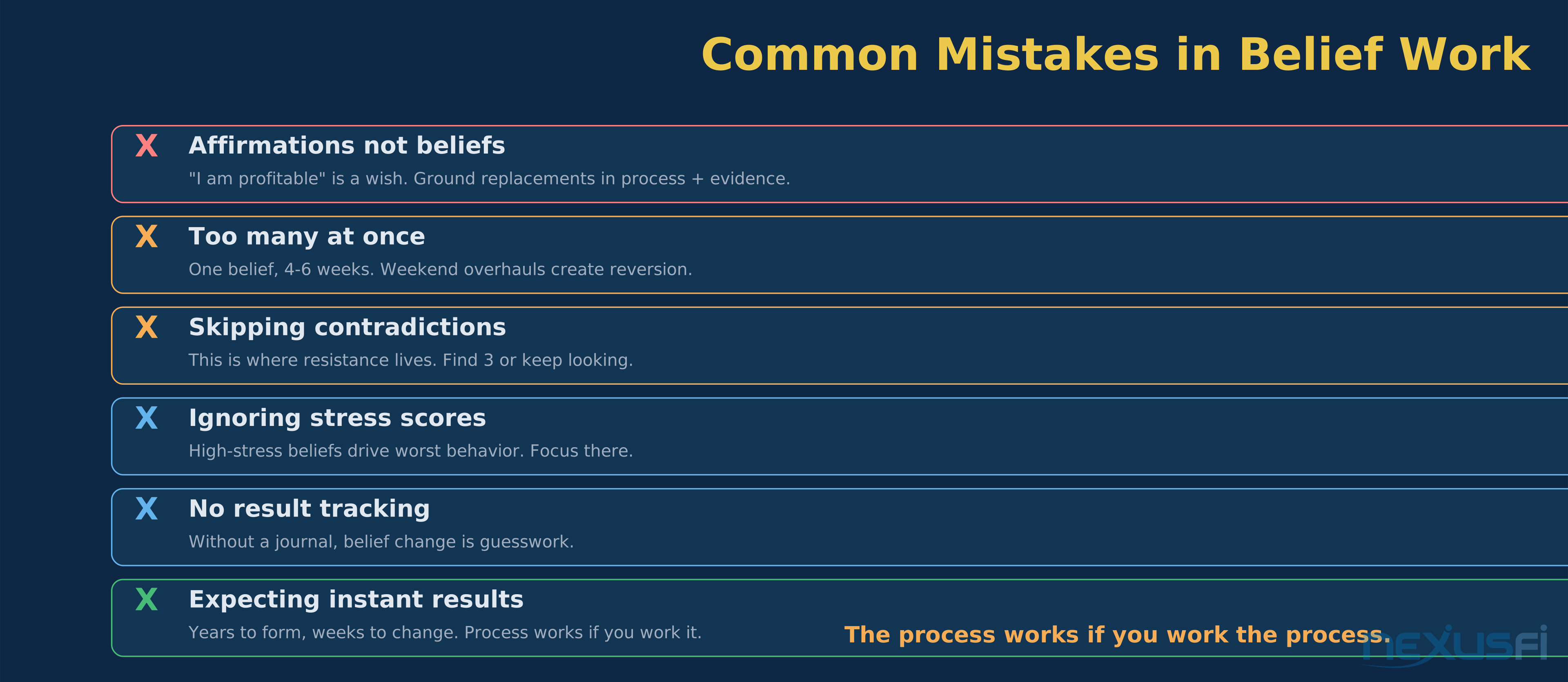
Traders who attempt belief examination without the full Tharp Think framework tend to make predictable errors:
- Replacing beliefs with affirmations. "I am a consistently profitable trader" isn't a belief -- it's a wish. Useful replacement beliefs are grounded in process and evidence, not outcomes and hope.
- Trying to change too many beliefs at once. Working on one belief at a time over 4-6 weeks produces lasting change. Trying to overhaul your entire belief system in a weekend produces confusion and reversion.
- Skipping the contradicting references. This is where the resistance lives and where the growth happens. If you can't find three contradicting references, you haven't looked hard enough.
- Ignoring the stress assessment. Low-stress beliefs are easy to change but don't matter much. High-stress beliefs drive your worst behavior. The stress rating tells you where to focus.
- Not tracking results. Belief change without a trading journal is guesswork. You need actual trade-by-trade evidence to confirm whether the new belief is producing different behavior.
- Expecting instant results. Beliefs that took years to form don't dissolve in days. The 4-6 week timeline per belief is a minimum. The process works if you work the process.
Knowledge Map
Prerequisites
Understand these firstGo Deeper
Build on this knowledgeCitations
- — Concerning risk per trade sizing (2012) 👍 43“I have written down in my pre-trade plan are as follows to engrain powerful beliefs through consistent thoughts with regards to thinking in terms of probabilities: Accept that trading is about the ODDS”
- — Looking for a Mentor/Guidance and General Advice (2019) 👍 3“Everyone has useful and non-useful beliefs and must dig deep into understanding him/herself.”
- — Lost and losing hope (2019) 👍 10“I recall Van Tharp identifying the belief that money is NOT important as the number 1 trait of successful traders.”
- — Are Fibonacci retracements and projections useful? (2015) 👍 7“Trading is all about the psychology of belief and having mental toughness to hold conviction.”
- — ES Trading Journal - conquering my fears (2014) 👍 9“By Van K. Tharp: Imagine yourself floating down a river, only you don't know that you are.”
- — Dear Ruby (2013) 👍 13“Our mind has to be free to be able to execute these trades without making trading errors, and the trading errors come from believing that because the pattern is present, that it is going to give me a winning trade.”
- — Trade Journal (2019) 👍 22“Pure logical thinking cannot yield us any knowledge of the empirical world; all knowledge of reality starts from experience and ends in it.”
- — Trading Psychology and How The Mind Works (I) (2011) 👍 25“You are actually not trading the markets really, you are trading yourself. It is very much about the self-image we carry inside of us.”
- — Self sabotage reframed (2024) 👍 12“Self sabotage is not a mental disorder. It is the mind way of solving a MORE IMPORTANT problem -- using your trading mistakes as a tool in the process.”
- — Abundance and scarcity thinking (2015) 👍 14“Having a set of limiting beliefs that leads to scarcity thinking could be devastating for trading.”
- — DAX Journal and trading the European Session (2017) 👍 3“My biggest learning from this is NEVER, NEVER have an expectation if a trade will work or not.”