



Self-Sabotage in Trading: The Hidden Patterns That Undermine Your Edge
Overview #
Self-Sabotage in Trading: The Hidden Patterns That Undermine Your Edge
Every trader knows the feeling. You've done the analysis. You see the setup. The conditions are right. And then — nothing. You wait. You second-guess. The trade moves without you, and you watch it reach the exact target you identified. Or the opposite: you're up four ticks on a trade with a twelve-tick target, and something compels you to close it. Locked in a small profit, you watch price continue another twenty ticks in your direction.
This isn't bad luck. This isn't a strategy problem. This is self-sabotage — the systematic undermining of your own trading edge through behaviors that feel protective but destroy your expectancy. It is, by a wide margin, the most common reason that traders with genuine understanding of the market can't consistently extract money from it.
The frustrating thing about self-sabotage is that it's invisible from the inside. The trader who freezes on a valid entry doesn't think "I am sabotaging myself." They think "this one doesn't feel right." The trader who exits at break-even on a trade that would have hit target doesn't think "I am destroying my expectancy." They think "I'm being prudent." The rationalizations are real-time, convincing, and always protective in tone.
Understanding why this happens — and how to stop it — is one of the most commercially valuable skills you can develop as a trader. Not because psychology replaces technical skill, but because psychology is what allows technical skill to express itself in real conditions.
What Self-Sabotage Actually Is: The Secondary Gain Framework #
Trading psychology coach @ZviTradingCoach offered one of the most useful reframes on this topic on NexusFi's Psychology and Money Management forum:
"Self sabotage is one of the most talked about, and yet most misunderstood, concepts of trading psychology. The term itself - 'self sabotage' - is a negatively-charged term, that brings out unnecessary feelings of self-judgement, shame and inadequacy, thus holds people back from dealing with the issue and solving it."
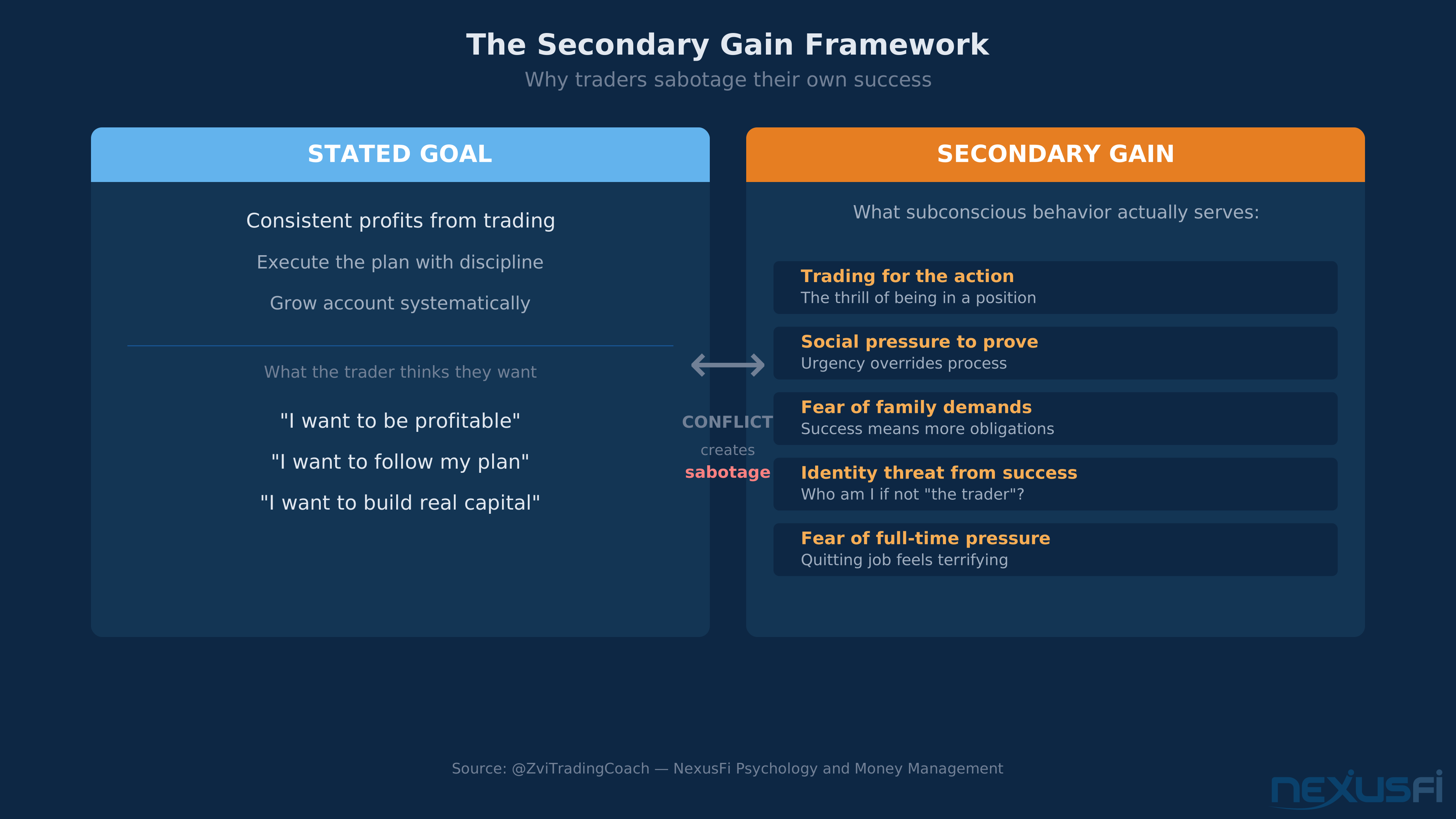
The insight that follows is critical: self-sabotage is not random dysfunction. It is purposeful behavior that serves a hidden goal — what therapists call a "secondary gain." You are not broken. You are solving a problem. The problem just isn't the problem you think you're solving.
@ZviTradingCoach identifies two primary categories of secondary gain in trading:
Category 1: Getting something extra from trading beyond profit. Trading for the action (the thrill of being in a position). Trading for status (needing to take "solid" trades to demonstrate skill). Trading under external pressure to prove something to a spouse, parent, or former employer — which creates urgency that overrides process.
Category 2: Protecting yourself from the consequences of success. Fear that success will attract financial demands from family members. Fear of becoming a different, worse person if wealthy. Fear of the emptiness and identity crisis that comes with quitting a job to trade full-time.
The mechanism is elegant: your subconscious identifies the secondary cost of succeeding — the social demands, the identity shift, the expectation increase — and uses trading mistakes as the tool to prevent that outcome. Your losing trades aren't failures. They're solutions to a different problem.
"Once we figure out the reason for self-sabotage, it tends to work itself out rather quickly," @ZviTradingCoach notes. The key word is "reason." You cannot solve a problem you haven't correctly diagnosed.
The Eight Faces of Discipline Failure #
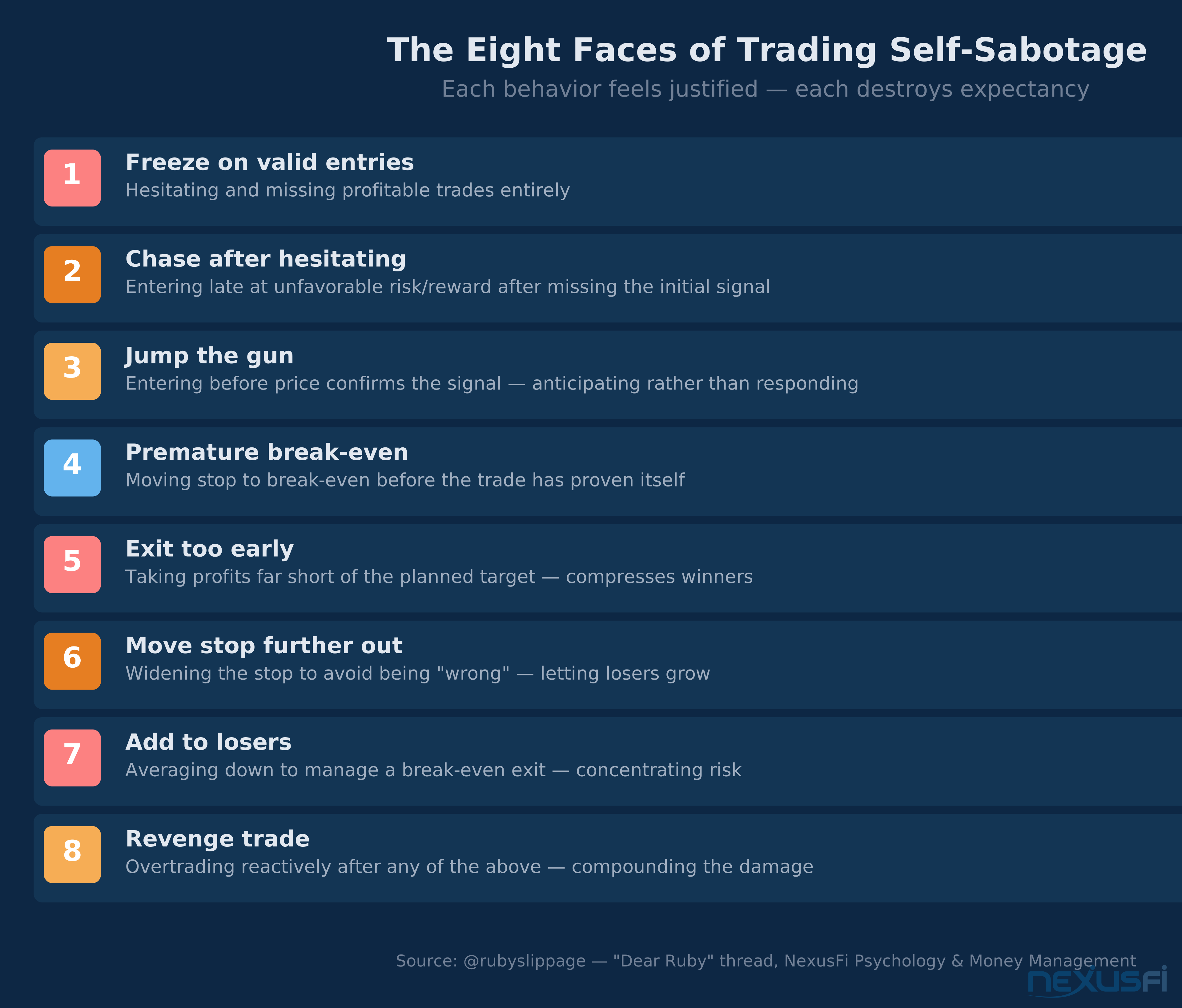
Not all self-sabotage looks the same in execution. @rubyslippage — a veteran trader on NexusFi who ran one of the most insightful Q&A series in the forum's history — identified eight specific failure modes that appear in traders who have a working edge but can't execute it:
- Hesitating and missing out on a profitable trade
- Hesitating and chasing an entry at a price that requires unacceptable risk or odds
- Jumping the gun (entering before price signals a valid entry)
- Moving a stop loss to break even before the trade has had time to prove itself
- Taking a profit too soon
- Moving a stop loss further away to avoid being proven "wrong"
- Adding to a loser to try to manage a break-even exit
- Overtrading (revenge trading) because of the negative results of any of the above
What's significant about this list is that each behavior feels justified in isolation. Moving to break-even feels like "protecting capital." Taking a profit early feels like "being conservative." Adding to a loser feels like "averaging down into a better price." Each has a narrative that makes it sound like discipline rather than its opposite.
This is the fundamental contradiction at the heart of discretionary trading. You've built a system with positive expected value over many trades. But in real-time, your mind treats each trade as singular, as a referendum on your judgment, as something that must be managed with intelligence rather than executed with consistency. The intelligence that built your edge becomes the enemy of the edge in execution.
The Sim-to-Live Performance Gap #
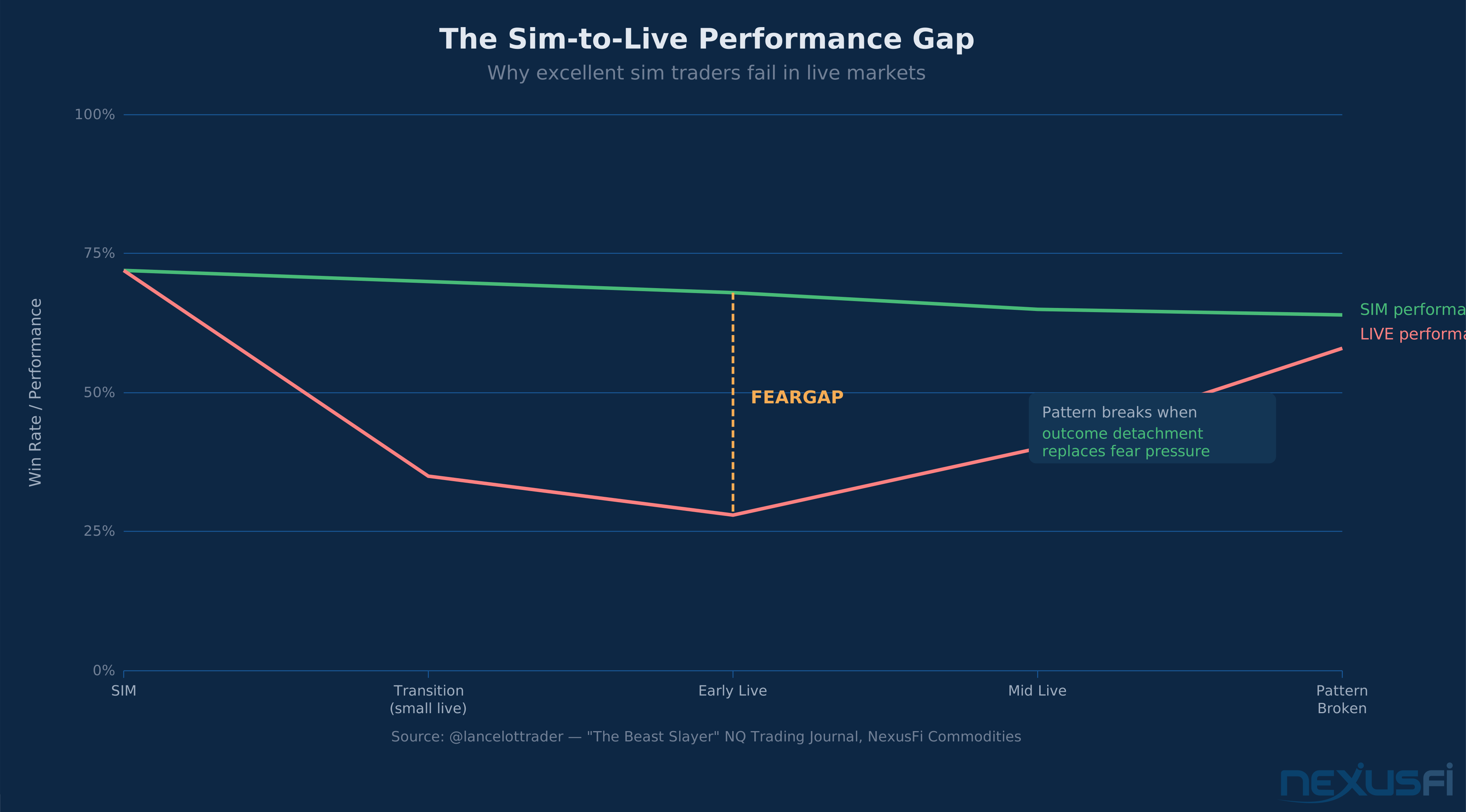
One of the most concrete manifestations of trading self-sabotage is the catastrophic drop in performance when traders move from simulation to live accounts. The pattern is so common it has its own community shorthand on trading forums.
@lancelottrader — who spent over a decade working through this exact problem on NexusFi — described it precisely:
"I had that issue for many years. I would do phenomenal on Sim and then return to live trading — only to fail — over and over. The number one reason for the discrepancy is Fear. On Sim, I would see the setups, and enter without hesitation. No thinking, no debating — just entering the setups that my system called for. But with live, I wasn't able to act in the same way."
The specific behavioral differences he catalogued:
- On sim: hold trades to target. On live: exit too early because of anxiety.
- On sim: take all valid setups after losses. On live: freeze after losses because emotional reactions accumulate.
- On sim: the mechanics run automatically. On live: every decision gets filtered through a fear-activated threat system.
The sim-to-live gap is not primarily a strategy problem. It is proof that you have self-sabotage patterns that only activate when money is at stake. The sim version of you has no such activation triggers — so it trades cleanly.
The painful part comes next. @lancelottrader describes a cycle many traders will recognize:
"I went through a pattern of failing at live trading, then switching back to SIM for a few months until I felt like I was ready. Then back to live only to fail again. Each time with more urgency and fear of failure."
Each cycle increases the stakes. Each failure creates more evidence that "live trading is different." Each return to sim feels necessary. But sim success without live success is not progress — it's avoidance with a sophisticated justification.
Fear Architecture: How It Activates Differently Under Pressure #
Understanding why fear activates so differently in live versus sim trading requires understanding what fear actually is doing in the body and mind during a trading session.
@lancelottrader described the physical reality with unusual clarity:
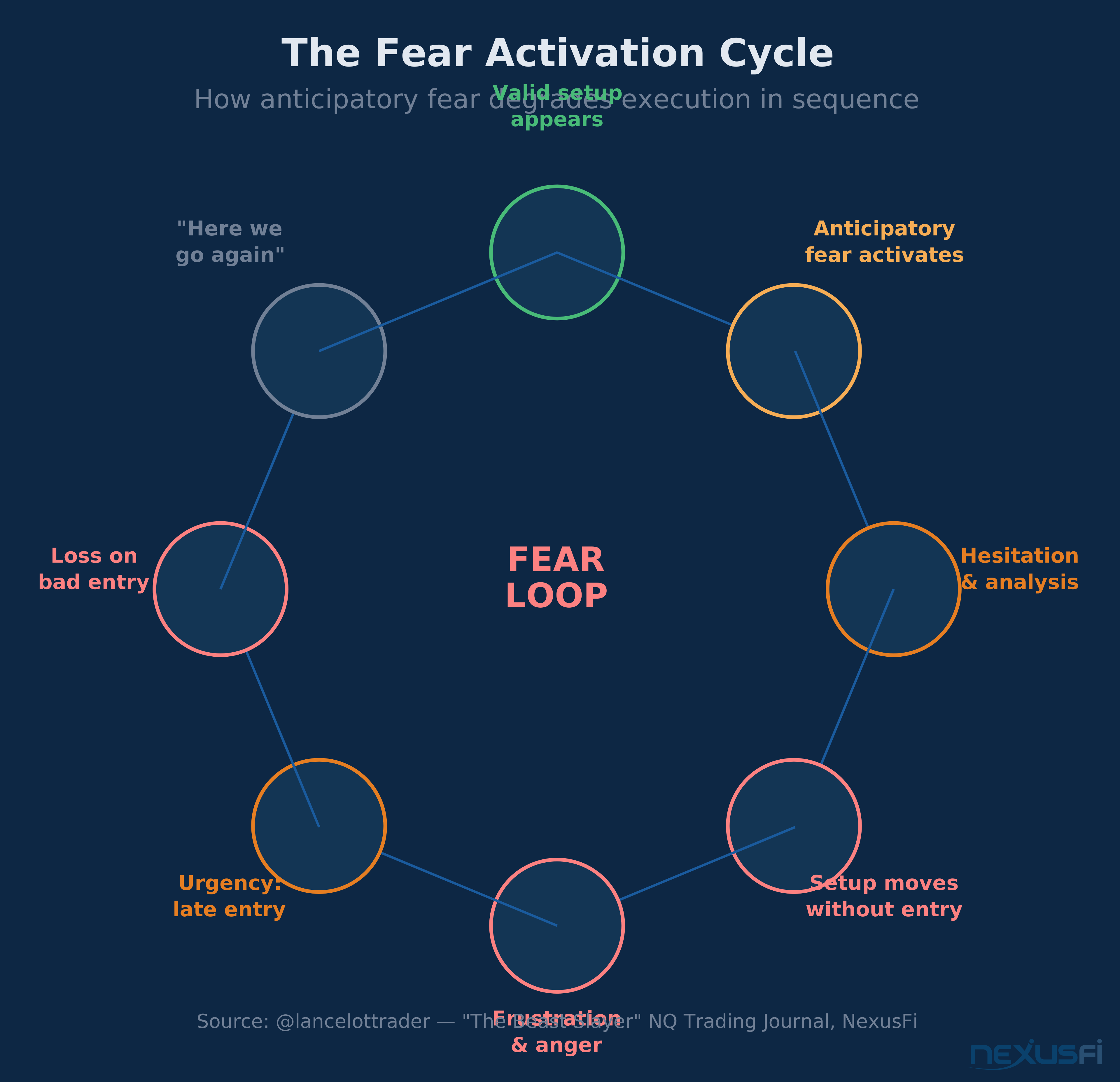
"Due to the psychological 'damage' that resulted from years of failure and lost money, there has often been an inner fear that has gripped me not only when I put on a trade, but even as I was about to place one. This would manifest in a large surge of adrenaline and I could literally feel my heart start to pound. My shirts would be soaked in the underarm area. I would see some perfect setups and simply could not pull the trigger. Then as I saw that these setups would have been easy winners, I felt frustration along with anger that I was missing the moves. Then finally, when price was no longer in that high probability area, I would go in — way late."
This is the fear activation cycle in clinical detail: anticipatory fear → hesitation → missed opportunity → frustration → urgency → late entry → higher risk entry → loss → confirmation of fear → repeat.
The critical observation is that fear doesn't just affect whether you take a trade. It distorts timing, entry price, and subsequent decision-making in a cascading sequence that systematically degrades the edge of a working system.
For traders who have accumulated losses over time, this pattern becomes conditioned. The brain learns that "about to trade" is a cue to activate defensive systems. These defensive systems — increased heart rate, heightened vigilance, threat assessment — are useful if you're about to encounter a predator. They are catastrophic for executing a trading plan that requires calm, consistent pattern recognition.
This is also why the "just trade smaller" advice often fails. Smaller size reduces financial pain somewhat, but the fear architecture is a learned response, not a proportional one. A trader terrified of live trading isn't primarily afraid of losing $200. They're afraid of the implications: proof of failure, confirmation of inadequacy, the weight of accumulated losses, the social pressure of a spouse watching the screen.
The "Yeah, But..." Syndrome #
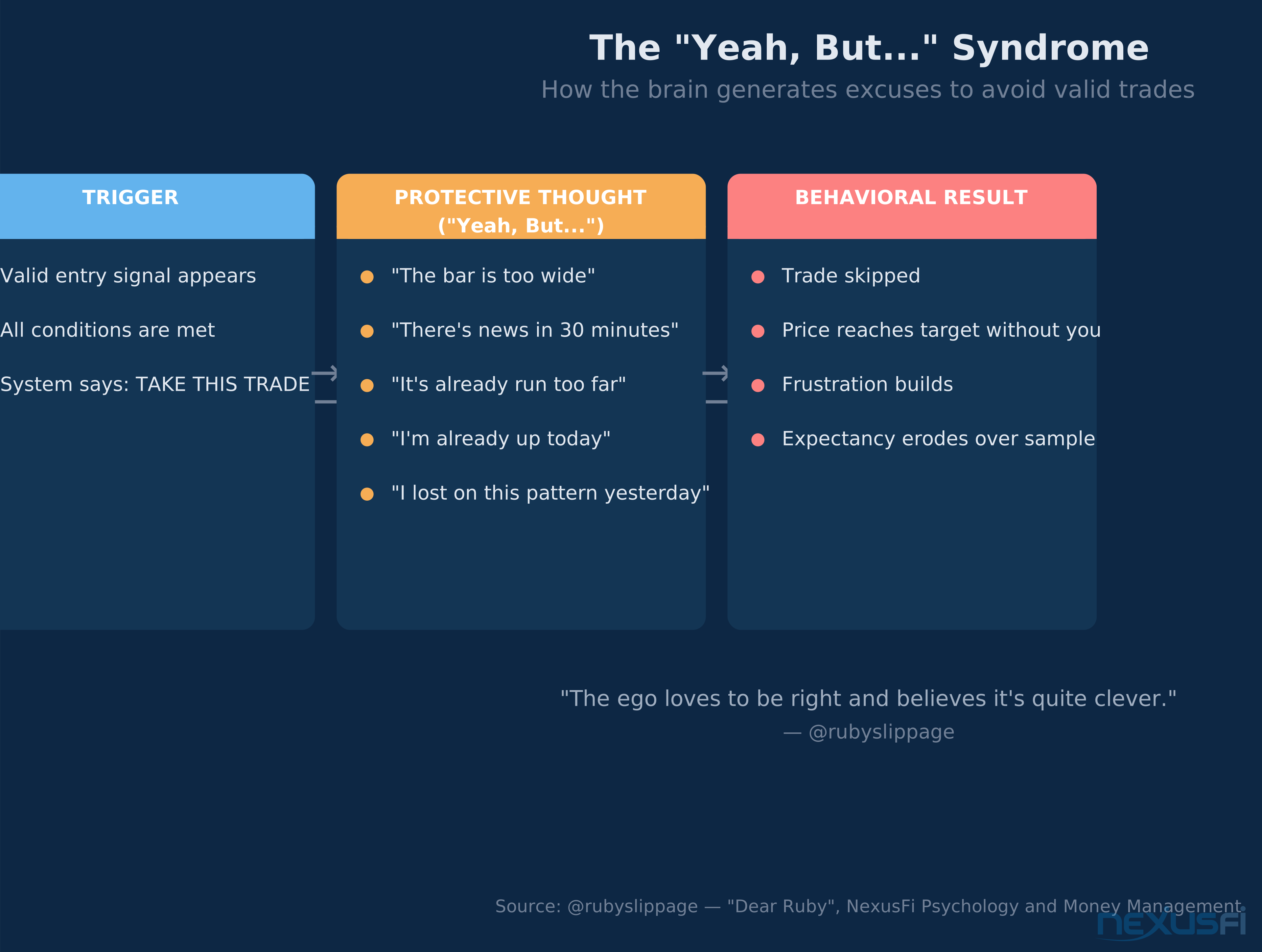
@rubyslippage named one of the most recognizable self-sabotage patterns with a phrase that every discretionary trader will immediately recognize:
"I call it the 'Yeah, but...' syndrome — as in 'Yeah, that's a valid long signal, but [it's run too far; the bar's too wide; there's news in 20 minutes; I haven't had my morning bowel movement yet...]'"
The ellipsis is doing heavy lifting. The specific objection doesn't matter. What matters is the pattern: a valid signal appears, and the protective system generates a reason to not take it. The reason feels legitimate. It's produced with full conviction. But its function is not to improve trading — it's to avoid the discomfort of being wrong.
The "Yeah, but..." is powered by a specific cognitive distortion: the retroactive availability of perfect information. In real-time, you don't know whether this trade will win. But your mind presents the losing scenario with unusual vividness because the cost of that scenario feels asymmetric. A missed winner feels better than a taken loser, even when mathematically they're equivalent — and even when your expectancy suggests the trade should be taken.
This is why traders who carefully analyze their journals often find that their highest-conviction exits and non-entries were often wrong. The "Yeah, but..." fires precisely when the brain has constructed a convincing local narrative that overrides the statistical reality.
The insidious version of this syndrome appears when traders are profitable for the day. As @rubyslippage explains, once a trader has accumulated gains, each subsequent valid setup triggers enhanced "Yeah, but..." responses because "there's a chance you could lose what you just gained. Intellectually you may know that the chance that any given trade will reach profit A before stopping you out at loss B is 60% over any series of trades, but your natural instinct to maintain the pleasurable feeling of being 'right' kicks in."
The profitable session becomes its own sabotage mechanism. The more you have to protect, the more aggressively your protective psychology filters out valid opportunities.
Early Profit-Taking: The Stealth Sabotage #
Of all the self-sabotage patterns, early profit-taking is the most seductive because it generates frequent small rewards that feel like success. Taking a profit is objectively better than taking a loss. Each individual early exit is pleasant. The damage only becomes visible over a large sample.
@rubyslippage described this pattern's full destructive mechanism with a case study:
A trader working with a price action system that had positive expectancy — proven statistically over historical data — consistently failed to realize that expectancy in live trading. He could recognize the setups. He knew what to do. But "his fear of loss overwhelmed his ability to stick with the trading plan."
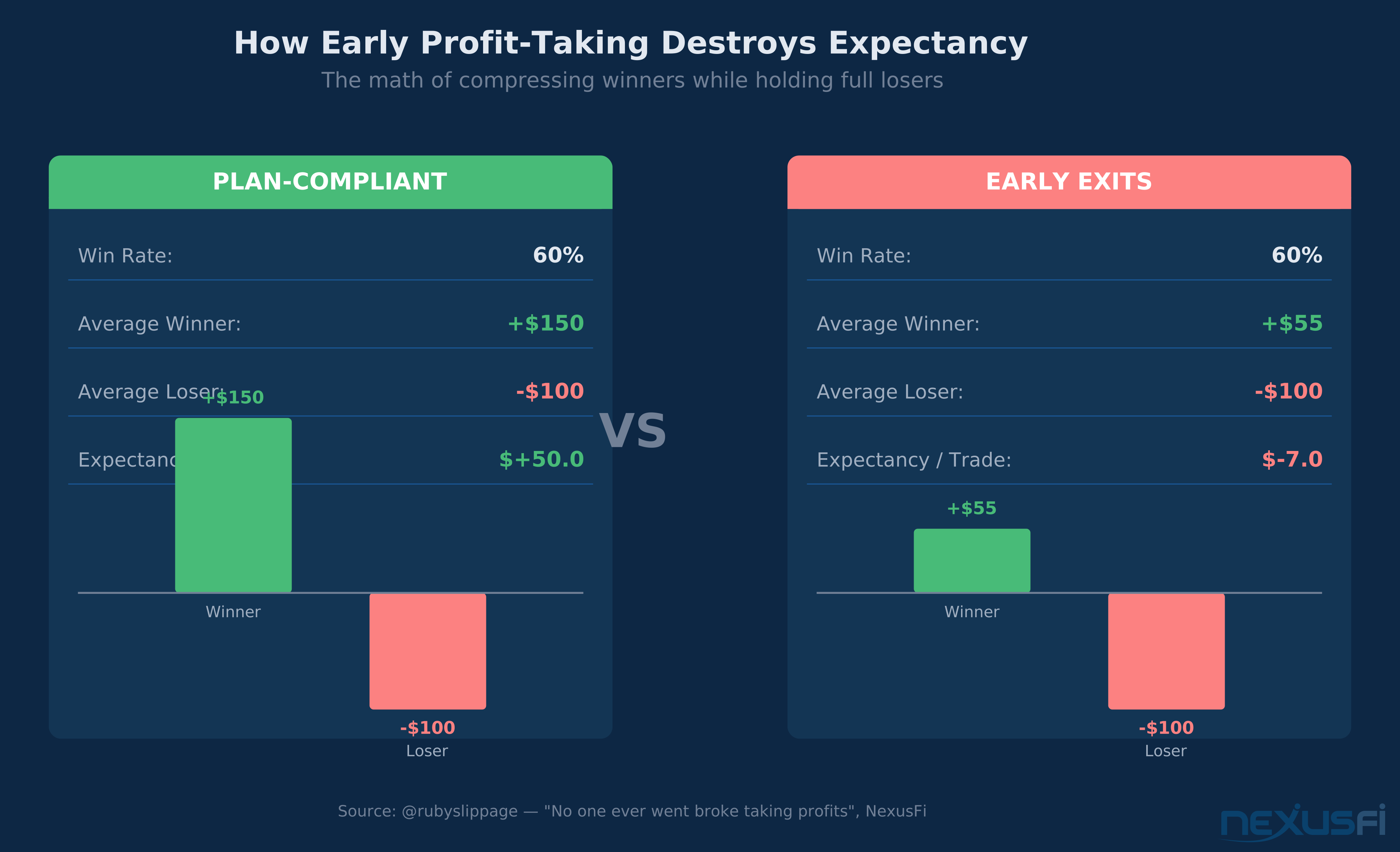
The behavioral result: if a trade immediately moved in his favor, he either moved his stop to break-even or scalped a fraction of the intended profit. If a trade moved against him and then recovered, he moved to break-even immediately. If a trade moved against him and didn't recover, he held for the full stop-out.
"As you can see, his fear of loss caused him to mismanage every trade that would've hit or exceeded his minimum profit target. He was pulling his garden plants as soon as a flower bud appeared, while allowing the weeds to grow full size."
The mathematical effect is precise: early exits compress your winners. Held-until-stopped losers maintain their full size. The result is that even a 60% win rate produces a net loss because the average winner is 40% of what the system requires for positive expectancy, while the average loser is 100% of plan.
This is why the folk wisdom "you never go broke taking profits" is not just wrong — it's precisely backwards for systematic traders. Taking profits early, systematically, will eventually break you because it corrupts the win-to-loss ratio that makes the system viable.
The psychological driver is identical to what we've seen across all self-sabotage patterns: an acute aversion to giving back something that's been gained. The trade has moved in your favor. That unrealized gain feels real, feels yours. Taking it early crystallizes it as permanently real. Holding to target feels like gambling with money you already earned.
This feeling is wrong. Until the trade closes, there is no "money you earned." There are only probabilities working over time. The only metric that matters is whether your executed win-to-loss ratio matches or exceeds your tested expectancy — and early exits guarantee it doesn't.
Ten Systemic Causes of Discipline Breakdown #
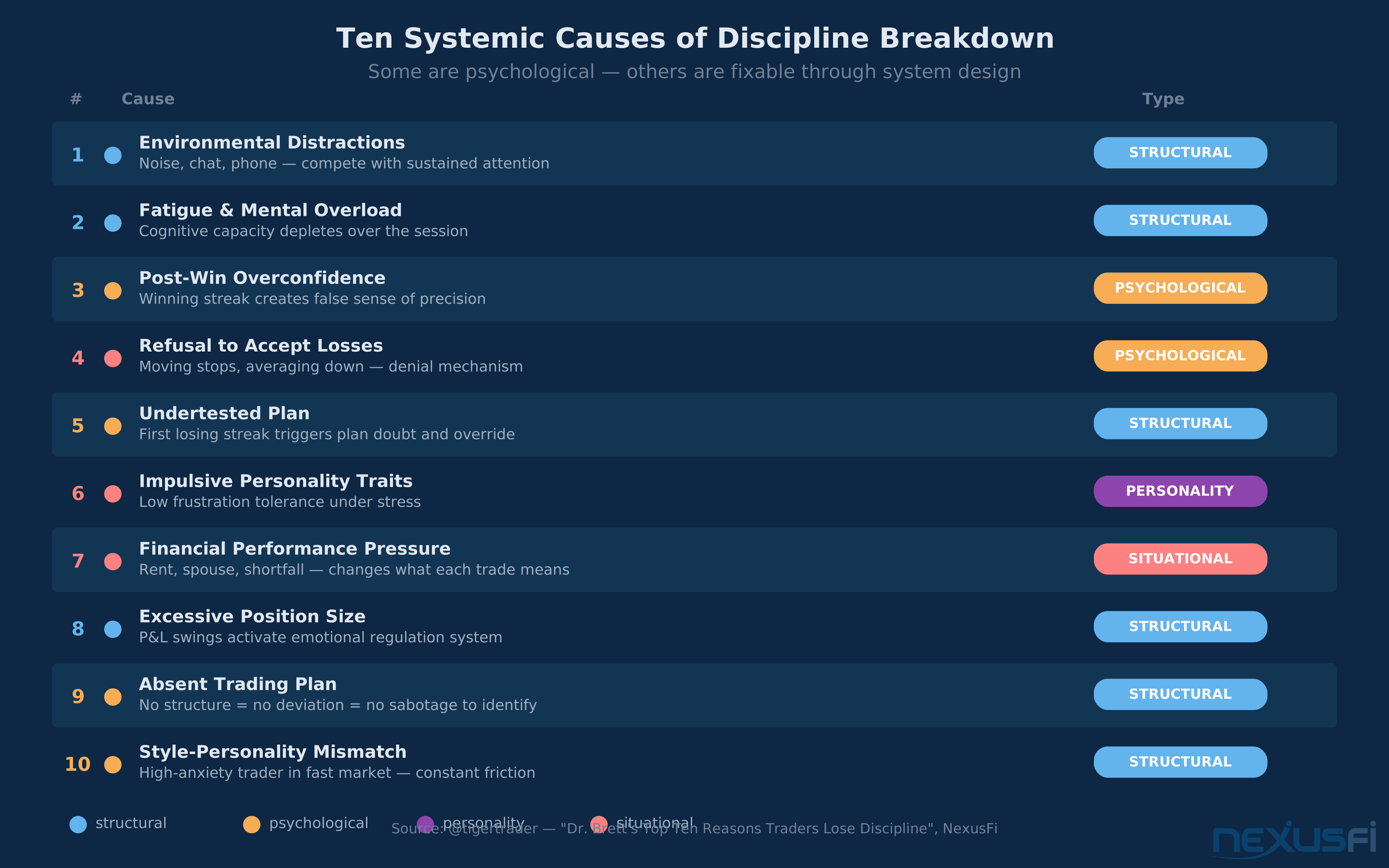
@tigertrader, a long-time Elite Member on NexusFi, summarized sports psychologist Dr. Brett Steenbarger's analysis of why traders lose discipline in a post that remains one of the most-cited reference points on the forum:
The ten causes are worth examining in full:
1. Environmental distractions and boredom. A noisy room, an active chat, a phone — each competes with the sustained attention required for execution. Boredom specifically drives overtrading.
2. Fatigue and mental overload. Cognitive capacity depletes. The same decision that's easy at 9:00 AM is hard at 1:00 PM after six hours of market monitoring.
3. Overconfidence following a string of successes. A winning streak creates an illusory sense of skill that leads to larger positions, wider risk parameters, and entries that wouldn't pass a rested review.
4. Unwillingness to accept losses. Moving stops, holding through plans, averaging down — all downstream from the refusal to accept that this trade has failed.
5. Loss of confidence in an inadequately tested plan. When a system hasn't been rigorously tested, the first losing streak triggers doubt about whether the edge is real. This doubt creates permission to override the plan.
6. Personality traits that increase impulsiveness. Some traders are neurologically predisposed toward novelty-seeking and low frustration tolerance. These traits require structural countermeasures — not just willpower.
7. Situational performance pressure. Trading under financial need — a rent payment due, a spouse monitoring P&L, a year-to-date shortfall — changes the psychological stakes of each trade in ways that corrupt execution.
8. Excessive position size. Positions too large for the account create P&L swings that activate the emotional regulatory system. A trader who can remain calm losing two ticks on a one-lot may be completely unable to remain calm losing the equivalent on ten lots.
9. Absence of a clearly defined plan. Without specific entry, exit, and management rules, there is no sabotage to identify — just chaos navigated by feeling.
10. Trading a style, market, or timeframe that mismatches personality. A high-anxiety trader in a fast-moving market, a patient swing trader doing scalping — structural mismatches generate constant psychological friction.
What's useful about this list is that it moves self-sabotage out of the realm of pure psychology into the realm of system design. Several of these causes are fixable through structure, not therapy.
Diagnosing Your Self-Sabotage Pattern #
Before you can break a self-sabotage pattern, you need to know which one — or which combination — you're running. This requires data, not introspection.
The diagnostic process requires a journal that captures not just trade results but trade context: what you were thinking before the entry, what prompted the exit, what happened afterward. The goal is to find the gap between your intended behavior and your actual behavior, then trace it back to a specific trigger.
Common diagnostic questions:
- Where does my actual win-to-loss ratio diverge from my tested expectancy? Winners shorter than plan, or losers larger than plan?
- Do I take more trades after wins or after losses? Does performance degrade later in the session?
- Are my non-entries (setups I identified but didn't take) winners or losers at a higher rate than my entries?
- What's the ratio between my "feel good" exits (early profits, break-even saves) and my plan-compliant exits?
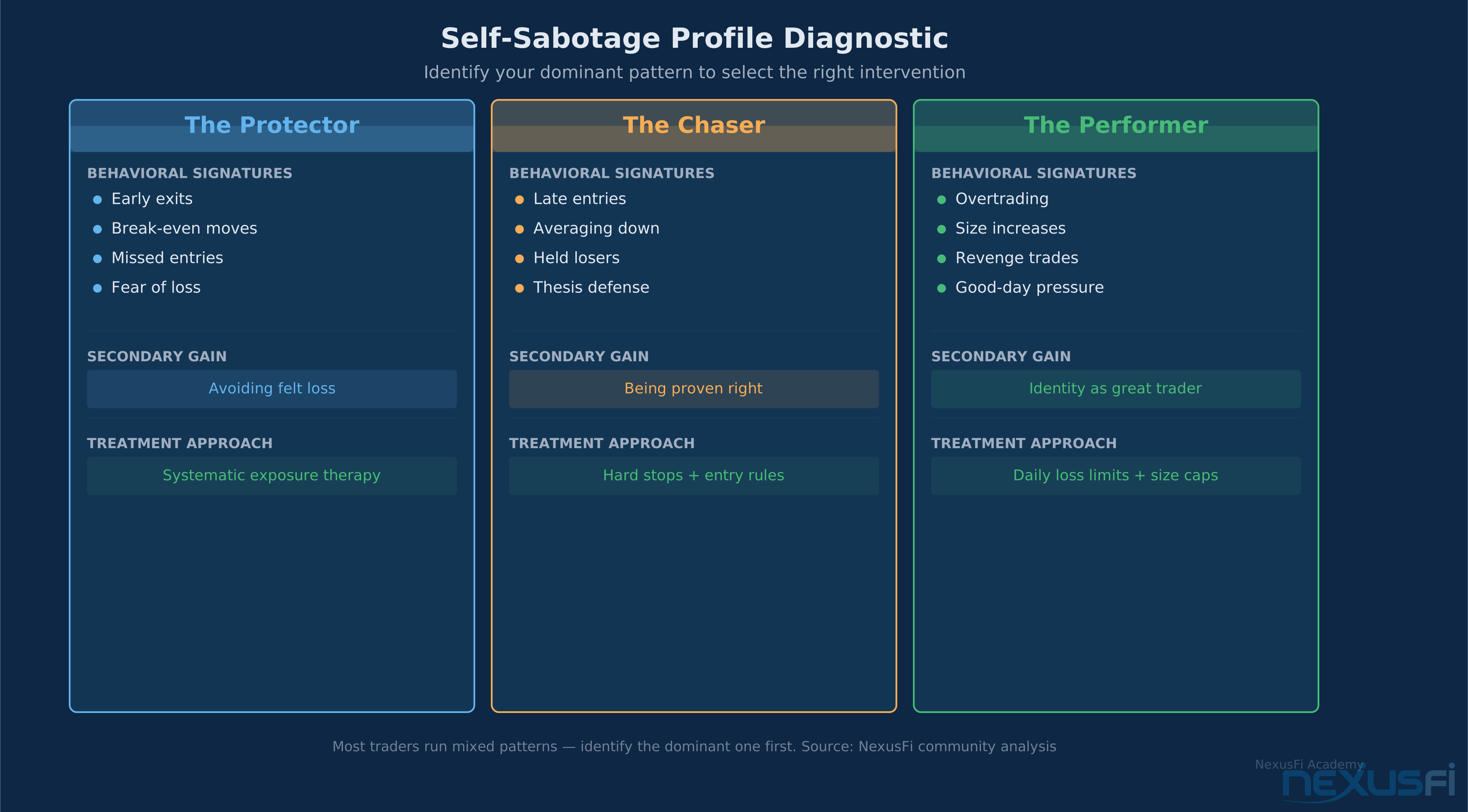
The answers will typically point to one of three profiles:
The Protector: Characterized by early exits, frequent break-even moves, and missed entries on winning setups. The secondary gain is safety — avoiding the felt experience of losing. Treatment requires building tolerance for unrealized losses through systematic exposure.
The Chaser: Characterized by late entries, average-down behavior, and held losers. The secondary gain is proving the original thesis correct. Treatment requires structural rules around entries and hard stops enforced by platform automation.
The Performer: Characterized by overtrading on good days, size increases after wins, revenge trading after losses. The secondary gain is the experience of being a great trader. Treatment requires strict daily loss limits and position size constraints.
Most traders run a mixed pattern, but one typically dominates. Identifying the dominant pattern determines the appropriate intervention.
Breaking the Cycle: From Recognition to Execution #
The breakthrough that @lancelottrader eventually reached came through an unexpected mechanism — not through improved discipline, but through giving up:
"After that incident, I took a few live trades a few weeks later. This time I had no fear or pressure — since I had mentally already given up. I just took those immediate momentum scalps like you see on my new videos. All of a sudden, I started winning live, virtually every day."
What this describes is the elimination of performance pressure. When the stakes were reduced to zero — when failure was already accepted — the psychological interference that had been corrupting execution disappeared. The technical skill that had always been present could finally express itself.
This isn't a prescription to "give up" in the sense of abandoning the work. It's a prescription to genuinely detach from the outcome of any individual trade or day. Not as a mental trick, but as a real shift in what you're holding in your head when you're at the screen.
@rubyslippage offered a practical approach to building this detachment through visualization:
"I practiced daily visualization of trades moving nicely in my favor and then retracing back through my entry price. In my visualizations, I imagined the favorable excursion as a flower that just blossomed and as price retraced, I'd remind myself that the petals must drop off (price will retrace) before the fruit can appear and ripen."
This is not abstract. The visualization is training the brain to associate price retracements — the most common trigger for premature exits — with expected process rather than threatening failure. Over time, the automatic threat response to a drawdown in a trade diminishes because the brain has been fed a different story about what that drawdown means.
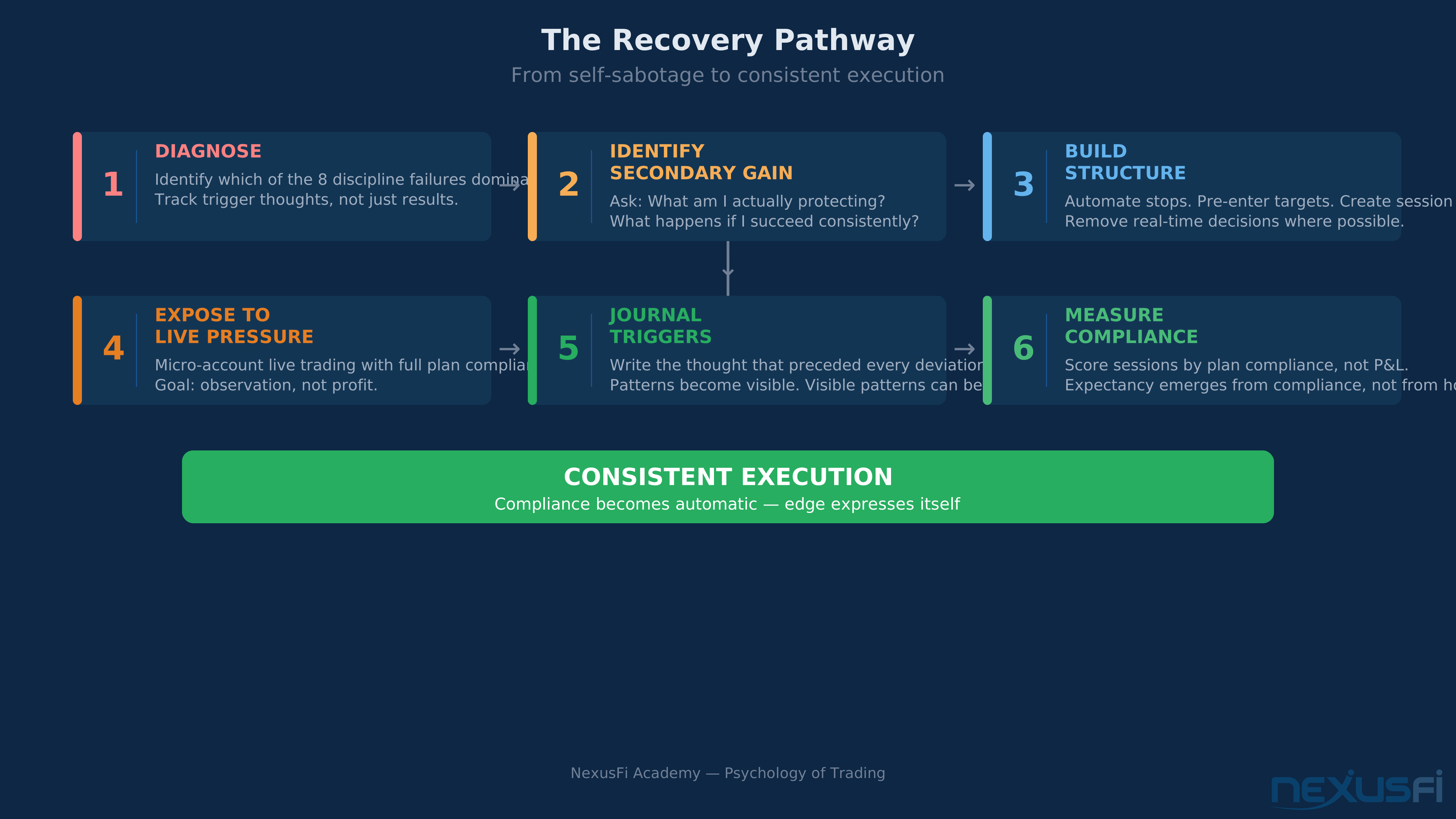
The Core Insight: Self-sabotage is not dysfunction — it is purposeful behavior serving a hidden secondary gain. You are not broken; you are solving a different problem than you think you are. Diagnosis precedes cure: identify which specific pattern dominates (Protector, Chaser, or Performer) before selecting an intervention.
Practical Tools for Pattern Interruption #
The Pre-Session Checklist #
Create a written pre-session ritual that addresses each known trigger. If environmental distractions are a problem, the checklist includes eliminating them. If fatigue is a problem, it includes a sleep and hydration assessment. If financial pressure is distorting execution, it includes a conscious reminder of what the day's risk budget actually means in the context of the overall plan.
The checklist functions as a pattern interrupt before the first trade. It prevents entering the session in whatever state you happened to arrive in and instead creates a deliberate transition into trading mode.
The Trigger Journal #
For each deviation from your trading plan — each "Yeah, but...", each early exit, each missed entry — write down the exact thought that preceded it. Not the result. The thought. Over time, you'll discover that you use a small number of recurring thoughts to justify each self-sabotage behavior. These thoughts are the triggers, and once you can name them, you can begin to interrupt them.
The trigger journal makes the pattern visible. Visible patterns can be interrupted. Invisible patterns cannot.
Micro-Account Exposure #
For traders with a significant sim-to-live gap, a micro-account provides live market experience with financial stakes small enough to allow some psychological recalibration. The goal isn't to make money on the micro account. The goal is to accumulate live trading experience in which you observe your own fear responses without suffering meaningful financial consequences.
The key discipline: trade the micro account with the same rules as your full account. If you find yourself managing the micro differently — taking larger risks, being more casual — you're not getting the exposure you need.
Automated Stop Execution #
One structural solution to the "hold losers longer than plan" pattern is to remove the decision entirely by using hard stops entered at the time of the trade. Platform automation makes this simple. The stop that protects you from a runaway loss cannot be ignored, moved, or rationalized away if it's set when your judgment is clearest and removed from your control.
Some traders extend this to profit targets as well, pre-entering limit orders at their intended exit point so the "Yeah, but... the trade might go further" rationalization cannot override the plan.
Session Length Limits #
For traders who experience degraded performance in the afternoon relative to the morning — a very common pattern traceable to cognitive fatigue — a structural session limit is the appropriate tool. If your win rate drops materially after noon, there is no discipline solution. The discipline solution is to close the platform at noon.
This requires honesty about the data. Pull your trade results by time of day. If there's a clear degradation pattern, you have both the diagnosis and the prescription.
The Long View #
Self-sabotage in trading is not a character flaw. It is a natural consequence of deploying a human brain — evolved for risk avoidance in a context of genuinely dangerous consequences — into an environment that rewards probabilistic risk tolerance over a large sample.
Your brain is not wrong to generate fear responses when real money is at stake. It's doing exactly what it was built to do. The problem is that financial trading requires a different set of responses than the ones your brain defaults to under threat.
The path forward is not to suppress the threat response — suppression rarely works and is cognitively expensive. The path forward is to:
- Correctly diagnose which specific patterns are running and what secondary gain they're serving
- Build structural solutions that reduce the decision load during high-threat moments
- Use systematic exposure (micro accounts, deliberate practice with plan compliance scoring) to gradually recalibrate the threat response
- Maintain a journal that makes patterns visible so they can be interrupted
- Evaluate performance by plan compliance rather than P&L, until compliance becomes automatic
The traders who get through this aren't the ones who managed to become fearless. They're the ones who created enough structural protection that fear couldn't consistently override execution — and then traded long enough that the fear response gradually recalibrated around a new baseline.
Progress is measured in recalibration, not elimination. The goal isn't to never feel it. The goal is to shorten the gap between feeling it and executing anyway.
Knowledge Map
Go Deeper
Build on this knowledgeReferences This Article
Articles that build on this topicCitations
- — Self sabotage reframed (2024) 👍 12“Self sabotage is one of the most talked about, and yet most misunderstood, concepts of trading psychology.”
- — Dear Ruby (2013) 👍 19“An overwhelming belief that you somehow know what's going to happen -- or not going to happen -- next.”
- — Rrrracer's complete noob starting from scratch journal (2018) 👍 12“I had that issue for many years. I would do phenomenal on Sim and then return to live trading -- only to fail.”
- — The Beast Slayer, Lance's NQ Trading Journal (2018) 👍 25“I went through a pattern of failing at live trading, then switching back to SIM for a few months.”
- — The Beast Slayer, Lance's NQ Trading Journal (2021) 👍 26“Due to the psychological damage that resulted from years of failure and lost money, there has often been an inner fear.”
- — Dear Ruby (2013) 👍 13“I call it the 'Yeah, but...' syndrome -- as in 'Yeah, that's a valid long signal, but...'”
- — Dear Ruby (2013) 👍 21“His fear of loss caused him to mismanage every trade that would have hit or exceeded his minimum profit target.”
- — Self destructive behavior (2013) 👍 15“Ten systemic causes of why traders lose discipline, per Dr. Brett Steenbarger.”