



Trading Accountability Systems: Coaches, Partners, and Communities -- The Social Layer That Keeps Traders Honest
Overview #
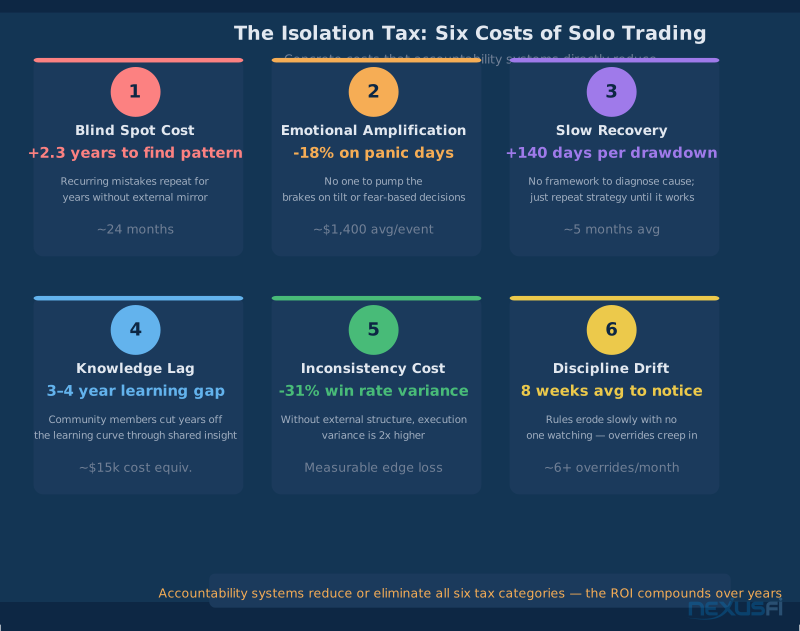
The most expensive trade any futures trader makes isn't a bad entry on a news spike or a position held through a margin call. It's the invisible cost of trading alone — month after month, year after year — without anyone to tell you that you keep making the same mistake on the 10:30 reversal, that your position sizing balloons every time you're up on the week, or that your notes say "followed the plan" on days when the chart clearly shows otherwise.
Trading is structurally isolating. You sit alone, compete against professionals who are better resourced than you, and receive feedback exclusively in the form of P&L — which is a lagging, noisy signal that conflates skill with luck. You can be disciplined on bad days and reckless on good ones, and the P&L won't tell you which was which.
What breaks this isolation — what injects the honest, timely, pattern-specific feedback that P&L cannot provide — is an accountability system. A structured social layer that creates external pressure to document your decisions, review your behavior, and change specific patterns rather than vague intentions.
This article covers the four accountability structures available to futures traders, from the zero-friction starting point of a public trading journal to the high-investment professional coaching relationship. Each serves a different stage of development and a different learning profile. Most serious traders end up using two or three simultaneously.
Why Isolation Is the Most Expensive Habit in Trading #
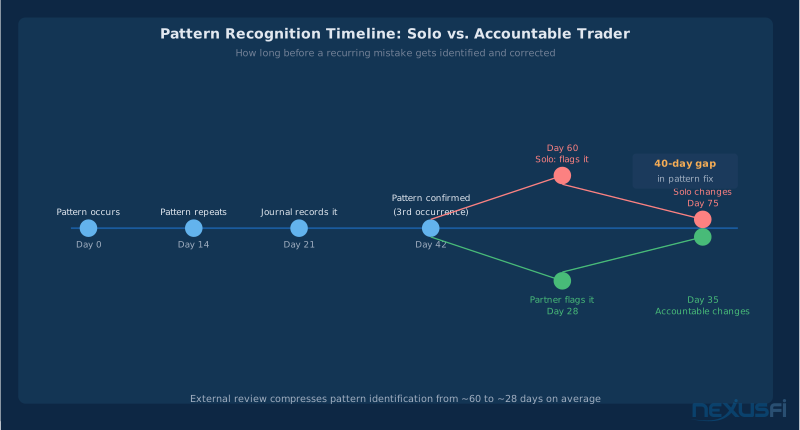
Here's the mechanism: when you trade alone and keep a private journal (if you keep one at all), you unconsciously narrate your own performance. You explain away losses. You attribute wins to skill. You soften the hard language when describing a discipline failure because no one will read it but you — and you already know what happened, so why dwell on it.
Big Mike, the founder of NexusFi, described this precisely in a foundational post that has accumulated 49 thanks from members who recognized the pattern in themselves:
@Big Mike, NexusFi Elite Journals
The key phrase is "true underlying reasons." The private narrator can access the surface — "I overtraded" — but rarely the mechanism: "I overtraded because I was up $800 on the week and started taking setups I don't normally take because I was trying to lock in a round number before the weekend."
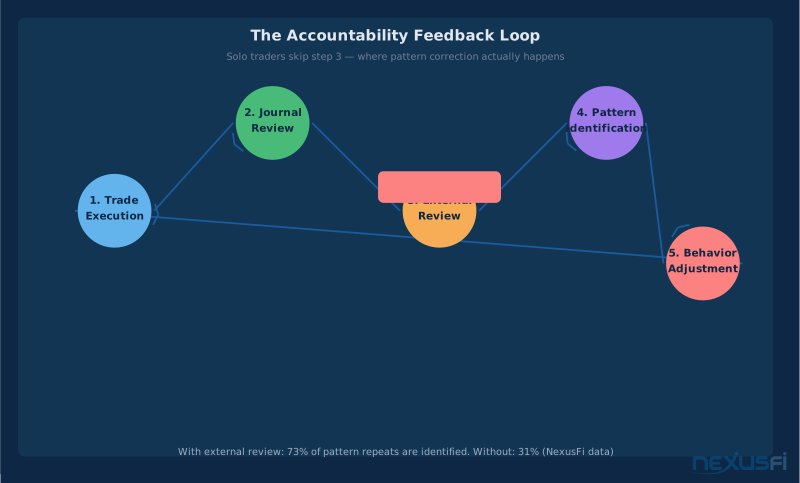
That level of specificity requires external documentation pressure. When you know someone will read what you write, you write more honestly. When someone will ask follow-up questions, you go deeper. When your accountability partner says "you mentioned this same pattern three weeks ago," the behavioral loop that you'd been narrating away suddenly has a timestamp and a frequency count.
The self-sabotage patterns that kill most trading careers are rarely dramatic. They're repetitive. Small deviations from plan, recurring emotional triggers, predictable size increases after certain win sequences. None of these are visible to the trader because the private narrator softens and forgets them. External accountability makes them concrete, trackable, and correctable.
Big Mike's description of what finally shifted his own trading illustrates this:
@Big Mike, The Benefits of Creating a Journal
"Almost immediately" is worth sitting with. Not after months of sustained effort — almost immediately. The behavioral shift that accountability creates is faster than most traders expect, because the honest feedback that was always available (in the trades themselves) finally has a channel to reach conscious awareness.
The Four Accountability Structures #
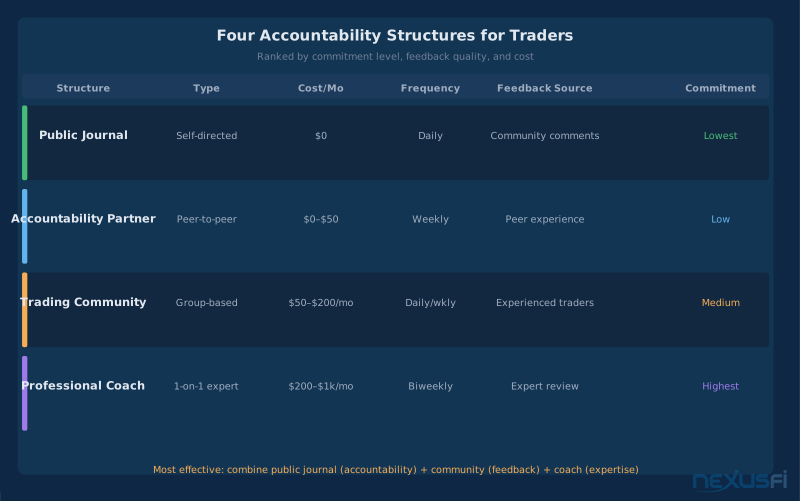
Not every trader needs a coach. Not every trader has the time or network for a peer group. The four structures below are ranked by commitment level, cost, and feedback quality — and they're stackable. A trader with a public journal who adds an accountability partner is using two layers simultaneously, which produces compounding benefits.
Structure 1 — Public Trading Journal: Zero cost, lowest friction, community feedback, works for all stages. The starting point every trader should use before anything else.
Structure 2 — Accountability Partner: One-on-one daily or weekly review with a peer trader. Free, medium commitment, requires finding the right match.
Structure 3 — Peer Trading Group / Pod: 3--6 traders meeting regularly. Free to low cost, produces diverse feedback, requires coordination overhead.
Structure 4 — Professional Trading Coach: Expert-guided systematic development. Highest cost and commitment, most targeted feedback, appropriate for traders with defined edge who want to compress the improvement timeline.
The decision of which to use isn't permanent. Most traders start with the journal, add a partner when they find someone compatible, and consider coaching after they've identified specific behavioral problems that peer review hasn't resolved.
Structure 1: The Public Trading Journal #
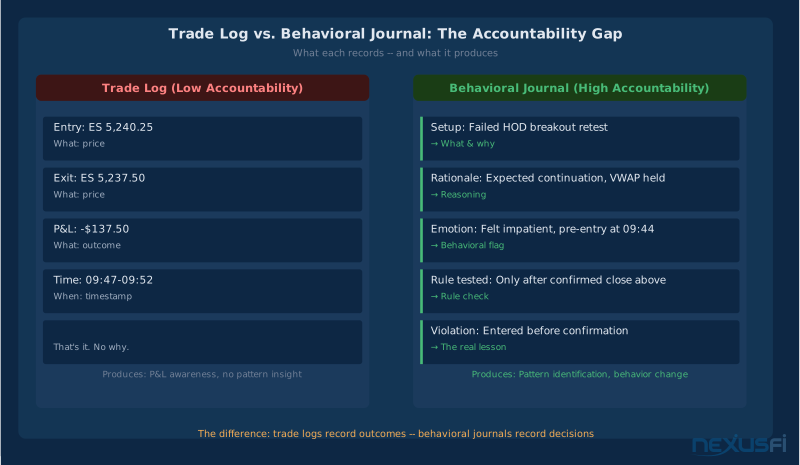
The public trading journal is the most accessible accountability structure in existence — and one of the most underused. Every member of NexusFi can open a journal thread at no cost and start posting trades. The mechanism is simple: you document your entries, exits, and reasoning in a place where other traders can read it, ask questions, and respond.
What makes public documentation qualitatively different from private journaling is the anticipation effect. Before you write a journal entry, you know someone might read it. That anticipation changes what you write and — more importantly — changes how you trade, because you're already thinking about how you'll explain this decision later. The market for rationalization collapses when you have a live audience.
Big Mike addressed this directly in a later post in the same journal thread:
@Big Mike, The Benefits of Creating a Journal
The phrase "it will help your trading enormously" is backed by the volume of Elite Journals on NexusFi where traders explicitly credit the public journaling process with breakthroughs that years of private journaling never produced. The pattern is consistent enough that it's not anecdotal — it's structural. Public documentation creates honest documentation.
For the journal to function as an accountability tool rather than a performance diary, it needs to include:
- The trade rationale before entry -- what you expected and why
- The execution decision -- size, timing, and whether it matched the plan
- The exit decision -- whether you followed the target/stop rules
- The emotional state -- what you felt during the trade and how it affected decisions
- The specific rule that was tested -- which part of your plan this trade touched
Most journal threads fail because they become trade logs — entry price, exit price, outcome. That's a P&L tracker, not a behavioral journal. The question that unlocks the accountability mechanism is "why," not "what."
NexusFi member @Salao described how the forum journal served as a de facto accountability partner when he couldn't find the right individual match:
@Salao, Elite Trading Journals
"Tired of looking foolish" is the accountability mechanism in action. It's not shame — it's the natural social pressure that makes humans keep behavioral commitments they wouldn't keep in private. The trading discipline framework that every trader knows in theory becomes harder to violate when the violations are documented publicly.
The minimum viable journal entry for accountability purposes:
- Instrument and setup type (what you were looking for)
- Entry and exit with reasoning (not just prices)
- One rule you tested and whether you followed it
- One thing you'd do differently if the setup came again
That's it. Four lines. The consistency of posting matters more than the length. A daily four-line entry produces more behavioral improvement than a weekly essay, because the feedback loop is tighter and the pattern detection happens faster.
Structure 2: The Accountability Partner #
The accountability partner is a one-on-one arrangement with a peer trader for regular — typically daily or weekly — review sessions. Unlike the public journal, the partner creates bidirectional commitment: you're not just documenting for an audience, you're expected to show up and explain yourself to a specific person who will ask questions.
This structure is most effective when both traders have a defined edge. The partner isn't trying to teach you — they're trying to help you execute your own system more consistently. The value isn't advice; it's the external check-in that makes you take your own rules seriously.
NexusFi member @arcade described a model that many traders find workable:
@arcade, Accountability Partner Wanted
The 15-minute daily format is notable: brief enough that it doesn't become a burden, long enough to cover one or two specific trades. The Saturday deep-dive session handles the pattern-level analysis that's impossible in a 15-minute window.
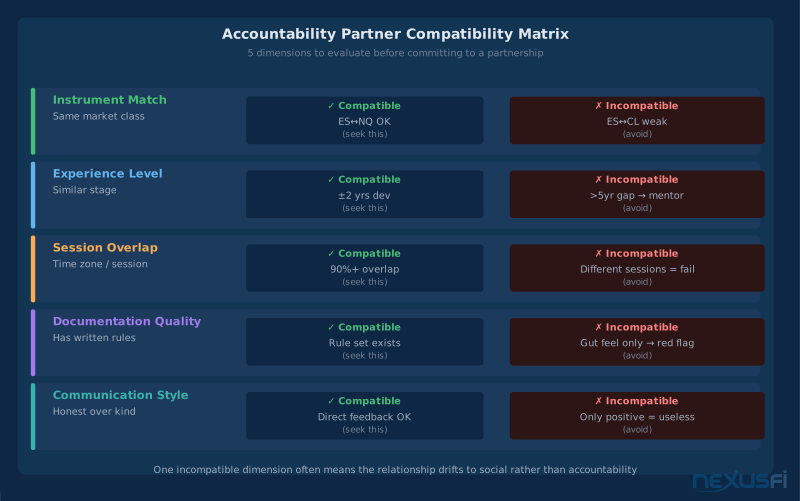
What to look for in an accountability partner:
- Same instrument or instrument class -- ES trader reviewing CL trades doesn't understand the context well enough to ask the right questions
- Similar experience level -- the goal is peer review, not mentoring; significant experience gaps create dependency rather than accountability
- Defined rule set -- both traders should have written rules they're trying to follow; "I trade by feel" produces no measurable accountability
- Availability match -- morning ES trader needs a morning ES trader; timezone and session alignment matter more than strategy compatibility
- Commitment to honesty over comfort -- the partner who says "tough session, better luck tomorrow" is useless; you need someone who asks why you took that third revenge trade
@Trader2138, a full-time futures trader with 20+ years of market experience, described what he was specifically seeking in an accountability pod:
@Trader2138, Emini and Emicro Index Forum
The emphasis on "similar level of work ethic and dedication" is as important as any technical requirement. The accountability partner relationship fails when one trader prepares for sessions and the other shows up with vague recollections. Both people need to come with documented trades and specific questions.
The trading journal system you use directly feeds the accountability partner relationship — the journal is the raw material that makes the 15-minute session substantive rather than conversational.
Where to find accountability partners:
- NexusFi forums -- the Traders Hideout and Elite Trading Journals threads regularly include partner requests
- Instrument-specific threads -- fellow ES traders in the Emini forum are natural matches
- Your journal thread -- traders who follow your journal consistently are already familiar with your system and failures
Structure 3: Peer Trading Groups and Pods #
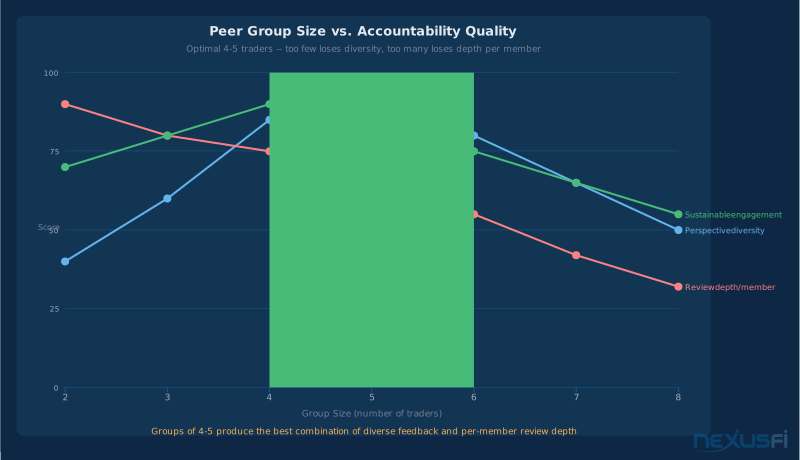
The peer trading group — typically 3--6 traders meeting weekly or twice-weekly — produces a qualitatively different kind of accountability than the one-on-one partner arrangement. More perspectives means more pattern recognition, more specific feedback, and less chance of blind spots that both partners share.
The optimal group size for accountability purposes is 4--5 traders. Smaller than 3 produces too little perspective diversity; larger than 6 makes it difficult for everyone to review each member's trades meaningfully in a single session.
NexusFi moderator @Alan described the accountability team (AT) structure used by organized trading groups:
@Alan, Traders Hideout
The "explain why they entered and exited" requirement is the core mechanism. Explaining a trade to multiple people — not just recording it for yourself — forces a level of reasoning specificity that solo journaling rarely achieves. When three peers are going to question your decision, you need better answers than "it looked like it was going higher."
@GoldLinx described his experience forming such a group and what he brought to it:
@GoldLinx, The Elite Circle
The transformation from "every month losing in 2018" to "every month profitable in 2019" wasn't attributed to a new strategy — it was attributed to a documented, structured self-review process. The accountability group was the next step in formalizing that process externally.
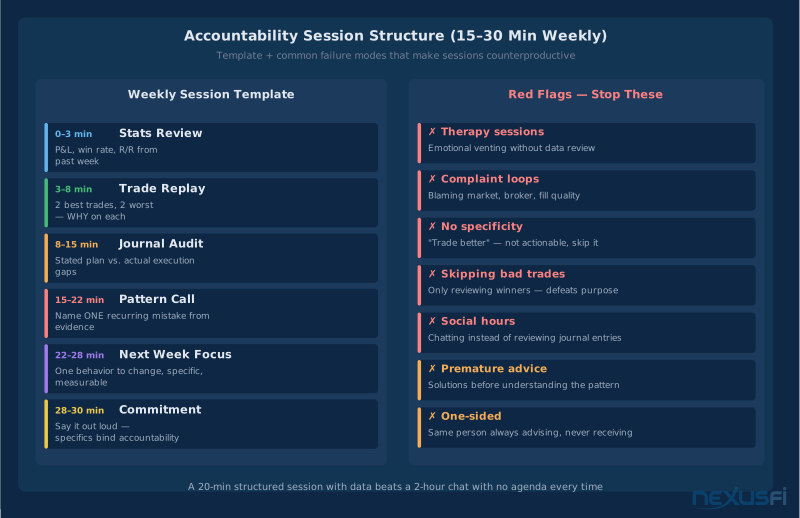
Running an effective peer group session:
- Pre-submission (before the meeting) -- each trader submits 2--3 annotated trades with written rationale, not just charts
- Round-robin review (20--30 min) -- each trader presents their submitted trades; group asks clarifying questions
- Pattern identification (10 min) -- what behavioral themes appeared across all members this week?
- Goal check (5 min) -- did each member accomplish the specific goal from last session?
- Goal setting (5 min) -- each member states one specific behavioral goal for the coming week
The goal-setting component is underrated. The difference between "I'm going to be more patient" and "I will not enter setups where the previous candle close is more than 8 ticks from the level I'm trading" is the difference between intention and accountability. Specific, measurable behavioral commitments are the currency of effective peer groups.
Peer groups also provide something partners can't: the ability to identify when a problem is personal (one trader's discipline issue) versus environmental (all four traders had tough weeks on ES when the macro regime shifted). That context prevents over-pathologizing normal performance variance.
Structure 4: The Professional Trading Coach #
The professional trading coach is the highest-investment, highest-return accountability structure — when the coach is legitimate. The trading education industry has a significant number of practitioners who have never traded successfully for their own account, who use live trading rooms as entertainment products, and who sell methodology without mechanism for accountability.
A legitimate trading coach does what Brett Steenbarger — the gold standard for trading psychology coaching — describes: they evaluate the trader's preparation, not the trader's charm. @mfbreakout shared a Steenbarger passage that captures this exactly:
@Brett Steenbarger, via @mfbreakout, Elite Trading Journals
The trader who gets meaningful coaching is the trader who arrives with data, not stories. Multi-year P&L. Session statistics. A documented system. Behavioral patterns they've identified but can't resolve alone. That's the raw material coaching requires.
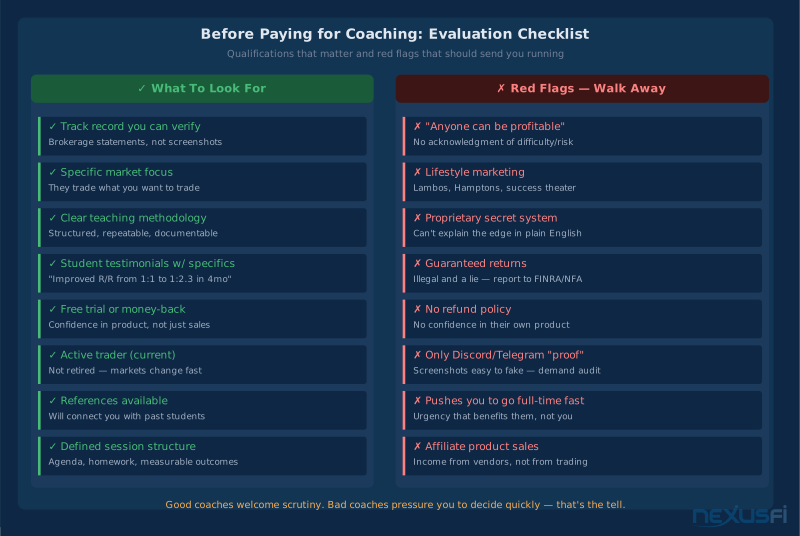
Legitimate coaches have:
- Audited or verifiable trading track records in the specific instrument they're coaching
- Process orientation -- they work on your system, not theirs
- Interest in your statistics before your capital size
- Sample sessions or recorded examples before requiring commitment
- Honest discussion of cases where coaching didn't produce expected results
Red flags include:
- Guarantees of consistent profits (illegal and impossible)
- Live trading rooms where the "coach" calls trades but never discusses their own P&L
- Large upfront payments before any demonstrated value
- Generic curricula that don't change based on your specific documented weaknesses
For futures traders, coaching is most appropriate after you've established positive expectancy over a meaningful sample, identified specific behavioral patterns that peers haven't been able to help you change, and confirmed that the cost is proportionate to the capital you're protecting. A trader with a $20k account paying $500/month for coaching is spending 2.5% of capital per month before making a single trade — the math needs to work.
Red Flags: When Accountability Goes Wrong #
Accountability structures can become counterproductive when they drift from their purpose. The most common failure modes:
The partner who validates instead of challenges. The accountability partner whose response to every session is "good job, tough market" is providing companionship, not accountability. If your partner has never once pointed out a behavioral pattern, asked an uncomfortable question, or disagreed with your trade rationale, they're not doing the job. Accountability without the occasional friction is just a scheduled conversation.
The trading room as accountability substitute. Live trading rooms are entertainment and signal services. They're not accountability structures. The distinction is key: a trading room teaches you to follow someone else's calls; an accountability structure helps you follow your own rules. Trading rooms can be valuable for learning, but they don't produce the self-awareness that drives lasting improvement.
The group that becomes a social club. Peer groups drift toward social interaction when they don't have structured agendas. When sessions become conversations about the market rather than reviews of specific trade decisions, accountability disappears. The structural protection against this is the pre-submission requirement: trades must be documented before the session, so the session is reviewing evidence rather than generating it.
The journal that becomes a performance diary. The public journal that records results rather than decisions isn't producing accountability — it's producing a leaderboard. Accountability requires documenting the "why" at the moment of the decision, not the "what" after the result is known. Post-trade rationalization is more seductive than pre-trade reasoning, and journals that don't require both become self-justification documents.
The pattern that appears 5+ times with no change. When the same behavioral violation appears repeatedly across multiple accountability sessions without producing a concrete rule change, the current structure isn't sufficient. This is the signal to escalate — from journal to partner, from partner to group, from group to coach. Persistent patterns that peer review can't resolve are usually psychological in nature and often require professional intervention.
Building Your Accountability System #
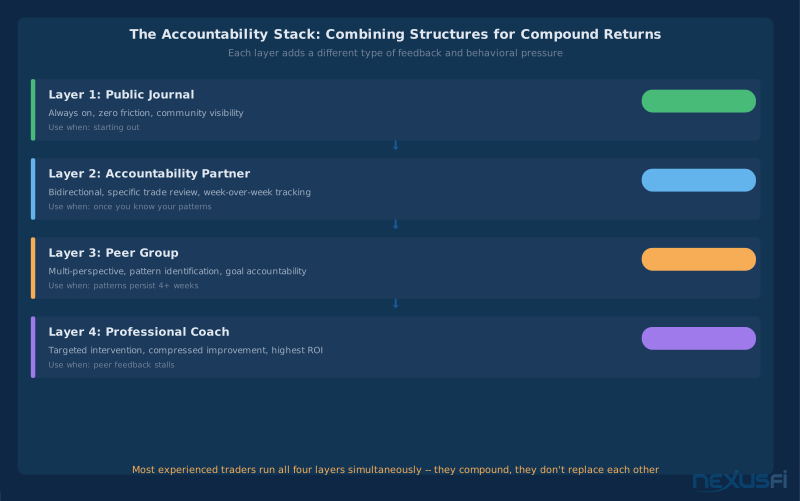
The practical sequence for most futures traders:
Step 1: Start the public journal. Before anything else. Open a thread on NexusFi, post your first 10 trades with full rationale, and commit to updating it every trading day. This is the foundational layer that every other structure builds on.
Step 2: Identify your specific behavioral patterns. After 60--90 days of honest public journaling, patterns will emerge. You'll be able to say "I overtrade on Fridays" or "I take excessive size after winning weeks" or "I move my stop when the trade is going against me." These specifics are what you bring to a partner or group.
Step 3: Find one accountability partner. With specific patterns identified, you're ready for a partner who can track them across sessions. The NexusFi forums — especially the instrument-specific threads — are where to look for compatibility.
Step 4: Evaluate for group or coaching. After 6--12 months with a partner, assess: are there problems that peer review hasn't resolved? Is your development plateau persisting? If yes, investigate peer groups or coaching. If no, the current structure is working — maintain it.
The deliberate practice framework for trading development maps directly onto this sequence: journaling is the feedback collection phase, partnership and group review is the structured deliberate practice phase, and coaching is the expert-guided calibration that accelerates progress toward mastery.
The stages of trader development also track predictably onto accountability structures: unconsciously incompetent traders benefit most from public journals; consciously incompetent traders benefit most from partners and groups; consciously competent traders benefit most from coaches.
What to Review: The Accountability Metrics Framework #
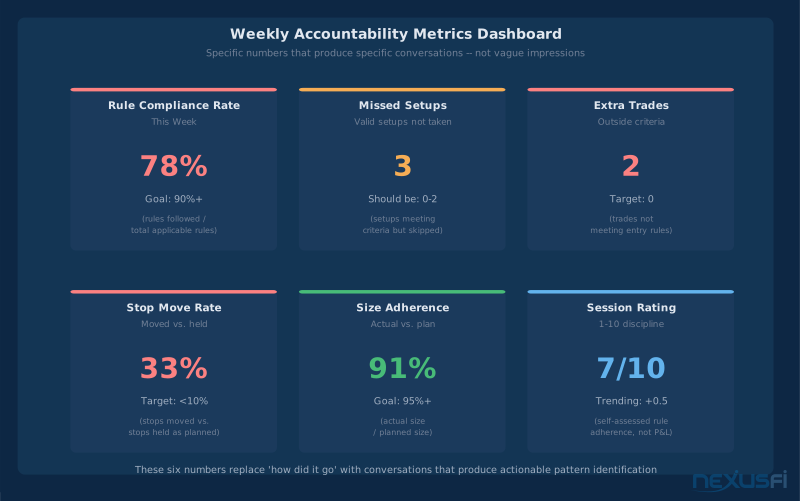
Accountability sessions without structure become unfocused. The metrics framework below provides specific questions that produce specific answers:
Execution metrics:
- Did I take every setup that met my entry criteria? (missed trades)
- Did I take trades that didn't meet my criteria? (extra trades)
- Did my actual size match my intended size?
- Did my exit timing match my rules? (early exits, late holds, stop moves)
Behavioral metrics:
- How many rules violations this session? Which rules?
- What was my emotional state at the time of each violation?
- Was there a session condition that predicted the violation? (time of day, P&L, prior trade outcome)
- Did last session's behavioral goal produce any change?
Pattern metrics:
- Has this specific violation appeared in previous sessions?
- If yes, how many times in the last 4 weeks?
- What rule change or structural protection could prevent it mechanically?
The final question — "what rule change could prevent it mechanically" — is where accountability becomes actionable. The goal isn't to understand your weaknesses better. It's to change the trading structure so the weakness has fewer opportunities to express itself. Process-focused trading means designing the process to minimize the impact of psychological vulnerabilities, not relying on willpower to overcome them in real time.
Steenbarger's framework for peak performance in trading, shared by @mfbreakout, makes this explicit:
@Brett Steenbarger, via @mfbreakout
The drawdown management discipline that separates professional-grade traders from recreational traders is almost impossible to maintain without accountability infrastructure. Drawdown rules that exist only in your head are renegotiable in real time, especially when you're down money and emotionally activated. Drawdown rules that your accountability partner knows and will ask about are structural commitments that the emotional state of the moment can't quietly renegotiate.
The NexusFi Community as Accountability Infrastructure #
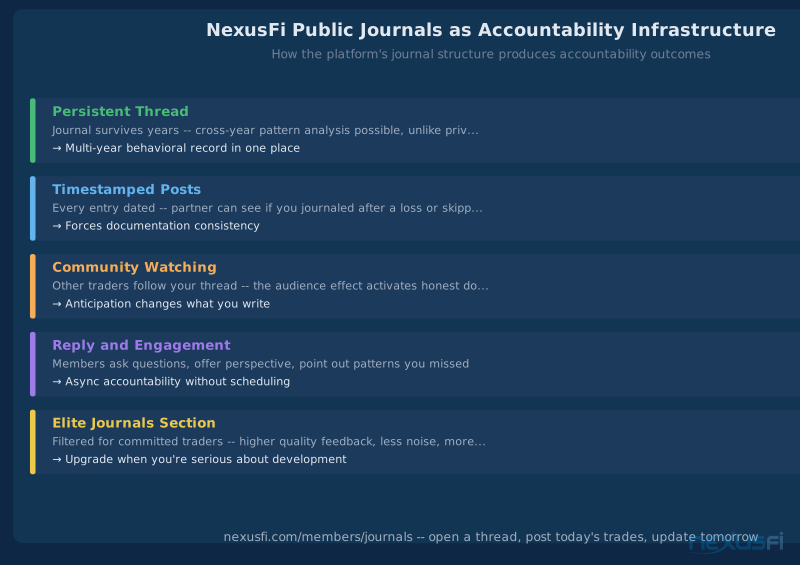
NexusFi's forum structure is not incidental to its accountability function — it was explicitly designed for it. The Trading Journals section, the Elite Trading Journals section (for Elite Members), and the Psychology and Money Management forum exist precisely because Big Mike recognized that trader development requires social infrastructure, not just content.
The public journal threads on NexusFi serve as persistent accountability records that span years. A trader's 2019 journal remains readable in 2024, providing both the trader and any partner or coach with a multi-year behavioral record that reveals patterns across market regimes, not just within a single session. This longitudinal record is genuinely rare — most accountability arrangements don't preserve this kind of depth.
The emotional regulation challenges that most traders face are recurrent. A multi-year journal captures these patterns across the full range of market environments, making them visible in ways that short-term review cannot.
For traders who want accountability infrastructure without the scheduling overhead of partners and groups, NexusFi's journal system provides a proven structure. The starting point is simple: open a thread, post today's trades with honest rationale, and update it tomorrow. The accountability mechanism activates the moment other traders start reading and the pressure to document honestly replaces the comfort of private rationalization.
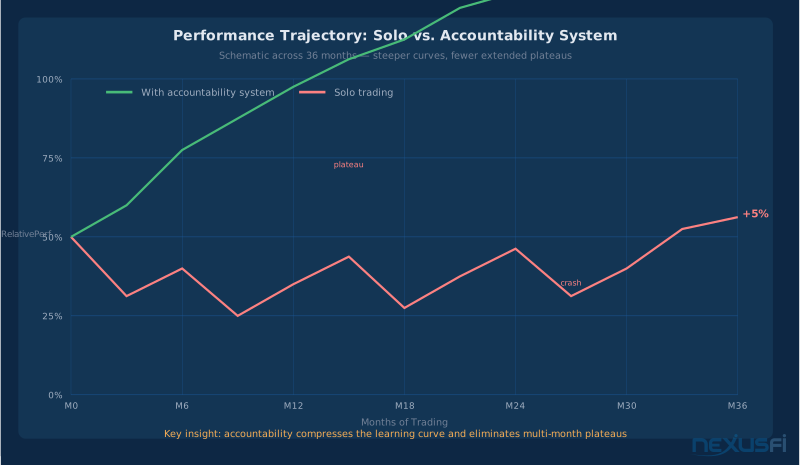
Trading is not, at its core, a solitary pursuit — despite everything about its structure that makes it feel that way. The best traders in the world work with coaches, analysts, risk managers, and peers who tell them hard truths in real time. The retail trader who works alone because they have no access to that institutional support structure is already operating at a disadvantage. The accountability structures described in this article don't eliminate that disadvantage — but they close the gap more than any other single investment a trader can make in their own development.
Start with the journal. Everything else follows from there.
Knowledge Map
Prerequisites
Understand these firstGo Deeper
Build on this knowledgeCitations
- — Big Mike's day trading method and advice (2010) 👍 49“I believe most struggling traders don't have any form of accountability or any tool to identify problem behavior.”
- — The benefits of creating a journal in this forum (2009) 👍 118“My main purpose in starting my blog was to hold myself accountable.”
- — The benefits of creating a journal in this forum (2014) 👍 10“Trading is a lonely profession. Most people will not be honest with themselves in a private journal.”
- — Steenbarger on peak performers and accountability (2013) 👍 12“What turns any activity into a peak performance activity is keeping score.”
- — Accountability Partner Wanted (2022) 👍 8“When you've posted the same mistake for the 40th time in the past week, you become tired of looking foolish to all of the internet people.”
- — Accountability Partner Wanted (2022) 👍 4“I would like to meet between 12:00 and 12:30 CST Monday-Friday for 15 minutes each.”
- — Looking for Accountability Group (2019) 👍 2“I have traded profitably every month thus far in 2019, after spending every month of 2018 losing money.”
- — Accountability Teams Structure (2010) 👍 17“They set up accountability teams (AT). At the end of the day or week, they send each other their trades and explain why they entered and exited.”
- — Looking for a Futures Trading Accountability Partner (2025)“I am looking for an accountability partner or small trading pod to engage with daily during the NY session.”
- — The Daily Trading Coach (Wiley, 2009) (2009)
- — Enhancing Trader Performance (Wiley, 2006) (2006)