



Blown Account Recovery: The Psychological Framework for Rebuilding After a Catastrophic Loss
Overview #
You can blow up a futures account in a morning. Three bad trades, a margin call, and you're staring at a balance that wasn't supposed to be possible. The account that took you six months to build just evaporated in six hours.
What happens next — in the hours, days, and weeks after — matters more than the loss itself. Most traders get the recovery completely wrong. They trade too soon, at too much size, with the same psychology that created the blowup. They confuse "wanting it back" with "being ready to get it back." These two things are nothing alike.
A blown account is a high-severity psychological and operational event. It needs to be treated as one. This isn't a pep talk about getting back on the horse. It's a technical framework for the psychological cascade that follows catastrophic loss, and a structured return to trading that doesn't create a second catastrophe.
The Core Principle A blown account is a psychological injury event, not merely a discipline failure. Recovery requires rehabilitation — not just new rules, but a rebuilt relationship with risk, identity, and the market.
What a Blown Account Really Is #
Before you can recover, you need to classify what happened. Not the mechanics — you probably know which trades went wrong. What you need to understand is the failure type, because different failure types require different repairs.
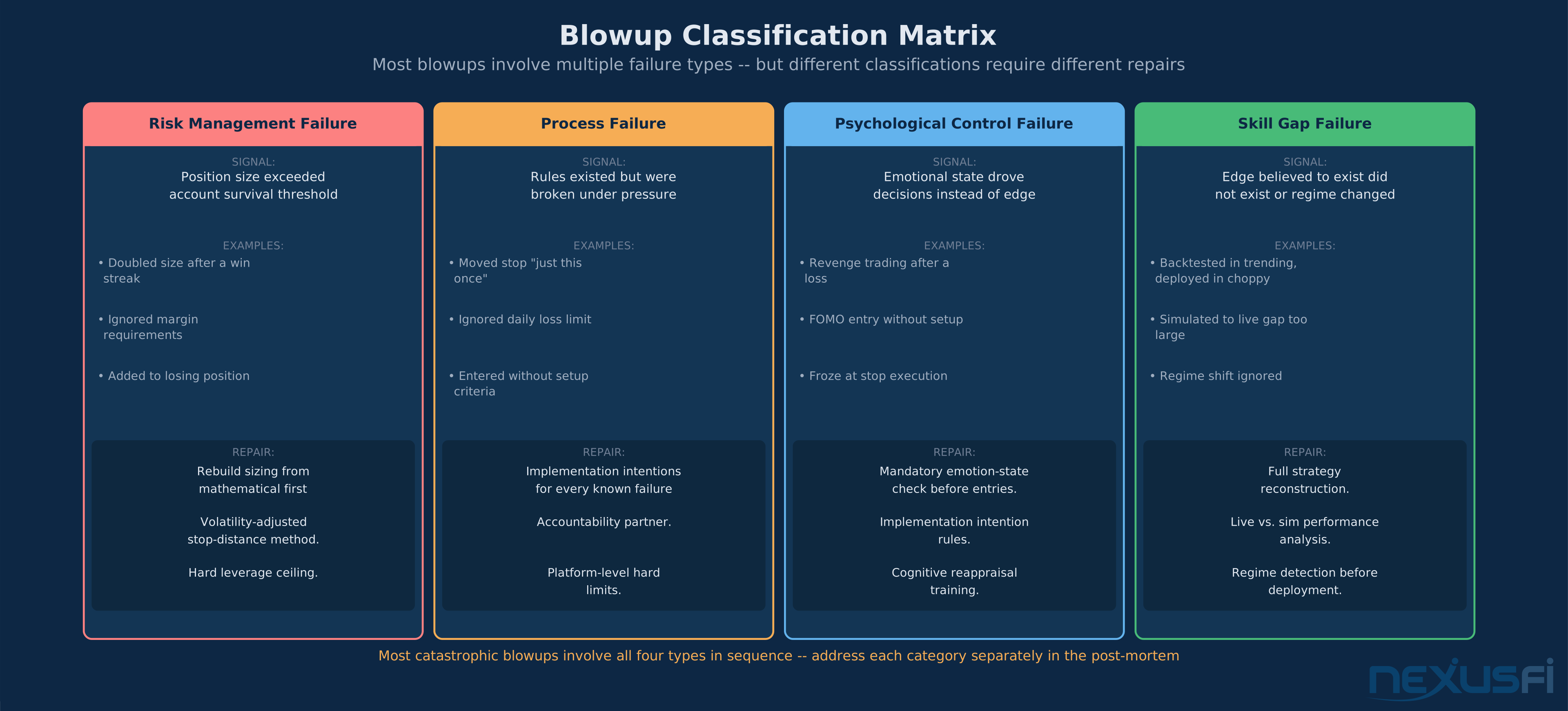
Most blowups are one of four types: risk management failure (position sizing exceeded account survival threshold), process failure (rules existed but were broken under pressure), psychological control failure (emotional state drove decisions instead of edge), or skill gap failure (the edge you believed you had didn't exist).
Most catastrophic blowups involve all four, in order. An initial loss triggers psychological dysregulation, which causes rule-breaking, which eliminates risk management guardrails, which allows the drawdown to compound past recovery range. Here's what @blew on NexusFi wrote after going from $7k — $70k — $10k in a single account: [1]
That thread has 201 replies. Blowups are universal. The post-mortem — written, structured, honest — is the first real step. Not to punish yourself. To understand what actually broke so you can actually fix it.
The 7 Stages of Emotional Recovery #
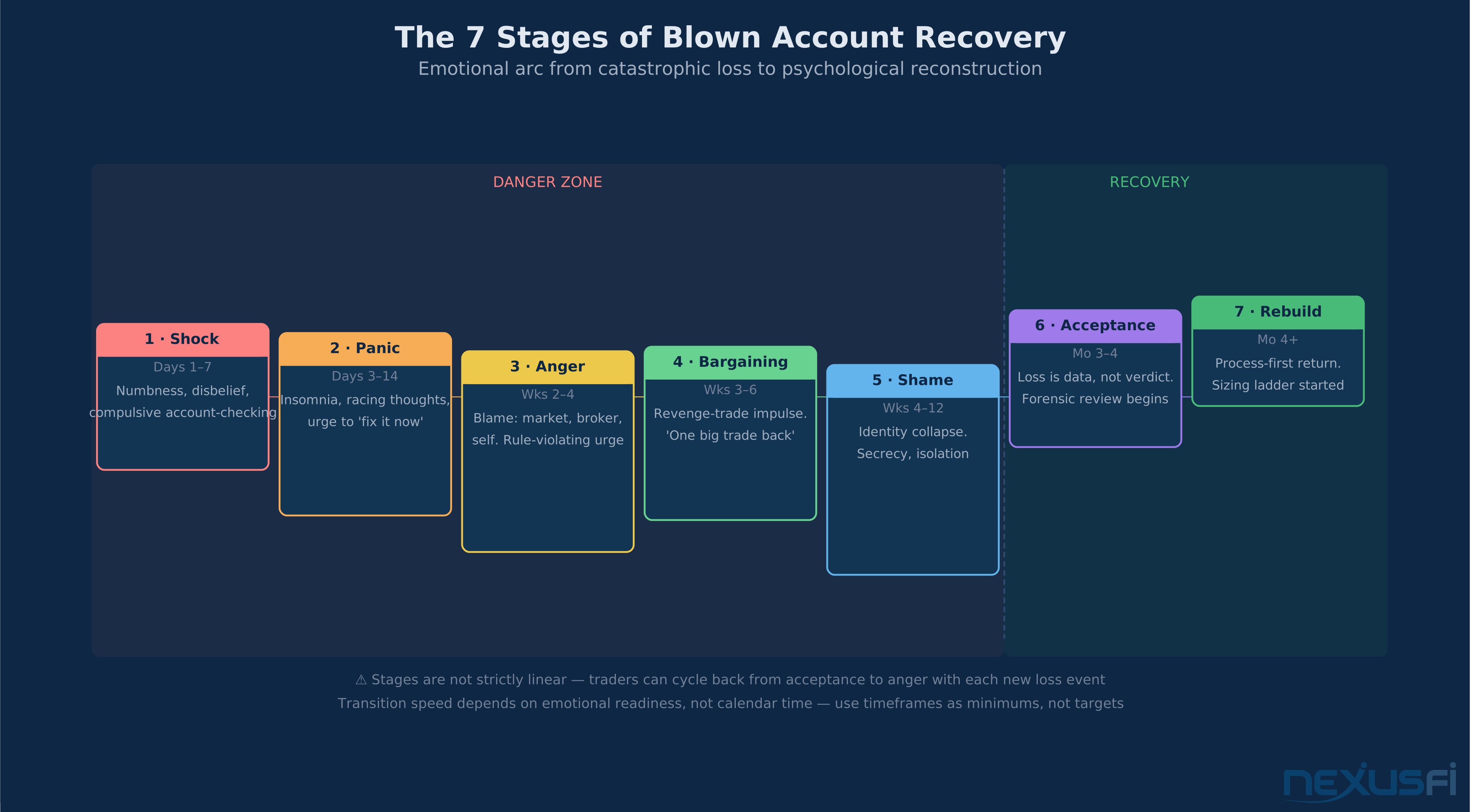
The emotional arc after a blown account follows a recognizable pattern. Not everyone hits every stage, and they don't always arrive in order. But understanding the terrain helps you work through it rather than be swept along by it.
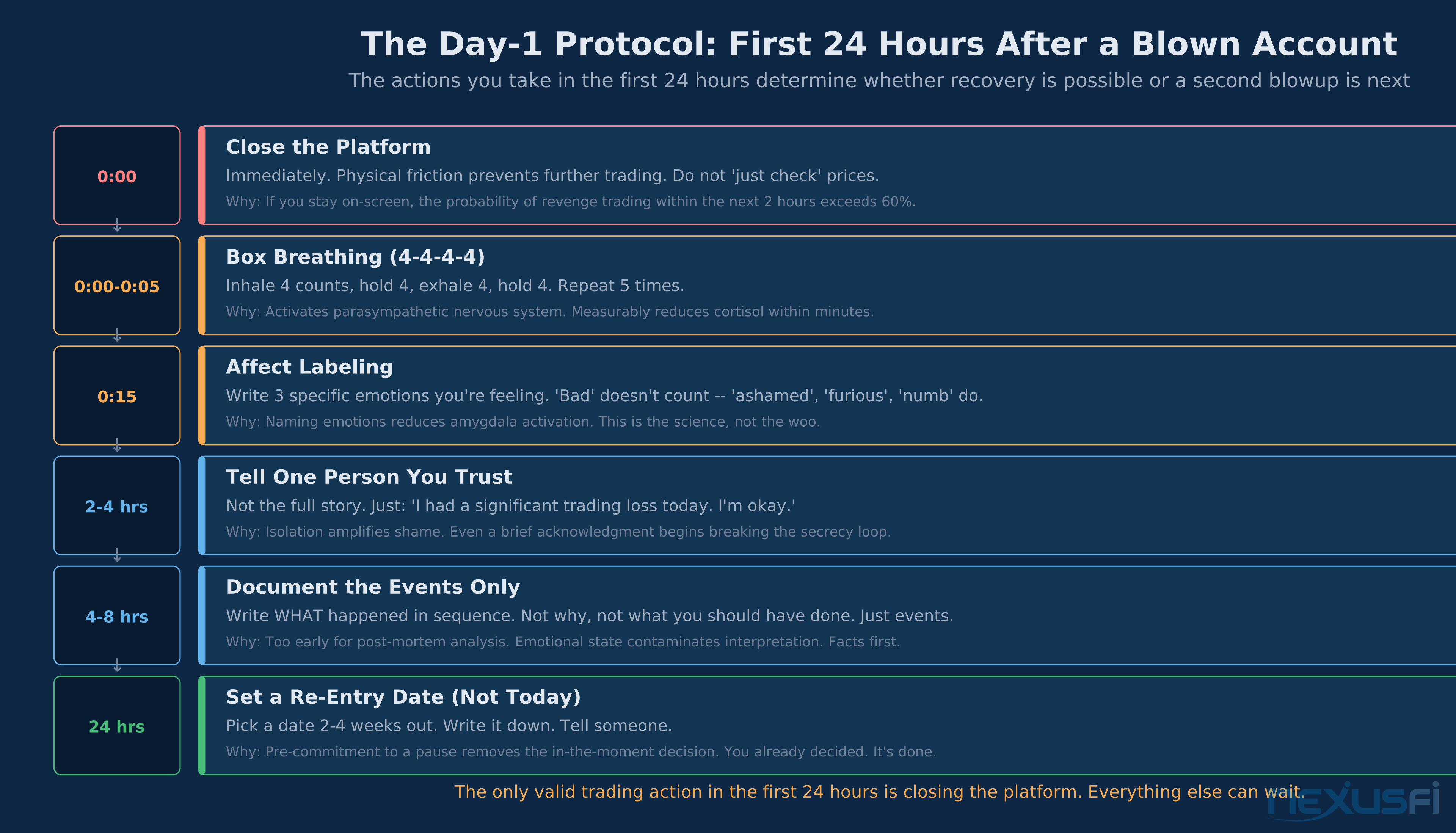
Stage 1: Shock (Days 1-7). Numbness, disbelief, compulsive account-checking. The nervous system buffers the impact. Don't make trading decisions during shock. Cognitive impairment is real and measurable.
Stage 2: Panic (Days 3-14). The acute stress response takes over — racing thoughts, insomnia, physical anxiety, the urge to "fix it now." This is when most second blowups happen. Traders re-enter in full threat response with degraded executive function.
Stage 3: Anger (Weeks 2-4). Blame cycles through: the market, the broker, the algorithm, yourself. "System change" energy often appears — new indicators, new strategies, anything to explain the loss as external. Watch this. It's usually anger looking for an exit, not insight.
Stage 4: Bargaining (Weeks 3-6). The revenge-trade impulse crystallizes into plans. "If I just make it back quickly, I can reset." This is the most dangerous stage because it masquerades as rational planning. The schemes require oversized positions. Oversized positions with unstable psychology produce predictable outcomes.
Stage 5: Shame and Identity Collapse (Weeks 4-12). Trading became part of identity. A blowup doesn't just wipe capital — it attacks the self-concept. The shame drives secrecy, secrecy removes feedback, isolation removes accountability. Hidden trading begins.
Stage 6: Acceptance (Month 3-4). The loss becomes historical fact rather than active wound. Focus shifts from redemption to diagnosis. The post-mortem becomes possible as genuine forensic work, not self-punishment.
Stage 7: Reconstruction (Month 4+). Identity rebuilds around process rather than outcomes. Re-entry with minimal size, focused entirely on rule adherence. Recovery is measured in behavioral consistency, not dollars.
Non-Linear Progression These stages aren't a straight march. Traders cycle back from acceptance to anger when new losses hit during recovery. A bad day in Phase 3 can drag someone back to Stage 2 temporarily. This is normal — the overall arc progresses, but not in a straight line.
The Three Critical Traps #
Between the blowup and genuine recovery, three psychological traps catch most traders. Understanding each mechanism makes them preventable.
Trap 1: Revenge Trading. The most dangerous post-blowup behavior. Loss activates the threat response — cortisol rises, amygdala activation increases, prefrontal cortex function degrades. The degraded prefrontal cortex loses its inhibitory function. The trader who knows they shouldn't trade large, who would tell another trader not to trade large, sits down and trades large anyway. It's not stupidity — it's the predictable behavior of a stress-compromised cognitive system attempting to resolve distress through action. The prevention is mechanical: a mandatory trading pause with re-entry criteria based on emotional state, not the calendar.
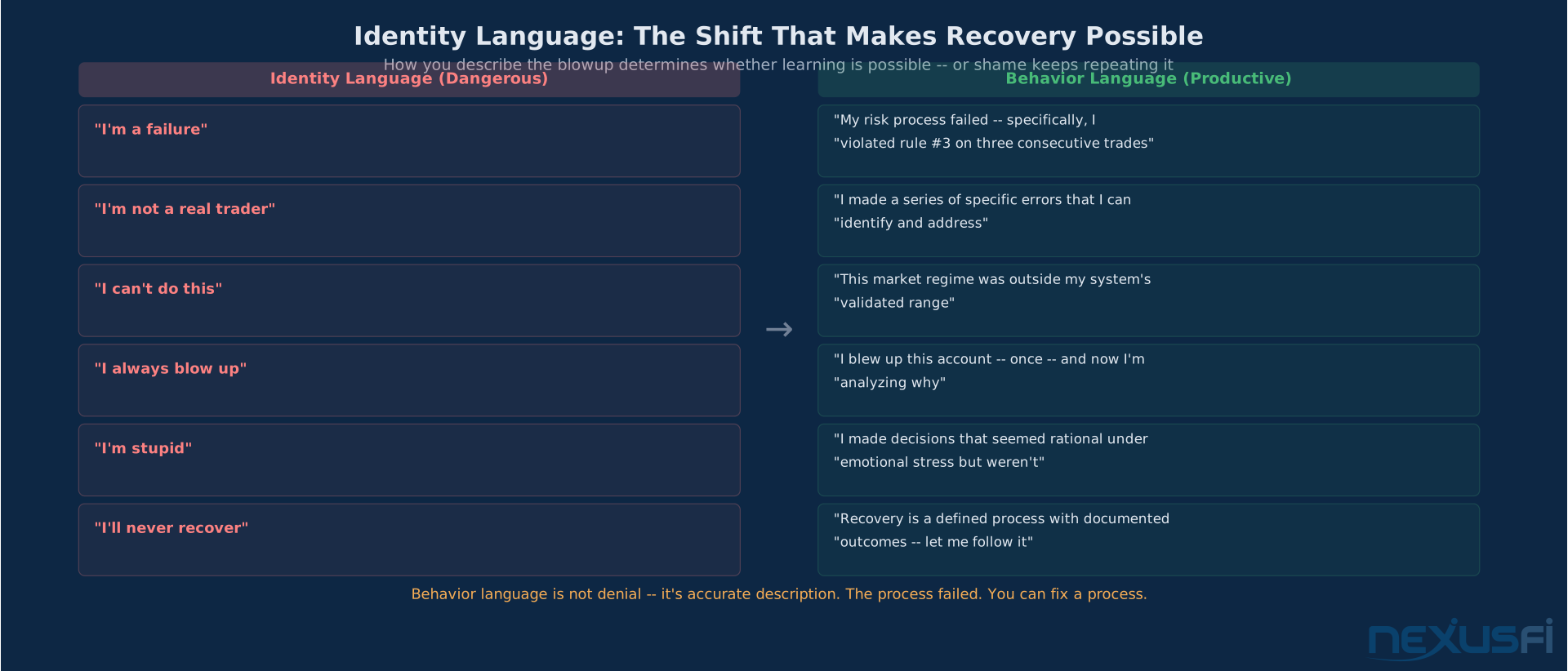
Trap 2: Identity Fusion. When identity as a competent person is fused with identity as a profitable trader, a blown account becomes an ego death event. The language reveals it: "I am a failed trader" instead of "I had a process failure." One is a permanent verdict on personhood. The other is a specific, bounded, correctable event. @bobwest responded to a blown-up trader with this: [2]
Trap 3: Sunk-Cost Compulsion. "I lost $40k. I have to get it back." The have to is the trap. It transforms a financial reality into a psychological debt demanding immediate payment — and immediate payment requires oversized, high-urgency trading. The mathematically correct frame: the money already gone has zero relationship to your future decisions. The only question is: given current capital, what maximizes expected value and minimizes catastrophic risk? The answer has nothing to do with what was lost before.
The Math That Makes Rushing Dangerous #
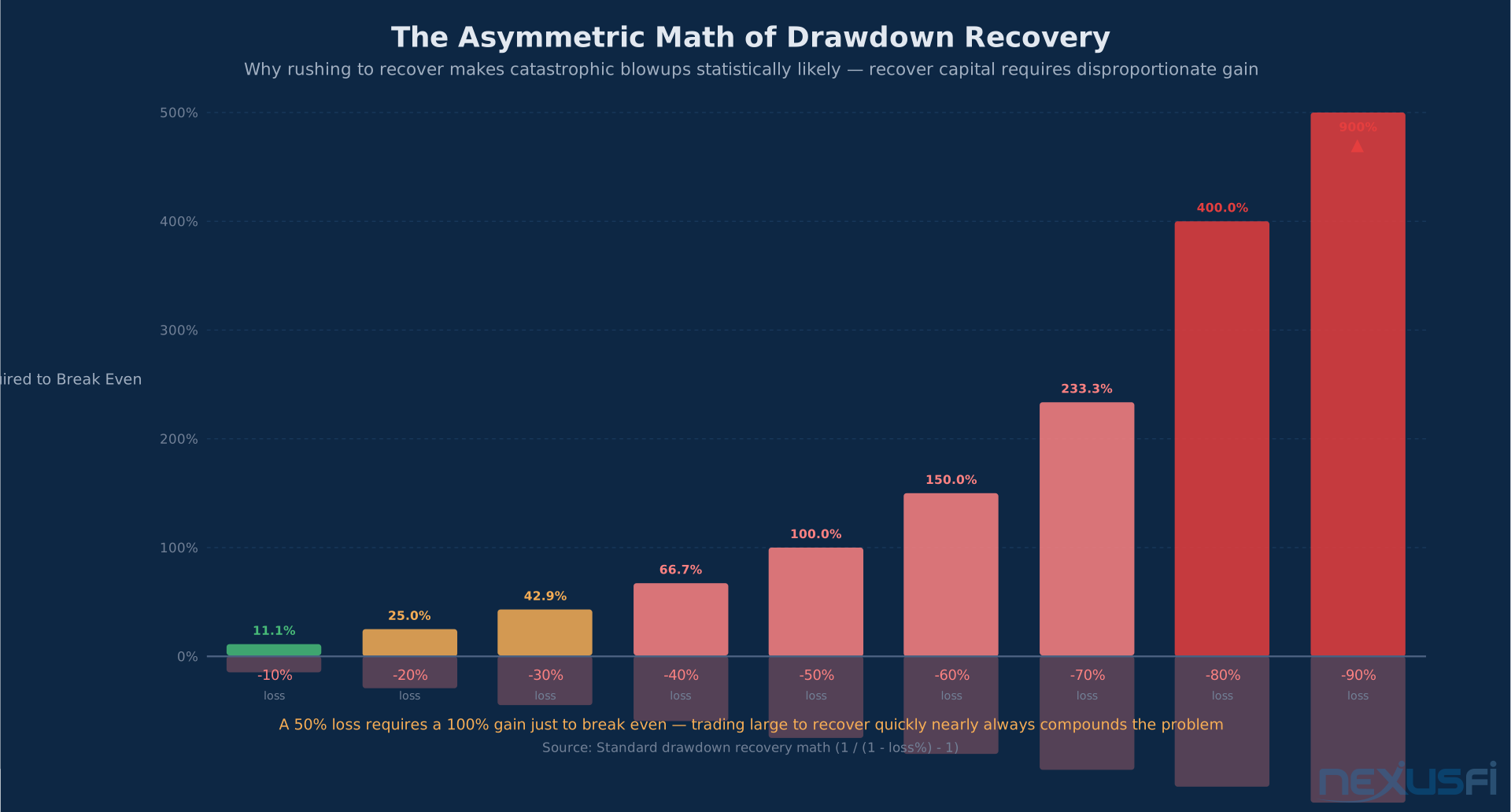
The asymmetry is brutal. A 10% loss requires 11.1% to recover. A 30% loss requires 42.9%. A 50% loss requires exactly 100% — you need to double remaining capital to return to the starting point. A 70% loss requires 233%. The formula is straightforward: gain_required = (1 / (1 - loss_pct)) - 1.
If you blow up 70% of an account and then try to recover it quickly with aggressive trading, you need a 233% return on remaining capital. That attempt, with degraded psychology and elevated position sizes, is statistically catastrophic. The rational path runs opposite to instinct: establish stable, sustainable edge with whatever capital remains, grow at a rate matching genuine edge, and accept that restoration may take years rather than months.
@peterg described what actual long-term recovery required after losing a $275k account in the Sept. 11, 2001 market crash — and then losing another $75k attempting to make it back: [3]
The 4-Phase Re-Entry Protocol #
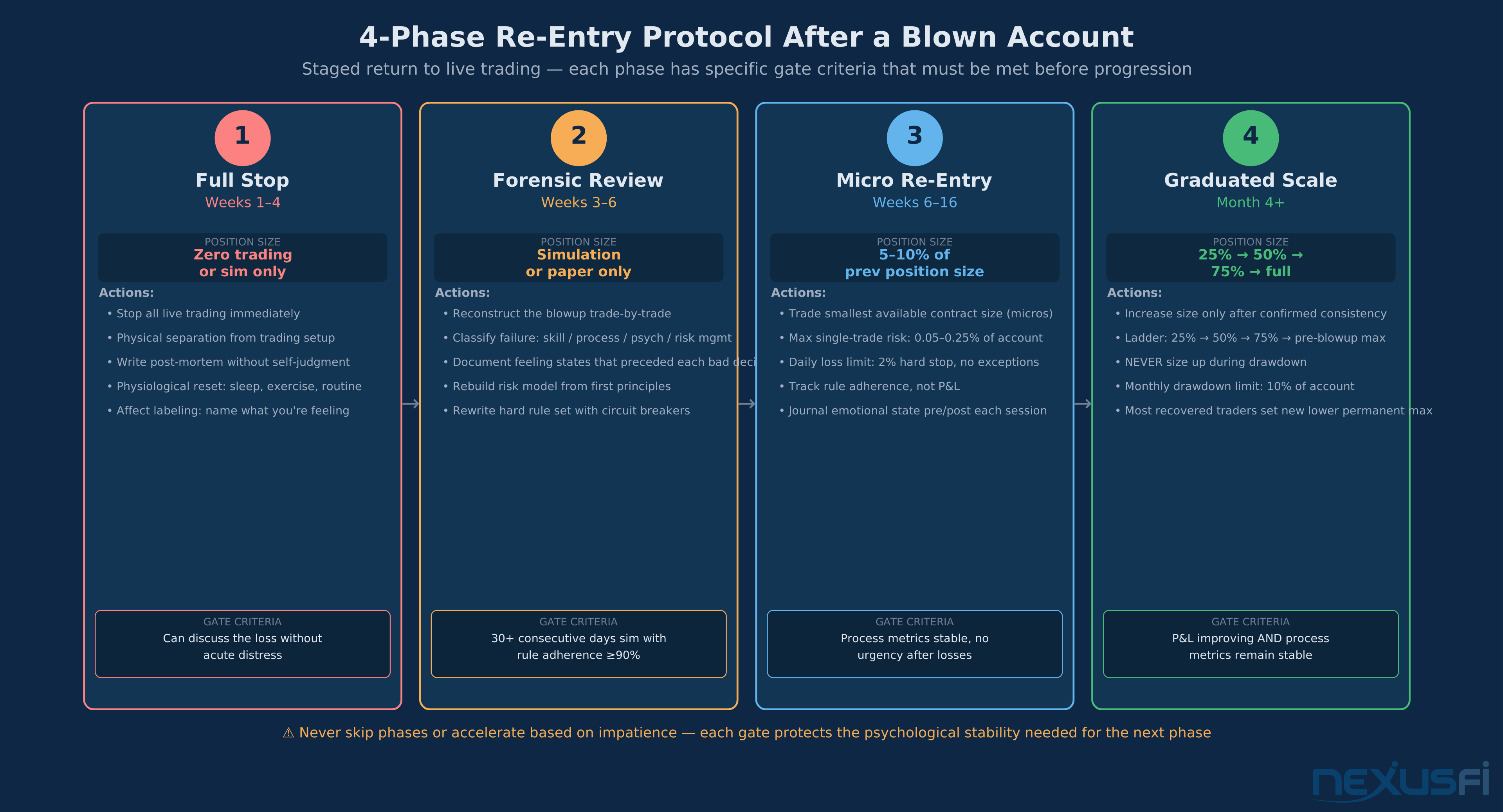
Phase 1: Full Stop (Weeks 1-4 minimum). Stop all live trading. Physical separation from your setup helps — if the platform is there, the temptation is there. During this phase, write the post-mortem: a factual, non-judgmental reconstruction identifying what positions were held, what rules were broken, what the emotional state was at each decision, and what the specific failure classification is. Gate: you can discuss the blowup without acute emotional distress.
Phase 2: Forensic Review (Weeks 3-6). Rebuild the risk model from first principles. The key questions: what is the mathematical risk per trade as a percentage of account? What are the specific implementation-intention rules for emotional triggers? What is the maximum leverage under any circumstances? This phase includes sim trading with explicit focus on 30+ consecutive trading days with rule adherence above 90%. Gate: 30+ sim days with 90%+ adherence, no revenge episodes.
Phase 3: Micro Re-Entry (Weeks 6-16). Return to live trading with the smallest available contract size. @matthew28 offered advice to a blown-up trader that captures the exact approach: [8]
Maximum single-trade risk: 0.05-0.25% of account. Hard daily loss cap: 2%, no exceptions. During Phase 3, measure only process metrics — rule adherence, emotional state at entry, stop discipline. Not P&L. Gate: 20-50 live trades with consistent rule adherence and no revenge episodes.
Phase 4: Graduated Scale-Up (Month 4+). Increase size in a defined ladder: 25% of pre-blowup max — 50% — 75% — pre-blowup max. Each step requires demonstrated consistency. Never increase size during drawdown, under any circumstances. Most traders who successfully rebuild don't return to pre-blowup maximum sizes — they discover the pre-blowup max was already at the psychological edge of their tolerances.
Psychological Sizing: The 'I Don't Care' Test #
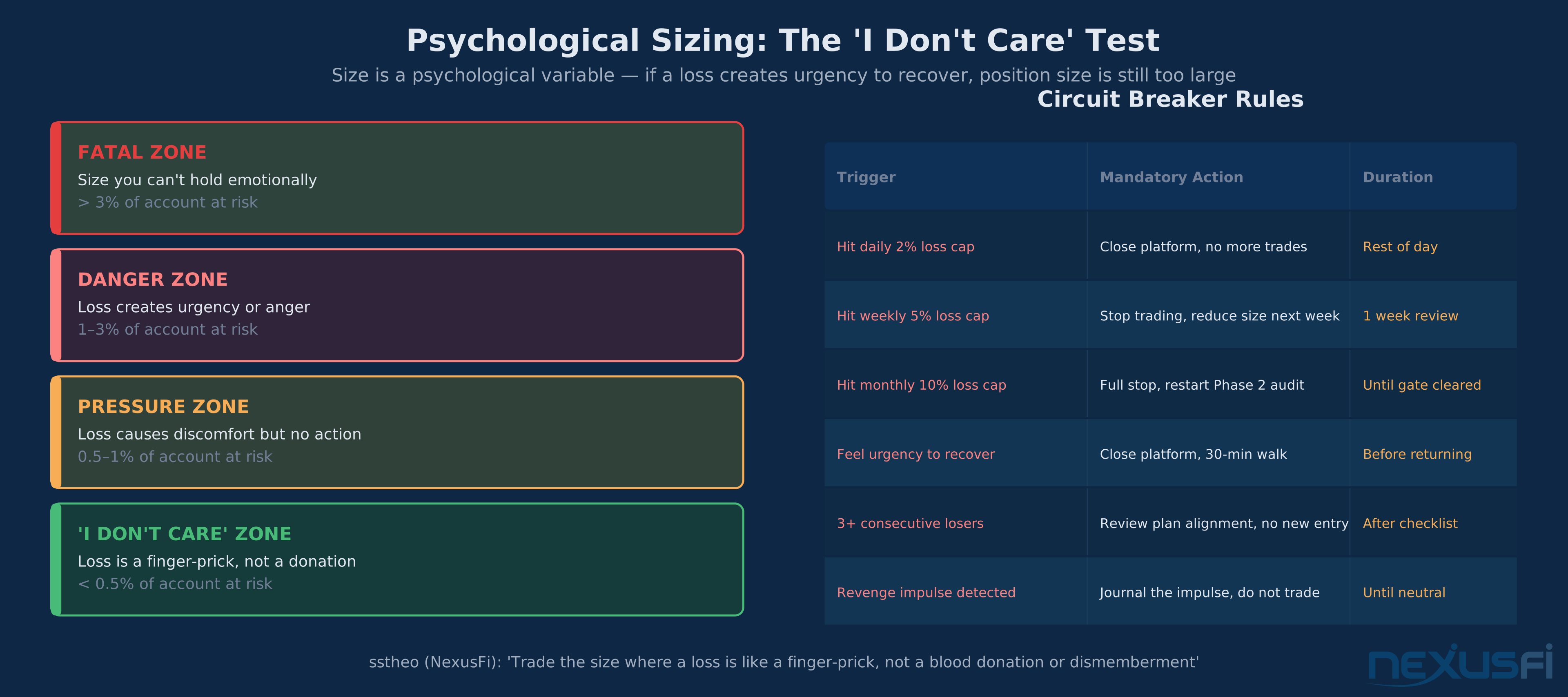
Formal risk literature describes position sizing in terms of account percentage, volatility-adjusted stops, and correlation. All of that matters. But there's a prior question: what size can you actually hold emotionally? @sstheo articulated this more directly than most academic treatments: [7]
The "I don't care" test: after a loss, do you feel urgency? Anger? Need to immediately re-enter? If yes, position size is too large for your current psychological state, regardless of what the formal risk math says. Four zones: Fatal (>3% at risk), Danger (1-3%), Pressure (0.5-1%), and the "I Don't Care" zone (<0.5%). Recovery trading belongs entirely in the I Don't Care zone.
Evidence-Based Methods for Reset #
Three interventions have the most support for post-blowup psychological reset:
Cognitive reappraisal: Reframe the event as information rather than verdict. "My risk process failed with specific, identifiable causes" instead of "I am a failed trader." Develop a written loss script — exact sentences for the first 60 seconds after any loss. "My job is to follow the plan regardless of outcome." Brief, anchored to process.
Affect labeling: Write down specifically what you're feeling — not "bad" but "ashamed," "furious," "numb." Research confirms that naming emotions measurably decreases amygdala activation. Five minutes and a journal.
Implementation intentions: Pre-commit to specific behaviors at specific triggers. If I feel urgency to recover — close platform, take a 30-minute walk. If I hit daily loss cap — platform is closed for the day, no exceptions. If I have the thought "just one more trade to get even" — journal the thought, do not act. Written down, reviewed before every session. The goal isn't reminding yourself — it's pre-activating the behavioral circuit before you need it.
@captainquenta, who lost his savings and career in one session, described what eventual recovery actually felt like: [5]
Measuring Recovery: Process Over Outcome #
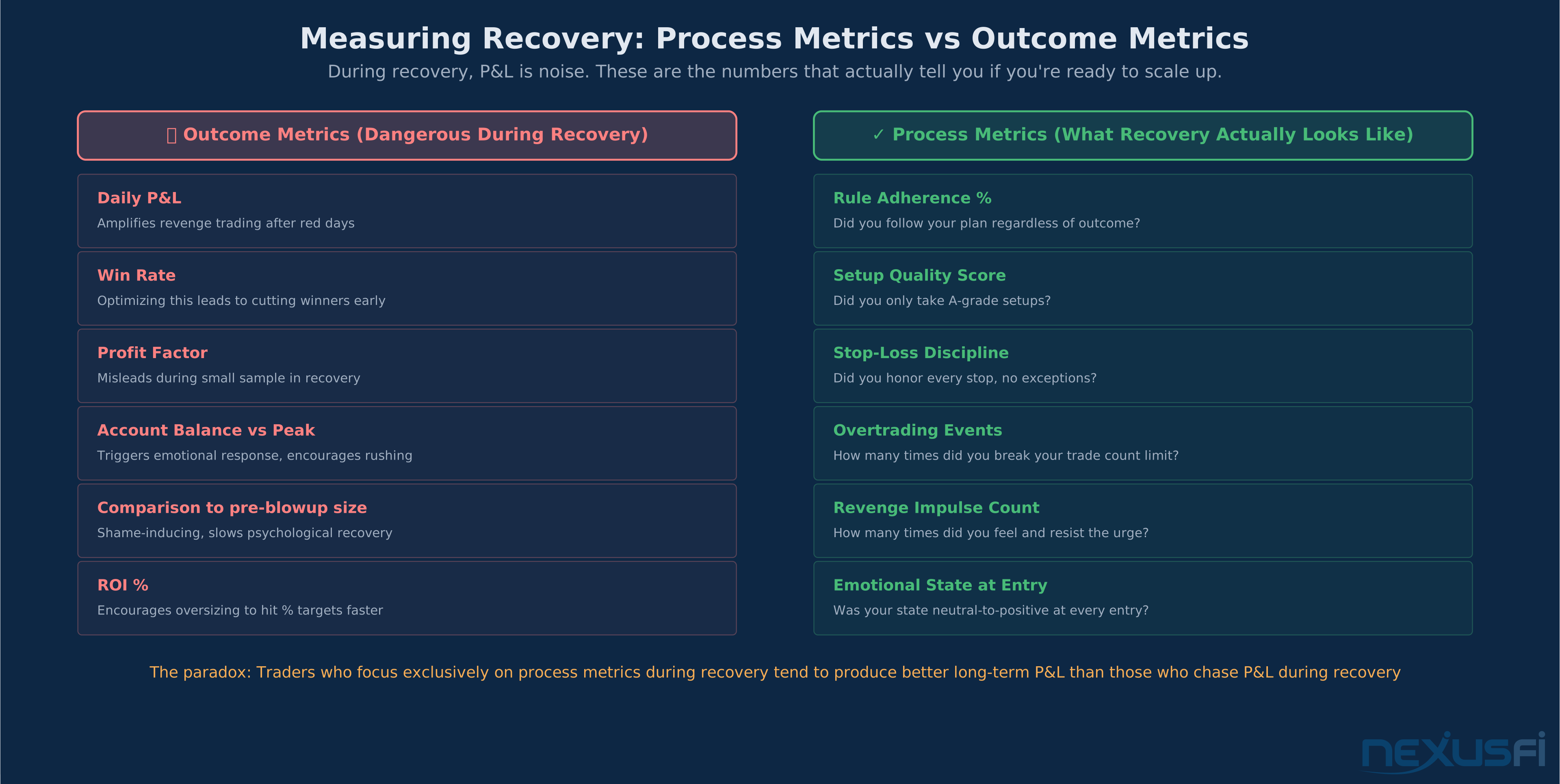
During recovery, P&L is noise as a feedback signal. Tracking it amplifies revenge trading after red days and creates reactive loops. The metrics that actually indicate whether recovery is real:
- Rule adherence %: Did you follow your plan on every trade?
- Stop-loss discipline: Did you honor every stop, every time?
- Revenge impulse count and response: How many times did you feel the urge, and what did you do?
- Emotional state at entry: Was your state neutral-to-positive (7+ on a 10-point scale) at every entry?
@shodson described the principle during a discussion about rebuilding confidence after losses: [6]
The gate for moving from Phase 3 to Phase 4 should be built entirely from process metrics. "I'm profitable enough to increase size" is the wrong gate. "My rule adherence has been above 90% for 30 consecutive days and I've had zero revenge episodes" is the right gate. Process produces outcome. Outcome cannot produce process.
Premature Return: The Red Flag Checklist #
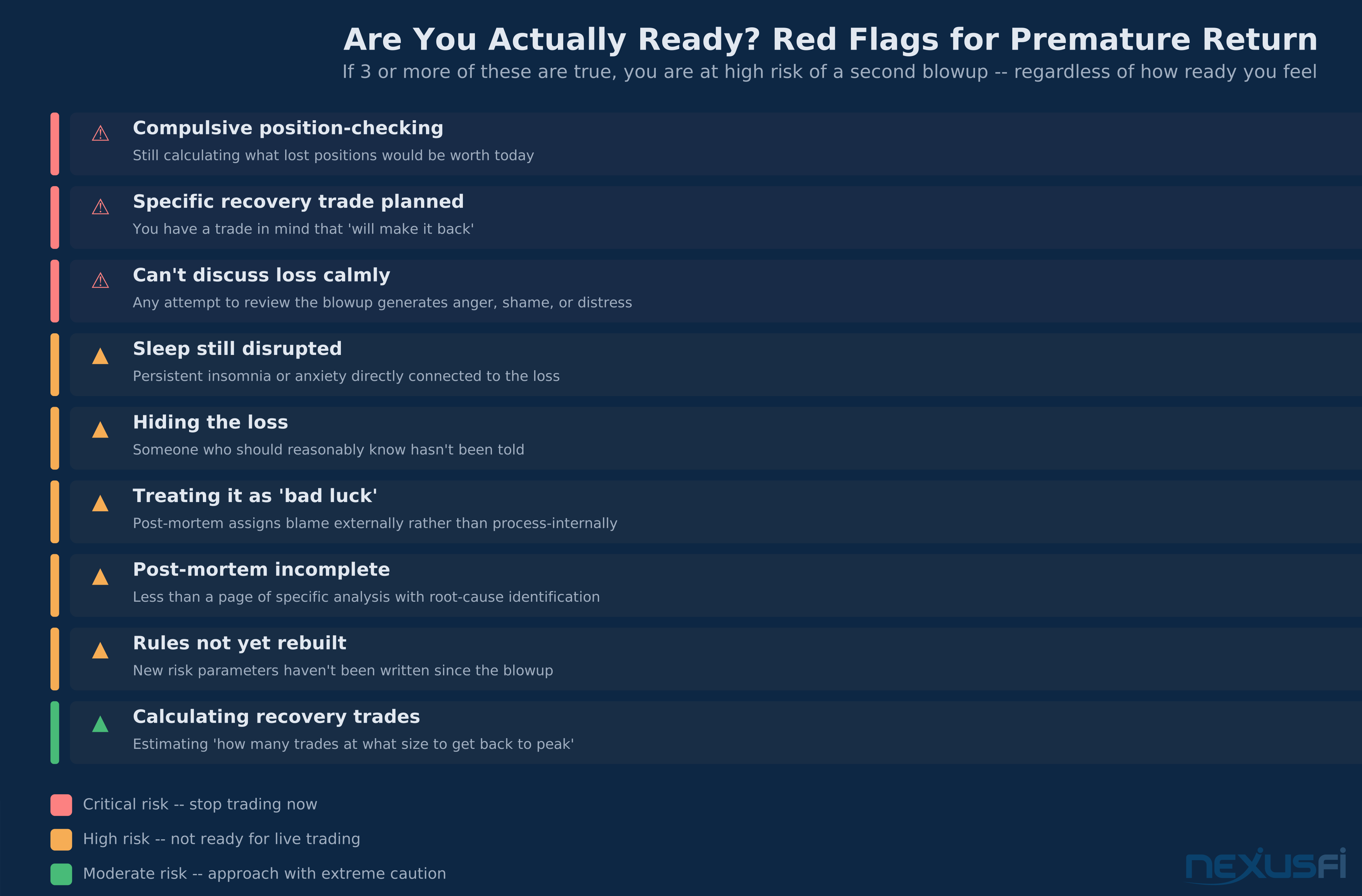
The most predictable failure mode in recovery is re-entering too early. @tturner86, who blew his first account and rebuilt over two years, described the psychological texture that genuine recovery eventually produced: [4]
The shift from fear to data — that transition is what genuine recovery looks like. Not forgetting the event. Not declaring it resolved. Reaching a point where you carry the information from the blowup into your trading without carrying the wound.
The Identity Work #
The traders who successfully rebuild don't just repair their trading process. They rebuild their relationship to trading as an activity. The key distinction: in the pre-blowup architecture, most traders have tight coupling between self-worth and trading outcomes. Wins confirm competence; losses threaten it. This architecture is catastrophic in a sustained drawdown — the emotional stakes are so high that the psychological system can't distinguish "a trade didn't work" from "I am not a competent person."
Recovery requires deliberately weakening that coupling. Not eliminating caring about outcomes — that eliminates motivation. But introducing sufficient psychological distance between trade result and self-evaluation that a losing trade can be processed and moved past without generating an existential threat response. The identity language shift covered earlier is the mechanism: "My process failed" versus "I am a failure."
Community Without Amplifying Shame #
Isolation is one of the most reliable predictors of poor recovery. Shame drives secrecy, and secrecy removes the external feedback and accountability that can interrupt poor decision-making. But community engagement after a blowup requires care — comparison-focused or bragging environments amplify shame and accelerate the return-too-early failure mode.
What useful community support looks like: an accountability partner who knows about the loss and checks in on the recovery process (not the P&L), journal sharing focused on process adherence and emotional regulation, and engagement with others who have been through similar experiences. The NexusFi Psychology and Money Management forum has extensive documentation of recoveries at various severity levels.
For traders working through the identity dimension, Trader Identity and Self-Worth Separation provides the psychological framework. For cognitive biases that drive pre-blowup escalation, Cognitive Biases in Trading maps the specific distortions most relevant to risk failures. For the practical discipline side, Managing Tilt and Revenge Trading covers the moment-by-moment circuit breakers.
Knowledge Map
Go Deeper
Build on this knowledgeReferences This Article
Articles that build on this topicCitations
- — I finally blew up an account (2021) 👍 81“I blew most of it revenge trading and taking too big of position sizes. I got so comfortable scaling up as I was profiting consistently, and I threw it all away in like 10-15 trades.”
- — I finally blew up an account (2021) 👍 28“Making judgments about how terrible you are as a trader is not going to be helpful. You did some particular, specific things, whatever they were, which did not work.”
- — Time to Give Up (2013) 👍 65“I turned a Sizable Account into a sizable Debt selling Naked Puts prior to Sept 11, 2001. What did I gain? What I lacked the most: PERSPECTIVE.”
- — Account blown up (2015) 👍 17“Overall the sting of that loss I still feel. Many dark days staring into the abyss. I think the biggest challenge for me is to move this from a fear item into a strength item.”
- — Today, I lost my savings and my career (2019) 👍 14“I remember the fear, the anxiety, the overwhelming shame, wondering how to tell my wife and family. When I finally became profitable, I wasn't jumping up and down -- I was just happy I survived.”
- — Rebuild confidence (2014) 👍 16“You need to start trading real money again, but really small positions. As they find success their confidence strengthens, and they start to remember how it feels to be a winner again.”
- — Making a Living with the Micros (2021) 👍 23“You have to trade the size where a loss is like a simple finger-prick (1%), not a blood donation (10%) or a dismemberment (50%) or a catastrophic margin-call death (100%).”
- — I finally blew up an account (2021) 👍 26“Start slowly, use micros if an option, build confidence again then increase account size again as the account grows and withdraw partial profits along the way.”
- — The Science of Revenge Trading (2025)
- — How to Recover from a Huge Trading Loss (2024)