



Anti-Money Laundering and KYC in Futures Trading: What Every Trader Needs to Know
Overview #
The form you filled out when opening your brokerage account. The source-of-funds questionnaire that appeared when you tried to wire $50,000. The "account under review" notice that froze your withdrawal for three days. These are your direct encounters with Anti-Money Laundering (AML) and Know Your Customer (KYC) requirements — regulations that every U.S. futures trader operates under but most have never fully understood.
AML and KYC aren't about treating traders like criminals. They're the compliance infrastructure that keeps the futures markets clean, functional, and legitimate. Futures Commission Merchants (FCMs) and Introducing Brokers (IBs) are legally required to know who their customers are, where their money comes from, and whether their trading activity matches their stated profile. When that infrastructure breaks down, the consequences are severe — and public.
In 2020, Interactive Brokers paid $38 million in combined penalties to the CFTC, SEC, and FINRA for AML failures spanning five years. The broker processed hundreds of millions in wire transfers without proper surveillance, including trades for a customer previously charged with Ponzi fraud. More recently, NinjaTrader paid a $250,000 NFA fine for inadequate AML monitoring procedures. These aren't corner cases — they're recurring enforcement patterns that show up in the futures industry every year.
Understanding AML/KYC serves three practical purposes for traders. First, it explains why your broker asks for the documentation they do — and when you're legally required to provide it versus when a request is unusual. Second, it helps you structure your account activities to minimize friction: consistent funding sources, accurate profile information, and prompt responses to compliance requests can keep your account running smoothly. Third, it helps you evaluate brokers: firms with weak AML programs have a history of regulatory sanctions that can affect their operational continuity.
This isn't regulatory theory. It's the operational reality of trading in U.S. futures markets.
The Regulatory Stack #
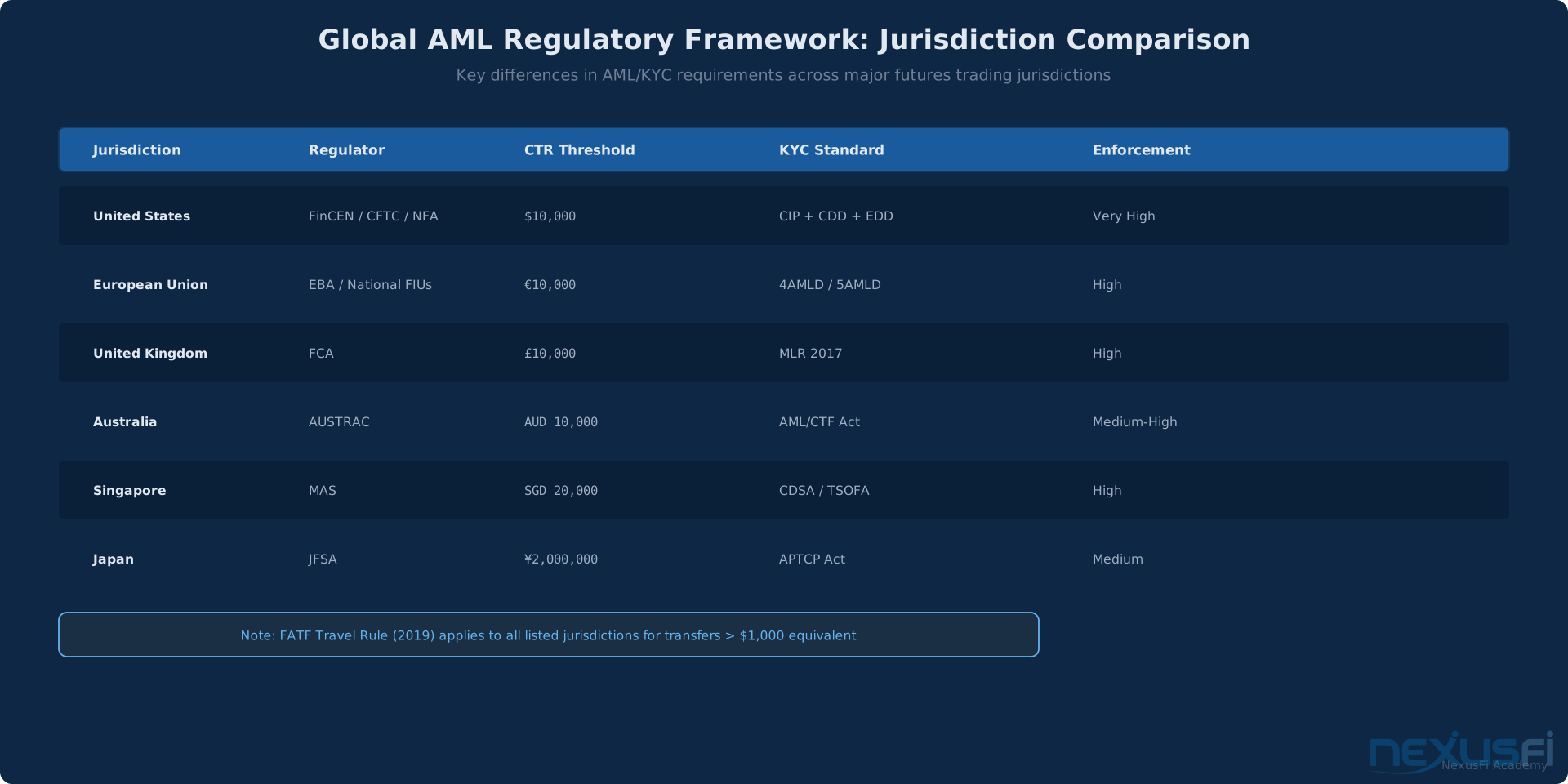
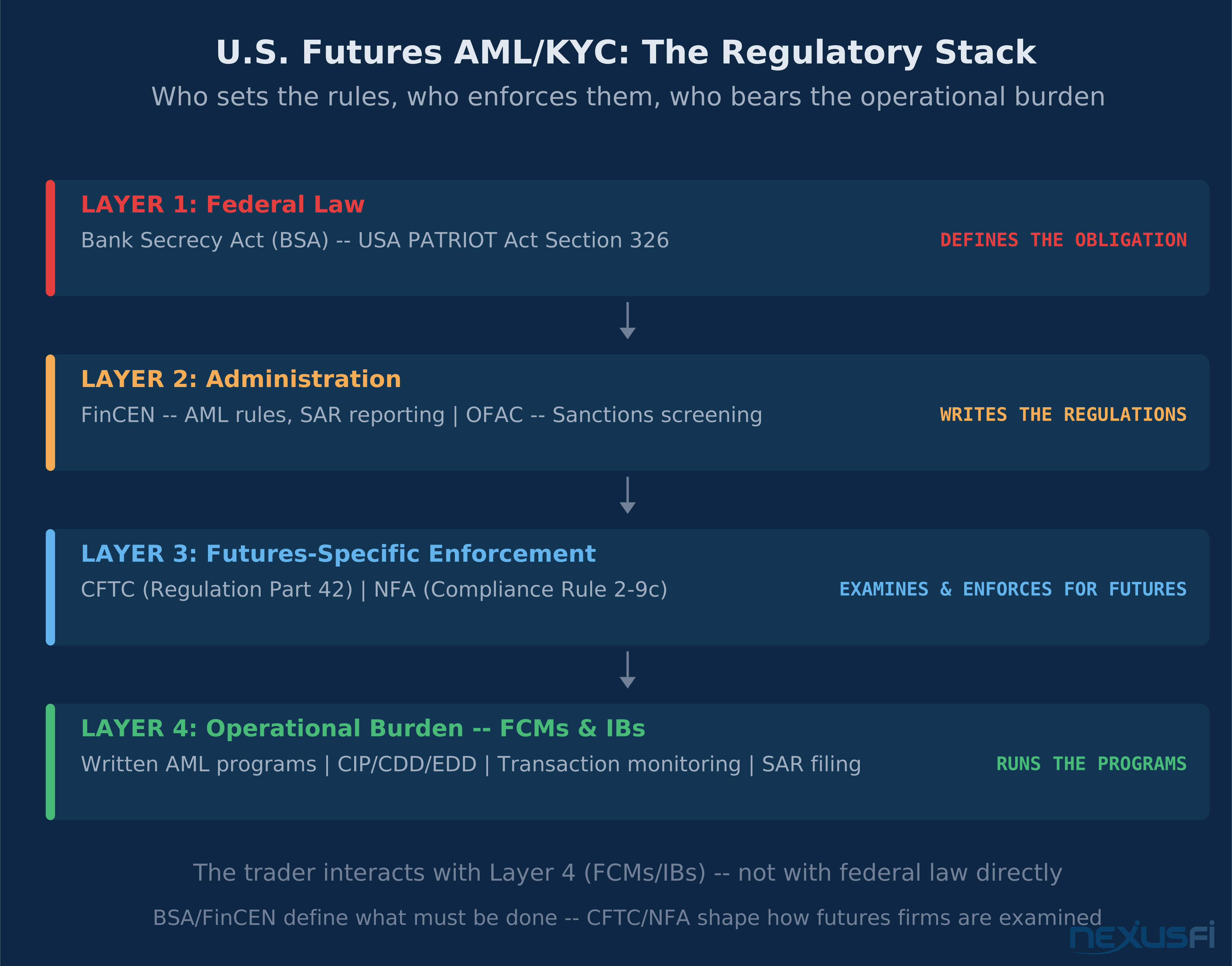
AML/KYC requirements in U.S. futures markets flow from three distinct layers of authority. Understanding who sets the rules — and who enforces them — tells you what to expect from your broker.
Layer 1: Federal Law #
The Bank Secrecy Act (BSA) of 1970 is the statutory foundation. It designates "financial institutions" — including FCMs — as covered entities with mandatory AML obligations. Every U.S. futures broker must maintain a written AML program, train employees, retain records for five years, and file reports with the federal government when certain thresholds are crossed.
The USA PATRIOT Act of 2001 extended these requirements through Section 326, which mandated Customer Identification Programs (CIPs) for non-bank financial institutions. That's the legal authority behind every broker asking you for a government ID, your Social Security number, and proof of address before they'll activate your account.
The $10,000 threshold for Currency Transaction Reports (CTRs) also comes from the BSA. If you fund your account with $10,000 or more in physical cash — which almost no trader does — your broker must file a CTR with FinCEN. Wire transfers and ACH deposits follow different rules, but large or unusual deposits can still trigger source-of-funds inquiries.
CTRs apply specifically to physical cash, not wire transfers. A $50,000 wire won't automatically generate a CTR, but it may trigger a source-of-funds documentation request under your broker's internal AML policy. The distinction matters when traders confuse "reporting" with "scrutiny" — they're related but not the same thing.
Layer 2: Administration (FinCEN and OFAC) #
The Financial Crimes Enforcement Network (FinCEN), a bureau of the U.S. Treasury Department, administers the BSA and publishes the implementing regulations that define exactly what AML programs must contain. For futures FCMs, the relevant regulation is 31 CFR Part 1026 — Rules for Futures Commission Merchants and Introducing Brokers in Commodities.
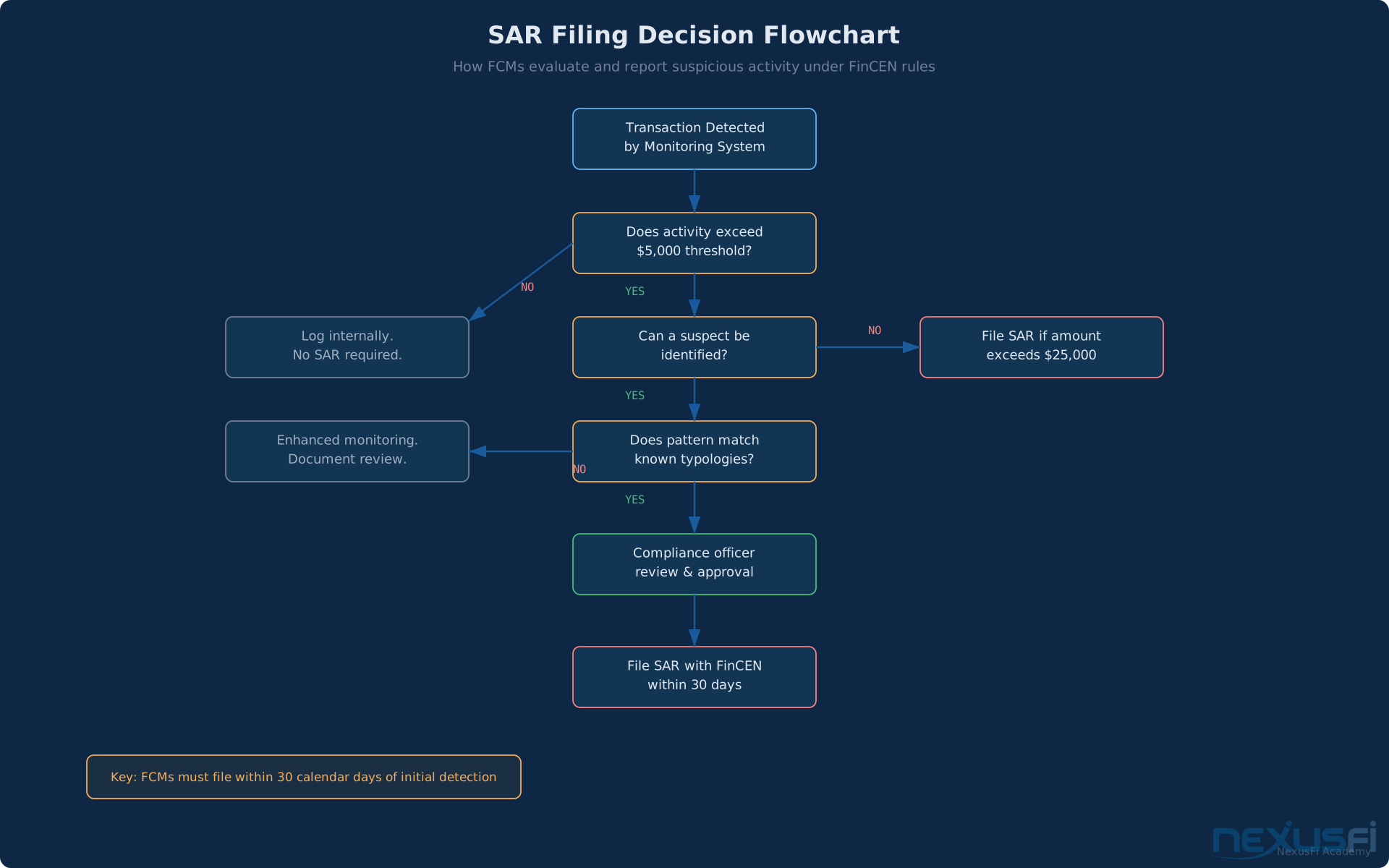
Suspicious Activity Reports (SARs) are also FinCEN's domain. When a firm identifies activity that appears potentially suspicious — and meets FinCEN's reporting thresholds — they file a SAR. Critically, firms are legally prohibited from informing the subject of a SAR filing. If your account goes "under review" without explanation, a SAR may have been filed. You won't be told.
The Office of Foreign Assets Control (OFAC) enforces economic sanctions programs. Every futures broker must screen customers and counterparties against OFAC's Specially Designated Nationals (SDN) list during onboarding and ongoing operations. A match to the SDN list results in immediate denial of service — no exceptions, no appeals at the broker level.
Layer 3: Futures-Specific Enforcement (CFTC and NFA) #
The Commodity Futures Trading Commission (CFTC) oversees the AML compliance posture of futures market participants under Regulation Part 42. The CFTC's broader regulatory mandate doesn't include writing AML law — that's FinCEN's job — but it examines whether futures firms meet their BSA obligations and brings enforcement actions when they don't. The $11.5 million CFTC piece of the Interactive Brokers settlement came from failures as a registered FCM to diligently supervise AML-related activity.[1]
The National Futures Association (NFA) is the day-to-day enforcer. NFA Compliance Rule 2-9(c) and the Interpretive Notice titled "NFA Compliance Rule 2-9: FCM and IB Anti-Money Laundering Program" define exactly what FCMs and IBs must have in place. The NFA audits member AML programs, issues deficiency letters, and fines firms when they fall short. The $250,000 NinjaTrader fine in 2025 came from deficiencies in their AML monitoring program under Rule 2-9 — specifically inadequate procedures for identifying suspicious transaction activity.[1]
The NFA's authority extends to supervisory failures, not just direct rule violations. If your broker lacks adequate procedures to identify suspicious activity, they can be fined even if no actual money laundering occurred. Repeated NFA enforcement actions for AML aren't always evidence of actual wrongdoing — but they are a signal about a firm's compliance culture. Check NFA BASIC (nfa.futures.org/basicnet) before opening an account at any new broker. NexusFi member @bluemele, who holds a Series 3 certification, compiled NFA BASIC lookup links for popular futures brokers — the results were eye-opening.[5]
Core Concepts #
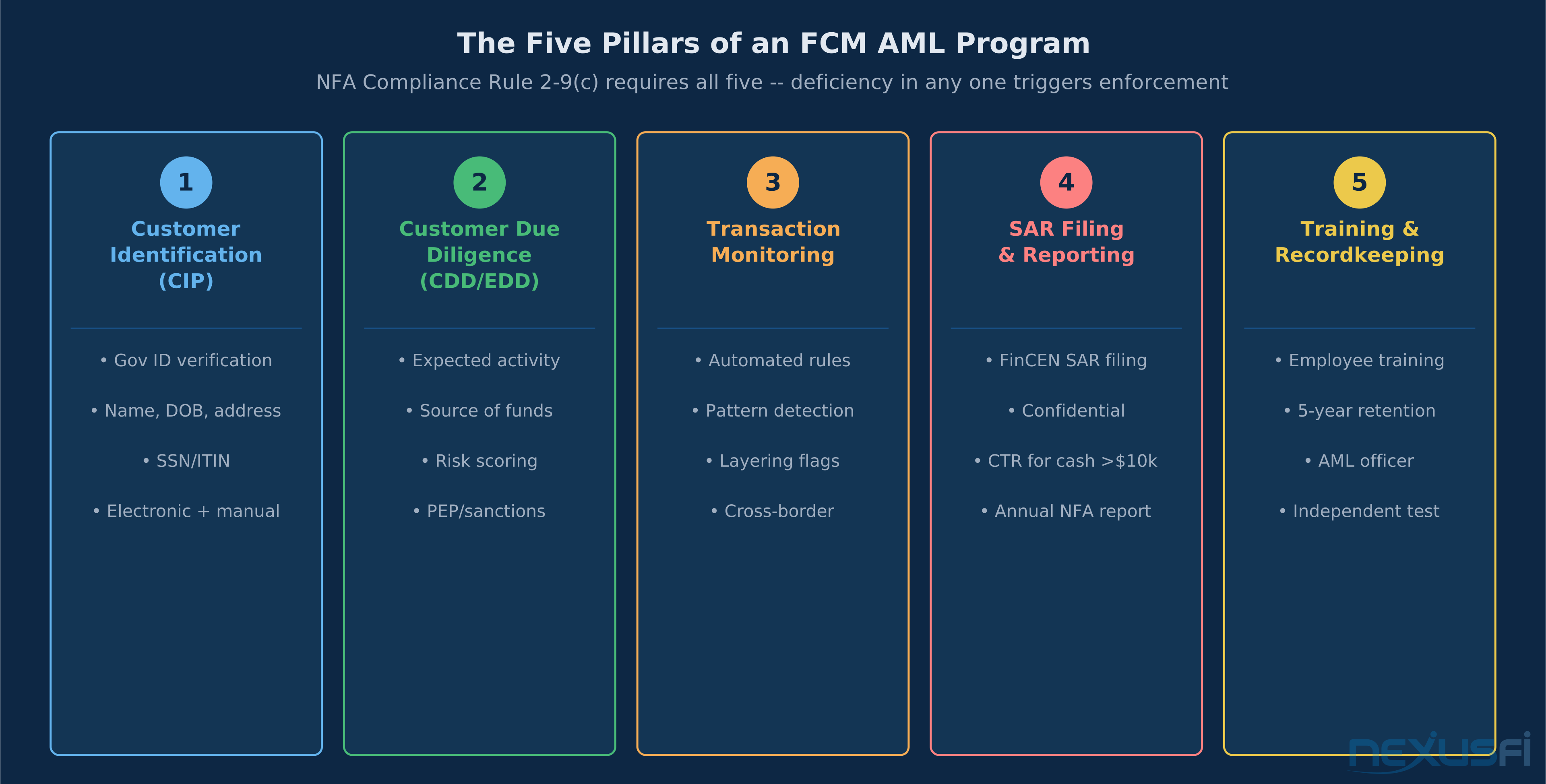
These eight concepts form the operational mechanics of AML/KYC. Understanding what each requirement actually requires — and why — changes how you interpret what your broker asks of you.
Customer Identification Program (CIP) #
CIP is the formal requirement for brokers to verify who you are before you can trade. The minimum requirements, set by FinCEN, include: full legal name, date of birth, physical address (not a PO box), Social Security number or ITIN for non-U.S. persons, and a government-issued photo ID.
Electronic verification through third-party services (Jumio, LexisNexis, TransUnion) handles most of this automatically. When electronic verification fails to produce a confident identity match — which happens for new-to-credit individuals, recent name changes, or non-standard address histories — your broker will request manual documentation.
The request for your driver's license and Social Security card is standard industry practice, not a red flag about the broker. As a NexusFi member discovered when opening a Tradovate account, the documentation request was entirely routine — every legitimate futures broker in the U.S. runs the same process.[3] The clearing firm drives the requirements, and the introducing broker is bound to enforce them.
Customer Due Diligence (CDD) and Enhanced Due Diligence (EDD) #
CDD goes beyond identity verification. It establishes the customer's expected activity profile — the baseline against which future behavior is compared. Brokers collect: occupation and employer, annual income and net worth, investment experience and trading objectives, expected deposit frequency and size, and source of funds.
Enhanced Due Diligence (EDD) applies when initial screening identifies elevated risk. Triggers include: high-risk jurisdictions on the FATF grey or black lists, Politically Exposed Persons (PEPs — current or former government officials), complex entity structures with multiple ownership layers, unusual funding patterns at account opening, and negative news or prior enforcement history.
EDD means deeper investigation: more documentation, specific source-of-funds questions, possible manual review by compliance personnel, and potentially higher ongoing scrutiny.
Beneficial Ownership #
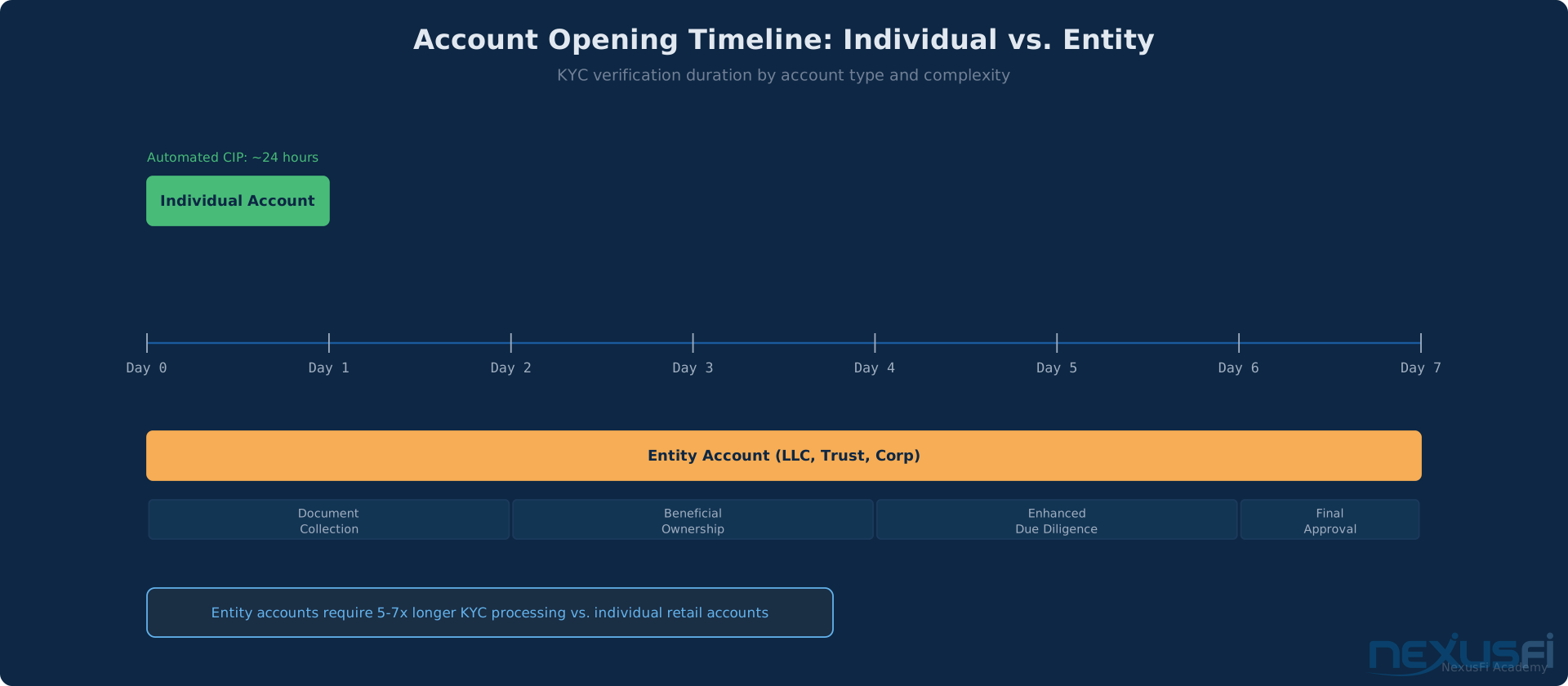
For entity accounts — LLCs, corporations, partnerships, trusts — the broker must identify who actually controls or benefits from the account, not just who signed the paperwork. FinCEN's Beneficial Ownership rule requires identification of any individual owning 25% or more of a legal entity, plus one person with significant managerial control.
This is the documentation bottleneck that makes entity account opening substantially slower than individual account opening. Prop firm traders, family offices, and CTAs setting up managed account structures encounter this directly. The paperwork requirement is structural, not suspicious.
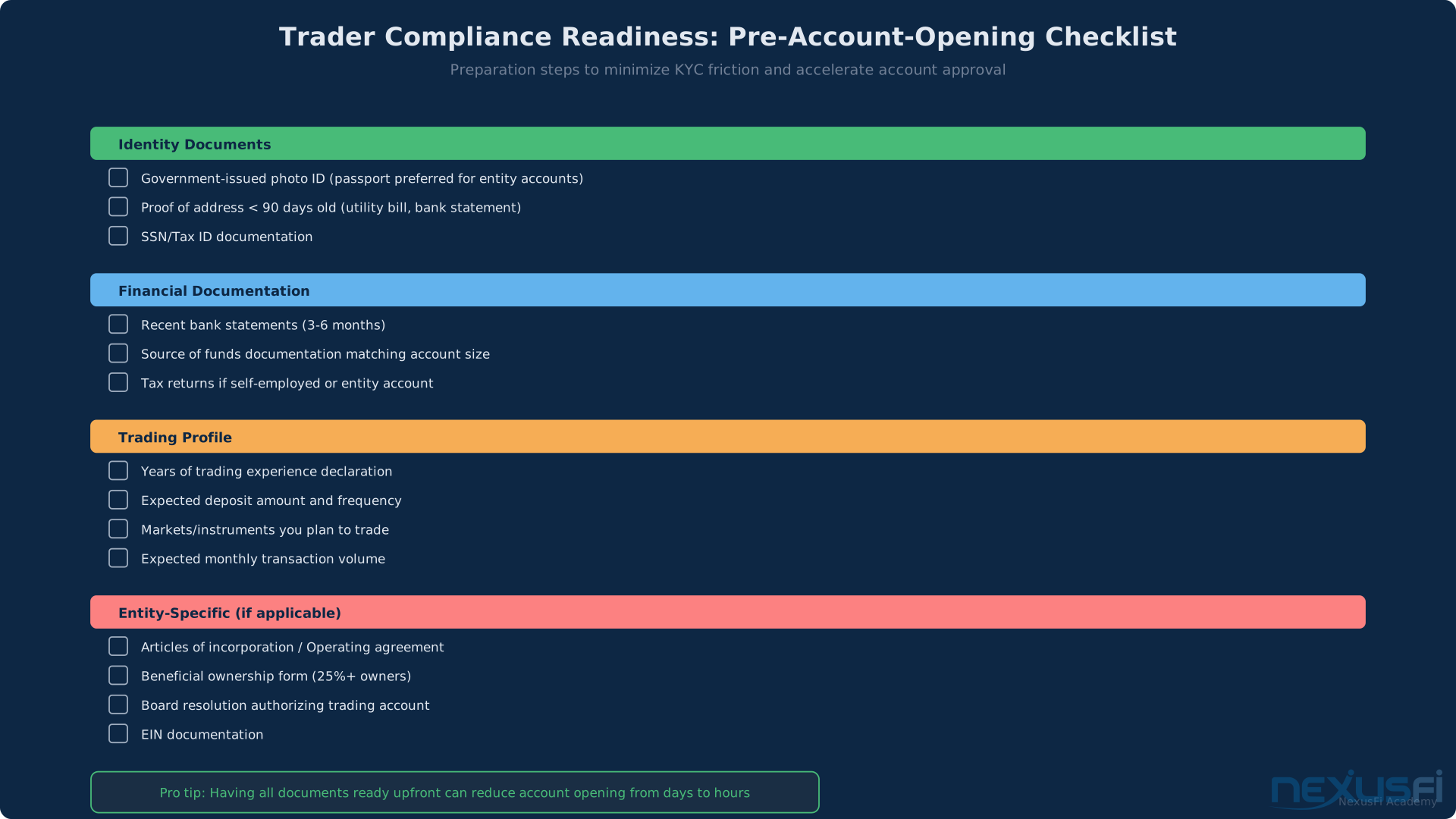
Beneficial ownership documentation is legally required for all entity accounts regardless of broker. If you're opening an LLC or corporate trading account, prepare in advance: corporate formation documents, operating agreement, ownership chart, and personal identification for each significant owner. Having these ready cuts days off the onboarding timeline.
Transaction Monitoring and Suspicious Activity Reports #
AML doesn't stop at account opening. Firms run automated transaction monitoring systems that continuously compare actual behavior against expected behavior profiles. Common trigger patterns:
- Deposits much above your declared expected range
- Rapid movement of funds — large deposits followed quickly by large withdrawals without significant trading activity
- Wire transfers from accounts not matching the account holder (third-party funding)
- Trading activity patterns inconsistent with stated experience or declared source of funds
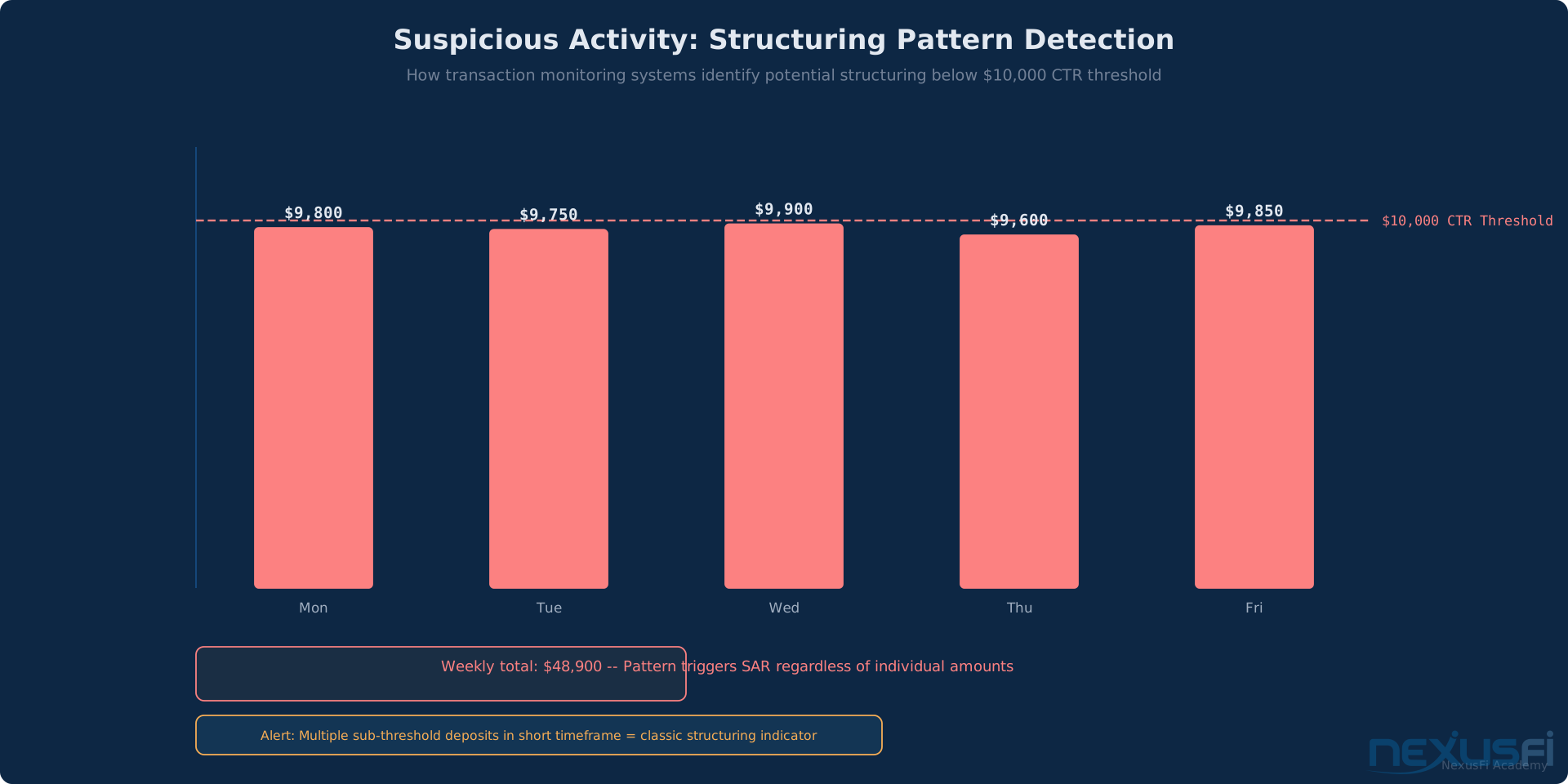
- Structuring patterns (multiple deposits just below reporting thresholds)
- Cross-border wire patterns involving high-risk jurisdictions
These funding-based trigger patterns are distinct from trade-based manipulation like spoofing and layering, though both types of surveillance may operate in parallel at large FCMs.
When monitoring fires, a compliance analyst reviews the activity. Most alerts are resolved quickly as legitimate. When the analyst can't explain the activity through normal means, the firm may file a SAR.
The critical point: SAR filings are confidential. Firms are legally prohibited from telling you one was filed. If your account goes "under review" without explanation and withdrawals are temporarily restricted, a SAR may be in process. Reviews typically take 5-10 business days. Don't demand to know if a SAR was filed — the compliance team can't tell you even if they wanted to.
Sanctions Screening (OFAC) #
OFAC sanctions compliance is integrated directly into the onboarding workflow. Your name, date of birth, and address are screened against the SDN list before your account is activated. This screening runs again for every beneficial owner on entity accounts.
Ongoing monitoring includes rescreening when the SDN list updates — which happens multiple times per year. If your name closely matches an SDN entry, your account may be temporarily flagged while compliance reviews the potential match. Most near-matches are cleared quickly. Actual SDN matches result in immediate account restriction, asset freeze, and OFAC reporting requirements.
Source of Funds #
Source of funds is the most practically impactful AML concept for active traders. Where did the money in your trading account come from? That question follows your account throughout its lifetime.
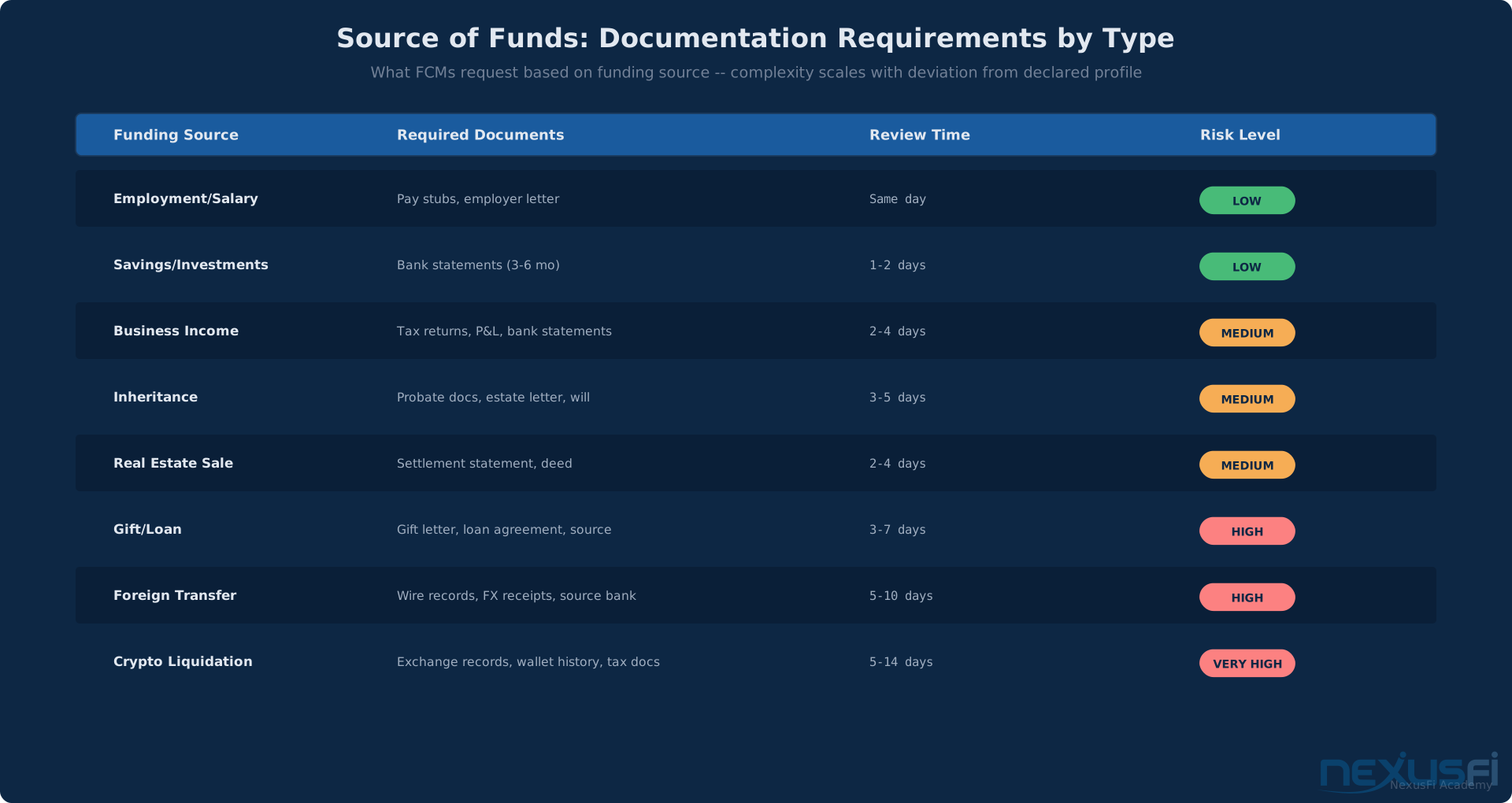
At onboarding, you declare an expected source: salary, savings, business income, investment proceeds. For large initial deposits, some brokers request supporting documentation immediately — bank statements, brokerage statements, or an employer letter.
The ongoing trigger is deviation from your stated profile. If your declared source is employment income and you deposit $300,000, expect a documentation request. Common acceptable explanations: proceeds from home sale, inheritance, retirement account distribution, business exit, legal settlement. These can all be documented and resolve quickly when provided promptly.
Recordkeeping (Five-Year Retention) #
FCMs and IBs must retain AML-related records for five years. This includes customer identification documents, CDD information and risk assessments, all SAR filings and supporting documentation, transaction records used for monitoring, and employee training records.
Five-year retention means your identity documents, source-of-funds explanations, and any compliance correspondence stay on file. If your account is investigated for any reason — by the NFA, the CFTC, or law enforcement — your broker can produce a complete history of all AML-related activity dating back five years.
Risk-Based Approach #
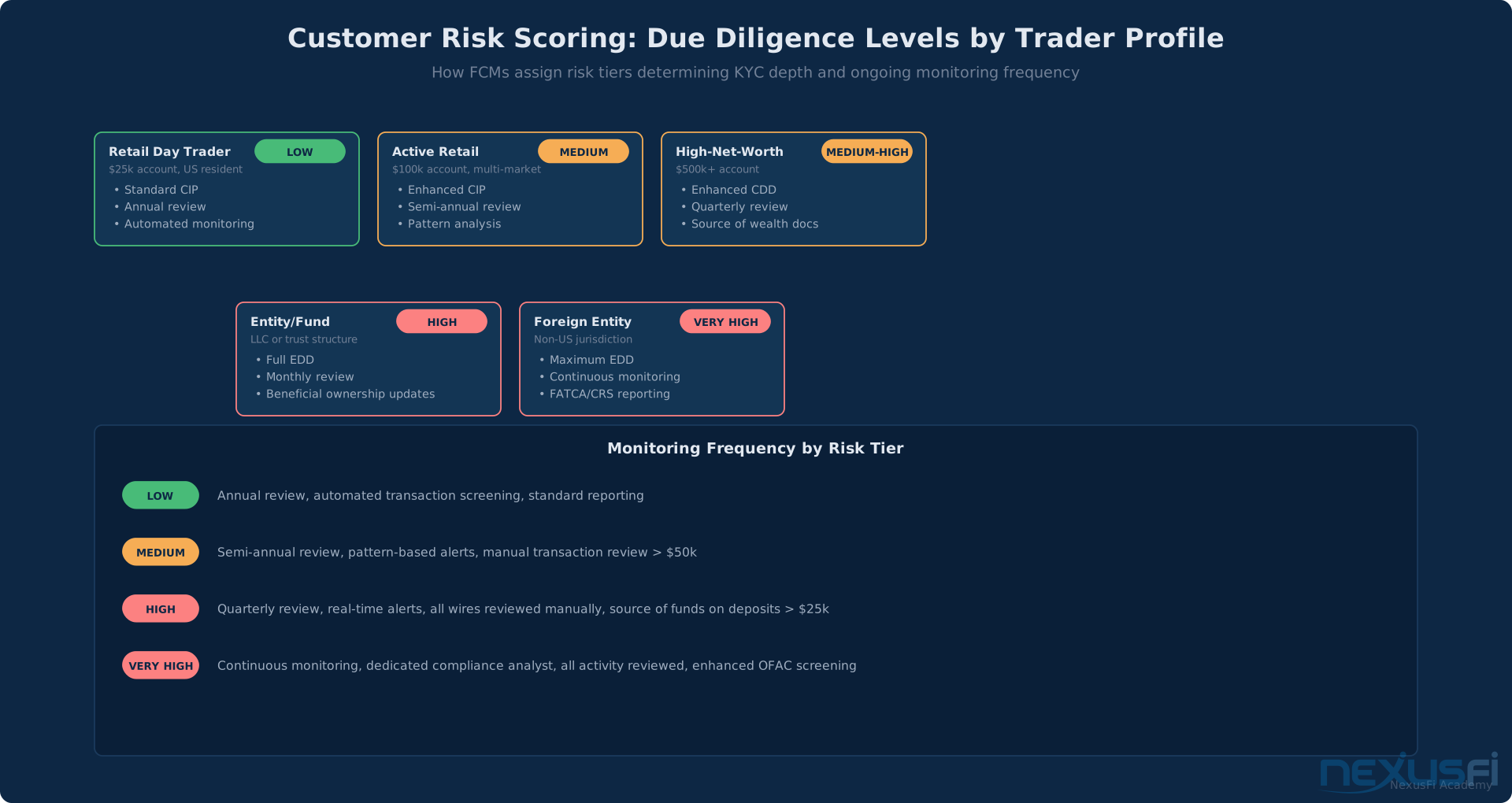
The risk-based approach is the operational philosophy underlying all of the above: AML/KYC intensity is proportional to risk. A U.S. citizen funding a small trading account via domestic wire from a same-name bank account gets streamlined onboarding. A politically exposed person from a jurisdiction on the FATF grey list using a complex offshore entity structure gets the full EDD treatment.
This risk calibration is why two traders at the same broker can have dramatically different onboarding experiences. It's not arbitrary — it's the systematic output of each firm's risk-scoring model applied to the profile information you provide.
The Trader Path #
AML/KYC isn't a one-time event. It's a continuous process with six distinct touchpoints across the life of your account.
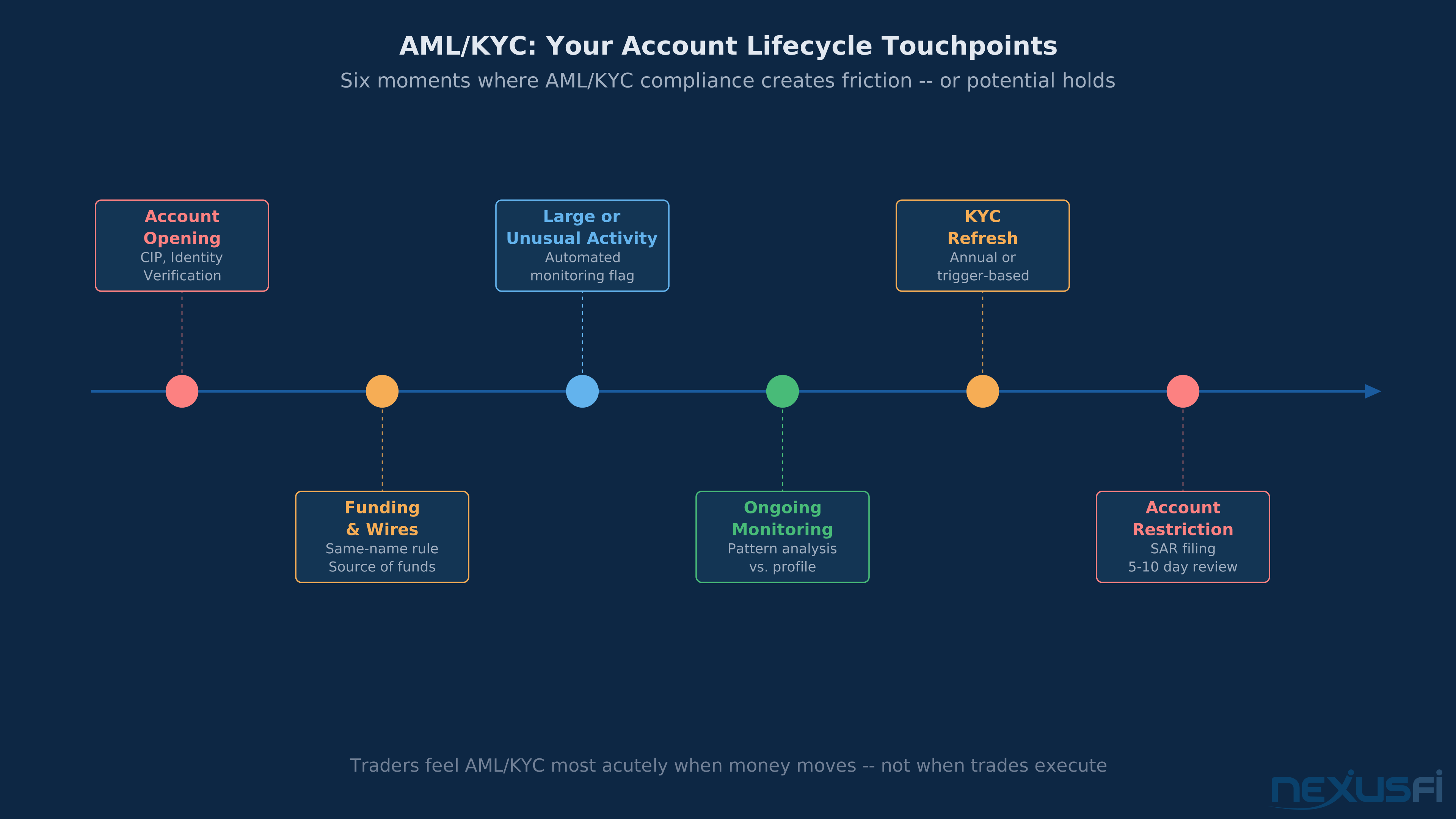
1. Account Opening: The Identity Gauntlet #
The initial onboarding process collects CIP information, runs electronic identity verification, screens for sanctions, and establishes your expected activity profile. For most U.S. traders, this takes less than 24 hours. This identity verification is separate from customer funds segregation — AML confirms who you are, while segregation rules govern how your deposited capital is protected.
Electronic verification failure: If the automated system can't confirm your identity with confidence, you'll receive a request for manual documentation. This happens more often for people with thin credit files, common names (John Smith generates many false-positive matches), or recent address changes. Provide the documentation promptly — delays here delay your funding.
Entity account complexity: Opening an LLC or corporate account requires beneficial ownership documentation, which typically requires manual review. Budget 3-7 business days for entity account approval.
High-risk profile triggers: If your occupation, stated trading volume, or jurisdiction triggers EDD, expect more questions before approval. The process is proportional to risk — not punitive.
2. Funding: The Wire Transfer Friction #
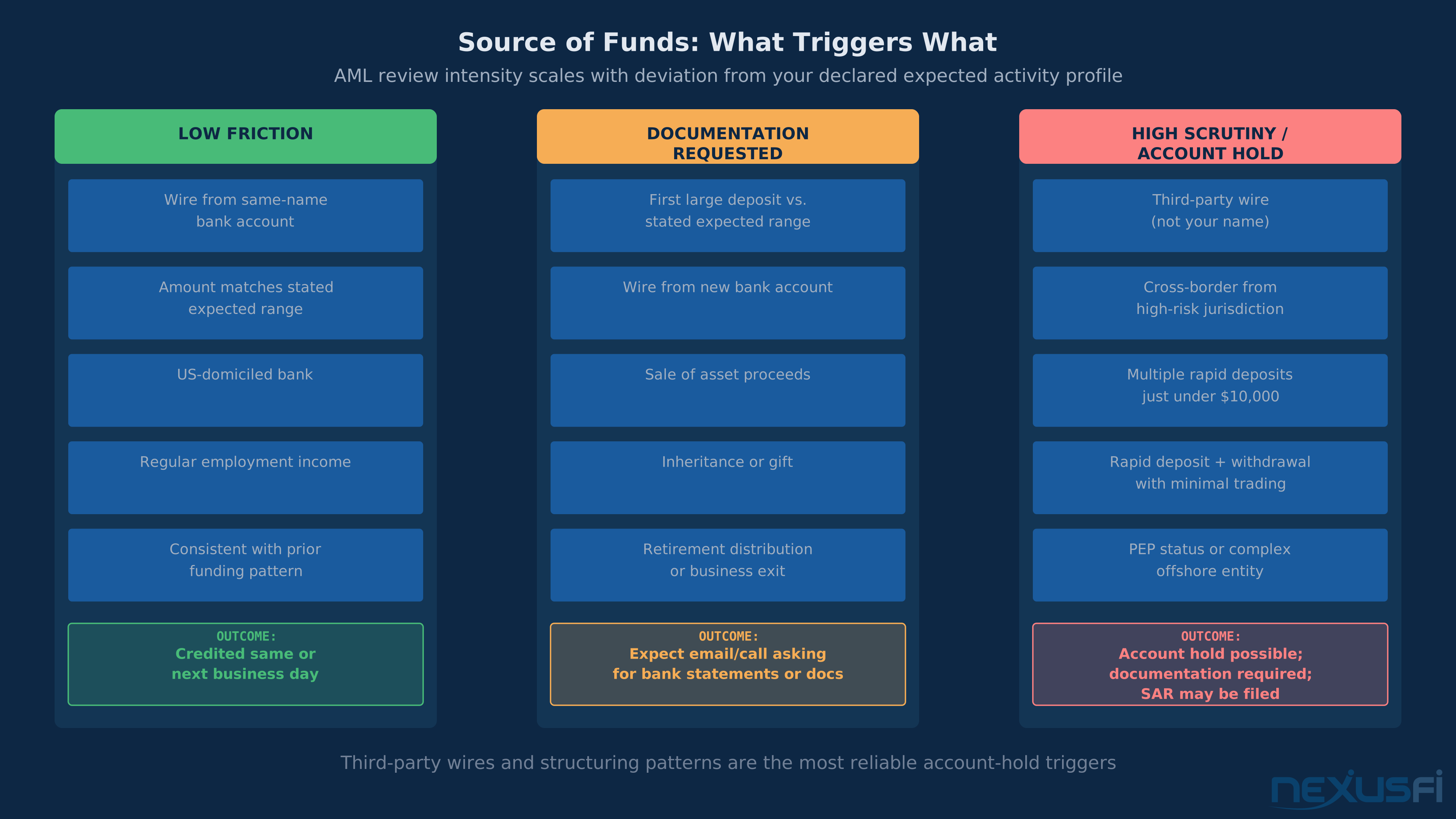
The most important thing to understand about funding: money must flow from accounts in your name to your trading account.
Third-party funding — depositing money from someone else's bank account — is the single most reliable way to trigger an AML review. Firms prohibit it because it breaks the ownership tracing chain that AML requires. As NT Brokerage explained to NexusFi members regarding ACH complications, CFTC regulations require FCMs to know exactly where funds are coming from and confirm they're from a same-name account.[2]
Wire transfers dominate futures broker funding — not ACH, not checks — partly for AML reasons. ACH metadata frequently fails to carry sufficient sender identification to meet the same-name standard. When it does arrive without clear identification, 90% of ACH transactions require additional paperwork before funds can be credited, creating the friction and delays that make wires the preferred method despite their cost.
NexusFi member @Hemmo encountered this same-name requirement firsthand when setting up an international futures account. Both the wire transfer service and the broker confirmed that third-party deposits would not be accepted — the broker would only credit funds from the named account holder. The solution: opening a same-name USD currency account and routing converted funds through it before transferring to the broker.[7]
Large deposits above your stated expected range trigger source-of-funds documentation requests before funds are credited. Responding promptly with appropriate documentation resolves this quickly.
3. Ongoing Monitoring: The Invisible Layer #
Most traders never notice transaction monitoring because it's automated and, for most activity, results in no action. This AML monitoring operates alongside exchange-level market surveillance — two parallel compliance layers, one focused on money movement and the other on trade execution. The algorithms look for patterns that don't fit your account's established profile.
What you might notice: an occasional compliance request to explain an unusual transaction, a temporary hold on a withdrawal while a review completes, or — in rare cases — a compliance team call asking you to clarify account activity.
The key operating principle: be responsive. Compliance teams handle hundreds of accounts and prioritize those who respond promptly and cooperate with requests. Extended delays responding to compliance inquiries can escalate a routine monitoring review into a more formal investigation.
4. Periodic KYC Refresh #
AML programs are not static. Regulatory guidance, enforcement actions, and industry best practices drive periodic updates to how firms conduct ongoing due diligence. This translates into occasional requests to reconfirm or update your account information.
Triggers for KYC refresh: changes in your stated occupation or income, extended inactivity (12+ months with no activity), risk-indicator changes, or your broker's periodic review cycle. Most refresh requests are simple — confirm current employer, update annual income estimate, re-verify address. Entity accounts face more extensive periodic reviews, especially if beneficial ownership has changed.
5. Source of Funds Investigations #
When a deposit triggers an automated monitoring flag, a compliance analyst investigates. Your broker may contact you requesting: bank statements for the source account (typically 3-6 months), documentation of the specific source event (sale proceeds, inheritance, distribution), and a written explanation of the transaction.
Provide complete, accurate documentation. Partial documentation or vague explanations extend the review period. If you legitimately cannot explain a deposit source, that is a compliance problem — not because you've done anything wrong, but because AML compliance requires the broker to be able to document it to regulators.
6. Account Restrictions and SAR Filings #
Account restrictions are the visible consequence of compliance investigations that can't be resolved quickly. Your broker may restrict withdrawal access while a review is ongoing. They cannot disclose whether a SAR has been filed.
If you face an account restriction: contact your broker's compliance department directly (not customer service), state that you want to cooperate fully, and ask what documentation they need to resolve it. Avoid demanding reasons for the restriction — the compliance team may be legally constrained in what they can share. Standard resolution time is 5-10 business days when the trader cooperates fully.
If you believe your account has been restricted in error and the standard compliance process isn't resolving it, escalation options include filing a complaint with the NFA (not the CFTC — the NFA handles member-firm complaints for futures). Search nfa.futures.org/basicnet and click "Regulatory Actions" for each firm you're evaluating. This is public information.
Retail vs. Institutional #
The regulatory obligations are identical for retail and institutional accounts. The operational experience differs dramatically.
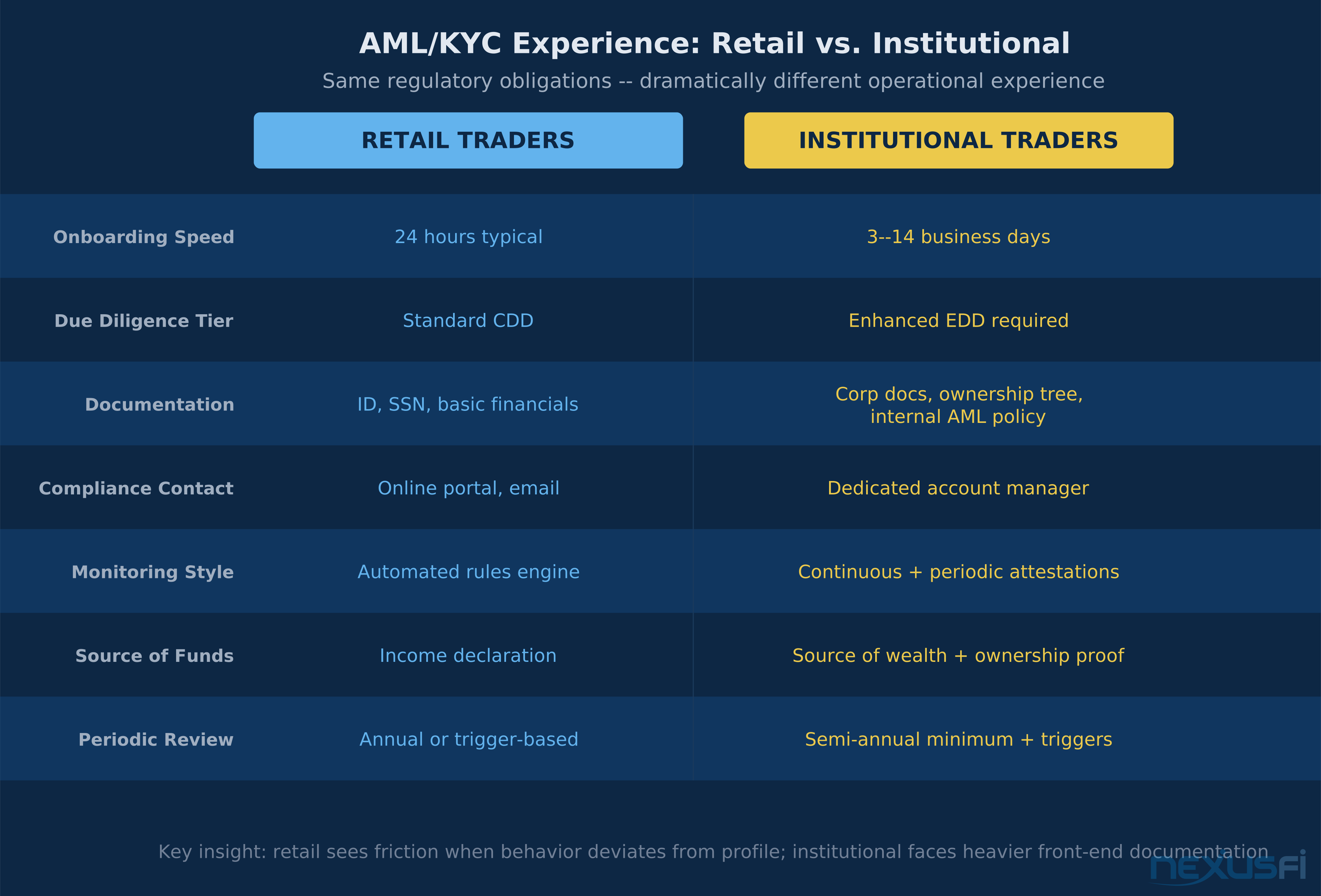
The biggest practical difference: retail accounts run into friction when their actual behavior deviates from their declared profile. Institutional accounts face heavier front-end documentation requirements but, once established, operate with more predictable compliance workflows because their expected activity is pre-defined in detail.
For prop traders, managed account operators, and family offices: beneficial ownership documentation and corporate structure disclosure requirements can seem invasive, but they're legally required for all entity accounts regardless of broker. Budget time and documentation preparation so. The larger the entity and the more complex its ownership structure, the more documentation you'll need — and the longer manual review will take.
One dimension that catches institutional traders off-guard: third-party funding complexity. Managed accounts where clients fund the account directly instead of transferring to a trading account held in the manager's name require careful structuring. Every wire that doesn't align with the beneficial owner on the account creates an AML friction event.
If you manage money for others through futures accounts, work with your compliance counsel before opening accounts to ensure your funding structure is designed around the same-name wire requirement. Redesigning funding flows after the fact, while accounts are already open, creates unnecessary scrutiny and account holds.
When AML Programs Fail: Enforcement Lessons #
Real enforcement actions illustrate what happens when compliance infrastructure breaks down.
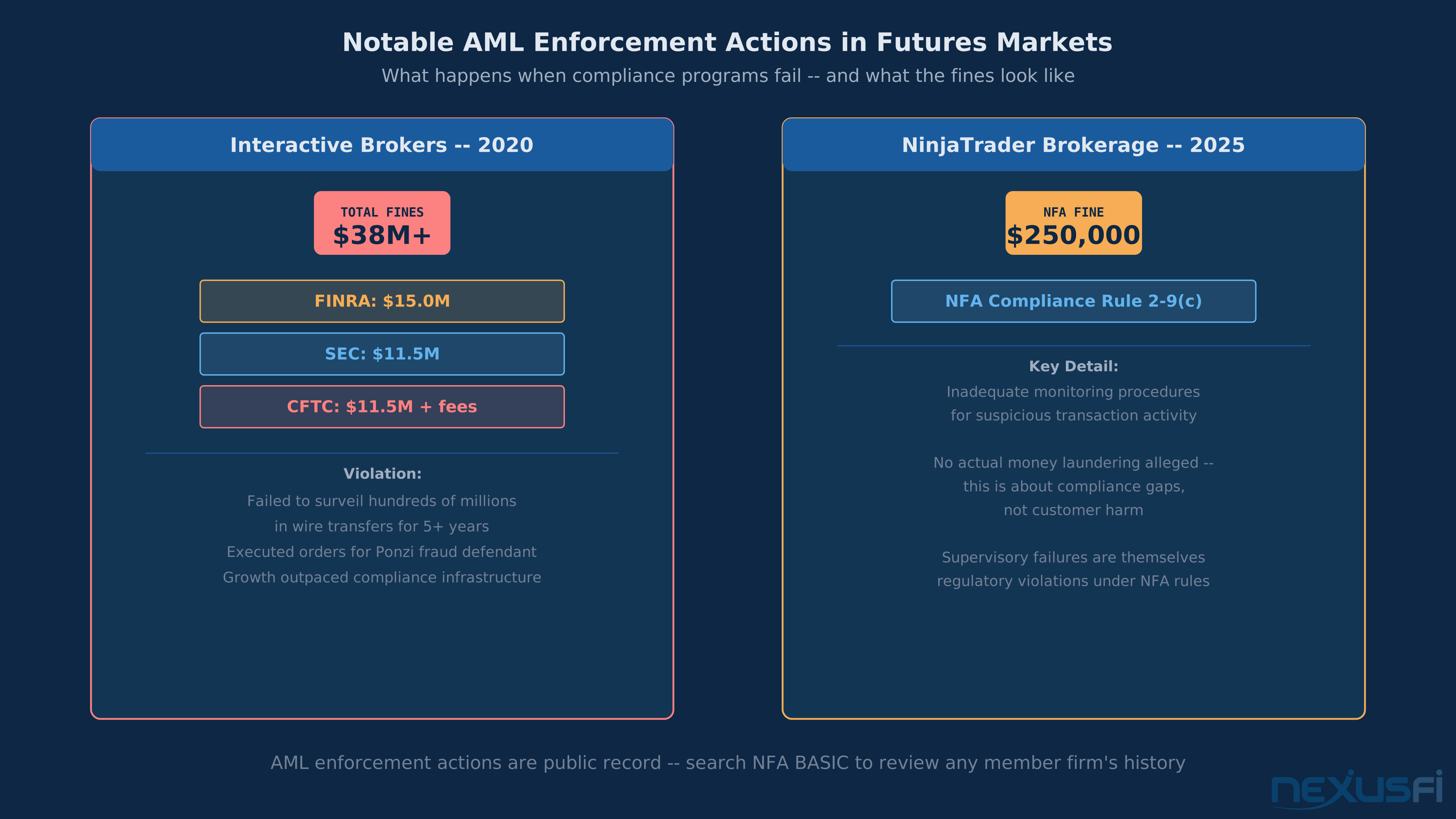
Interactive Brokers (2020) — $38 million settlement: The firm's AML program failed to keep pace with rapid business growth. From 2013 to 2018, IB became one of the largest electronic broker-dealers in the U.S., but failed to dedicate adequate resources to surveil hundreds of millions in wire transfers or investigate suspicious activity. FINRA fined them $15 million, the SEC $11.5 million for SAR filing failures on microcap securities trades, and the CFTC $11.5 million for failure to diligently supervise AML-related account activity — including executing orders for a customer previously charged with Ponzi fraud.[1]
The trader-facing lesson: brokers that grow rapidly without proportionally scaling compliance infrastructure create risk exposure for themselves and operational risk for their customers. Enforcement actions can result in business model changes, increased compliance friction for all customers, and in extreme cases, asset freezes while regulators conduct investigations.
NinjaTrader Brokerage (2025) — $250,000 NFA fine: The NFA cited deficiencies in NinjaTrader's AML monitoring program under Compliance Rule 2-9. No actual money laundering was alleged — this was about the adequacy of their procedures, not any specific incident. The fine reflects the NFA's position that inadequate procedures are themselves a violation, independent of whether they led to actual harm.[4]
The trader-facing lesson: NFA enforcement for AML supervisory failures is not evidence of client fund risk or trading disruption. But repeated AML-related enforcement actions at a broker signal a compliance culture worth watching when deciding where to hold accounts.
When PFG (Peregrine Financial Group) collapsed in 2012 due to officer theft of segregated customer funds, the NexusFi community responded with systematic broker due diligence. @djkiwi evaluated Interactive Brokers, TD Ameritrade, and TradeStation across capital protection, SIPC coverage, and clearing arrangements — the kind of rigorous independent analysis every trader should perform before trusting a firm with their capital.[6]
Reducing Friction: What Traders Can Do #
AML/KYC requirements aren't something traders can avoid, but the friction they create is manageable.
1. Fund consistently from the same account. Switching funding sources — especially to accounts not in your name — is the most reliable way to trigger a review. If you regularly fund from the same bank account, your activity pattern is predictable and low-friction.
2. Declare your profile accurately at opening. The expected activity profile you declare at account opening becomes the baseline for monitoring. If you know you'll be depositing large amounts or trading significant volume, say so upfront. Accurate information reduces friction later — the onboarding interview isn't a test.
3. Prepare documentation for large deposits in advance. Before wiring $100,000 or more, prepare: a brief written explanation of the source, the supporting documentation (bank statement, sale agreement, brokerage statement), and a proactive note to compliance. Proactive disclosure is faster than reactive investigation.
4. Respond to compliance requests immediately. Compliance teams work on timelines. A 3-day delay in responding to a source-of-funds request can extend a 3-day review to 10+ days. Treat compliance correspondence as high-priority.
5. Update your profile when major life changes occur. Started a business? Received an inheritance? Sold property? Update your account profile. Major deviations from your declared source of funds will eventually be flagged — having your profile reflect current reality prevents avoidable friction.
6. Keep records of major financial events. If you sold a house, received an inheritance, or closed a business, retain the relevant documentation for at least five years. This matches your broker's recordkeeping requirement and ensures you can document any source-of-funds question quickly.
7. Evaluate broker AML compliance before opening an account. NFA BASIC (nfa.futures.org/basicnet) is a public database of all NFA member regulatory actions. Any firm with multiple AML-related enforcement actions in recent years warrants additional scrutiny — not necessarily avoidance, but informed evaluation.
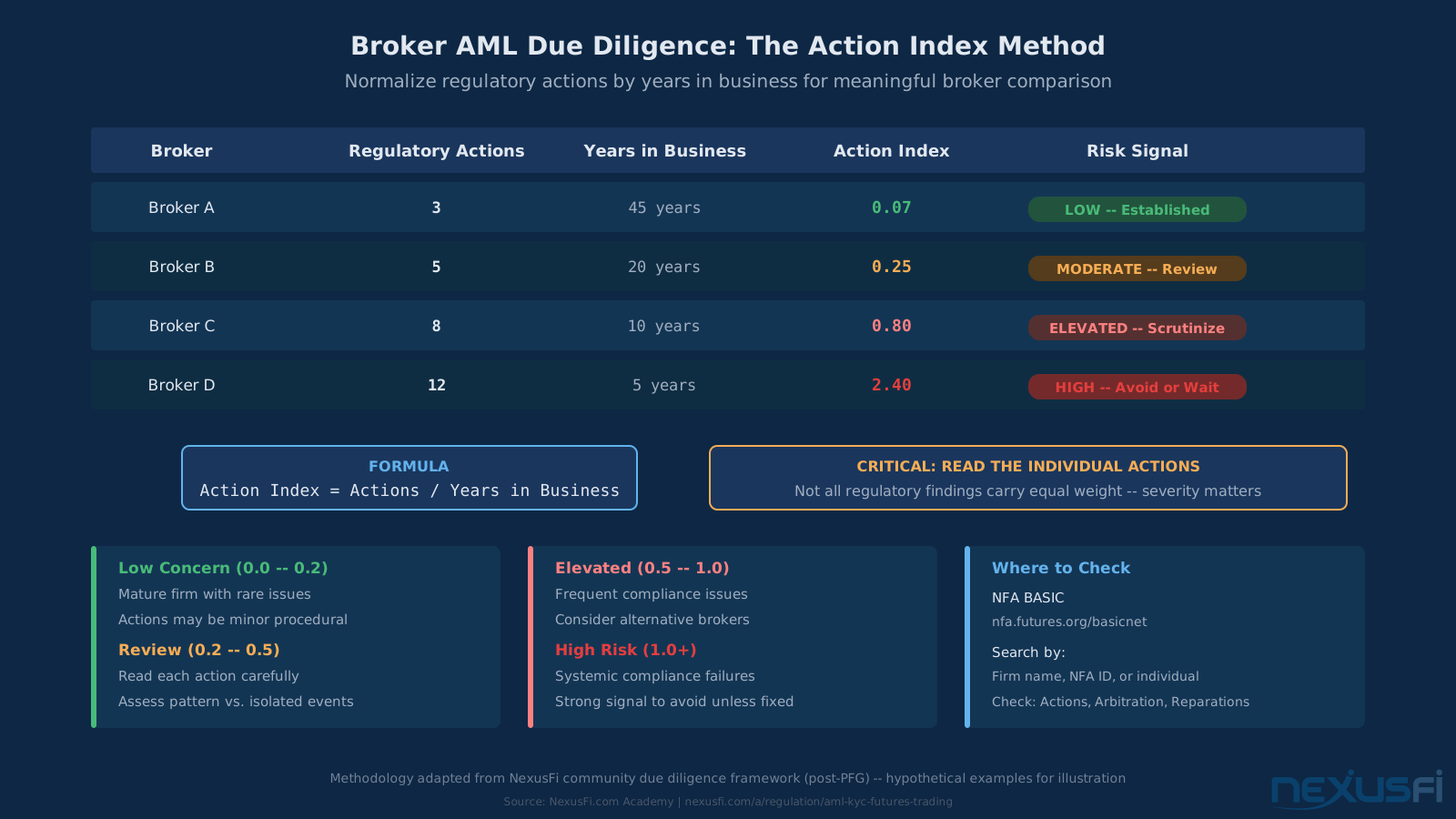
NexusFi member @ThatManFromTexas developed a practical due diligence methodology in the wake of the PFG collapse: divide total regulatory actions by years in business to create a comparable "action index" across brokers. This normalizes the raw count — a firm with 10 actions over 90 years looks different from one with 10 actions over 5 years. Read the individual actions to determine severity — not all regulatory findings carry equal weight.[8]
Knowledge Map
Go Deeper
Build on this knowledgeReferences This Article
Articles that build on this topicCitations
- — Interactive Brokers settle charges it failed to flag suspicious activity and AML (2020) 👍 8“Interactive Brokers will pay $38 million in penalties to settle charges it failed to flag suspicious activity and meet anti-money laundering requirements. The broker failed to dedicate necessary resources to properly surveil hundreds of millions of dollars in wire transfers.”
- — NinjaTrader Brokerage Services (2016) 👍 15“CFTC Anti-Money Laundering regulations in the futures industry require the FCM to know where the funds are coming from and ensure it is an account in the same name.”
- — Question about opening new Tradovate account (2021) 👍 2“They have sent a request for my driving license and signed social security card. As this is my first time opening an account with an online broker, I am - understandably - a bit hesitant to send them copies.”
- NFA — NFA Compliance Rule 2-9: FCM and IB Anti-Money Laundering Program (2023)
- — Due Diligence: NFA Search for IB's, FCM's, CTA's, etc... (2011) 👍 16“I always see a lot of comments about this forex company, that FCM, IB or whatever and who plays by the rules. So I got my Series 3 certification and learned a lot about the whole process. Look at all 3 -- regulatory actions, arbitration awards & reparations cases.”
- — Futures Broker Due Diligence Notes post PFG (2012) 👍 82“After the PFG collapse I've been evaluating my futures brokers to determine whether my capital is adequately protected. I've broken the analysis down into invested capital, proceeds from sales, initial margin, and overnight margin.”
- FinCEN — 31 CFR Part 1026 -- Rules for Futures Commission Merchants and Introducing Brokers (2024)
- CFTC — Anti-Money Laundering Programs for Commodity Trading (2024)
- FINRA — FINRA Orders Interactive Brokers to Pay $15 Million for AML Failures (2020)
- SEC — SEC Charges Interactive Brokers for Deficient SAR Filings (2020)
- OFAC — Specially Designated Nationals and Blocked Persons List (SDN) (2025)
- FinCEN — Customer Due Diligence Requirements for Financial Institutions (CDD Final Rule) (2016)