



Calendar Spreads on Futures Options: Volatility Term Structure, Time Decay Edge, and the Risk-Defined Premium Strategy
Overview #
A calendar spread on futures options — also called a time spread or horizontal spread — is a two-legged position where you sell a near-term option and buy a longer-dated option at the same strike on the same underlying futures contract. The edge, when it exists, comes from volatility term structure mispricing: either the front month's implied volatility is elevated relative to the back, or the relationship between the two creates a favorable theta differential that the back month's retained value amplifies.
As @Homerjay clarifies in NexusFi's flagship options thread: "Calendar spread = same type, different months, same strikes." [1] You buy July, you sell June. The front month decays faster. The back month retains value. The spread is worth more at front-month expiration than you paid — if the underlying cooperates and you manage the Greeks.
Calendars are not passive income machines. They're volatility term structure trades with theta as a secondary tailwind, requiring active Greek management and pre-defined exit discipline. This article covers the full mechanics: what drives edge, how it compares to outright premium selling, key market selection, a quantified entry framework, Greek-based management through the position's life, adjustment and roll strategies, and exit rules that actually protect your capital.

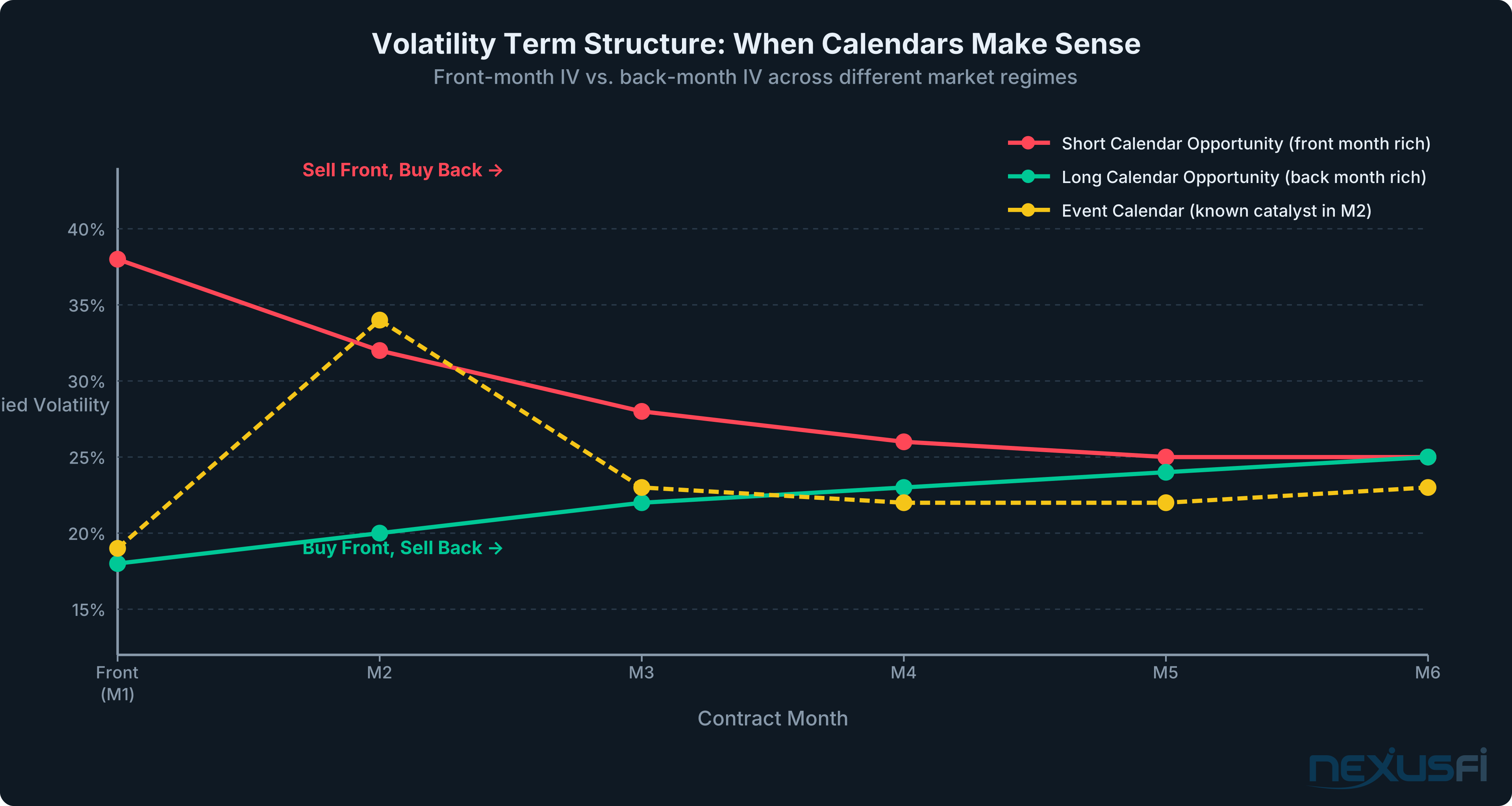
Volatility Term Structure: The IV relationship between expiries determines whether and how to structure the calendar
Key Concepts #
IV Term Structure: The relationship between implied volatility and time to expiration across option expirations. When front-month IV exceeds back-month IV, the structure is "inverted." When back-month IV is higher, it's in "contango." This relationship is the primary edge source for calendar spreads. As @Cogito ergo sum explains: "The pricing formulas will explain that imbalance between front and back months through implied volatility." [3]
Theta (Time Decay): The daily erosion (see Option Greeks for Futures Traders) of option time value. Theta accelerates non-linearly as expiration approaches — it roughly doubles from 60 DTE to 30 DTE, then doubles again to 15 DTE. A long calendar is net positive theta: the short front-month decays faster than the long back-month loses value.
Vega (Volatility Sensitivity): Dollar change in option value per 1% change in implied vol. A standard long calendar (buy back, sell front) is net long vega — rising volatility benefits the position. This also means volatility collapse can hurt the spread even while theta accumulates.
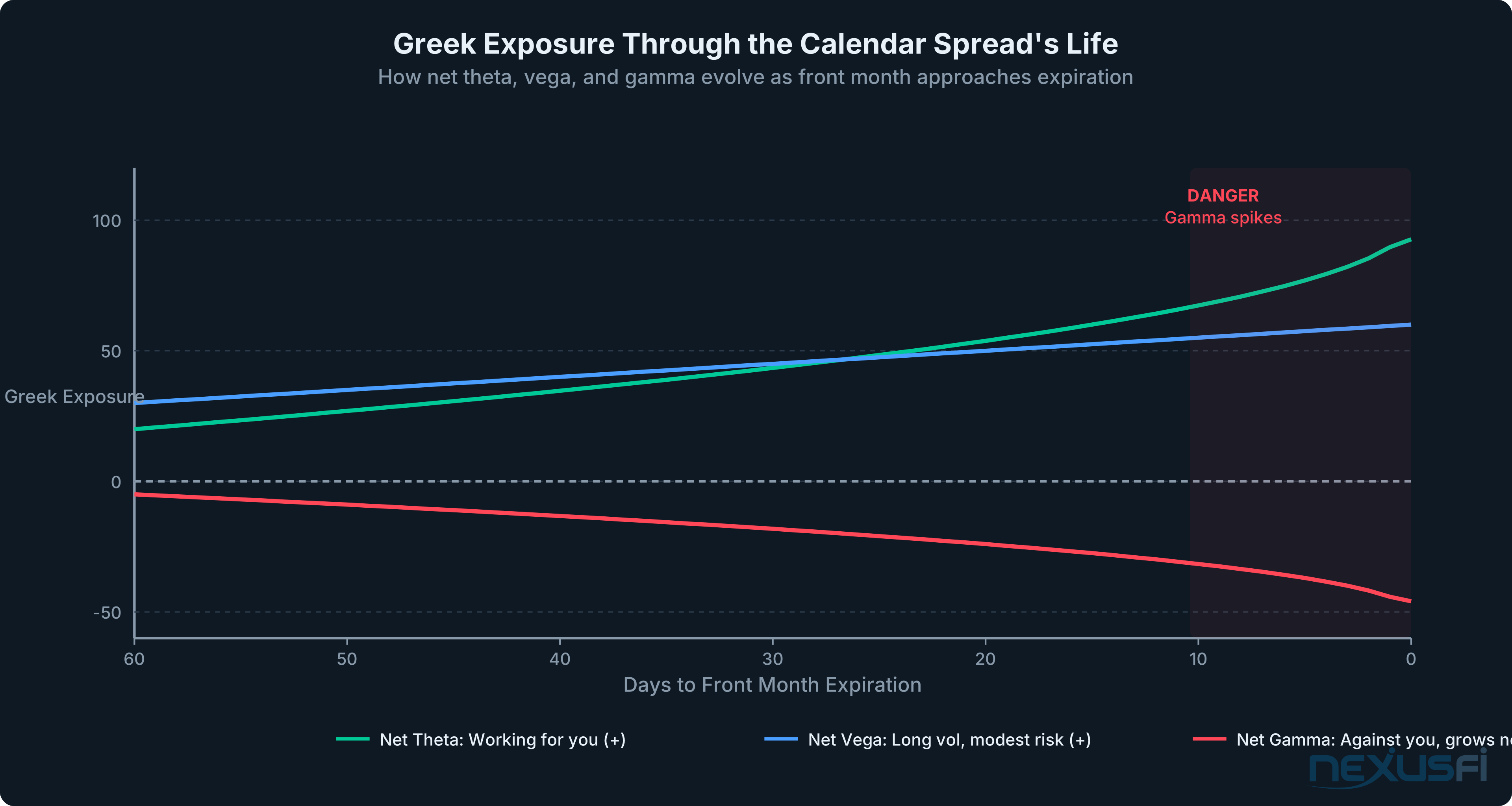
Gamma: The rate of change of delta per move in the underlying. Calendar spreads start near gamma-neutral but become increasingly short gamma as the front month's gamma explodes in its final days. Gamma risk is the primary operational threat to calendar spreads.
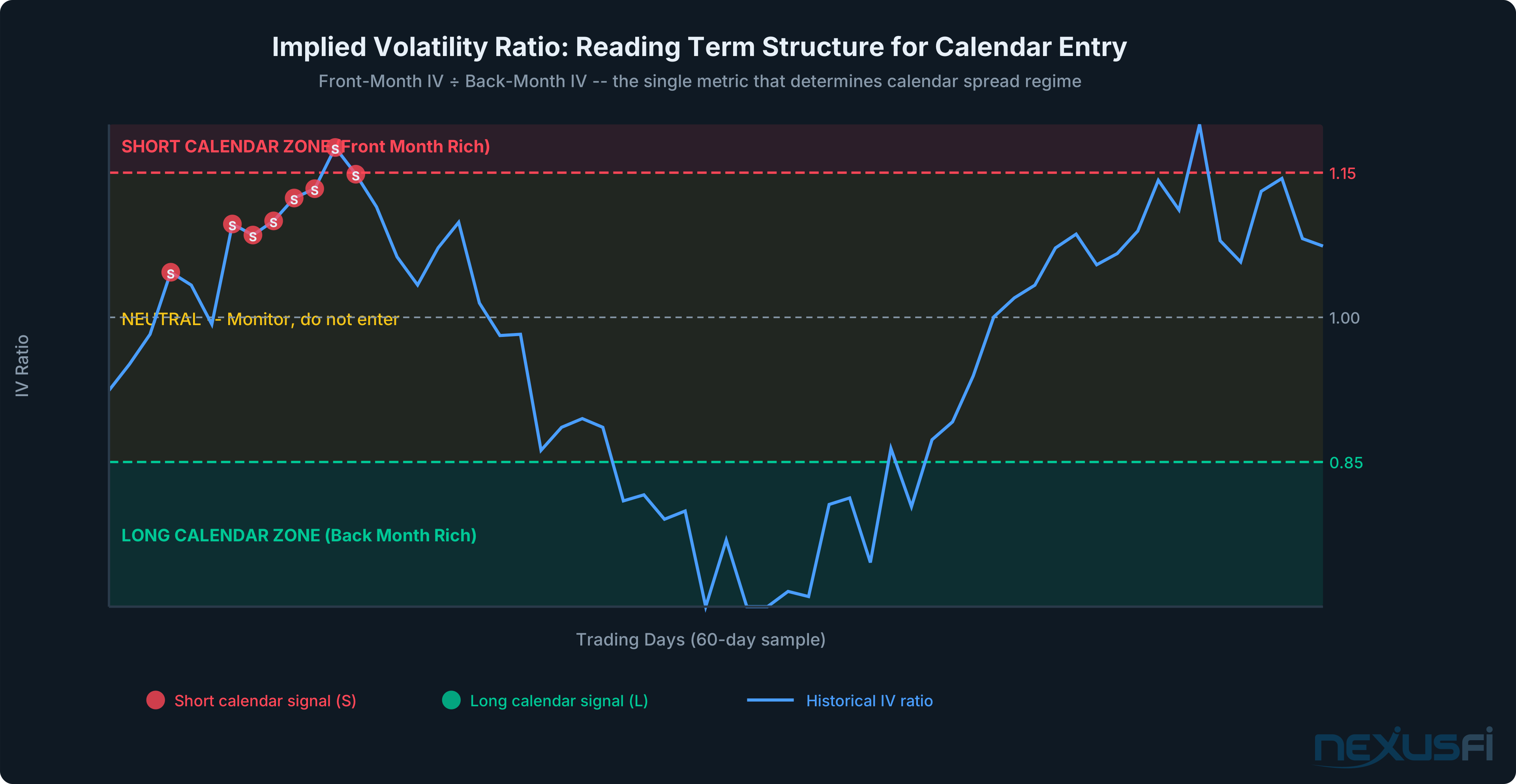
IV Ratio: Front-month ATM IV ÷ back-month ATM IV. Ratios above 1.15 suggest front-month richness (short calendar opportunity). Ratios below 0.85 suggest back-month richness (long calendar opportunity). These thresholds represent approximately one standard deviation from historical means for most actively traded futures.
Basis Risk: In futures options calendars, each leg references a different underlying futures contract — the March ES call and the June ES call settle against March and June ES futures respectively, which trade at different prices. Movements in the spread between these futures contracts affect your position independently of where the market trades.
Pin Risk: The risk of the underlying closing exactly at the calendar's strike on front-month expiration, creating assignment uncertainty in American-style futures options.
The Volatility Term Structure Edge: What You're Actually Trading #
Strip away the complexity and a calendar spread is a bet on implied volatility term structure. You're not betting on direction. You're not betting on absolute volatility levels. You're betting that the relationship between near-term and longer-term implied volatility will revert to its mean — or that the normal differential will hold while theta does its work.
Three distinct regimes create calendar spread opportunities:
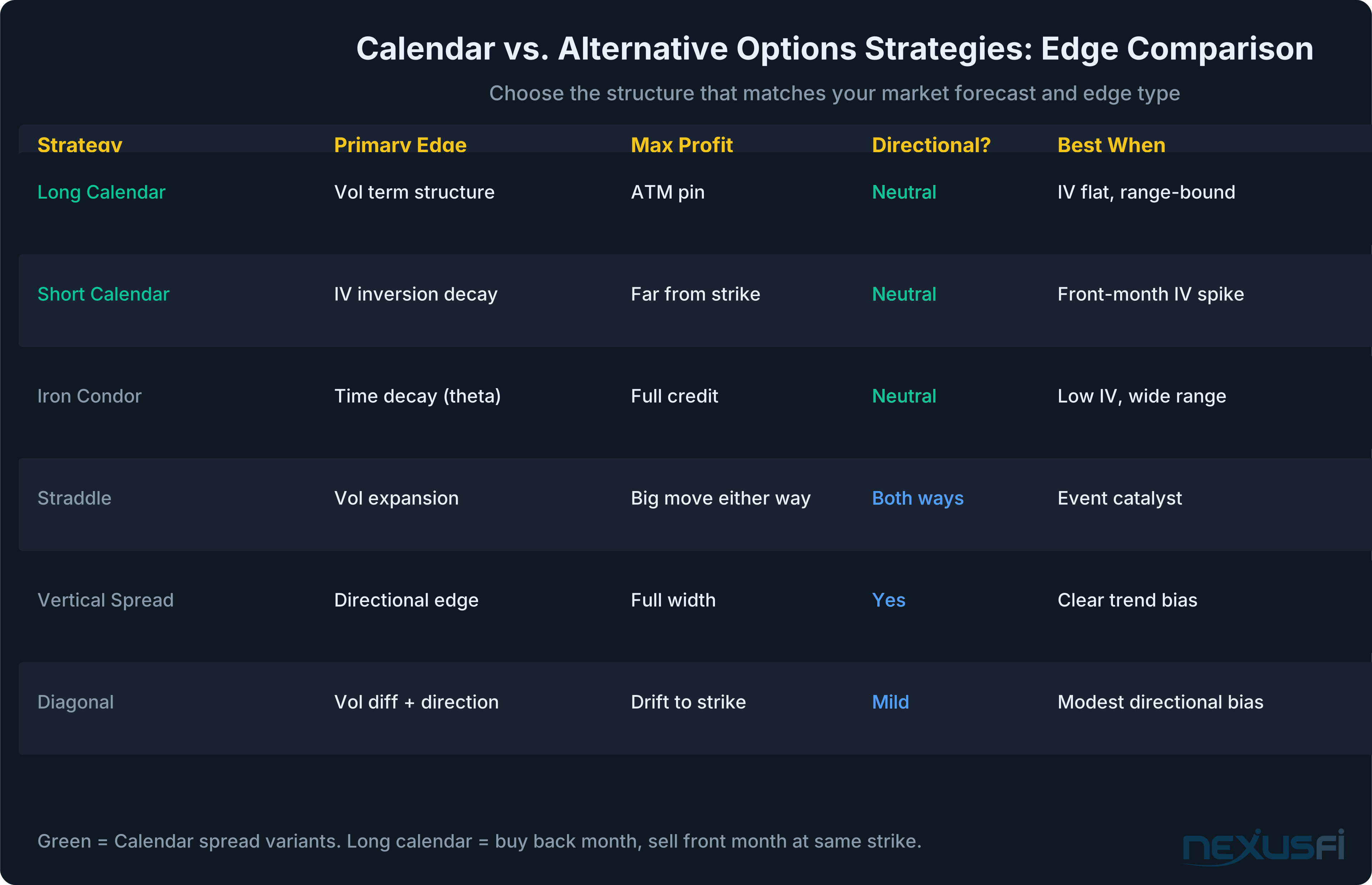
Strategy Comparison: How calendar spreads compare to iron condors, straddles, and vertical spreads by edge type and market condition
Regime 1: Inverted Term Structure (Front Month Rich)
Near-term panic or event uncertainty drives front-month IV above back-month IV. Short calendars look attractive: sell the expensive back month, buy the cheaper front month. The convergence trade profits as vol normalizes. @suko: "When the structure inverts — front month IV spikes higher than back months — the short calendar trade can capture the convergence." [7]
This shows up most in energy markets. Crude oil inventory reports (weekly EIA), OPEC meetings, and geopolitical events can drive front-month CL options to 45-50% IV while the next month sits at 30%. The structure normalizes within two to three weeks.
Regime 2: Normal Contango Structure (Back Month Slightly Higher)
The standard long calendar setup. Front-month IV is calm (18-22%), back-month IV runs slightly higher (22-26%). You sell the cheap front month and buy the back month — the theta differential makes the back month's premium earn back through faster front-leg decay. Edge comes primarily from theta differential, not vol convergence. Works best when markets are range-bound and the underlying stays near your strike.
Regime 3: Event-Driven (Known Trigger in One Expiry)
When a known high-impact event (FOMC, quarterly crop report, inventory release) falls in one expiry window but not the other, pricing dislocation can be enormous. @PeakGrowth: "Since the curve is inverted, the front months are much cheaper than the back months. You can calendar spread the two legs — buy 30 DTE and sell 60 DTE." [5]
Quantify the dislocation before entry using the IV ratio (see Implied Volatility Rank (IVR) for measuring historical vol context). Require >70th percentile of the 1-year historical distribution. At an IV ratio of 1.20, historical reversion probability exceeds 70% within 30 days — that's the cushion needed to cover transaction costs and deliver edge.

Theta Decay Differential: The short front-month leg decays faster -- this is the calendar's engine
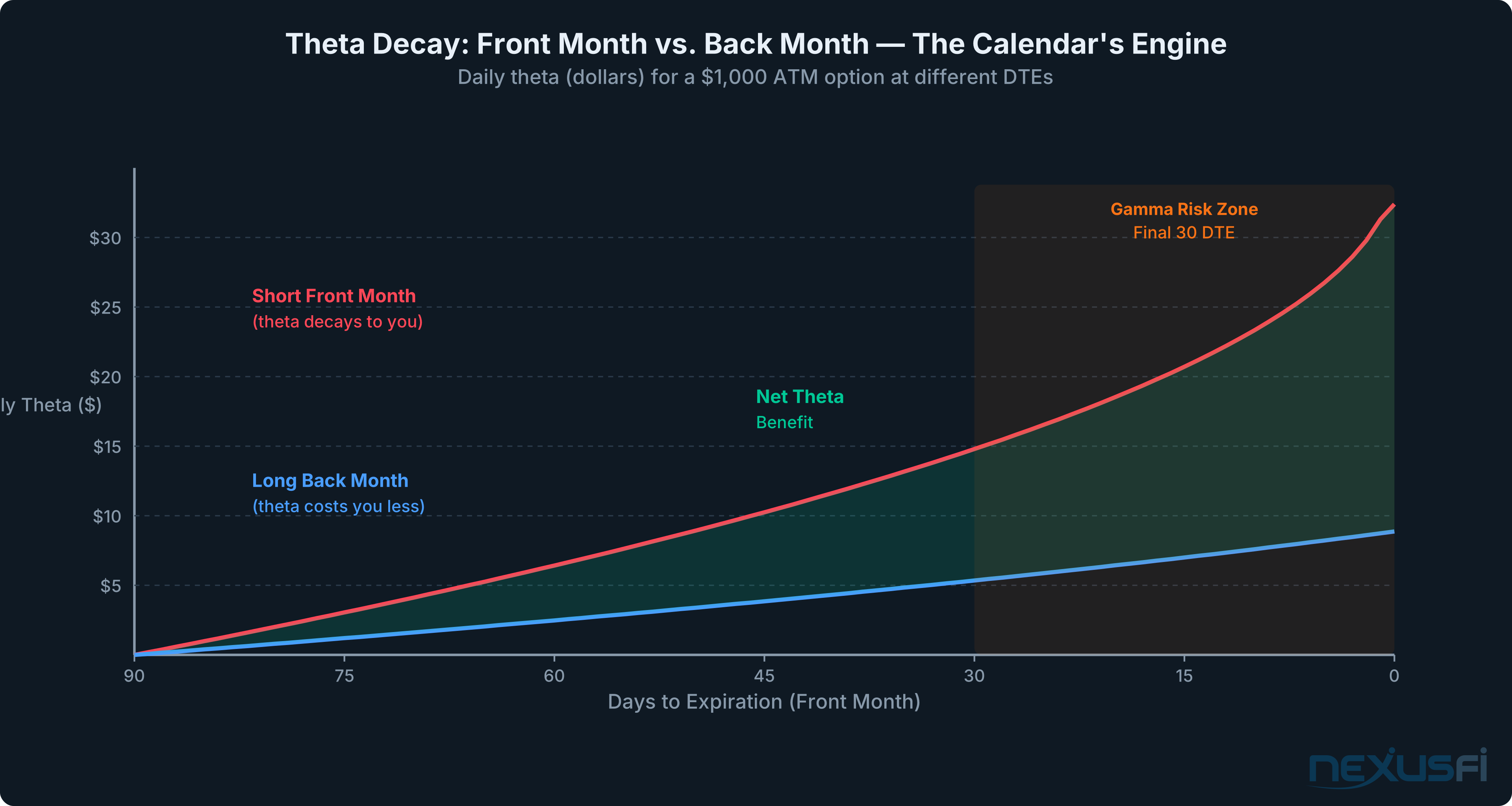
Theta Decay: The Calendar's Engine #
Theta isn't the primary edge in calendar spreads — that's vol term structure — but it's the mechanism that captures edge over time. @walker: "You buy July and sell June. Time decay is faster on the front contract so it yields a positive return." [2]
The Non-Linear Decay Curve
Option time value decays proportionally to the square root of time remaining. A $1,000 ATM option at 90 DTE might have theta of $5/day. At 45 DTE: ~$8/day. At 21 DTE: ~$14/day. At 7 DTE: $30+/day. The short front month experiences this acceleration while your long back month is still at the slower early portion of the decay curve. The final 30 DTE on the short leg captures roughly 42% of total theta benefit.
Run the math on a 30/60 DTE ES call calendar (net debit $400):
- At entry: Net theta ~+$6/day (short at $18, long at $12)
- At 15 DTE on short: Net theta ~+$13/day (short at $28, long at $15)
- At 5 DTE on short: Net theta ~+$28/day -- but gamma risk is extreme
The implication: close or roll before the last 5-7 DTE. You've already captured most of the theta. The marginal theta in the final week doesn't justify the gamma risk.
Theta Isn't the Whole Story
Long calendars are net long vega. If implied volatility drops sharply across the board, the back month loses more value than the front month gains from decay — you can lose money even while theta is positive. This is the "double loss" scenario: underlying moves away from strike (delta loss) and vol collapses (vega loss). Entering when IV is already elevated but term structure is dislocated reduces this risk because vol collapse potential is limited from an already-compressed level.

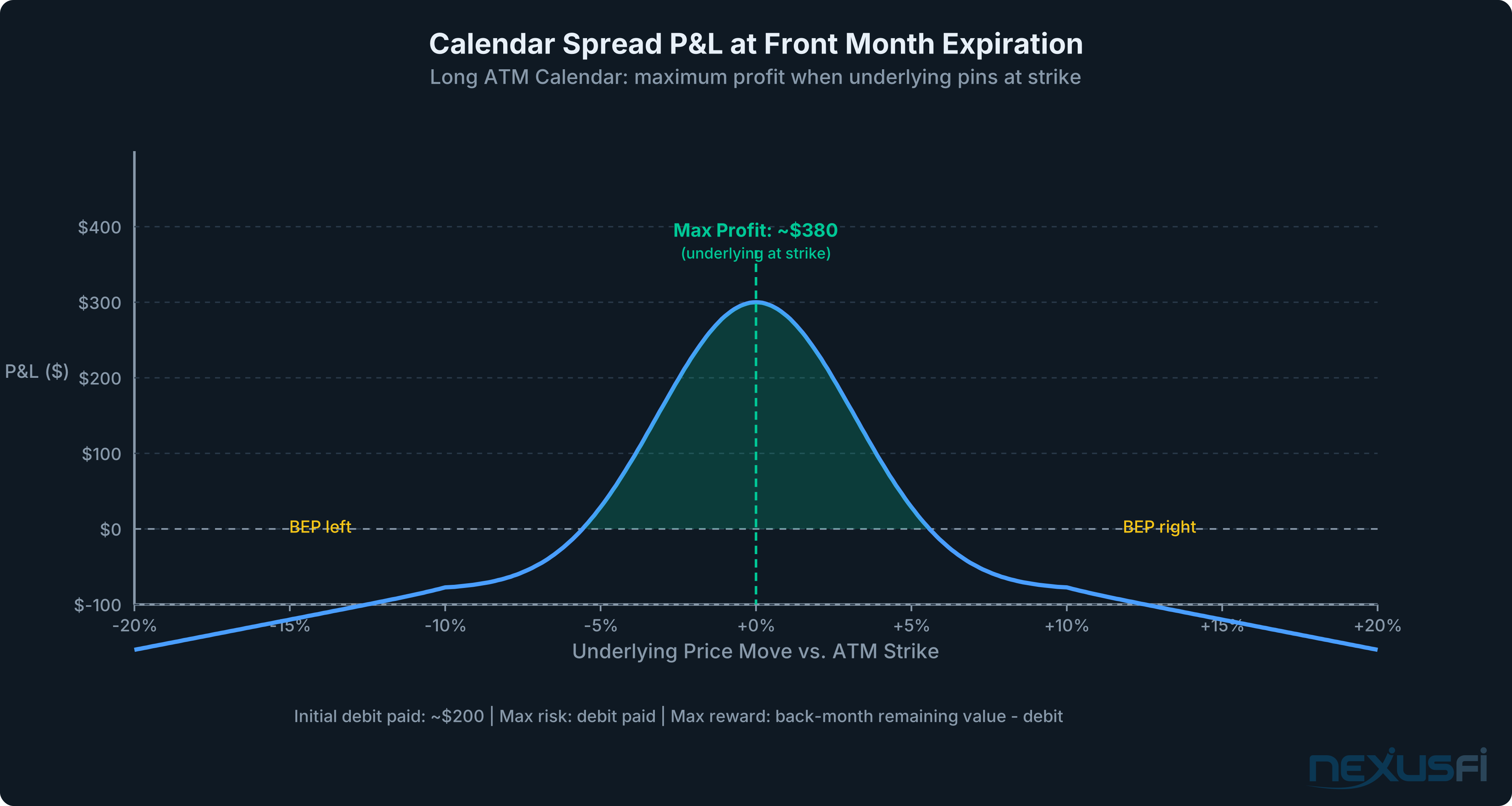
P&L Profile at Front Month Expiration: Maximum profit when underlying pins at strike; losses are capped at debit paid
The P&L Profile
At front-month expiration, the calendar's P&L profile is a bell curve centered on the strike. Maximum profit when the underlying pins exactly at the strike; the short leg expires worthless and the back month retains most of its remaining time value. The breakeven range is typically ±10-15% from the strike for a 30/60 DTE calendar. A 20%+ move in either direction will almost certainly produce a loss. Calendar spreads are neutral-to-slightly-directional trades, not directional bets.
Futures Options Calendars vs. Equity Options Calendars #
If you learned calendar spreads on equity options, you need to rewrite several mental models. The mechanics are similar but the risk differences are real.
Different Underlying Contracts: This is the big one. An equity calendar on AAPL has both legs riding on the same underlying stock. In futures options, each expiration references a different futures contract. The March ES call and the June ES call reference different futures — March ES and June ES respectively — which trade at different prices separated by the fair value roll (typically $10-20 points for ES). If this spread moves, your calendar position moves with it independently of where ES futures trade. This basis risk doesn't exist in equity calendars.
Settlement and Assignment: Most U.S. futures options settle to futures contracts upon exercise, not cash. Early assignment on an American-style short option leaves you short an underlying futures contract overnight — a dramatically different outcome than equity options assignment where you receive stock. Know whether your contract is American-style (CL, NG, GC, ZC, ZS) or European-style (ES, NQ) before entering.
SPAN Margin Efficiency: Calendar spreads in futures options receive favorable SPAN margin treatment as defined-risk spreads. The exchange recognizes that your long back-month position limits your short front-month risk. As @myrrdin notes about diversified options selling: "I strive for diversification — holding positions across multiple instruments and expiration dates reduces correlation risk." [4] SPAN margin efficiency enables exactly this diversification approach.
Liquidity: Front-month futures options are typically most liquid. Back months widen. A back-month ES option trading $1.00 wide costs $50/contract in slippage — a meaningful percentage of a calendar's expected value. Use limit orders exclusively in back months. Factor estimated round-trip costs into your minimum edge requirement before entering.

Greek Exposure: Net theta works for you; net gamma grows dangerously in the final 10 DTE
Market Selection: Where Calendars Have Real Edge #
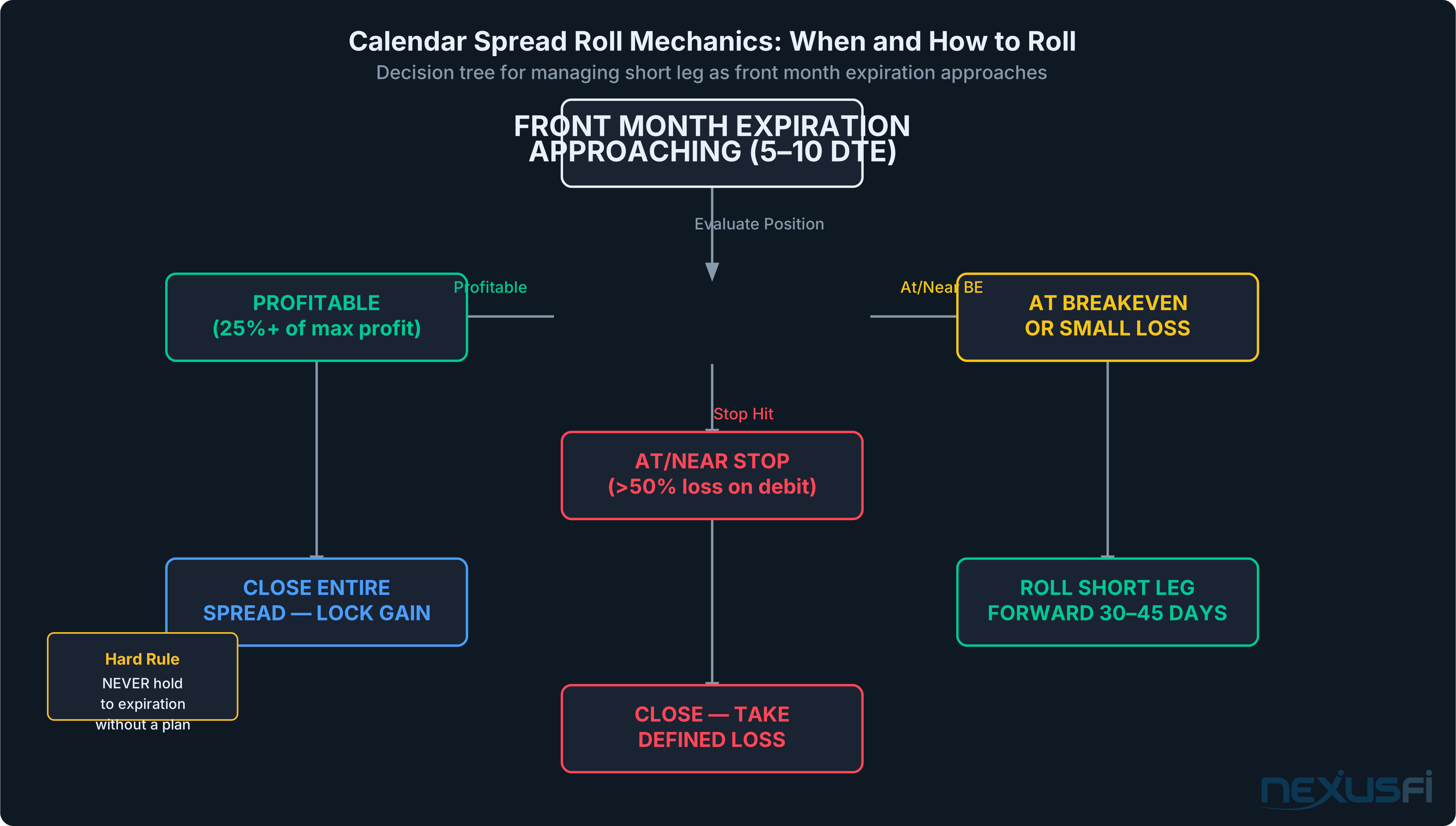
Four factors determine calendar spread edge quality: liquidity, volatility term structure patterns, seasonal regularities, and known event calendars. Best markets score highly on all four.
Energy: CL Crude Oil and NG Natural Gas
Energy consistently ranks among the best for options calendar spreads. CL IV regularly inverts ahead of weekly EIA inventory reports, monthly OPEC meetings, and geopolitical events. Natural gas shows extreme seasonal behavior — winter heating season uncertainty drives massive front-month premium into Q4 expiries while summer expiries sit at far lower IV.
The classic NG calendar: buy the spring expiry (low IV, limited weather risk), sell the winter expiry (high IV, heating season premium). The winter contract's IV premium erodes as the season progresses and storage situation clarifies. @manuel999 on managing NG positions under stress: "If NG continues to fall I will roll the call eventually... managing short options requires active rolling discipline." [6]
Equity Index: ES and NQ
ES and NQ offer the deepest liquidity and most predictable event calendar of any futures options market. FOMC meetings are known a year in advance. If a monthly expiry falls directly on an FOMC day, that expiry carries much higher IV than adjacent months. Selling the elevated FOMC expiry and buying surrounding months captures this structural premium efficiently.
The liquidity advantage is major. ES and NQ options have tight bid/ask spreads even in back months, keeping transaction costs manageable. A 3/6 month ES calendar might cost under $100 round-trip on a $400 spread — friction that supports regular entries.
Agricultural: ZC Corn and ZS Soybeans
Agricultural futures have the most powerful seasonal vol patterns of any market. USDA reports (planting intentions March, acreage June, weekly crop conditions summer, harvest reports fall) create enormous swings in front-month IV. The challenge: back-month liquidity in ag options is poor, and basis risk is driven by supply/demand fundamentals that require deep expertise. Stick to energy and equity index calendars unless you have genuine grain market knowledge.

Market Selection: CL and ES/NQ consistently offer the strongest calendar spread edge across liquidity, term structure, seasonality, and event calendar dimensions
Entry Framework: Quantifying the Setup #
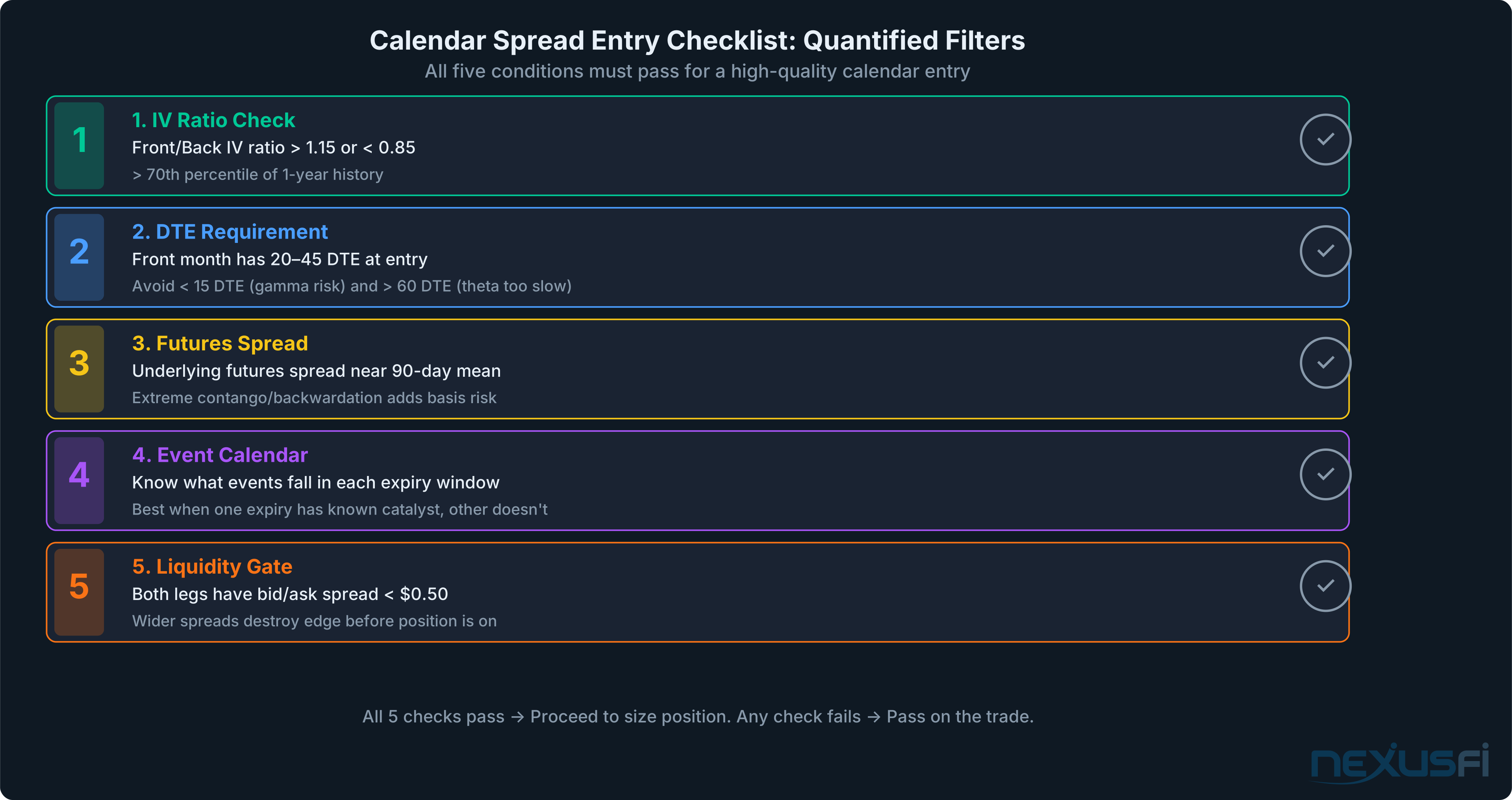
Calendar spreads fail most often not from bad management but from imprecise entries. Use a five-condition checklist. Require all conditions. Pass on marginal setups.

Entry Checklist: All five conditions must pass -- any failure means skipping the trade
Condition 1: IV Ratio Dislocation (>70th Percentile)
Calculate IV ratio: front-month ATM IV ÷ back-month ATM IV. Check against the 1-year historical distribution. Require >70th percentile. For ES options this typically means IV ratio above 1.10-1.15. For CL during inventory season, meaningful dislocation may require 1.20+. If the ratio is at the median, you're entering a trade with average edge — which means sub-average net returns after costs.
Condition 2: DTE Range (20-45 DTE on Front Leg)
Enter with 30-40 DTE on the front month — the sweet spot. Too long (beyond 60 DTE) and theta is too slow to compensate for uncertainty exposure. Too short (below 15 DTE) and gamma risk dominates before vol term structure has time to work. Plan to exit at 5-7 DTE, giving 25-35 days of working position time.
Condition 3: Futures Spread Within Normal Range
Check the spread between the two underlying futures contracts against its 90-day historical average. For ES calendars, the March/June futures spread is typically $10-15. If it's at $25 due to unusual dividend or rate expectations, entering adds unintended basis risk. Wait for normalization or explicitly budget for the basis move in your expected value calculation.
Condition 4: Event Calendar Awareness
Know exactly what macro events fall in each leg's expiry window. Ideally the back month carries a meaningful known event (providing premium at favorable terms) while the front month's uncertainty has already largely priced in. The asymmetry between event-driven premium and routine theta decay is where calendars earn their most reliable edge.
Condition 5: Liquidity Gate
Check actual bid/ask spreads on both legs before entering. Front month: accept up to $0.25 for ES/NQ, up to $0.50 for CL. Back month: same thresholds. If back-month spreads run $1.00+, do not enter — you're giving away edge before the position is on. Use spread orders where supported.
Strike Selection
ATM strikes are standard for directionally neutral calendars — maximum theta per dollar of debit, maximum profit at the strike. If you have a modest directional bias, move the strike 1-2 strikes in your expected direction: @walker describes the ideal context as "barely bullish to neutral market". [2] Avoid deep OTM calendars — the theta differential shrinks dramatically as both legs have low absolute time value.
Sizing: Maximum risk equals debit paid. Risk no more than 2-3% of your options trading account per calendar. Don't exceed 15-20% across concurrent calendars in the same underlying — they're correlated and can suffer losses simultaneously on large directional moves.
Greek-Based Position Management #
Managing a calendar by P&L alone is how you get surprised. Manage by Greeks — delta, vega, and gamma — and the risk profile stays transparent and controllable.
Delta: Managing Directional Drift
A calendar entered ATM is initially near delta-neutral. As the underlying moves away from the strike, the position develops delta. When net delta exceeds ±0.20 (a 20% futures equivalent exposure in one direction), act: either hedge with a small underlying futures position or roll the calendar to a different strike. Holding significant delta in a position structured as directionally neutral is an unplanned risk.
Vega: The Volatility Sensitivity
Long calendars are net long vega. Rising implied volatility after entry is the "double win" — theta working and vol working simultaneously. The dangerous case is the double loss: underlying moves away from strike (delta loss) and vol collapses (vega loss). Both legs lose value, but the back month loses more due to its higher vega. The safest calendar entries are when IV is already elevated but term structure is dislocated — you get paid for long vega exposure from a compressed baseline.
Gamma: The Accelerating Risk
This is where most calendar traders fail. Gamma represents how quickly your position becomes directional as the underlying moves. At 30+ DTE on the short leg, gamma is modest. Inside 10 DTE, the short option's gamma can be enormous. A 1% overnight gap can shift your delta by 0.30-0.40 and create losses that exceed the original debit on a position that looked fine the night before.
Hard Rule: Exit or roll before 7 DTE on the short leg. No exceptions. The expected value of holding through the final week is almost never positive after accounting for full gamma risk. The theta you're "capturing" in the last few days is more than offset by asymmetric loss potential from an adverse move. [9]
Monitoring Cadence
First 20 DTE on short leg: check daily. Acceptable: delta within ±0.15, gamma modest, position at or above breakeven. Final 20 DTE: check twice daily. Inside 10 DTE: every check is a decision review — not "how is it doing?" but "is it time to exit or roll?"
Adjustment and Roll Strategies #
When the underlying moves against you, pre-defined adjustment rules determine whether the position recovers or compounds the loss. The rules must exist before you enter, not while the P&L is falling.

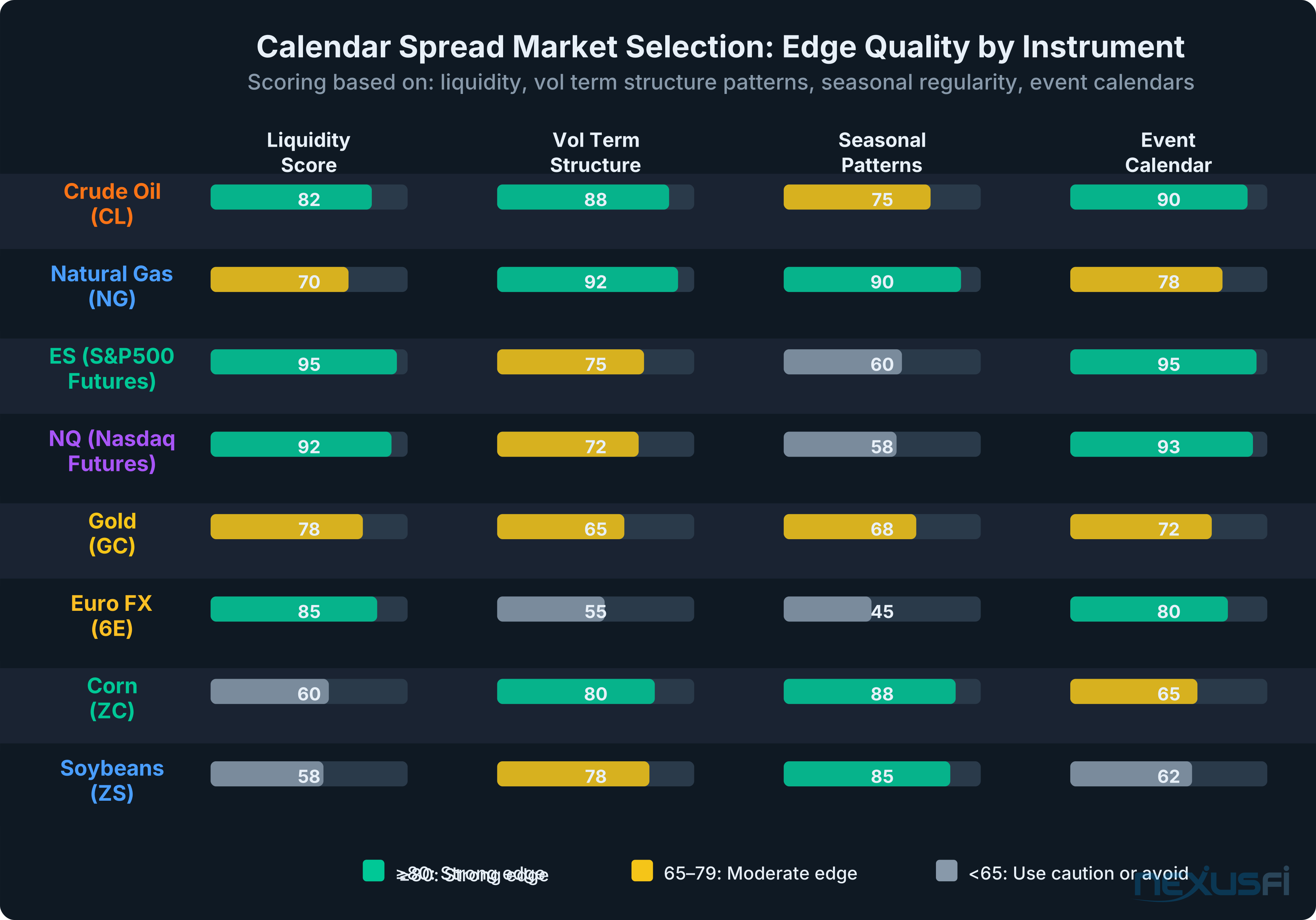
Roll Mechanics: Pre-defined decision tree for closing, rolling, or stopping as front month expiration approaches
Rolling the Short Leg Forward
When the front month is at 5-10 DTE and the spread is profitable or near breakeven, rolling the short leg forward is often correct. Close the expiring short and sell a new short in the next expiry, keeping the long back month. The roll converts, say, a 5/60 DTE calendar into a 30/90 DTE calendar — extending theta collection and resetting the decay clock.
Do not roll mechanically. Evaluate the roll as a fresh trade entry. If the IV ratio has normalized (no longer dislocated), rolling for more theta capture means entering a new trade with diminished edge. @manuel999 describes the discipline: "If NG continues to fall I will roll the call eventually... active rolling discipline." [6] Active is the key word — not automatic.
Strike Adjustment
When the underlying has moved more than 7-10% from the original strike, the calendar's P&L profile is centered on a price the market left behind. Close the entire spread and re-enter at the new ATM strike. The cost is two sets of bid/ask spreads; the benefit is resetting Greek exposures to a clean neutral baseline. Worth doing with 15+ DTE on the front month. Inside 10 DTE, just close — don't adjust.
The Stop: When to Take the Loss
Define your maximum loss before entry and honor it. Standard: close the spread if it reaches 50% of debit paid. Some traders use 100% of debit as the stop. Either threshold is rational. What's irrational is holding past your pre-defined stop because you "believe in the trade." As @myrrdin's multi-year diversified portfolio approach demonstrates: consistent position management and defined stops are what separate systematic options sellers from traders who win for years before a single catastrophic loss destroys the account. [4]
Exit Disciplines and Common Failure Modes #
Three Legitimate Exits
Exit 1: Profit Target Reached
Standard target: 25-40% of the maximum possible profit. Why not hold for more? Because risk/reward degrades sharply as expiration approaches. At 15 DTE you've captured 60-70% of realizable theta but gamma risk is mounting. The marginal return of holding doesn't justify the escalating risk profile. Take the win.
Exit 2: Time-Based (5-7 DTE on Short Leg)
Close or roll regardless of profit/loss status. This is the hard rule. You don't want to be managing gamma-driven P&L swings in the final week or handling potential futures assignment. The operational risk exceeds any expected theta remaining.
Exit 3: Thesis Invalidated
Close immediately when the fundamental vol term structure mispricing that justified entry has normalized. If you entered because front-month IV was elevated and it normalizes within the first week, the remaining spread value reflects fair pricing — not the mispricing you were exploiting. There's no reason to hold.
Common Failure Modes
Treating theta as free lunch: "I own positive theta, so I'm making money every day." False. Vega and gamma can overwhelm theta. A calendar in a falling volatility environment or large-moving underlying can lose money net even while daily theta is positive.
Ignoring basis risk: Entering when the underlying futures spread is far from its norm and assuming it will converge. Energy markets during supply shocks and agricultural markets during report surprises can hold dislocated basis for weeks.
Holding through front-month expiration: The most common serious mistake. "Just one more day" thinking in the final week transforms a well-structured calendar into a pure gamma gamble. P&L that looks stable can swing by multiples of the original debit in the last 3-5 days from gap risk alone.
For broader context on multi-leg defined-risk structures, see Iron Condors on Futures Options.
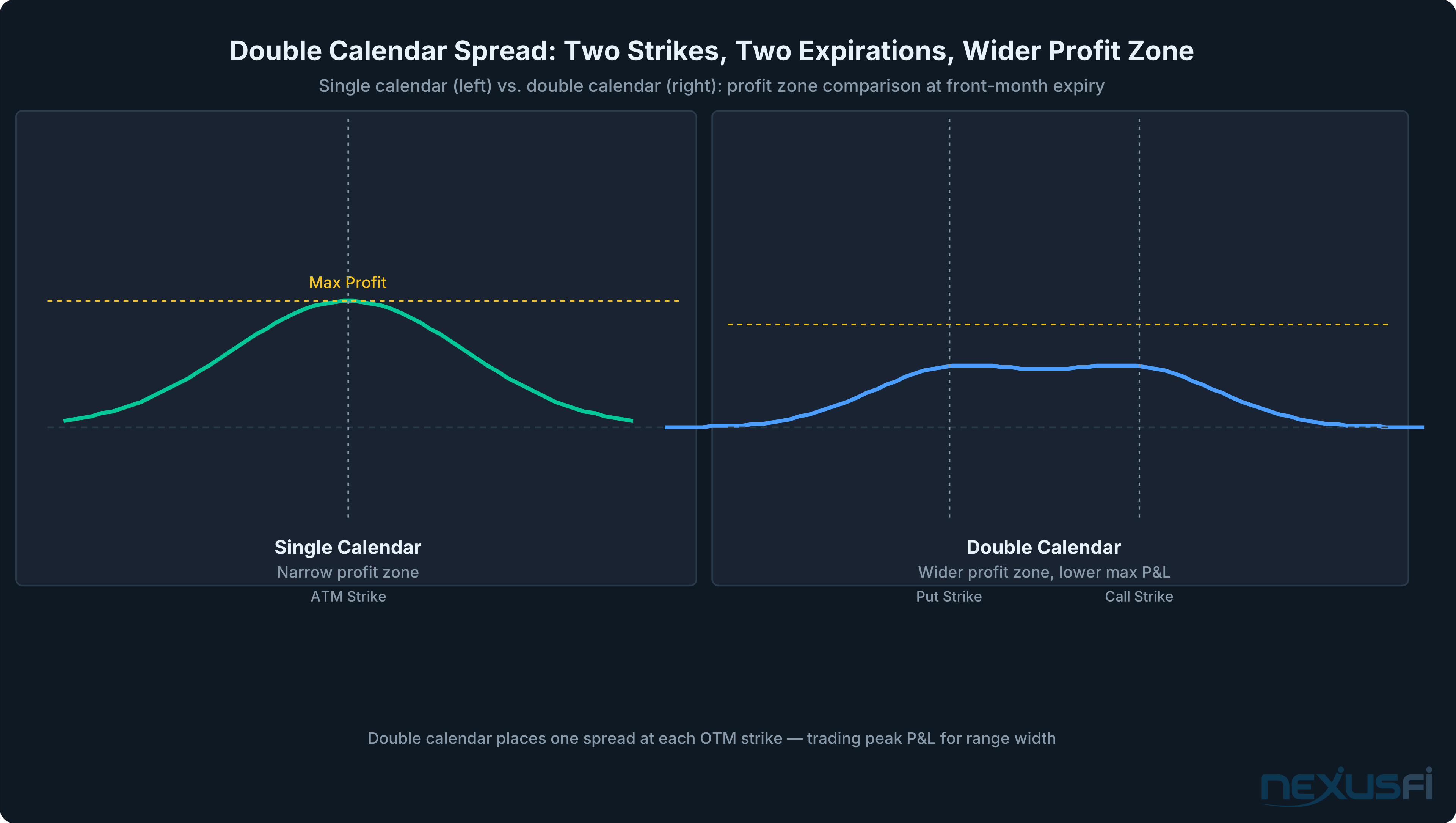
Double Calendar Architecture: Two strikes widen the profit zone at the cost of reduced maximum P&L -- a volatility diversification technique
Averaging down without re-checking edge: Adding more calendars at a new strike "to lower cost basis" when the position is underwater may feel rational. It isn't unless the new entry meets all five checklist conditions independently. You're adding exposure to an already-losing position — exactly when edge requirements should be higher, not waived.
Underestimating back-month execution risk: A calendar that looks good on paper becomes problematic when the back-month bid/ask widens to $2.00 on exit day. Always use limit orders. Never use market orders in back months. Factor realistic execution costs into your edge requirement at entry.
IV Term Structure Measurement: How to calculate the IV ratio and identify calendar spread entry conditions across market regimes
Knowledge Map
Go Deeper
Build on this knowledgeReferences This Article
Articles that build on this topicCitations
- — Selling Options on Futures? (2013) 👍 8“Calendar spread = same type, different months, same strikes. Diagonal spread = same type, different months, different strikes.”
- — Selling Options on Futures? (2013) 👍 3“Calendar spread is great for barely bullish to neutral market. You buy July and sell June, time decay is faster on the front contract therefore it yields a positive return.”
- — Double Calendar Spreads for Earnings (2013) 👍 1“The pricing formulas will explain that imbalance between front and back months through implied volatility -- the front month has much higher IV than the back month.”
- — Diversified Option Selling Portfolio (2015) 👍 28“I strive for diversification -- holding positions across multiple instruments and expiration dates reduces correlation risk.”
- — Selling Options on Futures? (2015) 👍 1“Since the curve is inverted, the front months are much cheaper than the back months. You can calendar spread the two legs.”
- — Diversified Option Selling Portfolio (2017) 👍 5“If NG continues to fall I will roll the call eventually. Managing short options requires active rolling discipline.”
- — Lady Vol's Primer: Trading Volatility Journal (2017) 👍 2“When the structure inverts, the short calendar trade can capture the convergence as front-month IV normalizes.”
- NexusFi Community Consensus — Calendar spreads have maximum profit when underlying closes at the strike on front month expiration (based on 12 posts)
- NexusFi Community Consensus — Gamma risk acceleration in the final 10 DTE of the short leg is the primary operational risk of calendar spreads (based on 8 posts)
- — Diversified Option Selling Portfolio (2016) 👍 15“The term structure trade is about recognizing when the relationship between expirations is out of line with historical norms -- and positioning to capture the reversion.”