



Straddles and Strangles on Futures Options: The Complete Volatility Strategy Guide
Overview #
Straddles and strangles are the cleanest expression of a directional-neutral volatility trade in the options market. You're not betting on which way the underlying moves. You're betting on how much it moves — or doesn't. That distinction is everything.
Both structures involve buying (or selling) both a call and a put on the same underlying, same expiration. The difference is where you set the strikes. A straddle uses the same strike for both legs — typically at-the-money (ATM). A strangle uses two different strikes, both out-of-the-money (OTM). Cheaper to enter, wider breakevens, same core mechanic.
These strategies sit at the intersection of volatility trading, futures mechanics, and options theory. Understand them properly and you unlock two sides of the same trade: buying cheap volatility before it expands, or selling expensive volatility to collect premium while the market grinds sideways. Most retail traders only think about the long side. Most professional options traders live on the short side. Both are valid when deployed at the right time, under the right conditions.
This article covers the full mechanics — construction, pricing, Greeks, breakevens, position management, and when each structure belongs in your toolkit. It also addresses the single biggest mistake traders make: ignoring the volatility regime when they enter.
Key Concepts #
Before building a straddle or strangle, you need to own these definitions:
Implied Volatility (IV): The market's forward-looking estimate of volatility, derived from option prices. Higher IV means options are more expensive — more premium baked in. IV is forward-looking; historical (realized) volatility is backward-looking.
IV Rank (IVR): Where current IV sits relative to the past 52 weeks. IVR = (Current IV − 52-week Low) / (52-week High − 52-week Low) × 100. An IVR of 80 means IV is near the top of its annual range. This is the most important contextual number before entering a straddle or strangle. Research by Bollen & Whaley (2004) established that elevated IV — when above the annual range — reflects net buying pressure from options buyers seeking downside protection, which is precisely why IV overstates realized volatility and creates the structural premium sellers harvest. [Bollen & Whaley (2004)]
IV Percentile (IVP): Similar to IVR but measures what percentage of trading days had lower IV than today. IVR and IVP diverge when there were brief IV spikes — IVR can look high even if most days had higher IV. Both are useful; neither tells the full story alone.
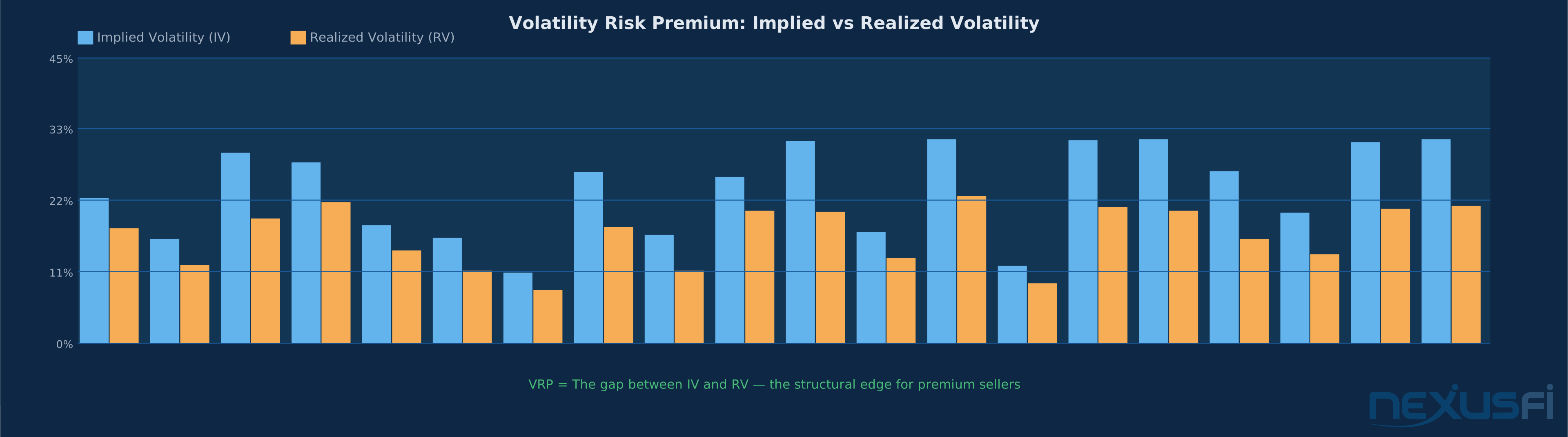
Volatility Risk Premium (VRP): The persistent tendency for IV to overstate actual realized volatility. Options are usually overpriced relative to what the underlying actually does. This is the structural edge that premium sellers exploit. It's not guaranteed — but statistically, selling IV when it's elevated has been profitable historically across most underlyings. The academic literature is clear on this: Coval & Shumway (2001) showed that delta-hedged option returns are systematically negative — buying options as a group underperforms on a risk-adjusted basis. [Coval & Shumway (2001)]
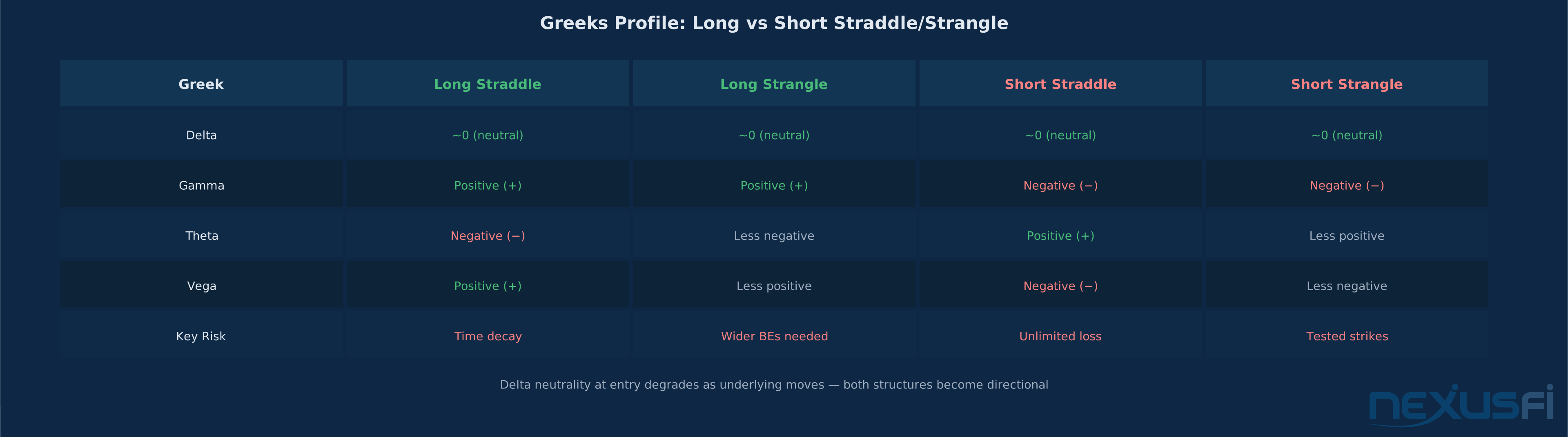
Delta: Rate of change of option price with respect to underlying price movement. A straddle at initiation is delta-neutral — roughly zero delta when built ATM because the call delta and put delta offset each other. That neutrality degrades as the underlying moves.
Gamma: Rate of change of delta. Long straddles are long gamma — as the underlying moves, delta accumulates in the direction of the move, adding to your P&L. Short straddles are short gamma — delta accumulates against you.
Theta: Time decay. Long straddles are theta-negative — time decay works against you every day you hold. Short straddles are theta-positive — time is your ally. This is the core tradeoff: long volatility positions fight time decay; short volatility positions fight sudden large moves.
Vega: Sensitivity to implied volatility changes. Long straddles are long vega — you benefit if IV expands after entry. Short straddles are short vega — you benefit if IV contracts after entry.
At-the-Money (ATM): Strike closest to the current underlying price. ATM options have the highest extrinsic value (time value) and the most gamma and vega per dollar of premium.
Out-of-the-Money (OTM): A call is OTM if the strike is above current price; a put is OTM if the strike is below. OTM options are cheaper, have less time value, and require a larger underlying move to become profitable.
The Straddle: Maximum Sensitivity at the Strike #
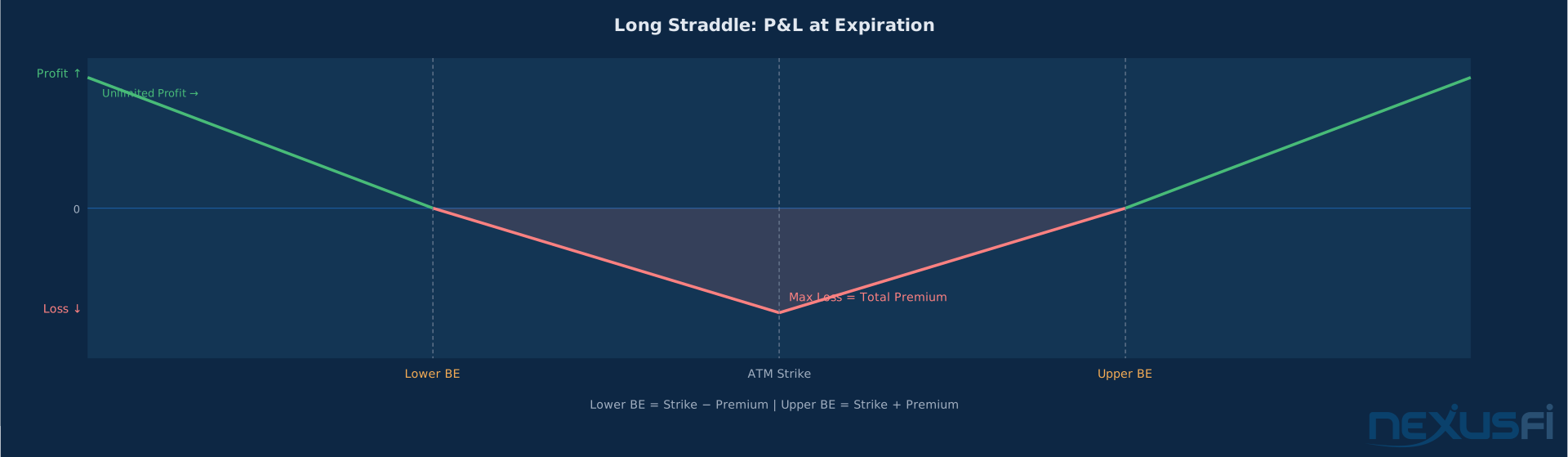
A long straddle is constructed by buying one ATM call and one ATM put with the same strike and expiration. Entry debit = call premium + put premium. That total cost is your maximum loss, and also defines your breakeven prices.
The math is simple:
- Upper breakeven = Strike + Total Premium Paid
- Lower breakeven = Strike − Total Premium Paid
- Maximum loss = Total Premium Paid (occurs if the underlying closes exactly at the strike on expiration)
- Maximum profit = Theoretically unlimited on the upside; bounded on the downside at zero (underlying can't go below zero)
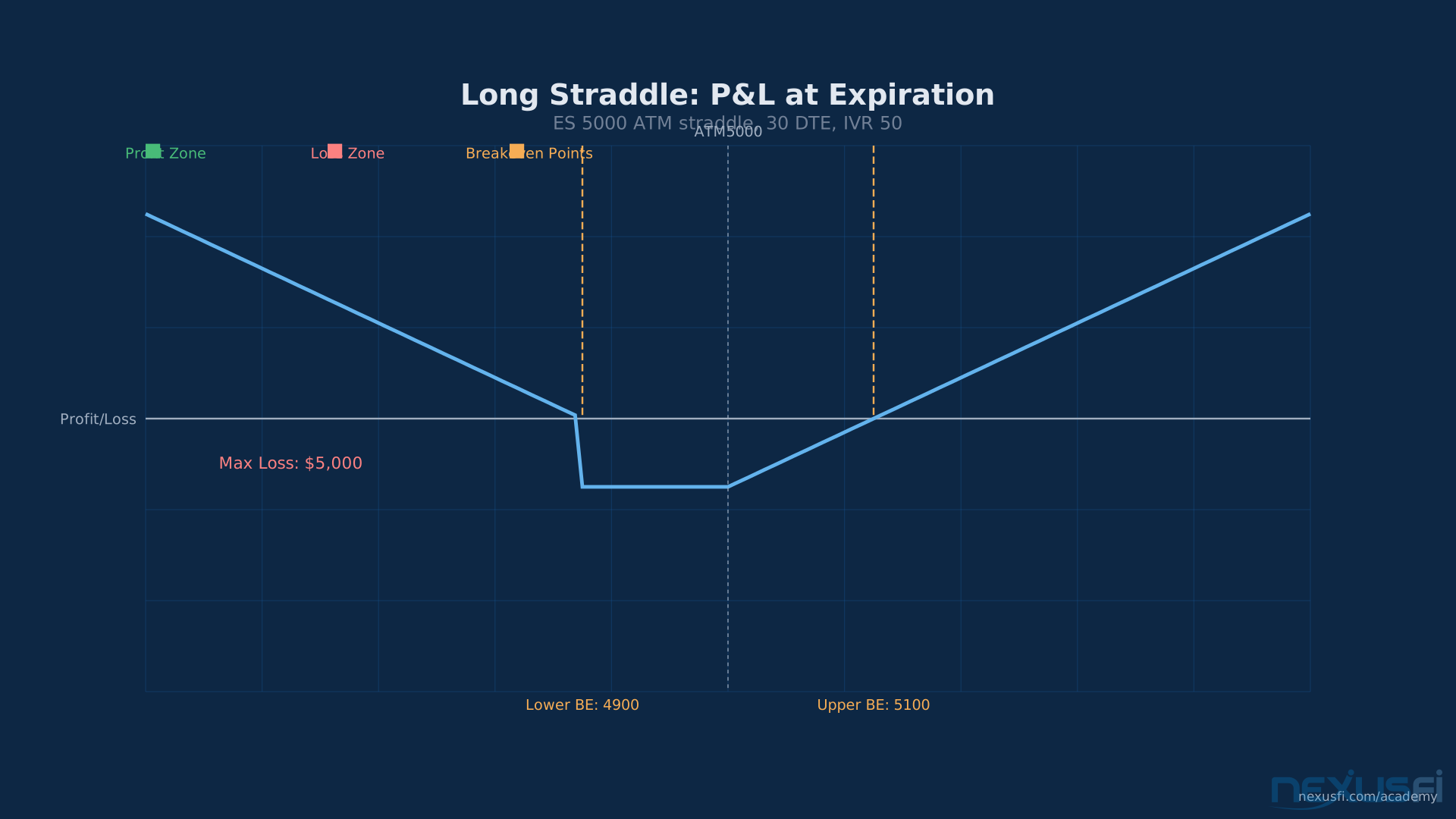
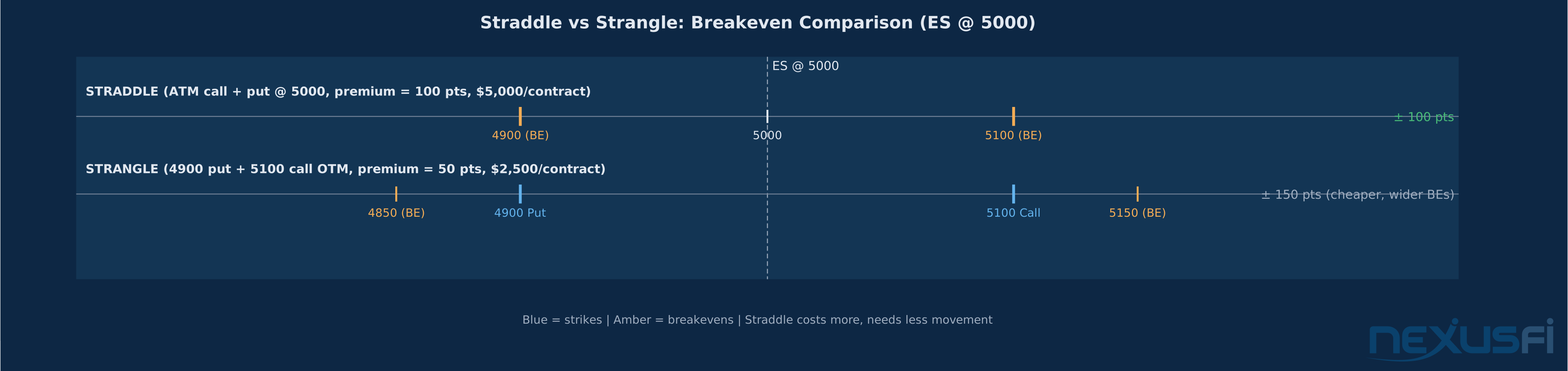
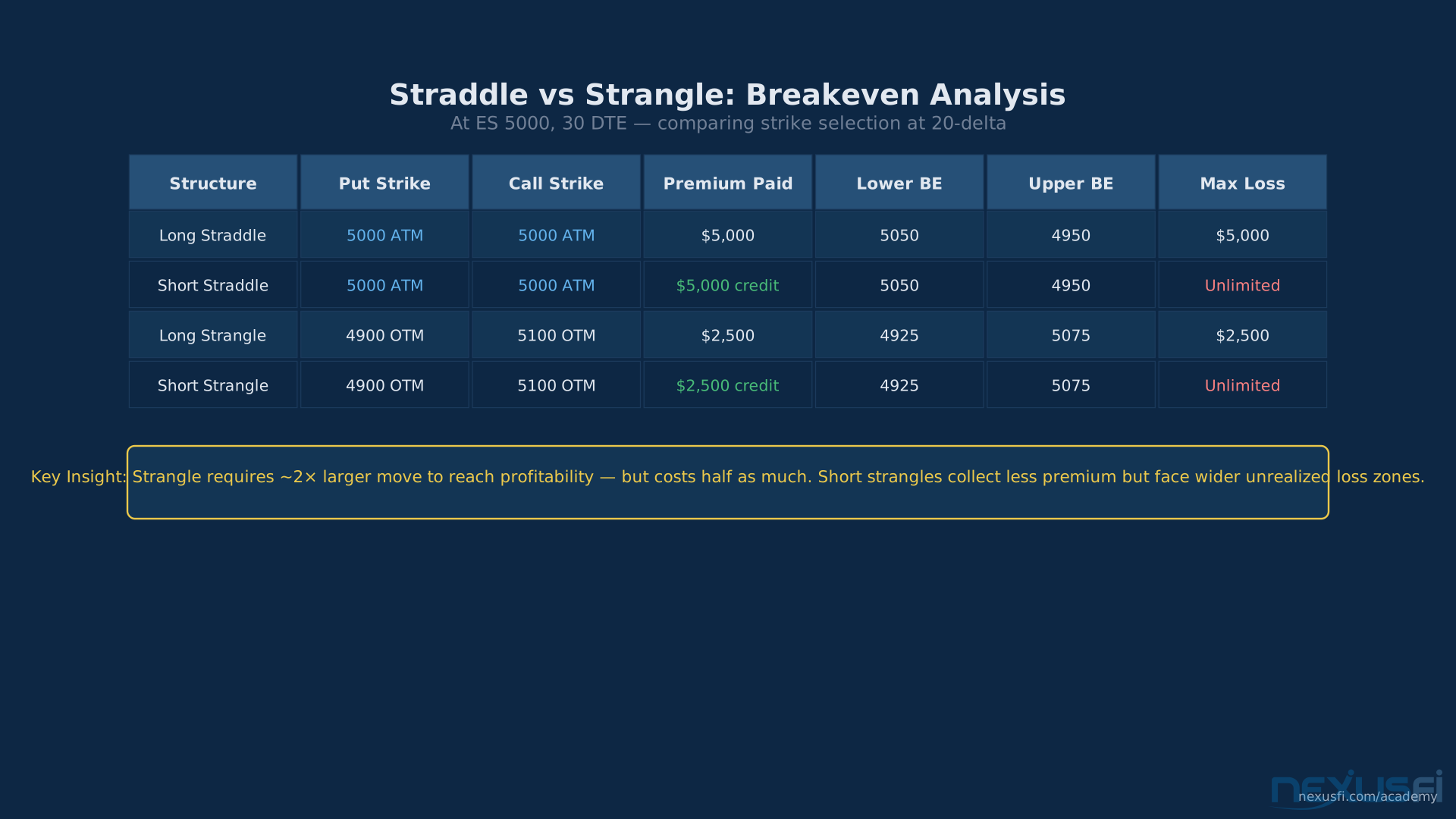
Example using ES (E-mini S&P 500): ES is trading at 5000. You buy the 5000 call and 5000 put with 30 days to expiration. Call costs 60 points, put costs 40 points. Total debit = 100 points = $5,000 per contract (ES = $50 per point).
- Upper breakeven = 5000 + 100 = 5100
- Lower breakeven = 5000 − 100 = 4900
- Maximum loss = 100 points = $5,000 at expiration with ES at exactly 5000
- You profit if ES moves more than 100 points in either direction before expiration
That $5,000 max loss sounds manageable, but recognize what you're really buying: ES needs to move 2% in either direction just to break even. In a low-volatility environment, that doesn't happen in 30 days often enough to make the trade structurally profitable. This is why IVR matters.
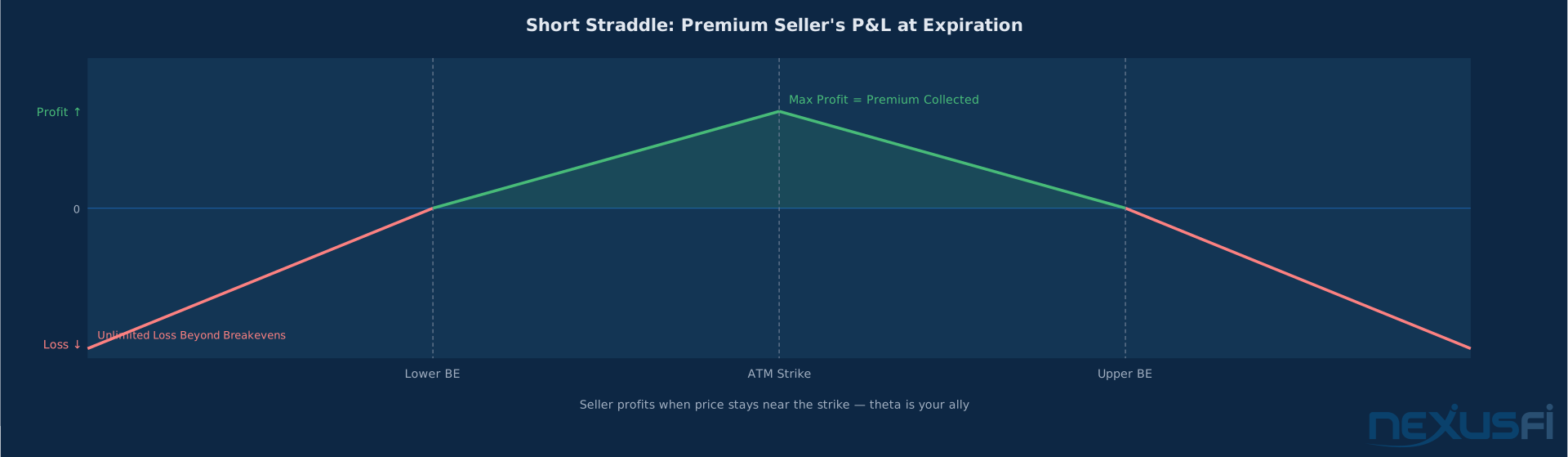
The short straddle reverses the trade entirely. You sell the call and put, collect the premium, and profit if the underlying stays near the strike. Maximum profit is the premium collected. Loss is theoretically unlimited — ES ripping 300 points against you while you're short the straddle is a very bad day.
The Strangle: Wider Wings, Lower Cost #
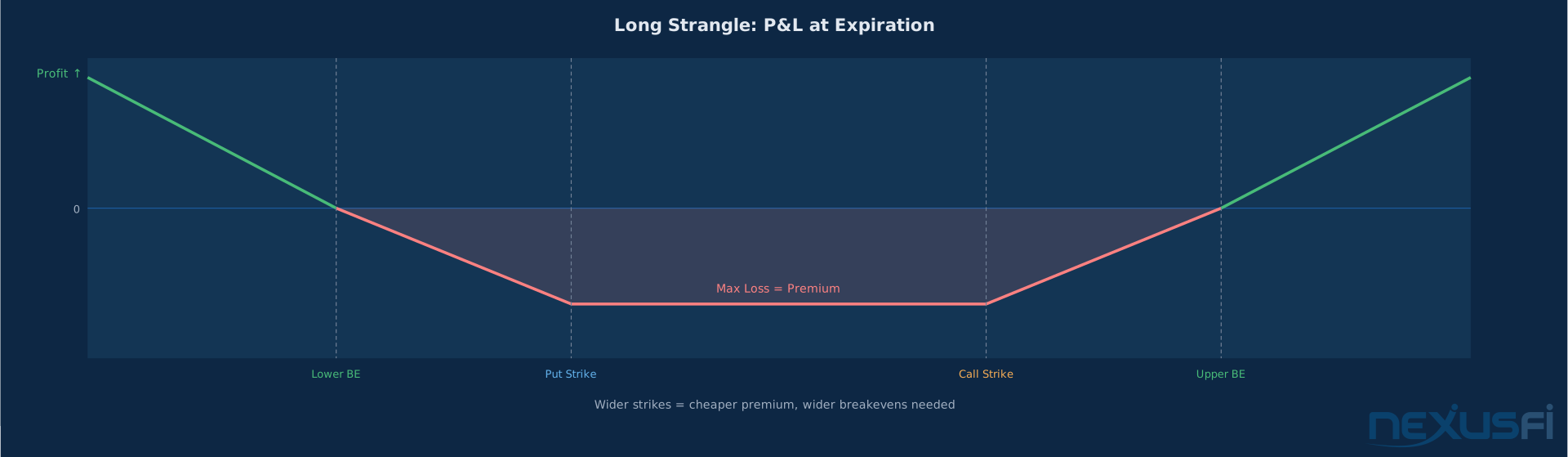
A long strangle buys an OTM call and an OTM put — different strikes, same expiration. Because both legs are OTM, the total premium is lower than a straddle. The tradeoff: you need the underlying to move further to reach profitability.
Example using ES: ES at 5000. You buy the 5150 call for 25 points and the 4850 put for 25 points. Total debit = 50 points = $2,500.
- Upper breakeven = 5150 + 50 = 5200
- Lower breakeven = 4850 − 50 = 4800
- Maximum loss = 50 points = $2,500 (the entire zone between 4850 and 5150 at expiration)
- You profit if ES moves more than 200 points in either direction
This structure needs a bigger move, but it costs half as much. The implied move needed to profit is larger, but the dollar risk per contract is smaller. Which is better? It depends entirely on the volatility regime and whether the move you're anticipating is likely to be large enough to reach the wider breakevens.
The short strangle is how many professional premium sellers operate. Sell an OTM call and an OTM put, collect premium on both, and profit if the underlying stays between the two strikes through expiration. @dynoweb on NexusFi described their approach: "I usually sell strangles in /6E, /CL, /GC, /ZW, /ZC, /ZS, /NG — typically 30-60 DTE with short strikes around the 20 delta. Profit target is usually around 50% of credit or more especially if I'm sitting at net 0 delta in the last few weeks. Most of the time, I close the position with 21 DTE or less."
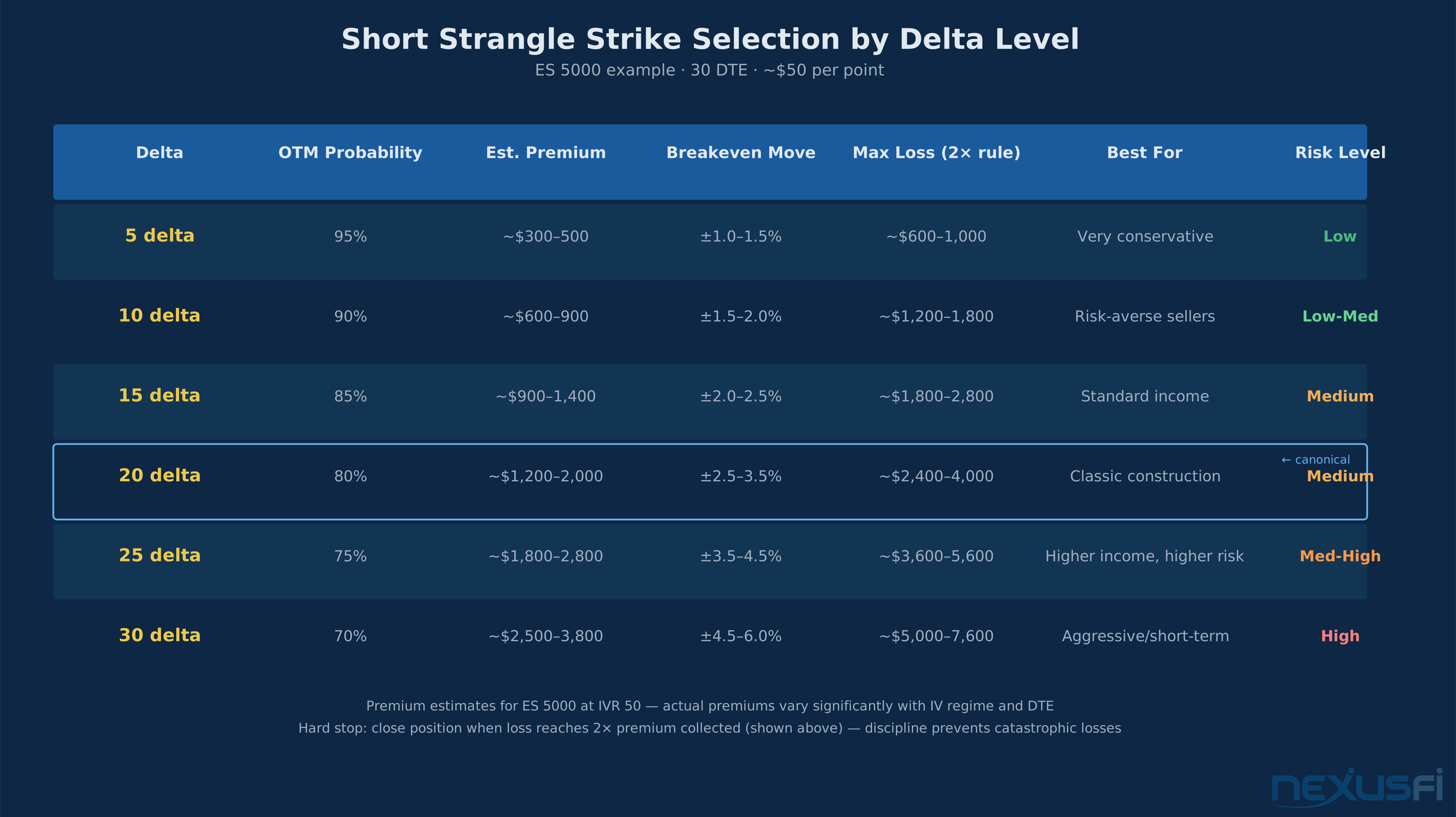
The 20-delta strike selection is a canonical short strangle construction — approximately 80% probability of expiring worthless on each leg, 64% combined probability the underlying stays inside both strikes. That sounds high, but tail risk remains real, and the losses when a trade goes wrong can be multiples of the premium collected.
Volatility Is the Entire Game #
Here's the key distinction for traders who understand straddles and strangles versus those who only know the mechanics: IV is the only variable that matters for entry timing.
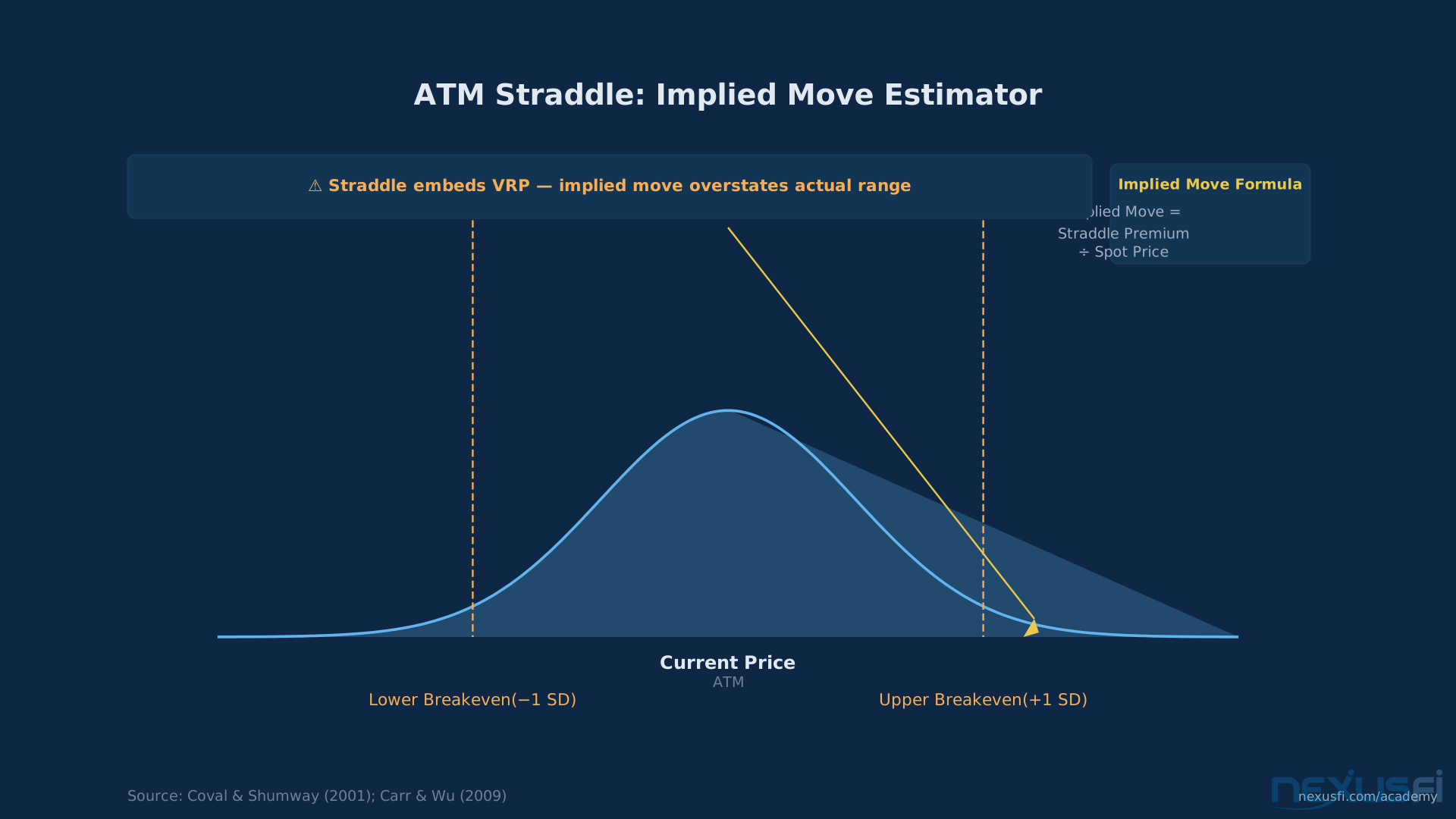
The expected value of a long straddle or strangle is determined by one question: will the underlying move more or less than what IV implies? The options market has already priced in the "expected move" — it's not a secret. The ATM straddle price gives you a precise estimate of what the market expects the underlying to move by expiration.
Reading the ATM straddle as an implied move estimate: The ATM straddle price ≈ 68% one-standard-deviation expected move (for one expiration period). Multiply the straddle price by 1.25 for a rough 80% expected range.
If ES ATM straddle costs 100 points with 30 DTE, the market is pricing approximately ±100 points as the one-sigma expected move. If you think ES will move 150 points, you want to be long. If you think ES will stay within 70 points, you want to be short. This relationship — straddle price as a model-free implied variance estimate — was formalized by Carr & Wu (2009), who showed that extracting variance from the full options strip gives a more rigorous measure, but the ATM straddle approximation captures the same insight with practical simplicity. [Carr & Wu (2009)]
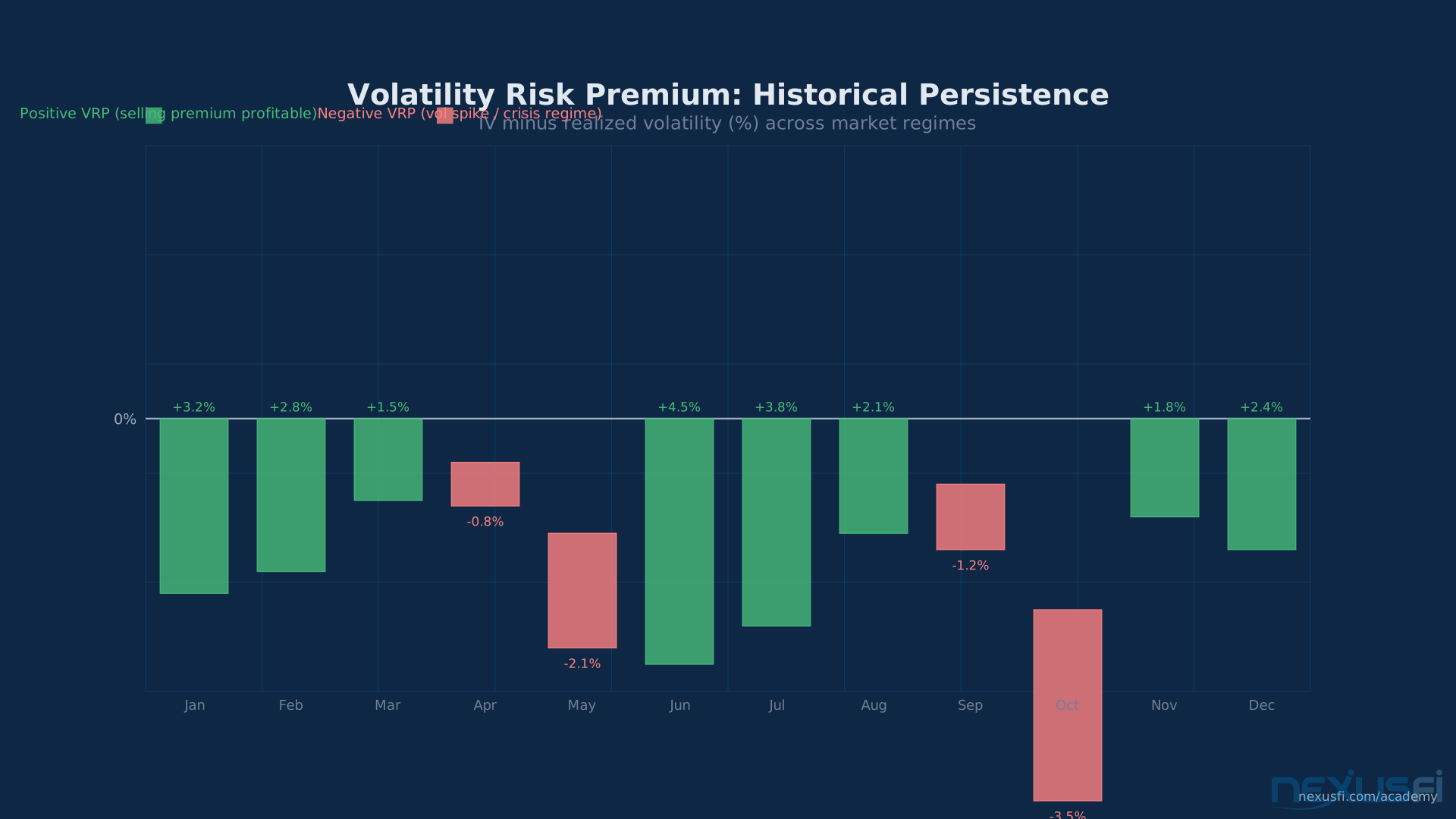
The Volatility Risk Premium (VRP): Historically, implied volatility has consistently overstated realized volatility. The spread between IV and the eventual realized volatility is the VRP — and it's real, persistent, and measurable. @treydog999 on NexusFi quantifies it directly: "I sell mostly strangles/straddles given a positive VRP (IV/RV). I rarely buy options as my research has shown they are only profitable in the top 2 deciles of volatility expansion."
That's the key insight. Long straddles and strangles have a negative expected value in normal conditions because IV is typically overpriced relative to what the underlying actually does. Buying volatility is a bet that this time, the move will be larger than what the market has priced — meaningfully larger than what IV implies. That's not always wrong, but it's structurally fighting an uphill battle. The variance risk premium documented by Carr & Wu (2009) quantifies this precisely — model-free implied variance from index options markets consistently exceeds realized variance, with the premium largest in stressed market conditions when insurance demand spikes. [Carr & Wu (2009)]
The Greeks in Practice #
Understanding the Greek profile of your position tells you exactly what risks you're carrying and how the position will behave in different scenarios.
For a Long Straddle or Strangle:
Long Gamma: As the underlying moves, delta accumulates in the profitable direction. Move up 50 points, your call gains delta while your put loses less than it gained. This is how long volatility positions make money in trending markets — gamma works in your favor. But gamma is most valuable near the ATM strike and decays as expiration approaches.
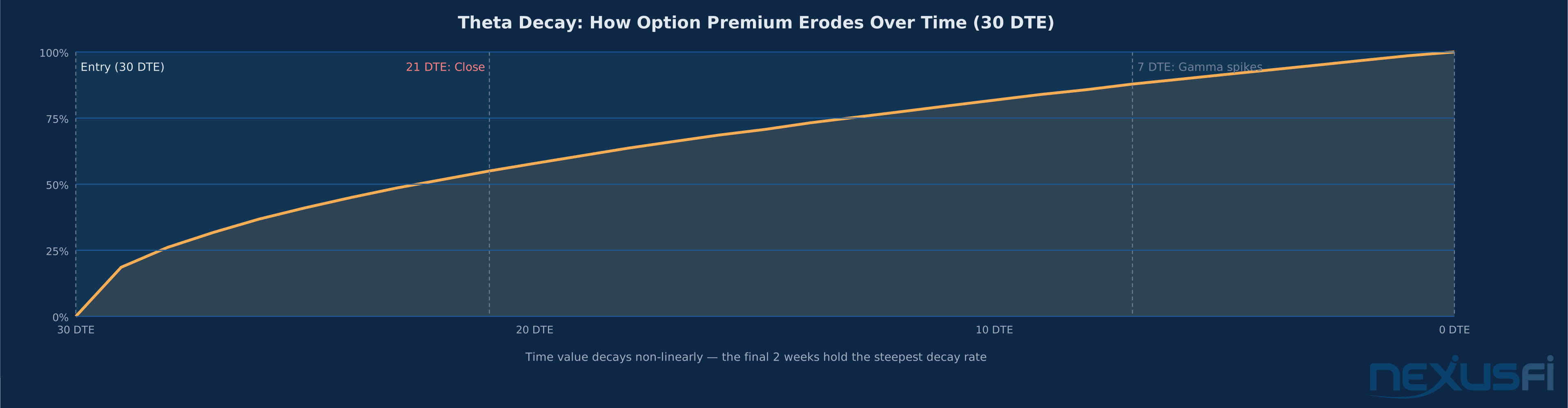
Short Theta: Every day costs you premium. The straddle doesn't just sit there waiting — it bleeds. For a 30-DTE straddle, roughly half the theta occurs in the final two weeks. The first two weeks look "cheap" from a theta perspective; the last week is where the bleeding accelerates. This is why long volatility traders need big moves early, not just eventually.
Long Vega: If IV expands after you enter, your position benefits — both legs become worth more even if the underlying hasn't moved. This creates a setup that some traders use: buy the straddle before an event (earnings, Fed meeting, CPI), and if IV spikes (even without a large underlying move), the vega gain can offset theta costs.
For a Short Straddle or Strangle:
Short Gamma: As the underlying moves against you, delta accumulates against your position. A short straddle at 5000 with ES at 5150 means your short call is deep in-the-money losing value rapidly. You need the underlying to come back, or you need to manage the position.
Long Theta: Every calendar day puts money in your pocket (assuming IV doesn't expand). This is the "income" that short premium traders discuss — the theta income that accrues daily. It's real, but it's offset by the gamma risk you're carrying.
Short Vega: IV expansion after entry hurts your position. If you sell a straddle at IVR 40 and VIX spikes from 15 to 25, your short vega position just got damaged even if the underlying hasn't moved much. This is why IVR at entry matters so much for premium sellers.
Delta Neutrality and Management: Both structures start delta-neutral (or close to it). That neutrality is temporary. A 3% gap in the underlying will leave a 30-DTE ATM straddle much long or short delta. You have options:
- Let it ride: The straddle captures the directional move. Your winner leg (call or put) accelerates while your loser leg decays. This is how long straddles make money in trending markets — you don't need to do anything.
- Rebalance delta: Buy or sell the underlying (or a delta-equivalent) to neutralize the position. This is "gamma scalping" — locking in the delta profit and resetting to flat. It works in volatile, trending markets but adds transaction costs and execution complexity.
- Roll the position: Close the untested side (the profitable leg) and reopen it at a new strike. This captures some profit while reducing the position's net debit or credit.
IV Rank and Entry Timing #
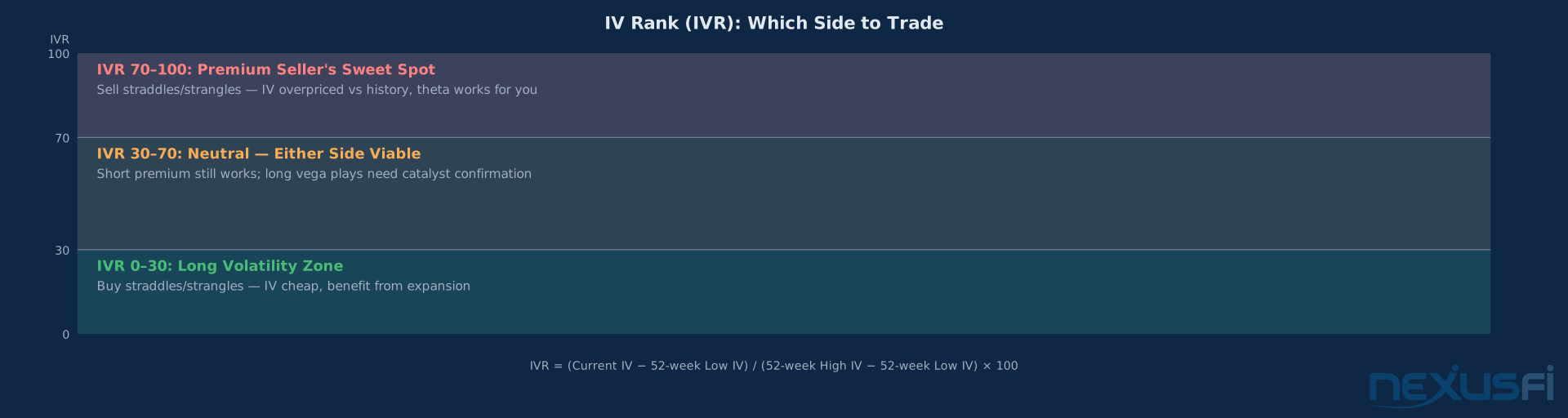
The single most impactful decision in a straddle or strangle trade is when to enter relative to IV levels. The chart above shows the IVR framework:
IVR 70--100 (Premium Sellers' Zone): IV is near its annual high. Options are expensive relative to history. Short straddles and strangles perform best here. The VRP is at its widest — the gap between what IV implies and what the underlying will likely do is largest. Historical backtests of short premium strategies consistently show the best edge at elevated IVR.
IVR 30--70 (Neutral Zone): Short premium still viable, but edge is reduced. Selectivity matters more — look for specific catalysts or structures (iron condors with defined risk) rather than naked short straddles.
IVR 0--30 (Long Volatility Zone): IV is cheap relative to its history. Long straddles and strangles benefit here — if IV expands back toward normal levels, even a small IV increase produces significant P&L via vega gains. This is the "buy vol when it's cheap" argument.
Event-Driven Timing: The other key timing framework is upcoming events. Earnings, Fed meetings, CPI prints, OPEC decisions — these events create expected IV spikes (IV rises before the event) followed by IV crush (IV collapses after the event, regardless of the move).
For long straddles: enter before the event when IV is rising. If you're right about the move being larger than priced, you win on both delta and vega. If wrong, you lose on delta but may recover some via IV spike timing.
For short straddles/strangles: enter after the event when IV has already spiked and begins to collapse. The IV crush is your ally. This is counterintuitive — you're selling at "high" IV after a large move — but the structural edge is in collecting premium as IV mean-reverts.
Setting Up the Trade: Strike Selection and Expiration #
Strike Selection for Straddles: The straddle strike is determined by the current underlying price. Use the option chain to find the ATM strike — the call and put with the same strike and similar absolute deltas (both around 0.50). The slight asymmetry in delta between the call and put reflects the cost of carry and the current futures basis.
Strike Selection for Strangles: Standard short strangle construction uses the 15--25 delta strikes on each side. The 20-delta strike gives roughly 80% probability of expiring worthless. Why 20 delta? It's empirically where the premium-to-risk ratio is most favorable across most underlyings.
Further OTM (10 delta) gives higher probability but collects almost no premium. Closer to ATM (35 delta) gives more premium but reduces probability and increases gamma risk. The 20-delta zone is the sweet spot historically.
For long strangles targeting a specific event move, back-calculate from your expected move:
- If you expect ES to move ±150 points from 5000
- Strike the strangle at 4850/5150 (your expected move boundaries)
- If the move exceeds your strikes, you're in profit immediately
Expiration Selection: The most common choice for short premium strategies is 30--45 DTE (days to expiration). The reasons:
- Theta acceleration: Theta decays fastest in the final 30 days of an option's life. Selling at 45 DTE and closing at 21 DTE captures the steepest part of the theta decay curve.
- Gamma stability: Beyond 30 DTE, gamma changes slowly — large underlying moves produce manageable delta changes. Under 21 DTE, gamma spikes and position management becomes much more active.
- Management window: Selling at 45 DTE gives you roughly 3 weeks before the position becomes uncomfortably gamma-exposed.
The "21 DTE close" rule is a canonical risk management approach among short premium traders. Close the position when 21 DTE remains, regardless of P&L, to avoid gamma risk in the final weeks.
For long volatility positions targeting a specific trigger, 7--30 DTE options can work — you need the event to happen quickly enough to outrun theta decay.
Risk Management: Where Traders Get Hurt #
The short straddle's existential risk is the unlimited loss profile. Unlike defined-risk spreads, a naked short straddle has no cap on losses. ES gapping 400 points overnight on a geopolitical event doesn't just hurt — it can be catastrophic. Risk management isn't optional; it's the entire structure of the trade.
Position Sizing: Short straddles and strangles require adequate margin. ES options on CME use SPAN margin — typically 5--12% of the notional value of the position, depending on underlying volatility. In high-volatility regimes, SPAN margin expands, sometimes dramatically. Size position as a percentage of portfolio, not as a dollar amount of premium.
Standard rule: no more than 2--5% of total capital at risk on any single short straddle or strangle position, defined as the maximum potential loss on a stress test scenario (say, 3× the expected move).
Adjustments When the Underlying Moves: @jokertrader on NexusFi describes an active management approach: "If one side gets tested, I'll roll that out from maybe a 50 delta to a 30 delta, and then sell an additional contract on the untested side to cover some of that cost. Sometimes instead of adding an additional short on the untested side, I'll roll in that strike."
There are several management approaches when a short strangle gets tested:
- Roll the tested side: If the underlying approaches your short call, buy it back and sell a new call further OTM at the same expiration. This costs you premium (debit) but extends your breakeven. It also extends your gamma risk.
- Add delta hedge in the underlying: If your short straddle at 5000 is being tested by ES at 5150, sell ES futures to create negative delta and hedge the directional exposure. This doesn't eliminate your vega/theta profile — it just manages the directional drift.
- Take the loss at a defined threshold: The cleanest rule is 2× premium collected = close the trade. If you collected 100 points and the position is down 200 points, close it. Discipline over ego. The trades you don't hold through disaster define your long-run P&L more than the trades you do well on.
- Strangle buyer's roll: If long a strangle and the underlying moves strongly in one direction, you can close the winning leg (the ITM option) and roll to a new OTM option in the same direction to maintain upside while cutting your remaining cost basis. This is "riding the winner."
Correlation Risk in Commodity Strangles:
In commodity markets (CL, GC, SI, NG), correlation across risk assets can spike in stress scenarios. @myrrdin on NexusFi emphasizes diversification within a short premium portfolio: "For me it is essential to balance the portfolio, selling strangles or selling calls and puts of two related commodities. This reduces the influence of the general economic situation. Longterm profits tend to rise with reduced position size."
A short strangle portfolio across multiple commodity underlyings may look diversified until a correlated selloff hits all positions simultaneously. Size so.
Practical Application: A Framework for Each Side #
Long Straddle/Strangle (Buying Volatility): Use when:
- IVR is below 25 and you expect a trigger to spike volatility
- A specific event (earnings, Fed, geopolitical) is approaching and the expected move looks underpriced relative to the actual magnitude of potential outcomes
- You see a convergence signal: IV is historically cheap AND the underlying is at a technical inflection point likely to produce a large move
Mechanics:
- Buy the straddle 7--21 DTE if targeting a specific event (close after the event or at 50% gain)
- Buy the strangle 30--45 DTE if betting on volatility regime expansion from low levels
- Target 2× premium collected as exit; hard stop at 50% loss of premium paid
The math on long straddles is unforgiving: at IVR 50, options are typically overpriced by 15--25% versus eventual realized vol. You're starting behind. You need either a directional view that's more extreme than consensus, or a volatility expansion call.
Short Straddle/Strangle (Selling Volatility): Use when:
- IVR is above 50, preferably above 70
- No major binary events in the next 21 DTE
- The underlying is in a range-bound or mean-reverting regime, not a trending regime
- You can manage the position actively
Mechanics:
- Sell the strangle at 20--25 delta strikes, 30--45 DTE
- Target 50% of max profit as exit (the "close at 50%" rule)
- Close at 21 DTE regardless of P&L to avoid gamma risk
- Hard stop: 2× premium collected = close immediately
- Size: no more than 5% portfolio risk per position
The "Iron" Alternatives: Both structures have defined-risk equivalents:
- Iron Butterfly: Short straddle with wings bought further OTM. Defined risk, capped reward.
- Iron Condor: Short strangle with wings bought further OTM. The most common defined-risk premium selling structure.
If margin is constrained or you want to cap risk explicitly, these alternatives sacrifice some premium but eliminate the unlimited loss profile. For most retail traders, the iron condor is a more appropriate structure than the naked short strangle.
Citations from the NexusFi Community #
The options community at NexusFi has built years of real-money experience around these strategies. The full Selling Options on Futures? thread runs over 7,300 replies and represents one of the most sustained practitioner discussions of short premium mechanics in retail trading communities. Key themes across the community: IVR matters more than anything else at entry, 21 DTE exit discipline prevents gamma disasters, and position sizing is the only real protection against tail events.
Knowledge Map
Go Deeper
Build on this knowledgeReferences This Article
Articles that build on this topicCitations
- — Selling Options on Futures? (2019) 👍 8“I usually sell strangles in /6E, /CL, /GC, /ZW, /ZC, /ZS, /NG. Typically they are 30-60 DTE with short strikes around the 20 delta. Profit target is usually around 50% of credit or more especially if I'm sitting at net 0 delta in the last few weeks. Most of the time, I close the position with 21 DTE or less.”
- — Selling Options on Futures? (2020) 👍 6“I sell mostly strangles/straddles given a positive VRP (IV/RV), I rarely buy options as my research has shown they are only profitable in the top 2 deciles of volatility expansion.”
- — Selling Options on Futures? (2020) 👍 2“Selling strangles/straddles in a high vol environment is certainly a high reward play. Generally the timing does not matter.... since vol usually drops in a few days. However, in this environment vol has stayed high with swings much larger than usual.”
- — Selling Options on Futures? (2020) 👍 2“If one side gets tested, I'll roll that out from maybe a 50 delta to a 30 delta, and then sell an additional contract on the untested side to cover some of that cost.”
- — Selling Options on Futures? (2019) 👍 8“When my strangle in /CL was being crushed during this big move down in the last quarter of 2018, I sold a /CL contract to give me enough negative delta. The profits on /CL offset the losses on the short puts.”
- — Selling Options on Futures? (2013) 👍 21“If you buy an ATM straddle, whatever you pay for that is the markets expectation of future volatility. Meaning, if your straddle costs 3.00, and the stock price is currently 25, the market expects that the stock price will keep within the range of 28-22 within expiration. That is the expected volatility.”
- — Selling Options on Futures? (2013) 👍 15“I would be short a put with delta between 0.15-0.20 for a premium of about $600 and also short a call with delta between 0.15-0.20 also for another $600. I also did not trade the front month options, I selected options that contained 60-90 days until expiration. I almost never stayed in the trade until expiration. I would usually take profits early when I can lock in 75% or more of the premium.”
- — Selling Options on Futures? (2021) 👍 4“I only sell strangles at high implicit volatility, and I always sell both legs at the same time. Usually I sell approx. 100 DTE. I exit in case the strangle has doubled in value. The exact point of liquidation is determined in the chart of the underlying. When liquidating, I buy back both legs at the same time.”
- — Selling Options on Futures? (2017) 👍 10“For me it is essential to balance the portfolio, selling strangles or selling calls and puts of two related commodities. This reduces the influence of the general economic situation. There is no need to be underinvested, but I learnt it the hard way that longterm profits tend to rise with reduced position size.”
- — Does Net Buying Pressure Affect the Shape of Implied Volatility Functions? (2004)
- — Variance Risk Premia (2009)
- — Expected Option Returns (2001)