



Currency Futures Trading Strategies: Carry Trades, Trend Systems, and Central Bank Plays
Overview #
Currency futures are exchange-traded contracts to buy or sell a specific amount of one currency at a predetermined rate on a fixed future date. They trade on the CME Group under CFTC regulation, with centralized clearing that eliminates counterparty risk — a key structural advantage over spot forex's OTC dealer model.
The global FX market trades over $9 trillion per day. Currency futures represent a subset of that, but they offer something spot doesn't: full price transparency, published volume and open interest data, Section 1256 tax treatment (60% long-term/40% short-term gains regardless of holding period), and no daily rollover swap fees. These differences matter for how you build strategies.
The strategies in this article range from macro carry trades that hold for weeks to tactical breakout setups that complete in hours. What they share is that they're all built on the fundamental structure of currency futures: the relationship between interest rates, central bank policy, and the relentless mechanism of covered interest rate parity pricing the macro view into every contract.
Key Concepts #
Covered Interest Rate Parity (CIP) — the pricing relationship that ties currency futures prices to spot rates and interest rate differentials. A currency with higher interest rates trades at a futures discount to spot; a lower-rate currency trades at a premium. This is the "carry" priced into the futures contract at inception — you don't earn or pay rollover because the differential is already in the price.
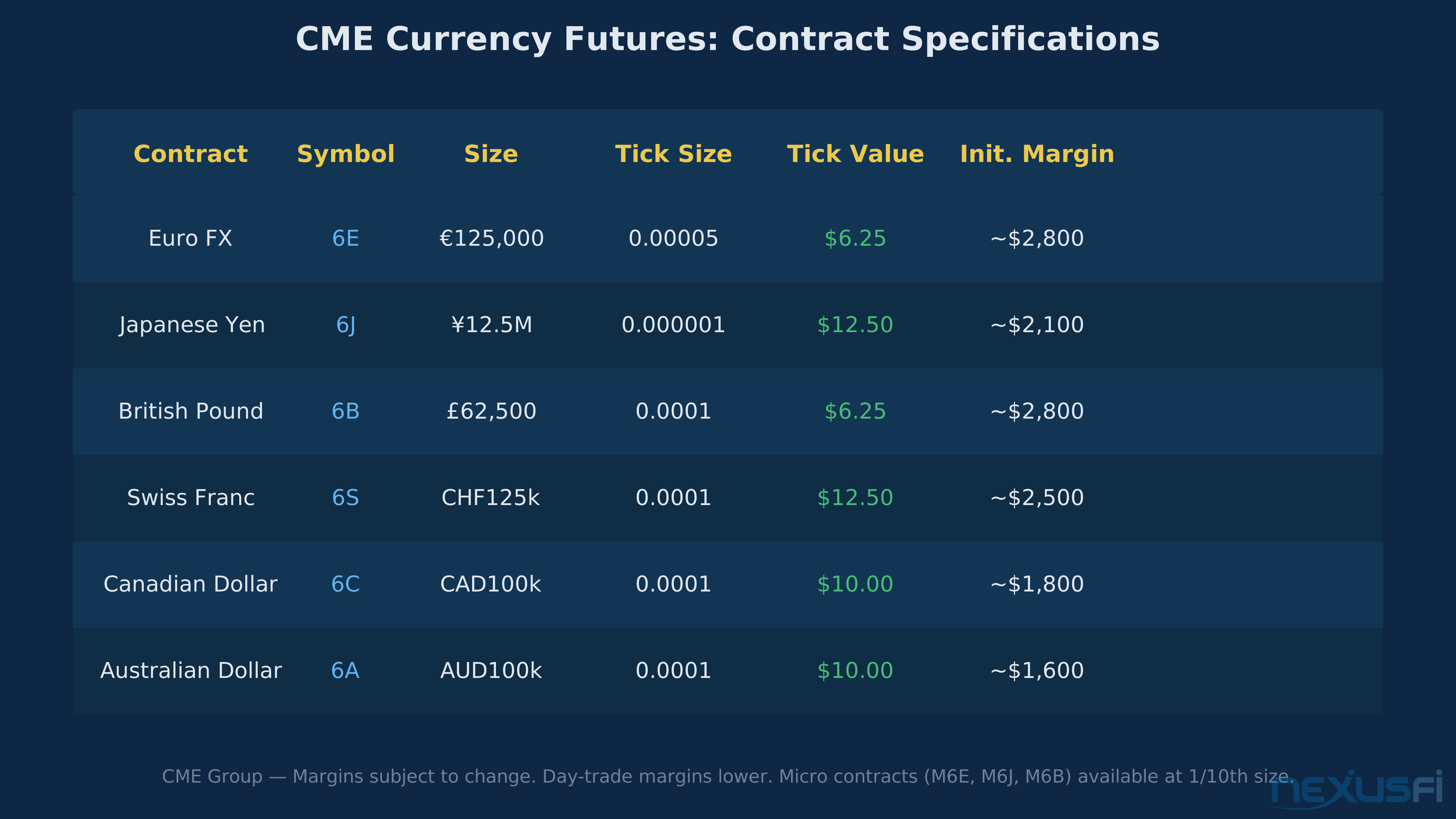
Contract Multiplier / Tick Value — the dollar impact of each minimum price move. The Euro FX (6E) has a tick of $0.00005 = $6.25 per tick, $12.50 per full pip. Japanese Yen (6J) has a tick of $0.000001 = $12.50 per tick. British Pound (6B) has a tick of $0.0001 = $6.25 per tick. These differ — the same 10-pip chart move has very different dollar impacts across contracts.
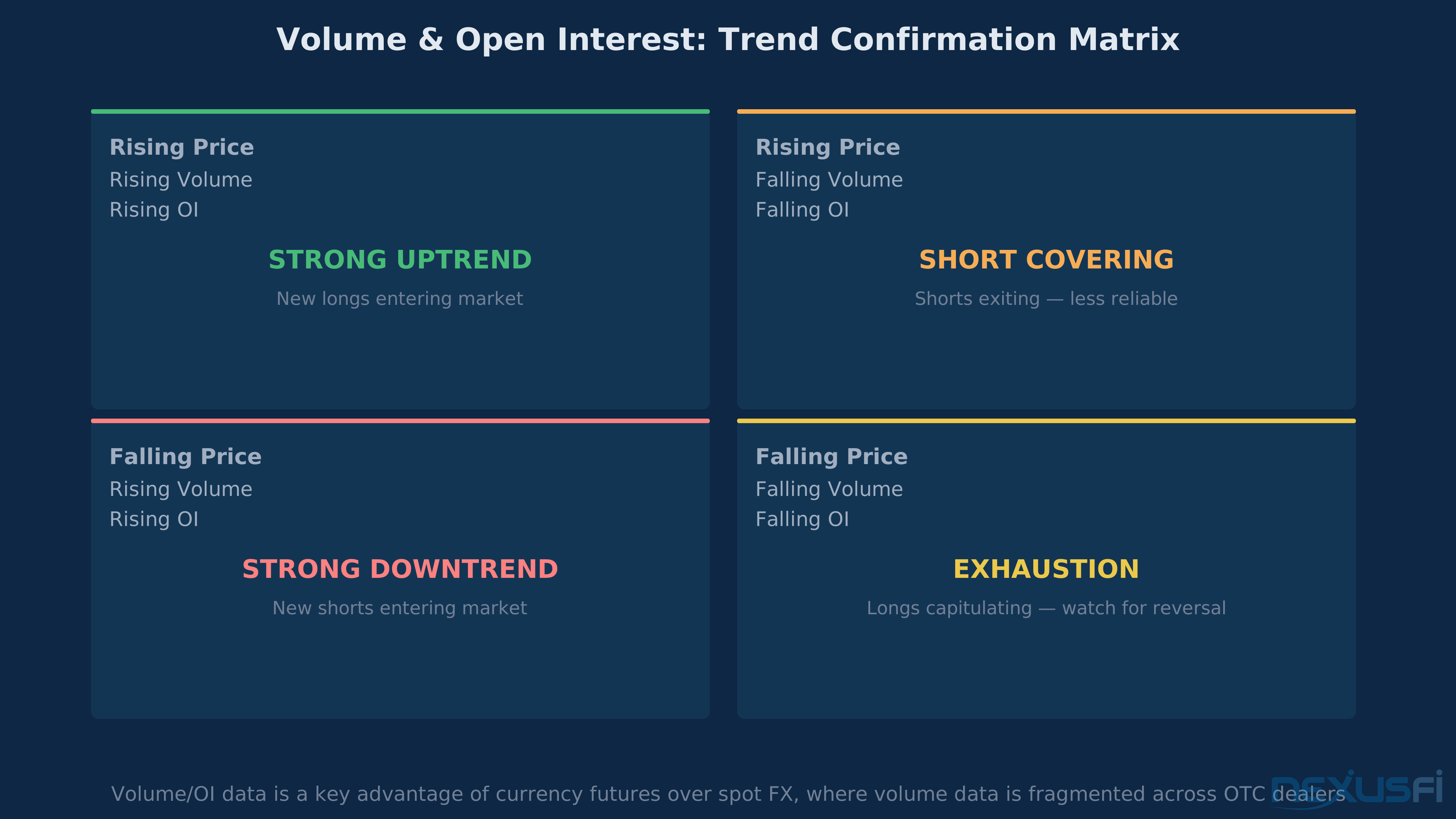
Open Interest — the total number of open contracts across all participants. In currency futures, rising OI alongside rising price confirms genuine trend with new money flowing in. Falling OI during a price rise indicates short covering — a weaker signal. This distinction doesn't exist in spot forex where volume data is fragmented across dealers.
COT Report — the CFTC's Commitments of Traders report, published every Friday at 3:30 PM ET with data as of the prior Tuesday. Shows net positioning of Large Speculators (hedge funds, CTAs), Commercials (corporate hedgers), and Small Speculators. The Large Speculator net position is the most useful contrarian signal when it reaches extremes.
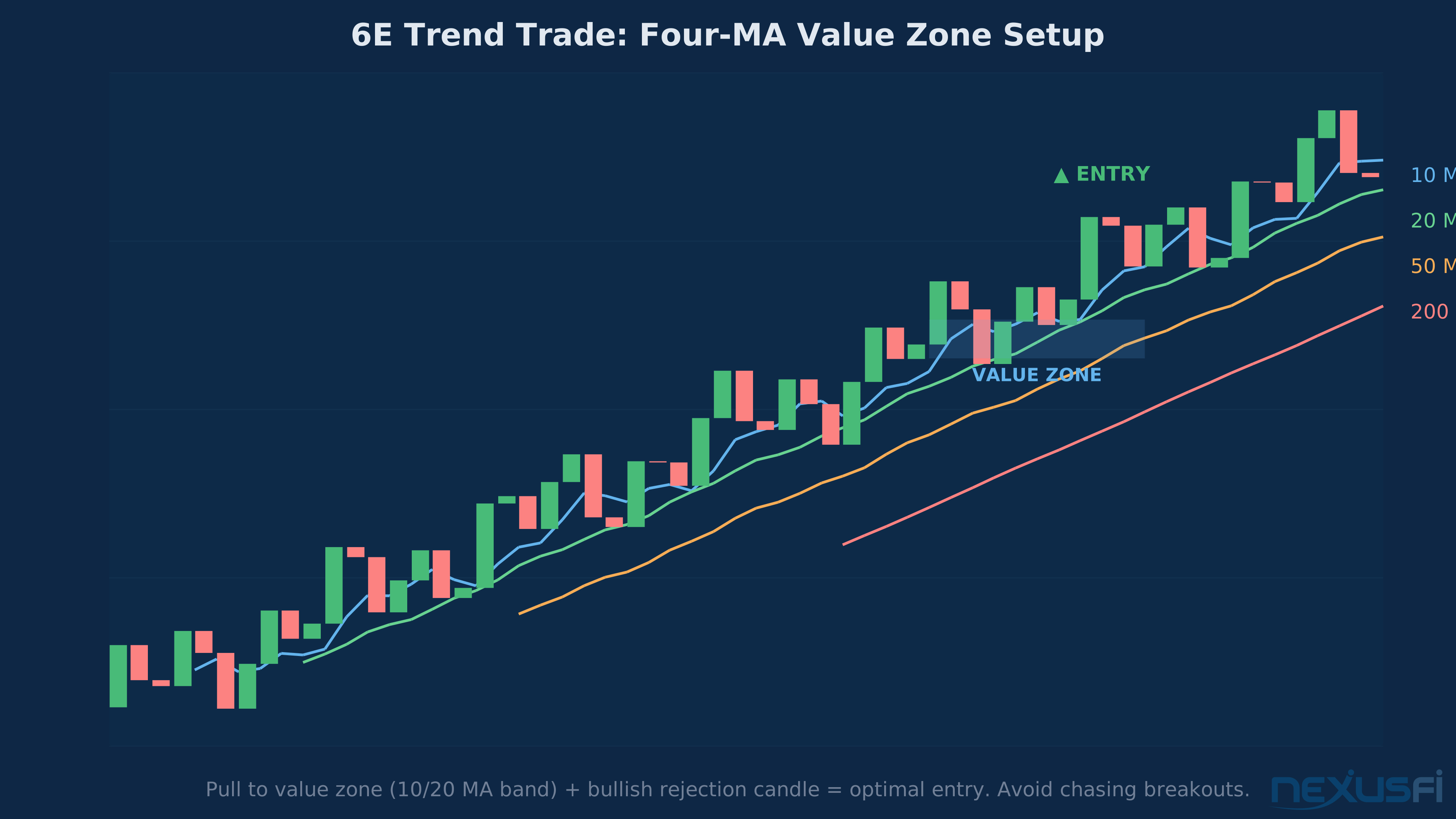
Value Zone — in trend trading, the price region between the 10 and 20-period moving averages where price pulls back to during healthy trends.
Entries at the value zone provide better risk/reward than chasing breakouts.
Quotation Convention Trap — 6E, 6B, 6A, 6S are "direct" quotes (USD per unit of foreign currency). 6J is quoted in USD per yen — a rising 6J price means a stronger yen, the opposite of how USD/JPY is quoted in spot. New traders from spot forex regularly get caught by this inversion.
Contract Specs and Mechanics #
Before any strategy discussion, understand what you're actually trading. Contract specifications determine position sizing, P&L mechanics, and margin requirements — the basics that traders get wrong constantly.
The Euro FX (6E): Contract size €125,000. Tick size 0.00005 ($6.25 per tick, $12.50 per full pip). A 100-pip move = $1,250 per contract. Initial margin approximately $2,500-3,000 (broker varies). Day-trade margin as low as $300-500 at some brokers.
The Japanese Yen (6J): Contract size ¥12,500,000. Tick size 0.000001 ($12.50 per tick). Higher tick value than 6E for the same chart move. Price is inverted from USD/JPY spot — when spot USD/JPY rises (yen weakening), 6J futures price falls. This trips up traders who come from spot forex consistently.
The British Pound (6B): Contract size £62,500. Tick size 0.0001 ($6.25). Sensitive to UK inflation and GDP data, plus periodic political volatility (Brexit aftermath, general election cycles).
Micro contracts: CME offers M6E, M6J, M6B and others at 1/10th the full contract size. M6E tick = $1.25. @orderlyflows laid out the sizing math in the Forex broker thread: "a single 6E contract has a notional value of EUR125,000 & half tick value of $6.25 (per 0.00005 price increment). Opening a position requires an initial margin around $500/contract if trading intraday, but $2,310/contract if trading overnight."
Session timing: Currency futures trade 23 hours/day (Sunday 5 PM — Friday 4 PM CT). Primary liquidity windows are instrument-specific. 6E peaks during Europe/US overlap (8-11 AM ET). 6J is most active during the Asian session (7 PM - 4 AM ET). Trading 6E during the Asian session means thin order book and erratic price action — not because the strategy is wrong, but because you're in the wrong session for that instrument.
P&L calculation example (6E): Buy 1 contract at 1.09750, exit at 1.10250. Move = 0.00500 = 100 ticks (0.00500/0.00005). P&L = 100 × $6.25 = $625 per contract. This is mechanics, not strategy — but traders who skip the mechanics end up with incorrect position sizes, wrong stop distances, and P&L surprises.
Section 1256 Tax Treatment Currency futures get 60/40 tax treatment regardless of holding period — 60% of gains are taxed at long-term capital gains rates, 40% at short-term rates. For active traders, this is meaningfully more favorable than spot forex (which is taxed as ordinary income by default) or equity options. Worth consulting a tax professional for your specific situation.
The Carry Trade #
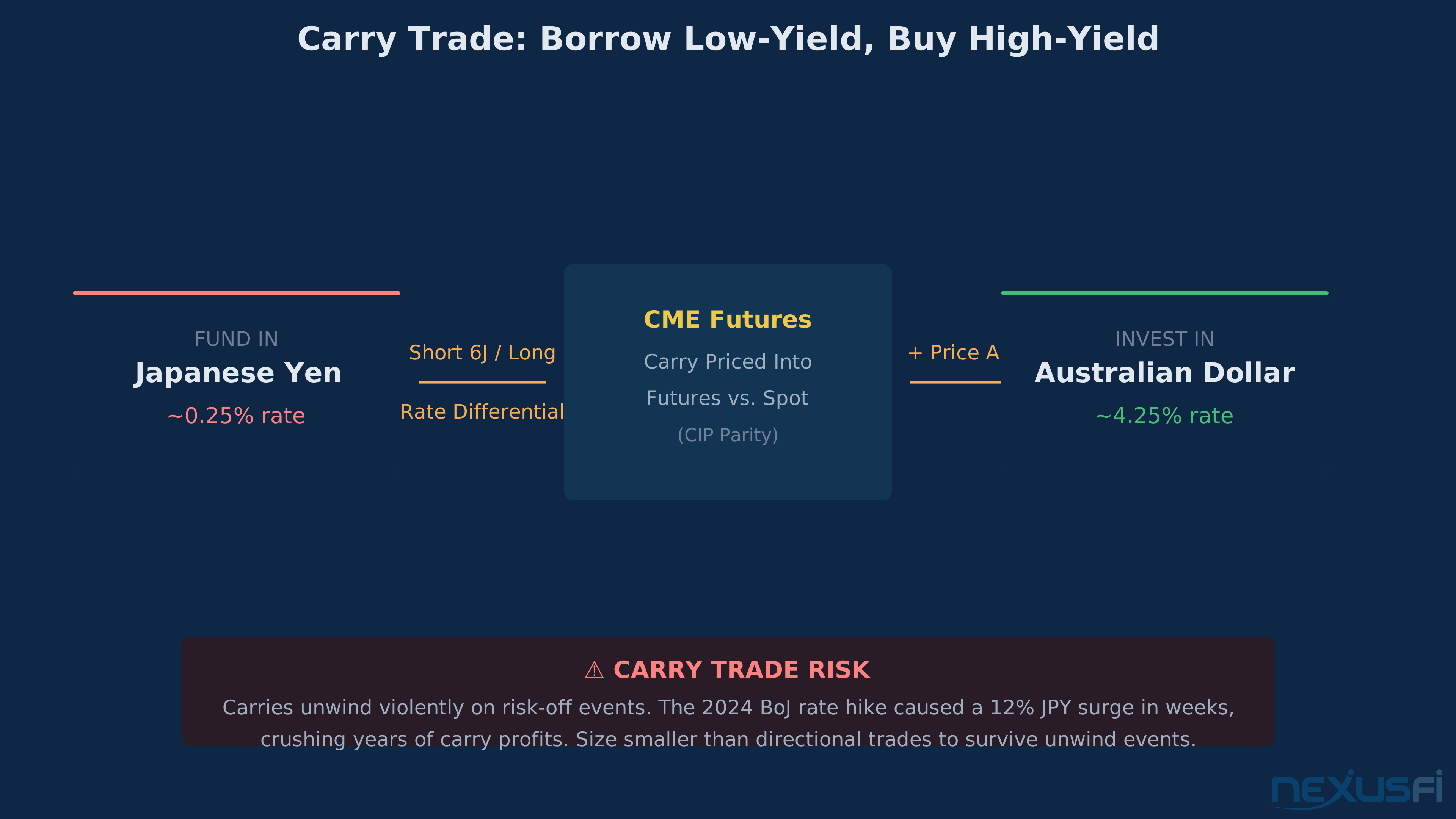
The carry trade is the foundational macro FX strategy: borrow in a low-yield currency, invest in a high-yield currency, and pocket the interest rate differential. In futures, the carry is already baked into the futures price through covered interest rate parity — you don't earn the carry separately, but the futures price reflects it automatically.
To execute a carry trade via futures: buy the high-yield currency futures, sell the low-yield currency futures. Classic pairs include long AUD (6A) vs. short JPY (6J) when Australian rates much exceed Japanese rates, or long USD futures (through various crosses) during Fed tightening cycles.
The carry trade's edge comes from the combination of the differential and trend direction. When a high-yield currency is also trending higher (central bank tightening cycle), the carry trade benefits from both the differential and the price appreciation. The 2022-2024 cycle where the Fed hiked to 5.25-5.50% while the BoJ maintained near-zero policy created a multi-year carry opportunity in USD/JPY direction (short 6J futures).
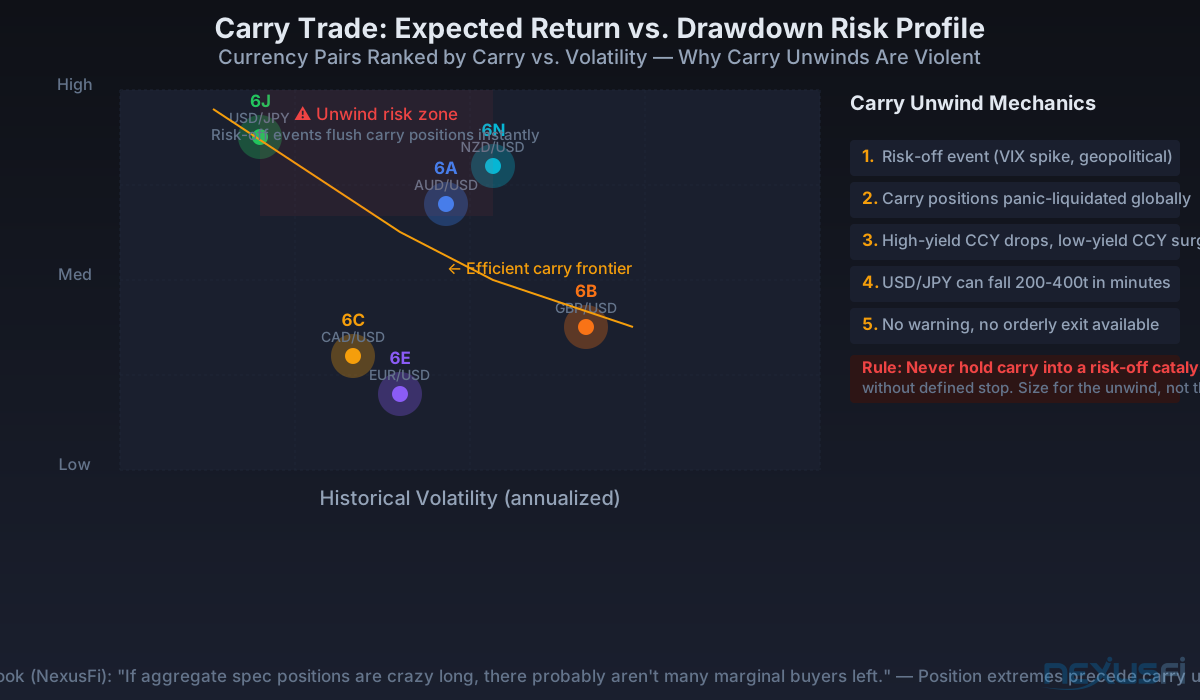
Carry trade entry signals: Enter when rate differential is wide (3%+ gross), volatility is low (VIX below 20), and the trend direction aligns with the carry direction. All three criteria improve trade quality — carry trades in high-volatility environments frequently get stopped out by the noise before the trend reasserts.
The steamroller risk: Carry trades unwind violently during risk-off events. When global risk sentiment deteriorates, the yen strengthens sharply as carry positions are unwound simultaneously. The 2024 BoJ surprise rate hike triggered one of the fastest yen carry unwinds in memory — USD/JPY dropped from 160 to 143 in weeks, crushing positions that had been profitable for years.
Exit signals: Rising VIX above 20-25, central bank policy shift in either leg of the carry (tightening in the funding currency is especially dangerous), or geopolitical events that trigger broad risk-off flows. The carry trade's worst characteristic is that it's slow to build and fast to destroy — the entry criteria can exist for months, but the unwinding can happen over days.
The Carry Trade Death Carry trades die fast. When VIX spikes or the funding currency's central bank hikes, positions that took months to build get unwound in days. Size carry positions smaller than directional trades, because the drawdown velocity when they reverse is unlike any other currency strategy. The slow drip of positive carry days does not compensate for a single bad week of unwind.
Trend Following and Momentum #
Currency futures trend well because the macro forces that drive them — interest rate differentials, capital flows, policy divergence — persist over weeks and months. Trend following is the dominant strategy used by managed futures funds (CTAs) for exactly this reason.
The core setup is the four-MA value zone approach:
Step 1: Confirm trending architecture. Higher highs and higher lows (uptrend) or lower highs and lower lows (downtrend) on the daily or 240-minute chart. Erratic, gappy price action invalidates the setup — you need smooth, orderly trending structure.
Step 2: Check MA spread. The 10, 20, 50, and 200 SMAs must be fanned out in the trend direction with consistent spacing. When all four are rising with the shortest-period MA above all others (10 > 20 > 50 > 200 in an uptrend), the trend has momentum with institutional structure behind it.
Step 3: Wait for value zone pullback. In an uptrend, price pulling back to the 10/20 MA zone is the optimal entry area. Chasing the breakout means buying after the initial momentum — inferior risk/reward. The pullback into the value zone gives a natural stop below the 20 MA for defined risk.
Step 4: Entry trigger. A bullish rejection candle (close > open) forming in the value zone with the low touching or near the 10/20 MA. Enter 1 tick above the high of that candle. Stop goes 1 tick below the candle low. This defines the risk precisely.
Volume and open interest confirmation: This is where currency futures diverge from spot forex. Rising price alongside rising volume and rising OI signals genuine trend with new money flowing into longs — the strongest configuration. Rising price with falling OI signals short covering, which is a weaker trend signal that's more likely to reverse.
Time series momentum (multi-week): Look-back periods of 1-12 months have shown positive Sharpe ratios in currency futures historically. The academic evidence (AQR time-series momentum research) supports that currencies trend over longer horizons than most retail traders think — intraday noise is just that, noise. Monthly charts filtered down to daily entries produce the cleanest directional moves.
For session behavior: 6E produces the best technical setups during the 8-11 AM ET window when European and US liquidity overlap. That's when institutional flows are most active, spreads are tightest, and price action is most directional. Entering a 6E trend trade at 2 AM ET during thin Asian session trading is a different experience — wider spreads, more false signals, and more potential for slippage on stop orders.
Breakout Strategies #
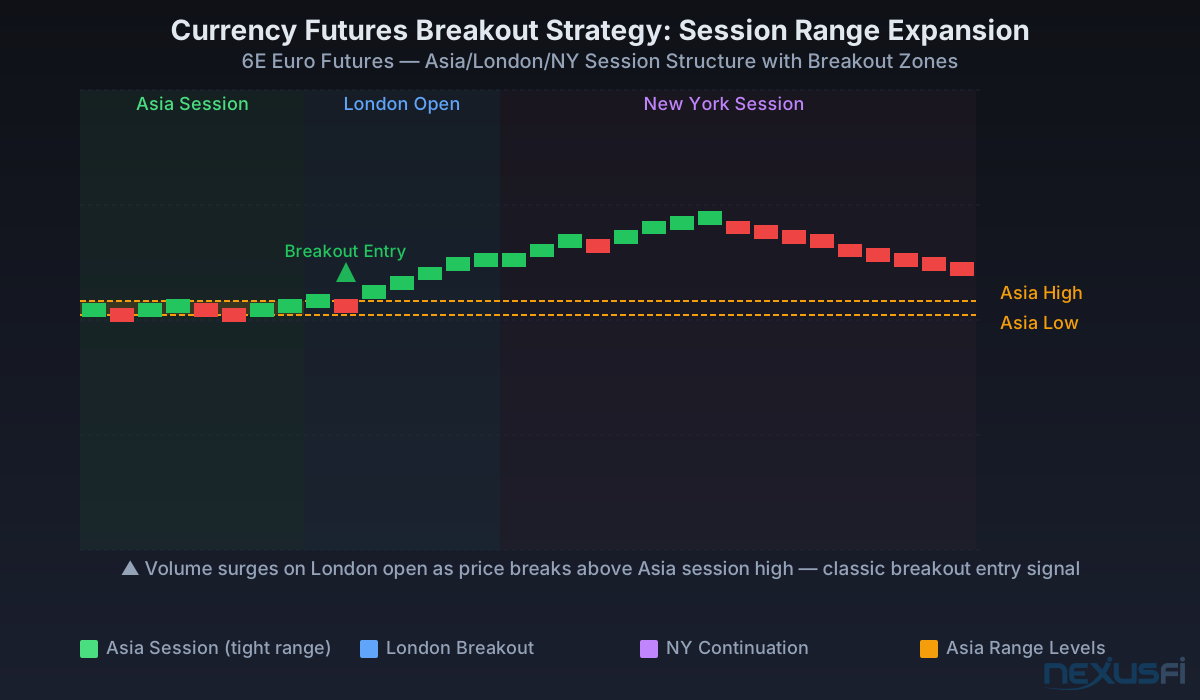
Currency futures regularly consolidate before major directional moves. The consolidation often aligns with scheduled economic events — the market waiting for NFP, CPI, or FOMC before committing to a direction. Breakouts from these consolidations provide some of the clearest setups in currency futures trading.
Identifying consolidation zones: At least 2 swing highs at similar price levels and 2 swing lows at similar price levels, forming a defined range over at least 2-3 sessions. The tighter the range relative to normal ATR, the more significant the eventual breakout.
Volume confirmation: A legitimate breakout should show volume much above average (2x or more on the breakout bar). Low-volume breakouts fail and reverse consistently. This is directly measurable in currency futures — not available in spot FX.
Entry approach: Place a buy stop 1 tick above the consolidation high and a sell stop 1 tick below the low (OCO - one cancels other). This captures the breakout regardless of direction, useful before high-impact events when you have a view on the magnitude but not the direction of the move.
Post-breakout retest: After a clean upside breakout, price frequently retests the breakout level from above before continuing higher. This retest offers a second entry with a tighter stop (just below the retest low) and better risk/reward than the initial breakout entry.
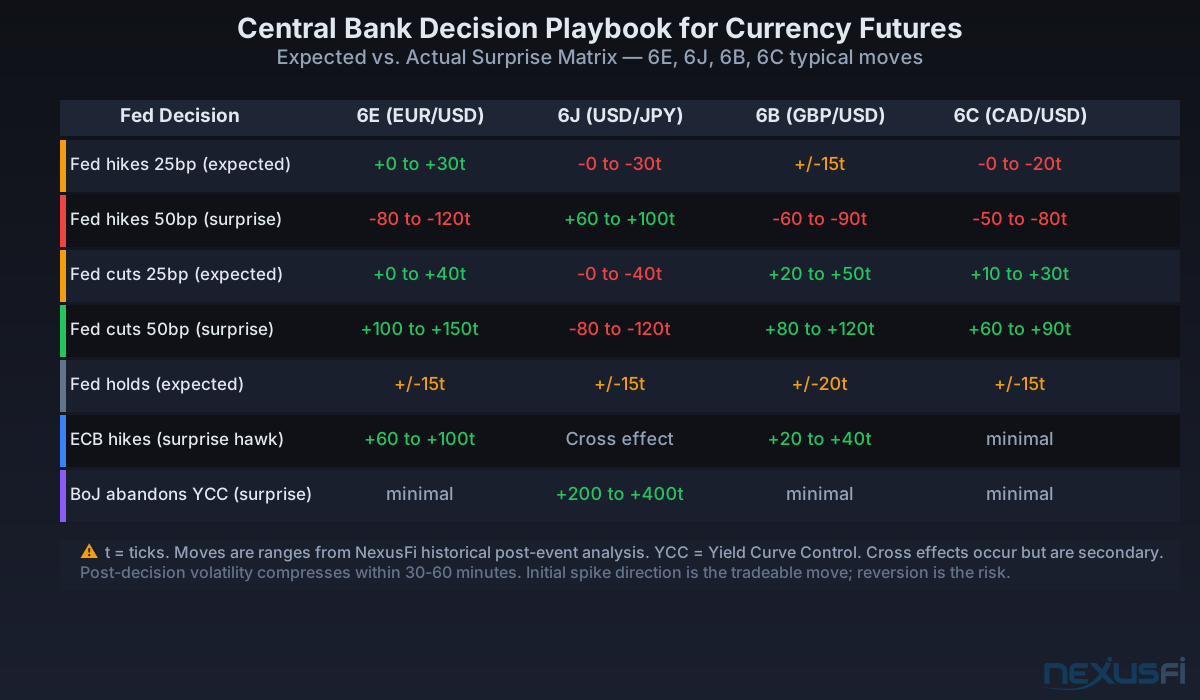
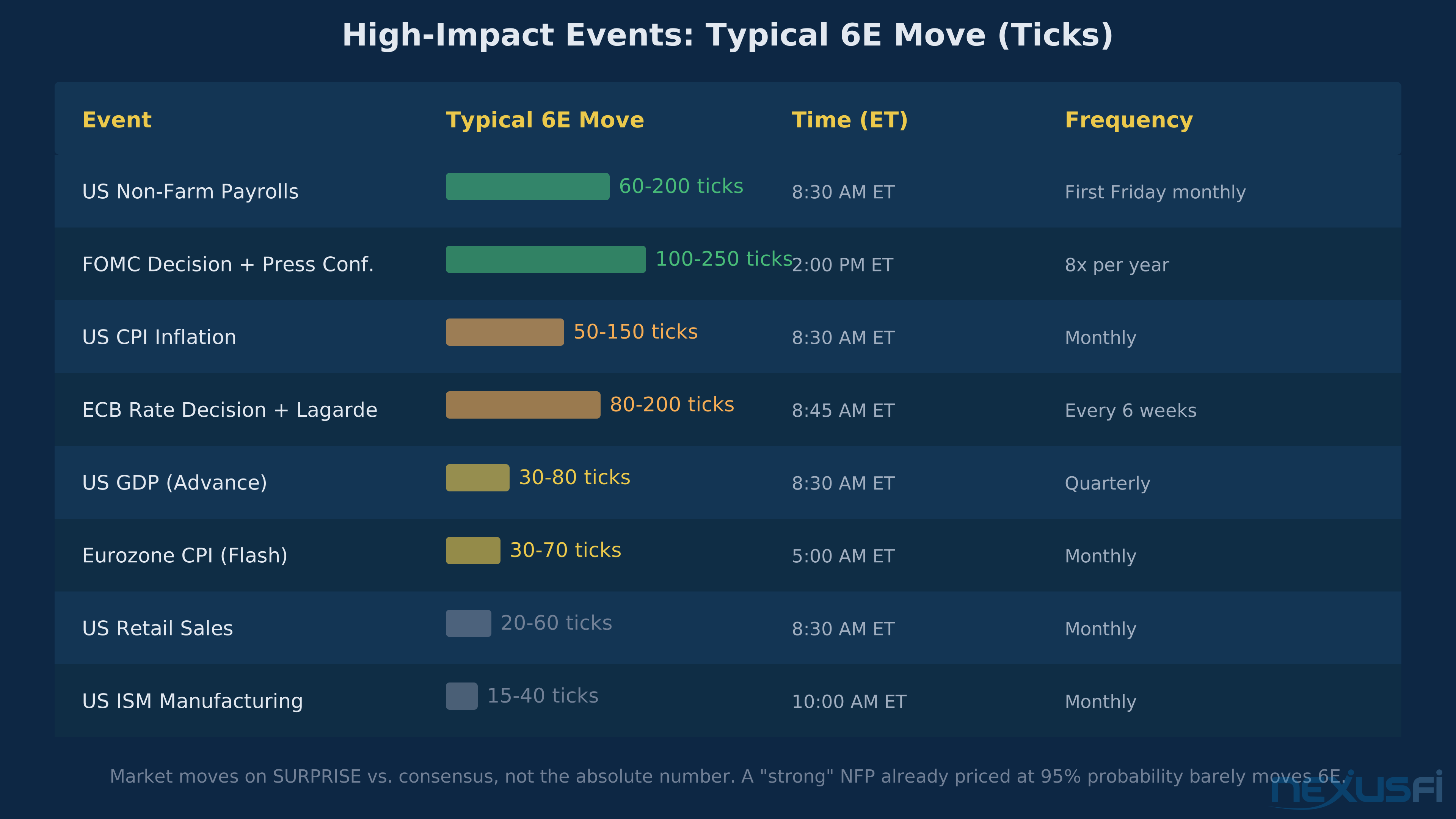
News breakout trading: NFP, CPI, and FOMC are the highest-impact releases for currency futures. 6E can move 100-200 ticks in the first minute after a major surprise. Professional approach: define the pre-event range, place OCO orders 2-3 ticks outside it with initial stops wide enough to survive the first whipsaw, then tighten as the move develops. The risk is significant slippage — spreads widen 5-15 pips on some platforms in the first 2-3 seconds after a release.
Central Bank Divergence Plays #
This is the macro backbone of most profitable directional currency trades. When one central bank is tightening while another is holding or easing, the interest rate differential widens and capital flows toward the tightening currency. These moves persist for months because the policy cycles themselves persist for months.
That drift is what directional position traders are trying to capture over weeks and months.
The monitoring framework:
- Use CME FedWatch for US rate expectations (what's priced in for the next 3-6 FOMC meetings)
- Track 2-year yield spreads: US 2Y vs. German 2Y Bund (for 6E), US 2Y vs. JGB 2Y (for 6J)
- When the spread is widening in favor of the USD, bias toward USD-bullish positions
- Forward guidance (dot plot, press conference tone) often matters more than the actual rate decision
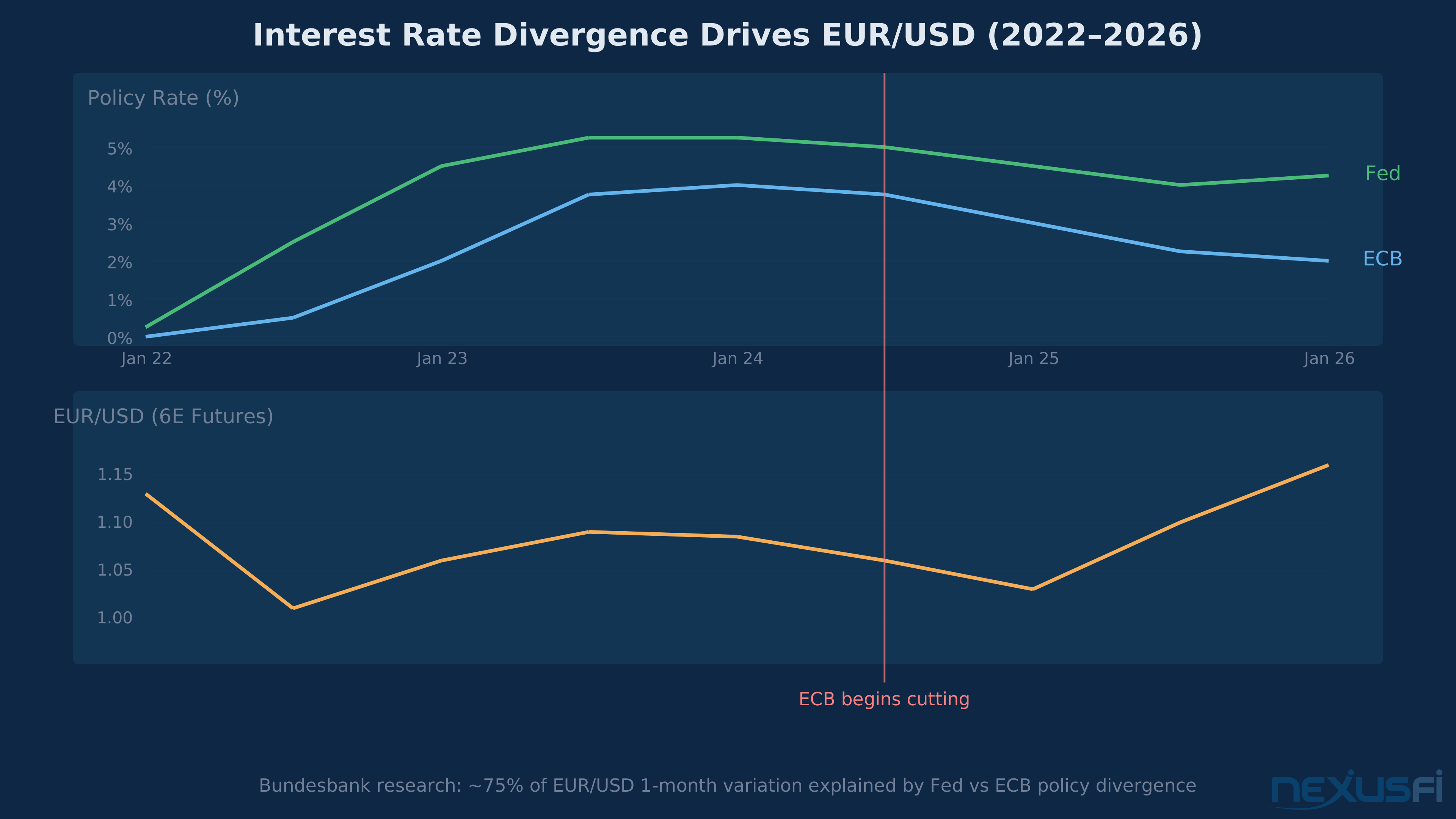
2024-2025 ECB vs Fed cycle: The Fed held rates at 5.25-5.50% while the ECB began cutting in mid-2024. This divergence drove EUR/USD lower from 1.11 to 1.03 — over 800 pips of directional movement over months. Traders positioned for this divergence when the policy paths diverged were capturing the cleanest carry + trend combination available. When the Fed began cutting and the ECB paused in late 2025, EUR/USD recovered toward 1.16.
Knowing when a divergence trade is priced in matters as much as knowing when to enter.
BoJ as the special case: Japan maintained near-zero interest rates for decades. The yen became the primary "funding currency" for global carry trades — borrowed at near-zero, sold against everything. Any surprise BoJ tightening or tapering announcement causes violent JPY strengthening as carry positions unwind simultaneously. The 2024 BoJ surprise rate hike to 0.25% triggered a 12% JPY move in weeks. No other major central bank routinely surprises the market like the BoJ can, because years of ultra-loose policy created a massive accumulated carry position that gets unwound all at once.
COT Positioning Analysis #
The CFTC's Commitments of Traders report is a free, publicly available dataset that shows the aggregate net positioning of hedge funds, CTAs, and other speculative traders in currency futures. It's one of the few tools that gives a direct window into what institutional money is doing in these markets.
That positioning extreme preceded a significant euro rally — the COT was signaling maximum bearish crowding right before the reversal.
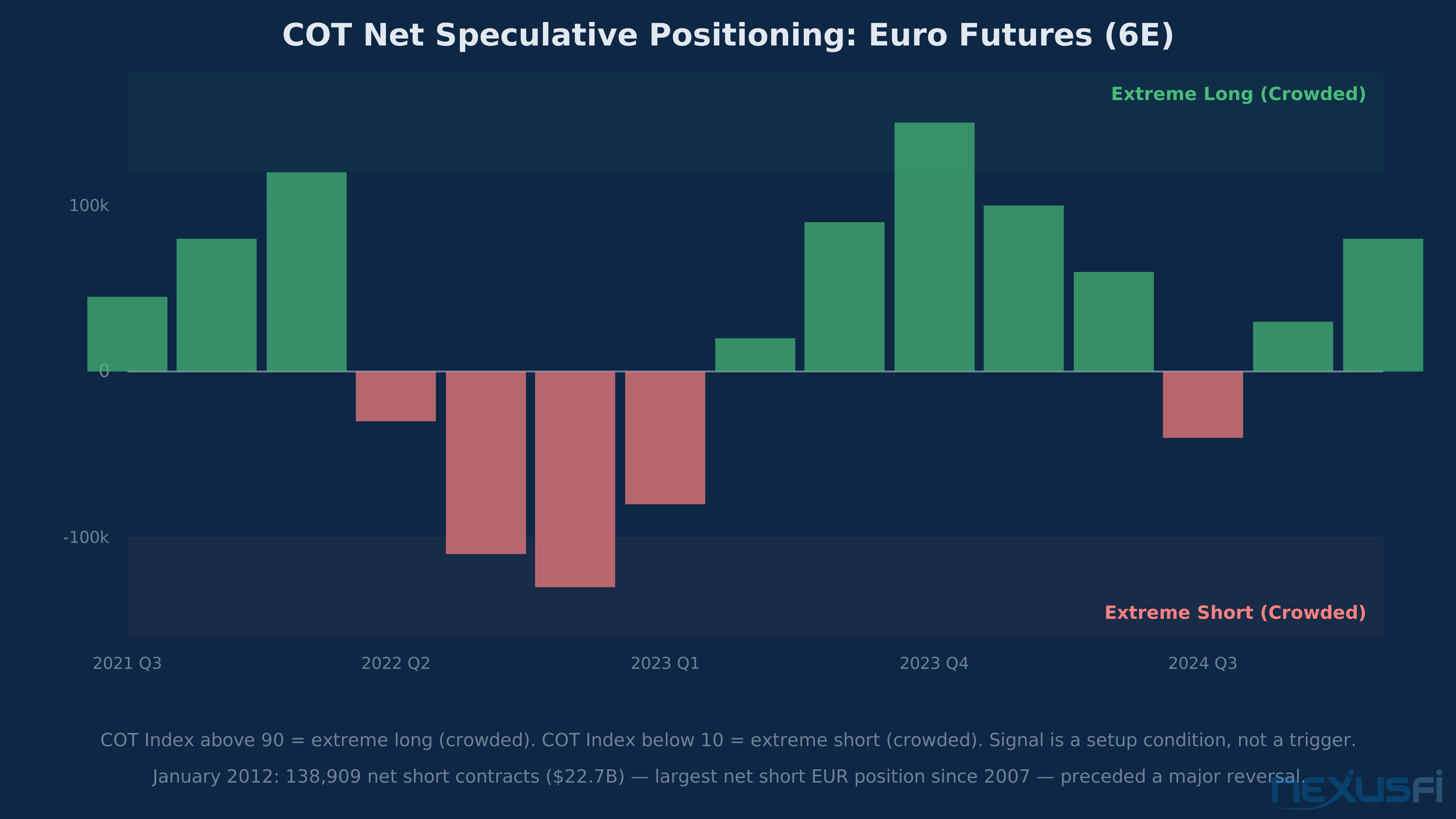
COT Index: Normalize the current net speculative position vs. the 52-week range, producing a 0-100 scale. Above 90 = extreme long (crowded trade); below 10 = extreme short (crowded trade). These extremes are a setup condition, not a trigger.
3-Stage COT framework:
- COT extreme exists: Index above 90 or below 10 signals potential reversal setup
- Macro confirmation: Does the fundamental story support the COT reversal signal? If speculators are extreme short EUR but the ECB just turned hawkish, the conditions exist for a short squeeze
- Technical entry: Use price action at a key level (value zone, breakout above recent range) to time the entry precisely, not the COT extreme alone
The COT report has a 3-day lag (published Friday with Tuesday data), so it's not useful for day trading. Its value is in identifying week-to-multi-week positioning extremes that create the conditions for significant counter-trend moves or trend acceleration when positions are covered.
Risk Management for Currency Futures #
Currency futures carry leverage that multiplies both gains and losses. 6E at 1.10 controls $137,500 notional per contract on $3,000 of margin — approximately 46:1 leverage. Risk management isn't optional in this environment.
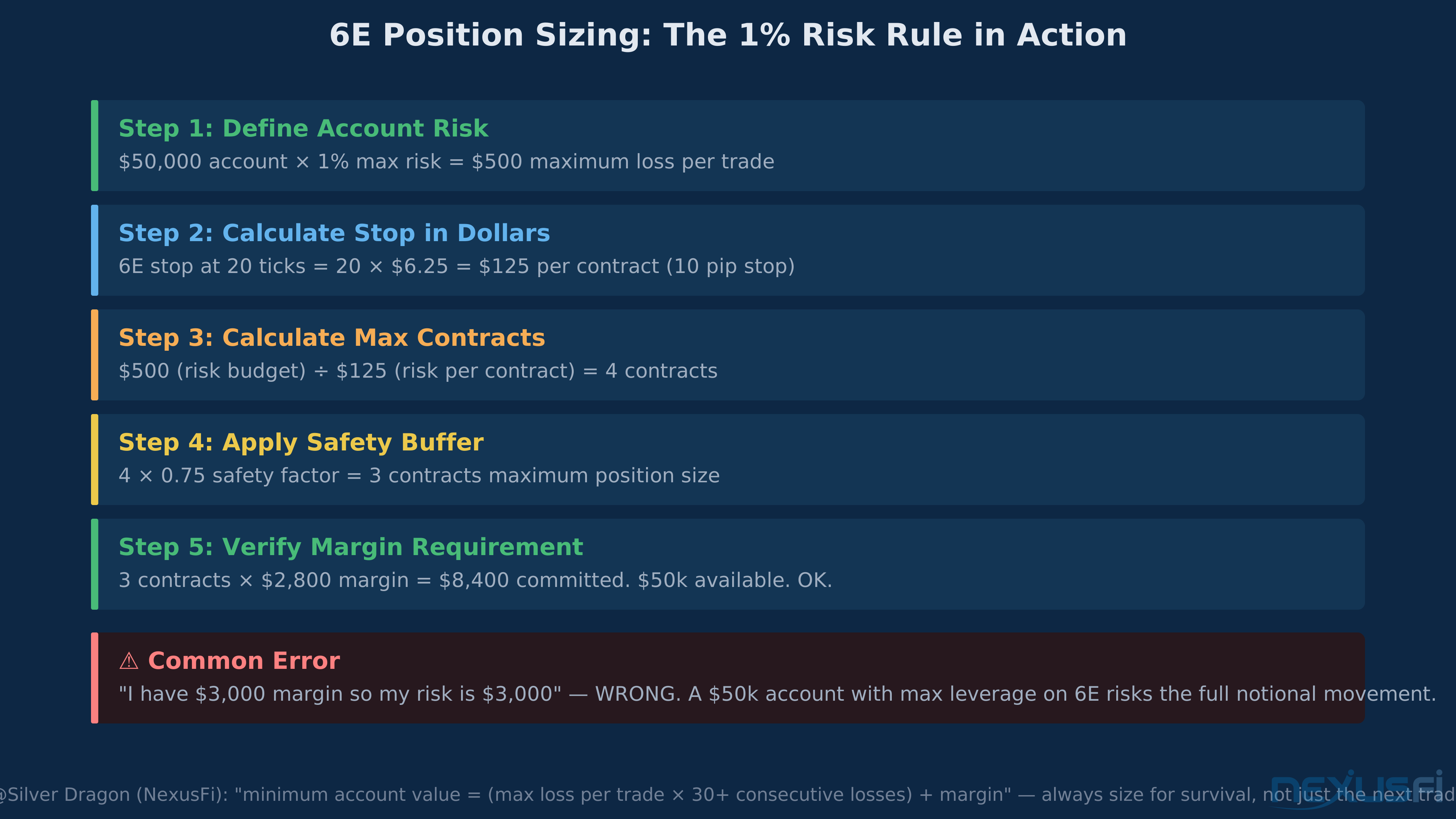
The 1% rule for currency futures: Never risk more than 1-2% of trading capital on any single trade. @Silver Dragon laid out the full calculation in the Minimum starting funds thread: "For 6E: if your stop is set up to lose a maximum of 200 dollars then the minimum account size needs to be 7000. (7000 × 3% = 210)... Formula: Minimum account value = (maximum loss per trade × minimum consecutive losses (≥30)) + Margin."
Position sizing calculation: Account × 0.01 = max dollar risk per trade. Divide by (stop distance in ticks × tick value) = maximum contracts. Example: $50,000 account, 1% risk = $500 max loss. 6E stop at 20 ticks below entry = 20 × $6.25 = $125 per half-tick. For full pip stops (40 ticks) = 40 × $6.25 = $250 per contract. Maximum contracts: $500 / $250 = 2 contracts.
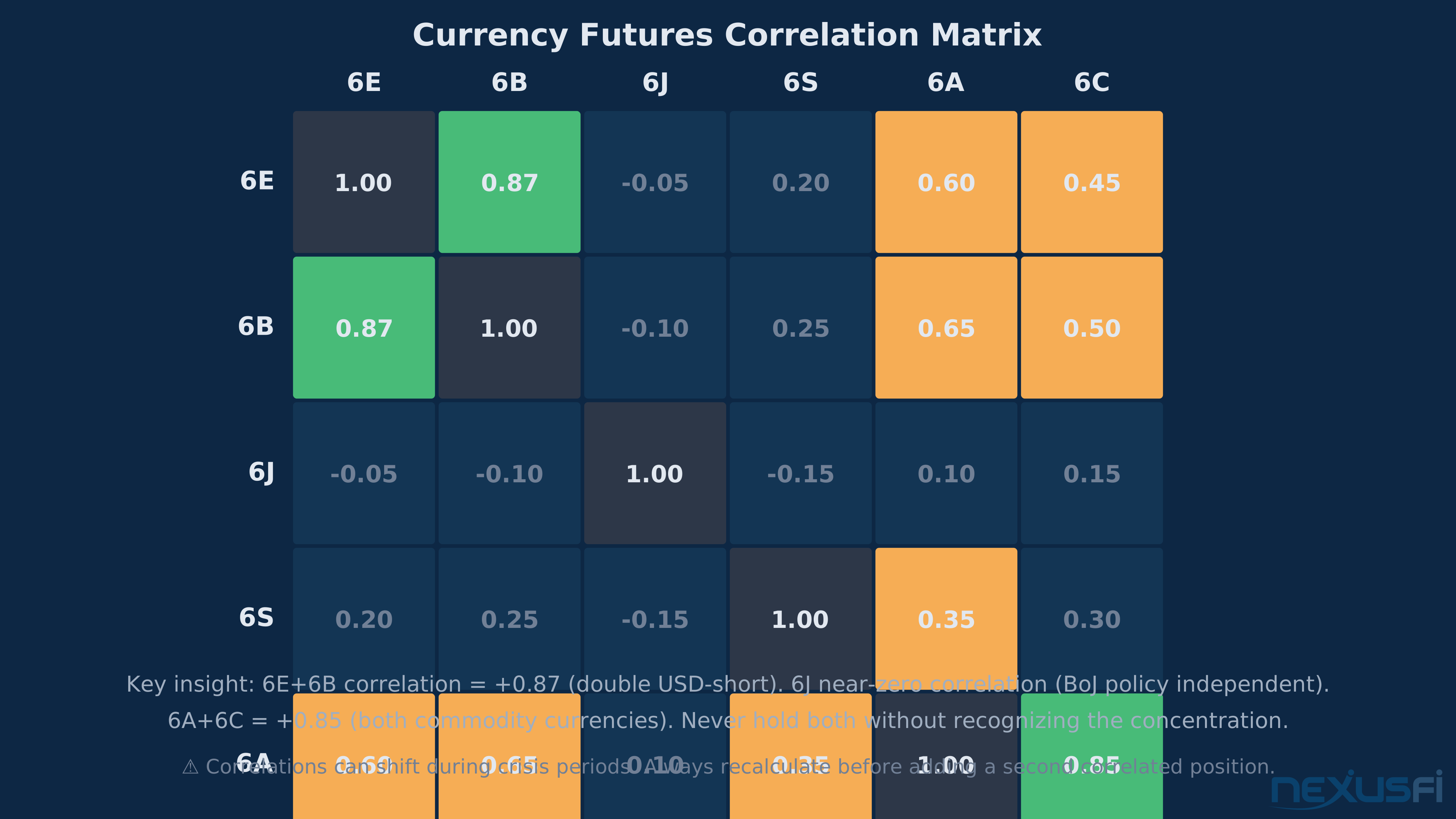
Correlation risk: This is the most commonly ignored risk in currency futures portfolios. 6E (EUR/USD) and 6B (GBP/USD) have a +0.85-0.90 correlation. Being long both is effectively doubling a USD-short bet, not diversifying. The correlation matrix for major currency futures:
- 6E and 6B: +0.85 to +0.90 (both vs. USD, similar European dynamics)
- 6E and 6S: near-zero to slight negative (CHF and EUR don't always move together since SNB policy diverges)
- 6J and everything else: near-zero correlation (BoJ policy and safe-haven flows are independent drivers)
- 6A and 6N: +0.85 to +0.95 (both commodity currencies, both correlated to China demand)
Overnight risk sizing: Central bank surprise announcements can cause 100-200 pip overnight gaps. BoJ intervention has historically moved 6J 300-500 ticks overnight without warning. Size overnight positions smaller than intraday positions, and know the economic calendar before carrying anything through a major release.
Stop placement principles: Structural stops (below prior swing low for longs, above prior swing high for shorts) outperform ATR-based stops in trending currency markets because they define the price level where the trade thesis is genuinely wrong — not just where the account is uncomfortable. Emotional stop placement ("I'll move my stop if it gets close") is how traders get their accounts slowly drained by a trend they're fighting.
Common Mistakes #
1. Treating 6J like an inverse USD/JPY: 6J rising = yen strengthening. USD/JPY rising = yen weakening. These are the inverse of each other. Traders who come from spot forex short 6J when they mean to go long 6J, and vice versa. Check the futures quote convention before every 6J trade.
2. Using exchange minimums instead of broker margin: CME exchange minimums are the legal floor. Your broker requires more, and can raise requirements overnight during high-volatility periods. Stress-testing position sizes against broker margin (not exchange minimums) is covered in depth in Stress Testing Your Futures Trading Account.
3. Doubling correlation without recognizing it: Long 6E + long 6B + short 6S = three bets expressing the same USD-short view. When USD strengthens unexpectedly, all three lose simultaneously. Check the correlation matrix before adding a second currency position.
4. Carrying positions through major releases without a plan: NFP, CPI, and FOMC can gap a currency 100-200 ticks in the first second. Either exit before the release, size for the event risk specifically, or use OCO orders to capture the move. Never "hope" through a major release with a tight stop sized for normal volatility conditions.
5. Trading in the wrong session: 6E during the Asian session means thin order books, false signals, and wider spreads. 6J during the US afternoon session means missing the BoJ-driven moves that happen in Asian hours. Always match the instrument to its primary liquidity window.
6. Confusing carry in futures vs. spot: Spot forex earns or pays rollover daily (the swap rate for the interest differential). Currency futures have no daily rollover — the carry is priced into the futures vs. spot price difference. You're not "earning carry" by holding futures overnight the way a spot trader does.
Knowledge Map
Prerequisites
Understand these firstGo Deeper
Build on this knowledgeReferences This Article
Articles that build on this topicCitations
- — Currency Options & Currency Carry? (2019) 👍 5“with June worth 112.39 and September worth 113.24 there is 0.85 USD or 0.76% carry for the 3 months. At the same time the Sep 112.50 put is only worth 1.03 so if you entered the carry trade, and bought the put, you'd be long a synthetic call which is only costing you 0.07”
- — Largest Net Short Euro Position Since 2007 (2012) 👍 1“speculators holding a net 138,909 contracts, up 8% from the week before, according to the Commodity Futures Trading Commission's weekly report on the commitments of traders. The market positioning shows that currency traders are wary of European political leaders' ability to address the fiscal crisis”
- — COT Report? (2022) 👍 2“COT reports can be very useful for longer time horizon swing traders. The basic idea is that if aggregate non-commercial / spec positions are crazy long, then there probably aren't many marginal buyers left in the market. positioning matters. A lot.”
- — Commitment of traders (2010) 👍 5“Commitment of Trader is extremely useful, as it shows the market positions of different groups of traders. Extreme readings of the COT figure can be used as a sentiment indicator for countertrades. For trading you should not use the absolute figures of the different positions, but the relative position of a group compared to their usual max and min positions.”
- — EURUSD Scalping (2012) 👍 5“You should be placing your stop according to market analysis, then size your position accordingly to achieve or maintain the desired dollar risk. The formula is: PositionSize = DesiredDollarRisk / StopSize. If your account size will not allow you to do this, then you are under capitalized for the trading method you are using.”
- — EURUSD M6E/6E Euro (2011) 👍 6“the latest CFTC Commitment of Traders update indicates, there was barely any change in net non-spec EUR bearish bets which remained stubbornly fixed near the 2011 highs, at -76,512 contracts. The one saving grace: this data is as of October 25, just before the massive rip started.”
- — FX Futures Products Overview (2024)
- — Commitments of Traders -- Weekly Reports (2024)
- — EURUSD M6E/6E Euro (2011) 👍 9“When price is on the orange side of the value zone the trend is confirmed. When price is on the purple side of the value zone, the trend may change. 6E has now reached its daily volatility target and formed a reversal bar, time to exit part of the position.”
- — Trading the EUR/USD vs either the 6E or the E7? (2017) 👍 1“If you can afford it, no question the full size 6E is the way to go. It's the highest volume/most liquid of the currencies. Tick size is $6.25, and maintenance margin is $2100. The M6E would be next, but it has a very tiny fraction of the volume.”