



Tail Risk and Black Swan Events in Futures Trading
Overview #
Every futures trader has a number tattooed on their brain — the maximum daily loss before they stop trading, the percentage risk per trade, the margin buffer that keeps them from getting a call. Standard risk management handles those numbers. What it doesn't handle is the morning you wake up to ES trading 200 points lower because a geopolitical event detonated overnight, or the 23 minutes in May 2010 when the Dow dropped 1,000 points and the bid-ask on ES was $600 wide.
That's tail risk. The events that live outside the probability distribution your risk model assumes, and that show up anyway — not occasionally, not rarely, but with statistically terrifying frequency.
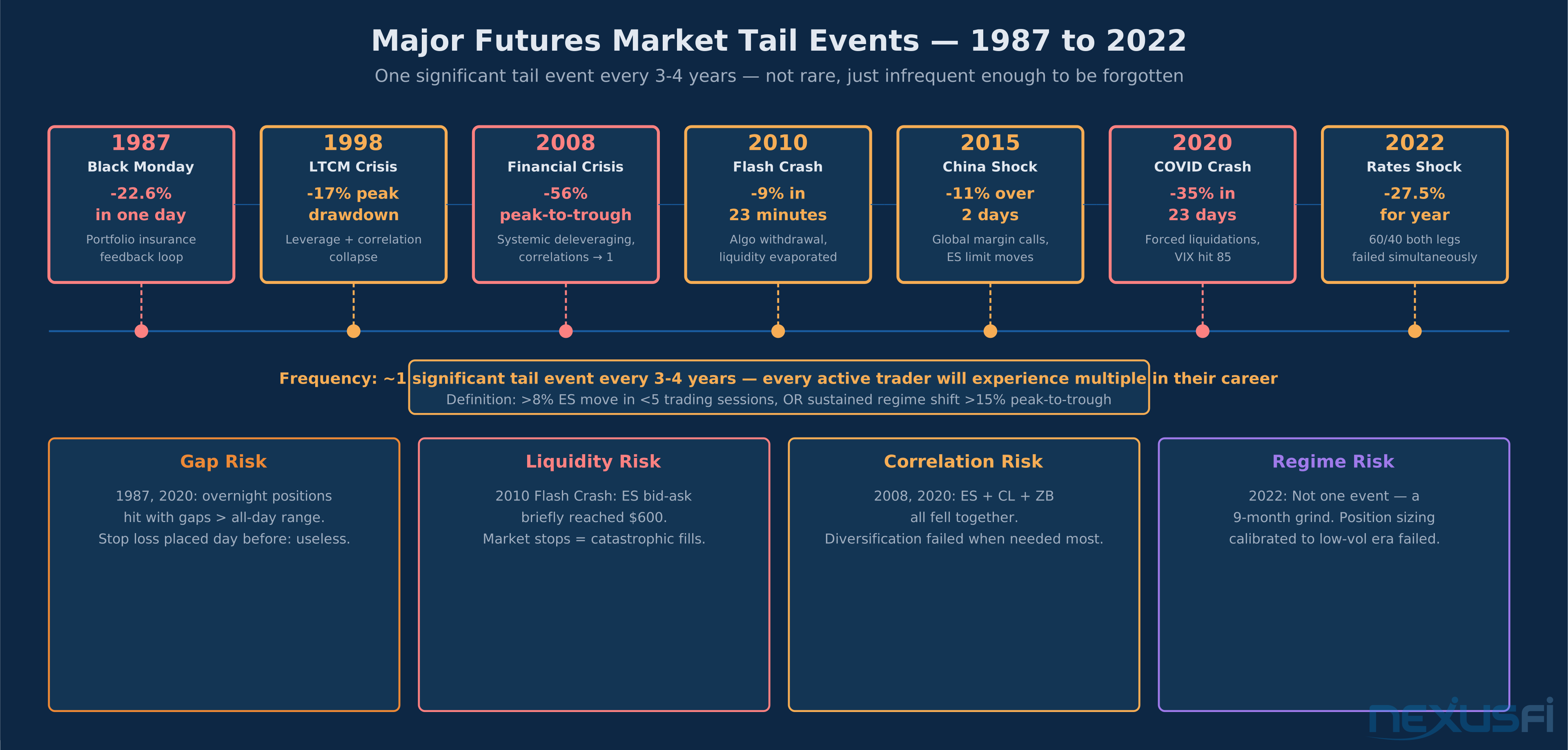
Here's the thing about black swans in markets: they're not actually rare. They feel rare because humans are wired to weight recent, stable experience more than distant catastrophe. But if you look at the last 40 years of futures trading — 1987, 1998, 2001, 2008, 2010, 2015, 2018 (Q4), 2020, 2022 — you get roughly one significant tail event every 3-4 years. That's not a once-in-a-career event. That's something every active futures trader will live through multiple times.
This article covers what tail risk actually is, why standard risk models fail catastrophically when it arrives, how historical tail events played out in futures markets, and what you can do before, during, and after a black swan to protect your capital and stay in the game.
What Makes a Black Swan #
Nassim Taleb coined the black swan framework to describe events that are simultaneously highly improbable (based on existing models), extreme in impact, and retrospectively obvious ("of course that was going to happen"). In markets, they're the events that break the rules your risk model is built on.
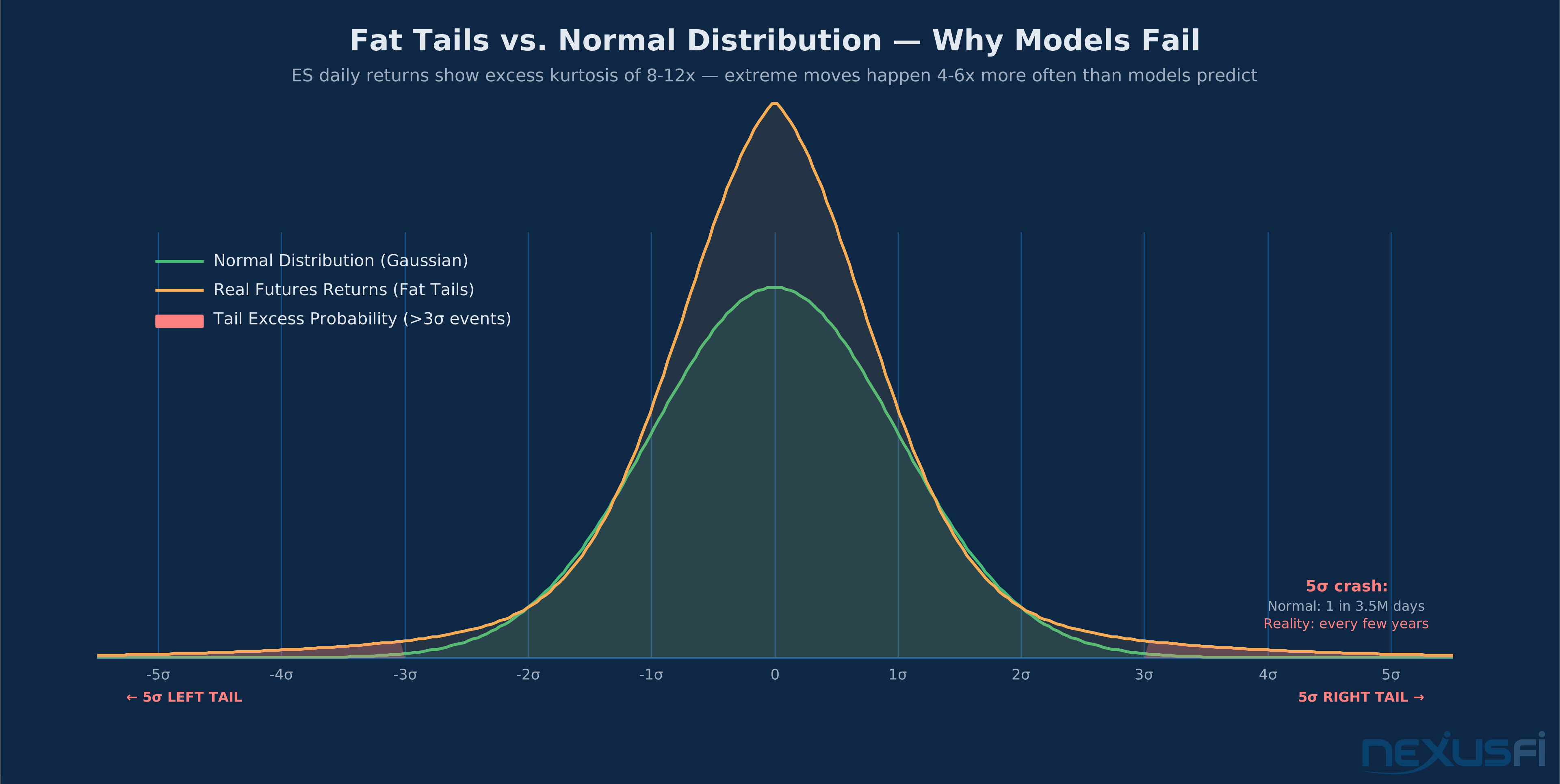
Standard risk models assume returns follow a normal distribution — the classic bell curve. Under a normal distribution, a 5-standard-deviation move is extraordinarily rare. The probability of a 5-sigma single-day move is roughly 1 in 3.5 million trading days. That would mean one such event every 14,000 years of daily trading.
ES experienced a 5-sigma move on March 16, 2020. And on October 19, 1987. And during multiple days in 2008.
The reason is fat tails — the real distribution of futures returns has much fatter tails than normal distributions predict. A measure called kurtosis captures this. Normal distributions have kurtosis of 3. ES daily returns have historically shown excess kurtosis of 8-12+. Translation: extreme moves happen 4-6 times more often than standard models predict.
This isn't an academic quibble. It's the foundation of why tail risk management is a distinct discipline from day-to-day risk management.
Fat tails are not randomness gone wrong — they reflect structural features of markets. Forced liquidations cascade. Leverage multiplies moves. Liquidity vanishes when everyone needs it simultaneously. These mechanisms guarantee fat tails, regardless of what your historical data shows.
Volatility clustering compounds the problem. Tail events don't arrive in a vacuum — they arrive in regimes. When volatility spikes, it tends to stay elevated. The 2008 financial crisis wasn't a single event — it was a 9-month regime of tail risk where 3-5% days became routine. Position sizing calibrated to normal volatility was catastrophically wrong.
As @jstnbrg noted in the NexusFi Psychology forum, fat tail events happen far more often than intuition suggests
Why Standard Risk Models Fail in Tail Events #
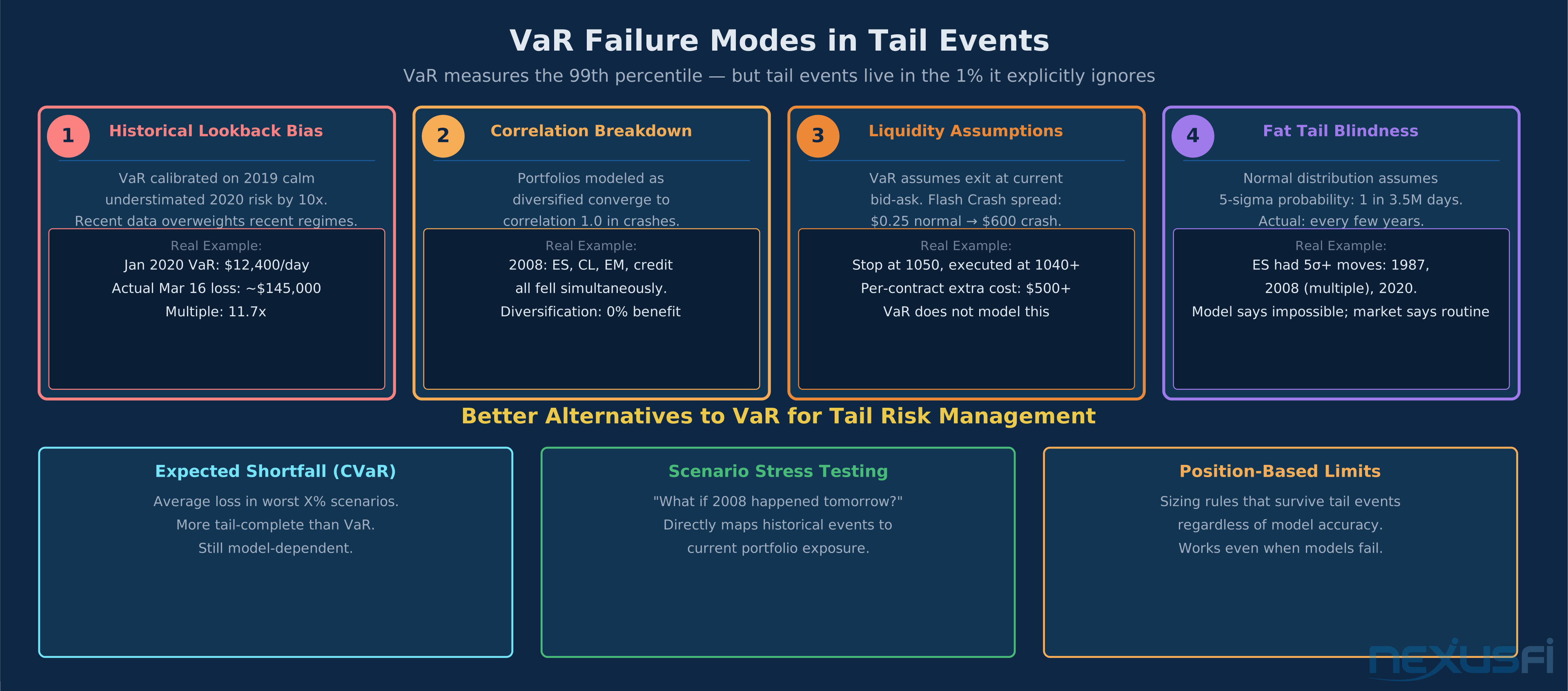
Value at Risk (VaR) is the industry standard risk measure. At a 99% confidence level over one day, VaR tells you the maximum loss you'd expect on 99% of trading days. The problem: it tells you nothing about the 1% of days when that threshold is breached.
On October 19, 1987, the Dow dropped 22.6% in a single session. For traders running VaR models calibrated to recent stable markets, that day generated losses somewhere between 10x and 50x their daily VaR estimate. The model wasn't wrong — it was measuring the right thing for the wrong events.
The VaR failure modes in tail events:
- Historical lookback bias: VaR models calibrated on recent calm periods dramatically underestimate tail risk when regimes shift. In January 2020, VaR models saw 2019's low-volatility data. In March 2020, they were catastrophically undercalibrated.
- Correlation breakdown: Diversification is supposed to reduce portfolio risk. During tail events, correlations go to 1. Everything falls together. A diversified futures portfolio with ES longs and CL longs might expect modest correlation in normal markets — during the 2008 crisis and the 2020 COVID crash, both moved together violently. Diversification that works in normal regimes fails precisely when you need it most.
- Liquidity assumptions: VaR models assume you can exit at current bid-ask. During the 2010 Flash Crash, the bid-ask on ES futures briefly exceeded $600. Executing a normal-sized position at any price — let alone the model's assumed spread — was impossible.
- Fat tail blindness: Standard VaR uses normal distribution assumptions. Real markets have fat tails. The model systematically underestimates the probability of extreme moves.
Stressed VaR (used by banks post-2008) recalibrates the model to crisis data. Expected Shortfall (CVaR) measures average loss in the worst X% of scenarios. These are improvements — but still models, still subject to the same fundamental problem: they measure what has happened, and tail events are defined by exceeding what has happened.
VaR passed through a committee meeting doesn't protect your account. The 2010 Flash Crash lasted 23 minutes. Most VaR reports are computed daily. Your risk model ran at 5pm yesterday; the Flash Crash happened at 2:42pm today. No model protects you from that — only position sizing and structure do.
@SMCJB, one of the most respected options traders on NexusFi, put it directly
Historical Tail Events: Lessons From the Data #
October 19, 1987 — Black Monday #
The Dow dropped 22.6% in a single session. Before electronic futures markets at their current depth, S&P 500 futures hit circuit breakers and trading halted. Traders with overnight index positions faced catastrophic losses with no way to exit.
What drove it: Portfolio insurance strategies (which involved selling futures as markets fell) created a mechanical feedback loop. Selling triggered more selling. The mechanism was self-reinforcing and only stopped when the CME halted trading.
Futures-specific lesson: Overnight positions in index futures are always exposed to gap risk. Black Monday happened in hours. No stop loss placed the previous day helped.
May 6, 2010 — The Flash Crash #
At 2:41pm ET, ES futures sold off aggressively. In 23 minutes, the Dow dropped 1,000 points before recovering nearly all of it by 3:07pm. The bid-ask spread on ES briefly reached 12 points — approximately $600 per contract — versus the normal 1 tick ($12.50).
A trader who had a stop order at market during those 23 minutes got filled at catastrophically bad prices. Limit orders on the buy side were simply not there. Liquidity evaporated.
What drove it: A single large seller (Waddell & Reed, executing a $4.1B E-mini sell order) triggered a cascade of algorithmic responses. High-frequency traders withdrew, widening spreads. The flash crash was partially mechanical — but its effects were very real to anyone holding a position.
Futures-specific lesson: Market stop orders are dangerous in low-liquidity conditions. During a flash crash, stop-market execution can be much worse than stop price. The $600 bid-ask means your "stop at 1050" executed at 1040 or worse.
@bobwest described the liquidity failure directly from experience
March 2020 — COVID Crash #
Between February 20 and March 23, ES dropped from 3,387 to 2,174 — a 35.8% decline in 23 trading days. On March 16 alone, ES dropped 12% — a move that standard VaR models calibrated to 2019 data would have described as roughly a 7-8 sigma event.
What drove it: Forced liquidations from leveraged positions, margin calls cascading across multiple asset classes, correlations going to 1. ES, CL, ZB (initially), everything sold together.
Futures-specific lesson: Volatility in March 2020 averaged around 75 (VIX levels). Normal position sizing assumes VIX around 15-20. If you were sizing based on your standard position sizing framework, you were carrying roughly 3-5x more risk than the volatility environment warranted.
2022 — Rates Shock #
The Fed hiked from 0.25% in March 2022 to 4.5% by December — the fastest tightening cycle since 1980. ES dropped 27.5% on the year. ZB (30-year Treasury bond futures) dropped roughly 33% — a move that, for a supposed "safe haven" asset, blindsided traders running traditional stock/bond diversification.
What drove it: Not a single event but a regime shift. Inflation data kept exceeding estimates. The Fed kept hiking faster than markets expected. The traditional 60/40 portfolio allocation was underwater in both legs simultaneously.
Futures-specific lesson: Tail risk isn't always a single-day event. Regime shifts can be a slow-motion tail event — grinding losses over weeks or months that are individually survivable but collectively catastrophic.
The True Cost of Tail Risk #
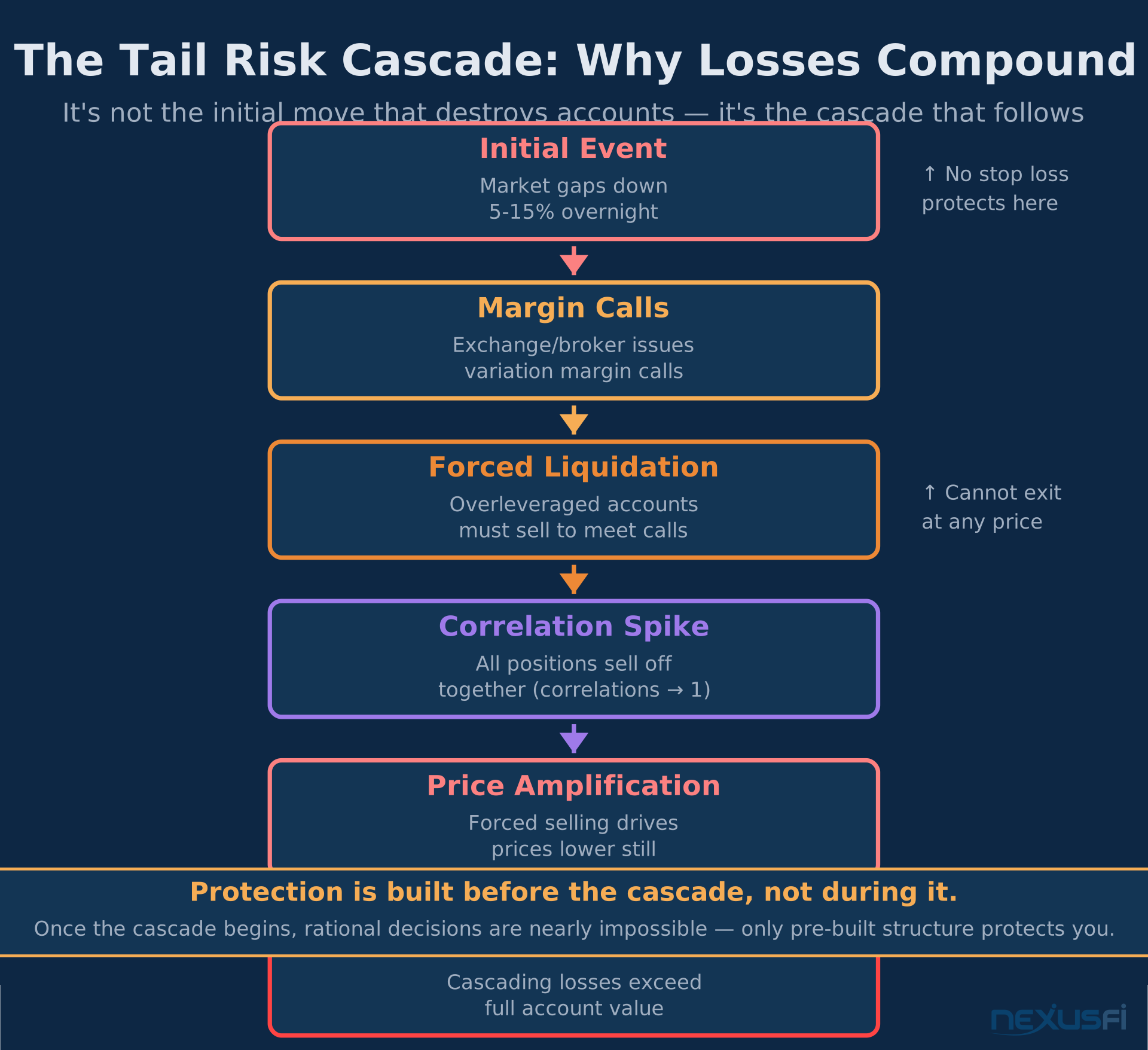
Why tail events destroy accounts disproportionately comes back to the mathematics of drawdown recovery. A 50% drawdown requires a 100% gain to recover. But there's a deeper problem with tail events: they don't just cause drawdowns — they cause correlation-induced cascades that compound.
During the 2020 COVID crash, this played out predictably:
- Market gaps lower at open (position exposure before you can react)
- Margin call forces additional liquidation (amplifying the loss)
- Liquidation pressure drives prices lower (your selling makes the market worse)
- Multiple positions decline simultaneously (no diversification benefit)
This cascade pattern — gap → forced liquidation → correlation spike → further losses — is the defining feature of tail events. It's not the initial move that destroys accounts. It's the cascade.
Account survival rates during tail events depend heavily on pre-event position structure:
- Traders with 1% risk per trade and low leverage have high survival rates — the initial gap hurts, but doesn't kill
- Traders with 5%+ risk per trade or concentrated positions face existential account risk from a single gap
- Traders with uncapped short options face basically unlimited loss (see: March 2020, when ES implied volatility hit 85)
Uncapped short options — naked short puts, naked short calls, short straddles without protective wings — have unlimited downside in tail events. In March 2020, traders short ES puts at what appeared to be safely OTM strikes saw those options go deep ITM in hours. The 2018 Volmageddon event (VIX short ETF meltdown) destroyed XIV in a single session, wiping out accounts that had been profitable for years.
@thomasthomsen summarized the pattern in the Selling Options thread
Hedging Strategies for Tail Risk #
Tail risk hedging is a cost-benefit calculation. Hedges that protect against rare events cost money in normal markets. The goal isn't zero tail risk — it's keeping the cost of protection below the expected value of the protection.
Long Volatility via Options #
The cleanest tail risk hedge in futures markets is long out-of-the-money options on index futures.
ES puts as tail hedge:
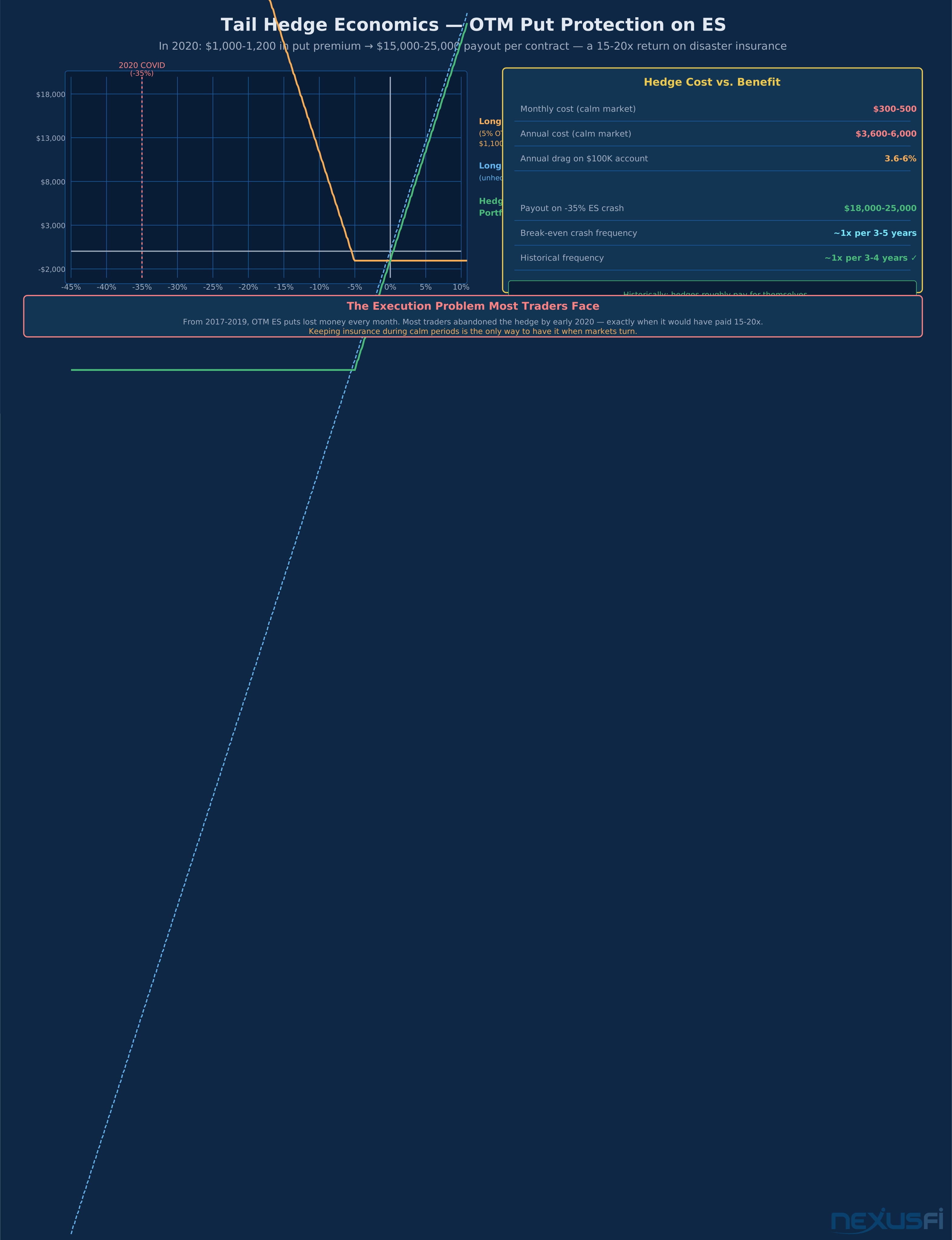
- Purchase ES put options 5-8% OTM on a rolling basis
- Cost: approximately 0.2-0.5% of portfolio value per month in normal vol environments
- Payoff in a tail event: asymmetric — a 20% crash generates 10-50x the premium paid on deep OTM puts
- Caveat: In stable, low-volatility markets, this is a pure drag. It's insurance, not alpha.
VX futures (VIX futures) as tail hedge:
- Long VIX futures or calls profit when implied volatility spikes
- VIX typically spikes during equity tail events — 2008, 2010, 2020 all saw VIX exceed 70
- Risk: VX futures have negative expected return in normal markets due to the VIX term structure. Contango in VIX futures means a long position loses value as the front month decays
- The contango problem means VIX hedging is expensive — approximately 0.5-1% monthly drag in normal vol environments
Practical implementation: The most cost-effective approach for active futures traders is dynamic hedging — increasing hedge size when volatility regimes shift, reducing or eliminating hedges in stable low-vol environments.
Position Sizing as the Primary Defense #
Hedging is secondary. Position sizing is primary.
The single most effective tail risk protection is reducing leverage before events likely to produce tail outcomes:
- Pre-FOMC, pre-NFP, pre-CPI: events with binary outcomes
- Geopolitical escalations: fluid situations where overnight gapping risk is elevated
- Earnings season for equity index traders: correlation between individual stock moves and index futures
- Options expiration days (OpEx): gamma effects can create unusual price dynamics
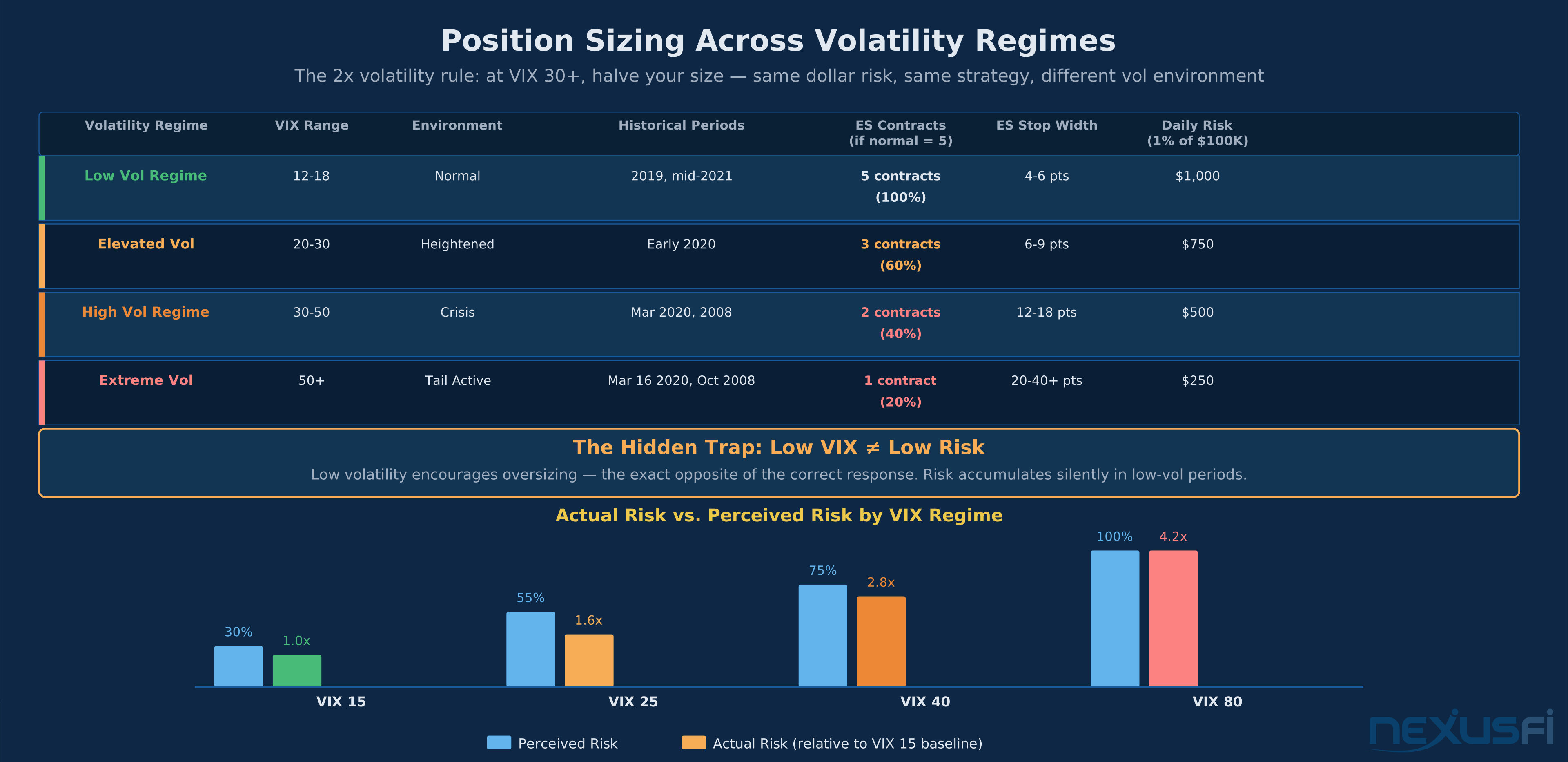
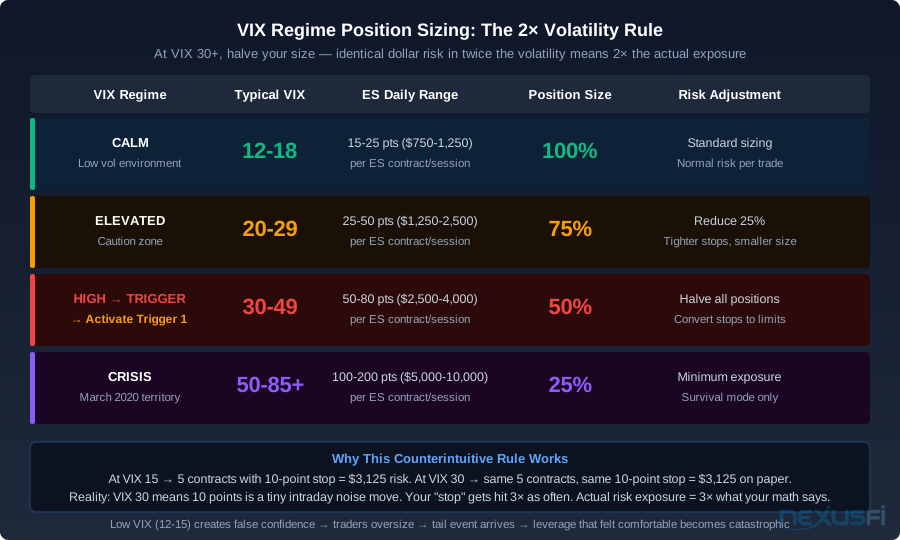
The 2x volatility rule: In periods where VIX is above 30, halve your standard position size. The math: if you normally risk 1% of account per trade in 15-vol environments, you're actually risking 2-3% when vol is 30+ if you keep the same size. Reducing size by half restores your risk-adjusted exposure to its intended level.
Structural Position Design #
Beyond hedging and sizing, structure matters:
Defined-risk positions: Long options, vertical spreads, and other defined-risk structures cap tail loss at premium paid. A long call spread on ES has a maximum loss equal to the debit paid. A short futures position has no cap.
Diversification that works in tails: Traditional diversification breaks down in tail events — but some diversifications hold:
- Long VIX vs. short ES: these tend to move in opposite directions during equity crashes
- Long gold futures (GC) vs. short equity index: mixed results — gold occasionally correlates positively with risk assets but historically provides some protection
- Long Treasury futures (ZB/ZN) vs. short equity: worked in 2008-2019, FAILED in 2022 when both sold simultaneously
Time diversification: Not being in all positions at all times. Scaling back to reduced size in extended bull markets (where reversal risk accumulates) and increasing size in post-crash recoveries (where tail risk is lower, not higher).
The cheapest tail hedge is not being in positions you don't have a clear thesis for. Positions held out of inertia — "I'll close it tomorrow" — are maximum tail risk. Every position should have a defined exit, a defined invalidation, and a reason it exists today.
Pre-Event Preparation: The Tail Risk Protocol #
Tail risk management happens before the event, not during it. During a tail event, executions are poor, emotions are elevated, and rational analysis is difficult.
The Pre-Trigger Checklist:
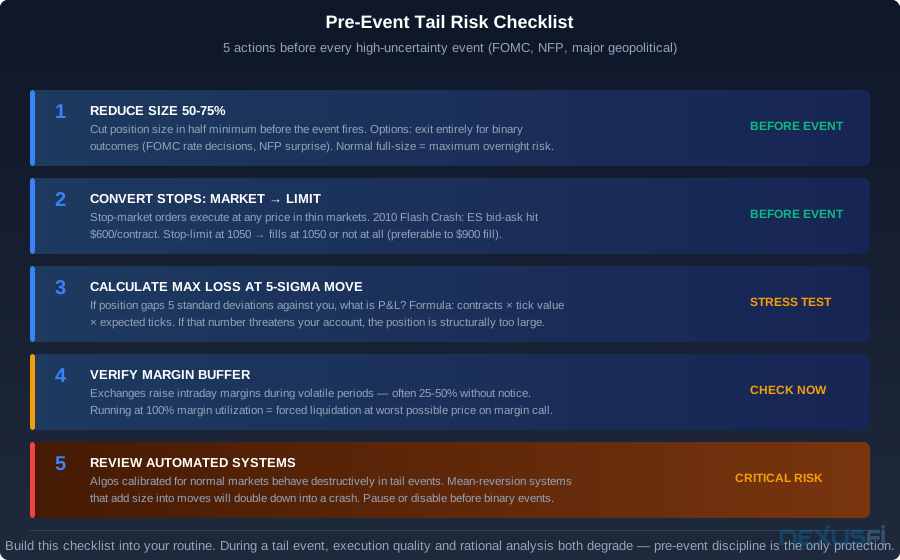
Before any high-uncertainty event (FOMC, NFP, major geopolitical developments):
- Reduce size by 50-75% going into the event, or exit entirely
- Convert stop-market orders to stop-limit orders — in thin markets, stop-market orders execute at catastrophic prices
- Know your maximum loss: If the position gaps 5 standard deviations against you, what is the P&L? If that number is account-threatening, the position is too large
- Check margin requirements: Exchanges raise intraday margins during volatile periods. Ensure you're not at risk of a margin call at the worst possible moment
- Disable or review automated systems: Algorithmic systems calibrated for normal markets may behave destructively in tail events — position-doubling mean-reversion systems are especially dangerous
Overnight position protocol:
Overnight positions in leveraged futures carry gap risk that daytrading positions don't. The COVID crash developed largely in pre-market futures trading. The 1987 crash was preceded by significant futures selling before the NYSE open.
If holding overnight:
- Maximum position size should be 25-33% of normal intraday sizing
- Widen stops beyond technical levels — in gap scenarios, stops must accommodate the gap plus normal trade noise
- Have defined exit plan at market open regardless of price
During a Tail Event #
Once a tail event is occurring, execution quality is poor and rational decision-making is compromised. The rules:
- Do not average down into a cascade: Adding to losing positions during a violent directional move amplifies loss in a phase where prediction is impossible
- Execute exits at limits, not markets: In thin markets, limit orders get better execution than market orders. Set a price you're willing to accept and work the order
- Stop checking P&L: Monitoring P&L during a violent move increases anxiety and reduces decision quality. Check positions and size, not P&L
- Respect pre-defined stop levels: Stops exist to protect against the scenario you're now in. Moving stops down ("just a little further") is the behavior that turns drawdowns into disasters
Post-Event Recovery: Rebuilding After a Tail Event #
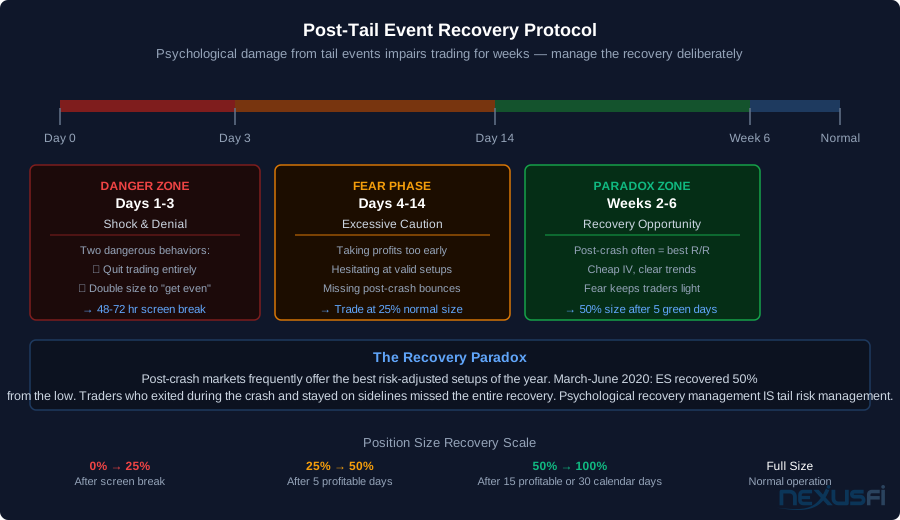
Tail events that result in significant drawdowns create a psychological environment that impairs trading performance for months afterward. Understanding this pattern and managing it deliberately is as important as the risk management itself.
The post-crash recovery timeline (based on trader behavior research):
- Days 1-3: Shock and denial. Common behavior: quitting trading entirely, or — more dangerously — dramatically increasing size to "get back to even" quickly
- Days 4-14: Fear-dominated trading. Excessive hesitation, taking profits too early, missing recoveries
- Weeks 2-6: The recovery paradox — markets often recover sharply after crashes (V-shaped recovery), but fear keeps post-crash traders underexposed during the best risk-adjusted period
Recovery protocol:
- Take 48-72 hours away from screens immediately after a significant loss event. Research on decision fatigue shows impaired judgment persists for 24-48 hours after acute stress
- Reduce size to 25% of normal for the first two weeks back. Rebuild to full size only after consistent profitability at reduced size
- Review the pre-event behavior, not just the outcome: What position sizing errors led to the excessive loss? Was the tail event survivable at proper position sizing, or only catastrophic because of leverage?
- Document what happened: Create a specific record of the tail event — market conditions, your positions, what worked, what failed. This becomes reference material for the next tail event
Post-crash environments often provide the best risk-adjusted trading setups — cheap implied volatility, clear trends, overextended moves. But psychological damage from the crash itself prevents most traders from accessing those opportunities. Recovery management is part of tail risk management.
Stress Testing Your Portfolio Against Tail Events #
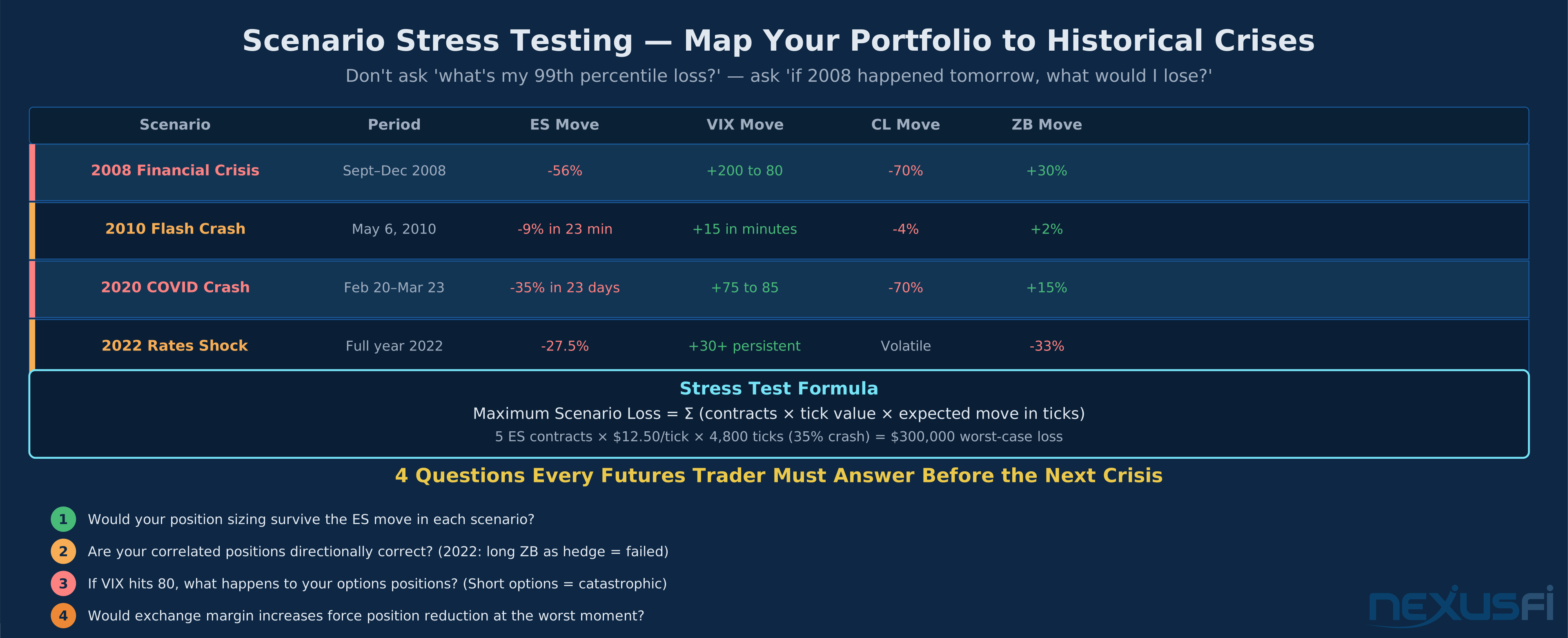
Scenario-based stress testing is more useful than statistical VaR for tail risk. Rather than asking "what's my 99th percentile loss?", ask "if 2008 happened tomorrow, what would I lose?"
Standard scenarios to test against:
| Scenario | ES Move | VIX Move | CL Move | ZB Move |
|---|---|---|---|---|
| 2008 Financial Crisis | -56% (Sept-Dec 2008 peak-to-trough) | +200 to 80+ | -70% (demand collapse) | +30% (flight to safety) |
| 2010 Flash Crash | -9% in 23 min | +15 in minutes | -4% (same day) | +2% |
| 2020 COVID Crash | -35% in 23 days | +75 to 85 | -70% (demand collapse + Saudi-Russia price war) | +15% |
| 2022 Rates Shock | -27% (annual) | +30+ persistent | Volatile but no crash | -33% (simultaneous crash) |
Map your current portfolio against each scenario. The questions:
- Would the current position sizing survive the ES move in each scenario?
- Are your correlated positions in the right direction? (In 2022, long ZB as a hedge failed)
- If volatility spiked to 80 VIX, how would your options positions behave? (Short options = catastrophic loss)
- Would the intraday margin requirement increase during a tail event force position reduction at the worst time?
Practical stress testing formula:
Maximum scenario loss = Sum of (position size in contracts x tick value x expected move in ticks)For a 5-contract ES position stress tested against 2020 COVID crash:
- ES contracts: 5
- Tick value: $12.50/tick (0.25 point)
- Expected move: -35% = ~1,200 points = 4,800 ticks
- Worst-case loss: 5 x $12.50 x 4,800 = $300,000
If that number threatens your account, the position is too large for your capital base — regardless of what your normal risk sizing says.
Integration with Existing Risk Management #
Tail risk management doesn't replace day-to-day risk management — it adds an overlay. The relationship to existing tools:
Stop losses — stops are effective for normal-market risk management. They're partially effective for tail risk (stops above the gap point don't help; stops within the gap help but may execute at bad prices). Supplement with position sizing that makes the stop level less critical.
Daily loss limits — effective for operational risk (bad days, revenge trading, slippage). Insufficient for tail risk — a 2% daily loss limit doesn't prevent a 15% overnight gap loss.
Drawdown management — the Drawdown Management framework's guidelines about reducing size after consecutive losses apply here. Post-tail-event behavior should trigger automatic size reduction.
Margin management — maintain a buffer above minimum margin requirements, specifically to survive the exchange margin increases that happen during volatile periods. Running at 100% margin utilization is survivable in normal markets and catastrophic when exchange margin requirements jump 50% overnight.
Practical Application: The Tail Risk Action Plan #
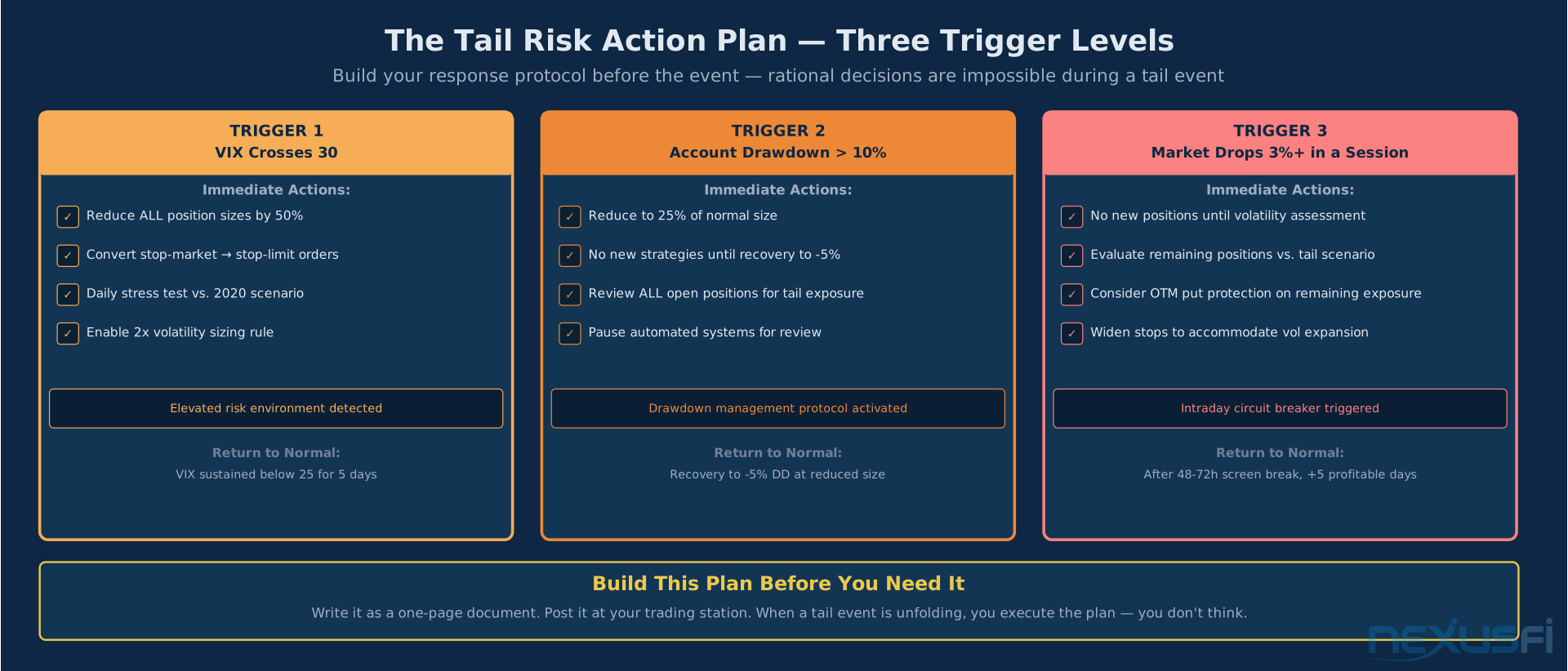
Build your plan in advance — you can't build rational protocols during a tail event. Build them now.
The One-Page Tail Risk Plan #
Normal market operation:
- Maximum overnight position: [X] contracts (set to 25-33% of normal daytrading max)
- Maximum position entering high-uncertainty events (FOMC, NFP): [X] contracts
- Monthly hedging budget: [X]% of portfolio (for options protection, if applicable)
Trigger 1 — VIX above 30:
- Reduce all position sizes by 50%
- Convert all stop-market orders to stop-limit
- Daily stress test portfolio against 2020 scenario
Trigger 2 — Account drawdown exceeds 10%:
- Reduce to 25% of normal size
- No new strategies until recovery to -5%
- Review all open positions for tail exposure
Trigger 3 — Market drops 3%+ in a session:
- No new positions until volatility assessment
- Evaluate all remaining positions against tail scenario
- Consider options protection on any remaining exposure
Post-tail recovery:
- 48-72 hour screen break
- Return at 25% size
- Scale back to 50% after 5 profitable trading days
- Return to 100% after 15 profitable trading days or 30 calendar days
Frequently Asked Questions #
Does buying OTM puts as a hedge actually work?
The math depends on cost vs. payout. Long 5% OTM ES puts in early 2020 cost approximately $800-1,200 per contract with roughly 45 days to expiration. When ES dropped 35%, those puts went from ~$1,000 to ~$15,000-25,000 per contract. The hedge worked spectacularly well — if you had it. The problem is that from 2017-2019, those same options lost money every month, creating execution bias against maintaining them. Most traders abandon cheap insurance during long bull markets — precisely when it would have paid off.
Should I always hold VIX calls as a tail hedge?
Probably not as a permanent position. VIX futures and options have a structural cost from contango — roughly 5-10% annually in normal markets. For a retail trader with $50,000, that's a meaningful drag. Better approach: increase tail exposure going into known binary events (FOMC, major geopolitical situations) and reduce it during calm periods.
How much capital should I allocate to tail protection?
The target is that tail protection should roughly pay for itself over a full market cycle. Historical data suggests spending 0.5-1% of portfolio annually on OTM put protection breaks roughly even when accounting for the payouts in tail events. More than 1% starts to create meaningful portfolio drag. Structural position sizing and operational protocols (the action plan above) are more cost-effective per dollar than ongoing options protection.
What's the biggest tail risk mistake retail futures traders make?
Running too much leverage in low-volatility periods. When markets are calm and VIX is at 12-15, it's tempting to increase position size (low volatility = small stop = more contracts for same dollar risk). But this is precisely when tail risk is accumulating in the background. The post-2017, pre-COVID period saw many traders increase leverage precisely because volatility was so low. In March 2020, the leverage that felt comfortable in 2019 became catastrophic.
Knowledge Map
Go Deeper
Build on this knowledgeReferences This Article
Articles that build on this topicCitations
- — Account size when trading multiple instruments (2011) 👍 3“Black Swan events will become more common now that market making is done by high frequency bots that turn themselves off when volatility gets too high. I have seriously considered owning way out of the money strangles against my position size as insurance.”
- — Selling Options on Futures? (2018) 👍 8“I have spent several hours playing with Monte Carlo simulations. I have developed an understanding of how the unexpected happens much more than expected. And this is assuming normal distributions and not fat tailed distributions that are more realistic.”
- — Spoo-nalysis ES e-mini futures S&P 500 (2014) 👍 5“During the flash crash I tried to get filled buying index puts, starting fairly early in the drop. No fill until price had rebounded up again. When this kind of thing happens, the normal liquidity is gone, and you cannot count on anything normal happening.”
- — Selling Options on Futures? (2020) 👍 6“Selling options far OTM is a losing proposition in the long run. Those supposedly rare black swan events come up much more frequently than would be expected by random chance. Fat tail risk means the strategy that worked for years fails catastrophically in a single session.”
- — The Black Swan: The Impact of the Highly Improbable (2007)
- — Circuit Breakers and Price Limits in Futures Markets (2023)
- — Selling Options on Futures? (2016) 👍 5“A Black Monday 1987 event would be the biggest risk, which could result in losses of 50% of account value (using 3-4x IM) based on option pricing modeling at the time. The flash crash would not have been an issue based on the closing price, but the risk is definitely a real one to consider.”
- — Spoo-nalysis ES e-mini futures S&P 500 (2014) 👍 7“Open interest across VIX futures options stands at around 9.6 million contracts, heavily skewed towards call options used to hedge against a rise in volatility. There are around 7.2 million calls held among traders outnumbering puts by 3.3x -- the cost of protection is always highest when you need it most.”
- — Spoo-nalysis ES e-mini futures S&P 500 (2014) 👍 11“VIX rallied roughly 40% in 5 trading days which has all the earmarks of a spike peak buy signal. Larry McMillan: waiting until your house is on fire to decide to buy fire insurance. Put protection is expensive when the market is already locked in a rapid decline.”