



Diversified Option Selling Portfolio for Futures: The Multi-Instrument Short Premium Approach
Overview #
Selling options on futures is one of the oldest ways traders have collected premium. But single-instrument option selling is a concentrated bet — when CL has a supply shock, your short crude calls explode. When the Fed surprises, your short 6E puts gap against you. The traders who have built sustainable option selling businesses aren't betting on one market. They're running portfolios of short premium across instruments that don't all blow up at the same time.
This is the diversified option selling approach: maintaining 8--15 short option positions across energy, metals, grains, currencies, and softs simultaneously, sized so that no single market can wreck you. Done right, theta decay becomes a reliable income stream across market regimes. Done wrong, correlation spikes during stress events and what looked diversified suddenly looks like a single short-volatility bet.
This article covers the full system: instrument selection and why these markets work, position sizing that survives tail events, strike and DTE selection, SPAN margin mechanics across multiple instruments, correlation management when the "diversification" disappears, exit and de-risk rules, and the single most common reason these portfolios fail. The goal is a framework you can actually run, not a theory exercise.
What Makes Futures Options Different #
Before building the portfolio, it helps to understand why futures options are the preferred venue for this approach rather than equity options.
Physical delivery and supply/demand disconnects. Commodity futures are physically-settled, so supply/demand imbalances create IV spikes that mean-revert once catalysts resolve — a structural advantage for sellers that equity options rarely provide.
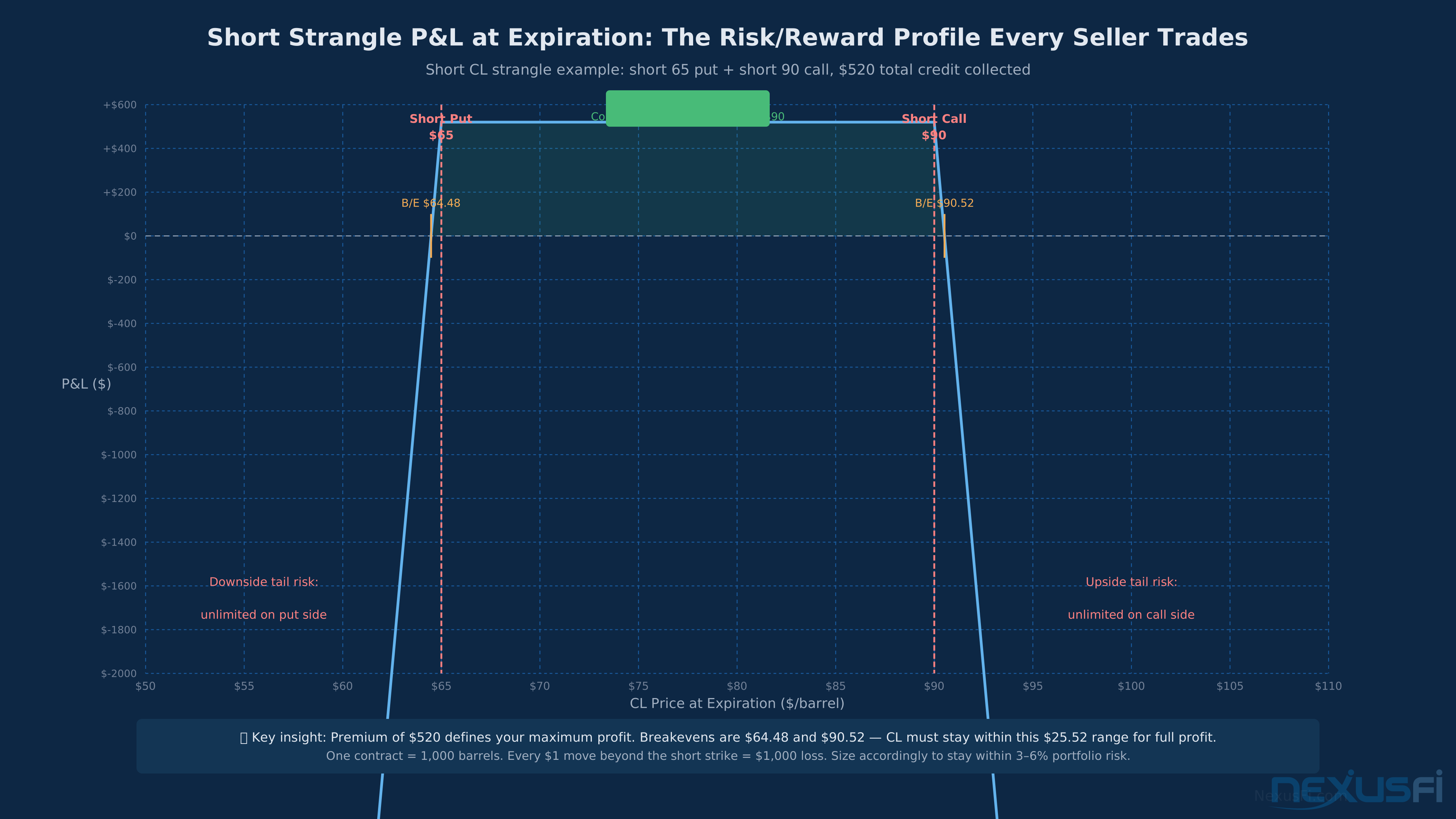
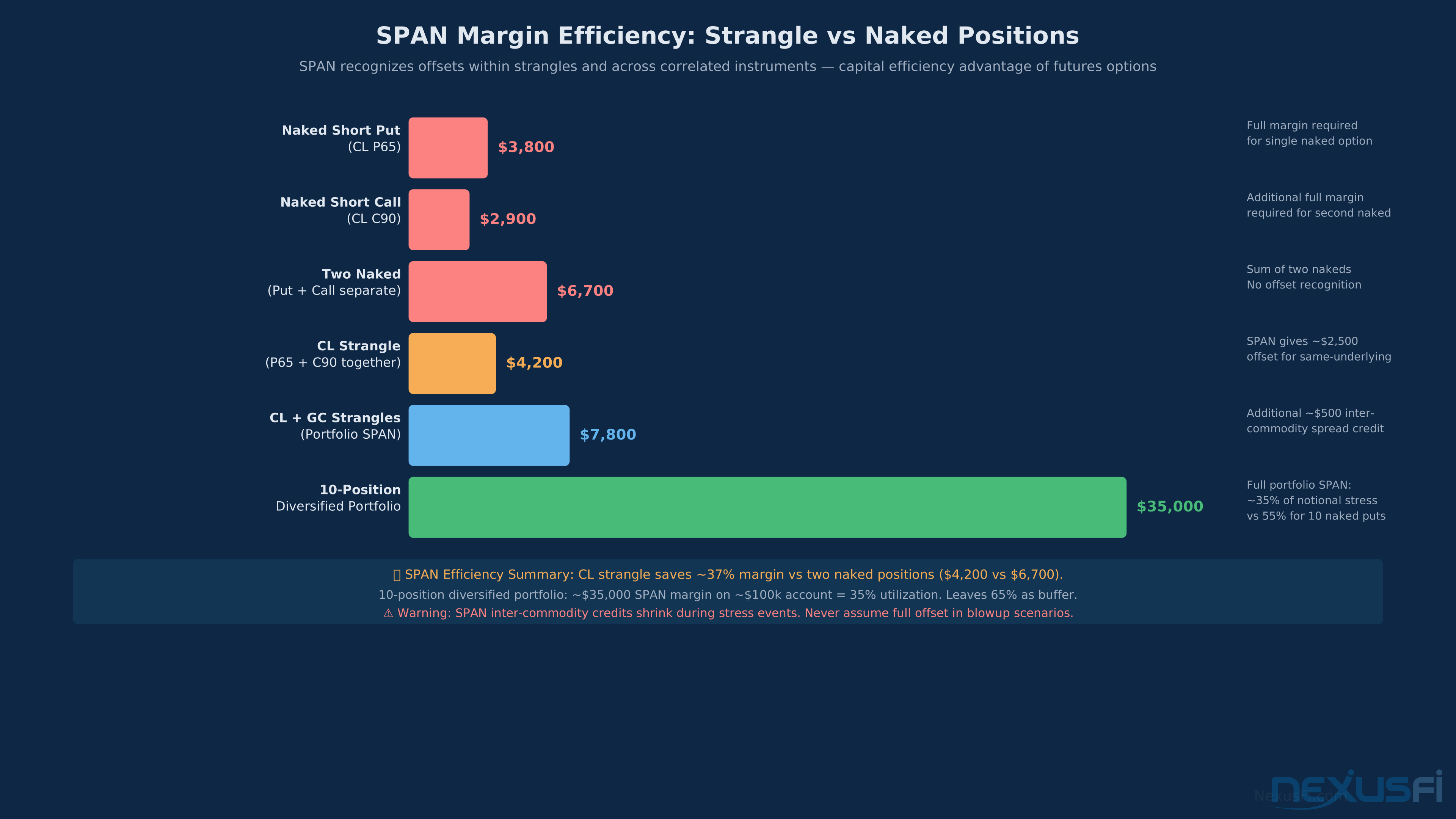
SPAN margin efficiency. Futures options are margined via SPAN (Standard Portfolio Analysis of Risk), which recognizes portfolio-level offsets rather than treating each option as standalone capital. A strangle on CL — short a put and a call on the same underlying — often requires less margin than two naked positions because SPAN recognizes that one side partially offsets the other in stress scenarios. Across multiple instruments, SPAN further recognizes offsetting risk. This capital efficiency is meaningful: traders can maintain exposure across 10--12 instruments with less margin than comparable equity option positions.
Product diversity. You can't sell corn options and cattle options and Euro options in a single equity options account. Futures options give you grain, energy, metal, currency, softs, and index exposure in one account, with meaningful diversification across fundamental drivers.
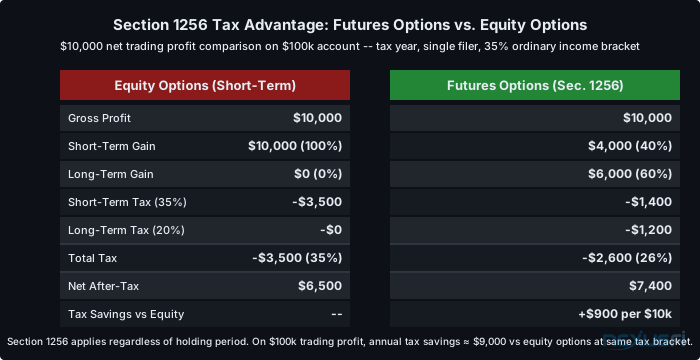
Section 1256 tax treatment. Futures options use 60/40 long-term/short-term split regardless of holding period — meaningfully better than equity options' short-term treatment for active sellers.
The Instrument Universe #
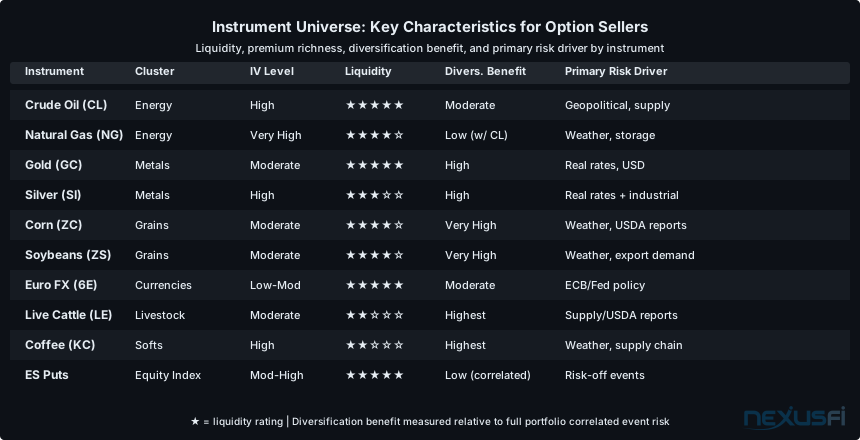
Not every futures market is suitable for short premium. The ideal candidate has sufficient OTM option liquidity, a mean-reverting underlying, meaningful implied volatility, and low correlation to the rest of the portfolio.
The classic diversified portfolio uses a mix of:
Energy (High Volatility, High Correlation Within Cluster) #
Crude Oil (CL) is the most liquid energy market and typically the largest position in a diversified book. CL implied volatility runs high — IV spikes around inventory reports, geopolitical events, and OPEC decisions. The weekly EIA inventory report creates regular IV expansion/contraction cycles that benefit systematic sellers. The risk is that energy shocks can be violent and fast.
Natural Gas (NG) runs on weather, storage cycles, and seasonal demand — different drivers than CL but equally violent in tail events (10--20% single-session moves happen). CL and NG correlate tightly during macro energy shocks; treat them as one cluster when setting concentration limits.
Metals (Partial Diversifier, Rate-Sensitive) #
Gold (GC) responds to real interest rates, USD strength, and risk-off flows — largely orthogonal to grain weather or cattle fundamentals. IV tends to mean-revert well after trend extremes, making it an ideal diversifier.
Silver (SI) adds industrial demand to gold's macro drivers, creating higher volatility and faster moves. For smaller accounts, GC alone is the better metals choice; SI can be added as capital grows.
Grains and Softs (Most Independent, Fundamental-Driven) #
The grain complex — Corn (ZC), Soybeans (ZS), Wheat (ZW, KE) — offers the highest diversification benefit: weather, USDA reports, and export demand are genuinely uncorrelated with energy or FX events. Spring (April--June) creates peak IV. USDA WASDE reports can gap grains 3--5% overnight — size for gap risk, not just intraday distributions.
Softs (Coffee/KC, Cocoa/CC, Cotton/CT, Sugar/SB) have the lowest correlation to everything else and carry fat premium from weather-sensitivity. Tradeoff: thinner far-OTM liquidity and wider spreads. For accounts above $100,000, a 2--3% soft position adds meaningful diversification.
Currencies (Macro-Driven, Policy-Sensitive) #
Euro FX (6E) tracks ECB/Fed policy divergence and risk sentiment — at the core different drivers than energy or grains. Premiums are meaningful during uncertainty cycles. Gap risk: central bank surprises can move 6E sharply.
Canadian Dollar (6C) correlates with CL via Canada's oil export exposure — be cautious holding both CL and 6C strangles simultaneously.
Livestock (Idiosyncratic, Often Uncorrelated) #
Live Cattle (LE) and Lean Hogs (HE) trade on domestic supply fundamentals disconnected from energy and FX. Both mean-revert well, but far-OTM cattle liquidity is thin — position size is constrained by open interest.
Equity Index (Different Risk Profile — Use With Caution) #
ES puts carry persistently elevated IV from institutional hedging demand. The problem: ES tail events hit every risk asset in your portfolio simultaneously — exactly when margin calls threaten. Size ES exposure at 2--3% maximum and treat it as supplementary income, not a core position.
Position Sizing: The Framework That Determines Survival #
How you size each position is the single most important variable in this strategy. The most common failure mode isn't being wrong about a market — it's being too large when you're wrong.
The 3--6% Per Position Rule #
The baseline sizing rule used by experienced practitioners: each position represents 3--6% of portfolio capital. The first post in the NexusFi Diversified Option Selling Portfolio thread by
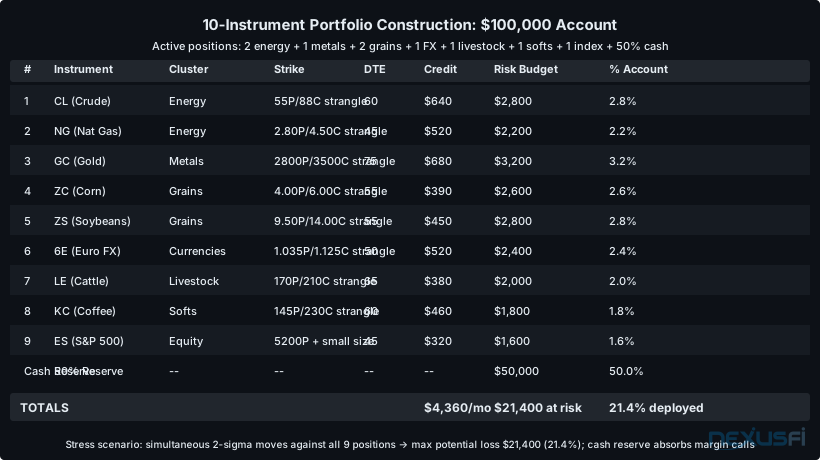
For a $100,000 account, a standard position is a $3,000 risk allocation. A double position is $6,000. You hold 8--15 positions, so total deployed risk is $24,000--$90,000 — but this is risk allocation, not margin used.
The 40--50% Cash Rule #
A critical capital management principle: keep 40--50% of your account in cash at all times. This isn't idle money — it's your defense fund.
This cash reserve serves three functions:
- Margin headroom: When positions move against you, margin requirements increase. The cash absorbs variation margin demands without forcing liquidation.
- Defense capital: You can buy back a threatened position and roll it to a better strike without touching the other positions.
- Opportunity reserve: When IV spikes and premiums are attractive, you have capital to deploy at better prices.
Market-Level Concentration Limits #
Beyond per-position sizing, you need market-level limits. @kevinkdog, who survived a week when most option sellers had catastrophic losses, attributed it explicitly to diversification: "I try to limit my risk in any one market to 8-10% (for 'big' markets like ES, CL, NG, currencies) and 5% or less for smaller markets (cattle, hogs, cocoa, etc.)."
Practical limits for a diversified portfolio:
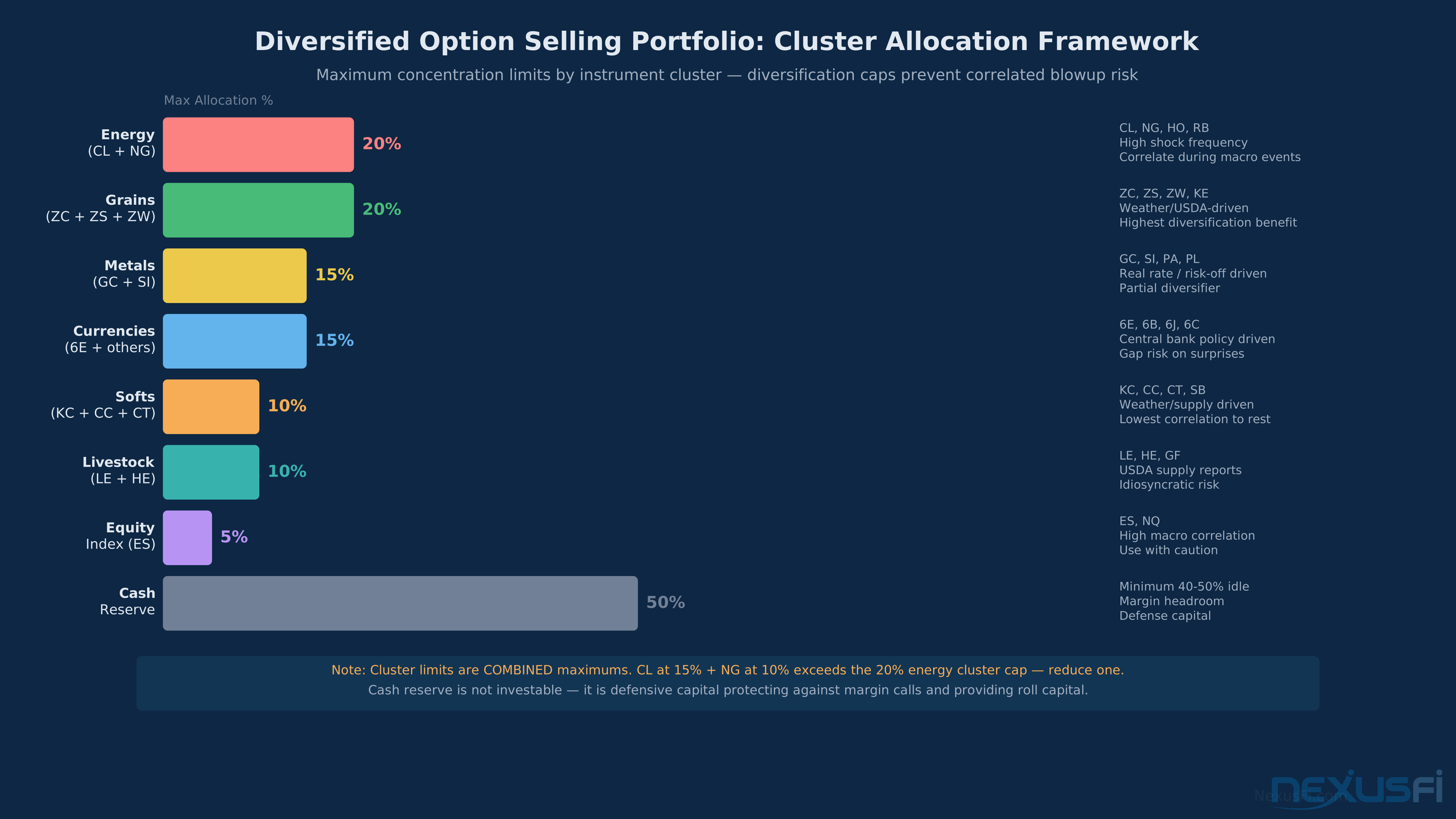
- Energy cluster (CL + NG combined): 15--20% maximum
- Any single commodity: 8--10% maximum
- Softs or smaller markets: 3--5% maximum
- Equity index (ES): 3--5% maximum
These aren't just guidelines — they're hard stops that override your fundamental view. The discipline to stay under limits when a market "looks great" for selling is what distinguishes traders who survive for years from those who blow up in a single event.
Risk-Budget Sizing (The Institutional Approach) #
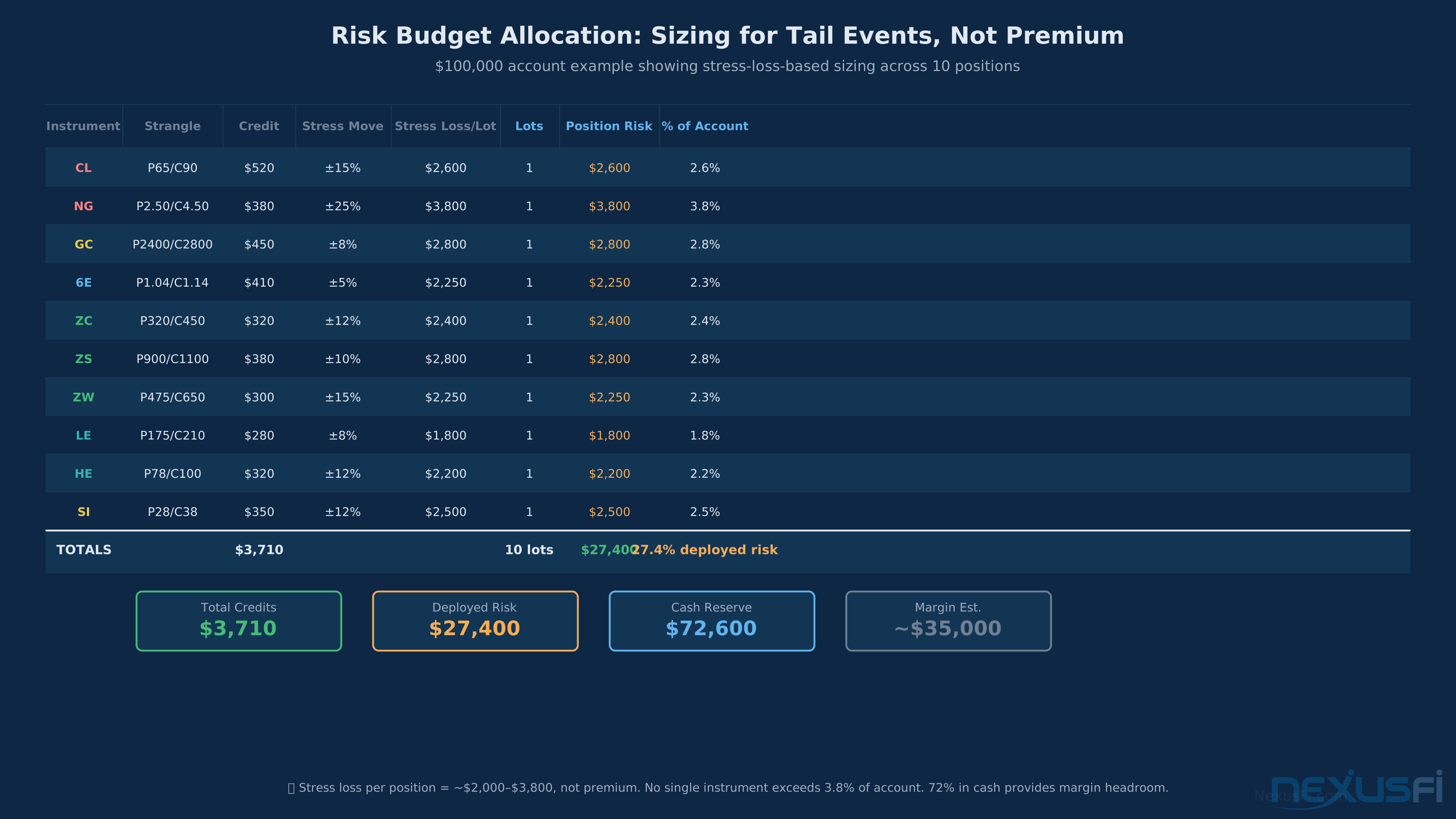
More sophisticated sizing starts with a stress loss budget rather than premium or notional. This approach aligns with volatility-based position sizing principles used across all futures trading. The logic: you should know how much each position can lose in a defined stress scenario before you put it on.
For each position:
- Estimate the move that would cause your short strike to be tested (often a 2--3 standard deviation move based on historical realized vol)
- Calculate the loss at that move per contract
- Size so that loss stays within your position risk budget
For a $100,000 account with a 3% position limit ($3,000 per position), your stress loss per contract should not exceed $3,000. If a single-contract stress loss is $2,000, you can comfortably sell two contracts. If it's $4,000, you stay at one contract.
This approach has a meaningful advantage over premium-based sizing: it normalizes exposure across high-volatility markets (where premiums are large but so are moves) versus low-volatility markets (where premiums are small but moves are contained).
Strike Selection and DTE #
The strangle parameters determine your probability of profit, your theta income, and your tail risk exposure. There's no universal right answer — experienced sellers use different parameters — but certain ranges have proven durable.
Delta Range: 0.02--0.25 #
Most successful diversified sellers target strikes in the 0.10--0.20 delta range for core positions. Some go tighter (0.05--0.10 delta) for high-volatility markets where even low-delta strikes carry meaningful premium.
Why this range? At 0.10--0.20 delta:
- Probability of expiring worthless: approximately 80--90%
- Premium is meaningful (typically $200--$700 per option in liquid markets)
- You have buffer before the position becomes delta-sensitive
Going tighter (0.02--0.05 delta) reduces probability of loss but also reduces premium to levels where the risk/reward becomes asymmetric in the wrong direction — you might collect $50 and lose $2,000.
Going wider (0.25--0.40 delta) increases premium but materially increases the probability of being tested. At 0.25 delta, the market has a roughly 75% chance of expiring above/below your strike — a significant directional bet.
Premium Targets: $200--$700 Per Option #
A practical filter: only sell options with $200--$700 in premium. Below $200, the risk/reward is poor — commissions eat a meaningful portion and you need many contracts to generate income. Above $700, you're selling options with meaningful delta that will hurt badly in adverse moves.
@MJ888, who has traded this approach for over a decade, described his original framework: "In the book [The Complete Guide to Option Selling], the authors suggested to look to sell options with a delta below 0.20 with premiums between $400-$700 and that is what I did."
DTE: 30--90 Days (With Caveats) #
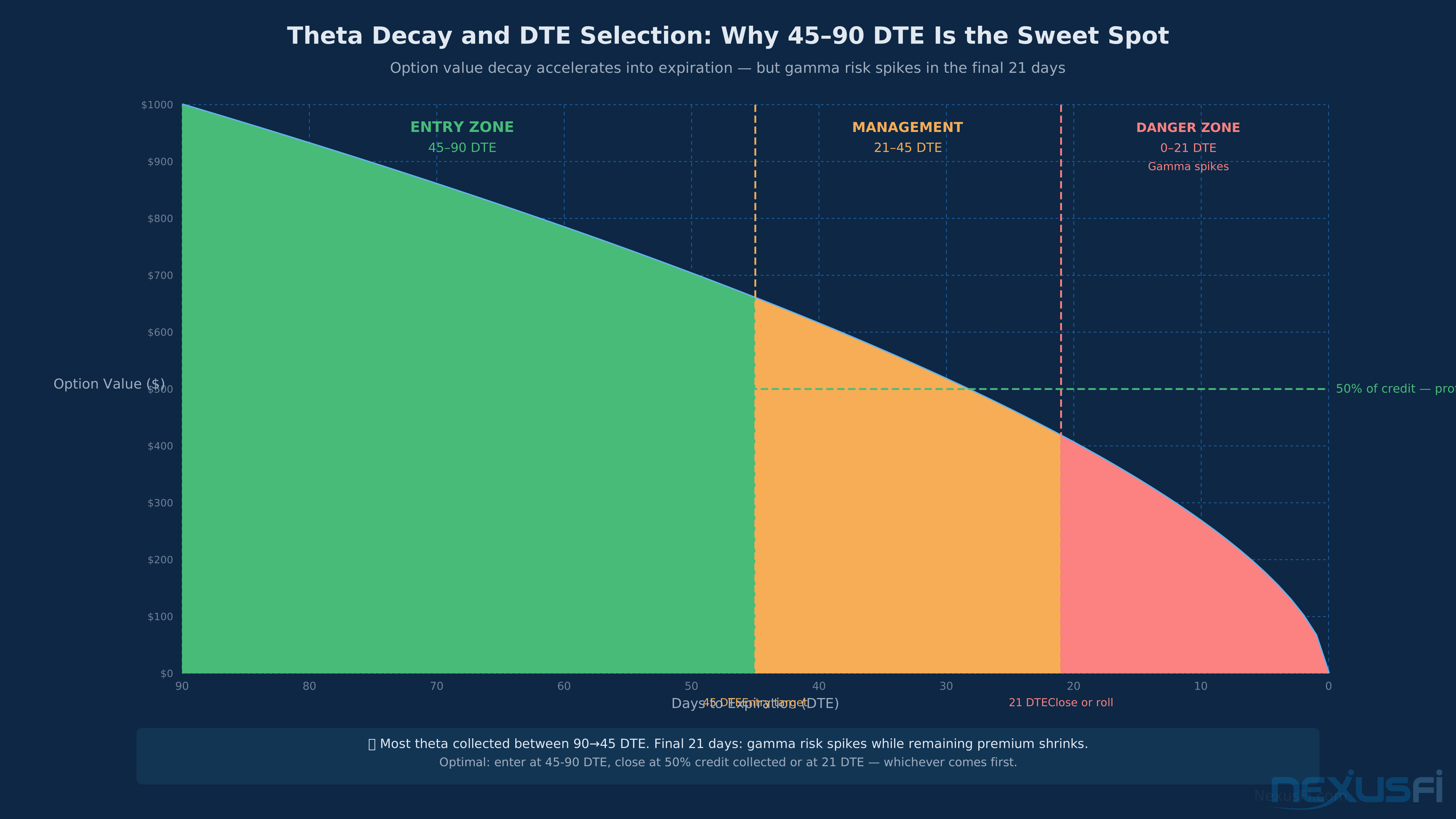
Most practitioners target 45--90 days to expiration for entry, with exit either at a profit target or around 21 DTE regardless of profitability.
The logic: theta accelerates meaningfully in the last 30 days, but gamma risk also spikes. Holding through the final three weeks captures more theta but exposes you to gap events where delta exposure can explode. Exiting at 21 DTE captures most of the theta while avoiding the gamma spike.
@dynoweb, who runs strangles across 6E, CL, GC, ZW, ZC, ZS, and NG, described his approach: "Typically they are 30-60 DTE with short strikes around the 20 delta...Most of the time, I close the position with 21 DTE or less."
Some practitioners use longer DTE (60--90 days) in high-volatility markets where premium is rich and you want more time buffer. In lower-volatility environments, shorter DTE (30--45 days) is more efficient.
Important calendar consideration: Many commodity options expire the month before the underlying futures contract. CL options for the November contract may expire in October. Verify the specific expiration schedule for each market before assuming a DTE.
Profit Targets and Exit Rules #
Having clear, mechanical exit rules is non-negotiable. Option sellers who hold forever, hoping to collect every last bit of theta, tend to give back profits in the inevitable adverse move.
The 50% Profit Target #
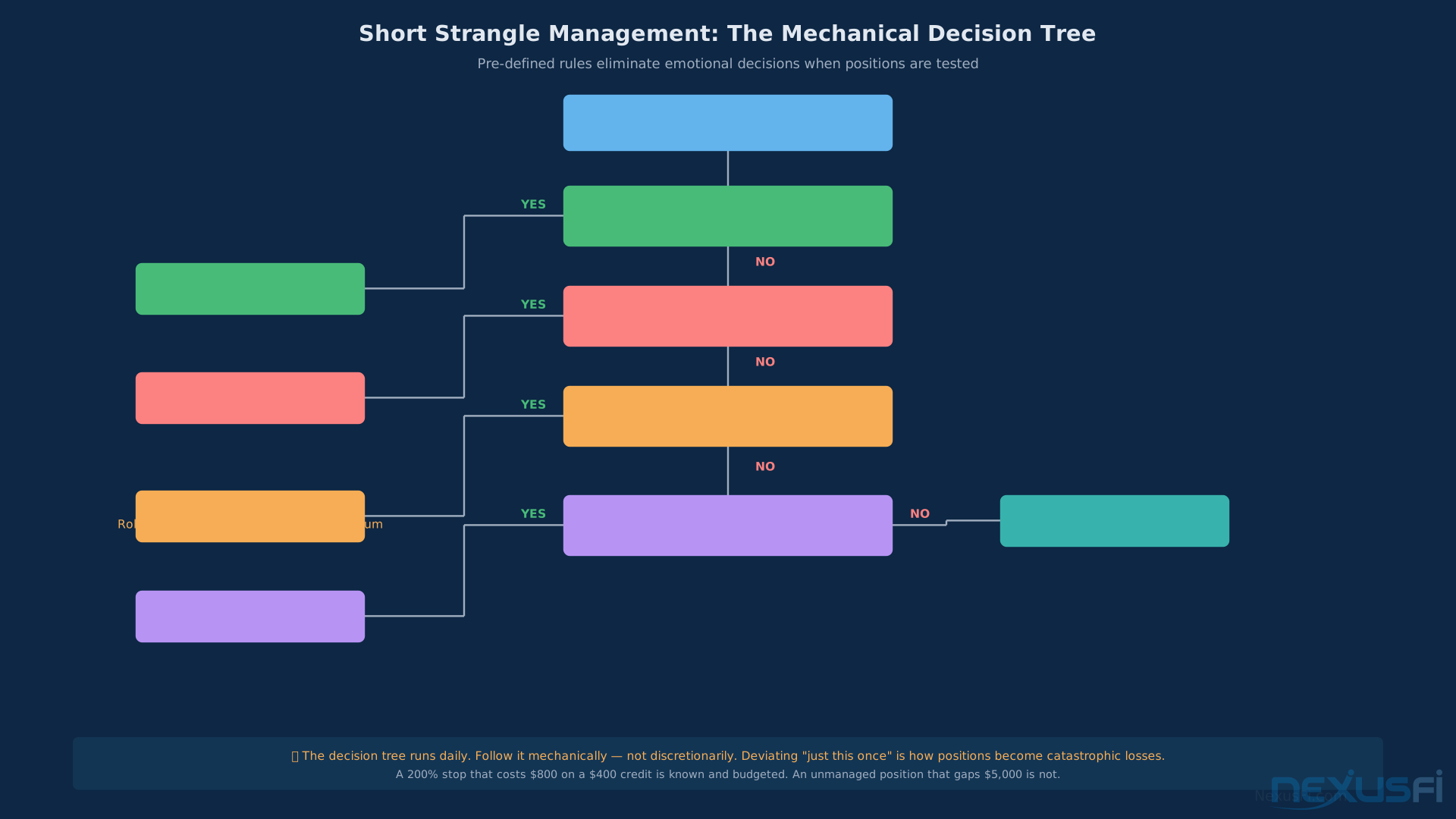
The most common exit rule: close when you've collected 50% of the premium received. If you sold a strangle for $600, take it off at $300 (when it costs $300 to buy back).
The 50% rule is mathematically sound for many reasons:
- You exit while the position is still working in your favor
- You free up margin and risk budget for new positions
- Most of the remaining premium at 50% requires disproportionate time and risk to collect
- Compound growth from frequent 50% wins outperforms waiting for full premium collection
Some traders use tiered exits: take off 50% of contracts at 50% profit, let the remaining half run toward expiration. This blends premium capture with theta harvest.
Why 50% Works Mathematically The final 50% of premium requires disproportionate time and risk to collect. By exiting at 50%, you free margin and risk budget immediately — allowing you to deploy capital into new positions with full premium potential. Three 50% wins compounding is typically better than one 100% hold, because each new position starts with full theta decay advantage at 45--90 DTE.
The Double-Premium Stop #
The defensive exit rule: close if the option doubles in value from your entry. If you sold a put for $400 and it's now worth $800, you exit the entire strangle at a $400 loss.
He quantified the risk/reward: "On the three winners I would make about $900 each for $2,700. The loser would cost $300 so a total profit of around $2,400." In his framework, the strangle hedge meant that when one side doubled, the other side had decayed, reducing net loss to about $300 on a $1,200 total entry credit.
The double-premium stop is not perfect — in fast markets, you may not be able to exit exactly at 2x. But having a defined maximum loss per position is more important than the precise level.
Strike-Based De-Risk Triggers #
Beyond premium-based rules, many traders use underlying price levels as triggers. When the underlying reaches a defined level relative to the short strike, you act — regardless of where premium is.
The roll-and-add-opposite approach does two things: it extends the threatened side to a safer strike and uses the untested side's premium to partially offset the roll cost. This is a trader who has internalized that strangles are a system, not two separate positions.
Correlation Management: When Diversification Disappears #
The central risk in a diversified option selling portfolio isn't that any one position blows up — it's that multiple positions get hurt simultaneously. @myrrdin frames it directly: holding only strangles exposes you to an abrupt general rise of volatility across the entire portfolio. Diversifying set-ups (not just instruments) provides an additional buffer, overwhelming the diversification you've built.
The Stress Correlation Problem #
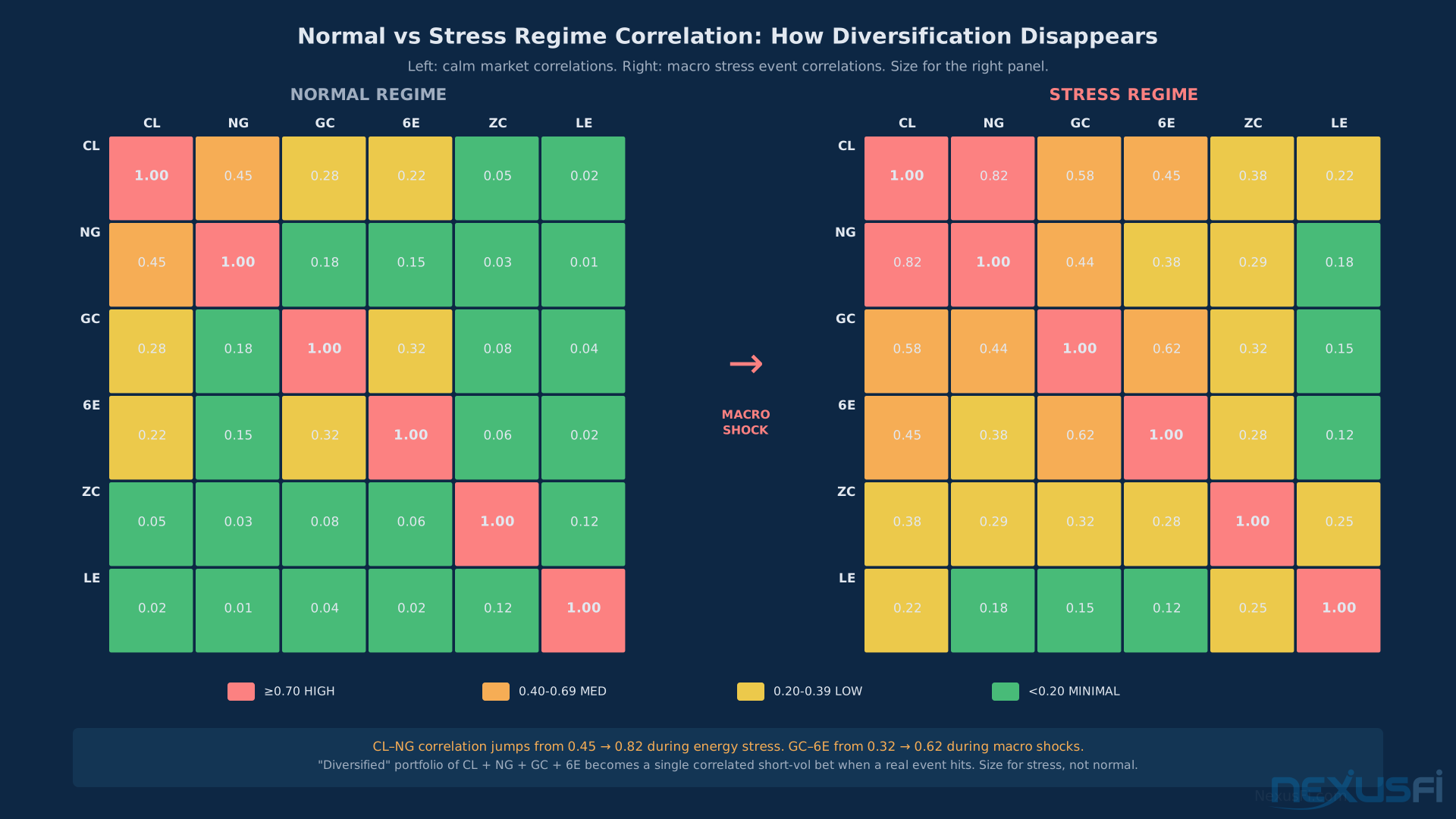
In normal market regimes, CL and ZW have low correlation. CL and 6E have moderate correlation. GC and NG have minimal correlation. The portfolio looks diversified in the data.
During stress events, correlations converge. A macro risk-off move driven by geopolitical shock (Ukraine invasion, Middle East escalation, financial crisis) can simultaneously spike IV in energy, metals, currencies, and equity indices. Grains may follow if commodities broadly sell off. What looked like a diversified portfolio of 12 independent positions starts behaving like a single long-vol short position.
The practical implication: size for stress correlations, not historical average correlations. Assume your most correlated cluster gets hurt at the same time when you're planning your maximum exposure.
Cluster-Based Concentration Limits #
Think in clusters, not individual instruments:
| Cluster | Instruments | Max Portfolio Exposure |
|---|---|---|
| Energy | CL, NG, HO, RB | 20% maximum |
| Metals | GC, SI | 15% maximum |
| Grains | ZC, ZS, ZW, KE | 20% maximum |
| Currencies | 6E, 6B, 6J, 6C | 15% maximum |
| Softs | KC, CC, CT, SB | 10% maximum |
| Livestock | LE, HE | 10% maximum |
| Equity index | ES, NQ | 5% maximum |
The energy cluster limit of 20% means that even if you're very bullish on CL IV and very bullish on NG IV separately, you can't exceed 20% combined. This caps your loss if the energy complex sees a coordinated shock.
The Correlated Event Calendar #
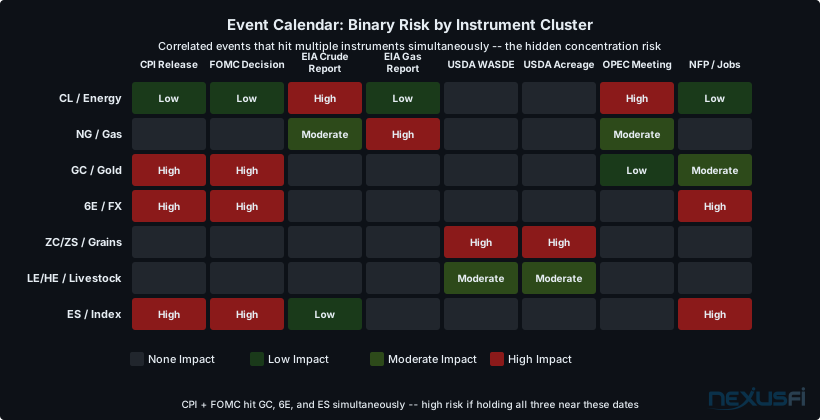
A specific correlation risk that trips up new option sellers: events that move multiple instruments on the same day.
EIA Inventory Reports: CL (Wednesdays) and NG (Thursdays) can spike together on major inventory data.
CPI Releases: hit 6E (rate expectations), GC (real rates), and ES (risk sentiment) simultaneously. Short all three into a hot CPI = more correlated than you think.
FOMC decisions: move 6E, GC, and equity indices together. Fed surprise = your "uncorrelated" positions all correlate.
USDA crop reports (WASDE, second Tuesday monthly): move ZC, ZS, and ZW on the same event. Multiple grain strangles = concentrated event risk.
Know the calendar for every held instrument. Size down or close before major events where you hold multiple correlated positions.
SPAN Margin: The Capital Efficiency Engine #
SPAN margin is one of the main reasons futures options are the preferred venue for portfolio short premium. Understanding how SPAN works across multiple instruments is essential for managing capital efficiently.
How SPAN Works for Strangles #
SPAN runs stress scenarios and requires capital equal to the worst-case loss. For a strangle, the short call and put can't both be worst-case simultaneously — SPAN applies a spread credit, requiring less margin than two naked positions
This is the SPAN efficiency
Inter-Commodity Spreads and Portfolio Offsets #
When you hold short options on multiple correlated products, SPAN can apply inter-commodity spread credits — recognizing that positions on correlated instruments partially offset each other's risk. CL and NG options may receive spread credits because both respond to energy sector movements. GC and SI may receive credits because both are precious metals.
Important caveat: These credits are real but dangerous to rely on. Inter-commodity spread credits are reduced or eliminated during stress scenarios when the exchange updates SPAN parameters. The efficiency exists in normal conditions; in volatile conditions, margin requirements can spike as spread credits shrink.
Practical Margin Management #
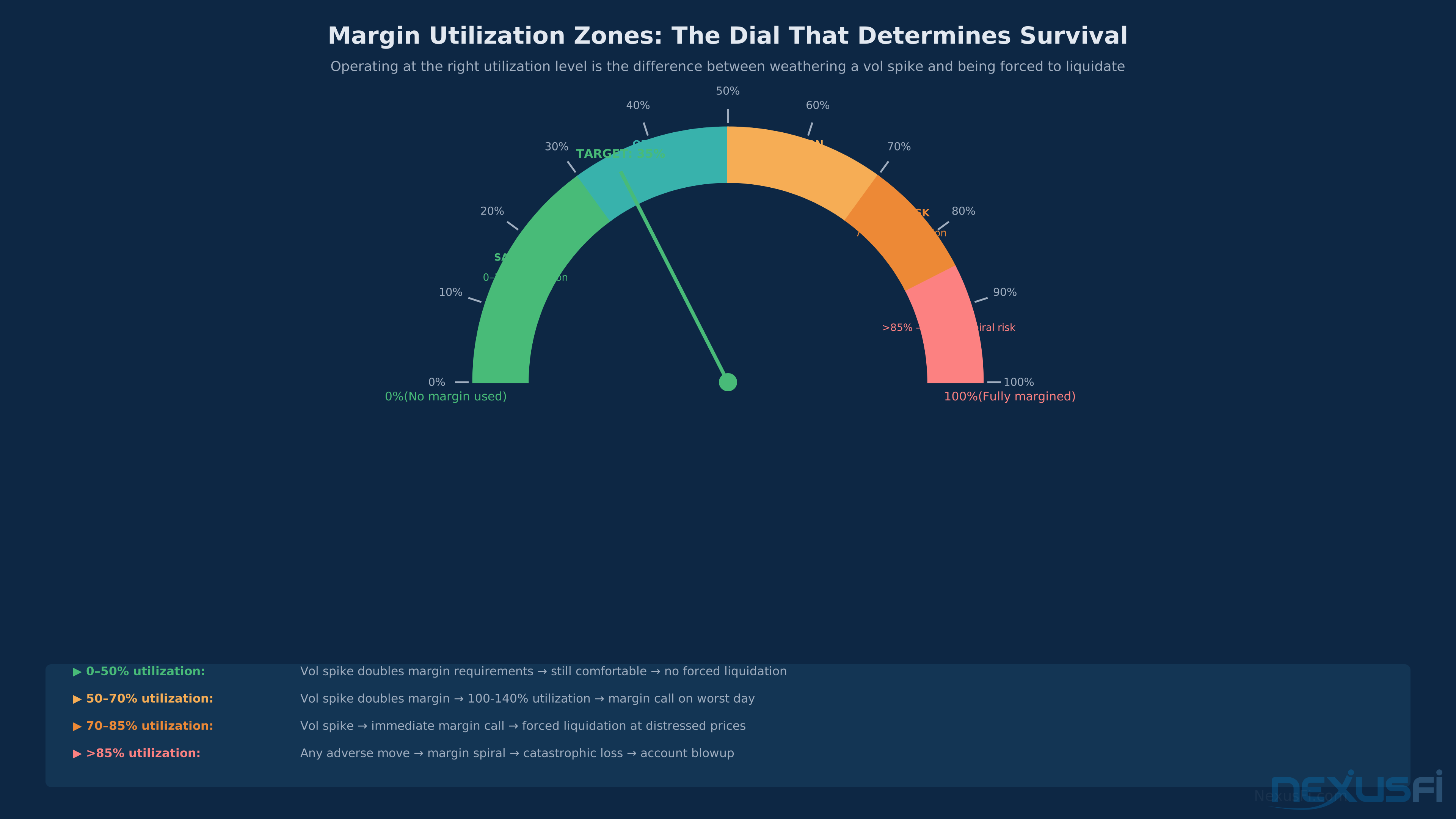
For a diversified portfolio, target 30--50% margin utilization of total account capital. This means:
- $100,000 account → $30,000--$50,000 in SPAN margin requirements
- $50,000--$70,000 remaining as buffer (cash + unrealized gains)
At 30--50% utilization, a 2x spike in margin requirements (which can happen during major vol events) still leaves you with headroom. At 70--80% utilization, the same vol spike triggers margin calls that force you to liquidate at the worst time.
The margin spiral is how accounts blow up (see Futures Margin and Leverage for the mechanics): losses reduce equity, which increases margin utilization percentage, which triggers margin calls, which force liquidation at distressed prices, which accelerates losses. The 40--50% cash reserve directly prevents this chain.
Managing Losing Positions #
Even well-sized positions get tested. The difference between an experienced portfolio seller and a new one isn't that the experienced one never gets tested — it's what they do when it happens.
Rolling the Tested Side #
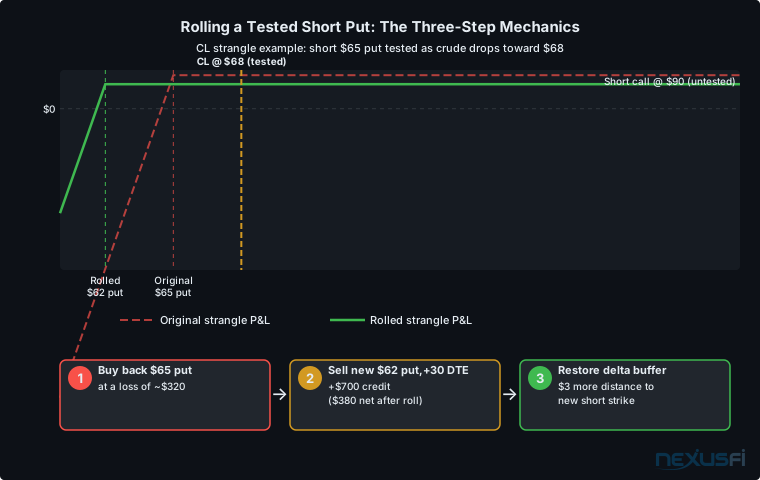
When the underlying approaches your short strike, the position's delta begins climbing toward the direction of the move. A 0.20 delta short put that's been tested might now be showing 0.40 delta — you're now net short the underlying in a market that's moving against you.
The standard response: roll the tested strike out in time and down (or up) in price to restore your delta buffer. If you sold a CL put at $60 for $400 and CL is now trading at $63, you might buy back the $60 put and sell a new $58 put with 45 more days to expiration.
Rolling has a cost: you pay time value to close the current position and receive less premium on the new one (because you're moving to a lower delta strike). The goal isn't to generate net premium on the roll — it's to extend your time and distance buffer so theta decay can work in your favor.
Adding the Opposite Side #
A complementary technique: when one side is tested, sell additional premium on the untested side to offset the cost of defending the threatened side. If your short CL put is being tested as crude falls, you sell additional CL calls. The untested call premium helps fund the put roll.
Risk: Adding the opposite side while one side is tested increases your total position size at a time when you're already losing. This technique requires capital headroom and discipline — only add the opposite side if your total position size after the addition stays within your concentration limits.
Using Futures to Hedge Delta #
When a short put is deeply tested, selling a futures contract creates a delta hedge while keeping the option open. @dynoweb used this in the Q4 2018 CL selloff: "I sold a /CL contract to give me enough negative delta. The profits on /CL offset the losses on the short puts." This works when extrinsic value is still significant — the futures hedge buys time for theta to work rather than forcing a loss realization.
The Hard Exit: When to Just Close #
Rolling and defending don't always make sense. Exit outright when:
- Your stop level is hit (premium doubles): don't hope for recovery, just exit
- Fundamentals have changed materially: if the reason you sold the option has reversed (a drought became a monsoon, an OPEC deal collapsed), the trade thesis is wrong — close it
- The position would exceed concentration limits after a roll: if rolling would push you above your cluster limit, close instead
- Market liquidity has dried up: in thin conditions, fills are poor and rolls become expensive — sometimes it's cheaper to just take the loss and move on
@myrrdin was explicit about fundamental-driven exits: "I also exit if fundamentals have changed much."
The Risk You're Actually Running #
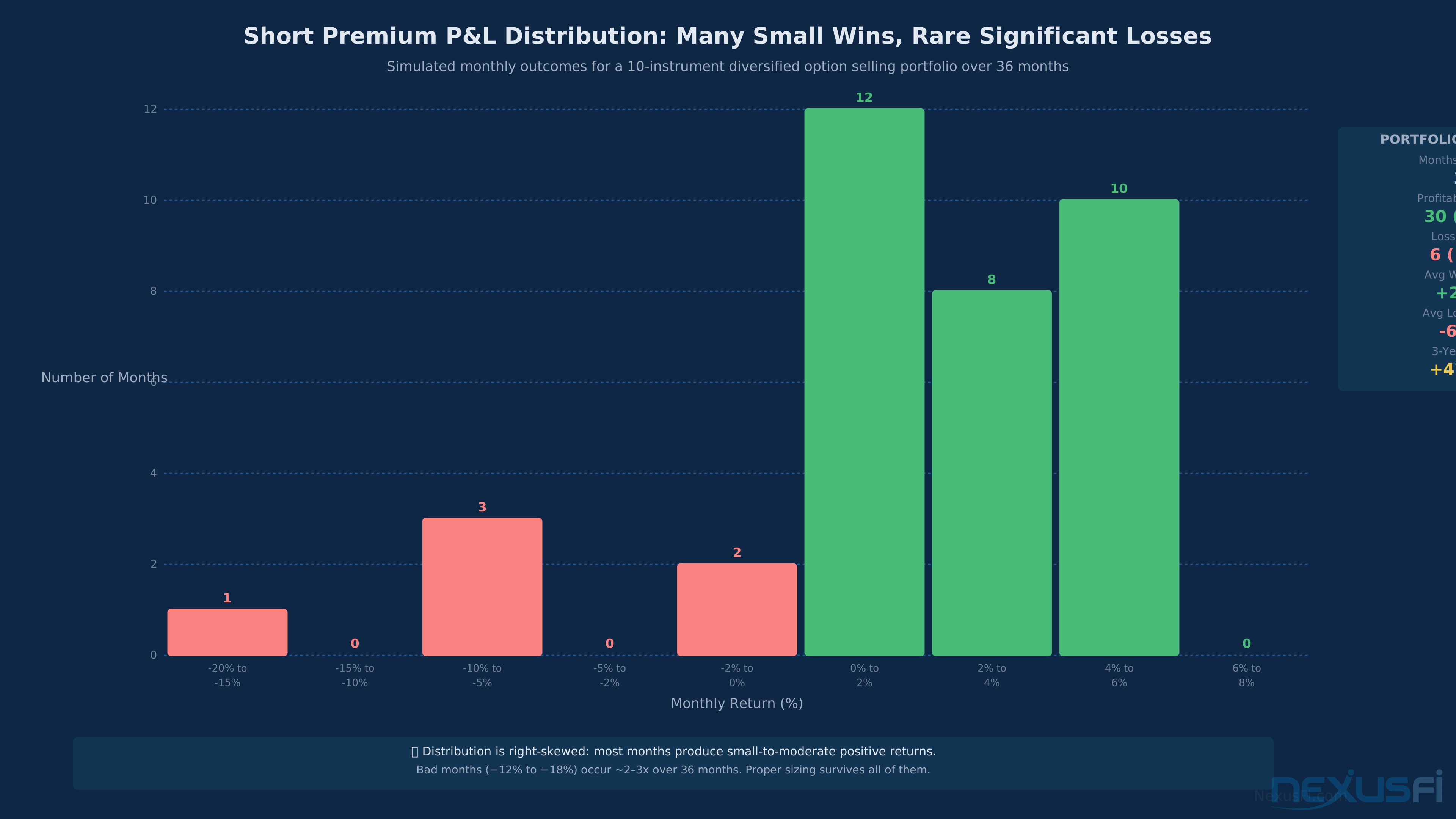
Let's be honest about what this strategy is. Diversified option selling is not a conservative income strategy — it's a portfolio of short convexity. You are short volatility across multiple instruments. The distributions look like this:
- ~75--85% of months: collect theta, small wins across multiple positions
- ~10--15% of months: one or two positions threatened, rolling costs eat into gains
- ~3--5% of months: serious stress event forces multiple positions to lose simultaneously
The risk isn't one catastrophic event destroying your account — proper sizing and cash reserves prevent that. The real risk is a sustained period of elevated volatility across multiple instruments simultaneously. If CL spikes 30% on a geopolitical shock while the Fed surprises with an emergency rate cut (hitting 6E) while weather creates a USDA surprise (hitting grains), you can lose on four or five positions in the same week.
That scenario doesn't blow you up if you're sized correctly (3--6% per position, 50% cash, cluster limits). It does create a meaningful drawdown — maybe 8--15% of account. The question is whether your system has the rules to work through it without making discretionary decisions in the heat of the moment.
What Blows Up Diversified Option Sellers #
The blowups that happen in these strategies aren't random — they follow predictable patterns:
Concentration disguised as diversification. Holding CL options, NG options, 6C options, and CL futures simultaneously creates energy cluster concentration greater than the raw position count suggests. Treat all correlated holdings as a cluster, not individual positions.
The OptionSellers.com Lesson James Cordier's OptionSellers.com fund collapsed in November 2018 when natural gas spiked 21% in a single day. The fund was concentrated in NG and operating above 100% margin utilization — the exact opposite of the diversification and 40--50% cash reserve this approach requires. Position sizing discipline and cluster concentration limits aren't theoretical risk controls. They're the difference between surviving the move and losing everything.
Size creep in good times. When IV is elevated and premiums are fat, there's always a justification to increase position sizes. "This setup is too good not to size up." The trader who blew up on OptionSellers.com (James Cordier) didn't maintain diversification or sizing discipline — he concentrated in NG and went above 100% margin utilization. The market gave him a predictable result.
DTE stacking. Having 8 positions all expiring in the same expiration cycle means you're running concentrated near-expiry gamma risk. Stagger expirations so your book doesn't simultaneously hit peak gamma exposure across multiple instruments.
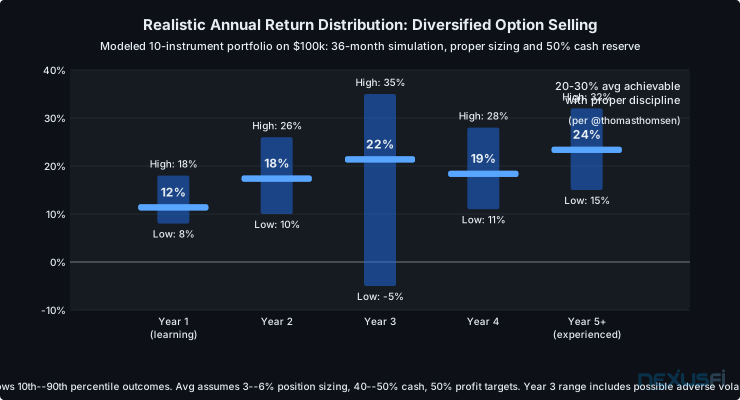
@thomasthomsen, who has traded strangles across ES, CL, NG, 6E, and ZS, set the expectation clearly: "20--30% annually is doable with proper risk management, but once you start trying to push 60, 70, or 80% annual returns you are setting yourself up for a big drawdown eventually."
Ignoring event risk. CPI, FOMC, and USDA reports can gap markets much. Selling options with two weeks to expiration going into one of these events is structurally different risk than selling the same option with 60 days to expiration. Know your event calendar and size down around major events.
Abandoning exits in drawdowns. The double-premium stop rule exists for moments when you desperately want to hope for recovery. The traders who survive for years execute the exit and take the defined loss. The ones who blow up hold, roll without adding the opposite side's premium, and eventually face forced liquidation at catastrophic levels.
Building the Portfolio: Step-by-Step Workflow #
Starting from scratch:
Step 1: Define your risk parameters.
- Account size and maximum position size (start at 3%)
- Cash reserve target (minimum 40%)
- Maximum cluster concentration (e.g., energy cluster ≤ 20%)
- Profit target (50% of credit)
- Stop loss (double the premium)
- DTE range for entry (45--90 days)
- Delta range for strikes (0.10--0.20)
Step 2: Select your instrument universe. Start with 4--6 markets from different clusters. Build familiarity before expanding. A reasonable starter universe: CL (energy), GC (metals), ZC (grains), 6E (currencies), LE (livestock). That's genuine diversification with manageable complexity.
Step 3: Screen for opportunities. For each market, check:
- Is IV elevated relative to recent history (selling high IV increases edge)?
- Are fundamentals relatively balanced (no pending binary catalysts)?
- Is there adequate premium in the 0.10--0.20 delta range?
- Is there a major report in the next 2--3 weeks (if yes, wait or size smaller)?
Step 4: Calculate stress loss and size the position. For each candidate, estimate the worst-case daily loss if the underlying moves against you by 2 standard deviations. Size so that stress loss stays within your 3% position budget.
Step 5: Enter and document. Record entry price, strikes, DTE, delta, credit received, profit target (50% of credit), stop loss (2x premium), and the fundamental thesis for each position.
Step 6: Monitor as a portfolio. Daily: check deltas, margin utilization, positions approaching profit target, positions approaching stop. Weekly: review upcoming event calendar for all held instruments, verify cluster concentration limits. Monthly: assess overall win rate, average win/loss, positions rolled, and adjust sizing if needed.
Step 7: Execute exits mechanically. When a position hits the profit target, exit. When the stop is hit, exit. When you're at 21 DTE without hitting a target or stop, evaluate whether to close or roll.
The Bottom Line #
Diversified option selling across futures is one of the most intellectually honest approaches to systematic income generation from financial markets. The edge is structural: options price in implied volatility that historically exceeds realized volatility in many markets, and diversification across genuinely different fundamental drivers reduces the correlation risk that makes single-instrument option selling dangerous.
The failure mode is equally clear: concentration that looks like diversification, size discipline that erodes in good times, and exits that get emotional when positions are tested. The markets that look most attractive for selling are often the markets where USDA or EIA or FOMC is two weeks away — that premium exists for a reason.
Build the system with the exit rules first. Know exactly what you'll do when a position goes against you before you put it on. The trade management is simpler during a crisis if the rules are mechanical, not discretionary.
The traders running this approach successfully for years — the myrrins and kevinkdogs and dynowebs of the NexusFi community — aren't running complex mathematical models. They're running disciplined position sizing, enforcing cluster concentration limits, taking 50% profit targets consistently, and exiting when stops are hit. The edge is in the execution, not the setup.
Knowledge Map
Prerequisites
Understand these firstCitations
- — Diversified Option Selling Portfolio (2015) 👍 28“I trade a diversified option selling portfolio for many years. Different than other concepts to sell options, I strive for diversification (I strive for holding 8-15 options)... Normal position size: 3% of portfolio. Sometimes I sell double positions (6% of portfolio), rarely triple positions.”
- — Selling Options on Futures? (2015) 👍 13“One word: diversification. I normally aim for using approximately 40-50% of my margin to sell options... I try to limit my risk in any one market to 8-10% for big markets like ES, CL, NG, currencies and 5% or less for smaller markets.”
- — Selling Options on Futures? (2013) 👍 15“One was SPAN margin. If I was going to use $2,500 in margin to sell puts, I figured that I might as well sell some calls too to make the best use of SPAN to potentially double my profits.”
- — Selling Options on Futures? (2019) 👍 8“I usually sell strangles in /6E, /CL, /GC, /ZW, /ZC, /ZS, /NG. Typically they are 30-60 DTE with short strikes around the 20 delta... Most of the time, I close the position with 21 DTE or less.”
- — Diversified Option Selling Portfolio (2016) 👍 1“50% cash as a target does make sense to me. In case options move into the wrong direction you have a safety belt.”
- — Diversified Option Selling Portfolio (2017) 👍 8“Remember that for me it is very important to have the account well balanced. As I hold other positions than the short options, this balancing often is done via positions not described in this thread.”
- — Selling Options on Futures? (2019) 👍 8“#1 risk management strategy is if one side gets tested, I will roll that out from maybe a 50 delta to a 30 delta, and then sell an additional contract on the untested side to cover some of all of that cost.”
- — Selling Options on Futures? (2021) 👍 4“I only sell strangles at high implicit volatility, and I always sell both legs at the same time. Usually I sell approx. 100 DTE. I exit in case the strangle has doubled in value. When liquidating, I buy back both legs at the same time.”
- — Selling Options on Futures? (2019) 👍 4“Selling strangles is one of my preferred ways of option selling. But for me, a diversified account is of most importance. This includes diversity regarding the commodities, but also diversity regarding the set-up of the trade. Holding only strangles hurts you in case of an abrupt general rise of volatility.”
- — Selling Options on Futures? (2018) 👍 5“I tend to trade strangles with higher deltas (0.10 to 0.20) than described here and a shorter DTE (45-70 days) with a variety of underlyings (ES, CL, NG, 6E, ZS, etc.). Make sure you have realistic expectations for your long-term returns: 20-30% annually is doable with proper risk management.”
- — Selling Options on Futures? (2018) 👍 3“The problem with concentrating your trading in just one underlying is that you leave yourself open to devastating losses. Remember that equity markets are highly correlated and it's helpful to diversify in other products. However, during times of crazy market volatility even some seemingly uncorrelated investment products can and do drop in unison together.”