



Gradient Divergence Trading: The Visual Method That Sees What Oscillators Miss
Divergence is one of the most abused concepts in technical analysis. RSI making lower lows while price makes higher highs. MACD histogram diverging from price. Stochastics crossing while price does something completely different. These phenomena are real. The problem is measurement.
Traditional divergence indicators try to quantify what the human eye identifies in milliseconds. They set rigid thresholds, define exact bar counts, draw lines between peaks and troughs — and they miss roughly half the divergences that matter because the market doesn't fit their rules. Either the indicator fires too late, misses the signal entirely, or generates so many false signals the concept becomes useless.
Gradient Divergence Trading, developed by NexusFi member @aligator in 2012 after 34 years of trading experience, takes a at the core different approach: encode divergence directly into bar color gradients so the eye can do what it does naturally — spot subtle changes in momentum across multiple bars. The indicator doesn't announce divergence with an alert. It shows it continuously, across every bar, in a way that a trader's visual cortex processes faster and more accurately than any algorithm.
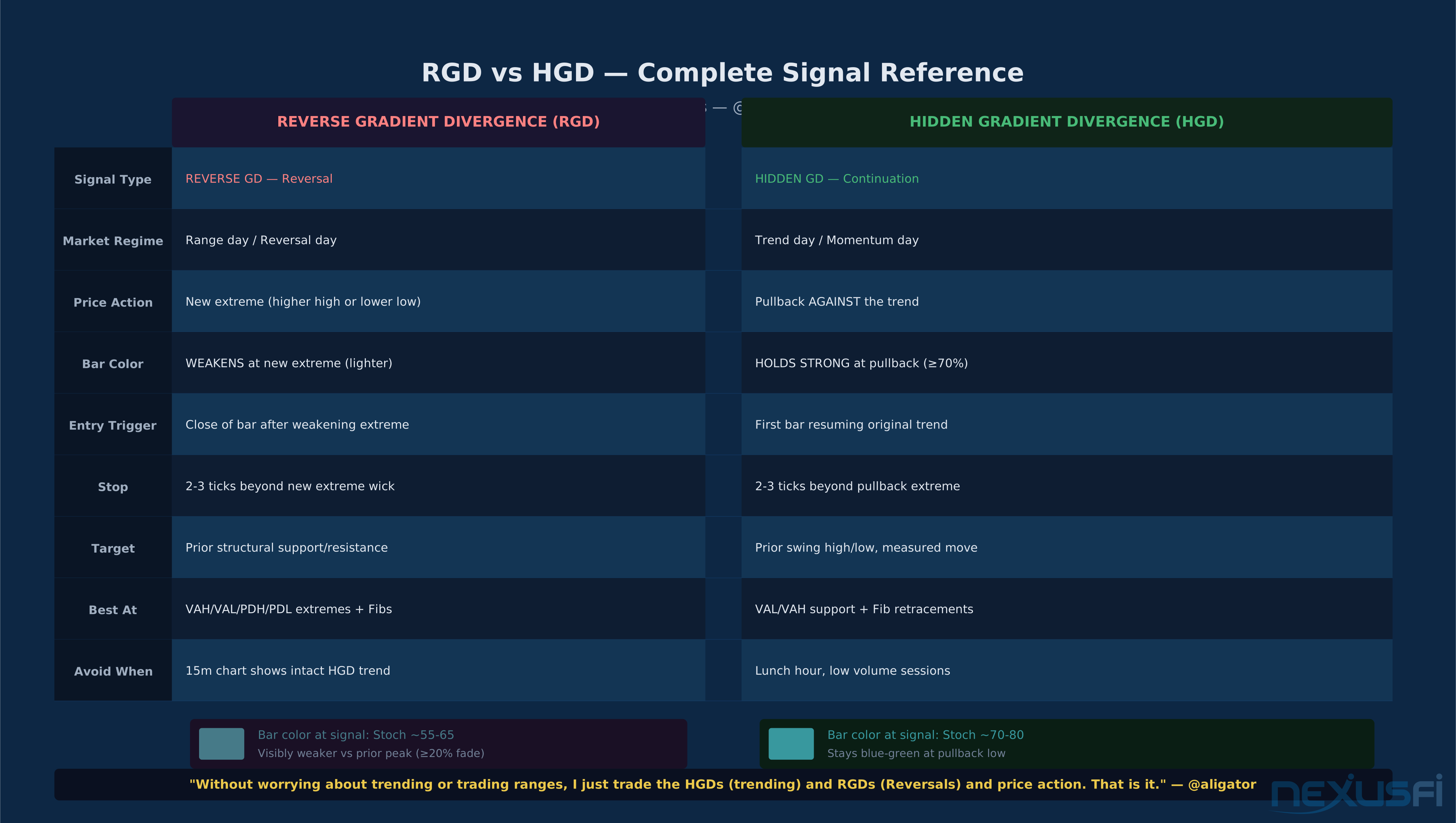
Two signals power the entire method. Reverse Gradient Divergence (RGD) for reversals. Hidden Gradient Divergence (HGD) for trend continuation. As @aligator explained in his original NexusFi post: "Without being worried about trending or trading ranges, I just trade the HGDs (trending) and RGDs (Reversals) and price action. That is it — you have covered all situations in day trading."
The simplicity is the point. Two signals, any market condition, no regime filtering required before you enter. This is a methodology built around a core insight: some market information is better processed visually than computationally.
Overview #
Gradient Divergence uses colored price bars — bars where the shade corresponds to an underlying oscillator value — to reveal divergence between price action and momentum. When price makes a new extreme but bar color doesn't follow, divergence exists. When bar color confirms the price extreme, momentum is intact.
The method originated on NexusFi in 2012 when @aligator shared the mahGradientColorBarsV2 indicator for NinjaTrader. The thread accumulated 3,058 replies over multiple years as traders refined the approach, developed complementary tools, and documented live trading results. What emerged is a coherent trading methodology that combines visual momentum analysis with classical market structure.
How Gradient Bars Work #
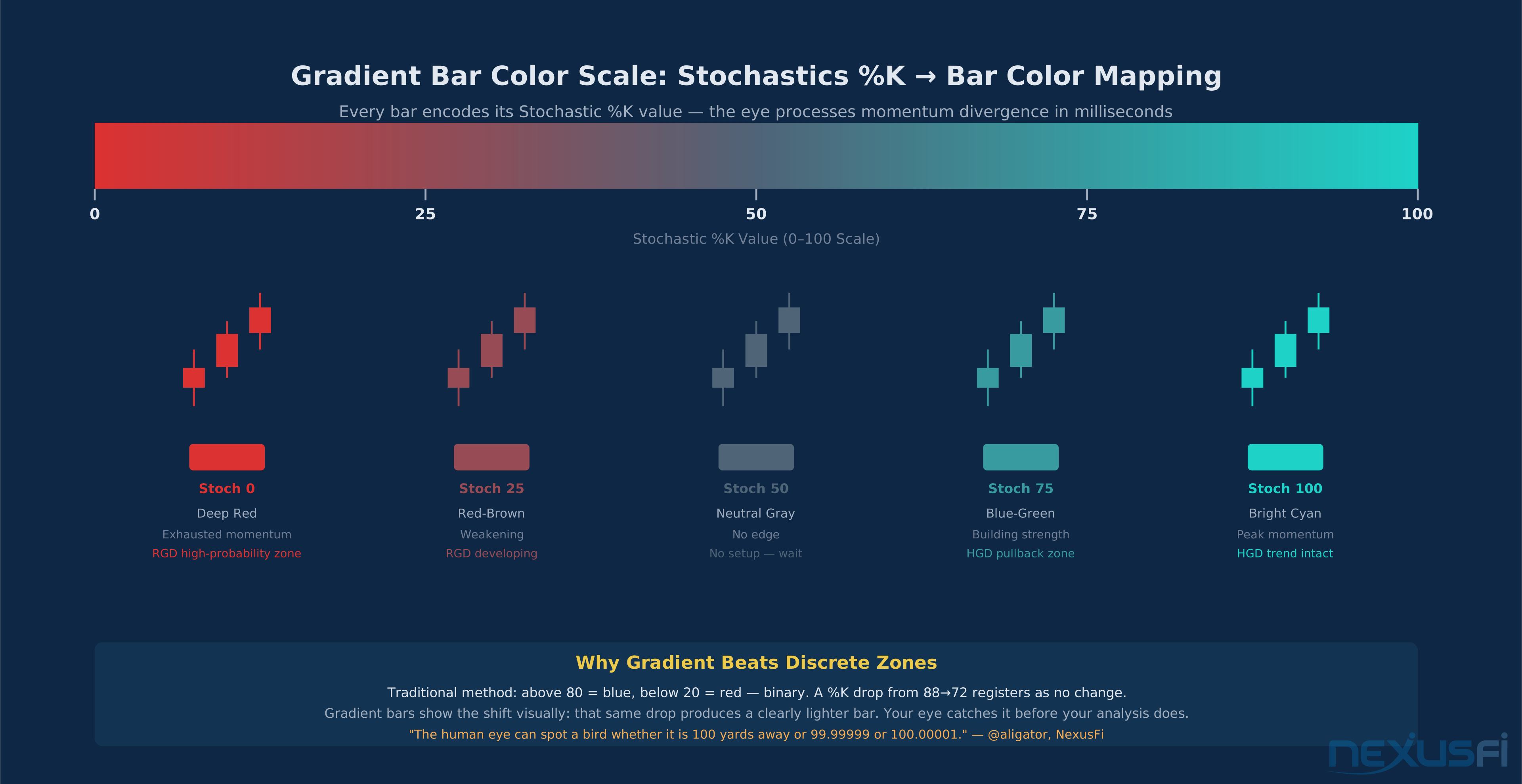
The technical implementation maps oscillator values to bar color on a continuous scale. For a Stochastics oscillator reading of X on a 0-100 scale, bar color is a linear interpolation between two RGB endpoints — deep cyan at 100 (maximum momentum) fading toward red at 0 (minimum momentum), with neutral gray at 50 (midpoint).
In @aligator's color guide to the indicator: "Here are expected colors, on a scale of 0-100, for various levels of the filter value. The colors represent filter values at 100, 70, 50, 30, and 0." The gradient allows the eye to detect a Stochastic move from 88 to 72 as a visible color shift — information that two discrete zones (above 80 = blue, below 80 = gray) would hide entirely.
This is why the method works where algorithmic divergence detection fails. Algorithmic detection uses threshold-based logic: "price made a higher high while RSI made a lower high." Three systematic failures:
The measurement problem: Two nearly equal highs — ES at 5412.25 and 5413.00 (3 ticks apart) — may or may not qualify as a "higher high" depending on the algorithm's threshold. Visual processing handles this without a hard cutoff.
The timing problem: Algorithms check divergence at confirmed swing points, often defined as N-bar lookback highs. But oscillator divergence often appears during the formation of a swing, not after it's confirmed. Visual gradient processing detects the developing mismatch in real time.
The noise problem: A 14-period RSI on a 5-minute ES chart generates multiple technically valid "divergent" swing pairs in a choppy session, most of which are noise. Visual gradient processing naturally filters noise because color continuity across multiple bars provides a running average of momentum quality, not a point-in-time comparison.
The deeper explanation is neurological. Pre-attentive visual processing — the brain's parallel processing of color, brightness, and orientation before conscious attention is directed — handles gradient divergence in approximately 10 milliseconds. Conscious comparison between two chart panels takes 200-500 milliseconds. When bar color maps momentum to a continuous gradient, a trader's visual cortex perceives a developing momentum mismatch as "something looks wrong" before the analytical mind has processed a single data point.
Why Stochastics Over Other Oscillators #
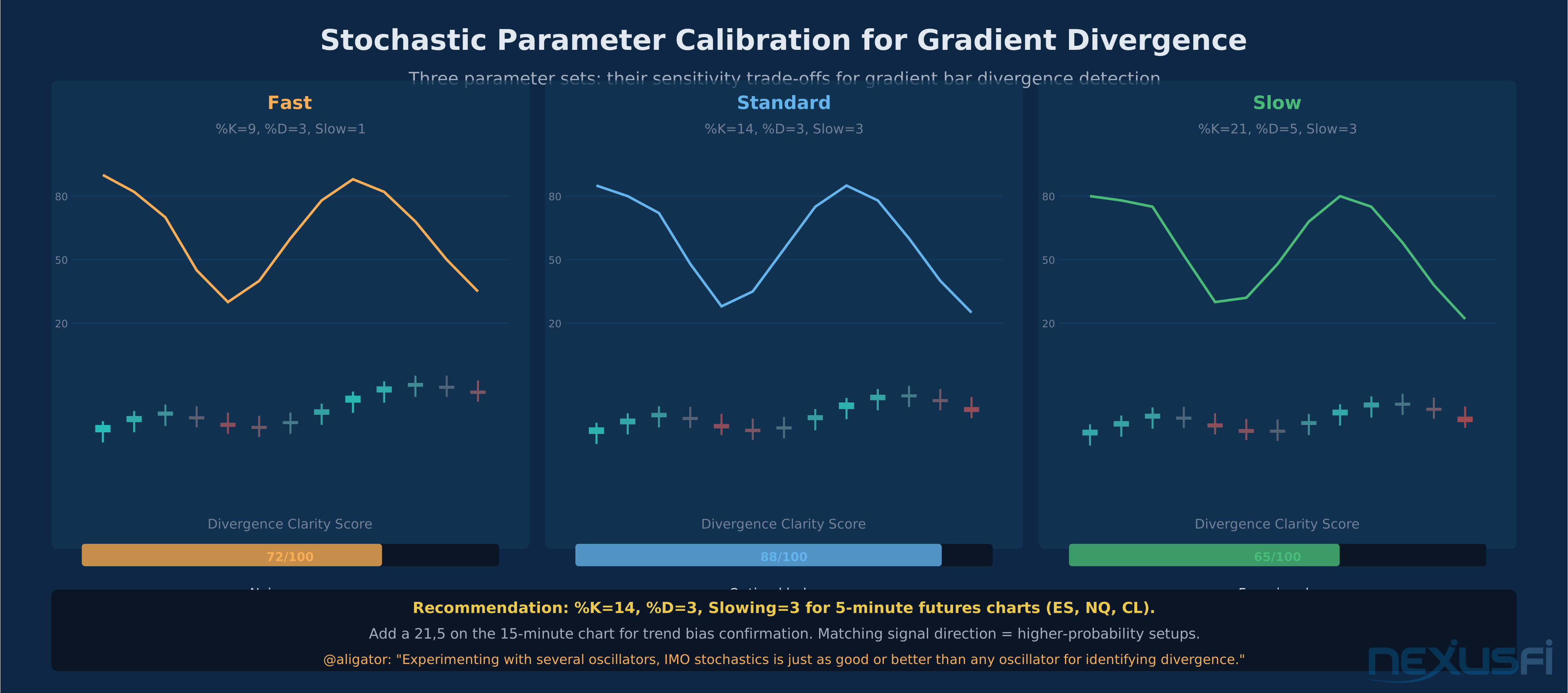
The original indicator uses Stochastics as the underlying filter. @aligator tested multiple oscillators and concluded: "Experimenting with several oscillators, IMO stochastics is just as good or better than any oscillator for identifying divergence."
Three structural advantages over RSI, MACD, or CCI for gradient color mapping:
Bounded, normalized scale: Stochastics is always 0-100 by mathematical construction. RSI is theoretically 0-100 but practically clusters between 20-80 in most market conditions, compressing the visible gradient range. MACD is unbounded — in trending markets, extreme MACD values can push color permanently to one endpoint, stripping out useful information.
Mean-reversion behavior: Stochastics' construction (current close relative to N-period high-low range) naturally returns to the middle of its range between momentum impulses. This makes gradient color changes highly responsive — color moves noticeably when momentum shifts, which is exactly what visual divergence detection requires.
Filter compatibility: The %K and %D lines provide a natural secondary filter. Most Gradient Divergence practitioners color-map the fast %K while using %D crossovers as a secondary entry confirmation — adding a second visual layer without adding a separate panel.
Recommended parameters for futures markets: %K period = 14, %D period = 3, slowing = 3. For higher timeframe confirmation: %K period = 21, %D period = 5. On 5-minute ES/NQ, the 14-period %K captures approximately 70 minutes of price action — sufficient to define a meaningful momentum cycle without excessive noise.
Note on CCI: CCI's range is unbounded. A normalized version can substitute for Stochastics, but @aligator's testing showed "the results were not consistent." Stick with Stochastics unless you have a specific reason to deviate.
Key Concepts #
Reverse Gradient Divergence (RGD) — The Reversal Setup #
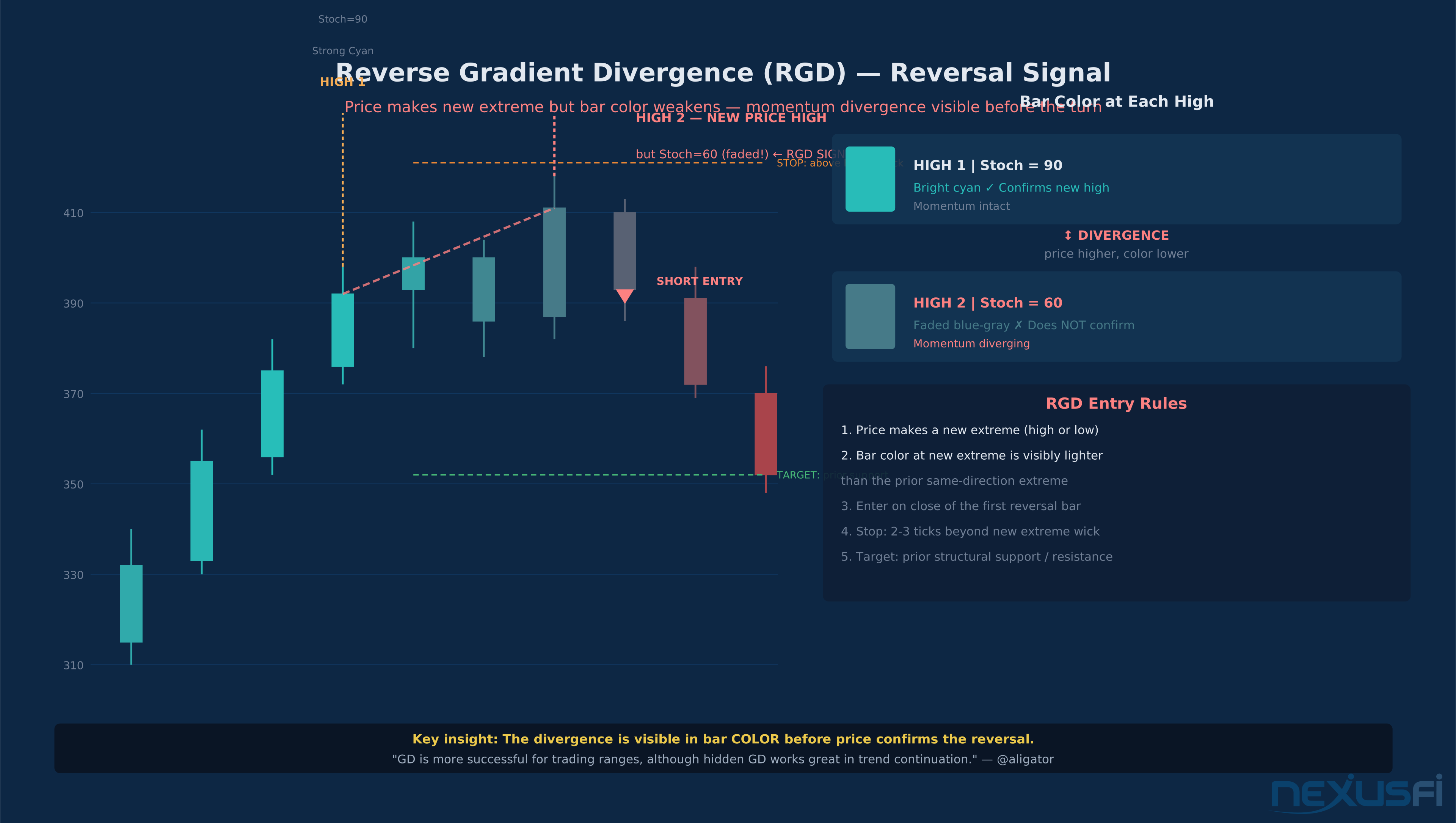
RGD occurs when price makes a new extreme (higher high in an uptrend, lower low in a downtrend) but bar color fails to confirm. The bar at the new extreme is visibly lighter/less saturated than the bar at the prior extreme.
Classic bearish RGD on ES:
- First swing high: ES at 5,406.25, bar color is deep cyan (Stochastics near 85)
- New swing high: ES at 5,411.50 (higher high), bar color is light blue-gray (Stochastics near 62)
Price made a higher high. Momentum didn't. The 23-point Stochastic drop is encoded as a visible color shift. That's bearish RGD.
@aligator's field notes from a live ES trade: "In post #607, further move to downside and 1461.5 was projected as possible for T2. The price eventually reached exactly the 61.8 fib level at 1461.50, hanged in there for a while and continued its move. T2 reached. The price never retraced to the entry point near 1466. Not bad for a dull Friday."
RGD is most reliable:
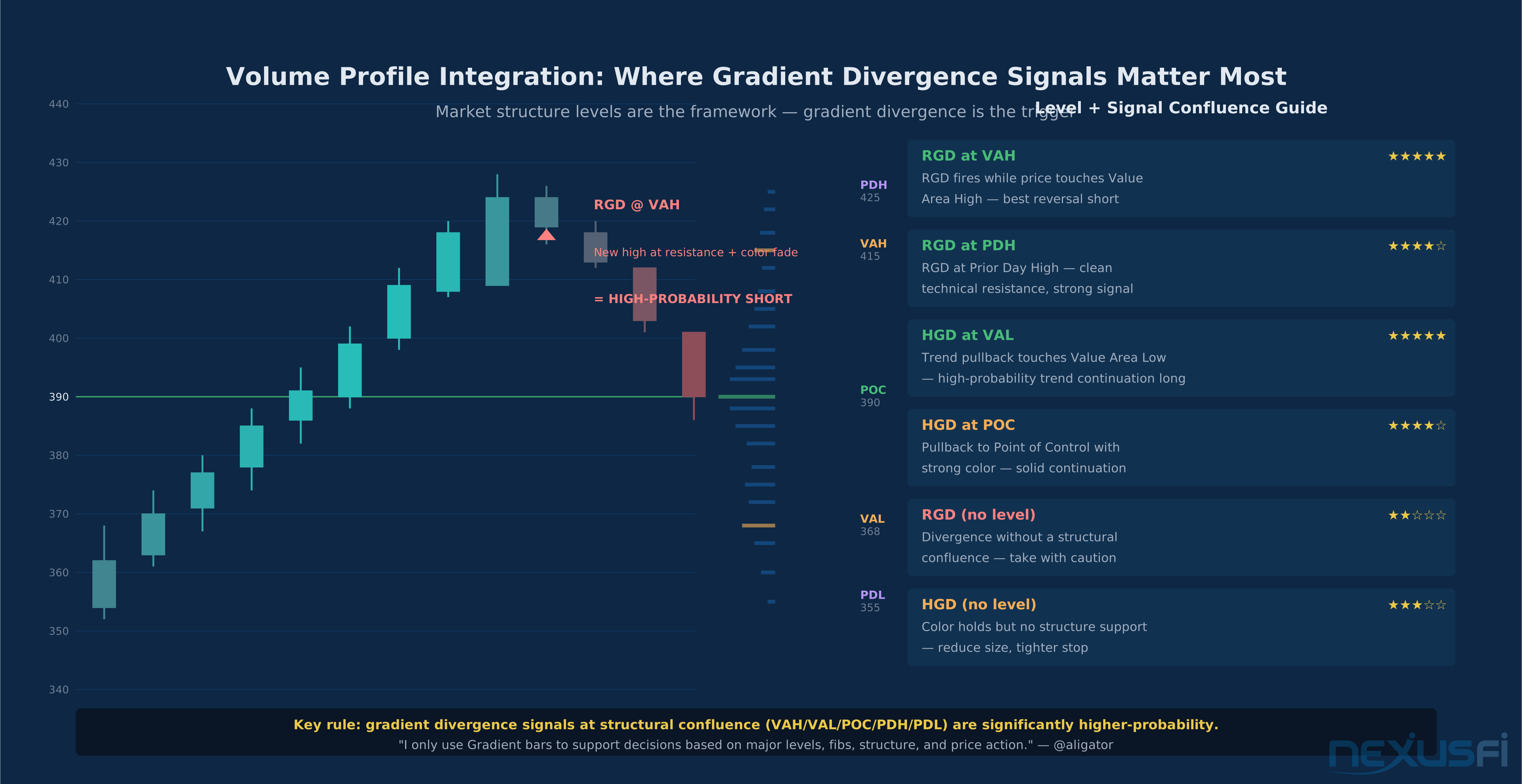
- At established resistance/support levels from prior sessions (PDH, PDL, VAH, VAL, POC)
- At Fibonacci extension levels (61.8%, 100%, 161.8%)
- At Value Area boundaries confirmed by Market Profile
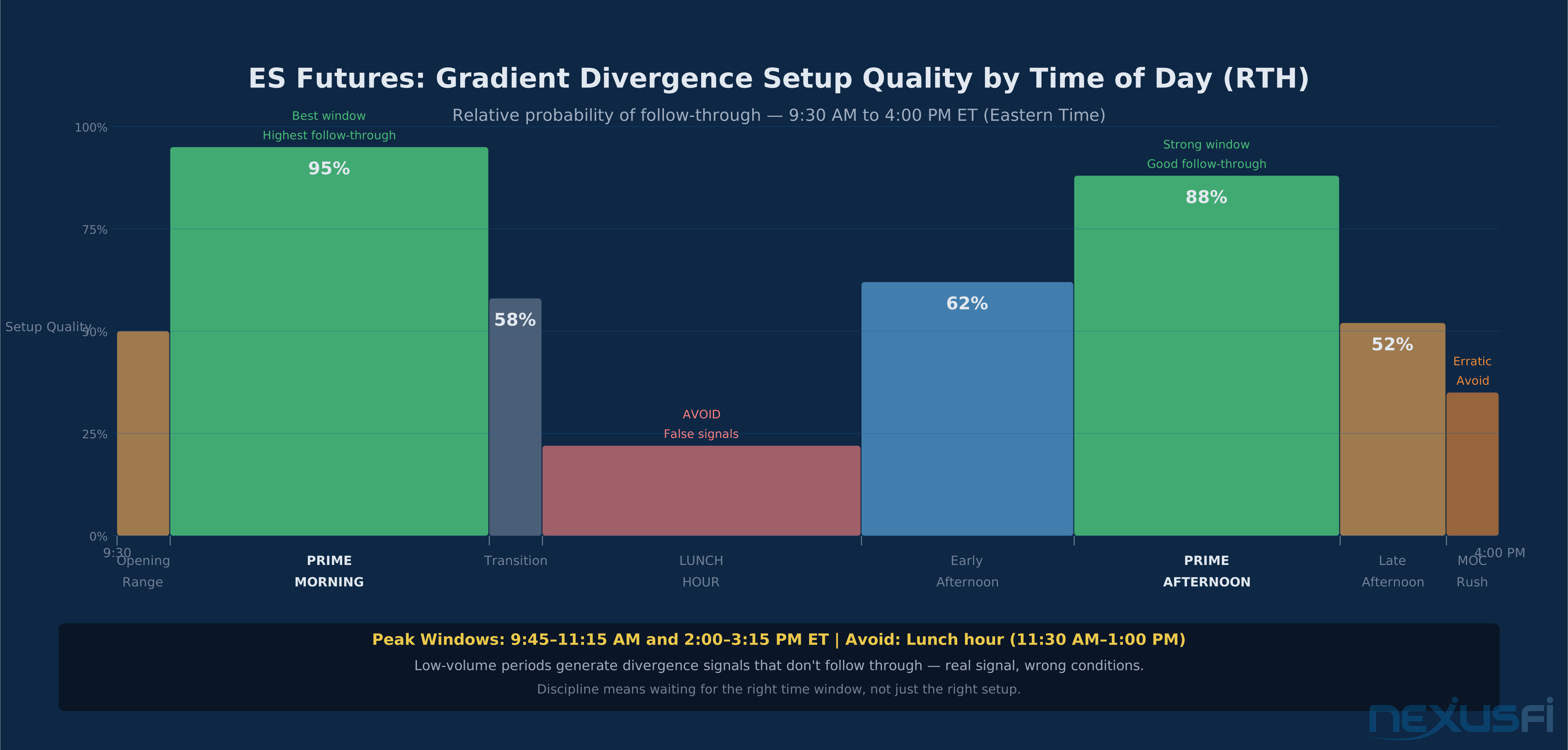
- When time of day supports reversals (late morning 10:30-11:30 AM ET, late afternoon 2:00-3:15 PM ET)
RGD is unreliable:
- In the first 15 minutes of RTH (high noise, momentum readings unstable)
- During news events (FOMC, CPI, NFP, EIA crude inventory)
- On strong trending days where bar color stays uniformly strong
- In very narrow range days where the oscillator doesn't cycle fully
Hidden Gradient Divergence (HGD) — The Continuation Setup #
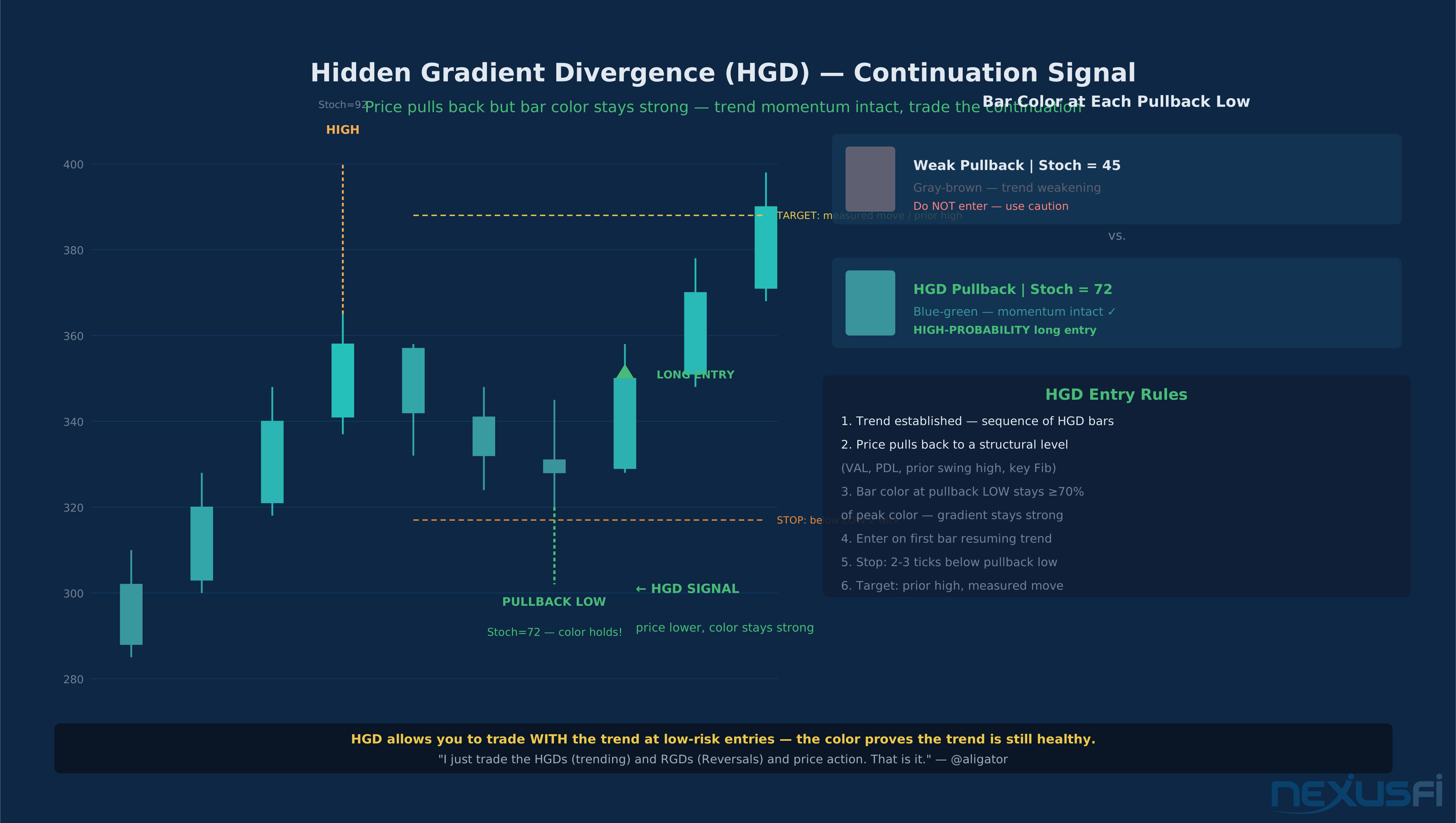
HGD is the signal most oscillator-based methods miss entirely — they're tuned to spot reversals, not continuations. HGD occurs during a pullback in an established trend: price retraces, but bar color stays strong.
Bullish HGD on ES:
- Uptrend established: price rallied from 5,393 to 5,430, bars consistently dark throughout
- Pullback: price falls to 5,415 — 15-point retracement on 6 bars
- At the 5,415 pullback low: bar color shows Stochastic reading of 41 (muted, but NOT deeply red)
- Previous pullback low in this trend showed Stochastic at 26 with clearly reddish bars
- Current pullback shows higher Stochastic despite lower price — hidden divergence. Momentum maintained.
"GD is more successful for trading ranges, although hidden GD works great in trend continuation," @aligator noted in his rule documentation post. HGD is the institutional tell. When smart money absorbs selling into weakness, bar color stays stronger than price would suggest. You're seeing the bid under the market visually.
The critical color observation for HGD: the pullback bars should be noticeably lighter than the trend bars, but NOT fully red. A full red reading (Stochastic approaching 0) on a pullback bar means sellers have taken control — that's not HGD, that's a trend change developing.
The strongest gradient divergence setups occur when three conditions align simultaneously: (1) a meaningful structural level (Market Profile POC, VAH/VAL, VWAP, Fibonacci), (2) a visible gradient divergence (bar color doesn't confirm the new extreme), and (3) time of day that supports reversals (late morning, late afternoon — not the opening volatility window). Two out of three can work. All three is where the high-probability trades live.
Trading the Setups #
RGD Entry, Stop, and Target #
Setup conditions:
- Price reaches key level AND makes new extreme
- Bar at new extreme shows visibly weaker color than prior extreme (15+ Stochastic points weaker minimum)
- Stochastic %D crossover below %K has occurred or is occurring
Entry: Sell stop 1 tick below the low of the signal bar (the divergent high bar). If signal bar low is 5409.75 on ES, entry at 5409.50.
Stop: 1-2 ticks above the swing high of the divergence bar. If divergence bar high is 5411.50, stop at 5411.75. On 5-minute setups, stops should be 4-8 ticks maximum (1.00-2.00 points on ES). Wider stops reduce risk/reward below acceptable levels.
Targets:
- T1: Previous swing low or nearest volume node (Market Profile POC or HVN) — typically 8-16 ticks from entry on 5-minute ES
- T2: Measured move — size of prior impulse leg applied from the entry: if prior up leg was 48 ticks, T2 is 48 ticks below entry
- T3: Full Value Area exit (if trading a reversal from VAH, T3 is VAL or POC)
Trade management: Take 50% off at T1, move stop to breakeven on remainder. Trail the runner with bar color — hold as long as bars remain in the direction of your trade with consistent color. Exit when bar color starts showing recovery (bars starting to shift back toward the original momentum direction).
NQ RGD Example: NQ at 19,845 forms a divergent high after a 72-point rally from 19,773. Prior high bar: Stochastic 91, deep cyan. New high bar: Stochastic 67, noticeably lighter. Entry below new high bar low at 19,828. Stop 1 tick above 19,845 at 19,847 (9 ticks risk = $45/contract on NQ at $5/tick). Target 1: prior consolidation zone at 19,802 (13 ticks = $65/contract). Target 2: 19,773 measured move (72 points down from 19,845 = 19,773).
HGD Entry, Stop, and Target #
Setup conditions:
- Established trend (minimum 2 confirmed impulse waves in same direction within current session)
- Price retraces 33-50% of prior impulse by price
- Pullback bar color remains at Stochastic 35-55 (not collapsing to red zone)
- Pullback volume lighter than the prior impulse volume
Entry: Buy stop 1 tick above the high of the HGD signal bar. If pullback bar high is 5417.50 on ES, entry at 5417.75.
Stop: 2 ticks below the swing low of the HGD signal bar. If HGD low is 5415.00, stop at 5414.50 (4 ticks risk = 1.00 point on ES). HGD stops are tighter than RGD stops because the invalidation is clean — if price breaks the pullback low, the trend assumption is broken.
Targets:
- T1: Prior swing high (if last high was 5430, T1 = 5430)
- T2: Measured move equal to prior impulse from the pullback low (if prior impulse was 27 points from 5403 to 5430, T2 = 5415 + 27 = 5442)
- Hold T2 only when overall trend structure is clearly established with HGD confirmation on multiple timeframes
CL HGD Example: CL has rallied from $71.40 to $73.20 (180 ticks). Price pulls back to $72.55 on light volume. Pullback bar Stochastic at 44 vs. prior pullback Stochastic at 26 — higher oscillator reading on lower price, classic HGD. Entry above pullback bar high at $72.65. Stop at $72.40 ($0.25 risk = $250/contract). T1: $73.20 prior high (55 ticks = $550/contract). T2: $73.95 measured move (180 ticks from pullback low).
Integration with Other Tools #
Gradient divergence is a confirmation overlay — it works best combined with market structure analysis. @aligator's approach: "I only use Gradient bars, divergences, etc. to support my decisions based on major levels, fibs, structure, and price action. I don't even mention indicators other than the gradient bars in my trading."
Market Profile/Volume Profile: RGD at Value Area High or Low is much higher probability than RGD in the middle of the range. The level needs to be meaningful, not arbitrary. A VAH rejection with RGD fire is a complete setup — both the structure and momentum are aligned.
VWAP: Price extended 3+ standard deviations from VWAP with RGD showing is a high-conviction mean reversion setup. The reversion is mathematically likely — gradient divergence confirms the momentum has peaked at the extreme.
Fibonacci levels: @aligator documented multiple instances where 61.8% and 100% extension levels, combined with RGD, produced clean reversals with targets at prior structure. "Levels and price structure give wonderful projections for price destination. Add a clear strong RGD and you have a sure winner with stops and targets that can be reasonably projected in advance."
Opening Range (ACD Context): The 30-minute opening range high and low are natural RGD levels. Price attempts to break the opening range, gradient divergence shows the breakout is lacking momentum, and the trade is a reversal back inside the range. This setup appears frequently in the @aligator thread alongside Mark Fisher's ACD method concepts, which uses a similar opening range framework.
@Fat Tails additions: NexusFi member @Fat Tails contributed noise bands and average daily range bands to complement gradient divergence. The noise bands (orange) define range extremes on range-bound days — natural RGD levels within the noise band framework. The green ADR bands signal when the current day's range has reached the average daily range of preceding sessions — an exit signal for runners and a potential RGD level for counter-trend entries.
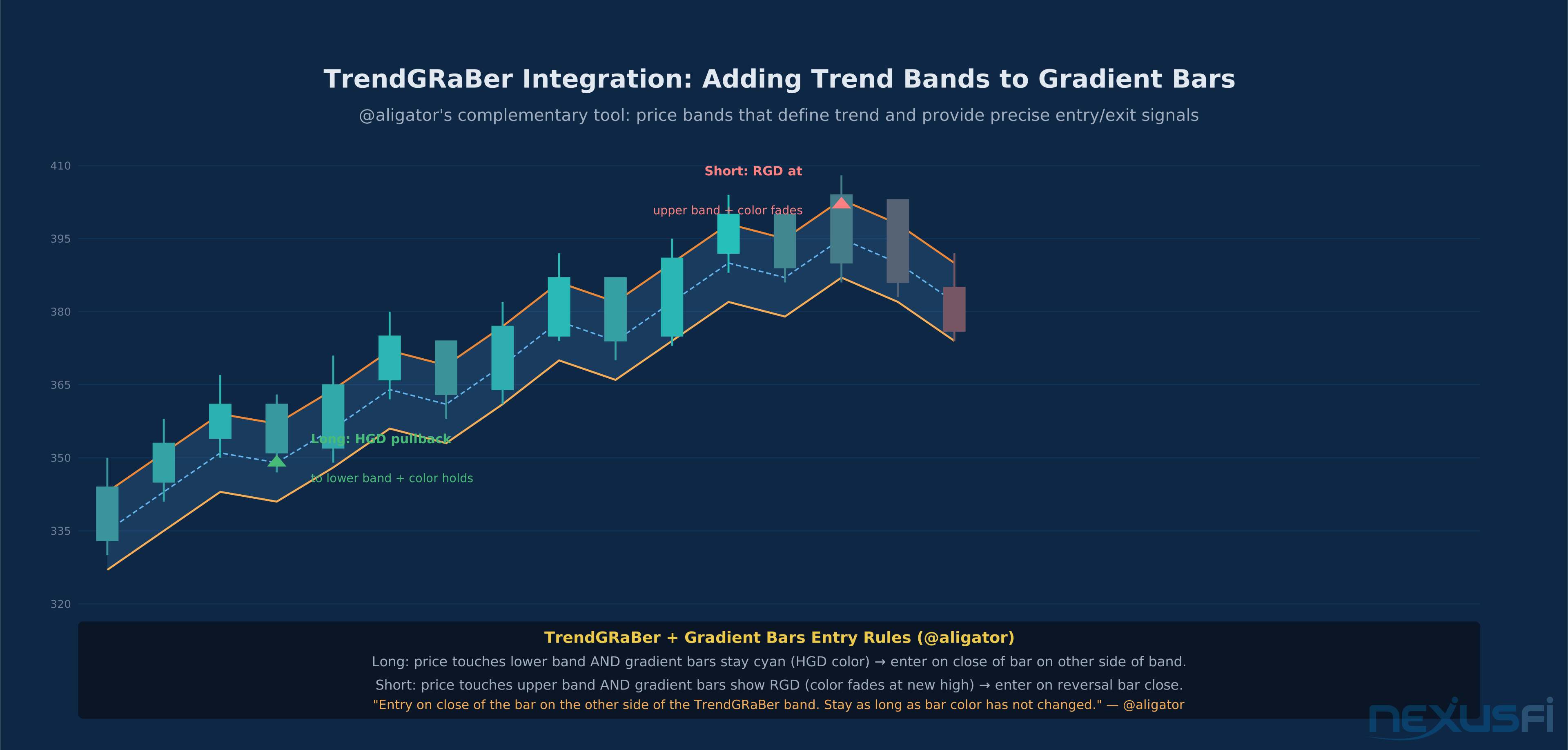
The method @aligator developed alongside gradient bars — the TrendGRaBer indicator — provides trend band context. If RGD fires, entry is on the close of the bar on the other side of the TrendGRaBer band (conservative entry). Hold as long as bar color hasn't changed. This secondary filter adds a trend break confirmation that reduces premature entries.
Market Regime Identification #
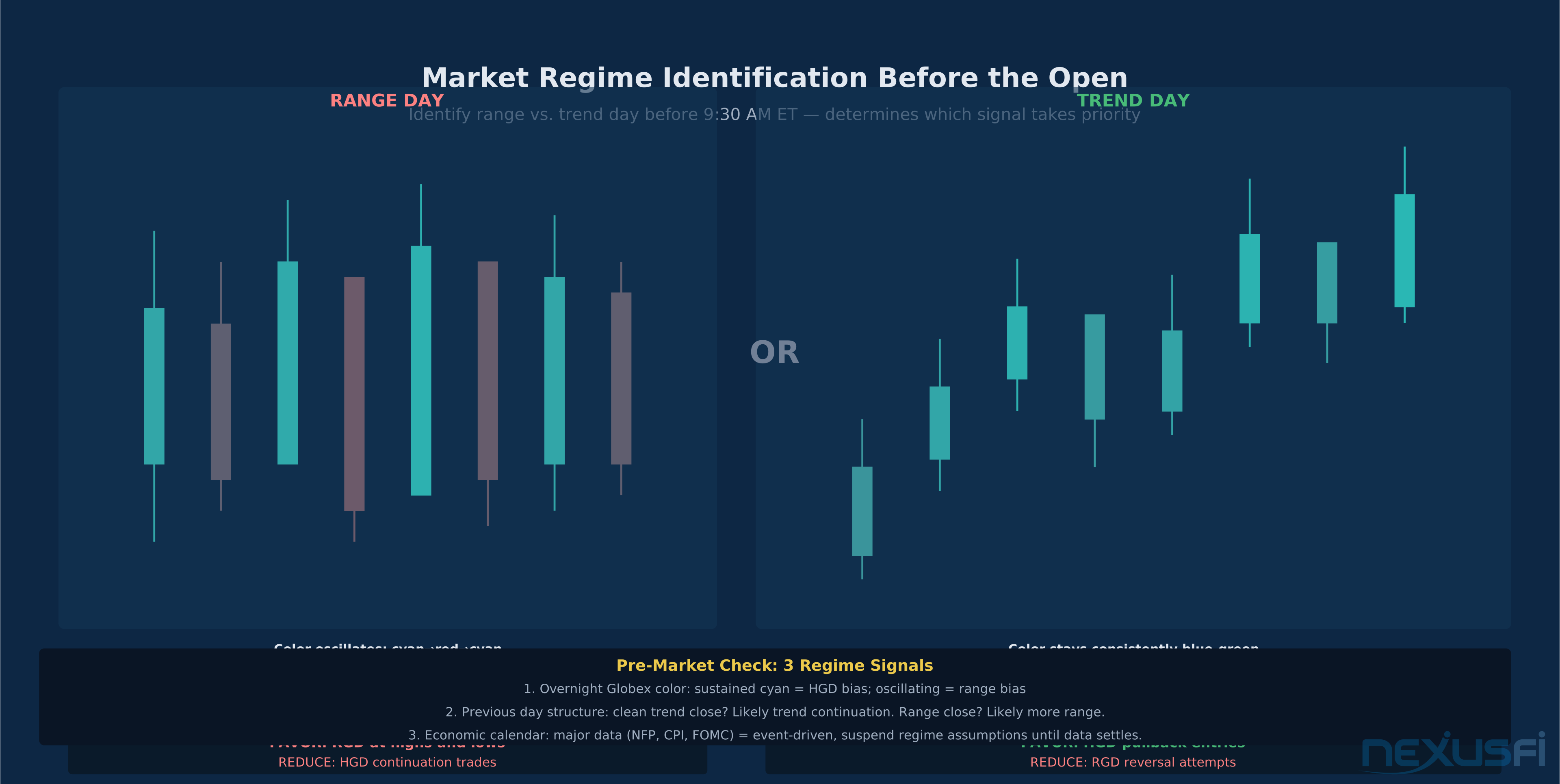
Before the RTH open, classify today as either RGD-favoring (reversal regime) or HGD-favoring (continuation regime). This determines which signal to prioritize.
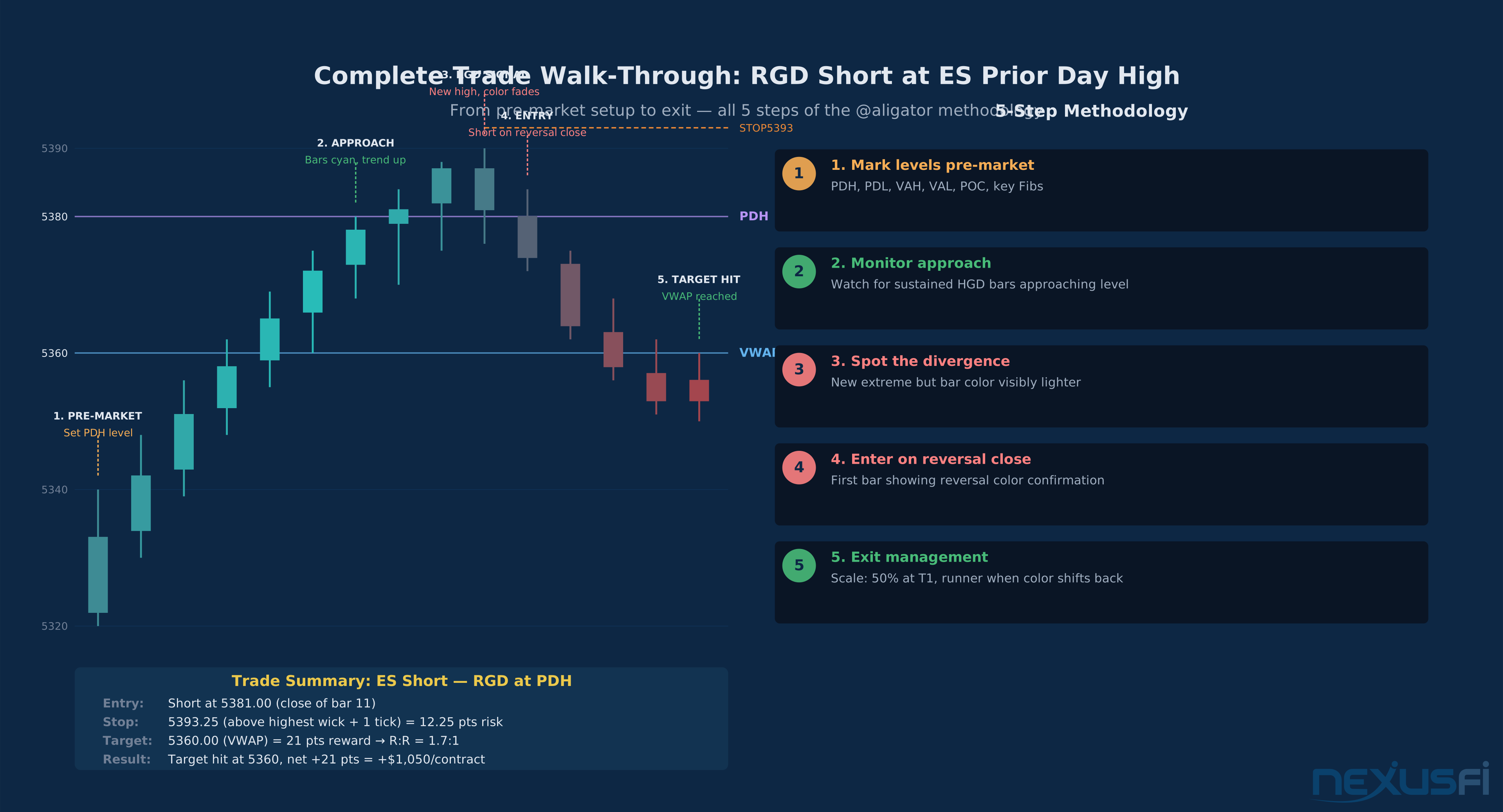
Five-step pre-open protocol:
Step 1 — Prior day range analysis: Calculate yesterday's range vs. the 20-day ATR. If yesterday's range was 42 points on ES and the 20-day ATR is 35 points, range factor = 1.2. A high-range day (>1.3x ATR) after a directional move typically precedes a mean-reverting next day — RGD bias. A low-range day (<0.7x ATR) often precedes breakout continuation — HGD bias.
Step 2 — Overnight activity: Check Globex range relative to prior RTH session. Overnight inside day (Globex range < 33% of prior RTH range): compressing, watch for breakout — HGD once direction establishes. Overnight extension above RTH high: bullish continuation likely, HGD on pullbacks. Overnight mean reversion (price gaps back toward prior RTH midpoint): reversal behavior already in play, RGD bias from opening range extremes.
Step 3 — Economic calendar: High-impact releases distort gradient divergence signals for 30-60 minutes post-release. No signals within 15 minutes before or 30 minutes after FOMC, CPI, NFP, or EIA crude inventory reports.
Step 4 — Volatility context: VIX below 15: grinding trend sessions favor HGD. VIX 15-22: balanced, both signal types valid. VIX above 22: elevated volatility favors RGD as large reversals become more frequent — HGD signals can fail as momentum is more explosive.
Step 5 — Opening 15-minute bar: The first 15-minute bar in ES (9:30-9:45 AM ET) provides the first regime signal. Opening drive bar (first 15-minute bar >12 ticks directional, closes near extreme): continuation day — HGD on first pullback. Opening reversal bar (gaps, then fills within the bar): reversal day — RGD from morning high/low. Narrow opening bar (<8 ticks range): wait for the 9:45-10:00 AM break before committing to a regime.
Statistical Profile #
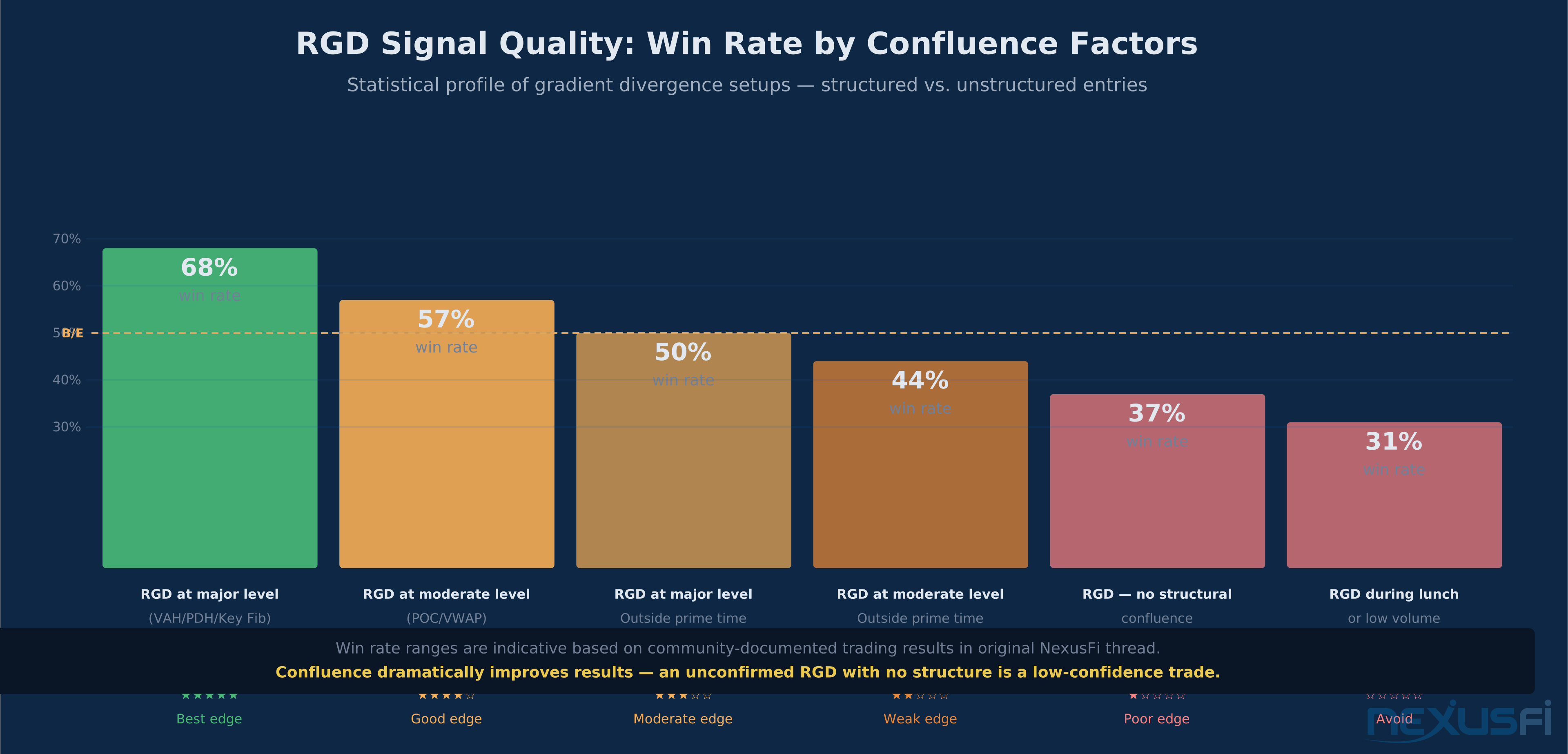
Based on NexusFi practitioner reports from @aligator and participants in the Gradient Divergence thread over 2012-2020:
RGD at structural extremes (signal occurs within 4 ticks of a recognized level — VAH/VAL, PDH/PDL, significant Fibonacci): reported win rate 58-67%, average win/loss ratio 1.4:1 to 1.8:1. Net expectancy: positive across all reported samples.
RGD in open space (no structural level nearby): reported win rate 39-48%, average win/loss ratio approximately 1.1:1. Net expectancy: roughly break-even. This is why so many traders can see gradient divergence signals but can't make them profitable — they trade the signal without the structural filter.
HGD in established trends (two confirmed impulse waves, pullback 33-50% of prior impulse): reported win rate 62-72%. Trend-following alignment amplifies signal quality. Winners tend to run further than the stop loss, creating favorable skew.
These aren't peer-reviewed statistics. They're practitioner reports from real trading documented on NexusFi. The specific numbers will vary by market condition, instrument, and execution skill. But the directional relationship is consistent: structural confirmation makes a significant difference.
A common mistake with gradient divergence: taking every RGD signal regardless of location. RGD in the middle of the day's range with no structural level nearby is noise — not a trade. Price can reverse briefly, stall, then continue in the original direction, taking your stop and leaving you confused about why the divergence "failed." The divergence didn't fail; you traded it without context. Structure first, divergence second.
Oscillator Parameter Calibration #
The default settings work. But understanding what you're calibrating helps when you want to adjust for specific instruments.
Period sensitivity: Short periods (5-7) make the gradient extremely reactive. Many micro-divergences, most noise. Longer periods (21-28) smooth the gradient but lag behind significant momentum shifts. On 5-minute ES: 14-period is standard. On 1-minute CL: 8-period works better due to faster price cycles.
Color scheme choices: The original indicator used red-gray-blue mapping. Some traders prefer green-yellow-red (more intuitive for overbought/oversold associations). @aligator's own preference evolved toward a silver background chart with higher contrast gradient colors — "the indicator is best viewed on a chart with Silver background." The silver background makes gradient transitions most visible. Dark backgrounds wash out lighter colors, white backgrounds wash out darker colors.
Three-point vs. two-point gradient: Most implementations use a two-point interpolation (low color to high color). A three-point gradient (low → neutral gray at 50 → high) adds a visible midpoint zone that makes transitional momentum more apparent. Traders who find two-point gradients hard to read often do better with three-point.
Practical Application: Pre-Market Setup #
Daily workflow:
15 minutes before RTH open:
- Mark prior session VAH, VAL, POC, PDH, PDL on 5-minute chart
- Add VWAP with ±1, ±2, ±3 SD bands
- Mark key Fibonacci levels from significant prior swings
- Note the gradient bar color pattern in the overnight Globex session — is it showing HGD (trend intact) or drifting toward RGD territory (weakening momentum)?
- Write down today's thesis: "RGD at PDH for a fade" OR "HGD pullback entries in the trend direction"
During session:
- Trade only the setup that matches today's thesis
- Don't chase gradient divergence that appears without a structural level
- Time of day matters — the strongest setups occur in the 9:45-11:15 AM ET and 2:00-3:15 PM ET windows
Exit management:
- Scale out: 50% at T1, move stop to breakeven, let runner work
- Hold runner as long as bar color stays in the direction of the trade
- Exit when bar color begins shifting meaningfully back toward the opposite endpoint — don't wait for the color to fully reverse, that's too late
Limitations #
Gradient divergence trading has real limitations. Knowing when NOT to use it matters as much as the setups themselves.
Strong trending days: On a sustained trend day, bar color stays uniformly strong in one direction throughout. RGD signals fire and fail repeatedly. The market makes new highs with slightly lighter bars, you enter the short, price continues up through your stop. Trend identification before applying RGD is mandatory. If the first two-hour structure shows sustained HGD rather than RGD, it's a trend day — RGD signals are suspect until the trend shows exhaustion.
No objective signal definition: Because divergence is identified visually, two traders can disagree on whether a given bar set shows RGD. This isn't a bug — it's intentional, since it's the visual processing that creates the edge. But it means the method can't be backtested with standard software. You're trading with the method or you're not.
Learning curve: Your eye needs to calibrate to what "meaningful" divergence looks like versus normal bar-to-bar variation. New users often see divergence in every bar and trade constantly. @Cheech's observation from the original thread: "While I'm learning to use the Gradient Bars I keep a printout of the rules handy to help me recognize the patterns." The rule: the color difference must be visually obvious without squinting. Subtle differences aren't tradeable.
Instrument sensitivity: CL (crude oil) was @aligator's primary market, and he documented the most reliable setups there. ES and NQ work well. Instruments with extremely tight bid-ask spreads and very high-frequency activity can generate false gradient divergences because the oscillator cycles faster than underlying momentum changes.
Low-volume periods: Lunch hour (11:30 AM — 1:00 PM ET on ES), late-day drift in low-volatility markets, holiday sessions — gradient divergence in low volume generates signals that don't follow through. The divergence is real but there's insufficient participation to drive price to target.
Multi-Timeframe Application #
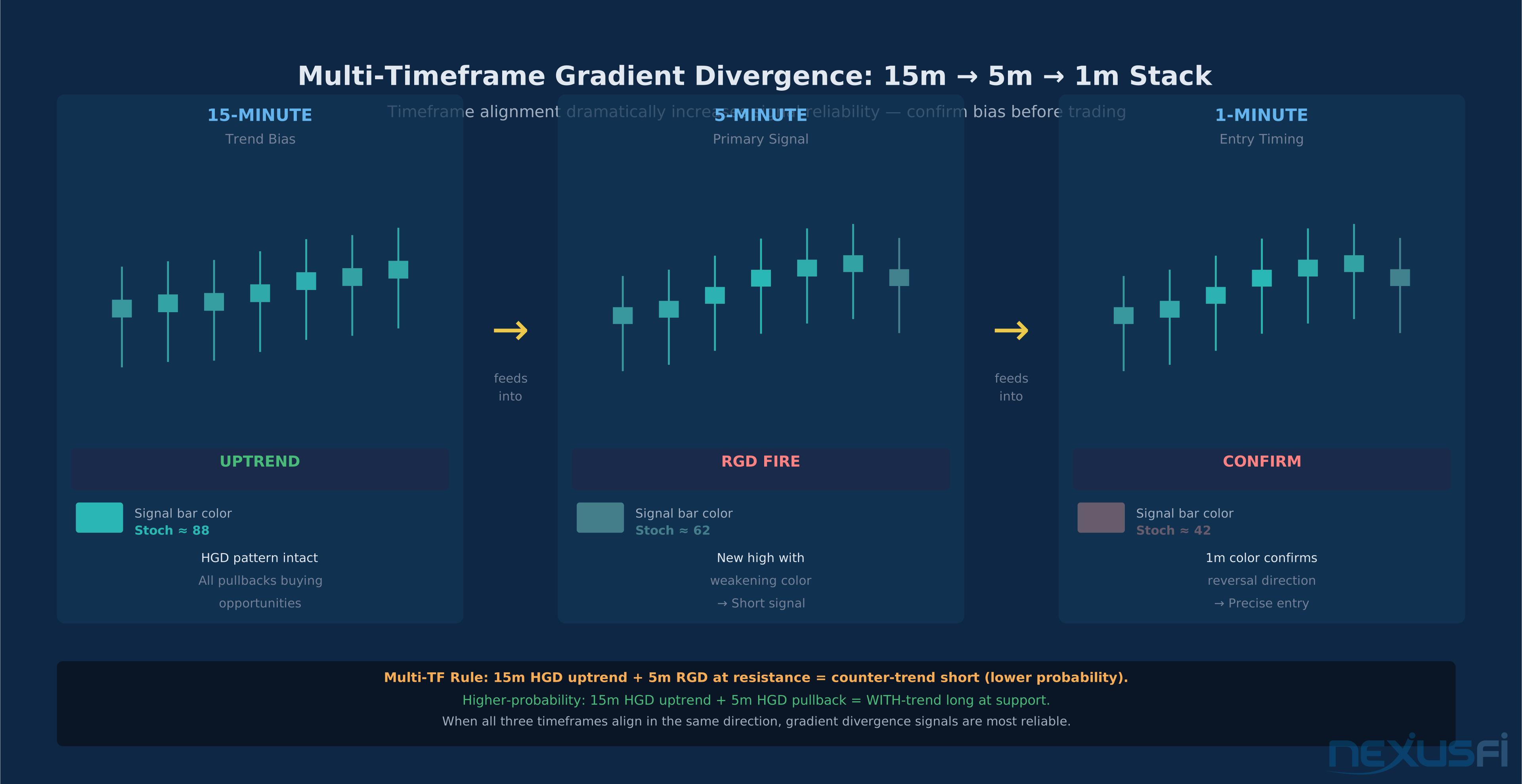
@aligator used gradient bars across multiple timeframes as a confirmation stack.
15-minute chart: Primary trend identification. Is bar color suggesting sustainable trend (consistent HGD) or deteriorating (RGD building across multiple bars)? The 15-minute gradient context defines the trading bias for the day.
5-minute chart: Primary entry timeframe. RGD and HGD signals at structural levels are the actual trade setups.
1-minute chart: Fine-tune entry timing. Gradient divergence on the 1-minute after RGD fires on the 5-minute gives precision entry to the tick. Enter when the 1-minute bar color confirms the reversal direction.
The multi-timeframe approach reduces false signals much. A 5-minute RGD at a level confirmed by weakening bar color on the 15-minute (trend weakening at the higher level) is far more reliable than a 5-minute RGD when the 15-minute is showing strong HGD (the higher-timeframe trend is intact and likely to override the shorter-term reversal signal).
Platform Availability #
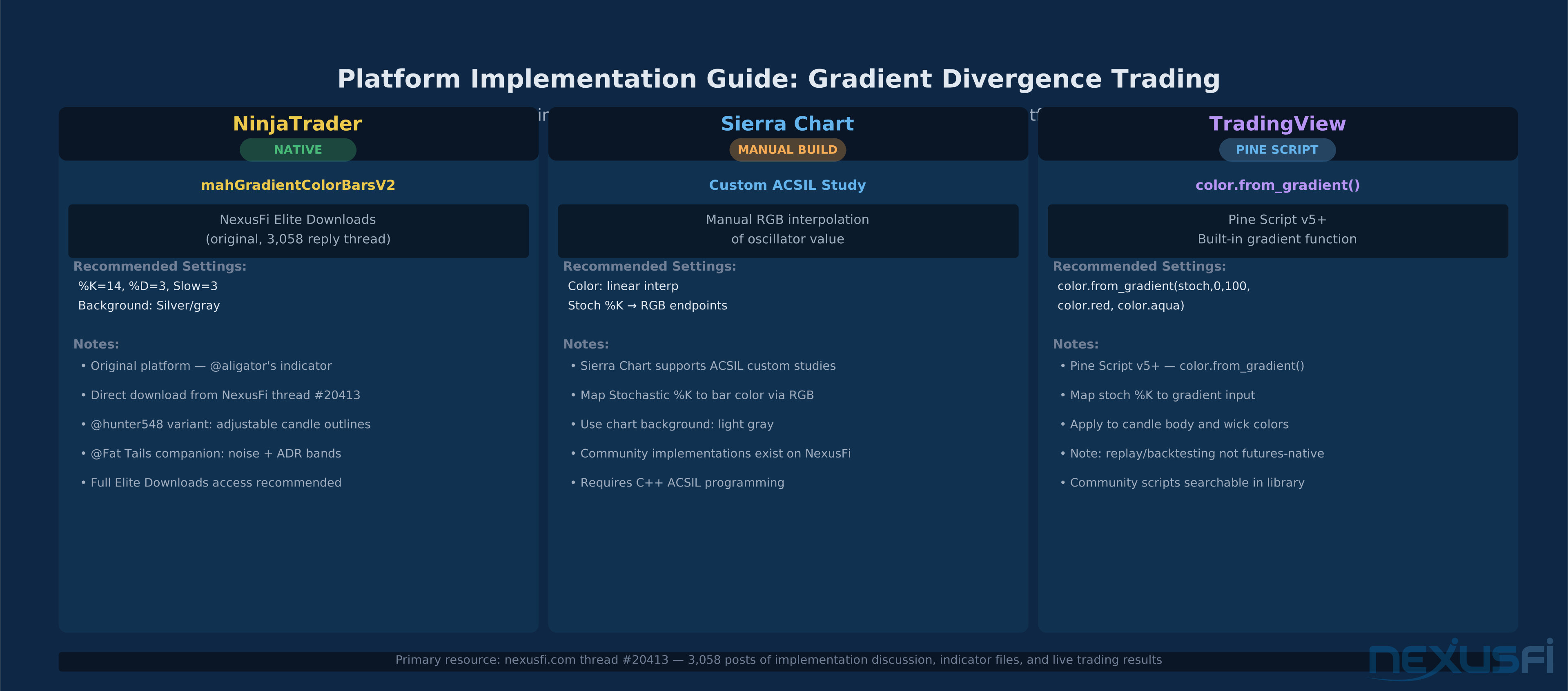
The original indicator — mahGradientColorBarsV2 — was developed by @aligator for NinjaTrader and shared in NexusFi's Elite Downloads. Multiple community-developed versions evolved through the 3,000+ post thread. @hunter548 contributed a version with adjustable candle outline coloring. @Fat Tails provided complementary noise band and ADR band indicators.
For traders on Sierra Chart: the concept replicates via a custom study that maps an oscillator reading to bar color using linear RGB interpolation. Sierra Chart's custom study scripting supports this natively.
For TradingView: Pine Script can implement gradient bar coloring using color.from_gradient() — available from Pine Script v5 onward. Map the Stochastic %K value to the gradient function's input.
@aligator's display recommendation: silver/light gray chart background. The color transitions are most visible against a neutral mid-tone. Dark backgrounds wash out lighter-colored bars (the subtle RGD at overbought becomes harder to see), white backgrounds wash out darker bars (HGD continuation with deep-colored bars loses its visual punch).
Citations #
- @aligator (NexusFi, 2012) — Post #223725 — 66 thanks. Original introduction of gradient color bars indicator for divergence detection: "The fact that no one has been able to write a decent divergence indicator is because computers can only follow rules and limits. Human eye on the other hand can spot a bird in the sky whether it is 100 yards away or 99.99999 or 100.00001."
- @aligator (NexusFi, 2012) — Post #233926 — 46 thanks. First publication of formal RGD and HGD rules: "GD is more successful for trading ranges, although hidden GD works great in trend continuation." Core signal definitions established here.
- @aligator (NexusFi, 2013) — Post #349370 — 10 thanks. Method synthesis: "Without being worried about trending or trading ranges I just trade the HGDs (trending) and RGDs (Reversals) and price action. That is it — you have covered all situations in day trading."
- @aligator (NexusFi, 2012) — Post #259300 — 11 thanks. On indicator role: "I only use Gradient bars, divergences, etc. to support my decisions based on major levels, fibs, structure, and price action. I don't even mention indicators other than the gradient bars in my trading."
- @aligator (NexusFi, 2012) — Post #255407 — 7 thanks. Oscillator selection: "Experimenting with several oscillators, IMO stochastics is just as good or better than any oscillator for identifying divergence."
- @aligator (NexusFi, 2014) — Post #434245 — 7 thanks. TrendGRaBer integration: "Entry on close of the bar on the other side of the TrendGRaBer band. Staying with the trade as long as bar color has not changed."
- @hunter548 (NexusFi, 2012) — Post #252092 — 13 thanks. Community contribution: modified gradient bars with adjustable candle outline color for different chart backgrounds.
- @Fat Tails (NexusFi, 2013) — Post #349753 — 7 thanks. Noise bands and ADR bands explanation: "The orange bands are noise bands. On a range-bound day you can trade off those bands, on a trending day they can be considered as a breakout point."
- @Cheech (NexusFi, 2012) — Post #262055 — 9 thanks. Learning aid: "While I'm learning to use the Gradient Bars I keep a printout of the attached file handy to help me recognize the patterns. It is one-page summary of the rules as defined by aligator."
- @aligator (NexusFi, 2012) — Post #264973 — 6 thanks. Live trade documentation: "Levels and price structure give wonderful projections for price destination. Add a clear strong RGD and you have a sure winner with stops and targets that can be reasonably projected in advance."
- @aligator (NexusFi, 2012) — Post #247012 — 10 thanks. Oscillator-to-color mapping guide: color reference showing gradient values at Stochastic readings of 100, 70, 50, 30, and 0.
Version 1.0 — June 2026 — NexusFi Academy
Knowledge Map
Go Deeper
Build on this knowledgeCitations
- — Gradient Divergence (mahGradientColorBarsV2 indicator) (2012) 👍 66“The fact that no one has been able to write a decent divergence indicator is because computers can only follow rules and limits. Human eye on the other hand can spot a bird in the sky whether it is 100 yards away or 99.99999 or 100.00001.”
- — Gradient Divergence (mahGradientColorBarsV2 indicator) (2012) 👍 46“GD is more successful for trading ranges, although hidden GD works great in trend continuation.”
- — Gradient Divergence (mahGradientColorBarsV2 indicator) (2013) 👍 10“Without being worried about trending or trading ranges I just trade the HGDs (trending) and RGDs (Reversals) and price action. That is it -- you have covered all situations in day trading.”
- — Gradient Divergence (mahGradientColorBarsV2 indicator) (2012) 👍 11“I only use Gradient bars, divergences, etc. to support my decisions based on major levels, fibs, structure, and price action. I don't even mention indicators other than the gradient bars in my trading.”
- — Gradient Divergence (mahGradientColorBarsV2 indicator) (2012) 👍 7“Experimenting with several oscillators, IMO stochastics is just as good or better than any oscillator for identifying divergence.”
- — Gradient Divergence (mahGradientColorBarsV2 indicator) (2014) 👍 7“Entry on close of the bar on the other side of the TrendGRaBer band. Staying with the trade as long as bar color has not changed.”
- — Gradient Divergence (mahGradientColorBarsV2 indicator) (2012) 👍 13“Community contribution: modified gradient bars with adjustable candle outline color for different chart backgrounds.”
- — Gradient Divergence (mahGradientColorBarsV2 indicator) (2013) 👍 7“The orange bands are noise bands. On a range-bound day you can trade off those bands, on a trending day they can be considered as a breakout point.”
- — Gradient Divergence (mahGradientColorBarsV2 indicator) (2012) 👍 9“While I'm learning to use the Gradient Bars I keep a printout of the attached file handy to help me recognize the patterns. It is one-page summary of the rules as defined by aligator.”
- — Gradient Divergence (mahGradientColorBarsV2 indicator) (2012) 👍 6“Levels and price structure give wonderful projections for price destination. Add a clear strong RGD and you have a sure winner with stops and targets that can be reasonably projected in advance.”
- — Gradient Divergence (mahGradientColorBarsV2 indicator) (2012) 👍 10“Oscillator-to-color mapping guide showing gradient values at Stochastic readings of 100, 70, 50, 30, and 0.”