



Natural Gas (NG) Futures Trading Strategies: EIA Reports, Seasonal Spreads, and the Henry Hub Playbook
Overview #
Natural gas is the market that rewards preparation and punishes guesswork. More than almost any other futures contract, NG rewards traders who understand why the market moves — not just where it's going. The storage cycle, the weekly EIA report, the weather models, the LNG export flow: these aren't background noise. They are the market.
This article covers the complete playbook for trading NG futures. Contract mechanics, the fundamental drivers that actually matter, how to read the EIA storage report, seasonal calendar spread strategies, the notorious Widowmaker spread, technical analysis approaches that work when filtered by fundamentals, and a risk management framework built for NG's extreme volatility.
Natural gas at Henry Hub (ticker: NG) trades on NYMEX/CME with each contract representing 10,000 MMBtu. The tick size is $0.001 per MMBtu ($10 per tick), and daily price ranges of 3-5% are routine. A single-day move of $0.15-$0.25 isn't unusual — that's $1,500-$2,500 per contract. On EIA report days, spikes of $0.30-$0.50 happen several times per year. Natural gas has destroyed more options-sellers and spread traders than almost any other commodity futures market.
The micro contract (QNG) represents 2,500 MMBtu (one-quarter size) at $2.50 per tick — the practical entry point for smaller accounts learning the market's behavior before trading full size.
:::figure 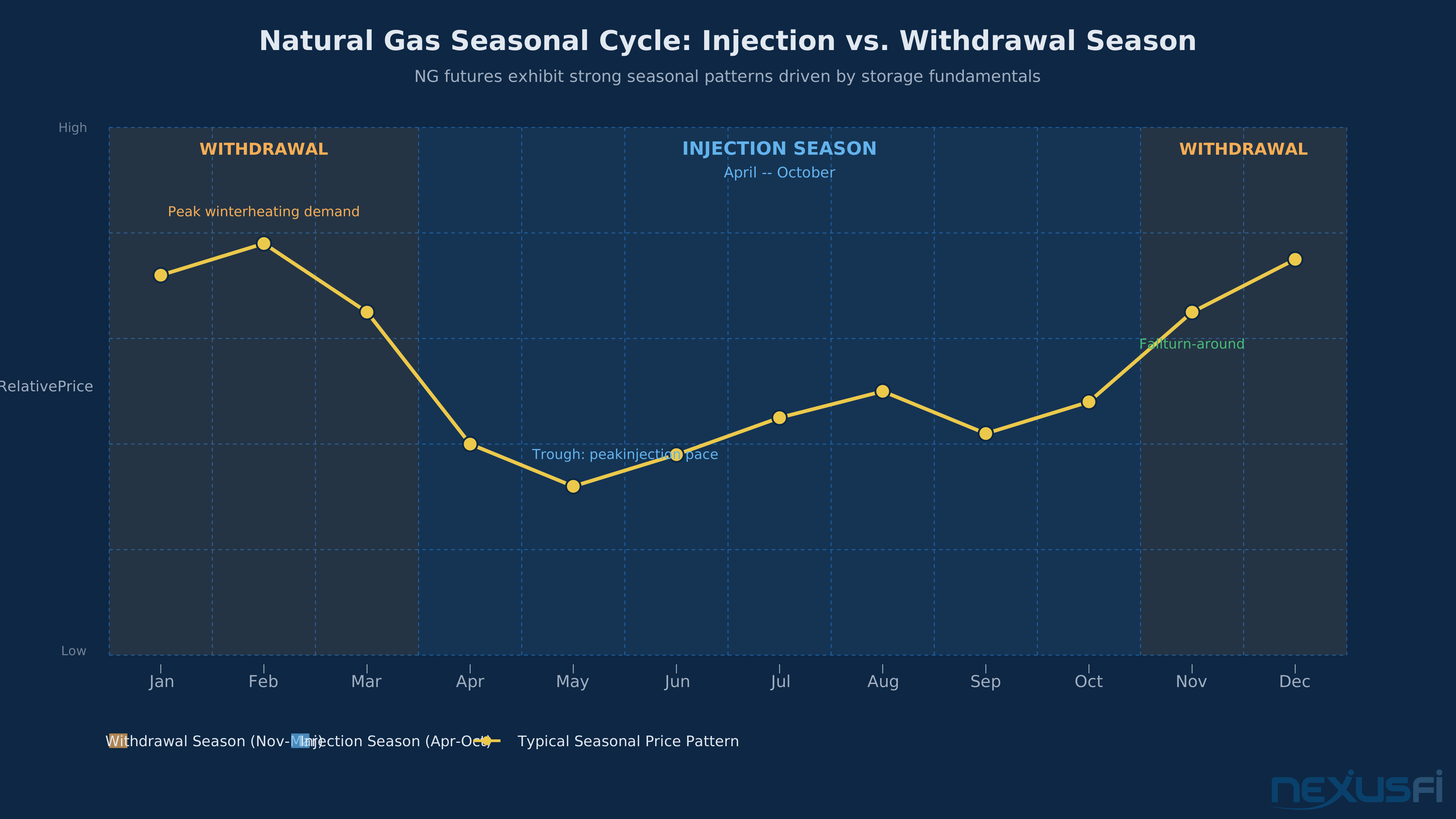 NG Seasonal Cycle: Injection vs Withdrawal :::
The Seasonal Foundation: Injection and Withdrawal Cycles #
Everything in natural gas trading flows from one structural reality: US production exceeds demand for roughly seven to eight months per year (April through October, the injection season), while demand exceeds production for four to five months per year (November through March, the withdrawal season). The market bridges this gap through storage — injecting surplus during spring and summer, withdrawing it during fall and winter.
This means the level of natural gas in working storage at any point in time is the single most important fundamental data point. Storage is the buffer between supply and demand. When storage is tight relative to historical norms, the market prices in risk premiums. When storage is ample, bearish pressure persists.
The seasonal clock runs like this:
Injection Season (April — October): US production runs 15-20% above daily demand. The market systematically builds storage from trough levels in late March toward peak fill levels in November. Price action tends toward range-bound behavior with downside bias when injections run ahead of schedule. Weather dominates on the margin — a hot summer drives power burn and slows injections.
Withdrawal Season (November — March): Daily demand exceeds production, and the market draws down on storage built during injection season. The pace of withdrawals relative to a "normal" season determines whether winter prices stay contained or spike. A cold snap that draws 100 Bcf more than expected over six weeks can reprice the entire forward curve.
The transition months — late March and late October — are the most dangerous. The market is switching regimes, and weather forecasts for early injection or early withdrawal season carry enormous uncertainty. Price can move 10-15% in a week during transitions when weather models oscillate.
The practical implication: your fundamental bias for any trade starts with storage versus the five-year average. Working Gas Ratio (WGR) — working gas divided by total working capacity — below 45% is historically bullish. Above 65% is bearish. Right now in 2026, storage entered the injection season above five-year averages, which explains why Henry Hub has been capped near $3.40-$3.50 despite elevated global gas prices.
As SMCJB, one of NexusFi's most knowledgeable energy market contributors, explains the fundamental dynamic:
Understanding the EIA Weekly Storage Report #
The Thursday morning EIA storage report at 10:30 AM Eastern is to natural gas what the monthly jobs report is to Treasury traders — except it happens every week. It is the dominant short-term trigger for NG price, and every serious NG trader builds their week around it.
The report publishes the net change in working gas in underground storage for the week ending the prior Friday. The number that matters isn't the absolute level — it's the surprise relative to what the market expected.
How to read the surprise:
Analyst consensus estimates are available from Bloomberg, Reuters, and various NG-specific services by midweek. The market's implied expectation is embedded in how the front month has traded heading into Thursday. When the actual report deviates from consensus, the price reaction is almost immediate — often 30-90 seconds for the first move.
The approximate rule of thumb quantified by our research: roughly $0.07-$0.20 per MMBtu for each 1% deviation from expected inventory change. A 10 Bcf miss (actual withdrawal larger than expected) often produces a $0.10-$0.20 spike in the front month within minutes.
Bullish report (actual draw larger than expected, or injection smaller than expected): Prices pop. The surprise means the storage buffer is tighter than the market thought. If the report is large enough, it can shift the narrative about end-of-season storage levels.
Bearish report (actual injection larger than expected, or draw smaller than expected): Prices drop. More gas in storage means less risk of shortage. The curve often flattens as the near-month premium compresses.
Neutral / in-line (within 3 Bcf of consensus): Minimal reaction. The market was well-calibrated and has already priced in the expectation.
:::figure 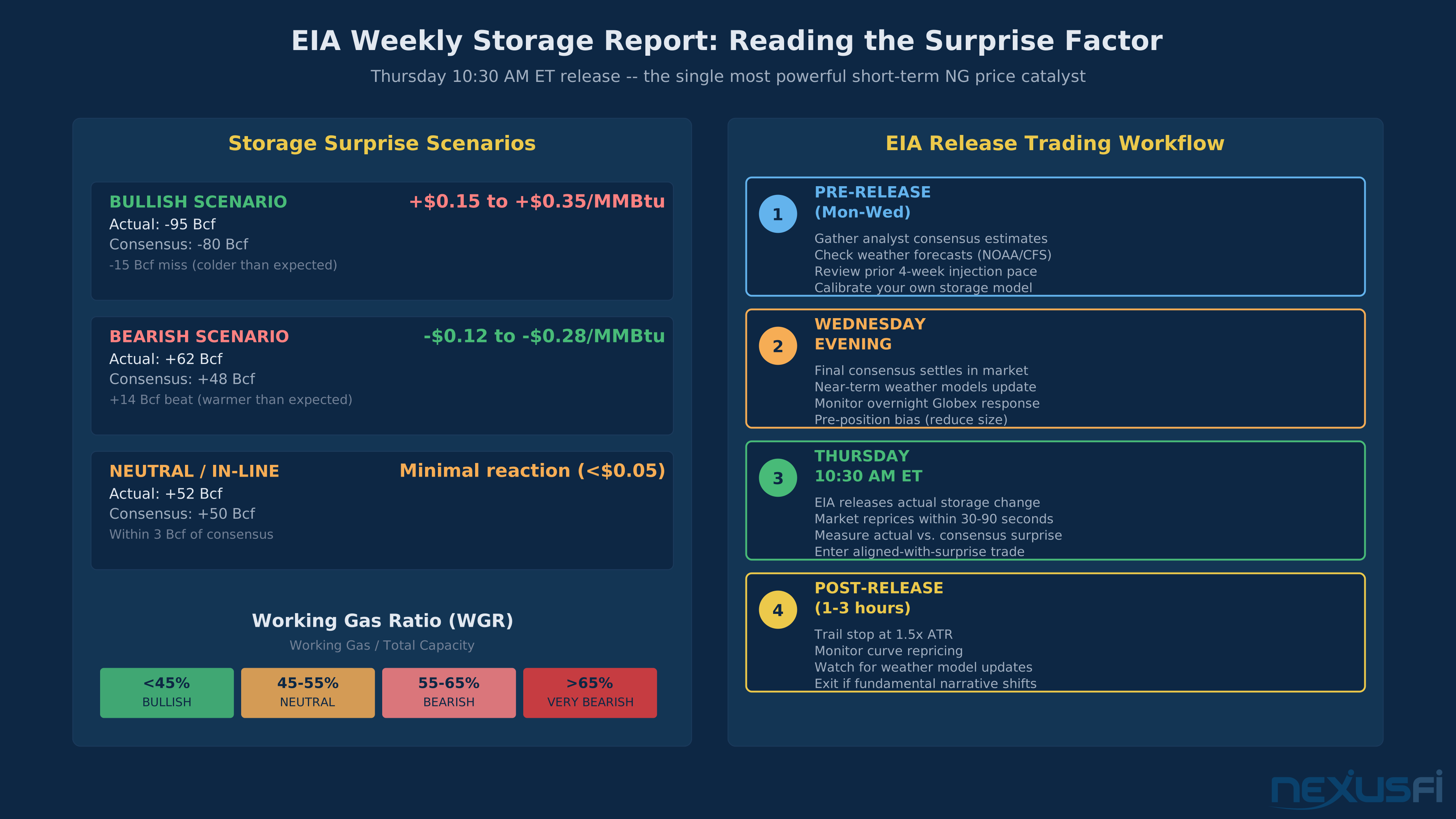
Thursday trading protocol: Many experienced NG traders reduce position size ahead of the 10:30 ET release and re-enter once the number is digested. NG can gap through technical levels on a big surprise. If you're holding a position through the report, your stop needs to account for the realistic gap risk — not just the daily ATR.
SMCJB described the fundamental tracking process precisely on NexusFi: "In the last 4 weeks we have depleted Natural Gas storage by about 200 BCF more than normal for this time of year." That's the kind of running context that lets you form a view before Thursday arrives — so you're not reacting blindly to the number.
Weather: The Volatility Engine #
If storage is the structural foundation of NG pricing, weather is the trigger that disrupts it. Natural gas demand is primarily driven by heating (winter) and cooling (summer), making temperature forecasts the first-order driver of near-term price volatility.
Heating Degree Days (HDD) and Cooling Degree Days (CDD) are the standard measures. Each HDD represents one degree of average daily temperature below 65°F; each CDD, one degree above. Weather deviations from the seasonal norm translate directly into storage deviation from seasonal norms.
The research consistently shows: extreme cold snaps (HDDs running 2+ standard deviations above normal) produce the largest price impacts — $0.30-$0.50 per MMBtu on extreme weeks. Weather forecast revisions, even before the actual weather arrives, can move prices $0.10-$0.20 as the market reprices the expected storage trajectory.
NOAA Climate Prediction Center (cpc.noaa.gov) publishes free 6-10 day and 8-14 day temperature outlook maps. The CFS (Climate Forecast System) ensemble model runs twice daily and is widely watched by professional energy traders. When the overnight CFS update shows an 11-15 day period getting much colder than yesterday's forecast, NG can gap higher at the open before most retail traders are even aware of the model change.
As SMCJB noted about how weather model timing works in practice:
Key weather calendar for NG traders:
- November-March: Daily HDD tracking. Heating demand drives the entire market. When temperatures across the Northeast and Midwest run well below normal, storage depletion accelerates faster than the five-year average — this is the bullish trigger.
- June-September: CDD tracking for air conditioning demand. Power burn from hot summers can much slow injection pace, tightening the expected end-of-season storage level.
- Spring/Fall transitions: Ensemble model reliability drops sharply beyond 10-14 days. Treat any forecast more than two weeks out as directionally useful but not precisely reliable.
@0bl1vion, an experienced NexusFi NG trader, put the weather-NG relationship plainly: "Gas rallies during winter months when demand in the North East is high and inventory is declining. Natural Gas is also very sensitive to news, especially EIA Natural Gas Inventory which comes out every Thursday at 10:30 ET. I have watched the price swing by over a point in a 3-5 minute interval when the inventory numbers come out."
:::figure 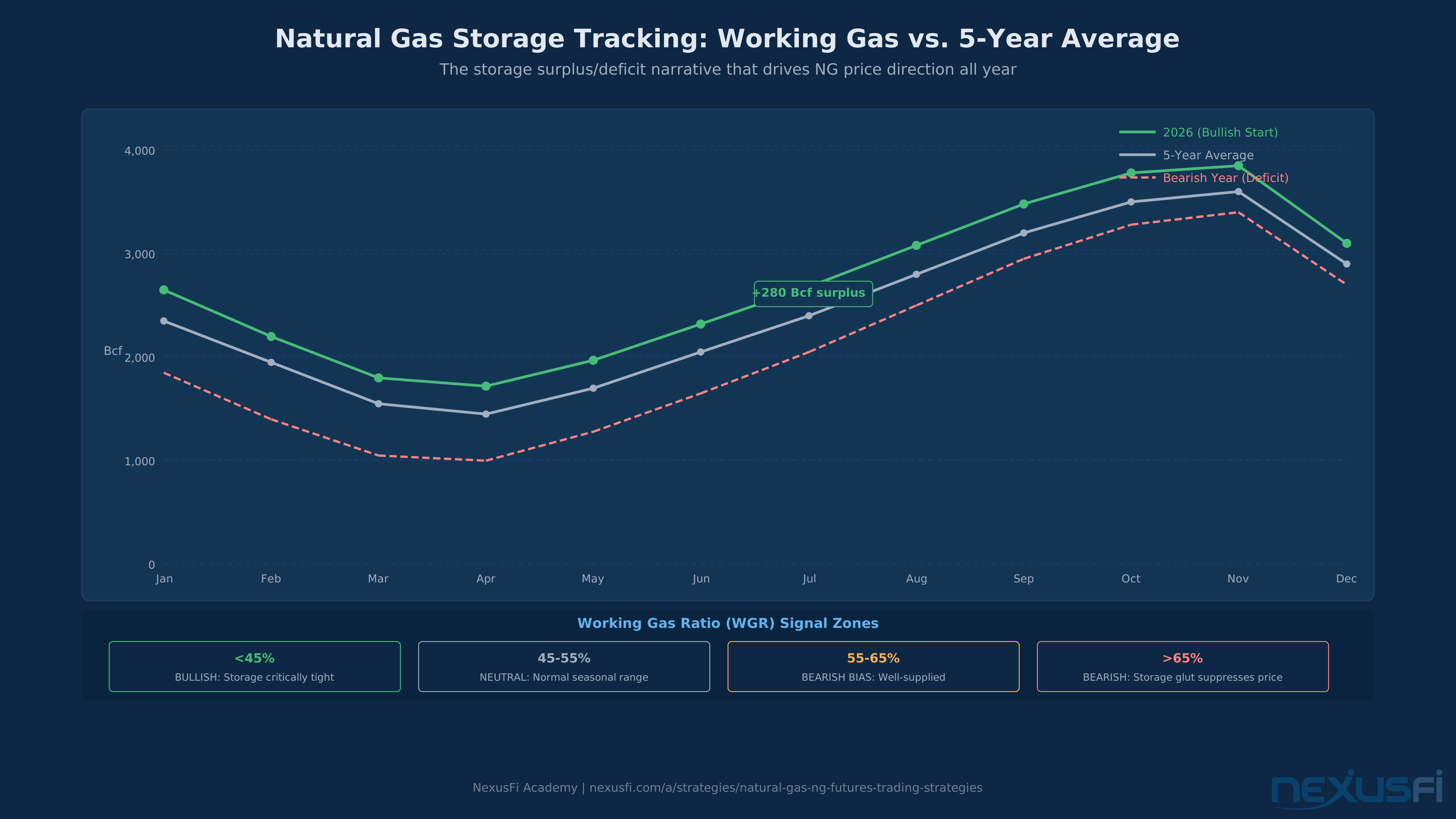 Storage vs 5-Year Average: The WGR Signal Framework :::
LNG Exports and Global Market Connections #
The US natural gas market changed at the core when Sabine Pass LNG terminal began exports in 2016. Before then, US gas was basically a closed domestic market — international prices couldn't pull gas away from Henry Hub. Post-LNG, when European TTF or Asian JKM prices run much above Henry Hub, US LNG plants export every drop of liquified natural gas they can produce.
The current situation in 2026 illustrates this dynamic clearly: European TTF and Asian JKM prices are elevated due to geopolitical factors, but Henry Hub remains suppressed because US LNG export capacity is fully utilized. The US is exporting the maximum it can liquefy. If LNG capacity were larger, Henry Hub would be higher.
What this means for traders:
When global LNG prices spike (war, weather, supply disruption), the first thing to check is whether US LNG export capacity is already maxed out. If it is, the global premium can't pull additional volume from Henry Hub, and the domestic price impact is limited.
When LNG terminals go offline (maintenance, hurricane, operational issues), export demand drops temporarily, supply backs up domestically, and Henry Hub falls. These are short-term but tradeable events.
As SMCJB analyzed during the 2021 global gas crisis:
AI data center demand is a newer and growing structural factor. AI computing facilities require enormous amounts of electricity, much of it gas-fired. CME reported that the natural gas complex hit an all-time daily volume record in January 2026 during the cold snap — partly reflecting growing institutional attention to data-center-driven demand growth. The consensus estimate is 1+ Bcf/day of new gas-fired generation demand from AI infrastructure by 2027, which represents roughly 1% of total US consumption. Not a dominant factor by itself, but a persistent bullish undercurrent that changes the floor for NG prices.
:::figure 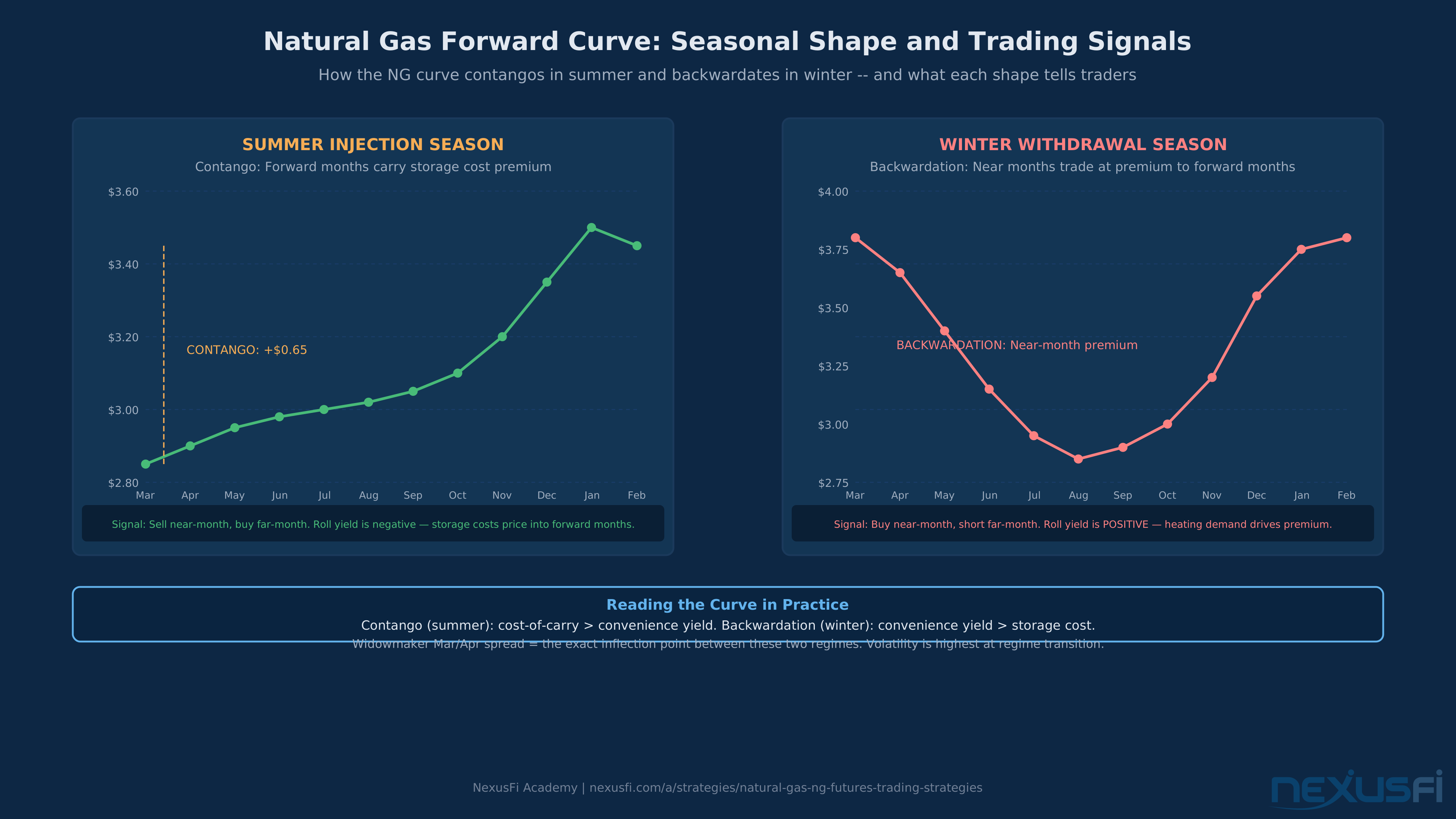 NG Forward Curve: Seasonal Contango vs Backwardation :::
Calendar Spread Strategies: The Risk-Adjusted Workhorses #
Calendar spreads — simultaneously buying one contract month and selling another — are how experienced NG traders capture seasonal mispricings with lower outright directional risk than front-month trading. The storage cycle makes NG calendar spreads uniquely rich with opportunity.
Why spreads work better than outright positions for most NG traders:
When you buy an outright NG position, you're exposed to all the volatility — daily weather model updates, EIA surprises, LNG disruptions, headline risk. Spreads isolate the relative pricing between two months of the same underlying. They're still volatile in NG — but the P&L distribution is narrower, and the thesis is cleaner.
:::figure Calendar Spread Strategies by Season ::: The four seasonal spread setups:
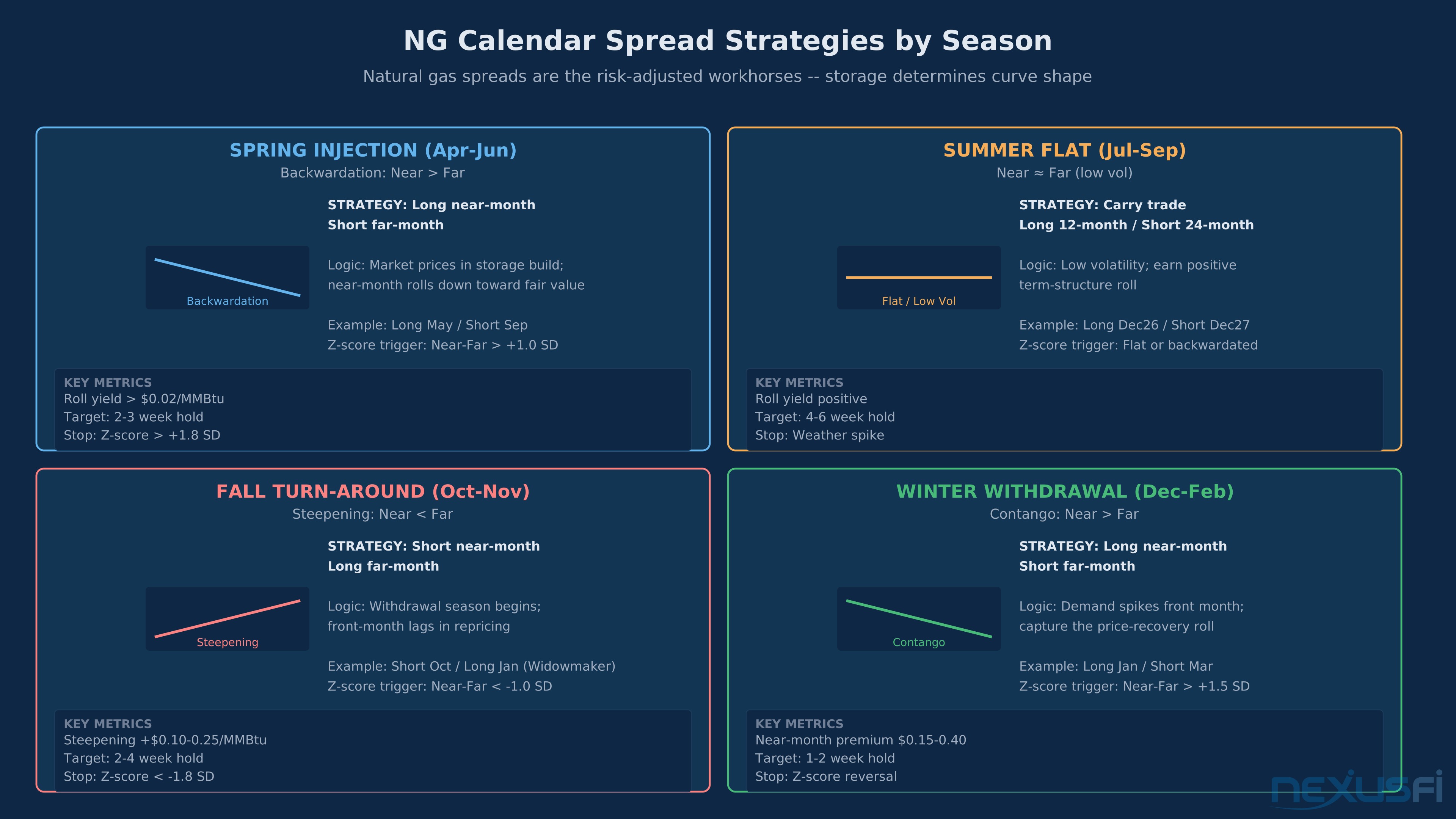
Spring Injection (April-June) — Long near-month / Short far-month: The curve tends toward backwardation (near > far) as the market prices in the storage build that should occur during injection season. The near-month rolls down toward fair value as injections accumulate. A practical entry: calculate the 20-week z-score of the May/September spread. When the z-score exceeds +1.0 standard deviation, it signals the spread has moved too far into backwardation and is likely to revert toward the mean. Target a 2-3 week hold with a stop at z-score > +1.8 SD.
Summer Flat (July-September) — Carry trades on longer-dated spreads: The curve flattens and volatility drops as the market settles into the injection season routine. Near-month and far-month prices converge. The better play is the long/short 12-month versus 24-month carry trade — earn the roll yield on longer-dated spreads when it's positive. This is a slow-moving, lower-risk strategy suited to traders who don't want to manage through weekly EIA volatility.
Fall Turn-Around (October-November) — Short near-month / Long far-month: The market switches from injection to withdrawal season. The curve steepens as heating demand approaches. Near-month prices lag in repricing initially, while the market bids up forward winter contracts. Short October / Long January captures this steepening. Z-score entry: when near minus far drops below -1.0 SD from its 20-week mean.
Winter Withdrawal (December-February) — Long near-month / Short far-month: Heating demand spikes the front month. Near-month contango (near > far) captures the demand premium. Long January / Short March captures this price-recovery roll. These spreads are the most volatile and can reverse suddenly if a warm spell hits. Target 1-2 week holds with tighter stops.
The Widowmaker — A Special Case:
The March/April spread is the most famous — and most dangerous — seasonal trade in commodity markets. Going long March and short April bets on March maintaining its premium as the last withdrawal month over April, the first injection month. When winters are cold and storage runs tight, March heating demand surges and the spread can widen to $0.50-$2.00 or more. In January 2014 during the polar vortex, the spread hit over $2.00.
When winters are warm and storage is ample, March loses its premium entirely and the spread can go deeply negative. @SodyTexas, who ran a machine-learning-based NG storage model on NexusFi, explained the dynamics: "The rally depends on the changes in long-term weather patterns. This could be temporary if the nation warms back up, then the rally is over."
SMCJB, drawing on years of professional energy trading experience, stated the structural logic plainly:
:::figure 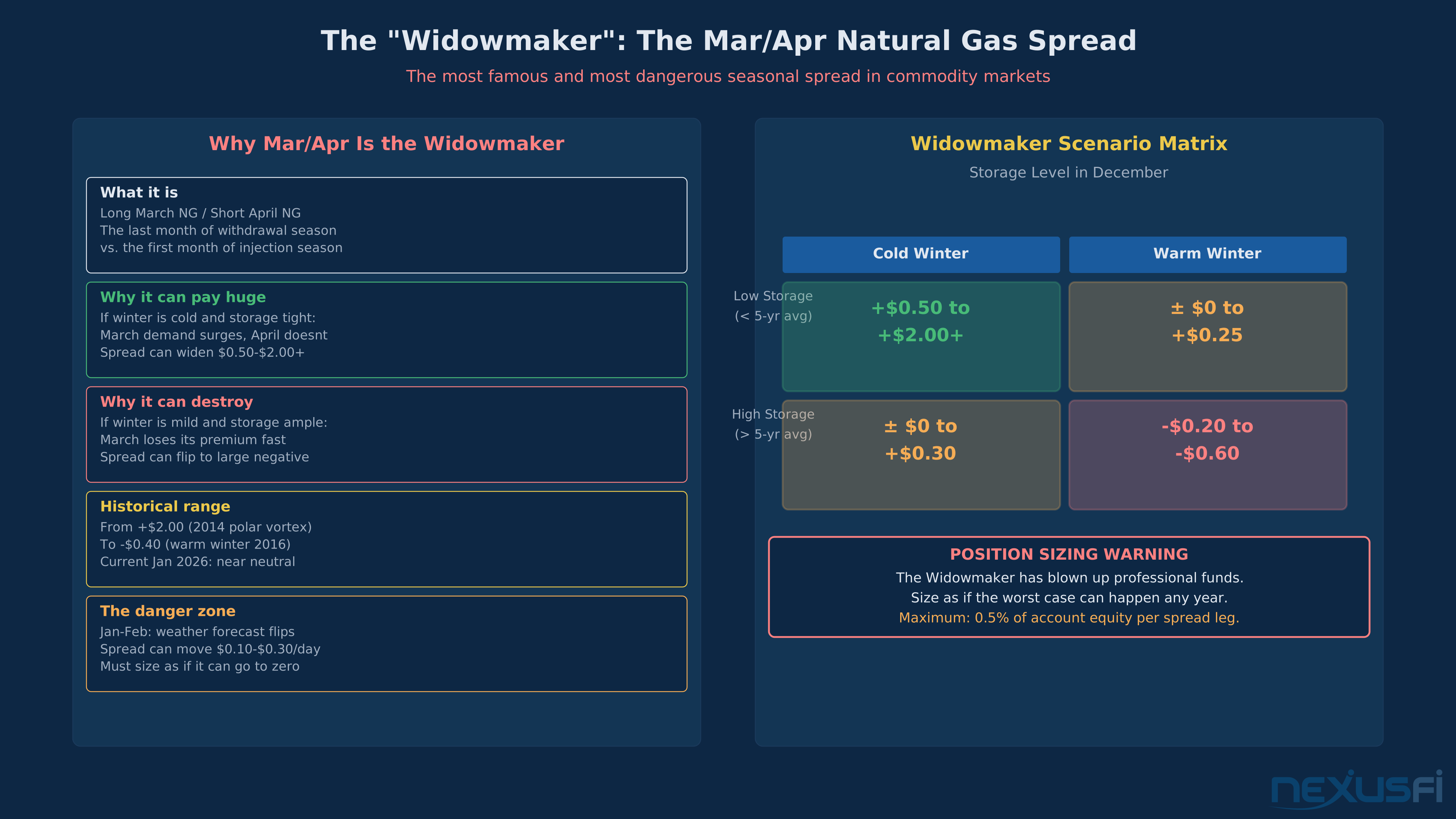 The Widowmaker Spread: Mar/Apr Natural Gas Mechanics ::: The Widowmaker has ended professional careers and blown up institutional funds. In November 2018, OptionSellers.com reported to clients — as captured by @vmaiya73 on NexusFi's Options forum: "The speed at which it took place is truly beyond anything I have seen in my career. It overran our risk control systems and left us at the mercy of the market." That was a natural gas position that produced catastrophic losses in a single session.
Position sizing rule for any NG spread: Maximum 0.5% of account equity per spread leg. The Widowmaker specifically: treat it as a binary — size as if the worst case can happen this year, because every few years it does.
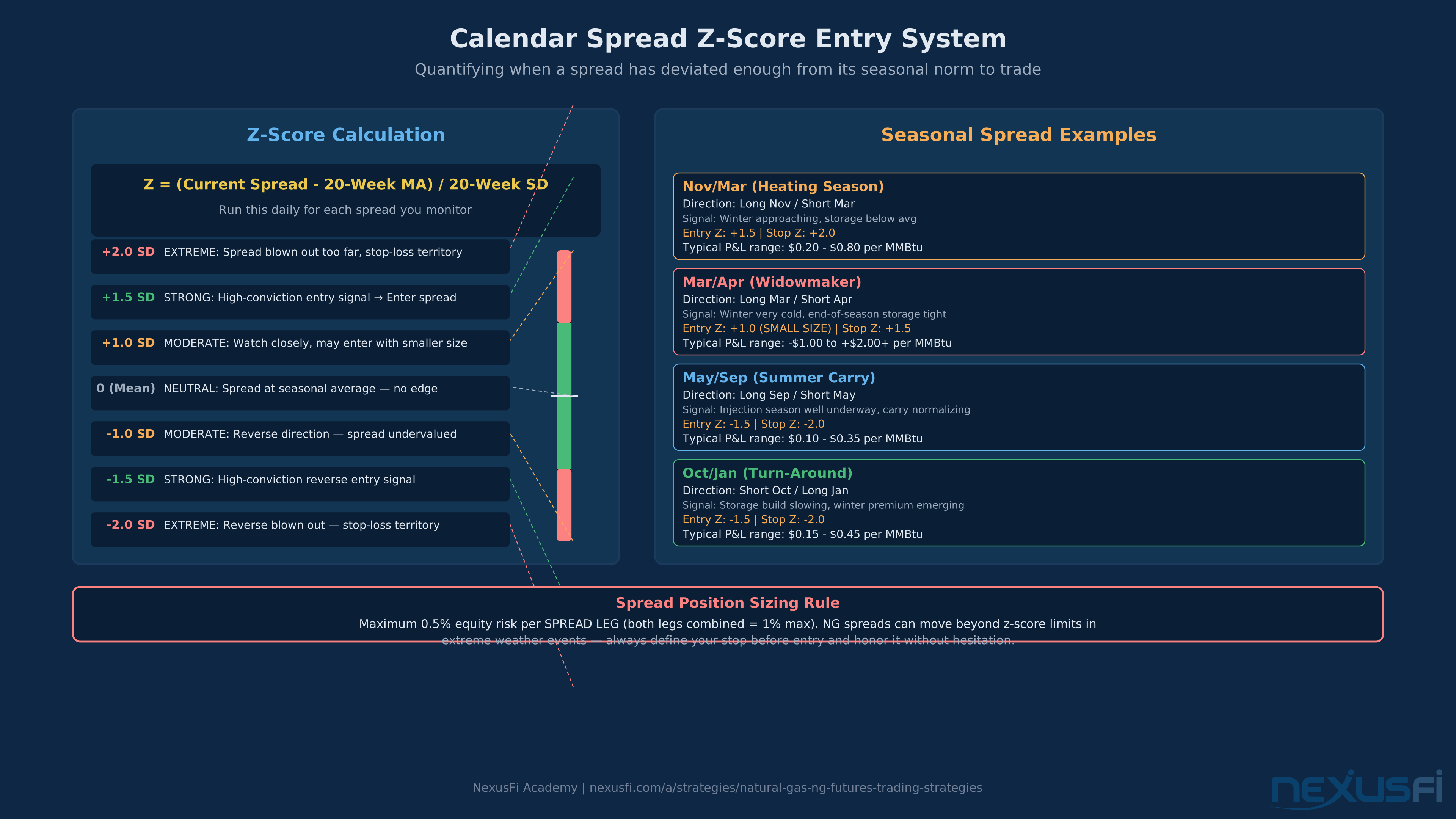
:::figure Calendar Spread Z-Score Entry System and Seasonal Examples ::: Spread Z-score mechanics:
A 20-week z-score is the practical tool. For any spread you're watching:
- Calculate the spread value daily (near-month price minus far-month price)
- Compute the 20-week moving average of that spread
- Compute the 20-week standard deviation
- Z-score = (current spread - 20-week MA) / 20-week SD
When |z-score| > 1.0: the spread has deviated meaningfully from its recent norm — worth monitoring for reversion. When |z-score| > 1.5: the deviation is strong — consider entering. Stop-loss at |z-score| > 1.8-2.0: the spread may be structurally repricing, not just mean-reverting.
Technical Analysis: Filtered by Fundamentals #
Technical analysis in natural gas works — but only when you apply it as a filter within a fundamental framework, not as a standalone approach. The market is too event-driven, too weather-sensitive, and too prone to gaps for pure technicals to work reliably.
The consensus from experienced NG traders: only take a technical signal when it aligns with a fundamental trigger. An MA cross on a day when the storage narrative is bearish and the weather outlook is warming is a signal to ignore. The same MA cross when the market is bullish (storage below five-year average, cold forecast incoming) becomes a high-quality entry.
:::figure 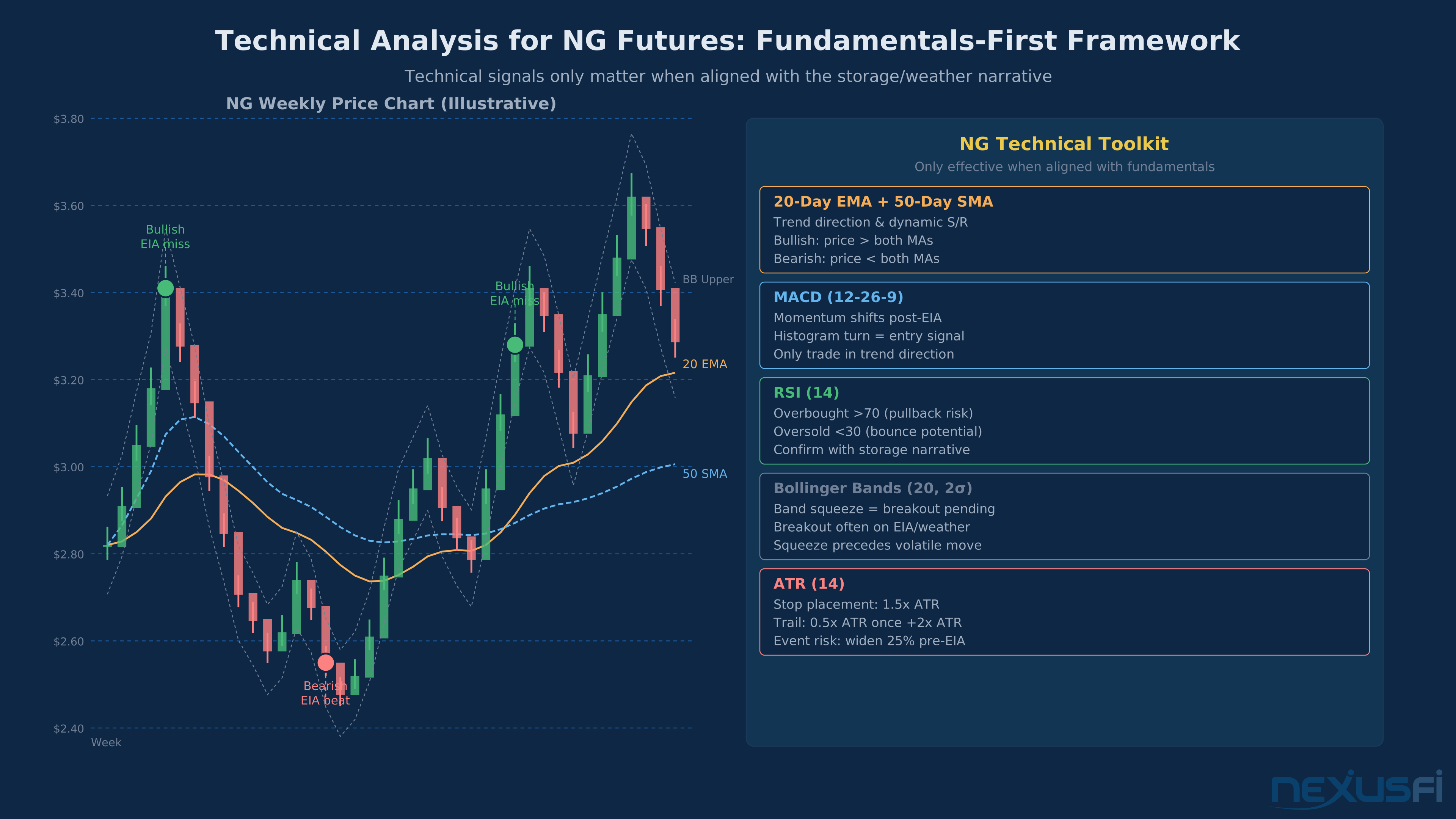
20-Day EMA and 50-Day SMA: Trend direction and dynamic support/resistance. Bullish regime: price above both moving averages with 20 EMA above 50 SMA. Bearish regime: reverse. The crossover itself is a secondary signal — more useful as a filter for which direction to trade than as a standalone entry trigger.
MACD (12-26-9): Momentum shifts. The histogram turning from negative to positive (on a bullish fundamental setup) is a practical entry signal. After EIA surprises, MACD often leads price by confirming the post-release momentum direction.
RSI (14): Overbought/oversold context. RSI above 70 on a weather-driven spike is a warning, not a buy signal. RSI below 30 after a storage bearish surprise doesn't mean buy — if the narrative is bearish, oversold can stay oversold. Use RSI to calibrate position sizing, not to trade against the fundamental trend.
Bollinger Bands (20, 2σ): Band squeezes often precede the largest NG moves. When the bands narrow much over two to three weeks, a breakout is approaching. These breakouts often coincide with EIA surprises or major weather forecast shifts. The squeeze tells you to reduce position size and prepare for a binary outcome.
ATR (14) for stops: Natural gas demands wider stops than most traders use. An ATR-based stop at 1.5x ATR gives the position room to breathe through normal daily volatility. For EIA days specifically, consider widening your stop by 25% or reducing size by 50% to account for the realistic gap risk. Technical stops that sit at "obvious" levels get taken out on Thursday mornings regularly.
Order flow and tape: On EIA report days, the first 30-90 seconds of price action tells you the real market reaction. Watch the tape and the DOM — size hitting the bid aggressively after a bullish number, or lifting the offer after bearish, is the signal to enter rather than react on the number alone.
Price Drivers: What Actually Moves NG #
The priority order of price drivers in natural gas:
Primary (daily monitoring):
- Storage vs. five-year average and trend of weekly change
- Weather: 6-14 day temperature outlook and HDD/CDD deviation
- EIA weekly storage report (Thursday)
Secondary (weekly/event monitoring):
- LNG export volume and capacity utilization
- Power generation mix (gas burn for electricity)
- Pipeline constraints and major outage notices
Structural (monthly/quarterly context):
- US production trend (rig count, shale productivity)
- AI/data center demand growth
- Global LNG price differentials (TTF, JKM)
:::figure Natural Gas Price Drivers and Impact Hierarchy ::: The quantified impact ranges from the research:
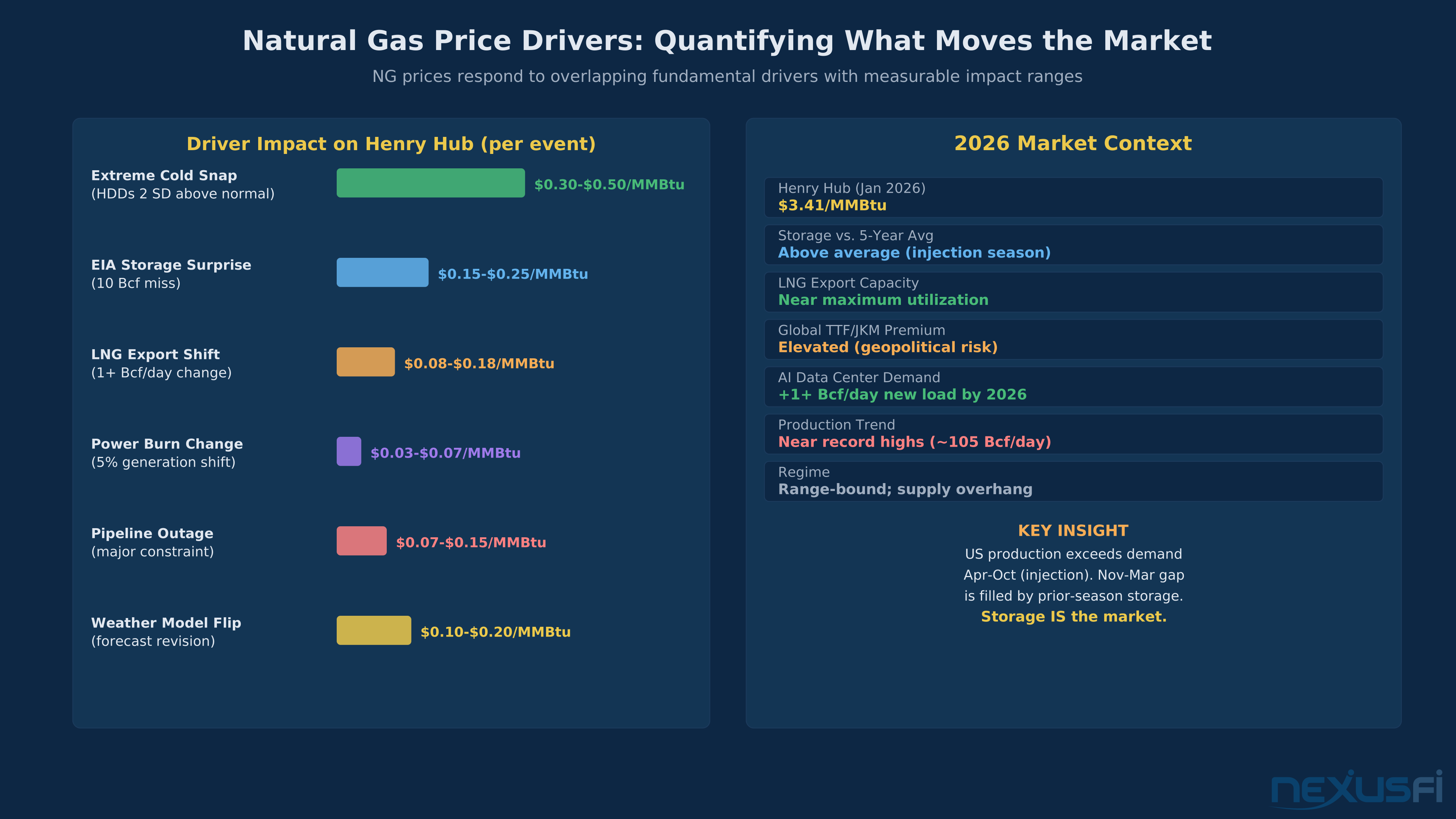
- Weather extreme cold snap (HDDs 2 SD above normal): $0.30-$0.50 per MMBtu
- EIA storage surprise (10 Bcf miss): $0.15-$0.25 per MMBtu
- LNG export shift (1+ Bcf/day change): $0.08-$0.18 per MMBtu
- Power burn change (5% generation shift): $0.03-$0.07 per MMBtu
- Pipeline outage (major constraint): $0.07-$0.15 per MMBtu
- Weather model revision (forecast flip): $0.10-$0.20 per MMBtu
These ranges are starting points. When multiple drivers align (cold snap + tight storage + below-consensus EIA), the combined effect can be multiplicative rather than additive.
Risk Management: Sizing for NG's Extreme Volatility #
Natural gas risk management is not optional — it is the primary skill that determines survival. The market rewards preparation and punishes accounts that are oversized for the volatility.
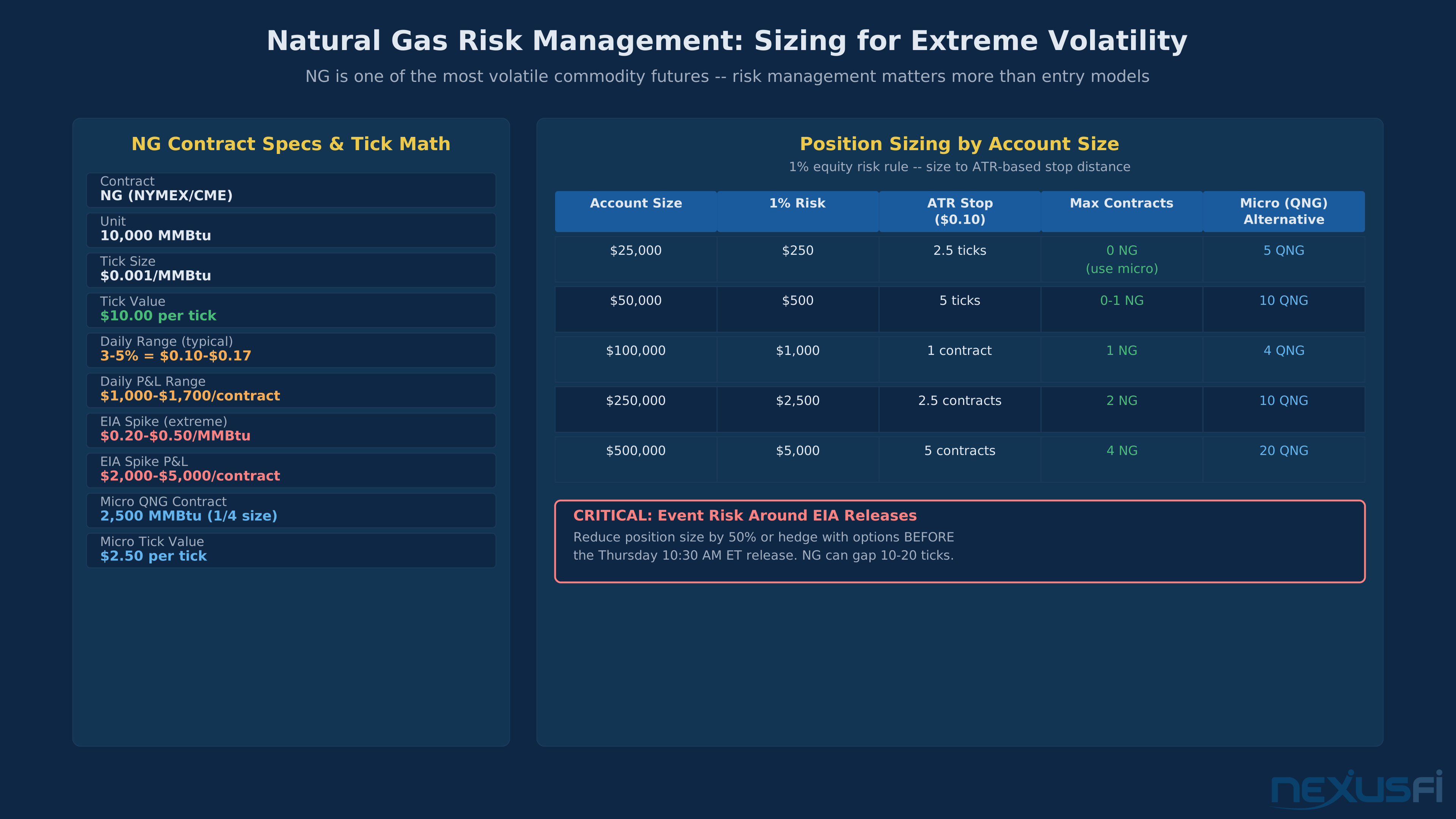
:::figure NG Contract Specs and Position Sizing Framework ::: The 1% equity risk rule:
For every trade, your maximum loss at the stop level should be no more than 1% of your account equity. This is the starting point. In NG, given the gap risk around EIA releases, 0.5% may be more appropriate.
Math example: $100,000 account, 1% risk = $1,000 maximum loss per trade. If you're placing a stop at $0.10 below your entry (100 ticks), each contract loses $1,000 at the stop. So: maximum 1 contract. For the same trade in micro QNG (4 to 1 ratio), you can trade up to 4 contracts.
ATR-based stop placement:
NG's 14-day ATR typically runs $0.08-$0.15 depending on volatility regime. The standard stop at 1.5x ATR: if ATR is $0.10, stop is $0.15 away. That's 150 ticks, $1,500 per contract. A $100,000 account can support exactly 1 NG contract at 1% risk using this framework.
Accounts under $100,000 should strongly consider starting with micro QNG contracts (2,500 MMBtu, $2.50/tick) rather than full NG. This isn't optional for accounts under $50,000 — the volatility-to-account-size ratio on full NG is simply not manageable at 1% risk.
Event risk around EIA releases:
Every Thursday at 10:30 AM ET, the market can gap 5-20 ticks instantaneously. Options-based hedging (puts or calls) around EIA windows is the professional approach. For futures-only traders: reduce position size by 50% on Wednesday afternoon and re-enter post-release once the number is digested and the initial spike has settled.
@ron99 learned this lesson in the 2013 natural gas market: "The option premium of NG options moves extremely fast and much more than you expect. My personal lesson from this month is that I would have been far better off if I had done bear call spreads instead of naked shorts in NG."
The November 2018 OptionSellers.com catastrophe serves as the most instructive case study in NG risk management failure. The firm was short NG calls — a spread strategy that should have had defined risk. But when NG spiked violently, the options' delta went to nearly 1 and the "defined risk" spread became basically naked short futures exposure. The lesson: in NG, defined-risk structures can lose their definition in extreme velocity moves.
The Widowmaker Position Sizing Rule: No matter how compelling the setup looks, never commit more than 0.5% of account equity per leg on Mar/Apr spreads. The spread that looks like a $0.30 move can become a $1.50 move against you within three weeks if weather forecasts shift. This is the spread that ends careers — treat it so.
Portfolio allocation when trading NG:
If NG is part of a broader futures portfolio, consider allocating:
- 45% of NG-designated capital to outright directional positions (front-month trades)
- 30% to calendar spreads
- 15% to basis/regional positions (if you have access)
- 10% cash buffer for margin calls and emergency hedges
Daily stop rule: If you lose 2x your planned daily risk on NG, stop trading for the day. NG's volatility creates psychological pressure that degrades decision quality after losses. The market will be there tomorrow.
Current Market Context: 2026 and the Supply Overhang #
Natural gas entered 2026 in a range-bound, supply-heavy regime. Henry Hub closed January 2026 near $3.41/MMBtu after a cold snap that briefly pushed prices higher. Storage levels are above the five-year average heading into the injection season.
The structural backdrop: US production is near record highs at approximately 105 Bcf/day. LNG export capacity is basically fully utilized. The global LNG market is tight due to geopolitical factors (elevated European TTF, elevated Asian JKM), but US capacity constraints prevent the full international price signal from flowing through to Henry Hub.
The evolving structural demand driver is AI data center power consumption. CME reported all-time daily volume records in the NG complex in January 2026 — partly reflecting growing institutional attention to data-center-driven demand growth. The consensus estimate is 1+ Bcf/day of new gas-fired generation demand from AI infrastructure by 2027, which represents roughly 1% of total US consumption. Not a dominant factor by itself, but a persistent bullish undercurrent that changes the floor for NG prices.
For 2026 traders: The current range-bound regime favors calendar spread strategies over outright directional trading. The supply overhang caps rally potential unless a genuine cold snap in late 2026 runs storage below five-year norms. The trigger to watch: whether the 2026-2027 injection season builds storage toward the upper historical range (bearish for winter pricing) or whether strong power burn demand from summer heat and AI loads keeps injections below seasonal pace (bullish for winter).
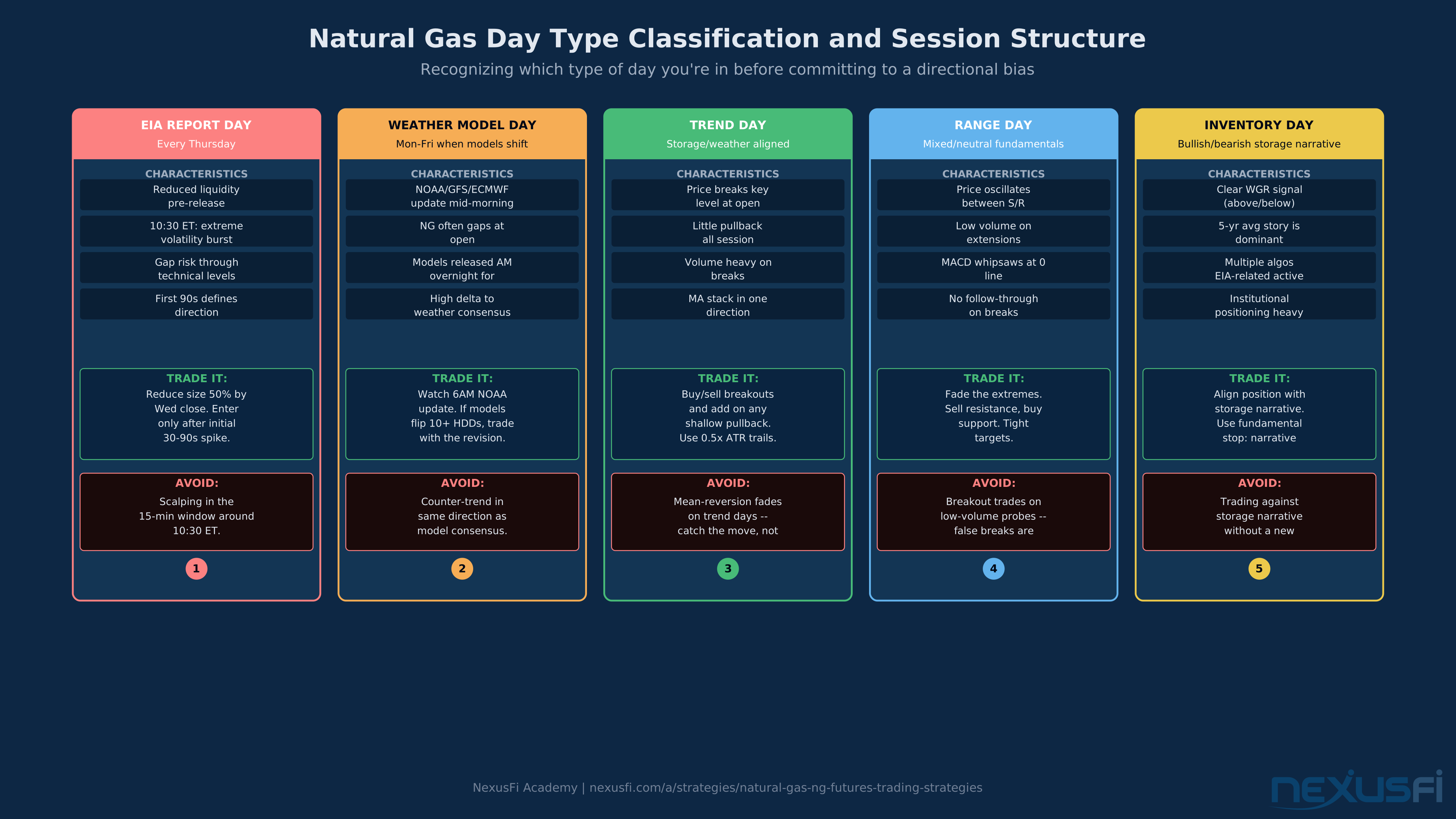
:::figure Natural Gas Day Type Classification Framework :::
Building Your Natural Gas Trading Framework #
Bringing the full framework together:
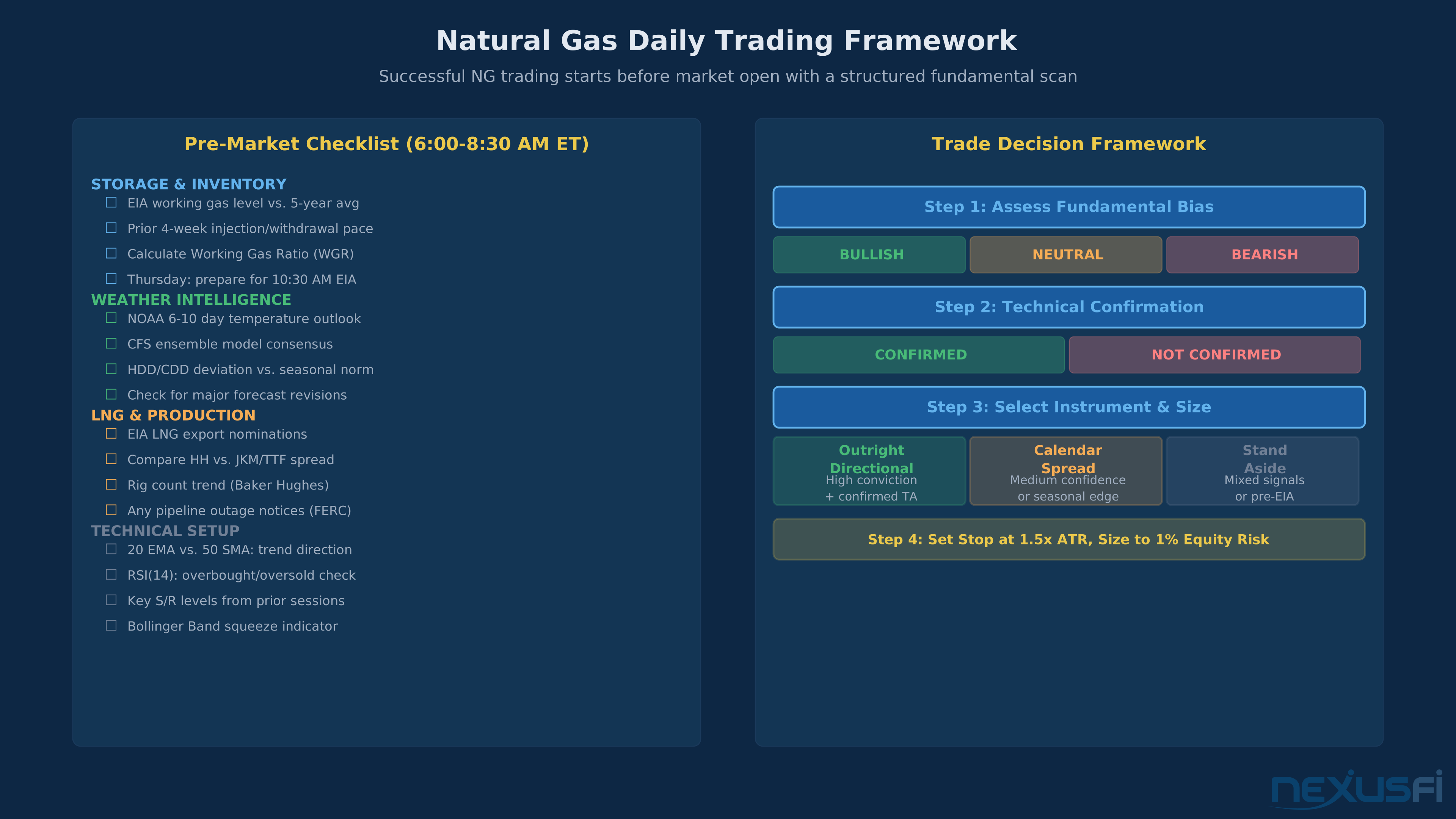
:::figure Natural Gas Daily Trading Checklist and Decision Framework ::: Pre-market routine (6:00-8:30 AM ET):
Pull the EIA's latest weekly storage report and calculate WGR. Check the NOAA 6-10 day temperature outlook and CFS ensemble model for the coming week. Review the current injection/withdrawal pace versus the five-year average — are we running ahead or behind? Check for any pipeline outage notices on FERC.
Daily setup:
What is the fundamental bias? Bullish (storage below five-year, cold forecast, WGR < 45%), bearish (storage above five-year, warm forecast, WGR > 60%), or neutral (mixed signals)?
If fundamental bias is clear: what does the technical picture say? Is the price above or below the 20 EMA and 50 SMA? Is MACD turning in the bias direction? Is RSI neutral to confirm there's room to run?
If both fundamental and technical align: what is the right instrument? Outright directional (high conviction), calendar spread (medium confidence or seasonal setup), or stand aside (neutral)?
:::figure 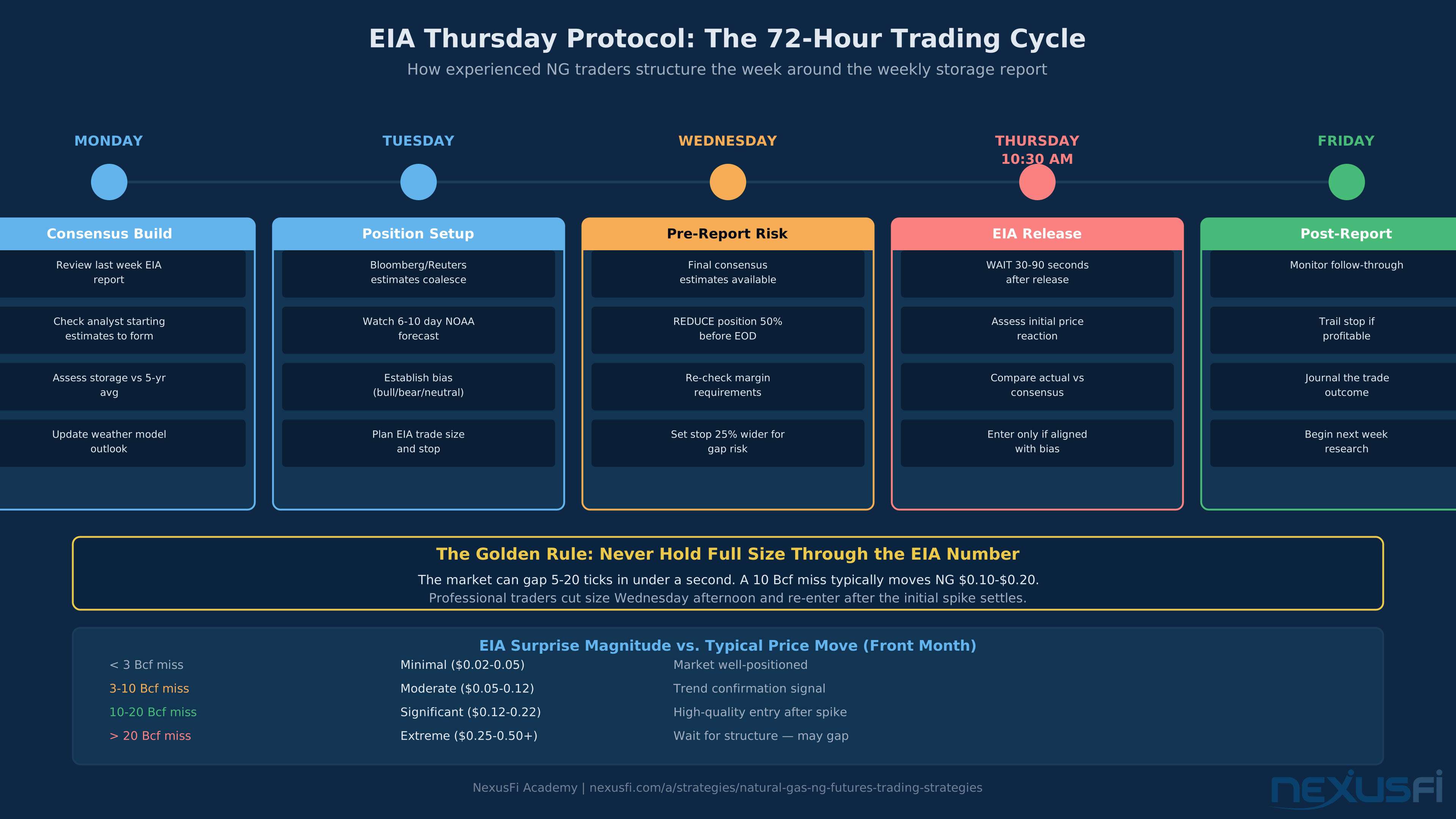 EIA Thursday Protocol: The 72-Hour Trading Cycle ::: Thursday EIA protocol:
Wednesday evening: assess your position sizing heading into Thursday. Reduce by 50% if you're uncomfortable with the gap risk. Thursday 10:30 AM: watch the initial reaction for 30-90 seconds before acting. The first burst of price action reflects the immediate surprise. If the move is consistent with your fundamental bias, enter after the initial spike settles — not during it.
Stop management:
Initial stop: 1.5x ATR from entry. Trail stop: 0.5x ATR once price moves 2x ATR in your favor. Hard rule: close all positions if you've lost 2x daily planned risk in a single session.
The traders who survive and thrive in natural gas are the ones who combine deep fundamental preparation with disciplined risk management. The market rewards knowing more than the consensus and staying small enough to survive being wrong.
Related Reading #
For traders new to NG, the Natural Gas (NG) Futures: The Complete Trading Guide covers contract specifications, market structure, and basic mechanics in detail.
Calendar spread mechanics are explored more broadly in Spread Trading in Futures Markets: Calendar Spreads, Crack Spreads, and the Relative Value Edge.
Understanding Contango and Backwardation: The Futures Term Structure Every Commodity Trader Needs to Understand provides the theoretical foundation for why seasonal spreads work the way they do.
The EIA report is one of many economic data releases covered in Trading Economic Data Releases in Futures: CPI, NFP, GDP, ISM, and the Events That Move Markets.
For commodity trading broadly, Seasonality Trading Strategies for Futures: The Calendar Edge Every Serious Trader Needs covers the statistical basis for seasonal patterns across all major commodity markets.
Crude oil traders often watch NG correlations — the Crude Oil (CL) Futures Trading Strategies article covers energy market interrelationships in depth.
Knowledge Map
Prerequisites
Understand these firstGo Deeper
Build on this knowledgeCitations
- — Trading natural gas futures (2024) 👍 5“US production exceeds demand April through October, but falls short of demand November through March. Hence the market is very seasonal, and extremely dependent upon storage.”
- — Nat Gas Bullish, not Bearish! (2016) 👍 4“The underlying fundamental for NG is storage. We inject gas into the ground for 7.5/8 months a year and then withdraw it all in 4/4.5 months.”
- — Trading NG (natural gas) (2012) 👍 2“Gas rallies during winter months when demand in the North East is high and inventory is declining. Natural Gas is also very sensitive to news, especially EIA Natural Gas Inventory which comes out every Thursday at 10:30 ET.”
- — Nat Gas Bullish, not Bearish! (2016) 👍 2“Large energy traders spend a fortune on weather prediction and normally have their own multi-person weather teams. An often quoted and reasonable free resource is NOAA.”
- — Trading natural gas futures (2021) 👍 4“With UK NBP at GBP 2.44/Therm ($33/MMBtu) and Asia JKM at $30/MMBtu you know that even with $6 gas here every US LNG plant is exporting every drop of LNG they can freeze.”
- — Sody's Natural Gas Journal (2015) 👍 16“My method uses machine learning principals. It can be combined with other models to create a true amazing trading outlook for natural gas.”
- — Sody's Natural Gas Journal (2016) 👍 2“Its well known among energy traders that weather plays a key role in the seasonality of NG and storage.”
- — Selling Options on Futures? (2018) 👍 14“The speed at which it took place is truly beyond anything I have seen in my career. It overran our risk control systems and left us at the mercy of the market.”
- — Selling Options on Futures? (2013) 👍 3“The new weather models come out mid-morning. This mornings model showed an 11-15 day colder than it did yesterday. It is not necessarily important as to how cold that actually is, but that the forecast got colder day on day.”
- — Selling Options on Futures? (2013) 👍 11“The option premium of NG options moves extremely fast and much more than you expect. My personal lesson from this month is that I would have been far better off if I had done bear call spreads instead of naked shorts in NG.”
- — Eia.gov (2024)
- — Noaa.gov (2024)