



Trading Economic Data Releases in Futures: CPI, NFP, GDP, ISM, and the Events That Move Markets
Overview #
Every futures trader eventually faces a Friday morning when 8:30 AM arrives and the Non-Farm Payrolls number hits the screen — and the market moves 30 ES points in 15 seconds. Or a CPI print that reprices the entire rate curve in the time it takes to blink. Economic data releases are not normal trading sessions. They are compressed volatility events where liquidity evaporates, spreads widen, and a few minutes of chaos can produce moves that would otherwise take days to develop.
The traders who work through them consistently well have one thing in common: they do not trade the number. They trade the market's reaction to the number. That distinction — between predicting an outcome and reading what price does with that outcome — separates professionals from those who guess their way through every release.
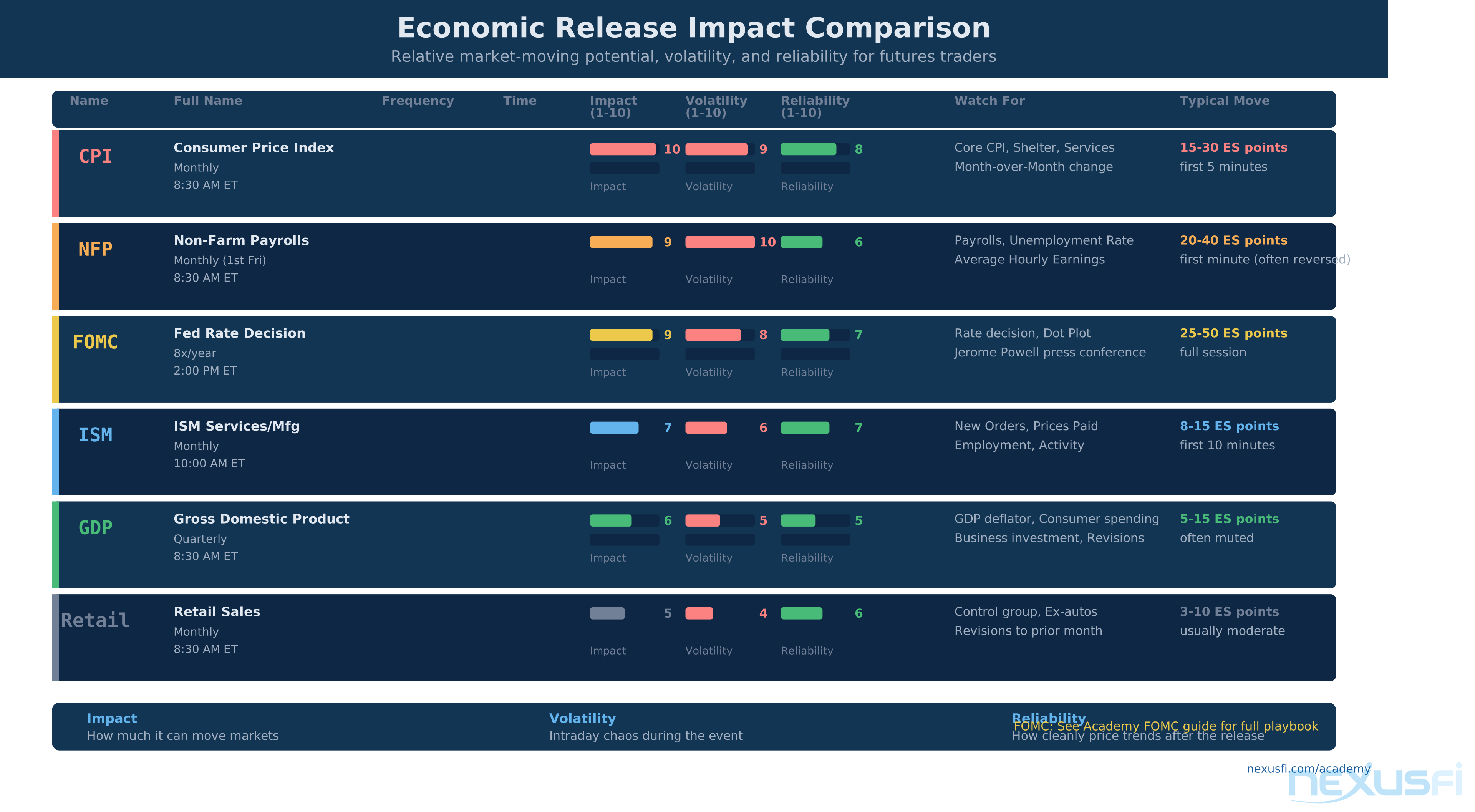
This guide covers how to approach the five most market-moving U.S. economic releases (CPI, NFP, GDP, ISM, Retail Sales), with specific attention to timing, execution, position sizing, and the risk controls that prevent a single release from becoming a catastrophic event.
Why Economic Releases Are Different #
On a normal trading day, liquidity is abundant. The order book is thick, spreads are tight, and you can enter or exit a position at or near your intended price. An economic release changes all of this.
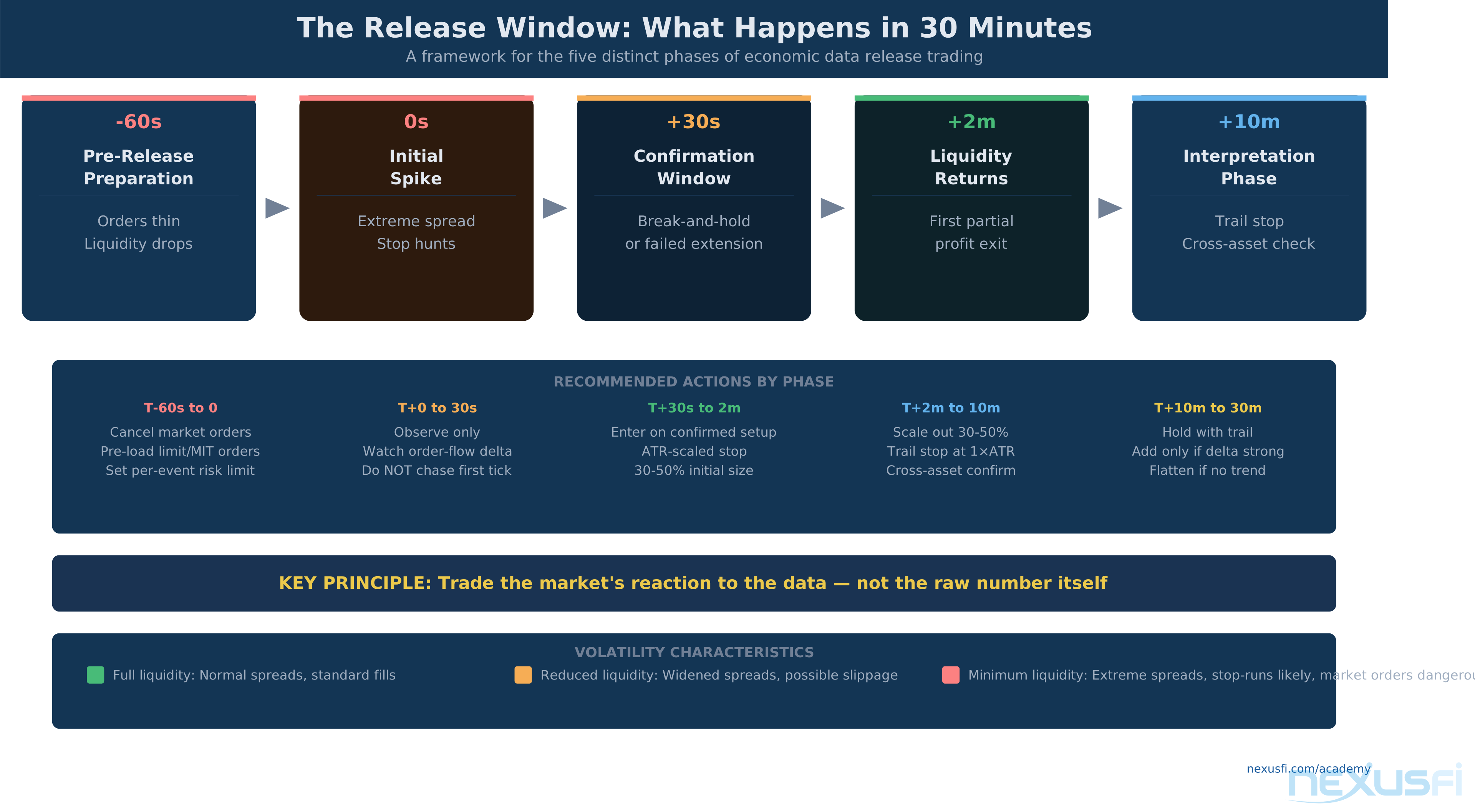
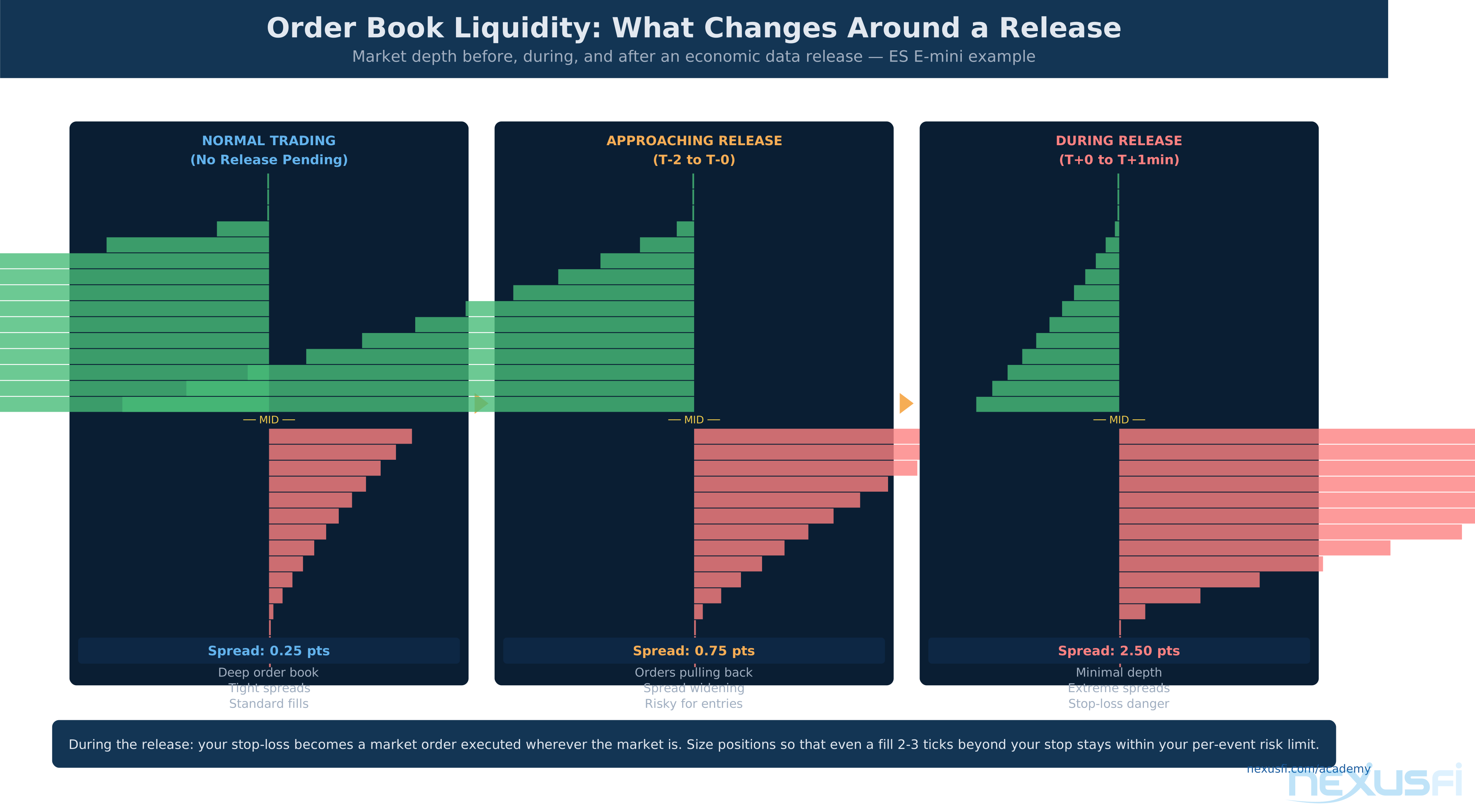
In the minutes before a high-impact release, institutional traders and algorithms begin pulling orders from the book. Liquidity thins dramatically. If you have an open position when the number hits, you may find yourself unable to exit at any reasonable price — your stop-loss order becomes a market order that gets filled wherever the market currently is, which could be several points from where you intended.
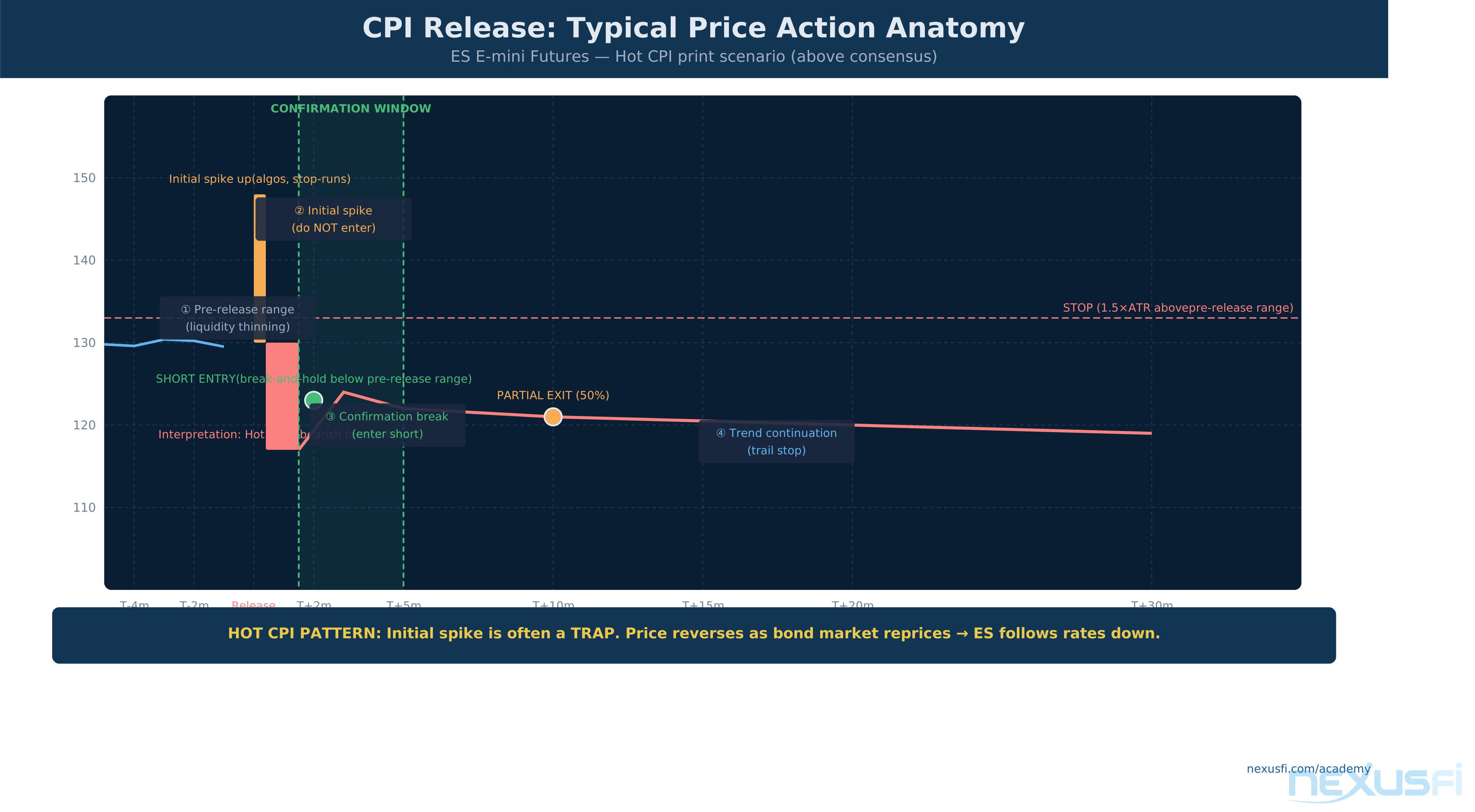
The initial move after a major release is often the noisiest part. Stop-runs, overreactions, and algorithmic volatility hunting create price spikes that do not reflect any genuine assessment of the data. These spikes can be fast and violent — and they often reverse. The first direction is not always the right direction.
What eventually matters is not the headline number but how the market interprets what that number means for monetary policy, economic growth, and future rate expectations. A CPI print of 3.2% might be bullish or bearish depending on whether the market was pricing in 3.5% or 3.0%, and depending on what the shelter component and services inflation showed. A strong NFP number might actually be bearish if the unemployment rate rose and wage growth softened, because the Federal Reserve reads soft wage growth as disinflationary.
If you have an open position when the number hits, you may find yourself unable to exit at any reasonable price — your stop-loss order becomes a market order that gets filled wherever the market currently is, which could be several points from where you intended.
As one NexusFi member put it: "How each economic data release impacts a potential open position depends on several things, including the particular data release in question, what the current market consensus is, and how sensitive the instrument is to that type of macro trigger." (Source: @xplorer, Basics first, my learning path)
This complexity means that trading economic releases on the headline alone — "CPI came in hot, short equities" — is a recipe for consistent losses. The market's reaction provides far more information than the number itself.
The Five Major Releases and What Drives Each #
CPI — Consumer Price Index #
The CPI is the single most market-moving U.S. economic release for futures traders. It directly informs Federal Reserve rate decisions and is released monthly, typically at 8:30 AM ET.
When the CPI print arrives, the first thing to watch is not the headline number — it is the bond market. Treasury yields, especially the 2-year (which is most sensitive to near-term Fed rate expectations), will move before equity futures fully reprice. If you see yields drop aggressively on a hot CPI print, that is a signal the market believes the Fed will not respond as hawkishly as feared. If yields spike, equity futures typically follow lower.
What professionals watch in CPI:
- Headline vs. core: Core CPI (excluding food and energy) is the Fed's preferred focus
- Services inflation and shelter: Shelter components are sticky and slow-moving; a shelter surprise matters more than a volatile energy print
- Month-over-month vs. year-over-year: The market cares most about the direction of change, not the absolute level
- Revisions: Prior-month revisions can shift the trend picture even when the current number is in-line
A NexusFi Elite member in the Traders Hideout observed that CPI is "uniquely important because the BLS updates its seasonal adjustment factors with this report. That means they'll revise prior months," creating the potential for both the current print and the revised trend to drive price action. (Source: @Fi, Feb 2026)
The Bureau of Labor Statistics publishes its full CPI methodology, release schedule, and seasonal adjustment documentation at bls.gov/cpi — reviewing these technical notes before a CPI release gives you context that most traders never bother to read. The BLS also publishes relative importance weights for each CPI component, which tells you exactly how much a surprise in shelter versus energy versus food will move the headline number.
NFP — Non-Farm Payrolls #
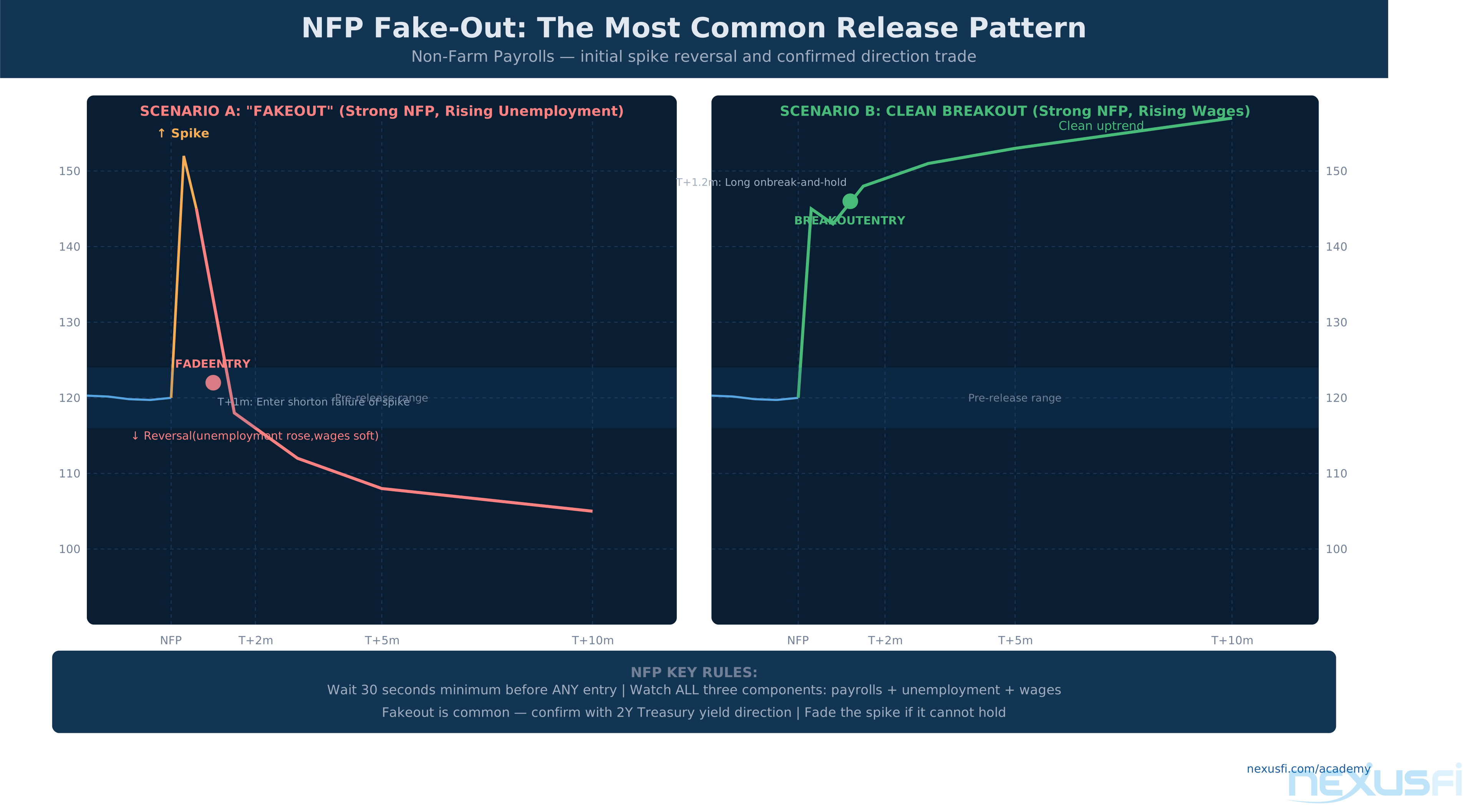
The monthly jobs report, released the first Friday of each month at 8:30 AM ET, is the most volatile trading event on the economic calendar for equity index futures. The first 30 seconds after NFP prints often feature some of the most extreme price action of the month.
The NFP number alone tells an incomplete story. What the market actually cares about:
- Payrolls: The headline number, with attention to whether prior months were revised up or down
- Unemployment rate: A rising unemployment rate signals slowing labor market even if payrolls look strong
- Average hourly earnings: The wage growth component directly informs inflation expectations
- Labor force participation: Changes in who is looking for work affect the interpretation of the unemployment rate
The first spike after NFP is notorious for being deceptive. A NexusFi trader with extensive experience in news trading described the approach: "An example: any Fed announcement. I don't try to figure out what they will announce, and I don't even care. I wait for the first move, let it play out, and then look for confirmation." (Source: @bobwest, Salao's Journal)
The safest professional approach to NFP is to wait 30 seconds to 2 minutes before entering any position. The "fakeout" — a sharp move in one direction that immediately reverses — is so common around NFP that many experienced traders simply stay flat for the first two minutes and trade only after the initial chaos settles.
GDP — Gross Domestic Product #
GDP is released quarterly and is more backward-looking than CPI or NFP — by the time the data is published, the quarter it covers ended weeks or months ago. For this reason, GDP tends to produce less clean, less reliable trading moves than inflation or labor data.
What can move markets in a GDP print:
- The inflation component (GDP deflator): A hot deflator suggests inflation is broader than the headline suggests
- Consumer spending: Strong personal consumption is bullish for growth expectations
- Revisions: Like CPI, revisions to prior quarters can shift the narrative
- Business investment vs. government spending: Composition matters for assessing economic health
GDP is generally best traded as a narrative confirmation rather than a pure breakout event. Unless the number dramatically changes the recession or inflation outlook, the move tends to be muted.
ISM — Institute for Supply Management #
The ISM Manufacturing and Services indices are released monthly and have the potential to much shift growth expectations. A reading above 50 signals expansion; below 50 signals contraction. What makes ISM especially valuable for traders is that it can be a leading indicator of economic conditions — market participants use it to anticipate future GDP and corporate earnings.
Key components within ISM that move markets:
- New orders: Forward-looking indicator of future production and economic activity
- Prices paid: Directly informs inflation expectations and Fed policy
- Employment: Provides a preview of the following week's NFP direction
- Activity index: Overall business conditions
ISM tends to create moderate-sized moves, but can produce significant price action when it challenges the prevailing macro narrative. If the market expects continued expansion and ISM Services drops below 50 for the first time in six months, the policy implications become significant.
Retail Sales #
Released monthly, Retail Sales measures consumer spending across retail establishments. Because consumer spending represents roughly 70% of U.S. GDP, this release carries meaningful weight for growth expectations.
Traders focus on:
- Control group (excluding autos, gas, food services, building materials): This feeds directly into GDP calculations
- Ex-autos: Removes the volatile auto sales component
- Revisions: Prior-month revisions are common and can shift the trend
- Components breakdown: Electronic stores vs. restaurants vs. clothing tell different inflation stories
Retail Sales tends to produce less dramatic first moves than CPI or NFP, but can still create sustained trends when the data clearly signals acceleration or deceleration in consumer activity.
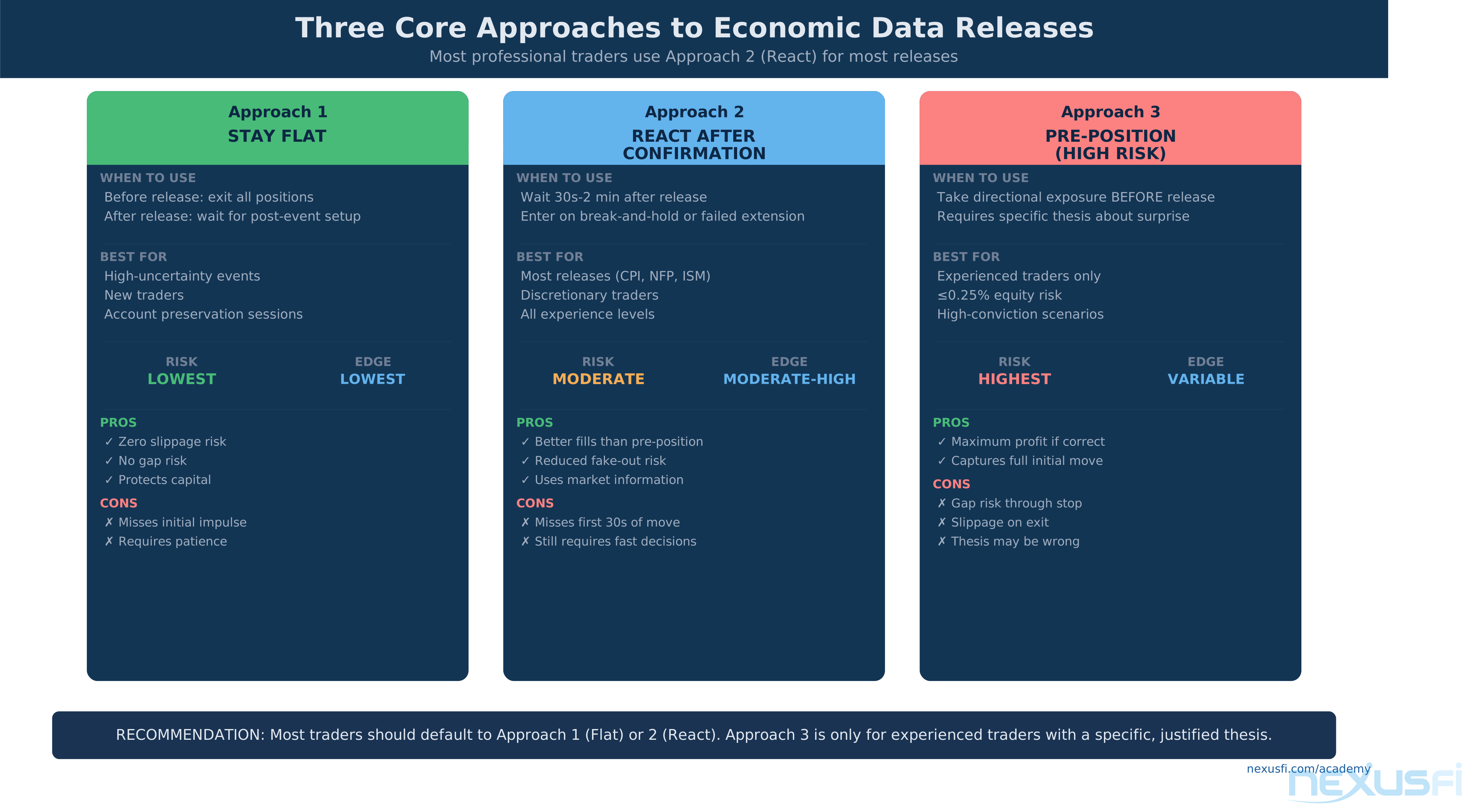
Three Core Approaches to Economic Releases #
Approach 1: Stay Flat #
This is the approach most commonly recommended by experienced traders for less experienced participants — and it is the approach that actually makes sense for most releases most of the time.
Big Mike, founder of NexusFi, was direct: "Absolutely do not trade the news. You should be flat a few minutes before the news, because most likely price isn't going anywhere anyway." (Source: @Big Mike, The Elusive Price Action thread)
The logic is straightforward: the information available in the seconds after a release is incomplete and chaotic. The sub-components have not been digested, the cross-asset confirmation has not arrived, and the algorithms are still hunting stops. The asymmetry is unfavorable — the downside risk from a bad fill during thin liquidity is larger than the upside from catching the initial move correctly.
When this approach is right: High-impact releases (CPI, NFP) when the macro narrative is unclear, when you do not have a specific playbook for the release, or when your account cannot absorb a 2× ATR stop-out.
Approach 2: React After Confirmation #
This is the approach used by most professional discretionary futures traders. You watch the release, let the initial chaos settle (typically 30 seconds to 2 minutes), and then assess whether the market has established a clear direction with microstructure confirmation.
What you are looking for after the initial spike:
- Break-and-hold: Price breaks above (or below) the pre-release range and holds that level for 30 to 60 seconds, with order flow showing sustained aggressive buying (or selling) on the ask (or bid)
- Failed extension: Price makes an initial move in one direction, cannot sustain it, and begins pulling back into the pre-release range — this is the fade setup
A NexusFi Elite member described the post-release opportunity: "I usually stay out until at least 2-3 mins after the news as well. I find that most of the time, price continues doing whatever it was doing prior to the news within a few minutes." (Source: @PandaWarrior, The PandaWarrior Chronicles)
This approach captures the meat of the move without the randomness of the initial spike.
Approach 3: Pre-Positioning (High Risk) #
Some experienced traders take a directional position before the release based on their analysis of where consensus is versus where they believe the market is actually priced. This approach carries significant risks:
- Gap risk: If you are wrong, the market may gap through your stop rather than letting you exit at your intended price
- Slippage risk: Even if the market moves in your direction, the initial liquidity vacuum may produce a worse fill than expected on your exit
If you choose to pre-position, limit the position size to one-quarter of your normal trade size or less, and ensure your stop is at a price level that makes sense if the number goes against your expectation.
One NexusFi trader described a structured approach to pre-positioning: "LittleFinger's ES News Releases thread discusses entering a position with 'size that allows for plenty of wiggle room while staying within your risk parameters before the number comes out.'" (Source: @LittleFinger, ES News Releases)
Pre-Release Preparation Framework #
Professional traders do not react in real-time to economic data. They prepare in advance so that they are executing a predetermined plan rather than making snap decisions under pressure.
Fifteen Minutes Before the Release #
1. Know the consensus. Pull the Bloomberg or FactSet consensus estimate. More importantly, understand the distribution of estimates — if the consensus is 2.6% but 80% of economists are in the 2.4% to 2.8% range, a 3.0% print is a genuine surprise. If estimates are spread from 2.0% to 3.5%, the consensus number means less.
2. Map the current macro narrative. Is the Fed currently focused on inflation, or has the market shifted to worrying about growth? A hot CPI number in a growth-focused market may produce a smaller equity reaction than the same number in an inflation-focused market, because the market has already partially priced in rate expectations. The FRED Economic Data database from the Federal Reserve Bank of St. Louis is invaluable here — pull the historical series for the release you are about to trade, compare the current consensus against the recent trend, and check implied rate expectations via fed funds futures to understand what the market has already priced in.
3. Identify key technical levels. Mark the prior session's high and low, the current session's developing range (if you are already in the RTH session), and the level at which significant orders appear to be sitting based on DOM observation. These become your breakout and fade reference points.
4. Decide your approach in advance. Are you staying flat through the release? Trading a post-confirmation breakout? Looking for a fade? Make this decision before the number hits — deciding during the release produces emotional, reactive decisions.
5. Set your per-event risk limit. Decide in advance the maximum dollar amount you are willing to lose on a release trade. Most professional frameworks suggest 0.25% to 1.0% of account equity as the absolute maximum per release.
6. Pre-load your orders if applicable. If you are planning a breakout trade, set up your entry order structure in advance. This removes execution hesitation and ensures you are trading your plan rather than improvising.
Position Sizing: The Foundation of Release Trading #
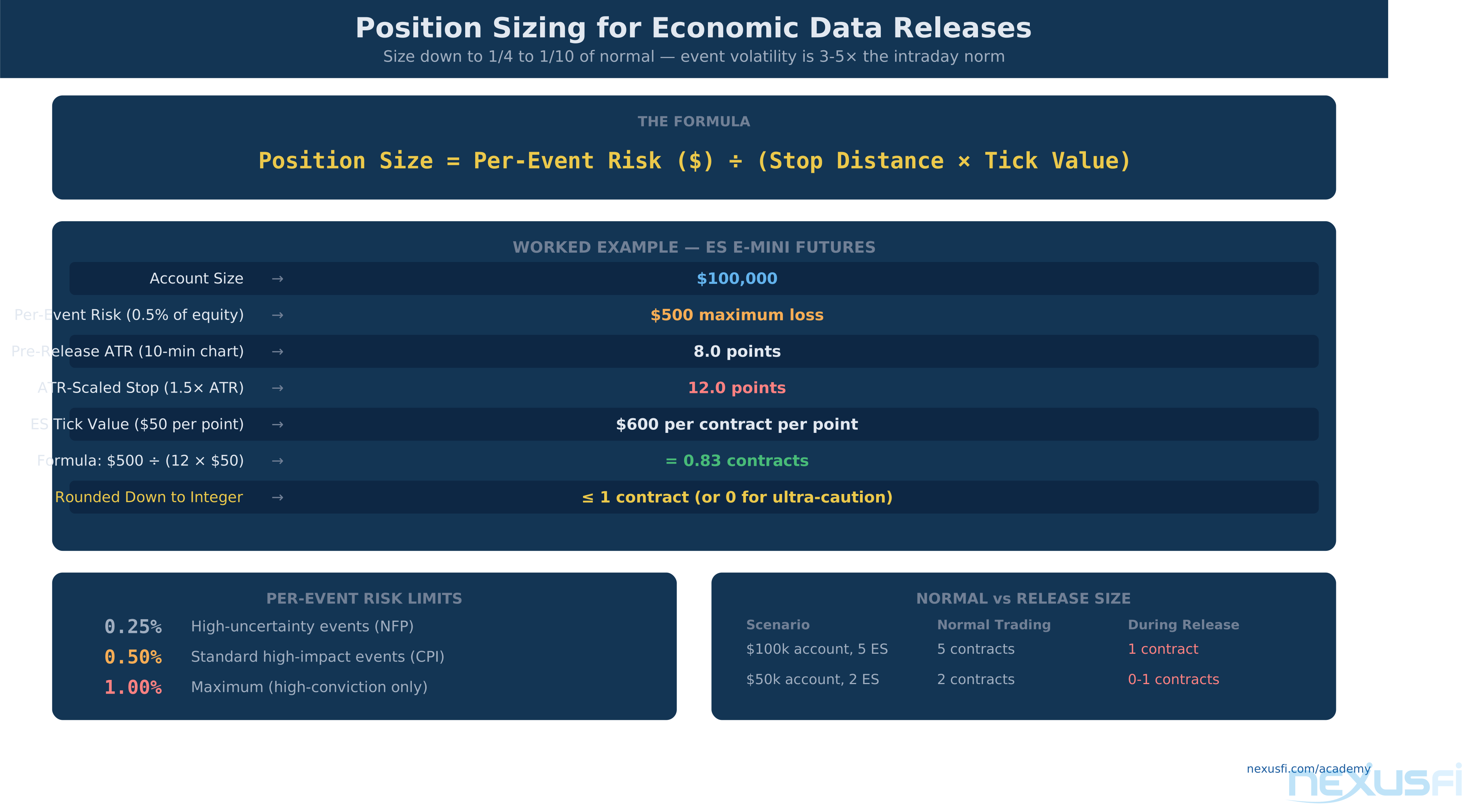
The single most important adjustment you make to your normal trading process around economic releases is position sizing. The volatility during and after high-impact releases can be three to five times the normal intraday volatility. Your normal position size, sized for normal volatility, becomes far too large.
The formula:
Position Size = (Per-Event Risk $) / (Stop Distance × Tick Value)Example using ES (S&P 500 E-mini):
- Account size: $100,000
- Per-event risk limit: 0.5% = $500
- ATR on a 10-minute chart before release: 8 points
- Stop distance: 1.5 × ATR = 12 points
- Tick value: ES is $50/point → $600 per 1-point move per contract
- Position size: $500 / (12 × $50) = 500 / 600 = 0.83 contracts → Round down to 0 or 1 contract with a tight stop
This example illustrates why experienced traders often trade 1 or 2 contracts on releases when they might normally trade 5 to 10 — or why the mathematically correct answer is sometimes zero contracts.
MWG86, a NexusFi Elite member who systematically studied news volatility, conducted an analysis of price action around news releases from 2018 to 2019 and found that volatility spikes during the release window were consistently larger than most traders anticipated. (Source: @MWG86, Price Action Journal)
The key rule: If you cannot survive a bad fill and an immediate stop-out without significant psychological distress or meaningful account damage, your size is too large.
Execution: The Release Window in Detail #
T-0: The Seconds Before #
In the final minutes before the release, liquidity in the order book begins to thin. Market makers pull orders, and the depth-of-market shows much less size than usual. Do not be tempted to enter a position in the 2 to 5 minutes immediately before a major release — the thin order book means your entry may get filled at a worse price than anticipated, and a market order in this environment can produce surprising slippage.
Cancel any pending market orders. Keep only limit or stop-limit orders at specific price levels that form part of your release plan.
T+0 to 30 Seconds: The Initial Spike #
When the data hits, you will see one of three things:
- A large, sustained move in one direction with continued aggressive order flow
- A sharp spike that immediately begins to reverse (the classic NFP fakeout)
- A relatively muted reaction suggesting the data was largely in-line with positioning
In all three cases, your action is the same: observe. Do not enter. The order book is thin, spreads are wide, and the market is processing incomplete information. This is not when edge exists for discretionary traders.
A Rachel, a NexusFi trader, described her news protocol: "I do not enter into a trade 15 minutes before a news event... I stayed out." (Source: @Rachel, Rachel's Trading Journal)
Watch the behavior of:
- Order flow delta: Are aggressive buys on the ask or sells on the bid dominating?
- The bond market: Is the 10-year Treasury yield confirming the equity futures move?
- The initial level: Did price break through and hold a significant level, or is it getting rejected?
T+30 Seconds to 2 Minutes: The Confirmation Window #
This is where most professional discretionary traders begin considering entries. By 30 seconds after the release, the initial chaos has settled enough to read the market's true interpretation.
For a breakout trade: Price should have broken clearly above (or below) the pre-release range and be holding that new level. Order flow should show continued aggression in the breakout direction. Enter with a stop at the nearest technical invalidation level, scaled by your ATR buffer.
For a fade trade: Price made an initial spike but could not hold the move. It has begun pulling back into the pre-release range, and order flow has shifted from the initial direction. Enter the fade with a tight stop just beyond the failed extreme.
This is also when you begin monitoring cross-asset confirmation:
- Is the bond market moving in the same direction as equities? (If bonds and equities are diverging, expect more volatility and less sustained trending)
- Is the USD index confirming the interest rate implications of the data?
- Are sector futures (energy, metals, currencies) behaving consistently with the data's implications?
T+2 to 10 Minutes: Trend or Reversal #
By 2 minutes after the release, you should have a clearer picture of whether the market has accepted the new price level or is rejecting it. If you have a position:
- Scale out 30 to 50% on the first pullback after the initial directional move. This locks in profit from the initial impulse and removes pressure to manage the trade perfectly.
- Trail a stop at 1× ATR behind the remaining position, tightening as the move extends.
- Watch order-flow delta for signs of exhaustion — if the aggressive buying that drove the initial move begins to fade, that is a signal to tighten stops further.
T+10 to 30 Minutes: The Interpretation Phase #
During the 10 to 30 minutes after the release, analysts and larger institutional players are parsing the sub-components, running their models, and updating their positioning. The market may reprice further in the initial direction, or it may begin to revert as the nuances of the data are digested.
Consider adding to the position only if:
- Order-flow delta remains strongly one-directional
- Cross-asset confirmation is consistent
- Your trailing stop on the initial position has moved to breakeven or better (ensuring you are trading with house money)
T+30 Minutes and Beyond: Clear the Position #
Most of the edge in economic release trading exists in the first 30 minutes. After that, the market has largely digested the initial data interpretation, and you are trading based on longer-term macro views rather than event-specific edge. If you have a profitable position, tighten the trailing stop much. If the position has gone nowhere, consider closing it entirely.
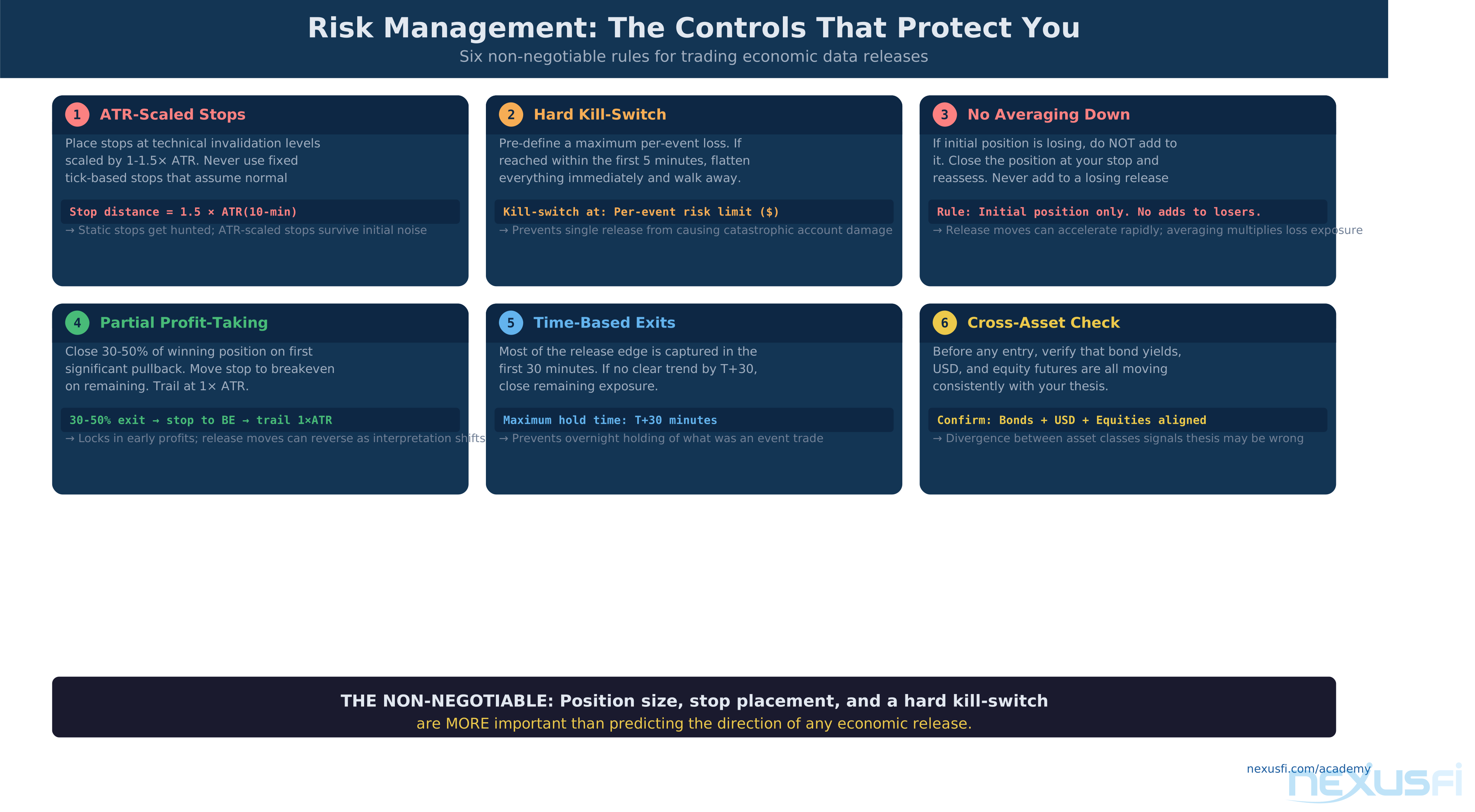
Risk Management: The Controls That Protect You #
ATR-Scaled Stops #
Avoid placing stops at round numbers or fixed tick counts during economic releases. The market knows where the most obvious stops sit, and they often get hunted in the initial volatility spike. Instead, place stops at levels that represent genuine technical invalidation — specifically, a level where if price reaches it, your original thesis is definitively wrong.
Scale the stop by the current ATR to ensure it provides appropriate breathing room given actual volatility conditions. A stop that is 1.5× ATR represents a reasonable level that should survive the initial noise while still cutting losses quickly if the trade is wrong.
The Kill-Switch #
Every economic release trade should have a pre-defined kill-switch: a maximum loss amount that, if reached within the first five minutes, causes you to flatten the entire position immediately and walk away from the event.
This can be implemented as:
- A dollar-based alert ("if I am down $500 in the first 5 minutes, close everything")
- A price-level hard stop placed before the release that is set wide enough to survive initial volatility but prevents catastrophic loss
A NexusFi thread on oil inventory releases and FOMC trading noted that observant traders can actually see the release coming in the order book: "Shortly before a big news event you will see how thin the orderbook becomes showing that traders are pulling their orders before a volatile event." (Source: @matthew28, Oil inventories and FOMC news)
No Averaging Down #
The most common mistake in economic release trading is adding to a losing position. If your initial read was wrong, the natural human impulse is to add more to "make it back" when the position shows a small loss. This impulse is extremely dangerous in economic release trading because:
- The market can move further, faster, than in normal conditions
- Liquidity may not be available for a controlled exit if the position grows larger
- Your initial thesis may have been invalidated by the sub-component data you have not yet fully processed
The rule is absolute: no averaging down during an economic release.
Partial Profit-Taking #
Because economic release moves can reverse quickly, systematic partial profit-taking is essential:
- Close 30 to 50% of the position at the first significant pullback after the initial move
- Move the stop to breakeven on the remaining position after the first partial exit
- Trail the stop on the remaining position using 1× ATR
This approach ensures that even if the move reverses sharply, you have locked in some profit and cannot lose money on a trade that was going your way.
What Professionals Watch: The Checklist #
Experienced release traders work from checklists rather than improvising under pressure. This condenses the frameworks above into a printable quick-reference:
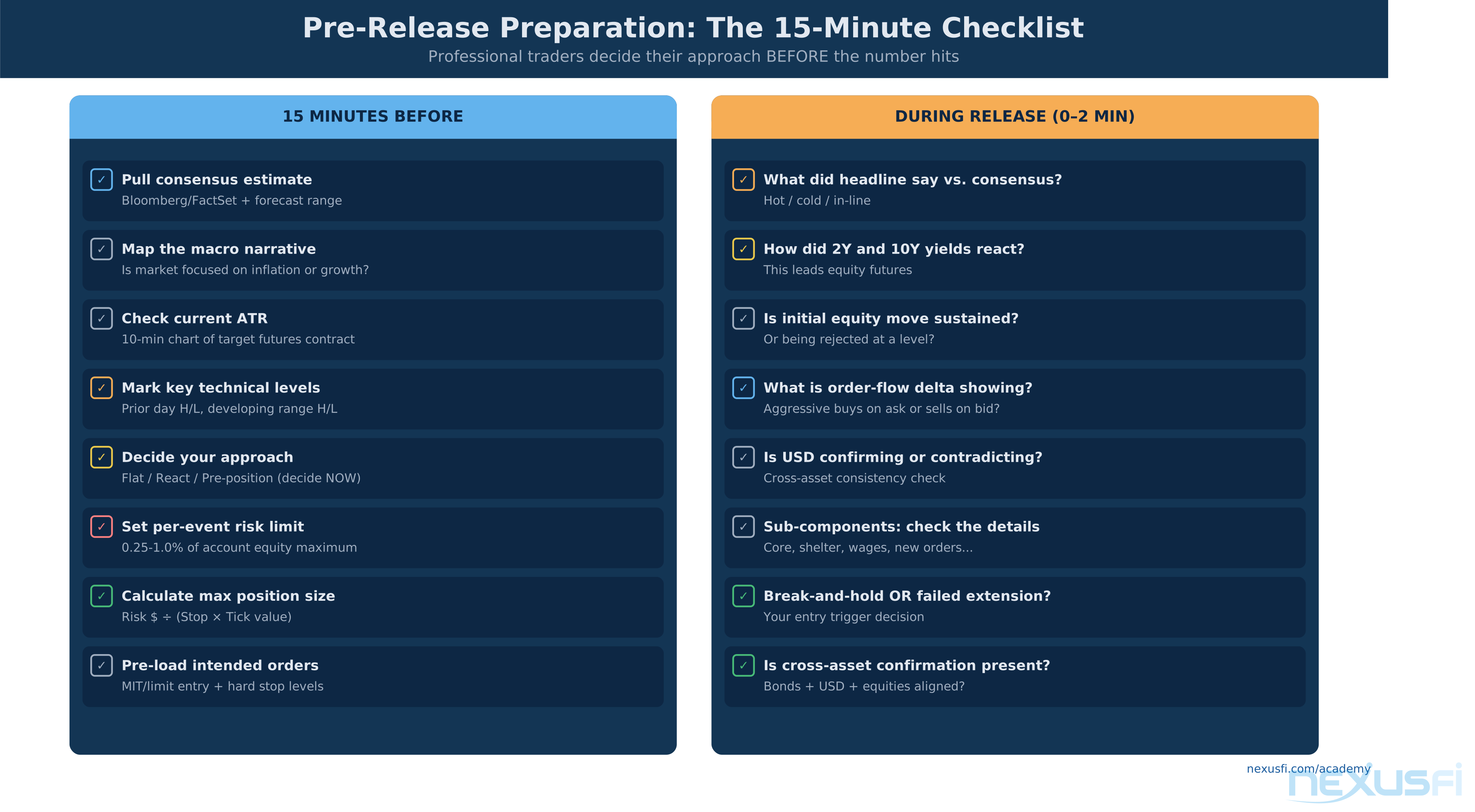
Pre-Release (15 min before): Consensus + forecast range loaded → key sub-components identified → technical levels marked (session high/low, DOM clusters) → approach chosen (flat / react / pre-position) → per-event risk cap set → max position size calculated → order structure pre-loaded.
During Release (0-2 min): Headline vs. consensus → 2Y and 10Y yield reaction → initial move sustained or rejected → order-flow delta direction → USD confirmation.
Entry Decision (30s-2 min): Break-and-hold or failed extension? → Technical invalidation level → ATR-scaled stop → position size within risk limit.
Position Management (2-30 min): 30-50% profit taken on first pullback → trailing stop at 1× ATR → cross-asset confirmation holding → order-flow delta still supportive.
Common Mistakes and How to Avoid Them #
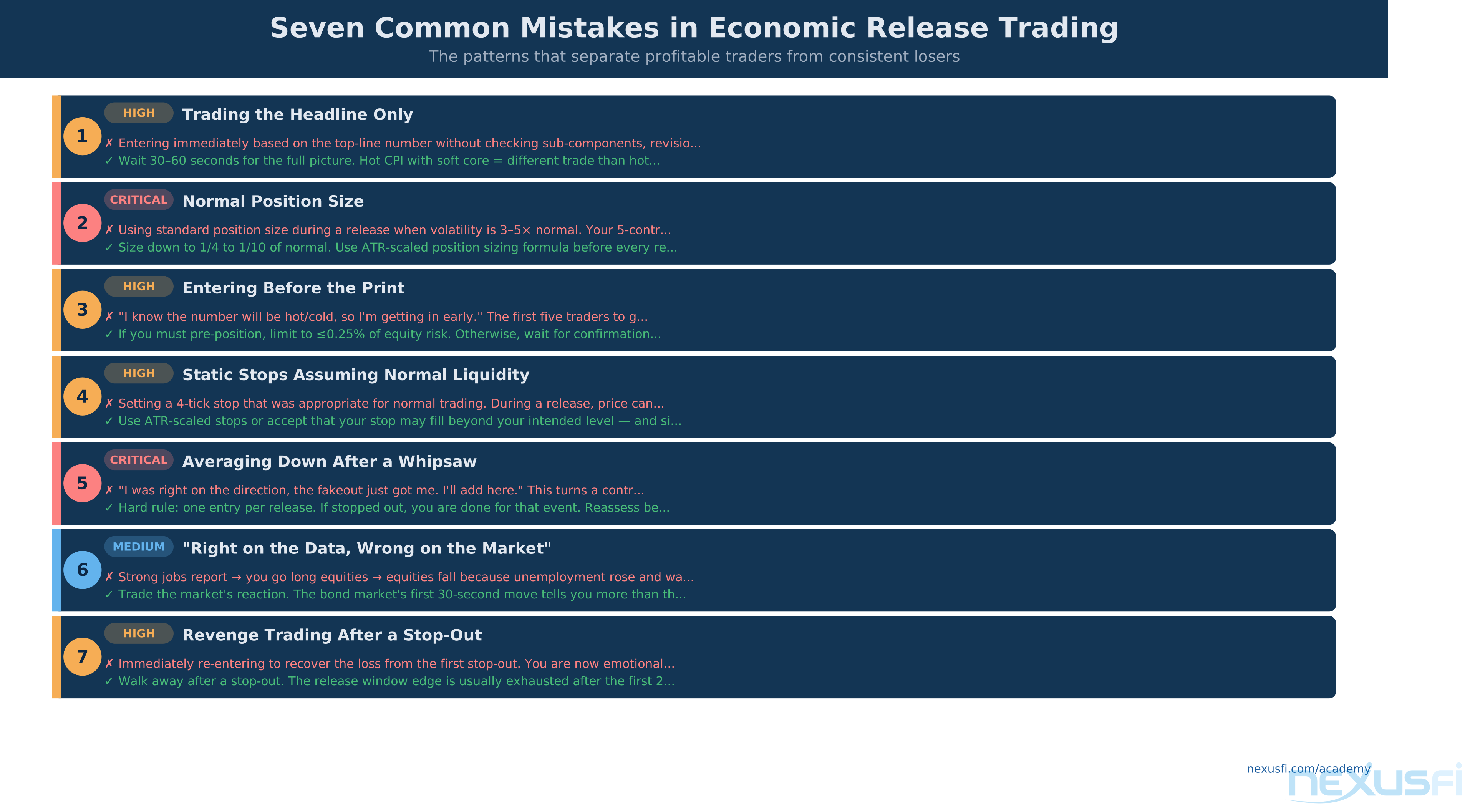
1. Trading the headline without reading the sub-components
The headline number arrives first. The sub-components take 30 to 60 seconds to process, even for professionals. Entering on the headline alone means you are trading with the least information available. Wait until the full release has been disseminated.
2. Using normal position size
Release volatility runs 3 to 5× the intraday norm — your usual size during a release is effectively 3 to 5× too large. The Position Sizing section above has the calculation framework. Starting point: 1/4 to 1/10 of normal size.
3. Entering before the print without a plan
Making directional bets in the seconds before a release without a specific thesis and a specific exit plan is not trading — it is gambling. The variance is enormous and the edge is unclear.
4. Setting stops that assume normal liquidity
The market can gap through stop levels during thin release liquidity. Size positions so that even a fill 2 to 3 ticks beyond your intended stop stays within your per-event risk limit — the ATR-scaled approach in Risk Management above handles this automatically.
One NexusFi trader described the temptation in real-time: "I was near the edge of my stop and I knew I was going to get flashed out because this was a big news release and there would be a lot of volatility at the release. I thought about temporarily widening my stop to avoid getting stopped out — but I didn't." (Source: @shodson, shodson's Trading Journal) The discipline to keep your stop in place — rather than widening it in a moment of hope — is what separates traders who survive releases from those who take catastrophic losses.
5. Overtrading the 1-minute chart in the first seconds
The one-minute chart during the first 15 to 30 seconds after a major release is noise. Individual one-minute candles can show movement that is entirely random — liquidity hunting, stop runs, algorithmic volatility. Looking at a 5-minute or 15-minute chart gives you better signal during the chaos.
6. Confusing "right on the data" with "right on the market reaction"
A correct CPI prediction can still produce a losing trade if the market had already priced it in or the sub-components tell a different story. The market is always right — trade the reaction, not your thesis.
7. Revenge trading after a whipsaw
Getting stopped out of a release trade is common and normal. The knee-jerk response is to immediately re-enter to recoup the loss. This is one of the most dangerous patterns in trading — you are now emotional, the liquidity is still thin, and the market has already shown it can move against you. Take a break after a stop-out and re-assess with fresh eyes.
A Note on Prop Firm Restrictions #
If you trade a funded prop firm account, most firms restrict trading during economic releases. Rules vary by firm but commonly include:
- Being flat 5 minutes before and 5 minutes after major releases (NFP, CPI, FOMC)
- Prohibitions on holding positions through any release above a certain impact rating
- Account suspension or violation for news trading during blackout windows
For full details on prop firm news trading rules, see News Trading Restrictions in Prop Firm Funded Accounts in the Academy.
Even outside of prop firm requirements, many experienced traders choose voluntarily to adopt similar restrictions — not because they lack the skill, but because the risk-adjusted edge does not justify the variance.
The Bottom Line #
Economic data releases offer trading opportunities, but they are not where most traders should focus their energy. The professionals who consistently profit from these events have specific advantages: algorithmic execution with sub-second order placement, deep order-flow tools, years of experience reading cross-asset reactions, and risk management frameworks that prevent any single release from much damaging their accounts.
For most futures traders, the highest-value use of economic release time is not trading the release itself — it is using the aftermath. The 30 minutes to 2 hours after a major release often produce clean, directional price action as the market digests and trends in the direction confirmed by the initial reaction. That post-release trend is where discretionary traders typically have better odds than they do during the release itself.
The releases to watch most closely, in order of market-moving potential: CPI, NFP, FOMC statements (covered in the FOMC Trading guide), GDP, ISM Services, ISM Manufacturing, and Retail Sales. Maintain a calendar of release times, know the current consensus before each one, and decide in advance whether you will trade or simply wait for the aftermath.
Trade the market's reaction, not the number. Size down dramatically. Wait for confirmation. Use ATR-scaled stops and a hard kill-switch. Document every release you trade. Over time, your personal log of how different releases behave in different macro environments becomes a genuine edge — one that no amount of pre-release consensus analysis can replicate.
Knowledge Map
References This Article
Articles that build on this topicCitations
- — Week Ahead: Delayed Jobs Report and CPI Both Landing (2026) 👍 1“The January CPI release is uniquely important because the BLS updates its seasonal adjustment factors with this report. That means they'll revise prior months, creating the potential for both the current print and the revised trend to drive price action simultaneously.”
- — The Elusive Price Action: How to Trade (2010) 👍 5“Absolutely do not trade the news. You should be flat a few minutes before the news, because most likely price isn't going anywhere anyway, and don't enter until after the news. Most traders lose money trying to be clever around news events.”
- — The PandaWarrior Chronicles (2011) 👍 5“I stay out until at least 2-3 minutes after the news as well. I find that most of the time, price continues doing whatever it was doing prior to the news within a few minutes.”
- — Salao's Journal (2020) 👍 4“This is how I trade the news: Any Fed announcement -- I don't try to figure out what they will announce, and I don't even care. I wait for the first move, let it play out, and then look for confirmation of a direction before entering.”
- — MWG86's Price Action Journal (2019) 👍 3“I've put together an analysis on volatility around news releases from January 2018 through October 2019. The volatility spikes during the release window were consistently larger than most traders anticipated -- especially the first 30 to 60 seconds.”
- — Rachel's Trading Journal: lessons learned (2012) 👍 2“I do not enter into a trade 15 minutes before a news event. At 10:22 on 2m, had a higher low small pin, adx < 20. I stayed out. We also had a Green X at 10:22 -- I stayed out. Being flat before news is not missing a trade, it is a discipline.”
- — Oil inventories and FOMC news - combine rules (2019) 👍 4“Shortly before a big news event you will see how thin the orderbook becomes -- showing that traders are pulling their orders before a volatile event. This is actually a signal in itself: when the book thins dramatically, the release is imminent.”
- — ES News Releases (2019) 👍 1“You could enter a position with size that allows for plenty of wiggle room while staying within your risk parameters before the number comes out. The key is that the wiggle room is sized to the expected event volatility, not your normal intraday stop.”
- — shodson's Trading Journal (2010) 👍 3“I was near the edge of my stop and I knew I was going to get flashed out because this was a big news release and there would be a lot of volatility at the release. I thought about temporarily widening my stop to avoid getting stopped out -- but I didn't.”
- — Basics first, my learning journey (2025) 👍 2“How each economic data release impacts a potential open position depends on several things, including the particular data release in question, what the current market consensus is, and how sensitive the instrument is to that type of macro catalyst.”