



Crude Oil (CL) Futures Trading Strategies: The Complete Playbook for WTI
Subtitle: From inventory fades to balance breakouts — how to build setups around CL's unique event-driven rhythm
Overview #
Crude oil is not ES. Traders who arrive on CL from equity index futures get humbled fast, and usually for the same reason: they apply the same setups without accounting for the fundamental layer that runs underneath everything in this market. CL trades on the world's physical energy supply. Every tick responds to inventory flows, OPEC+ decisions, refinery demand, geopolitical risk, and the dollar — not earnings calls or Fed dot plots. The market structure is familiar (futures, margin, tick-based P&L), but the volatility character and regime switches are at the core different.
That said, CL is one of the best day-trading instruments in the world. Its average daily range of 150-300 ticks ($1,500-$3,000 per contract), deep liquidity during floor hours, and predictable calendar events give disciplined traders a repeatable edge. The key is building setups around CL's rhythm rather than fighting it.
This article covers the core strategies active CL day traders use — value area rotation, inventory report fades, initial balance breakouts, and trend pullback entries — with specific entry, stop, and target mechanics. It also covers the failure modes that cost traders most, which in CL are almost always tied to ignoring the inventory cycle or under-sizing stops for the instrument's natural volatility.
One tick in CL ($0.01) is worth $10. A $1.00 move is 100 ticks, or $1,000 per contract. Keep that math front-of-mind throughout this article.
The Crude Oil (CL) Futures instrument guide covers contract specs, fundamentals, and market drivers. This article assumes familiarity with that content and focuses entirely on trading setups and execution.
Why CL Is Different #
Equity index futures — ES, NQ, YM — are financial instruments. Their price reflects aggregate expectations about corporate earnings, monetary policy, and economic growth. They can be volatile, but that volatility mostly responds to macro flows. CL is a physical commodity futures contract on 1,000 barrels of West Texas Intermediate crude oil. Its price reflects the actual supply and demand balance for a product that flows through pipelines, gets refined into gasoline and diesel, and gets absorbed or built up in storage tanks in Cushing, Oklahoma.
That distinction matters for strategy development in three ways:
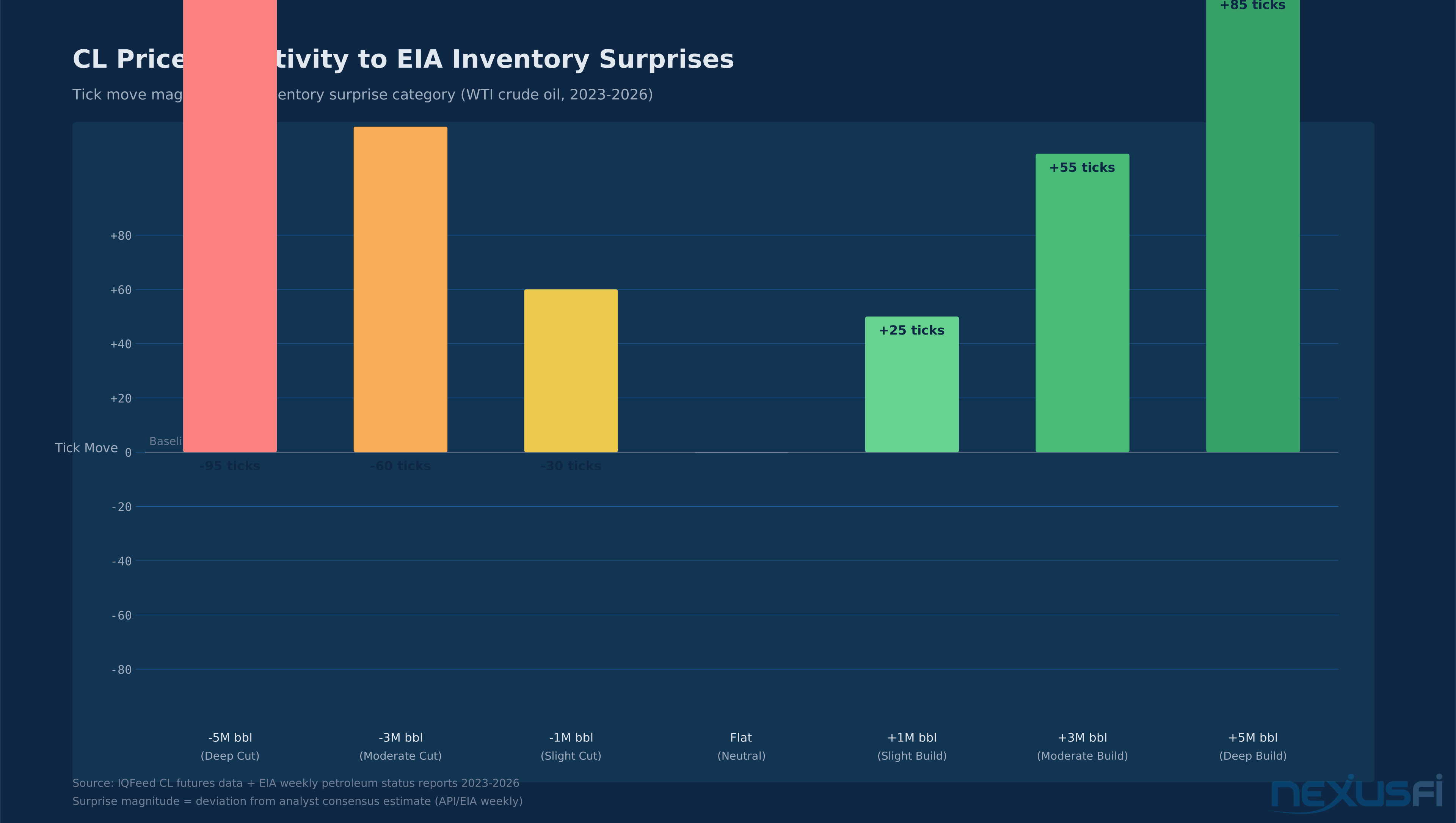
Scheduled events dominate regimes. Every Wednesday at 10:30 AM ET, the EIA releases the Weekly Petroleum Status Report. That single release regularly produces 50-150 tick moves in the first 30 seconds. The Tuesday API report at 4:30 PM ET provides a preliminary read. OPEC+ production decisions can gap CL overnight by hundreds of ticks. These events don't just spike the chart — they can flip the prevailing trend, change value area location, and reset the entire day's context.
Regime switches are abrupt. ES can trend slowly for hours before reversing. CL frequently transitions from balance to trend and back within a single session, especially around the inventory window. Setup logic that works in balance falls apart in trend, and vice versa. You need to identify the current regime before you can apply the right setup — and you need to re-evaluate that regime assessment after every significant trigger.
Tick value amplifies precision errors. At $10 per tick, a stop placed 10 ticks too wide isn't just inelegant — it's $100 of unnecessary risk per contract. Conversely, a stop placed 10 ticks too tight gets clipped routinely by CL's natural intrabar volatility. Stop placement in CL must be anchored to structure (the level that invalidates your thesis), not to a comfortable dollar amount.
In CL, the fundamental calendar — EIA on Wednesday, OPEC+ on irregular quarterly schedule, API on Tuesday evenings — is as important as your chart setup. Ignoring it is like trading ES blind to the FOMC calendar.
The fourth difference is session structure. CL trades nearly 24 hours, but the meaningful liquidity is concentrated in the NYMEX floor session (9:00 AM - 2:30 PM ET). Globex hours provide price discovery overnight, especially around Asian demand news and European market opens, but the spreads widen and volume thins much outside floor hours. Most strategies in this article operate best during floor hours.
The CL Time Map #
Before any setup, you need a mental map of when different types of price action occur and how to handle each window.
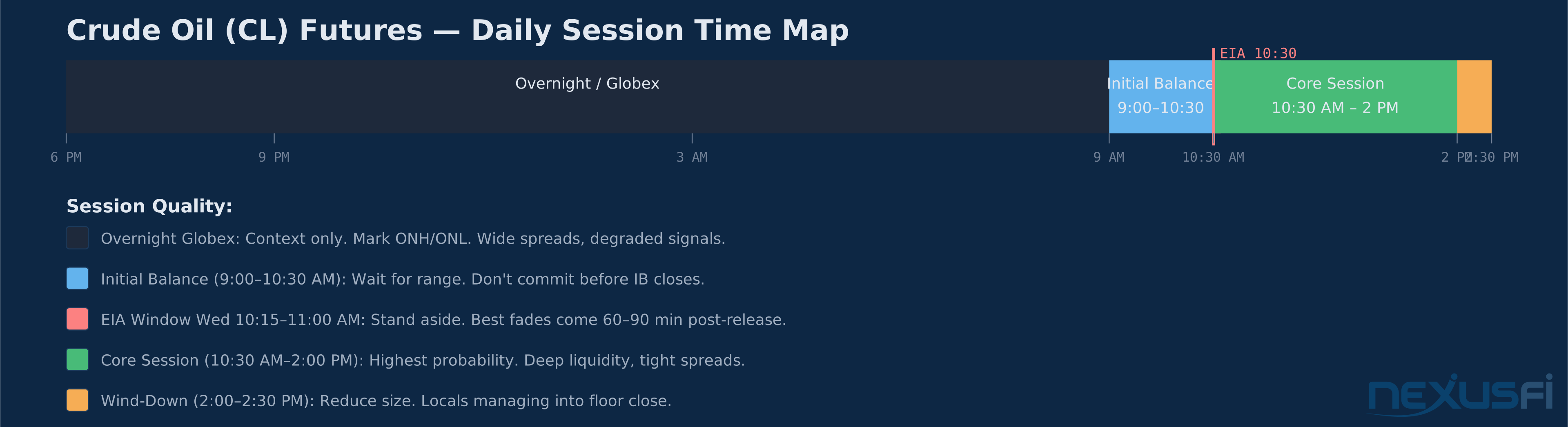
Overnight / Globex (6:00 PM - 8:59 AM ET) Globex establishes the overnight range — the high and low that define context for the next day's session. Asian demand headlines, geopolitical news, and Brent lead/lag relationships can produce meaningful overnight moves. Mark the overnight high (ONH) and overnight low (ONL) before the floor open. These become reference levels throughout the day. Extended price much beyond the prior day's range during Globex often signals news-driven continuation; tight overnight ranges usually resolve with a breakout at the floor open.
As @VinceVirgil notes in his CL trading methodology, "The first lines I put on my chart are the highs and lows — the ON range. I also consider the context in relation to the previous single day or days sessions. Where is price right now relative to the last few sessions." [^1]
Floor Open to Initial Balance (9:00 AM - 10:30 AM ET) The floor open brings the bulk of day session volume. The Initial Balance (IB) — the range formed during the first hour of floor trading — is the most important structural reference on a CL day chart. Price breaking cleanly above or below the IB with acceptance sets up the day's likely directional bias. Most CL day traders wait for the IB to form before committing to a directional lean.
The 9:00 AM - 10:30 AM window is also when you're preparing for the inventory window. If Wednesday, you're assessing where price is relative to key levels before the report. If not Wednesday, this window is your primary setup window.
The EIA Inventory Window (Wednesday 10:30 AM ET) This is the most important 60-minute window in the CL week. At exactly 10:30 AM ET on most Wednesdays, the EIA releases crude, gasoline, and distillate inventory data along with refinery utilization and implied demand figures. The market reacts violently to surprises — both in direction and magnitude.
Stand-aside or reduce-size protocol applies at 10:15-10:45 AM ET on inventory day unless you're executing a specific event strategy (covered below). Post-release volatility typically persists for 30-90 minutes as the market digests the full report and repositions. The best setups often come 60-90 minutes after the report, once the initial volatility has settled and a new value area is beginning to form.
Core Trading Session (10:30 AM - 2:00 PM ET) This is the highest-quality setup window, post-inventory on non-Wednesday sessions, or post-report-settle on Wednesdays. Value area rotation, trend pullbacks, and continuation setups have the best probability here. Liquidity is deep, spreads are tight, and professional participants are most active.
Late Session / Wind-Down (2:00 PM - 2:30 PM ET) Volume declines approaching the 2:30 PM floor close. CL can show "pinning" behavior near key levels as locals manage positions into the close. Most day traders are flat or reducing size by 2:00 PM.
Low-Liquidity Post-Close (2:30 PM - 5:00 PM ET) Don't trade this window. Spreads widen, volume evaporates, and erratic price swings can invalidate technical setups with no underlying order flow to sustain them. Accounts get chopped up here with no informational edge.
The CL session has clear quality zones: floor open through 10:30 AM is setup formation; 10:30 AM to 2:00 PM is the primary execution window; everything after 2:30 PM has degraded signal quality. Trade within the quality windows.
API Tuesday and OPEC+ Events The API inventory report releases Tuesday evenings at 4:30 PM ET. Large surprises can move CL overnight, so checking the API number before Wednesday's open calibrates your directional bias before the EIA release.
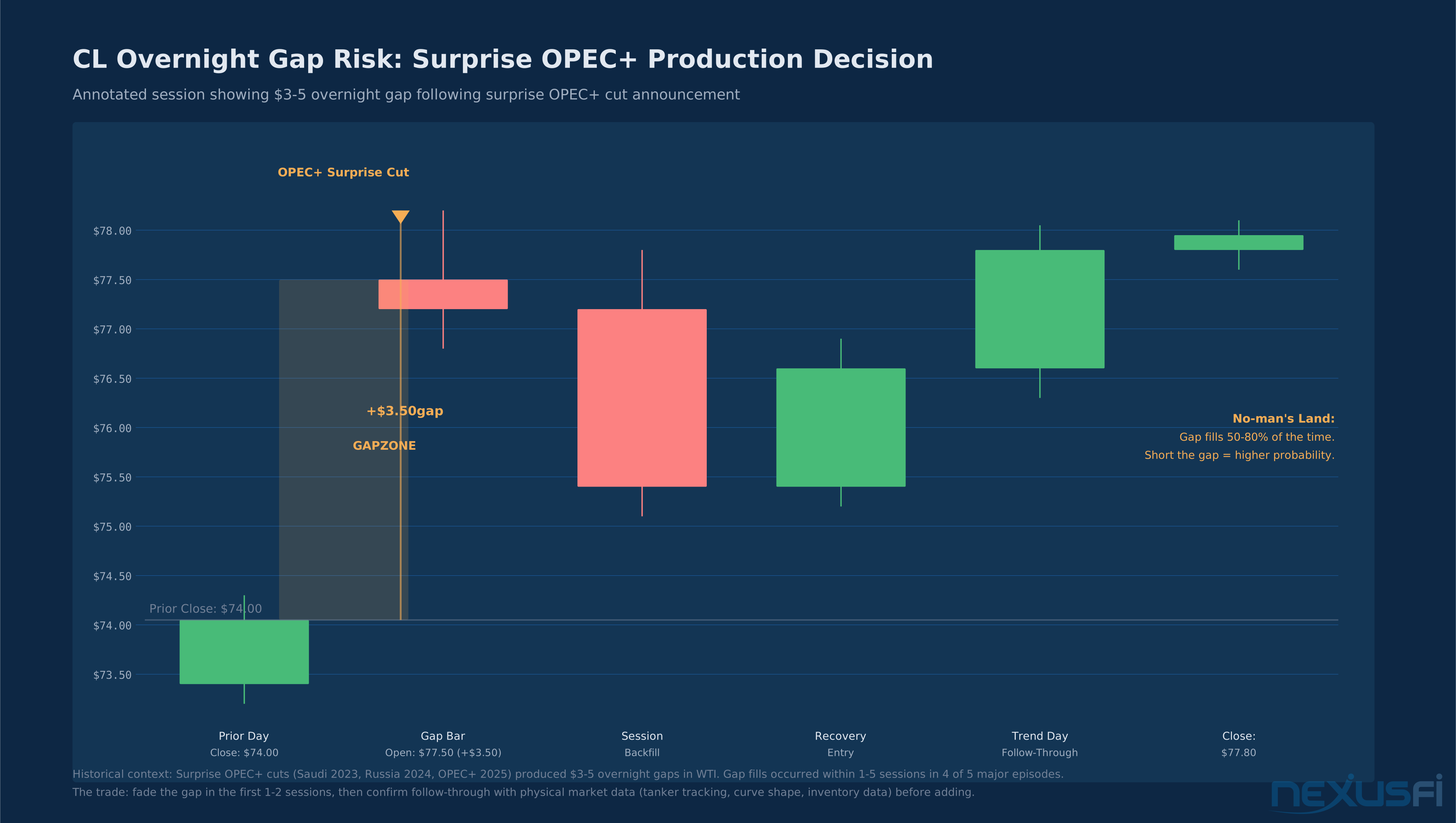
OPEC+ meetings occur several times per year. Expect gap risk and extreme volatility around any production announcement. Reduce size or stand aside until the announcement settles. The "sell the rumor, buy the fact" tendency on production cuts exists but isn't reliable enough to trade mechanically.
The Profile Toolkit for CL #
CL responds well to market profile and volume profile because the instrument attracts a high proportion of professional participants who think in terms of value, not price. Here's how these tools apply specifically to WTI:
Defining the Session Most CL traders use two profile sessions: RTH (9:00 AM - 2:30 PM ET, the floor session) and ETH (the overnight 6 PM - 9 AM session). This reflects how professionals think about value — the floor session is where the primary volume-based value is established.
[^2]
Key Profile Levels for CL
- Previous Day POC (pdPOC): The highest-volume price level from the prior RTH session. CL revisits naked POCs with high frequency — unvisited pdPOCs within 2-3 standard deviations are high-probability intraday targets.
- Previous Day VAH/VAL: Value area boundaries define acceptance vs. rejection. Opening above the prior day's VAH and accepting there suggests continuation. Opening below the prior day's VAL and rejecting lower suggests the same from the other side.
- Overnight High/Low (ONH/ONL): Globex extremes that define context for the floor session. Failing to breach ONH/ONL during RTH often suggests continuation of overnight balance. The day type question — whether price is in or out of prior session balance, whether the ON session was balanced or imbalanced — determines which strategy framework applies. [^8]
- Initial Balance High/Low (IBH/IBL): The range formed in the first floor session hour. Breakout above IBH or below IBL with acceptance sets the daily trend direction.
[^3]
VWAP Application CL VWAP is more straightforward to use than ES VWAP because the instrument has a cleaner floor session and less extended-hours noise. The RTH VWAP is the primary reference. In a balanced session, price oscillates around VWAP repeatedly. In a trending session, price holds consistently above or below VWAP. The most reliable rule: don't take long setups below RTH VWAP in a downtrending session, and vice versa. VWAP is your regime filter, not a standalone entry signal.
Early in the floor session, use the ETH (overnight) VWAP as the reference until RTH VWAP has sufficient volume behind it — typically 30-45 minutes after the floor open.
[^2]
HVN and LVN Usage High-volume nodes (HVNs) in CL act as magnets and decision points. After a sharp move, price frequently rotates back to the nearest HVN. Low-volume nodes are areas of thin acceptance — price moves through them quickly and can reverse at the edges. In a range session, fading HVN boundaries targeting the opposite HVN can provide multiple clean setups per session.
Strategy 1: Value Area Rotation (Balance Trading) #
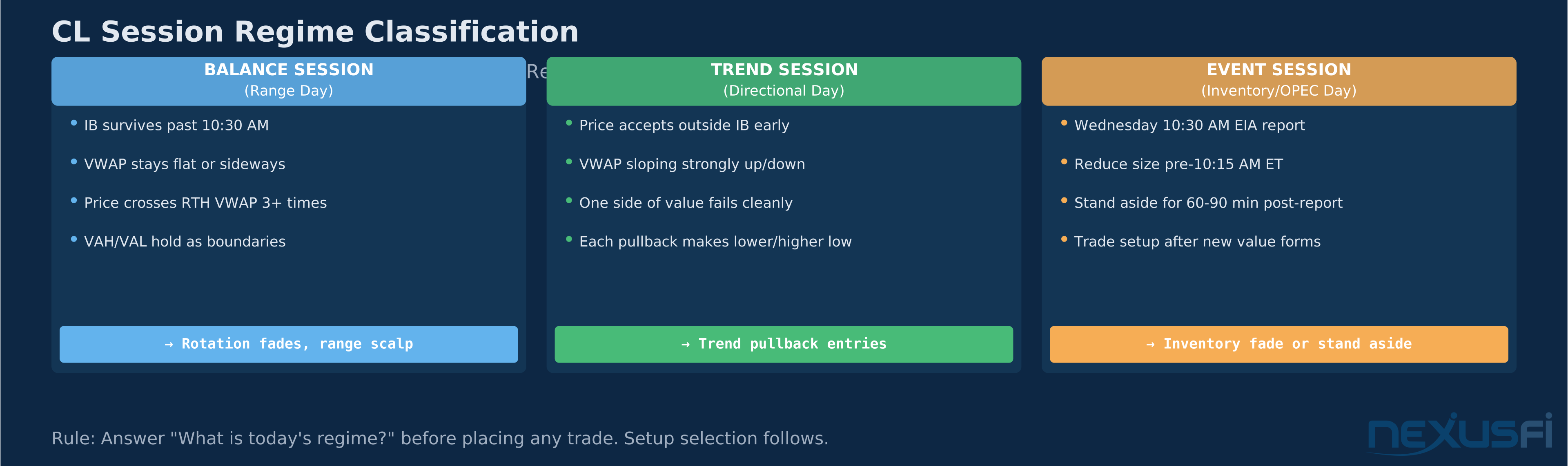
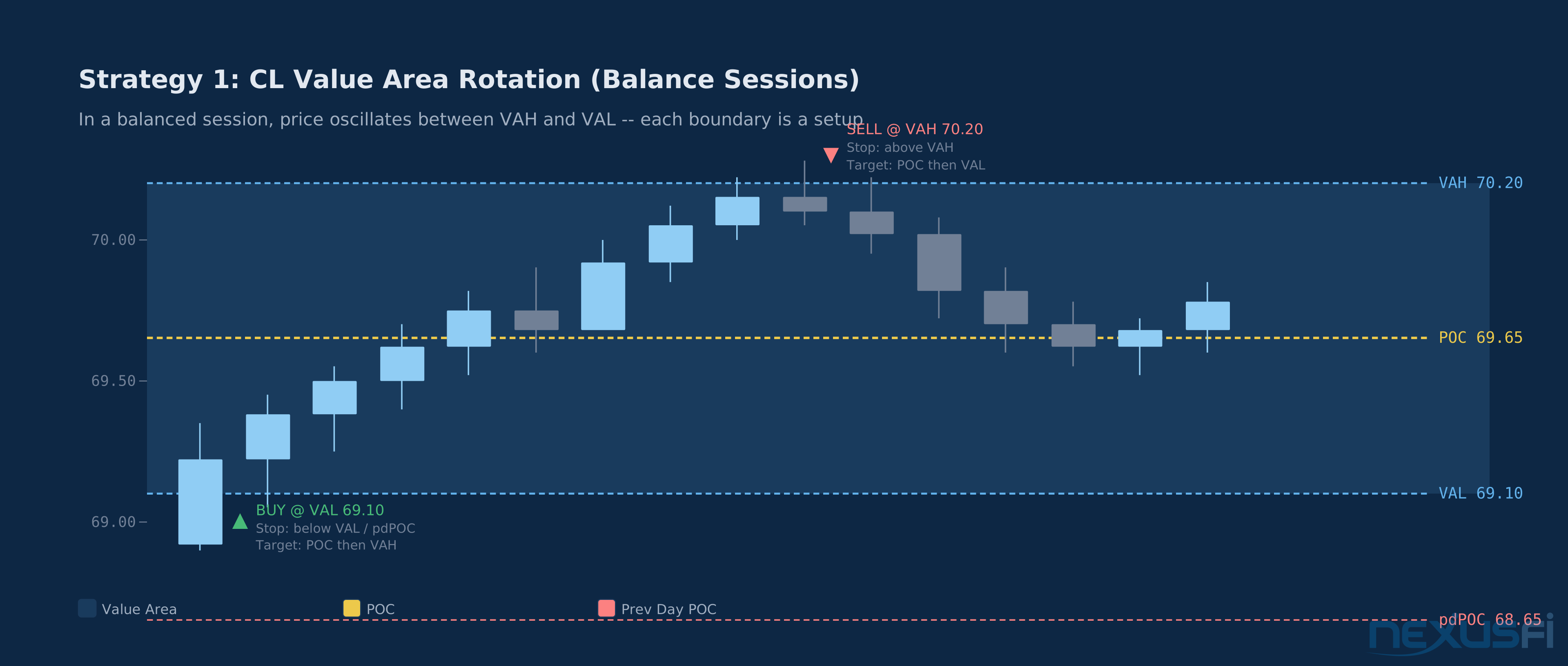
This is the bread-and-butter CL setup during non-inventory days and consolidation sessions. CL ranges approximately 70-80% of all sessions. Within ranging sessions, the value area boundaries are the primary fade zones.
Setup Conditions
- Non-inventory day OR post-inventory session once volatility has settled (60+ minutes after EIA)
- Price oscillating within a defined range with similar value area location across 2-4 sessions
- RTH VWAP relatively flat or showing limited slope
Entry — Long Example
- Price trades down to or through the previous day's VAL or session low VWAP band
- Look for two-sided failure: lower wick rejections, stalling time-and-sales, failed attempts to break lower that produce immediate bounces
- Enter on the first close above the rejection point
- Confirmation: volume pickup on the reversal bar, RTH VWAP slope turning up
Stop Placement Place the stop below the swing low that established the rejection, plus a volatility buffer of 8-12 ticks. In CL, 8-12 ticks is the minimum buffer to survive normal intrabar noise without getting clipped on a valid setup. Wider is acceptable if the structural level is clear — never compromise structure to hit an arbitrary dollar stop.
Targets
- TP1: RTH VWAP (take partial — typically 1/3 to 1/2 of position)
- TP2: Previous day POC or session VAH
- Runner: To the opposite extreme of the range (ONH, prior day high) if momentum confirms
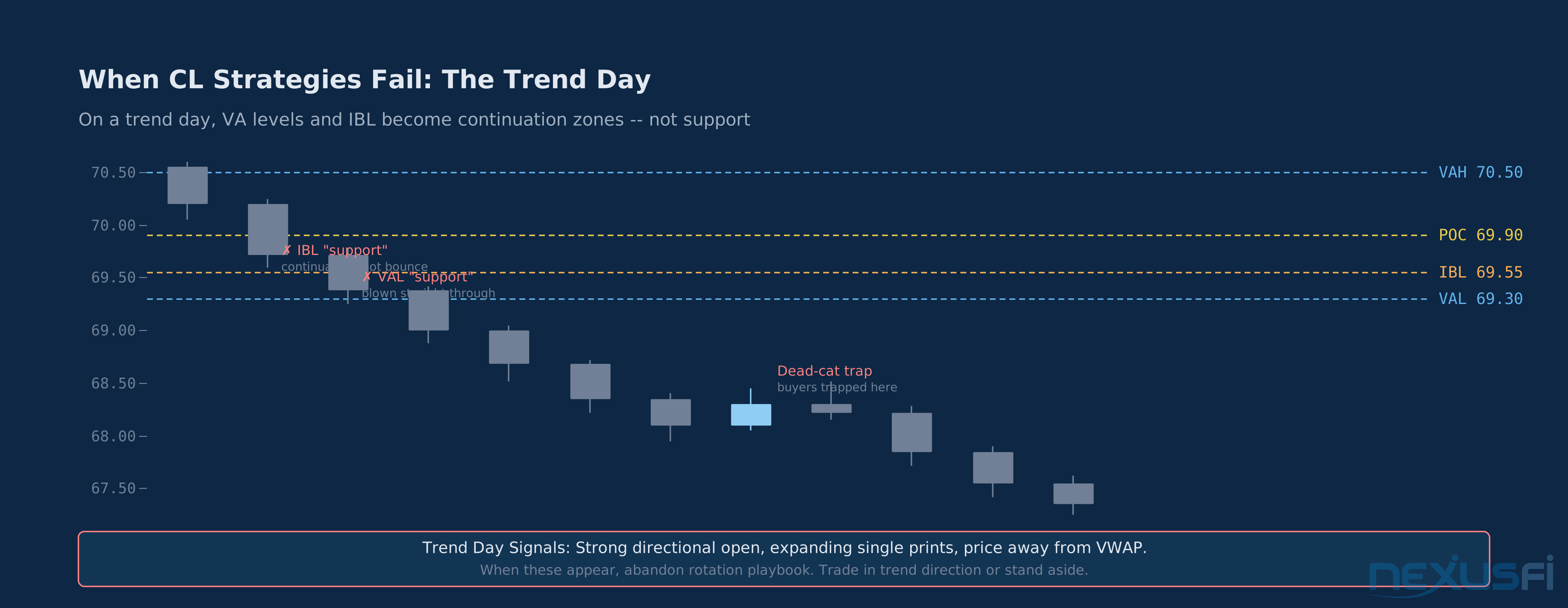
When It Fails This setup fails on trend days, when price breaks below VAL and does not recover — it continues directionally. The tell is one-sided volume (only sellers absorbing at the rejection point) and the inability of price to close back above the trigger level. If you're in the trade and price closes below your entry on the next full bar, exit immediately. Don't wait for the stop.
When CL breaks below the prior day's value area with strong one-sided volume and fails to recover within 30 minutes, this is imbalance — not a rotation opportunity. Fading into imbalance is how retail traders blow accounts in CL. Identify the day type before applying the rotation framework.
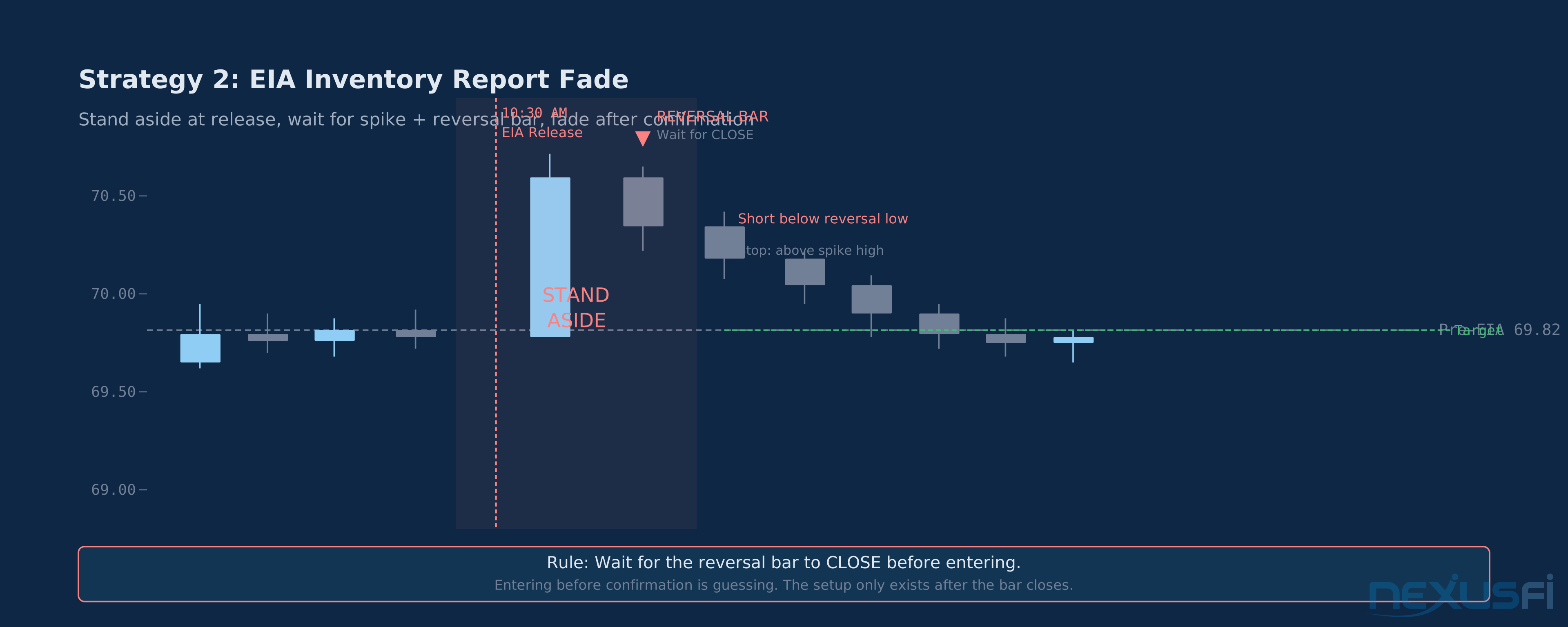
Strategy 2: Inventory Report Fade #
The EIA inventory release on Wednesday at 10:30 AM ET produces the most reliable and tradeable volatility in the CL week. The setup captures the mean-reversion move after the initial impulse exhausts.
Setup Logic Markets frequently overreact to the headline inventory number (crude stocks build/draw) and then partially retrace when full report context is absorbed — gasoline demand, refinery utilization, distillate data, and regional breakdowns. This overreaction creates the fade opportunity.
Pre-Report Preparation Before 10:30 AM on Wednesday:
- Mark the pre-report range (the range formed from 9:00-10:15 AM)
- Identify key levels: pdPOC, IBH/IBL, VWAP
- Know the API consensus direction from Tuesday night
- Assess consensus expectations for the EIA number
Entry Rules Do NOT enter during the first 60-90 seconds of the report. The spike is filled with slippage and unpredictable direction changes. Instead:
- Let the initial impulse play out — wait for a clear directional push (typically 40-80 ticks) that extends beyond the pre-report range
- Look for the impulse to stall: wicks developing, time-and-sales slowing, price failing to make new extremes on multiple attempts
- Enter on a close back inside the pre-report range OR on a confirmed reversal candle (5-minute) with the close back in the direction of the fade
- Use a limit order placed 3-5 ticks inside the pullback level to reduce slippage
Stop Placement Stop goes beyond the spike extreme, plus 10-15 tick buffer. This is wider than the normal rotation stop — you're fading a news event and must survive the tail risk of a second impulse in the same direction.
Targets
- TP1: VWAP (quick, take at least 50% of position)
- TP2: Pre-report range midpoint or pdPOC
- No runners on inventory fades — the volatility decays quickly
What the Market Is Telling You If price recaptures VWAP quickly and holds, the initial reaction was excessive — the fade has legs. If price stalls below VWAP and cannot reclaim it within 30 minutes, the initial direction was correct and the setup is failing. Exit on stall.
@mastadee's approach to pre-report context captures the preparation mindset: analyzing the weekly range bracket and S/R zones on the 60-minute chart before the inventory release gives you the structural targets the market is likely working toward after the report. [^4]
Failed Inventory Fade If the inventory number is a genuine supply shock (unexpected build or draw exceeding 4-5 million barrels vs. expectations), the initial impulse is likely directional, not exhaustive. Don't fade genuine supply events. Distinguish between "market surprised by headline number" (fadeable) and "market repricing supply/demand balance" (trend continuation). The former reverses within 60 minutes. The latter doesn't.
Strategy 3: Initial Balance Breakout with Retest #
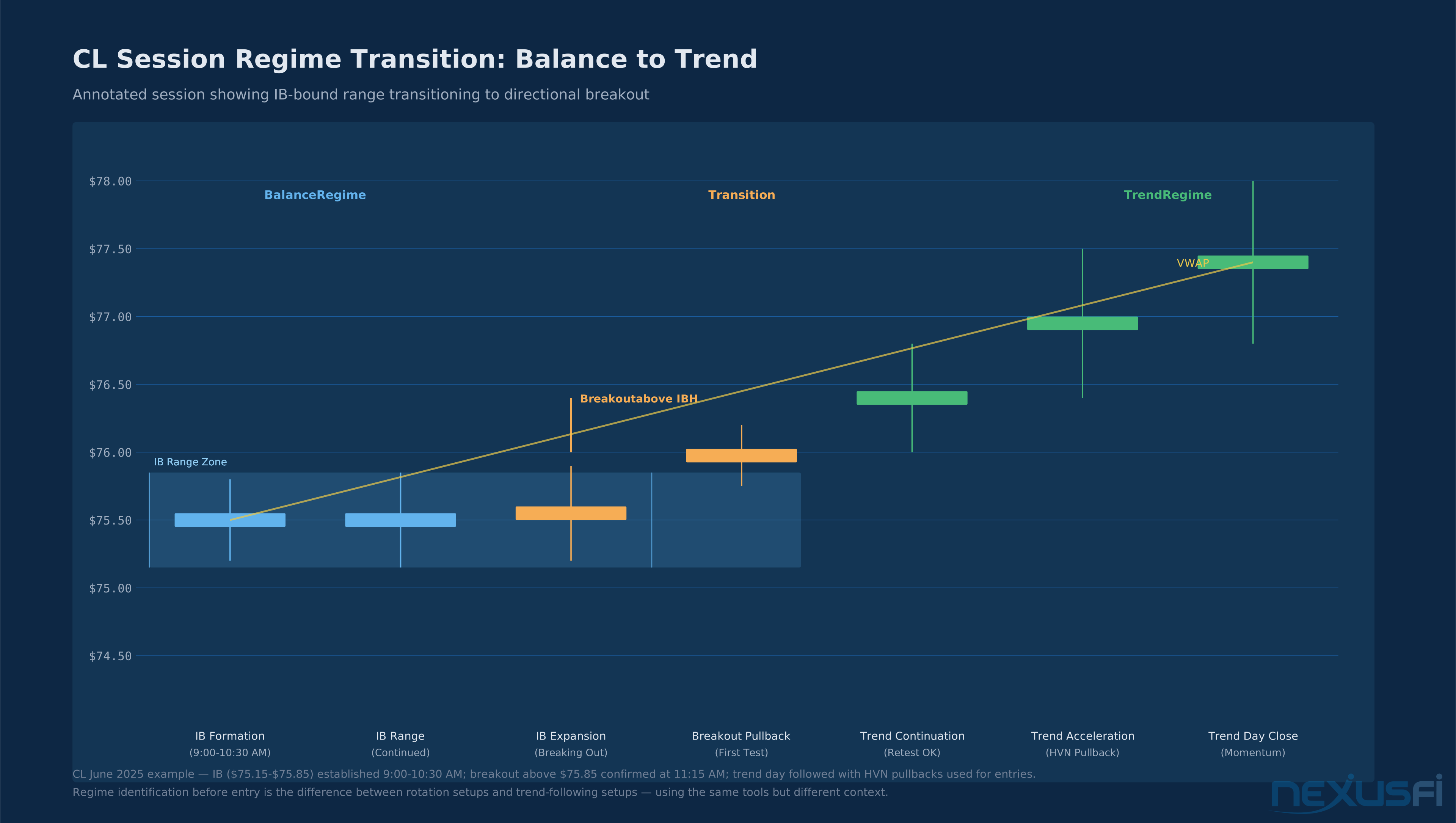
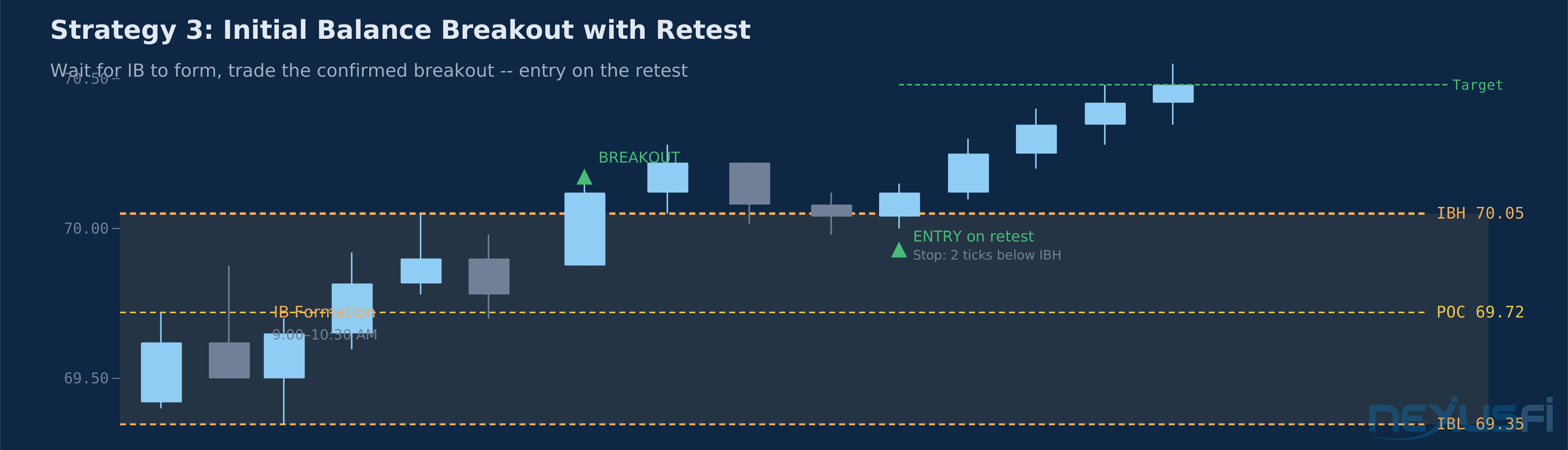
CL's Initial Balance is the single most reliable structural reference for day session bias. When price breaks cleanly above IBH or below IBL with acceptance, the probability of directional follow-through is strong.
Setup Conditions
- Non-inventory day or post-report session
- Clear IB formation: the first-hour range is defined and not excessively wide (above 80 ticks often means the IB has already absorbed a news event, reducing its predictive value)
- Breakout candle closes above/below the IB boundary — not just a wick through it
Entry Rules Do NOT chase the breakout candle. Enter on the retest of the broken IB level.
- IB forms between 9:00-10:00 AM ET. Mark IBH and IBL.
- Price breaks above IBH with a 5-minute close above. Mark the breakout bar.
- Wait for a pullback to the IBH level (now support).
- If price holds IBH on the pullback (close above the level), enter long.
- Alternative: use the first 5-minute bar that tests IBH and closes bullishly as the entry signal.
Stop Placement Stop below the swing low of the pullback that tested IBH, plus 10-tick buffer. If the pullback low is near IBH, the stop will be 12-18 ticks below entry — that's normal.
Targets
- TP1: Measured move (the IB range projected from the breakout point). IB = 40 ticks means first target at IBH + 40 ticks.
- TP2: Prior day high or nearest HVN above the breakout
- Runner: Trail using the rising 21 EMA on the 15-minute chart once trend is established
Acceptance vs. Rejection — The Critical Distinction Breakout failures are common in CL. The rule: if price breaks above IBH but cannot close above it on the retest (the pullback candle closes back below IBH), the breakout is failing. Do NOT enter. Wait for either a reconfirmation close above IBH or stand aside. Trading failed breakout setups is how most losses happen in this strategy. [^9]
@VinceVirgil's framework applies directly: "I assume a range until the market tells me differently... Breakouts pullback or failed breakouts, at areas of support or resistance, or at the top or the bottom of ranges. One must anticipate the potential of a particular pattern constantly." [^5]
The most important word in the IB breakout strategy is "retest." Traders who buy the initial breakout bar buy at the worst price with maximum slippage. Traders who wait for the retest buy at the level, with structure underneath, with a clean stop, at a time when the market has confirmed direction. Patience at entry is the entire edge.
Strategy 4: Trend Pullback to HVN or EMA #
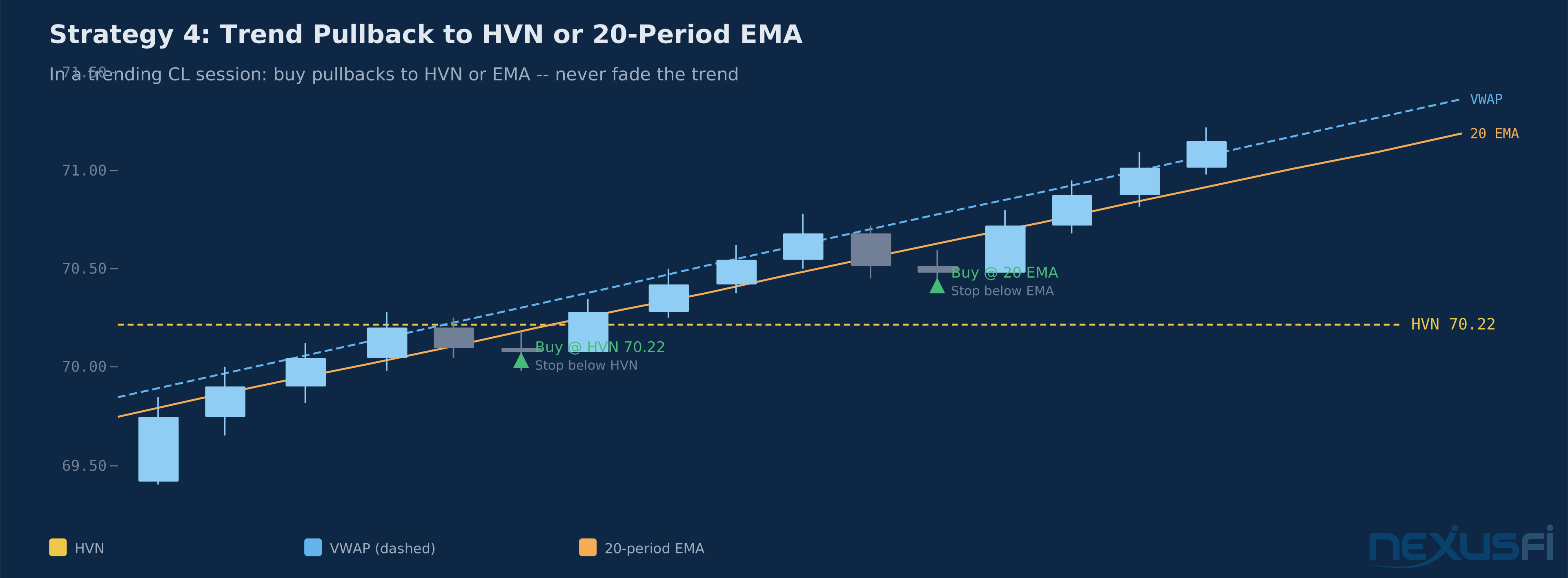
When CL establishes directional momentum — a sustained move with consistent higher highs and higher lows above key references — the primary setup is waiting for the first pullback to a high-volume node or moving average and entering with the trend.
Identifying Trend vs. Range Use these filters:
- Price consistently above (or below) the 21 EMA on the 15-minute chart
- VWAP slope clearly positive (or negative) and price holding above (or below) it
- Pullbacks shallow — less than 50% of the prior impulse leg
Entry Rules (Long Example)
- Trend established: price above 21 EMA, VWAP rising, sequence of higher highs
- Price pulls back into the 9 EMA band or to a nearby HVN from the prior session
- Enter on the first candle that closes back above the pullback high — this is the "second entry" confirmation
- Or use the 9/21 EMA cross-and-hold as an additional confirmation filter
@Gary's approach to runner management in CL captures the spirit: "Take off half of my position at 10 ticks, enter 'free trade mode' with a clear mind, and let the market tell me when to exit the runners." With stops typically 10-12 ticks from entry, this creates favorable R:R on continuation setups. [^6]
Stop Placement Stop below the swing low of the pullback. If the pullback into the 9 EMA produced a clear higher low, stop goes 8-10 ticks below that low.
Targets
- TP1: Previous swing high or nearest overhead HVN (cover 50-60% of position)
- Runner: Trail with 21 EMA on 15-minute chart. Hold until close below the 21 EMA.
When Trend Setups Fail Trend days in CL that fail mid-session almost always do so because of an unplanned trigger or because the "trend" was actually a false breakout from a wide range. The tell: price that spent multiple sessions in a tight value area before the "trend" day often reverts to that value area within 1-2 sessions. Trend pullback setups work in genuine trending markets; they fail in false breakout days that look like trends for 60-90 minutes before collapsing.
Strategy 5: Range Scalp (What to Do in Chop) #
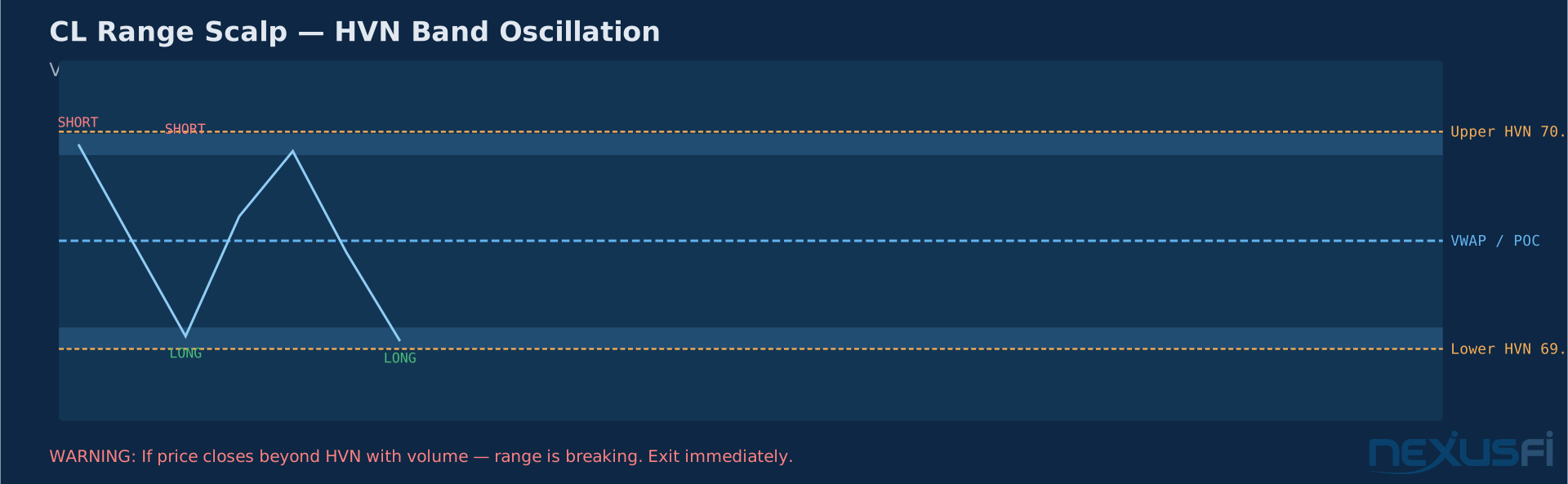
When a session fails to break the IB, VWAP stays flat, and price crosses the daily average multiple times, you're in a range session. Shift to smaller size and faster exits.
Setup: Price oscillating between defined HVN bands. Flat VWAP. No absorption building at either extreme. Volume relatively uniform.
Execution: Fade from HVN to HVN. At the upper HVN, when T&S slows and wicks form, short toward the POC or lower HVN. At the lower HVN with the same confirmation, long toward the POC. Stop: 8-10 ticks beyond the HVN band extreme. Target: 15-20 ticks toward the opposite band or POC. Use smaller size than trend setups — range scalping is precision work, not conviction trading.
The critical rule: If price closes decisively beyond the HVN boundary with volume, the range is breaking. Exit immediately. That is the point where range scalpers get destroyed.
Range scalping CL without recognizing when the range breaks is the fastest path to a blown day. Honor the stop. Never average down in CL.
When CL Strategies Fail #
Understanding failure modes is more valuable than knowing setups. Most losses in CL come from a handful of recurring patterns:
Failure 1: Treating Wednesday like a normal trading day Every Wednesday is inventory day. If you're running breakout or trend strategies at 10:15 AM ET without an inventory protocol, you're gambling. Size down before 10:30 AM. Have a plan for the post-report environment. This single adjustment eliminates the majority of CL traders' worst days.
@tzachi's protocol is the baseline: "Every Wednesday at 10:30 there is an oil inventory report coming in. (most expected report during the week for CL) Better to stay away 15 minutes before and get back after 10:31." [^7] That's the minimum. Most experienced traders take 30-60 minutes post-report before re-entering.
Failure 2: Overleveraging the tick CL looks affordable — $1,200-$1,700 in intraday margin at many brokers. Traders size for margin, not for the trade. A 3-contract position with a 30-tick stop is $900 of risk. A 10-contract position with the same stop is $3,000. Both are legal. Only one is appropriate for most account sizes. Size for the trade, not the margin requirement.
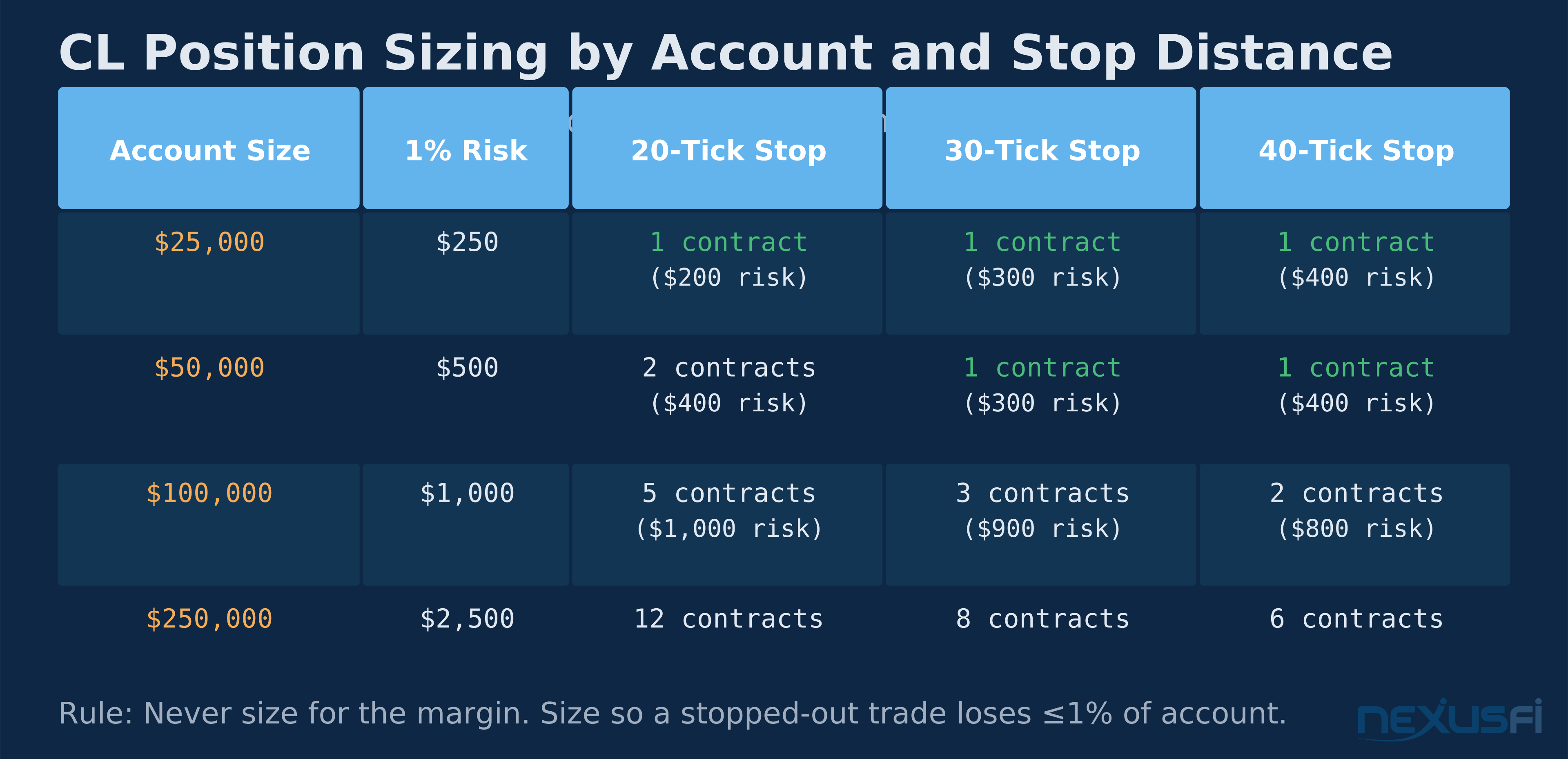
Failure 3: Stops calibrated to dollars, not structure "I'm only willing to risk $200 on this trade" is not a stop placement method. In CL, $200 is 20 ticks — which is often inside the normal intrabar noise range. Structure-based stops (below the swing low, beyond the HVN boundary, beyond the prior session extreme) survive the noise. Dollar-based stops get clipped on valid setups and then watch the trade work without you.
Failure 4: Trading the post-floor window (2:30-6:00 PM ET) Post-floor, CL loses its technical reliability. Spreads widen, locals have left, and news-driven spikes aren't absorbed cleanly. The setups that work at 11 AM don't work at 3:30 PM. Continuing to trade after 2:30 PM is usually how morning gains get given back.
Failure 5: Holding through OPEC+ announcements OPEC+ decisions — especially surprise production cuts or increases — can gap CL by $2-5 ($200-$500 per contract) overnight. If OPEC+ is meeting, either flatten before the close or have defined protective stops that account for gap risk. Don't assume the market opens near the prior close.
Failure 6: The "almost back to VWAP" counter-trend trap In a downtrending session, VWAP is overhead resistance. Price approaches it repeatedly but fails to close above. Traders see "almost there" and enter long — the setup is backwards. In trending sessions, VWAP is a barrier, not a target. Trade with the trend.
Failure 7: Averaging down CL can move $2-3 ($200-$300 per contract) against a position before reversing. Traders who add to losing positions can double or triple their risk without improving their probability. One stop, placed correctly, is the only risk management that works here.
Practical Application: Pre-Session Routine #
The difference between professional and amateur CL traders is often preparation, not setup sophistication. This is the routine that separates the two.
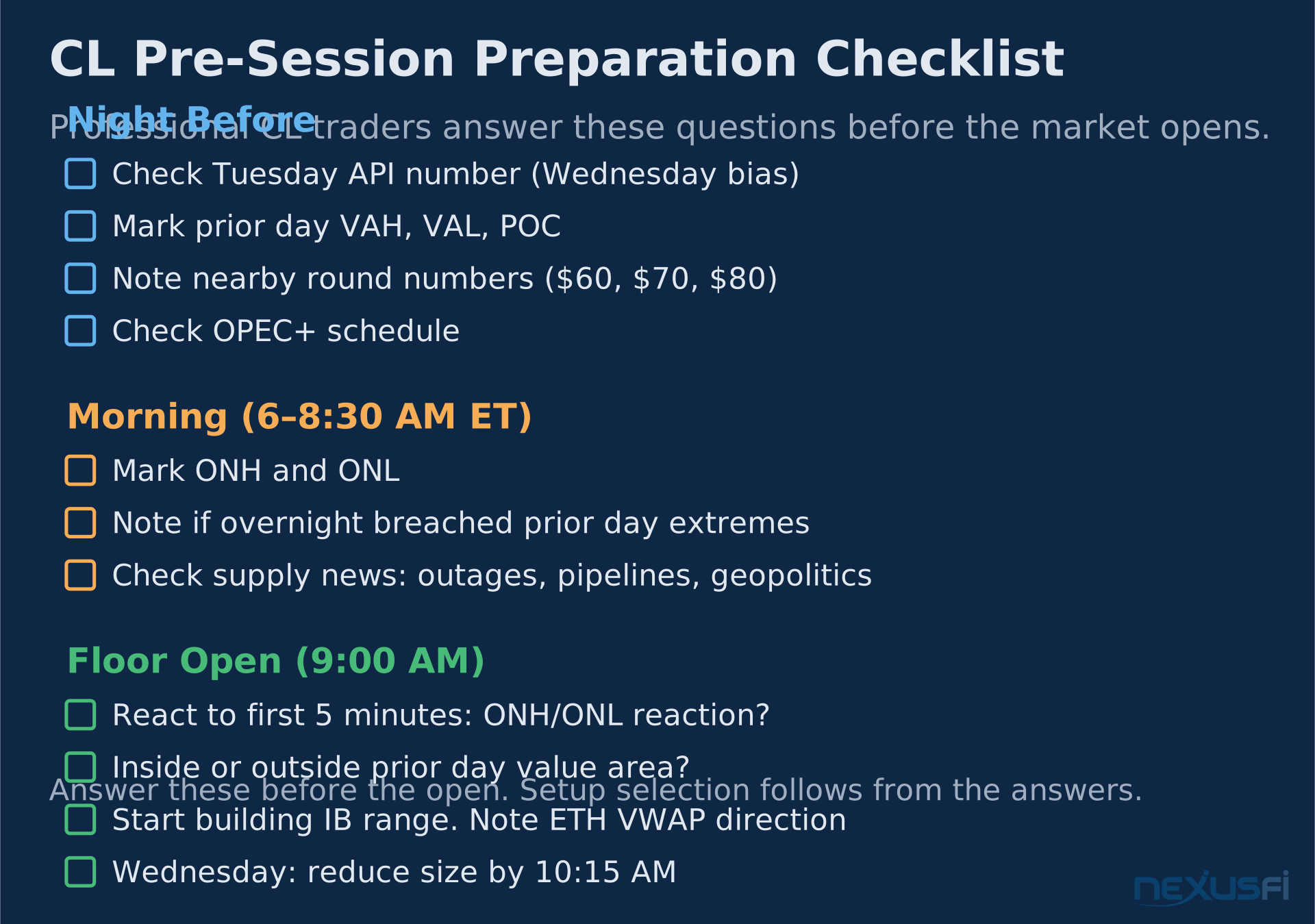
Night Before: Check API number (Tuesday is critical for Wednesday bias). Mark prior day's VAH, VAL, POC. Note key round numbers nearby — CL respects $60, $70, $80 handles with unusual precision. Check if OPEC+ is meeting.
Morning (6:00-8:30 AM ET): Mark ONH and ONL. Note whether overnight action breached prior day extremes or stayed contained. Check supply-specific news: outages, pipeline disruptions, geopolitical headlines.
Floor Open (9:00 AM ET): Watch the first 5 minutes. Does price react at ONH/ONL? Does it open inside or outside prior day's value area? Start building the IB range. Assess ETH VWAP direction.
9:00-10:00 AM ET: Let the IB form. By 10:00 AM you should have IBH, IBL, developing RTH VWAP, and a directional bias. On Wednesdays: reduce size by 10:15 AM in preparation for the report.
@JDNeeman's integrated framework applies: the combination of VAL, VAH, PHOD, PLOD, and market profile creates the "fighting arena." Knowing that arena before the market opens is how you react with speed and confidence when price approaches key levels. [^3]
Putting It Together: The CL Framework #
CL rewards traders who work in layers. No single indicator or setup produces consistent edge in isolation. Before the market opens, answer these questions in order: What is the supply/demand narrative this week? Where is the prior day's value area and any naked POC? What happened overnight — is price inside or outside prior value? Is today inventory day?
Only after those answers do you select a setup: range session (rotation fades), trend session (pullback entries), or event day (inventory protocol). Then execute without hesitation — size for the trade, stop at structure, exit at the pre-defined target.
The traders who last in CL aren't the ones with the best indicators. They're the ones who answer the contextual questions before the market opens and then execute without second-guessing.
CL is not a chart-reading game. It's an information-and-execution game where the chart only becomes legible once you understand the fundamental and structural context underneath it. Build your layers, then trade the setup.
Citations #
[^1]: @VinceVirgil, CL Trades, Elite Trading Journals. Post 353514. https://nexusfi.com/showthread.php?t=23787&p=353514 [^2]: @Private Banker, CL Light Crude Analysis TPO/MP/VWAP/VPOC, Commodities. Post 291200. https://nexusfi.com/showthread.php?t=24896&p=291200 [^3]: @JDNeeman, Crude Oil trading, Trading Journals. Post 233587. https://nexusfi.com/showthread.php?t=20983&p=233587 [^4]: @mastadee, The Scalper's Path, Elite Trading Journals. Post 592208. https://nexusfi.com/showthread.php?t=38439&p=592208 [^5]: @VinceVirgil, CL Trades, Elite Trading Journals. Post 271944. https://nexusfi.com/showthread.php?t=23787&p=271944 [^6]: @Gary, Gary's CL method, Elite Trading Journals. Post 7734. https://nexusfi.com/showthread.php?t=796&p=7734 [^7]: @tzachi, Trading CL (Crude Oil Futures), Traders Hideout. Post 2132. https://nexusfi.com/showthread.php?t=360&p=2132 [^8]: @Private Banker, CL Light Crude Analysis TPO/MP/VWAP/VPOC, Commodities. Post 293827. https://nexusfi.com/showthread.php?t=24896&p=293827 [^9]: @JDNeeman, Crude Oil trading, Trading Journals. Post 282094. https://nexusfi.com/showthread.php?t=20983&p=282094 [^10]: @Private Banker, CL Light Crude Analysis TPO/MP/VWAP/VPOC, Commodities. Post 298184. https://nexusfi.com/showthread.php?t=24896&p=298184
Knowledge Map
Prerequisites
Understand these firstGo Deeper
Build on this knowledgeReferences This Article
Articles that build on this topicCitations
- — CL Trades (2014) 👍 8
- — CL Light Crude Analysis TPO/MP/VWAP/VPOC (2013) 👍 11
- — Crude Oil trading (2013) 👍 3
- — The Scalper's Journey (2016) 👍 5
- — CL Trades (2013) 👍 8
- — Gary's CL method (2009) 👍 15
- — Trading CL (Crude Oil Futures) (2009) 👍 4
- — The CL Crude-analysis Thread (2015) 👍 5
- — CL Light Crude Analysis TPO/MP/VWAP/VPOC (2013) 👍 11
- — Crude Oil trading (2012) 👍 3
- — CL Light Crude Analysis TPO/MP/VWAP/VPOC (2013) 👍 11